
Post-printing treatment is a key step that determines the beauty and durability of colored fabric surfaces. Understanding the Post printing treatment process helps enhance the value of textile products.
1. Importance of the Post printing treatment process
To understand why we need to focus on this stage, it is first necessary to recognize that when ink first contacts the fabric fibers, it is only in a physical surface form or has not fully bonded. The Post printing treatment process acts as a catalyst to create a sustainable bond between the colorant and the polymer structure of the fabric fibers.
When ink is sprayed or pressed onto fabric, it only temporarily stays in the gaps between the fibers. Without the effects of heat, pressure, or supporting chemicals, these color molecules will easily be detached by mechanical actions such as scrubbing, washing, or friction. Implementing a methodical Post printing treatment process helps transform weak physical bonds into durable chemical bonds (such as covalent bonds in reactive dyeing), thereby creating long-term usage value for the product.
1.1. Color stabilization and color fastness
Color fastness is the top criterion for evaluating textile product quality. Through finishing steps such as steaming or drying, ink molecules will penetrate deeper into the fiber core. This helps prevent fading when washing or discoloring under the influence of sunlight.
The process of stabilizing colors is not just about keeping the color from washing away, but also about making the color “ripe.” Many types of digital printing inks, when just printed, often have quite pale and opaque shades. Only after going through the Post printing treatment process with appropriate temperature and time do the chemical reactions complete, helping colors brighten, achieving the true vividness and depth of the original design. This is particularly important for high-end fashion products requiring absolute accuracy.
Resistance to external factors such as sweat, seawater, or chlorine also depends greatly on this final stage. If finishing steps are poorly performed, color molecules will not be encapsulated or tightly bonded, leading to migration of color to white fabric areas or causing skin irritation when contacting the wearer’s sweat. Therefore, it is mandatory to ensure health safety.
1.2. Improving hand-feel and softness
Many types of printing inks, especially plastic-based silk screen inks or pigment inks, often leave a dry, hard film on the fabric surface due to binders. Correctly performing the Post printing treatment process using specialized softening or washing measures will help eliminate the rough feeling, providing maximum comfort for the wearer.
Hand-feel is a decisive factor in consumer purchasing behavior. A shirt with a beautiful print but a stiff, suffocating feel will be rated poorly. The use of mechanical or chemical softening agents helps break down the hard bonds of the ink film, making the printed area flexible following the movements of the fabric fibers.
Additionally, this treatment helps the fabric have a more natural drape. For thin, light fabrics like chiffon or voan, the process must be extremely delicate to not lose the airiness of the material while still ensuring sharp prints. The use of silicone-based softeners or enzymes in the final finishing step is an indispensable part of achieving this effect.
1.3. Removing impurities and excess ink
During the printing process, not all ink adheres perfectly. The finishing steps, including washing and rinsing, will help remove excess ink and remaining dyeing auxiliary chemicals, ensuring safety for the end user’s skin.
When printing with reactive ink, a large amount of unfixed dye still clings to the surface. If not removed through this process, that color will cause bleeding right in the first wash. Specialized washing helps dissolve and wash away these excess color particles in a controlled manner. This is why the Post printing treatment process needs to be performed at factories with continuous washing systems.
Not only excess color but also thickeners used to create viscosity for the printing paste need to be removed. If these substances remain, they will create a dirty film, causing the fabric to have a strange smell and become prone to mold. This treatment, therefore, also carries the meaning of industrial hygiene and long-term product preservation.
2. Common Post printing treatment processes today
Depending on the type of fabric (cotton, polyester, silk, khaki) and printing technology, the treatment process will have certain differences. However, a standard process usually includes the following core steps. Each step in this cycle is designed to support the others, creating a closed loop from when the fabric is still wet with ink until it reaches the most perfect state for delivery.
Selecting equipment for each step is also very important. For example, with highly elastic fabrics, the Post printing treatment process needs to use tensionless washing machines to avoid deforming the fabric’s woven structure. Meticulousness in choosing the method is the key to creating the class of professional textile products.
2.1. Drying process
This is the first step right after the fabric leaves the printing machine. It aims to evaporate the solvent (usually water) in the printing ink, preventing the print from smearing when moving to subsequent treatment areas.
The drying process needs to be performed at a moderate temperature to avoid thermal shock to the printing ink. If the temperature is too high from the start, the ink surface may develop a skin (skinning) while the inside remains wet, leading to image cracking later. Conversely, if drying is insufficient, rolling the fabric will cause ink offsetting to the back. Therefore, the Post printing treatment process at the drying stage must be extremely uniform.
In modern factories, this process is performed by infrared drying systems or circulating hot air streams. Moisture sensors will continuously monitor to ensure the fabric reaches the ideal dryness before entering the more important steaming or heat pressing stages.
2.2. Color fixation process (steaming/curing)
This is the most important step in the Post printing treatment process. For reactive ink, the fabric needs to be steamed in a high-pressure steam environment to open the fabric fibers, helping the color react chemically directly with the cellulose. For pigment printing, people often use high temperatures (curing) to solidify the binder.
The steaming process requires absolute control over steam saturation. Steam acts as a solvent and a heat conductor. In this stage, steam causes the fibers to swell, creating channels for color molecules to move deep inside. If steam is lacking, the chemical reaction will not occur completely, leading to faded and easily washed-out colors.
For the heat curing process, the stability of the temperature in the drying oven is a vital factor. The Post printing treatment process requires the fabric to be maintained at a certain temperature level (usually 150-170 degrees Celsius) for 2-5 minutes depending on the fabric type. This time must be sufficient for the polymers in the binder to cross-link, tightly holding the color particles to the fabric fibers.
2.3. Post-print washing process
Once the color has been fixed, the fabric will be passed through continuous washing tanks. This helps completely remove thickeners, unreacted chemicals, and excess ink. The washing process usually includes multiple stages from cold washing, and hot washing to pH neutralization.
The first cold wash step aims to wash away loosely attached excess ink. Next are hot washing tanks with specialized detergents added. At high temperatures, printing paste thickeners will melt and be washed clean, freeing the ventilation for fiber gaps. The Post printing treatment process at this stage requires large water consumption and an effective circulation system to save resources.
The final stage of the washing process is usually neutralization. Since many printing technologies use alkali to support reactions, the treatment needs a neutralization step with weak acid to bring the fabric pH back to a neutral level (5.5-7). This not only helps protect the fabric fibers but also ensures safety, not causing skin irritation for the end wearer.
2.4. Physicochemical finishing stage (finishing)
After being cleaned of impurities, the fabric can be further treated with features such as antibacterial properties or silicone softening. This upgrades the technical characteristics of the product, meeting the strict standards of export orders.
Physicochemical finishing is the final makeup step for the fabric. Depending on order requirements, fabric can be soaked in solutions containing silver nanoparticles for antibacterial effects. Adding silicone softeners in the Post printing treatment process helps the fabric surface have smoothness, reduces friction, and significantly increases wrinkle resistance.
After soaking in finishing chemicals, the fabric will pass through a stenter machine. Here, the fabric is stretched to the desired width and dried to fix the newly added chemicals. This stage determines the flat appearance and structural stability of the fabric before moving to the cutting and sewing stage.
3. Technical details in the Post printing treatment process for each ink type
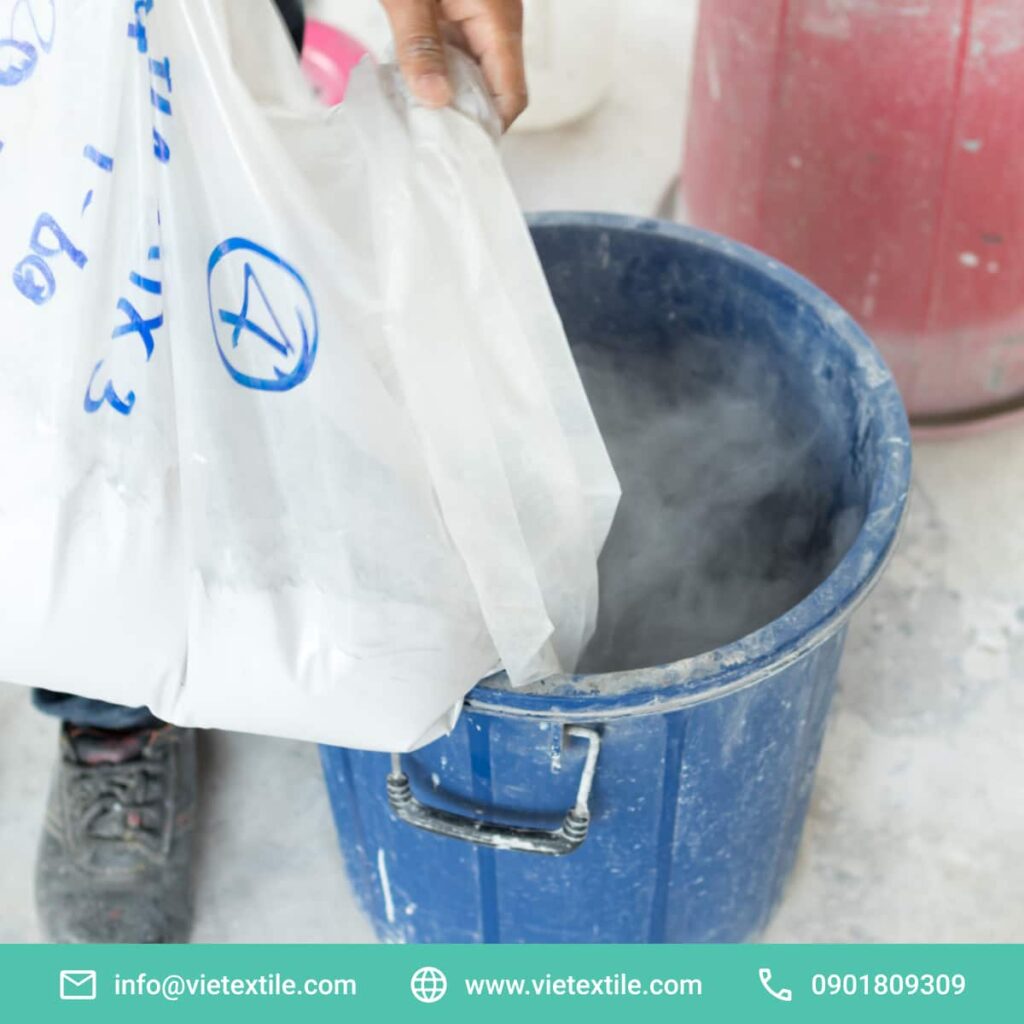
Each type of printing ink has its own chemical characteristics, requiring a specialized treatment method to achieve optimal efficiency. Applying the wrong method in the Post printing treatment process not only causes waste but can also destroy the color structure of the design.
Understanding the interaction between ink and fiber is the core of a professional process. Technicians must adjust treatment formulas based on the print density (ink coverage) on the fabric surface. A design with 100% ink coverage will require much stronger treatment intensity than a minimalist design with few color details.
3.1. Treatment for reactive ink
Reactive ink is widely used on cotton and natural fibers. The Post printing treatment process for this ink type must have a steaming step at a temperature of about 102-105 degrees Celsius. If the temperature is not standard, the color will be altered or not reach the necessary darkness.
A characteristic of reactive ink is the ability to create covalent bonds with cellulose fibers. For this reaction to occur, the treatment needs an alkaline environment and high humidity. If the steaming environment is too dry, bonds will not form, leading to the color being washed away. Conversely, if steamed for too long, chemical bonds can be hydrolyzed, reducing the strength of the fabric fibers.
After steaming, the washing and rinsing procedure for reactive ink is extremely strict. It must go through at least 5-7 washing tanks to ensure complete removal of unreacted color molecules. This is the most expensive stage in terms of energy and water resources but brings permanent color fastness to fashion products.
3.2. Treatment for sublimation ink
With sublimation printing on polyester fabric, the treatment takes place almost simultaneously with the printing process at the heat press. Temperatures from 180-210 degrees Celsius cause the ink to sublimate into a gas and penetrate the fibers. Afterward, the fabric only needs to be cooled and stabilized in size without many complicated washing steps.
In sublimation printing, the Post printing treatment process actually starts from the pressing moment. High heat expands the pores in the polyester fiber, allowing the ink in vapor form to enter inside. When the temperature drops, những lỗ hổng này đóng lại, khóa chặt màu sắc bên trong sợi vải. Therefore, the color fastness of sublimation printing is extremely high and the surface has no ink film.
However, a common error in this stage is ghosting due to fabric shifting while still hot. Correct technique requires the fabric to be cooled quickly with a cold air stream immediately after leaving the press to fix the image instantly, preventing unwanted color migration.
3.3. Treatment for pigment ink
Pigment ink does not react with fabric fibers but adheres thanks to a binder. Therefore, the Post printing treatment process is mainly high-temperature drying to bake the binder layer, helping it cover and tightly hold pigment particles on the fiber surface.
The advantage of pigment ink is a simple finishing procedure, no need for complex washing, helping save water and being environmentally friendly. However, the biggest challenge is crocking fastness. If the binder layer is not dried with enough heat or time in the Post printing treatment process, the print will very easily peel off when rubbed hard.
To improve the inherently dry and hard hand-feel of pigment ink, the treatment often adds a calendering step or light washing with specialized softeners. This helps the printed surface become smoother and have a light gloss, enhancing the aesthetic appeal for fabrics like canvas or high-quality cotton jersey.
4. Factors affecting the efficiency of the Post printing treatment process
The efficiency of the finishing stage depends on tight control of technical parameters. A small deviation can lead to ruining an entire large batch. Variations in the external environment such as room temperature or air humidity can also indirectly impact the entire Post printing treatment process.
Standardizing standard operating procedures (SOP) is a prerequisite. Each fabric code, khi đưa vào xử lý, needs a separate technical sheet, clearly stating necessary parameters for operators to strictly follow to ensure color stability.
4.1. Temperature and humidity
In the Post printing treatment process, temperature plays a decisive role in the speed of chemical reactions. Humidity in the steamer helps fabric fibers expand evenly, creating conditions for ink penetration. Controlling uneven temperature across the entire fabric surface will cause color deviation between different positions.
If the temperature is too low during treatment, chemical bonds do not have enough energy to form. If the temperature is too high, fibers may become brittle and lose elasticity. Using machinery with multi-point digital temperature control systems is extremely necessary to maintain stability throughout the length of the fabric roll.
Humidity is equally important. In the steamer, if humidity is too low (dry steam), the color will not penetrate the fiber core. Conversely, if humidity is too high, water droplets can condense on the machine ceiling and drip onto the fabric, causing irreparable color stains.
4.2. Treatment time
Each type of fiber and ink needs a certain reaction time. If the Post printing treatment process takes place too quickly, the color will not be durable, but if too long, it can burn the fiber or change the original color structure.
Treatment time is inversely proportional to temperature, but they cannot always replace each other. Some chemical reactions require a minimum time for color molecules to reach an equilibrium state. Forcing the schedule by increasing temperature beyond allowed levels often leads to consequences for fabric surface quality.
For continuous treatment systems, machine speed is the factor that adjusts time. The Post printing treatment process technician must accurately calculate this speed based on the length of the steaming or drying chamber to ensure each point on the fabric is exposed to the treatment agent for exactly the specified duration.
4.3. Water quality during the washing process
Hard water or water containing many impurities can react with printing ink, dulling the color or creating strange color spots. Therefore, professional factories always use RO water filtration systems or water softening before bringing it into the washing process.
Metal ions in hard water can create complexes with ink molecules, changing color shades. In the Post printing treatment process, using clean water not only protects the printed color but also protects the machinery system from scale buildup, helping extend the life of production equipment.
Additionally, the pH of the wash water source also needs to be closely monitored. Water that is too alkaline or too acidic affects the ability to wash away excess ink. Washing auxiliaries used in the treatment must also be chosen as low-foam and easily biodegradable types so that the washing process takes place most effectively without causing environmental pollution.
5. Common errors when performing the Post printing treatment process
Understanding risks will help manufacturers have timely prevention measures, minimizing the defect rate. Most errors arising in the Post printing treatment process stem from a lack of close supervision or substandard equipment.
Analyzing the root cause for each error is a valuable lesson for process improvement. Sometimes, the error is not in the treatment stage but in the previous printing stage, but only khi hoàn tất các bước xử lý do the defects reveal themselves.
5.1. Bleeding phenomenon
This is the most common error when the Post printing treatment process is not well performed, especially in the first wash step. If the wash water temperature or color-fixing chemicals are not standard, unfixed ink will dissolve into the water and attach to surrounding white fabric areas.
The main cause is usually that the color fixation process has not met requirements. To fix this error, people often use anti-backstaining agents in the washing tank. These substances will surround free color particles, preventing them from re-attaching to the fabric background.
Controlling wash water temperature according to a sine chart is an important technique in the Post printing treatment process. Hot washing helps remove excess color effectively, but if the temperature is lowered too suddenly, remaining color particles can be shocked and stick tightly to white fabric areas, creating annoying smears for the viewer.
5.2. Fabric shrinkage
The impact of heat and water can cause fabric to shrink. To fix this, a heat-setting process after washing is needed to bring the fabric back to the correct width and fiber density of the original design.
Shrinkage is a natural characteristic of woven fibers. When encountering hot water and mechanical action, fabric fibers tend to return to their original relaxed state, leading to shortened length. If not well controlled, a printed fabric can shrink up to 5-10%, causing a shortage of fabric meters and deforming the printed image.
In the final Post printing treatment process, the stenter machine will use a chain clip system to stretch the fabric in two directions. Heat-setting temperature helps re-fix the fiber structure in a stretched state, thereby minimizing shrinkage in subsequent washes. This is an extremely important step to ensure technical specifications for customers.
5.3. Pilling or harsh fabric surface
If the treatment uses chemicals that are too strong without a compensatory softening step, fabric fibers will be damaged, losing their natural shine. Mechanical action in industrial washing machines can cause small fibers on the surface to stand up, creating pilling.
To handle this issue, the Post printing treatment process can apply the biopolishing technique using cellulase enzymes to cut off these excess fibers. Harshness is often due to too much binder in the ink or due to mineral accumulation from hard water during the fabric finishing process.
Adding ultra-fine silicone-based softeners in the final stage helps penetrate into each fiber gap, creating an extremely thin lubricating film, providing a silk-smooth hand-feel. This is an important highlight that helps VieTextile’s products be highly rated by customers for surface sensation.
6. Green trends in the Post printing treatment process
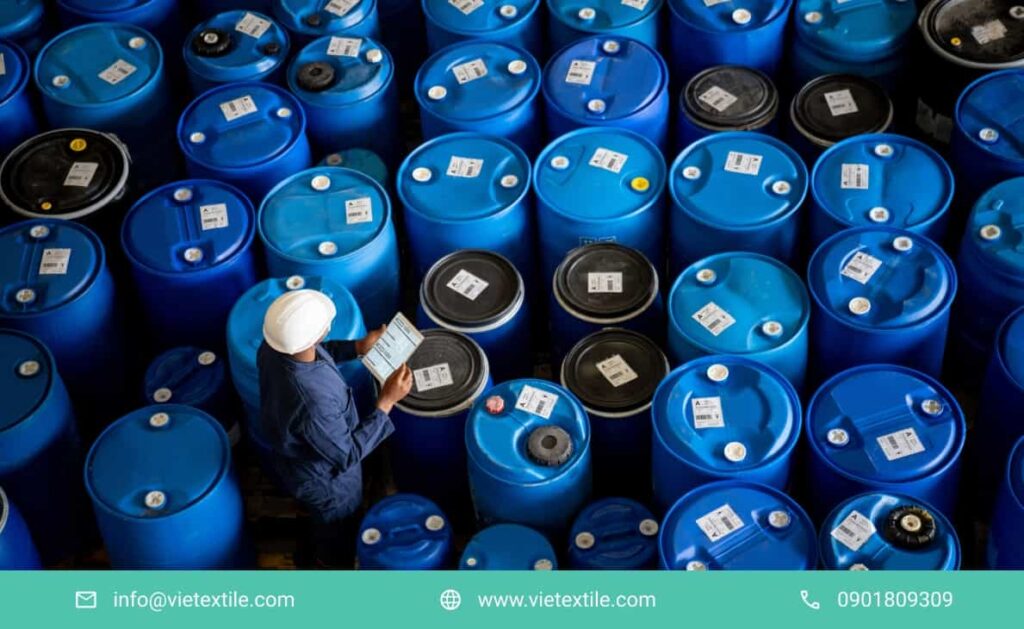
The textile industry is moving towards sustainable development goals, and finishing stages are no exception to this trend. Increasingly strict environmental regulations require factories to change production thinking to meet new export standards.
Sustainability is not just about protecting the environment but also a way for businesses to access demanding markets. A green Post printing treatment process helps reduce resource costs and creates a superior competitive advantage for pioneers like VieTextile.
6.1. Water-saving washing technology
Mist washing systems are being applied to reduce water consumption by up to 50%. Instead of completely soaking the fabric in a water tank, this technology helps chemicals penetrate quickly without making the fabric soaking wet.
This method in the Post printing treatment process helps save both wash water volume and subsequent drying energy. Additionally, on-site wastewater filtration and reuse systems are being strongly implemented. Water from the final washing tanks is lightly treated and brought back to the initial washing tanks to circulate resources.
6.2. Use of bio-based chemicals
Instead of petroleum-based softeners, the modern Post printing treatment process prioritizes natural enzymes and plant-based softeners, which are both safe for users and biodegradable. Eliminating volatile organic compounds is mandatory to achieve green certifications.
These organic chemicals not only protect the ecosystem but also ensure products are absolutely safe even for infants. The trend of using natural dyes is also leading to changes in the treatment process, towards the purest and most skin-friendly fashion products.
6.3. Heat energy optimization
Reusing thermal energy from steamers and dryers in the Post printing treatment process helps cut operating costs. Heat exchange systems are installed to recover waste heat, used to heat water for washing tanks in the next process.
This is proof of applying technology to improve economic efficiency alongside environmental protection. Besides, transitioning to using renewable energy is also being invested in by VieTextile and many businesses to aim for net-zero emissions.
7. VieTextile – a pioneer in the Post printing treatment process
At VieTextile, we understand that every meter of fabric is our customer’s passion. Therefore, we always invest seriously in infrastructure and technical systems for the finishing stage. We consider the Post printing treatment process the soul of the printed product, where artistic value is transformed into practical value.
With a vision to become a strategic partner for major fashion brands, VieTextile constantly updates the latest technologies to apply to the Post printing treatment process in Vietnam, bringing a clear difference in print quality.
7.1. Modern machinery system at VieTextile
We own a fully automatic continuous steaming and washing line, giúp kiểm soát chính xác từng thông số trong quá trình hoàn thiện. This ensures absolute consistency for even large orders up to tens of thousands of meters of fabric.
Our machinery is imported from world-leading brands. The information management system helps track in real-time the process of fabric passing through each Post printing treatment process. Any small temperature deviation is instantly alerted by the system, giúp loại bỏ hoàn toàn các lỗi do yếu tố chủ quan.
7.2. Experienced technical team
Each type of fabric from silk to canvas is carefully researched by VieTextile experts to design an optimal Post printing treatment process. Understanding textile chemistry helps us handle difficult cases that many other units refuse to perform.
Our technical team does not only work by machinery but also works with delicate perception. Through years of experience, they can immediately recognize changes in the fabric surface to adjust the amount of softener in the Post printing treatment process most suitable for each specific order.
7.3. Quality commitment from VieTextile
VieTextile commits to bringing products with color fastness reaching standards of 4-5 and a smooth fabric surface. In every treatment cycle, we always put safety standards first. All types of chemicals used have clear origins and full health safety certifications.
Transparency in the production process is VieTextile’s strongest commitment to partners. If a product has any error arising from our Post printing treatment process, VieTextile always has a satisfactory warranty policy to ensure customer rights.
7.4. Strict quality control process
After each stage of finishing, the QC team will conduct color fastness checks using sample wash tests. The lab is equipped with modern spectrophotometers to check color deviation between different batches objectively.
The inspection process does not stop at color but also includes checking crocking fastness and shrinkage after performing the Post printing treatment process. Each fabric roll after completion has a unique identification code for process traceability, giúp đảm bảo sự ổn định bền vững cho mọi đơn hàng.
8. Frequently asked questions (FAQ)
Below is a summary of common inquiries from partners and customers when learning about the printed product finishing process. This is a vast field with many deep technical details that need thorough explanation.
8.1. Why does the Post printing treatment process take more time than the main printing step?
Because it includes many complicated physical and chemical steps. A printer can finish printing 100 meters of fabric in 1 hour, but to process those 100 meters through full washing tanks and steamers, the actual time can be up to 3-4 hours. This meticulousness is necessary for the color to reach its highest maturity and durability.
8.2. Can the Post printing treatment process be skipped to save costs?
Absolutely should not skip this stage. If not treated, printing ink will quickly peel or fade after a few initial washes, reducing the brand’s reputation. The cost for this stage is actually an investment protecting the value of the entire printed fabric meters.
8.3. Does VieTextile accept individual Post printing treatment process orders for small printing workshops?
VieTextile is always ready to support partners in the textile industry. We provide professional finishing services for units that already have printers but have not yet equipped a full industrial-standard steaming and washing system, giúp nâng tầm chất lượng cho cộng đồng in vải Việt Nam.
8.4. Does the Post printing treatment process affect fabric shrinkage?
Yes, the impact of heat and water will certainly change fabric dimensions. However, at VieTextile, the treatment always comes with a thermo-mechanical setting step to bring the fabric back to standard width, giúp việc cắt may sau đó chính xác hơn và giảm thiểu khiếu nại từ khách hàng cuối.
8.5. How to distinguish high-quality fabric that has gone through the Post printing treatment process?
Fabric that has correctly performed the finishing steps will have deep, vivid colors, a soft surface, and especially no color bleeding khi chà xát mạnh bằng khăn ẩm. Ngoài ra, vải sẽ không có hiện tượng vặn xoắn sau khi giặt tại nhà, đảm bảo form dáng sản phẩm bền bỉ theo thời gian.
To complete your production process and own products with a professional Post printing treatment process, contact VieTextile today!
Contact Information:
Hotline: 0901 809 309
Email: info@vietextile.com
Website: https://vietextile.com