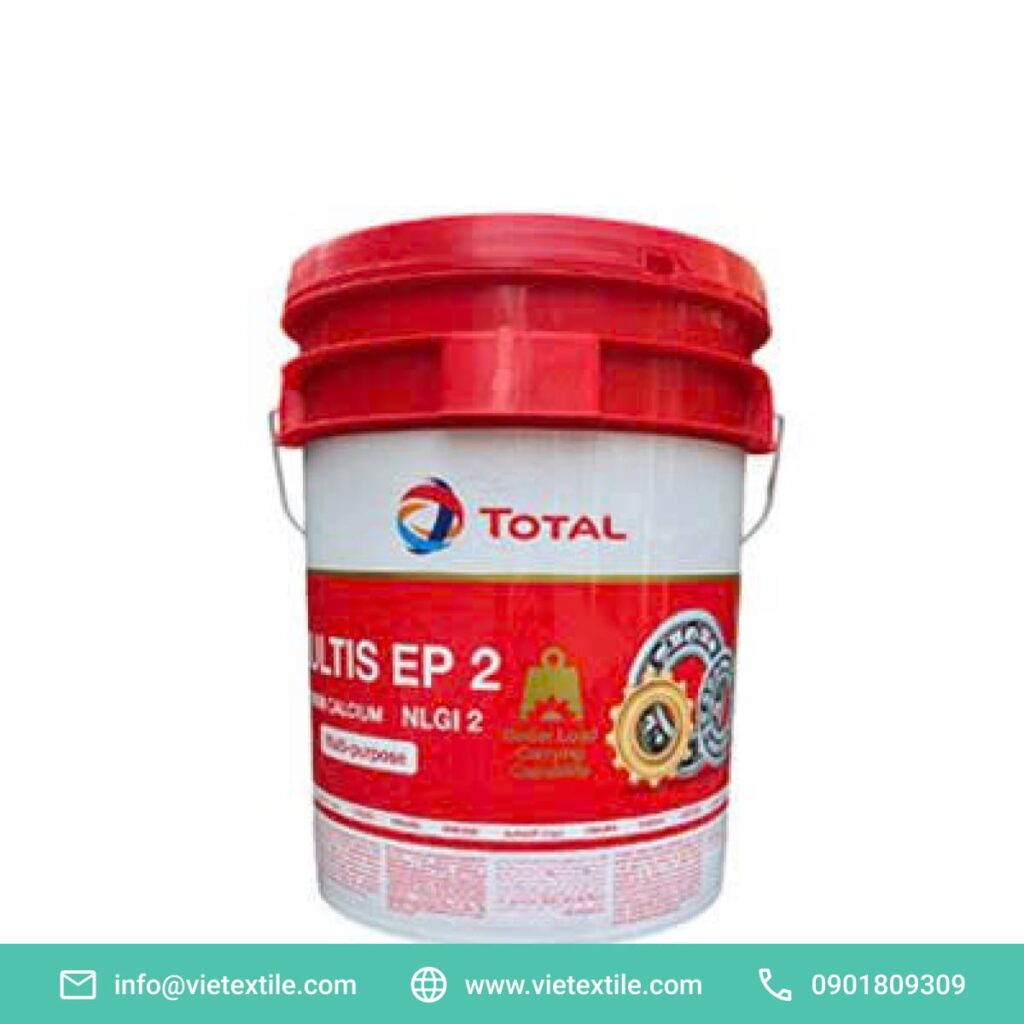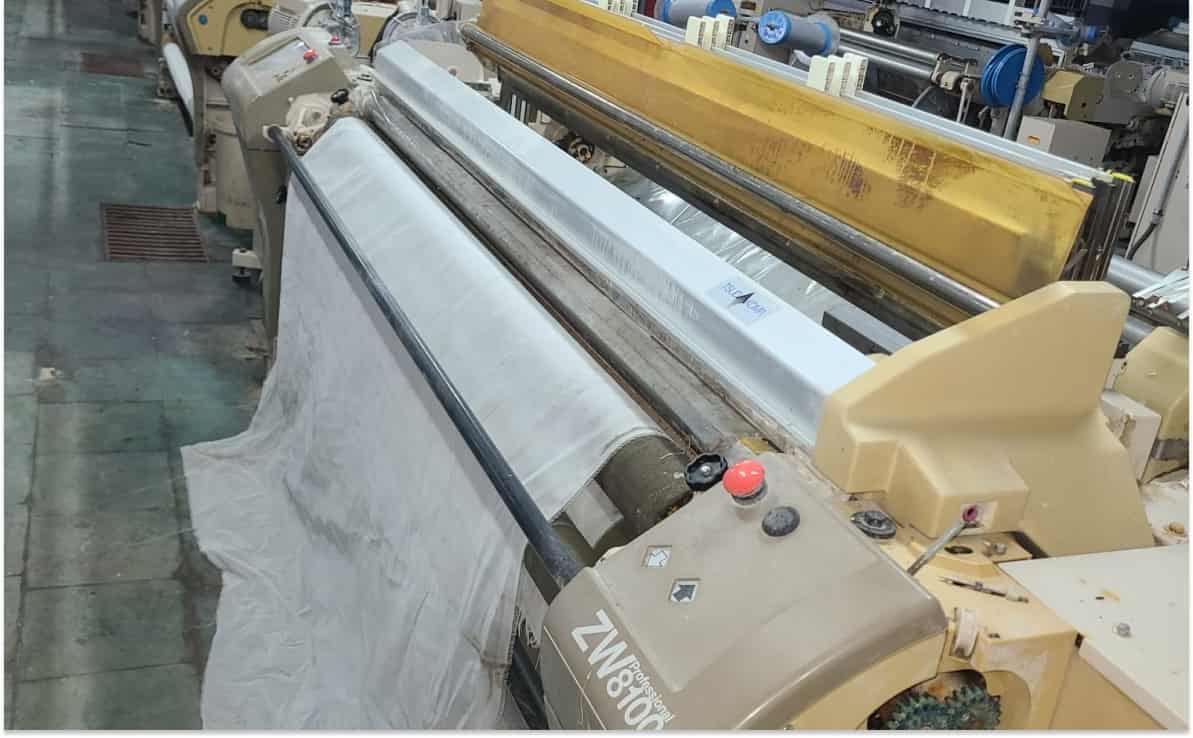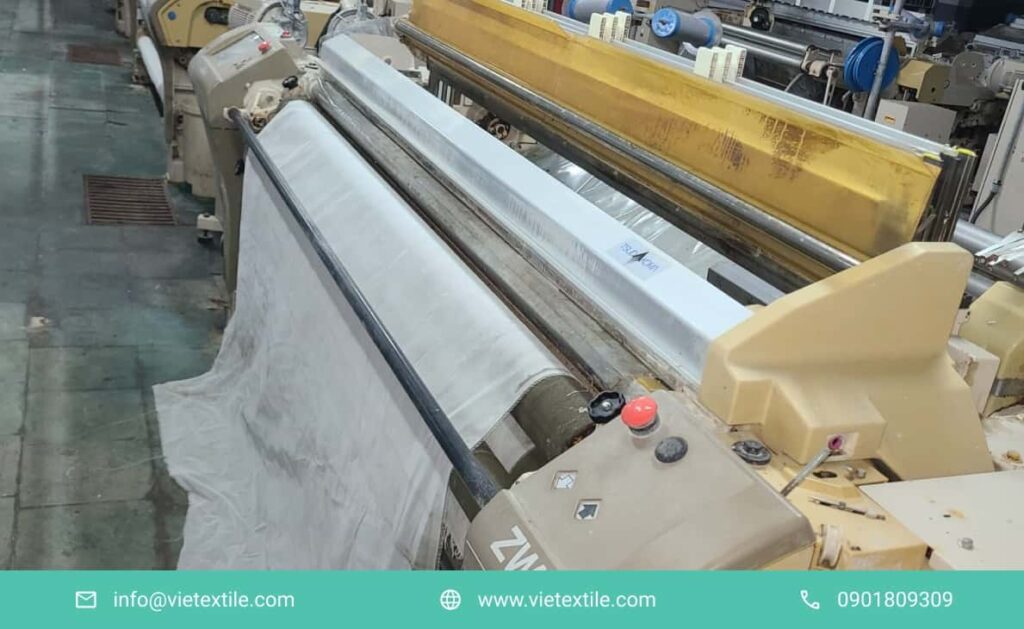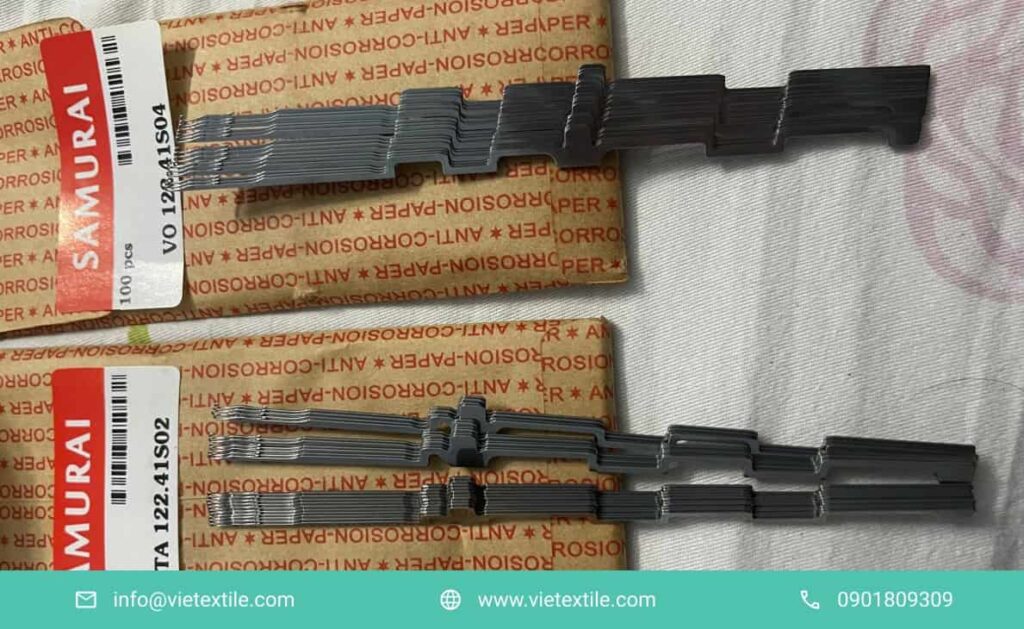
High-Temperature Grease for Weaving Machines – Dyeing Machines – Textile Factories

Vietnam’s textile and garment industry is developing rapidly, leading to a high demand for machine maintenance. To ensure continuous and stable performance, the use and sourcing of high-quality high-temperature greases are key factors.

This article delves into the importance of specialized lubricating greases, analyzes the types of high-temperature greases used for weaving machines and dyeing machines, and provides optimal selection guidance. Through this, you will better understand the necessary technical standards when buying and selling high-temperature greases, as well as choosing the most effective lubrication solution.

The industrial sector constantly demands lubrication solutions that can adapt to high operating intensity and significant thermal fluctuations, making the service of selling high-temperature greases an indispensable part of the technical supplies chain.
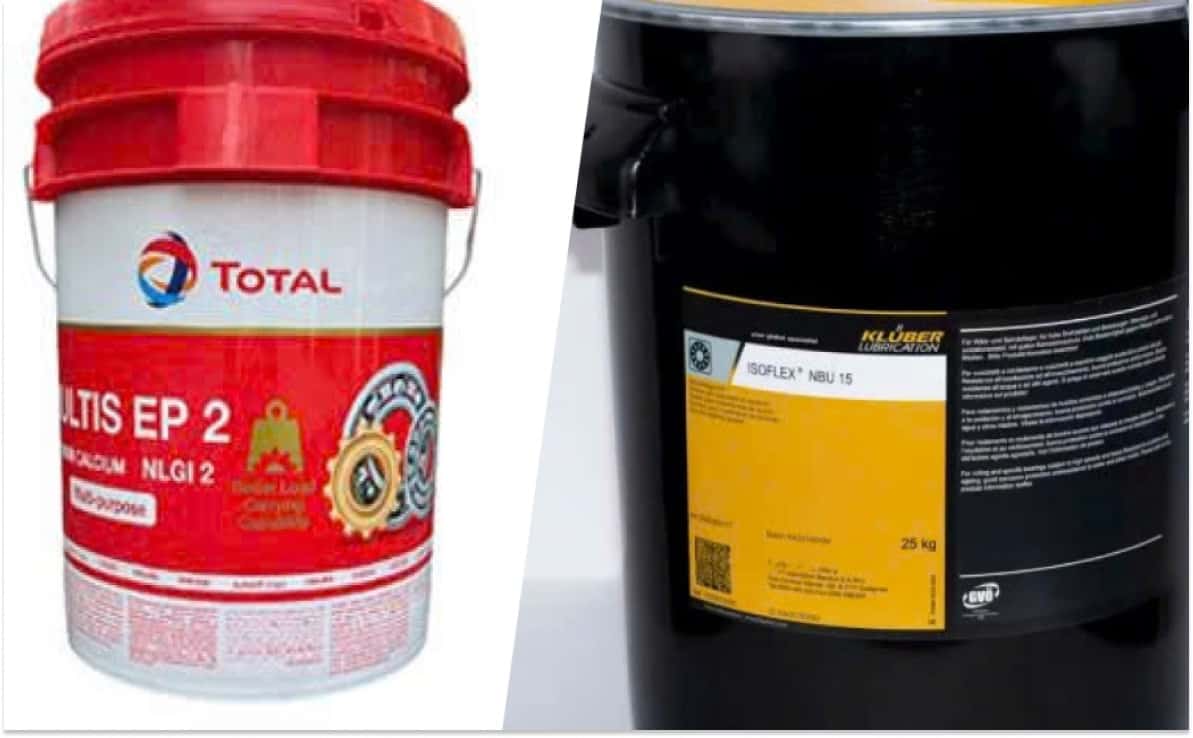
bán các loại mỡ chiu nhiệt chính hãng
High-Temperature Grease for Weaving Machines – Dyeing Machines – Textile Factories 6

1. The Importance of Specialized High-Temperature Grease in the Textile Industry

The production environment in textile factories always poses major challenges to lubrication systems. Purchasing and using inappropriate grease will lead to serious failures; therefore, the service of selling specialized high-temperature greases is crucial. The unique textile environment not only involves high temperatures but also the influence of cotton dust, fibers, and dyeing/cleaning chemicals, requiring products to have superior mechanical and chemical stability.

1.1. The Harsh Operating Environment of Textile Machinery

Equipment such as weaving machines, dyeing machines, and drying chambers often operate at very high temperatures, sometimes reaching 200°C or more. These are ideal conditions for poor-quality products to quickly lose their structure, increasing the need to find suppliers who sell high-temperature greases. High temperatures accelerate the oxidation process of the base oil, leading to a rapid decline in lubricating properties.

In addition to temperature, high humidity and the presence of steam in dyeing/finishing areas also pose a major challenge. Water and humidity reduce grease stability, causing it to wash out and rust metal components. Therefore, businesses selling high-temperature greases must ensure their products offer superior water resistance and anti-corrosion capabilities.

Furthermore, lint and fiber dust from the weaving process are significant contaminants. This dust can penetrate open bearings, combining with the lubricant to form an abrasive mixture, degrading the grease’s performance. Choosing grease with good sealing properties and high adhesion is essential to prevent the infiltration of these particles.

1.2. The Impact of High Temperatures on Equipment Lifespan

Excessive heat causes conventional grease to melt, liquefy, and leak out, leaving moving parts unprotected. The consequence is rapid machine wear, costly repairs, and production line interruptions while seeking new suppliers. When grease melts, the protective oil film disappears, causing direct metal-to-metal contact, leading to bearing seizure.

The degradation of grease at high temperatures also creates hard carbon deposits. These deposits not only lose their lubricating ability but also act as an abrasive, damaging the surface of machine components. Reputable businesses selling high-temperature greases always recommend low-volatility grease to minimize deposit formation, thereby extending the lifespan of bearings and rotating shafts.

Another serious issue is the deformation of machine components. When temperatures exceed the design limit, load-bearing parts like bearing cages can soften or deform, leading to mechanical failure even if the lubricant remains. Using high-quality grease that has good heat transfer capabilities helps stabilize the localized temperature of the bearing, serving as an effective preventative solution.

1.3. The Need for High-Performance Lubrication

Specialized high-temperature grease is designed to maintain viscosity and structure at high thermal thresholds, ensuring the lubricating film remains stable. This continuous protection is why factories need to find reliable partners who sell high-temperature greases. High-performance greases use synthetic base oils and advanced thickeners, offering superior shear stability and thermal resistance, maintaining the grease’s original consistency for longer.

Switching to high-performance lubricants offers dual benefits: reduced maintenance frequency due to extended relubrication cycles, and reduced energy consumption due to lower friction coefficients. Consultants selling high-temperature greases can help you calculate the long-term economic benefits of investing in these products, compared to using low-cost conventional grease.

2. Classification and Technical Characteristics of Suitable High-Temperature Greases
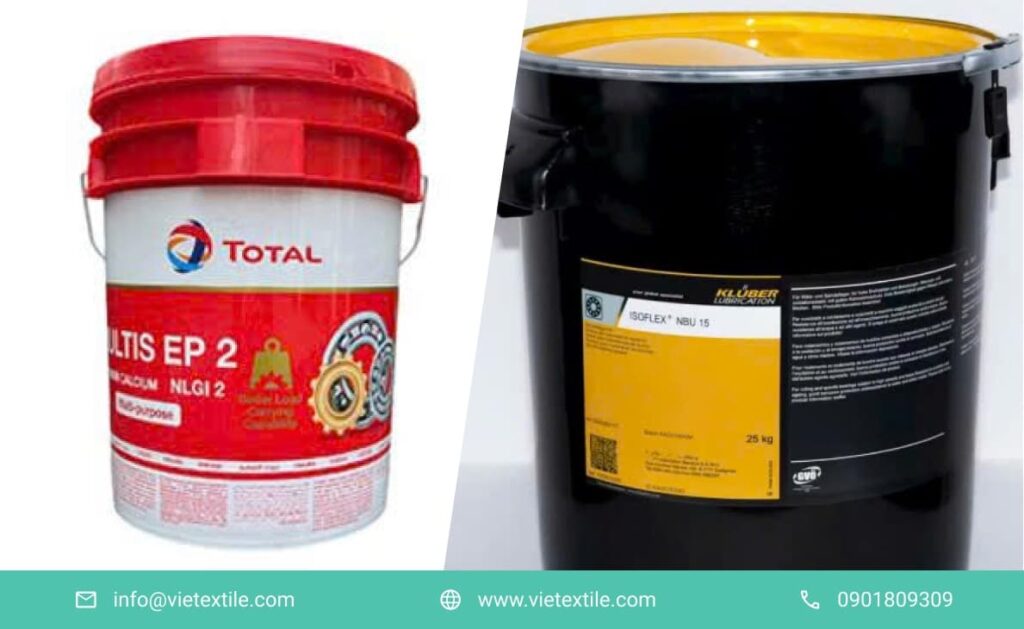
bán các loại mỡ chiu nhiệt giá tốt
High-Temperature Grease for Weaving Machines – Dyeing Machines – Textile Factories 7

Choosing the correct grease type is the most critical step to optimize performance and extend machine life. When looking for high-temperature grease suppliers, you need to understand the differences between grease types to make accurate purchasing decisions.

2.1. High-Temperature Grease for Weaving Machines (Looms, Spinning Frames)

Weaving machines operate at high speeds, requiring grease to have good load-carrying capacity and anti-wear properties in addition to heat resistance. Therefore, businesses selling high-temperature greases often recommend products with high mechanical stability, suitable for high-speed bearings and precise drive mechanisms in weaving machines.

2.1.1. Lithium Complex Grease and Applications

Lithium Complex grease is a popular choice, offering temperature resistance up to 150°C – 180°C and high mechanical stability. This type of grease is often recommended by suppliers for moderately loaded components and not overly extreme temperatures, such as main weaving machine motors and intermediate rotating shafts.

In terms of composition, Lithium Complex grease uses a Lithium hydroxystearate thickener, creating a more robust fiber structure than conventional Lithium grease. This complex thickener helps the grease maintain a stable structure, resisting liquefaction even under strong mechanical churning and rising temperatures. Suppliers selling high-temperature greases highly value this type for its flexibility and reasonable cost.

Typical applications for Lithium Complex grease include fan bearings, weaving frame motion mechanisms, and light-duty gearboxes. When selecting, the grease’s penetration index (ASTM D217) should be checked to ensure the consistency is compatible with the factory’s automatic lubrication system.

2.1.2. Synthetic Grease for Ultra-High Temperatures

For lubrication points near heat sources, Synthetic grease is the optimal solution, maintaining performance at temperatures above 200°C. This is a premium product segment that quality high-temperature grease suppliers always promote. Synthetic base oils (typically Polyalphaolefins – PAO or Ester) provide excellent anti-oxidation and thermal stability.

PAO synthetic grease is widely used for lubricating stenter chains in drying chambers, where the grease must withstand peak temperatures. The outstanding advantage is extremely low volatility, which significantly reduces grease consumption and relubrication frequency. Factories seek partners selling synthetic high-temperature greases because they can extend maintenance cycles by 3-4 times compared to mineral-based greases.

A specialized form of synthetic grease is Fluorocarbon grease (PFPE/PTFE), often used in furnace bearings operating above 250°C. This grease is non-flammable, chemically inert, and leaves absolutely no residue. Although it has a higher cost, PFPE grease offers long-term economic efficiency when factoring in maintenance and bearing replacement costs. The sale of these high-temperature greases usually comes with deep application consulting.

2.2. High-Temperature Grease for Dyeing Machines (Drying Chambers, Boilers)

Dyeing machines and drying chambers frequently face steam, dyeing chemicals, and extreme temperatures, creating a corrosive environment. Companies selling high-temperature greases must ensure the grease has superior water and oxidation resistance to protect equipment under wet, chemical operating conditions.

2.2.1. Water and Chemical Resistance Requirements

Lubricants in dyeing machines must not only be heat-resistant but also resist washout and chemical ingress. This requires products to have special additives, including anti-rust agents and oxidation inhibitors that can function effectively in a pH-changing environment due to dyeing chemicals.

The ingress of steam into bearings can cause grease hydrolysis, destroying the thickener and reducing lubrication effectiveness. Experts selling high-temperature greases always recommend using grease with excellent adhesion, creating a physical barrier against water and chemical ingress, protecting metal components from corrosion.

2.2.2. Choosing Polyurea-Based Grease

Polyurea grease is known for its excellent thermal resistance and superior durability in humid, chemical environments, making it an ideal choice for bearings in drying ovens. Professional partners selling high-temperature greases always stock this type due to its unique structure.

Polyurea thickener is a non-soap thickener; therefore, it has inherently high anti-oxidation capability and an almost undetermined (non-melting) dropping point. This means Polyurea grease can maintain a stable structure at temperatures far exceeding the limits of Lithium Complex grease, perfectly suited for high-speed electric motors and bearings subject to continuous temperatures above 180°C. When seeking a supplier, Polyurea should be the priority choice for critical applications.

The mechanical stability and washout resistance of Polyurea grease are also key factors, especially important in dyeing machines operating in environments with steam pressure. The Polyurea structure is less likely to break down under high shear forces, ensuring the grease consistency remains stable throughout the equipment’s operation.

2.3. Key Technical Indices to Consider

When evaluating products sold by high-temperature grease suppliers, you cannot overlook the following key technical parameters to ensure quality and compatibility with factory equipment.

2.3.1. Dropping Point and Thermal Stability

The Dropping Point is the temperature at which the grease begins to liquefy and leak out, and it must always be higher than the equipment’s operating temperature. When purchasing, ask suppliers selling high-temperature greases to provide this index. This index is typically measured according to the ASTM D2265 standard.

However, the Dropping Point is only a safety index, not the maximum operating temperature. More important is the grease’s Thermal Stability, which is the grease’s ability to resist oxidation and deposit formation at high temperatures over an extended period. When consulting, quality suppliers will provide data on high-temperature bearing life tests (e.g., ASTM D3336 or SKF R2F) to demonstrate actual performance.

2.3.2. Penetration (NLGI Grade)

The grease consistency (NLGI Grade) affects the ability to pump and retain the grease at the lubrication point, typically NLGI 2 or 3. High-temperature grease experts will advise on the appropriate consistency for your factory’s automatic lubrication system. Consistency is measured by the ASTM D217 standard (Worked Penetration).

For centralized lubrication systems, selecting the correct NLGI Grade is crucial. Grease that is too stiff (NLGI 3 or higher) can clog pipelines and grease pumps, especially in low-temperature conditions or long pipelines. Conversely, grease that is too soft (NLGI 1 or lower) will easily leak out of the bearing when the temperature increases. Suppliers selling high-temperature greases must balance pumpability and retention capability.

3. Guide to Correctly Selecting and Using High-Temperature Grease
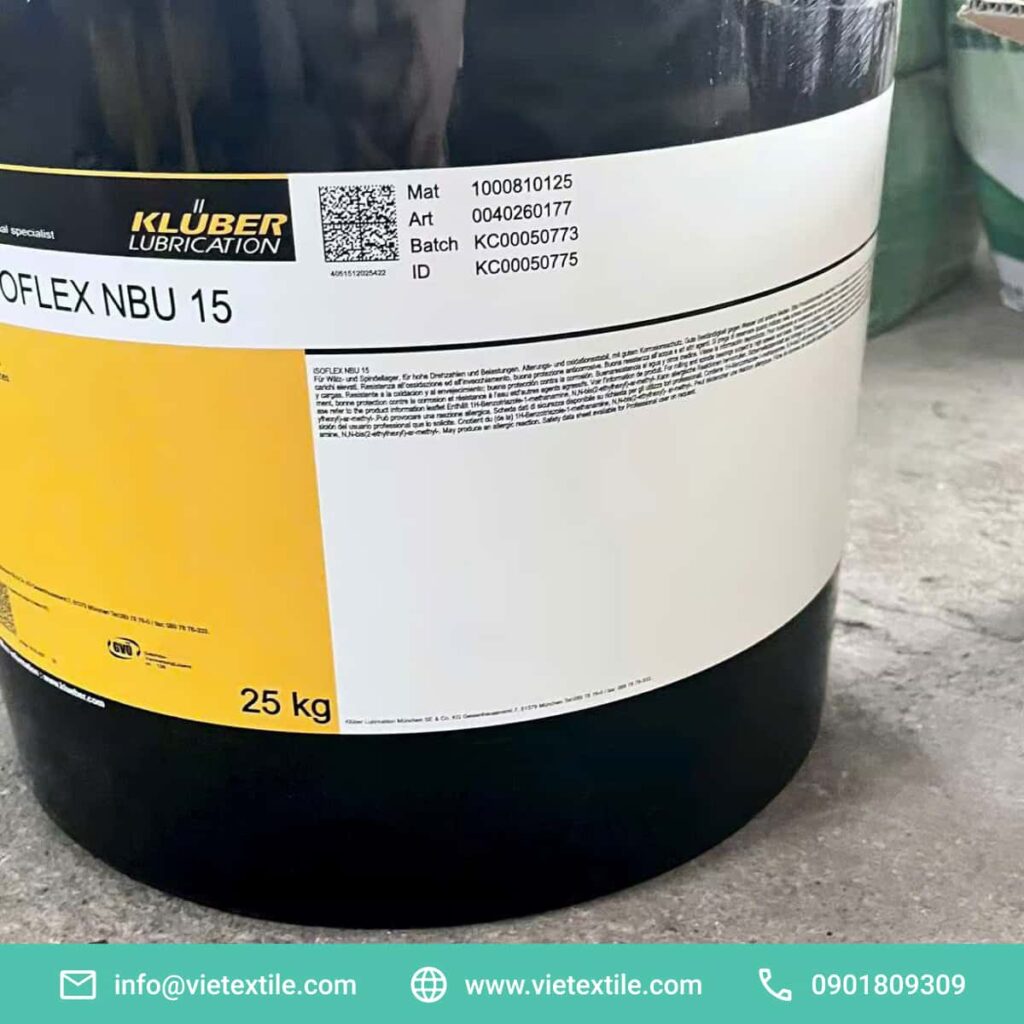
bán các loại mỡ chiu nhiệt chất lượng cao
High-Temperature Grease for Weaving Machines – Dyeing Machines – Textile Factories 8

Choosing products from reputable high-temperature grease suppliers is only the first step; correct usage determines the final effectiveness of the lubricant. Strict adherence to technical procedures will ensure the grease maximizes its heat resistance and protective capabilities.

3.1. Grease Application Procedure and Relubrication Frequency

Perform regular greasing procedures according to the guidelines of the equipment manufacturer or the high-temperature grease supplier. Avoid using too much or too little grease, as this will reduce heat resistance effectiveness and cause waste. Excess grease will increase temperature due to churning, causing the grease to degrade faster.

The relubrication frequency should be determined based on operating factors such as temperature, rotation speed (RPM), and load, often calculated using SKF or FAG formulas. Companies selling high-temperature greases can provide specialized software or spreadsheets to determine the optimal greasing cycle for each machine type, ensuring continuous performance.

3.2. Common Mistakes When Replacing Grease

Mixing greases with different base types is a common mistake that can cause a chemical reaction and destroy the grease structure. Always consult an expert when needing to switch between different high-temperature grease products, especially when transitioning from metal-soap based grease to Polyurea grease or vice versa.

Incompatibility reactions between different thickeners can cause sudden grease softening, leading to leakage and loss of lubrication after just a few hours of operation. Professional high-temperature grease suppliers will provide grease compatibility charts and recommend a bearing cleaning procedure (purging) with solvent or the new grease before completely switching.

3.3. Economic Benefits of Purchasing and Using the Right Grease

Investing in quality products from reputable high-temperature grease suppliers helps extend bearing life, reduce machine downtime, and save energy costs. This yields much greater economic benefits than the initial purchase cost of the grease. A failed bearing can cause tens of millions of VND in damage, not to mention the cost of interrupted production.

Extending bearing life from 6 months to 1-2 years thanks to using high-quality high-temperature grease is the clearest evidence of economic effectiveness. The frequency of bearing replacement and maintenance labor costs are significantly reduced. Companies selling high-temperature greases should focus on selling holistic solutions rather than just selling products.

Energy costs are also a key factor. High-performance grease has a significantly lower friction coefficient than conventional mineral-based grease, helping to reduce heat load and motor electricity consumption. Although premium high-temperature grease has a higher price, operating costs and maintenance costs will be optimized.

3.4. Life Cycle Cost (LCC) Analysis When Choosing High-Temperature Grease

LCC (Life Cycle Cost) is a method for evaluating the total cost a lubricant product brings throughout the equipment’s lifespan. Finding a high-temperature grease partner must be based on LCC analysis, not just the purchase price.

The main components of LCC include: initial grease purchase cost, energy consumption cost (due to friction), relubrication and labor costs, and equipment repair/replacement costs due to premature failure. Cheap grease can reduce the initial purchase cost but increases energy costs, labor costs, and especially failure costs, leading to a much higher overall LCC.

When evaluating a supplier, ask them to present an LCC model. A reasonable LCC model will demonstrate that synthetic high-temperature grease, even if 3-4 times more expensive than mineral grease, reduces the total LCC by 20% to 40% due to extended bearing life and minimized downtime.

4. VieTextile – The Leading High-Temperature Grease Supplier for the Textile Industry
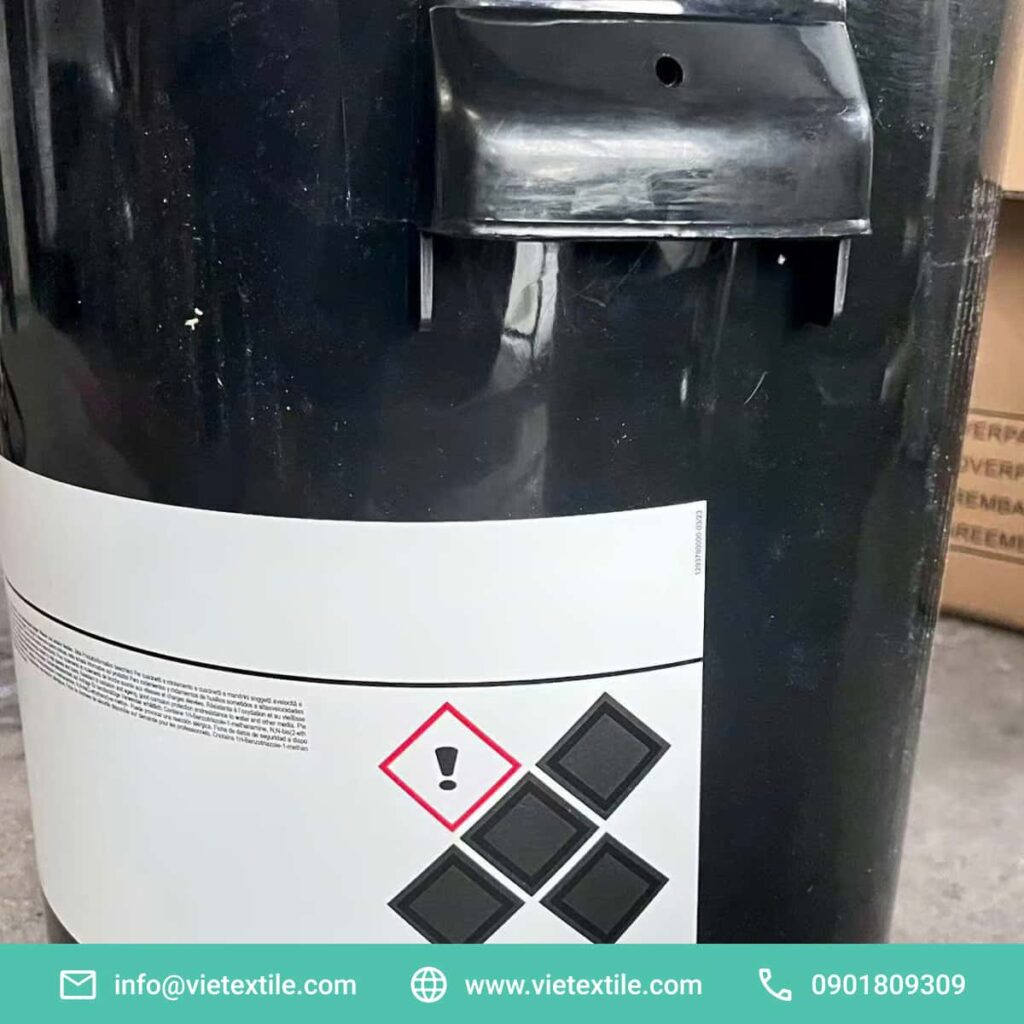
chuyên bán các loại mỡ chiu nhiệt
High-Temperature Grease for Weaving Machines – Dyeing Machines – Textile Factories 9

VieTextile is proud to be a strategic partner, specializing in supplying and selling premium high-temperature greases, specially formulated for the harsh operating environment of the textile industry. We are committed to providing optimal lubrication solutions, helping machinery operate reliably under continuous high-temperature conditions. Our product catalog is imported from the world’s leading brands, ensuring uniform and stable quality.

VieTextile’s capabilities are affirmed through a diverse product portfolio, including Lithium Complex, Polyurea, and Fluorocarbon synthetic greases, ensuring compliance with all technical requirements from high-speed weaving machines to steam drying chambers. We do not just sell high-temperature greases but also provide deep technical consulting services (such as LCC analysis, grease compatibility testing) so customers can accurately select the necessary products.

Every product sold by VieTextile comes with quality certifications (C.O.A, M.S.D.S) and detailed usage instructions, giving customers confidence in performance and safety. We maintain large warehouse stocks, ensuring timely supply to factories, minimizing the risk of production interruptions. If you are looking for a high-temperature grease supplier that can accompany your factory’s sustainable development, VieTextile is the trusted choice.

5. Frequently Asked Questions About High-Temperature Grease in Textile Factories (FAQ)

Q: What is the minimum dropping point for high-temperature grease used in drying chambers? A: When purchasing, you should choose high-temperature grease products with a minimum dropping point of 250°C or higher to ensure safety and thermal stability in a drying oven environment.

Q: What are the advantages of Synthetic base grease compared to mineral base grease in weaving machines? A: Synthetic grease offers superior thermal stability and anti-oxidation capabilities, helping to extend the relubrication cycle and lubricating performance at extreme temperatures, which is why we sell synthetic high-temperature greases for the most demanding applications.

Q: Is it necessary to completely clean the bearing before replacing it with new high-temperature grease? A: Yes. Cleaning is mandatory to remove old grease and contaminants, avoiding incompatibility reactions when using different high-temperature grease products, thereby ensuring maximum lubrication effectiveness.

Q: Which high-temperature greases does VieTextile recommend for spinning frames? A: We recommend using high-performance Lithium Complex grease or synthetic grease for spinning frames, depending on the specific operating temperature and rotation speed of the equipment.

Q: When should I switch from mineral-based high-temperature grease to synthetic-based? A: The switch should be made when equipment frequently operates at temperatures exceeding 150°C or when the relubrication cycle of mineral-based grease is too short. This conversion should be advised by high-temperature grease experts.

Q: Is Polyurea high-temperature grease compatible with Lithium Complex grease? A: No. Polyurea and Lithium Complex greases are generally incompatible due to differences in thickeners. Mixing them can destroy the grease structure. You need to consult your high-temperature grease supplier for guidance on the cleaning process before switching.

Q: Does using inappropriate grease affect the quality of woven fibers? A: Yes. Poor-quality or leaking grease can contaminate the woven fibers (oil stain), causing product defects and increasing waste disposal costs. Choosing a non-staining high-temperature grease supplier is crucial for maintaining the quality of the final product.

Q: How is the relubrication cycle calculated for drying oven bearings? A: The relubrication cycle is calculated based on bearing lubrication formulas (focusing on speed, bearing diameter, and temperature factor). Professional high-temperature grease suppliers will help you determine this cycle. For drying ovens, the cycle is often shorter due to high temperatures.

To find the optimal solution and specialized high-temperature greases for weaving machines, dyeing machines, and textile factories, contact VieTextile today!

Contact Information:

Hotline: 0901 809 309 

Email: info@vietextile.com 

Website: https://vietextile.com
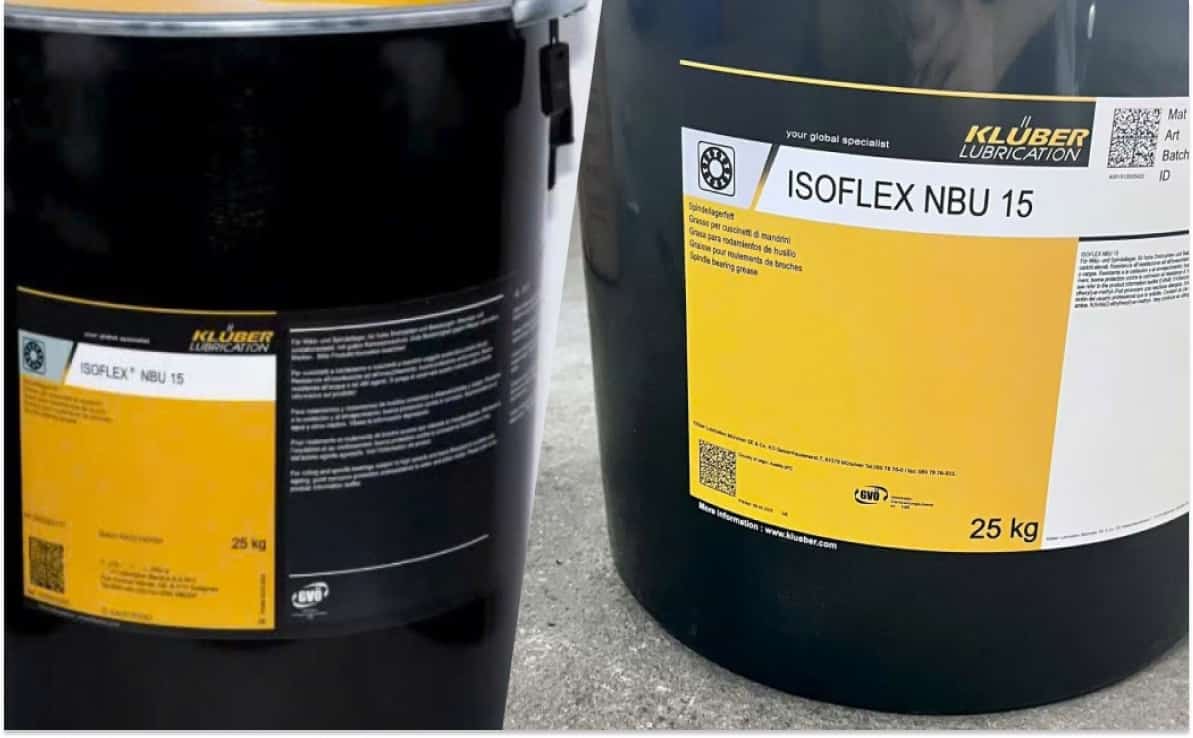
Mỡ Chịu Nhiệt Dùng Cho Máy Dệt – Máy Nhuộm – Nhà Máy Dệt May

Ngành dệt may Việt Nam đang phát triển mạnh mẽ, kéo theo nhu cầu cao về bảo dưỡng máy móc. Để đảm bảo hiệu suất liên tục và ổn định, việc sử dụng và tìm kiếm nơi bán các loại mỡ chịu nhiệt chất lượng cao là yếu tố then chốt.

Bài viết này đi sâu vào tầm quan trọng của các loại mỡ bôi trơn chuyên dụng, phân tích các chủng loại mỡ chịu nhiệt dùng cho máy dệt, máy nhuộm và cung cấp hướng dẫn lựa chọn tối ưu. Thông qua đó, bạn sẽ hiểu rõ hơn về các tiêu chuẩn kỹ thuật cần thiết khi cần bán các loại mỡ chịu nhiệt, cũng như lựa chọn giải pháp bôi trơn hiệu quả nhất. 

Ngành công nghiệp luôn đòi hỏi các giải pháp bôi trơn phải thích ứng được với cường độ làm việc cao và những biến động nhiệt lớn, khiến dịch vụ bán các loại mỡ chịu nhiệt trở thành một phần không thể thiếu trong chuỗi cung ứng vật tư kỹ thuật.

bán các loại mỡ chiu nhiệt chính hãng
Mỡ Chịu Nhiệt Dùng Cho Máy Dệt – Máy Nhuộm – Nhà Máy Dệt May 15

1. Tầm Quan Trọng Của Mỡ Chịu Nhiệt Chuyên Dụng Trong Ngành Dệt May

Môi trường sản xuất tại các nhà máy dệt may luôn tiềm ẩn những thách thức lớn đối với hệ thống bôi trơn. Việc mua và sử dụng mỡ không phù hợp sẽ dẫn đến hỏng hóc nghiêm trọng, do đó dịch vụ bán các loại mỡ chịu nhiệt chuyên biệt là vô cùng cần thiết. Môi trường dệt may đặc thù không chỉ có nhiệt độ cao mà còn phải chịu ảnh hưởng của bụi bông, sợi, và các hóa chất tẩy rửa/nhuộm, đòi hỏi các sản phẩm được bán các loại mỡ chịu nhiệt phải có độ bền cơ học và hóa học ưu việt.

1.1. Môi Trường Hoạt Động Khắc Nghiệt Của Máy Móc Dệt May

Các thiết bị như máy dệt, máy nhuộm hay buồng sấy thường xuyên hoạt động ở nhiệt độ rất cao, có thể lên đến 200°C hoặc hơn. Đây là điều kiện lý tưởng để các sản phẩm kém chất lượng nhanh chóng mất đi cấu trúc, khiến nhu cầu tìm kiếm nơi bán các loại mỡ chịu nhiệt ngày càng tăng cao. Nhiệt độ cao làm đẩy nhanh quá trình ô-xy hóa dầu gốc, dẫn đến sự suy giảm nhanh chóng của tính năng bôi trơn.

Bên cạnh nhiệt độ, độ ẩm cao và sự hiện diện của hơi nước trong các khu vực nhuộm/hoàn tất cũng là một thách thức lớn. Nước và độ ẩm làm giảm tính ổn định của mỡ, khiến nó bị rửa trôi và làm rỉ sét các chi tiết kim loại. Do đó, các đơn vị bán các loại mỡ chịu nhiệt phải đảm bảo sản phẩm cung cấp có khả năng chống thấm nước và chống ăn mòn vượt trội.

Thêm vào đó, bụi xơ sợi (lint) từ quá trình dệt là một chất gây ô nhiễm đáng kể. Bụi này có thể xâm nhập vào các vòng bi hở, kết hợp với mỡ bôi trơn tạo thành hỗn hợp mài mòn, làm giảm hiệu suất của mỡ. Việc lựa chọn mỡ có khả năng niêm phong tốt và bán các loại mỡ chịu nhiệt có độ bám dính cao là giải pháp cần thiết để ngăn chặn sự xâm nhập của các hạt này.

1.2. Ảnh Hưởng Của Nhiệt Độ Cao Đến Tuổi Thọ Thiết Bị

Nhiệt độ quá cao sẽ làm mỡ thông thường bị chảy, hóa lỏng và rò rỉ ra ngoài, khiến các bộ phận chuyển động không còn được bảo vệ. Hậu quả là máy móc bị mài mòn nhanh chóng, tốn kém chi phí sửa chữa, và làm gián đoạn dây chuyền sản xuất của nhà máy khi cần tìm đơn vị bán các loại mỡ chịu nhiệt mới. Khi mỡ bị chảy, màng dầu bảo vệ sẽ biến mất, gây ra hiện tượng tiếp xúc kim loại trực tiếp, dẫn đến hiện tượng vòng bi bị bó cứng (seizure).

Sự biến chất của mỡ ở nhiệt độ cao còn tạo ra cặn carbon cứng. Những cặn này không chỉ mất khả năng bôi trơn mà còn hoạt động như một chất mài mòn, làm hỏng bề mặt chi tiết máy. Các đơn vị bán các loại mỡ chịu nhiệt uy tín luôn khuyên dùng mỡ có chỉ số bay hơi thấp để giảm thiểu sự hình thành cặn, từ đó kéo dài tuổi thọ của vòng bi và trục quay.

Một vấn đề nghiêm trọng khác là sự biến dạng của chi tiết máy. Khi nhiệt độ vượt quá giới hạn thiết kế, các bộ phận chịu lực như lồng vòng bi (cage) có thể bị mềm hoặc biến dạng, dẫn đến hỏng hóc cơ học ngay cả khi mỡ bôi trơn vẫn còn. Việc sử dụng mỡ chất lượng cao được bán các loại mỡ chịu nhiệt có khả năng truyền nhiệt tốt giúp ổn định nhiệt độ cục bộ của vòng bi là giải pháp phòng ngừa hiệu quả.

1.3. Nhu Cầu Bôi Trơn Hiệu Năng Cao

Mỡ chịu nhiệt chuyên dụng được thiết kế để duy trì độ nhớt và cấu trúc ở ngưỡng nhiệt độ cao, đảm bảo màng dầu bôi trơn luôn ổn định. Khả năng bảo vệ liên tục này là lý do các nhà máy cần tìm đúng đối tác bán các loại mỡ chịu nhiệt đáng tin cậy. Mỡ hiệu năng cao sử dụng dầu gốc tổng hợp và chất làm đặc tiên tiến, giúp chống lại sự cắt trượt (shear stability) và nhiệt độ, duy trì độ đặc ban đầu của mỡ lâu hơn.

Việc chuyển đổi sang mỡ bôi trơn hiệu năng cao mang lại lợi ích kép: giảm tần suất bảo trì do chu kỳ tái bôi trơn kéo dài, và giảm tiêu thụ năng lượng nhờ hệ số ma sát thấp. Các chuyên gia tư vấn khi bán các loại mỡ chịu nhiệt sẽ giúp bạn tính toán được lợi ích lâu dài của việc đầu tư vào các sản phẩm này, so với việc chỉ sử dụng mỡ thông thường giá rẻ.

2. Phân Loại Và Đặc Điểm Kỹ Thuật Khi Bán Các Loại Mỡ Chịu Nhiệt Phù Hợp

bán các loại mỡ chiu nhiệt giá tốt
Mỡ Chịu Nhiệt Dùng Cho Máy Dệt – Máy Nhuộm – Nhà Máy Dệt May 16

Việc lựa chọn đúng loại mỡ là bước quan trọng nhất để tối ưu hóa hiệu suất và kéo dài tuổi thọ máy móc. Khi tìm hiểu về dịch vụ bán các loại mỡ chịu nhiệt, bạn cần nắm rõ sự khác biệt giữa các chủng loại mỡ để đưa ra quyết định mua hàng chính xác.

2.1. Mỡ Chịu Nhiệt Cho Máy Dệt (Khung Dệt, Máy Se Sợi)

Máy dệt hoạt động ở tốc độ cao, yêu cầu mỡ phải có khả năng chịu tải và chống mài mòn tốt ngoài yếu tố chịu nhiệt. Vì vậy, các đơn vị bán các loại mỡ chịu nhiệt thường tư vấn các sản phẩm có độ bền cơ học cao, thích hợp cho các vòng bi tốc độ cao và các cơ cấu truyền động chính xác trong máy dệt.

2.1.1. Mỡ Gốc Lithium Complex Và Ứng Dụng

Mỡ Lithium Complex là lựa chọn phổ biến, cung cấp khả năng chịu nhiệt độ lên đến 150°C – 180°C và có độ ổn định cơ học cao. Loại mỡ này thường được các dịch vụ bán các loại mỡ chịu nhiệt khuyên dùng cho các bộ phận chịu tải vừa và nhiệt độ không quá cực đoan, chẳng hạn như các motor chính của máy dệt và các trục quay trung gian.

Về thành phần, mỡ Lithium Complex sử dụng chất làm đặc gốc Lithium hydroxystearate, tạo ra cấu trúc sợi mỡ bền vững hơn so với mỡ Lithium thông thường. Chất làm đặc kép này giúp mỡ duy trì được cấu trúc ổn định, chống lại sự hóa lỏng ngay cả khi bị khuấy trộn cơ học mạnh và nhiệt độ tăng cao. Các nhà cung cấp bán các loại mỡ chịu nhiệt thường đánh giá cao loại mỡ này vì tính linh hoạt và chi phí hợp lý.

Ứng dụng điển hình của mỡ Lithium Complex là trong các vòng bi của quạt hút, các cơ cấu chuyển động của khung dệt và các hộp số chịu tải nhẹ. Khi lựa chọn, cần kiểm tra chỉ số độ xuyên kim (ASTM D217) của mỡ để đảm bảo mỡ có độ đặc phù hợp với hệ thống bơm mỡ tự động của nhà máy.

2.1.2. Mỡ Tổng Hợp (Synthetic) Chịu Nhiệt Độ Cực Cao

Đối với các điểm bôi trơn gần nguồn nhiệt, mỡ tổng hợp (Synthetic) là giải pháp tối ưu, duy trì hiệu suất ở nhiệt độ trên 200°C. Đây là phân khúc sản phẩm cao cấp mà các đơn vị bán các loại mỡ chịu nhiệt chất lượng luôn muốn giới thiệu. Dầu gốc tổng hợp (thường là Polyalphaolefins – PAO hoặc Ester) mang lại khả năng chống ô-xy hóa và ổn định nhiệt tuyệt vời.

Mỡ tổng hợp PAO được sử dụng rộng rãi cho các ứng dụng bôi trơn xích căng (stenter chain) của buồng sấy, nơi mỡ phải chịu nhiệt độ đỉnh cao. Ưu điểm nổi bật là độ bay hơi cực thấp, giúp giảm đáng kể lượng mỡ tiêu thụ và tần suất tái bôi trơn. Các nhà máy luôn tìm kiếm đối tác bán các loại mỡ chịu nhiệt tổng hợp vì chúng có thể kéo dài chu kỳ bảo dưỡng gấp 3-4 lần so với mỡ gốc khoáng.

Một dạng mỡ tổng hợp đặc biệt là mỡ Fluorocarbon (PFPE/PTFE), thường được sử dụng trong các vòng bi lò sấy hoạt động trên 250°C. Loại mỡ này không cháy, trơ với hóa chất và hoàn toàn không tạo cặn. Mặc dù có giá thành cao hơn, nhưng mỡ PFPE lại mang lại hiệu quả kinh tế lâu dài khi tính đến chi phí bảo trì và thay thế vòng bi. Việc bán các loại mỡ chịu nhiệt này thường đi kèm với tư vấn chuyên sâu về ứng dụng.

2.2. Mỡ Chịu Nhiệt Cho Máy Nhuộm (Buồng Sấy, Lò Hơi)

Máy nhuộm và các buồng sấy thường phải đối mặt với hơi nước, hóa chất nhuộm và nhiệt độ cực cao, tạo ra một môi trường ăn mòn. Các công ty bán các loại mỡ chịu nhiệt cần đảm bảo mỡ có khả năng chống nước và chống ô-xy hóa vượt trội để bảo vệ thiết bị trong điều kiện vận hành ẩm ướt, hóa chất.

2.2.1. Yêu Cầu Chống Nước Và Hóa Chất

Mỡ bôi trơn trong máy nhuộm không chỉ cần chịu nhiệt mà còn phải chống rửa trôi và ngăn chặn sự xâm nhập của hóa chất. Điều này đòi hỏi các sản phẩm được bán các loại mỡ chịu nhiệt phải có phụ gia đặc biệt, bao gồm các chất chống rỉ sét (anti-rust) và các chất ức chế ô-xy hóa (oxidation inhibitors) có khả năng hoạt động hiệu quả trong môi trường pH thay đổi do hóa chất nhuộm.

Sự xâm nhập của hơi nước vào vòng bi có thể gây ra hiện tượng thủy phân (hydrolysis) của mỡ, làm phá hủy chất làm đặc và giảm hiệu quả bôi trơn. Các chuyên gia bán các loại mỡ chịu nhiệt luôn khuyến nghị sử dụng mỡ có khả năng bám dính tuyệt vời, tạo ra một lớp đệm chống lại sự xâm nhập của nước và hóa chất, bảo vệ chi tiết kim loại khỏi sự ăn mòn.

2.2.2. Lựa Chọn Mỡ Gốc Polyurea

Mỡ Polyurea nổi tiếng với khả năng chịu nhiệt tuyệt vời và độ bền vượt trội trong môi trường ẩm ướt, hóa chất, là lựa chọn lý tưởng cho các vòng bi trong lò sấy. Các đối tác bán các loại mỡ chịu nhiệt chuyên nghiệp luôn dự trữ loại mỡ này vì cấu trúc độc đáo của nó.

Chất làm đặc Polyurea không phải là xà phòng kim loại (non-soap thickener), do đó nó có khả năng chống ô-xy hóa nội tại rất cao và điểm nhỏ giọt gần như không xác định (non-melting). Điều này có nghĩa là mỡ Polyurea có thể duy trì cấu trúc ổn định ở nhiệt độ vượt xa giới hạn của mỡ Lithium Complex, phù hợp hoàn hảo cho các motor điện tốc độ cao và các vòng bi chịu nhiệt độ liên tục trên 180°C. Khi tìm kiếm nơi bán các loại mỡ chịu nhiệt, Polyurea nên là lựa chọn ưu tiên cho các ứng dụng tối quan trọng.

Sự ổn định cơ học và khả năng chống rửa trôi của mỡ Polyurea cũng là yếu tố then chốt, đặc biệt quan trọng trong các máy nhuộm hoạt động trong môi trường có áp lực hơi nước. Cấu trúc của Polyurea ít bị phá vỡ dưới lực cắt cao, đảm bảo độ đặc mỡ duy trì ổn định trong suốt quá trình vận hành của thiết bị.

2.3. Các Chỉ Số Kỹ Thuật Cần Quan Tâm

Khi đánh giá các sản phẩm được bán các loại mỡ chịu nhiệt, bạn không thể bỏ qua các thông số kỹ thuật then chốt sau đây để đảm bảo chất lượng và tính tương thích với thiết bị của nhà máy.

2.3.1. Điểm Nhỏ Giọt (Dropping Point) Và Ổn Định Nhiệt

Điểm nhỏ giọt là nhiệt độ mà mỡ bắt đầu chuyển sang thể lỏng và rò rỉ ra ngoài, phải luôn cao hơn nhiệt độ hoạt động của thiết bị. Khi mua, hãy yêu cầu các nhà cung cấp bán các loại mỡ chịu nhiệt cung cấp chỉ số này. Chỉ số này thường được đo theo tiêu chuẩn ASTM D2265.

Tuy nhiên, Điểm Nhỏ Giọt chỉ là một chỉ số an toàn, không phải là nhiệt độ hoạt động tối đa. Điều quan trọng hơn là Ổn Định Nhiệt của mỡ, tức là khả năng mỡ chống lại sự ô-xy hóa và tạo cặn ở nhiệt độ cao trong một thời gian dài. Khi tư vấn, các đơn vị bán các loại mỡ chịu nhiệt chất lượng sẽ cung cấp dữ liệu về thử nghiệm tuổi thọ vòng bi ở nhiệt độ cao (ví dụ: ASTM D3336 hoặc SKF R2F) để chứng minh hiệu suất thực tế.

2.3.2. Độ Xâm Nhập (NLGI Grade)

Độ đặc của mỡ (NLGI Grade) ảnh hưởng đến khả năng bơm và giữ mỡ tại vị trí bôi trơn, thường là NLGI 2 hoặc 3. Các chuyên gia bán các loại mỡ chịu nhiệt sẽ tư vấn độ đặc phù hợp với hệ thống bơm mỡ tự động của bạn. Độ đặc được đo bằng tiêu chuẩn ASTM D217 (Độ Xâm Nhập Khuấy).

Đối với các hệ thống bôi trơn trung tâm, việc lựa chọn đúng NLGI Grade là rất quan trọng. Mỡ quá đặc (NLGI 3 hoặc cao hơn) có thể gây tắc nghẽn đường ống và máy bơm mỡ, đặc biệt trong điều kiện nhiệt độ thấp hoặc đường ống dài. Ngược lại, mỡ quá mềm (NLGI 1 hoặc thấp hơn) sẽ dễ bị rò rỉ ra khỏi vòng bi khi nhiệt độ tăng. Các nhà cung cấp bán các loại mỡ chịu nhiệt phải cân bằng giữa khả năng bơm và khả năng giữ mỡ.

3. Hướng Dẫn Lựa Chọn Và Sử Dụng Mỡ Chịu Nhiệt Đúng Cách

bán các loại mỡ chiu nhiệt chất lượng cao
Mỡ Chịu Nhiệt Dùng Cho Máy Dệt – Máy Nhuộm – Nhà Máy Dệt May 17

Việc lựa chọn sản phẩm từ các đơn vị bán các loại mỡ chịu nhiệt uy tín chỉ là bước đầu tiên; việc sử dụng đúng cách mới quyết định hiệu quả cuối cùng của mỡ bôi trơn. Việc tuân thủ nghiêm ngặt các quy trình kỹ thuật sẽ đảm bảo mỡ phát huy tối đa công năng chịu nhiệt và bảo vệ thiết bị.

3.1. Quy Trình Tra Mỡ Và Tần Suất Bôi Trơn

Thực hiện quy trình tra mỡ định kỳ theo hướng dẫn của nhà sản xuất hoặc của đơn vị bán các loại mỡ chịu nhiệt. Không nên tra quá nhiều hoặc quá ít mỡ, điều này sẽ làm giảm hiệu quả chịu nhiệt và gây lãng phí. Việc tra mỡ thừa sẽ làm tăng nhiệt độ do khuấy trộn, gây hỏng mỡ nhanh hơn.

Tần suất tái bôi trơn nên được xác định dựa trên các yếu tố vận hành như nhiệt độ, tốc độ quay (vòng/phút), và tải trọng, thường được tính toán bằng công thức của SKF hoặc FAG. Các công ty bán các loại mỡ chịu nhiệt có khả năng cung cấp phần mềm hoặc bảng tính chuyên dụng để xác định chu kỳ tra mỡ tối ưu cho từng loại máy, đảm bảo hiệu suất liên tục.

3.2. Sai Lầm Thường Gặp Khi Thay Thế Mỡ

Việc pha trộn các loại mỡ có gốc khác nhau là một sai lầm phổ biến, có thể gây ra phản ứng hóa học làm hỏng cấu trúc mỡ. Luôn tham khảo ý kiến chuyên gia khi cần chuyển đổi giữa các sản phẩm được bán các loại mỡ chịu nhiệt khác nhau, đặc biệt là khi chuyển từ mỡ gốc xà phòng kim loại sang mỡ Polyurea hoặc ngược lại.

Phản ứng không tương thích (incompatibility) giữa các chất làm đặc khác nhau có thể làm mềm mỡ đột ngột, dẫn đến rò rỉ và mất bôi trơn chỉ sau vài giờ hoạt động. Các đơn vị bán các loại mỡ chịu nhiệt chuyên nghiệp sẽ cung cấp biểu đồ tương thích mỡ và khuyên dùng quy trình làm sạch vòng bi (purging) bằng dung môi hoặc bằng mỡ mới trước khi chuyển đổi hoàn toàn.

3.3. Lợi Ích Kinh Tế Khi Mua Và Sử Dụng Đúng Loại Mỡ

Đầu tư vào sản phẩm chất lượng từ các nhà bán các loại mỡ chịu nhiệt uy tín giúp kéo dài tuổi thọ vòng bi, giảm thời gian chết của máy (downtime), và tiết kiệm chi phí năng lượng. Việc này mang lại lợi ích kinh tế lớn hơn nhiều so với chi phí mua mỡ ban đầu. Một vòng bi bị hỏng có thể gây thiệt hại hàng chục triệu đồng, chưa kể đến chi phí sản xuất bị gián đoạn.

Việc kéo dài tuổi thọ vòng bi từ 6 tháng lên 1-2 năm nhờ sử dụng mỡ chịu nhiệt chất lượng cao là minh chứng rõ ràng nhất cho hiệu quả kinh tế. Tần suất thay thế vòng bi và nhân công bảo trì giảm đi đáng kể. Các công ty bán các loại mỡ chịu nhiệt nên tập trung vào việc bán giải pháp tổng thể thay vì chỉ bán sản phẩm.

Chi phí năng lượng cũng là một yếu tố quan trọng. Mỡ hiệu năng cao có hệ số ma sát thấp hơn đáng kể so với mỡ gốc khoáng thông thường, giúp giảm tải nhiệt và tiêu thụ điện năng của motor. Mặc dù mỡ chịu nhiệt cao cấp có giá thành cao, nhưng chi phí vận hành (running cost) và bảo trì (maintenance cost) sẽ được tối ưu hóa.

3.4. Phân Tích Chi Phí Vòng Đời (LCC) Khi Chọn Mỡ Chịu Nhiệt

LCC (Life Cycle Cost) là phương pháp đánh giá tổng chi phí mà một sản phẩm bôi trơn mang lại trong suốt vòng đời sử dụng của thiết bị. Việc tìm đối tác bán các loại mỡ chịu nhiệt cần phải dựa trên phân tích LCC chứ không chỉ dựa vào giá mua (purchase price).

Các thành phần chính của LCC bao gồm: chi phí mua mỡ ban đầu, chi phí tiêu thụ năng lượng (do ma sát), chi phí tái bôi trơn và nhân công, và chi phí sửa chữa/thay thế thiết bị do hỏng hóc sớm. Mỡ giá rẻ có thể giảm chi phí mua ban đầu, nhưng lại làm tăng chi phí năng lượng, chi phí nhân công và đặc biệt là chi phí hỏng hóc, dẫn đến LCC cao hơn nhiều.

Khi đánh giá nhà cung cấp bán các loại mỡ chịu nhiệt, hãy yêu cầu họ trình bày mô hình LCC. Một mô hình LCC hợp lý sẽ chứng minh rằng mỡ tổng hợp chịu nhiệt, dù đắt hơn 3-4 lần mỡ khoáng, nhưng lại giảm LCC tổng thể từ 20% đến 40% nhờ vào việc kéo dài tuổi thọ vòng bi và giảm thiểu thời gian dừng máy.

4. VieTextile – Đơn Vị Bán Các Loại Mỡ Chịu Nhiệt Hàng Đầu Cho Dệt May

chuyên bán các loại mỡ chiu nhiệt
Mỡ Chịu Nhiệt Dùng Cho Máy Dệt – Máy Nhuộm – Nhà Máy Dệt May 18

VieTextile tự hào là đối tác chiến lược, chuyên cung cấp và bán các loại mỡ chịu nhiệt cao cấp, được tinh chế đặc biệt cho môi trường hoạt động khắc nghiệt của ngành dệt may. Chúng tôi cam kết mang đến giải pháp bôi trơn tối ưu, giúp máy móc hoạt động bền bỉ trong điều kiện nhiệt độ cao liên tục. Danh mục sản phẩm của chúng tôi được nhập khẩu từ các thương hiệu hàng đầu thế giới, đảm bảo chất lượng đồng nhất và ổn định.

Năng lực của VieTextile được khẳng định qua danh mục sản phẩm đa dạng, bao gồm các loại mỡ gốc Lithium Complex, Polyurea và mỡ tổng hợp Fluorocarbon, đảm bảo đáp ứng mọi yêu cầu kỹ thuật từ máy dệt tốc độ cao đến buồng sấy hơi nước. Chúng tôi không chỉ đơn thuần bán các loại mỡ chịu nhiệt mà còn cung cấp dịch vụ tư vấn kỹ thuật chuyên sâu (như phân tích LCC, kiểm tra tương thích mỡ) để khách hàng lựa chọn chính xác sản phẩm cần thiết.

Mỗi sản phẩm được VieTextile bán ra đều kèm theo chứng nhận chất lượng (C.O.A, M.S.D.S) và hướng dẫn sử dụng chi tiết, giúp khách hàng yên tâm về hiệu suất và độ an toàn. Chúng tôi duy trì kho bãi lớn, đảm bảo cung ứng kịp thời cho các nhà máy, giảm thiểu rủi ro gián đoạn sản xuất. Nếu bạn đang tìm kiếm đơn vị bán các loại mỡ chịu nhiệt có thể đồng hành cùng sự phát triển bền vững của nhà máy, VieTextile chính là lựa chọn tin cậy.

5. Câu Hỏi Thường Gặp Về Mỡ Chịu Nhiệt Trong Nhà Máy Dệt (FAQ)

Q: Điểm nhỏ giọt tối thiểu cho mỡ chịu nhiệt dùng trong buồng sấy là bao nhiêu? A: Khi mua, bạn nên chọn các sản phẩm được bán các loại mỡ chịu nhiệt có điểm nhỏ giọt tối thiểu từ 250°C trở lên để đảm bảo độ an toàn và ổn định nhiệt trong môi trường lò sấy.

Q: Mỡ gốc tổng hợp (Synthetic) có ưu điểm gì so với mỡ gốc khoáng trong máy dệt? A: Mỡ tổng hợp có khả năng ổn định nhiệt và chống ô-xy hóa vượt trội, giúp kéo dài chu kỳ tái bôi trơn và hiệu suất bôi trơn ở nhiệt độ cực cao, là lý do chúng tôi bán các loại mỡ chịu nhiệt tổng hợp cho các ứng dụng đòi hỏi khắt khe nhất.

Q: Có cần thiết phải làm sạch hoàn toàn vòng bi trước khi thay mỡ chịu nhiệt mới không? A: Có. Việc làm sạch là bắt buộc để loại bỏ mỡ cũ và tạp chất, tránh phản ứng không tương thích khi sử dụng các sản phẩm được bán các loại mỡ chịu nhiệt khác nhau, từ đó đảm bảo hiệu quả bôi trơn tối đa.

Q: VieTextile bán các loại mỡ chịu nhiệt nào phù hợp cho máy se sợi? A: Chúng tôi đề xuất sử dụng mỡ Lithium Complex hiệu năng cao hoặc mỡ tổng hợp cho máy se sợi, tùy thuộc vào nhiệt độ hoạt động và tốc độ vòng quay cụ thể của thiết bị.

Q: Khi nào nên chuyển từ mỡ chịu nhiệt gốc khoáng sang gốc tổng hợp? A: Nên chuyển đổi khi thiết bị thường xuyên hoạt động ở nhiệt độ vượt quá 150°C hoặc khi chu kỳ bôi trơn của mỡ gốc khoáng quá ngắn. Việc chuyển đổi này cần được tư vấn bởi các chuyên gia bán các loại mỡ chịu nhiệt.

Q: Mỡ chịu nhiệt Polyurea có tương thích với mỡ Lithium Complex không? A: Không. Mỡ Polyurea và mỡ Lithium Complex thường không tương thích do sự khác biệt về chất làm đặc. Việc pha trộn có thể làm hỏng cấu trúc mỡ. Bạn cần tham khảo ý kiến đơn vị bán các loại mỡ chịu nhiệt để được hướng dẫn quy trình làm sạch trước khi chuyển đổi.

Q: Việc sử dụng mỡ không phù hợp có ảnh hưởng đến chất lượng sợi dệt không? A: Có. Mỡ chất lượng kém hoặc mỡ bị rò rỉ sẽ làm vấy bẩn sợi dệt (oil stain), gây ra lỗi sản phẩm, làm tăng chi phí loại bỏ phế liệu. Việc chọn nơi bán các loại mỡ chịu nhiệt không vấy bẩn là yếu tố quan trọng để duy trì chất lượng sản phẩm cuối cùng.

Q: Chu kỳ tái bôi trơn được tính toán như thế nào cho vòng bi lò sấy? A: Chu kỳ tái bôi trơn được tính toán dựa trên công thức bôi trơn vòng bi (chú trọng vào tốc độ, đường kính vòng bi, và hệ số nhiệt độ). Các đơn vị bán các loại mỡ chịu nhiệt chuyên nghiệp sẽ giúp bạn xác định chu kỳ này. Đối với lò sấy, chu kỳ thường ngắn hơn do nhiệt độ cao.

Để tìm kiếm giải pháp tối ưu và bán các loại mỡ chịu nhiệt chuyên nghiệp cho máy dệt, máy nhuộm, nhà máy dệt may, hãy liên hệ VieTextile ngay hôm nay! 

Thông tin liên hệ: 

Hotline: 0901 809 309 

Email: info@vietextile.com 

Website: https://vietextile.com

克鲁勃高温润滑脂为何被誉为工业润滑的黄金标准?

克鲁勃(Kluber)克鲁勃耐高温润滑剂长期以来在工业润滑剂市场确立了其领先地位。凭借其在极端条件下稳定运行的能力,克鲁勃耐高温润滑剂产品线是众多企业的首选。让我们探讨一下克鲁勃耐高温润滑剂为何被称为行业“黄金标准”。

mỡ chịu nhiệt kluber chính hãng
克鲁勃高温润滑脂为何被誉为工业润滑的黄金标准? 24

在现代工业制造环境中,机械设备经常在重压、高速运转,尤其是极其恶劣的高温下运行。这些因素对轴承系统、齿轮和其他运动部件的维护和使用寿命构成了巨大挑战。传统的润滑剂会迅速分解、蒸发或泄漏,导致过早磨损、突发故障,并中断整个生产线。

认识到对卓越润滑解决方案的迫切需求,克鲁勃润滑剂(Klüber Lubrication)开发了克鲁勃高温润滑脂系列。这不仅仅是一种普通的润滑剂,而是结合了先进化学技术、优质合成基础油以及在全球领先实验室研发的专用添加剂系统的产品。

本文将进行全面深入的分析,透彻解释克鲁勃高温润滑脂如何超越所有竞争对手,成为工业润滑领域的“黄金标准”。我们将探讨其核心技术方面,如热稳定性、抗磨性能、在重工业和纺织业中的实际应用,并提供最佳产品选择和使用指导。

1. 克鲁勃高温润滑脂概述及其核心区别

克鲁勃耐高温润滑剂是专门设计用于在从中等到极高工作温度(通常超过120°C)环境中保持稳定性能和结构完整性的润滑剂产品线。克鲁勃的区别不仅在于简单的耐温性,更在于创造专业的润滑解决方案,完美适用于每个单独应用需求的理念。

1.1. 克鲁勃润滑剂的历史与理念

克鲁勃润滑剂是一家总部位于德国的全球性公司,在特种润滑剂领域拥有超过90年的经验。他们的理念是:“通过专业润滑解决方案最大化客户价值。”克鲁勃不提供大众市场产品,而是专注于为最严苛的工业研究专有配方。正是这种专业化成就了每款克鲁勃耐高温润滑剂的卓越声誉和品质。

克鲁勃不仅销售润滑脂,还销售工程解决方案,帮助客户降低维护成本、提升设备性能并延长再润滑间隔。这是赢得全球领先原始设备制造商(OEMs)绝对信任的关键因素。与OEM的紧密合作使克鲁勃能够在实际条件下测试和改进其克鲁勃耐高温润滑剂,确保最佳效果。

1.2. 克鲁勃润滑脂的分类与独家配方

克鲁勃耐高温润滑剂产品线非常多样化,主要根据基础油(合成油或矿物油)和增稠剂类型进行分类。常见类型包括用于极高温度的**全氟聚醚(PFPE)基润滑脂、用于均衡性能的聚α烯烃(PAO)**基润滑脂,以及用于高机械稳定性的复合锂基润滑脂。

每款克鲁勃耐高温润滑剂配方都是基础油、增稠剂和添加剂这三个主要组件的独特组合。至关重要的是,抗氧化、抗磨损和防腐蚀添加剂均由克鲁勃内部研发,提供了竞争产品难以复制的卓越保护。这是克鲁勃耐高温润滑剂即使在温度超过200°C时仍能保持其物理和化学性质的秘诀。

1.3. 重要技术参数

在评估克鲁勃耐高温润滑剂的性能时,必须考虑核心技术参数。首先是工作温度范围,表明润滑脂能有效运行的最高和最低温度限制。滴点表明润滑脂开始液化的温度,这是在熔炉或干燥机中运行的润滑脂的关键参数。

其次是基础油粘度,它影响在特定速度和负载下形成保护油膜的能力。最后是NLGI稠度等级(针入度),它决定了润滑脂的硬度,确保其与已安装的泵送系统和润滑机制兼容。克鲁勃耐高温润滑剂参数的多样性使工程师能够为每个应用选择所需的确切产品。

2. 克鲁勃耐高温润滑剂的卓越耐热性和稳定性

cung cấp mỡ chịu nhiệt kluber
克鲁勃高温润滑脂为何被誉为工业润滑的黄金标准? 25

承受并保持在高温下的润滑性能是克鲁勃耐高温润滑剂最突出的特点,也是其成为黄金标准的主要原因。这种差异源于使用最高品质的组件和专有的混合技术。

2.1. 滴点与工作温度范围

优质的克鲁勃耐高温润滑剂通常具有非常高的滴点,对于使用**聚四氟乙烯(PTFE/特氟龙)**增稠剂的PFPE基润滑脂,滴点甚至为“不确定”。这意味着润滑脂即使在温度超过250°C时也不会液化或结构变形。与通常最高耐受温度约为120-150°C的普通锂基润滑脂相比,这是一个巨大的优势。

克鲁勃耐高温润滑剂的宽广工作温度范围还确保了在寒冷和炎热环境中的稳定性能。例如,一些克鲁勃产品可以在-50°C至+280°C的温度范围内运行,而不会变硬或变得太软。此能力最大程度地减少了季节性维护风险,并确保了在所有气候条件下的平稳机器启动。

2.2. 高温下的抗氧化性和结构稳定性

当润滑脂暴露在高温和空气中时,会发生氧化,导致润滑脂变硬、形成沉积物(碳残留)并失去润滑能力。克鲁勃耐高温润滑剂使用高度饱和的合成基础油(如PFPE、酯类或PAO)和强大的抗氧化添加剂,有效地抵消这种降解。

高抗氧化性意味着更长的再润滑周期,减少维护频率并节省运营成本。此外,克鲁勃耐高温润滑剂中的复合增稠剂创建了一个稳定的纤维网络,即使在高温下的强烈搅动或连续振动下也能牢固地保留基础油,从而保持润滑脂的凝胶结构。

2.3. 先进的合成增稠剂技术

增稠剂充当润滑脂的“骨架”。克鲁勃利用专业的无机或复合增稠剂,如聚脲、复合锂或PTFE。聚脲增稠剂是一种先进技术,提供卓越的热稳定性和机械稳定性,更少的油分离,以及增强的耐水性。

同时,克鲁勃的PFPE基润滑脂使用PTFE作为增稠剂,它没有滴点,并且具有化学惰性。这种组合确保了克鲁勃耐高温润滑剂在降解时不会形成碳沉积物(在极高温度下,它只会蒸发而不会留下磨损性残留物),使机械部件保持清洁,并更长时间地平稳运行。

3. 恶劣环境下的峰值润滑性能

克鲁勃耐高温润滑剂的润滑能力超越了仅仅的耐热性;它还在最恶劣的工作条件下提供全面保护,例如重载、暴露于水、化学品和多尘环境。

3.1. 承载能力和磨损保护

克鲁勃耐高温润滑剂中的EP(极压)和AW(抗磨)添加剂经过精确比例的选择和混合。当压力突然增加时,这些添加剂会在金属表面形成一层保护性化学膜,防止金属之间的直接接触。

在诸如四球试验的标准测试中,克鲁勃耐高温润滑剂在焊点和磨损痕迹方面始终优于竞争产品。这表明克鲁勃润滑脂可以有效保护在冲击载荷或重度振动下运行的轴承,这在压机、破碎机和重型设备中尤为关键。

3.2. 出色的耐水性和抗冲刷保护

在许多行业中,设备不仅受到热量,还会受到蒸汽、冷水或冷却液体的侵袭。当润滑脂溶解或冲刷掉时,保护层消失,导致生锈和故障。克鲁勃耐高温润滑剂采用了出色的耐水性配方。

例如,克鲁勃的磺酸钙复合基润滑脂具有固有的防锈和防腐蚀保护,以及高附着力。润滑脂紧密附着在金属表面,形成物理屏障,防止水渗透和随后的损坏。因此,即使在潮湿环境或清洁水喷洒下,轴承寿命也显著延长。

3.3. 节能和延长设备寿命

使用高质量的克鲁勃耐高温润滑剂不仅仅是一项开支,而是一项带来长期经济效益的投资。由于摩擦系数低且在高温下稳定,克鲁勃最大限度地减少了运行过程中的摩擦阻力,帮助机械消耗更少的能量。

当摩擦减少时,轴承的工作温度也会降低,从而减缓润滑脂和金属本身的劣化过程。研究表明,改用合适的克鲁勃耐高温润滑剂可以将轴承寿命延长一倍或三倍,从而最大限度地减少昂贵部件更换的成本和维护的人工成本。

4. 克鲁勃耐高温润滑剂在各行各业中的广泛实际应用

mỡ chịu nhiệt kluber chất lượng cao
克鲁勃高温润滑脂为何被誉为工业润滑的黄金标准? 26

克鲁勃耐高温润滑剂的灵活性和可靠性使其成为几乎所有工业领域中值得信赖的产品,从要求严格卫生的行业到工作环境最恶劣的行业。

4.1. 钢铁和重工业(熔炉、轧辊)

在钢铁制造行业,炉车轴承或连铸线中的轧辊必须承受高达250°C的极重载荷和温度。克鲁勃的合成基高温润滑脂和复合增稠剂被设计用于应对这些挑战。

它们为难以手动再润滑或再润滑操作危险的位置提供可靠的润滑。某些专业克鲁勃润滑脂的非碳化特性确保滚道和轧辊不会堵塞,保持高精度和生产速度。

4.2. 纺织工业和热定型机(VieTextile 重点领域)

纺织工业是一个至关重要的行业,其中拉幅机、干燥机和浆纱机中的机械部件在连续高温下运行。干燥室中的温度可达180°C。如果使用普通润滑脂,基础油将迅速蒸发,导致机器卡滞和织物损坏。

克鲁勃耐高温润滑剂具有针对纺织工业的专业配方,最大程度地减少沉积物形成,并防止织物纤维泛黄或染色。我们VieTextile强烈推荐专用的克鲁勃产品线,以确保纺织机械高温环境下的输送链、滑轨和轴承的精度和使用寿命。

4.3. 汽车和制造工业(轴承、接头)

在汽车行业,克鲁勃耐高温润滑剂广泛应用于关键部件,如轮毂轴承、等速万向节(CV Joints)和传动机构。这些部件需要润滑脂承受高剪切力、高速度以及由制动摩擦或发动机运行产生的热量。

克鲁勃润滑脂不仅保护部件免受热量和磨损,还提供出色的**噪声、振动和粗糙度(NVH)**保护。这有助于提高最终产品的整体质量和驾驶体验。

4.4. 食品和制药工业(NSF H1 认证)

对于存在意外接触食品或药品的风险的应用,克鲁勃提供了一系列符合NSF H1 认证的特殊克鲁勃耐高温润滑剂。该润滑脂由无毒、无味、无嗅的成分配制而成,确保对消费者绝对安全。

尽管是食品级润滑脂,它们仍保持卓越的耐热性和承载能力,适用于包装线、混合器和工业烤箱。使用克鲁勃NSF H1克鲁勃耐高温润滑剂有助于企业严格遵守国际食品安全法规。

5. 克鲁勃耐高温润滑剂与其他传统润滑脂的区别

克鲁勃耐高温润滑剂与成本较低的工业润滑脂之间的区别不仅在于价格,而在于性能、使用寿命和总拥有成本(TCO)

5.1. 基础油的区别(矿物油 vs. 合成油)

大多数传统润滑脂使用矿物油,其分子结构不均匀。当温度升高时,矿物油会迅速降解、蒸发并留下碳沉积物。相反,大多数优质克鲁勃耐高温润滑剂使用合成基础油(PAO、酯类或PFPE)。

合成油具有均匀的分子结构,在宽广的温度范围内提供卓越的热稳定性和粘度。它们蒸发少、摩擦系数低,并且润滑性能比矿物油保持的时间长很多倍,确保了克鲁勃耐高温润滑剂出色的润滑效率。

5.2. 专用添加剂和添加剂技术

传统润滑脂使用基本的添加剂包,而克鲁勃则投入巨资开发专用添加剂包。这些添加剂不仅仅是普通的抗磨或防锈剂,而是针对每个特定的克鲁勃耐高温润滑剂系列进行优化的先进热稳定剂、抗氧化剂和附着力增强剂。

例如,某些克鲁勃产品含有微尺寸的固体润滑颗粒,如PTFE或二硫化钼(MoS2),即使主基础油分解,它们也能帮助维持保护膜,确保对设备的持续保护。

5.3. 生命周期成本(LCC)分析

尽管克鲁勃耐高温润滑剂的初始成本可能高于传统润滑脂,但考虑到**生命周期成本(LCC)**时,克鲁勃被证明是更经济的选择。LCC包括购买润滑脂的成本、维护成本(部件更换、人工)和停机成本。

由于克鲁勃的再润滑周期延长了2-5倍,设备寿命得以延长,突发故障的风险降到最低,因此使用克鲁勃耐高温润滑剂的企业总拥有成本(TCO)被证明显著降低。选择克鲁勃耐高温润滑剂是一种有效的资产管理战略。

6. 正确选择和使用克鲁勃耐高温润滑剂的指南

bán mỡ chịu nhiệt kluber
克鲁勃高温润滑脂为何被誉为工业润滑的黄金标准? 27

正确选择和使用正确类型的克鲁勃耐高温润滑剂对于最大限度地提高产品性能和确保机器寿命至关重要。选择中的错误可能导致严重后果。

6.1. 为特定应用选择合适润滑脂的标准

在选择克鲁勃耐高温润滑剂时,工程师必须考虑四个主要因素:

工作温度: 确定应用的最高和最低温度,以选择具有适当工作温度范围的润滑脂。 负载和速度: 重载需要高基础油粘度和强大的EP/AW添加剂的润滑脂。高速需要较低粘度的润滑脂以减少摩擦。 环境: 暴露于水、化学品或灰尘需要具有高抗冲刷性和腐蚀保护的润滑脂(例如磺酸钙基润滑脂)。 兼容性: 确保新的克鲁勃润滑脂与旧润滑脂和密封材料(密封件)兼容,尤其是在切换到PFPE等合成润滑脂时。

咨询克鲁勃产品选择图表或直接寻求VieTextile专家的建议是选择最合适的克鲁勃耐高温润滑剂不可或缺的一步。

6.2. 标准化再润滑程序

再润滑必须严格遵循设备制造商(OEM)或克鲁勃的指南。使用过多润滑脂与使用过少一样危险。过量的润滑脂会增加摩擦、升高温度并破坏润滑脂结构。

在使用克鲁勃耐高温润滑剂再润滑之前,应完全清除旧润滑脂(如果可能),以避免混合不兼容的类型。使用清洁的润滑工具,并确保再润滑量准确。正确的再润滑有助于克鲁勃耐高温润滑剂最大限度地发挥其寿命和保护能力。

6.3. 使用高温润滑脂的常见错误

一个常见错误是为每个应用使用相同的克鲁勃耐高温润滑剂。由于克鲁勃是专业化产品,每种润滑脂都针对特定的运行条件进行了优化(例如,用于多尘环境的润滑脂不同于用于极端高温的润滑脂)。

第二个错误是忽视增稠剂兼容性。混合锂基润滑脂与聚脲基润滑脂可能会使润滑脂软化,并显著降低滴点,损害克鲁勃耐高温润滑剂的耐热性优势。在切换润滑脂之前,请务必检查兼容性。

7. VieTextile – 正品克鲁勃耐高温润滑剂和全面润滑解决方案的值得信赖的合作伙伴

作为领先的工业润滑解决方案提供商,VieTextile很荣幸能成为可靠的合作伙伴,提供正品克鲁勃耐高温润滑剂产品,确保质量和来源。我们理解在工业中,润滑剂的质量直接影响生产效率和业务盈利能力。

VieTextile的技术团队在克鲁勃产品线方面经过深入培训,随时准备提供全面的技术咨询服务。我们不仅供应克鲁勃耐高温润滑剂,还帮助客户分析运行条件、选择最合适的润滑脂类型并建立最佳维护周期。这确保了您的机械系统持续运行性能的安心。

我们特别重视针对纺织行业的解决方案,其中高温是最大的挑战。VieTextile为干燥机、拉幅机和输送链提供专业的克鲁勃耐高温润滑剂,帮助最大程度地减少机器卡滞和节省能源。我们的承诺是确保每位客户都能获得最优质的克鲁勃耐高温润滑剂产品和最佳的售后服务。

VieTextile始终保持最常用的克鲁勃耐高温润滑剂的多样化库存,确保快速供货能力,最大程度地减少等待时间和生产中断。与VieTextile合作是您的企业采用工业润滑黄金标准的战略举措。

8. 关于克鲁勃耐高温润滑剂的常见问题 (FAQ)

8.1. 问:克鲁勃耐高温润滑剂最高可在什么温度下使用?

答:克鲁勃耐高温润滑剂的工作温度范围非常宽,具体取决于特定的配方。优质的PFPE基润滑脂可以在高达+280°C的温度下稳定运行并有效润滑,在某些特殊情况下甚至更高。

8.2. 问:克鲁勃润滑脂可以与其他任何润滑剂混合吗?

答:绝对不建议。混合克鲁勃耐高温润滑剂与任何其他类型的润滑脂是不推荐的,因为它可能导致兼容性丧失、滴点降低和润滑脂稳定结构破坏,严重降低其热润滑性能。

8.3. 问:我如何知道何时需要用克鲁勃润滑脂对设备进行再润滑?

答:克鲁勃耐高温润滑剂的再润滑周期通常比传统润滑脂长得多。它取决于温度、速度、负载和轴承尺寸等因素。最佳做法是通过润滑脂样品分析使用预测性维护或咨询VieTextile专家。

8.4. 问:克鲁勃高温润滑脂是否有食品安全版本?

答:是的。克鲁勃提供了一系列经过NSF H1认证的克鲁勃耐高温润滑剂,专门设计用于食品、饮料和制药行业中可能意外接触最终产品的应用。

8.5. 问:克鲁勃高温润滑脂的初始成本值得吗?

答:克鲁勃耐高温润滑剂的初始成本可能较高,但考虑到生命周期成本(LCC),其中包括延长设备寿命、降低维护成本以及消除因故障造成的停机成本,克鲁勃润滑脂提供了卓越的经济价值和投资回报。

如需通过专业的克鲁勃高温润滑脂优化润滑性能,请立即联系VieTextile!

联系信息: 

热线: 0901 809 309 

邮箱: info@vietextile.com 

网站: https://vietextile.com

Why is Kluber High-Temperature Grease Considered the Gold Standard in Industrial Lubrication?

Kluber high-temperature grease has long established its leading position in the industrial lubricant market. With its ability to operate stably in extreme conditions, the Kluber high-temperature grease product line is the top choice for businesses. Let’s explore the reasons why Kluber high-temperature grease is dubbed the gold standard in the industry.

mỡ chịu nhiệt kluber chính hãng
Why is Kluber High-Temperature Grease Considered the Gold Standard in Industrial Lubrication? 33

In the modern industrial manufacturing environment, machinery and equipment often operate under high pressure, high speed, and especially extremely harsh temperatures. These factors pose enormous challenges to the maintenance and lifespan of bearing systems, gears, and other moving parts. Traditional lubricants quickly break down, evaporate, or leak out, leading to premature wear, sudden failure, and disruption of the entire production line.

Recognizing the critical need for a superior lubrication solution, Klüber Lubrication developed the Kluber high-temperature grease line. This is not just an ordinary lubricant, but a combination of advanced chemical technology, premium synthetic base oils, and specialized additive systems researched in the world’s leading laboratories.

This article will delve into a comprehensive analysis, thoroughly explaining why Kluber high-temperature grease has surpassed all rivals to become the “gold standard” in industrial lubrication. We will explore core technical aspects such as thermal stability, anti-wear performance, practical applications in heavy and textile industries, and provide guidance on optimal product selection and use.

1. Overview of Kluber High-Temperature Grease and the Core Difference

Kluber high-temperature grease is a lubricant product line specifically designed to maintain stable performance and structural integrity when exposed to working temperatures ranging from medium to very high, often exceeding 120°C. Kluber’s difference lies not only in simple temperature resistance but also in the philosophy of creating specialized lubrication solutions, perfectly suited to each individual application.

1.1. History and Philosophy of Klüber Lubrication

Klüber Lubrication is a global company based in Germany, with over 90 years of experience in the field of specialty lubricants. Their philosophy is: “Maximizing customer value through specialized lubrication solutions.” Instead of offering mass-market products, Kluber focuses on researching proprietary formulas for the most demanding industries. This specialization is what has built the superior reputation and quality of every Kluber high-temperature grease product.

Kluber does not just sell grease; they sell engineering solutions that help customers reduce maintenance costs, enhance equipment performance, and extend relubrication intervals. This is a key factor in earning the absolute trust of leading original equipment manufacturers (OEMs) worldwide. Close collaboration with OEMs allows Kluber to test and improve its high-temperature grease under real-world conditions, ensuring optimal effectiveness.

1.2. Classification and Exclusive Formulas of Kluber Grease

The Kluber high-temperature grease product line is diverse, mainly classified based on the base oil (Synthetic or Mineral) and the thickener type. Common types include Perfluoropolyether (PFPE) based greases for extremely high temperatures, Polyalphaolefin (PAO) based greases for balanced performance, and Lithium Complex based greases for high mechanical stability.

Each Kluber high-temperature grease formula is a unique combination of three main components: base oil, thickener, and additives. Crucially, the anti-oxidation, anti-wear, and anti-corrosion additives are internally researched and developed by Kluber, providing superior protection that competing products struggle to replicate. This is the secret that helps Kluber high-temperature greases retain their physical and chemical properties even when temperatures exceed 200°C.

1.3. Important Technical Parameters of High-Temperature Grease

When evaluating the performance of Kluber high-temperature grease, core technical parameters must be considered. First is the Service Temperature Range, indicating the maximum and minimum temperature limits within which the grease can operate effectively. The Dropping Point indicates the temperature at which the grease begins to liquefy, a critical parameter for grease operating in furnaces or dryers.

Second is the Base Oil Viscosity, which affects the ability to form a protective oil film at specific speeds and loads. Finally, the NLGI Consistency Class (penetration grade) determines the grease’s stiffness, ensuring it is compatible with the installed pump system and lubrication mechanism. The variety of parameters in Kluber high-temperature grease allows engineers to select the exact product needed for every application.

2. Superior Thermal Resistance and Stability of Kluber High-Temperature Grease

cung cấp mỡ chịu nhiệt kluber
Why is Kluber High-Temperature Grease Considered the Gold Standard in Industrial Lubrication? 34

The ability to withstand and maintain lubricating properties under high temperatures is the most outstanding feature and the main reason why Kluber high-temperature grease has become the gold standard. This difference stems from the use of the highest quality components and proprietary blending technology.

2.1. Dropping Point and Service Temperature Range

Premium Kluber high-temperature greases often have a very high, or even “undetermined,” Dropping Point for PFPE (Perfluoropolyether) based greases using PTFE (Teflon) thickeners. This means the grease will not liquefy or structurally deform even when temperatures exceed 250°C. This is a huge advantage compared to ordinary Lithium greases, which typically withstand a maximum temperature of about 120-150°C.

The wide operating temperature range of Kluber high-temperature grease also ensures stable performance in both cold and hot environments. For example, some Kluber products can operate from -50°C up to +280°C without hardening or becoming too soft. This capability minimizes seasonal maintenance risks and ensures smooth machine startup in all climatic conditions.

2.2. Oxidation Resistance and Structural Stability Under High Temperatures

When grease is exposed to high temperatures and air, oxidation occurs, causing the grease to harden, form deposits (carbon residue), and lose its lubricating ability. Kluber high-temperature grease uses highly saturated synthetic base oils (like PFPE, Ester, or PAO) and powerful anti-oxidation additives, effectively counteracting this degradation.

High oxidation resistance means longer relubrication cycles, reducing maintenance frequency and saving operational costs. Furthermore, the complex thickeners in Kluber high-temperature grease create a stable fibrous network that securely holds the base oil, even under intense churning or continuous vibration at high temperatures, preserving the grease’s gel structure.

2.3. Advanced Synthetic Thickener Technology

The thickener acts as the “skeleton” of the grease. Kluber utilizes specialized inorganic or complex thickeners, such as Polyurea, Lithium Complex, or PTFE. Polyurea thickener, an advanced technology, provides superior thermal and mechanical stability, less oil separation, and enhanced water resistance.

Meanwhile, Kluber’s PFPE-based greases use PTFE as the thickener, which has no dropping point and is chemically inert. This combination ensures that Kluber high-temperature grease does not form carbon deposits upon degradation (at extremely high temperatures, it only evaporates without leaving abrasive residues), keeping machine components clean and running smoothly for longer periods.

3. Peak Lubrication Performance in Harsh Environments

The lubricating capability of Kluber high-temperature grease goes beyond just thermal resistance; it also provides comprehensive protection under the toughest working conditions such as heavy loads, exposure to water, chemicals, and dusty environments.

3.1. Load-Carrying Capacity and Wear Protection

The EP (Extreme Pressure) and AW (Anti-Wear) additives in Kluber high-temperature grease are selected and blended in precise proportions. These additives create a protective chemical film on the metal surface when pressure suddenly increases, preventing direct metal-to-metal contact.

In standard tests such as the Four-Ball Test, Kluber high-temperature grease consistently yields superior results in terms of weld point and wear scar compared to competing products. This demonstrates that Kluber grease can effectively protect bearings operating under shock loads or heavy vibrations, especially crucial in presses, crushers, and heavy equipment.

3.2. Excellent Water Resistance and Washout Protection

In many industries, equipment is subjected not only to heat but also to steam, cold water, or coolant liquids. When grease dissolves or washes out, the protective layer disappears, leading to rust and failure. Kluber high-temperature grease utilizes excellent water-resistant formulas.

Kluber’s Calcium Sulphonate Complex based greases, for example, have inherent rust and corrosion protection, along with high adhesion. The grease adheres tightly to metal surfaces, creating a physical barrier that prevents water penetration and subsequent damage. As a result, bearing life is significantly extended, even in humid environments or under cleaning water sprays.

3.3. Energy Savings and Extended Equipment Life

Using high-quality Kluber high-temperature grease is not just an expense but an investment that yields long-term economic benefits. Thanks to a low friction coefficient and stability at high temperatures, Kluber minimizes frictional drag during operation, helping machinery consume less energy.

When friction is reduced, the bearing’s operating temperature also decreases, thereby slowing down the aging process of the grease and the metal itself. Studies have shown that switching to the appropriate Kluber high-temperature grease can double or triple the bearing life, minimizing the cost of expensive component replacement and labor costs for maintenance.

4. Widespread Practical Applications of Kluber High-Temperature Grease in Various Industries

mỡ chịu nhiệt kluber chất lượng cao
Why is Kluber High-Temperature Grease Considered the Gold Standard in Industrial Lubrication? 35

The flexibility and reliability of Kluber high-temperature grease have made it a trusted product in almost every industrial sector, from those requiring stringent hygiene to those with the harshest working environments.

4.1. Steel and Heavy Industry (Furnaces, Rollers)

In the steel manufacturing industry, the bearings of furnace cars or the rollers in continuous casting lines must withstand extremely heavy loads and temperatures up to 250°C. Kluber’s synthetic-based high-temperature greases and complex thickeners are engineered to meet these challenges.

They provide reliable lubrication for hard-to-reach locations where manual relubrication is hazardous or impractical. The non-carbonizing nature of certain specialized Kluber greases ensures that raceways and rollers do not become clogged, maintaining high precision and production speed.

4.2. Textile Industry and Heat Setting Machines (VieTextile focus area)

The textile industry is a vital sector where machine components in tentering frames, dryers, and sizing machines operate under continuous high heat. Temperatures in drying chambers can reach up to 180°C. If ordinary grease is used, the base oil will quickly evaporate, leading to machine jamming and fabric damage.

Kluber high-temperature grease features specialized formulas for the textile industry, minimizing deposit formation and preventing yellowing or staining of the fabric fibers. We, VieTextile, highly recommend dedicated Kluber product lines to ensure the precision and longevity of conveyor chains, slide rails, and bearings in the high-temperature environment of textile machinery.

4.3. Automotive and Manufacturing Industries (Bearings, Joints)

In the automotive industry, Kluber high-temperature grease is widely used in critical components such as wheel bearings, constant velocity (CV) joints, and transmission mechanisms. These parts require grease to withstand high shear forces, high speeds, and heat generated by brake friction or engine operation.

Kluber grease not only protects components from heat and wear but also provides excellent protection against Noise, Vibration, and Harshness (NVH). This contributes to improving the overall quality and driving experience of the final product.

4.4. Food and Pharmaceutical Industries (NSF H1 Certified)

For applications with a risk of incidental contact with food or pharmaceuticals, Kluber offers a special line of Kluber high-temperature grease that meets NSF H1 certification. This grease is formulated from non-toxic, odorless, and tasteless ingredients, ensuring absolute safety for consumers.

Despite being food-grade grease, they maintain superior heat resistance and load-carrying capacity, suitable for packaging lines, mixers, and industrial ovens. Using Kluber NSF H1 high-temperature grease helps businesses strictly comply with international food safety regulations.

5. Differentiating Kluber High-Temperature Grease from Other Conventional Greases

The difference between Kluber high-temperature grease and other lower-cost industrial greases is not just in price but in performance, lifespan, and the Total Cost of Ownership (TCO).

5.1. Base Oil Difference (Mineral vs. Synthetic)

Most conventional greases use mineral oil, which has a non-uniform molecular structure. When the temperature increases, mineral oil quickly degrades, evaporates, and leaves carbon deposits. Conversely, most premium Kluber high-temperature greases use synthetic base oils (PAO, Ester, or PFPE).

Synthetic oils have a uniform molecular structure, providing superior thermal stability and viscosity over a wide temperature range. They evaporate less, have a lower friction coefficient, and maintain lubricating properties many times longer than mineral oils, ensuring the excellent lubricating efficiency of Kluber high-temperature grease.

5.2. Specialized Additives and Additive Technology

While conventional greases use basic additive packages, Kluber invests heavily in developing specialized additive packages. These additives are not just ordinary anti-wear or anti-rust agents but advanced thermal stabilizers, antioxidant agents, and adhesion enhancers optimized for each specific Kluber high-temperature grease line.

For instance, some Kluber products contain micro-sized solid lubricating particles like PTFE or Molybdenum Disulfide (MoS2), which help maintain the protective film even if the main base oil breaks down, ensuring continuous protection for the equipment.

5.3. Life Cycle Cost (LCC) Analysis

Although the initial cost of Kluber high-temperature grease may be higher than conventional grease, when analyzing the Life Cycle Cost (LCC), Kluber proves to be the more economical choice. LCC includes the cost of buying grease, maintenance costs (component replacement, labor), and downtime costs.

Because Kluber’s relubrication cycle is 2-5 times longer, equipment lifespan is increased, and the risk of sudden failure is minimized, the Total Cost of Ownership (TCO) for businesses using Kluber high-temperature grease is proven to be significantly lower. Choosing Kluber high-temperature grease is an effective asset management strategy.

6. Guide to Correctly Selecting and Using Kluber High-Temperature Grease

bán mỡ chịu nhiệt kluber
Why is Kluber High-Temperature Grease Considered the Gold Standard in Industrial Lubrication? 36

Correctly selecting and using the right type of Kluber high-temperature grease is crucial to maximizing product performance and ensuring machine longevity. Mistakes in selection can lead to serious consequences.

6.1. Criteria for Selecting the Right Grease for Specific Applications

When selecting Kluber high-temperature grease, engineers must consider four main factors:

  1. Operating Temperature: Determine the maximum and minimum temperature of the application to select grease with the appropriate Service Temperature Range.
  2. Load and Speed: Heavy loads require grease with high base oil viscosity and strong EP/AW additives. High speeds require lower viscosity grease to reduce friction.
  3. Environment: Exposure to water, chemicals, or dust requires grease with high washout resistance and corrosion protection (such as Calcium Sulphonate based grease).
  4. Compatibility: Ensure the new Kluber grease is compatible with old grease and sealing materials (seals), especially when switching to synthetic greases like PFPE.

Consulting the Kluber Product Selector Chart or directly seeking advice from VieTextile’s specialists is an indispensable step to choosing the most suitable Kluber high-temperature grease.

6.2. Standardized Relubrication Procedure

Relubrication must strictly follow the guidelines of the equipment manufacturer (OEM) or Kluber. Using too much grease is as dangerous as using too little. Excessive grease can increase friction, raise temperature, and destroy the grease structure.

Before relubricating with Kluber high-temperature grease, the old grease should be completely removed (if possible) to avoid mixing incompatible types. Use clean lubrication tools and ensure the relubrication quantity is accurate. Correct relubrication helps Kluber high-temperature grease maximize its lifespan and protective capabilities.

6.3. Common Mistakes When Using High-Temperature Grease

A common mistake is using the same Kluber high-temperature grease for every application. Since Kluber specializes its products, each grease is optimized for a specific operating condition (e.g., grease for dusty environments differs from grease for extreme high temperatures).

The second mistake is neglecting thickener compatibility. Mixing Lithium-based grease with Polyurea-based grease can soften the grease and significantly reduce the Dropping Point, damaging the thermal resistance advantages of Kluber high-temperature grease. Always check compatibility before switching grease.

7. VieTextile – The Trusted Partner for Genuine Kluber High-Temperature Grease and Comprehensive Lubrication Solutions

As a leading industrial lubrication solutions provider, VieTextile is proud to be a reliable partner, offering genuine Kluber high-temperature grease products, ensuring quality and origin. We understand that in the industry, the quality of the lubricant directly affects production efficiency and business profitability.

VieTextile’s technical team is deeply trained in Kluber’s product lines, ready to provide comprehensive technical consulting services. We not only supply Kluber high-temperature grease but also help customers analyze operating conditions, select the most suitable grease type, and establish optimal maintenance cycles. This ensures peace of mind regarding the continuous operational performance of your machinery.

We place special emphasis on solutions for the textile industry, where high temperature is the biggest challenge. VieTextile provides specialized Kluber high-temperature greases for dryers, tentering frames, and conveyor chains, helping minimize machine jamming and save energy. Our commitment is to ensure that every customer receives the highest quality Kluber high-temperature grease product and the best after-sales service.

VieTextile always maintains a diverse inventory of the most commonly used Kluber high-temperature greases, ensuring rapid supply capabilities, minimizing waiting time and production interruptions. Partnering with VieTextile is a strategic move that helps your business adopt the gold standard in industrial lubrication.

8. Frequently Asked Questions About Kluber High-Temperature Grease

8.1. What is the maximum temperature at which Kluber High-Temperature Grease can be used?

Answer: The operating temperature range of Kluber high-temperature grease is very wide, depending on the specific formula. Premium PFPE-based greases can operate stably and lubricate effectively at temperatures up to +280°C, and even higher in some special cases.

8.2. Should Kluber Grease be mixed with any other lubricant?

Answer: Absolutely not. Mixing Kluber high-temperature grease with any other type of grease is not recommended as it can lead to a loss of compatibility, a reduction in the Dropping Point, and destruction of the grease’s stable structure, severely reducing its thermal lubrication performance.

8.3. How do I know when to relubricate my equipment with Kluber Grease?

Answer: The relubrication cycle for Kluber high-temperature grease is generally much longer than conventional grease. It depends on factors such as temperature, speed, load, and bearing size. The best practice is to use Predictive Maintenance through grease sample analysis or consult with a VieTextile expert.

8.4. Is there a food-safe version of Kluber High-Temperature Grease?

Answer: Yes. Kluber offers a line of Kluber high-temperature greases that are NSF H1 certified, specially designed for applications in the food, beverage, and pharmaceutical industries where there is a possibility of incidental contact with the final product.

8.5. Is the initial cost of Kluber High-Temperature Grease worth it?

Answer: The initial cost of Kluber high-temperature grease may be higher, but when considering the Life Cycle Cost (LCC), which includes extending equipment lifespan, reducing maintenance costs, and eliminating downtime costs due to failure, Kluber grease offers superior economic value and return on investment.

To optimize lubrication performance with professional Kluber high-temperature grease, contact VieTextile today!

Contact Information:

Hotline: 0901 809 309 

Email: info@vietextile.com 

Website: https://vietextile.com
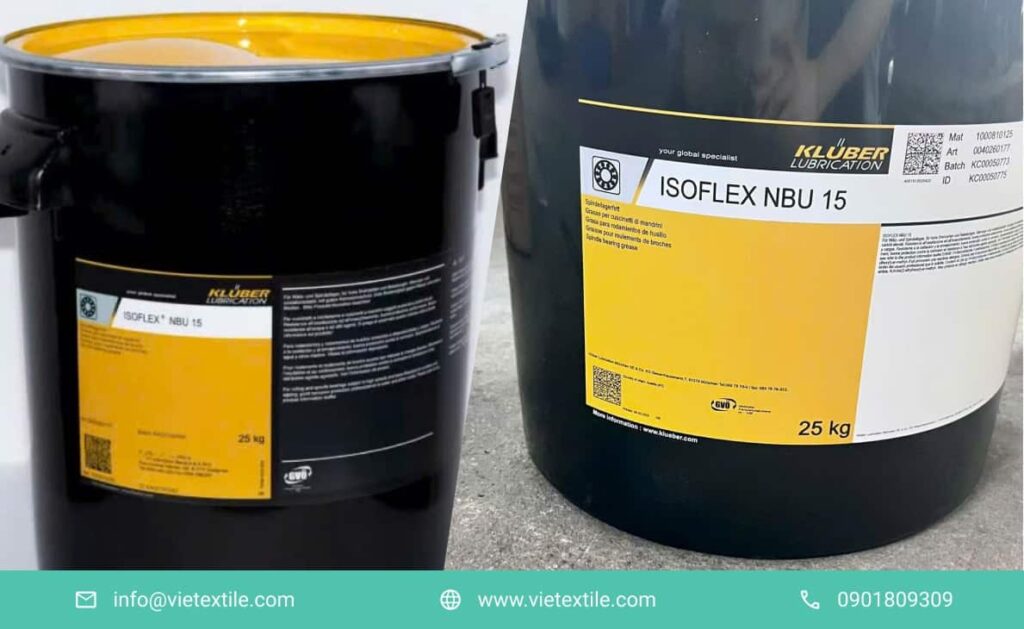
Vì sao mỡ chịu nhiệt Kluber được xem là tiêu chuẩn vàng trong bôi trơn công nghiệp?

Mỡ chịu nhiệt Kluber từ lâu đã khẳng định vị thế dẫn đầu trên thị trường chất bôi trơn công nghiệp. Với khả năng hoạt động ổn định trong điều kiện khắc nghiệt, dòng sản phẩm mỡ chịu nhiệt Kluber là lựa chọn hàng đầu cho các doanh nghiệp. Chúng ta hãy cùng tìm hiểu lý do vì sao mỡ chịu nhiệt Kluber lại được mệnh danh là tiêu chuẩn vàng trong ngành.

mỡ chịu nhiệt kluber chính hãng
Vì sao mỡ chịu nhiệt Kluber được xem là tiêu chuẩn vàng trong bôi trơn công nghiệp? 42

Trong môi trường sản xuất công nghiệp hiện đại, các thiết bị và máy móc thường xuyên phải hoạt động dưới áp lực cao, tốc độ lớn, và đặc biệt là nhiệt độ cực kỳ khắc nghiệt. Những yếu tố này đặt ra thách thức khổng lồ cho việc bảo trì và tuổi thọ của hệ thống vòng bi, bánh răng và các chi tiết chuyển động khác. Chất bôi trơn truyền thống nhanh chóng bị hỏng, bay hơi hoặc chảy ra, dẫn đến mài mòn, hư hỏng đột ngột và làm gián đoạn toàn bộ dây chuyền sản xuất.

Nhận thấy nhu cầu cấp thiết về một giải pháp bôi trơn vượt trội, Klüber Lubrication đã phát triển dòng sản phẩm mỡ chịu nhiệt Kluber. Đây không chỉ là một sản phẩm bôi trơn thông thường, mà là sự kết hợp của công nghệ hóa học tiên tiến, gốc dầu tổng hợp cao cấp, và hệ phụ gia đặc chủng được nghiên cứu trong phòng thí nghiệm hàng đầu thế giới.

Bài viết này sẽ đi sâu vào phân tích toàn diện, lý giải cặn kẽ vì sao mỡ chịu nhiệt Kluber đã vượt qua mọi đối thủ để trở thành “tiêu chuẩn vàng” trong bôi trơn công nghiệp. Chúng ta sẽ khám phá các khía cạnh kỹ thuật cốt lõi như khả năng ổn định nhiệt, hiệu suất chống mài mòn, ứng dụng thực tiễn trong các ngành công nghiệp nặng và dệt may, đồng thời cung cấp hướng dẫn lựa chọn và sử dụng sản phẩm một cách tối ưu.

1. Tổng Quan Về Mỡ Chịu Nhiệt Kluber Và Sự Khác Biệt Cốt Lõi

Mỡ chịu nhiệt Kluber là dòng sản phẩm bôi trơn được thiết kế đặc biệt để duy trì hiệu suất ổn định và cấu trúc bền vững khi tiếp xúc với nhiệt độ làm việc từ trung bình đến rất cao, thường vượt quá 120°C. Sự khác biệt của Kluber không chỉ nằm ở khả năng chịu nhiệt đơn thuần mà còn ở triết lý tạo ra các giải pháp bôi trơn chuyên biệt, phù hợp hoàn hảo với từng ứng dụng riêng lẻ.

1.1. Lịch Sử Và Triết Lý Của Kluber Lubrication

Kluber Lubrication là một công ty toàn cầu có trụ sở tại Đức, với hơn 90 năm kinh nghiệm trong lĩnh vực chất bôi trơn đặc biệt. Triết lý của họ là “Tối đa hóa giá trị cho khách hàng thông qua các giải pháp bôi trơn chuyên biệt.” Thay vì cung cấp các sản phẩm đại trà, Kluber tập trung nghiên cứu các công thức độc quyền cho các ngành công nghiệp đòi hỏi khắt khe nhất. Chính sự chuyên môn hóa này đã làm nên tên tuổi và chất lượng vượt trội của mỗi sản phẩm mỡ chịu nhiệt Kluber.

Kluber không chỉ bán mỡ mà còn bán các giải pháp kỹ thuật, giúp khách hàng giảm chi phí bảo trì, tăng cường hiệu suất thiết bị và kéo dài chu kỳ bôi trơn. Đây là yếu tố then chốt tạo nên lòng tin tuyệt đối từ các nhà sản xuất máy móc (OEM) hàng đầu thế giới. Sự hợp tác chặt chẽ với các OEM cho phép Kluber thử nghiệm và cải tiến mỡ chịu nhiệt Kluber trong điều kiện thực tế, đảm bảo hiệu quả tối ưu.

1.2. Phân Loại Và Công Thức Độc Quyền Của Mỡ Kluber

Dòng sản phẩm mỡ chịu nhiệt Kluber rất đa dạng, được phân loại chủ yếu dựa trên gốc dầu (Synthetic hoặc Mineral) và loại chất làm đặc (Thickener). Các loại phổ biến bao gồm mỡ gốc Perfluoropolyether (PFPE) cho nhiệt độ cực cao, mỡ gốc Polyalphaolefin (PAO) cho hiệu suất cân bằng, và mỡ gốc Lithium Complex cho độ ổn định cơ học cao.

Mỗi công thức của mỡ chịu nhiệt Kluber là sự kết hợp độc đáo giữa ba thành phần chính: gốc dầu, chất làm đặc và phụ gia. Đặc biệt, các phụ gia chống oxy hóa, chống mài mòn và chống ăn mòn được Kluber tự nghiên cứu và phát triển, mang lại khả năng bảo vệ vượt trội mà các sản phẩm khác khó có thể sao chép được. Đây là bí mật giúp các loại mỡ chịu nhiệt Kluber giữ được tính chất vật lý và hóa học ngay cả khi nhiệt độ vượt quá 200°C.

1.3. Các Thông Số Kỹ Thuật Quan Trọng Của Mỡ Chịu Nhiệt

Khi đánh giá hiệu suất của mỡ chịu nhiệt Kluber, cần quan tâm đến các thông số kỹ thuật cốt lõi. Đầu tiên là Phạm Vi Nhiệt Độ Hoạt Động (Service Temperature Range), cho biết biên độ nhiệt tối đa và tối thiểu mà mỡ có thể hoạt động hiệu quả. Điểm Nhỏ Giọt (Dropping Point) chỉ ra nhiệt độ mà mỡ bắt đầu chuyển sang thể lỏng, một thông số cực kỳ quan trọng đối với mỡ hoạt động trong lò nung hoặc máy sấy.

Thứ hai là độ nhớt của gốc dầu (Base Oil Viscosity), ảnh hưởng đến khả năng tạo màng dầu bảo vệ tại tốc độ và tải trọng cụ thể. Cuối cùng, độ xuyên kim (NLGI Consistency Class) xác định độ đặc của mỡ, đảm bảo nó phù hợp với hệ thống bơm và cơ chế bôi trơn đã được lắp đặt. Sự đa dạng về thông số của mỡ chịu nhiệt Kluber cho phép kỹ sư lựa chọn chính xác sản phẩm cần thiết cho mọi ứng dụng.

2. Khả Năng Chịu Nhiệt Và Độ Ổn Định Nhiệt Vượt Trội Của Mỡ Chịu Nhiệt Kluber

cung cấp mỡ chịu nhiệt kluber
Vì sao mỡ chịu nhiệt Kluber được xem là tiêu chuẩn vàng trong bôi trơn công nghiệp? 43

Khả năng chịu đựng và duy trì đặc tính bôi trơn dưới nhiệt độ cao là đặc điểm nổi bật nhất và là lý do chính khiến mỡ chịu nhiệt Kluber trở thành tiêu chuẩn vàng. Khác biệt này xuất phát từ việc sử dụng các thành phần cao cấp nhất và công nghệ pha chế độc quyền.

2.1. Điểm Nhỏ Giọt (Dropping Point) Và Phạm Vi Nhiệt Độ Hoạt Động

Các loại mỡ chịu nhiệt Kluber cao cấp thường có Điểm Nhỏ Giọt rất cao, thậm chí “không xác định” đối với các dòng mỡ gốc PFPE (Perfluoropolyether) sử dụng chất làm đặc PTFE (Teflon). Điều này có nghĩa là mỡ sẽ không bị chảy lỏng hay biến dạng cấu trúc ngay cả khi nhiệt độ vượt quá 250°C. Đây là một lợi thế cực lớn so so với mỡ Lithium thông thường, vốn chỉ chịu được nhiệt độ tối đa khoảng 120-150°C.

Phạm vi nhiệt độ hoạt động rộng của mỡ chịu nhiệt Kluber cũng đảm bảo hiệu suất ổn định trong cả môi trường lạnh và nóng. Ví dụ, một số sản phẩm Kluber có thể hoạt động từ -50°C lên đến +280°C mà không bị đông cứng hay quá mềm. Khả năng này giúp giảm thiểu rủi ro bảo trì theo mùa và đảm bảo máy móc khởi động trơn tru trong mọi điều kiện khí hậu.

2.2. Độ Bền Oxy Hóa Và Ổn Định Cấu Trúc Dưới Nhiệt Độ Cao

Khi mỡ tiếp xúc với nhiệt độ cao và không khí, quá trình oxy hóa sẽ diễn ra, làm mỡ bị cứng lại, tạo cặn (carbon residue) và mất đi khả năng bôi trơn. Mỡ chịu nhiệt Kluber sử dụng gốc dầu tổng hợp (như PFPE, Ester hoặc PAO) có độ bão hòa cao và phụ gia chống oxy hóa mạnh mẽ, giúp chống lại sự thoái hóa này một cách hiệu quả.

Độ bền oxy hóa cao đồng nghĩa với chu kỳ bôi trơn lại dài hơn, giảm tần suất bảo trì và tiết kiệm chi phí vận hành. Hơn nữa, chất làm đặc phức hợp (Complex Thickeners) trong mỡ chịu nhiệt Kluber tạo ra một mạng lưới sợi ổn định, giữ chặt gốc dầu ngay cả khi bị khuấy trộn mạnh hoặc rung động liên tục dưới nhiệt độ cao, bảo toàn cấu trúc gel của mỡ.

2.3. Công Nghệ Chất Làm Đặc (Thickener) Tổng Hợp Cao Cấp

Chất làm đặc đóng vai trò như “khung xương” của mỡ. Kluber sử dụng các chất làm đặc vô cơ hoặc phức hợp đặc biệt, chẳng hạn như Polyurea, Lithium Complex hoặc PTFE. Chất làm đặc Polyurea, một công nghệ tiên tiến, mang lại sự ổn định nhiệt và cơ học vượt trội, ít bị tách dầu hơn và có khả năng chống lại sự xâm nhập của nước.

Trong khi đó, mỡ gốc PFPE của Kluber sử dụng PTFE làm chất làm đặc, không có điểm nhỏ giọt và hoàn toàn trơ về mặt hóa học. Sự kết hợp này giúp mỡ chịu nhiệt Kluber không tạo cặn carbon khi phân hủy (ở nhiệt độ cực cao, nó chỉ bay hơi mà không để lại cặn mài mòn), giữ cho các chi tiết máy sạch sẽ và hoạt động trơn tru lâu dài.

3. Hiệu Suất Bôi Trơn Đỉnh Cao Trong Môi Trường Khắc Nghiệt

Khả năng bôi trơn của mỡ chịu nhiệt Kluber không chỉ dừng lại ở việc chịu nhiệt; nó còn cung cấp khả năng bảo vệ toàn diện trong các điều kiện làm việc khắc nghiệt nhất như chịu tải nặng, tiếp xúc với nước, hóa chất và môi trường bụi bẩn.

3.1. Khả Năng Chịu Tải (Load-Carrying Capacity) Và Chống Mài Mòn (Wear Protection)

Các phụ gia EP (Extreme Pressure) và AW (Anti-Wear) trong mỡ chịu nhiệt Kluber được lựa chọn và pha trộn với tỷ lệ chính xác. Những phụ gia này tạo ra một lớp màng bảo vệ hóa học trên bề mặt kim loại khi áp suất tăng lên đột ngột, ngăn ngừa sự tiếp xúc trực tiếp giữa kim loại và kim loại.

Trong các thử nghiệm tiêu chuẩn như thử nghiệm Bốn Bi (Four-Ball Test), mỡ chịu nhiệt Kluber thường cho kết quả điểm hàn (weld point) và vết mài mòn (wear scar) vượt trội so với các sản phẩm cạnh tranh. Điều này chứng tỏ mỡ Kluber có thể bảo vệ hiệu quả các vòng bi hoạt động dưới tải trọng sốc hoặc rung động mạnh, đặc biệt quan trọng trong máy ép, máy nghiền và các thiết bị nặng.

3.2. Khả Năng Chống Nước Và Chống Rửa Trôi Tuyệt Vời

Trong nhiều ngành công nghiệp, thiết bị không chỉ chịu nhiệt mà còn phải tiếp xúc với hơi nước, nước lạnh hoặc chất lỏng làm mát. Khi mỡ bị hòa tan hoặc rửa trôi, lớp bảo vệ sẽ biến mất, dẫn đến gỉ sét và hỏng hóc. Mỡ chịu nhiệt Kluber sử dụng công thức chống nước tuyệt vời.

Các dòng mỡ gốc Calcium Sulphonate Complex của Kluber, ví dụ, có khả năng chống gỉ sét và chống ăn mòn bẩm sinh, đồng thời có độ bám dính cao. Mỡ bám chặt vào bề mặt kim loại, tạo ra một rào cản vật lý ngăn không cho nước xâm nhập và gây hư hỏng. Nhờ đó, tuổi thọ của vòng bi được kéo dài đáng kể, ngay cả trong môi trường ẩm ướt hoặc dưới vòi phun nước làm sạch.

3.3. Tiết Kiệm Năng Lượng Và Kéo Dài Tuổi Thọ Thiết Bị

Việc sử dụng mỡ chịu nhiệt Kluber chất lượng cao không chỉ là chi phí mà còn là khoản đầu tư mang lại lợi ích kinh tế dài hạn. Nhờ hệ số ma sát thấp và khả năng ổn định ở nhiệt độ cao, Kluber giảm thiểu lực cản ma sát trong quá trình vận hành, giúp máy móc tiêu thụ ít năng lượng hơn.

Khi ma sát giảm, nhiệt độ hoạt động của vòng bi cũng giảm, từ đó làm chậm quá trình lão hóa của mỡ và kim loại. Các nghiên cứu đã chỉ ra rằng việc chuyển sang sử dụng mỡ chịu nhiệt Kluber phù hợp có thể tăng tuổi thọ vòng bi lên gấp đôi hoặc gấp ba lần, giúp giảm thiểu chi phí thay thế linh kiện đắt đỏ và chi phí nhân công cho việc bảo trì.

4. Ứng Dụng Thực Tiễn Rộng Rãi Của Mỡ Chịu Nhiệt Kluber Trong Các Ngành Công Nghiệp

mỡ chịu nhiệt kluber chất lượng cao
Vì sao mỡ chịu nhiệt Kluber được xem là tiêu chuẩn vàng trong bôi trơn công nghiệp? 44

Sự linh hoạt và độ tin cậy của mỡ chịu nhiệt Kluber đã giúp nó trở thành sản phẩm được tin dùng trong hầu hết các lĩnh vực công nghiệp, từ những ngành đòi hỏi vệ sinh nghiêm ngặt đến những ngành có môi trường làm việc khắc nghiệt nhất.

4.1. Ngành Thép Và Công Nghiệp Nặng (Lò Nung, Con Lăn)

Trong ngành sản xuất thép, các vòng bi của xe goòng lò nung (furnace cars) hoặc các con lăn trong dây chuyền đúc liên tục (continuous casting) phải chịu tải cực lớn và nhiệt độ lên tới 250°C. Các dòng mỡ chịu nhiệt Kluber gốc tổng hợp và chất làm đặc phức hợp được thiết kế để chịu được những thách thức này.

Chúng cung cấp khả năng bôi trơn đáng tin cậy cho các vị trí khó tiếp cận, nơi việc bôi trơn lại thủ công là nguy hiểm hoặc không khả thi. Khả năng không tạo cặn carbon của một số loại mỡ Kluber chuyên biệt đảm bảo rằng các rãnh bi và con lăn không bị tắc nghẽn, duy trì độ chính xác và tốc độ sản xuất cao.

4.2. Ngành Dệt May Và Máy Sấy Nhiệt (VieTextile focus area)

Ngành dệt may là một lĩnh vực quan trọng, nơi các chi tiết máy trong máy căng kim, máy sấy và máy hồ sợi hoạt động ở nhiệt độ cao liên tục. Nhiệt độ trong các buồng sấy có thể lên đến 180°C. Nếu sử dụng mỡ thông thường, dầu gốc sẽ nhanh chóng bay hơi, dẫn đến kẹt máy và làm hỏng vải.

Mỡ chịu nhiệt Kluber có công thức đặc biệt cho ngành dệt may, giúp giảm thiểu sự hình thành cặn bẩn, không gây ố vàng hoặc làm bẩn sợi vải. Chúng tôi, VieTextile, khuyến nghị các dòng sản phẩm Kluber chuyên dụng để đảm bảo độ chính xác và tuổi thọ của các xích tải, bạc trượt và vòng bi trong môi trường nhiệt độ cao của máy móc dệt.

4.3. Công Nghiệp Ô Tô Và Chế Tạo (Vòng Bi, Khớp Nối)

Trong ngành ô tô, mỡ chịu nhiệt Kluber được sử dụng rộng rãi trong các bộ phận quan trọng như vòng bi moay-ơ (wheel bearings), khớp nối đồng tốc (CV joints) và các cơ cấu truyền động. Các bộ phận này yêu cầu mỡ phải chịu được lực cắt lớn, tốc độ cao và nhiệt độ phát sinh do ma sát phanh hoặc hoạt động của động cơ.

Mỡ Kluber không chỉ bảo vệ các bộ phận khỏi nhiệt và mài mòn mà còn cung cấp khả năng chống rung động và tiếng ồn (NVH – Noise, Vibration, and Harshness) tuyệt vời. Điều này góp phần nâng cao chất lượng tổng thể và trải nghiệm lái xe của sản phẩm cuối cùng.

4.4. Ngành Thực Phẩm Và Dược Phẩm (Đạt Chuẩn NSF H1)

Đối với các ứng dụng có nguy cơ tiếp xúc ngẫu nhiên với thực phẩm hoặc dược phẩm, Kluber cung cấp dòng mỡ chịu nhiệt Kluber đặc biệt đạt chứng nhận NSF H1. Loại mỡ này được pha chế từ các thành phần không độc hại, không mùi và không vị, đảm bảo an toàn tuyệt đối cho người tiêu dùng.

Dù là mỡ cấp thực phẩm, chúng vẫn duy trì được khả năng chịu nhiệt và chịu tải vượt trội, thích hợp cho các dây chuyền đóng gói, máy trộn, và lò nướng công nghiệp. Việc sử dụng mỡ chịu nhiệt Kluber NSF H1 giúp các doanh nghiệp tuân thủ nghiêm ngặt các quy định về vệ sinh an toàn thực phẩm quốc tế.

5. Phân Biệt Mỡ Chịu Nhiệt Kluber Với Các Dòng Mỡ Thông Thường Khác

Sự khác biệt giữa mỡ chịu nhiệt Kluber và các dòng mỡ công nghiệp giá rẻ khác không chỉ nằm ở giá thành mà còn ở hiệu suất, tuổi thọ, và chi phí vận hành tổng thể (Total Cost of Ownership – TCO).

5.1. Sự Khác Biệt Về Gốc Dầu (Mineral vs. Synthetic)

Hầu hết mỡ thông thường sử dụng gốc dầu khoáng (Mineral Oil), vốn có cấu trúc phân tử không đồng đều. Khi nhiệt độ tăng, dầu khoáng nhanh chóng bị biến đổi, bay hơi, và để lại cặn carbon. Ngược lại, đa số mỡ chịu nhiệt Kluber cao cấp sử dụng gốc dầu tổng hợp (Synthetic Oil) như PAO, Ester, hoặc PFPE.

Dầu tổng hợp có cấu trúc phân tử đồng nhất, mang lại độ ổn định nhiệt và độ nhớt vượt trội trong phạm vi nhiệt độ rộng. Chúng ít bay hơi hơn, có hệ số ma sát thấp hơn, và duy trì tính chất bôi trơn lâu dài hơn nhiều lần so với dầu khoáng, đảm bảo hiệu suất bôi trơn tuyệt hảo của mỡ chịu nhiệt Kluber.

5.2. Phụ Gia Đặc Chủng Và Công Nghệ Additive

Trong khi mỡ thông thường sử dụng các gói phụ gia cơ bản, Kluber đầu tư rất lớn vào việc phát triển các gói phụ gia đặc chủng. Các phụ gia này không chỉ là chống mài mòn hay chống gỉ sét thông thường mà còn là các chất ổn định nhiệt, chất chống oxy hóa tiên tiến, và các chất tăng cường độ bám dính được tối ưu hóa cho từng dòng mỡ chịu nhiệt Kluber cụ thể.

Ví dụ, một số sản phẩm Kluber chứa các hạt rắn bôi trơn như PTFE hoặc Molypden disunfua (MoS2) ở dạng vi mô, giúp duy trì lớp màng bảo vệ ngay cả khi gốc dầu chính đã bị phá vỡ, đảm bảo sự bảo vệ liên tục cho thiết bị.

5.3. Phân Tích Chi Phí Vòng Đời (LCC)

Mặc dù giá thành ban đầu của mỡ chịu nhiệt Kluber có thể cao hơn mỡ thông thường, nhưng khi phân tích Chi Phí Vòng Đời (Life Cycle Cost – LCC), Kluber lại là lựa chọn kinh tế hơn. LCC bao gồm chi phí mua mỡ, chi phí bảo trì (thay thế linh kiện, nhân công), và chi phí dừng máy (downtime).

Do chu kỳ bôi trơn lại của Kluber dài hơn 2-5 lần, tuổi thọ thiết bị tăng lên, và rủi ro hỏng hóc đột ngột giảm thiểu, tổng chi phí vận hành (TCO) của các doanh nghiệp sử dụng mỡ chịu nhiệt Kluber được chứng minh là thấp hơn đáng kể. Việc chọn mỡ chịu nhiệt Kluber chính là một chiến lược quản lý tài sản hiệu quả.

6. Hướng Dẫn Lựa Chọn Và Sử Dụng Mỡ Chịu Nhiệt Kluber Đúng Cách

bán mỡ chịu nhiệt kluber
Vì sao mỡ chịu nhiệt Kluber được xem là tiêu chuẩn vàng trong bôi trơn công nghiệp? 45

Việc lựa chọn và sử dụng đúng loại mỡ chịu nhiệt Kluber là vô cùng quan trọng để khai thác tối đa hiệu suất của sản phẩm và đảm bảo tuổi thọ máy móc. Sai lầm trong việc lựa chọn có thể dẫn đến hậu quả nghiêm trọng.

6.1. Các Tiêu Chí Lựa Chọn Mỡ Phù Hợp Với Ứng Dụng Cụ Thể

Khi lựa chọn mỡ chịu nhiệt Kluber, kỹ sư cần cân nhắc bốn yếu tố chính:

  1. Nhiệt độ hoạt động: Xác định nhiệt độ tối đa và tối thiểu của ứng dụng để chọn mỡ có Phạm Vi Nhiệt Độ Hoạt Động phù hợp.
  2. Tải trọng và Tốc độ: Tải trọng nặng yêu cầu mỡ có độ nhớt gốc dầu cao và phụ gia EP/AW mạnh mẽ. Tốc độ cao yêu cầu mỡ có độ nhớt thấp hơn để giảm ma sát.
  3. Môi trường: Tiếp xúc với nước, hóa chất, hoặc bụi bẩn đòi hỏi mỡ phải có khả năng chống rửa trôi và chống ăn mòn cao (như mỡ gốc Calcium Sulphonate).
  4. Khả năng tương thích: Đảm bảo mỡ Kluber mới tương thích với mỡ cũ và vật liệu làm kín (seal), đặc biệt khi chuyển đổi sang mỡ gốc tổng hợp như PFPE.

Việc tham khảo Bảng Tra Cứu Sản Phẩm (Product Selector Chart) của Kluber hoặc tư vấn trực tiếp từ các chuyên gia của VieTextile là bước không thể thiếu để chọn đúng loại mỡ chịu nhiệt Kluber phù hợp nhất.

6.2. Quy Trình Bôi Trơn Lại (Relubrication) Chuẩn Kỹ Thuật

Việc bôi trơn lại cần tuân thủ nghiêm ngặt theo hướng dẫn của nhà sản xuất máy móc (OEM) hoặc Kluber. Sử dụng quá nhiều mỡ cũng nguy hiểm như sử dụng quá ít. Quá nhiều mỡ có thể gây tăng ma sát, tăng nhiệt độ và phá hủy cấu trúc mỡ.

Trước khi bôi trơn lại bằng mỡ chịu nhiệt Kluber, nên loại bỏ hoàn toàn mỡ cũ (nếu có thể) để tránh pha trộn các loại mỡ không tương thích. Sử dụng dụng cụ bôi trơn sạch sẽ và đảm bảo lượng mỡ nạp vào (relubrication quantity) chính xác. Việc bôi trơn đúng quy trình giúp mỡ chịu nhiệt Kluber phát huy tối đa tuổi thọ và khả năng bảo vệ của mình.

6.3. Sai Lầm Thường Gặp Khi Sử Dụng Mỡ Chịu Nhiệt

Một sai lầm phổ biến là sử dụng cùng một loại mỡ chịu nhiệt Kluber cho mọi ứng dụng. Do Kluber chuyên biệt hóa sản phẩm, mỗi loại mỡ được tối ưu hóa cho một điều kiện vận hành cụ thể (ví dụ: mỡ cho môi trường bụi bẩn sẽ khác mỡ cho môi trường nhiệt độ cực cao).

Sai lầm thứ hai là không chú ý đến khả năng tương thích của chất làm đặc. Trộn lẫn mỡ gốc Lithium với mỡ gốc Polyurea có thể làm mềm mỡ và giảm đáng kể Điểm Nhỏ Giọt, làm hỏng các ưu điểm chịu nhiệt của mỡ chịu nhiệt Kluber. Luôn kiểm tra tính tương thích trước khi chuyển đổi mỡ.

7. VieTextile – Đối Tác Cung Cấp Mỡ Chịu Nhiệt Kluber Chính Hãng Và Giải Pháp Bôi Trơn Toàn Diện

Là một trong những nhà cung cấp giải pháp bôi trơn công nghiệp hàng đầu, VieTextile tự hào là đối tác tin cậy, mang đến các sản phẩm mỡ chịu nhiệt Kluber chính hãng, đảm bảo chất lượng và nguồn gốc xuất xứ. Chúng tôi hiểu rằng trong ngành công nghiệp, chất lượng của chất bôi trơn ảnh hưởng trực tiếp đến hiệu quả sản xuất và lợi nhuận của doanh nghiệp.

Đội ngũ kỹ thuật của VieTextile được đào tạo chuyên sâu về các dòng sản phẩm của Kluber, sẵn sàng cung cấp dịch vụ tư vấn kỹ thuật toàn diện. Chúng tôi không chỉ cung cấp mỡ chịu nhiệt Kluber mà còn giúp khách hàng phân tích điều kiện vận hành, lựa chọn chủng loại mỡ phù hợp nhất, và thiết lập chu trình bảo trì tối ưu. Điều này giúp khách hàng yên tâm về hiệu suất hoạt động liên tục của máy móc.

Chúng tôi đặc biệt chú trọng đến các giải pháp cho ngành dệt may, nơi nhiệt độ cao là thách thức lớn nhất. VieTextile cung cấp các dòng mỡ chịu nhiệt Kluber chuyên dụng cho máy sấy, máy căng kim và các xích tải, giúp giảm thiểu tối đa tình trạng kẹt máy và tiết kiệm năng lượng. Cam kết của chúng tôi là đảm bảo rằng mọi khách hàng đều nhận được sản phẩm mỡ chịu nhiệt Kluber có chất lượng cao nhất và dịch vụ hậu mãi tốt nhất.

VieTextile luôn duy trì tồn kho đa dạng các loại mỡ chịu nhiệt Kluber được sử dụng phổ biến nhất, đảm bảo khả năng cung ứng nhanh chóng, giảm thiểu thời gian chờ đợi và gián đoạn sản xuất. Việc hợp tác với VieTextile là bước đi chiến lược giúp doanh nghiệp của bạn áp dụng tiêu chuẩn vàng trong bôi trơn công nghiệp.

8. Câu Hỏi Thường Gặp Về Mỡ Chịu Nhiệt Kluber

8.1. Mỡ Chịu Nhiệt Kluber Có Thể Được Sử Dụng Ở Nhiệt Độ Tối Đa Bao Nhiêu?

Trả lời: Phạm vi nhiệt độ hoạt động của mỡ chịu nhiệt Kluber rất rộng, phụ thuộc vào công thức cụ thể. Các dòng mỡ gốc PFPE cao cấp có thể hoạt động ổn định và bôi trơn hiệu quả ở nhiệt độ lên đến +280°C, thậm chí là cao hơn trong một số trường hợp đặc biệt.

8.2. Mỡ Kluber Có Cần Pha Trộn Với Bất Kỳ Chất Bôi Trơn Nào Khác Không?

Trả lời: Tuyệt đối không. Việc pha trộn mỡ chịu nhiệt Kluber với bất kỳ loại mỡ nào khác không được khuyến nghị vì có thể dẫn đến mất tính tương thích, giảm Điểm Nhỏ Giọt, và phá hủy cấu trúc ổn định của mỡ, làm giảm nghiêm trọng hiệu suất bôi trơn chịu nhiệt.

8.3. Làm Thế Nào Để Biết Khi Nào Cần Bôi Trơn Lại Thiết Bị Bằng Mỡ Kluber?

Trả lời: Chu kỳ bôi trơn lại của mỡ chịu nhiệt Kluber thường dài hơn mỡ thông thường rất nhiều. Nó phụ thuộc vào các yếu tố như nhiệt độ, tốc độ, tải trọng và kích thước vòng bi. Việc tốt nhất là sử dụng phương pháp bảo trì dự đoán (Predictive Maintenance) thông qua phân tích mẫu mỡ hoặc tư vấn từ chuyên gia của VieTextile.

8.4. Mỡ Chịu Nhiệt Kluber Có Phiên Bản An Toàn Thực Phẩm Không?

Trả lời: Có. Kluber cung cấp dòng mỡ chịu nhiệt Kluber đạt chứng nhận NSF H1, được thiết kế đặc biệt cho các ứng dụng trong ngành thực phẩm, đồ uống và dược phẩm, nơi có khả năng tiếp xúc ngẫu nhiên với sản phẩm cuối cùng.

8.5. Chi Phí Ban Đầu Của Mỡ Chịu Nhiệt Kluber Có Đáng Giá Không?

Trả lời: Chi phí ban đầu của mỡ chịu nhiệt Kluber có thể cao hơn, nhưng khi xét đến Chi Phí Vòng Đời (LCC) bao gồm việc kéo dài tuổi thọ thiết bị, giảm chi phí bảo trì, và loại bỏ chi phí dừng máy do hỏng hóc, mỡ Kluber mang lại giá trị kinh tế và hiệu quả đầu tư vượt trội.

Để tối ưu hóa hiệu suất bôi trơn với mỡ chịu nhiệt Kluber chuyên nghiệp, hãy liên hệ VieTextile ngay hôm nay!

Thông tin liên hệ: 

Hotline: 0901 809 309 

Email: info@vietextile.com 

Website: https://vietextile.com

7个导致设备过早失效的高温润滑脂使用错误

在现代工业环境中,尤其是在重型制造、钢铁、水泥和纺织等行业,机械部件不可避免地要承受高温、极限压力和连续运行速度。为了保持稳定性能和延长设备寿命,使用高温润滑脂供应进行润滑是首要的解决方案。优质的高温润滑脂不仅能减少摩擦、防止磨损,而且必须在超过150°C甚至200°C的温度下保持其结构稳定性。

然而,现实表明,维护故障并非总是由于润滑脂质量,而大多源于使用过程中的错误。从选择错误的润滑脂类型到不准确的再润滑程序,这些小错误可能累积起来,导致重大故障,中断生产并产生昂贵的维修成本。

本文基于在高温润滑脂供应和工业维护领域的深入经验而撰写,旨在强调7个最严重的错误。我们将深入探讨每个错误,分析根本原因,并提供详细的纠正措施,从而帮助企业优化使用效率,并为其系统找到最佳的高温润滑脂供应解决方案。

cung cấp mỡ chịu nhiệt
7个导致设备过早失效的高温润滑脂使用错误 51

1. 什么是高温润滑脂及其关键作用?

高温润滑脂,也称为高温润滑油膏,是一种半固体润滑剂,专门设计用于在温度超过传统润滑脂适用范围(通常为120°C及以上)的环境中有效运行。润滑脂的基本组成包括基础油(70-95%)、增稠剂(5-20%)和添加剂(0-10%)。高温润滑脂与多用途润滑脂的最大区别在于增稠剂和添加剂。

1.1. 高温润滑脂的组成与独特成分

增稠剂决定了润滑脂的耐热性和机械稳定性。传统润滑脂通常使用锂基,而优质的高温润滑脂则采用复杂的基质,如复合锂 (Lithium Complex)、复合铝 (Aluminum Complex)、聚脲 (Polyurea),甚至无机粘土 (Bentonite),以防止在温度升高时熔化、分解或油分离。这些增稠剂有助于润滑脂保持其结构,将基础油保留在润滑点。了解这个组成部分是避免后续错误的基础。不合适的高温润滑脂会随着温度的升高而迅速失去其润滑结构,导致润滑脂变干,并发生直接的金属对金属磨损。

1.2. 优质高温润滑脂的基本特性

一家信誉良好的高温润滑脂供应供应商将始终强调以下特性:

高滴点 (High Dropping Point): 这是润滑脂从半固态转变为液态的温度。高温润滑脂的滴点必须高于250°C,以确保结构稳定性。 优异的氧化稳定性 (Superior Oxidation Stability): 在高温下,基础油会迅速氧化,形成坚硬的碳沉积物,导致卡死并破坏轴承。优质的高温润滑脂需要强大的抗氧化添加剂。 极压/抗磨 (EP/AW) 能力: 减少摩擦并保护重载机械部件。 机械稳定性 (Mechanical Stability): 润滑脂不得在连续的剪切力和振动下软化或剪切降解,这对于采购用于高速轴承的耐高温润滑产品尤其重要。

2. 错误一:用多用途润滑脂代替高温润滑脂

这是最常见的错误,通常是出于削减成本的愿望或缺乏技术知识。许多技术人员认为所有润滑脂都一样,可以互换使用。

2.1. 用多用途润滑脂替代高温润滑脂的后果

多用途润滑脂(通常是常规锂基)的滴点在180°C至200°C之间。当在运行温度为150°C或更高的环境中使用时,多用途润滑脂会迅速遇到以下问题:

熔化和油分离: 在高温下,增稠剂不足以保留基础油。润滑脂变成液体,从润滑点泄漏出去,使得接触表面失去保护。 快速碳化: 基础油并非为高温设计,会氧化降解,形成坚硬的碳沉积物。这些沉积物充当磨粒,导致轴承和衬套严重磨损。 润滑结构失效: 缺乏保护,轴承寿命急剧下降,可能会在仅仅运行数百小时后就失效,而不是预期的数千小时。

2.2. 耐高温润滑产品的适当温度分类标准

在选择和使用耐高温润滑产品时,准确确定设备的实际运行温度至关重要。国际标准通常根据以下方面对润滑脂进行分类:

连续运行温度 (Continuous Operating Temperature): 润滑脂可以长时间保持其润滑性能的温度。对于高温润滑脂,该水平必须高于140°C。 峰值温度 (Peak Temperature): 润滑脂在不发生完全结构破坏的情况下可以承受的短时最高温度。

使用合成基础油润滑脂: 如果温度超过180°C,含有合成基础油(PAO、酯类)的润滑脂是强制性的,因为它们比矿物基础油具有明显更高的热稳定性和氧化稳定性。专业的耐高温润滑产品公司总是建议在极热应用中使用合成基础油。

2.3. 纠正错误润滑脂替代错误的解决方案

唯一的解决方案是严格遵守设备制造商 (OEM) 和耐高温润滑产品专家的建议。

温度评估: 使用红外测温枪或热传感器确定轴承的实际表面温度,而不仅仅是环境温度。 使用特殊基础润滑脂: 替换为复合锂、聚脲润滑脂(电动马达轴承常见),或特氟龙/PTFE润滑脂(用于极高温度,高于250°C)。 制定润滑手册: 创建每台设备的润滑脂类型和润滑周期的详细清单,以防止意外混用。培训维护人员正确识别高温和多用途润滑脂。

3. 错误二:维护过程中润滑脂过多或过少

润滑脂过多和过少都是极具破坏性的错误,导致超过80%的轴承过早失效。

3.1. 高温润滑脂过多润滑的风险分析

这个错误通常源于“越多越好”的想法。然而,向高速、高温轴承中注入过多的耐高温润滑产品会导致:

温度突然升高: 随着轴承旋转,多余的润滑脂被滚子/滚珠连续搅动。这种搅动产生内部摩擦,显著升高轴承温度,有时甚至超过润滑脂自身的热限。这会产生一个破坏性循环:润滑脂升温 -> 失去结构 -> 润滑脂变成液体 -> 摩擦进一步增加。 内部压力增加: 过量的润滑脂无处可逃,在密封内部产生高压。这种压力会迫使密封件打开,导致密封件损坏,允许耐高温润滑产品泄漏,更重要的是,允许污垢和水渗入轴承腔。 能耗增加: 内部摩擦增加不仅导致发热,还会增加电机负载,导致高于正常的功耗。

3.2. 高温润滑脂过少润滑的严重后果

相反,由于维护疏忽或害怕润滑脂过多,润滑脂不足也是一个常见问题。

直接磨损: 润滑脂不足无法在金属表面之间形成完美的保护膜。部件直接接触,导致快速磨损,尤其是在残留润滑脂已氧化变干的高温环境中。 振动和噪音增加: 缺乏润滑会增加设备振动。这是即将发生故障的最清晰迹象。此时,寻找耐高温润滑产品解决方案已为时过晚,无法挽救轴承。 停机时间增加: 轴承故障需要紧急停机,造成的损害远大于润滑脂的成本。

3.3. 精确润滑方法(再润滑标准)

要纠正此错误,请应用精确的基于时间和体积的润滑方法:

计算时间间隔: 润滑周期根据轴承类型、速度 (RPM)、直径和运行温度(K系数)计算。 计算体积: 所需润滑脂量通常使用公式计算:G = 0.005 x D x B(其中 G 是润滑脂体积,单位为克;D 是轴承外径,B 是轴承宽度,单位为毫米)。 使用辅助工具: 使用带计量器的注油枪或自动润滑装置,精确控制添加的润滑脂量,避免在为机械进行耐高温润滑产品过程中的错误。

4. 错误三:不经常检查润滑脂的兼容性

cung cấp mỡ chịu nhiệt chất lượng cao
7个导致设备过早失效的高温润滑脂使用错误 52

混合两种不兼容的高温润滑脂是导致润滑脂结构破坏和设备故障的主要原因之一。

4.1. 不兼容现象和失效机制

高温润滑脂由基础油、增稠剂和添加剂组成。不兼容性主要发生在两种不同的增稠剂混合时。

增稠剂分解: 当复合锂润滑脂与聚脲基润滑脂(两种常见类型)混合时,增稠剂的纤维结构可能会断裂,导致润滑脂突然软化。润滑脂迅速失去其稠度(NLGI等级),变得更稀,并泄漏出去。 添加剂反应: 两种润滑脂中的添加剂包(如EP、AW、防锈剂)可能相互发生化学反应,降低保护效果,甚至产生腐蚀性副产物。 滴点降低: 润滑脂混合物的滴点可能显著降低,有时甚至低于设备的实际运行温度,导致润滑脂立即变成液体。这是在高温应用中使用耐高温润滑产品时的关键错误。

4.2. 常见高温润滑脂的兼容性分类表

为确保安全,必须查阅《润滑脂兼容性图表》。如果两种润滑脂混合后仍能保持其稠度、滴点和机械稳定性,则认为它们是兼容的。

通常兼容: 锂基与锂基,复合锂与复合锂。 临界(谨慎使用): 复合锂与复合钙。 不兼容(导致故障): 锂基与聚脲,钠基与复合锂,钡基与聚脲。

注意: 即使两种润滑脂具有相同的基础(例如,复合锂),但来自两家不同的耐高温润滑产品供应商,也应仔细检查,因为添加剂可能存在差异。

4.3. 安全的高温润滑脂转换程序

如果强制从一种润滑脂切换到另一种润滑脂,程序必须彻底:

清洗/冲洗 (Purging/Flushing): 从润滑点完全清除旧润滑脂。在敏感应用中,需要手动拆卸和清洁。在其他情况下,注入大量新润滑脂以将旧润滑脂推挤出去(冲洗),然后重新注入精确的标准体积。 稳定性监测: 转换后,在前几天监测温度、振动和噪音。如果温度异常升高,必须停止机器并再次检查兼容性。耐高温润滑产品必须附带安全转换能力的承诺。

5. 错误四:忽视密封件的重要性

高温润滑脂只有在被保留在原位并远离污染物时才能有效工作。密封件充当保护屏障。忽略密封件的状况是致命的错误。

5.1. 高温润滑脂受到环境污染

使用高温润滑脂的设备运行环境通常很恶劣,存在污垢、水分、化学物质或金属粉尘。

固体污染物进入: 损坏或硬化的密封件允许固体颗粒(灰尘、碎屑)进入润滑腔。这些颗粒迅速将高温润滑脂变成磨料,类似于砂纸,损坏滚子和轴承滚道的表面。 水/水分的影响: 水是润滑脂的最大敌人。它会降低润滑能力,导致轴承生锈,并改变润滑脂的稠度。复合锂润滑脂具有更好的耐水性,但如果密封件损坏,没有任何润滑脂可以承受大量水的进入。

5.2. 选择与高温润滑脂不兼容的密封件的后果

一个较少被注意的技术错误是润滑脂与密封件材料之间的不兼容性。

对密封件的化学影响: 高温润滑脂中的某些基础油或添加剂可能导致密封件材料(通常是NBR、FKM/Viton、硅酮)收缩、膨胀或硬化。变形的密封件会失去其密封能力,导致润滑脂泄漏和污染物进入。

示例: 含有合成酯基础油的润滑脂通常与标准NBR(丁腈橡胶)密封件不兼容,导致密封件膨胀。专业的耐高温润滑产品供应商必须掌握这些数据才能为客户提供建议。

5.3. 密封件检查和更换策略

例行目视检查: 在每次维护周期中,应检查密封件是否有裂纹、变形或润滑脂泄漏的迹象。如果密封件变硬或颜色异常(由于温度过高),必须立即更换。 密封件材料咨询: 在采购和接收耐高温润滑产品时,请向供应商咨询适合该润滑脂类型的密封件材料建议。例如,对于合成润滑脂,FKM (Viton) 密封件通常是比NBR更安全的选择。

6. 错误五:跳过废润滑脂分析

cung cấp mỡ chịu nhiệt uy tín
7个导致设备过早失效的高温润滑脂使用错误 53

废润滑脂分析是一种强大的预测性维护诊断工具,类似于油液分析。忽略此工具意味着错失了及早发现潜在设备问题的机会。

6.1. 高温废润滑脂分析的核心价值

废润滑脂分析提供了对润滑脂状况和设备状况的深入洞察。它有助于回答三个关键问题:

润滑脂是否仍然良好? 检查稠度 (NLGI)、滴点和剩余的氧化稳定性,以确定高温润滑脂是否已发生热降解。 是否存在污染物? 检测固体颗粒、水、污垢或化学物质的含量。高水平的污染表明密封件失效或清洁程序不佳。 设备是否正在失效? 分析磨损金属的含量。高浓度的铁 (Fe)、铜 (Cu) 和铬 (Cr) 的存在是轴承、轴或外壳正在磨损并接近失效的直接证据。

6.2. 进行分析的成本和益处

虽然将润滑脂样品送去分析会产生费用,但其提供的益处远远超过成本:

延长润滑周期: 如果分析结果显示高温润滑脂在预期周期后仍然良好,公司可以安全地延长润滑周期,节省购买和采购新的耐高温润滑产品的成本。 防止灾难: 及早发现高磨损金属含量有助于在灾难性故障发生之前安排停机维修,最大限度地减少材料损坏和停机时间。 产品质量检查: 有时,对劣质或热不稳定润滑脂的检测得益于分析。这为公司重新评估其当前的耐高温润滑产品供应商提供了依据。

6.3. 精确润滑脂采样程序

采样必须确保代表性:

从运行区域采样: 润滑脂样品必须直接从轴承的负载区采集,即润滑脂承受最高负载和热量的区域。 使用清洁工具: 采样工具必须完全清洁,以避免与其他润滑脂或碎屑发生交叉污染。样品必须在机器以其正常运行温度稳定运行后采集。

7. 错误六:忽视润滑脂稠度(NLGI等级)

稠度(NLGI等级)是一个极其重要的技术参数,决定了润滑能力和润滑脂保留能力。忽视此因素,尤其是在专业应用中,是一个常见的错误。

7.1. NLGI指数在耐高温润滑产品中的重要性

NLGI(美国润滑脂学会)等级将润滑脂稠度从000(最稀)分类到6(最稠)。

NLGI 2润滑脂(常见): 这是标准稠度,类似于花生酱,广泛用于大多数一般轴承应用。 NLGI 1润滑脂(较稀): 通常用于集中润滑系统或在极低温度下运行的轴承,需要较软的润滑脂以便于泵送。 NLGI 3润滑脂(较稠): 适用于高速轴承、具有高振动或垂直定向轴的轴承,需要较稠的润滑脂来抵抗流动和泄漏。

7.2. 在高温应用中选择错误稠度的后果

在高温环境中,选择错误的NLGI可能会导致问题:

选择过稀的润滑脂(NLGI 1或更低): 尽管高温润滑脂的配方不会熔化,但如果润滑脂一开始就过稀,随着温度升高,它会很快流出轴承,留下不足以润滑的厚度层。 选择过稠的润滑脂(NLGI 3或更高): 过稠的润滑脂将难以通过集中润滑系统的细小管线泵送,尤其是在寒冷环境中(即使是高温润滑脂,在环境温度下仍会变稠)。润滑脂未到达润滑点将导致润滑不足,类似于错误二。此外,过稠的润滑脂可能导致更高的内部摩擦,从而导致温度升高。

7.3. 如何选择最佳稠度

稠度选择必须基于三个主要因素:

设备速度: 更高的速度需要更稠的润滑脂 (NLGI 3)。低速(重载)需要稍微软一些的润滑脂 (NLGI 2 或 1) 以确保良好润滑。 分配系统: 集中润滑系统要求润滑脂的稠度为NLGI 1或2,以便于泵送。 润滑脂保留能力(密封能力): 如果密封件略有磨损或轴是垂直的,则应选择较稠的润滑脂 (NLGI 3) 以帮助保留润滑脂。专业的耐高温润滑产品供应商必须熟悉这些标准。

8. 错误七:对多种润滑脂使用同一注油枪

cung cấp mỡ chịu nhiệt giá tốt
7个导致设备过早失效的高温润滑脂使用错误 54

类似于不兼容错误(错误三),这个错误与交叉污染有关,但原因在于维护工具。

8.1. 工具带来的交叉污染风险

在大型工厂中,维护部门通常只有几把注油枪,并且在使用之间只进行表面清洁。这会导致:

不兼容增稠剂的转移: 残留在注油枪和软管中的旧润滑脂(通常只有几克)可能含有不兼容的增稠剂。当注入新的耐高温润滑产品时,这些旧润滑脂会混合,导致反应,破坏润滑点处的润滑脂结构。 污染物的转移: 注油枪可能含有污垢、沙子或失效润滑脂中的碳沉积物。这些物质会随着新的高温润滑脂一起被泵入轴承,导致立即磨损。这是缩短轴承寿命的最快方法。

8.2. 维护中的“一枪一脂”标准

为了完全消除这种风险,现代维护标准始终坚持“一枪一脂”原则:

清晰识别: 每把注油枪、每个气动泵和每个润滑脂容器必须进行颜色编码或编号,以专门指定一种润滑脂类型。示例:红色注油枪仅用于高温复合锂润滑脂,蓝色注油枪仅用于重载磺酸钙润滑脂。 使用专用接头: 为每种润滑脂类型定制不同类型的润滑脂接头,以防止人员意外使用错误的注油枪。组织耐高温润滑产品过程必须伴随着组织存储和工具。

8.3. 注油枪清洁程序(如果强制共享使用)

如果由于经济或其他限制,注油枪必须共享,清洁程序必须严格:

冲洗: 将大量新润滑脂(下一步要使用的类型)通过注油枪泵送,直到看不到旧润滑脂的迹象。这个操作会消耗润滑脂,但对于清洁软管是必要的。 存放注油枪: 始终在软管中保留少量新的、指定的润滑脂来存放注油枪,以防止灰尘和水分进入注油枪。

9. 错误八:忽视现代方法的温度监测

依靠直觉评估温度是一个重大错误。当温度超过润滑脂的允许阈值时,设备会迅速失效。

9.1. 高温对高温润滑脂的破坏性影响

温度具有累积效应。每当温度超过连续运行极限(例如150°C)时,高温润滑脂的寿命就会减半。

加速氧化: 温度升高加速了基础油的氧化反应。润滑脂迅速变硬,失去润滑能力。 油分离: 高温导致增稠剂失去保留基础油的能力。油分离得更快,导致润滑脂过早变干。 突然失效: 如果温度接近滴点,润滑脂会突然变成液体,导致立即的灾难性故障。

9.2. 非接触式温度测量的重要性

温度检查必须定期和系统地进行:

红外测温枪 (IR Thermometer Gun): 这是最基本的工具,可以快速安全地测量轴承外壳表面温度。 热像仪: 提供热量分布的视觉图像,有助于检测由过度摩擦或润滑不良引起的异常热点 (Hot Spots)。 振动监测系统: 当润滑脂失效时,摩擦增加会增加振动。监测振动是检测润滑和温度问题的间接但有效的方法。

9.3. 建立安全预警阈值

企业需要建立温度预警阈值:

正常运行阈值: 稳定的运行温度,无需采取行动。 警报阈值: 温度比基线温度升高5°C – 10°C。应检查润滑,考虑是否注入少量额外的耐高温润滑产品报警阈值: 温度比基线升高15°C – 20°C。必须停止机器进行立即检查,因为轴承可能正在遭受破坏。

10. 错误九:使用过时的润滑方法

保持旧的维护习惯,缺乏对润滑技术的更新,也是导致设备快速失效的一个错误。

10.1. 固定时间润滑计划的局限性

许多工厂仍使用僵化的润滑计划:“每3个月润滑一次。”

缺乏灵活性: 固定周期不能反映实际运行条件(负载、速度、温度、湿度)。在恶劣条件下,3个月可能太长,导致故障。 润滑脂过多风险: 在较轻的运行条件下,3个月周期可能导致耐高温润滑产品过多,造成错误二。

10.2. 趋向基于工况的润滑 (CML)

先进的维护系统正转向CML:

基于振动/温度的润滑: 仅当振动或温度传感器指示摩擦增加时才注入润滑脂,表明润滑膜正在破裂。 超声波润滑: 这是最佳方法。技术人员使用超声波设备“聆听”轴承的摩擦噪音。当噪音增加(由于缺乏润滑脂)时,他们缓慢注入耐高温润滑产品,直到摩擦噪音降回正常水平。这确保了润滑脂量始终处于最佳水平,避免了过多和过少润滑。

10.3. 更新现代耐高温润滑产品解决方案

要纠正过时的错误,企业需要投资于:

自动润滑器: 安装紧凑的自动润滑器,编程为以短、定期的时间间隔(例如,每天0.1克)注入少量耐高温润滑产品。这有助于保持稳定的润滑膜,对于难以到达的位置尤为重要。 深度培训: 培训维护团队掌握现代诊断技术,如振动分析和超声波润滑,提高他们使用专业耐高温润滑产品的能力。

11. VieTextile:适用于所有行业的优质高温润滑脂供应解决方案

VieTextile很荣幸能成为耐高温润滑产品领域和越南领先的工业润滑解决方案的战略合作伙伴。我们理解产品质量只是价值链的一部分;更重要的是提供知识和专业咨询服务,以帮助客户避免导致设备过早失效的7个常见错误。我们的承诺不仅限于耐高温润滑产品本身,更在于确保您的机械系统实现最大的运行效率。

VieTextile的技术团队在评估恶劣运行环境方面拥有广泛的经验,从窑炉、高温干燥线到高速电机。我们提供优质的耐高温润滑产品系列,增稠剂基础(复合锂、聚脲、磺酸钙)和基础油(矿物、PAO、酯类)多样化,经证明可在高达280°C的温度下保持结构稳定性。我们产品的多样性使我们能够提供定制化的耐高温润滑产品,以完美匹配您正在应用的每种密封件材料和维护周期。

我们优先考虑在耐高温润滑产品之前、期间和之后的全面技术咨询。这包括支持客户建立润滑脂兼容性图表、根据实际机器工况设置润滑阈值(基于工况的润滑),以及培训维护人员掌握精确的再润滑技术。通过VieTextile,您购买的不仅仅是润滑剂;您购买的是一个全面的解决方案,有助于延长设备寿命、最大限度地减少停机时间并优化运营成本。我们随时准备支持您的所有耐高温润滑产品要求。

12. 关于高温润滑脂的常见问题 (FAQ)

12.1. 问:我如何知道我使用的高温润滑脂是否因温度而失效?

答:最明显的迹象是轴承温度异常高(错误八),润滑脂变硬,形成碳沉积物(也称为结焦),或润滑脂变成液体并泄漏出去。需要检查滴点和稠度。VieTextile提供具有明确技术规格的耐高温润滑产品,以便于比较。

12.2. 问:我可以混合两种具有相同复合锂基础但来自不同制造商的高温润滑脂吗?

答:理论上可以(兼容),但应避免。添加剂和基础油可能存在差异,导致反应降低润滑脂的性能或稳定性。请始终寻求稳定的耐高温润滑产品来源,以避免混合润滑脂。

12.3. 问:哪个NLGI指数最适合高温润滑脂?

答:没有“最佳”指数。最常见的NLGI等级是2。但是,如果设备具有极高的转速或垂直轴,NLGI 3会更好地抵抗泄漏。如果是集中润滑系统,NLGI 1或0可能是必要的。VieTextile提供多样化的NLGI耐高温润滑产品以适应特定应用。

12.4. 问:高温润滑脂过多润滑的错误是否比润滑脂不足更严重?

答:两者都很严重,但过多润滑(错误二)通常会导致温度和压力迅速升高,导致密封件损坏和润滑脂结构破坏。润滑脂不足则导致渐进性磨损。两者都会显著缩短设备寿命。

12.5. 问:VieTextile向哪些行业供应高温润滑脂?

答:VieTextile向许多行业提供耐高温润滑产品例如纺织(干燥、锅炉)、钢铁(炉轴承)、水泥(回转窑、研磨)、电力(电动马达轴承)以及面临高温和负载条件的制造工厂。

要专业有效地纠正导致设备过早失效的7个高温润滑脂使用错误,请立即联系VieTextile!

联系信息: 

Hotline: 0901 809 309 

Email: info@vietextile.com 

Website: https://vietextile.com

7 High-Temperature Grease Usage Mistakes That Lead to Premature Equipment Failure

In the modern industrial environment, especially in heavy manufacturing, steel, cement, and textile sectors, it is inevitable that machinery components endure high temperatures, extreme pressures, and continuous operating speeds. To maintain stable performance and extend equipment lifespan, lubrication using High-Temperature Grease Supply is the premier solution. A high-quality high-temperature grease not only reduces friction and prevents wear but must also maintain its structural stability at temperatures exceeding 150°C, and even 200°C.

However, reality shows that maintenance failures are not always due to grease quality, but mostly stem from mistakes during usage. From selecting the wrong type of grease to inaccurate re-greasing procedures, these minor errors can accumulate and cause major failures, interrupting production and incurring expensive repair costs.

This article is developed based on in-depth experience in the field of High-Temperature Grease Supply and industrial maintenance, aiming to highlight the 7 most serious mistakes. We will delve into each error, analyze the root causes, and provide detailed corrective actions, thereby helping businesses optimize usage efficiency and find the best High-Temperature Grease Supply solution for their systems.

cung cấp mỡ chịu nhiệt
7 High-Temperature Grease Usage Mistakes That Lead to Premature Equipment Failure 60

1. What is High-Temperature Grease and its Crucial Role?

High-temperature grease, also known as high-temperature lubricating grease, is a semi-solid lubricant specially designed to operate effectively in environments with temperatures exceeding those suitable for conventional greases (typically 120°C and above). The basic composition of grease includes base oil (70-95%), thickener (5-20%), and additives (0-10%). The biggest difference between high-temperature grease and multi-purpose grease lies in the thickener and additives.

1.1. Composition and Distinctive Ingredients of High-Temperature Grease

The thickener determines the thermal resistance and mechanical stability of the grease. While conventional greases often use a Lithium base, premium high-temperature greases utilize complex bases such as Lithium Complex, Aluminum Complex, Polyurea, or even inorganic clay (Bentonite) to prevent melting, decomposition, or oil separation when temperatures rise. These thickeners help the grease maintain its structure, keeping the base oil at the lubrication point. Understanding this component is the foundation for avoiding later mistakes. An unsuitable high-temperature grease will quickly lose its lubricating structure as the temperature increases, leading to grease drying out and direct metal-to-metal wear.

1.2. Essential Characteristics of Quality High-Temperature Grease

A reputable High-Temperature Grease Supply provider will always emphasize the following characteristics:

  • High Dropping Point: This is the temperature at which the grease transitions from a semi-solid to a liquid state. High-temperature grease must have a Dropping Point above 250°C, ensuring structural stability.
  • Superior Oxidation Stability: At high temperatures, the base oil oxidizes rapidly, forming hard carbon deposits that cause seizing and destroy the bearings. Good high-temperature grease requires strong anti-oxidation additives.
  • Extreme Pressure / Anti-Wear (EP/AW) Capability: Reduces friction and protects heavily loaded machine parts.
  • Mechanical Stability: The grease must not soften or be sheared down under continuous cutting forces and vibration, which is especially important when sourcing High-Temperature Grease Supply for high-speed bearings.

2. Mistake 1: Using Multi-Purpose Grease Instead of High-Temperature Grease

This is the most common mistake, often occurring due to a desire to cut costs or a lack of technical knowledge. Many technicians believe all greases are the same and can be used interchangeably.

2.1. Consequences of Substituting High-Temperature Grease with Multi-Purpose Grease

Multi-purpose grease (typically regular Lithium base) has a Dropping Point ranging from 180°C to 200°C. When used in an environment with operating temperatures of 150°C or higher, multi-purpose grease quickly encounters the following problems:

  • Melting and Oil Separation: At high temperatures, the thickener is insufficient to retain the base oil. The grease turns liquid, leaks out of the lubrication point, leaving the contact surfaces unprotected.
  • Rapid Carbonization: The base oil, not designed for high temperatures, will oxidize and degrade, forming hard carbon deposits. These deposits act as abrasive particles, causing severe wear on the bearings and bushings.
  • Lubrication Structure Failure: Lacking protection, bearing lifespan drastically decreases, potentially failing after only a few hundred hours of operation instead of the thousands of hours anticipated.

2.2. Appropriate Temperature Classification Standards for High-Temperature Grease Supply

When selecting and utilizing High-Temperature Grease Supply, it is crucial to accurately determine the equipment’s actual operating temperature. International standards typically classify grease by:

  • Continuous Operating Temperature: The temperature at which the grease can maintain its lubricating properties for extended periods. For high-temperature grease, this level must be above 140°C.
  • Peak Temperature: The maximum temperature the grease can withstand for a short duration without complete structural breakdown.

Using Synthetic Base Oil Grease: If temperatures exceed 180°C, greases with synthetic base oils (PAO, Ester) are mandatory because they possess significantly higher thermal and oxidation stability than mineral base oils. Professional High-Temperature Grease Supply companies always advise on synthetic base oils for extremely hot applications.

2.3. Solution to Correcting the Wrong Grease Substitution Mistake

The only solution is strict adherence to the recommendations of the equipment manufacturer (OEM) and the High-Temperature Grease Supply specialist.

  • Temperature Assessment: Use an IR thermometer gun or thermal sensors to determine the actual surface temperature of the bearing, not just the ambient temperature.
  • Use Special Base Greases: Substitute with Lithium Complex, Polyurea grease (common for electric motor bearings), or Teflon/PTFE grease (for extremely high temperatures, above 250°C).
  • Develop a Lubrication Manual: Create a detailed list of the grease type and lubrication cycle for each piece of equipment to prevent accidental mixing. Train maintenance personnel to correctly identify high-temperature and multi-purpose greases.

3. Mistake 2: Over-Greasing or Under-Greasing During Maintenance

Both over-greasing and under-greasing are extremely detrimental mistakes, causing over 80% of premature bearing failures.

3.1. Risk Analysis of Over-Greasing with High-Temperature Grease

This mistake often arises from the thought that “more is better.” However, pumping too much High-Temperature Grease Supply into a high-speed, high-temperature bearing will lead to:

  • Sudden Temperature Increase: As the bearing rotates, the excess grease is continuously churned by the rollers/balls. This churning generates internal friction, significantly raising the bearing temperature, sometimes exceeding the grease’s own thermal limit. This creates a destructive loop: grease heats up -> loses structure -> grease turns liquid -> friction increases further.
  • Increased Internal Pressure: The excessive amount of grease with no place to escape creates high pressure inside the seal. This pressure can force the seal open, causing seal damage, allowing the High-Temperature Grease Supply to leak out, and, more importantly, permitting dirt and water to infiltrate the bearing cavity.
  • Increased Power Consumption: The increased internal friction not only causes heating but also raises the load on the motor, leading to higher-than-normal power consumption.

3.2. Serious Consequences of Under-Greasing with High-Temperature Grease

Conversely, under-greasing is also a common problem due to maintenance neglect or fear of over-greasing.

  • Direct Wear: Insufficient grease fails to form a perfect protective film between metal surfaces. Components come into direct contact, causing rapid wear, especially in high-temperature environments where residual grease has oxidized and dried out.
  • Increased Vibration and Noise: Lack of lubrication increases equipment vibration. This is the clearest sign of an impending failure. At this point, seeking a High-Temperature Grease Supply solution is too late to save the bearing.
  • Increased Downtime: A failed bearing necessitates an emergency machine stop, causing significantly more damage than the cost of the grease.

3.3. Accurate Greasing Method (Re-Greasing Standard)

To correct this, apply a precise time and volume-based lubrication method:

  • Calculate Time Interval: The lubrication cycle is calculated based on bearing type, speed (RPM), diameter, and operating temperature (K factor).
  • Calculate Volume: The required amount of grease is usually calculated using the formula: G = 0.005 x D x B (where G is the grease volume in grams, D is the bearing’s outer diameter, and B is the bearing’s width, in mm).
  • Use Support Tools: Use a grease gun with a meter or automatic lubrication devices to accurately control the amount of grease added, avoiding errors in the High-Temperature Grease Supply process for the machinery.

4. Mistake 3: Infrequent Compatibility Check of Greases

cung cấp mỡ chịu nhiệt chất lượng cao
7 High-Temperature Grease Usage Mistakes That Lead to Premature Equipment Failure 61

Mixing two incompatible high-temperature greases is one of the leading causes of grease structure breakdown and equipment failure.

4.1. Incompatibility Phenomenon and the Mechanism of Failure

High-temperature grease is composed of base oil, thickener, and additives. Incompatibility primarily occurs when two different thickeners are mixed.

  • Thickener Breakdown: When Lithium Complex grease is mixed with Polyurea-based grease (two common types), the fiber structure of the thickener can fracture, leading to sudden grease softening. The grease rapidly loses its consistency (NLGI Grade), becomes much thinner, and leaks out.
  • Additive Reaction: The additive packages (such as EP, AW, rust inhibitors) in the two greases can chemically react with each other, reducing protective effectiveness, or even creating corrosive byproducts.
  • Reduced Dropping Point: The Dropping Point of the grease mixture can significantly decrease, sometimes falling below the equipment’s actual operating temperature, causing the grease to immediately turn liquid. This is a critical error when utilizing High-Temperature Grease Supply for hot applications.

4.2. Compatibility Classification Chart for Common High-Temperature Greases

To ensure safety, the Grease Compatibility Chart must be consulted. Greases are considered compatible if, when mixed, they maintain their consistency, Dropping Point, and mechanical stability.

  • Generally Compatible: Lithium with Lithium, Lithium Complex with Lithium Complex.
  • Borderline (Use Caution): Lithium Complex with Calcium Complex.
  • Incompatible (Causes Failure): Lithium with Polyurea, Sodium with Lithium Complex, Barium with Polyurea.

Note: Even if two greases have the same base (e.g., Lithium Complex) but come from two different High-Temperature Grease Supply providers, they should be checked carefully due to differences in additives.

4.3. Safe High-Temperature Grease Conversion Procedure

If switching from one type of grease to another is mandatory, the procedure must be thorough:

  • Purging/Flushing: Completely remove the old grease from the lubrication point. In sensitive applications, manual disassembly and cleaning are necessary. In other cases, pump a large amount of the new grease to push the old grease out (flushing), then re-grease with the exact standard volume.
  • Stability Monitoring: After conversion, monitor temperature, vibration, and noise for the first few days. If the temperature rises abnormally, the machine must be stopped and compatibility checked again. High-Temperature Grease Supply must come with a commitment to safe conversion capabilities.

5. Mistake 4: Neglecting the Importance of Seals

High-temperature grease can only work effectively when kept in place and away from contaminants. Seals act as a protective barrier. Ignoring the condition of the seals is a fatal mistake.

5.1. High-Temperature Grease Contamination from the Environment

The operating environment of equipment using high-temperature grease is often harsh, with dirt, moisture, chemicals, or metallic dust.

  • Solid Contaminant Ingress: Damaged or hardened seals allow solid particles (dust, debris) to enter the lubrication cavity. These particles quickly turn the high-temperature grease into an abrasive substance, similar to sandpaper, damaging the surfaces of the rollers and the bearing raceway.
  • Effect of Water/Moisture: Water is the greatest enemy of grease. It reduces lubrication capability, causes bearing rust, and changes the grease’s consistency. Lithium Complex grease has better water resistance, but if the seal is damaged, no grease can withstand large water ingress.

5.2. Consequences of Choosing Seals Incompatible with High-Temperature Grease

A less-noticed technical error is the incompatibility between the grease and the seal material.

  • Chemical Impact on Seals: Some base oils or additives in high-temperature grease can cause the seal material (often NBR, FKM/Viton, Silicone) to shrink, swell, or harden. A deformed seal loses its sealing ability, leading to grease leakage and contaminant ingress.
  • Example: Greases with synthetic Ester base oils are often incompatible with standard NBR (Nitrile Butadiene Rubber) seals, causing the seal to swell. Specialized High-Temperature Grease Supply providers must have this data to advise customers.

5.3. Seal Inspection and Replacement Strategy

  • Routine Visual Inspection: During each maintenance cycle, the seals should be checked for cracks, deformation, or signs of grease leakage. If the seal is hard or has an abnormal color (due to excessive temperature), it must be replaced immediately.
  • Seal Material Consultation: When purchasing and receiving High-Temperature Grease Supply, ask the supplier for recommendations on the appropriate seal material for that grease type. For example, for synthetic greases, FKM (Viton) seals are often a safer choice than NBR.

6. Mistake 5: Skipping Used Grease Analysis

cung cấp mỡ chịu nhiệt uy tín
7 High-Temperature Grease Usage Mistakes That Lead to Premature Equipment Failure 62

Used Grease Analysis is a powerful predictive maintenance diagnostic tool, similar to oil analysis. Ignoring this tool means missing the opportunity to detect early potential equipment problems.

6.1. Core Value of High-Temperature Used Grease Analysis

Used grease analysis provides deep insight into both the condition of the grease and the condition of the equipment. It helps answer three key questions:

  • Is the Grease Still Good? Check consistency (NLGI), Dropping Point, and remaining oxidation stability to determine if the high-temperature grease has been thermally degraded.
  • Are There Contaminants? Detect the level of solid particles, water, dirt, or chemicals. High levels of contamination signal a failed seal or poor cleanliness procedures.
  • Is the Equipment Failing? Analyze the content of Wear Metals. The presence of high concentrations of Iron (Fe), Copper (Cu), and Chromium (Cr) is direct evidence that the bearing, shaft, or housing is undergoing wear and is nearing failure.

6.2. Cost and Benefits of Conducting Analysis

While sending a grease sample for analysis incurs a cost, the benefits it provides far outweigh it:

  • Extend Lubrication Cycles: If the analysis results show the high-temperature grease is still good after the expected period, the company can safely extend the lubrication cycle, saving costs on purchasing and sourcing new High-Temperature Grease Supply.
  • Prevent Catastrophe: Early detection of high wear metal content helps schedule downtime for repair before catastrophic failure occurs, minimizing material damage and downtime.
  • Product Quality Check: Sometimes, the detection of poor-quality or thermally unstable grease is thanks to analysis. This gives the company a basis to re-evaluate their current High-Temperature Grease Supply provider.

6.3. Accurate Grease Sampling Procedure

Sampling must ensure representativeness:

  • Sample from the Operating Area: The grease sample must be taken directly from the load zone of the bearing, where the grease experiences the highest load and heat.
  • Use Clean Tools: Sampling tools must be completely clean to avoid cross-contamination from other grease or debris. The sample must be taken after the machine has run stably at its normal operating temperature.

7. Mistake 6: Ignoring Grease Consistency (NLGI Grade)

Consistency (NLGI Grade) is an extremely important technical parameter, determining lubrication ability and grease retention. Ignoring this factor, especially in specialized applications, is a common error.

7.1. The Significance of the NLGI Index in High-Temperature Grease Supply

NLGI (National Lubricating Grease Institute) Grade classifies grease consistency from 000 (thinnest) to 6 (thickest).

  • NLGI 2 Grease (Common): This is the standard consistency, similar to peanut butter, widely used for most general bearing applications.
  • NLGI 1 Grease (Thinner): Often used for centralized lubrication systems or bearings operating at extremely low temperatures, where a softer grease is needed to be easily pumped.
  • NLGI 3 Grease (Thicker): Suitable for high-speed bearings, those with high vibration, or vertically oriented shafts, where a thicker grease is needed to resist flowing and leakage.

7.2. Consequences of Choosing the Wrong Consistency in High-Temperature Applications

In a high-temperature environment, selecting the wrong NLGI can cause problems:

  • Choosing Grease That is Too Thin (NLGI 1 or lower): Although high-temperature grease is formulated not to melt, if the grease is too thin from the start, as the temperature rises, it will quickly flow out of the bearing, leaving an insufficiently thick layer for lubrication.
  • Choosing Grease That is Too Thick (NLGI 3 or higher): Grease that is too thick will be difficult to pump through the small lines of a centralized lubrication system, especially in cold environments (even high-temperature grease can still thicken at ambient temperatures). Grease not reaching the lubrication point will cause under-lubrication, similar to Mistake 2. Furthermore, excessively thick grease can cause higher internal friction, leading to a temperature increase.

7.3. How to Choose the Optimal Consistency

The consistency choice must be based on three main factors:

  • Equipment Speed: Higher speeds require thicker grease (NLGI 3). Low speeds (heavy loads) require slightly softer grease (NLGI 2 or 1) to ensure good lubrication.
  • Distribution System: Centralized lubrication systems require grease with NLGI 1 or 2 consistency for easy pumping.
  • Grease Retention Capability (Sealing Capability): If seals are slightly worn or the shaft is vertical, a thicker grease (NLGI 3) should be chosen to aid in grease retention. A professional High-Temperature Grease Supply provider must be familiar with these standards.

8. Mistake 7: Using the Same Grease Gun for Multiple Grease Types

cung cấp mỡ chịu nhiệt giá tốt
7 High-Temperature Grease Usage Mistakes That Lead to Premature Equipment Failure 63

Similar to the incompatibility mistake (Mistake 3), this error relates to cross-contamination, but the cause is the maintenance tools.

8.1. Cross-Contamination Risk from Tools

In large factories, the maintenance department often only has a few grease guns and only cleans them superficially between uses. This leads to:

  • Transfer of Incompatible Thickeners: The residual old grease, often a few grams, left in the gun and hose can contain an incompatible thickener. When the new High-Temperature Grease Supply is pumped, this old grease mixes, causing a reaction that breaks down the grease structure right at the lubrication point.
  • Transfer of Contaminants: The grease gun may contain dirt, sand, or carbon deposits from failed grease. These substances are pumped directly into the bearing along with the new high-temperature grease, causing immediate wear. This is the fastest way to reduce bearing lifespan.

8.2. “One Gun, One Grease” Standard in Maintenance

To completely eliminate this risk, modern maintenance standards always adhere to the “One Gun, One Grease” principle:

  • Clear Identification: Every grease gun, every pneumatic pump, and every grease container must be color-coded or numbered to designate a single type of grease exclusively. Example: A red gun is only used for High-Temperature Lithium Complex Grease, a blue gun is only used for Heavy-Duty Calcium Sulfonate Grease.
  • Use Specialized Couplers: Customize different types of grease fittings for each grease type to prevent personnel from accidentally using the wrong gun. Organizing the High-Temperature Grease Supply process must be accompanied by organizing storage and tools.

8.3. Grease Gun Cleaning Procedure (If Shared Use is Mandatory)

If, due to economic or other limitations, guns must be shared, the cleaning procedure must be rigorous:

  • Purge: Pump a large amount of the new grease (the type to be used next) through the gun until there are no signs of the old grease. This action consumes grease but is necessary to clean the hose.
  • Store Guns: Always store grease guns with a small amount of the new, designated grease in the hose to prevent dust and moisture from entering the gun.

9. Mistake 8: Ignoring Temperature Monitoring with Modern Methods

Relying on intuition to assess temperature is a major mistake. Equipment fails quickly when the temperature exceeds the grease’s allowable threshold.

9.1. The Destructive Effect of High Temperature on High-Temperature Grease

Temperature has a cumulative effect. Each time the temperature exceeds the continuous operating limit (e.g., 150°C), the lifespan of the high-temperature grease can be halved.

  • Accelerated Oxidation: Increased temperature accelerates the oxidation reaction of the base oil. The grease quickly hardens, losing its lubricating ability.
  • Oil Bleed: High temperature causes the thickener to lose its ability to retain the base oil. The oil separates faster, leading to premature grease drying.
  • Sudden Failure: If the temperature approaches the Dropping Point, the grease can suddenly turn liquid, leading to immediate catastrophic failure.

9.2. The Importance of Non-Contact Temperature Measurement Methods

Temperature checks must be conducted regularly and systematically:

  • Infrared Thermometer Gun (IR Thermometer Gun): This is the most basic tool, allowing quick and safe measurement of the bearing housing surface temperature.
  • Thermal Imaging Camera: Provides a visual image of heat distribution, helping to detect abnormal Hot Spots caused by excessive friction or poor lubrication.
  • Vibration Monitoring System: When grease fails, increased friction will increase vibration. Monitoring vibration is an indirect but effective way to detect lubrication and temperature issues.

9.3. Establishing Safe Warning Thresholds

Businesses need to establish temperature warning thresholds:

  • Normal Operating Threshold: Stable operating temperature, no action required.
  • Alert Threshold: Temperature increases by 5^\circ C – 10^\circ C compared to the baseline temperature. Lubrication should be checked, considering whether to pump a small amount of additional High-Temperature Grease Supply.
  • Alarm Threshold: Temperature increases by 15^\circ C – 20^\circ C compared to the baseline. The machine must be stopped for immediate inspection because the bearing may be undergoing destruction.

10. Mistake 9: Using Outdated Lubrication Methods

Maintaining old maintenance habits, lacking updates on lubrication technology, is also a mistake that causes equipment to fail quickly.

10.1. Limitations of Fixed Time-Based Lubrication Schedules

Many factories still use rigid lubrication schedules: “Grease every 3 months.”

  • Lack of Flexibility: A fixed cycle does not reflect actual operating conditions (load, speed, temperature, humidity). Under harsh conditions, 3 months can be too long, leading to failure.
  • Risk of Over-Greasing: Under lighter operating conditions, a 3-month cycle can lead to over-greasing with High-Temperature Grease Supply, causing Mistake 2.

10.2. Trend Towards Condition-Based Lubrication (CML)

Advanced maintenance systems are moving towards CML:

  • Vibration/Temperature-Based Lubrication: Only pump grease when vibration or temperature sensors indicate an increase in friction, signaling that the lubricating film is breaking down.
  • Ultrasonic Greasing: This is the optimal method. Technicians use ultrasonic equipment to “listen” to the friction noise of the bearing. When the noise increases (due to lack of grease), they slowly pump High-Temperature Grease Supply until the friction noise reduces back to normal. This ensures the grease volume is always at the optimal level, avoiding both over- and under-greasing.

10.3. Updating Modern High-Temperature Grease Supply Solutions

To correct outdated mistakes, businesses need to invest in:

  • Automatic Lubricators: Install compact, automatic lubricators programmed to pump a small amount of High-Temperature Grease Supply at short, regular intervals (e.g., 0.1 gram daily). This helps maintain a stable grease film, especially important for hard-to-reach locations.
  • In-Depth Training: Train the maintenance team on modern diagnostic techniques such as vibration analysis and ultrasonic greasing, enhancing their capability to use specialized High-Temperature Grease Supply products.

11. VieTextile: Quality High-Temperature Grease Supply Solution for All Industries

VieTextile is proud to be a strategic partner in the field of High-Temperature Grease Supply and leading industrial lubrication solutions in Vietnam. We understand that product quality is only one part of the value chain; more important is providing knowledge and specialized consulting services to help customers avoid the 7 common mistakes that lead to premature equipment failure. Our commitment extends beyond just the High-Temperature Grease Supply to ensuring maximum operating efficiency for your machinery systems.

VieTextile’s technical team has extensive experience in evaluating harsh operating environments, from kilns, high-temperature drying lines to high-speed motors. We offer premium High-Temperature Grease Supply lines, diverse in thickener base (Lithium Complex, Polyurea, Calcium Sulfonate) and base oil (Mineral, PAO, Ester), proven to maintain structural stability at temperatures up to 280°C. The diversity of our products allows us to provide High-Temperature Grease Supply custom-designed to perfectly match each type of seal material and maintenance cycle you are applying.

We prioritize technical consultation before, during, and after the High-Temperature Grease Supply. This includes supporting customers in building grease compatibility charts, setting up lubrication thresholds based on actual machine conditions (Condition-Based Lubrication), and training maintenance personnel on accurate re-greasing techniques. With VieTextile, you don’t just purchase a lubricant; you purchase a comprehensive solution that helps extend equipment lifespan, minimize downtime, and optimize operating costs. We are always ready to support all your High-Temperature Grease Supply requirements.

12. Frequently Asked Questions (FAQ) About High-Temperature Grease

12.1. Q: How do I know if the high-temperature grease I am using has failed due to temperature?

A: The clearest signs are abnormally high bearing temperature (Mistake 8), the grease hardening, forming carbon deposits (also known as coking), or the grease turning liquid and leaking out. The Dropping Point and consistency need to be checked. VieTextile provides High-Temperature Grease Supply with clear technical specifications to facilitate comparison.

12.2. Q: Can I mix two high-temperature greases with the same Lithium Complex base but from two different manufacturers?

A: Theoretically, yes (Compatible), but it should be avoided. Additives and base oils can differ, causing a reaction that reduces the grease’s performance or stability. Always seek a stable High-Temperature Grease Supply source to avoid mixing greases.

12.3. Q: Which NLGI index is best for high-temperature grease?

A: There is no “best” index. The most common NLGI Grade is 2. However, if the equipment has extremely high rotational speeds or vertical shafts, NLGI 3 will be better to resist leakage. If it is a centralized lubrication system, NLGI 1 or 0 may be necessary. VieTextile provides diverse NLGI High-Temperature Grease Supply to suit specific applications.

12.4. Q: Is the mistake of over-greasing with high-temperature grease more serious than under-greasing?

A: Both are serious, but over-greasing (Mistake 2) often causes a rapid increase in temperature and pressure, leading to seal damage and structural breakdown of the grease. Under-greasing causes gradual wear. Both significantly shorten equipment lifespan.

12.5. Q: Which industries does VieTextile supply high-temperature grease to?

A: VieTextile provides High-Temperature Grease Supply to many industries such as textiles (drying, boilers), steel (furnace bearings), cement (rotary kilns, grinding), electricity (electric motor bearings), and manufacturing plants facing high temperature and load conditions.

To professionally and effectively correct the 7 mistakes in using high-temperature grease that lead to premature equipment failure, contact VieTextile today!

Contact Information: 

Hotline: 0901 809 309 

Email: info@vietextile.com 

Website: https://vietextile.com
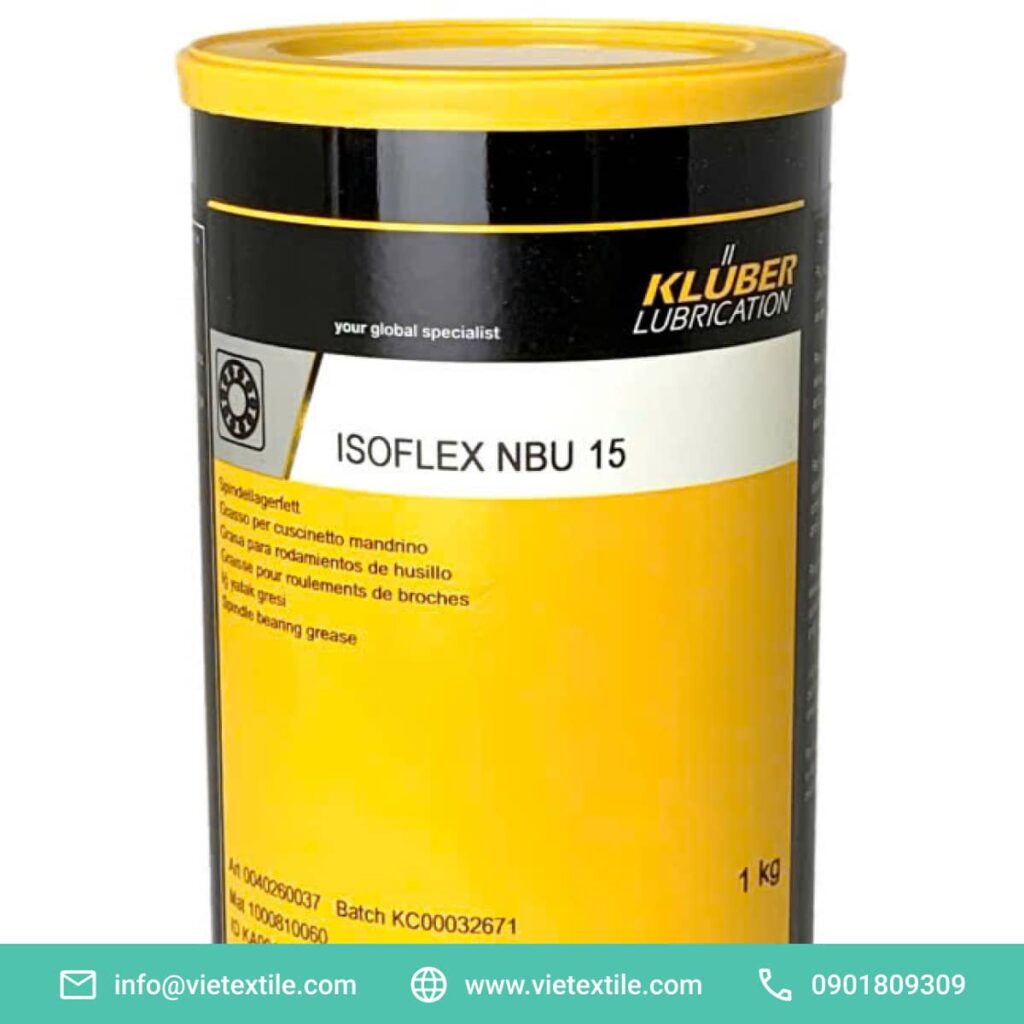
7 Lỗi Sử Dụng Mỡ Chịu Nhiệt Khiến Thiết Bị Nhanh Hỏng

Trong môi trường công nghiệp hiện đại, đặc biệt là các ngành sản xuất nặng, thép, xi măng hay dệt may, việc các bộ phận máy móc phải chịu đựng nhiệt độ cao, áp suất lớn và tốc độ vận hành liên tục là điều không thể tránh khỏi. Để duy trì hiệu suất hoạt động ổn định và kéo dài tuổi thọ thiết bị, việc bôi trơn bằng mỡ chịu nhiệt là giải pháp hàng đầu. Một loại mỡ chịu nhiệt chất lượng cao không chỉ giảm ma sát, chống mài mòn mà còn phải duy trì tính ổn định cấu trúc ở nhiệt độ vượt quá 150°C, thậm chí 200°C.

Tuy nhiên, thực tế cho thấy, việc thất bại trong bảo trì không phải lúc nào cũng do chất lượng mỡ, mà phần lớn đến từ những sai lầm trong quá trình sử dụng. Từ việc chọn sai loại mỡ cho đến quy trình bơm mỡ không chuẩn xác, những lỗi nhỏ này có thể tích tụ và gây ra hỏng hóc lớn, làm gián đoạn sản xuất và tốn kém chi phí sửa chữa. 

Bài viết này được xây dựng dựa trên kinh nghiệm chuyên sâu trong lĩnh vực cung cấp mỡ chịu nhiệt và bảo trì công nghiệp, nhằm mục đích chỉ rõ 7 lỗi nghiêm trọng nhất. Chúng ta sẽ cùng nhau đi sâu vào từng sai lầm, phân tích nguyên nhân cốt lõi và đưa ra các biện pháp khắc phục chi tiết, từ đó giúp các doanh nghiệp tối ưu hóa hiệu quả sử dụng và tìm kiếm giải pháp cung cấp mỡ chịu nhiệt tốt nhất cho hệ thống của mình.

cung cấp mỡ chịu nhiệt chính hãng
7 Lỗi Sử Dụng Mỡ Chịu Nhiệt Khiến Thiết Bị Nhanh Hỏng 69

1. Mỡ Chịu Nhiệt Là Gì Và Vai Trò Quyết Định Của Nó?

Mỡ chịu nhiệt, hay còn gọi là mỡ bôi trơn nhiệt độ cao, là một loại chất bôi trơn bán rắn, được thiết kế đặc biệt để hoạt động hiệu quả trong môi trường nhiệt độ vượt trội so với mỡ thông thường (thường từ 120°C trở lên). Cấu tạo cơ bản của mỡ bao gồm dầu gốc (chiếm 70-95%), chất làm đặc (thickener, 5-20%) và các phụ gia (additives, 0-10%). Khác biệt lớn nhất của mỡ chịu nhiệt so với mỡ đa năng là ở chất làm đặc và phụ gia.

1.1. Cấu Tạo Và Thành Phần Khác Biệt Của Mỡ Chịu Nhiệt

Chất làm đặc quyết định khả năng chịu nhiệt và ổn định cơ học của mỡ. Trong khi mỡ thông thường thường dùng gốc Lithium, mỡ chịu nhiệt cao cấp lại sử dụng các gốc phức hợp như Lithium Complex, Aluminum Complex, Polyurea, hoặc thậm chí là đất sét vô cơ (Bentonite) để không bị chảy lỏng, phân hủy hay tách dầu khi nhiệt độ tăng cao.

Các chất làm đặc này giúp mỡ duy trì được cấu trúc, giữ dầu gốc tại chỗ bôi trơn. Việc hiểu rõ thành phần này là nền tảng để tránh các sai lầm sau này. Một loại mỡ chịu nhiệt không phù hợp sẽ nhanh chóng mất đi cấu trúc bôi trơn khi nhiệt độ tăng, dẫn đến tình trạng khô mỡ, mài mòn trực tiếp giữa các bề mặt kim loại.

1.2. Các Tính Năng Bắt Buộc Của Mỡ Chịu Nhiệt Chất Lượng

Một nhà cung cấp mỡ chịu nhiệt uy tín sẽ luôn nhấn mạnh các đặc tính sau:

  • Điểm Rơi (Dropping Point) Cao: Đây là nhiệt độ mà tại đó mỡ chuyển từ trạng thái bán rắn sang lỏng. Mỡ chịu nhiệt phải có Điểm Rơi trên 250°C, đảm bảo tính ổn định cấu trúc.
  • Độ Bền Oxy Hóa Vượt Trội: Ở nhiệt độ cao, dầu gốc bị oxy hóa nhanh chóng, tạo thành cặn carbon cứng, gây kẹt và phá hủy ổ bi. Mỡ chịu nhiệt tốt cần có phụ gia chống oxy hóa mạnh.
  • Khả Năng Chống Mài Mòn (EP/AW): Giảm ma sát và bảo vệ các chi tiết máy chịu tải nặng.
  • Độ Ổn Định Cơ Học: Mỡ không bị mềm ra hay bị cắt nát dưới tác động lực cắt và rung động liên tục, đặc biệt quan trọng khi cung cấp mỡ chịu nhiệt cho các vòng bi tốc độ cao.

2. Lỗi 1: Sử Dụng Mỡ Đa Năng Thay Cho Mỡ Chịu Nhiệt

Đây là sai lầm phổ biến nhất, thường xảy ra do muốn tiết kiệm chi phí hoặc thiếu kiến thức kỹ thuật. Nhiều kỹ thuật viên cho rằng mọi loại mỡ đều giống nhau và có thể dùng lẫn lộn.

2.1. Hậu Quả Của Việc Thay Thế Mỡ Chịu Nhiệt Bằng Mỡ Đa Năng

Mỡ đa năng (thường là gốc Lithium thông thường) có Điểm Rơi dao động từ 180°C đến 200°C. Khi được sử dụng trong môi trường có nhiệt độ hoạt động từ 150°C trở lên, mỡ đa năng sẽ nhanh chóng gặp phải các vấn đề sau:

  • Chảy Lỏng và Tách Dầu: Ở nhiệt độ cao, chất làm đặc không đủ khả năng giữ dầu gốc. Mỡ sẽ chảy thành chất lỏng, rò rỉ ra khỏi vị trí bôi trơn, khiến bề mặt tiếp xúc không còn được bảo vệ.
  • Carbon Hóa Nhanh Chóng: Dầu gốc, vốn không được thiết kế cho nhiệt độ cao, sẽ bị oxy hóa và biến chất, hình thành cặn carbon cứng. Các cặn này đóng vai trò như các hạt mài, gây mài mòn nghiêm trọng cho vòng bi, bạc đạn.
  • Phá Hủy Cấu Trúc Bôi Trơn: Thiếu sự bảo vệ, tuổi thọ của vòng bi giảm đột ngột, có thể gây hỏng hóc chỉ sau vài trăm giờ hoạt động thay vì hàng nghìn giờ như dự kiến.

2.2. Tiêu Chuẩn Phân Loại Nhiệt Độ Phù Hợp Khi Cung Cấp Mỡ Chịu Nhiệt

Khi lựa chọn và cung cấp mỡ chịu nhiệt, cần phải xác định chính xác nhiệt độ hoạt động thực tế của thiết bị. Tiêu chuẩn quốc tế thường phân loại mỡ theo:

  • Nhiệt Độ Hoạt Động Liên Tục (Operating Temperature): Nhiệt độ mà mỡ có thể duy trì các đặc tính bôi trơn trong thời gian dài. Đối với mỡ chịu nhiệt, mức này phải cao hơn 140°C.
  • Nhiệt Độ Đỉnh (Peak Temperature): Nhiệt độ tối đa mà mỡ có thể chịu được trong thời gian ngắn mà không bị phá hủy hoàn toàn.
  • Sử dụng Mỡ Gốc Tổng Hợp (Synthetic Base Oil): Nếu nhiệt độ trên 180°C, các loại mỡ có dầu gốc tổng hợp (PAO, Ester) là bắt buộc vì chúng có độ bền nhiệt và độ bền oxy hóa cao hơn hẳn dầu gốc khoáng. Các công ty cung cấp mỡ chịu nhiệt chuyên nghiệp luôn tư vấn về dầu gốc tổng hợp cho các ứng dụng cực nóng.

2.3. Giải Pháp Khắc Phục Lỗi Thay Thế Sai Loại Mỡ

Giải pháp duy nhất là tuân thủ nghiêm ngặt khuyến nghị của nhà sản xuất thiết bị (OEM) và chuyên gia cung cấp mỡ chịu nhiệt.

  • Đánh giá Nhiệt độ: Dùng súng đo nhiệt độ (thermometer gun) hoặc cảm biến nhiệt để xác định nhiệt độ bề mặt thực tế của vòng bi, không chỉ dựa vào nhiệt độ môi trường.
  • Sử dụng Mỡ Gốc Đặc Biệt: Thay thế bằng mỡ Lithium Complex, Polyurea (phổ biến cho vòng bi motor điện), hoặc mỡ Teflon/PTFE (cho nhiệt độ cực cao, trên 250°C).
  • Xây Dựng Sổ Tay Bôi Trơn: Lập danh sách chi tiết về loại mỡ, chu kỳ bôi trơn cho từng thiết bị để ngăn ngừa việc dùng nhầm lẫn. Đào tạo nhân viên bảo trì nhận diện đúng loại mỡ chịu nhiệt và mỡ đa năng.

3. Lỗi 2: Bơm Quá Nhiều Hoặc Quá Ít Mỡ Khi Bảo Trì

Cả việc bơm thừa mỡ (over-greasing) và bơm thiếu mỡ (under-greasing) đều là những sai lầm cực kỳ tai hại, gây ra hơn 80% các trường hợp hỏng hóc vòng bi sớm.

3.1. Phân Tích Rủi Ro Khi Bơm Thừa Mỡ Chịu Nhiệt

Sai lầm này thường xuất phát từ suy nghĩ “thừa còn hơn thiếu”. Tuy nhiên, bơm quá nhiều mỡ chịu nhiệt vào một vòng bi đang hoạt động ở tốc độ cao và nhiệt độ cao sẽ dẫn đến:

  • Tăng Nhiệt Độ Đột Ngột: Khi vòng bi quay, lượng mỡ dư thừa sẽ bị các con lăn/viên bi khuấy động liên tục. Sự khuấy động này tạo ra ma sát nội bộ, làm tăng nhiệt độ của vòng bi lên một cách đáng kể, đôi khi vượt quá cả giới hạn chịu nhiệt của chính loại mỡ đó. Điều này tạo ra một vòng lặp phá hủy: mỡ nóng lên -> mất cấu trúc -> mỡ chảy lỏng -> ma sát càng tăng.
  • Tăng Áp Suất Bên Trong: Lượng mỡ quá lớn không có chỗ thoát sẽ tạo áp suất cao bên trong phớt chặn (seal). Áp suất này có thể đẩy phớt chặn bung ra, gây hỏng phớt, làm mỡ chịu nhiệt rò rỉ ra ngoài và quan trọng hơn là cho phép bụi bẩn, nước xâm nhập ngược vào bên trong vòng bi.
  • Tăng Công Suất Tiêu Thụ: Ma sát nội bộ tăng lên không chỉ gây nóng mà còn làm tăng tải trọng lên động cơ, dẫn đến tiêu thụ điện năng cao hơn mức bình thường.

3.2. Hậu Quả Nghiêm Trọng Của Việc Bơm Thiếu Mỡ Chịu Nhiệt

Ngược lại, bơm thiếu mỡ cũng là vấn đề phổ biến do lơ là bảo trì hoặc sợ bơm thừa.

  • Mài Mòn Trực Tiếp: Lượng mỡ không đủ để tạo thành lớp màng bảo vệ hoàn hảo giữa các bề mặt kim loại. Các chi tiết sẽ tiếp xúc trực tiếp, gây mài mòn nhanh chóng, đặc biệt là ở môi trường nhiệt độ cao, nơi mỡ còn lại đã bị oxy hóa và khô cứng.
  • Tăng Độ Rung và Tiếng Ồn: Thiếu bôi trơn sẽ làm tăng độ rung của thiết bị. Đây là dấu hiệu rõ ràng nhất của sự cố sắp xảy ra. Việc phải tìm kiếm giải pháp cung cấp mỡ chịu nhiệt lúc này đã quá muộn để cứu vãn vòng bi.
  • Tăng Khoảng Thời Gian Dừng Máy: Vòng bi hỏng sẽ buộc máy phải dừng khẩn cấp, gây thiệt hại lớn hơn nhiều so với chi phí mỡ.

3.3. Phương Pháp Bơm Mỡ Chuẩn Xác (Re-Greasing Standard)

Để khắc phục, cần áp dụng phương pháp bôi trơn theo thời gian và khối lượng chuẩn xác:

  • Tính Toán Chu Kỳ (Time Interval): Chu kỳ bôi trơn được tính toán dựa trên loại vòng bi, tốc độ (RPM), đường kính, và nhiệt độ hoạt động (Hệ số K).
  • Tính Toán Khối Lượng (Volume Calculation): Lượng mỡ cần bơm thường được tính bằng công thức: G = 0.005 x D x B (trong đó G là lượng mỡ tính bằng gam, D là đường kính ngoài của vòng bi, B là chiều rộng của vòng bi, tính bằng mm).
  • Sử Dụng Công Cụ Hỗ Trợ: Dùng súng bơm mỡ có đồng hồ đo hoặc thiết bị bôi trơn tự động để kiểm soát chính xác lượng mỡ được thêm vào, tránh sai sót trong quá trình cung cấp mỡ chịu nhiệt cho máy móc.

4. Lỗi 3: Không Thường Xuyên Kiểm Tra Tương Thích Của Mỡ

cung cấp mỡ chịu nhiệt chất lượng cao
7 Lỗi Sử Dụng Mỡ Chịu Nhiệt Khiến Thiết Bị Nhanh Hỏng 70

Việc pha trộn hai loại mỡ chịu nhiệt không tương thích với nhau là một trong những nguyên nhân hàng đầu gây ra sự phá hủy cấu trúc mỡ và hỏng hóc thiết bị.

4.1. Hiện Tượng Không Tương Thích Và Cơ Chế Phá Hủy

Mỡ chịu nhiệt được tạo thành từ dầu gốc, chất làm đặc, và phụ gia. Sự không tương thích chủ yếu xảy ra khi hai chất làm đặc khác nhau được trộn lẫn.

  • Sự Phá Hủy Chất Làm Đặc: Khi mỡ gốc Lithium Complex trộn với mỡ gốc Polyurea (hai loại phổ biến), cấu trúc sợi của chất làm đặc có thể bị đứt gãy, dẫn đến việc mỡ bị mềm hóa đột ngột. Mỡ sẽ nhanh chóng mất đi độ đặc (NLGI Grade), trở nên lỏng hơn nhiều và rò rỉ ra ngoài.
  • Phản Ứng Phụ Gia: Các gói phụ gia (như EP, AW, chống gỉ) trong hai loại mỡ có thể phản ứng hóa học với nhau, làm giảm hiệu quả bảo vệ, thậm chí tạo ra các sản phẩm phụ ăn mòn.
  • Hạ Điểm Rơi: Điểm Rơi của hỗn hợp mỡ có thể giảm xuống đáng kể, đôi khi thấp hơn cả nhiệt độ hoạt động thực tế của thiết bị, khiến mỡ bị chảy lỏng ngay lập tức. Đây là điều tối kỵ khi cung cấp mỡ chịu nhiệt cho các ứng dụng nóng.

4.2. Bảng Phân Loại Độ Tương Thích Của Các Loại Mỡ Chịu Nhiệt Phổ Biến

Để đảm bảo an toàn, cần phải tham khảo bảng tương thích mỡ (Grease Compatibility Chart). Các loại mỡ được coi là tương thích là khi trộn lẫn vẫn duy trì được độ đặc, Điểm Rơi và tính ổn định cơ học.

  • Thường Tương Thích (Compatible): Lithium với Lithium, Lithium Complex với Lithium Complex.
  • Cần Thận Trọng (Borderline): Lithium Complex với Calcium Complex.
  • Không Tương Thích (Incompatible – Gây Hỏng Hóc): Lithium với Polyurea, Sodium với Lithium Complex, Barium với Polyurea.
  • Lưu ý: Ngay cả khi hai loại mỡ cùng gốc (ví dụ: Lithium Complex) nhưng của hai nhà cung cấp mỡ chịu nhiệt khác nhau cũng nên được kiểm tra cẩn thận vì sự khác biệt về phụ gia.

4.3. Biện Pháp Chuyển Đổi Mỡ Chịu Nhiệt An Toàn

Nếu bắt buộc phải chuyển từ loại mỡ này sang loại mỡ khác, quy trình phải được thực hiện một cách triệt để:

  • Làm Sạch (Purging/Flushing): Loại bỏ hoàn toàn mỡ cũ ra khỏi vị trí bôi trơn. Trong các ứng dụng nhạy cảm, cần tháo dỡ và làm sạch thủ công. Trong các trường hợp khác, bơm một lượng lớn mỡ mới vào để đẩy mỡ cũ ra ngoài (flushing), sau đó bôi trơn lại với lượng chuẩn xác.
  • Kiểm Tra Độ Ổn Định: Sau khi chuyển đổi, theo dõi nhiệt độ, độ rung và tiếng ồn trong vài ngày đầu. Nếu nhiệt độ tăng bất thường, cần phải dừng máy và kiểm tra lại sự tương thích. Việc cung cấp mỡ chịu nhiệt mới phải đi kèm với cam kết về khả năng chuyển đổi an toàn.

5. Lỗi 4: Bỏ Qua Tầm Quan Trọng Của Chất Làm Kín (Seals/Phớt Chặn)

Mỡ chịu nhiệt chỉ có thể hoạt động hiệu quả khi được giữ đúng vị trí và tránh xa các tác nhân gây ô nhiễm. Phớt chặn (seals) đóng vai trò là hàng rào bảo vệ. Bỏ qua tình trạng của phớt là một sai lầm chết người.

5.1. Ô Nhiễm Mỡ Chịu Nhiệt Từ Môi Trường

Môi trường làm việc của các thiết bị sử dụng mỡ chịu nhiệt thường rất khắc nghiệt, với bụi bẩn, hơi ẩm, hóa chất, hoặc bụi kim loại.

  • Sự Xâm Nhập Của Bụi Bẩn: Phớt hỏng hoặc chai cứng sẽ cho phép các hạt rắn (bụi, cặn) xâm nhập vào khoang bôi trơn. Các hạt này nhanh chóng biến mỡ chịu nhiệt thành chất mài mòn, tương tự như giấy nhám, làm hỏng bề mặt con lăn và rãnh trượt (raceway) của vòng bi.
  • Ảnh Hưởng Của Nước/Hơi Ẩm: Nước là kẻ thù lớn nhất của mỡ. Nó làm giảm khả năng bôi trơn, gây gỉ sét vòng bi và làm thay đổi độ đặc của mỡ. Mỡ gốc Lithium Complex có khả năng kháng nước tốt hơn, nhưng nếu phớt hỏng, không loại mỡ nào có thể chống lại sự xâm nhập lớn của nước.

5.2. Hậu Quả Của Việc Chọn Phớt Không Tương Thích Với Mỡ Chịu Nhiệt

Một lỗi kỹ thuật ít được chú ý hơn là sự không tương thích giữa mỡ và vật liệu phớt chặn.

  • Tác Động Hóa Học Lên Phớt: Một số dầu gốc hoặc phụ gia trong mỡ chịu nhiệt có thể làm cho vật liệu phớt (thường là NBR, FKM/Viton, Silicon) bị co lại, nở ra, hoặc chai cứng. Phớt bị biến dạng sẽ mất khả năng làm kín, dẫn đến rò rỉ mỡ và xâm nhập chất bẩn.
  • Ví dụ: Mỡ có dầu gốc Ester tổng hợp thường không tương thích với phớt NBR (Nitrile Butadiene Rubber) tiêu chuẩn, gây ra hiện tượng phớt bị trương nở. Các đơn vị cung cấp mỡ chịu nhiệt chuyên biệt cần phải có dữ liệu này để tư vấn cho khách hàng.

5.3. Chiến Lược Kiểm Tra Và Thay Thế Phớt Chặn

  • Kiểm Tra Thị Giác Định Kỳ: Trong mỗi chu kỳ bảo trì, cần kiểm tra phớt chặn để tìm kiếm các vết nứt, biến dạng, hoặc dấu hiệu rò rỉ mỡ. Nếu phớt bị cứng hoặc có màu sắc bất thường (do nhiệt độ quá cao), cần thay thế ngay lập tức.
  • Tư Vấn Vật Liệu Phớt: Khi mua và cung cấp mỡ chịu nhiệt, hãy yêu cầu nhà cung cấp đưa ra khuyến nghị về vật liệu phớt phù hợp với loại mỡ đó. Ví dụ, đối với mỡ tổng hợp, phớt FKM (Viton) thường là lựa chọn an toàn hơn NBR.

6. Lỗi 5: Bỏ Qua Phân Tích Mỡ Đã Qua Sử Dụng (Used Grease Analysis)

cung cấp mỡ chịu nhiệt uy tín
7 Lỗi Sử Dụng Mỡ Chịu Nhiệt Khiến Thiết Bị Nhanh Hỏng 71

Phân tích mỡ là một công cụ chẩn đoán bảo trì dự đoán mạnh mẽ, tương tự như phân tích dầu. Bỏ qua công cụ này là bỏ qua cơ hội phát hiện sớm các vấn đề tiềm ẩn của thiết bị.

6.1. Giá Trị Cốt Lõi Của Phân Tích Mỡ Chịu Nhiệt

Phân tích mỡ đã qua sử dụng cung cấp cái nhìn sâu sắc về cả tình trạng của mỡ và tình trạng của thiết bị. Nó giúp trả lời ba câu hỏi quan trọng:

  • Mỡ Còn Tốt Không? Kiểm tra độ đặc (NLGI), Điểm Rơi, và độ bền oxy hóa còn lại để xác định xem mỡ chịu nhiệt có bị phá hủy do nhiệt độ hay không.
  • Có Chất Gây Ô Nhiễm Không? Phát hiện mức độ hạt rắn, nước, bụi bẩn, hoặc hóa chất. Nếu mức độ ô nhiễm cao, đó là dấu hiệu phớt chặn đã hỏng hoặc quy trình vệ sinh kém.
  • Thiết Bị Có Đang Bị Hỏng Không? Phân tích hàm lượng kim loại mài mòn (Wear Metals). Sự xuất hiện của Sắt (Fe), Đồng (Cu), Crôm (Cr) với nồng độ cao là bằng chứng trực tiếp cho thấy vòng bi, trục hoặc vỏ máy đang bị mòn và sắp hỏng.

6.2. Chi Phí Và Lợi Ích Của Việc Thực Hiện Phân Tích

Mặc dù việc gửi mẫu mỡ để phân tích có chi phí, nhưng lợi ích mà nó mang lại vượt trội hơn rất nhiều:

  • Kéo Dài Chu Kỳ Bôi Trơn: Nếu kết quả phân tích cho thấy mỡ chịu nhiệt vẫn còn tốt sau thời gian dự kiến, doanh nghiệp có thể kéo dài chu kỳ bôi trơn một cách an toàn, tiết kiệm chi phí mua và cung cấp mỡ chịu nhiệt mới.
  • Ngăn Ngừa Thảm Họa: Phát hiện sớm hàm lượng kim loại mài mòn cao giúp lên lịch dừng máy để sửa chữa trước khi xảy ra hỏng hóc lớn (catastrophic failure), giảm thiểu thiệt hại về vật chất và thời gian chết.
  • Kiểm Tra Chất Lượng Sản Phẩm: Đôi khi, việc phát hiện mỡ kém chất lượng hoặc mỡ không ổn định nhiệt là nhờ vào phân tích. Điều này giúp doanh nghiệp có cơ sở để đánh giá lại nhà cung cấp mỡ chịu nhiệt hiện tại.

6.3. Quy Trình Lấy Mẫu Mỡ Chuẩn Xác

Việc lấy mẫu phải đảm bảo tính đại diện:

  • Lấy Mẫu Từ Vị Trí Hoạt Động: Mẫu mỡ cần được lấy trực tiếp từ vùng tiếp xúc (load zone) của vòng bi, nơi mỡ chịu tải và nhiệt cao nhất.
  • Sử Dụng Dụng Cụ Sạch: Dụng cụ lấy mẫu phải được làm sạch hoàn toàn để tránh ô nhiễm chéo từ mỡ hoặc chất bẩn khác. Mẫu phải được lấy sau khi máy đã hoạt động ổn định ở nhiệt độ vận hành bình thường.

7. Lỗi 6: Không Quan Tâm Đến Độ Đặc (NLGI Grade) Của Mỡ

Độ đặc (NLGI Grade) là một thông số kỹ thuật cực kỳ quan trọng, quyết định khả năng bôi trơn và giữ mỡ tại chỗ. Bỏ qua yếu tố này, đặc biệt trong các ứng dụng đặc thù, là một lỗi thường gặp.

7.1. Ý Nghĩa Của Chỉ Số NLGI Trong Việc Cung Cấp Mỡ Chịu Nhiệt

NLGI (National Lubricating Grease Institute) Grade phân loại độ đặc của mỡ từ 000 (lỏng nhất) đến 6 (đặc nhất).

  • Mỡ NLGI 2 (Phổ Biến): Đây là độ đặc tiêu chuẩn, tương đương với bơ đậu phộng, được sử dụng rộng rãi cho hầu hết các ứng dụng vòng bi thông thường.
  • Mỡ NLGI 1 (Ít Đặc Hơn): Thường dùng cho các hệ thống bôi trơn tập trung (centralized lubrication systems) hoặc các vòng bi hoạt động ở nhiệt độ cực thấp, nơi cần mỡ mềm hơn để dễ dàng được bơm.
  • Mỡ NLGI 3 (Đặc Hơn): Thích hợp cho các vòng bi hoạt động ở tốc độ cao, có rung động lớn, hoặc có trục đặt theo phương thẳng đứng (vertical shafts), nơi cần mỡ đặc hơn để chống chảy và rò rỉ.

7.2. Hậu Quả Khi Chọn Sai Độ Đặc Trong Ứng Dụng Chịu Nhiệt

Trong môi trường nhiệt độ cao, việc chọn sai NLGI có thể gây ra vấn đề:

  • Chọn Mỡ Quá Lỏng (NLGI 1 hoặc thấp hơn): Mặc dù mỡ chịu nhiệt được chế tạo để không bị chảy, nhưng nếu mỡ quá lỏng ngay từ đầu, khi nhiệt độ tăng cao, nó sẽ nhanh chóng chảy ra ngoài khỏi ổ bi, để lại một lớp mỡ không đủ dày để bôi trơn.
  • Chọn Mỡ Quá Đặc (NLGI 3 hoặc cao hơn): Mỡ quá đặc sẽ khó được bơm qua các đường ống nhỏ của hệ thống bôi trơn tập trung, đặc biệt là trong môi trường lạnh (dù là mỡ chịu nhiệt, nó vẫn có thể bị đặc lại ở nhiệt độ môi trường). Mỡ không đến được vị trí bôi trơn sẽ gây ra tình trạng bôi trơn thiếu, tương tự như lỗi 2. Hơn nữa, mỡ quá đặc có thể gây ma sát nội bộ cao hơn, dẫn đến tăng nhiệt độ.

7.3. Cách Lựa Chọn Độ Đặc Tối Ưu

Việc lựa chọn độ đặc phải dựa trên ba yếu tố chính:

  • Tốc Độ Thiết Bị: Tốc độ càng cao, mỡ cần càng đặc (NLGI 3). Tốc độ thấp (tải nặng), mỡ cần mềm hơn một chút (NLGI 2 hoặc 1) để đảm bảo bôi trơn tốt.
  • Hệ Thống Phân Phối: Hệ thống bôi trơn tập trung đòi hỏi mỡ có độ đặc NLGI 1 hoặc 2 để dễ dàng bơm.
  • Khả Năng Giữ Mỡ (Sealing Capability): Nếu phớt bị mòn nhẹ hoặc trục thẳng đứng, cần chọn mỡ đặc hơn (NLGI 3) để hỗ trợ giữ mỡ tại vị trí. Một nhà cung cấp mỡ chịu nhiệt chuyên nghiệp luôn phải nắm vững các tiêu chuẩn này.

8. Lỗi 7: Sử Dụng Cùng Một Súng Bơm Cho Nhiều Loại Mỡ Khác Nhau

cung cấp mỡ chịu nhiệt giá tốt
7 Lỗi Sử Dụng Mỡ Chịu Nhiệt Khiến Thiết Bị Nhanh Hỏng 72

Giống như lỗi về sự không tương thích (Lỗi 3), lỗi này liên quan đến việc ô nhiễm chéo (cross-contamination), nhưng nguyên nhân là từ dụng cụ bảo trì.

8.1. Nguy Cơ Ô Nhiễm Chéo Từ Dụng Cụ

Trong các nhà máy lớn, bộ phận bảo trì thường chỉ có một vài súng bơm mỡ và chỉ lau chùi sơ sài giữa các lần bơm. Điều này dẫn đến:

  • Truyền Chất Làm Đặc Không Tương Thích: Lượng mỡ cũ, thường là vài gram, còn sót lại trong súng bơm và ống dẫn có thể chứa chất làm đặc không tương thích. Khi bơm mỡ chịu nhiệt mới, lượng mỡ cũ này trộn lẫn, gây ra phản ứng phá hủy cấu trúc mỡ ngay tại vị trí bôi trơn.
  • Truyền Chất Gây Ô Nhiễm: Súng bơm có thể chứa bụi bẩn, cát, hoặc cặn carbon từ mỡ đã hỏng. Các chất này được bơm thẳng vào vòng bi cùng với mỡ chịu nhiệt mới, gây mài mòn ngay lập tức. Đây là cách nhanh nhất để làm giảm tuổi thọ của vòng bi.

8.2. Tiêu Chuẩn “Một Súng, Một Mỡ” Trong Bảo Trì

Để loại bỏ hoàn toàn rủi ro này, các tiêu chuẩn bảo trì hiện đại luôn tuân thủ nguyên tắc “One Gun, One Grease”:

  • Định Danh Rõ Ràng: Mỗi súng bơm mỡ, mỗi máy bơm khí nén, và mỗi thùng chứa mỡ phải được gắn nhãn màu hoặc đánh số để chỉ định duy nhất một loại mỡ. Ví dụ: Súng màu đỏ chỉ dùng cho Mỡ Lithium Complex chịu nhiệt, súng màu xanh chỉ dùng cho Mỡ Calcium Sulfonate chịu tải nặng.
  • Sử Dụng Khớp Nối Chuyên Biệt: Tùy chỉnh các loại khớp nối (grease fitting) khác nhau cho từng loại mỡ để ngăn chặn việc nhân viên vô tình dùng sai súng. Việc tổ chức quy trình cung cấp mỡ chịu nhiệt phải đi kèm với việc tổ chức kho bãi và dụng cụ.

8.3. Giải Pháp Vệ Sinh Súng Bơm Mỡ (Nếu Bắt Buộc Dùng Chung)

Nếu vì lý do kinh tế hay hạn chế khác mà phải dùng chung súng, quy trình vệ sinh phải nghiêm ngặt:

  • Xả Mỡ (Purge): Bơm một lượng lớn mỡ mới (loại sẽ được sử dụng tiếp theo) qua súng cho đến khi không còn dấu hiệu mỡ cũ. Thao tác này tiêu tốn mỡ nhưng cần thiết để làm sạch đường ống.
  • Lưu Trữ Súng: Luôn lưu trữ súng bơm mỡ với một lượng nhỏ mỡ mới (loại được chỉ định) trong ống dẫn để ngăn chặn bụi bẩn và hơi ẩm xâm nhập vào súng.

9. Lỗi 8: Không Theo Dõi Nhiệt Độ Bằng Phương Pháp Hiện Đại

Dựa vào cảm quan để đánh giá nhiệt độ là một sai lầm lớn. Thiết bị hỏng hóc nhanh chóng khi nhiệt độ vượt ngưỡng cho phép của mỡ.

9.1. Sự Phá Hủy Của Nhiệt Độ Cao Lên Mỡ Chịu Nhiệt

Nhiệt độ là yếu tố có ảnh hưởng lũy tiến. Mỗi lần nhiệt độ vượt quá giới hạn hoạt động liên tục (ví dụ: 150°C), tuổi thọ của mỡ chịu nhiệt có thể giảm đi một nửa.

  • Tăng Tốc Độ Oxy Hóa: Nhiệt độ tăng làm tăng tốc độ phản ứng oxy hóa của dầu gốc. Mỡ nhanh chóng cứng lại, mất khả năng bôi trơn.
  • Thẩm Thấu Dầu: Nhiệt độ cao làm chất làm đặc mất khả năng giữ dầu gốc. Dầu bị thoát ra nhanh hơn, gây khô mỡ sớm.
  • Sự Cố Đột Ngột: Nếu nhiệt độ tiệm cận Điểm Rơi (Dropping Point), mỡ có thể chảy lỏng đột ngột, dẫn đến sự cố hỏng hóc ngay lập tức.

9.2. Tầm Quan Trọng Của Phương Pháp Đo Nhiệt Độ Không Tiếp Xúc

Việc kiểm tra nhiệt độ cần phải được tiến hành định kỳ và có hệ thống:

  • Súng Đo Nhiệt Độ Hồng Ngoại (IR Thermometer Gun): Đây là công cụ cơ bản nhất, cho phép đo nhiệt độ bề mặt vỏ vòng bi một cách nhanh chóng và an toàn.
  • Camera Nhiệt (Thermal Imaging Camera): Cung cấp hình ảnh trực quan về phân bố nhiệt, giúp phát hiện các điểm nóng bất thường (Hot Spots) do ma sát quá mức hoặc bôi trơn kém.
  • Hệ Thống Giám Sát Rung Động (Vibration Monitoring): Khi mỡ hỏng, ma sát tăng sẽ làm tăng độ rung. Theo dõi rung động là cách gián tiếp nhưng hiệu quả để phát hiện các vấn đề bôi trơn và nhiệt độ.

9.3. Thiết Lập Ngưỡng Cảnh Báo An Toàn

Doanh nghiệp cần thiết lập các ngưỡng nhiệt độ cảnh báo:

  • Ngưỡng Hoạt Động Bình Thường (Normal): Nhiệt độ vận hành ổn định, không có hành động nào được yêu cầu.
  • Ngưỡng Cảnh Báo (Alert): Nhiệt độ tăng 5°C – 10°C so với nhiệt độ cơ sở (baseline). Cần kiểm tra bôi trơn, xem xét có nên bơm thêm một lượng nhỏ mỡ chịu nhiệt hay không.
  • Ngưỡng Nguy Hiểm (Alarm): Nhiệt độ tăng 15°C – 20°C so với cơ sở. Bắt buộc phải dừng máy để kiểm tra ngay lập tức vì vòng bi có thể đang bị phá hủy.

9. Lỗi 9: Sử Dụng Các Phương Pháp Bôi Trơn Lạc Hậu

Duy trì thói quen bảo trì cũ, thiếu sự cập nhật về công nghệ bôi trơn, cũng là một lỗi khiến thiết bị nhanh hỏng.

9.1. Hạn Chế Của Lịch Bôi Trơn Dựa Trên Thời Gian Cố Định

Nhiều nhà máy vẫn sử dụng lịch bôi trơn cứng nhắc: “Bơm mỡ mỗi 3 tháng một lần.”

  • Thiếu Linh Hoạt: Chu kỳ cố định không phản ánh điều kiện hoạt động thực tế (tải trọng, tốc độ, nhiệt độ, độ ẩm). Trong điều kiện khắc nghiệt, 3 tháng có thể quá dài, dẫn đến hỏng hóc.
  • Rủi Ro Thừa Mỡ: Trong điều kiện hoạt động nhẹ nhàng hơn, chu kỳ 3 tháng có thể dẫn đến việc bơm thừa mỡ chịu nhiệt, gây ra Lỗi 2.

9.2. Xu Hướng Chuyển Đổi Sang Bôi Trơn Dựa Trên Tình Trạng (Condition-Based Lubrication)

Các hệ thống bảo trì tiên tiến đang chuyển sang CML (Condition-Based Lubrication):

  • Bôi Trơn Theo Rung Động/Nhiệt Độ: Chỉ bơm mỡ khi cảm biến rung động hoặc nhiệt độ cho thấy có sự gia tăng ma sát, báo hiệu lớp màng bôi trơn đang bị phá vỡ.
  • Bôi Trơn Bằng Sóng Siêu Âm (Ultrasonic Greasing): Đây là phương pháp tối ưu. Kỹ thuật viên dùng thiết bị siêu âm để “nghe” tiếng ồn ma sát của vòng bi. Khi độ ồn tăng lên (do thiếu mỡ), họ bơm mỡ chịu nhiệt từ từ cho đến khi tiếng ồn ma sát giảm về mức bình thường. Điều này đảm bảo lượng mỡ luôn ở mức tối ưu, tránh được cả thừa và thiếu mỡ.

9.3. Cập Nhật Giải Pháp Cung Cấp Mỡ Chịu Nhiệt Hiện Đại

Để khắc phục lỗi lạc hậu, doanh nghiệp cần đầu tư:

  • Bôi Trơn Tự Động (Automatic Lubricators): Lắp đặt các bộ bôi trơn tự động, nhỏ gọn, được lập trình để bơm một lượng nhỏ mỡ chịu nhiệt theo chu kỳ ngắn và đều đặn (ví dụ: 0.1 gram mỗi ngày). Điều này giúp duy trì màng mỡ ổn định, đặc biệt quan trọng cho các vị trí khó tiếp cận.
  • Đào Tạo Chuyên Sâu: Đào tạo đội ngũ bảo trì về các kỹ thuật chẩn đoán hiện đại như phân tích rung động và bôi trơn bằng siêu âm, nâng cao năng lực sử dụng các sản phẩm cung cấp mỡ chịu nhiệt chuyên dụng.

10. VieTextile: Giải Pháp Cung Cấp Mỡ Chịu Nhiệt Chất Lượng Cho Mọi Ngành Công Nghiệp

VieTextile tự hào là đối tác chiến lược trong lĩnh vực cung cấp mỡ chịu nhiệt và các giải pháp bôi trơn công nghiệp hàng đầu tại Việt Nam. Chúng tôi hiểu rằng, chất lượng sản phẩm chỉ là một phần của chuỗi giá trị; quan trọng hơn là việc cung cấp kiến thức, dịch vụ tư vấn chuyên sâu để khách hàng tránh được 7 lỗi phổ biến khiến thiết bị nhanh hỏng. Cam kết của chúng tôi không chỉ dừng lại ở việc cung cấp mỡ chịu nhiệt mà còn là việc đảm bảo hiệu suất vận hành tối đa cho hệ thống máy móc của bạn.

Đội ngũ kỹ thuật của VieTextile có kinh nghiệm sâu rộng trong việc đánh giá môi trường hoạt động khắc nghiệt, từ các lò nung, dây chuyền sấy khô nhiệt độ cao đến các động cơ tốc độ lớn. Chúng tôi cung cấp các dòng mỡ chịu nhiệt cao cấp, đa dạng về gốc chất làm đặc (Lithium Complex, Polyurea, Calcium Sulfonate) và dầu gốc (Khoáng, PAO, Ester), được chứng minh khả năng ổn định cấu trúc ở nhiệt độ lên đến 280°C.

Sự đa dạng sản phẩm giúp chúng tôi có thể cung cấp mỡ chịu nhiệt được thiết kế riêng biệt để tương thích hoàn hảo với từng loại vật liệu phớt chặn và chu kỳ bảo trì mà bạn đang áp dụng.

Chúng tôi coi trọng việc tư vấn kỹ thuật trước, trong và sau khi cung cấp mỡ chịu nhiệt. Điều này bao gồm việc hỗ trợ khách hàng xây dựng bảng tương thích mỡ, thiết lập các ngưỡng bôi trơn dựa trên điều kiện thực tế của máy (Condition-Based Lubrication), và đào tạo nhân viên bảo trì về kỹ thuật bơm mỡ chuẩn xác.

Với VieTextile, bạn không chỉ mua một sản phẩm bôi trơn; bạn mua cả một giải pháp toàn diện giúp kéo dài tuổi thọ thiết bị, giảm thiểu thời gian dừng máy và tối ưu hóa chi phí vận hành. Chúng tôi luôn sẵn sàng hỗ trợ mọi yêu cầu về cung cấp mỡ chịu nhiệt của quý khách hàng.

11. Câu Hỏi Thường Gặp (FAQ) Về Mỡ Chịu Nhiệt

11.1. Hỏi: Làm thế nào để biết mỡ chịu nhiệt đang dùng có bị hỏng do nhiệt độ không?

Đáp: Dấu hiệu rõ nhất là nhiệt độ vòng bi tăng cao bất thường (Lỗi 8), mỡ bị cứng lại, tạo thành cặn carbon (còn gọi là hiện tượng coke hóa), hoặc mỡ bị chảy lỏng và rò rỉ ra ngoài. Cần kiểm tra Điểm Rơi và độ đặc. VieTextile cung cấp mỡ chịu nhiệt với các thông số kỹ thuật rõ ràng giúp bạn dễ dàng so sánh.

11.2. Hỏi: Có thể trộn hai loại mỡ chịu nhiệt có cùng gốc Lithium Complex nhưng của hai nhà sản xuất khác nhau không?

Đáp: Về mặt lý thuyết là có thể (Compatible), nhưng không nên làm. Phụ gia và dầu gốc có thể khác nhau, gây ra phản ứng làm giảm hiệu suất hoặc sự ổn định của mỡ. Luôn tìm kiếm nguồn cung cấp mỡ chịu nhiệt ổn định để tránh trộn lẫn mỡ.

11.3. Hỏi: Chỉ số NLGI nào là tốt nhất cho mỡ chịu nhiệt?

Đáp: Không có chỉ số “tốt nhất”. NLGI Grade phổ biến nhất là 2. Tuy nhiên, nếu thiết bị có tốc độ quay cực cao hoặc trục đứng, NLGI 3 sẽ tốt hơn để chống rò rỉ. Nếu là hệ thống bôi trơn tập trung, NLGI 1 hoặc 0 có thể cần thiết. VieTextile cung cấp mỡ chịu nhiệt đa dạng NLGI để phù hợp với từng ứng dụng cụ thể.

11.4. Hỏi: Lỗi bơm thừa mỡ chịu nhiệt có nghiêm trọng hơn lỗi thiếu mỡ không?

Đáp: Cả hai đều nghiêm trọng, nhưng bơm thừa mỡ (Lỗi 2) thường gây ra sự tăng nhiệt độ và áp suất nhanh chóng, dẫn đến hỏng phớt và phá hủy cấu trúc mỡ. Trong khi đó, thiếu mỡ gây mài mòn từ từ. Cả hai đều rút ngắn đáng kể tuổi thọ thiết bị.

11.5. Hỏi: VieTextile cung cấp mỡ chịu nhiệt cho những ngành công nghiệp nào?

Đáp: VieTextile cung cấp mỡ chịu nhiệt cho nhiều ngành công nghiệp như dệt may (sấy, lò hơi), thép (vòng bi lò luyện), xi măng (lò quay, nghiền), điện (vòng bi motor điện), và các nhà máy sản xuất phải đối mặt với điều kiện nhiệt độ và tải trọng cao.

Để khắc phục 7 lỗi sử dụng mỡ chịu nhiệt khiến thiết bị nhanh hỏng chuyên nghiệp và hiệu quả, hãy liên hệ VieTextile ngay hôm nay!

Thông tin liên hệ: 

Hotline: 0901 809 309 

Email: info@vietextile.com 

Website: https://vietextile.com
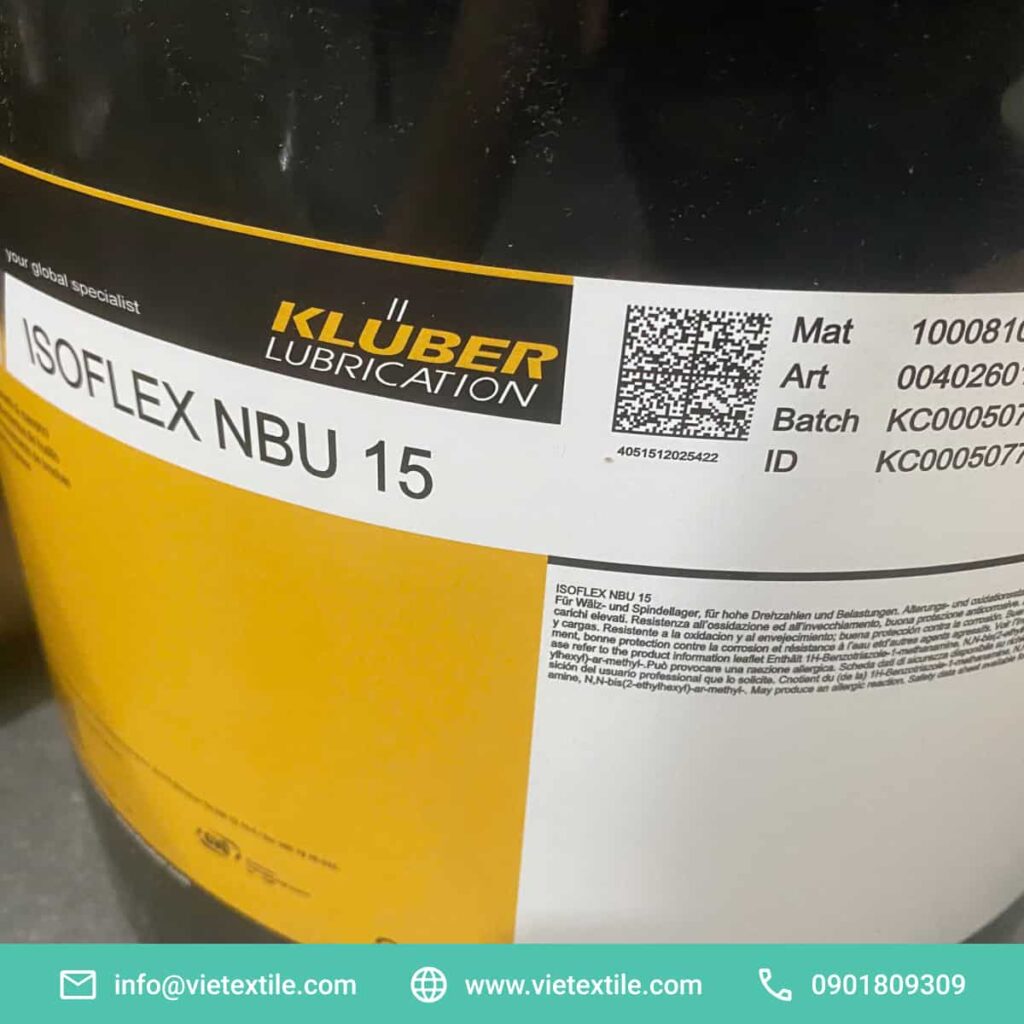
针织机针与导致织物破洞、皱褶和条纹的5大常见疵点

在针织行业中,针织机针是起决定性作用的基本工具,影响着产品的最终质量。无论是高速圆纬机还是专用横机,每一根针的精度和完美状态都直接关系到织物的结构、均匀性和美观度。

针身、钩头或针舌上的任何微小缺陷都可能在织物上造成严重疵点,导致质量下降、废品成本增加和生产中断。

本文将深入探讨针织机的核心功能,并详细分析由织针引起的5大最常见的织物疵点,包括织物破洞、皱褶和条纹。

kim đan máy dệt vải chính hãng
针织机针与导致织物破洞、皱褶和条纹的5大常见疵点 77

1. 针织机针的核心作用

针织机针是在凸轮轨迹内通过往复运动执行复杂编织周期(线圈形成、牵纱、脱圈)的组件。尽管结构简单,每根针都必须确保3个主要功能:

  • 接纱和牵引新纱: 针钩必须平稳地抓住新送入的纱线。
  • 固定旧线圈: 针舌必须及时关闭,以在针钩通过时固定旧线圈。
  • 脱去旧线圈 (Cast-Off): 针钩必须干净地释放旧线圈,以便新纱线可以形成一个新线圈。

针织机针的精度和表面状态是此周期在高速下完美发生的先决条件。

2. 常见疵点1:破洞和撕裂 – 直接物理损伤

撕裂或破洞是最严重的疵点,通常需要立即停机解决。破洞通常表现为沿线圈纵行出现的单个穿孔或长撕裂。

2.1. 源于织针的疵点机制

主要原因是织针从编织状态转变为破坏状态:

  • 针钩断裂 (Broken Hook): 当针钩断裂时,剩余的针尖会形成一个锋利的尖角。这个尖角不会接纱,而是勾住先前形成的纱线或织物上的线圈,将其拉伸并撕裂。此疵点通常表现为一个明显的穿孔。
    • 技术解决方案: 必须立即更换断裂的织针。需要仔细检查相邻的织针和沉降片,以确保它们没有因与受损织针碰撞而断裂或崩缺。
  • 针舌变形或卡滞 (Deformed or Stuck Latch):织针的针舌必须在惯性力下打开和关闭。如果针舌弯曲、翘曲或因油渣而部分卡住,它会产生一个锋利的缝隙。当织针向下运动时,这个缝隙会刮擦并撕裂旧线圈。
    • 技术解决方案: 加强针槽和针舌的清洁。只使用具有自清洁能力的高质量编织油(通常为 ISO VG 22 或 32),以确保织针针舌平稳移动。

2.2. 检测和预防方法

  • 织针检查: 使用放大镜检查针钩和针舌的完整性。钩头上的微小裂纹是疲劳断裂的早期迹象。
  • 防锈: 铁锈会产生粗糙斑块和锋利边缘。将备用织针零部件存放在干燥、温湿度受控的环境中。机器长时间停机时,必须对整个针区涂抹专用防锈油。

3. 常见疵点2:垂直织物条纹(针路)– 线圈均匀性问题

cung cấp kim đan máy dệt vải
针织机针与导致织物破洞、皱褶和条纹的5大常见疵点 78

垂直织物条纹是与线圈纵行平行的条纹,导致密度和光反射差异,降低织物的美观质量。核心原因是线圈长度 (Stitch Length) 的不均匀性。

3.1. 源于织针的疵点机制

  • 织针磨损不均 (Uneven Needle Wear): 这是主要原因。随着时间的推移,织针针钩会磨损,导致钩头与编织点之间的实际距离减小。磨损的织针比新针形成的线圈更紧、更短。这种线圈长度的差异(即使只有 0.01 毫米)也会产生织物条纹。
    • 技术解决方案: 实施主动更换策略,根据运行小时数时间表(通常为 2500–3000 小时)同时更换所有织针,而不是等待织针断裂。这确保了针筒上的所有织针组件具有相同的磨损程度,保持线圈均匀性。
  • 针踵高度误差 (Butt Height Error): 针踵是与凸轮接触的部分。如果针踵弯曲、磨损或存在制造误差,它会改变凸轮激活织针的时序。在错误时间激活的织针将从不正确的位置牵引新纱线,导致线圈长度偏差。
    • 技术解决方案: 安装新织针组件时,使用针踵高度公差极低(低于 ± 5 微米)的织针。绝对丢弃任何弯曲或翘曲的织针。

3.2. 控制与分析

  • 线圈长度测量: 使用线圈长度测量仪 (Stitch Length Meter) 确定线圈纵行之间的差异。
  • QC报告分析: 只使用附带 QC 报告的织针组件,该报告保证了针身厚度和针踵高度公差的绝对均匀性。

4. 常见疵点3:织物皱褶和线圈变形 – 摩擦导致的故障

织物皱褶,也称为紧密或扭曲的线圈,发生在织针移动不顺畅或由于高摩擦导致纱线过度拉伸时。

4.1. 源于织针的疵点机制

  • 织针弯曲或错位 (Bent or Misaligned Needle):织针因冲击或循环应力而略微弯曲。弯曲的织针会显著增加针身与针筒槽壁之间的摩擦。增加的摩擦会导致织针移动不均匀,导致脱圈过程延迟和线圈变形。
    • 技术解决方案: 使用具有高核心韧性 (Core Toughness)织针组件,经过真空淬火以增加抗变形能力。安装前检查织针的直线度。
  • 减摩涂层损坏或织针粗糙 (Damaged Coating or Rough Needle): 传统的镀铬可能很快磨损,暴露出高粗糙度的钢基材。当纱线穿过粗糙的织针时,摩擦急剧增加,导致纱线被“拉扯”和“扭曲”而不是“滑动”,从而导致线圈收紧。
    • 技术解决方案: 改用带有 DLC(类金刚石碳)涂层的织针组件。DLC 涂层具有极低的摩擦系数,使纱线容易在针上滑动,减少线圈收紧,并允许机器在不产生过多热量的情况下以更高的速度运行。

4.2. 润滑管理

此疵点也可能是编织油供应不足或油质劣化的信号。确保编织油具有合适的粘度和高抗氧化质量,以始终在织针和针筒槽之间保持完美的润滑膜。

5. 常见疵点4:频繁断纱 – 切割故障

频繁断纱不仅影响生产力(机器不断停机),还会增加织针上的应力,导致断针风险。

5.1. 源于织针的疵点机制

主要原因是织针的钩头和针舌区域存在锋利的边缘或缝隙,将织针从“编织装置”转变为“切割装置”:

  • 针钩边缘过于锋利或毛刺 (Overly Sharp Hook Edge or Burrs): 尽管织针钩头需要锋利以便容易接纱,但由于制造误差/局部磨损而导致的过于锋利的钩边或毛刺会割断细纱线,特别是拉伸强度低的合成纱线。
    • 技术解决方案: 只使用具有严格钩头轮廓检查程序的供应商的织针组件。安装前用显微镜检查织针是否有毛刺。
  • 钩头和针舌之间有锋利缝隙 (Sharp Gap Between Hook and Latch): 如果织针针舌弯曲或翘曲,它可以在与针钩的接触点处产生一个小的锋利缝隙。当纱线通过或在张力下被卡入此缝隙时,它将被割断。
    • 技术解决方案: 一旦检测到针舌弯曲或关闭不完全,应立即更换织针

5.2. 累积影响

当纱线强度差、有缺陷(结、绒毛)或车间湿度过低(使纱线干燥易碎)时,断纱也会增加。高质量的织针组件最大限度地减少了对纱线的物理冲击,弥补了环境因素或不完美纱线的影响。

6. 常见疵点5:织物污损 – 表面卫生故障

带有黄色/黑色条纹的污损或脏污织物是油泥和氧化油积累的结果,织针将其直接转移到织物上。

6.1. 源于织针的疵点机制

  • 表面粗糙度高 (High Surface Roughness): 劣质或过度磨损的织针组件具有高表面粗糙度(Ra)。粗糙的表面形成了微孔和凹槽,氧化油渣、棉絮和其他污垢颗粒容易附着和积聚。
    • 技术解决方案: 只使用经过专业表面处理,达到极高光滑度(通常低于 Ra 0.2 µm)的织针组件。使用 DLC 涂层织针也有助于防止这种粘附。
  • 织针与润滑油反应 (Needle Reaction with Lubricating Oil): 具有不兼容材料或表面涂层的织针可能会与编织油中的去污添加剂或抗氧化剂发生反应,导致化学油泥的形成。
    • 技术解决方案: 检查编织油品牌与织针制造商的建议之间的兼容性。只使用经过测试的专用可水洗编织油。

6.2. 预防性清洁

定期用压缩空气或专用清洁液清洁织针、沉降片和针筒区域,以去除油泥,防止其有机会转移到织物上。

7. 新针选择策略:3个强制性技术因素

phụ tùng kim đan máy dệt vải
针织机针与导致织物破洞、皱褶和条纹的5大常见疵点 79

为防止上述疵点,选择高质量的织针组件是最具成本效益的投资策略。以下是需要检查的3个强制性技术因素:

7.1. 绝对几何精度和微公差

导致织物条纹的织针与完美织针之间的区别在于公差:

  • 针身公差 (Shank Tolerance): 针身厚度必须在整个批次中绝对均匀,通常只允许 ± 0.005 毫米(5 微米)的偏差。
  • 针踵高度 (Butt Height): 高度必须严格控制,以确保凸轮同步激活,消除因时序偏差而导致的垂直条纹疵点风险。

信誉良好的织针供应商始终提供有关此公差的详细 QC 报告。

7.2. 减摩和抗粘附表面处理技术

优先选择具有先进涂层的织针组件,这决定了织针寿命和织物质量:

  • DLC(类金刚石碳)涂层: 最大限度地减少摩擦,增加纱线滑动能力,减少发热,延长织针寿命,同时防止棉絮和油渣粘附。
  • 表面光洁度 (Surface Finish): 针表面必须超光滑(低 Ra),以便纱线在上面滑动而不会受损,也不会残留污垢。

7.3. 核心硬度和疲劳强度

织针必须经过真空淬火,以实现最佳平衡:

  • 表面硬度: 高(60–65 HRC)以抵抗摩擦磨损。
  • 核心韧性: 足够抵抗在高速下重复数百万次的冲击或循环应力时的脆性断裂。

8. VieTextile的预防性维护解决方案

VieTextile 了解织针是一个关键组件。我们提供高质量的织针解决方案,帮助针织制造商最大限度地减少疵点并优化生产力。

我们致力于供应原装织针产品,采用专用工具钢合金制造,应用 DLC 涂层技术,并遵守最严格的公差标准。

9. 关于织针的常见问题解答 (FAQ)

9.1. 应该多久同时更换一次织针?

回答: 织针的更换应基于运行小时数(通常为 2500 至 3000 小时)或生产的织物总重量(例如,80–100 吨),即使织针尚未断裂。根据主动更换时间表进行同步更换是防止因新旧织针磨损不均而导致的垂直织物条纹疵点(针路)的最佳策略。

9.2. DLC(类金刚石碳)涂层在织针上的作用是什么?

回答: DLC 涂层是一种先进的表面处理技术,有助于:

  • 最大限度地减少摩擦: 有助于织针在针筒槽中平稳移动,减少发热,并最大限度地减少织物皱褶和线圈变形。
  • 延长寿命: 增强表面硬度,比传统镀铬更有效地耐磨。
  • 抗粘附: 防止氧化油渣和棉絮积聚,减少织物污损的风险。

9.3. 如何区分由织针引起的织物条纹和由纱线引起的条纹?

回答:

  • 针致条纹: 通常是清晰的垂直条纹,根据针纵行位置固定,连续出现且不随纱线批次而改变。原因是磨损的织针或针踵高度误差改变了特定针纵行的线圈长度。
  • 纱致条纹: 通常是微弱的水平或垂直条纹,不固定,可能会在更换纱线批次时改变或消失(由于纱线捻度、支数或染色亲和力的差异)。

9.4. 生锈的织针可以继续使用吗?

回答: 绝对不可以。生锈的织针会产生粗糙斑块和锋利边缘,极大地增加摩擦。当这根针移动时,它会刮擦、划伤和撕裂纱线,导致严重的破洞和织物撕裂。铁锈还会损坏针筒槽和相邻的织针。

9.5. 润滑油维护对织针起什么作用?

回答: 高质量的润滑油是针织机的“生命线”。它对织针有3个主要作用:

  • 减少摩擦: 确保织针平稳移动,减少织物皱褶并延长织针寿命。
  • 冷却: 降低高速摩擦产生的热量。
  • 清洁和防锈: 编织油必须具有清洁棉絮和污垢颗粒的能力,同时保护织针表面免受氧化和生锈。
  • 注意: 只使用专用、可水洗的编织油,以避免织物污损疵点。

请联系我们,获取有关为您的纱线类型和机器机号选择合适的针织机针,以及制定有效预防性维护策略的专家咨询。

联系信息: 

Hotline: 0901 809 309 

Email: info@vietextile.com 

Website: https://vietextile.com
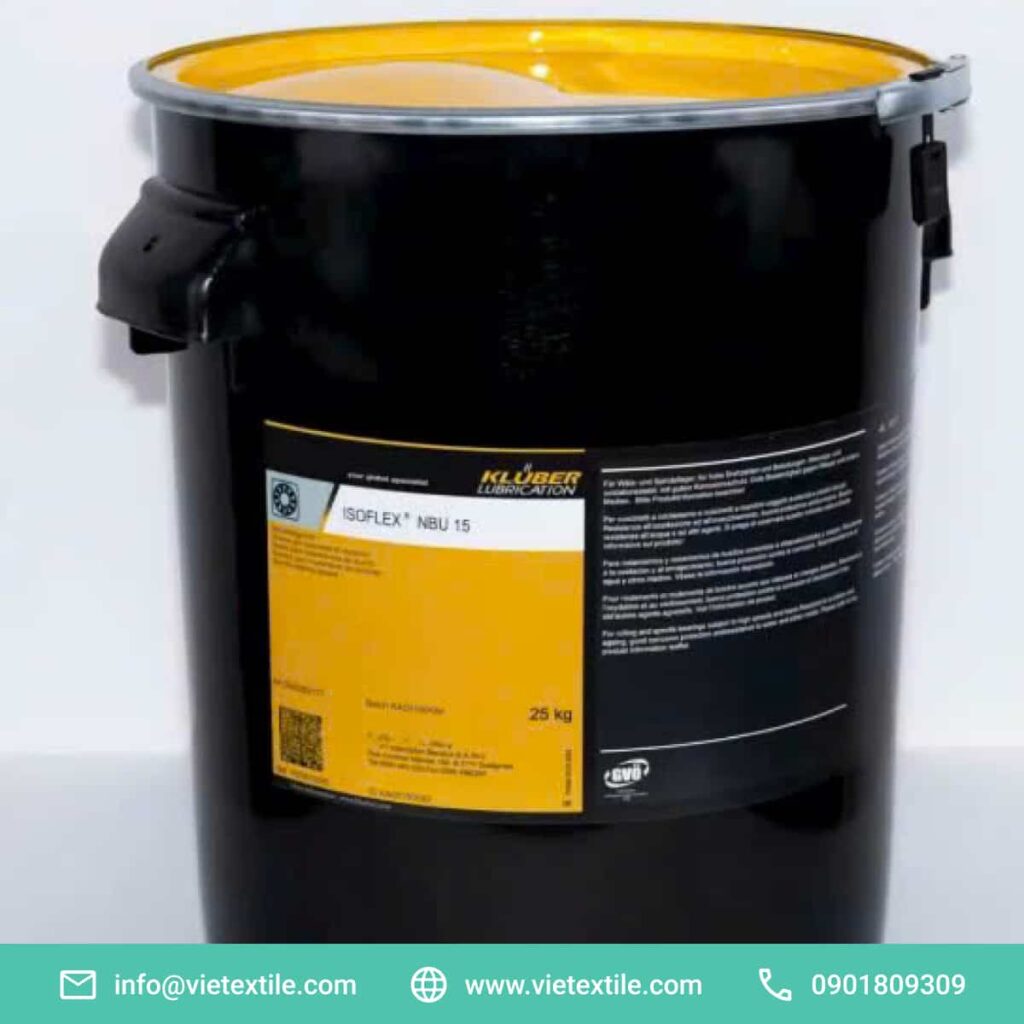
Knitting Machine Needles and 5 Common Faults Causing Fabric Tears, Wrinkles, and Stripes

In the knitting industry, the knitting machine needle is a fundamental tool that plays a decisive role in the final quality of the product. Whether it’s a high-speed circular knitting machine or a specialized flat knitting machine, the precision and perfect condition of each needle directly influence the fabric’s structure, uniformity, and aesthetic appeal.

Any minor defect on the needle shank, hook, or latch can cause serious faults in the fabric, leading to reduced quality, increased waste costs, and production disruption.

This article will delve into the core function of the knitting machine needle and provide a detailed analysis of the 5 most common fabric faults that originate from the needle, including fabric tears, wrinkles, and stripes.

kim đan máy dệt vải chính hãng
Knitting Machine Needles and 5 Common Faults Causing Fabric Tears, Wrinkles, and Stripes 84

1. The Core Role of the Knitting Machine Needle

The knitting machine needle is the component that executes the complex knitting cycle (loop creation, yarn drawing, cast-off) through reciprocating motion within the cam track. Despite its simple structure, each needle must ensure 3 main functions:

  1. Catching and Drawing New Yarn: The needle hook must catch the newly supplied yarn smoothly.
  2. Securing the Old Loop: The latch must close in time to secure the old stitch loop as the hook moves through.
  3. Casting Off the Old Loop: The hook must release the old stitch loop cleanly so that the new yarn can form a new loop.

The precision and surface condition of the knitting machine needle are prerequisite factors for this cycle to occur perfectly at high speed.

2. Common Fault 1: Holes and Tears – Direct Physical Damage

Tears or holes are the most severe faults, often requiring the machine to be stopped immediately for resolution. Tears usually appear as single punctures or long rips along the stitch column.

2.1. Fault Mechanism Originating from the Needle

The main cause is that the knitting machine needle has transitioned from a knitting state to a destructive state:

  • Broken Hook: When the needle hook breaks, the remaining needle tip forms a sharp, pointed edge. Instead of catching the yarn, this sharp edge snags the previously formed yarns or loops on the fabric, stretching and tearing them. This fault typically appears as a clear puncture hole.
    • Technical Solution: The broken knitting machine needle must be replaced immediately. A careful check of adjacent needles and the sinker is necessary to ensure they are not broken or chipped due to collision with the damaged needle.
  • Deformed or Stuck Latch: The knitting machine needle latch must open and close under inertial force. If the latch is bent, warped, or stuck partially open by oil residue, it creates a sharp gap. As the needle moves down, this gap scratches and rips the old stitch loop.
    • Technical Solution: Intensify cleaning of the needle slots and latches. Only use high-quality knitting oil (typically ISO VG 22 or 32) with self-cleaning capabilities to ensure the needle latch moves smoothly.

2.2. Detection and Prevention Methods

  • Needle Inspection: Use a magnifying glass to check the integrity of the needle hook and latch. Small cracks on the hook are early signs of fatigue breakage.
  • Rust Prevention: Rust creates rough patches and sharp edges. Store spare knitting machine needle components in a dry, temperature and humidity-controlled environment. When the machine is stopped for an extended period, specialized anti-rust oil must be applied to the entire needle area.

3. Common Fault 2: Vertical Fabric Stripes (Needle Lines) – The Problem of Stitch Uniformity

cung cấp kim đan máy dệt vải
Knitting Machine Needles and 5 Common Faults Causing Fabric Tears, Wrinkles, and Stripes 85

Vertical fabric stripes are lines running parallel to the stitch column, causing differences in density and light reflection, reducing the aesthetic quality of the fabric. The core cause is the non-uniformity of the Stitch Length.

3.1. Fault Mechanism Originating from the Needle

  • Uneven Needle Wear: This is the leading cause. Over time, the knitting machine needle hook wears down, reducing the actual distance between the hook and the knitting point. A worn needle creates a tighter and shorter loop than a new needle. This difference in stitch length (even if only 0.01mm) will create fabric stripes.
    • Technical Solution: Implement a Proactive Replacement strategy by replacing all needles simultaneously according to an operating hour schedule (typically 2500–3000 hours) rather than waiting for the needle to break. This ensures all knitting machine needle parts on the cylinder have the same level of wear, maintaining stitch uniformity.
  • Butt Height Error: The needle butt is the part that contacts the cam. If the needle butt is bent, worn, or has a manufacturing error, it alters the timing of when the needle is activated by the cam. A needle activated at the wrong time will draw the new yarn from an incorrect position, leading to stitch length deviation.
    • Technical Solution: When installing new knitting machine needle components, use needles with extremely low butt height tolerance (below ± 5 microns). Absolutely discard any bent or warped needles.

3.2. Control and Analysis

  • Stitch Length Measurement: Use a Stitch Length Meter to determine the difference between stitch columns.
  • QC Report Analysis: Only use knitting machine needle components that come with a QC report guaranteeing absolute uniformity in shank thickness and butt height tolerance.

4. Common Fault 3: Fabric Wrinkles and Loop Distortion – Failure Due to Friction

Fabric wrinkles, also known as tight or twisted loops, occur when the knitting machine needle does not move smoothly or when the yarn is excessively pulled due to high friction.

4.1. Fault Mechanism Originating from the Needle

  • Bent or Misaligned Needle: The knitting machine needle is slightly bent due to impact or cyclic stress. A bent needle significantly increases friction between the needle shank and the cylinder slot wall. The increased friction causes the needle to move unevenly, leading to a delay in the cast-off process and loop distortion.
    • Technical Solution: Use knitting machine needle components with high Core Toughness, vacuum-hardened to increase resistance to deformation. Check the straightness of the needle before installation.
  • Damaged Anti-Friction Coating or Rough Needle: Conventional Chrome plating can wear out quickly, exposing the high-roughness steel substrate. When yarn passes through a rough needle, friction increases sharply, causing the yarn to be “pulled” and “twisted” instead of “sliding,” leading to loop tightening.
    • Technical Solution: Switch to knitting machine needle components with a DLC (Diamond-Like Carbon) coating. The DLC coating has an extremely Low Coefficient of Friction, allowing the yarn to glide easily over the needle, reducing loop tightening, and enabling the machine to operate at higher speeds without excessive heat generation.

4.2. Lubrication Management

This fault can also be a sign of insufficient knitting oil supply or deteriorated oil. Ensure the knitting oil is of the appropriate viscosity and high anti-oxidation quality to always maintain a perfect lubricating film between the knitting machine needle and the cylinder slot.

5. Common Fault 4: Frequent Yarn Breaks – Cutting Fault

Frequent yarn breaks not only affect productivity (constant machine stops) but also increase stress on the needle, leading to the risk of needle breakage.

5.1. Fault Mechanism Originating from the Needle

The main cause is the presence of sharp edges or gaps in the hook and latch area of the knitting machine needle, transforming the needle from a “knitting device” into a “cutting device”:

  • Overly Sharp Hook Edge or Burrs: Although the knitting machine needle hook needs to be sharp to easily catch the yarn, an overly sharp hook edge or burrs due to manufacturing errors/localized wear will cut thin yarns, especially synthetic yarns with low tensile strength.
    • Technical Solution: Only use knitting machine needle components from suppliers with strict Hook Profile inspection procedures. Inspect the needle with a microscope before installation to check for burrs.
  • Sharp Gap Between Hook and Latch: If the knitting machine needle latch is bent or warped, it can create a small, sharp gap at the contact point with the needle hook. When the yarn passes through or gets caught in this gap under tension, it will be cut.
    • Technical Solution: Replace the knitting machine needle immediately upon detecting a bent or incompletely closing latch.

5.2. Cumulative Impact

Yarn breakage also increases when the yarn has poor strength, is defective (knots, fuzz), or when the humidity in the workshop is too low (making the yarn dry and brittle). High-quality knitting machine needle components minimize physical impact on the yarn, compensating for environmental factors or imperfect yarn.

6. Common Fault 5: Dirty Fabric – Surface Hygiene Fault

Dirty or stained fabric with yellow/black streaks is the result of accumulated sludge and oxidized oil, which the knitting machine needle transfers directly onto the fabric.

6.1. Fault Mechanism Originating from the Needle

  • High Surface Roughness: Poor-quality or excessively worn knitting machine needle components have high surface roughness (Ra). The rough surface creates micro-holes and grooves where oxidized oil residue, lint, and other dirt particles easily adhere and accumulate.
    • Technical Solution: Only use knitting machine needle components that have been professionally surface-treated, achieving extremely high smoothness (typically below Ra 0.2 µm). The use of DLC-coated needles also helps prevent this adhesion.
  • Needle Reaction with Lubricating Oil: Needles with incompatible material or surface coating can react with the detergent additives or anti-oxidants in the knitting oil, leading to the formation of chemical sludge.
    • Technical Solution: Check the compatibility between the knitting oil brand and the needle manufacturer’s recommendations. Only use specialized, washable knitting oil that has been tested.

6.2. Preventive Cleaning

Regularly clean the needle, sinker, and cylinder area with compressed air or specialized cleaning solution to remove sludge before it has a chance to transfer to the fabric.

7. New Needle Selection Strategy: 3 Mandatory Technical Factors

phụ tùng kim đan máy dệt vải
Knitting Machine Needles and 5 Common Faults Causing Fabric Tears, Wrinkles, and Stripes 86

To prevent the above faults, selecting high-quality knitting machine needle components is the most cost-effective investment strategy. Here are 3 mandatory technical factors to check:

7.1. Absolute Geometric Precision and Micro Tolerance

The difference between a knitting machine needle that causes fabric stripes and a perfect needle lies in tolerance:

  • Shank Tolerance: The shank thickness must be absolutely uniform across the entire batch, usually allowing a deviation of only ± 0.005 mm (5 microns).
  • Butt Height: The height must be strictly controlled to ensure synchronous activation by the cam, eliminating the risk of vertical stripe faults due to timing deviation.

Reputable knitting machine needle suppliers always provide detailed QC reports on this tolerance.

7.2. Anti-Friction and Anti-Adhesion Surface Treatment Technology

Prioritize knitting machine needle components with advanced coatings, which determine the needle lifespan and fabric quality:

  • DLC (Diamond-Like Carbon) Coating: Maximizes friction reduction, increases yarn gliding capability, reduces heat generation, and extends needle life, while also preventing the adhesion of lint and oil residue.
  • Surface Finish: The needle surface must be super smooth (low Ra) for the yarn to glide over without damage and without retaining dirt.

7.3. Core Hardness and Fatigue Strength

The knitting machine needle must be vacuum-hardened to achieve the optimal balance:

  • Surface Hardness: High (60–65 HRC) to resist wear from friction.
  • Core Toughness: Sufficient to resist brittle fracture when subjected to shocks or cyclic stress repeated millions of times at high speed.

8. Preventive Maintenance Solutions from VieTextile

VieTextile understands that the knitting machine needle is a critical component. We provide high-quality knitting machine needle solutions that help knit manufacturers minimize faults and optimize productivity.

We are committed to supplying genuine knitting machine needle products, manufactured from specialized tool steel alloys, applying DLC coating technology, and adhering to the strictest tolerance standards.

9. Frequently Asked Questions about Knitting Machine Needles (FAQ)

9.1. How often should knitting machine needles be replaced simultaneously?

Answer: The replacement of knitting machine needle components should be based on operating hours (typically 2500 to 3000 hours) or the total weight of fabric produced (e.g., 80–100 tons), even if the needle is not yet broken. Simultaneous replacement according to a Proactive Replacement schedule is the best strategy to prevent vertical fabric stripe faults (Needle Lines) caused by uneven wear between old and new needles.

9.2. What is the function of the DLC (Diamond-Like Carbon) coating on the needle?

Answer: The DLC coating is an advanced surface treatment technology that helps:

  • Maximize Friction Reduction: Helps the needle move smoothly in the cylinder slot, reduces heat generation, and minimizes fabric wrinkling and Loop Distortion.
  • Increase Lifespan: Enhances surface hardness, resisting wear more effectively than conventional Chrome plating.
  • Anti-Adhesion: Prevents the accumulation of oxidized oil residue and lint, reducing the risk of dirty or stained fabric.

9.3. How to distinguish between fabric stripes caused by the needle and those caused by the yarn?

Answer:

  • Needle Stripes: Typically clear, vertical stripes, fixed according to the needle column position, appearing continuously and not changing with the yarn batch. The cause is a worn needle or a Butt Height error that changes the stitch length at a specific needle column.
  • Yarn Stripes: Often faint, horizontal or vertical stripes, not fixed, which may change or disappear when the yarn batch is changed (due to differences in yarn twist, count, or dye affinity).

9.4. Can a rusted knitting machine needle continue to be used?

Answer: Absolutely not. A rusted knitting machine needle creates rough patches and sharp edges, increasing friction tremendously. When this needle moves, it will scratch, score, and tear the yarn, causing severe Holes and fabric tears. Rust also damages the cylinder slot and adjacent needles.

9.5. What role does lubricating oil maintenance play for the knitting machine needle?

Answer: High-quality lubricating oil is the “lifeblood” of the knitting machine. It has 3 main roles for the needle:

  • Friction Reduction: Ensures the needle moves smoothly, reducing fabric wrinkles and extending needle life.
  • Cooling: Reduces the heat generated by friction at high speed.
  • Cleaning & Anti-Rust: Knitting oil must have the ability to clean lint and dirt particles, while also protecting against oxidation and rust on the needle surface.
  • Note: Only use specialized, washable knitting oil to avoid dirty fabric faults.

Please contact us for expert consultation on selecting the appropriate knitting machine needle for your yarn type and machine Gauge, as well as effective preventive maintenance strategies.

Contact Information: 

Hotline: 0901 809 309 

Email: info@vietextile.com 

Website: https://vietextile.com