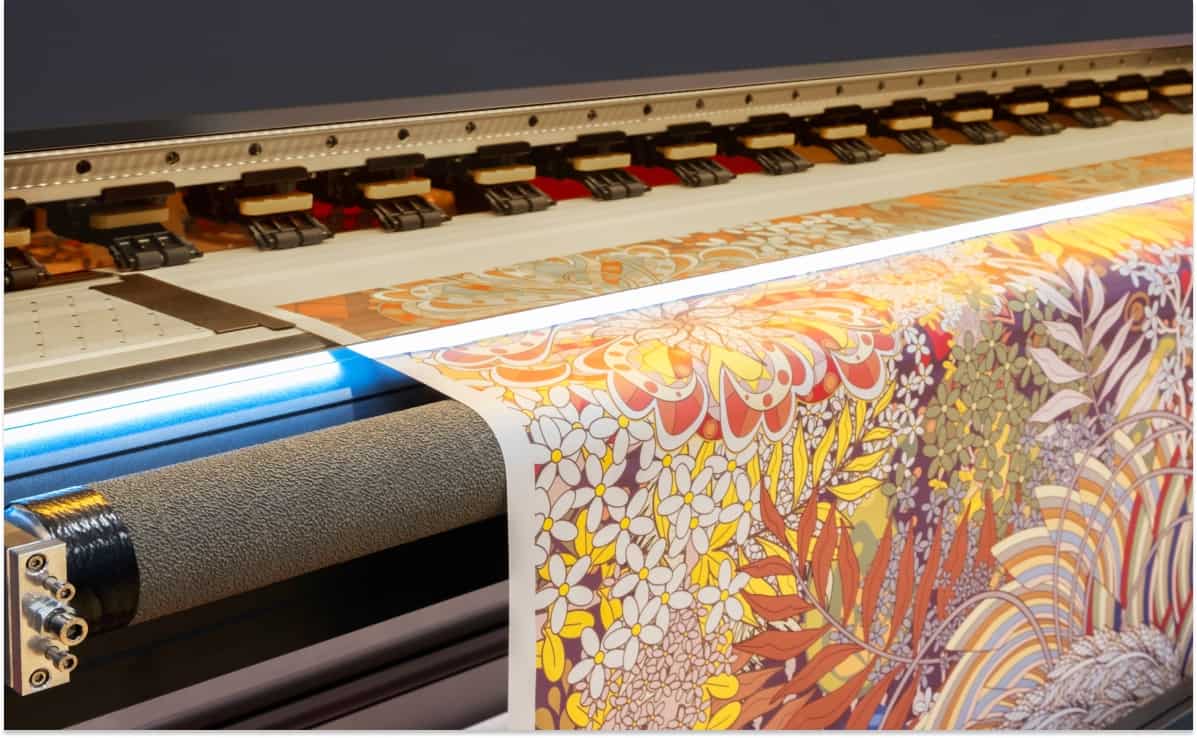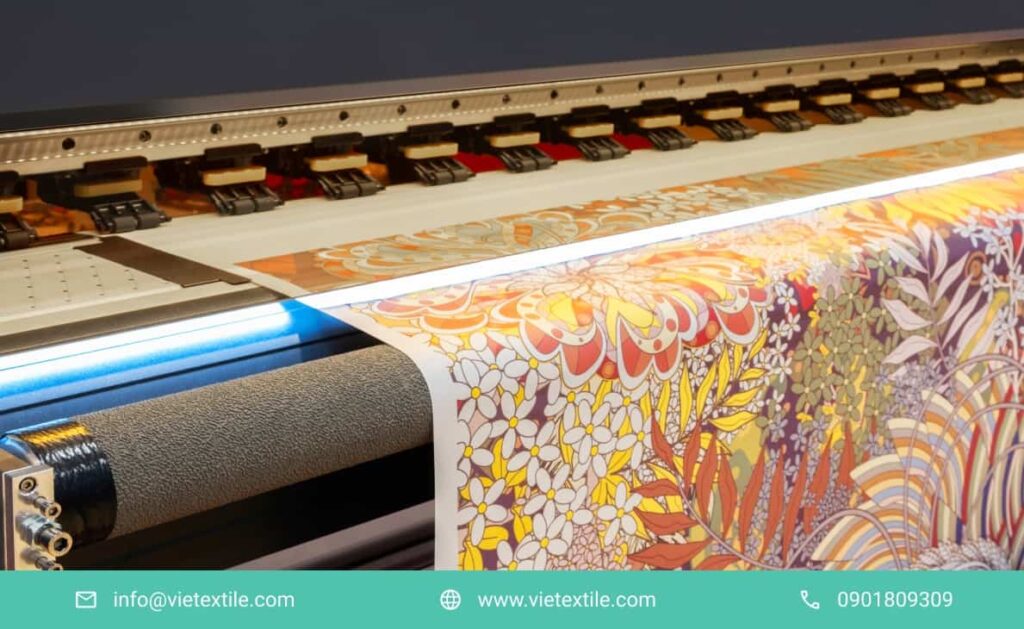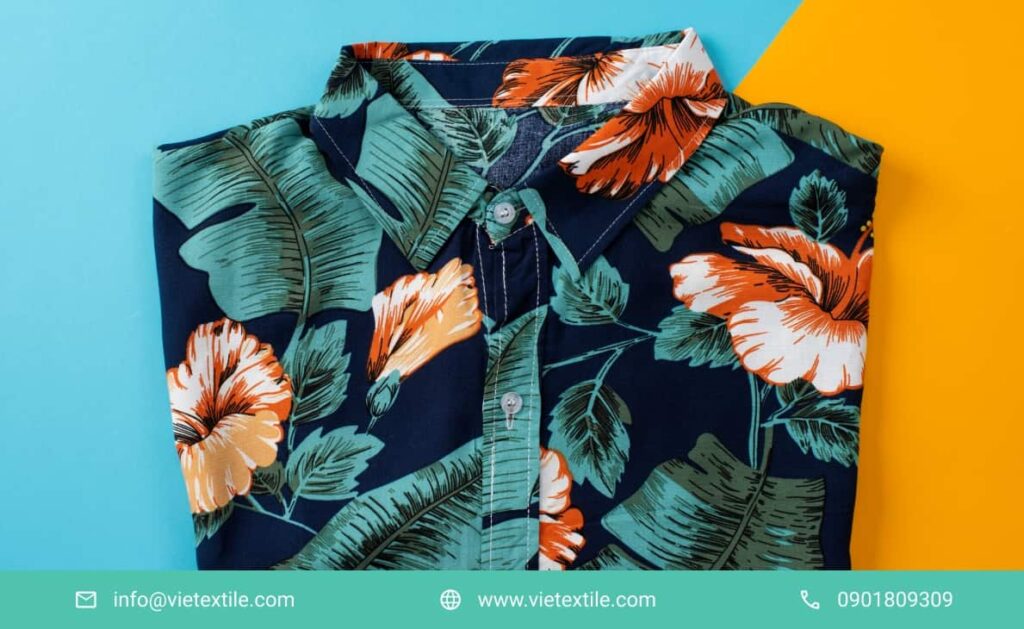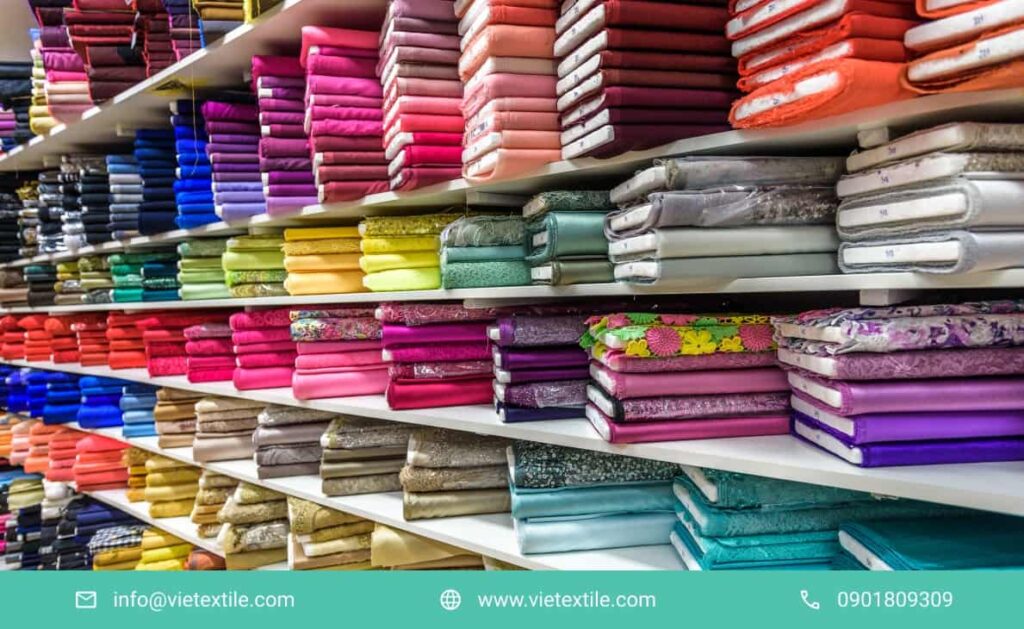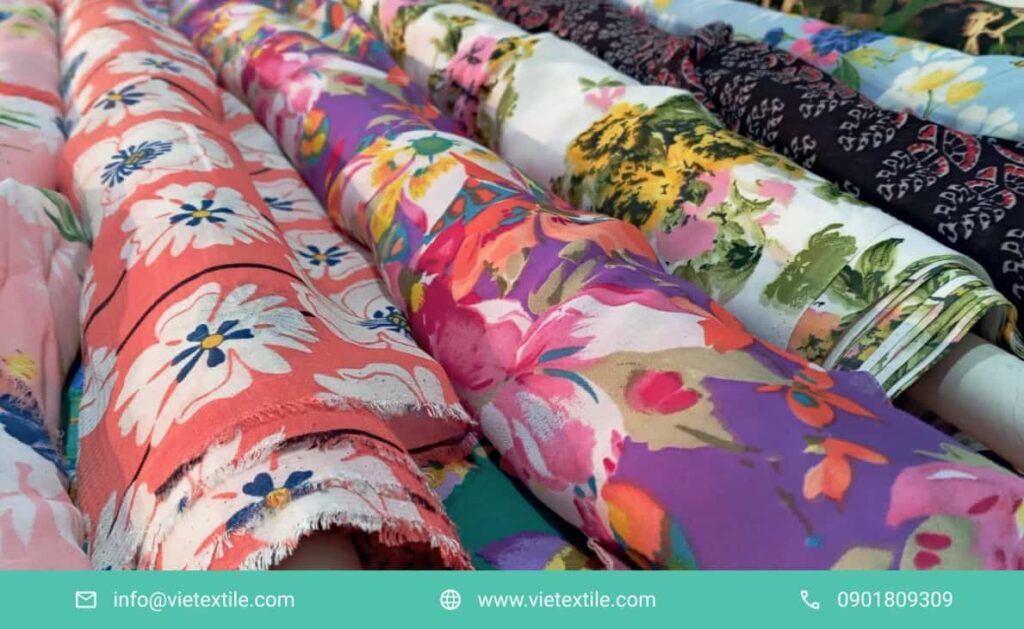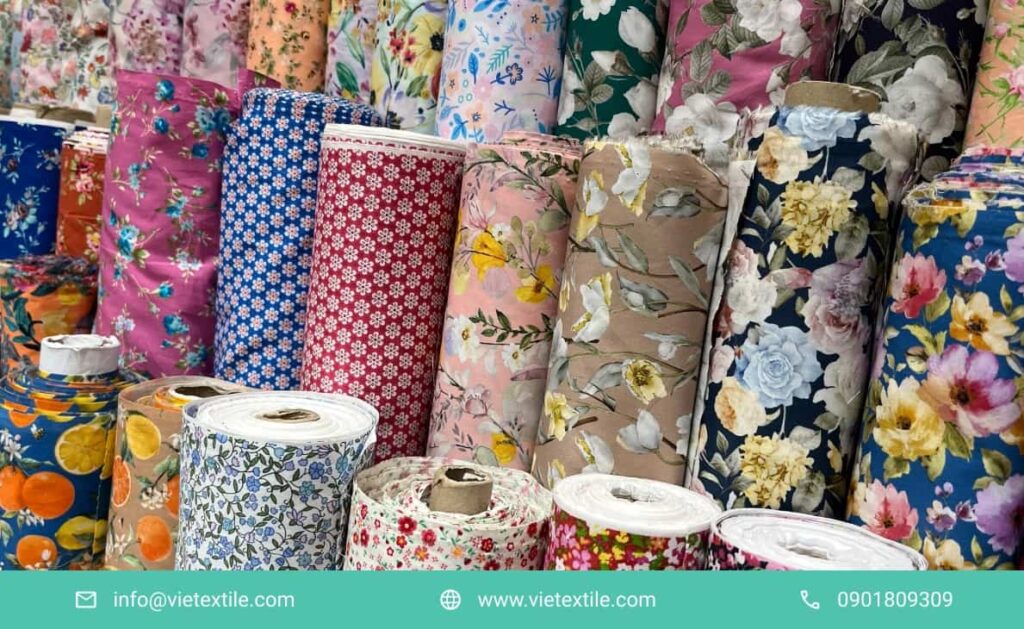
Cotton Printing Services in Vietnam for Small Businesses: A Cost-Saving Solution

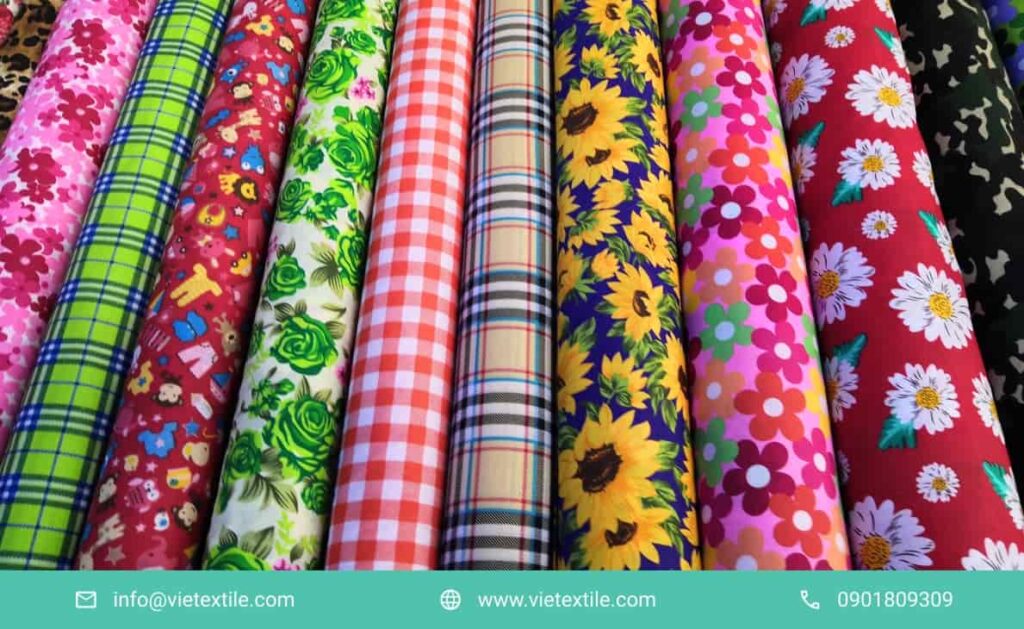
Cotton fabric has long been a “national” material in the fashion and textile industry due to its softness, breathability, and excellent absorbency. For small businesses, especially fashion startups, finding an effective printing solution that ensures product quality while optimizing production costs is always a difficult challenge.

Catering to this need, the market for cotton printing services in Vietnam has developed strongly, offering many advanced printing technologies at competitive prices, making them an ideal solution for businesses with limited budgets.

This article will delve into the popular cotton fabric printing technologies, analyze their pros and cons, and provide useful advice to help you choose the most suitable method, thereby saving costs without sacrificing product quality.
cotton printing services in Vietnam
Cotton Printing Services in Vietnam for Small Businesses: A Cost-Saving Solution 5

The cotton printing services market in Vietnam is becoming increasingly diverse with the appearance of many suppliers and modern technologies. Choosing the right partner and printing method not only helps reduce product costs but also ensures the durability, color, and aesthetics of the printed product.

We will analyze the main printing methods, from traditional screen printing to modern DTG printing, giving you the most comprehensive and detailed overview. At the same time, the article will also provide tips to optimize printing costs, from preparing design files to choosing the appropriate print quantity, ensuring small businesses can compete effectively in the market.

1. Popular Cotton Fabric Printing Technologies in Vietnam

In Vietnam, there are three main cotton fabric printing technologies that small businesses can consider, each with its own pros and cons, suitable for different production purposes.

1.1. Screen Printing: A Traditional Solution for Large Quantities

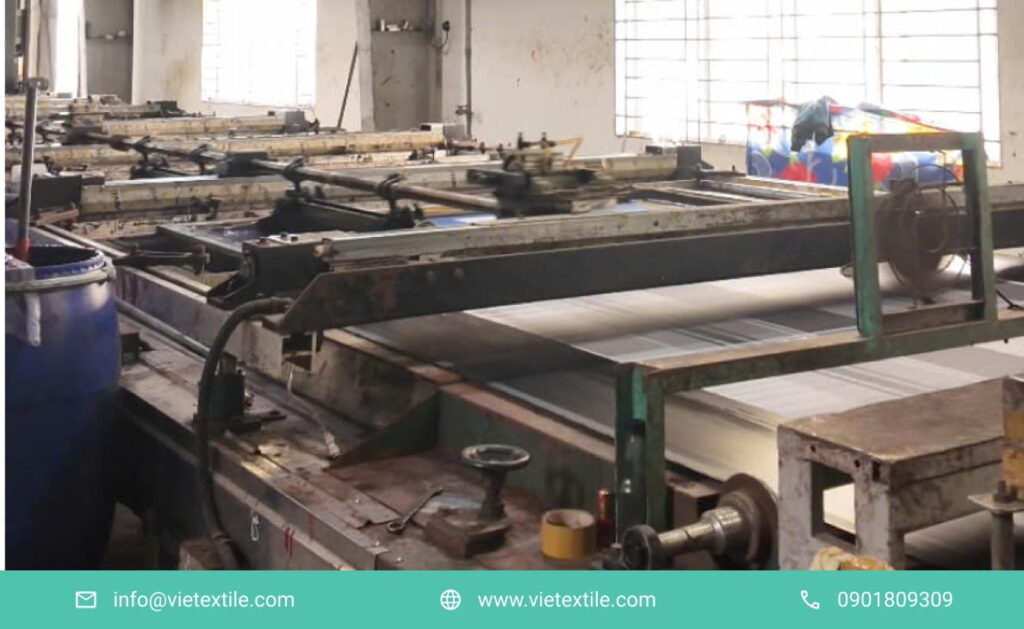
Screen printing is one of the oldest and most popular printing methods, especially when you need to print large quantities. The operating principle is based on using a printing frame (a silk screen) to allow the ink to pass through and adhere to the fabric surface.

1.1.1. Outstanding Advantages

  • Low Cost: When printing in large quantities, the cost per product is significantly reduced as the cost of making the screen is spread out. This is the biggest advantage of screen printing, helping small businesses produce at a large scale without investing too much in technology.
  • High Durability: Screen printing ink is often very thick and adheres firmly to the fabric, providing good colorfastness that is difficult to fade or peel. Screen-printed products can withstand many washes and be used for a long time. 
  • Vibrant Colors: The ink has high opacity, which helps the printed colors stand out, suitable for simple designs and clear colors. This is especially effective when printing logos, symbols, or block patterns.

1.1.2. Disadvantages and Limitations

  • Color Limitations: It is difficult to print designs with many complex colors or gradient effects. Each color requires a separate screen, which increases costs and production time, especially for designs with more than 3-4 colors. 
  • Not Suitable for Small Quantities: The initial cost of making screens is quite high, so screen printing is not a cost-effective option for small orders of less than 100 products. 
  • Requires Skill: Screen printing techniques require a high level of experience and skill from the printer to ensure the uniformity of the ink and the quality of the print.

1.2. Digital Printing (DTG): Flexible and Sharp

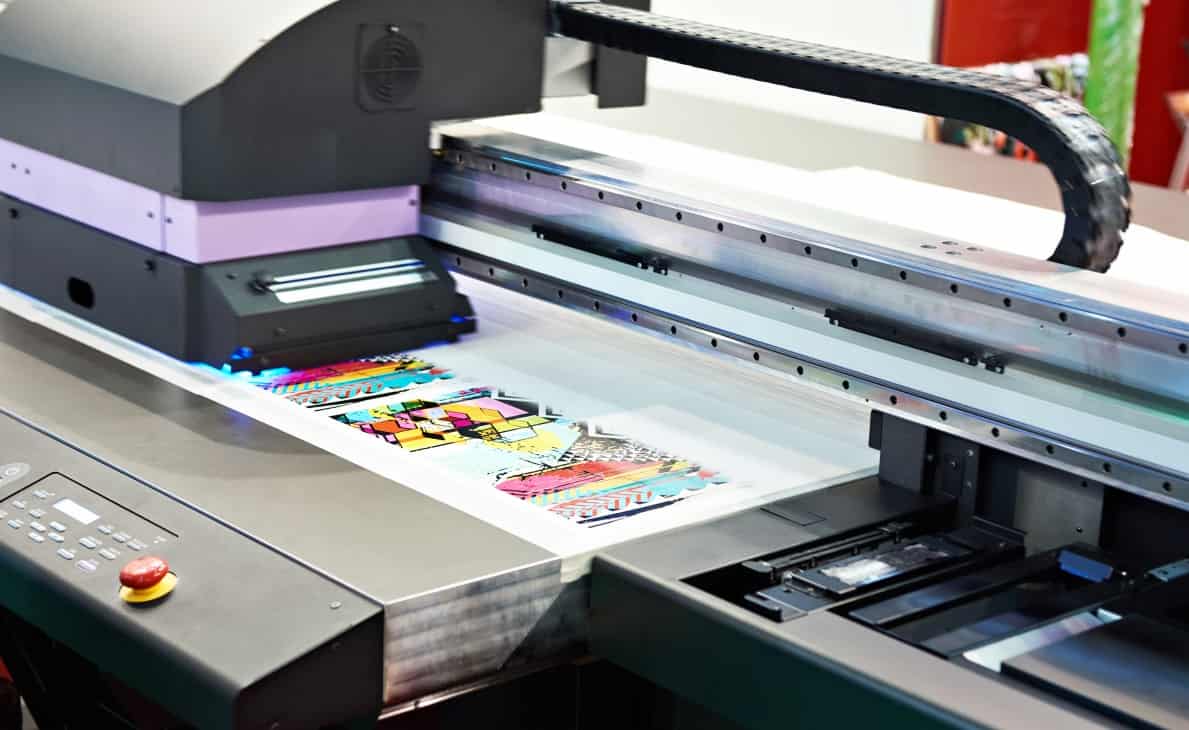
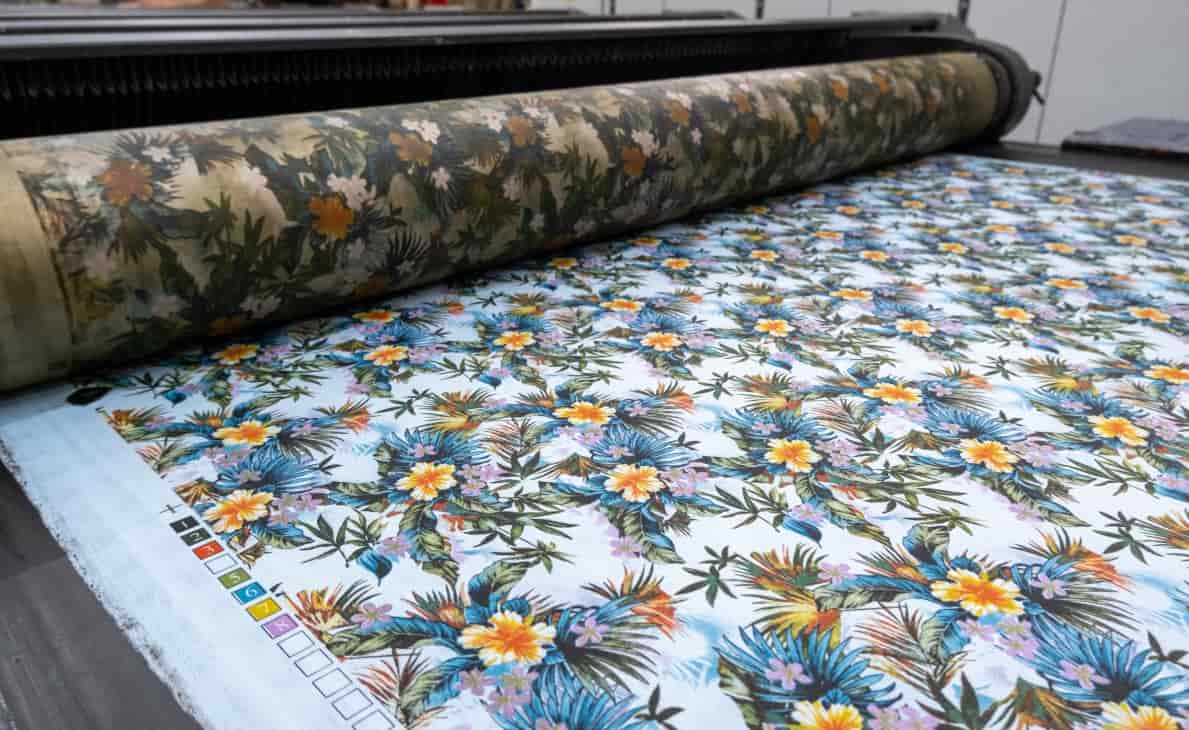
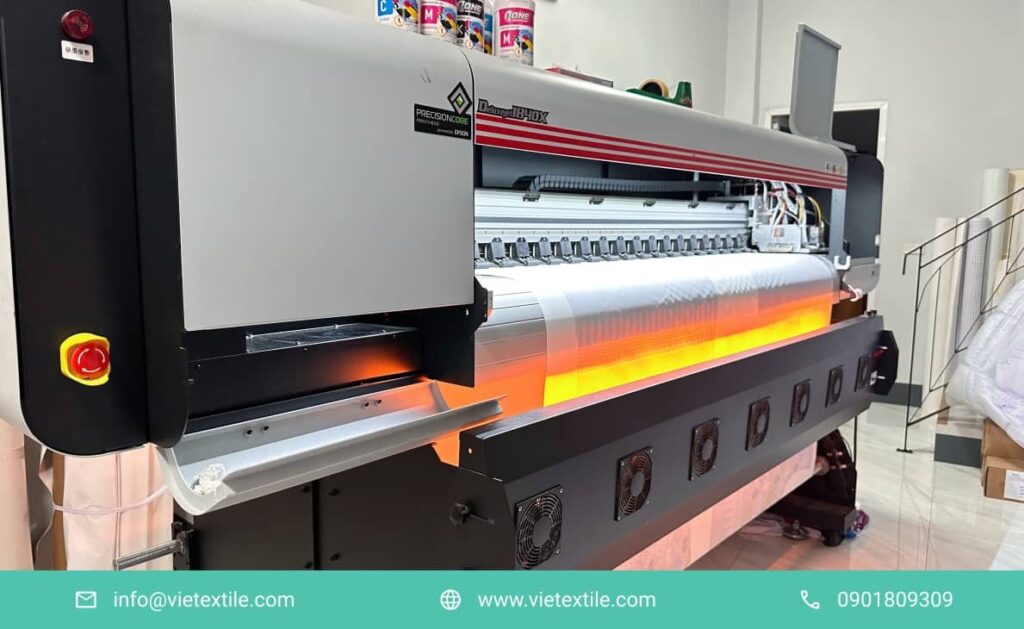
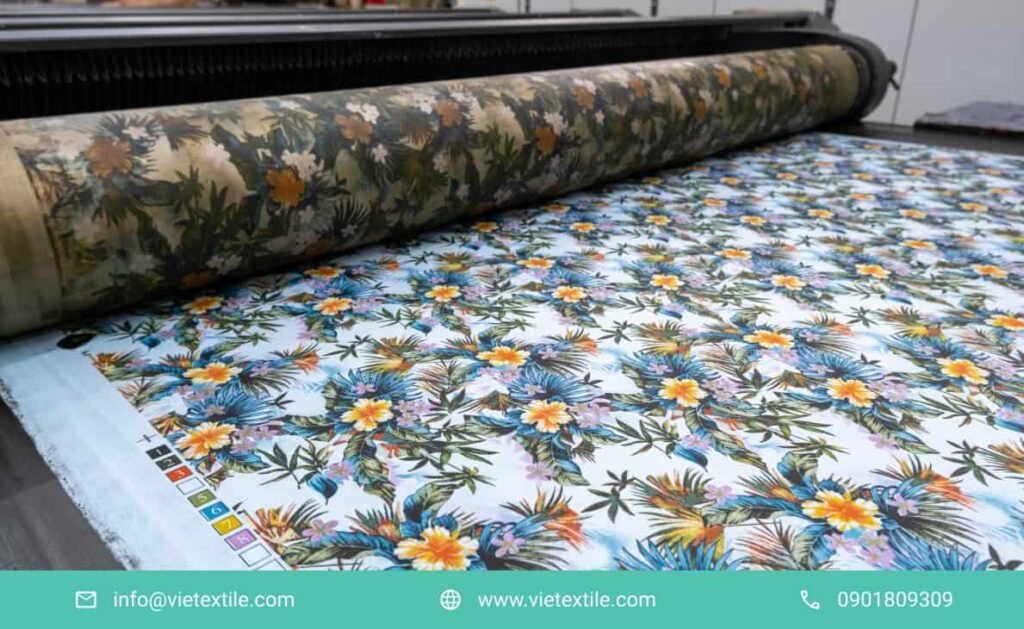
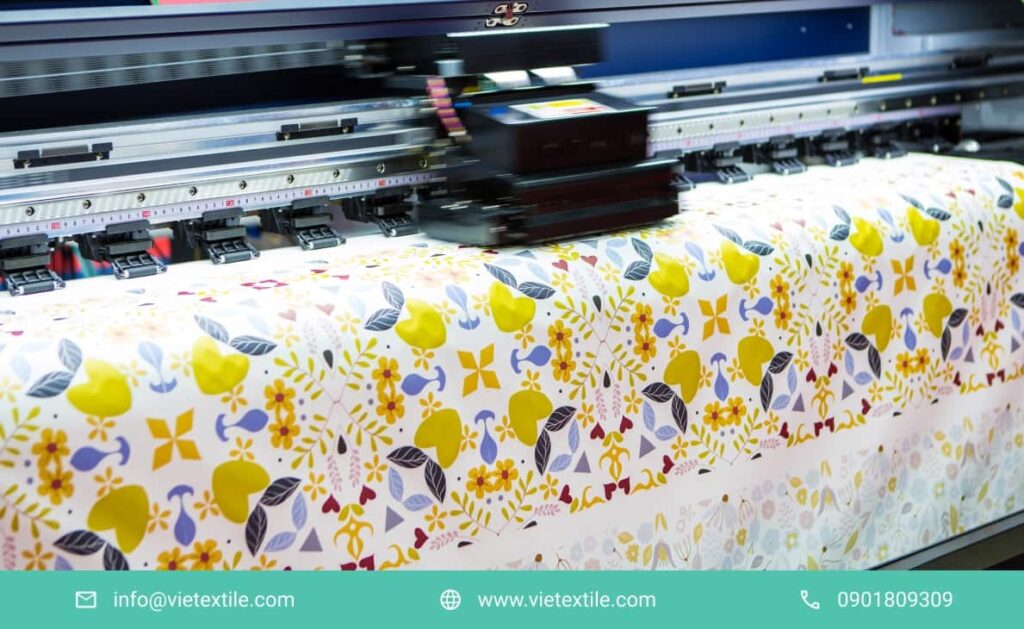
DTG (Direct to Garment) printing is a modern technology that uses a specialized printer to spray ink directly onto the fabric. This is an ideal solution for small businesses that need flexibility and high quality.

1.2.1. Outstanding Advantages of DTG

  • Superior Image Quality: Allows for printing complex designs, high-resolution images, and smooth gradient effects. With DTG printing on cotton fabric in Vietnam, you can reproduce every intricate detail of a photo. 
  • Quantity Flexibility: Suitable for printing from just 1 product, which is very convenient for printing samples or personalized orders, helping to minimize inventory risk. 
  • Time-Saving: The process is quick and does not require screen making, which shortens production time, especially when urgent delivery is needed. 
  • Colorfastness: DTG ink penetrates deep into the fabric fibers, creating a durable bond that gives the product high colorfastness that does not fade after many washes.

1.2.2. Disadvantages to Consider

  • Higher Cost: The cost per product for DTG printing on cotton fabric in Vietnam is often higher compared to screen printing when printing in large quantities. 
  • Requires Light-Colored Fabric: The best print quality is on white or light-colored cotton fabric. When printing on dark fabrics, a white ink underbase is needed, which increases costs and may affect the fabric’s softness.

1.3. Heat Transfer Printing: An Economical Choice for Poly-Blended Fabrics

Heat transfer printing is an indirect printing method that uses heat and pressure to transfer ink from a special transfer paper to the fabric. Although it is not the optimal choice for 100% cotton fabric, it is an economical solution for cotton fabrics blended with polyester.

1.3.1. Advantages of Heat Transfer Printing

  • Low Cost: The production cost is low, especially for large quantities. 
  • Fast Production Speed: The printing process is simple, suitable for mass production.

1.3.2. Disadvantages and Limitations

  • Low Print Quality: The print can be stiff and easily peel off after washing. 
  • Material Limitations: Not suitable for 100% cotton fabric because the ink does not adhere well, easily fades, and can damage the fabric.

2. Optimal Solutions for Small Businesses: Analysis and Selection
Sản phẩm in vải cotton ở Việt Nam
Cotton Printing Services in Vietnam for Small Businesses: A Cost-Saving Solution 6

To optimize costs while ensuring quality, small businesses should have a smart printing technology selection strategy based on their specific needs.

2.1. Factors to Analyze Before Placing an Order

Analyzing the following factors will help you make a wise and cost-effective decision.

  • Quantity: This is the most important factor. If you need to print a large quantity (over 100 products), screen printing will be the most economical choice. Conversely, if your business model is Print-on-Demand (POD) or you need to print samples, DTG printing on cotton fabric in Vietnam is the perfect solution. 
  • Design Complexity: For simple designs, screen printing can work well. For complex, multi-colored designs, or photo prints, DTG printing is the only choice. 
  • Fabric Material: For 100% cotton fabric, DTG printing is the optimal method. Screen printing is also a good choice if you need to print in large quantities.

2.2. Tips to Optimize Printing Costs

To ensure that your cotton printing services in Vietnam deliver the highest economic efficiency, small businesses can follow these tips:

  • Prepare a Standard Design File: Ensure your design file has high resolution, the correct color mode (CMYK), and is vectorized (if possible). A standard design file will help reduce editing time, reprinting, and optimize costs. 
  • Choose the Right Partner: Partner with reputable printing shops that have experience and modern technology. A good partner will provide professional consultation, helping you choose the most suitable printing method and ensure product quality. 
  • Negotiate Price: Don’t hesitate to negotiate prices, especially if you plan to print in large quantities in the future. Take Advantage of Promotions: Many printing shops offer promotions and special deals for small businesses or first-time orders.

3. Cotton Printing Services in Vietnam at VieTextile: Quality and Savings
Sản phẩm in vải cotton ở Việt Nam
Cotton Printing Services in Vietnam for Small Businesses: A Cost-Saving Solution 7

VieTextile is proud to be a pioneer in the field of cotton printing services in Vietnam, providing a comprehensive and optimal solution for small businesses. We understand that budget is a crucial factor, and therefore, we always strive to provide high-quality services at the most competitive prices.

3.1. Exclusive Digital Printing Services at VieTextile

We focus on modern digital printing technology, which is the optimal solution for cotton printing services in Vietnam for small quantities, samples, or personalized designs. With advanced machinery, we are committed to delivering sharp, vibrant, and highly colorfast printed products. You won’t have to worry about the cost of making screens or minimum quantities, helping you test new ideas easily and effectively.

3.2. Professional Consultation from VieTextile

Our team of experts will provide dedicated consultation, helping you understand the printing technologies, choose the right type of cotton fabric, and optimize production costs. We are not just a service provider but also a partner accompanying you on the path of brand development.

3.3. Fast Production Process

The work process at VieTextile is optimized, from receiving the request and design to printing and delivery. We are committed to completing orders on time, helping you save time and be more proactive in your business plans.

4. Frequently Asked Questions (FAQ) About Cotton Printing Services in Vietnam

4.1. Is digital printing colorfast on cotton fabric? Yes. Current cotton printing services in Vietnam are very advanced. With a proper heat post-treatment process, the ink will bond firmly to the fabric fibers, ensuring high colorfastness that does not fade after many washes.

4.2. Should a small business choose screen printing or digital printing? If your business prints in large quantities (over 100 products) and has a simple design, screen printing is a more economical choice. If you need to print small quantities, samples, or complex designs, digital printing on cotton fabric in Vietnam is the optimal solution.

4.3. What should I prepare before bringing a design file to the printing shop? You should prepare a high-resolution design file, preferably a vector file. This helps ensure the best print quality and reduces editing costs.

4.4. Does VieTextile accept small quantity orders? Yes. VieTextile specializes in providing cotton printing services in Vietnam with flexible quantities, from a single product to thousands of products.

To get high-quality, cost-effective, and aesthetically perfect cotton printing services in Vietnam, contact VieTextile today! Our team is always ready to consult and assist you with any project.

Contact Information:

  • Hotline: 0901 809 309
  • Email: info@vietextile.com
  • Website: https://vietextile.com
Hard-Earned Experience When Ordering Small-Quantity Cotton Fabric Printing for Fashion Startups

As the Vietnamese fashion market witnesses an explosion of startups and local brands, finding a flexible and efficient production solution is a matter of survival. Cotton fabric, with its softness, breathability, and skin-friendliness, has always been a top choice for many products. However, mass production often comes with high costs and high inventory risks, especially for new brands.

This is when the small-quantity cotton fabric printing service becomes an ideal “lifesaver.” This solution not only helps startups solve their financial challenges but also opens up opportunities for experimentation, creativity, and quick market response. However, to maximize the advantages of this service, founders need to have certain experience and knowledge.

This article will provide hard-earned experience for fashion startups to order small-quantity cotton fabric printing effectively. From choosing a partner and preparing designs to managing quality and optimizing costs. Mastering this experience will help you avoid unnecessary risks and build a solid foundation for your brand.

small-quantity cotton fabric printing
Hard-Earned Experience When Ordering Small-Quantity Cotton Fabric Printing for Fashion Startups 12

1. Choosing the Right Printing Technology and Optimizing Costs

Choosing the printing technology is the first and most important step when ordering small-quantity cotton fabric printing. Each technology has its own advantages and disadvantages, directly affecting product quality and cost.

1.1. Digital Printing (DTG) – The Optimal Solution

Digital Printing (DTG) is a technology that prints directly onto the fabric. This is a perfect choice for small-quantity cotton fabric printing orders. This technology does not require mold making, which helps reduce initial production costs. It is especially suitable for complex, multi-colored designs or those with color transition effects.

DTG allows you to print immediately without long preparation. This helps startups quickly experiment with many different designs. The print quality is sharp, the colors are vibrant, and the ability to reproduce every complex detail is outstanding.

1.2. Screen Printing – The Traditional Option

Screen Printing is a traditional printing method, suitable for small-quantity cotton fabric printing orders with simple, few-color designs. Although it requires making a printing mold, the cost per product will decrease significantly as the quantity increases.

This is a good option for startups when they already have a stable design and want to produce a small quantity for a limited collection. The colorfastness of screen printing is also very high.

1.3. Considering Costs Between Technologies

A common mistake of startups is only looking at the printing price per product. You need to consider the initial investment cost, design cost, and inventory risk. Small-quantity cotton fabric printing using DTG has a higher cost per product than screen printing, but it does not require mold costs.

It also helps you be more flexible in changing designs and avoids inventory risk. The choice of technology must be based on your business goals and budget.

2. Preparing Accurate Design Files

Công nghệ in vải cotton số lượng nhỏ
Hard-Earned Experience When Ordering Small-Quantity Cotton Fabric Printing for Fashion Startups 13

The design file is the factor that determines the final quality of the product. An accurate design file will help the printing process go smoothly, save time, and avoid unnecessary errors.

2.1. Using Standard Formats and Resolution

When sending design files to the workshop, you need to use vector file formats like AI, CDR, or high-resolution files like PNG, TIFF. The minimum resolution should be 300 DPI to ensure the image is sharp and does not break when printed.

Work closely with your designer to get a standard print file. This will help minimize the risk of multiple edits and ensure the best quality of the printed product.

2.2. Colors and Color Systems

The colors on a computer screen may differ from the actual colors after printing. You need to use the appropriate color system (usually CMYK or RGB) and discuss with the printing workshop to ensure the colors are reproduced as accurately as possible.

A professional cotton fabric printing workshop will provide an actual printed color chart or print a sample for you to compare. Don’t skip this step; it will help you avoid color disappointments.

2.3. Checking Details Before Printing

Before deciding to mass print, take the time to carefully check the design file. Check for typos, layout, size, and colors. A small mistake in the design can cause huge consequences when mass-producing.

Ask the cotton fabric printing workshop to print a sample. This will help you see the actual product, so you can adjust the design if needed. Sample printing is a small investment but brings huge benefits.

3. Choosing the Right Cotton Fabric

There are many types of cotton fabric, each with its own characteristics and suitable for a specific production purpose. Choosing the right type of fabric will help your product achieve the best quality.

3.1. Common Types of Cotton Fabric

There are many types of cotton fabric such as 100% Cotton, Cotton blend with Polyester (CVC, TC), Organic Cotton, etc. Each type has its own advantages. 100% Cotton is soft and breathable but wrinkles easily. Cotton blends are more durable, less prone to wrinkling, and have better colorfastness when printing small quantities.

You need to understand the characteristics of each type of fabric to make the right choice for your product. For example, a basic T-shirt can use 100% Cotton, while sportswear can use a Cotton blend.

3.2. Fabric Weight (GSM)

Fabric weight (GSM) – Grams per Square Meter) is an important index, showing the thickness of the fabric. The higher the GSM, the thicker and heavier the fabric. You need to choose the appropriate fabric weight for the intended use.

For example, everyday T-shirts can use low GSM, while jackets or hoodies need a higher GSM. Understanding fabric weight will help you create products that meet your expectations and customer tastes.

3.3. Fabric Treatment Before Printing

Some types of cotton fabric need to be pre-treated before printing to ensure the ink adheres evenly and is colorfast. For example, the fabric needs to be washed to remove dust and chemicals, or treated with adhesives to enhance adhesion.

You should discuss this treatment process with the cotton fabric printing workshop. A professional workshop will have a standard process to ensure the best print quality.

4. Quality Control and Management

Sản phẩm in vải cotton số lượng nhỏ
Hard-Earned Experience When Ordering Small-Quantity Cotton Fabric Printing for Fashion Startups 14

Quality control and management are an indispensable part of ensuring the final product meets your and your customers’ expectations.

4.1. Checking Samples Before Production

This step is very important when small-quantity cotton fabric printing. You need to carefully check the sample for color, sharpness, colorfastness after washing, and the feel of the fabric. If the sample does not meet the requirements, you need to work with the workshop to make adjustments.

Don’t hesitate to ask the cotton fabric printing workshop to reprint a sample if you are not satisfied. A reputable workshop will be willing to support you in this stage.

4.2. Supervising the Production Process

If possible, you should visit the cotton fabric printing workshop to supervise the production process, especially for the first order. Direct supervision will help you detect and handle any emerging problems in a timely manner.

If you cannot visit in person, ask the workshop to send photos or videos of the production process. This will give you more peace of mind about the product quality.

4.3. Checking Goods Upon Receipt

When you receive the goods, you need to check the quantity, quality, and other parameters again. Check each product to ensure there are no printing errors, uniform colors, and no fabric defects.

If you find any errors, you need to contact the cotton fabric printing workshop immediately for timely support and resolution. The return and warranty policy should be clearly defined from the beginning.

5. Optimizing Costs and Building Relationships

In addition to the above factors, optimizing costs and building a good relationship with the cotton fabric printing workshop will bring long-term benefits to your startup.

5.1. Ordering in Phases

Instead of placing one large order, you can split the order into several small phases. This helps you be more flexible in changing designs and minimizes inventory risk.

This is especially effective when testing new designs. If a design is well-received by customers, you can quickly reproduce it without waiting.

5.2. Negotiating and Seeking Promotions

Don’t be afraid to negotiate prices and seek promotions from the cotton fabric printing workshop. Some workshops have special pricing policies for startups, loyal customers, or early-deposit orders.

You can also take advantage of seasonal promotions or place orders during less busy times to get a better price.

5.3. Building a Long-Term Relationship

Building a good relationship with the cotton fabric printing workshop is an important factor. A reliable partner will support you more in future projects, from technical consultation to prioritizing your production when needed.

Show your professionalism and reputation during the work process. This will help you build a sustainable partnership and grow together.

6. VieTextile – Strategic Partner for Fashion Startups

VieTextile is proud to be a leading partner providing small-quantity cotton fabric printing services in Vietnam. With a system of advanced digital printing machines and a team of experienced technicians, we are committed to delivering printed products with superior quality.

We understand that startups need flexibility, speed, and cost optimization. VieTextile is not just a cotton fabric printing workshop but also a companion, supporting you in every stage of development, from idea to final product.

7. Frequently Asked Questions About Small-Quantity Cotton Fabric Printing

  • Is the cost of small-quantity cotton fabric printing high? The initial cost may be higher than for large-quantity printing. However, you will save on inventory costs, financial risk, and can be more flexible.
  • Is DTG printing colorfast on cotton fabric? Yes. With standard ink and process, the DTG print has high colorfastness and does not crack or peel after washing.
  • How long does it take to produce a small order? The production time for a small order is usually very fast, just 1-3 business days.
  • How should I prepare the design file? You should prepare vector files (AI, CDR) or high-resolution files (PNG, TIFF) to ensure the best print quality.
  • Does VieTextile provide sample printing? Yes. We provide sample printing services for customers to check and evaluate product quality before mass production.
  • How can I distinguish a reputable printing workshop? You should rely on criteria such as: printing technology, experience, pricing policy, after-sales service, and quality certifications.

To optimize your ordering process and build a successful fashion brand, contact VieTextile today! Contact Information:

  • Hotline: 0901 809 309
  • Email: info@vietextile.com
  • Website: https://vietextile.com
5 Advantages of Choosing Small-Quantity Nylon Fabric Printing in Vietnam

As the Vietnamese fashion industry witnesses a strong explosion of local brands, finding flexible and efficient production solutions is a key factor for competitiveness. Nylon fabric, with its superior characteristics like high durability, water resistance, and abrasion resistance, has become a top choice for many high-end products, from sportswear to fashion accessories. However, mass production often comes with high costs and high inventory risks.

That’s why the small-quantity Nylon fabric printing service has quickly become a sought-after solution. Unlike traditional methods, this solution allows domestic brands to produce small batches on demand, significantly reducing business risks. It is not just a production option but also a smart business strategy.

Choosing a small-quantity Nylon fabric printing service in Vietnam brings many outstanding advantages, helping brands easily access advanced technology, optimize costs, and be more flexible in product management. This article will delve into the 5 most prominent advantages of this service, explaining why it is the key to success for many fashion brands in the domestic market.

Small-Quantity Nylon Fabric Printing
5 Advantages of Choosing Small-Quantity Nylon Fabric Printing in Vietnam 19

1. Cost Optimization and Effective Cash Flow Management

For local brands, wise financial management is a prerequisite for survival and development. The small-quantity Nylon fabric printing service provides a clear financial advantage, helping brands avoid large initial investments and potential financial risks. This is a decisive factor for long-term success.

1.1. Reducing the Burden of Inventory and Production Costs

One of the biggest challenges in the fashion industry is inventory management. Mass production can lead to large inventory if a product is not well-received by the market, causing financial losses. With the small-quantity Nylon fabric printing service, this risk is significantly reduced. Brands can produce on a per-order basis or according to the actual demand of the market.

This not only helps avoid wasting raw materials but also reduces storage costs. Instead of having to invest heavily in warehouses and inventory management, brands can use that capital for other important activities like marketing, new product development, and brand building.

1.2. Flexible Capital for Other Activities

Local brands often have limited capital. Having to spend a large amount of money on large-quantity fabric printing will create huge financial pressure. The small-quantity Nylon fabric printing service helps free up that capital. The brand does not need to “bet” its entire finances on a single batch.

The freed-up capital can be used flexibly to invest in many other aspects of the business. For example, expanding distribution channels, running effective advertising campaigns, or researching and developing new designs.

1.3. Low-Cost Design Prototyping

Before launching a new collection, local brands need to prototype designs and materials to ensure the final product meets customer expectations. Prototyping with a large quantity is very costly and risky.

With the small-quantity Nylon fabric printing service, brands can print test samples at a low cost. From there, they can quickly gather feedback from potential customers, adjust designs before mass production, and ensure the final product will be successful in the market.

2. Enhancing Product Quality and Uniqueness

Sản phẩm in vải Nylon số lượng nhỏ
5 Advantages of Choosing Small-Quantity Nylon Fabric Printing in Vietnam 20

In a competitive market, quality and uniqueness are two factors that make a brand stand out. The small-quantity Nylon fabric printing service allows brands to focus on the quality of each product and create unique designs, without being limited by quantity.

2.1. Ensuring Superior Print Quality

Printing on Nylon fabric requires specialized technology and techniques. The small-quantity Nylon fabric printing service often uses advanced digital printing technologies. These technologies allow for precise control of color and sharpness, ensuring every detail is perfectly reproduced.

The quality of the print on Nylon fabric directly affects the value of the product. With the ability to print high quality, brands can be confident in their products, thereby building customer trust and reputation.

2.2. Increasing Exclusivity with Limited Collections

Exclusivity is a factor that attracts customers. By producing limited collections, local brands can create scarcity and high value for their products. The small-quantity Nylon fabric printing service is the ideal tool to implement this strategy.

Brands can easily launch unique seasonal or special event designs without worrying about quantity. This not only attracts customers but also creates a unique and premium brand image.

2.3. Creative Product Personalization

Personalization is a strong trend. Customers increasingly want to own products that reflect their personal identity. The small-quantity Nylon fabric printing service helps local brands provide this service easily.

From printing personal names, personal logos, to unique patterns designed by customers, brands can create one-of-a-kind products. This not only increases sales but also builds a strong relationship with customers.

3. Responding Quickly to the Market and Trends

The fashion market is constantly changing. The ability to react quickly to new trends is a crucial competitive advantage. The small-quantity Nylon fabric printing service helps local brands be more flexible and agile than ever.

3.1. Shortening Product Launch Time

With large orders, the production process often takes months. This makes it difficult for brands to catch up with “hot” market trends. The small-quantity Nylon fabric printing service helps significantly shorten this time.

Local brands can quickly produce new designs as soon as a trend appears. The short production time helps them always stay ahead, attract customer attention, and create a superior competitive advantage over their rivals.

3.2. Flexible Design Changes

If a design is not well-received, changing or discontinuing it is very costly when a large quantity has already been produced. The small-quantity Nylon fabric printing service allows brands to easily change designs between batches.

This helps them continuously experiment and improve products. This flexible adjustment ability allows the brand to always meet customer tastes, ensuring the product is always in line with market demand.

3.3. Optimizing Reproduction Costs

When a product is successful, reproduction is necessary. The small-quantity Nylon fabric printing service makes this process quick and efficient. Brands can easily order an additional small batch without having to wait too long.

This ensures the product is always available to meet customer needs, avoiding stock-outs and loss of potential revenue.

4. Effectively Controlling the Production Process

Quy trình in vải Nylon số lượng nhỏ
5 Advantages of Choosing Small-Quantity Nylon Fabric Printing in Vietnam 21

Quality control is an essential factor for building a reputable brand. With the small-quantity Nylon fabric printing service, local brands can tightly control every stage of the process.

4.1. Easily Monitoring the Quality of Each Product

When producing in small quantities, monitoring the quality of each product becomes easier. Brands can check every meter of fabric after printing, ensuring the colors and patterns are exactly as desired.

This helps them detect and handle technical errors in a timely manner, avoiding a situation of widespread product defects. This strict quality control helps build customer trust and enhances the brand’s reputation.

4.2. Optimizing Supply Chain Management

Small-quantity production helps optimize the supply chain. Local brands do not need to manage a large amount of raw materials and inventory. This helps minimize management errors and optimize operating costs.

Partnering with professional printing workshops that provide small-quantity Nylon fabric printing also helps brands easily manage partners, ensuring a smooth and efficient production process.

4.3. Better Coordination Between Design and Production

Small-quantity production helps create closer coordination between the design and production departments. Designers can work directly with the printing workshop to adjust small details.

This helps ensure the final product truly reflects the designer’s vision, avoiding unnecessary deviations. This smooth coordination is an important factor in creating high-quality products.

5. Building a Sustainable and Responsible Brand

As consumers become more concerned about environmental issues and social responsibility, sustainable production is a big advantage. The small-quantity Nylon fabric printing service can contribute to this goal.

5.1. Reducing Waste and Saving Water

Traditional printing methods often generate a large amount of chemical waste and consume a lot of water. In contrast, digital printing on Nylon fabric is much more environmentally friendly. This process does not use much water and significantly reduces the amount of chemical waste.

Choosing the small-quantity Nylon fabric printing service not only helps brands optimize their production process but also builds a brand image that is responsible for the environment, in line with modern consumer trends.

5.2. Increasing Product Value

A product produced with care for the environment and quality will have a higher value in the eyes of consumers. The small-quantity Nylon fabric printing service helps brands create products with uniqueness and superior quality.

When customers feel the true value of the product, they are willing to pay a higher price. This helps the brand increase profit and build a reliable image.

5.3. Building Customer Trust

By being transparent about the production process and committing to quality, local brands can build customer trust. The small-quantity Nylon fabric printing service helps brands easily do this.

When customers know that the product they buy is produced carefully and responsibly, they will trust and become loyal customers. This is a solid foundation for the brand’s development.

6. VieTextile – Strategic Partner Providing Small-Quantity Nylon Fabric Printing

VieTextile is proud to be a leading partner in providing small-quantity Nylon fabric printing services in Vietnam. With a system of advanced digital printing machines and a team of experienced technicians, we are committed to delivering printed products with superior quality, authentic colors, and high durability.

We understand that creativity and flexibility are the keys to success for local brands. Therefore, we always strive to provide printing solutions suitable for every production scale, helping small brands confidently break through.

We are committed to providing the best small-quantity Nylon fabric printing service, supporting local brands in every stage of development, from idea to final product.

7. Frequently Asked Questions About Small-Quantity Nylon Fabric Printing

  • Is small-quantity Nylon fabric printing more expensive than large-quantity printing? The cost per meter of fabric may be higher, but the small-quantity Nylon fabric printing service helps minimize inventory risk, save initial investment costs, and optimize profit.
  • What printing technology is most suitable for Nylon fabric? Heat transfer (sublimation) printing is the optimal choice for Nylon fabric. It ensures the print has high durability, vibrant colors, and does not fade after washing.
  • How long does it take to produce a small order? The production time is usually very fast, just 1-3 business days. This helps local brands react quickly to the market and launch products on time.
  • Can complex patterns be printed on Nylon fabric? Yes. Digital printing technology allows for the reproduction of any image, from simple patterns to complex designs with high detail.
  • Does this service include design support? Many printing workshops provide basic design support. However, local brands should have professional design files ready to achieve the desired results.
  • Is the print quality durable? Thanks to heat transfer printing technology, the ink penetrates deep into the fabric fibers, creating a colorfast print that does not crack or peel when the fabric stretches, ensuring the product always looks new.
  • How can I check the print quality? You should ask the printing workshop to provide a sample before mass production. This helps you check the color, sharpness, and durability of the print.

To print small-quantity Nylon fabric and optimize your business operations, contact VieTextile today! 

Contact Information:

  • Hotline: 0901 809 309
  • Email: info@vietextile.com
  • Website: https://vietextile.com
Common Errors in Direct-to-Garment (DTG) Printing and How to Fix Them

Direct-to-Garment (DTG) printing, also known as Direct-to-Garment technology, has become a leading choice for fashion and printing businesses. This technology offers the ability to reproduce sharp, vibrant images with optimal costs for small-quantity orders. However, mastering the Direct-to-Garment printing process is not simple.

The Direct-to-Garment printing process holds many risks, from the smallest errors that can ruin an entire product. Mastering and understanding the root causes of these errors is key to improving product quality and optimizing production efficiency. Every mistake in the Direct-to-Garment printing process can lead to wasted materials and time.

This article will delve into each specific error, analyze the root causes, and provide detailed solutions. This is a useful guide to help you control Direct-to-Garment printing quality as tightly as possible.

Direct-to-Garment Printing
Common Errors in Direct-to-Garment (DTG) Printing and How to Fix Them 26

1. Ink Bleeding, Smudging, or Poor Adhesion

This is one of the most frustrating problems for Direct-to-Garment printers. When the ink bleeds, the image loses its sharpness and the details become blurry, which cannot be salvaged.

1.1. Root Causes

1.1.1. Inaccurate Pre-treatment Application

The Pre-treatment solution acts as a microscopic “binder,” creating a special base layer on the cotton fabric surface. This layer helps the Direct-to-Garment ink particles adhere firmly to the fabric fibers instead of being absorbed deeply or bleeding out. This is a decisive factor for the sharpness of the Direct-to-Garment print. This process is crucial for successful Direct-to-Garment printing.

If too little Pre-treatment solution is applied, the ink will not have enough “adhesion points,” leading to the ink sliding and failing to form a clear image. Conversely, if too much is applied, the ink will puddle on the surface, creating smudges and a stiff feel for the product.

1.1.2. High Fabric and Environmental Humidity

Cotton fabric has excellent moisture-absorbing properties. If the fabric is too damp, the excess water will dilute the ink as soon as it is sprayed, preventing the ink particles from maintaining their original size and shape. This leads to blurry images and faded colors.

The air humidity in the printing workshop is also an important factor. A high-humidity environment will make the ink dry slower, increasing the risk of smudging as the fabric moves on the printer. Moreover, it can affect the machine’s performance.

1.1.3. Using Low-Quality Ink

Not all types of ink are suitable for Direct-to-Garment technology. Low-quality or incompatible ink will have unstable chemical components. This leads to poor adhesion, easy fading, and smudging after Direct-to-Garment printing. Choosing the right ink is key to quality Direct-to-Garment printing.

These inks are often not optimized for cotton fabric, causing them to fail to interact effectively with the Pre-treatment layer, leading to serious problems for the print.

1.2. Effective Solutions

1.2.1. Standardize the Pre-treatment Process

To ensure effectiveness, you should invest in an automatic Pre-treatment sprayer. The machine will ensure the solution is applied evenly and accurately across the entire fabric surface, avoiding bleeding and insufficient ink errors.

If using a manual method, ensure the amount of solution is carefully measured and use a spray bottle with a fine mist nozzle for even dispersion. After spraying, let the fabric dry completely before printing.

1.2.2. Control Fabric and Environmental Humidity

After spraying Pre-treatment, the fabric needs to be dried completely but not excessively. Fabric with a moisture content of about 4-6% is ideal. You can use a conveyor dryer or a heat press to dry it.

At the same time, equip the production area with a dehumidifier. Maintaining stable air humidity between 40-60% will help the ink dry faster and ensure sharp image quality.

1.2.3. Choose High-Quality Ink

Use specialized ink produced by reputable suppliers. These inks have been tested and optimized for cotton fabric, ensuring good adhesion, vibrant colors, and high durability after washing. Investing in quality ink will help you save on error correction costs and ensure long-term brand reputation in the Direct-to-Garment printing field.

2. Blurry, Smudged, or Missing Details

This error significantly reduces the aesthetic appeal of the Direct-to-Garment printed product. Instead of a sharp image, the print looks blurry and lacks the necessary vibrancy.

2.1. Root Causes

2.1.1. Low-Quality Design Files

This is the most common and easiest error to encounter. Low-resolution image files (below 300 dots per inch) will pixelate when enlarged for printing. The edges of the image will no longer be sharp but become jagged, losing the design’s finesse.

Using files downloaded from the internet or images that have been compressed many times is also a main cause.

2.1.2. Incorrect Printer Settings

A printer that is not calibrated correctly can lead to many problems. Insufficient or uneven pressure will prevent the ink from penetrating deep into the fabric fibers, only adhering lightly to the surface and easily smudging.

The distance between the print head and the fabric surface (platen gap) also causes problems. Too much distance causes the ink particles to scatter before reaching the fabric, making the image blurry.

2.1.3. Clogged Print Heads

Ink nozzles are very small and can easily clog with dried ink or dust. When one or more nozzles are clogged, the amount of ink sprayed will be insufficient, creating white streaks (banding) or missing details in the image.

If not cleaned regularly, this situation will become more serious, affecting the entire print.

2.2. Effective Solutions

2.2.1. Request Standard Design Files

Always ask customers to provide original design files, preferably vector files (such as those from Adobe Illustrator or CorelDRAW) or high-resolution raster files (such as Portable Network Graphics or Tagged Image File Format files) that are 300 dots per inch or higher. Ensure the design file has enough detail and sharpness from the start.

For image files, check the size and resolution before proceeding with printing.

2.2.2. Regular Printer Calibration

Regularly check and calibrate the printer settings, especially the pressure and print head distance. Each type of fabric has a different thickness, so the pressure needs to be adjusted accordingly to ensure the best ink absorption.

There should be a clear printer calibration process that is strictly followed.

2.2.3. Frequent Print Head Cleaning

Perform the printer’s automatic print head cleaning cycles daily. Additionally, use a specialized cleaning solution to manually clean the print heads at least once a week or when signs of clogging are detected.

This not only helps maintain Direct-to-Garment printing quality but also extends the life of the machine.

3. Color Mismatch Between Design and Product

Sản phẩm in trực tiếp vải cotton
Common Errors in Direct-to-Garment (DTG) Printing and How to Fix Them 27

This is the most common and can cause significant reputational loss in Direct-to-Garment printing. The product’s color does not match the original design, leading to customer dissatisfaction.

3.1. Root Causes

3.1.1. Inconsistent Color Systems

Computer screens use the Red, Green, Blue color system to display colors through light. In contrast, Direct-to-Garment printers use the Cyan, Magenta, Yellow, Black color system to create colors by mixing ink particles. This fundamental difference is the main cause of color mismatch.

Some vibrant colors in the Red, Green, Blue system cannot be accurately reproduced in the Cyan, Magenta, Yellow, Black system, leading to dull or faded colors when printed.

3.1.2. Low-Quality Ink and Incompatible Fabric

Each type of ink has its own color gamut. Low-quality ink often has a narrower color gamut, unable to reproduce a wide range of colors.

Besides, the material and original color of the fabric also affect the final color. Cotton fabric with different shades will absorb ink differently, changing the nuance of the print.

3.1.3. Incorrect Color Profile Settings

An International Color Consortium (ICC) profile is a set of data that describes how a device (e.g., a printer) produces colors. If the color profile is not set up or calibrated correctly, the printer will not understand how to convert from the design file’s color system to the machine’s, leading to discrepancies.

3.2. Effective Solutions

3.2.1. Convert Design Files to Cyan, Magenta, Yellow, Black

Always request that design files be converted to the Cyan, Magenta, Yellow, Black color system before printing. This helps you get a more realistic view of the final color and minimizes discrepancies.

Use professional software like Adobe Photoshop or Illustrator to convert the color files.

3.2.2. Print Samples and Check a Color Chart

Never mass print without a sample print. You should print a small sample to compare with the original file on the screen.

For higher accuracy, use a Pantone color chart or a standard printed color chart for comparison. This helps you and the customer agree on the colors before mass production.

3.2.3. Calibrate Printer and Color Profile

Regularly calibrate the printer by using specialized tools like a spectrophotometer to create accurate International Color Consortium profiles for each type of fabric and ink. This helps the printer understand how to reproduce colors and ensures consistency between batches.

4. Peeling and Cracking Ink

A print is considered successful when it is not only beautiful but also durable. Peeling and cracking ink after washing is one of the signs that the Direct-to-Garment printing process has not been standardized.

4.1. Root Causes

4.1.1. Insufficient Curing Time

After printing, Direct-to-Garment ink needs to be “cured” at high temperatures for the ink to polymerize and adhere firmly to the fabric fibers. If the curing time is too short or the temperature is not high enough, the ink will not dry completely. This makes the print prone to peeling, especially after washing or when subjected to friction, affecting the quality of Direct-to-Garment printing.

4.1.2. Uneven Heat Press Pressure

Pressure plays a crucial role in pressing the ink particles deep into the fabric fibers. If the pressure is uneven, the ink will only adhere lightly to the surface. This not only causes peeling errors but also reduces the durability of the image.

Areas with low pressure will not be able to “lock” the ink into the fabric, while areas with high pressure can damage the fabric fibers.

4.1.3. Low-Quality Ink

Once again, ink quality is a key factor. Low-quality ink often has unsuitable chemical components. This prevents it from polymerizing completely, leading to cracking or fading after a period of use, completely ruining the finished Direct-to-Garment printed product.

4.2. Effective Solutions

4.2.1. Strictly Follow the Curing Process

Adhere strictly to the ink manufacturer’s instructions for curing temperature and time. Typically, a temperature of about 160−180∘C for 60−90 seconds is ideal. You should use a heat press or conveyor dryer to ensure temperature and time are precisely controlled.

For each different type of fabric, you should experiment to find the most suitable curing parameters to ensure the best Direct-to-Garment printing results.

4.2.2. Ensure Even Pressure

Use a heat press with strong and even pressure. Before pressing, flatten the fabric surface to avoid wrinkles. This helps ensure the ink is pressed firmly into each fiber, optimizing adhesion, and providing the highest Direct-to-Garment printing quality.

4.2.3. Use Specialized Ink

Only use high-quality Direct-to-Garment ink that is certified and recommended by the printer manufacturer. These inks are designed to be fully compatible with cotton fabric and the Pre-treatment layer, providing maximum colorfastness, which is the best choice for Direct-to-Garment printing.

5. Ink Cracking on Black/Dark Cotton Fabric

In kỹ thuật số trực tiếp vải cotton
Common Errors in Direct-to-Garment (DTG) Printing and How to Fix Them 28

Printing on black or dark-colored fabric is always a big challenge. Ink cracking, revealing the white underbase, is a common problem that reduces the aesthetic appeal of the Direct-to-Garment printed product.

5.1. Root Causes

5.1.1. Too Thin White Underbase

For dark-colored fabric, a white ink underbase is needed for other colors to display correctly and stand out. A too-thin white underbase will prevent the top colors from being vibrant enough and they will be easily influenced by the fabric’s background color.

When the fabric is stretched, a too-thin white underbase cannot cover the entire surface, leading to the original fabric color showing through, causing the ink cracking phenomenon.

5.1.2. Low-Quality White Ink

Direct-to-Garment white ink is a special type of ink with a high titanium dioxide content to create opacity. Low-quality ink will have low opacity, not enough to create a solid base layer for the colored ink.

Furthermore, if the white ink settles, the opacity will be uneven, leading to a blotchy print.

5.1.3. Incorrect Fabric Pre-treatment

Similar to the ink bleeding error, if dark-colored fabric is not correctly Pre-treated, the white ink underbase will not be able to adhere evenly and firmly. This significantly reduces its resistance to cracking and peeling, a serious problem in Direct-to-Garment printing.

5.2. Effective Solutions

5.2.1. Optimize the White Underbase

Ensure the printer is set to print a white ink underbase that is thick and even enough. You can adjust the density setting of the white ink to increase or decrease the amount of ink sprayed. This will create a perfect base layer for the colors on top.

5.2.2. Ensure White Ink Quality

Use specialized white ink for Direct-to-Garment printing from reputable suppliers. Always shake the ink bottle well before use to ensure the ink particles do not settle.

If the ink has not been used for a long time, run a print head cleaning cycle and check the ink quality again.

5.2.3. Pre-press Fabric Before Printing

Before printing, use a heat press to flatten and tighten the fabric fibers. This makes the fabric surface more even, allowing the white ink to adhere better and minimizing the risk of cracking, ensuring a smooth Direct-to-Garment printing process.

6. VieTextile – A Comprehensive Solution for Direct-to-Garment Printing

VieTextile is not just a printing service provider but also a reliable partner, helping you master Direct-to-Garment printing technology. We own a system of modern machinery and a team of experienced technicians who have a deep understanding of each type of error and how to fix them in the Direct-to-Garment printing process. We are committed to providing the highest quality Direct-to-Garment printed products, from sharpness and true colors to outstanding durability. We always accompany you from the design stage to production, ensuring every Direct-to-Garment printed product is perfect and meets all customer expectations.

7. Frequently Asked Questions About Direct-to-Garment Printing

  • How is Direct-to-Garment printing different from traditional screen printing? Direct-to-Garment printing allows for direct printing on cotton fabric with complex, multi-colored, and detailed images at a low cost for small quantities. Screen printing is more suitable for simple designs and large quantities.
  • Which cotton fabric is best for Direct-to-Garment printing? 100% cotton fabric, with a medium weight and smooth surface, is the best choice.
  • Does Direct-to-Garment printing affect the feel of the fabric? With standard ink and curing process, the Direct-to-Garment print has high softness and does not feel stiff.
  • How to care for Direct-to-Garment printed shirts? To keep the print durable and beautiful, you should wash the shirt in cold water, turn it inside out, and avoid using strong bleach.
  • Does VieTextile provide Pre-treatment consultation? Yes. We provide in-depth consultation on Pre-treatment and other techniques to ensure the best Direct-to-Garment printing quality for you.

To get high-quality Direct-to-Garment printing and avoid all risks, contact VieTextile today for professional consultation and support! Contact Information:

  • Hotline: 0901 809 309
  • Email: info@vietextile.com
  • Website: https://vietextile.com
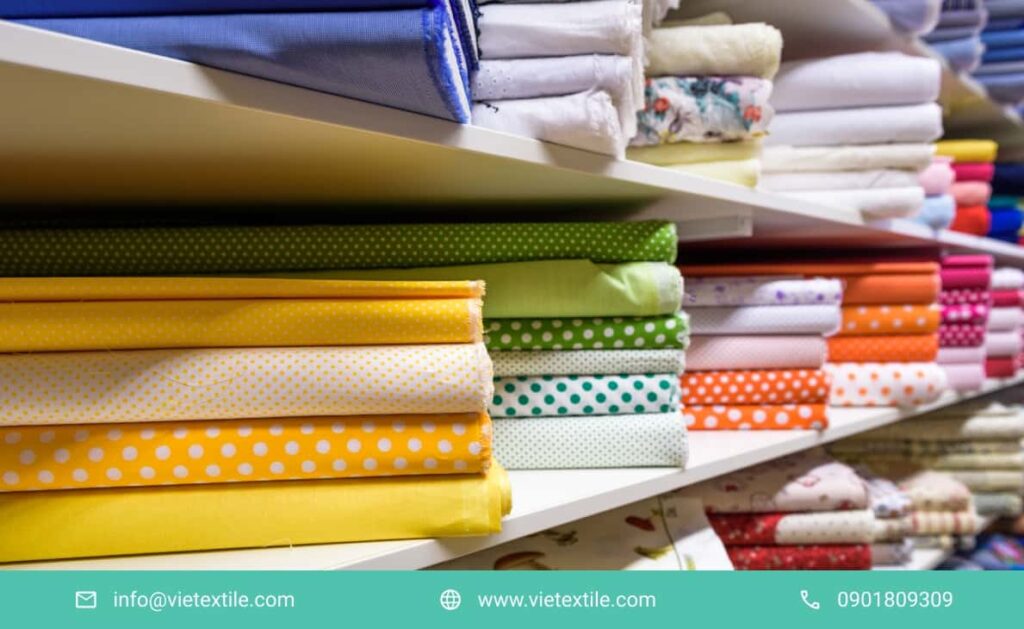
Advantages of Small-Quantity Polyester Fabric Printing for Local Brands

In the domestic fashion industry (local brands), production optimization is a matter of survival. To compete and respond flexibly to the market, brands need a solution that is both cost-effective and flexible in quantity.

The small-quantity polyester fabric printing service has emerged as a golden key. This solution opens up a new era of creativity and sustainable development. It not longer solves financial challenges but also helps small brands confidently break through and build their own identity in the market.

Polyester fabric has long held an important position due to its colorfastness, wrinkle resistance, and shape retention. However, traditional printing requires large quantities, leading to inventory risks and financial pressure. With digital heat transfer printing technology, small-quantity polyester fabric printing has become a reality.

This is a revolution in production, allowing designers to turn ideas into reality without quantity limitations. From there, local brands can build a safe business strategy, experiment with many designs, and produce only according to actual demand.

Small-Quantity Polyester Fabric Printing
Advantages of Small-Quantity Polyester Fabric Printing for Local Brands 33

1. Capturing Trends and Optimizing Cash Flow with Polyester Fabric Printing

For local brands, capturing trends and being flexible in production are two key factors for success. The ability to produce small batches helps these brands easily experiment and react to the market, thereby optimizing cash flow. The small-quantity polyester fabric printing service is not just a production solution but also a smart business strategy.

1.1. Minimizing Inventory Risk and Financial Pressure

One of the biggest challenges for fashion brands is inventory risk. If a product design is mass-produced but not well-received, the brand will incur a significant loss from raw material, production, and storage costs.

With the small-quantity polyester fabric printing service, this risk is significantly minimized. Local brands can start with a trial batch of a few dozen or a few hundred products to gauge customer reaction. If the design is successful, they can quickly reproduce it without hindrance.

This allows them to focus financial resources on developing new products and marketing, instead of bearing the burden of inventory. This is a lean business strategy that helps brands grow safely and sustainably.

1.2. Responding Quickly to Market Trends

The fashion market is constantly changing, with trends appearing and disappearing in just a few months. The ability to react quickly is a huge competitive advantage. The small-quantity polyester fabric printing service allows local brands to produce limited collections or seasonal products quickly, in just a few days.

Unlike competitors who take months to prepare for a large batch, brands using this service can launch “hot” designs as soon as a trend emerges. This helps them stay ahead, create novelty, and continuously attract customers.

1.3. Operational Flexibility and Resource Optimization

Investing in printing machinery systems and training personnel is a huge cost, which is not suitable for the scale of local brands. By partnering with professional printing workshops that provide small-quantity polyester fabric printing, brands can focus all their resources on the most important stages: design, marketing, and community building.

Operational flexibility allows them to easily switch suppliers if needed, seek partners with high expertise, and optimize production costs in the most effective way. This helps local brands operate leanly, reduce management burdens, and focus on what they do best.

2. Outstanding Advantages of Heat Transfer Printing Technology on Polyester Fabric

In kỹ thuật số vải polyester số lượng nhỏ
Advantages of Small-Quantity Polyester Fabric Printing for Local Brands 34

Heat transfer printing is the core technology behind the success of the small-quantity polyester fabric printing service. This technology not only solves the quantity problem but also provides superior quality and durability, far exceeding traditional printing methods.

2.1. Vibrant Colors and Superior Colorfastness

Polyester fabric has a special fiber structure, which is ideal for heat transfer printing technology. When subjected to high temperature and pressure, the printing ink changes from a solid to a gas and penetrates deep into each molecule of the fabric fiber. This process creates a strong chemical bond, helping the colors adhere firmly to the fabric fibers.

The result is an extremely vibrant, colorfast print. The printed product does not fade after many washes, does not crack or peel when the fabric stretches, ensuring the product always retains its brand-new look.

2.2. Ability to Reproduce Any Complex Pattern

With digital printing technology, local brands can print any pattern, from complex portrait images, unique graphic patterns, subtle color transition effects to the smallest details. The high-resolution reproduction capability of this technology allows designers to unleash their creativity without limitation.

This opens up an endless creative space, helping local brands fully express their personality and uniqueness through unique designs. This is a big advantage to attract and retain customers.

2.3. Environmentally Friendly Process

Compared to traditional printing methods that use a lot of chemicals and water, heat transfer printing is a more environmentally friendly process. This process does not use much water, does not create toxic waste, and uses safe inks.

For local brands aiming for sustainable development, choosing the small-quantity polyester fabric printing service using heat transfer printing technology is the right step. It aligns with the green consumer trend of the new generation and helps build a responsible brand image.

3. Absolute Competitive Advantage for Local Brands

Adopting the small-quantity polyester fabric printing solution gives local brands an absolute competitive advantage. It helps them position their brand and build a loyal customer community.

3.1. Enhancing Exclusivity and Product Personalization

In a saturated market, exclusivity is a key factor to attract and retain customers. With the ability to produce limited collections or exclusive products, local brands can create scarcity and high value for their products.

Moreover, the small-quantity polyester fabric printing service also allows brands to offer personalization. They can print the customer’s name, logo, or a personal image on the garment. This not only creates a unique shopping experience but also helps build a deeper connection between the brand and the customer.

3.2. Saving Production Costs and Optimizing Profit

Instead of investing a large amount for large-quantity printing and facing the risk of inventory, local brands can produce only upon order. This helps optimize production costs, avoid waste, and enhance business efficiency.

The lower initial investment cost is also a huge advantage, making it easier for new brands to start. As a result, their profits are optimized, creating a solid foundation for long-term development.

3.3. Building a Reputable Brand with Sustainable Quality

Product quality is the core factor in building a reputable brand. The small-quantity polyester fabric printing service with advanced heat transfer printing technology ensures that every product has superior quality, from color to durability.

When a customer receives a product that is beautifully printed, colorfast, and unique, they will have confidence in the brand. Customer satisfaction is the greatest motivation for them to return and become voluntary brand promoters.

4. Practical Applications and Effective Business Models

Sản phẩm in vải polyester số lượng nhỏ
Advantages of Small-Quantity Polyester Fabric Printing for Local Brands 35

The flexibility of the small-quantity polyester fabric printing service has opened up many creative and effective business models for local brands.

4.1. Print-On-Demand (POD) Model

Print-On-Demand (POD) is a business model where products are only printed and produced when there is an order from a customer. This model completely eliminates inventory risk and financial pressure.

With the small-quantity polyester fabric printing service, local brands can easily implement the POD model, thereby focusing on design, advertising, and sales. Customers can customize the product to their liking, and the brand will produce exactly as requested.

This is a lean, efficient business model that is very suitable for the modern context.

4.2. Producing Limited Collections

To create exclusivity and attract customer attention, many local brands use the strategy of launching limited collections. The small-quantity polyester fabric printing service is the ideal tool to implement this strategy.

Brands can produce a very small quantity of unique designs, creating scarcity and stimulating the desire to buy. Customers will feel like they own a special item. This strategy helps the brand increase product value and build an exclusive, premium image.

4.3. Product Personalization

Personalization is a strong trend in the fashion industry. Customers increasingly want to own items that express their unique personality. The small-quantity polyester fabric printing service helps local brands provide personalization easily.

Customers can design their own products or request to print their name, logo, or a favorite image on the garment. This not only increases sales but also creates a memorable shopping experience, thereby building customer loyalty to the brand.

5. Challenges and How to Overcome Them

Although it brings many benefits, small-quantity polyester fabric printing also has certain challenges that local brands need to be aware of.

5.1. Choosing the Right Partner

The quality of the product depends heavily on the capability of the printing workshop. Therefore, choosing a reputable partner with modern technology and a skilled technical team is extremely important.

Local brands need to thoroughly research the production process, technology, and quality certifications of their partner. A professional printing workshop will ensure consistent print quality, accurate colors, and timely production.

5.2. Time Management and Logistics

Although the production time for a small batch is very fast, local brands still need to manage logistics and shipping closely. Smooth coordination between design, printing, and delivery will help the brand respond promptly to the market and maintain its reputation with customers.

Proper production and shipping planning will help avoid unnecessary risks.

5.3. Cost Per Product

One of the challenges of small-quantity polyester fabric printing is that the cost per unit of product may be higher than for large-quantity printing. However, local brands need to view this issue strategically.

The higher cost per product is offset by minimizing inventory risk, saving storage costs, and the ability to react quickly to the market. Net profit is optimized by reducing unnecessary costs.

6. VieTextile – Strategic Partner for Local Brands

VieTextile is proud to be a leading partner providing small-quantity polyester fabric printing services in Vietnam. With a system of advanced digital heat transfer printing machines and a team of experienced technicians, we are committed to delivering printed products with superior quality. We understand that creativity and flexibility are the keys to success for local brands.

We always strive to provide printing solutions suitable for every production scale, helping small brands confidently break through.

7. Frequently Asked Questions About Small-Quantity Polyester Fabric Printing

  • Is small-quantity polyester fabric printing expensive? Although the cost per meter of fabric may be higher than for large-quantity printing, small-quantity polyester fabric printing helps minimize inventory risk, save initial investment costs, and optimize profit.
  • Is heat transfer printing suitable for all types of fabric? Heat transfer printing is only suitable for synthetic fabrics with a high polyester ratio, especially 100% polyester fabric. The ink will not adhere to natural fibers like cotton, silk, or linen.
  • How long does it take to produce a small-quantity polyester fabric printing order? The production time for a small order is usually very fast, just 1-3 business days, helping local brands react quickly to the market and ensure product launch schedules.
  • Can complex patterns be printed? Yes. Heat transfer printing technology allows for the reproduction of any image, from simple patterns to complex designs with high detail and vibrant colors.
  • Does this service include design support? Many printing workshops provide basic design support or technical consultation. However, local brands should have professional design files ready to achieve the desired results.
  • How to check print quality? Before mass production, you should ask the printing workshop to provide a sample. This helps you check the color, sharpness, and durability of the print.

To print small-quantity polyester fabric and optimize your business operations, contact VieTextile today! Contact Information:

  • Hotline: 0901 809 309
  • Email: info@vietextile.com
  • Website: https://vietextile.com
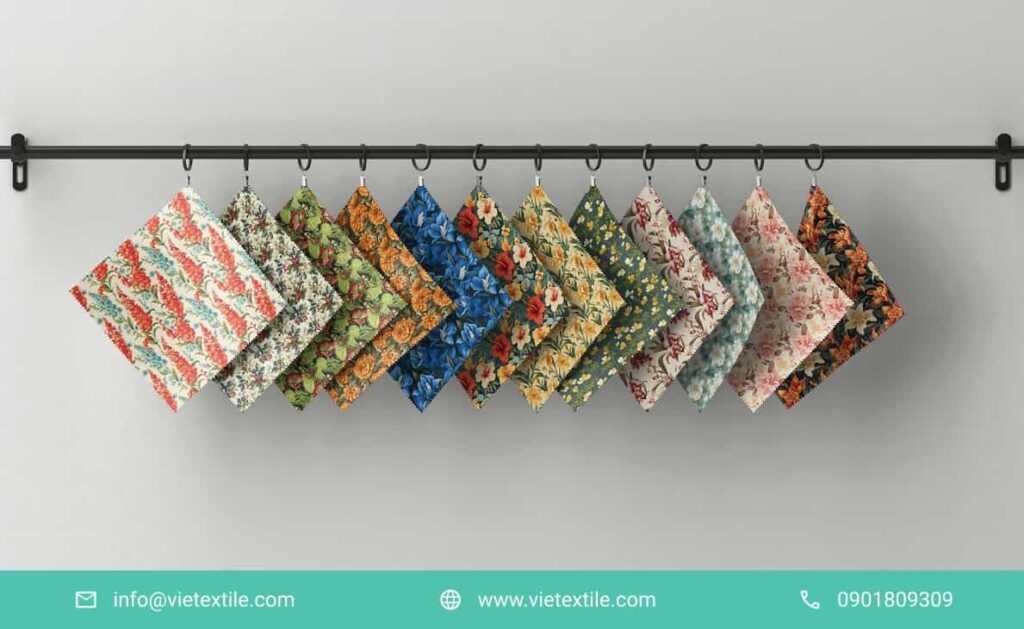
Export-Standard Nylon Fabric Printing Process

In the modern textile industry, Nylon fabric has become a popular material thanks to its durability, water resistance, and high flexibility. However, to create beautiful and colorfast printed products on this material, a professional and standardized printing process is essential. Especially for export products, strict adherence to international standards is mandatory.

This article will delve into an analysis of the export-standard Nylon fabric printing in Vietnam, from preparation to the finishing stages, helping businesses grasp the key to creating high-quality products that meet the market’s stringent requirements.

Unlike natural fabrics like cotton or linen, Nylon is a synthetic fiber with a smooth surface and few pores for the ink to adhere to. This poses many challenges for manufacturers, requiring the use of specific inks and printing technologies.

An export-standard Nylon fabric printing in Vietnam must not only ensure aesthetics but also guarantee colorfastness, fade resistance, and safety for the user. Investing in modern technology and training a skilled technical team is the key to achieving these goals, thereby enhancing reputation and competitiveness in the international market.

Nylon Fabric Printing in Vietnam
Export-Standard Nylon Fabric Printing Process 40

1. Nylon Fabric and Its Characteristics Affecting the Printing Process

Nylon fabric, also known as Polyamide, is a type of synthetic polymer made from petroleum. It is known for its high tensile strength, abrasion resistance, and light weight. These properties make Nylon an ideal choice for products such as jackets, sportswear, bags, and outdoor gear.

However, Nylon fibers have a tight, non-porous structure, which makes it difficult to absorb printing ink. This requires specialized printing methods so the ink can adhere firmly and not peel off.

1.1. Common Nylon Fabrics for Printing

  • Nylon Taffeta Fabric: Has a glossy and smooth surface, often used for lining or thin jackets. The thin and slick nature of Taffeta requires extremely careful printing techniques, especially with heat transfer printing, to ensure the ink adheres evenly without wrinkling or deforming the fabric. Controlling temperature and pressure is a key factor to achieve a sharp print on this type of fabric.
  • Nylon Oxford Fabric: The plain weave structure creates a thick and durable surface, making it a preferred choice for products that require high strength, such as backpacks, bags, and luggage. The surface of Oxford fabric has a certain roughness, which helps the ink adhere better than smooth fabric. However, printing on this material still requires specialized machinery to ensure the ink penetrates deeply and does not peel off over time.
  • Nylon Ripstop Fabric: Stands out with its distinctive woven structure, with reinforcing threads forming a grid that effectively prevents tearing. This is a popular fabric for military gear, sportswear, and products that need extremely high durability. When printing on Nylon fabric in Vietnam, the special nature of Ripstop requires precise printing techniques to ensure the ink covers the grid evenly without breaking or bleeding.
  • Nylon Taslan Fabric: Has a rougher surface, feeling similar to cotton, which allows for significantly better ink adhesion. This characteristic makes Taslan easier to print and results in a sharp, vibrant print. This type of fabric is often used for outerwear, sports pants, and everyday clothing. Thanks to its rough surface, Taslan is one of the most suitable Nylon fabrics for printing, minimizing technical risks.

2. The Export-Standard Nylon Fabric Printing Process

In kỹ thuật số vải Nylon tại Việt Nam
Export-Standard Nylon Fabric Printing Process 41

A professional Nylon fabric printing in Vietnam is carried out through many meticulous stages, from pre-treating the fabric to finishing the product.

2.1. Fabric Pre-treatment

This is one of the most important steps that determines the quality of the final print. Before printing, the Nylon fabric must be completely cleaned to remove sizing, oil, dust, and any residual chemicals from the weaving process.

This pre-treatment process creates a uniform fabric surface that is ready for optimal ink absorption. Additionally, the fabric can be coated with a special chemical layer to enhance adhesion, ensuring the ink penetrates deeply and does not peel off.

2.2. Choosing the Right Technology and Ink

There are two main printing technologies often used for Nylon fabric: heat transfer printing and screen printing.

  • Heat Transfer Printing (Sublimation Printing): This is the most popular and effective method for printing Nylon fabric in Vietnam, especially for export products. This process uses high heat and pressure to transfer ink from a special transfer paper to the fabric. Under the effect of heat, the ink changes from a solid to a gas and penetrates deep into each fiber. The result is a print with outstanding colorfastness that does not peel, crack, or fade after many washes.
  • Screen Printing: Although less common than heat transfer printing, screen printing is still applied for products that require a raised effect or a thick print. Screen printing on Nylon requires the use of special inks with high elasticity and adhesion. Nylon fabric printing workshops in Vietnam often use specially formulated water-based or plastisol inks to ensure the print does not crack or peel off when the fabric stretches.

3. Factors Determining Printed Product Quality

For printed Nylon products in Vietnam to meet export standards, attention must be paid to many technical and procedural factors.

3.1. Temperature and Pressure

Temperature and pressure are two key factors that determine the success of the heat transfer printing process on Nylon fabric. If the temperature and pressure are not up to standard, the ink will not be able to fully penetrate the fibers, leading to a blurry, pale print that is prone to fading. Conversely, a temperature that is too high can deform the Nylon fiber structure. Therefore, professional Nylon fabric printing workshops in Vietnam must have modern machinery systems that allow for strict control of these parameters.

3.2. Quality of Ink and Transfer Paper

The quality of the ink and transfer paper plays a decisive role in the sharpness, durability, and safety of the print. High-quality ink ensures good resolution, vibrant colors, and strong adhesion to the Nylon fibers. The transfer paper must have optimal ink release ability, ensuring that all the ink is transferred to the fabric without leaving a faint trace. For export products, using safety-certified inks that do not contain toxic heavy metals is a top priority.

3.3. Quality Control Process (QA/QC)

Every batch of products must undergo an extremely strict quality control (QA/QC) process before being shipped. This process includes detailed checks for colorfastness after washing, abrasion resistance, and most importantly, testing for chemical safety standards as regulated by importing markets like Oeko-Tex Standard 100 or REACH. Adherence to and periodic inspection of these standards help Nylon fabric printing workshops in Vietnam ensure quality and maintain their reputation.

4. Notable Applications of Nylon Fabric Printing

Sản phẩm in vải Nylon tại Việt Nam
Export-Standard Nylon Fabric Printing Process 42

With the advantages of durability and aesthetics, printed Nylon fabric is widely used in many industries.

4.1. Fashion and Sportswear

Printed Nylon fabric has become an indispensable material in the fashion and sportswear industry. It is used to produce high-end jackets, running pants, and workout clothes. Thanks to its water resistance, wind resistance, and light weight, these products provide maximum comfort for the wearer. Moreover, printing on Nylon fabric in Vietnam allows for the creation of unique patterns and vibrant colors, helping brands express their own style.

4.2. Outdoor and Travel Products

With its outstanding durability and water-resistant properties, printed Nylon fabric is a top choice for outdoor and travel products. This material is often used to produce travel bags, backpacks, and specialized bags like camping gear bags. Printing on Nylon fabric in Vietnam with creative patterns helps increase aesthetic appeal and brand recognition. These products can not only withstand harsh weather conditions but also maintain their fresh colors over time.

4.3. Household Items

Printed Nylon fabric is also widely used in the field of household items, especially for interior decoration products. Products such as curtains, tablecloths, or sofa covers can all use printed Nylon fabric. The advantages of this type of fabric are that it is easy to clean, stain-resistant, and has high colorfastness, which helps decorative products always maintain their original beauty. The flexibility of printing on Nylon fabric in Vietnam allows for the creation of diverse designs, meeting every style from classic to modern.

5. VieTextile – The Export-Standard Nylon Fabric Printing Expert

VieTextile is proud to be a leading Nylon fabric printing partner in Vietnam, specializing in providing high-quality, export-standard printing solutions. With a modern system of heat transfer and screen printing machines, we are committed to delivering printed products with vibrant colors, sharp details, and outstanding colorfastness. Our team of experienced technicians always adheres to strict production processes and tight quality control to ensure every product meets the most demanding standards of the international market.

6. Frequently Asked Questions About Nylon Fabric Printing

  • Is heat transfer printing on Nylon fabric colorfast? Absolutely. With a standard process, the ink transfers from a gas state and penetrates deep into the fabric fibers, creating a durable bond. The print does not fade when washed or get affected by sunlight.
  • Is printing on Nylon fabric safe for the user? Yes. Reputable Nylon fabric printing workshops in Vietnam like VieTextile only use inks that do not contain toxic chemicals, meeting international safety standards such as Oeko-Tex Standard 100.
  • How long does it take to complete a batch of printed Nylon fabric? The production time depends on the quantity and complexity of the print design. However, with an optimized production process, we can complete a large order in about 7-10 days, ensuring the schedule for our customers.
  • Is it possible to print complex patterns on Nylon? Yes, with modern heat transfer printing technology, we can reproduce complex patterns with high detail, true-to-life and vibrant colors.

To get high-quality, export-standard printed Nylon fabric products, contact VieTextile today! Contact Information:

  • Hotline: 0901 809 309
  • Email: info@vietextile.com
  • Website: https://vietextile.com
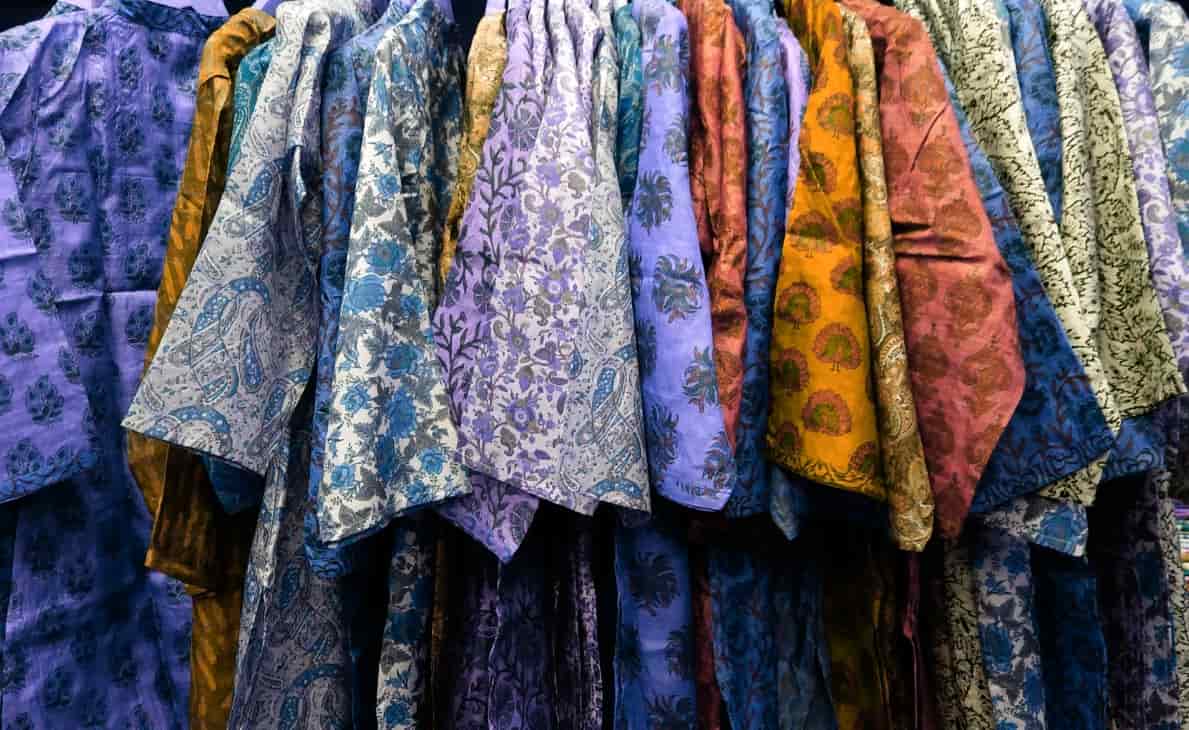
Popular Cotton Fabric Printing in Vietnam Techniques

Cotton fabric printing in Vietnam is an indispensable service in the fashion and garment industry. Cotton fabric, with its soft, breathable, and skin-friendly properties, is always the top choice for everyday apparel. The development of the textile industry has led to the continuous introduction and improvement of printing technologies, allowing manufacturers to easily transfer unique design ideas onto the fabric surface.

From simple T-shirts and company uniforms to high-end fashion products, cotton fabric printing in Vietnam plays a decisive role in a product’s aesthetics and value.

This article will delve into the most popular techniques for cotton fabric printing in Vietnam today, from time-honored traditional methods to the most advanced technologies. We will explore each technique, analyzing its working principle, pros and cons, and practical applications. Furthermore, you will gain valuable experience in choosing the right printing technique, and understand the standard preparation and post-printing care process.

Finally, the article will also introduce the role of VieTextile in providing leading professional cotton fabric printing in Vietnam solutions in the Vietnamese market.

cotton fabric printing in Vietnam
Popular Cotton Fabric Printing in Vietnam Techniques 47

1. Overview of Cotton Fabric Printing in Vietnam

1.1. What Is Cotton Fabric Printing in Vietnam?

Cotton fabric printing in Vietnam is the process of using specialized inks to create images, patterns, or complex motifs on the surface of cotton fabric. Unlike synthetic fabrics like polyester, cotton fabric has a natural fiber structure, which allows the ink to penetrate deep into each thread, creating prints with high adhesion, true-to-life colors, and long-lasting durability.

The flexibility to create unique products has made cotton fabric printing in Vietnam an essential part of the modern textile industry.

Choosing the right type of ink and printing technique for each type of cotton fabric (such as 100% cotton, cotton-spandex blend, cotton-polyester blend) is crucial to ensuring the final quality of the product.

A quality print must not only be sharp but also retain the natural softness and breathability of the fabric, while also withstanding the effects of washing without fading or peeling.

2. Popular Cotton Fabric Printing in Vietnam Techniques

Sản phẩm in vải cotton tại Việt Nam
Popular Cotton Fabric Printing in Vietnam Techniques 48

In Vietnam, the cotton fabric printing in Vietnam market is vibrant with diverse technologies. Each technique has its own distinct characteristics, suitable for different production purposes. Mastering these methods is a key factor that helps businesses and individuals optimize costs and achieve the desired results.

2.1. Screen Printing

Screen printing is a traditional technique that still holds its position as the most widely used method for cotton fabric printing in Vietnam, especially for large-scale production.

Working Principle: This technique uses a screen frame that has been prepared with the design image. Ink is poured onto the screen, and a rubber squeegee is used to press the ink through the open mesh areas (corresponding to the image), allowing it to adhere to the fabric. Each color requires a separate screen, so designs with multiple colors will take more time and preparation costs.

Outstanding Advantages:

  • Extremely Low Cost for Mass Production: This is the biggest advantage of screen printing. When printing thousands of products, the cost per unit is significantly reduced, helping to optimize profits.
  • Superior Color Durability: The thick ink layer of screen printing adheres firmly to each thread, giving the print good resistance to washing and friction.
  • Unique Color Effects: This technique allows the use of various inks such as plastisol, water-based, and oil-based inks, creating special effects like puff printing, metallic printing, or glitter printing.

Disadvantages to Note:

  • Not Suitable for Complex Images: Screen printing struggles with designs that have color gradients or very small, high-resolution details.
  • High Initial Cost: Making the screen frames is expensive, making this method uneconomical for small print quantities.
  • Environmental Impact: Some screen printing inks, especially oil-based inks, contain toxic chemicals, requiring a strict waste treatment system.

2.2. Digital Printing (Direct to Garment – DTG)

DTG printing is the most modern cotton fabric printing in Vietnam technology today, using an inkjet printer directly onto the fabric.

Working Principle: Similar to an office paper printer, a DTG printer uses print heads to spray millions of tiny ink droplets directly onto the fabric surface. The entire process is controlled by a computer, from color to print placement.

Outstanding Advantages:

  • Prints Any Image, Unlimited Colors: This is the perfect choice for complex designs, artistic images, portraits, etc. The ink is automatically mixed, allowing millions of color shades to be created with high accuracy.
  • Flexible for Any Quantity: Whether you print just 1 shirt or 100 shirts, the cost of DTG printing does not vary significantly, making it very suitable for small orders, custom designs, or new fashion brands.
  • Eco-Friendly: DTG inks are usually water-based, do not contain toxic chemicals, and are easily biodegradable, causing less environmental pollution.

Disadvantages to Note:

  • Higher Cost Compared to Screen Printing: For large quantities, DTG printing is often significantly more expensive than screen printing and is not optimal for industrial production.
  • Medium Color Durability: Although there have been significant improvements, the color durability of DTG printing still cannot match that of screen printing. The print may fade after many washes.

2.3. Heat Transfer Printing

Heat transfer printing is an indirect method for cotton fabric printing in Vietnam, favored for its simplicity and low cost.

Working Principle: An image is printed onto a special type of paper called transfer paper. This paper is then placed on the cotton fabric, and a heat press machine is used at a high temperature (around 150–180°C) and high pressure. Under the effects of heat and pressure, the ink on the paper sublimates and adheres permanently to the fabric fibers.

Outstanding Advantages:

  • Simple, Easy to Perform Process: Does not require complex preparation steps like screen printing.
  • Low Cost: Very suitable for gift products, event uniforms, or urgent orders.
  • Can Print on Various Fabric Types: In addition to cotton, this technique can also be used to print on many other synthetic fabrics.

Disadvantages to Note:

  • Poor Durability: Heat transfer prints tend to be stiff, and can easily crack and peel off after a period of use, especially when machine-washed or tumble-dried at high temperatures.
  • Not Sharp Colors: The color reproduction capability of heat transfer printing is not as high as digital printing, and colors often fade after the first wash.
  • Only Suitable for Light-Colored Fabrics: Heat transfer printing on dark fabrics requires an additional white base layer, which increases the stiffness of the print and affects its aesthetics.

2.4. Other Modern Printing Techniques

In addition to the three popular techniques mentioned above, the cotton fabric printing in Vietnam market also features many other advanced methods, which offer unique effects and high value.

  • Embossing and High-Density Printing: Use special inks that can create a 3D raised effect, providing a high-end and unique feel.
  • Reflective Printing: Uses ink containing reflective particles, which makes the print glow in the dark when light shines on it. It is often used for sportswear or worker uniforms to increase safety.
  • Discharge Printing: Applied to dyed cotton fabric, it uses chemicals to remove the original dye color, creating a white or other-colored print. The print is very soft and durable.
  • Sublimation Printing: Although mainly used for polyester fabric, it can also be applied to cotton by adding a special polymer coating to the fabric surface. This technique produces sharp images, vibrant colors, and high durability.

3. Choosing the Right Cotton Fabric Printing in Vietnam Technique

Choosing the right method for cotton fabric printing in Vietnam is a key factor in the success of a project. You need to consider the following factors:

  • Product Quantity: Screen printing is the most economical choice for large quantities (over 100 products). Digital and heat transfer printing are suitable for small orders, especially when a quick turnaround is needed.
  • Design Complexity: For complex images with multiple colors and gradients, digital printing is the optimal choice. For logos or simple, one-color images, screen printing will be more cost-effective and durable.
  • Product Usage Purpose:
    • Company uniforms, promotional shirts: Screen printing or heat transfer printing.
    • High-end fashion, unique designs: Digital printing.
    • Workwear, sportswear: Reflective printing.
  • Budget: The choice of printing technique must take the overall project budget into consideration.
  • Desired Quality: If the highest color durability is required, screen printing is the number one choice. If softness and eco-friendliness are prioritized, digital printing will be the top choice.

4. Production and Post-Printing Care Process for Cotton Fabric

Gia công in vải cotton tại Việt Nam
Popular Cotton Fabric Printing in Vietnam Techniques 49

To ensure that your cotton fabric printing in Vietnam products remain beautiful and durable, a proper production and care process is crucial.

4.1. Pre-Printing Preparation

  • Fabric Quality Check: Ensure the cotton fabric is free of defects, with a smooth surface, and no dust or excess threads.
  • Fabric Pre-treatment: Especially for digital printing, the fabric needs to be coated with a specialized chemical layer (pre-treatment) to ensure the ink adheres firmly and the colors are more vibrant.
  • Fabric Drying: The fabric must be completely dry before being put into the printer to prevent the ink from bleeding or not adhering evenly.

4.2. Printing and Post-Printing Curing Process

  • Printing: The fabric is fed into the printer according to the selected technique. Ensure that the technical parameters (pressure, temperature, speed) are set accurately.
  • Ink Curing: After printing, the ink needs to be dried and heat-treated to make it permanently adhere to the fabric. This process prevents the print from smudging or fading during washing. The curing temperature is usually in degrees C.
  • Quality Control: Each product after printing needs to be carefully inspected to promptly detect and address any errors such as uneven color or misaligned prints.

4.3. Post-Printing Product Care Instructions

To keep your cotton fabric printing in Vietnam products durable and beautiful, follow these principles:

  • First Wash: Do not wash the shirt immediately after purchase. Wait at least 24 hours after receiving the product for the ink to dry completely. For the first wash, you should hand wash with cold water and no soap.
  • Regular Washing: Turn the garment inside out when washing, use cold water, and avoid harsh detergents. Limit machine washing on a strong cycle.
  • Drying: Hang the shirt in a cool, ventilated place, away from direct sunlight to prevent the print from fading.
  • Ironing: Turn the garment inside out when ironing and do not iron directly on the print surface.

5. VieTextile’s Role in Cotton Fabric Printing in Vietnam

With many years of experience and a strong investment in technology, VieTextile is proud to be a leading reliable partner in the field of cotton fabric printing in Vietnam. We not only provide high-quality cotton fabric printing in Vietnam services but also consult and support customers in choosing the most suitable printing technique for their goals and budget.

VieTextile always updates the latest cotton fabric printing in Vietnam technologies in the world to deliver products with the highest sharpness, durability, and aesthetic appeal. We understand that cotton fabric printing in Vietnam is a key factor that creates brand value and distinction for your products. VieTextile’s team of experienced technicians ensures that every printed product meets the highest standards. We are committed to providing absolute satisfaction to every customer with our professional cotton fabric printing in Vietnam services.

6. Frequently Asked Questions About Cotton Fabric Printing in Vietnam

  • 6.1. Is Cotton Fabric Printing Suitable for All Fabric Types? No, cotton fabric printing in Vietnam is only suitable for fabrics with a cotton composition. Cotton fabric has good ink absorption, which helps the print last longer and look better. Other types of fabric like polyester or nylon often require a separate printing technique.
  • 6.2. Which Printing Technique Is Best for the Most Complex Images? Digital printing is the best choice for cotton fabric printing in Vietnam with complex images, which have many details and color gradients.
  • 6.3. Does Cotton Fabric Printing Fade? The color durability of cotton fabric printing in Vietnam depends on the printing technique and the quality of the ink. Screen printing and digital printing generally have higher color durability compared to heat transfer printing.
  • 6.4. What Factors Affect the Cost of Cotton Fabric Printing? The cost of cotton fabric printing in Vietnam depends on the printing technique, the number of products, the number of colors, and the complexity of the design.
  • 6.5. Does VieTextile Accept Small-Quantity Cotton Fabric Printing? Yes, VieTextile accepts cotton fabric printing in Vietnam for any quantity, from small orders to mass production, meeting all customer needs.
  • 6.6. Which Inks Are Safe for Children? Today, there are many eco-friendly and health-safe inks, especially water-based inks. Reputable companies often use inks that meet the Oeko-Tex Standard 100, which are safe even for infants.

For professional cotton fabric printing in Vietnam services, contact VieTextile today! Contact Information: 

The Export-Standard Process for Digital Printing on Cotton Fabric

The technology of digital printing on cotton fabric is ushering in a new era for the textile industry, especially in the high-end fashion and export sectors. This article will delve into the standard process for implementing this modern printing technique, ensuring the final product is not only visually stunning but also meets the strictest quality standards of the international market.

With the continuous advancement of technology, the technique of digital printing on cotton fabric has become the optimal solution for textile businesses aiming to enhance product quality and meet the diverse needs of customers. This process demands high precision in every stage, from preparing the fabric and processing the design file to the post-printing finishing steps.

In this article, we will explore in detail each step of the export-standard process for digital printing on cotton fabric, learn about its outstanding advantages, and understand why VieTextile is a reliable partner for executing these complex printing projects.

Máy in digital trên vải cotton
The Export-Standard Process for Digital Printing on Cotton Fabric 54

1. Introduction to Digital Printing on Cotton Fabric

Digital printing on cotton fabric is a modern printing method that uses digital inkjet printers to apply ink directly onto the surface of cotton fabric. Similar to a regular paper printer but on a larger scale and with more complex technology, this method allows for the reproduction of images and patterns with extremely high resolution, unlimited colors, and astonishingly sharp details.

Cotton fabric, with its softness, excellent absorbency, and skin-friendly properties, is the ideal material for this technology, particularly in the production of fashion apparel, children’s wear, and high-end home textiles.

Unlike traditional screen printing, which requires creating a screen for each color, the technology of digital printing on cotton fabric allows for printing directly from a design file on a computer. This not only significantly shortens the preparation time but also completely eliminates the limitation on the number of colors in a single design.

As a result, designers can freely create complex patterns and smooth gradient effects that are difficult to achieve with other printing techniques. This is a crucial factor that helps Vietnamese textile products compete effectively in the international market.

2. The Importance of Adhering to an Export-Standard Process

Quy trình in digital trên vải cotton
The Export-Standard Process for Digital Printing on Cotton Fabric 55

For textile products aimed at export markets, adhering to a standardized production process is a vital factor. An export-standard process for digital printing on cotton fabric not only ensures consistent print quality over thousands of meters of fabric but also guarantees other important criteria such as color fastness, user safety, and environmental friendliness.

Demanding markets like the US, Europe, and Japan have strict regulations regarding the content of harmful chemicals in products (e.g., the OEKO-TEX 100 standard), color fastness after multiple washes, and resistance to fading under sunlight.

Applying a standard process helps control quality at every stage, from selecting the right type of cotton fabric and using certified inks to precise pre- and post-print fabric treatments. Any error in the process can lead to the final product failing to meet requirements, causing significant economic and reputational damage to the business. Therefore, understanding and strictly applying the process for digital printing on cotton fabric is the key to creating high-quality textile products capable of conquering the most demanding markets.

3. Detailed 8-Step Process for Digital Printing on Cotton Fabric

To achieve the highest quality finished product, the process of digital printing on cotton fabric must be carried out meticulously and accurately through several stages. Below are the 8 most basic and crucial steps in an export-standard process.

3.1. Step 1: Selecting and Inspecting Raw Cotton Fabric

The quality of the initial raw fabric greatly determines the printing result. The selected cotton fabric must have a smooth surface, even threads, and be free from weaving defects such as pilling, snags, or stains. Depending on the product’s end use (t-shirts, dresses, bed linens), the manufacturer will choose a cotton fabric with the appropriate weight (gsm), weave type (knit, woven), and stretch. Thorough inspection of the raw fabric helps eliminate factors that could affect the print quality right from the input stage.

3.2. Step 2: Fabric Pre-treatment

This is an extremely important and unskippable step in the process of digital printing on cotton fabric. The raw fabric is passed through a system to be coated with a special pre-treatment solution. This coating acts as a “primer,” helping the ink particles adhere more tightly to the fabric fibers, preventing ink bleeding, and making the colors appear more vibrant and vivid after printing. The treatment process must ensure the coating is evenly spread across the entire fabric surface for a uniform print.

3.3. Step 3: Drying the Fabric After Treatment

After being coated with the pre-treatment solution, the fabric needs to be completely dried under tightly controlled temperature and time conditions. Proper drying helps the pre-treatment chemicals to be fully effective, creating a perfect surface ready for printing. If the fabric is still damp, the ink will not adhere well and may cause color bleeding, severely affecting the quality of the digital printing on cotton fabric technique.

3.4. Step 4: Preparing the Design File and Printer

While the fabric is being treated, the technical team prepares the design file. Image files need to have a high resolution (typically 300 DPI), a standard color profile (usually RGB or CMYK depending on the printer), and the correct actual size. Technicians will check and adjust colors on specialized software to ensure the printed colors match the on-screen design as closely as possible. Simultaneously, the digital printer’s print heads, ink levels, and technical parameters are checked to ensure stable operation.

3.5. Step 5: Performing Digital Printing on Cotton Fabric

The treated and dried fabric is then fed into the digital printer. The printer moves its print head, containing basic ink colors, back and forth across the fabric surface, spraying microscopic ink droplets according to the signals from the design file. Millions of precisely sprayed ink droplets combine to form the complete image. This is the core stage of the digital printing on cotton fabric process, requiring modern machinery and precise operation.

3.6. Step 6: Steaming or Curing the Fabric

After printing, the ink particles are only temporarily sitting on the surface of the pre-treatment layer. For the ink to penetrate deeply and permanently bond with the cotton fibers, the fabric must undergo a heat treatment stage. Depending on the type of ink used (reactive ink or pigment ink), the fabric will either be steamed with high-temperature vapor (steaming) or passed through a heat chamber (curing). This process “locks” the color permanently, determining the product’s color fastness.

3.7. Step 7: Washing the Fabric

After steaming or curing, the fabric is taken to be washed in an industrial washing system. This process aims to completely remove any remaining pre-treatment chemicals and any ink particles that did not firmly adhere to the fabric fibers. The washing stage makes the fabric softer, cleaner, and safe for the user’s skin. The washing water and temperature are also controlled to avoid affecting the print’s colors.

3.8. Step 8: Finishing & Quality Control (QC)

This is the final step in the process. After washing, the fabric is dried, softened, and may undergo other finishing treatments like stentering to prevent shrinkage. Finally, the quality control (QC) team thoroughly inspects the entire fabric roll, compares colors against the approved sample, checks for any printing errors, and ensures the product meets all technical standards before being delivered to the customer or sent to the cutting and sewing stage.

4. Advantages and Disadvantages of Digital Printing on Cotton Fabric

Sản phẩm in digital trên vải cotton
The Export-Standard Process for Digital Printing on Cotton Fabric 56

Every technology has its strengths and weaknesses, and digital printing on cotton fabric is no exception. Understanding these helps businesses make the most suitable choice for their products.

4.1. Outstanding Advantages

  • Unlimited Colors: Capable of reproducing millions of colors and complex gradient effects.
  • High Sharpness: Can print extremely small details and photorealistic images.
  • Production Flexibility: No minimum order quantity (No MOQ), suitable for small orders and samples.
  • Time-Saving: Skips the film and screen-making stages, shortening production time.
  • Eco-Friendly: Uses less water and chemicals compared to traditional printing technologies.

4.2. Disadvantages to Note

  • Higher Cost for Large Orders: For quantities of thousands of meters, the cost per meter can be higher than screen printing.
  • Slower Printing Speed: The production speed of digital printers is generally slower than industrial screen printers.
  • High Requirement for Fabric Treatment: The pre-treatment process is complex and requires high precision to ensure quality.
  • Limitations on Some Effects: Some special effects like puff, foil, or glitter printing can be more difficult to achieve than with screen printing.

5. Comparison Between Digital Printing and Traditional Screen Printing on Cotton Fabric

For a more comprehensive view, a direct comparison between digital printing and screen printing (the most common method) is essential.

CriteriaDigital Printing on Cotton FabricTraditional Screen Printing
Number of ColorsUnlimitedLimited (one screen per color)
ComplexityCan print photos, gradientsSuitable for solid color blocks, less detail
Initial CostLow (no screen setup)High (cost of making screens)
Unit PriceOptimal for small ordersOptimal for large quantity orders
Turnaround TimeFast for small ordersSlow in prep, fast for mass printing
Surface FeelInk penetrates fibers, soft hand-feelHas a thicker ink layer on the surface
Environmental ImpactLess water, less wasteUses more water and chemicals

6. VieTextile: Your Trusted Partner for Digital Printing on Cotton Fabric Services

At VieTextile, we are proud to be one of the pioneers in investing in and mastering the technology of export-standard digital printing on cotton fabric. We understand that each product represents the dedication of our clients, so we commit to adhering to the strictest production processes, using modern machinery from leading global brands, and internationally certified safe inks, ensuring every meter of fabric leaving our factory achieves the highest quality.

Our experienced team of technicians is always ready to advise and assist clients in optimizing designs and selecting suitable materials so that the digital printing on cotton fabric service yields perfect results. We offer not just a printing service, but a comprehensive solution, partnering with Vietnamese fashion brands on their journey to conquer domestic and international markets. VieTextile is committed to delivering products from digital printing on cotton fabric with durable, beautiful colors that are safe and aesthetically pleasing.

With a large production capacity and a rigorous quality control process, VieTextile is confident in meeting orders with the most demanding standards. We believe that the technology of digital printing on cotton fabric is the future of the textile industry, and we are ready to become your strategic and reliable partner in that future. Let VieTextile help you realize your limitless creative ideas on high-quality cotton fabric.

7. Frequently Asked Questions (FAQ)

7.1. Is the Color Fastness of Digital Printing on Cotton Fabric Good?

When the standard process is followed correctly, especially the heat treatment and post-print washing stages, the color fastness of digital printing on cotton fabric is very high. It can withstand many machine washes without fading or loss of image quality.

7.2. Is Digital Printing on Cotton Fabric Safe for Newborns?

Absolutely safe. VieTextile uses water-based inks that have international safety certifications like OEKO-TEX, ensuring that products from digital printing on cotton fabric are free of harmful substances and friendly to even the most sensitive skin of newborns.

7.3. What File Format Should I Provide for My Design?

For the best quality digital printing on cotton fabric, you should provide design files in formats such as TIFF, PSD, AI, or EPS with a minimum resolution of 300 DPI and at the actual print size.

7.4. How Long Does It Take to Complete a Digital Printing Order?

The completion time depends on the quantity and complexity of the order. However, thanks to the advantage of not needing screens, the process of digital printing on cotton fabric typically has a significantly faster production time than screen printing for small orders and samples.

To order professional, high-quality digital printing on cotton fabric, contact VieTextile today!

Contact Information: 

  • Hotline: 0901 809 309 
  • Email: info@vietextile.com 
  • Website: https://vietextile.com
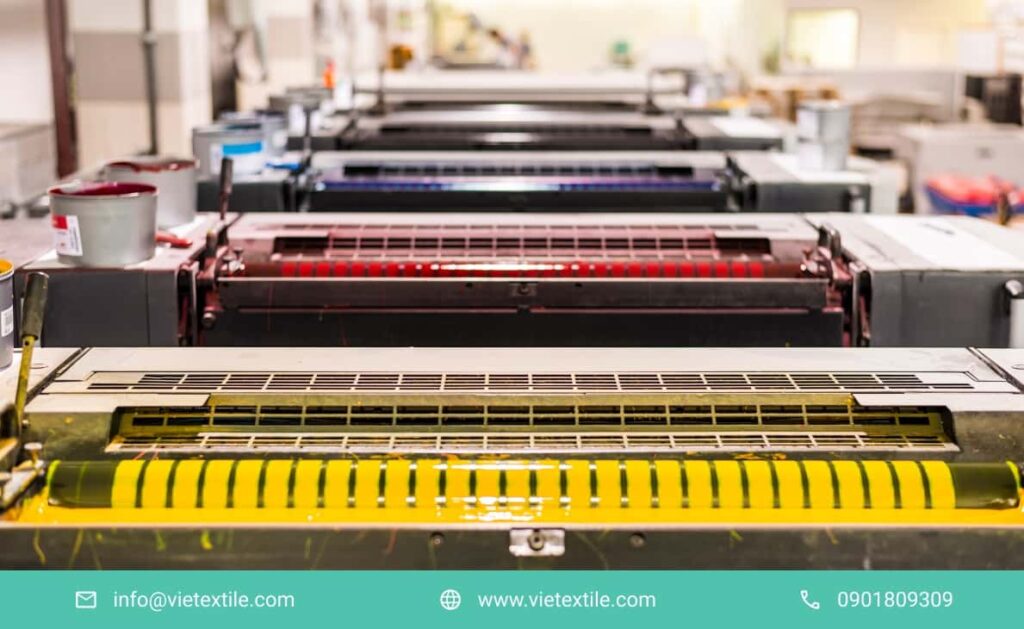
Compare 3 Cotton Fabric Printing Methods: Key Pros and Cons

In the textile industry, cotton fabric printing is a vital step to enhance a product’s aesthetic value. However, not everyone fully understands the differences between printing methods. This article helps you analyze the 3 most popular cotton fabric printing technologies today: screen printing, digital printing, and heat transfer printing.

1. Traditional Screen Printing

Screen printing on cotton fabric is a time-honored technique that still plays a significant role in the current printing industry. Known for its vivid, long-lasting colors and low cost for bulk orders, it’s a common choice for apparel manufacturers.

phương-pháp-screen-printing-trên-cotton
Compare 3 Cotton Fabric Printing Methods: Key Pros and Cons 61

1.1 Pros:

  • Ideal for large orders thanks to low per-unit cost.
  • Delivers high colorfastness and durability, especially with water-based or plastisol inks.
  • Excellent for simple, few-color designs due to the need for separate screens per color.

1.2 Cons:

  • Requires time-consuming setup to prepare screens, which can delay urgent or frequently changed orders.
  • Not cost-effective for small batches due to high setup cost per design.
  • Multicolor designs significantly increase costs and setup time.

2. Digital Printing

Digital printing on cotton fabric is a modern solution that revolutionizes the textile printing process. Unlike traditional methods, this technology allows direct printing from computer to fabric, eliminating the need for screens. It’s ideal for small runs, complex designs, and color-rich images—popular among custom brands and on-demand production.
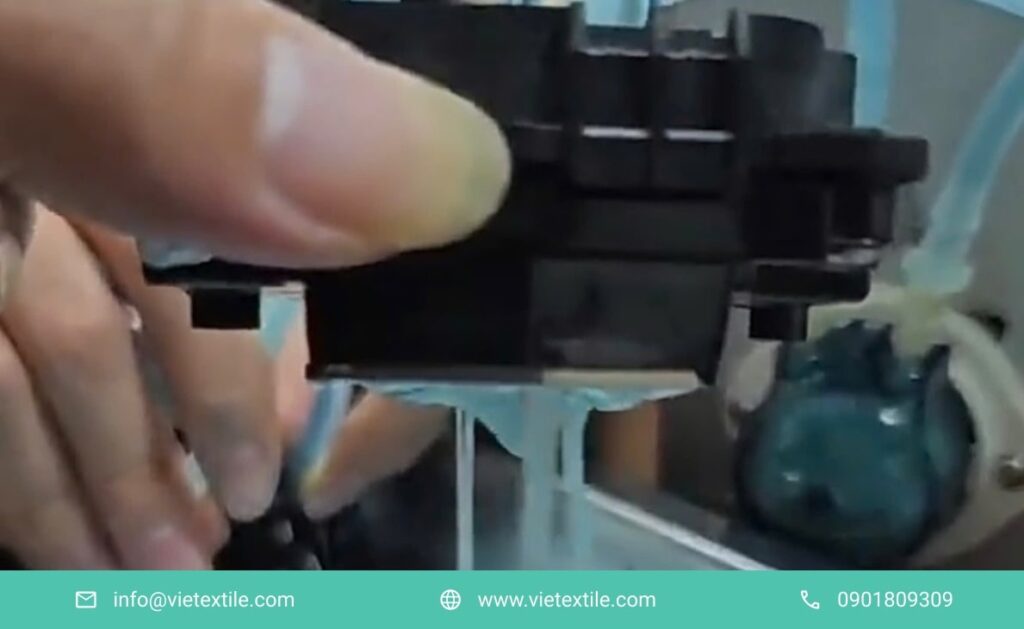
phương-pháp-digital-printing-trên-cotton
Compare 3 Cotton Fabric Printing Methods: Key Pros and Cons 62

2.1 Pros:

  • Perfect for personalized or small-batch orders.
  • Handles complex, multi-color, high-resolution images with smooth gradients.
  • Quick setup without the need for screens, ideal for urgent jobs.

2.2 Cons:

  • Higher ink costs make it less economical for large-scale production.
  • Less effective on dark-colored cotton unless a white base layer is used.
  • Requires compatible inks for different cotton types to ensure durability and wash resistance.

3. Heat Transfer Printing (Sublimation/Heat Press)

Heat transfer printing on cotton is a practical solution, especially for small runs, fast turnaround, and custom products. While not ideal for 100% cotton, the right fabric blends and techniques can still ensure sharp images at a reasonable cost.

phương-pháp-heat-transfer-printing-trên-cotton
Compare 3 Cotton Fabric Printing Methods: Key Pros and Cons 63

3.1 Pros:

  • Great for uniforms, lightweight sportswear, or short-lifecycle products.
  • No expensive screen setup required; suitable for small studios or home use.
  • Polyester-cotton blends hold color well and maintain decent durability after several washes.

3.2 Cons:

  • Doesn’t adhere well to 100% cotton due to lack of polymer layer.
  • Prone to image fading or peeling after washing without proper handling.
  • High heat may damage fabric or distort image if not applied correctly. Doesn’t perform well on dark fabrics without a white ink base.

4. Which Printing Method Should You Choose?

Depending on your production scale, user profile, and budget, you can select the most appropriate cotton fabric printing technology:

  • Screen printing is best for bulk production, offering consistency and cost savings.
  • Digital printing allows freedom to create, quick design changes, and is perfect for made-to-order items.
  • Heat transfer is quick and affordable, but requires careful consideration of fabric type and color.

Each method affects product quality and cost differently, so understanding their characteristics is essential before deciding.

5. Conclusion

Cotton fabric printing not only shapes the visual impact of your product but also influences its quality and brand positioning. Knowing the differences between methods helps avoid waste and technical issues.

Depending on your needs, budget, and fabric type, consult detailed guidelines or user manuals like NeoStampa to ensure precise execution and optimal printing performance.

6. Frequently Asked Questions (FAQs)

1. What cotton type is best for heat transfer printing? Blended cotton fabrics with polyester work better, as the polymer layer helps hold ink more effectively.

2. Does digital cotton printing fade after washing? It can if the wrong ink is used or post-processing is skipped. With proper ink and procedures, prints remain durable.

3. Can you digitally print on dark-colored cotton? Yes, but a white ink underbase is needed for vivid, visible results.

4. Is screen printing suitable for multicolor designs? Not ideal. Each color requires a separate screen, making the process costly and time-consuming.

5. Which method is fastest for small batches? Digital and heat transfer printing are the best for quick, low-volume jobs due to minimal setup.

7. Contact

Need expert advice on cotton fabric printing technologies? Contact VieTextile for in-depth support and tailored solutions.

Methods for Cleaning Direct-to-Fabric Print Heads: Automatic (Auto-Clean) and Manual (Manual Clean)

In the digital fabric printing industry, especially with direct-to-fabric (DTF) printers, the print head is likened to the heart of the entire system. This is an extremely delicate and sensitive component, responsible for spraying millions of tiny ink droplets onto the fabric surface with high precision. However, due to the nature of printing inks and the production environment, print heads are very susceptible to clogging or damage. That’s why regular and proper cleaning direct-to-fabric print heads is a key factor to maintain print quality, extend print head lifespan, and optimize production efficiency.

This article will delve into two main methods for cleaning direct-to-fabric print heads: automatic (auto-clean) and manual (manual clean). We will analyze the operating principles, advantages, disadvantages of each method, and the appropriate time to apply them, helping you gain a comprehensive understanding to maintain your printing system most effectively.

1. What is Cleaning Direct-to-Fabric Print Heads?

fabric-printhead-flush-cycle
Methods for Cleaning Direct-to-Fabric Print Heads: Automatic (Auto-Clean) and Manual (Manual Clean) 70

Cleaning direct-to-fabric print heads is the process of removing dried ink residue, dust, fabric fibers, or other impurities accumulated on the surface and inside the nozzles of the print head. These nozzles are extremely tiny, only a fraction of a human hair’s thickness, making them very prone to clogging by fast-drying water-based inks and microscopic dust particles in the air.

The main purposes of cleaning direct-to-fabric print heads are:

  • Preventing clogging: Removing residue before it completely clogs the nozzles.
  • Maintaining print quality: Ensuring ink is ejected evenly and precisely, avoiding errors like banding, missing colors, or uneven colors.
  • Extending print head lifespan: Protecting print heads from permanent damage due to severe clogging or overheating, saving replacement costs.
  • Optimizing efficiency: Reducing machine downtime due to print head-related issues, ensuring continuous production.

2. Importance of Cleaning Direct-to-Fabric Print Heads

Neglecting or improperly performing cleaning direct-to-fabric print heads can lead to serious consequences, directly impacting product quality and business profitability.

fabric-printhead-flush-cycle
Methods for Cleaning Direct-to-Fabric Print Heads: Automatic (Auto-Clean) and Manual (Manual Clean) 71

2.1 Reduced Print Quality

When print heads are clogged, even if only a few nozzles, it will lead to missing pixels in the print. This manifests as white streaks (banding), color shifts, or blurred details. Reduced print quality directly affects the aesthetic appeal of the product and can lead to customer dissatisfaction or product rejection.

2.2 Permanent Print Head Damage

Minor clogs, if not addressed promptly, will become more severe, forming hard, dried ink clumps that cannot be removed. This situation can put pressure on the print head, leading to circuit damage or overheating, causing the print head to burn out or be permanently damaged. The cost of replacing print heads is very high, potentially accounting for a significant portion of the total operating costs of a fabric printer.

2.3 Increased Maintenance Costs and Downtime

When a print head malfunctions, the printer will have to stop operation for repair or replacement. Machine downtime means reduced production capacity, delayed orders, and lost business opportunities. Frequently resolving print head-related issues also increases maintenance costs and labor.

2.4 Impact on Brand Reputation

Fabric products with printing errors due to dirty or clogged print heads will directly affect the image and reputation of local brands or businesses. Delayed deliveries or substandard products can erode customer trust, making it difficult to secure new contracts. Therefore, cleaning direct-to-fabric print heads is not just a technical task but also a strategic factor.

3. Methods for Cleaning Direct-to-Fabric Print Heads

There are two main methods for cleaning direct-to-fabric print heads, each with its own advantages and disadvantages, suitable for different print head conditions.

3.1 Automatic Cleaning (Auto-Clean)

Automatic cleaning is a print head cleaning process performed by the printer itself, through control software or according to a preset schedule.

printhead-maintenance-cart
Methods for Cleaning Direct-to-Fabric Print Heads: Automatic (Auto-Clean) and Manual (Manual Clean) 72
  • Operating principle:
    • Purging: The machine ejects a small amount of ink through the nozzles to clear minor clogs or air bubbles.
    • Wiping: A rubber wiper blade or similar material moves across the print head surface to wipe away excess ink and dust.
    • Capping: The print head is sealed by a rubber cap at the capping station to prevent air exposure to the ink, avoiding ink drying and clogging.
  • Advantages:
    • Convenient and effortless: The operator does not need to intervene directly; the process is automatic.
    • Reduced risk of human error: No risk of damaging the print head due to incorrect operation.
    • Regular and automatic: Helps maintain good print head condition daily, preventing clogs early on.
    • Effective for preventing minor clogs: Very good for maintaining clear nozzles under normal operating conditions, an important part of routine cleaning direct-to-fabric print heads.
  • Disadvantages:
    • Ink Waste: Each automatic cleaning cycle consumes a certain amount of ink, which can increase operating costs if performed too frequently or unnecessarily.
    • Ineffective for severe clogs: For heavy clogs, hard dried ink clumps, or completely missing nozzles, automatic cleaning is usually not powerful enough to resolve.
    • Can cause component wear: The rubber wiper blade can wear out over time and needs regular replacement.

3.2 Manual Cleaning (Manual Clean)

Manual cleaning requires direct intervention by the operator to clean the print head and related components.

printhead-soak-textile-printer
Methods for Cleaning Direct-to-Fabric Print Heads: Automatic (Auto-Clean) and Manual (Manual Clean) 73
  • Operating principle:
    • Visual inspection: The operator visually checks the condition of the print head, nozzles, and maintenance station.
    • Surface wiping: Uses specialized cleaning solution and lint-free wipes/swabs to wipe clean the print head surface, removing excess ink and dust.
    • Nozzle cleaning: Uses specialized tools to suction or push cleaning solution through each nozzle, dissolving and removing clogs.
    • Maintenance station cleaning: Thoroughly cleans the capping station and wiper blade to ensure they function effectively.
  • Advantages:
    • Highly effective for severe and stubborn clogs: It is the last resort when automatic cleaning cannot solve the problem.
    • Helps visually inspect print head condition: Allows the operator to accurately assess the degree of clogging and potential damage.
    • More ink-efficient for localized clogs: Focuses only on the affected area, not wasting ink on the entire print head.
    • Resolves issues auto-clean cannot: Such as stubborn residue or deep clogs. This is an in-depth method of cleaning direct-to-fabric print heads.
  • Disadvantages:
    • Time and effort consuming: The process requires meticulousness and care, taking more time than automatic cleaning.
    • Requires skill and experience: The operator needs to be well-trained and knowledgeable about print head structure and correct use of cleaning chemicals.
    • Risk of print head damage if done incorrectly: Strong force, using sharp objects, or using inappropriate cleaning solutions can cause permanent damage to the print head, increasing repair costs.
    • Can cause mess: If not careful, dirty ink can spill onto other parts of the machine.

4. When to Use Each Method and Best Practices for Cleaning Direct-to-Fabric Print Heads

To optimize performance and print head lifespan, both cleaning methods should be combined appropriately.

printhead-soak-textile-printer
Methods for Cleaning Direct-to-Fabric Print Heads: Automatic (Auto-Clean) and Manual (Manual Clean) 74

4.1 When to Use Automatic Cleaning (Auto-Clean)

  • Daily: Perform automatic cleaning at the beginning and end of each shift to remove dried ink residue overnight or after continuous machine operation.
  • After a period of no printing: If the printer is paused for a few hours, an auto-clean cycle should be run before resuming printing.
  • When minor print quality issues are first noticed: If prints start showing slight banding or missing pixels, auto-clean can quickly resolve them.

4.2 When to Use Manual Cleaning (Manual Clean)

  • When auto-clean cannot resolve clogs: If print quality does not improve after multiple auto-clean cycles, manual intervention is needed.
  • When there are severe clogs or completely missing nozzles: Heavy clogs usually require focused and intensive manual cleaning.
  • According to a regular maintenance schedule: In addition to cleaning when issues arise, manual cleaning should be performed on a schedule (e.g., weekly or monthly) to ensure the print head is always clean and to remove accumulated old residue.
  • When changing ink types: Some ink types have different compositions, and switching may require thorough cleaning to avoid reactions between inks.
  • After a long period of machine inactivity: If the printer has been idle for several days or weeks, ink may dry inside the nozzles, requiring manual cleaning.

4.3 Best Practices for Cleaning Direct-to-Fabric Print Heads

  • Use specialized solutions and materials: Always use cleaning solutions, wipes, and lint-free swabs recommended by the printer manufacturer. Avoid using unknown chemicals or sharp objects that could damage the print head.
  • Ensure a clean printing environment: Keep the area around the printer clean, dust-free, and control humidity to minimize the risk of clogs due to dust and dry ink.
  • Train professional technicians: Only well-trained and experienced personnel should perform manual cleaning to avoid damaging the print head.
  • Keep a history log: Record detailed cleaning instances (automatic and manual) and print head performance to monitor its condition and plan preventive maintenance.

5. VieTextile: Expert in Cleaning Direct-to-Fabric Print Heads and Fabric Printer Maintenance

VieTextile proudly stands as a leading partner in digital fabric printing, not only providing high-quality printing services but also focusing on professional cleaning direct-to-fabric print heads and fabric printer maintenance. We understand that investing in proper maintenance is a key factor to ensure product quality and extend equipment lifespan.

With a team of experienced technicians, well-trained in various DTF fabric printer types and print head cleaning procedures, VieTextile commits to:

  • Applying standard cleaning procedures: Performing both routine automatic cleaning and in-depth manual cleaning when needed, according to manufacturer recommendations.
  • Using high-quality cleaning supplies: Only using specialized cleaning solutions and materials that are safe for the print head.
  • Ensuring optimal print quality: Maintaining print heads in the best condition, delivering sharp prints with accurate colors for all products.
  • Consultation and maintenance support: Ready to advise customers on how to maintain fabric printers and effectively perform cleaning direct-to-fabric print heads.

Let VieTextile help you optimize the performance and enhance the quality of your fabric print products.

6. Frequently Asked Questions (FAQs)

To help our valued customers better understand cleaning direct-to-fabric print heads, here are some frequently asked questions:

Q: How often should direct-to-fabric print heads be cleaned? A: Automatic cleaning should be performed daily (before and after shifts). In-depth manual cleaning should be performed periodically (e.g., weekly or monthly), depending on machine usage and ink type.

Q: Can alcohol or distilled water be used to clean print heads? A: Absolutely not. Only use specialized cleaning solutions recommended by the printer or ink manufacturer. Alcohol, distilled water, or inappropriate chemicals can dry out, permanently clog, or corrode sensitive components inside the print head.

Q: Does cleaning direct-to-fabric print heads help save ink? A: Proper cleaning helps the print head operate efficiently, minimizing clogs and print errors, thereby reducing the number of faulty prints that need to be discarded. Although automatic cleaning consumes a small amount of ink, overall it significantly saves ink by reducing waste and optimizing quality.

Q: What are the consequences of not regularly cleaning direct-to-fabric print heads? A: Irregular cleaning will lead to print head clogging, reduced print quality (banding, missing colors), increased risk of permanent print head damage (leading to higher replacement costs), and machine downtime, severely impacting production efficiency and profitability.

7. References & Contact

To ensure your fabric printing system always operates efficiently and extends print head lifespan with professional direct-to-fabric print head cleaning services, contact VieTextile today!

Contact Information: