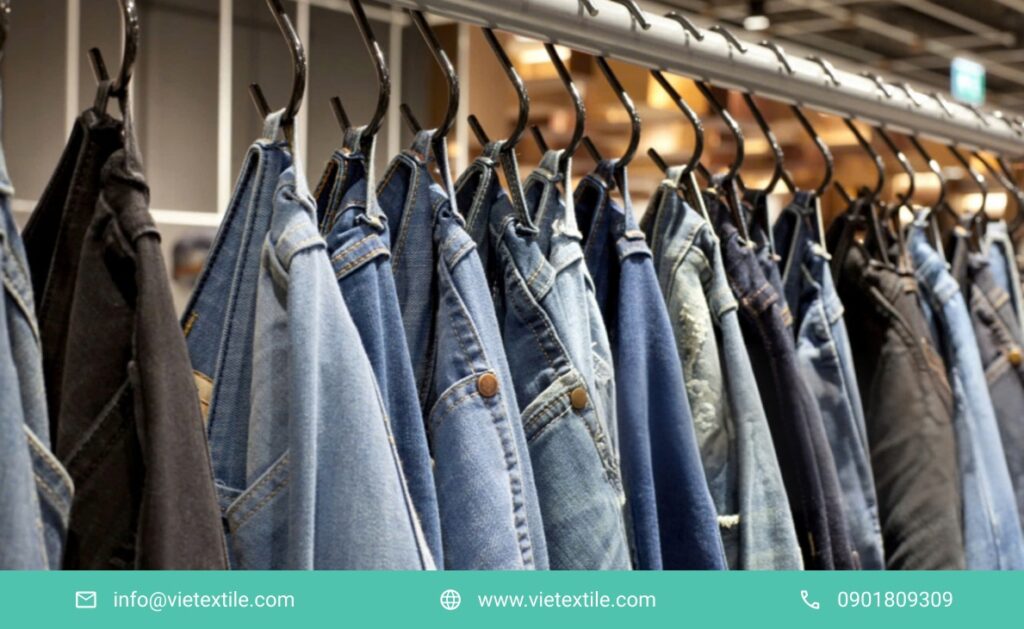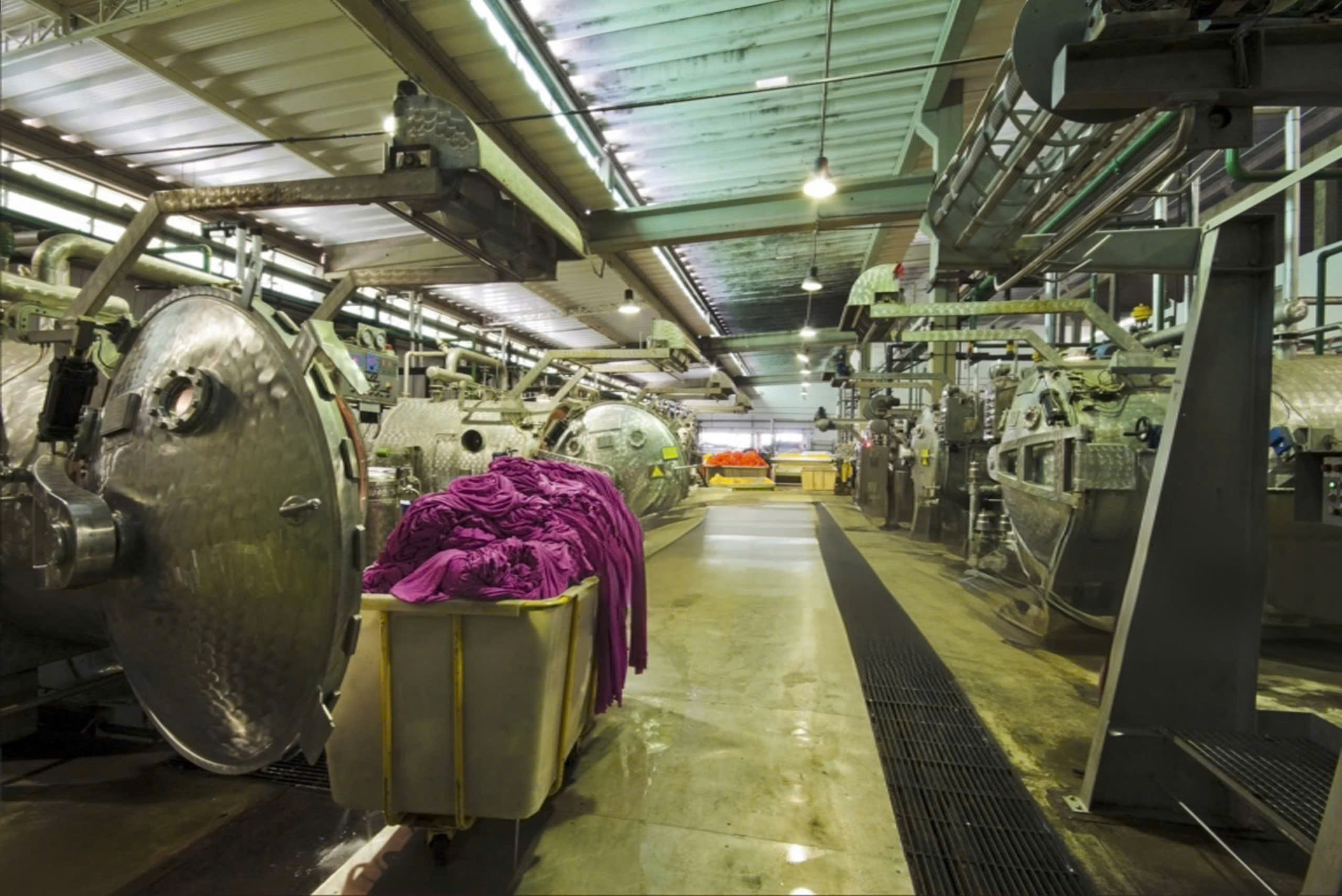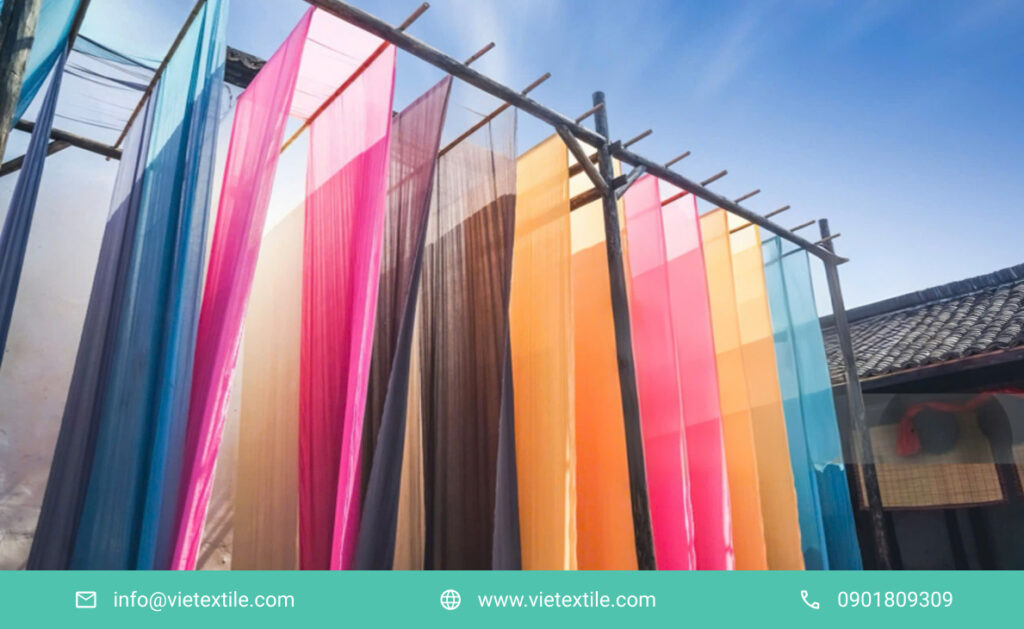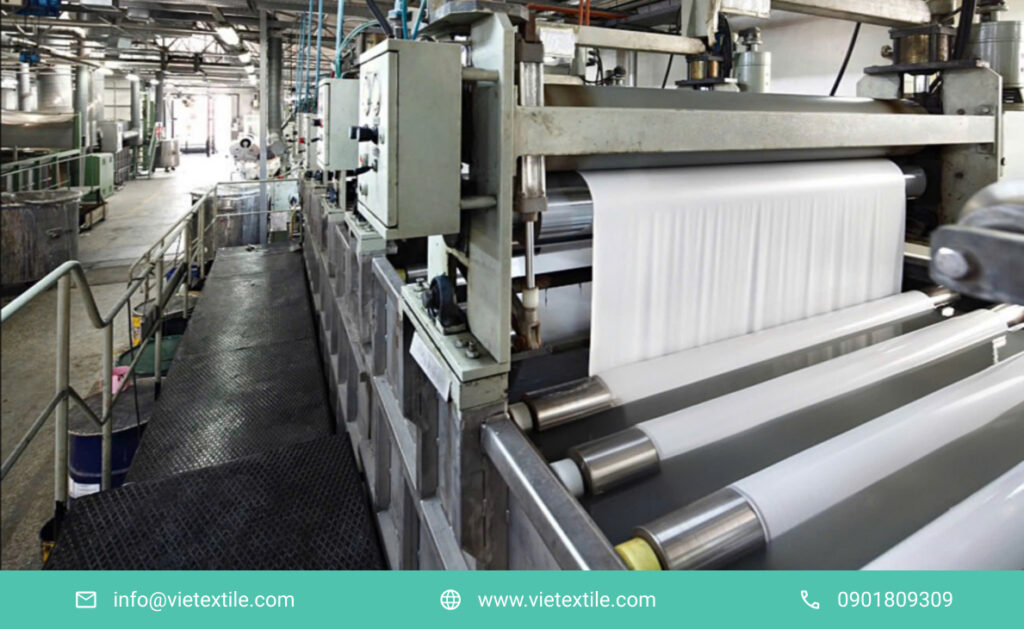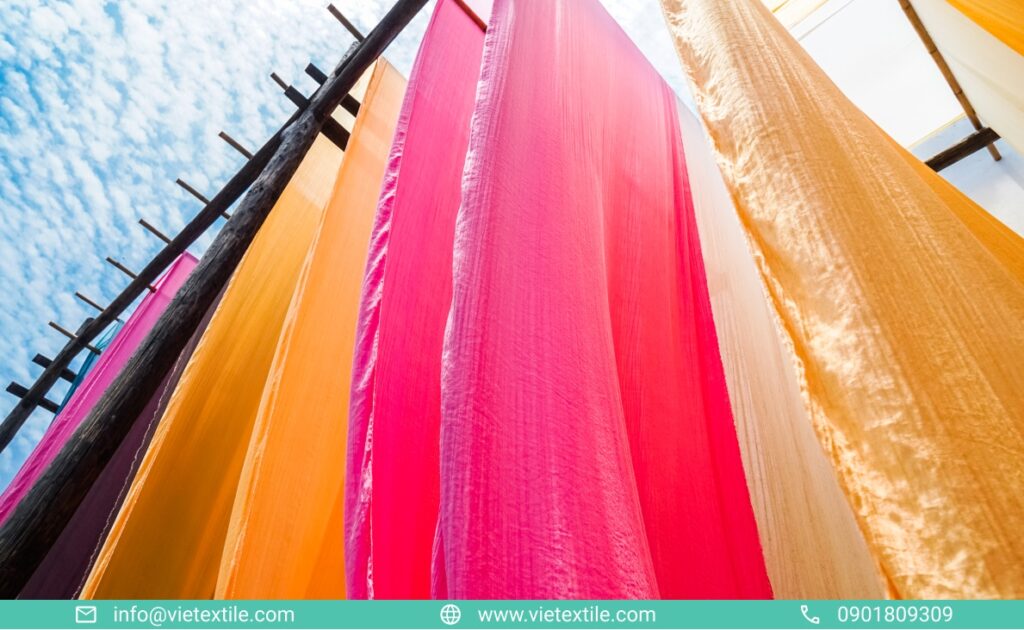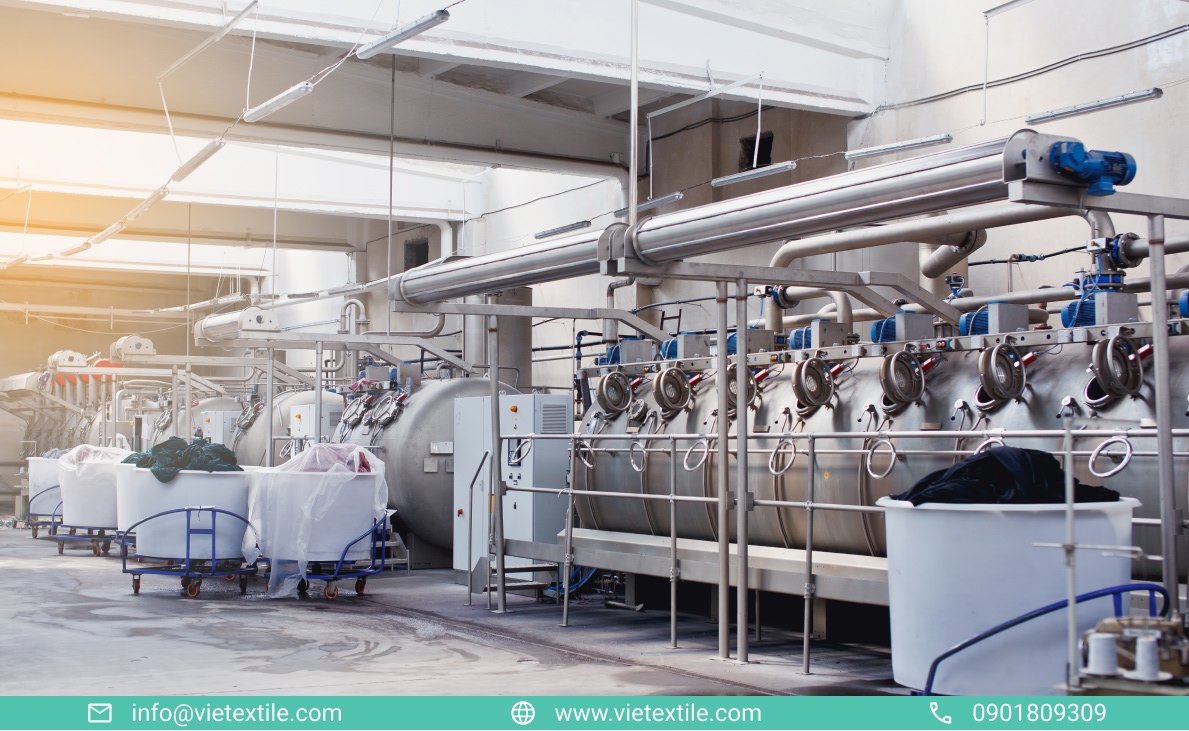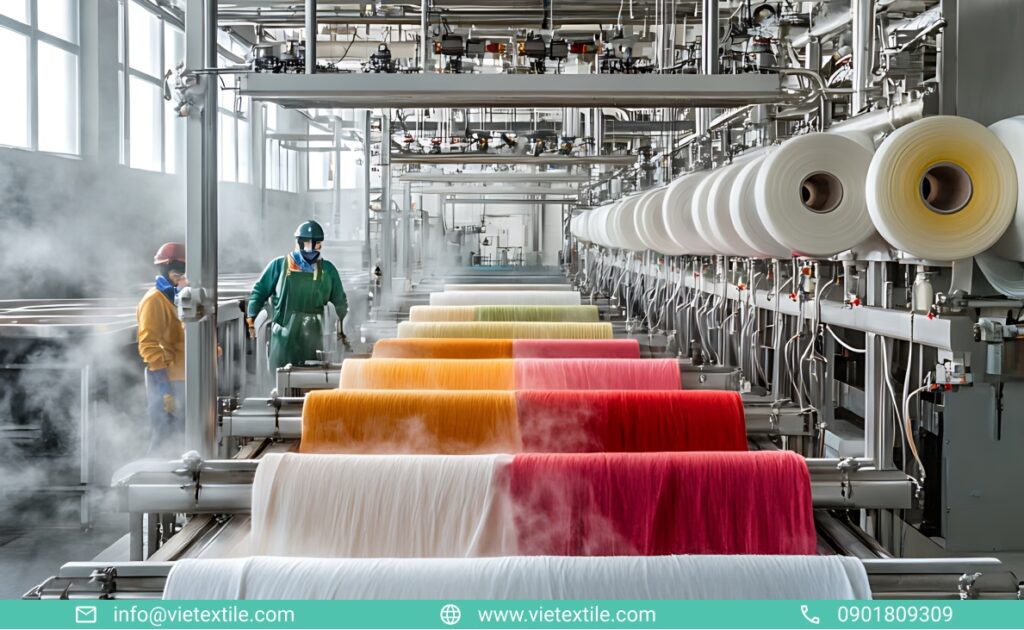
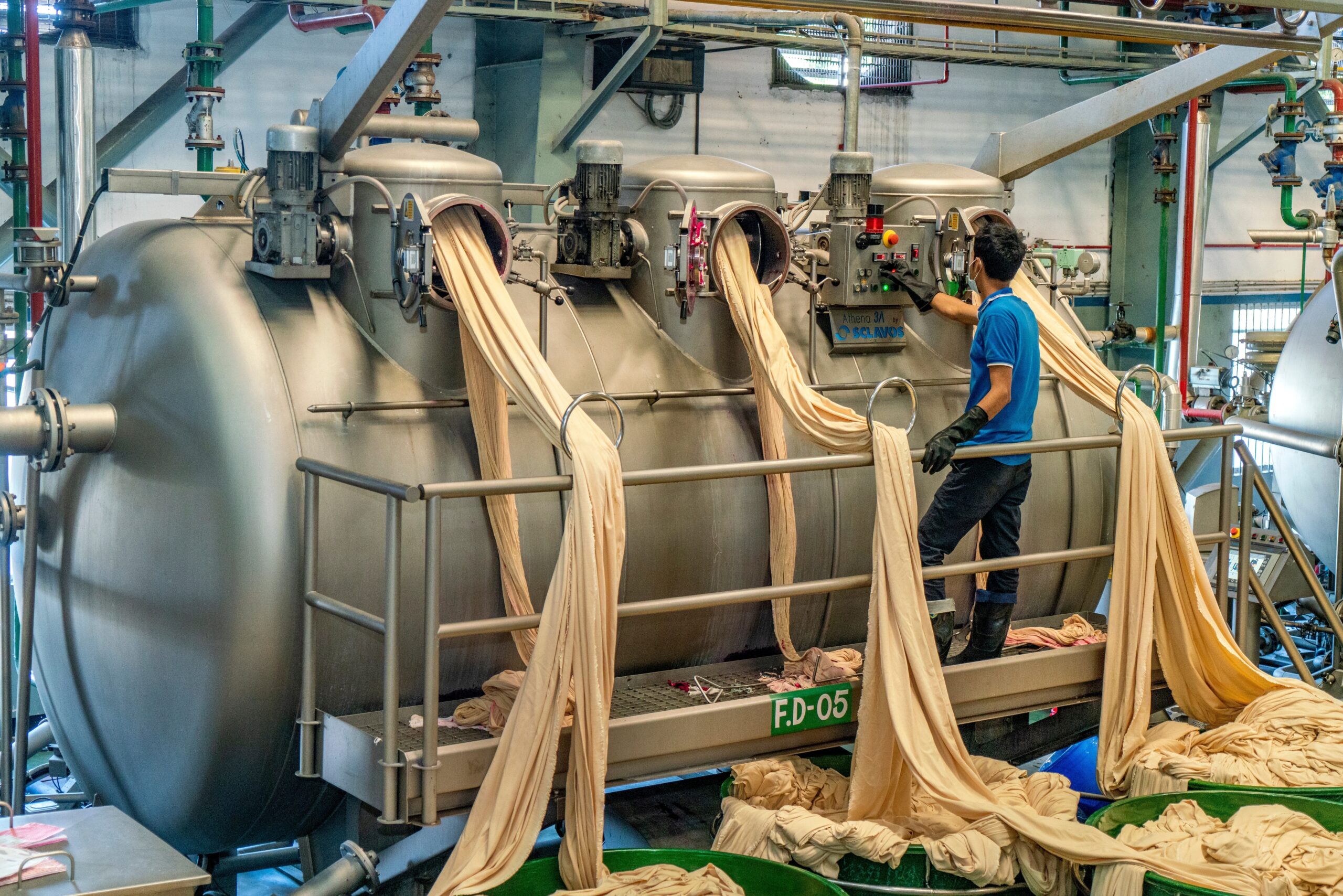
Eco-Friendly Trends in the Polyester Dyeing Process

The content of this article will help you understand the modern polyester dyeing process, including both traditional steps and advanced technologies like supercritical CO2 dyeing and waterless dyeing. These are solutions that the global textile industry is focusing on to move towards sustainable development, minimize environmental impact, and enhance brand value for businesses.

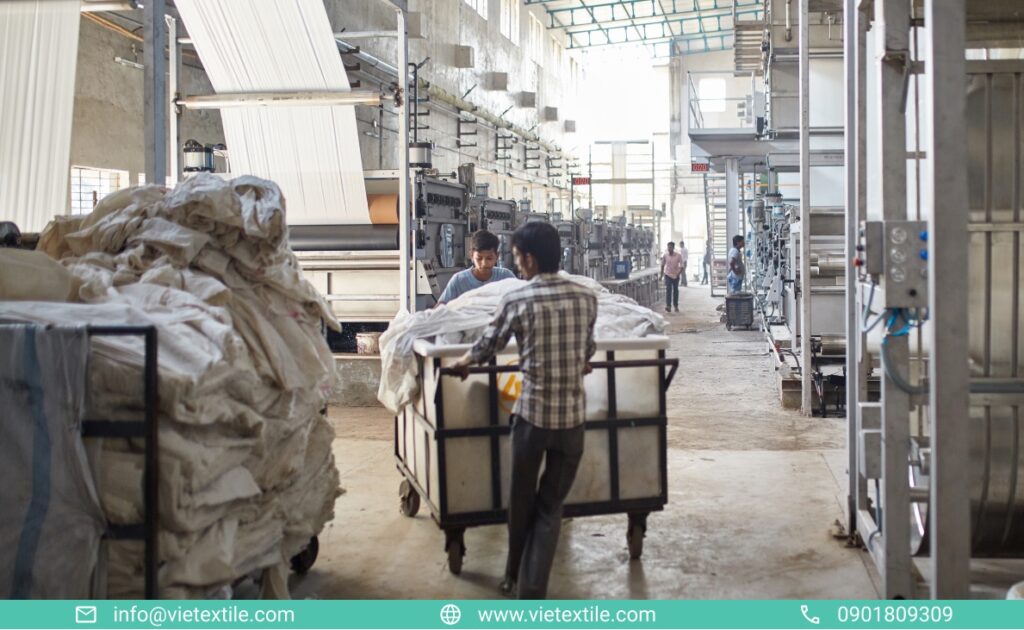
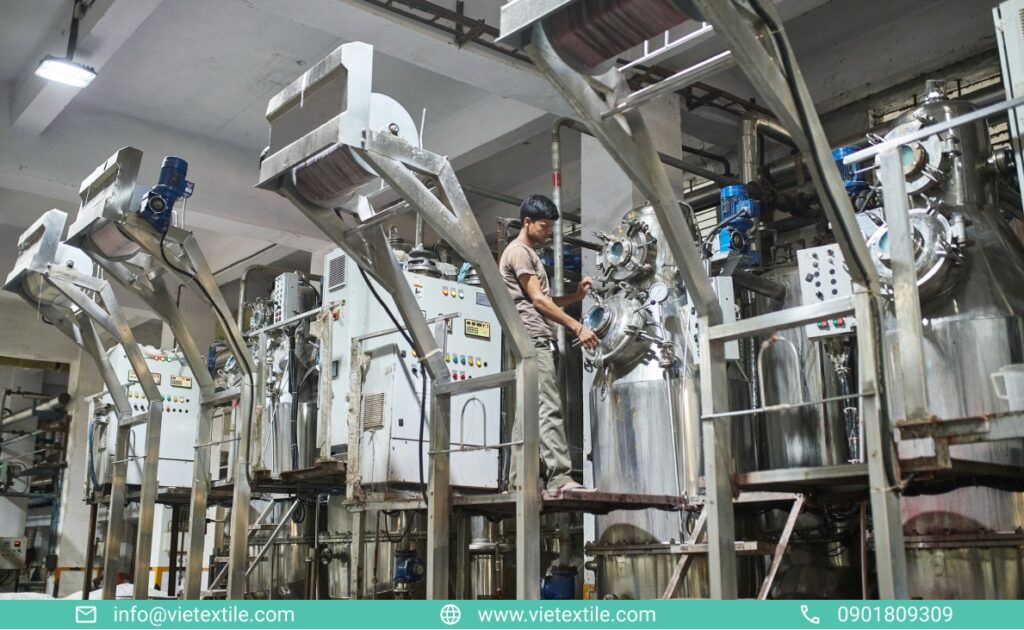
Quy Trinh Nhuom Vai Polyester H2
Eco-Friendly Trends in the Polyester Dyeing Process 5

1. Introduction: Why Is Eco-Friendly Polyester Dyeing Necessary?

Polyester is one of the most widely used synthetic fibers in the global textile industry. However, the traditional polyester dyeing process consumes a lot of water, chemicals, and energy, generating a large amount of harmful wastewater that pollutes the environment.

In the context of climate change and resource crises, the shift to eco-friendly polyester dyeing processes is not only an inevitable trend but also an urgent requirement for sustainable development.

2. Overview of the Traditional Polyester Dyeing Process

To understand the new trends, it is first necessary to grasp the traditional polyester dyeing process that many factories still apply today.

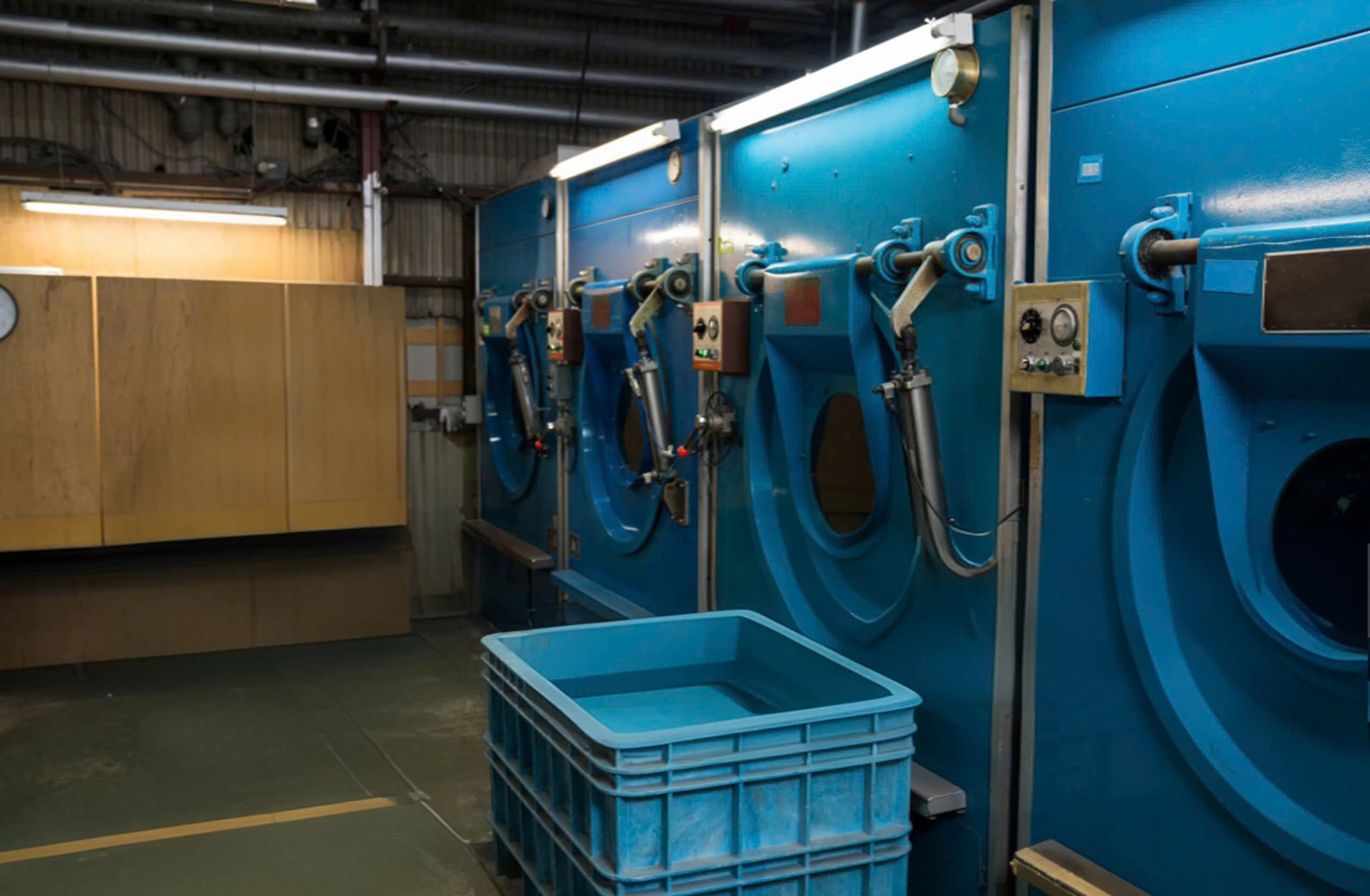
Polyester fabric has a smooth and non-absorbent surface, so dyeing requires high temperatures and pressure to open the fiber structure. The typical polyester dyeing process includes the following steps:

  • Step 1: Fabric pre-treatment Cleaning oils, dirt, and impurities clinging to the surface of polyester fibers to help the fabric absorb dye better and increase colorfastness.
  • Step 2: High-temperature dyeing The dyeing process takes place in a high-pressure machine, at about 130°C, to open the fiber structure and allow the dye to penetrate deeply.
  • Step 3: Washing – rinsing – color fixing Using chemicals to stabilize the color, then rinsing off the excess dye to ensure the fabric does not fade during use.

Disadvantages: Consumes a lot of water (about 125–150 liters/kg of fabric), uses non-biodegradable chemicals, and generates a large amount of greenhouse gas emissions.

3. Eco-Friendly Trends in the Polyester Dyeing Process

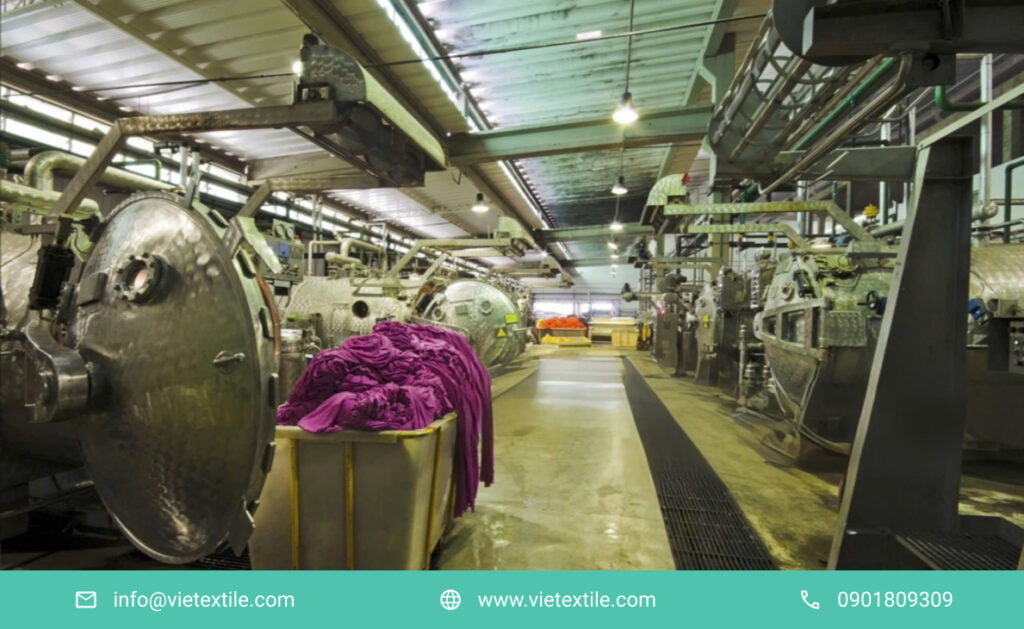
Quy Trinh Nhuom Vai Polyester H1
Eco-Friendly Trends in the Polyester Dyeing Process 6

As the textile industry moves toward sustainable development, many new technologies in the polyester dyeing process have emerged to minimize environmental impact.

3.1. Supercritical CO2 Dyeing

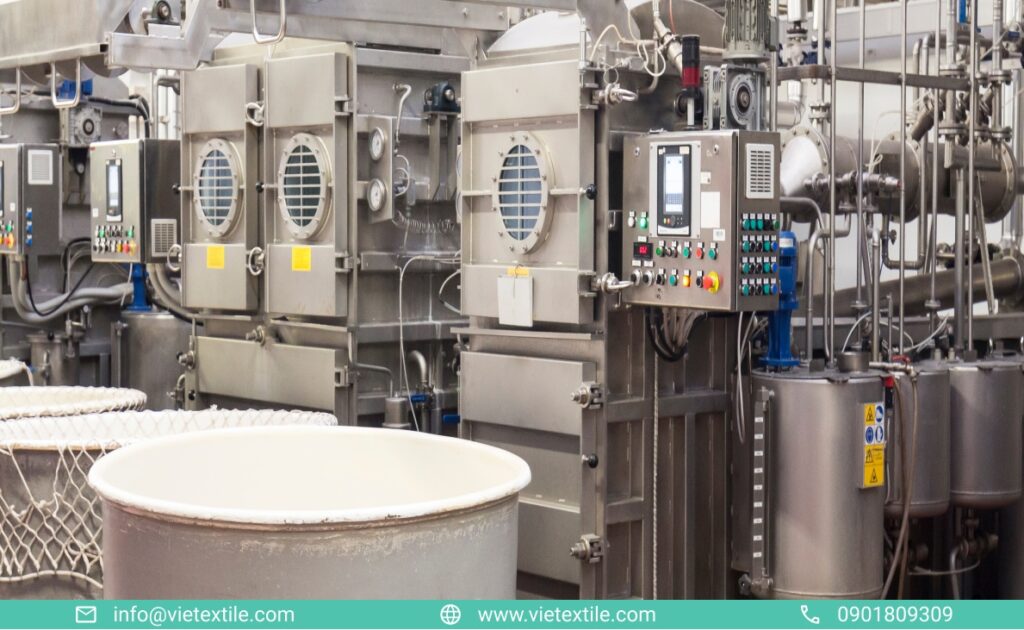
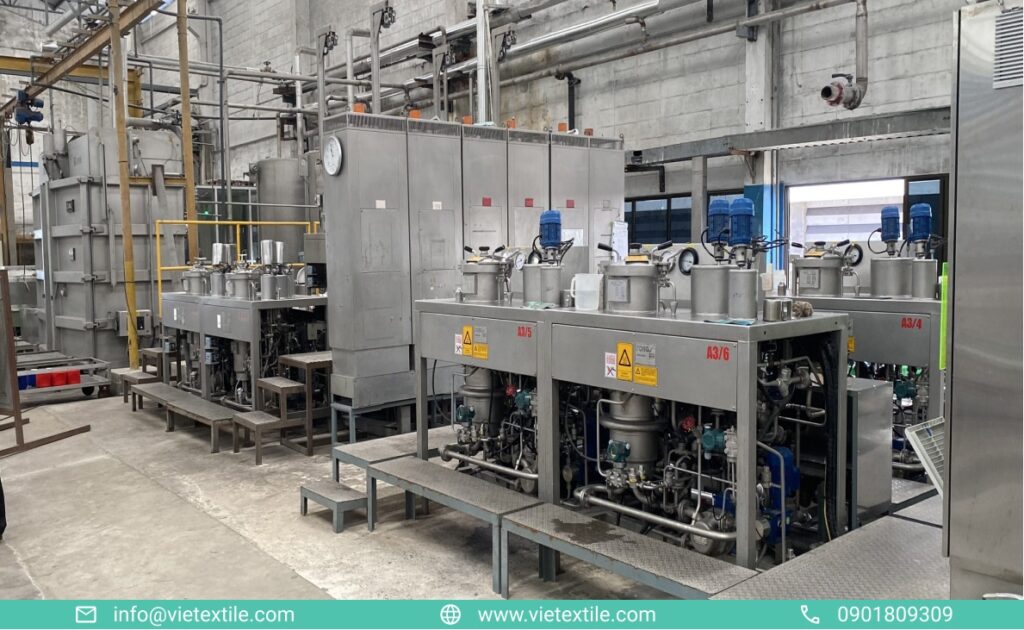
This technology uses CO2 in a supercritical state (having properties of both a gas and a liquid) to replace water as the dyeing solvent.

Key advantages of supercritical CO2 dyeing technology:

  • No water usage: This technology completely eliminates the need for water in the dyeing process, which means no wastewater is generated to pollute the environment.
  • No detergents or fixatives needed: The dyeing process does not require the use of auxiliary chemicals such as detergents or color fixatives, thereby reducing the amount of toxic chemicals released into the environment.
  • CO2 reuse: The CO2 gas is recovered and reused in a closed cycle, significantly reducing greenhouse gas emissions into the external environment.

Disadvantage: High equipment investment cost, primarily applied on a large industrial scale.

3.2. Cationic Polyester Dyeing

This method uses special cationic dyes that can dye polyester at lower temperatures (below 100°C).

Key advantages of cationic dyeing:

  • Energy savings: The dyeing process takes place at a lower temperature (below 100°C), significantly reducing electricity consumption compared to traditional dyeing.
  • Reduced dyeing aids: The use of cationic dyes helps the fabric absorb color better, minimizing the use of additional dyeing aids, which contributes to reducing environmental pollution.
  • Effective color control: It is easy to control the uniformity and shade of color during the dyeing process, making it especially suitable for products that require subtle colors, such as high-end fashion.

This method is suitable for small and medium-sized operations, or for fashion products that require precise color control.

3.3. Waterless Dyeing Using Ultrasonic or Laser Technology

This technology is still in the experimental and improvement phase, but it promises to:

Benefits: Extremely water-efficient, eco-friendly, and reduces air and water pollution.

4. Benefits of Adopting Green Dyeing Technology

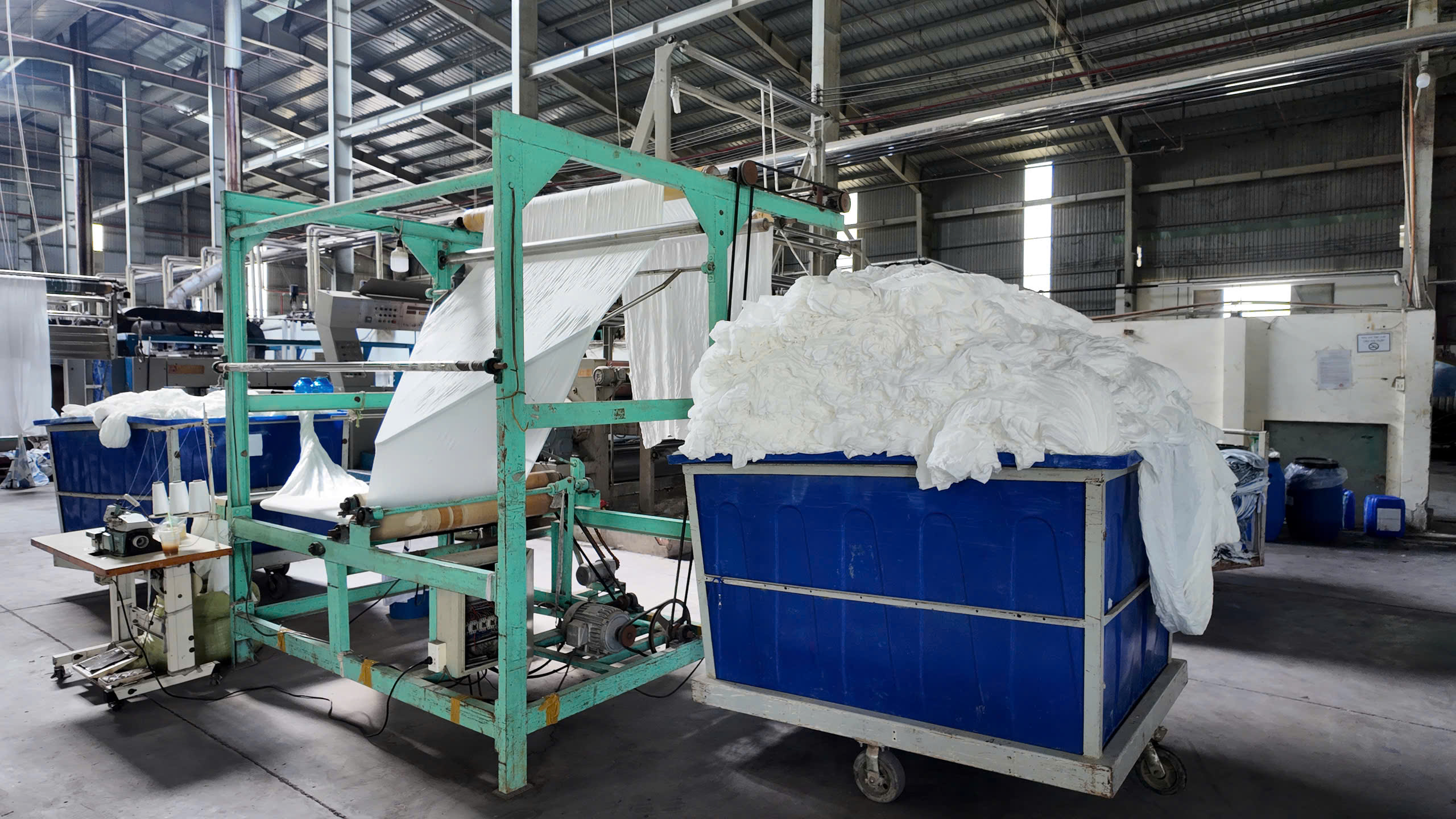
Quy Trinh Nhuom Vai Polyester H3
Eco-Friendly Trends in the Polyester Dyeing Process 7

Improving the polyester dyeing process in an eco-friendly direction brings many practical benefits for both businesses and consumers.

  • Reduced wastewater treatment costs: Green dyeing technologies like supercritical CO2 dyeing or waterless dyeing eliminate or significantly reduce the amount of wastewater generated, thereby easing the burden on the water treatment system and saving operational costs.
  • Compliance with export standards: Many markets, such as Europe and the US, are tightening environmental regulations. Using eco-friendly dyeing technology helps businesses easily overcome technical barriers and increases their opportunities to access large orders.
  • Enhanced brand image: Businesses that adopt green dyeing are often more highly regarded by consumers for their social responsibility. This is especially important with the trend of consumers prioritizing sustainable and health-safe products.
  • Creation of a competitive advantage: Being a pioneer in technological innovation and adopting eco-friendly processes helps businesses stand out in a competitive market, and also expands their cooperation network and long-term investment opportunities.

5. Challenges and Future Directions

To effectively apply an eco-friendly polyester dyeing process, businesses must face several important challenges:

  • High initial investment cost: Implementing eco-friendly dyeing technologies like supercritical CO2 dyeing or waterless dyeing requires modern machinery systems and a large initial investment cost—making it difficult for many small and medium-sized businesses.
  • Lack of specialized technical personnel: New technologies require a team of technicians with specialized knowledge of equipment operation, process control, and quality evaluation. However, the number of highly skilled personnel in this field in Vietnam is still limited.
  • Lack of coordination and support from the industry ecosystem: The transition to green dyeing technology requires close coordination between businesses, research institutes, state management agencies, and international organizations. However, current support policies are not synchronized, and cooperation programs are still fragmented and not strong enough to promote the transition for the entire industry.

However, with the trend of sustainable consumption and the requirements for ESG (Environmental, Social, and Governance), textile businesses are forced to invest in an eco-friendly polyester dyeing process to survive and develop long-term.

6. Conclusion

Overall, transitioning to a green polyester dyeing process is not only the right choice but also a long-term strategic one for the textile industry.

The future of the textile industry will no longer be associated with the image of “pollution” if we start to change today. Innovating the polyester dyeing process not only protects the planet but also opens up opportunities for sustainable development and enhances the competitiveness of Vietnamese businesses.

Refer to more useful internal articles from Viettextile:

7. Contact for Eco-Friendly Polyester Dyeing Process Consultation

Do you need support regarding the eco-friendly polyester dyeing process, choosing the right dyeing technology, cationic dyes, or technical advice? Do you need support regarding choosing the right dyeing technology, cationic dyes, or technical advice?

Post-Dyeing Finishing Wash: Standard Processes and Important Notes

Post-dyeing finishing wash is a crucial step that determines fabric quality in the industrial textile sector. This article helps manufacturers understand the correct and professional process to optimize product quality.

1. The Importance of Post-Dyeing Finishing Wash in the Textile Industry

Giat Hoan Tat Sau Nhuom
Post-Dyeing Finishing Wash: Standard Processes and Important Notes 13

Post-dyeing finishing wash is not just the final step; it’s an essential process that ensures the fabric meets quality and colorfastness standards. In industrial fabric production, excess dye can cause serious issues like color loss, bleeding, and a rough feel on the fabric surface. The finishing wash helps to remove this excess dye, minimize the risk of color loss, enhance durability, and preserve the fabric’s original appearance.

A study showed that a correctly executed finishing wash can improve colorfastness by up to 40%, significantly extending the fabric’s lifespan (Source: Textile World). This step is also crucial for technical industrial fabrics, as it helps integrate features like water repellency, antibacterial properties, and UV resistance into the fabric’s surface.

Thus, post-dyeing finishing wash is not only important for aesthetics but also directly affects the product’s quality, lifespan, and the satisfaction of the end user.

2. The Standard Post-Dyeing Finishing Wash Process

Quy Trinh Chuan Giat Hoan Tat Sau Nhuom
Post-Dyeing Finishing Wash: Standard Processes and Important Notes 14

Step 1: Pre-Wash Preparation

Before starting, you must check the fabric quality after dyeing to determine the level of color bonding. The industrial washing machine needs to be thoroughly cleaned to avoid mixing old chemicals. Prepare all necessary cleaning solutions and neutralizing agents suitable for the specific fabric type.

Step 2: Hot Washing Process

The hot washing process aims to completely remove residual dyes from the fiber surface. The ideal temperature is around 60-80°C, depending on the fabric type. Too high a temperature can affect fabric durability, while too low a temperature is not effective enough at removing the excess dye.

In this step, controlling the temperature and time is very important, usually lasting from 15 to 30 minutes depending on the fabric’s properties. Too long a time will affect the fabric’s quality, but too short a time will not be enough to remove the residue.

Step 3: Cold Washing Process

After hot washing, the fabric is cold-washed to stabilize the color and reduce the risk of shrinkage. This is a mandatory step in the finishing process for high-end industrial fabrics. Using cold water combined with specialized auxiliary chemicals helps enhance anti-shrinkage properties, protect the fabric’s fiber structure, and improve the product’s lifespan.

Step 4: Neutralization and Rinsing

This step aims to completely remove all chemical residue from the fabric surface. Using appropriate neutralizing solutions will balance the fabric’s pH after hot and cold washing. The fabric is then thoroughly rinsed with clean water, minimizing the risk of skin irritation for users and ensuring health safety and stable fabric quality.

3. Important Notes in Post-Dyeing Finishing Wash

Giat Hoan Tat Sau Nhuom 01
Post-Dyeing Finishing Wash: Standard Processes and Important Notes 15

Choosing the right chemicals: Chemicals must be carefully selected based on the properties of each fabric type to avoid negative effects like shrinkage, discoloration, or reduced durability.

Controlling wash temperature and time: These parameters need to be strictly monitored to prevent unwanted shrinkage or fading.

Proper wastewater treatment: This must be done in strict compliance with environmental standards to avoid negative impacts on the community and the living environment.

4. Popular Industrial Post-Dyeing Finishing Wash Methods

Cac Phuong Phap Giat Hoan Tat Sau Nhuom
Post-Dyeing Finishing Wash: Standard Processes and Important Notes 16

4.1. Enzyme Washing

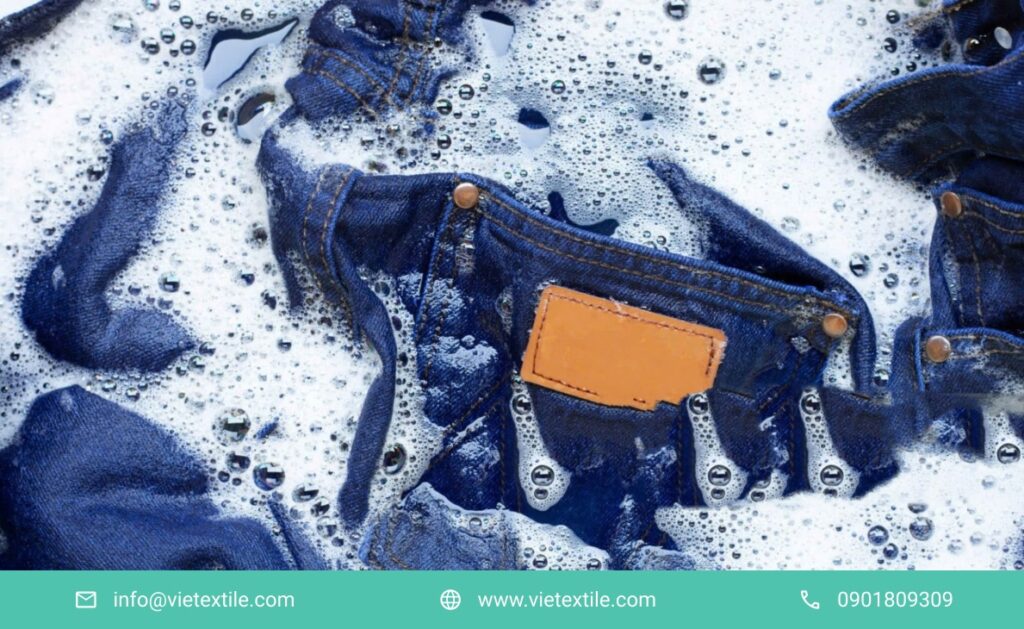
Enzyme washing uses cellulase enzymes to remove excess fibers, creating a soft and natural-feeling fabric surface. It is often used for denim and cotton to create a soft, vintage effect. This method is very effective for denim or cotton product lines.

4.2. Softening Wash

This is a popular method that enhances the fabric’s softness after dyeing. This process typically uses special chemicals to create a soft, comfortable feel upon contact, increasing the product’s commercial value.

5. Modern Technology and Equipment in Use

The use of modern technology, such as Continuous Washing Systems, is helping textile businesses optimize their post-dyeing finishing wash processes. These systems process fabric consistently, limit color deviations, and prevent shrinkage or surface damage due to their ability to precisely control temperature, chemicals, and washing time.

Additionally, investing in energy-saving industrial washing machines with water recycling technology and reduced electricity consumption is a growing trend. These machines significantly cut operating costs, protect the environment, and increase production efficiency.

With this advanced technology, businesses not only improve product quality but also move toward sustainable development, enhancing their reputation and competitiveness in the market.

6. Expert Advice for Effective Post-Dyeing Finishing Wash

Textile experts recommend that to optimize post-dyeing finishing wash quality, businesses should consider combining several treatment methods suitable for each fabric type. For example, combining enzyme wash with a softening wash helps increase softness, comfort, and improves the user experience.

Furthermore, regularly monitoring and checking technical parameters during the process, such as temperature, chemical quantity, and pH, plays a decisive role. Proper temperature control will prevent shrinkage and discoloration, while good chemical and pH management will prevent harmful chemical residues that can affect skin and the environment.

In addition, experts emphasize that periodic quality checks of the fabric after the finishing wash, including colorfastness, shrinkage, and softness, are essential for maintaining product standards. When these factors are strictly controlled, businesses can reduce the risk of errors, save time and costs, and ensure end-customer satisfaction.

7. Conclusion

Post-dyeing finishing wash plays a pivotal role, directly determining the quality, durability, and value of industrial fabric products. By applying the correct standard processes, using advanced technology and equipment, and strictly following expert recommendations, textile businesses can create products that meet international standards and are user- and eco-friendly.

If your business is looking for an optimal solution for your post-dyeing finishing wash or fabric softening process, VieTextile is ready to partner with you. Contact VieTextile now for an in-depth consultation and the best quote!

Frequently Asked Questions (FAQs):

  • Can enzyme wash and softening wash be combined? Yes, and they are often combined to enhance effectiveness.
  • How is finishing wash wastewater treated? It must comply with industrial wastewater treatment standards as per environmental regulations.
  • How can I best control the quality of the finishing wash? Strictly control the temperature, time, and chemicals, and conduct periodic fabric quality checks.
  • What is the most common mistake in post-dyeing finishing wash? Not properly controlling the wash time and temperature, which causes color loss or fabric shrinkage.

Polyester Fabric Dyeing: Standard Techniques for Long-Lasting Color and Cost Efficiency

Looking for reliable polyester fabric dyeing services? Here are the top 5 solutions from VieTextile that combine cost-efficiency, ISO colorfastness, Pantone precision, and fast production turnaround for every business size. Whether you produce uniforms, sportswear, or export garments, these techniques are proven to deliver performance and aesthetics.

1. Introduction to Polyester Fabric

Polyester is one of the most common synthetic fibers in the textile industry, favored for its durability, wrinkle resistance, and cost-effectiveness. However, due to its tightly packed fiber structure, polyester is harder to dye than natural fabrics like cotton or linen. Even small technical errors can lead to uneven coloring, blotches, or fast fading. At VieTextile, we specialize in polyester fabric dyeing using disperse, sublimation, and digital methods.

According to a 2023 report by Textile Exchange, polyester accounted for 52% of the global synthetic fiber market, highlighting the importance of mastering its dyeing techniques.

Polyester Fabric Dyeing: Standard, Colorfast and Economical Secrets 4
Polyester Fabric Dyeing: Standard Techniques for Long-Lasting Color and Cost Efficiency 21

2. Common Polyester Dyeing Methods

2.1 Traditional Disperse Dyeing

  • Suitable for woven, knitted, and wide-width polyester fabrics
  • Enables dye to penetrate deep into the fiber
  • Ideal for uniforms and sportswear production

2.2 Sublimation Dyeing (Heat Transfer Printing)

  • Applies logos and patterns on 100% polyester fabric
  • Produces sharp images that won’t peel or crack
  • Commonly used for event uniforms, soccer jerseys, and premium sportswear

2.3 Digital Printing on Polyester

  • Sublimation printing is a key technique in polyester fabric dyeing for fashion and activewear.
  • Allows unlimited colors and high-resolution image printing
  • Perfect for small quantity, custom design orders

3. VieTextile’s Polyester Dyeing Process

Our 5-step polyester fabric dyeing process ensures color precision and industrial consistency.

Polyester Fabric Dyeing: Standard, Colorfast and Economical Secrets 5
Polyester Fabric Dyeing: Standard Techniques for Long-Lasting Color and Cost Efficiency 22

3.1 Initial Consultation and Fabric Inspection

  • Identify fabric composition: pure polyester or blends (e.g., poly-cotton, poly-spandex)
  • Recommend appropriate dyeing method: disperse dyeing, sublimation, or specialty techniques

3.2 Color Matching

  • Clients provide Pantone codes or physical swatches
  • Colors are matched using professional software, with 99% accuracy

3.3 Lab Dips and Client Approval

  • Test-dye 2–5 meters to verify color, fastness, and wash durability
  • Send samples to clients for approval before bulk production

3.4 Bulk Production

  • Use closed-loop Jet Dyeing, Jigger Dyeing, or wide-width dyeing machines
  • Maintain temperatures between 90–130°C for deep dye penetration and uniform color

3.5 Post-Dyeing Treatment and Quality Control

  • Stabilize colors with professional fixing agents
  • Conduct ISO 105-C06 colorfastness tests
  • Ensure no shrinkage, no fading, and no oligomer issues

4. VieTextile’s Commitment to Dyeing Quality

  • High colorfastness: ISO level 4–5, maintains color after 50 washes
  • No cross-staining: Oeko-Tex certified, safe for export apparel
  • Fast turnaround: 5–7 days for orders under 5,000 meters
  • Cost-effective: Customized pricing to fit each order’s volume and method

VieTextile applies ISO 105-C06 colorfastness standards and complies with OEKO-TEX Standard 100 for fabric safety and durability in export markets.

5. Key Notes for Optimal Dyeing Results

Polyester Fabric Dyeing: Standard, Colorfast and Economical Secrets 6
Polyester Fabric Dyeing: Standard Techniques for Long-Lasting Color and Cost Efficiency 23
  • Maintain stable temperature throughout the dyeing process to ensure even absorption
  • Add auxiliaries like Eganol to prevent oligomer spots during high-temperature dyeing
  • Always perform lab dips before mass dyeing to minimize risks and save costs
  • Disperse dyeing is the most widely used method in polyester fabric dyeing, ensuring deep fiber penetration.

6. Post-Dyeing Care Instructions

  • Wash separately with cold water, avoid strong bleach
  • Dry in the shade or well-ventilated area to prevent UV fading
  • Fashion expert Dr. Nguyen Hong from Hanoi University of Textile Industry notes: “Post-dyeing care determines over 60% of the product’s color durability.”

Learn more about cotton fabric pre-treatment methods before dyeing to ensure optimal results.

7. Common Dyeing Issues and Professional Fixes

7.1 Uneven Coloring

  • Often caused by fluctuating temperatures or poor agitation
  • Resolve by stabilizing temperature and ensuring consistent circulation

7.2 Shrinkage or Deformation

  • Avoid thermal shock by cooling fabric slowly and soaking in cold water before rinsing

7.3 Rapid Color Fading

  • Use strong fixing agents post-dyeing to improve adhesion and longevity

8. Conclusion

Whether you’re a fashion designer handling boutique orders or a garment manufacturer managing mass production, VieTextile is your ideal polyester dyeing partner. With years of industry expertise, modern machinery, and strict quality controls, we deliver efficient, eco-friendly, and cost-saving dyeing solutions.

For more information or a detailed quote, contact VieTextile today for expert consultation!

Frequently Asked Questions (FAQs)

What is the ideal dyeing temperature for polyester? Typically between 90–100°C for optimal disperse dye performance.

Why is polyester harder to dye than cotton? Its fiber structure is denser, limiting dye penetration compared to cotton.

Does VieTextile accept small orders? Yes! Orders from 150m/color are accepted—ideal for small brands and fashion startups.

What’s the turnaround time for polyester fabric dyeing? 5–7 days for orders under 5,000 meters; larger orders are scheduled upon request.

Can I request Pantone-specific colors? Absolutely! Our Pantone matching system ensures precise color reproduction.

How much does polyester dyeing cost? Ranges from VND 25,000 to 100,000/meter depending on quantity, method, and technical requirements.

Industrial Fabric Dyeing Process: The Secret to Colorfastness & Savings

This article provides a detailed breakdown of the industrial fabric dyeing process in garment manufacturing. The guide is clearly structured by fabric material, applying new technologies to save costs, ensure colorfastness, and meet international standards like ISO and OEKO-TEX.

1. Overview of the Industrial Fabric Dyeing Process

Cac buoc trong quy trinh san xuat det nhuom tai Viet Nam
Industrial Fabric Dyeing Process: The Secret to Colorfastness & Savings 28

The industrial fabric dyeing process is a series of treatment steps to apply dyes to fibers or fabrics, with the goal of changing the color according to production requirements. In the modern textile industry, dyeing plays a decisive role in product quality and economic efficiency.

Industrial fabric dyeing is divided into three main types: continuous, discontinuous, and semi-continuous dyeing. Common standards like OEKO-TEX and ISO 105 specify requirements for colorfastness and product safety. However, to truly gain a competitive advantage, businesses need to understand how each fabric material impacts dyeing efficiency and then build a suitable process.

2. The Influence of Fabric Material on the Industrial Dyeing Process

2.1. Dyeing Cotton Fabric – The Process and Challenges

Cotton fabric has good water absorption but can easily fade if the wrong dyes are chosen. Reactive dyes and sulfur dyes are commonly used due to their good interaction with the cellulose in cotton. However, cotton often faces issues like uneven dyeing or bleeding due to inconsistent absorption or subpar pre-dyeing treatment.

To optimize the process, it is necessary to thoroughly pre-treat the fabric by bleaching, scouring, and stabilizing the pH before dyeing. The pre-dyeing treatment of cotton fabric significantly affects its ability to absorb dye, as well as the colorfastness and uniformity. Therefore, strict control over temperature, time, and chemicals is essential.

2.2. Dyeing Polyester Fabric – High-Pressure Disperse Dyeing

Polyester is known for being a difficult fabric to dye due to its tight fiber structure and low dye absorption. Therefore, the disperse dyeing method at high temperatures (130°C – 135°C) has become the most effective solution. This process helps the dye penetrate deep into the fibers, ensuring excellent colorfastness.

According to research from the Vietnam Textile and Apparel Association (VITAS), applying this technique significantly reduces dyeing costs and the risk of fading, thereby increasing production efficiency.

2.3. Dyeing Cotton-Polyester Blends – Balancing Dual Dyeing Techniques

This is the most challenging type of fabric due to the different properties of the two materials. The best solution is to use a dual-dyeing process or multifunctional dyes. Controlling the pH, temperature, and dyes is key to solving the problem of uneven dyeing in blended fabrics.

2.4. Dyeing Viscose, Wool, and Nylon Fabrics – Special Processes for Each Material

  • Viscose: Requires a lower temperature to avoid damaging the fibers.
  • Wool: Is prone to shrinkage, so a suitable temperature and an anti-shrinkage treatment are needed.
  • Nylon (polyamide): Requires special dyes, with acid dyes often used to achieve high colorfastness.

3. Advanced Technologies in Modern Industrial Fabric Dyeing

Cac loi thuong gap trong nhuom vai cong nghiep
Industrial Fabric Dyeing Process: The Secret to Colorfastness & Savings 29

The industrial fabric dyeing sector is currently witnessing strong innovation with advanced dyeing technologies, such as:

  • Digital Textile Dyeing technology helps optimize costs and provides color flexibility.
  • Enzyme (biological) technology is eco-friendly and reduces harmful chemicals.
  • Waterless Dyeing technology, such as using supercritical CO₂, helps reduce water consumption and protect the environment.

Applying these technologies helps businesses save up to 50% on operating costs (Source: Textile Today).

4. Common Errors in the Industrial Fabric Dyeing Process and How to Fix Them

  • Color bleeding, uneven color: Adjust temperature, time, and use appropriate dyes.
  • Quick fading: Use a special color-fixing agent and finishing treatment.
  • Shrinkage, fabric deformation: Implement strict control during the drying and finishing stages.

See more about Industrial Fabric Dyeing: Troubleshooting & Quality Improvement

5. Important Notes in the Industrial Fabric Dyeing Process

Xu huong moi trong cong nghe nhuom vai
Industrial Fabric Dyeing Process: The Secret to Colorfastness & Savings 30

The industrial dyeing process is not just about using machines, chemicals, and advanced technology. To be truly effective, businesses need to understand the interaction between the dyes and each type of material, thereby actively adjusting and optimizing each step in the process.

5.1. Strictly Control Dyeing Conditions by Material

  • Cotton requires a thorough pre-treatment to increase its absorbency.
  • Polyester needs high temperatures to break down its fiber structure and increase permeability.
  • Viscose and wool fibers require a lower temperature process and stricter control over processing time.

5.2. The Role of Post-Dyeing Treatment in Colorfastness

The finishing process (post-treatment), such as rinsing, and using softening and anti-wrinkle agents, is a decisive factor in the fabric’s durability and color uniformity after dyeing. This is the final stage, but it has a significant impact on the final quality of the fabric product.

6. Summary

To be effective, businesses should build a specific dyeing process for each fabric type, combine it with advanced dyeing technologies, strictly control chemicals, and train a staff that has a deep understanding of the dyeing process. This helps to improve product quality, save costs, and gain a sustainable competitive advantage. Contact a VieTextile expert now for a free consultation and to find the most suitable solution for your business!

Frequently Asked Questions

1. What is the difference between dyeing pure cotton fabric and a cotton-polyester blend? Pure cotton is easy to dye because it has good water absorption, allowing the dye to penetrate deep into the fibers for a uniform and more durable color. Cotton-polyester blends are more difficult to dye because polyester absorbs less dye, requiring high-pressure techniques, longer processing times, and special dyes.

2. Which fabric is easiest to dye and most colorfast in the industrial textile industry? Cotton fabric is the easiest to dye and has the highest colorfastness because its fiber structure is breathable and highly absorbent, allowing the dye to penetrate easily, holding the color for a long and stable time compared to synthetic fibers.

3. How does fabric surface treatment affect dyeing efficiency? Fabric surface treatment (pre-treatment) helps to clean the fabric and increase its absorbency, which allows the dye to penetrate more evenly. If this step is skipped, the fabric is prone to color bleeding, quick fading, and uneven dyeing.

4. How is dyeing bamboo fabric different from cotton fabric? Bamboo fabric is thin, soft, and easily damaged if high heat or strong chemicals are used. Therefore, dyeing bamboo requires a lower temperature, milder dyes, and a shorter dyeing time compared to cotton fabric.

Selecting Fabric Dyeing Machines: A Guide to Choosing the Right Fit for Your Business

A fabric dyeing machine is more than just equipment for beautifying fabric. It dictates product quality, production efficiency, and cost savings for your business. Choosing the wrong machine can lead to wasted raw materials, lost productivity, and high operating costs. In this article, we will guide you on how to select the appropriate fabric dyeing machine for your business model, from production scale to fabric type and investment cost.

1. What is a Fabric Dyeing Machine? Overview and Applications

Selecting fabric dyeing machine
Selecting Fabric Dyeing Machines: A Guide to Choosing the Right Fit for Your Business 34

1.1 Selecting Fabric Dyeing Machines and Their Role in the Textile Industry

A fabric dyeing machine is a device that helps imbue color into fabric through a chemical process combined with temperature and water pressure. Modern dyeing machines have become incredibly advanced, utilizing automated technology, saving energy, and protecting the environment. Selecting the right fabric dyeing machine not only affects color quality but also determines production efficiency and operating costs.

Fabric dyeing machines play an extremely important role in the textile industry, from mass-producing apparel to company uniforms, household products, and even technical fabrics for various industries. According to research from Textile World (2023), using advanced dyeing machines can help reduce chemical costs by 40% and water consumption by 25% in the dyeing process. This not only brings economic benefits but also helps minimize environmental impact.

1.2 Applications of Selecting Fabric Dyeing Machines in Various Industries

Dyeing machines are not only used in the fashion industry but are also a crucial part of producing uniforms, industrial fabrics, and technical textiles. Dyeing machines can meet the dyeing needs for many types of fabrics, from soft cotton to durable polyester, and even thick denim.

  • In the fashion industry, dyeing machines help create products with sharp colors and high durability, meeting aesthetic and quality requirements.
  • In industrial fabric production, dyeing machines help textile products achieve the necessary colorfastness, minimizing wear and tear during long-term use.

2. Common Types of Selecting Fabric Dyeing Machines and Their Applications

2.1 Jet Dyeing Machines

Jet dyeing machines are one of the most common types, using high-pressure water jets to help the dye penetrate deeply into the fabric. This Selecting Fabric Dyeing Machines can efficiently process large volumes of fabric, especially suitable for thin fabrics like polyester and cotton.

  • Advantages:
    • Saves water and energy.
    • Ensures uniform color and high quality.
    • Fast dyeing speed, suitable for large-scale production.
  • Disadvantages:
    • Not suitable for thick fabrics like denim or wool.
    • Initial investment cost is quite high.

2.2 Overflow Dyeing Machines

Overflow dyeing machines operate on the principle of an overflowing stream of water, helping to dye fabric without deforming the fibers. This is an ideal choice for delicate, lightweight fabrics such as silk, viscose, and knitted fabrics.

  • Advantages:
    • Good for dyeing lightweight fabrics like silk, chiffon, and viscose.
    • Saves chemicals, minimizing waste.
  • Disadvantages:
    • Slower dyeing process compared to Jet machines.
    • Not optimal for thick fabrics.

2.3 Pad-Batch Dyeing Machines

Pad-Batch dyeing is an optimal solution for dyeing small quantities or for sample testing. This method involves soaking the fabric in a dye solution, after which it is squeezed through rollers to remove excess water.

  • Advantages:
    • Saves water and chemicals.
    • Suitable for sample production and trial dyeing.
  • Disadvantages:
    • Not efficient for large-scale dyeing.
    • Color may not be as uniform as with automated machines.

2.4 Beam Dyeing Machines

Beam dyeing machines are an ideal choice for products with thick fabrics such as denim and woven textiles. This machine helps dye fabric without causing shrinkage or deformation.

  • Advantages:
    • Good for thick fabrics.
    • Ensures long-lasting color quality.
  • Disadvantages:
    • Very high initial investment cost.
    • Not as water-efficient as other types of machines.

3. How to Choose the Right Fabric Dyeing Machine for Your Business Model

Selecting fabric dyeing machine for dyeing fabric in high quality
Selecting Fabric Dyeing Machines: A Guide to Choosing the Right Fit for Your Business 35

3.1 Choosing Based on Production Scale

When selecting a dyeing machine, the first thing you need to consider is your production scale. This factor determines the dyeing machine that fits the actual needs of your workshop or factory.

  • Small workshop (< 10,000m of fabric/month): Mini machines or Pad-Batch machines are suitable for this scale. They have low costs, are easy to operate, and are less expensive.
  • Medium-sized enterprise (10,000 – 100,000m of fabric/month): Jet or Overflow machines will be appropriate, helping to increase productivity and save costs.
  • Large factory (>100,000m of fabric/month): Beam dyeing machines or automated machines are the optimal choice for this production scale.

3.2 Choosing Based on Fabric Type

The fabric dyeing machine should be chosen according to the type of fabric you produce. Each type of machine has characteristics and technologies suitable for different types of fibers.

  • Cotton, silk, wool: Overflow or Pad-Batch machines are suitable, helping to dye gently without deforming the fabric.
  • Polyester, nylon: Jet machines or automated machines help ensure uniform and durable colors.
  • Denim, thick fabrics: Beam dyeing or Roto machines are the ideal choice.

4. Benefits of Choosing the Right Dyeing Machine

4.1 Increase Productivity and Optimize Quality

The right dyeing machine can help you increase productivity by up to 50%. In particular, automated machines help minimize errors, ensuring uniform color on every meter of fabric.

4.2 Save on Chemical and Energy Costs

Using modern dyeing machines with energy-saving and chemical-saving technology helps reduce chemical costs by 20% and water usage by 30%. This helps businesses save costs and protect the environment.

4.3 Meet Export Standards

By using quality Selecting Fabric Dyeing Machines, you can meet export standards such as ISO 14001 and Oeko-Tex, helping your products meet the requirements of demanding markets.

5. Practical Experience from Selecting fabric dyeing machine Businesses

5.1 Case Study 1 – Small Weaving Workshop

A small textile workshop invested in a Pad-Batch machine and reduced production costs by 35% after just 6 months. The machine helped them optimize their dyeing process and minimize waste.

5.2 Case Study 2 – Large Factory Selecting Fabric Dyeing Machines

A large fabric manufacturing plant switched to using automated dyeing machines and reduced color errors by 50%. The automated machines helped them increase productivity while reducing labor.

6. Important Notes When Selecting fabric dyeing machine

6.1 Choose Reputable Brands

Choosing machines from well-known brands will help ensure product quality and machine durability. These brands often offer long warranty periods and prompt technical support services.

6.2 Maintenance and Technical Support

Dyeing machines require regular maintenance to extend their lifespan. Choosing a supplier with good maintenance and technical support services will help businesses avoid production disruptions.

7. Conclusion

Selecting the right fabric dyeing machine is a decisive factor in helping businesses optimize production, reduce costs, and improve product quality. Carefully evaluating needs regarding production scale, fabric type, and budget will help you make the right decision, thereby enhancing business efficiency and competitiveness in the market.

8. Contact VieTextile for Expert Consultation

VieTextile is a leading unit in the industry of supplying fabric dyeing machines and providing in-depth consulting services for businesses in the textile sector. We offer modern fabric dyeing machine lines, from Jet dyeing machines to beam dyeing machines, meeting all requirements for production scale and fabric type.

In addition to supplying equipment, VieTextile also supports strategic consulting to help businesses optimize production processes, save costs, and ensure product quality. We also provide maintenance and technical support services, helping businesses maintain optimal performance throughout the machine’s lifecycle.

Contact VieTextile now if your business needs consultation on textile dyeing machines:

  • Hotline: 090 1809 309
  • Email: info@vietextile.com
Frequently Asked Questions (FAQs)

  • Which fabric dyeing machine is suitable for small businesses?
    • Pad-Batch machines are an ideal choice for small workshops due to their low cost and ease of operation.
  • How to save on operating costs for Selecting Fabric Dyeing Machines?
    • Choose energy-efficient and chemical-saving dyeing machines, and control the dyeing process well.
  • Is a Selecting Fabric Dyeing Machines a long-term investment?
    • Yes, high-quality dyeing machines can operate for 15-20 years, helping to save costs in the long run.

Natural Fabric Dyeing: A Sustainable, Safe & Cost-Effective Solution

1. Introduction and Context of Natural Fabric Dyeing

Natural fabric dyeing is a sustainable trend that is shaping the global fashion industry. This method not only reduces environmental pollution but also creates unique products that are safe for users. So, is natural dyeing truly superior to industrial dyeing? Let’s find out!

1.1 Why is Natural Fabric Dyeing Becoming Increasingly Popular?

The fashion industry is under pressure to transition to a more sustainable model. A report from McKinsey shows that fashion accounts for 10% of global emissions. Industrial dyeing—with its toxic chemicals—is one of the main causes. In contrast, natural fabric dyeing uses plant and mineral materials, minimizing the negative impact on the environment.

Consumers are also increasingly prioritizing health. A shirt dyed with turmeric is not only beautiful but also carries a value of safety, as it doesn’t cause skin irritation. This is a factor that helps natural dyeing score major points with customers.

1.2 Special Benefits of Natural Fabric Dyeing

With every naturally dyed product, you don’t just own an item, but also the story behind it. For example, a silk scarf dyed with indigo leaves is not only soft but also connected to cultural heritage. The colors of natural dyes are also distinct—they have a subtle, non-uniform, but very artistic color transition.

2. Comparing Natural Fabric Dyeing and Industrial Fabric Dyeing

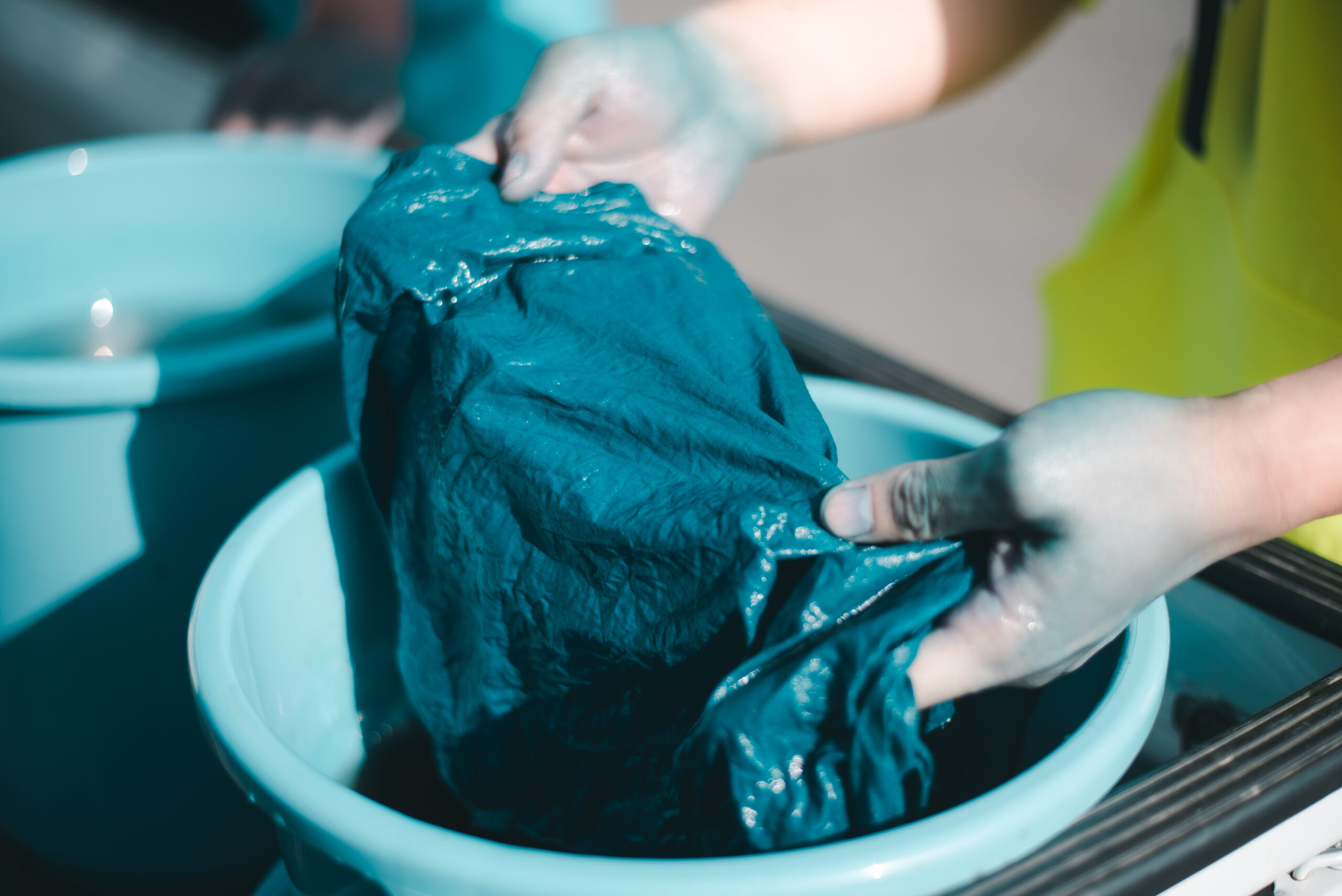
nhuom vai tu nhien 01
Natural Fabric Dyeing: A Sustainable, Safe & Cost-Effective Solution 39

The difference between natural and industrial dyeing lies not only in the materials but also in the process, cost, and environmental impact.

2.1 Environmental Factors

Industrial dyeing uses synthetic chemicals like azo dyes, which pollute water sources and affect human health. A study in Vietnam pointed out that traditional dyeing villages that switched to chemical dyes have severely contaminated groundwater, affecting the surrounding community.

In contrast, natural dyeing significantly reduces chemical discharge. However, it still requires water for the rinsing process. Therefore, large dyeing workshops often integrate a wastewater treatment system to ensure sustainability.

2.2 Cost and Process

Natural dyeing requires a longer time and skilled labor. For example, to dye one meter of fabric with color from turmeric, it takes 8–12 hours for soaking and processing. In contrast, industrial dyeing only takes a few minutes, which is more efficient for mass production.

However, the high initial cost of natural dyeing comes with long-term benefits. A handmade product not only retains its aesthetic value but also helps a brand enhance its “green” value, attracting high-end customers.

2.3 Health Safety and Color Quality

For those with sensitive skin, natural dyeing is an ideal choice. For example, the color from indigo leaves has natural antibacterial properties, making it suitable for infants. Meanwhile, industrial dyes, if not treated properly, can leave chemical residues that cause irritation.

3. Detailed Natural Fabric Dyeing Process

nhuom vai tu nhien 02
Natural Fabric Dyeing: A Sustainable, Safe & Cost-Effective Solution 40

Natural fabric dyeing requires meticulousness from the preparation of materials to the finishing touches.

3.1 Preparing Plant-Based Materials and Pre-Treating the Fabric

Common materials include:

  • Indigo leaves: Create a deep blue color.
  • Turmeric root: Creates a vibrant yellow color.
  • Ebony wood bark: Provides a natural black shade.

Before dyeing, the fabric needs to be thoroughly cleaned to ensure the color adheres evenly. This is especially important for cotton or silk fabric, as natural oils on the surface can hinder the dyeing process.

3.2 Mixing Colors, Soaking, and Mordanting

In natural dyeing, the “mordanting” process helps the color last longer. Substances like alum, vinegar, or salt are used to treat the fabric before soaking. A small tip: For the blue color from indigo leaves, the water temperature should not exceed 50°C to preserve the shade.

Soak the fabric in the color mixture for 1–2 hours, rotating it gently to ensure even color. To achieve a darker color, the soaking process can be repeated.

3.3 Drying, Finishing, and Storing the Dyed Fabric

Dyed fabric needs to be dried in a shady, well-ventilated area, away from direct sunlight to prevent fading. After drying, the fabric should be gently washed with cold water to remove any residual dye.

4. Tips for Storing and Extending the Life of Naturally Dyed Fabric

  • Wash with cold or slightly warm water.
  • Use soap that does not contain harsh chemicals.
  • Avoid machine washing to reduce friction that can cause fading.
  • Dry in a cool, airy place, away from strong sunlight.

5. Contact for Consultation

If you are looking for a sustainable, safe, and eco-friendly solution, natural fabric dyeing is the perfect choice. For businesses, this is also an opportunity to enhance brand value and attract high-end customers. Contact VieTextile now for a consultation and to experience our professional fabric dyeing service!

Frequently Asked Questions (FAQ)

  • Is natural fabric dye colorfast? If stored correctly, naturally dyed fabric can retain its color for 2–5 years.
  • Why is naturally dyed fabric more expensive than industrially dyed fabric? Due to the manual process, longer time, and scarce raw materials.
  • Can I dye fabric naturally at home? Absolutely! Just prepare materials like turmeric or indigo leaves and follow a simple process.

7 Secrets to Selecting a High-Quality Fabric Dyeing Factory for Your Textile Needs

The fabric dyeing factory you choose plays a decisive role in determining the quality, aesthetic appeal, and overall success of your textile products. In an industry where color precision, durability, and sustainability are paramount, partnering with the right dyeing mill is not just an operational choice—it’s a strategic business decision. This guide will help you understand how to select a suitable fabric dyeing factory, explore modern dyeing technologies, and discover why VieTextile stands out as an ideal partner for businesses of all sizes.

1. The Fabric Dyeing Factory: Foundation of High-Quality Textile Products

Did you know that the color vibrancy, consistency, and longevity of your textile products are predominantly dependent on the dyeing process they undergo? A reputable fabric dyeing factory does more than just color fabric; it enhances product value, elevates brand image, and ensures compliance with increasingly stringent market standards. Leveraging modern dyeing technologies and rigorous quality control, top-tier dyeing mills can produce textiles that meet the demanding requirements of both domestic and international markets.

fabric dyeing factory in Vietnam is a strategic decision for USA market | nhà máy nhuộm vải cho thị thường Mỹ, Nhật và Úc.
7 Secrets to Selecting a High-Quality Fabric Dyeing Factory for Your Textile Needs 44

Learn more about the importance of quality machinery in our guide to “Industrial Fabric Dyeing Machines.

Each fabric dyeing factory may have its unique processes, from meticulous raw material inspection to sophisticated finishing treatments. The critical task for your business is to identify a partner capable of fully meeting your specific needs. Whether you require large-volume production capacity or have specialized technical requirements for colorfastness, material handling, or eco-certifications, these factors must be carefully considered.

For instance, a company manufacturing corporate uniforms requires fabrics with exceptional color uniformity and high resistance to fading after multiple washes. An experienced fabric dyeing factory like VieTextile, equipped with advanced dyeing technology and a proven track record, can reliably meet such demanding specifications, ensuring brand consistency and product durability.

2. Dominant Fabric Dyeing Technologies in Today’s Market

The textile industry is continually evolving, with new dyeing technologies emerging to offer better efficiency, quality, and sustainability. Understanding these key technologies will help you assess the capabilities of a potential fabric dyeing factory.

2.1 Eco Dyeing (Sustainable Dyeing): The Path to Sustainability

Eco-friendly dyeing technologies are increasingly favored due to their significant resource savings and reduced environmental impact. According to reports from organizations like OEKO-TEX, factories implementing these advanced methods can reduce water consumption by up to 50% compared to traditional dyeing processes.

Furthermore, these processes utilize environmentally friendly chemicals and dyestuffs, ensuring safety for both textile workers and end-consumers. Products meeting stringent international standards such as GOTS (Global Organic Textile Standard) or Bluesign are typically manufactured using these sustainable dyeing technologies. When evaluating a fabric dyeing factory, inquire about their commitment to and certifications in eco dyeing.

2.2 Reactive Dyeing: Vibrant and Durable Colors for Cotton Fabrics

Reactive dyeing is particularly well-suited for cellulosic fibers like cotton, linen, and viscose. This technology creates a covalent bond between the dye molecule and the fiber, resulting in excellent color vibrancy, a wide color gamut, and high wash fastness. Premium cotton shirts, high-quality bed linens, and vibrant fashion apparel often utilize fabrics dyed with this method.

A key advantage of partnering with a technologically advanced fabric dyeing factory like VieTextile is their ability to customize reactive dyeing formulations. This allows for the creation of unique shades and color effects, helping your products stand out in a competitive marketplace.

2.3 Disperse Dyeing: The Optimal Choice for Polyester and Synthetic Fabrics

Polyester is a ubiquitous fabric in sportswear, activewear, uniforms, and many other applications due to its durability and performance characteristics. Disperse dyeing, typically carried out under high-temperature and high-pressure conditions (often using high-pressure dyeing machines), is the primary method for coloring polyester. This technology promotes efficient dye penetration into the hydrophobic polyester fibers, leading to good color yield, excellent fastness properties, and reduced energy consumption in well-managed processes.

Large-scale dyeing mills equipped with modern disperse dyeing capabilities can efficiently handle urgent, high-volume orders while consistently maintaining quality standards.

3. The Fabric Dyeing Process at Reputable Factories: A Step-by-Step Overview

To achieve a flawlessly dyed product, a reputable fabric dyeing factory adheres to a meticulous, multi-stage process. While specific steps may vary based on fabric type and desired outcome, a general workflow includes:

  1. Raw Material Inspection & Preparation (Pre-treatment): Each fabric type requires specific pre-treatment. For example, cotton fabric typically undergoes scouring (cleaning to remove natural waxes and impurities) and bleaching (if a pure white base or bright/pale shades are required). It might also involve singeing or mercerizing. Proper preparation is crucial for ensuring even dye uptake.
  2. Color Matching & Dyestuff Preparation: This is a critical stage that determines the final color accuracy. Large, modern dyeing mills often use computerized color matching systems (spectrophotometers) and automated dyestuff dispensing systems to ensure precision and repeatability, minimizing human error and lot-to-lot variation.
  3. Dyeing: The prepared fabric is loaded into industrial dyeing machines (such as jet, overflow, or beam dyeing machines, depending on the fabric type). The dyeing process itself involves carefully controlling parameters like temperature, time, pH, liquor ratio, and chemical additions to ensure deep, even penetration of the dye into every fiber.
  4. Post-Dyeing Rinsing and Soaping: After dyeing, fabrics are thoroughly rinsed to remove unfixed surface dyes. A soaping or washing-off process is then carried out to remove any remaining loose dye and improve fastness properties.
  5. Finishing Treatments: Depending on the end-use, various finishing treatments may be applied to impart special properties to the fabric. These can include treatments for anti-wrinkle, anti-microbial, water-repellent, flame-retardant, or UV-protective characteristics.
  6. Quality Control and Inspection: Throughout and after the dyeing and finishing processes, rigorous quality control checks are performed. These include testing for colorfastness (to washing, rubbing, light), color consistency (against standards), dimensional stability, pH, and other specified technical parameters before the fabric is approved for shipment.
nhà máy nhuộm vải | The meticulous fabric dyeing process at a high-quality fabric dyeing factory, ensuring premium textile products.
7 Secrets to Selecting a High-Quality Fabric Dyeing Factory for Your Textile Needs 45

4. 7 Secrets to Selecting the Right Fabric Dyeing Factory

Choosing the right fabric dyeing factory is a strategic decision. Here are seven key factors to consider:

  1. Proven Quality & Certifications: Look for a factory that adheres to international quality standards. Certifications like OEKO-TEX® Standard 100 (ensuring textiles are free from harmful substances), GOTS (for organic textiles), or Bluesign® (for sustainable textile production) are strong indicators of a commitment to quality and safety.
  2. Modern Technology & Automation: A fabric dyeing factory equipped with modern, automated machinery is more likely to deliver consistent quality, higher efficiency, and better resource management (water, energy, chemicals). Inquire about their investment in recent dyeing and finishing technologies.
  3. Reliability & On-Time Delivery: Evaluate their track record for reliability. Can they consistently meet production deadlines without compromising quality? Request references or case studies if possible.
  4. Exceptional Customer Service & Technical Support: A good partner offers more than just dyeing. Look for a factory that provides professional customer service, responsive communication, and in-depth technical consultation to help you achieve your desired product specifications.
  5. Competitive and Transparent Pricing: While cost is a factor, it shouldn’t be the only one. Seek a fabric dyeing factory that offers competitive pricing that reflects the quality and service provided. Ensure their pricing structure is transparent, without hidden costs.
  6. Flexibility and Customization Capabilities: Can the factory handle custom orders, small MOQs (Minimum Order Quantities) if needed, or specialized dyeing requirements? Flexibility is key for innovation and meeting diverse market demands.
  7. Reputation and Industry Standing: A factory with a strong, positive reputation within the textile industry is a valuable asset. This often translates to higher trust and a better overall partnership experience.

5. Why Choose VieTextile as Your Fabric Dyeing Partner?

VieTextile is proud to be recognized as one of Vietnam’s leading fabric dyeing factories, offering professional, modern, and comprehensive dyeing solutions tailored to meet a wide range of customer needs. Guided by international standards, powered by advanced technology, and driven by a team of seasoned experts, VieTextile is committed to delivering dyed fabric products of exceptional quality, precise color accuracy, and superior durability.

Our focus extends beyond merely optimizing production processes. VieTextile places a strong emphasis on environmental protection and sustainable practices, striving to meet and exceed international ecological standards such as OEKO-TEX and GOTS. We believe in responsible manufacturing that benefits our clients, their customers, and the planet.

Connect with VieTextile today to receive a detailed consultation on our professional fabric dyeing services. We are always ready to collaborate with you on every project, providing the optimal solutions to ensure the success of your business.

MULTI-FLOW Eco-Dye: Optimizing Costs & Energy in High-Pressure Textile Dyeing

The global textile industry is in a constant state of evolution, driven by demands for higher quality, increased production efficiency, and a significant reduction in environmental impact. At the heart of this transformation lies the dyeing process, a critical stage that imbues fabrics with color and life. Central to achieving these goals is the high-pressure dyeing machine, a sophisticated piece of equipment engineered to overcome many limitations of traditional dyeing methods. VieTextile’s MULTI-FLOW Eco-Dye series represents the cutting edge in high-pressure dyeing machine technology, offering a compelling solution for businesses aiming to thrive in this competitive landscape.

1. Understanding the Core Concept: What is a High-Pressure Dyeing Machine?

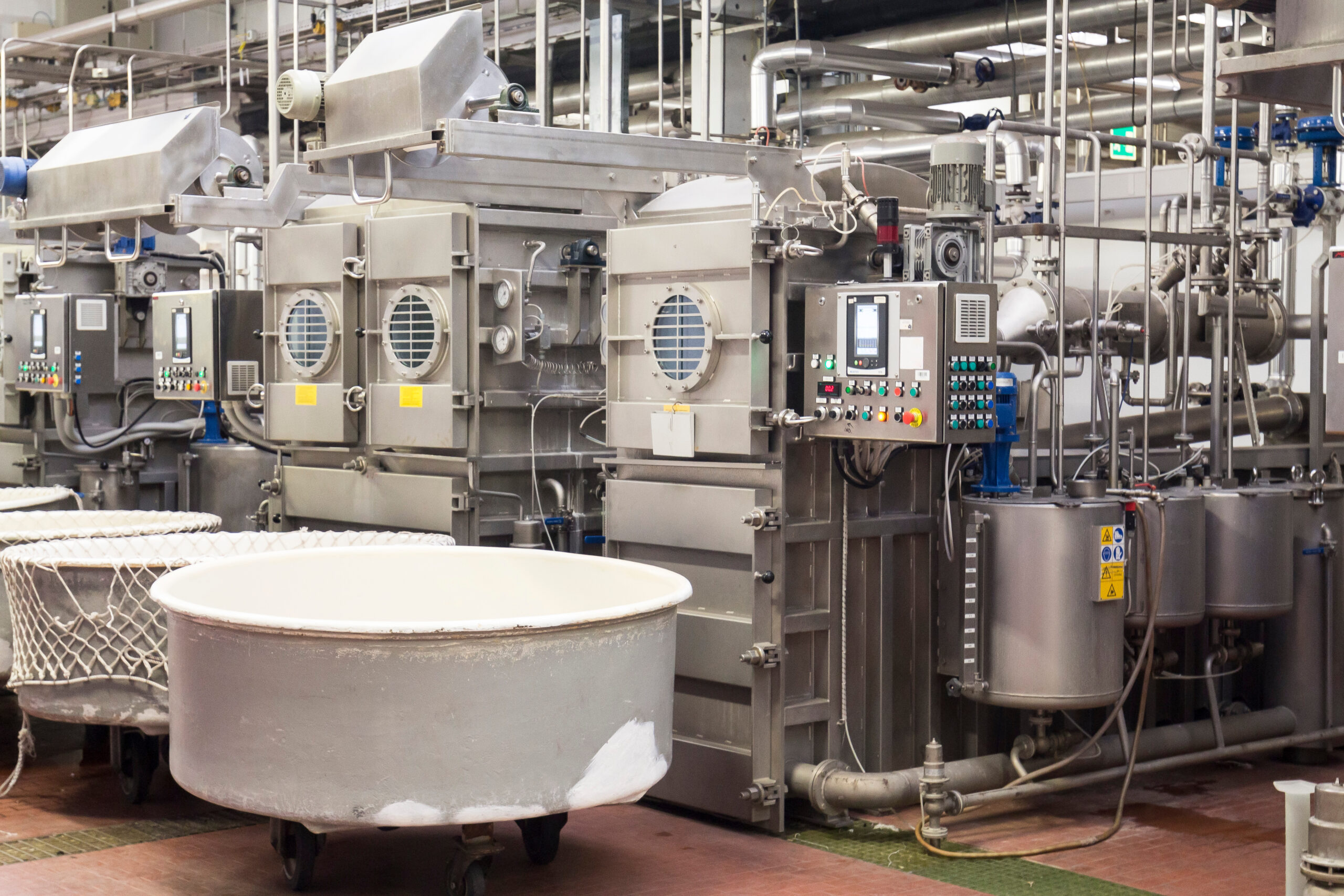
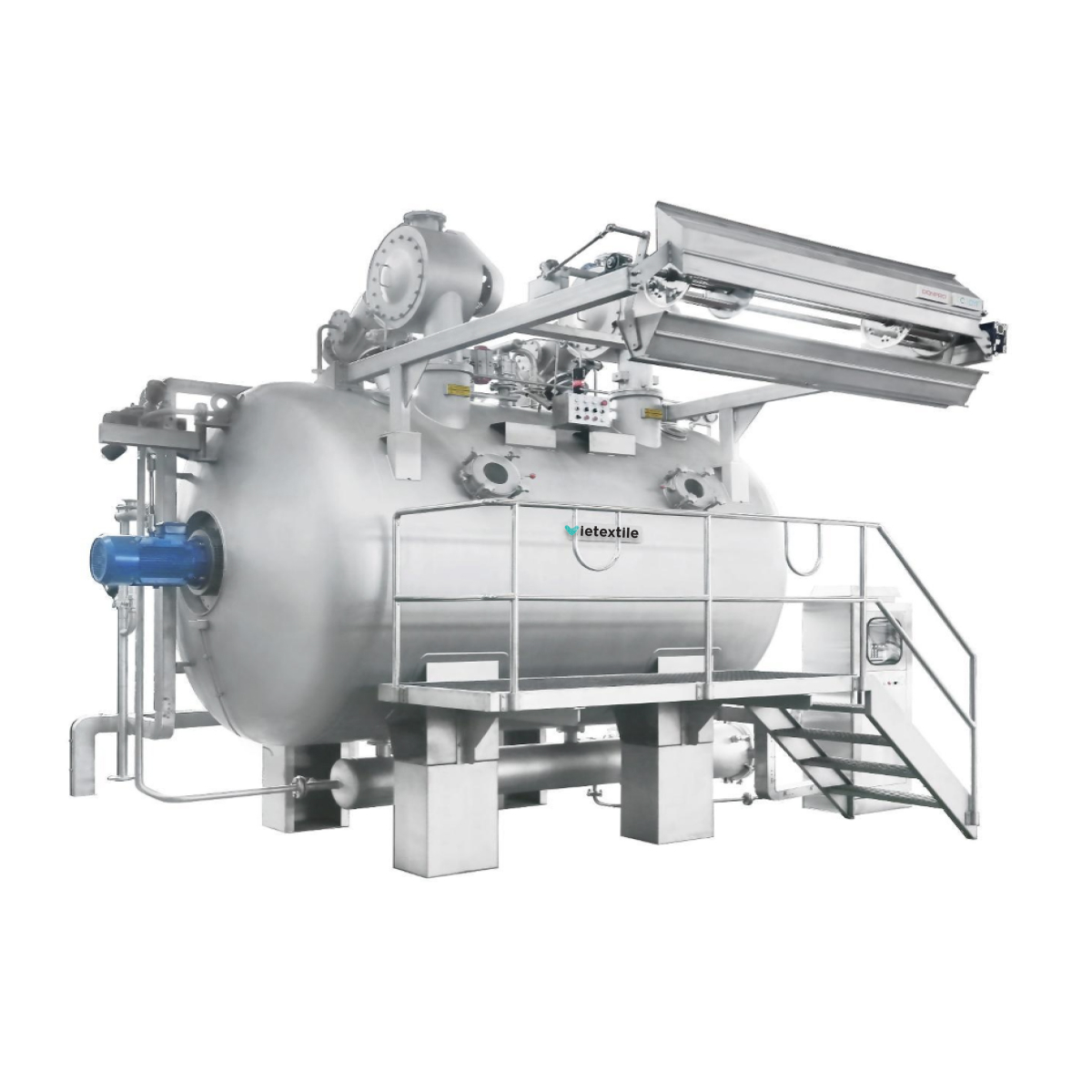
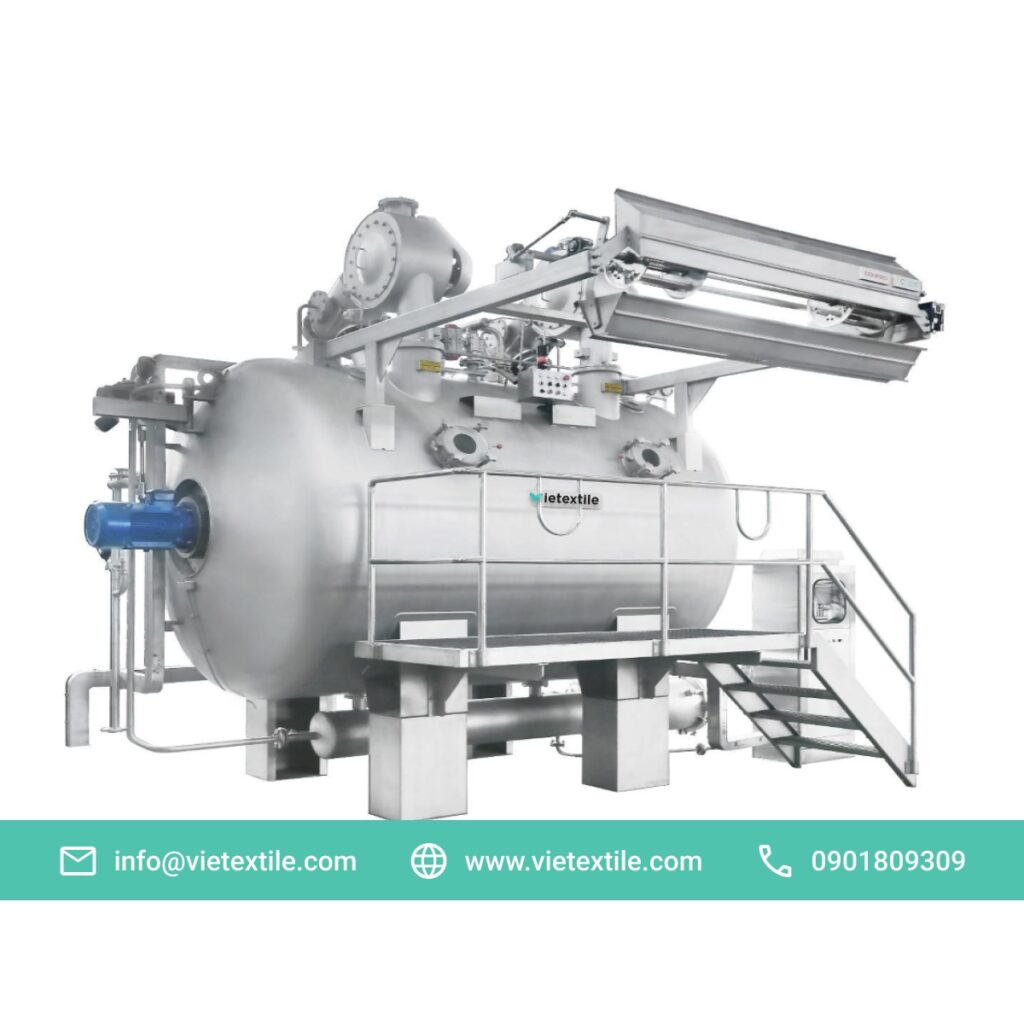
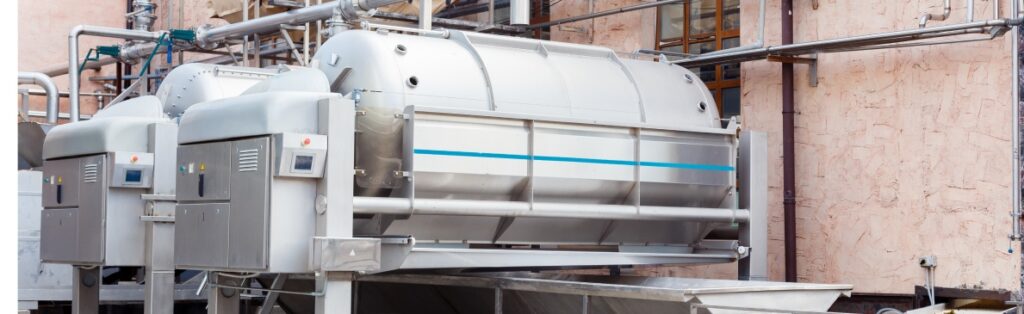
The MULTI-FLOW Eco-Dye high-pressure dyeing machine, showcasing its advanced design and resource-saving technology from VieTextile.
MULTI-FLOW Eco-Dye: Optimizing Costs & Energy in High-Pressure Textile Dyeing 48

The MULTI-FLOW Eco-Dye is a new generation of industrial high-pressure dyeing machine, meticulously designed to optimize the fabric dyeing process with high efficiency, uniform quality, and significant resource savings. This machine integrates automatic control technology and intelligent features, ensuring it meets diverse production needs for a wide range of fabrics, from natural fibers to synthetics with VieTextile Our Dyeing Machine Technologies

2. Key Features of the MULTI-FLOW Eco-Dye High-Pressure Dyeing Machine

The MULTI-FLOW Eco-Dye series stands out due to several innovative and impactful features:

2.1 Extremely Low Liquor Ratio – Resource Conservation

One of the most prominent highlights of the MULTI-FLOW Eco-Dye is its exceptionally low liquor ratio, starting from just 1:2.5. This industry-leading feature not only significantly reduces water and chemical consumption but also leads to considerable savings in production costs.

  • Water Savings: Achieves up to 40% reduction in water usage compared to conventional dyeing machines.
  • Chemical Savings: Attains optimal dyeing effectiveness without excessive chemical use, contributing to both cost reduction and environmental protection.

2.2 Flexible Capacity Options – Meeting All Demands

The MULTI-FLOW Eco-Dye high-pressure dyeing machine series offers various capacity options, providing businesses with the flexibility to cater to diverse order sizes:

  • 400kg: Suitable for smaller batches or high-value, premium products.
  • 600kg: Optimized for small to medium-scale production, offering cost-efficiency.
  • 900kg: Ideal for large-scale factories with substantial output requirements.

2.3 Advanced Automatic Control System – Precision and Convenience

The machine is equipped with the advanced DP12 control system, which automates the entire dyeing process. This includes precise monitoring and control of temperature, pressure, and water levels, ensuring every fabric batch achieves uniform quality and minimizing human error.

2.4 360° Efficient Cleaning Technology – Effectiveness and Savings

The intelligent 360° cleaning system integrated into the MULTI-FLOW Eco-Dye thoroughly removes residual chemicals and dyestuffs. This ensures the machine is always ready for the next operation, saving valuable time and water between batches.

2.5 High-Quality Material Construction – Long-Term Durability

The MULTI-FLOW Eco-Dye is constructed from high-grade 316L stainless steel. This material offers excellent resistance to corrosion and can withstand harsh chemical environments, ensuring exceptional longevity and durability of the machine. Information on material standards in industrial equipment can often be found through organizations like ASTM International, which develops and publishes technical standards for a wide range of materials.

3. Benefits of Using the MULTI-FLOW Eco-Dye High-Pressure Dyeing Machine

Investing in the MULTI-FLOW Eco-Dye brings tangible advantages to textile dyeing operations:

3.1 Increased Production Efficiency

The MULTI-FLOW Eco-Dye helps shorten dyeing cycle times while still ensuring even and consistent coloration. Thanks to its rapid processing capabilities, the machine allows for an increased number of dyeing lots per day, enabling businesses to meet large orders within tight deadlines.

3.2 Significant Cost Savings

Due to its low liquor ratio and optimized chemical usage technology, the machine allows businesses to considerably reduce operational costs. These savings on water, energy, and chemical consumption directly contribute to improved profitability without compromising product quality.

3.3 Uniform Fabric Quality

The enclosed dyeing process, with tightly controlled parameters (temperature, pressure, flow), ensures that every batch of fabric achieves consistent color. This minimizes issues such as spotting, streaking, or color deviation, leading to higher first-quality yields.

3.4 Environmental Protection

With its impressive water and chemical saving capabilities, the MULTI-FLOW Eco-Dye not only reduces production costs but also significantly contributes to sustainable manufacturing practices. By minimizing effluent and optimizing energy, it lessens the negative environmental impact of dyeing operations.

4. Why Choose the MULTI-FLOW Eco-Dye High-Pressure Dyeing Machine from VieTextile?

Selecting VieTextile as your partner for the MULTI-FLOW Eco-Dye offers distinct advantages:

4.1 Cutting-Edge Technology

VieTextile consistently stays updated with the latest technological solutions in the textile industry. We offer dyeing machines that not only meet but often exceed customer expectations in terms of performance and innovation.

4.2 Comprehensive Support

We provide more than just a product. VieTextile offers comprehensive support including expert consultation, professional installation, and ongoing maintenance services, ensuring you achieve maximum efficiency when using your MULTI-FLOW Eco-Dye.

4.3 Commitment to Quality

All dyeing machines supplied by VieTextile, including the MULTI-FLOW Eco-Dye, undergo rigorous quality inspections. This guarantees their durability and stable performance over an extended operational lifespan. Reputable certifications and quality management systems, such as those outlined by ISO (International Organization for Standardization), are benchmarks we align with.

5. Contact for Consultation

If you are searching for a modern, high-quality, and resource-efficient dyeing machine solution, contact VieTextile today for a detailed consultation on the MULTI-FLOW EcoDye high-pressure dyeing machine:

  • Address: 82C Quach Dinh Bao, Phu Thanh Ward, Tan Phu District, Ho Chi Minh City, Vietnam
  • Phone: +84 901809309
  • Email: info@vietextile.com or VieTextile’s main Contact Us
6. Conclusion

The MULTI-FLOW Eco-Dye high-pressure dyeing machine is not merely a piece of equipment; it is a comprehensive solution that empowers textile dyeing businesses to optimize production processes, enhance product quality, and achieve significant cost savings. With the expert support and reliable technology from VieTextile, you can be confident in the performance, efficiency, and sustainability that this advanced dyeing machine series brings to your operations.

FAQs

  1. What types of fabric is the MULTI-FLOW Eco-Dye suitable for? The machine is suitable for a wide range of fabrics, from cotton and polyester to other sensitive fiber types, thanks to its precise control and gentle processing options.
  2. Does the high-pressure dyeing machine save resources? Yes, its low liquor ratio and automated technology contribute significantly to saving water, chemicals, and energy.
  3. Does VieTextile provide installation support? Yes, VieTextile offers on-site installation services and user training for customers to ensure proper setup and operation.
  4. What is the price of the MULTI-FLOW Eco-Dye high-pressure dyeing machine? The price ranges from $63,000 USD to $113,000 USD, depending on the specific capacity and features selected.
  5. How can I get a consultation for purchasing the machine? You can contact VieTextile directly via phone or email for detailed assistance and a personalized consultation.

Industrial Fabric Dyeing Machines: An Overview of Technologies, Features, and Pricing for 3 Common Types

In the modern textile industry, industrial fabric dyeing machines play a crucial role in enhancing product quality and optimizing production processes. With advanced dyeing equipment, such as high-pressure dyeing machines or automated systems, fabric dyeing is now more efficient and environmentally friendly. This article will help you better understand the various types of industrial fabric dyeing machines, their standout features, and current market pricing.

1. What is an Industrial Fabric Dyeing Machine?

An industrial fabric dyeing machine is specialized equipment designed for dyeing large quantities of various types of fabrics. Modern machines are equipped with automated control systems capable of precisely managing factors like temperature, pressure, and chemical ratios. This precision helps create products with uniform color, excellent colorfastness, and high overall quality.

máy nhuộm vải công nghiệp
Industrial Fabric Dyeing Machines: An Overview of Technologies, Features, and Pricing for 3 Common Types 52

2. The Role of Industrial Fabric Dyeing Machines in the Textile Industry

Industrial fabric dyeing machines not only accelerate production speed but also significantly improve product quality. Automation features minimize manual errors, save raw materials, and ensure each batch of fabric meets required standards. These machines represent an optimal solution for businesses aiming to compete in an increasingly demanding market. Further information on sustainable practices in textile manufacturing can be found at industry resources like the Textile Exchange which promotes responsible expansion of textile production.

3. Advantages of Modern Industrial Fabric Dyeing Machines

Modern industrial fabric dyeing machines offer several key benefits:

  • Resource Savings: Low liquor ratio technology helps conserve water and chemicals, reducing production costs.
  • High-Quality Output: Ensures color uniformity, good colorfastness, and minimizes damage to fibers.
  • Safety and Convenience: Automated systems and safety features reduce operational risks.
  • Environmental Friendliness: Reduces emissions and optimizes energy consumption.

4. Common Types of Industrial Fabric Dyeing Machines

Industrial Fabric Dyeing Machines
Industrial Fabric Dyeing Machines: An Overview of Technologies, Features, and Pricing for 3 Common Types 53

Understanding the different types of industrial fabric dyeing machines is key to selecting the right equipment for your specific needs.

4.1 High-Pressure Dyeing Machine

High-pressure dyeing machines operate at high temperatures and pressures, making them suitable for processing synthetic fibers like polyester or nylon.

  • Advantages:
    • Fast dyeing speed, saving time.
    • Reduced water and chemical consumption.
    • Enhanced colorfastness and better color retention.

4.2 Jet Dyeing Machine

Jet dyeing machines use a powerful stream of dye liquor to circulate the fabric through the dyeing chamber. This type is well-suited for lightweight fabrics such as silk and polyester.

  • Advantages:
    • Uniform dyeing with minimal creasing.
    • Suitable for delicate and lightweight fabrics.
    • Increased production efficiency.

4.3 Overflow Dyeing Machine

Overflow dyeing machines are designed for gentle processing of natural fibers like cotton or silk, ensuring no damage to the fibers.

  • Advantages:
    • Protects fiber structure, enhancing fabric durability.
    • Energy saving.
    • Suitable for high-quality, delicate products.

Guidelines for Businesses in Selecting the Right Machine: Choosing a new generation industrial fabric dyeing machine should align with production needs and the fabric finishing processes, embracing Industry 4.0 technologies.

5. Operating Process of an Industrial Fabric Dyeing Machine

The typical operation of an industrial fabric dyeing machine involves several key stages:

5.1 Fabric Preparation

The fabric is thoroughly cleaned and inspected before being loaded into the machine. This ensures the complete removal of any dirt or impurities that could affect dyeing quality.

5.2 Chemical Dosing

The machine automatically doses chemicals according to pre-programmed ratios. This ensures consistent color results and minimizes chemical wastage.

5.3 The Dyeing Process

The fabric is processed under precisely controlled temperature and pressure conditions. This allows the dye to penetrate evenly and bond securely to the fibers for lasting color.

5.4 Rinsing and Cleaning

The machine employs an automated rinsing and cleaning system. This removes any residual chemicals and ensures the fabric is safe and clean.

5.5 Inspection and Finishing

After the dyeing process is complete, the fabric undergoes a quality inspection. This check ensures that the color and fastness meet the required standards before the product is released to the market.

6. Consultation and Contact

Industrial fabric dyeing machines, especially advanced models like the MULTI-FLOW Eco-Dye, not only offer high production efficiency but also ensure superior product quality. With VieTextile’s support, your business can find the optimal solution to meet modern market demands and enhance your competitive position.

If you need to learn more about industrial fabric dyeing machines or textile dyeing solutions at VieTextile, please contact us via email or phone for prompt and detailed consultation.

FAQs

  1. What types of fabric are suitable for high-pressure dyeing machines? High-pressure dyeing machines are suitable for synthetic fibers such as polyester and nylon, due to their ability to process materials under high temperature and pressure.
  2. Is the price of an industrial fabric dyeing machine expensive? The price typically ranges from $63,000 USD to $113,000 USD, depending on the machine’s capacity and power.
  3. Does VieTextile offer installation services for industrial fabric dyeing machines? Yes, VieTextile provides professional installation and technical support services, ensuring efficient operation of your industrial fabric dyeing machine.
  4. How do I choose the right industrial fabric dyeing machine? Selection should be based on the type of fabric you process, the required capacity, and essential features. VieTextile is ready to provide consultation to help you make the optimal choice for the industrial fabric dyeing machine you are looking for, while also optimizing operational costs post-purchase.

Temperature and Time: 2 Factors That Determine Fabric Dyeing Quality

Every type of fabric has its own unique physical and chemical properties—from absorbency and colorfastness to fiber structure. For this reason, the required temperature and dyeing time will vary depending on the material, such as cotton, polyester, or nylon.

Precise control of these two factors not only helps the dye color become durable and uniform but also minimizes errors like color bleeding, quick fading, or shrinkage after completion. If you are looking for solutions to improve the quality of your textile products, the following article will provide you with detailed and practical information.

1. Basic Fabric Dyeing Process

Fabric dyeing is one of the crucial steps in the fashion and textile industries. This process helps raw fabric achieve the desired color and stable colorfastness. This process typically includes three basic stages: pre-dyeing treatment, dyeing, and finishing. These steps may vary depending on the type of fabric and color requirements.

  • Pre-dyeing Treatment: This is a vital step that helps completely remove impurities, waxes, starches, and dirt remaining on the fabric surface after the weaving process. This stage not only cleans the fabric but also standardizes its physical and chemical properties, preparing it optimally for the subsequent dyeing process. Typical steps include scouring, bleaching, softening, and pH adjustment to ensure that the dye can penetrate evenly, produce an accurate color, and be long-lasting. A good pre-dyeing process is the foundation for creating high-quality textile products.
  • Dyeing: The fabric dyeing stage is when the dye deeply penetrates the fiber structure, creating the characteristic color for the textile product. The process can be done continuously or intermittently, depending on the dyeing machine (jet dyeing, jigger, winch, etc.) and the fabric type (cotton, polyester, viscose, etc.). The main steps include dye diffusion, adsorption onto the fiber surface, and color fixation through a strong chemical bond. Many modern factories also incorporate enzyme treatment during the dyeing stage to increase softness, reduce fiber dust, and improve color uptake. Therefore, the process depends on the specific technical requirements and the desired output quality of each customer.
  • Fabric Dyeing Finishing: This is the final step in the dyeing treatment chain, playing a key role in ensuring the quality of the finished product. After the fabric is dyed, the semi-finished product is thoroughly washed to completely remove any excess dye, dyeing assistants, and remaining impurities. Next, the fabric is passed through a stenter to be dried at a standard temperature, which helps stabilize the color, fabric dimensions, weight, and enhances its softness. This stage not only completes the aesthetic appeal but also improves the stability and uniformity of the textile product before packaging and shipping.
nhuom vai
Temperature and Time: 2 Factors That Determine Fabric Dyeing Quality 57

The beautiful color of dyed fabric is not random—it is the result of a precise dyeing process that strictly controls temperature, time, and dye concentration. From the pre-dyeing treatment to the color fixation stage, each step affects the depth, durability, and uniformity of the color. When executed with the correct technique and combined with modern machinery systems, the final product will have vibrant, accurate colors as designed—meeting high aesthetic demands and international quality standards.

2. The Role of Temperature in the Fabric Dyeing Process

Temperature is a decisive factor in the dyeing process. It directly affects the reaction rate between the dye and the fabric fibers, as well as the durability and brightness of the color. Each type of fabric requires a different dyeing temperature. For example, polyester fabric is often dyed at a high temperature of 120°C to 130°C. This helps ensure the dye penetrates deep into the fibers.

The higher the temperature, the faster the reaction rate between the dye and the fabric fibers, which helps shorten the dyeing time. However, excessively high temperatures can damage the fiber structure, causing the fabric to lose its durability or shrink.

If the temperature is not adjusted correctly, a number of problems can occur. For example, not achieving the desired colorfastness, or the fabric becoming faded or uneven in color. For natural fibers like cotton, if the temperature is too high, the fabric can easily shrink or scorch.

3. The Importance of Dyeing Time

Time also strongly affects the quality of the dye color. Depending on the type of fabric, dye, and technical conditions, the dyeing time can last from a few minutes to several hours. Time will determine the rate of color penetration and the dye’s ability to adhere to the fabric.

If the dyeing process is too short, the dye does not have enough time to penetrate and bond with the fabric fibers, leading to uneven colors or easy fading. On the other hand, if the dyeing takes too long, the fabric fibers can be affected by the chemical reaction, causing fading or a reduction in fiber durability.

If the dyeing time is not long enough, the color of the product will be uneven, and its colorfastness will decrease. Conversely, an excessively long time can cause oxidation, reducing the brightness of the color, making it appear dull or discolored.

Phương pháp nhuộm vải phổ biến
Temperature and Time: 2 Factors That Determine Fabric Dyeing Quality 58

Controlling the dyeing time is a mandatory factor in the fabric dyeing process if you want to achieve an accurate color, high colorfastness, and limit technical errors. Too short a dyeing time can prevent the dye from penetrating deep into the fibers, leading to splotchy or uneven colors. Conversely, dyeing for too long can damage the fabric fibers, reduce mechanical durability, and consume energy. Setting the optimal time for each fabric type and dye type is a solution that helps factories improve output quality, save costs, and stabilize long-term production.

4. Other Factors Affecting Fabric Dyeing Quality

In addition to temperature and time, the fabric dyeing process is also affected by many other factors that influence color quality and colorfastness.

  • Type of Fabric Dye: Different types of dyes have different chemical properties. Therefore, they require pairing with the corresponding type of fabric fiber. If the wrong dye is chosen, the color adherence and colorfastness will be significantly reduced.
  • Water Quality: The water used in the fabric dyeing process needs to have a suitable hardness and pH. Excessive hardness or unstable pH can cause dyeing errors such as uneven color or fading.
  • Fabric Fiber Quality: The fiber density, structure, and material of the fabric also affect the dyeing process. Fabric with a high and fine fiber density generally absorbs dye better and more evenly than fabric with a low or coarse fiber density.
  • Dyeing Assistants: These agents help enhance the dye’s ability to penetrate the fabric fibers. Choosing and using the correct assistants plays a crucial role in ensuring a smooth dyeing process.

5. Solutions for Controlling Dyeing Temperature and Time

To ensure the quality of dyed fabric, controlling the temperature and time during the treatment process is very important. Here are some commonly applied solutions:

  • Controlling Dyeing Temperature: The temperature needs to be maintained at the optimal level for the fabric type and dye used. For cotton fabric, dye absorption is better at high temperatures, but for synthetic fibers, excessively high temperatures can damage the fabric structure. Therefore, you need to use precise temperature monitoring and control equipment to ensure fabric dyeing quality.
  • Monitoring Dyeing Time: If the time is too short, the color will not adhere evenly and will fade easily. If the time is too long, it can easily damage the fabric or make the color too dark and unsatisfactory. In this case, using automated time control and monitoring equipment is an effective solution.

Furthermore, the application of automation technology to the dyeing process has brought significant improvements in product performance and quality. Modern equipment such as automated dyeing systems, dryers, and heating machines help maintain stable dyeing temperatures and times, thereby enhancing color uniformity and reducing errors.

6. Contact VieTextile for Consultation and Ordering

The quality of fabric color is closely dependent on the dyeing temperature and time. Optimizing these two factors is the key to creating colorfast, vibrant, and uniform products that meet the strict quality standards of the textile industry.

If you are interested in quality dyeing machinery and chemicals that optimize costs, please contact VieTextile through the following methods:

  • Phone: +84 (0) 901809309
  • Email: Info@Vietextile.com
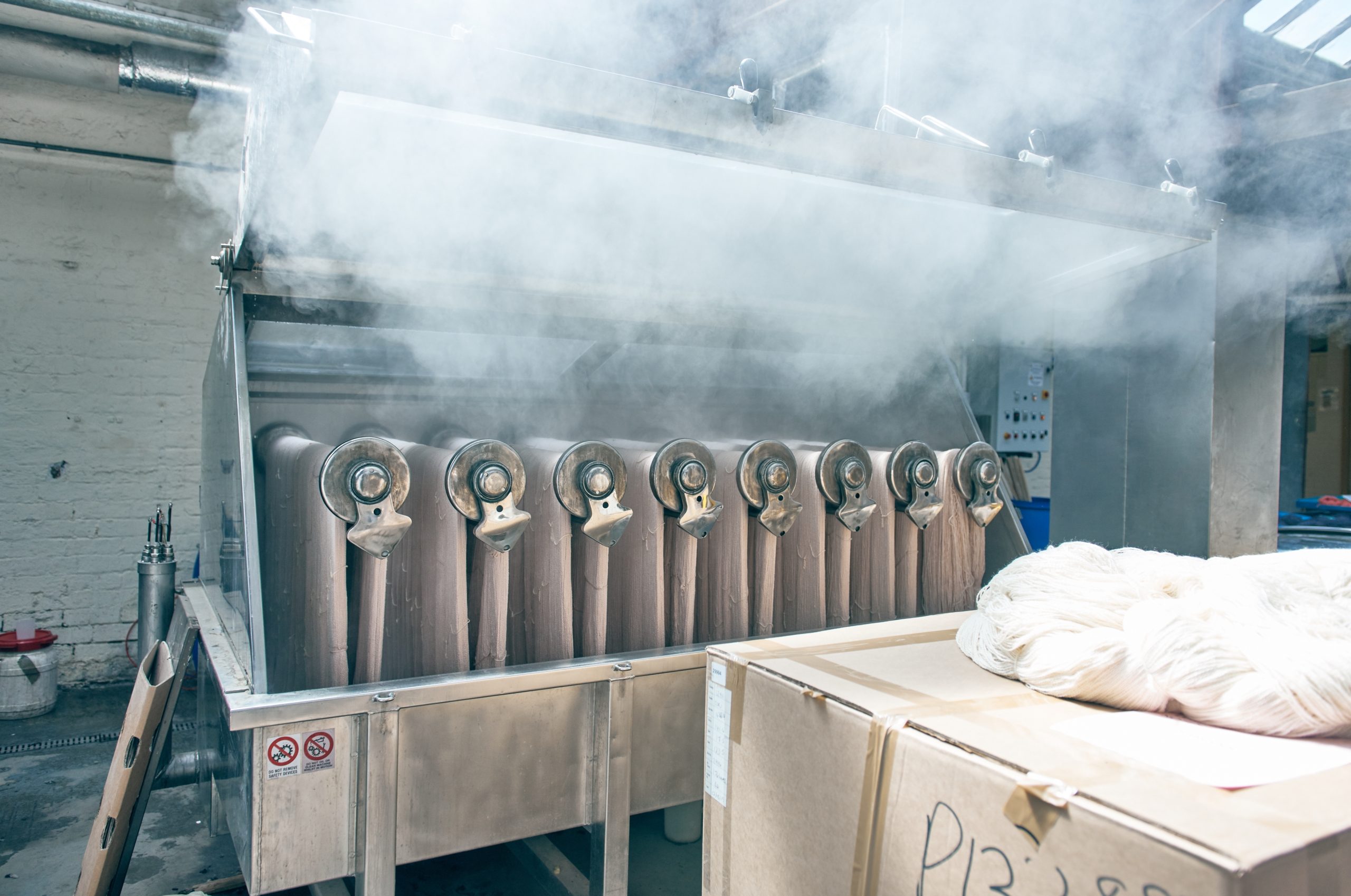
  • Office: 82C Quach Dinh Bao, Phu Thanh Ward, Tan Phu District, Ho Chi Minh City