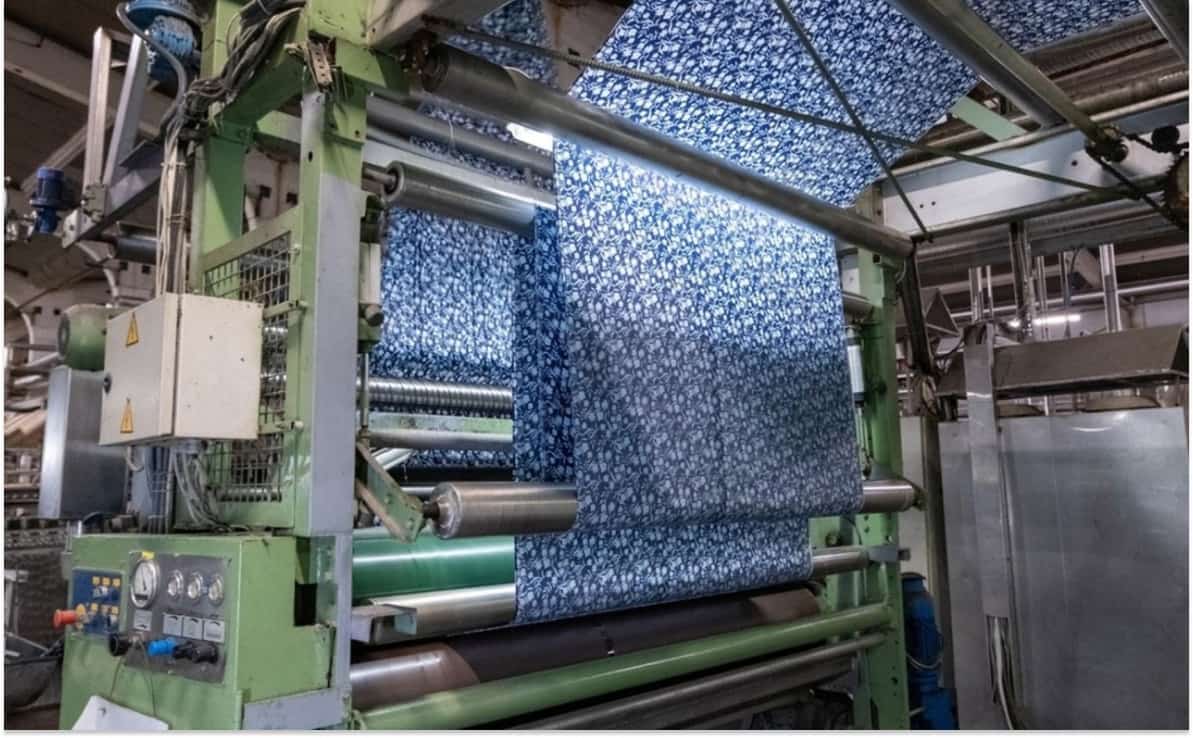
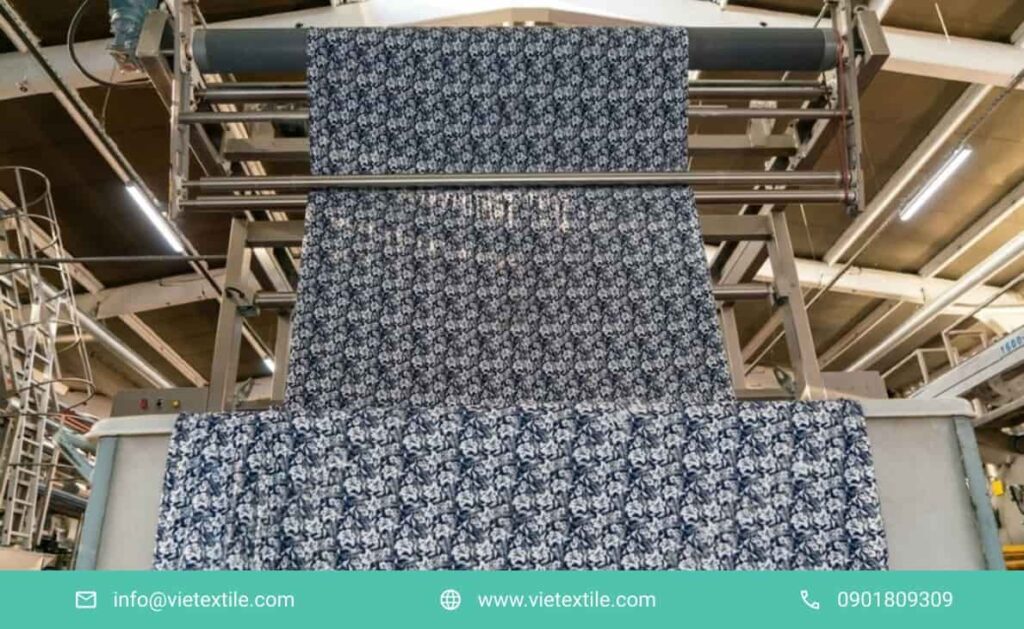
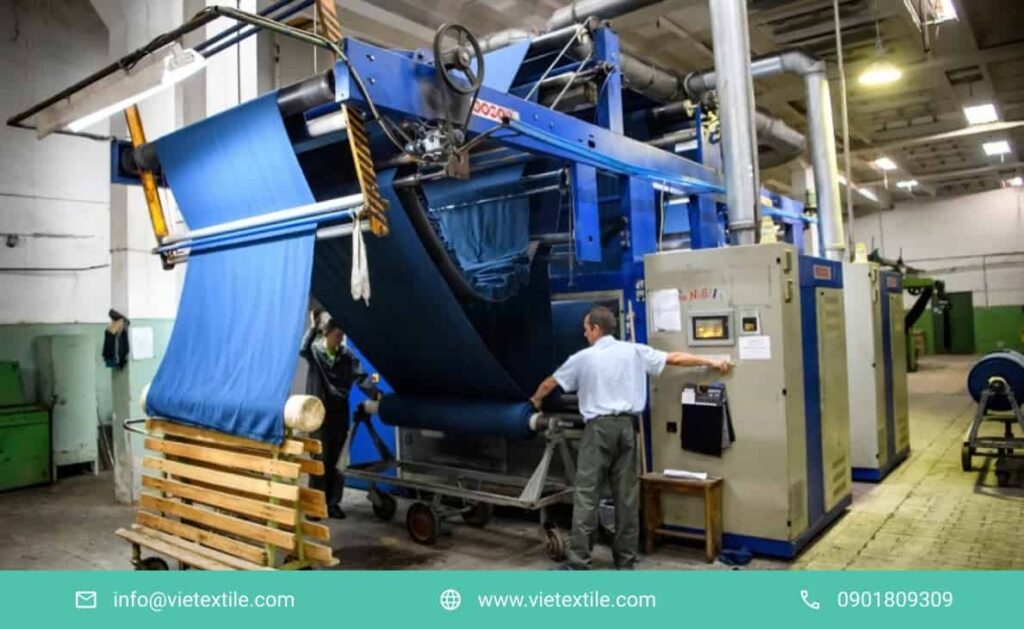
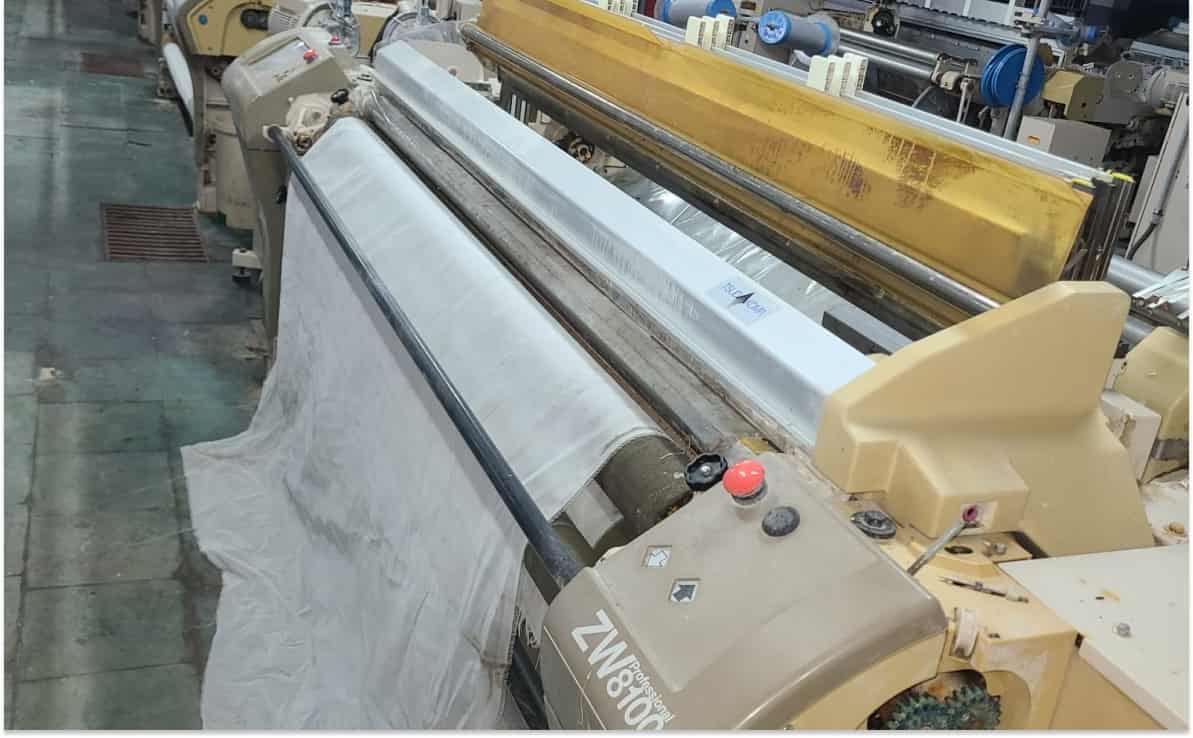
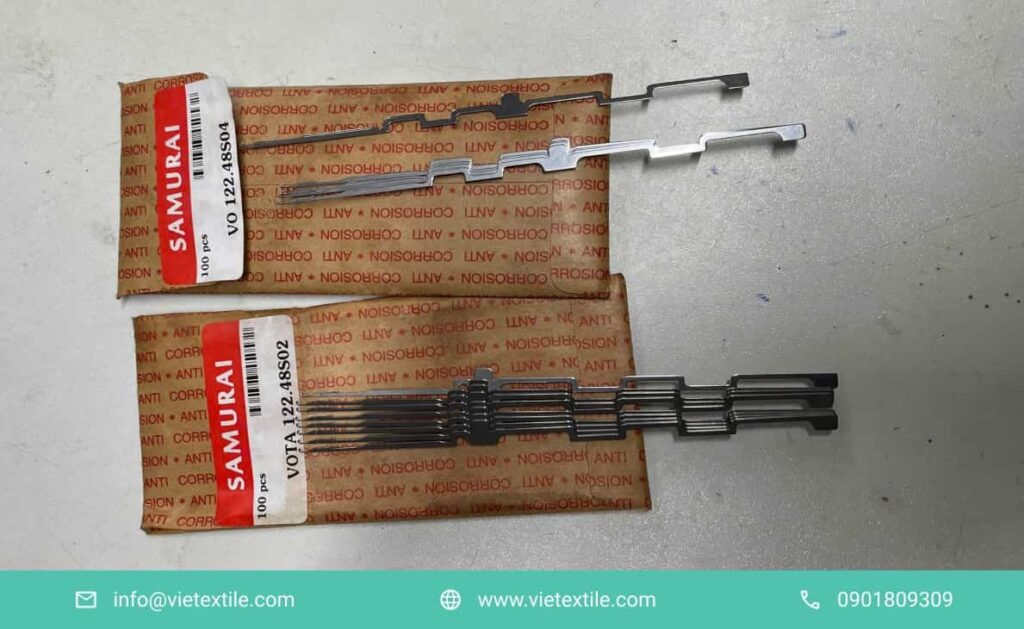
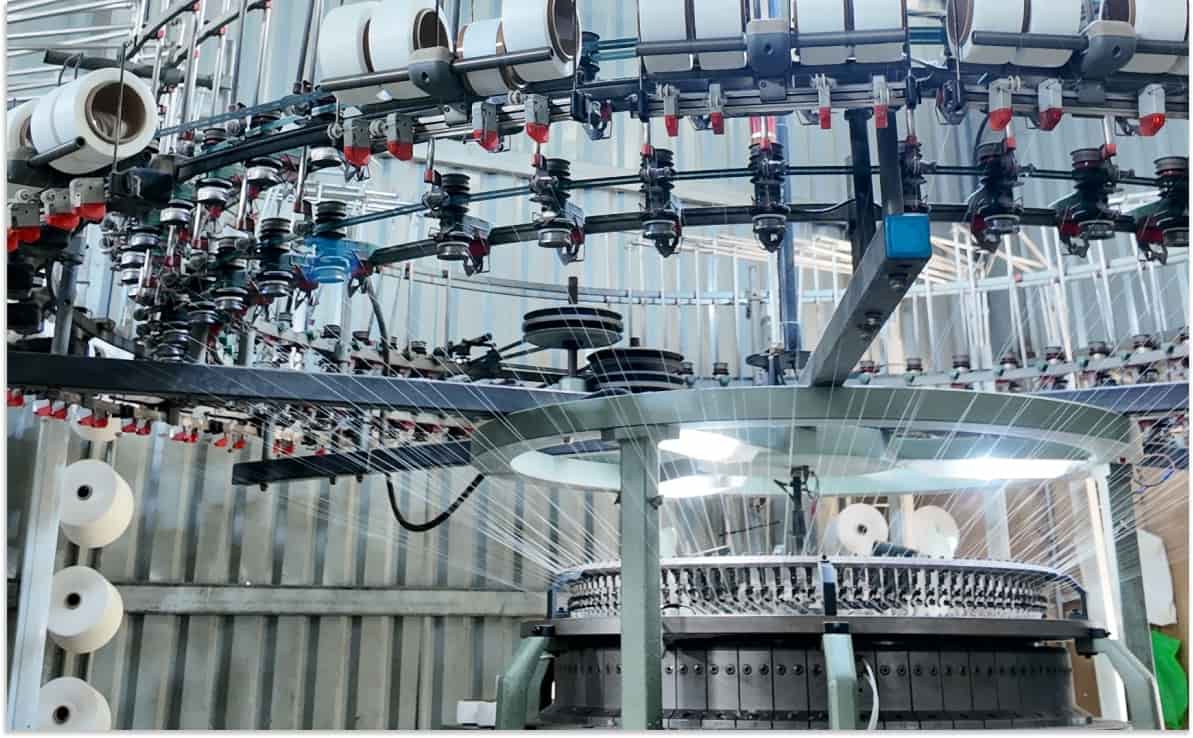
A cotton stenter machine is an essential piece of equipment in the dyeing and finishing stage to stabilize fiber structures. Using this technology helps eliminate spirality and product shrinkage.
Controlling cotton fabric shrinkage and distortion with stenter technology 5
1. How a cotton stenter machine works
To control shrinkage, we need to understand how the equipment affects fiber structure. The system operates on a principle combining mechanical tension and thermal energy to reset the bonds within cotton fibers.
1.1. Pin chain system and horizontal stretching
The most distinctive feature of a cotton stenter machine is the two parallel pin chains running along the body of the machine. Cotton fabric is firmly pinned at both edges. As the machine operates, the distance between these chains can be adjusted to stretch the material horizontally.
This process helps the equipment bring the fabric to the desired width according to technical requirements. Mechanical stretching is extremely important for knitted fabrics, which are prone to edge curling and horizontal shrinkage if not shaped correctly.
1.2. Impact of high-temperature chambers
After being stretched, the fabric enters a series of heating chambers. Here, the cotton stenter machine uses circulating hot air to evaporate water and fix the fiber structure. Temperatures in these chambers usually range from 150-180 degrees Celsius depending on the fabric weight.
Under the influence of high heat, hydrogen bonds in the cellulose of cotton fibers are temporarily broken and rearranged into a flatter structure. When the fabric leaves the drying chambers and is suddenly cooled, these bonds close, locking the shape of the fabric in its set state.
1.3. Vertical tension control (overfeed)
The system also has the ability to control vertical shrinkage through an “overfeed” mode. This means the speed of feeding fabric into the machine is faster than the speed of the pin chains, creating microscopic ripples that prevent the fabric from being overstretched vertically.
This technique helps compensate for the amount of shrinkage that will occur during future washing. If the fabric is shaped in a sufficiently relaxed vertical state, the finished garment will maintain its standard form, without shortening or distorting after use.
2. Benefits of using a cotton stenter machine
Investing in professional stenter technology is an investment in the quality reputation of the fabric. The benefits provided by this equipment cannot be replaced by conventional manual drying methods.
2.1. Eliminating spirality
Spirality is a common defect in tubular knitted cotton fabrics, causing side seams to shift after washing. A cotton stenter machine equipped with an automatic weft straightener will align tilted knitted loops, ensuring the grain remains perpendicular.
Handling spirality makes the cutting and sewing process easier and more accurate. Garment panels will not twist, helping the final product look more professional and premium to consumers.
2.2. Uniform fabric width throughout the roll
In industrial production, consistency is a vital factor. The cotton stenter machine ensures that the fabric width from the beginning to the end of the roll (often hundreds of meters long) stays within allowed tolerances. This is crucial for automated cutting markers.
Without this stabilization, the fabric width would fluctuate irregularly, causing waste in fabric yields and disrupting the sewing line. The stability provided by the machine helps garment factories optimize production processes and save material costs.
2.3. Improving surface aesthetics and gloss
Under the influence of heat and light pressure from rollers inside the cotton stenter machine, the fabric surface becomes smooth and slightly glossy. Excess fibers are pressed down, reducing surface pilling.
The machine also supports the application of finishing chemicals (such as softeners or antibacterial agents) more evenly. Fabric coming out of the machine not only looks better but also has a soft, sleek hand-feel, enhancing the commercial value of fashion products.
3. Standard cotton fabric finishing process
Controlling cotton fabric shrinkage and distortion with stenter technology 6
To achieve optimal efficiency, operating a cotton stenter machine must follow a strict process with parameters set specifically for each type of fabric.
3.1. Preparation and padding stage
After dyeing and washing, cotton fabric is passed through a chemical padding trough before entering the stenter. Here, it is saturated with finishing agents that make the fibers more flexible and colorfast under high temperatures.
The padder system at the front of the cotton stenter machine controls the residual moisture (pick-up). If the fabric is too wet, the machine must run slower to dry it in time, wasting energy. If it is too dry, the heat-setting efficiency will be significantly reduced.
3.2. Setting temperature and speed parameters
Depending on the fabric thickness (gsm), technicians will set the drying chamber temperature. Generally, thin cotton fabrics require lower temperatures and faster machine speeds to avoid burning the fibers.
Modern equipment usually has 8 to 10 independent heat chambers. Setting the temperature to increase gradually from the first chambers and decrease slightly in the last chamber prevents thermal shock, protecting the chemical structure of prints or dyes.
3.3. Post-setting shrinkage control
Upon completing the run on the cotton stenter machine, the fabric must be sampled for immediate shrinkage testing. Technical staff will cut a square piece, mark the dimensions, and wash/dry it according to testing standards to see if it meets the desired shrinkage (usually under 3-5%).
If results are not met, parameters for temperature or overfeed on the cotton stenter machine will be adjusted immediately for the next batch. This continuous monitoring ensures the most stable output quality.
4. Key technical factors in operation
Operating such advanced equipment is an art of balancing forces. Small errors in settings can lead to the destruction of many meters of expensive fabric.
4.1. Pin grip and chain condition
The pins on the chain must always be sharp and clean to grip the fabric edges firmly. If pins are dull or broken, the edge will slip out while the cotton stenter machine is stretching, creating “pin-out” defects that cause local distortion.
Regular maintenance of the pin chain system is mandatory. Debris or chemicals accumulating on the chains can stain the fabric edges or cause jams, affecting factory productivity.
4.2. Automatic weft straightener
This is a critical component located at the entry of the cotton stenter machine. It uses optical sensors to identify the direction of weft yarns or knitted courses. If it detects skewing or bowing, the system automatically adjusts rollers to bring the fabric back to a square state.
This is the only way to completely handle spirality in cotton jersey fabrics. It optimizes the fabric spreading and cutting stages, minimizing technical errors for garments with striped or checkered patterns.
4.3. Heat circulation fans
The drying and setting efficiency of the cotton stenter machine depends on the speed and uniformity of the hot air flow. Circulation fans must ensure even air blowing from both the top and bottom of the fabric to avoid uneven drying or warping.
Adjusting air pressure also requires finesse. Air that is too strong can blow the fabric off the pins, while air that is too weak will not provide enough heat to fix the fiber bonds. A skilled technician knows how to balance these parameters based on the specific fabric type.
5. Common errors and solutions
Controlling cotton fabric shrinkage and distortion with stenter technology 7
Despite being modern equipment, technical errors can still occur if not well controlled. Understanding these faults helps manufacturers proactively protect product quality.
5.1. Pin marks at the edges
Sometimes the cotton stenter machine leaves pinholes that are too large or torn at the edges. This is often due to excessive horizontal tension beyond the fabric’s limits or pins that are too thick for the fiber density.
To fix this, the stretching width must be adjusted, and the edge brushing wheels should be checked. Using ultra-fine pins for thin cotton fabrics is an optimal solution to minimize these marks on the finished product.
5.2. Thermal color change (yellowing)
Cotton fibers and certain dyes are very sensitive to heat. If the temperature is too high or the fabric stops too long in the chamber, white fabric will turn yellow and colored fabric will shift shades.
Smart control systems will automatically lower the temperature when the machine speed decreases. Using anti-yellowing agents in the padding stage before the cotton stenter machine is also an effective technical measure.
5.3. Substandard shrinkage levels
If the fabric still shrinks excessively after treatment, the cause is usually insufficient overfeed settings or temperatures that did not reach the level required to fix the structure.
Small sample trials should be conducted to find the “golden” parameters for each fabric code. Recording these operating parameters into a database will make re-production of subsequent orders more accurate and faster.
6. Why choose finishing services at VieTextile?
VieTextile is proud to possess the most modern cotton stenter machine systems, committed to bringing stable quality to all types of cotton fabrics.
6.1. Advanced stenter technology
We invest in European-imported machinery with fully digital control systems. This allows VieTextile to control width tolerances and shrinkage at extremely low levels, meeting the strictest standards of international brands.
6.2. Professional operation team
Our technicians have over 10 years of experience handling cotton stenter machine operations. We thoroughly understand the characteristics of various cotton fibers and always provide accurate technical advice to optimize fabric quality.
6.3. Strict quality control
At VieTextile, every roll of fabric passing through the system is checked 100% for width, weight, and shrinkage. We do not just provide a service; we provide absolute peace of mind regarding the technical quality of textile products.
7. Frequently asked questions (FAQ)
7.1. Does the machine make the fabric thinner?
When stretching width horizontally, the fiber density decreases slightly, leading to a minor drop in gsm. However, this is calculated in the technical plan so that the fabric reaches the correct width while still meeting thickness standards.
7.2. Why is it mandatory for 100% cotton to go through a stenter?
Because cotton is a natural fiber with poor elasticity and high shrinkage. Without a cotton stenter machine, garments will distort after the first wash, losing their shape and causing customers to abandon your brand.
7.3. Does the process cause color fading?
If set at the appropriate temperature for the dye type, it will not cause fading. On the contrary, correct heat helps fix colors more sustainably. VieTextile monitors chamber temperatures very closely to protect original shades.
To perfectly control shrinkage and elevate your products with professional cotton stenter machine services, contact VieTextile today!
Recognizing the right time to replace sizing machine spare parts plays a pivotal role in maintaining weaving performance. This article provides an in-depth look at the wear-and-tear signs of sizing machine spare parts to prevent yarn breakage that causes production waste.
When Should Sizing Machine Spare Parts Be Replaced to Avoid Yarn Breakage? 13
The sizing process is one of the most important stages in the textile industry, directly determining the strength, adhesion, and load-bearing capacity of the yarn before it enters the loom. In this operating system, equipment and sizing machine spare parts regulate temperature, pressure, and the amount of chemicals penetrating the yarn. However, over time of continuous operation, mechanical wear and the impact of sizing chemicals will degrade the functionality of these components.
Yarn breakage during the sizing process not only causes machine downtime and reduced productivity but also affects the surface quality of the finished fabric. To control this risk effectively, technicians need to clearly understand the lifespan and physical condition of each type of sizing machine spare parts. The article below will analyze in detail the signs of damage, periodic maintenance schedules, and key components that need close inspection to protect your production line.
1. The Importance of Timely Replacement of Sizing Machine Spare Parts
Maintaining the sizing machine spare parts system in top condition is not just a simple maintenance issue but a business strategy for textile enterprises. When components operate precisely, yarn tension is stably controlled, helping to minimize visual defects on the fabric.
1.1. Influence of Mechanical Parts on Yarn Quality
Yarn after passing through the sizing machine needs to achieve standard gloss, stiffness, and film adhesion. If the squeeze rollers – an important type of sizing machine spare parts – are deformed or unevenly worn, the amount of size absorbed into the yarn will be inconsistent, leading to spots that are too brittle or too weak, causing yarn breakage.
The stability of the equipment helps the protective film cover evenly around the yarn core. This reduces friction when the yarn runs through ceramic eyes or reeds on the loom later. Therefore, timely replacement of these items helps protect the quality reputation of the weaving workshop’s products.
1.2. Minimizing Idle Downtime
Whenever yarn breaks due to component failure, the entire line must stop for splicing and cleaning. This causes significant loss of labor and electricity costs. Proactively replacing worn elements helps businesses transition from reactive repair to preventive maintenance.
1.3. Protecting Related Equipment in the Line
A damaged component, if not replaced in time, can lead to a chain reaction. For example, a jammed bearing will put pressure on the motor and drive system, leading to much higher repair costs than maintaining the original unit.
2. Signs That Your Equipment Needs Replacement
Observing and measuring daily operating parameters will help early detection of abnormalities. Below are specific signs that machine operators should not ignore regarding their sizing machine spare parts.
2.1. Surface Roughness of Guide Rollers and Squeeze Rollers
Guide rollers are frequently in direct contact with yarn at high speeds. When the surface shows small scratches or oxidation, it becomes a factor causing yarn fraying. If the yarn is scratched right in the size vat, the yarn structure will weaken significantly.
For rubber squeeze rollers, if hardening or cracking appears on the outer surface, this is a mandatory signal to replace these sizing machine spare parts. Reduced elasticity makes the squeezing force no longer accurate, causing uncontrolled changes in the size pick-up ratio.
2.2. Unusual Noise and Vibration from Bearings
The bearing system is the main load-bearing component in the machine’s rotational movement. If you hear a squealing sound or feel strong vibration at the roller shafts, it is a sign of internal failure. A stuck bearing can cause the roller to rotate unevenly, creating sudden tension that breaks multiple yarns.
2.3. Deviations in the Temperature Control System
Temperature sensors and probes in the drying chamber are also classified as components that require high precision. If the actual temperature does not match the set parameters, the yarn may be scorched (if too hot) or not fully dry (if too cool), both cases leading to yarn breakage when passing through the winding unit.
2.4. Discoloration of the Sizing Solution Due to Component Corrosion
Sometimes, signs of damage lie not in the part itself but in the product. If you see rust spots or strange colored streaks in the size vat, it is likely that the stainless steel surfaces or metal sizing machine spare parts are undergoing severe chemical corrosion.
3. List of Components for Regular Inspection
When Should Sizing Machine Spare Parts Be Replaced to Avoid Yarn Breakage? 14
To manage inventory effectively, businesses need to classify their parts by priority level and wear frequency.
3.1. Sizing Reeds and Their Role in Yarn Shaping
The sizing reed helps separate yarns evenly before entering the size vat and after leaving the drying chamber. Bent or worn reed teeth will cause yarns to stick together (entanglement). This is a type of mechanical unit that should be cleaned daily and replaced immediately upon signs of deformation.
Additionally, reed density must be checked to suit the yarn count being produced. Inappropriate parts will create unnecessary friction, weakening the yarn before it can be protected by the size.
3.2. Seals, Gaskets, and Leakage Issues
In size vats containing hot chemicals, seals prevent solution leakage. Sizing chemicals are often corrosive or highly adhesive, easily damaging soft elements like gaskets and seals. Sizing leaks are not only wasteful but also contaminate the machine area, hardening adjacent moving parts.
Replacing small sizing machine spare parts like gaskets is often overlooked due to their low cost, but the consequences of leakage can damage the entire electrical system and sensors beneath the machine.
3.3. Chain Drives, Belts, and Synchronization
Synchronization between roller shafts is maintained by the drive system. Stretched belts or loose chains will cause jerky movements. In the textile industry, even a slight jerk is enough to break fine yarns with high counts. Therefore, belts are components with a fixed expiration date that must be strictly followed.
3.4. Selvedge Cutting Systems and Related Components
During the winding process, managing the yarn selvedge is extremely important. If the selvedge cutters are dull, they will create jagged yarn ends that easily catch on other materials and cause breakage. Maintaining the sharpness of the cutters is an indispensable part of maintenance.
4. Technical Analysis: Types of Squeeze Rollers in Sizing Systems
The squeeze roller is the heart of the sizing machine. They decide what percentage of size will remain on the yarn.
4.1. Rubber Squeeze Rollers and Hardness Indices
This type of unit usually has a steel core and a special rubber coating. The hardness (Shore A) of the rubber must be kept stable. If the roller is too soft, too much size is absorbed, making the yarn take longer to dry and become brittle. If too hard, the size does not penetrate deep into the yarn core, reducing strength.
When checking these sizing machine spare parts, a specialized hardness tester must be used. Any deviation of more than 5-10% from the original design is an indicator that the rubber coating needs to be reground or replaced.
4.2. Stainless Steel Squeeze Rollers and Surface Finish
Some modern sizing machines use ultra-smooth stainless steel squeeze rollers. These are less prone to chemical wear but easily damaged by hard objects falling into the size vat. Just one small dent on the roller will create repeating defects on thousands of meters of yarn.
5. Temperature and Sensor Component Issues
The drying system accounts for most of the machine’s power consumption. Components in the drying chamber are under extreme temperature pressure.
5.1. Finished Yarn Moisture Sensors
These are smart units that help adjust machine speed. If the sensor fails or reports incorrectly, the yarn may be wound while still damp (causing mold) or too dry (causing yarn breakage during weaving). Equipment calibration should be performed monthly.
5.2. Steam Traps and Regulating Valves
For machines using steam for drying, the steam trap is an important unit that helps remove condensed water. If the steam trap is stuck, the drying roller temperature will be uneven, causing localized drying—a potential cause of yarn breakage that is difficult to detect.
6. Maintenance Process to Avoid Yarn Breakage
When Should Sizing Machine Spare Parts Be Replaced to Avoid Yarn Breakage? 15
A methodical maintenance process will extend the life of your equipment and reduce pressure on the technical team.
6.1. Periodic Cleaning After Each Work Shift
Excess sizing chemicals sticking to various parts will dry and form sharp hard scales. Cleaning with hot water or specialized cleaning solutions helps surfaces stay smooth, protecting the yarn from surface damage.
In particular, size vats need to be completely drained to avoid bacteria growth that changes chemical properties, directly affecting the durability of metal sizing machine spare parts.
6.2. Applying Specialized Lubricants for Textile Components
Not all lubricants are suitable for the high-temperature environment of a sizing machine. Using the correct lubricant helps reduce internal friction, preventing overheating and premature wear of metal details.
A note when greasing these parts is not to let grease get on the yarn or into the sizing solution, as grease will prevent the size from penetrating the yarn, creating weak points that lead to breakage.
6.3. Checking Shaft Parallelism Alignment
Misaligned shafts are an indirect cause of parts failing faster than normal. Monthly, technicians should use laser rulers to check the alignment of the rollers, ensuring yarn tension is spread evenly across the machine width.
6.4. Checking the Anti-Static System
In the dry environment of the drying chamber, static electricity easily builds up on the yarn and plastic components. If the ionizer is broken, the yarns will repel each other or be attracted to the machine frame, causing tangles and breakage. This type of technical component needs periodic voltage testing.
7. Influence of Sizing Chemicals on Component Lifespan
Sizing chemicals not only affect the yarn but are also silent enemies of machinery.
7.1. Sizing pH and Metal Corrosion
Many types of sizing agents are slightly acidic or alkaline. If components with appropriate materials are not selected (such as 316 stainless steel instead of 304), pitting corrosion will occur, weakening the structure.
7.2. Starch Adhesion on Bearings
Sizing steam carrying tiny starch particles can penetrate inside bearings if the seals of the sizing machine spare parts are leaking. When this starch dries, it acts as an abrasive, destroying the steel balls inside in a short time.
8. Why Choose VieTextile for Sizing Machine Spare Parts?
VieTextile is proud to be a strategic partner of many large weaving factories in providing comprehensive material solutions. We understand that every small component in the system determines the success or failure of a batch.
8.1. International Standard Quality of Sizing Machine Spare Parts
All products provided by VieTextile undergo strict testing for mechanical durability and heat resistance. We commit that our squeeze rollers, reeds, and bearings have a longer lifespan than generic products on the market.
8.2. In-depth Technical Advisory Team
We don’t just sell products; VieTextile also accompanies customers in fault diagnosis. If your factory is experiencing continuous yarn breakage, our experts will help check which parts are having issues to provide the most optimal replacement plan.
Understanding the đặc điểm of each yarn type helps VieTextile advise on the type of sizing machine spare parts with the most suitable surface structure to minimize friction and enhance yarn durability throughout the process.
8.3. Superior Delivery and After-Sales Policy
Understanding the urgency when a machine breaks down, VieTextile always maintains an abundant inventory of various components. We commit to the fastest delivery time so that the factory’s production is not interrupted for too long. Every order comes with a warranty policy and detailed installation instructions.
8.4. Custom Fabrication of Sizing Machine Spare Parts
If your system is specialized, VieTextile provides component fabrication services based on drawings or existing samples. With a modern CNC system, we ensure precision down to every micrometer for complex types of parts.
9. Smart Inventory Management Strategy
To avoid being in a “last-minute” situation, businesses need a scientific management plan for their equipment.
9.1. Establishing a Catalog of Essential Spares
Components with high failure frequency such as gaskets, seals, reeds, and belts should always be available in stock with at least 2 sets. The lack of a single piece of sizing machine spare parts worth a few dollars can paralyze a multi-million dollar line.
9.2. Keeping a Replacement Log
By tracking the operating time of each component, you can predict the next failure time. This is the basis for planning reasonable procurement of sizing machine spare parts, avoiding excessive inventory that wastes capital.
10. New Technology Trends in Component Design
Textile technology is changing rapidly, and machine components are no exception.
10.1. Ceramic Coated Surfaces
To increase wear resistance, many guide rollers and ceramic eyes are now coated with technical ceramics. Although the cost is higher, the lifespan of this type of sizing machine spare parts is 5-10 times longer than conventional materials, significantly reducing replacement frequency.
10.2. Automated Component Monitoring (IoT)
New generation sizing machines integrate vibration sensors right on the bearings. The system will provide early warning khi một linh kiện is about to fail, allowing technicians to prepare replacement parts before a breakdown actually occurs.
11. Common Faults and Troubleshooting
When Should Sizing Machine Spare Parts Be Replaced to Avoid Yarn Breakage? 16
Understanding these faults helps you know exactly khi nào cần liên hệ a supplier.
11.1. Yarn Tension “Shock” Phenomenon
The cause is often worn brakes on the creel or a fault in the winding roller’s speed control system. Check the clutch and the sizing machine spare parts acting as tension sensors immediately.
11.2. Sizing Drop (Size Not Adhering to Yarn)
Excluding chemical causes, the fault usually lies in the size vat heating unit or unevenly worn squeeze rollers. Cleaning the surface of these units may temporarily solve nó, but replacing with new parts is the sustainable solution.
12. Long-term Vision When Investing in Quality Parts
Don’t look at the purchase price; look at the value of use. A cheap but quickly failing piece of sizing machine spare parts will cost you more money due to replacement labor and losses from yarn breakage.
Investing in quality products from reputable units like VieTextile is how you protect your business’s future. We don’t just provide items; we provide peace of mind in production.
13. Frequently Asked Questions (FAQ)
13.1. How often should squeeze rollers be replaced?
Typically, the life of a squeeze roller depends on the workload. However, it should be checked periodically every 6 months. If the surface shows signs of deformation, you need to replace it immediately.
13.2. How to distinguish genuine sizing machine spare parts?
Quality parts usually have sophisticated machining lines and well-treated metal surfaces for wear resistance. Using fake items can cause serious line damage and increase the rate of defective yarn.
13.3. Does using old components have any effect?
Reusing expired components often leads to unstable tension. This is the leading cause of mass yarn breakage, increasing waste costs and damaging other parts of the machine.
13.4. Does VieTextile provide parts for older machine lines?
VieTextile owns a diverse catalog, meeting the needs of cả dòng máy cũ and the latest technologies. We cũng nhận gia công linh kiện according to technical drawings.
13.5. Why does yarn still break after replacing new parts?
If yarn still breaks, it may be due to inappropriate operating parameter alignment or the quality of the input yarn. VieTextile will provide technical support to help you find the root cause.
13.6. How are sizing machine spare parts shipping costs calculated?
At VieTextile, we have a flexible shipping support policy for large quantity orders. For items that need urgent replacement, we use express delivery services to ensure they reach you as soon as possible.
To optimize weaving performance and professional maintenance, contact VieTextile today!
The sight glass is an indispensable component in industrial systems that require monitoring liquids or gases at high temperatures. To ensure safety and efficiency, selecting a highly durable Heat Resistant Sight Glass is crucial. This article will delve into the core factors that determine their lifespan and heat resistance capabilities.
In the harsh operating environments of many industries such as petrochemical, thermal power, or food processing, sight glasses not only need to be transparent but must also withstand significant changes in temperature and pressure. If not selected and installed correctly, a Heat Resistant Sight Glass can crack or shatter, causing considerable danger and damage.
A clear and reliable view is a prerequisite for the safe operation of industrial processes. Therefore, investing in quality Heat Resistant Sight Glass types is an investment in the long-term stability and efficiency of the plant.
We will analyze five main groups of factors: Material composition, installation design, operating environment, manufacturing process, and finally, quality standards. Understanding these factors will help engineers and purchasing managers make the most informed decisions when sourcing high-quality Heat Resistant Sight Glass.
Factors Affecting the Thermal Durability of Sight Glass 21
1. Material Composition – The Foundation of Heat Resistant Sight Glass
The heat resistance and thermal shock resistance of a sight glass primarily depend on the material’s coefficient of thermal expansion and softening point. The lower the coefficient of thermal expansion, the less the material changes in size with temperature fluctuations, thereby reducing internal stress. Material selection is the first and most critical step in determining the durability of a Heat Resistant Sight Glass.
1.1. Borosilicate Glass (Borosilicate Glass)
Borosilicate glass is the most common type used as Heat Resistant Sight Glass because it has a low coefficient of thermal expansion, typically around 3.3 x 10^-6/K, which helps minimize stress during sudden temperature changes. The balance between cost and performance makes it the top choice for many applications.
1.1.1. Standards and Thermal Limits
Borosilicate glass is often manufactured according to international standards such as DIN 7080 or ASTM E230. These standards ensure the material’s purity and uniformity, which directly affect its heat resistance. Borosilicate can operate continuously at temperatures up to about 280°C (depending on pressure) and withstand larger thermal shocks than ordinary soda-lime glass.
1.1.2. Thermal Load Classification
In practical applications, the maximum temperature Borosilicate can withstand must be derated as pressure increases. This is because high temperatures weaken the glass structure, making it more susceptible to destruction by compressive and tensile forces from pressure. Therefore, engineers must always consult the Pressure-Temperature Curve (P-T Curve) when choosing Borosilicate Heat Resistant Sight Glass.
1.1.3. Advantages Over Soda-Lime Glass
Ordinary soda-lime glass has a much higher expansion coefficient, leading to poor thermal shock resistance. Borosilicate, thanks to its higher silica and boron oxide content, offers superior durability against rapid heating and cooling cycles. This balance of cost and performance is why Borosilicate is the leading choice for Heat Resistant Sight Glass.
1.2. Quartz Glass (Fused Silica)
Quartz glass, or Fused Silica, is the material with the highest purity (usually over 99.99% SiO2) and an extremely low coefficient of thermal expansion, close to zero. This unique characteristic makes Quartz glass a superior type of Heat Resistant Sight Glass, especially in the harshest environments.
1.2.1. Extreme Temperature Resistance
Quartz glass can withstand continuous working temperatures up to 1200°C and tolerate extreme thermal shocks—for example, being moved directly from a furnace into the air—without damage. This excellent thermal shock resistance is due to its near-zero thermal expansion coefficient. The use of this Heat Resistant Sight Glass is irreplaceable in extremely high-temperature applications.
1.2.2. Purity and Applications
Due to its high purity, Quartz glass also has excellent UV and IR transmission capabilities, making it ideal for optical applications, laboratories, and semiconductor manufacturing, where both thermal durability and special optical properties are required. However, the cost of manufacturing and processing Quartz glass is often significantly higher than Borosilicate.
1.3. Sapphire Glass (Sapphire Glass)
Sapphire glass is not a silicate glass in the usual sense but a form of aluminum oxide crystal (Al2O3). It is a single-crystal material, second only to diamond in hardness (Knoop hardness around 1800), offering excellent scratch and corrosion resistance, while also being an extremely effective type of Heat Resistant Sight Glass.
1.3.1. Hardness and Chemical Resistance
Sapphire’s crystalline structure provides exceptionally high mechanical strength, allowing it to withstand extremely high pressures even at high temperatures. Sapphire’s operating temperature can reach up to 2000°C. Its corrosion resistance is also very high, keeping it stable in strong alkaline and acidic environments.
1.3.2. Ultra-High Temperature Applications
Sapphire Heat Resistant Sight Glass is ideal for ultra-high temperature and high-pressure applications such as vacuum furnaces, pressure measuring devices in the oil and gas industry, where conventional glasses cannot cope. Although the initial investment cost is high, the lifespan and reliability of Sapphire often justify the expense.
1.4. Aluminosilicate Glass (Alumino)
Aluminosilicate glass (also called Alumina glass) offers better heat and pressure resistance than Borosilicate but is lower than Sapphire and Quartz. This is the perfect intermediate choice for industrial applications requiring higher durability than Borosilicate but not the high cost of Quartz or Sapphire.
1.4.1. Improved Mechanical Durability
Aluminosilicate glass contains a high content of aluminum oxide (Al2O3), significantly improving mechanical strength and thermal shock resistance compared to Borosilicate. This material is often used in systems requiring high mechanical strength and heat resistance, especially when observing liquids in boilers or high-pressure environments.
1.4.2. Alkaline Corrosion Resistance
Another advantage of this type of Heat Resistant Sight Glass is its ability to resist corrosion from alkaline solutions (high pH) better than Borosilicate at high temperatures. The durability of this Heat Resistant Sight Glass has been widely proven in the energy industry.
2. Design and Installation Structure of Heat Resistant Sight Glass
Apart from the glass material itself, the way the device is installed and its surrounding design also greatly affects the lifespan and thermal durability of the Heat Resistant Sight Glass. A non-standard installation design can turn the best material into a system weakness.
2.1. Glass Thickness and Size
The thickness of the glass is calculated based on the system’s maximum temperature and pressure, often accompanied by a high safety factor (typically 4:1 or 5:1). Thicker glass means higher pressure resistance. However, increasing the thickness must be carefully considered.
2.1.1. Effect of Thickness on Thermal Stress
Glass that is too thick can increase internal thermal stress and reduce thermal shock resistance. When the temperature changes, the glass surface exposed to the hot medium expands differently from the surface exposed to cooler air. This stress layer can lead to cracking and shattering if the thickness is too great without proper heat treatment.
2.1.2. Size and Stress Distribution
The size (diameter) of the glass is also important. Larger glass has a greater surface area exposed to installation stress and temperature differences, making it more susceptible to damage if not installed precisely. This is a crucial factor when using large-sized Heat Resistant Sight Glass, requiring the support flange to be absolutely flat and rigid.
2.2. Gasket/Thermal Pad Type
The gasket not only serves as a seal but also acts as a shock absorber and thermal insulator between the glass and the metal frame (flange). Metal and glass have different expansion coefficients; the gasket must absorb this difference to protect the glass. Choosing the correct gasket material is mandatory to maintain the durability of the Heat Resistant Sight Glass.
2.2.1. Common Heat Resistant Gasket Materials
PTFE (Teflon) or Graphite: Popular for high-temperature and chemical applications. PTFE has a temperature limit of around 250°C, while Graphite can go up to 450°C or more in non-oxidizing conditions. Graphite is the ideal choice for superheated steam applications. Mica: Often used to protect the glass surface directly exposed to extremely hot media (like boilers), preventing corrosion and minimizing direct heat transfer from the medium to the glass surface. Mica acts as a protective shield.
2.2.2. Role as a Shock Absorber
The gasket must have a certain elasticity to compensate for the uneven expansion between the glass (e.g., Borosilicate) and the steel frame (Carbon Steel or Stainless Steel). Choosing a gasket that is too hard or too thin will transfer mechanical stress directly onto the Heat Resistant Sight Glass, increasing the risk of cracking.
2.3. Clamping Force and Installation Method
The bolt tightening force during the installation of a Heat Resistant Sight Glass must meet the specified torque standard. This is one of the most common causes of sight glass failure.
2.3.1. Risk of Overtightening
Overtightening will create excessive mechanical stress, squeezing the glass against the metal flange. Especially when the glass expands due to heat, this double stress (mechanical + thermal) will lead to immediate or short-term cracking. This error often appears as star-shaped cracks right at the tightening center.
2.3.2. Importance of Torque
Conversely, undertightening will cause leaks and create weak points for pressure shocks. Adherence to the manufacturer’s standard torque (using a torque wrench) is vital for the durability of the Heat Resistant Sight Glass. The torque is designed to create an ideal “compressive stress” on the gasket, ensuring tightness without damaging the glass.
3. Operating Environment – The Real-World Challenge for Heat Resistant Sight Glass
Factors Affecting the Thermal Durability of Sight Glass 22
The actual environment inside the vessel or pipeline determines how the Heat Resistant Sight Glass must cope with the challenges of temperature, pressure, and chemicals throughout its operating life.
3.1. Thermal Cycling
Thermal cycling is the repeated change between high and low temperatures (e.g., the work/rest cycle of a boiler, heating/cooling processes). This is the biggest enemy and the leading cause of “fatigue failure” in Heat Resistant Sight Glass.
3.1.1. Mechanism of Failure
Each cycle generates compressive and tensile stress on the glass surface due to expansion and contraction. Sudden temperature changes increase thermal shock stress, causing micro-cracks to appear. Over time and through hundreds or thousands of cycles, these cracks develop deeper and lead to sudden failure. Glass with a low thermal expansion coefficient (like Quartz) will have better resistance to this phenomenon.
3.1.2. Mitigation Measures
To minimize the impact of thermal cycling, the system’s heating and cooling process must be performed slowly, according to the maximum rate of temperature change recommended by the Heat Resistant Sight Glass manufacturer. External insulation around the glass area also helps maintain temperature uniformity.
3.2. Working Temperature and Maximum Design Temperature
It is necessary to clearly distinguish between the normal working temperature and the maximum design temperature. The maximum design temperature is usually set to ensure a large safety factor.
3.2.1. Thermal Safety Factor
The Heat Resistant Sight Glass equipment must be selected so that the actual working temperature is only a fraction (usually no more than 75%) of the maximum design temperature to ensure a safety factor. This allows the glass to withstand short-term, unforeseen temperature variations.
3.2.2. Material Aging at High Temperatures
If the operating temperature frequently exceeds 80% of the design temperature, the lifespan of the glass will be significantly reduced due to material aging and increased risk of creep deformation of the glass structure. High temperatures drastically reduce the mechanical strength of the Heat Resistant Sight Glass, making it more susceptible to pressure failure.
3.3. Operating Pressure Accompanied by Heat
Pressure and temperature always go hand-in-hand in industrial applications, and they have an inverse relationship with glass durability.
High pressure will reduce the glass’s heat resistance, and vice versa. A piece of Heat Resistant Sight Glass might withstand 500°C at atmospheric pressure, but only 300°C at 10 bar. The manufacturer’s pressure-temperature limit curve (P-T Curve) is a mandatory document to consult to ensure that the glass selected is suitable for both parameters simultaneously.
3.3.2. Tensile Stress from Pressure
Internal pressure creates a force pushing on the glass, causing tensile stress on the outer surface of the glass. Glass is very strong in compression but very weak in tension. The thickness design must ensure that the maximum tensile stress never exceeds the safety limit, especially when combined with thermal stress.
3.4. Corrosiveness of Liquid or Gas
Chemical corrosion is an often-overlooked factor, but it is a silent killer that reduces the lifespan of Heat Resistant Sight Glass.
3.4.1. Impact of Alkaline Environments
Many industrial liquids, especially alkaline solutions (high pH) or saturated steam, can chemically corrode the surface of silicate glass (such as Borosilicate), especially at high temperatures. This corrosion phenomenon is called “leaching” or “etching,” creating weak points and significantly reducing the mechanical strength of the Heat Resistant Sight Glass.
3.4.2. Mica Protection Solution
Using a Mica protection layer (as mentioned in Section 2.2) is the standard solution in high-pressure steam environments or alkaline media. Mica prevents direct chemical reaction between the liquid and the glass, protecting the glass from corrosion and extending the lifespan of the Heat Resistant Sight Glass. Choosing a material with higher chemical corrosion resistance (like Sapphire) is also a radical solution.
4. Fabrication and Surface Treatment of Heat Resistant Sight Glass
The quality of manufacturing and the final treatment process of the glass significantly impact its mechanical and thermal load capacity. The difference in fabrication processes creates the difference between Heat Resistant Sight Glass suppliers in the market.
4.1. Tempering Process
Tempering is a special heat treatment process aimed at improving the durability of the glass.
4.1.1. Creating Surface Compressive Stress
The tempering process involves rapidly cooling the glass surface after heating, creating a permanent layer of compressive stress on the outer surface. This compressive stress layer must be overcome before any tensile force can affect the surface, significantly improving the mechanical strength and thermal shock resistance of the Heat Resistant Sight Glass.
4.1.2. Limitations After Tempering
Tempered glass withstands bending and impact better than ordinary glass. However, tempered glass cannot be cut, drilled, or ground afterward. If the tempering process is not tightly controlled, internal defects can appear, reducing the overall quality of the finished Heat Resistant Sight Glass and potentially causing cracking during operation.
4.2. Surface Finish and Defects
Surface finish is a crucial factor determining the glass’s load-bearing capacity.
4.2.1. Impact of Flaws
Scratches, micro-cracks, or surface defects (called “flaws”)—no matter how small—can become stress concentration points when the glass is subjected to heat or pressure. A flaw acts as a “stress concentrator.” Under the effect of thermal cycling, these defects will rapidly spread, leading to failure.
4.2.2. Smoothness Standards
The finish (flatness and smoothness) of high-quality Heat Resistant Sight Glass must meet strict standards (usually a very low surface roughness Ra) to ensure that no weak points exist on the surface. The polishing and grinding process must achieve high precision.
4.3. Protective Coating
To enhance durability in chemical environments, applying a protective coating is necessary.
4.3.1. Purpose of the Coating
Some Heat Resistant Sight Glass products are coated with special chemical protection or non-stick layers. This coating helps prolong the glass’s life in corrosive environments, preventing reactions between the internal fluid and the glass surface. The coatings are often thin polymer or metal oxide materials.
4.3.2. Thermal Resistance Requirements of the Coating
However, it must be ensured that this coating also has a thermal resistance equivalent to or higher than the base glass. If the coating peels off or decomposes at operating temperatures, it not only loses its protective effect but can also contaminate the process and affect visibility, reducing the durability of the Heat Resistant Sight Glass equipment.
5. Quality Standards and Inspection of Heat Resistant Sight Glass
Factors Affecting the Thermal Durability of Sight Glass 23
Adherence to international standards and rigorous inspection procedures is the final, but equally important, factor in ensuring the reliability of Heat Resistant Sight Glass.
5.1. ASME, DIN, and ISO Standards
Technical standards serve as the guiding light for manufacturing quality.
5.1.1. Standard Regulations
Heat Resistant Sight Glass must comply with international technical standards such as ASME (USA), DIN (Germany), or related ISO standards. These standards precisely regulate material composition, dimensional tolerances, and pressure/temperature testing procedures. Strict adherence to these regulations ensures compatibility and safety.
5.1.2. Quality Certification
Purchasing Heat Resistant Sight Glass from suppliers certified to ISO 9001 and products meeting ASME standards helps ensure the uniformity and high quality of the material from raw input to the final product.
5.2. Thermal Shock Testing
Thermal shock testing is one of the most rigorous durability tests.
5.2.1. Simulating Harsh Conditions
Thermal shock testing is the process of suddenly exposing the Heat Resistant Sight Glass from a high temperature to a low temperature (e.g., from 300°C into cold water) to simulate the harshest operating conditions, such as emergency cooling or an incident.
5.2.2. Durability Requirements
Only Heat Resistant Sight Glass products that pass this test are considered qualified for use in environments with frequent thermal cycling. Test results must be clearly documented and provided in the product documentation to prove the glass’s endurance.
5.3. Material Traceability
For critical applications, material traceability is indispensable.
5.3.1. Material Test Report (MTR)
The Material Test Report (MTR) of the Heat Resistant Sight Glass is essential to ensure the authenticity of the material. The MTR provides evidence of the precise chemical composition, mechanical properties, and manufacturing process, ensuring that the glass is produced according to the committed specifications.
5.3.2. Risks Without MTR
The lack of material traceability can pose significant risks when the glass is used in systems requiring high safety and precision, as there may be confusion between standard Borosilicate and premium Borosilicate.
6. VieTextile – Leading Partner for Heat Resistant Sight Glass Supply
VieTextile is proud to be a reliable partner in providing high-quality industrial viewing solutions. We understand that Heat Resistant Sight Glass is not just a component; it is a key factor ensuring the safety and efficiency of your system, especially in high-temperature environments.
VieTextile’s technical team has extensive experience in consulting and selecting the Heat Resistant Sight Glass material best suited to the customer’s specific operating environment, based on factors such as temperature, pressure, chemical type, and thermal cycling. We are committed to supplying products that are rigorously tested and meet international standards for heat resistance, pressure, and corrosion resistance. Each Heat Resistant Sight Glass product comes with full quality certification and an MTR (Material Test Report).
We specialize in supplying a diverse range of Borosilicate (DIN 7080), Quartz (Fused Silica), and Aluminosilicate glass, ensuring we meet all temperature and pressure requirements, from simple boiler applications to high-temperature reactors. Let VieTextile be the stable bridge that helps you observe production processes safely and accurately with quality Heat Resistant Sight Glass, minimizing the risk of failure caused by environmental and installation factors.
7. Frequently Asked Questions (FAQ) About Heat Resistant Sight Glass
7.1. What is the Maximum Temperature Borosilicate Glass Can Withstand?
Answer: Borosilicate glass is typically used safely at continuous working temperatures up to 280°C. However, this heat resistance gradually decreases as system pressure increases. Always consult the manufacturer’s P-T chart when using this type of Heat Resistant Sight Glass.
7.2. What is the Difference Between Ordinary Glass and Heat Resistant Sight Glass?
Answer: The core difference lies in the coefficient of thermal expansion. Ordinary glass has a high expansion coefficient, making it prone to cracking from thermal shock, while Heat Resistant Sight Glass (like Quartz or Borosilicate) has an extremely low expansion coefficient, allowing them to withstand sudden temperature changes without failure.
7.3. Should I Replace Heat Resistant Sight Glass Periodically?
Answer: Yes. Even without visible damage, accumulated thermal cycling and chemical corrosion reduce the durability of the Heat Resistant Sight Glass over time, leading to “material fatigue.” It should be inspected and replaced periodically according to the manufacturer’s recommendations or after a certain number of operating cycles.
7.4. What is the Mica Layer Used for in Heat Resistant Sight Glass?
Answer: The Mica layer is used as a protective surface layer to prevent corrosion from alkaline liquids or steam at high temperatures, significantly extending the lifespan of the underlying Heat Resistant Sight Glass and maintaining transparency.
7.5. Which Factor is Most Important in Determining the Glass’s Thermal Durability?
Answer: The material composition (reflected by the coefficient of thermal expansion) and the resistance to Thermal Cycling are the two most crucial factors. Choosing a Heat Resistant Sight Glass with a low thermal expansion coefficient is the top priority for ensuring longevity.
To select and install professional Heat Resistant Sight Glass, contact VieTextile today!
The Jigger Dyeing Machine is a core piece of equipment in the batch dyeing process, responsible for the quality and uniformity of the finished fabric. However, continuous operation in high-temperature and chemical environments causes rapid wear and tear on parts. Therefore, choosing the correct, genuine Jigger Dyeing Machine Spare Parts is a vital strategy for maintaining performance and optimizing operating costs for the factory.
Tips for Selecting Jigger Dyeing Machine Spare Parts for Textile Dyeing Factories 28
In the textile dyeing production chain, the Jigger machine plays a decisive role in the color accuracy and surface quality of the fabric, especially woven fabrics. Any malfunction with the Jigger machine can lead to major production disruptions and serious economic losses. Hence, mastering the experience of selecting and replacing Jigger Dyeing Machine Spare Parts is not just a maintenance task but an important business strategy.
The textile market increasingly demands fast delivery times and color consistency, forcing factories to achieve near-absolute operational stability. This can only be accomplished when the entire mechanical and electronic system, especially the Jigger Dyeing Machine Spare Parts, is maintained in the best condition.
This article will provide a comprehensive and in-depth look at the necessary factors when selecting Jigger Dyeing Machine Spare Parts. We will delve into identifying the most easily damaged components, analyzing the quality criteria for each type of spare part, and developing an effective spare parts inventory management strategy.
The ultimate goal is to help textile dyeing factories ensure stability, enhance dyeing quality, and maximize equipment lifespan through the use of optimal Jigger Dyeing Machine Spare Parts. Applying the correct procurement and maintenance standards for Jigger Dyeing Machine Spare Parts will convert risk costs into investment costs, providing a sustainable competitive advantage in the global market.
1. Critical Jigger Dyeing Machine Spare Parts to Note
To ensure the Jigger Dyeing Machine operates smoothly and at peak performance, identifying and regularly checking critical Jigger Dyeing Machine Spare Parts is a prerequisite. These components are constantly subjected to mechanical forces, high temperatures, and the corrosive nature of dyeing chemicals. A deep understanding of the function and weak points of each Jigger Dyeing Machine Spare Part will help maintenance engineers make timely and accurate replacement decisions, avoiding reactive “firefighting.”
A smart procurement strategy for Jigger Dyeing Machine Spare Parts focuses on components with short replacement cycles or parts whose failure would significantly impact dyeing quality. This helps minimize downtime and ensures production continuity.
Furthermore, standardizing the inventory of spare Jigger Dyeing Machine Spare Parts according to the manufacturer’s code (OEM) is crucial to ensure absolute compatibility when urgent replacement is needed.
1.1. Rollers and Drive System
Rollers, especially the main rollers, are the Jigger Dyeing Machine Spare Parts that bear the heaviest load and determine the fabric’s movement speed. Wear, deformation, or imbalance of the rollers will lead to uneven fabric tension, causing severe dyeing defects such as color streaks or creases. Rollers must be regularly checked for roundness and surface roughness (Ra value) to ensure consistent friction with the fabric.
The drive system includes components such as the gearbox, speed reducers, and couplings. These Jigger Dyeing Machine Spare Parts ensure synchronization between the two main rollers, maintaining stable tension and speed throughout the dyeing process. Damage here can cause phase misalignment or sudden stops.
Regular inspection of lubricating oil in the gearbox and the condition of the bearings is essential to extend the lifespan of these drive Jigger Dyeing Machine Spare Parts. Any abnormal increase in temperature or noise from the drive system is a warning sign that replacement is needed.
When selecting rollers, priority should be given to materials with high corrosion resistance, such as specialized stainless steel (e.g., SUS 316L), and a quality surface coating, typically a hard chrome plating or specialized rubber layer.
The selection of Jigger Dyeing Machine Spare Parts for the drive system should be based on a torque rating suitable for the machine’s capacity, ensuring that couplings can absorb vibration to protect the gearbox from mechanical shock. New rollers must undergo dynamic balancing to eliminate vibration at high speeds.
1.2. Temperature and Pressure Control System
Temperature Sensors and Controllers are essential Jigger Dyeing Machine Spare Parts for controlling the dyeing process. Fabric color largely depends on maintaining precise dyeing temperatures according to the dyeing curve. The accuracy of the sensors (typically Pt100) must be frequently verified. A deviation of just 1-2°C can ruin the entire dye batch.
Steam Control Valves and cooling components are also critical Jigger Dyeing Machine Spare Parts, responsible for adjusting the temperature in the dye bath. Poor quality valves can lead to significant temperature fluctuations, causing uneven dyeing. Priority should be given to proportional control valves with fast response times.
Investing in high-accuracy temperature and pressure sensors from reputable manufacturers is a must-have experience. These Jigger Dyeing Machine Spare Parts must be fast-reacting and able to withstand the humid, chemical environment, ensuring reliability during temperature adjustment. In particular, the PLC/PID controller needs to have good integration capabilities with the factory’s monitoring software for easy remote tracking and calibration of the dyeing process.
1.3. Seals and Valves
Seals and Gaskets are widely used to prevent chemical and steam leakage from the dye bath. Failure of these Jigger Dyeing Machine Spare Parts not only wastes chemicals and energy but also jeopardizes occupational safety and causes environmental pollution. Mechanical seals at rotating shaft locations are extremely sensitive Jigger Dyeing Machine Spare Parts that require close monitoring.
Various types of valves, such as drain valves and inlet valves for water/chemicals, must ensure absolute sealing and corrosion resistance. They must be made of high-quality PTFE, Viton, or stainless steel materials, compatible with the nature of the dyeing chemicals. For valves, attention should be paid to the lifespan of the electric or pneumatic actuator, as failure here can paralyze the ability to control flow and dosing.
The replacement of Jigger Dyeing Machine Spare Parts like seals and valves must adhere to a strict maintenance schedule. Especially, rubber gaskets in high-temperature environments quickly lose their elasticity, leading to leaks. Choosing the right material is key to extending the lifespan of these Jigger Dyeing Machine Spare Parts. When replacing mechanical seals, ensuring the cleanliness and flatness of the contact surfaces is the determining factor for the sealing integrity of the new Jigger Dyeing Machine Spare Part.
1.4. Chemical Dosing Pumps and Filters
Dosing Pumps are Jigger Dyeing Machine Spare Parts that dispense chemicals and dyes into the bath with precise metering. Errors in dosing can ruin the entire dye batch. The accuracy of the pump (measured by percentage error rate) is a primary factor. The best dosing pumps typically use diaphragm or peristaltic technology to avoid direct contact between chemicals and sensitive mechanical components.
Filters help remove impurities and sludge from the dye liquor, preventing them from adhering to the fabric or clogging pipes and nozzles. Using quality filter Jigger Dyeing Machine Spare Parts helps protect other more expensive components, such as nozzles or solenoid valves. A process for regular cleaning or replacement of filter screens is needed to maintain stable flow.
When purchasing pumps and filters, attention should be paid to the corrosion resistance of the material (usually PVC, PP, or stainless steel). These Jigger Dyeing Machine Spare Parts must be easy to disassemble and clean to minimize maintenance time and ensure the hygiene of the dyeing system. Furthermore, the calibration of dosing pumps needs to be performed frequently to ensure accuracy required by stringent fine-color dyeing formulas.
2. Quality Assessment Criteria for Jigger Dyeing Machine Spare Parts
Purchasing Jigger Dyeing Machine Spare Parts is not just about finding replacement components but about investing in the quality and stability of the production process. Applying strict evaluation criteria will help the factory avoid risks from counterfeit or low-quality goods. A minor difference in tolerance or material can lead to the failure of the entire system.
In practice, low-quality Jigger Dyeing Machine Spare Parts can cause domino effects, damaging related components and resulting in much higher repair costs than purchasing genuine spare parts initially. Therefore, establishing an input Quality Control (QC) process for every Jigger Dyeing Machine Spare Part is a mandatory requirement for any professional textile dyeing factory.
2.1. Manufacturing Material and Compatibility
Material is the foremost criterion when evaluating any Jigger Dyeing Machine Spare Part. The Jigger machine operates in a high-temperature environment (typically 95°C – 130°C) and is exposed to various acids, alkalis, and dyes. This condition demands high chemical and mechanical stability from the material.
Metal parts must be high heat-resistant and corrosion-resistant stainless steel (such as SUS 316L according to JIS standard or equivalent TP316L according to ASTM standard). Non-metallic parts (seals, gaskets) must be made of chemically heat-resistant materials like PTFE, FKM/Viton. Ensuring material compatibility is key when purchasing Jigger Dyeing Machine Spare Parts, especially when replacing components that directly contact the dyes.
Checking the material not only helps extend the lifespan of the Jigger Dyeing Machine Spare Parts but also ensures no unwanted chemical reactions occur between the dyeing chemicals and the component, avoiding dyeing faults or equipment damage. Mechanical spare parts must also meet a certain level of hardness and fatigue resistance to withstand the continuous operating cycle of the machine.
2.2. Origin and Certification (CO, CQ)
To eliminate the risk of purchasing counterfeit or recycled goods, the factory must require the supplier to provide complete documentation for Certificate of Origin (CO) and Certificate of Quality (CQ) for the Jigger Dyeing Machine Spare Parts. The CO should clearly state the country and manufacturing plant, ensuring transparency.
CO and CQ are authentic proof of origin and quality commitment from the manufacturer. This is mandatory experience for critical Jigger Dyeing Machine Spare Parts, especially high-value complex electrical or mechanical components like gearboxes or PLC controllers. The CQ certificate should also be accompanied by a report on dimensions and installation tolerance inspection.
Relying solely on a low price and neglecting CO/CQ inspection can lead to serious consequences for production quality, even voiding the warranty of the entire Jigger machine. Choosing reputable suppliers with a clear history of providing Jigger Dyeing Machine Spare Parts and a good traceability system is a wise decision.
2.3. Heat, Pressure, and Chemical Resistance Capabilities
Each Jigger Dyeing Machine Spare Part needs clear technical specifications regarding its ability to withstand the harsh conditions of the dyeing environment. For instance, a sealing gasket must withstand the maximum temperature of the dyeing process without degradation, usually requiring a safety margin of 10-20% compared to the maximum operating temperature.
Pressure resistance is also important for components in the chemical supply system or in High-Temperature Jigger machines. Exceeding the design limits of the Jigger Dyeing Machine Spare Part will lead to immediate failure and pose a danger. Checking the Maximum Working Pressure (MWP) rating is necessary.
Require the supplier to provide detailed test reports or technical specifications on the chemical resistance of the Jigger Dyeing Machine Spare Parts. This ensures that the spare part can operate reliably with all types of dyes and additives used in the factory. Chemical resistance testing should include soaking the spare part in a simulated dye solution at operating temperature.
2.4. Warranty Policy and Technical Support
The warranty policy is a measure of the supplier’s reliability for their Jigger Dyeing Machine Spare Parts. A reputable supplier will offer a clear warranty, demonstrating commitment to product quality, typically 6 to 12 months depending on the component type. The warranty should cover manufacturer defects, excluding errors due to incorrect installation or operation.
After-sales technical support is crucial, especially during the installation and commissioning of new Jigger Dyeing Machine Spare Parts. The supplier needs a team of specialized technicians, ready to support the factory when needed, including remote diagnostics or dispatching engineers on-site in an emergency.
Experience shows that choosing to purchase Jigger Dyeing Machine Spare Parts from partners who can provide on-site calibration and installation services will help ensure the component is accurately integrated into the existing Jigger machine system. This is a determining factor to prevent issues immediately after replacement.
3. Management and Maintenance Strategy for Jigger Dyeing Machine Spare Parts
Tips for Selecting Jigger Dyeing Machine Spare Parts for Textile Dyeing Factories 29
Effective Jigger Dyeing Machine Spare Parts management is an art that helps the factory save costs, mitigate risks, and maximize machine uptime. A proactive maintenance strategy is always better than passive maintenance (waiting for failure before replacing). This strategy needs to integrate IT and quality control processes.
Implementing modern inventory management tools and setting replacement alert thresholds will help the maintenance team be ready to respond to any incident. Jigger Dyeing Machine Spare Parts management must be seen as part of overall quality management, aiming to maintain equipment reliability.
3.1. Establishing a Scheduled Replacement Plan
Based on the Jigger machine manufacturer’s guidelines and actual operational experience, the factory needs to list consumable Jigger Dyeing Machine Spare Parts with clear replacement cycles. For example, seals, bearings, and filters often need replacement after a specific number of operating hours, which should be documented and monitored in a CMMS (Computerized Maintenance Management System).
Scheduled Replacement (Preventive Maintenance – PM) helps prevent sudden failure of Jigger Dyeing Machine Spare Parts, avoiding huge costs due to unplanned machine downtime. This ensures stable dyeing performance over time and minimizes variations in the production process.
Applying Vibration Analysis or infrared temperature measurement can help predict early failures of mechanical Jigger Dyeing Machine Spare Parts (like bearings, gearboxes) before they cause greater damage. Ultrasonic testing is also an advanced technique to detect early gas or steam leaks, protecting other expensive Jigger Dyeing Machine Spare Parts.
3.2. Storage and Preservation of Spare Parts Inventory
Not all Jigger Dyeing Machine Spare Parts need to be stocked, but critical, hard-to-find, or long lead time components should be prioritized in inventory. Clear minimum and maximum stock levels for each type must be determined based on risk analysis and storage costs.
Jigger Dyeing Machine Spare Parts need to be stored under appropriate conditions (temperature, humidity) to prevent degradation. For instance, rubber gaskets must be stored in a cool environment, away from direct sunlight to prevent loss of elasticity before installation. Sensitive electronic components need to be stored in an anti-static environment.
Establishing a coding and inventory tracking system (Inventory Management System) will help the management team know the exact location, quantity, and time to reorder Jigger Dyeing Machine Spare Parts. This system needs to integrate alerts when inventory reaches the reorder point to avoid urgent stock-outs.
3.3. Training for Accurate Installation Techniques
Even the highest quality, genuine Jigger Dyeing Machine Spare Parts can fail if installed incorrectly. Misalignment during installation can cause faster wear, leakage, or damage to other related parts. Accuracy in installation is a prerequisite for the lifespan of the spare part.
The factory needs to invest in specialized training for the technical team on the standard installation procedures for each type of Jigger Dyeing Machine Spare Part. This includes using the correct tools, adhering to torque specifications, and post-installation calibration steps, which are especially critical for bearings and mechanical seals. The use of a torque wrench according to standards is mandatory.
The installation of Jigger Dyeing Machine Spare Parts like bearings or seals should be performed by experienced specialists. Installation errors are the leading cause of significantly shorter spare part lifespans than anticipated and often result in unfixable faults during subsequent operation.
4. Risks and Solutions When Using Low-Quality Spare Parts
In the context of price competition, many textile dyeing factories tend to seek unverified or counterfeit (non-OEM) Jigger Dyeing Machine Spare Parts at low prices. While this might save initial costs, this strategy hides immense technical and economic risks.
Using low-quality Jigger Dyeing Machine Spare Parts not only affects the lifespan of that component but also degrades performance and causes cascading damage to the entire Jigger machine. Identifying and avoiding these risks is a key lesson for maintaining stable operation and production quality.
4.1. Technical Risks and Operational Deviations
Non-genuine Jigger Dyeing Machine Spare Parts often fail to meet standard technical tolerances. For example, a roller with a small tolerance deviation can cause severe vibration, leading to premature wear of bearings and mechanical seals, and simultaneously causing color streak faults on the fabric due to uneven tension.
Low-quality electronic components (sensors, PLCs) often have significant drift or slow response. This results in inaccurate control of temperature and chemical dosing, causing severe color faults, forcing the factory to re-dye or scrap the batch (waste).
Sealing Jigger Dyeing Machine Spare Parts made of non-heat or non-chemical resistant materials will quickly degrade, causing chemical leaks. Chemical leaks not only lead to waste but also directly threaten the safety of operators and damage nearby electronic components due to moisture and chemicals.
4.2. Risks of Total Cost and Product Damage
Although the initial purchase price of cheap Jigger Dyeing Machine Spare Parts is low, the Total Cost of Ownership (TCO) soars. Low-quality spare parts have a lifespan that is only a fraction of genuine items, leading to high replacement frequency and continuous maintenance labor costs.
The greatest damage is the downtime cost. A sudden failure of a critical Jigger Dyeing Machine Spare Part can stop the Jigger machine for hours or even days, causing order delays and loss of customer reputation. The opportunity cost from lost production often far outweighs the savings from purchasing non-genuine spare parts.
When dyeing faults occur due to poor-quality Jigger Dyeing Machine Spare Parts, the processing cost includes re-dyeing costs (chemicals, water, energy), labor costs, and, worse, the cost of scrapping the product if the fault cannot be corrected. These are damages that cannot be offset by saving a few percent on the initial component cost.
4.3. Solution: Choosing Suppliers with Quality Vetting
The optimal solution is to establish partnerships with reputable suppliers of Jigger Dyeing Machine Spare Parts who can provide independent quality vetting. The supplier must have deep expertise in Jigger machines, not just be a simple distributor.
Ensure the supplier commits to material quality, compatibility, and performance. Demand a clear warranty policy, especially for defects related to materials or errors in the manufacturing process of the Jigger Dyeing Machine Spare Parts.
Choosing to purchase genuine Jigger Dyeing Machine Spare Parts or certified equivalent replacement parts from verified suppliers helps the factory have peace of mind regarding the durability and stability of the machinery. This is a long-term strategy for protecting assets and product quality.
5. VieTextile Provides Optimal Jigger Dyeing Machine Spare Parts Solutions
Tips for Selecting Jigger Dyeing Machine Spare Parts for Textile Dyeing Factories 30
VieTextile understands the importance of maintaining stable operation and high quality in textile dyeing factories. We are proud to be a strategic partner, specializing in providing comprehensive solutions for genuine Jigger Dyeing Machine Spare Parts, helping customers optimize production processes and minimize risks.
We commit to absolute quality for every Jigger Dyeing Machine Spare Part distributed. VieTextile’s products have clear origins, accompanied by full CO/CQ certifications, ensuring superior compatibility and durability in the harsh dyeing environment. We not only supply components but also provide assurance of their operating performance.
With a diverse and large inventory of Jigger Dyeing Machine Spare Parts, we ensure quick supply capability, minimizing customer waiting time and machine downtime. We understand that every hour of machine downtime is a significant cost, and rapid response is a core element of our service.
VieTextile’s team of highly specialized technicians is always ready to provide in-depth consultation services, supporting the factory in identifying the correct Jigger Dyeing Machine Spare Parts needed, as well as guiding accurate installation and calibration, ensuring the machine operates at its best performance. We also offer custom fabrication services when original components have been discontinued.
6. Frequently Asked Questions (FAQ) About Jigger Dyeing Machine Spare Parts
6.1. What is the recommended replacement cycle for Jigger Dyeing Machine Spare Parts?
The replacement time for Jigger Dyeing Machine Spare Parts depends on the type of spare part (consumable or load-bearing) and the operating frequency. Components like seals and bearings should be replaced according to the manufacturer’s PM schedule (often after 6,000 – 8,000 machine operating hours). Electronic components are usually replaced upon signs of error or failure. Most importantly, predictive maintenance should be applied to replace Jigger Dyeing Machine Spare Parts before they fail completely.
6.2. Do Jigger Dyeing Machine Spare Parts affect dyeing quality?
Jigger Dyeing Machine Spare Parts significantly affect dyeing quality. For example, a roller malfunction will cause uneven fabric tension, leading to color streaks. Failure of sensors or temperature control valves will result in uneven color. Using high-quality Jigger Dyeing Machine Spare Parts is mandatory to ensure finished product quality, minimize color faults, and increase consistency.
6.3. How can I check if a Jigger Dyeing Machine Spare Part is genuine?
To check if a Jigger Dyeing Machine Spare Part is genuine, the factory needs to require the supplier to provide full Certificate of Origin (CO), Certificate of Quality (CQ), and cross-reference with the original component part number. Additionally, observing the finish, labels, packaging, and sealing of the Jigger Dyeing Machine Spare Part is also an important factor to distinguish it from counterfeit goods.
6.4. Besides the rollers, which parts of the Jigger machine fail most often?
Besides the rollers, the sealing components (seals, gaskets) and steam/chemical control valves are the most frequently failing Jigger Dyeing Machine Spare Parts because they are constantly exposed to high temperatures and corrosive chemicals. Electronic parts like temperature sensors and controllers can also malfunction due to high humidity.
6.5. Is calibration of Jigger Dyeing Machine Spare Parts after installation important?
Calibration is a mandatory step, especially for electronic Jigger Dyeing Machine Spare Parts like temperature sensors, pressure sensors, and dosing pumps. Calibration ensures that the sensor readings are accurate and align with actual standards, so the PLC control system can operate the dyeing process according to the correct formula without color deviation.
6.6. Should I buy used (second-hand) Jigger Dyeing Machine Spare Parts?
Buying used Jigger Dyeing Machine Spare Parts carries very high risks. Although the cost is low, the remaining lifespan, maintenance history, and load-bearing capacity of the component cannot be controlled. For critical Jigger Dyeing Machine Spare Parts like gearboxes, rollers, or control valves, the risk of sudden failure can cause much greater damage than the cost saved.
6.7. How can I extend the lifespan of seals in a Jigger machine?
To extend the lifespan of sealing Jigger Dyeing Machine Spare Parts (seals/gaskets), the following factors must be ensured: 1) Use materials compatible with chemicals and temperature (e.g., FKM/Viton for high temperature); 2) Ensure the installation surface is clean and flat; 3) Avoid operating the machine with pressure and temperature exceeding the seal’s design limits; 4) Check and replace lubricant periodically for mechanical seals.
6.8. Which international standard applies to the stainless steel material of Jigger Dyeing Machine Spare Parts?
The most common international standards applied to stainless steel (Inox) material in Jigger Dyeing Machine Spare Parts are SUS 316L (Japanese Standard – JIS) or the equivalent TP316L (American Standard – ASTM). This type of steel has superior corrosion resistance in acidic and chlorine environments, which is very important for parts directly exposed to dyeing chemicals.
To enhance maintenance efficiency and ensure a supply of quality Jigger Dyeing Machine Spare Parts, contact VieTextile today!
Jet dyeing machines operate in environments of extreme pressure and temperature. Early identification of damage signs in fongs then jet dyeing machine spare parts is key to avoiding prolonged downtime, minimizing product quality errors, and optimizing operating expenses (OPEX).
Fongs’ and Then’s Jet dyeing machines represent advanced dyeing technologies, allowing fabric processing at low liquor ratios and high speeds. The stability of the fongs then jet dyeing machine spare parts not only affects productivity but is also the deciding factor for the uniformity and accuracy of the dyed color. Any malfunction, even minor ones in pump seals, nozzles, or temperature sensors, can interrupt the entire dyeing cycle, causing widespread damage to quality and time.
This article delves into the analysis of specific failure signs, investigates root causes, and proposes a detailed predictive maintenance strategy, helping textile factories maintain the operational efficiency of their dyeing machines at maximum levels and extend the lifespan of each individual fongs then jet dyeing machine spare parts. We will analyze each component in detail, from heavy-duty mechanical parts to sensitive electronic sensors, to provide the most comprehensive overview for technical teams.
Failure Signs Requiring Immediate Replacement of Fongs Then Jet Dyeing Machine Spare Parts 35
1. Overview of the Importance of Jet Dyeing Machine Spare Parts
The structural complexity and operation of Jet dyeing machines require spare parts to meet strict technical standards. Even a single sub-standard component can disrupt the balance of the entire dyeing process.
1.1. Jet Dyeing Machines and the Requirement for Precision
Jet dyeing technology is designed to continuously circulate the dye liquor and the fabric. The Low Liquor Ratio helps save water, energy, and chemicals, but concurrently demands higher accuracy in concentration and temperature control. This places a heavy burden on the durability and precision of the fongs then jet dyeing machine spare parts. For example, if the water inlet valve malfunctions, the liquor ratio control will be inaccurate, leading to off-standard dye colors.
Fongs and Then machines often employ highly automated control systems. Any mechanical failure in the fongs then jet dyeing machine spare parts will immediately cause a system error, forcing an emergency machine stop. Therefore, preventive maintenance is vital, rather than only performing repairs after a breakdown has occurred.
1.2. Classification of the Most Critical Core Spare Parts
For effective management, fongs then jet dyeing machine spare parts are divided into three main functional groups, each playing a decisive role in the dyeing cycle:
Circulation System: Main Pump, Nozzle, Flow Control Valves. This group of parts is subjected to the highest pressure and wear.
Process Control System: Heat Exchanger, Steam Control Valve, Temperature Sensor (PT100), Water Level Sensor, and Automatic Valves.
Fabric Drive System: Winch Roller, Motor, Gearbox, and speed sensors.
1.3. Difference Between Fongs and Then Dyeing Machine Spare Parts (Specific Models)
Despite sharing the same operating principle, fongs then jet dyeing machine spare parts often differ in design and material between brands and models, such as Fongs (ECO-6 series, TEC series) and Then (Airflow series).
Nozzle: Fongs often has a simpler, easier-to-remove nozzle design in some older machine series, while Then, especially with Airflow technology, uses a more complex nozzle to optimize the combination of air and liquid, requiring more precise parts.
Main Pump: Large Fongs dyeing machine models often use large centrifugal pumps with special impeller designs to handle high flow rates, requiring heavier-duty mechanical seals and bearings.
Heat Exchanger: Modern Then machines often integrate high-efficiency heat exchangers with thinner plates to achieve faster heating rates, making them more sensitive to scaling and requiring gaskets resistant to high temperatures and chemicals. Understanding this difference is necessary when ordering replacement fongs then jet dyeing machine spare parts.
2. Failure Sign Analysis of Core Spare Parts
Failure Signs Requiring Immediate Replacement of Fongs Then Jet Dyeing Machine Spare Parts 36
Maintenance engineers must be familiar with the following warning signs to take action before the problem escalates.
2.1. Main Pump Failure Signs
The main pump is the component that operates continuously with the highest intensity.
Unusual Sounds (Abnormal Noise): Clicking, grinding, or high-pitched screeching indicates bearing failure. Loud, pulsating thumping (cavitation) suggests air bubbles in the liquid due due low water level or a damaged seal, causing the pump to run inefficiently. Worn fongs then jet dyeing machine spare parts must be replaced before the damage spreads to the motor.
Reduced Pressure and Flow Rate: This is the clearest sign of impeller erosion or internal pump body leakage. Low pump pressure directly affects fabric running speed and the uniform penetration of the dye liquor.
Leakage from Mechanical Seal: A failed mechanical seal is the cause of chemical and dye water leakage, increasing humidity around the pump and potentially short-circuiting the motor. Small leakage signs need immediate attention by replacing the seal set. Seals typically include materials like carbon, ceramic, or silicon carbide; the correct material type must be chosen for the fongs then jet dyeing machine spare parts.
Motor Overheating: If the pump motor overheats, it may be due to seized bearings or dry running of the pump. This is a dangerous sign, requiring immediate power cut-off and motor inspection.
2.2. Nozzle Failure Signs
The nozzle is the junction of liquid and fabric, directly affecting fabric movement.
Wear and Deformation: After prolonged use, the internal edges of the nozzle (usually stainless steel) can wear due to friction with the fabric and high flow speed. This wear changes the shape of the spray pattern, causing uneven tension, leading to permanent running crease marks on the fabric. Nozzle dimensions should be measured to determine the extent of wear.
Localized Clogging: Clogging at the nozzle due to chemical residue or fabric lint not only reduces localized flow but also increases back pressure, stressing the pump. The sign is unstable fabric movement in that nozzle area.
Nozzle Material: Modern dyeing machines often use interchangeable nozzles to suit different fabric types. Malfunctions in these sizing mechanisms should also be considered a failure, as it reduces the machine’s flexibility.
2.3. Heat Exchanger Failure Signs
Heat exchange efficiency is the critical factor determining the speed and accuracy of the dyeing process.
Increased Heating Time: This is the most common sign. If the time from 80°C to 130°C is longer than the standard (e.g., 20-30% slower), the cause is almost certainly scale buildup on the heat exchange plate surface, reducing the heat transfer coefficient.
Steam or Dye Liquor Leakage: Leakage usually occurs at the gasket due to material aging (often EPDM or PTFE) under the influence of temperature and chemicals. Damaged gaskets must be replaced immediately to prevent energy and chemical loss, and to stop steam from mixing into the dye liquor.
Steam Pressure Drop: If the steam inlet pressure is normal but the pressure inside the heat exchanger drops rapidly, it may be due to localized clogging by scale or a failed air/condensate discharge valve.
Valves are flow regulating components, operated by pneumatic or electronic means.
Steam Control Valve: A failed valve can be stuck open (causing excessively fast heating, wasting steam) or stuck closed (preventing temperature increase). The sign is continuously fluctuating and unstable dyeing temperature. Actuator mechanism failure (pneumatic piston) is a common cause.
Drain Valve: If the drain valve leaks when closed, dye liquor will be lost. Conversely, if the drain valve is stuck when needed to open, cooling or draining will be delayed, prolonging the dyeing cycle. Leakage is often recognizable by a small whistling sound or unusually high temperature in the drain pipe. The internal valve seal set needs to be inspected and replaced.
2.5. Temperature Sensor (PT100) and Water Level Sensor Fault Signs
Electronic sensors are the eyes and ears of the automated control system.
Temperature Sensor (PT100/PT1000): If the temperature displayed on the control screen jumps abnormally or remains fixed at one value despite heating, the sensor may be broken or short-circuited. A faulty sensor leads to completely incorrect temperature control, ruining the dye batch.
Water Level Sensor (Level Sensor): A failed water level sensor (usually electrode or ultrasonic type) will cause inaccurate water filling, skewing the Liquor Ratio. This directly affects chemical concentration and color. The signs include incorrect water level alerts or the main pump running dry due to insufficient water supply.
3. Consequences of Delaying Spare Parts Replacement
The cost saved by not replacing fongs then jet dyeing machine spare parts is negligible compared to the potential damage.
3.1. Product Quality Damage
The biggest consequence is batch dyeing errors. A weak pump causes color differences between the first and last meters of fabric. A worn nozzle causes permanent crease marks, especially on sensitive fabrics like knitwear. A poorly performing heat exchanger leads to lot-to-lot color variation, complicating the cutting and sewing stages. These errors often require re-dyeing or must be discarded, resulting in significant loss of raw materials.
3.2. Sudden Downtime
A major failure in fongs then jet dyeing machine spare parts such as a burnt pump or a heat exchanger perforation will cause the machine to stop suddenly. Downtime costs include:
Logistics costs incurred due to late delivery. Sudden downtime also affects the factory’s reputation and ability to comply with contracts.
3.3. Increased Operating Expenses (OPEX)
Fongs then jet dyeing machine spare parts operating below efficiency will increase OPEX:
Increased steam consumption: Due to scaling in the heat exchanger.
Increased electricity consumption: Due to an overloaded pump motor from friction or worn impellers.
Increased chemical consumption: Due to the need to adjust formulas or re-dye. It is estimated that a scaled heat exchanger can increase steam costs by up to 15-20% per dyeing cycle.
3.4. Labor Safety and Environmental Risks
Leakage of hot chemicals and dye water from damaged pump seals or gaskets creates a hazardous working environment (risk of burns, slips). Furthermore, environmental incidents such as abnormal discharge due to valve failure or large leaks also increase compliance costs and penalties.
3.5. Re-dyeing Cost Breakdown
Re-dyeing is not simply the cost of new chemicals. This cost includes:
Chemical Costs (Dyeing & Stripping): Chemicals to remove the old color (stripping agent) and new chemicals/dyes.
Energy Costs: Electricity and steam for the entire re-dyeing cycle.
Labor Costs: Additional machine operation and monitoring time.
Fabric Wear and Tear: Fabric is degraded in durability and soft handle after being chemically processed a second time. Re-dyeing costs can easily exceed 50% of the original production value of the batch.
4. Root Cause Analysis of Failures
A clear understanding of the root causes will help factories implement effective prevention strategies.
4.1. Impact of Dyeing Chemicals and Abnormal pH
Most fongs then jet dyeing machine spare parts exposed to dye liquid (such as seals, valves, gaskets) are made from chemical-resistant materials (e.g., EPDM synthetic rubber, PTFE, 316L stainless steel). However, operation at excessively low (strong acid) or high (strong alkali) pH, especially when combined with high temperatures, accelerates aging and corrosion. For instance, EPDM gaskets can harden and crack quickly if exposed to certain organic solvents or surfactants.
4.2. Mechanical Causes: Wear from Overloaded Operation
Mechanical wear is the main cause of failure for fongs then jet dyeing machine spare parts such as pump impellers and nozzles.
Wear from Solids: The presence of sand particles, rust, or small dirt particles in the dye water creates a strong abrasive effect on the impeller and nozzle surface.
Operation Outside Design Parameters: Running the dyeing machine at flow rates or pressures exceeding the pump’s design limits causes cavitation, rapidly damaging the impeller surface and pump body.
Thermal Stress: Continuous heating and cooling cycles create thermal stress on gaskets and metal materials, leading to cracking and leakage.
4.3. Water Quality Issues and Scaling
Water quality is the leading cause of issues in heat exchangers and valves. High hardness water (high Calcium and Magnesium ions) generates scale (calcium carbonate scale) when heated, which adheres to the heat exchange plates and inside the valves.
Scale Effect: Scale reduces heat transfer efficiency, forcing the machine to consume more steam. Scale can also clog small valves and pipelines.
Prevention: Investment in a water treatment system (such as a water softening system or RO reverse osmosis) is a necessary fixed cost to protect the fongs then jet dyeing machine spare parts.
Failure Signs Requiring Immediate Replacement of Fongs Then Jet Dyeing Machine Spare Parts 37
Preventive Maintenance (PM) is the key to extending part lifespan and maintaining productivity.
5.1. Fabric Storage Chamber Inspection Procedure
The fabric storage chamber is often overlooked, but guide rollers and the chamber’s interior surface, if scratched or worn, can create friction, causing crease marks on the fabric.
Periodic Inspection: Use a flashlight and magnifying glass to check the internal surface of the chamber and guide rollers. Look for cracks, scratches, or areas of chemical accumulation.
Winch Roller Maintenance: Ensure that the motor and gearbox provide stable torque to the winch roller. Abnormal winch roller vibration is a sign of bearing failure or misalignment.
5.2. Periodic Replacement Schedule for Gaskets and Filters
These consumable parts must be replaced based on time, independent of visible damage.
Heat Exchanger Gaskets: Replace 100% of the gaskets every 8,000 to 10,000 operating hours (or 18-24 months), even without leakage, to prevent sudden downtime.
Filters: Replace or clean the strainers on the water supply and dye liquor return lines weekly or monthly. Clogged filters reduce flow rate and stress the pump.
5.3. Lubrication Techniques and Pump Motor Maintenance
Motor bearings must be lubricated correctly to reduce friction.
Lubrication Schedule: Use heat and chemical-resistant grease types as recommended by the manufacturer. Over-lubrication or under-lubrication are equally harmful.
Alignment Check: Frequently check the alignment of the pump shaft and motor shaft (coupling alignment). Misalignment is the leading cause of premature bearing and mechanical seal failure in fongs then jet dyeing machine spare parts.
6. Cost Optimization Through Monitoring Technology
Applying Industry 4.0 technology helps transition from Preventive Maintenance to Predictive Maintenance, optimizing the cost of replacing fongs then jet dyeing machine spare parts.
6.1. The Role of SCADA and IIoT Systems in Monitoring Spare Parts
SCADA (Supervisory Control and Data Acquisition) systems and IIoT (Industrial Internet of Things) sensors enable real-time data collection on the performance of fongs then jet dyeing machine spare parts.
Pressure/Flow Monitoring: Track the pump’s output pressure. If the pressure gradually decreases over time, it is a sign of impeller wear.
Surface Temperature Monitoring: Use infrared or contact sensors to monitor the surface temperature of the motor or pump body. A sudden temperature increase signals an impending bearing failure.
6.2. Vibration Data Analysis to Predict Bearing Failure
Vibration analysis is an advanced technique for predicting mechanical failures.
Principle: Attach accelerometers to the pump body and motor. Changes in the vibration spectrum (e.g., the appearance of characteristic frequencies) are the earliest signs of bearing wear or mechanical seal failure.
Benefit: Allows precise prediction of the failure time, helping technicians order and replace fongs then jet dyeing machine spare parts at the optimal moment, avoiding unnecessary material waste and downtime.
6.3. Data-driven Lifetime Management for Spare Parts
Instead of fixed schedule replacement, factories can use data to determine the actual lifespan of fongs then jet dyeing machine spare parts.
Cycle Recording: Record total operating hours, number of dyeing cycles, and extreme operating parameters (such as cycles at 140°C).
Evaluation: Compare performance data (e.g., heat transfer efficiency of the heat exchanger) with the recorded lifespan. This allows adjusting the maintenance schedule to suit the factory’s actual operating conditions.
7. VieTextile – Your Professional Dyeing Machine Parts and Service Partner
VieTextile is proud to be a strategic partner in providing comprehensive solutions for Fongs and Then dyeing machines. We not only supply genuine or high-quality OEM equivalent fongs then jet dyeing machine spare parts, but also offer in-depth technical consulting services on predictive maintenance and dyeing process optimization.
We understand the requirements for chemical resistance, high pressure, and high temperature. Our fongs then jet dyeing machine spare parts, from heat-resistant mechanical seals, PTFE/EPDM gaskets for heat exchangers, to precision nozzles, undergo strict quality inspection. Our commitment is to minimize your waiting time through readily available spare parts inventory and fast delivery service.
VieTextile’s experienced technical team can support your factory with installation, pump alignment, and initial vibration analysis, ensuring that the newly replaced fongs then jet dyeing machine spare parts operate with optimal efficiency.
8. Frequently Asked Questions (FAQ) about Jet Dyeing Machine Spare Parts
8.1. Can a failed mechanical seal also damage the pump motor?
Yes. If the mechanical seal fails and large leakage occurs, dye water and chemicals can penetrate the motor’s bearing assembly, destroying the lubrication layer and causing corrosion, leading to coil burnout or bearing seizure, completely destroying the pump motor. The seal must be replaced immediately at the first sign of leakage.
8.2. Which gasket type should be used for the Jet dyeing machine heat exchanger?
It depends on the maximum temperature and chemicals. EPDM is a popular and economical choice for most general dyeing processes. However, for processes using special chemicals or very high temperatures (above 140°C), PTFE (Teflon) gaskets or Encapsulated Gaskets may be a more durable option.
8.3. Can I clean scale buildup in the heat exchanger myself?
Self-cleaning scale buildup is feasible by using specialized cleaning chemicals (such as mild acid or special alkaline cleaners) with forced circulation. However, this process must be closely monitored by experienced technicians to avoid damaging the heat exchange plates or gaskets. If the scale is too thick, manual disassembly and cleaning are required.
8.4. How to check the accuracy of the PT100 temperature sensor?
You can check the sensor by comparing its reading with a calibrated standard thermometer, placed in the same position in the dye bath, or by measuring the sensor’s resistance at room temperature and comparing it with the standard PT100 data chart. A large deviation requires replacement of this particular fongs then jet dyeing machine spare parts.
8.5. How often should the Jet dyeing machine nozzle be inspected and replaced?
The frequency of nozzle inspection depends on the fabric type being dyed. Coarse, high-friction knit fabrics require more frequent checks (e.g., every 6 months). The nozzle should be replaced when the internal dimension has worn beyond the manufacturer’s permissible tolerance (typically 5-10% of the original size) or immediately upon detecting creases due to unstable fabric movement.
8.6. Does using non-genuine parts void the machine warranty?
Generally, using non-genuine (non-OEM) core fongs then jet dyeing machine spare parts like pumps or control valves may void the warranty of the machine manufacturer (Fongs or Then). Customers should consider choosing reputable Aftermarket spare parts suppliers with clear quality commitments.
Don’t let failed spare parts interrupt production. Investing in a predictive maintenance strategy and quality parts is the most cost-effective solution in the long run. Contact VieTextile today for in-depth maintenance consultation and genuine fongs then jet dyeing machine spare parts supply!
Vietnam’s textile and garment industry is developing rapidly, leading to a high demand for machine maintenance. To ensure continuous and stable performance, the use and sourcing of high-quality high-temperature greases are key factors.
This article delves into the importance of specialized lubricating greases, analyzes the types of high-temperature greases used for weaving machines and dyeing machines, and provides optimal selection guidance. Through this, you will better understand the necessary technical standards when buying and selling high-temperature greases, as well as choosing the most effective lubrication solution.
The industrial sector constantly demands lubrication solutions that can adapt to high operating intensity and significant thermal fluctuations, making the service of selling high-temperature greases an indispensable part of the technical supplies chain.
1. The Importance of Specialized High-Temperature Grease in the Textile Industry
The production environment in textile factories always poses major challenges to lubrication systems. Purchasing and using inappropriate grease will lead to serious failures; therefore, the service of selling specialized high-temperature greases is crucial. The unique textile environment not only involves high temperatures but also the influence of cotton dust, fibers, and dyeing/cleaning chemicals, requiring products to have superior mechanical and chemical stability.
1.1. The Harsh Operating Environment of Textile Machinery
Equipment such as weaving machines, dyeing machines, and drying chambers often operate at very high temperatures, sometimes reaching 200°C or more. These are ideal conditions for poor-quality products to quickly lose their structure, increasing the need to find suppliers who sell high-temperature greases. High temperatures accelerate the oxidation process of the base oil, leading to a rapid decline in lubricating properties.
In addition to temperature, high humidity and the presence of steam in dyeing/finishing areas also pose a major challenge. Water and humidity reduce grease stability, causing it to wash out and rust metal components. Therefore, businesses selling high-temperature greases must ensure their products offer superior water resistance and anti-corrosion capabilities.
Furthermore, lint and fiber dust from the weaving process are significant contaminants. This dust can penetrate open bearings, combining with the lubricant to form an abrasive mixture, degrading the grease’s performance. Choosing grease with good sealing properties and high adhesion is essential to prevent the infiltration of these particles.
1.2. The Impact of High Temperatures on Equipment Lifespan
Excessive heat causes conventional grease to melt, liquefy, and leak out, leaving moving parts unprotected. The consequence is rapid machine wear, costly repairs, and production line interruptions while seeking new suppliers. When grease melts, the protective oil film disappears, causing direct metal-to-metal contact, leading to bearing seizure.
The degradation of grease at high temperatures also creates hard carbon deposits. These deposits not only lose their lubricating ability but also act as an abrasive, damaging the surface of machine components. Reputable businesses selling high-temperature greases always recommend low-volatility grease to minimize deposit formation, thereby extending the lifespan of bearings and rotating shafts.
Another serious issue is the deformation of machine components. When temperatures exceed the design limit, load-bearing parts like bearing cages can soften or deform, leading to mechanical failure even if the lubricant remains. Using high-quality grease that has good heat transfer capabilities helps stabilize the localized temperature of the bearing, serving as an effective preventative solution.
1.3. The Need for High-Performance Lubrication
Specialized high-temperature grease is designed to maintain viscosity and structure at high thermal thresholds, ensuring the lubricating film remains stable. This continuous protection is why factories need to find reliable partners who sell high-temperature greases. High-performance greases use synthetic base oils and advanced thickeners, offering superior shear stability and thermal resistance, maintaining the grease’s original consistency for longer.
Switching to high-performance lubricants offers dual benefits: reduced maintenance frequency due to extended relubrication cycles, and reduced energy consumption due to lower friction coefficients. Consultants selling high-temperature greases can help you calculate the long-term economic benefits of investing in these products, compared to using low-cost conventional grease.
2. Classification and Technical Characteristics of Suitable High-Temperature Greases
Choosing the correct grease type is the most critical step to optimize performance and extend machine life. When looking for high-temperature grease suppliers, you need to understand the differences between grease types to make accurate purchasing decisions.
2.1. High-Temperature Grease for Weaving Machines (Looms, Spinning Frames)
Weaving machines operate at high speeds, requiring grease to have good load-carrying capacity and anti-wear properties in addition to heat resistance. Therefore, businesses selling high-temperature greases often recommend products with high mechanical stability, suitable for high-speed bearings and precise drive mechanisms in weaving machines.
2.1.1. Lithium Complex Grease and Applications
Lithium Complex grease is a popular choice, offering temperature resistance up to 150°C – 180°C and high mechanical stability. This type of grease is often recommended by suppliers for moderately loaded components and not overly extreme temperatures, such as main weaving machine motors and intermediate rotating shafts.
In terms of composition, Lithium Complex grease uses a Lithium hydroxystearate thickener, creating a more robust fiber structure than conventional Lithium grease. This complex thickener helps the grease maintain a stable structure, resisting liquefaction even under strong mechanical churning and rising temperatures. Suppliers selling high-temperature greases highly value this type for its flexibility and reasonable cost.
Typical applications for Lithium Complex grease include fan bearings, weaving frame motion mechanisms, and light-duty gearboxes. When selecting, the grease’s penetration index (ASTM D217) should be checked to ensure the consistency is compatible with the factory’s automatic lubrication system.
2.1.2. Synthetic Grease for Ultra-High Temperatures
For lubrication points near heat sources, Synthetic grease is the optimal solution, maintaining performance at temperatures above 200°C. This is a premium product segment that quality high-temperature grease suppliers always promote. Synthetic base oils (typically Polyalphaolefins – PAO or Ester) provide excellent anti-oxidation and thermal stability.
PAO synthetic grease is widely used for lubricating stenter chains in drying chambers, where the grease must withstand peak temperatures. The outstanding advantage is extremely low volatility, which significantly reduces grease consumption and relubrication frequency. Factories seek partners selling synthetic high-temperature greases because they can extend maintenance cycles by 3-4 times compared to mineral-based greases.
A specialized form of synthetic grease is Fluorocarbon grease (PFPE/PTFE), often used in furnace bearings operating above 250°C. This grease is non-flammable, chemically inert, and leaves absolutely no residue. Although it has a higher cost, PFPE grease offers long-term economic efficiency when factoring in maintenance and bearing replacement costs. The sale of these high-temperature greases usually comes with deep application consulting.
2.2. High-Temperature Grease for Dyeing Machines (Drying Chambers, Boilers)
Dyeing machines and drying chambers frequently face steam, dyeing chemicals, and extreme temperatures, creating a corrosive environment. Companies selling high-temperature greases must ensure the grease has superior water and oxidation resistance to protect equipment under wet, chemical operating conditions.
2.2.1. Water and Chemical Resistance Requirements
Lubricants in dyeing machines must not only be heat-resistant but also resist washout and chemical ingress. This requires products to have special additives, including anti-rust agents and oxidation inhibitors that can function effectively in a pH-changing environment due to dyeing chemicals.
The ingress of steam into bearings can cause grease hydrolysis, destroying the thickener and reducing lubrication effectiveness. Experts selling high-temperature greases always recommend using grease with excellent adhesion, creating a physical barrier against water and chemical ingress, protecting metal components from corrosion.
2.2.2. Choosing Polyurea-Based Grease
Polyurea grease is known for its excellent thermal resistance and superior durability in humid, chemical environments, making it an ideal choice for bearings in drying ovens. Professional partners selling high-temperature greases always stock this type due to its unique structure.
Polyurea thickener is a non-soap thickener; therefore, it has inherently high anti-oxidation capability and an almost undetermined (non-melting) dropping point. This means Polyurea grease can maintain a stable structure at temperatures far exceeding the limits of Lithium Complex grease, perfectly suited for high-speed electric motors and bearings subject to continuous temperatures above 180°C. When seeking a supplier, Polyurea should be the priority choice for critical applications.
The mechanical stability and washout resistance of Polyurea grease are also key factors, especially important in dyeing machines operating in environments with steam pressure. The Polyurea structure is less likely to break down under high shear forces, ensuring the grease consistency remains stable throughout the equipment’s operation.
2.3. Key Technical Indices to Consider
When evaluating products sold by high-temperature grease suppliers, you cannot overlook the following key technical parameters to ensure quality and compatibility with factory equipment.
2.3.1. Dropping Point and Thermal Stability
The Dropping Point is the temperature at which the grease begins to liquefy and leak out, and it must always be higher than the equipment’s operating temperature. When purchasing, ask suppliers selling high-temperature greases to provide this index. This index is typically measured according to the ASTM D2265 standard.
However, the Dropping Point is only a safety index, not the maximum operating temperature. More important is the grease’s Thermal Stability, which is the grease’s ability to resist oxidation and deposit formation at high temperatures over an extended period. When consulting, quality suppliers will provide data on high-temperature bearing life tests (e.g., ASTM D3336 or SKF R2F) to demonstrate actual performance.
2.3.2. Penetration (NLGI Grade)
The grease consistency (NLGI Grade) affects the ability to pump and retain the grease at the lubrication point, typically NLGI 2 or 3. High-temperature grease experts will advise on the appropriate consistency for your factory’s automatic lubrication system. Consistency is measured by the ASTM D217 standard (Worked Penetration).
For centralized lubrication systems, selecting the correct NLGI Grade is crucial. Grease that is too stiff (NLGI 3 or higher) can clog pipelines and grease pumps, especially in low-temperature conditions or long pipelines. Conversely, grease that is too soft (NLGI 1 or lower) will easily leak out of the bearing when the temperature increases. Suppliers selling high-temperature greases must balance pumpability and retention capability.
3. Guide to Correctly Selecting and Using High-Temperature Grease
Choosing products from reputable high-temperature grease suppliers is only the first step; correct usage determines the final effectiveness of the lubricant. Strict adherence to technical procedures will ensure the grease maximizes its heat resistance and protective capabilities.
3.1. Grease Application Procedure and Relubrication Frequency
Perform regular greasing procedures according to the guidelines of the equipment manufacturer or the high-temperature grease supplier. Avoid using too much or too little grease, as this will reduce heat resistance effectiveness and cause waste. Excess grease will increase temperature due to churning, causing the grease to degrade faster.
The relubrication frequency should be determined based on operating factors such as temperature, rotation speed (RPM), and load, often calculated using SKF or FAG formulas. Companies selling high-temperature greases can provide specialized software or spreadsheets to determine the optimal greasing cycle for each machine type, ensuring continuous performance.
3.2. Common Mistakes When Replacing Grease
Mixing greases with different base types is a common mistake that can cause a chemical reaction and destroy the grease structure. Always consult an expert when needing to switch between different high-temperature grease products, especially when transitioning from metal-soap based grease to Polyurea grease or vice versa.
Incompatibility reactions between different thickeners can cause sudden grease softening, leading to leakage and loss of lubrication after just a few hours of operation. Professional high-temperature grease suppliers will provide grease compatibility charts and recommend a bearing cleaning procedure (purging) with solvent or the new grease before completely switching.
3.3. Economic Benefits of Purchasing and Using the Right Grease
Investing in quality products from reputable high-temperature grease suppliers helps extend bearing life, reduce machine downtime, and save energy costs. This yields much greater economic benefits than the initial purchase cost of the grease. A failed bearing can cause tens of millions of VND in damage, not to mention the cost of interrupted production.
Extending bearing life from 6 months to 1-2 years thanks to using high-quality high-temperature grease is the clearest evidence of economic effectiveness. The frequency of bearing replacement and maintenance labor costs are significantly reduced. Companies selling high-temperature greases should focus on selling holistic solutions rather than just selling products.
Energy costs are also a key factor. High-performance grease has a significantly lower friction coefficient than conventional mineral-based grease, helping to reduce heat load and motor electricity consumption. Although premium high-temperature grease has a higher price, operating costs and maintenance costs will be optimized.
3.4. Life Cycle Cost (LCC) Analysis When Choosing High-Temperature Grease
LCC (Life Cycle Cost) is a method for evaluating the total cost a lubricant product brings throughout the equipment’s lifespan. Finding a high-temperature grease partner must be based on LCC analysis, not just the purchase price.
The main components of LCC include: initial grease purchase cost, energy consumption cost (due to friction), relubrication and labor costs, and equipment repair/replacement costs due to premature failure. Cheap grease can reduce the initial purchase cost but increases energy costs, labor costs, and especially failure costs, leading to a much higher overall LCC.
When evaluating a supplier, ask them to present an LCC model. A reasonable LCC model will demonstrate that synthetic high-temperature grease, even if 3-4 times more expensive than mineral grease, reduces the total LCC by 20% to 40% due to extended bearing life and minimized downtime.
4. VieTextile – The Leading High-Temperature Grease Supplier for the Textile Industry
VieTextile is proud to be a strategic partner, specializing in supplying and selling premium high-temperature greases, specially formulated for the harsh operating environment of the textile industry. We are committed to providing optimal lubrication solutions, helping machinery operate reliably under continuous high-temperature conditions. Our product catalog is imported from the world’s leading brands, ensuring uniform and stable quality.
VieTextile’s capabilities are affirmed through a diverse product portfolio, including Lithium Complex, Polyurea, and Fluorocarbon synthetic greases, ensuring compliance with all technical requirements from high-speed weaving machines to steam drying chambers. We do not just sell high-temperature greases but also provide deep technical consulting services (such as LCC analysis, grease compatibility testing) so customers can accurately select the necessary products.
Every product sold by VieTextile comes with quality certifications (C.O.A, M.S.D.S) and detailed usage instructions, giving customers confidence in performance and safety. We maintain large warehouse stocks, ensuring timely supply to factories, minimizing the risk of production interruptions. If you are looking for a high-temperature grease supplier that can accompany your factory’s sustainable development, VieTextile is the trusted choice.
5. Frequently Asked Questions About High-Temperature Grease in Textile Factories (FAQ)
Q: What is the minimum dropping point for high-temperature grease used in drying chambers? A: When purchasing, you should choose high-temperature grease products with a minimum dropping point of 250°C or higher to ensure safety and thermal stability in a drying oven environment.
Q: What are the advantages of Synthetic base grease compared to mineral base grease in weaving machines? A: Synthetic grease offers superior thermal stability and anti-oxidation capabilities, helping to extend the relubrication cycle and lubricating performance at extreme temperatures, which is why we sell synthetic high-temperature greases for the most demanding applications.
Q: Is it necessary to completely clean the bearing before replacing it with new high-temperature grease? A: Yes. Cleaning is mandatory to remove old grease and contaminants, avoiding incompatibility reactions when using different high-temperature grease products, thereby ensuring maximum lubrication effectiveness.
Q: Which high-temperature greases does VieTextile recommend for spinning frames? A: We recommend using high-performance Lithium Complex grease or synthetic grease for spinning frames, depending on the specific operating temperature and rotation speed of the equipment.
Q: When should I switch from mineral-based high-temperature grease to synthetic-based? A: The switch should be made when equipment frequently operates at temperatures exceeding 150°C or when the relubrication cycle of mineral-based grease is too short. This conversion should be advised by high-temperature grease experts.
Q: Is Polyurea high-temperature grease compatible with Lithium Complex grease? A: No. Polyurea and Lithium Complex greases are generally incompatible due to differences in thickeners. Mixing them can destroy the grease structure. You need to consult your high-temperature grease supplier for guidance on the cleaning process before switching.
Q: Does using inappropriate grease affect the quality of woven fibers? A: Yes. Poor-quality or leaking grease can contaminate the woven fibers (oil stain), causing product defects and increasing waste disposal costs. Choosing a non-staining high-temperature grease supplier is crucial for maintaining the quality of the final product.
Q: How is the relubrication cycle calculated for drying oven bearings? A: The relubrication cycle is calculated based on bearing lubrication formulas (focusing on speed, bearing diameter, and temperature factor). Professional high-temperature grease suppliers will help you determine this cycle. For drying ovens, the cycle is often shorter due to high temperatures.
To find the optimal solution and specialized high-temperature greases for weaving machines, dyeing machines, and textile factories, contact VieTextile today!
Kluber high-temperature grease has long established its leading position in the industrial lubricant market. With its ability to operate stably in extreme conditions, the Kluber high-temperature grease product line is the top choice for businesses. Let’s explore the reasons why Kluber high-temperature grease is dubbed the gold standard in the industry.
Why is Kluber High-Temperature Grease Considered the Gold Standard in Industrial Lubrication? 52
In the modern industrial manufacturing environment, machinery and equipment often operate under high pressure, high speed, and especially extremely harsh temperatures. These factors pose enormous challenges to the maintenance and lifespan of bearing systems, gears, and other moving parts. Traditional lubricants quickly break down, evaporate, or leak out, leading to premature wear, sudden failure, and disruption of the entire production line.
Recognizing the critical need for a superior lubrication solution, Klüber Lubrication developed the Kluber high-temperature grease line. This is not just an ordinary lubricant, but a combination of advanced chemical technology, premium synthetic base oils, and specialized additive systems researched in the world’s leading laboratories.
This article will delve into a comprehensive analysis, thoroughly explaining why Kluber high-temperature grease has surpassed all rivals to become the “gold standard” in industrial lubrication. We will explore core technical aspects such as thermal stability, anti-wear performance, practical applications in heavy and textile industries, and provide guidance on optimal product selection and use.
1. Overview of Kluber High-Temperature Grease and the Core Difference
Kluber high-temperature grease is a lubricant product line specifically designed to maintain stable performance and structural integrity when exposed to working temperatures ranging from medium to very high, often exceeding 120°C. Kluber’s difference lies not only in simple temperature resistance but also in the philosophy of creating specialized lubrication solutions, perfectly suited to each individual application.
1.1. History and Philosophy of Klüber Lubrication
Klüber Lubrication is a global company based in Germany, with over 90 years of experience in the field of specialty lubricants. Their philosophy is: “Maximizing customer value through specialized lubrication solutions.” Instead of offering mass-market products, Kluber focuses on researching proprietary formulas for the most demanding industries. This specialization is what has built the superior reputation and quality of every Kluber high-temperature grease product.
Kluber does not just sell grease; they sell engineering solutions that help customers reduce maintenance costs, enhance equipment performance, and extend relubrication intervals. This is a key factor in earning the absolute trust of leading original equipment manufacturers (OEMs) worldwide. Close collaboration with OEMs allows Kluber to test and improve its high-temperature grease under real-world conditions, ensuring optimal effectiveness.
1.2. Classification and Exclusive Formulas of Kluber Grease
The Kluber high-temperature grease product line is diverse, mainly classified based on the base oil (Synthetic or Mineral) and the thickener type. Common types include Perfluoropolyether (PFPE) based greases for extremely high temperatures, Polyalphaolefin (PAO) based greases for balanced performance, and Lithium Complex based greases for high mechanical stability.
Each Kluber high-temperature grease formula is a unique combination of three main components: base oil, thickener, and additives. Crucially, the anti-oxidation, anti-wear, and anti-corrosion additives are internally researched and developed by Kluber, providing superior protection that competing products struggle to replicate. This is the secret that helps Kluber high-temperature greases retain their physical and chemical properties even when temperatures exceed 200°C.
1.3. Important Technical Parameters of High-Temperature Grease
When evaluating the performance of Kluber high-temperature grease, core technical parameters must be considered. First is the Service Temperature Range, indicating the maximum and minimum temperature limits within which the grease can operate effectively. The Dropping Point indicates the temperature at which the grease begins to liquefy, a critical parameter for grease operating in furnaces or dryers.
Second is the Base Oil Viscosity, which affects the ability to form a protective oil film at specific speeds and loads. Finally, the NLGI Consistency Class (penetration grade) determines the grease’s stiffness, ensuring it is compatible with the installed pump system and lubrication mechanism. The variety of parameters in Kluber high-temperature grease allows engineers to select the exact product needed for every application.
2. Superior Thermal Resistance and Stability of Kluber High-Temperature Grease
Why is Kluber High-Temperature Grease Considered the Gold Standard in Industrial Lubrication? 53
The ability to withstand and maintain lubricating properties under high temperatures is the most outstanding feature and the main reason why Kluber high-temperature grease has become the gold standard. This difference stems from the use of the highest quality components and proprietary blending technology.
2.1. Dropping Point and Service Temperature Range
Premium Kluber high-temperature greases often have a very high, or even “undetermined,” Dropping Point for PFPE (Perfluoropolyether) based greases using PTFE (Teflon) thickeners. This means the grease will not liquefy or structurally deform even when temperatures exceed 250°C. This is a huge advantage compared to ordinary Lithium greases, which typically withstand a maximum temperature of about 120-150°C.
The wide operating temperature range of Kluber high-temperature grease also ensures stable performance in both cold and hot environments. For example, some Kluber products can operate from -50°C up to +280°C without hardening or becoming too soft. This capability minimizes seasonal maintenance risks and ensures smooth machine startup in all climatic conditions.
2.2. Oxidation Resistance and Structural Stability Under High Temperatures
When grease is exposed to high temperatures and air, oxidation occurs, causing the grease to harden, form deposits (carbon residue), and lose its lubricating ability. Kluber high-temperature grease uses highly saturated synthetic base oils (like PFPE, Ester, or PAO) and powerful anti-oxidation additives, effectively counteracting this degradation.
High oxidation resistance means longer relubrication cycles, reducing maintenance frequency and saving operational costs. Furthermore, the complex thickeners in Kluber high-temperature grease create a stable fibrous network that securely holds the base oil, even under intense churning or continuous vibration at high temperatures, preserving the grease’s gel structure.
2.3. Advanced Synthetic Thickener Technology
The thickener acts as the “skeleton” of the grease. Kluber utilizes specialized inorganic or complex thickeners, such as Polyurea, Lithium Complex, or PTFE. Polyurea thickener, an advanced technology, provides superior thermal and mechanical stability, less oil separation, and enhanced water resistance.
Meanwhile, Kluber’s PFPE-based greases use PTFE as the thickener, which has no dropping point and is chemically inert. This combination ensures that Kluber high-temperature grease does not form carbon deposits upon degradation (at extremely high temperatures, it only evaporates without leaving abrasive residues), keeping machine components clean and running smoothly for longer periods.
3. Peak Lubrication Performance in Harsh Environments
The lubricating capability of Kluber high-temperature grease goes beyond just thermal resistance; it also provides comprehensive protection under the toughest working conditions such as heavy loads, exposure to water, chemicals, and dusty environments.
3.1. Load-Carrying Capacity and Wear Protection
The EP (Extreme Pressure) and AW (Anti-Wear) additives in Kluber high-temperature grease are selected and blended in precise proportions. These additives create a protective chemical film on the metal surface when pressure suddenly increases, preventing direct metal-to-metal contact.
In standard tests such as the Four-Ball Test, Kluber high-temperature grease consistently yields superior results in terms of weld point and wear scar compared to competing products. This demonstrates that Kluber grease can effectively protect bearings operating under shock loads or heavy vibrations, especially crucial in presses, crushers, and heavy equipment.
3.2. Excellent Water Resistance and Washout Protection
In many industries, equipment is subjected not only to heat but also to steam, cold water, or coolant liquids. When grease dissolves or washes out, the protective layer disappears, leading to rust and failure. Kluber high-temperature grease utilizes excellent water-resistant formulas.
Kluber’s Calcium Sulphonate Complex based greases, for example, have inherent rust and corrosion protection, along with high adhesion. The grease adheres tightly to metal surfaces, creating a physical barrier that prevents water penetration and subsequent damage. As a result, bearing life is significantly extended, even in humid environments or under cleaning water sprays.
3.3. Energy Savings and Extended Equipment Life
Using high-quality Kluber high-temperature grease is not just an expense but an investment that yields long-term economic benefits. Thanks to a low friction coefficient and stability at high temperatures, Kluber minimizes frictional drag during operation, helping machinery consume less energy.
When friction is reduced, the bearing’s operating temperature also decreases, thereby slowing down the aging process of the grease and the metal itself. Studies have shown that switching to the appropriate Kluber high-temperature grease can double or triple the bearing life, minimizing the cost of expensive component replacement and labor costs for maintenance.
4. Widespread Practical Applications of Kluber High-Temperature Grease in Various Industries
Why is Kluber High-Temperature Grease Considered the Gold Standard in Industrial Lubrication? 54
The flexibility and reliability of Kluber high-temperature grease have made it a trusted product in almost every industrial sector, from those requiring stringent hygiene to those with the harshest working environments.
4.1. Steel and Heavy Industry (Furnaces, Rollers)
In the steel manufacturing industry, the bearings of furnace cars or the rollers in continuous casting lines must withstand extremely heavy loads and temperatures up to 250°C. Kluber’s synthetic-based high-temperature greases and complex thickeners are engineered to meet these challenges.
They provide reliable lubrication for hard-to-reach locations where manual relubrication is hazardous or impractical. The non-carbonizing nature of certain specialized Kluber greases ensures that raceways and rollers do not become clogged, maintaining high precision and production speed.
4.2. Textile Industry and Heat Setting Machines (VieTextile focus area)
The textile industry is a vital sector where machine components in tentering frames, dryers, and sizing machines operate under continuous high heat. Temperatures in drying chambers can reach up to 180°C. If ordinary grease is used, the base oil will quickly evaporate, leading to machine jamming and fabric damage.
Kluber high-temperature grease features specialized formulas for the textile industry, minimizing deposit formation and preventing yellowing or staining of the fabric fibers. We, VieTextile, highly recommend dedicated Kluber product lines to ensure the precision and longevity of conveyor chains, slide rails, and bearings in the high-temperature environment of textile machinery.
4.3. Automotive and Manufacturing Industries (Bearings, Joints)
In the automotive industry, Kluber high-temperature grease is widely used in critical components such as wheel bearings, constant velocity (CV) joints, and transmission mechanisms. These parts require grease to withstand high shear forces, high speeds, and heat generated by brake friction or engine operation.
Kluber grease not only protects components from heat and wear but also provides excellent protection against Noise, Vibration, and Harshness (NVH). This contributes to improving the overall quality and driving experience of the final product.
4.4. Food and Pharmaceutical Industries (NSF H1 Certified)
For applications with a risk of incidental contact with food or pharmaceuticals, Kluber offers a special line of Kluber high-temperature grease that meets NSF H1 certification. This grease is formulated from non-toxic, odorless, and tasteless ingredients, ensuring absolute safety for consumers.
Despite being food-grade grease, they maintain superior heat resistance and load-carrying capacity, suitable for packaging lines, mixers, and industrial ovens. Using Kluber NSF H1 high-temperature grease helps businesses strictly comply with international food safety regulations.
5. Differentiating Kluber High-Temperature Grease from Other Conventional Greases
The difference between Kluber high-temperature grease and other lower-cost industrial greases is not just in price but in performance, lifespan, and the Total Cost of Ownership (TCO).
5.1. Base Oil Difference (Mineral vs. Synthetic)
Most conventional greases use mineral oil, which has a non-uniform molecular structure. When the temperature increases, mineral oil quickly degrades, evaporates, and leaves carbon deposits. Conversely, most premium Kluber high-temperature greases use synthetic base oils (PAO, Ester, or PFPE).
Synthetic oils have a uniform molecular structure, providing superior thermal stability and viscosity over a wide temperature range. They evaporate less, have a lower friction coefficient, and maintain lubricating properties many times longer than mineral oils, ensuring the excellent lubricating efficiency of Kluber high-temperature grease.
5.2. Specialized Additives and Additive Technology
While conventional greases use basic additive packages, Kluber invests heavily in developing specialized additive packages. These additives are not just ordinary anti-wear or anti-rust agents but advanced thermal stabilizers, antioxidant agents, and adhesion enhancers optimized for each specific Kluber high-temperature grease line.
For instance, some Kluber products contain micro-sized solid lubricating particles like PTFE or Molybdenum Disulfide (MoS2), which help maintain the protective film even if the main base oil breaks down, ensuring continuous protection for the equipment.
5.3. Life Cycle Cost (LCC) Analysis
Although the initial cost of Kluber high-temperature grease may be higher than conventional grease, when analyzing the Life Cycle Cost (LCC), Kluber proves to be the more economical choice. LCC includes the cost of buying grease, maintenance costs (component replacement, labor), and downtime costs.
Because Kluber’s relubrication cycle is 2-5 times longer, equipment lifespan is increased, and the risk of sudden failure is minimized, the Total Cost of Ownership (TCO) for businesses using Kluber high-temperature grease is proven to be significantly lower. Choosing Kluber high-temperature grease is an effective asset management strategy.
6. Guide to Correctly Selecting and Using Kluber High-Temperature Grease
Why is Kluber High-Temperature Grease Considered the Gold Standard in Industrial Lubrication? 55
Correctly selecting and using the right type of Kluber high-temperature grease is crucial to maximizing product performance and ensuring machine longevity. Mistakes in selection can lead to serious consequences.
6.1. Criteria for Selecting the Right Grease for Specific Applications
When selecting Kluber high-temperature grease, engineers must consider four main factors:
Operating Temperature: Determine the maximum and minimum temperature of the application to select grease with the appropriate Service Temperature Range.
Load and Speed: Heavy loads require grease with high base oil viscosity and strong EP/AW additives. High speeds require lower viscosity grease to reduce friction.
Environment: Exposure to water, chemicals, or dust requires grease with high washout resistance and corrosion protection (such as Calcium Sulphonate based grease).
Compatibility: Ensure the new Kluber grease is compatible with old grease and sealing materials (seals), especially when switching to synthetic greases like PFPE.
Consulting the Kluber Product Selector Chart or directly seeking advice from VieTextile’s specialists is an indispensable step to choosing the most suitable Kluber high-temperature grease.
6.2. Standardized Relubrication Procedure
Relubrication must strictly follow the guidelines of the equipment manufacturer (OEM) or Kluber. Using too much grease is as dangerous as using too little. Excessive grease can increase friction, raise temperature, and destroy the grease structure.
Before relubricating with Kluber high-temperature grease, the old grease should be completely removed (if possible) to avoid mixing incompatible types. Use clean lubrication tools and ensure the relubrication quantity is accurate. Correct relubrication helps Kluber high-temperature grease maximize its lifespan and protective capabilities.
6.3. Common Mistakes When Using High-Temperature Grease
A common mistake is using the same Kluber high-temperature grease for every application. Since Kluber specializes its products, each grease is optimized for a specific operating condition (e.g., grease for dusty environments differs from grease for extreme high temperatures).
The second mistake is neglecting thickener compatibility. Mixing Lithium-based grease with Polyurea-based grease can soften the grease and significantly reduce the Dropping Point, damaging the thermal resistance advantages of Kluber high-temperature grease. Always check compatibility before switching grease.
7. VieTextile – The Trusted Partner for Genuine Kluber High-Temperature Grease and Comprehensive Lubrication Solutions
As a leading industrial lubrication solutions provider, VieTextile is proud to be a reliable partner, offering genuine Kluber high-temperature grease products, ensuring quality and origin. We understand that in the industry, the quality of the lubricant directly affects production efficiency and business profitability.
VieTextile’s technical team is deeply trained in Kluber’s product lines, ready to provide comprehensive technical consulting services. We not only supply Kluber high-temperature grease but also help customers analyze operating conditions, select the most suitable grease type, and establish optimal maintenance cycles. This ensures peace of mind regarding the continuous operational performance of your machinery.
We place special emphasis on solutions for the textile industry, where high temperature is the biggest challenge. VieTextile provides specialized Kluber high-temperature greases for dryers, tentering frames, and conveyor chains, helping minimize machine jamming and save energy. Our commitment is to ensure that every customer receives the highest quality Kluber high-temperature grease product and the best after-sales service.
VieTextile always maintains a diverse inventory of the most commonly used Kluber high-temperature greases, ensuring rapid supply capabilities, minimizing waiting time and production interruptions. Partnering with VieTextile is a strategic move that helps your business adopt the gold standard in industrial lubrication.
8. Frequently Asked Questions About Kluber High-Temperature Grease
8.1. What is the maximum temperature at which Kluber High-Temperature Grease can be used?
Answer: The operating temperature range of Kluber high-temperature grease is very wide, depending on the specific formula. Premium PFPE-based greases can operate stably and lubricate effectively at temperatures up to +280°C, and even higher in some special cases.
8.2. Should Kluber Grease be mixed with any other lubricant?
Answer: Absolutely not. Mixing Kluber high-temperature grease with any other type of grease is not recommended as it can lead to a loss of compatibility, a reduction in the Dropping Point, and destruction of the grease’s stable structure, severely reducing its thermal lubrication performance.
8.3. How do I know when to relubricate my equipment with Kluber Grease?
Answer: The relubrication cycle for Kluber high-temperature grease is generally much longer than conventional grease. It depends on factors such as temperature, speed, load, and bearing size. The best practice is to use Predictive Maintenance through grease sample analysis or consult with a VieTextile expert.
8.4. Is there a food-safe version of Kluber High-Temperature Grease?
Answer: Yes. Kluber offers a line of Kluber high-temperature greases that are NSF H1 certified, specially designed for applications in the food, beverage, and pharmaceutical industries where there is a possibility of incidental contact with the final product.
8.5. Is the initial cost of Kluber High-Temperature Grease worth it?
Answer: The initial cost of Kluber high-temperature grease may be higher, but when considering the Life Cycle Cost (LCC), which includes extending equipment lifespan, reducing maintenance costs, and eliminating downtime costs due to failure, Kluber grease offers superior economic value and return on investment.
To optimize lubrication performance with professional Kluber high-temperature grease, contact VieTextile today!
In the modern industrial environment, especially in heavy manufacturing, steel, cement, and textile sectors, it is inevitable that machinery components endure high temperatures, extreme pressures, and continuous operating speeds. To maintain stable performance and extend equipment lifespan, lubrication using High-Temperature Grease Supply is the premier solution. A high-quality high-temperature grease not only reduces friction and prevents wear but must also maintain its structural stability at temperatures exceeding 150°C, and even 200°C.
However, reality shows that maintenance failures are not always due to grease quality, but mostly stem from mistakes during usage. From selecting the wrong type of grease to inaccurate re-greasing procedures, these minor errors can accumulate and cause major failures, interrupting production and incurring expensive repair costs.
This article is developed based on in-depth experience in the field of High-Temperature Grease Supply and industrial maintenance, aiming to highlight the 7 most serious mistakes. We will delve into each error, analyze the root causes, and provide detailed corrective actions, thereby helping businesses optimize usage efficiency and find the best High-Temperature Grease Supply solution for their systems.
7 High-Temperature Grease Usage Mistakes That Lead to Premature Equipment Failure 61
1. What is High-Temperature Grease and its Crucial Role?
High-temperature grease, also known as high-temperature lubricating grease, is a semi-solid lubricant specially designed to operate effectively in environments with temperatures exceeding those suitable for conventional greases (typically 120°C and above). The basic composition of grease includes base oil (70-95%), thickener (5-20%), and additives (0-10%). The biggest difference between high-temperature grease and multi-purpose grease lies in the thickener and additives.
1.1. Composition and Distinctive Ingredients of High-Temperature Grease
The thickener determines the thermal resistance and mechanical stability of the grease. While conventional greases often use a Lithium base, premium high-temperature greases utilize complex bases such as Lithium Complex, Aluminum Complex, Polyurea, or even inorganic clay (Bentonite) to prevent melting, decomposition, or oil separation when temperatures rise. These thickeners help the grease maintain its structure, keeping the base oil at the lubrication point. Understanding this component is the foundation for avoiding later mistakes. An unsuitable high-temperature grease will quickly lose its lubricating structure as the temperature increases, leading to grease drying out and direct metal-to-metal wear.
1.2. Essential Characteristics of Quality High-Temperature Grease
A reputable High-Temperature Grease Supply provider will always emphasize the following characteristics:
High Dropping Point: This is the temperature at which the grease transitions from a semi-solid to a liquid state. High-temperature grease must have a Dropping Point above 250°C, ensuring structural stability.
Superior Oxidation Stability: At high temperatures, the base oil oxidizes rapidly, forming hard carbon deposits that cause seizing and destroy the bearings. Good high-temperature grease requires strong anti-oxidation additives.
Mechanical Stability: The grease must not soften or be sheared down under continuous cutting forces and vibration, which is especially important when sourcing High-Temperature Grease Supply for high-speed bearings.
2. Mistake 1: Using Multi-Purpose Grease Instead of High-Temperature Grease
This is the most common mistake, often occurring due to a desire to cut costs or a lack of technical knowledge. Many technicians believe all greases are the same and can be used interchangeably.
2.1. Consequences of Substituting High-Temperature Grease with Multi-Purpose Grease
Multi-purpose grease (typically regular Lithium base) has a Dropping Point ranging from 180°C to 200°C. When used in an environment with operating temperatures of 150°C or higher, multi-purpose grease quickly encounters the following problems:
Melting and Oil Separation: At high temperatures, the thickener is insufficient to retain the base oil. The grease turns liquid, leaks out of the lubrication point, leaving the contact surfaces unprotected.
Rapid Carbonization: The base oil, not designed for high temperatures, will oxidize and degrade, forming hard carbon deposits. These deposits act as abrasive particles, causing severe wear on the bearings and bushings.
Lubrication Structure Failure: Lacking protection, bearing lifespan drastically decreases, potentially failing after only a few hundred hours of operation instead of the thousands of hours anticipated.
2.2. Appropriate Temperature Classification Standards for High-Temperature Grease Supply
When selecting and utilizing High-Temperature Grease Supply, it is crucial to accurately determine the equipment’s actual operating temperature. International standards typically classify grease by:
Continuous Operating Temperature: The temperature at which the grease can maintain its lubricating properties for extended periods. For high-temperature grease, this level must be above 140°C.
Peak Temperature: The maximum temperature the grease can withstand for a short duration without complete structural breakdown.
Using Synthetic Base Oil Grease: If temperatures exceed 180°C, greases with synthetic base oils (PAO, Ester) are mandatory because they possess significantly higher thermal and oxidation stability than mineral base oils. Professional High-Temperature Grease Supply companies always advise on synthetic base oils for extremely hot applications.
2.3. Solution to Correcting the Wrong Grease Substitution Mistake
The only solution is strict adherence to the recommendations of the equipment manufacturer (OEM) and the High-Temperature Grease Supply specialist.
Temperature Assessment: Use an IR thermometer gun or thermal sensors to determine the actual surface temperature of the bearing, not just the ambient temperature.
Use Special Base Greases: Substitute with Lithium Complex, Polyurea grease (common for electric motor bearings), or Teflon/PTFE grease (for extremely high temperatures, above 250°C).
Develop a Lubrication Manual: Create a detailed list of the grease type and lubrication cycle for each piece of equipment to prevent accidental mixing. Train maintenance personnel to correctly identify high-temperature and multi-purpose greases.
3. Mistake 2: Over-Greasing or Under-Greasing During Maintenance
Both over-greasing and under-greasing are extremely detrimental mistakes, causing over 80% of premature bearing failures.
3.1. Risk Analysis of Over-Greasing with High-Temperature Grease
This mistake often arises from the thought that “more is better.” However, pumping too much High-Temperature Grease Supply into a high-speed, high-temperature bearing will lead to:
Sudden Temperature Increase: As the bearing rotates, the excess grease is continuously churned by the rollers/balls. This churning generates internal friction, significantly raising the bearing temperature, sometimes exceeding the grease’s own thermal limit. This creates a destructive loop: grease heats up -> loses structure -> grease turns liquid -> friction increases further.
Increased Internal Pressure: The excessive amount of grease with no place to escape creates high pressure inside the seal. This pressure can force the seal open, causing seal damage, allowing the High-Temperature Grease Supply to leak out, and, more importantly, permitting dirt and water to infiltrate the bearing cavity.
Increased Power Consumption: The increased internal friction not only causes heating but also raises the load on the motor, leading to higher-than-normal power consumption.
3.2. Serious Consequences of Under-Greasing with High-Temperature Grease
Conversely, under-greasing is also a common problem due to maintenance neglect or fear of over-greasing.
Direct Wear: Insufficient grease fails to form a perfect protective film between metal surfaces. Components come into direct contact, causing rapid wear, especially in high-temperature environments where residual grease has oxidized and dried out.
Increased Vibration and Noise: Lack of lubrication increases equipment vibration. This is the clearest sign of an impending failure. At this point, seeking a High-Temperature Grease Supply solution is too late to save the bearing.
Increased Downtime: A failed bearing necessitates an emergency machine stop, causing significantly more damage than the cost of the grease.
3.3. Accurate Greasing Method (Re-Greasing Standard)
To correct this, apply a precise time and volume-based lubrication method:
Calculate Time Interval: The lubrication cycle is calculated based on bearing type, speed (RPM), diameter, and operating temperature (K factor).
Calculate Volume: The required amount of grease is usually calculated using the formula: G = 0.005 x D x B (where G is the grease volume in grams, D is the bearing’s outer diameter, and B is the bearing’s width, in mm).
Use Support Tools: Use a grease gun with a meter or automatic lubrication devices to accurately control the amount of grease added, avoiding errors in the High-Temperature Grease Supply process for the machinery.
4. Mistake 3: Infrequent Compatibility Check of Greases
7 High-Temperature Grease Usage Mistakes That Lead to Premature Equipment Failure 62
Mixing two incompatible high-temperature greases is one of the leading causes of grease structure breakdown and equipment failure.
4.1. Incompatibility Phenomenon and the Mechanism of Failure
High-temperature grease is composed of base oil, thickener, and additives. Incompatibility primarily occurs when two different thickeners are mixed.
Thickener Breakdown: When Lithium Complex grease is mixed with Polyurea-based grease (two common types), the fiber structure of the thickener can fracture, leading to sudden grease softening. The grease rapidly loses its consistency (NLGI Grade), becomes much thinner, and leaks out.
Additive Reaction: The additive packages (such as EP, AW, rust inhibitors) in the two greases can chemically react with each other, reducing protective effectiveness, or even creating corrosive byproducts.
Reduced Dropping Point: The Dropping Point of the grease mixture can significantly decrease, sometimes falling below the equipment’s actual operating temperature, causing the grease to immediately turn liquid. This is a critical error when utilizing High-Temperature Grease Supply for hot applications.
4.2. Compatibility Classification Chart for Common High-Temperature Greases
To ensure safety, the Grease Compatibility Chart must be consulted. Greases are considered compatible if, when mixed, they maintain their consistency, Dropping Point, and mechanical stability.
Generally Compatible: Lithium with Lithium, Lithium Complex with Lithium Complex.
Borderline (Use Caution): Lithium Complex with Calcium Complex.
Incompatible (Causes Failure): Lithium with Polyurea, Sodium with Lithium Complex, Barium with Polyurea.
Note: Even if two greases have the same base (e.g., Lithium Complex) but come from two different High-Temperature Grease Supply providers, they should be checked carefully due to differences in additives.
If switching from one type of grease to another is mandatory, the procedure must be thorough:
Purging/Flushing: Completely remove the old grease from the lubrication point. In sensitive applications, manual disassembly and cleaning are necessary. In other cases, pump a large amount of the new grease to push the old grease out (flushing), then re-grease with the exact standard volume.
Stability Monitoring: After conversion, monitor temperature, vibration, and noise for the first few days. If the temperature rises abnormally, the machine must be stopped and compatibility checked again. High-Temperature Grease Supply must come with a commitment to safe conversion capabilities.
5. Mistake 4: Neglecting the Importance of Seals
High-temperature grease can only work effectively when kept in place and away from contaminants. Seals act as a protective barrier. Ignoring the condition of the seals is a fatal mistake.
5.1. High-Temperature Grease Contamination from the Environment
The operating environment of equipment using high-temperature grease is often harsh, with dirt, moisture, chemicals, or metallic dust.
Solid Contaminant Ingress: Damaged or hardened seals allow solid particles (dust, debris) to enter the lubrication cavity. These particles quickly turn the high-temperature grease into an abrasive substance, similar to sandpaper, damaging the surfaces of the rollers and the bearing raceway.
Effect of Water/Moisture: Water is the greatest enemy of grease. It reduces lubrication capability, causes bearing rust, and changes the grease’s consistency. Lithium Complex grease has better water resistance, but if the seal is damaged, no grease can withstand large water ingress.
5.2. Consequences of Choosing Seals Incompatible with High-Temperature Grease
A less-noticed technical error is the incompatibility between the grease and the seal material.
Chemical Impact on Seals: Some base oils or additives in high-temperature grease can cause the seal material (often NBR, FKM/Viton, Silicone) to shrink, swell, or harden. A deformed seal loses its sealing ability, leading to grease leakage and contaminant ingress.
Example: Greases with synthetic Ester base oils are often incompatible with standard NBR (Nitrile Butadiene Rubber) seals, causing the seal to swell. Specialized High-Temperature Grease Supply providers must have this data to advise customers.
5.3. Seal Inspection and Replacement Strategy
Routine Visual Inspection: During each maintenance cycle, the seals should be checked for cracks, deformation, or signs of grease leakage. If the seal is hard or has an abnormal color (due to excessive temperature), it must be replaced immediately.
Seal Material Consultation: When purchasing and receiving High-Temperature Grease Supply, ask the supplier for recommendations on the appropriate seal material for that grease type. For example, for synthetic greases, FKM (Viton) seals are often a safer choice than NBR.
6. Mistake 5: Skipping Used Grease Analysis
7 High-Temperature Grease Usage Mistakes That Lead to Premature Equipment Failure 63
Used Grease Analysis is a powerful predictive maintenance diagnostic tool, similar to oil analysis. Ignoring this tool means missing the opportunity to detect early potential equipment problems.
6.1. Core Value of High-Temperature Used Grease Analysis
Used grease analysis provides deep insight into both the condition of the grease and the condition of the equipment. It helps answer three key questions:
Is the Grease Still Good? Check consistency (NLGI), Dropping Point, and remaining oxidation stability to determine if the high-temperature grease has been thermally degraded.
Are There Contaminants? Detect the level of solid particles, water, dirt, or chemicals. High levels of contamination signal a failed seal or poor cleanliness procedures.
Is the Equipment Failing? Analyze the content of Wear Metals. The presence of high concentrations of Iron (Fe), Copper (Cu), and Chromium (Cr) is direct evidence that the bearing, shaft, or housing is undergoing wear and is nearing failure.
6.2. Cost and Benefits of Conducting Analysis
While sending a grease sample for analysis incurs a cost, the benefits it provides far outweigh it:
Extend Lubrication Cycles: If the analysis results show the high-temperature grease is still good after the expected period, the company can safely extend the lubrication cycle, saving costs on purchasing and sourcing new High-Temperature Grease Supply.
Prevent Catastrophe: Early detection of high wear metal content helps schedule downtime for repair before catastrophic failure occurs, minimizing material damage and downtime.
Product Quality Check: Sometimes, the detection of poor-quality or thermally unstable grease is thanks to analysis. This gives the company a basis to re-evaluate their current High-Temperature Grease Supply provider.
6.3. Accurate Grease Sampling Procedure
Sampling must ensure representativeness:
Sample from the Operating Area: The grease sample must be taken directly from the load zone of the bearing, where the grease experiences the highest load and heat.
Use Clean Tools: Sampling tools must be completely clean to avoid cross-contamination from other grease or debris. The sample must be taken after the machine has run stably at its normal operating temperature.
Consistency (NLGI Grade) is an extremely important technical parameter, determining lubrication ability and grease retention. Ignoring this factor, especially in specialized applications, is a common error.
7.1. The Significance of the NLGI Index in High-Temperature Grease Supply
NLGI (National Lubricating Grease Institute) Grade classifies grease consistency from 000 (thinnest) to 6 (thickest).
NLGI 2 Grease (Common): This is the standard consistency, similar to peanut butter, widely used for most general bearing applications.
NLGI 1 Grease (Thinner): Often used for centralized lubrication systems or bearings operating at extremely low temperatures, where a softer grease is needed to be easily pumped.
NLGI 3 Grease (Thicker): Suitable for high-speed bearings, those with high vibration, or vertically oriented shafts, where a thicker grease is needed to resist flowing and leakage.
7.2. Consequences of Choosing the Wrong Consistency in High-Temperature Applications
In a high-temperature environment, selecting the wrong NLGI can cause problems:
Choosing Grease That is Too Thin (NLGI 1 or lower): Although high-temperature grease is formulated not to melt, if the grease is too thin from the start, as the temperature rises, it will quickly flow out of the bearing, leaving an insufficiently thick layer for lubrication.
Choosing Grease That is Too Thick (NLGI 3 or higher): Grease that is too thick will be difficult to pump through the small lines of a centralized lubrication system, especially in cold environments (even high-temperature grease can still thicken at ambient temperatures). Grease not reaching the lubrication point will cause under-lubrication, similar to Mistake 2. Furthermore, excessively thick grease can cause higher internal friction, leading to a temperature increase.
7.3. How to Choose the Optimal Consistency
The consistency choice must be based on three main factors:
Equipment Speed: Higher speeds require thicker grease (NLGI 3). Low speeds (heavy loads) require slightly softer grease (NLGI 2 or 1) to ensure good lubrication.
Distribution System: Centralized lubrication systems require grease with NLGI 1 or 2 consistency for easy pumping.
Grease Retention Capability (Sealing Capability): If seals are slightly worn or the shaft is vertical, a thicker grease (NLGI 3) should be chosen to aid in grease retention. A professional High-Temperature Grease Supply provider must be familiar with these standards.
8. Mistake 7: Using the Same Grease Gun for Multiple Grease Types
7 High-Temperature Grease Usage Mistakes That Lead to Premature Equipment Failure 64
Similar to the incompatibility mistake (Mistake 3), this error relates to cross-contamination, but the cause is the maintenance tools.
8.1. Cross-Contamination Risk from Tools
In large factories, the maintenance department often only has a few grease guns and only cleans them superficially between uses. This leads to:
Transfer of Incompatible Thickeners: The residual old grease, often a few grams, left in the gun and hose can contain an incompatible thickener. When the new High-Temperature Grease Supply is pumped, this old grease mixes, causing a reaction that breaks down the grease structure right at the lubrication point.
Transfer of Contaminants: The grease gun may contain dirt, sand, or carbon deposits from failed grease. These substances are pumped directly into the bearing along with the new high-temperature grease, causing immediate wear. This is the fastest way to reduce bearing lifespan.
8.2. “One Gun, One Grease” Standard in Maintenance
To completely eliminate this risk, modern maintenance standards always adhere to the “One Gun, One Grease” principle:
Clear Identification: Every grease gun, every pneumatic pump, and every grease container must be color-coded or numbered to designate a single type of grease exclusively. Example: A red gun is only used for High-Temperature Lithium Complex Grease, a blue gun is only used for Heavy-Duty Calcium Sulfonate Grease.
Use Specialized Couplers: Customize different types of grease fittings for each grease type to prevent personnel from accidentally using the wrong gun. Organizing the High-Temperature Grease Supply process must be accompanied by organizing storage and tools.
8.3. Grease Gun Cleaning Procedure (If Shared Use is Mandatory)
If, due to economic or other limitations, guns must be shared, the cleaning procedure must be rigorous:
Purge: Pump a large amount of the new grease (the type to be used next) through the gun until there are no signs of the old grease. This action consumes grease but is necessary to clean the hose.
Store Guns: Always store grease guns with a small amount of the new, designated grease in the hose to prevent dust and moisture from entering the gun.
9. Mistake 8: Ignoring Temperature Monitoring with Modern Methods
Relying on intuition to assess temperature is a major mistake. Equipment fails quickly when the temperature exceeds the grease’s allowable threshold.
9.1. The Destructive Effect of High Temperature on High-Temperature Grease
Temperature has a cumulative effect. Each time the temperature exceeds the continuous operating limit (e.g., 150°C), the lifespan of the high-temperature grease can be halved.
Accelerated Oxidation: Increased temperature accelerates the oxidation reaction of the base oil. The grease quickly hardens, losing its lubricating ability.
Oil Bleed: High temperature causes the thickener to lose its ability to retain the base oil. The oil separates faster, leading to premature grease drying.
Sudden Failure: If the temperature approaches the Dropping Point, the grease can suddenly turn liquid, leading to immediate catastrophic failure.
9.2. The Importance of Non-Contact Temperature Measurement Methods
Temperature checks must be conducted regularly and systematically:
Infrared Thermometer Gun (IR Thermometer Gun): This is the most basic tool, allowing quick and safe measurement of the bearing housing surface temperature.
Thermal Imaging Camera: Provides a visual image of heat distribution, helping to detect abnormal Hot Spots caused by excessive friction or poor lubrication.
Vibration Monitoring System: When grease fails, increased friction will increase vibration. Monitoring vibration is an indirect but effective way to detect lubrication and temperature issues.
9.3. Establishing Safe Warning Thresholds
Businesses need to establish temperature warning thresholds:
Normal Operating Threshold: Stable operating temperature, no action required.
Alert Threshold: Temperature increases by 5^\circ C – 10^\circ C compared to the baseline temperature. Lubrication should be checked, considering whether to pump a small amount of additional High-Temperature Grease Supply.
Alarm Threshold: Temperature increases by 15^\circ C – 20^\circ C compared to the baseline. The machine must be stopped for immediate inspection because the bearing may be undergoing destruction.
10. Mistake 9: Using Outdated Lubrication Methods
Maintaining old maintenance habits, lacking updates on lubrication technology, is also a mistake that causes equipment to fail quickly.
10.1. Limitations of Fixed Time-Based Lubrication Schedules
Many factories still use rigid lubrication schedules: “Grease every 3 months.”
Lack of Flexibility: A fixed cycle does not reflect actual operating conditions (load, speed, temperature, humidity). Under harsh conditions, 3 months can be too long, leading to failure.
Risk of Over-Greasing: Under lighter operating conditions, a 3-month cycle can lead to over-greasing with High-Temperature Grease Supply, causing Mistake 2.
10.2. Trend Towards Condition-Based Lubrication (CML)
Advanced maintenance systems are moving towards CML:
Vibration/Temperature-Based Lubrication: Only pump grease when vibration or temperature sensors indicate an increase in friction, signaling that the lubricating film is breaking down.
Ultrasonic Greasing: This is the optimal method. Technicians use ultrasonic equipment to “listen” to the friction noise of the bearing. When the noise increases (due to lack of grease), they slowly pump High-Temperature Grease Supply until the friction noise reduces back to normal. This ensures the grease volume is always at the optimal level, avoiding both over- and under-greasing.
10.3. Updating Modern High-Temperature Grease Supply Solutions
To correct outdated mistakes, businesses need to invest in:
Automatic Lubricators: Install compact, automatic lubricators programmed to pump a small amount of High-Temperature Grease Supply at short, regular intervals (e.g., 0.1 gram daily). This helps maintain a stable grease film, especially important for hard-to-reach locations.
In-Depth Training: Train the maintenance team on modern diagnostic techniques such as vibration analysis and ultrasonic greasing, enhancing their capability to use specialized High-Temperature Grease Supply products.
11. VieTextile: Quality High-Temperature Grease Supply Solution for All Industries
VieTextile is proud to be a strategic partner in the field of High-Temperature Grease Supply and leading industrial lubrication solutions in Vietnam. We understand that product quality is only one part of the value chain; more important is providing knowledge and specialized consulting services to help customers avoid the 7 common mistakes that lead to premature equipment failure. Our commitment extends beyond just the High-Temperature Grease Supply to ensuring maximum operating efficiency for your machinery systems.
VieTextile’s technical team has extensive experience in evaluating harsh operating environments, from kilns, high-temperature drying lines to high-speed motors. We offer premium High-Temperature Grease Supply lines, diverse in thickener base (Lithium Complex, Polyurea, Calcium Sulfonate) and base oil (Mineral, PAO, Ester), proven to maintain structural stability at temperatures up to 280°C. The diversity of our products allows us to provide High-Temperature Grease Supply custom-designed to perfectly match each type of seal material and maintenance cycle you are applying.
We prioritize technical consultation before, during, and after the High-Temperature Grease Supply. This includes supporting customers in building grease compatibility charts, setting up lubrication thresholds based on actual machine conditions (Condition-Based Lubrication), and training maintenance personnel on accurate re-greasing techniques. With VieTextile, you don’t just purchase a lubricant; you purchase a comprehensive solution that helps extend equipment lifespan, minimize downtime, and optimize operating costs. We are always ready to support all your High-Temperature Grease Supply requirements.
12. Frequently Asked Questions (FAQ) About High-Temperature Grease
12.1. Q: How do I know if the high-temperature grease I am using has failed due to temperature?
A: The clearest signs are abnormally high bearing temperature (Mistake 8), the grease hardening, forming carbon deposits (also known as coking), or the grease turning liquid and leaking out. The Dropping Point and consistency need to be checked. VieTextile provides High-Temperature Grease Supply with clear technical specifications to facilitate comparison.
12.2. Q: Can I mix two high-temperature greases with the same Lithium Complex base but from two different manufacturers?
A: Theoretically, yes (Compatible), but it should be avoided. Additives and base oils can differ, causing a reaction that reduces the grease’s performance or stability. Always seek a stable High-Temperature Grease Supply source to avoid mixing greases.
12.3. Q: Which NLGI index is best for high-temperature grease?
A: There is no “best” index. The most common NLGI Grade is 2. However, if the equipment has extremely high rotational speeds or vertical shafts, NLGI 3 will be better to resist leakage. If it is a centralized lubrication system, NLGI 1 or 0 may be necessary. VieTextile provides diverse NLGI High-Temperature Grease Supply to suit specific applications.
12.4. Q: Is the mistake of over-greasing with high-temperature grease more serious than under-greasing?
A: Both are serious, but over-greasing (Mistake 2) often causes a rapid increase in temperature and pressure, leading to seal damage and structural breakdown of the grease. Under-greasing causes gradual wear. Both significantly shorten equipment lifespan.
12.5. Q: Which industries does VieTextile supply high-temperature grease to?
A: VieTextile provides High-Temperature Grease Supply to many industries such as textiles (drying, boilers), steel (furnace bearings), cement (rotary kilns, grinding), electricity (electric motor bearings), and manufacturing plants facing high temperature and load conditions.
To professionally and effectively correct the 7 mistakes in using high-temperature grease that lead to premature equipment failure, contact VieTextile today!
In the knitting industry, the knitting machine needle is a fundamental tool that plays a decisive role in the final quality of the product. Whether it’s a high-speed circular knitting machine or a specialized flat knitting machine, the precision and perfect condition of each needle directly influence the fabric’s structure, uniformity, and aesthetic appeal.
Any minor defect on the needle shank, hook, or latch can cause serious faults in the fabric, leading to reduced quality, increased waste costs, and production disruption.
This article will delve into the core function of the knitting machine needle and provide a detailed analysis of the 5 most common fabric faults that originate from the needle, including fabric tears, wrinkles, and stripes.
Knitting Machine Needles and 5 Common Faults Causing Fabric Tears, Wrinkles, and Stripes 69
1. The Core Role of the Knitting Machine Needle
The knitting machine needle is the component that executes the complex knitting cycle (loop creation, yarn drawing, cast-off) through reciprocating motion within the cam track. Despite its simple structure, each needle must ensure 3 main functions:
Catching and Drawing New Yarn: The needle hook must catch the newly supplied yarn smoothly.
Securing the Old Loop: The latch must close in time to secure the old stitch loop as the hook moves through.
Casting Off the Old Loop: The hook must release the old stitch loop cleanly so that the new yarn can form a new loop.
The precision and surface condition of the knitting machine needle are prerequisite factors for this cycle to occur perfectly at high speed.
2. Common Fault 1: Holes and Tears – Direct Physical Damage
Tears or holes are the most severe faults, often requiring the machine to be stopped immediately for resolution. Tears usually appear as single punctures or long rips along the stitch column.
2.1. Fault Mechanism Originating from the Needle
The main cause is that the knitting machine needle has transitioned from a knitting state to a destructive state:
Broken Hook: When the needle hook breaks, the remaining needle tip forms a sharp, pointed edge. Instead of catching the yarn, this sharp edge snags the previously formed yarns or loops on the fabric, stretching and tearing them. This fault typically appears as a clear puncture hole.
Technical Solution: The broken knitting machine needle must be replaced immediately. A careful check of adjacent needles and the sinker is necessary to ensure they are not broken or chipped due to collision with the damaged needle.
Deformed or Stuck Latch: The knitting machine needle latch must open and close under inertial force. If the latch is bent, warped, or stuck partially open by oil residue, it creates a sharp gap. As the needle moves down, this gap scratches and rips the old stitch loop.
Technical Solution: Intensify cleaning of the needle slots and latches. Only use high-quality knitting oil (typically ISO VG 22 or 32) with self-cleaning capabilities to ensure the needle latch moves smoothly.
2.2. Detection and Prevention Methods
Needle Inspection: Use a magnifying glass to check the integrity of the needle hook and latch. Small cracks on the hook are early signs of fatigue breakage.
Rust Prevention: Rust creates rough patches and sharp edges. Store spare knitting machine needle components in a dry, temperature and humidity-controlled environment. When the machine is stopped for an extended period, specialized anti-rust oil must be applied to the entire needle area.
3. Common Fault 2: Vertical Fabric Stripes (Needle Lines) – The Problem of Stitch Uniformity
Knitting Machine Needles and 5 Common Faults Causing Fabric Tears, Wrinkles, and Stripes 70
Vertical fabric stripes are lines running parallel to the stitch column, causing differences in density and light reflection, reducing the aesthetic quality of the fabric. The core cause is the non-uniformity of the Stitch Length.
3.1. Fault Mechanism Originating from the Needle
Uneven Needle Wear: This is the leading cause. Over time, the knitting machine needle hook wears down, reducing the actual distance between the hook and the knitting point. A worn needle creates a tighter and shorter loop than a new needle. This difference in stitch length (even if only 0.01mm) will create fabric stripes.
Technical Solution: Implement a Proactive Replacement strategy by replacing all needles simultaneously according to an operating hour schedule (typically 2500–3000 hours) rather than waiting for the needle to break. This ensures all knitting machine needle parts on the cylinder have the same level of wear, maintaining stitch uniformity.
Butt Height Error: The needle butt is the part that contacts the cam. If the needle butt is bent, worn, or has a manufacturing error, it alters the timing of when the needle is activated by the cam. A needle activated at the wrong time will draw the new yarn from an incorrect position, leading to stitch length deviation.
Technical Solution: When installing new knitting machine needle components, use needles with extremely low butt height tolerance (below ± 5 microns). Absolutely discard any bent or warped needles.
3.2. Control and Analysis
Stitch Length Measurement: Use a Stitch Length Meter to determine the difference between stitch columns.
QC Report Analysis: Only use knitting machine needle components that come with a QC report guaranteeing absolute uniformity in shank thickness and butt height tolerance.
4. Common Fault 3: Fabric Wrinkles and Loop Distortion – Failure Due to Friction
Fabric wrinkles, also known as tight or twisted loops, occur when the knitting machine needle does not move smoothly or when the yarn is excessively pulled due to high friction.
4.1. Fault Mechanism Originating from the Needle
Bent or Misaligned Needle: The knitting machine needle is slightly bent due to impact or cyclic stress. A bent needle significantly increases friction between the needle shank and the cylinder slot wall. The increased friction causes the needle to move unevenly, leading to a delay in the cast-off process and loop distortion.
Technical Solution: Use knitting machine needle components with high Core Toughness, vacuum-hardened to increase resistance to deformation. Check the straightness of the needle before installation.
Damaged Anti-Friction Coating or Rough Needle: Conventional Chrome plating can wear out quickly, exposing the high-roughness steel substrate. When yarn passes through a rough needle, friction increases sharply, causing the yarn to be “pulled” and “twisted” instead of “sliding,” leading to loop tightening.
Technical Solution: Switch to knitting machine needle components with a DLC (Diamond-Like Carbon) coating. The DLC coating has an extremely Low Coefficient of Friction, allowing the yarn to glide easily over the needle, reducing loop tightening, and enabling the machine to operate at higher speeds without excessive heat generation.
4.2. Lubrication Management
This fault can also be a sign of insufficient knitting oil supply or deteriorated oil. Ensure the knitting oil is of the appropriate viscosity and high anti-oxidation quality to always maintain a perfect lubricating film between the knitting machine needle and the cylinder slot.
5. Common Fault 4: Frequent Yarn Breaks – Cutting Fault
Frequent yarn breaks not only affect productivity (constant machine stops) but also increase stress on the needle, leading to the risk of needle breakage.
5.1. Fault Mechanism Originating from the Needle
The main cause is the presence of sharp edges or gaps in the hook and latch area of the knitting machine needle, transforming the needle from a “knitting device” into a “cutting device”:
Overly Sharp Hook Edge or Burrs: Although the knitting machine needle hook needs to be sharp to easily catch the yarn, an overly sharp hook edge or burrs due to manufacturing errors/localized wear will cut thin yarns, especially synthetic yarns with low tensile strength.
Technical Solution: Only use knitting machine needle components from suppliers with strict Hook Profile inspection procedures. Inspect the needle with a microscope before installation to check for burrs.
Sharp Gap Between Hook and Latch: If the knitting machine needle latch is bent or warped, it can create a small, sharp gap at the contact point with the needle hook. When the yarn passes through or gets caught in this gap under tension, it will be cut.
Technical Solution: Replace the knitting machine needle immediately upon detecting a bent or incompletely closing latch.
5.2. Cumulative Impact
Yarn breakage also increases when the yarn has poor strength, is defective (knots, fuzz), or when the humidity in the workshop is too low (making the yarn dry and brittle). High-quality knitting machine needle components minimize physical impact on the yarn, compensating for environmental factors or imperfect yarn.
6. Common Fault 5: Dirty Fabric – Surface Hygiene Fault
Dirty or stained fabric with yellow/black streaks is the result of accumulated sludge and oxidized oil, which the knitting machine needle transfers directly onto the fabric.
6.1. Fault Mechanism Originating from the Needle
High Surface Roughness: Poor-quality or excessively worn knitting machine needle components have high surface roughness (Ra). The rough surface creates micro-holes and grooves where oxidized oil residue, lint, and other dirt particles easily adhere and accumulate.
Technical Solution: Only use knitting machine needle components that have been professionally surface-treated, achieving extremely high smoothness (typically below Ra 0.2 µm). The use of DLC-coated needles also helps prevent this adhesion.
Needle Reaction with Lubricating Oil: Needles with incompatible material or surface coating can react with the detergent additives or anti-oxidants in the knitting oil, leading to the formation of chemical sludge.
Technical Solution: Check the compatibility between the knitting oil brand and the needle manufacturer’s recommendations. Only use specialized, washable knitting oil that has been tested.
6.2. Preventive Cleaning
Regularly clean the needle, sinker, and cylinder area with compressed air or specialized cleaning solution to remove sludge before it has a chance to transfer to the fabric.
7. New Needle Selection Strategy: 3 Mandatory Technical Factors
Knitting Machine Needles and 5 Common Faults Causing Fabric Tears, Wrinkles, and Stripes 71
To prevent the above faults, selecting high-quality knitting machine needle components is the most cost-effective investment strategy. Here are 3 mandatory technical factors to check:
7.1. Absolute Geometric Precision and Micro Tolerance
The difference between a knitting machine needle that causes fabric stripes and a perfect needle lies in tolerance:
Shank Tolerance: The shank thickness must be absolutely uniform across the entire batch, usually allowing a deviation of only ± 0.005 mm (5 microns).
Butt Height: The height must be strictly controlled to ensure synchronous activation by the cam, eliminating the risk of vertical stripe faults due to timing deviation.
Reputable knitting machine needle suppliers always provide detailed QC reports on this tolerance.
7.2. Anti-Friction and Anti-Adhesion Surface Treatment Technology
Prioritize knitting machine needle components with advanced coatings, which determine the needle lifespan and fabric quality:
DLC (Diamond-Like Carbon) Coating: Maximizes friction reduction, increases yarn gliding capability, reduces heat generation, and extends needle life, while also preventing the adhesion of lint and oil residue.
Surface Finish: The needle surface must be super smooth (low Ra) for the yarn to glide over without damage and without retaining dirt.
7.3. Core Hardness and Fatigue Strength
The knitting machine needle must be vacuum-hardened to achieve the optimal balance:
Surface Hardness: High (60–65 HRC) to resist wear from friction.
Core Toughness: Sufficient to resist brittle fracture when subjected to shocks or cyclic stress repeated millions of times at high speed.
8. Preventive Maintenance Solutions from VieTextile
VieTextile understands that the knitting machine needle is a critical component. We provide high-quality knitting machine needle solutions that help knit manufacturers minimize faults and optimize productivity.
We are committed to supplying genuine knitting machine needle products, manufactured from specialized tool steel alloys, applying DLC coating technology, and adhering to the strictest tolerance standards.
9. Frequently Asked Questions about Knitting Machine Needles (FAQ)
9.1. How often should knitting machine needles be replaced simultaneously?
Answer: The replacement of knitting machine needle components should be based on operating hours (typically 2500 to 3000 hours) or the total weight of fabric produced (e.g., 80–100 tons), even if the needle is not yet broken. Simultaneous replacement according to a Proactive Replacement schedule is the best strategy to prevent vertical fabric stripe faults (Needle Lines) caused by uneven wear between old and new needles.
9.2. What is the function of the DLC (Diamond-Like Carbon) coating on the needle?
Answer: The DLC coating is an advanced surface treatment technology that helps:
Maximize Friction Reduction: Helps the needle move smoothly in the cylinder slot, reduces heat generation, and minimizes fabric wrinkling and Loop Distortion.
Increase Lifespan: Enhances surface hardness, resisting wear more effectively than conventional Chrome plating.
Anti-Adhesion: Prevents the accumulation of oxidized oil residue and lint, reducing the risk of dirty or stained fabric.
9.3. How to distinguish between fabric stripes caused by the needle and those caused by the yarn?
Answer:
Needle Stripes: Typically clear, vertical stripes, fixed according to the needle column position, appearing continuously and not changing with the yarn batch. The cause is a worn needle or a Butt Height error that changes the stitch length at a specific needle column.
Yarn Stripes: Often faint, horizontal or vertical stripes, not fixed, which may change or disappear when the yarn batch is changed (due to differences in yarn twist, count, or dye affinity).
9.4. Can a rusted knitting machine needle continue to be used?
Answer: Absolutely not. A rusted knitting machine needle creates rough patches and sharp edges, increasing friction tremendously. When this needle moves, it will scratch, score, and tear the yarn, causing severe Holes and fabric tears. Rust also damages the cylinder slot and adjacent needles.
9.5. What role does lubricating oil maintenance play for the knitting machine needle?
Answer: High-quality lubricating oil is the “lifeblood” of the knitting machine. It has 3 main roles for the needle:
Friction Reduction: Ensures the needle moves smoothly, reducing fabric wrinkles and extending needle life.
Cooling: Reduces the heat generated by friction at high speed.
Cleaning & Anti-Rust: Knitting oil must have the ability to clean lint and dirt particles, while also protecting against oxidation and rust on the needle surface.
Note: Only use specialized, washable knitting oil to avoid dirty fabric faults.
Please contact us for expert consultation on selecting the appropriate knitting machine needle for your yarn type and machine Gauge, as well as effective preventive maintenance strategies.
The circular knitting machine is the backbone of the global knit fabric manufacturing industry, especially in the high-speed segment. The success of this process depends on the synchronous operation of thousands of components, among which the circular knitting machine needle plays a central role.
At modern production speeds, where machines can operate at 35–40 revolutions per minute (RPM) or more, each needle must complete its knitting cycle in less than a second. This imposes extremely strict technical requirements, transforming the needle from a mere consumable part into a high-tech engineering component.
Understanding and adhering to the mandatory technical standards for circular knitting machine needles is not only key to maintaining maximum productivity but also a strategy to prevent costly breakdowns and ensure fabric quality, free from defects like needle lines or recurring knitting faults.
This article delves into 9 core technical aspects, from base material and surface treatment technology to the complex interaction mechanism between the needle and other components in a high-speed circular knitting machine, providing a comprehensive view for technicians and production managers.
In-Depth Analysis: Circular Knitting Machine Needles for High Speed Operation: Mandatory Technical Requirements 76
1. Requirements for Material and Enhanced Mechanical Strength
The circular knitting machine needle operating at high speed must be manufactured from materials with superior fatigue strength and wear resistance. The choice of steel must not be based solely on cost but must consider cyclic stress and operating temperature.
1.1. Selection of Specialized Tool Steel Alloys
Not all steel types are suitable. Modern circular knitting machine needle components often use special alloy steels (e.g., Chromium-Vanadium tool steel or high-carbon steel variants) designed to optimize three critical properties:
Surface Hardness: Typically reaches 60-65 HRC (Rockwell Hardness C-Scale). This hardness helps the needle surface resist wear caused by friction with the yarn and cams.
Core Toughness: The needle core needs to be ductile enough to absorb sudden shocks and bending forces without brittle fracture. An imbalance between hardness and toughness is the leading cause of premature needle breakage.
Fatigue Strength: The circular knitting machine needle cycles through repeated movements millions of times. The material must withstand high cyclic stress without developing fatigue cracks, which often start from microscopic surface defects.
1.2. Heat Treatment and Vacuum Hardening Process
To achieve the optimal balance between surface hardness and core toughness, manufacturers of high-end circular knitting machine needle parts employ complex heat treatment processes, often Vacuum Hardening. This process allows for precise control of temperature and environment, minimizing surface oxidation and geometrical distortion during hardening.
Additionally, induction hardening may be locally applied to high-stress areas like the needle butt to increase hardness without compromising the body’s toughness.
1.3. Testing for Fatigue Strength and Breaking Force
The circular knitting machine needle must be regularly tested in the laboratory using:
Cyclic Fatigue Testing: The needle is placed in a testing machine to simulate knitting movement under high load until failure. This determines the expected lifespan.
Micro-hardness Testing: Using methods like Vickers (HV) or Knoop to precisely measure hardness at critical points such as the hook and latch.
2. Requirements for Geometric Precision and Minimal Tolerance
The geometric precision of the circular knitting machine needle determines the uniformity of the stitch loop and the quality of the fabric. For machines with high Gauge indices (e.g., E32, E36), the tolerance of the needle must be extremely small.
2.1. Relationship between Gauge and Needle Tolerance
Gauge (E) is the number of needles per cylinder inch. The higher the Gauge (the denser the needle count), the greater the requirement for precision.
At Gauge E28, the thickness of the circular knitting machine needle shank must be uniform enough to allow the needle to move freely in the cylinder slot, but not so loose as to cause vibration.
At Gauge E36 or higher, a deviation in shank thickness of only about 1–2 microns is enough to cause needle jamming or damage the cylinder slot due to excessive friction.
2.2. Control of Hook Geometry
The hook of the circular knitting machine needle is the most crucial part. The shape and angle of the hook determine:
Lace-up Process: The hook must be sharp enough (but not overly sharp to cut the yarn) and optimally shaped to easily catch the new yarn.
Cast-off Process: The hook angle must ensure the old stitch loop is released smoothly without snagging or breaking.
Manufacturers use optical measuring machines and profile projectors with high magnification to precisely inspect the hook profile of the circular knitting machine needle.
2.3. Latch Flatness
The Latch is the moving component responsible for opening and closing to secure the old stitch loop. The latch of the circular knitting machine needle must ensure:
Flatness and Smoothness: The inner surface of the latch must be extremely flat and smooth to prevent friction or yarn damage.
Dynamic Balance: The latch is designed to open/close under inertial force at high speed. The weight and balance of the latch must be controlled to ensure accurate movement in every cycle.
3. Requirements for Surface Treatment and Anti-Friction Coating Technology
Surface treatment is a key factor in increasing the lifespan of the circular knitting machine needle, especially in high-speed, lint-heavy operating environments. The surface coating not only reduces friction but also protects the needle from chemical corrosion from knitting oil and moisture.
3.1. Advanced Coating Technologies
Instead of conventional Chromium plating, high-end circular knitting machine needle components utilize PVD (Physical Vapor Deposition) or CVD (Chemical Vapor Deposition) coatings for superior performance:
Hard Chrome Plating: The traditional coating, providing good smoothness and corrosion resistance. However, performance gradually decreases with use.
TiN (Titanium Nitride) Coating: A golden-yellow PVD coating with higher hardness than Chrome and a lower coefficient of friction. It significantly increases wear resistance and needle lifespan.
DLC (Diamond-Like Carbon) Coating: The most modern technology. The DLC coating creates a surface with a structure close to diamond, possessing an extremely Low Coefficient of Friction and near-absolute hardness. Benefits of the DLC-coated circular knitting machine needle include:
Increased Needle Lifespan: Extends needle life by 2–3 times compared to conventional needles.
Reduced Heat Generation: Low friction significantly reduces the temperature in the knitting area, protecting the yarn and the machine oil.
Increased Machine Speed: Excellent gliding capability allows the knitting machine to operate at higher speeds without increasing the risk of needle breakage or knitting faults.
3.2. Effect of Coating on Machine Oil
The surface coating must be fully compatible with the knitting oil used. A poor-quality coating can react with additives in the oil, leading to the coating’s decomposition or the formation of sludge buildup on the circular knitting machine needle. High-quality needles ensure the coating does not peel, keeping the lubricating oil working most effectively.
4. Requirements for Butt Design and Motion Reliability
In-Depth Analysis: Circular Knitting Machine Needles for High Speed Operation: Mandatory Technical Requirements 77
The butt is the part that receives and transmits force from the cam, translating the cylinder’s rotary motion into the precise reciprocating motion of the circular knitting machine needle. Faults in the needle butt can destroy the cam.
4.1. Force Distribution and Contact Design
The design of the circular knitting machine needle butt must strictly adhere to mandated geometric profiles to optimize contact with the cam:
Radius: The curve angle of the needle butt must perfectly match the cam groove profile to distribute the contact force over a larger area, reducing local pressure and wear.
Butt Height: In circular knitting machines, needles with different butt heights (e.g., High Butt, Low Butt) are used to create complex knit structures (like Jacquard, needle transfer) or participate in different knitting cycles (basic knit, tuck only, etc.). The precision of this height must be absolute to ensure each circular knitting machine needle is activated by the cam at the correct time.
4.2. Hardness of the Butt Area
The butt area must undergo special heat treatment to achieve maximum surface hardness, helping it resist mechanical wear due to sliding friction and impact with the cam. If the butt wears prematurely, it will alter the timing of the needle movement, leading to knitting faults in the fabric.
5. Requirements for Heat Dissipation and Temperature Stability
Friction at high speeds generates significant heat. If the temperature at the circular knitting machine needle exceeds the allowed threshold, it negatively affects the needle, the yarn, and the machine oil.
5.1. The Role of Lubricating Oil as a Coolant
In a circular knitting machine, knitting oil not only reduces friction but also acts as the primary coolant. The circular knitting machine needle must have a material structure and surface coating that facilitates rapid heat transfer to the machine oil. If the needle overheats, the lubricating oil’s chemical properties will be destroyed, leading to the formation of sludge on the needle and cylinder slots.
5.2. Consequences of Overheating for Yarn
Synthetic Yarns: When knitting synthetic yarns like Polyester, high temperatures from the circular knitting machine needle can cause localized melting, creating hard plastic deposits that cling to the needle hook. This increases roughness, further increasing friction and causing yarn breakage.
Natural Yarns: For cotton yarns, high temperature makes the yarn drier and more brittle, while also increasing lint in the knitting area.
Controlling the operating temperature of the circular knitting machine needle is a fundamental requirement for ensuring yarn and fabric quality.
6. Complex Interaction: The Knitting Triangle (Needle, Sinker, and Cylinder)
The process of forming a stitch loop requires the harmonious coordination of three main components: the needle, the sinker, and the cylinder. Any slight deviation in timing will cause a knitting fault.
6.1. The Critical Role of the Sinker
The Sinker is located in the needle slots and is responsible for:
Holding the Fabric: Securing the old stitch loop and pulling the fabric down to maintain necessary tension.
Shaping the New Loop: Assisting the circular knitting machine needle in the process of drawing the new yarn.
The geometry and precision of the sinker must perfectly match the needle. If the sinker is worn or uneven, it will locally change the stitch loop length, creating horizontal stripes (Barre) or vertical stripes (Needle Lines) on the fabric.
6.2. Cylinder Slot Precision
The cylinder slot is where the circular knitting machine needle slides up and down.
Surface Smoothness: The cylinder slot surface must be extremely smooth to minimize friction with the needle shank. Dirt or oil residue can accumulate in the slots, increasing resistance and causing needle jamming.
Straightness and Concentricity: The circular knitting machine cylinder must be a perfect cylinder block. Any deformation (due to temperature or impact) will affect the trajectory of the circular knitting machine needle, causing knitting faults.
High-quality circular knitting machine needle components are designed to tolerate minor vibrations in the slot while maintaining stability.
7. Mandatory Quality Control (QC) Procedures for Needles
Quality control is the factor that ensures the circular knitting machine needle meets high technical requirements. Reputable needle manufacturers adhere to strict inspection processes.
7.1. 100% Geometric Inspection
Each circular knitting machine needle must be automatically inspected by high-resolution optical systems to confirm:
Butt Height: Checked to the micron level.
Shank Thickness: Ensuring absolute uniformity.
Hook Angle and Latch Opening: Matching specifications.
7.2. Surface Coating Adhesion Test
The surface coating must not peel off. Tests include:
Adhesion Test: Pull testing or friction testing to ensure the PVD/CVD coating does not separate from the steel substrate.
Surface Roughness Test: Using a Profilometer to ensure the surface of the circular knitting machine needle meets the necessary smoothness (typically below Ra 0.2 µm) to reduce friction with the yarn.
7.3. Batch Fatigue Assessment
Every production batch of circular knitting machine needle components must undergo destructive testing to ensure the entire batch meets the lifespan standard. This test simulates the most extreme conditions the needle must endure during high-speed operation.
8. Economic and Operational Impact of Using Poor-Quality Needles
In-Depth Analysis: Circular Knitting Machine Needles for High Speed Operation: Mandatory Technical Requirements 78
Using cheap, poor-quality circular knitting machine needle components may save initial costs but leads to much greater losses in the long run, especially in high-speed manufacturing facilities.
8.1. Higher Maintenance Cost Damage
Cam and Cylinder Damage: Poor-quality circular knitting machine needle parts, especially butt defects due to overly soft material or inaccurate dimensions, will rapidly wear down the much more expensive cam grooves. Replacing a cam set can cost 10–20 times the cost of a batch of needles.
Increased Downtime: The frequency of needle breakage increases sharply, leading to prolonged downtime to find and replace the broken needle and repair the knitting fault. Downtime is the greatest economic loss.
8.2. Reduced Quality of Finished Fabric
A geometrically inaccurate circular knitting machine needle will produce non-uniform stitch loops.
Needle Lines: Vertical stripes appearing on the fabric, caused by one or a group of needles being unevenly worn or out of phase with the others.
Stitch Length Irregularity: Affects the fabric’s gram per square meter (GSM) and hand feel, leading to the necessity of rejecting or downgrading the batch quality.
8.3. Increased Energy Consumption
A worn, rough, or slightly bent circular knitting machine needle will increase friction in the cylinder slots, forcing the knitting machine motor to operate at a higher capacity, leading to unnecessary electricity consumption.
9. Strategy for Proactive Needle Management and Preventive Maintenance
To optimize the performance of the circular knitting machine, a proactive circular knitting machine needle management strategy is needed, which goes beyond simply replacing a broken needle.
9.1. Proactive Needle Replacement Schedule
Instead of waiting for the circular knitting machine needle to break, a replacement schedule should be established based on operating hours (e.g., after 2500–3000 hours) or the fabric output produced. Replacing needles simultaneously according to a schedule helps maintain the uniformity of all stitch loops, prevents needle line faults, and reduces the risk of sudden breakage.
9.2. Needle Inventory Management
Proper Storage: Circular knitting machine needle parts need to be stored in a dry, temperature and humidity-controlled environment to prevent rust. Needles should be kept in original packaging with an anti-moisture layer.
Batch Control: Needles should be stored by production batch and machine model to ensure that when replacing, all circular knitting machine needle components in a machine have the same specifications and degree of wear (when replacing individual needles).
9.3. Regular Cleaning and Inspection
Compressed Air Cleaning: Periodically clean the knitting area with compressed air to remove lint and oil residue clinging to the circular knitting machine needle.
Needle Tension Check: Use specialized measuring devices to check the tension of the needle in the cylinder slot, ensuring the circular knitting machine needle is neither too loose nor too tight.
10. VieTextile: Strategic Partner for Leading Circular Knitting Machine Needle Supply
VieTextile is committed to providing comprehensive solutions for high-speed circular knitting machines, starting from the most basic component: the needle. We understand that the difference in a high-quality circular knitting machine needle lies in the alloy steel material, vacuum hardening technology, and especially the anti-friction surface coating (such as DLC or TiN).
We supply a diverse range of circular knitting machine needle components, sinkers, and platines (selectors) compatible with most popular circular knitting machine models on the market. Each circular knitting machine needle product supplied by VieTextile is sourced from the world’s leading manufacturers, ensuring absolute geometric precision, long lifespan, and stable operation capability at maximum speed.
Our technical team does not just supply parts; they are strategic maintenance consultants, helping you optimize the circular knitting machine needle replacement schedule and manage operating costs effectively. With a clear warranty policy and fast technical support service, VieTextile is the reliable partner that helps your business maintain a competitive edge in quality and productivity.
11.1. What is the difference between a standard circular knitting machine needle and a DLC-coated needle?
The DLC-coated circular knitting machine needle has a diamond-like hard carbon layer on the surface, which reduces the coefficient of friction by 50–70% compared to standard needles (Chrome plated). This helps the DLC-coated circular knitting machine needle resist wear better, reduce heat generation, and extend its lifespan by 2–3 times, which is essential for machines operating continuously at ultra-high speeds.
11.2. What is the acceptable tolerance level for a Gauge E32 circular knitting machine needle?
For Gauge E32, the tolerance for the shank thickness of the circular knitting machine needle must typically be within ± 0.005 mm (5 microns). Deviation exceeding this level will lead to uneven yarn tension and cause knitting faults.
11.3. Which knitting fault is directly related to poor-quality circular knitting machine needle components?
The most common fault is Needle Lines, appearing as vertical stripes on the fabric caused by one or a group of circular knitting machine needle parts being unevenly worn or having poor geometric accuracy. Additionally, Missing Stitches often occur when the latch does not open or close in phase due to high friction or a bent latch.
11.4. Is it necessary to replace the Sinker when replacing the circular knitting machine needle?
The Sinker and the circular knitting machine needle operate as a pair. If only the circular knitting machine needle is replaced, the worn old sinker will continue to cause friction and knitting faults. For optimal quality, it is recommended to replace both the needle and the sinker simultaneously according to the same preventive maintenance schedule.
11.5. Is visual inspection of the circular knitting machine needle sufficient?
Visual inspection only helps detect large defects like breakage, bending, or rust. For high-speed circular knitting machines, specialized magnification devices or digital microscopes are needed to inspect microscopic defects such as fatigue cracks, hook wear, and surface smoothness.
11.6. How to distinguish between genuine and counterfeit circular knitting machine needle components?
Genuine circular knitting machine needle components typically have a high surface finish, no rough grinding marks, a uniform surface coating, and are carefully packaged with a clear Part Number. Counterfeit needles often have unstable hardness, easily peeling coatings, and poor geometric tolerance. They should be purchased from reputable suppliers like VieTextile.
11.7. What is the optimal operating temperature for the circular knitting machine needle?
The optimal temperature in the knitting area should be maintained between 40°C and 55°C. Temperatures exceeding 60°C can cause some synthetic yarns to melt and accelerate the decomposition of lubricating oil.
11.8. Can the circular knitting machine needle be reused (sharpening)?
Modern circular knitting machine needle parts cannot be reused (sharpened) because the entire geometry of the needle (especially the hook and butt) is very precisely designed and heat-treated. Any change in size will cause the circular knitting machine needle to operate inaccurately and cause faults.
11.9. What is the “Breaking Strength” of the circular knitting machine needle and why is it important?
Breaking Strength is the maximum force the circular knitting machine needle can withstand before breaking. For high-speed needles, the breaking strength must be significantly higher than the normal working load to ensure the circular knitting machine needle can withstand sudden shocks due to yarn faults or local jamming without immediate failure.
11.10. What is the difference between different butt heights used for?
Different circular knitting machine needle butt heights (e.g., high butt, middle butt, low butt) are used to allow the same needle to participate in different knitting cycles (e.g., tuck stitch, transfer stitch, basic knit stitch) at different cam positions on the machine. This helps the circular knitting machine create complex fabric structures (like Jacquard) by merely controlling the cams.
Contact VieTextile today for expert consultation and the highest quality circular knitting machine needle supply for your production line!