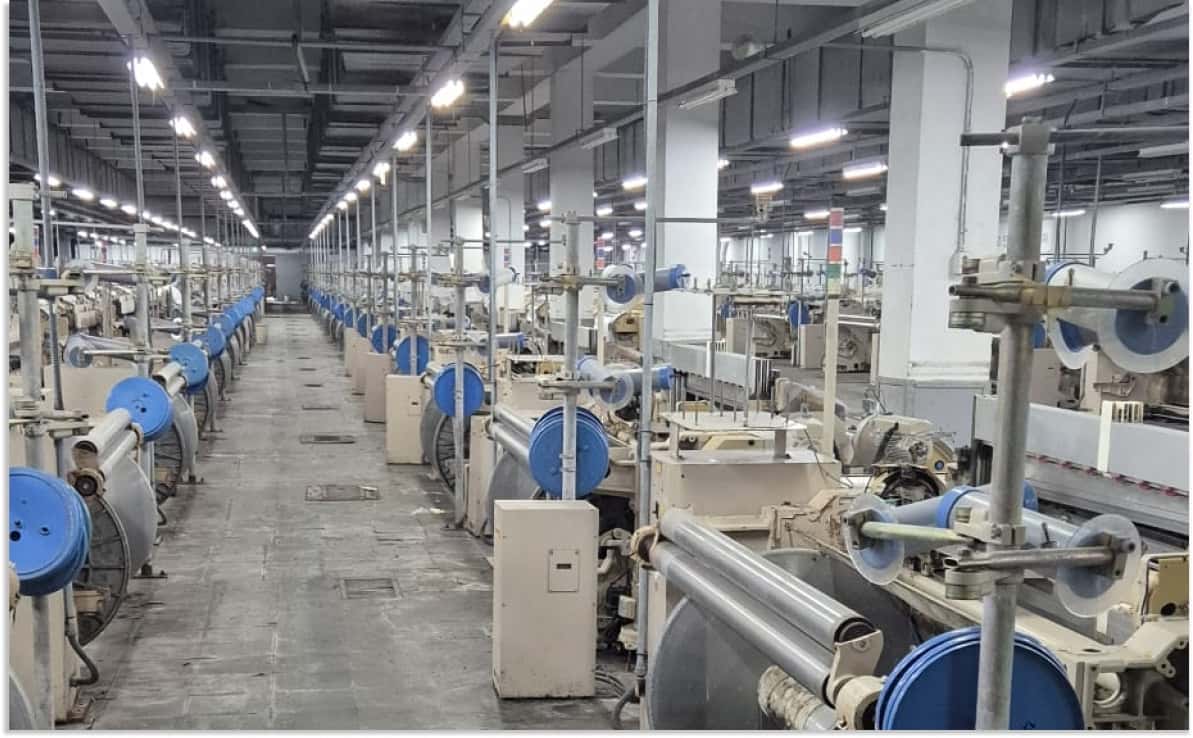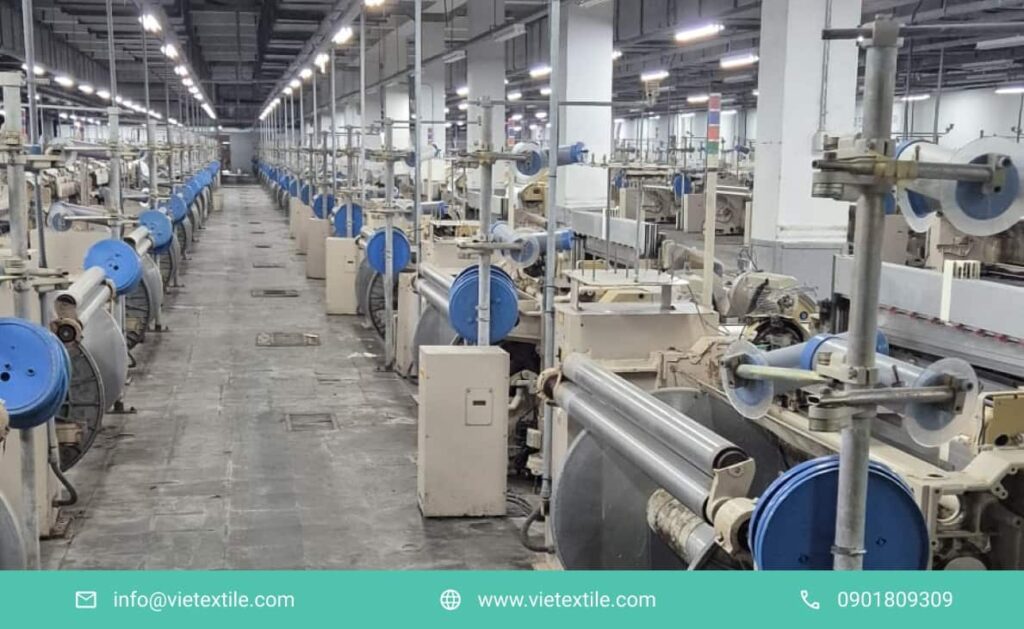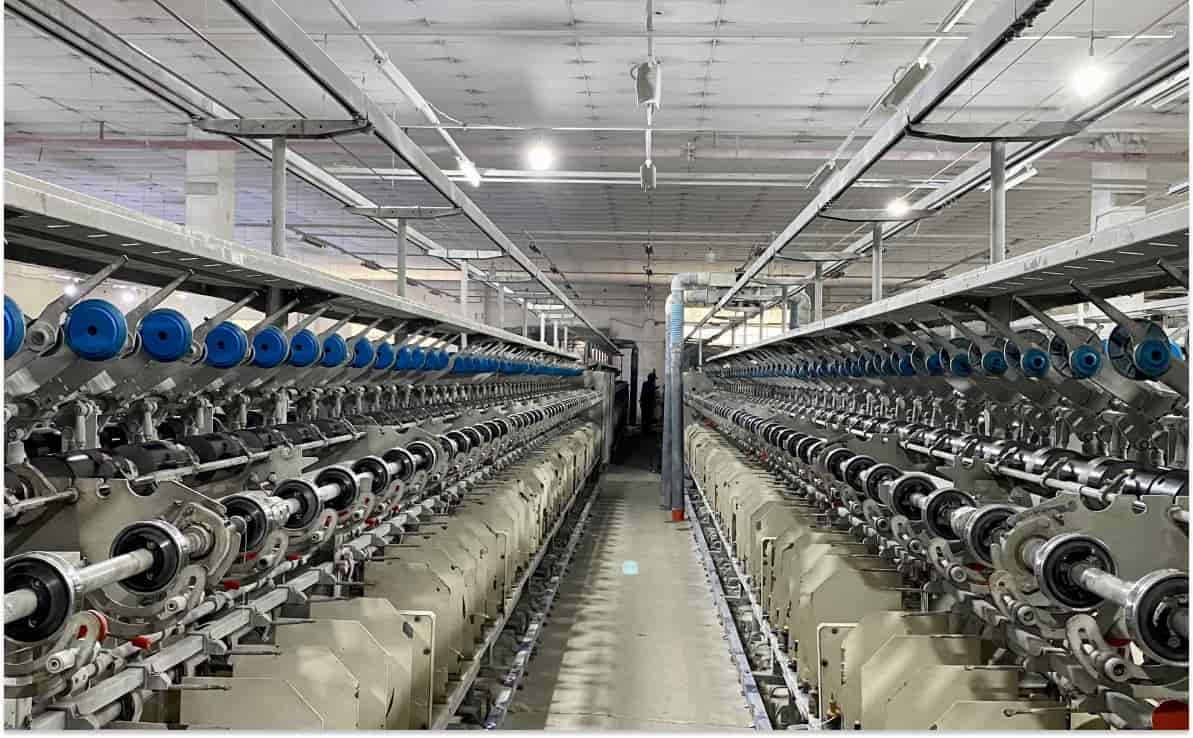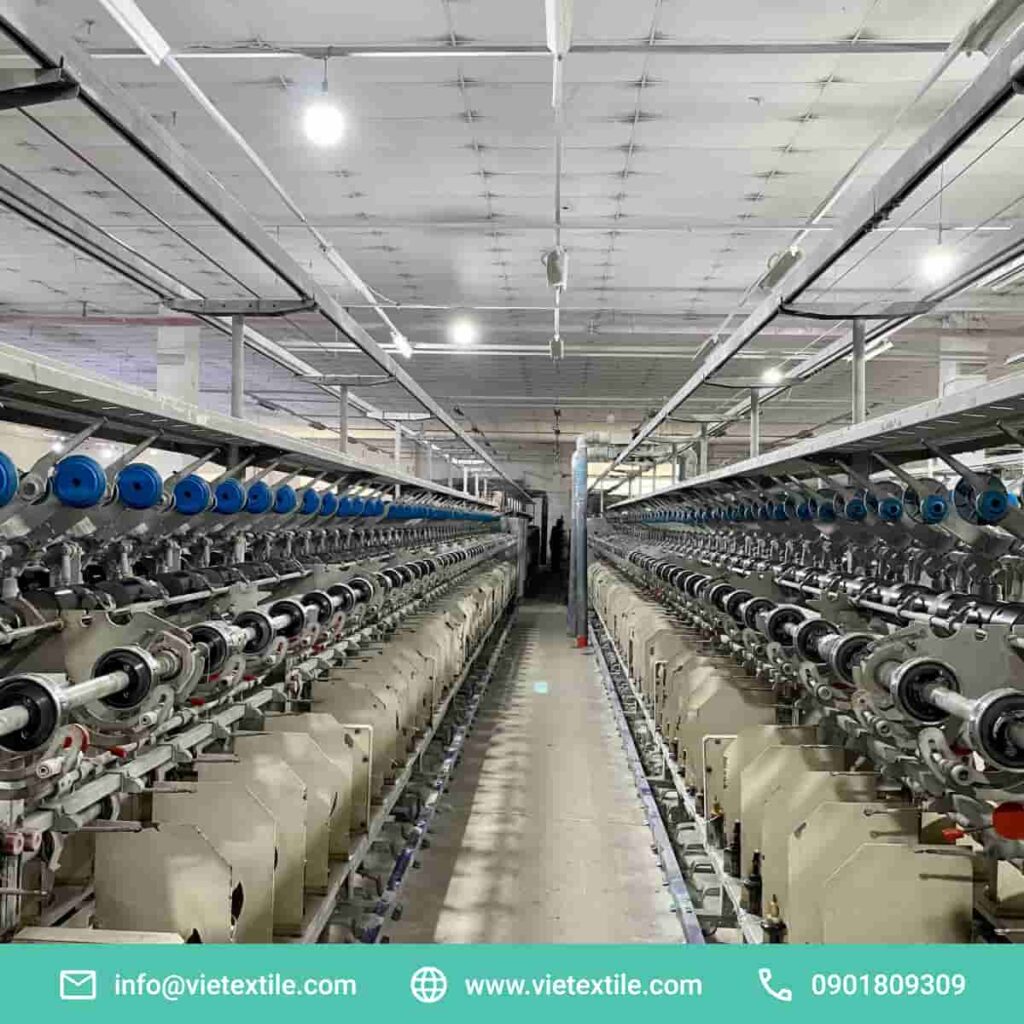
Structure and Decisive Role of Picanol Weaving Machine Spare Parts in High-Speed Operation

Picanol weaving machines, particularly the Airjet series (OMNIplus, TERRYplus) and Rapier series (OptiMax, GTMax), are considered the backbone of the global textile industry due to their ability to operate at extremely high speeds and their superior flexibility. However, this very high operating speed (>1000 RPM) and continuous working intensity demand stringent requirements for the precision, material, and wear resistance of every single component.

In a modern Picanol loom, thousands of parts operate in perfect synchronization, ranging from heavy-duty mechanical components to sensitive electronic sensors. Any failure or tolerance deviation, no matter how small, can lead to reduced productivity, increased fabric defects, or even damage to the entire production line. Therefore, sourcing and using genuine Picanol weaving machine spare parts is not merely an option but a prerequisite for maintaining performance and protecting a massive machinery investment.

This article will analyze the detailed structure and role of the core Picanol spare parts groups, clarifying the strategic importance of using genuine parts in today’s competitive manufacturing environment.
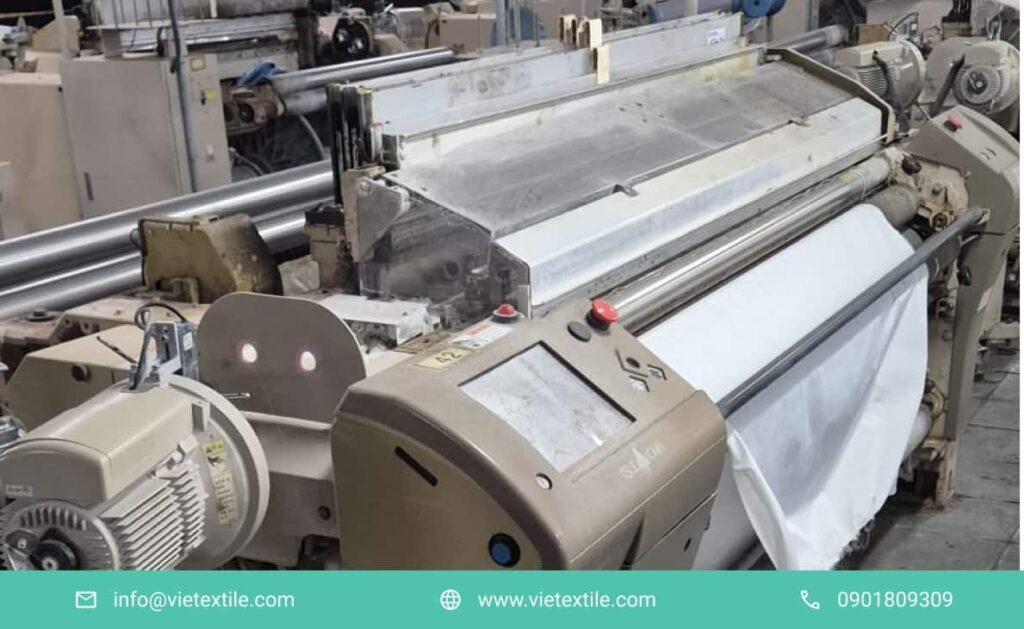
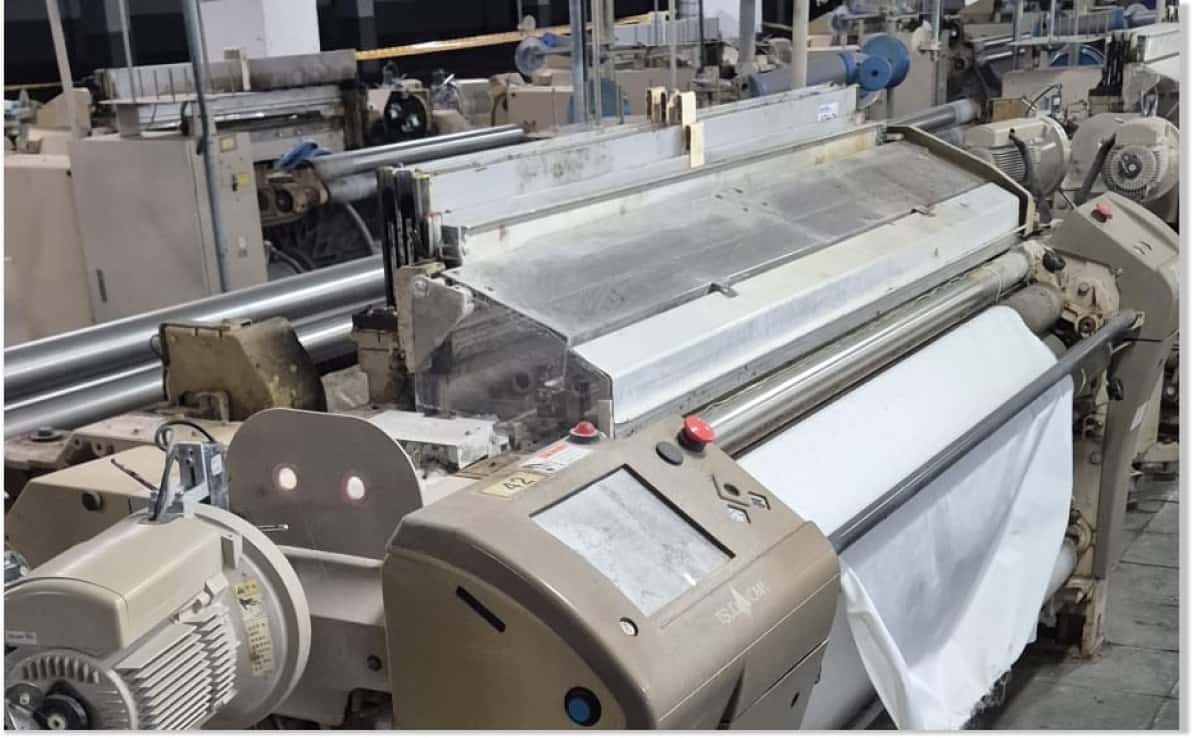
genuine Picanol weaving machine spare parts
Structure and Decisive Role of Picanol Weaving Machine Spare Parts in High-Speed Operation 5

1. The Critical Importance of Genuine Picanol Spare Parts

Choosing genuine Picanol weaving machine spare parts is a critical factor that goes far beyond initial cost benefits. It directly relates to the technical accuracy and durability of the entire system.

1.1. Precision and Tolerance

Picanol weaving machines operate based on micron-level tolerances. For instance, the alignment of the Tucking Needle or the opening of the Airjet valve is controlled with extremely high precision.

  • Material and Heat Treatment: Genuine Picanol weaving machine spare parts are made from specialized alloys and undergo rigorous heat treatment processes (Hardening, Carburizing). This ensures high surface hardness for wear resistance, while maintaining a tough core to prevent fracture from high-speed vibration and impact.
  • Dimensional Stability: Non-genuine parts may exhibit different Thermal Expansion characteristics compared to genuine parts, especially metal components subjected to friction. This deviation causes synchronization loss within the moving system.

1.2. Lifespan and TCO (Total Cost of Ownership)

Although the initial price of genuine Picanol weaving machine spare parts may be higher, their lifespan is many times longer, minimizing the frequency of replacement, labor costs, and, most importantly, Downtime. Genuine parts contribute to a lower TCO in the long run.

2. Weft Insertion System – The Core of High Speed

The weft insertion system is the heart of the loom, determining the weaving speed (RPM) and energy efficiency. Picanol is renowned for its two main technologies: Rapier and Airjet.

2.1. Rapier Loom Spare Parts (OptiMax, GTMax)

Rapier technology uses a mechanical drive mechanism to carry the weft yarn across the shed.

2.1.1. Rapier Tapes

  • Structure: Typically made from Carbon Fiber or super-light, ultra-durable composite materials. The goal is to reduce Inertia so the movement can be reversed quickly at high speeds (up to 750 PPM).
  • Role: Transmit power from the main gearbox to the Gripper Head while enduring continuous tensile stress. Genuine Picanol weaving machine spare parts ensure the absolute elasticity and stiffness of the tapes, preventing Vibration that affects yarn clamping.

2.1.2. Gripper Heads

  • Structure: Complex parts, including the clamping Jaw and the open/close mechanism.
  • Role: Clamp the weft yarn at the Feeder Gripper and receive the yarn at the Receiver Gripper. The precision of the open/close mechanism must be controlled in micro-seconds. A deviation of 0.01 mm can lead to yarn breakage or slippage.

2.1.3. Rapier Guides

  • Structure: Pads made of high wear-resistant Ceramic or specialized alloy, mounted on the sley.
  • Role: Keep the rapier tapes in stable, linear motion. Genuine Picanol weaving machine spare parts ensure minimal friction, reducing heat generation and extending tape lifespan.

2.2. Airjet Loom Spare Parts (OMNIplus, TERRYplus)

Airjet technology uses compressed air to shoot the weft yarn across the shed, achieving the highest speeds (over 2000 PPM).

2.2.1. Solenoid Valves and Nozzles

  • Structure: Valves are electromagnetically controlled, opening and closing extremely fast to supply compressed air. Nozzles are air ducts designed with precise aerodynamic shapes.
  • Role:
    • Main Nozzle: Ensures the initial thrust for the weft yarn to enter the shed.
    • Relay Nozzles (Auxiliary/Booster Nozzles): Distributed along the reed to maintain the weft yarn’s speed. The valve opening must be precisely calculated to optimize Air Consumption – the biggest operating cost of an Airjet loom.

2.2.2. Profile Reed

  • Structure: A specialized reed with custom-designed air channels.
  • Role: Guides the compressed air stream from the Relay Nozzles, creating a perfect “air tunnel” to lift and carry the weft yarn. Any scratch or wear on the reed surface will reduce air guidance efficiency.

3. Warp Let-off/Take-up System

This system controls the tension of the warp yarns, determining the fabric density and flatness.

3.1. Let-off Motion Spare Parts

  • Structure: Consists of a servo motor (Sumo Motor), gearbox, and position sensors (Encoders).
  • Role: Controls the rotation speed of the warp beam to release warp yarns with stable tension. The Tension must be maintained almost constant from full beam to near-empty beam. Genuine Picanol spare parts in the Sumo Motor system ensure the Torque is controlled with high resolution.

3.2. Take-up Motion Spare Parts

  • Structure: Consists of the Take-up Roller and a servo drive.
  • Role: Winds the woven fabric with the programmed weft density (Picks per Inch/cm). Genuine Picanol spare parts like Gears and Couplings must have absolute precision to ensure uniform weft density across the entire fabric roll.

4. Fault Clearing and Selvage Control System
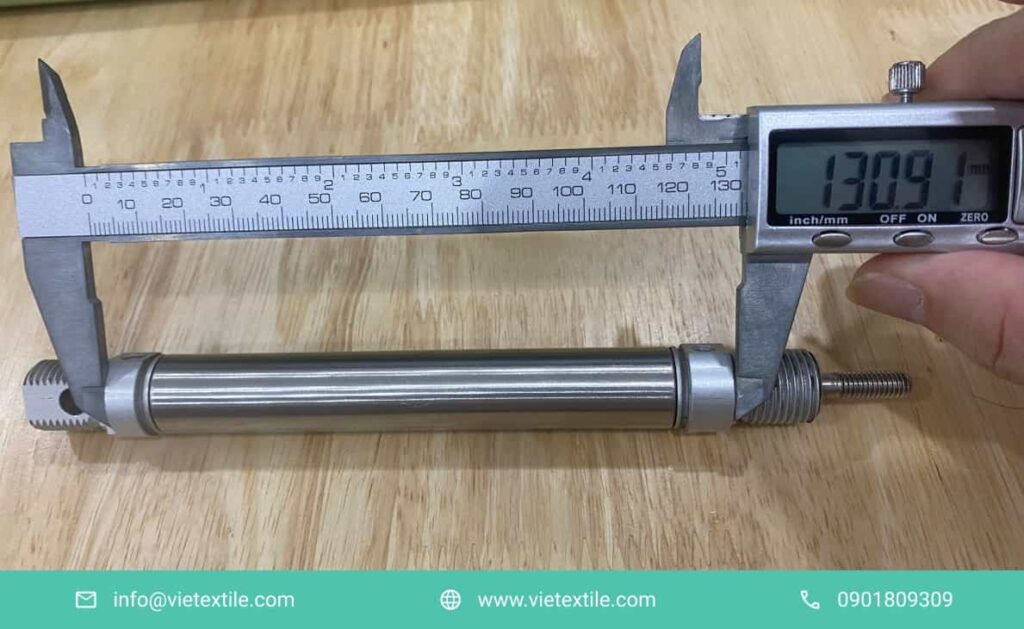
Phụ tùng thay thế máy dệt Picanol chính hãng
Structure and Decisive Role of Picanol Weaving Machine Spare Parts in High-Speed Operation 6

This group of spare parts is primarily responsible for the quality and appearance of the Selvage (fabric edge).

4.1. Tuck-in Devices

  • Structure: Uses a small Tucking Needle and a clamp/cut mechanism to fold the weft yarn selvage into the fabric edge.
  • Role: Creates a secure fabric edge. The needle and control mechanism must operate with high precision to fold the yarn without breaking adjacent warp yarns. Wear on the tucking needle can degrade selvage quality, causing fabric defects.

4.2. Weft Stop Motion

  • Structure: System of Optical Sensors or Piezo sensors.
  • Role: Detects weft yarn breakage or absence. In Airjet looms, the sensors must operate extremely fast due to the high weft insertion speed. Genuine Picanol spare parts ensure a Response Time in milliseconds, stopping the machine instantly to minimize the length of the fabric defect.

4.3. Cutters

  • Structure: Blades made of carbide or super-hard alloy steel.
  • Role: Cut excess weft yarn at the selvage. The cutter must be sharp and precisely aligned to ensure a clean cut and prevent yarn fraying.

5. Electronic and Control Spare Parts (The Brain)

Electronic components are the brain that controls the synchronization of the entire loom.

5.1. Main PCB Boards

  • Structure: Complex printed circuit boards, containing the CPU, memory, and control chips.
  • Role: Process data from sensors, control the timing of Airjet valves, the shedding angle, and the Sumo Motor drive. Using genuine Picanol weaving machine spare parts in this area is mandatory because these boards are proprietary programmed to be compatible with Picanol software.

5.2. Servo Motors (Sumo Motor) and Controllers

  • Structure: Powerful brushless motors.
  • Role: Provide high torque and precise position control for critical mechanisms like the Let-off and Take-up motions, and the Shedding mechanism (Dobby/Jacquard).

6. In-Depth Technical Analysis of Genuine Spare Parts Materials
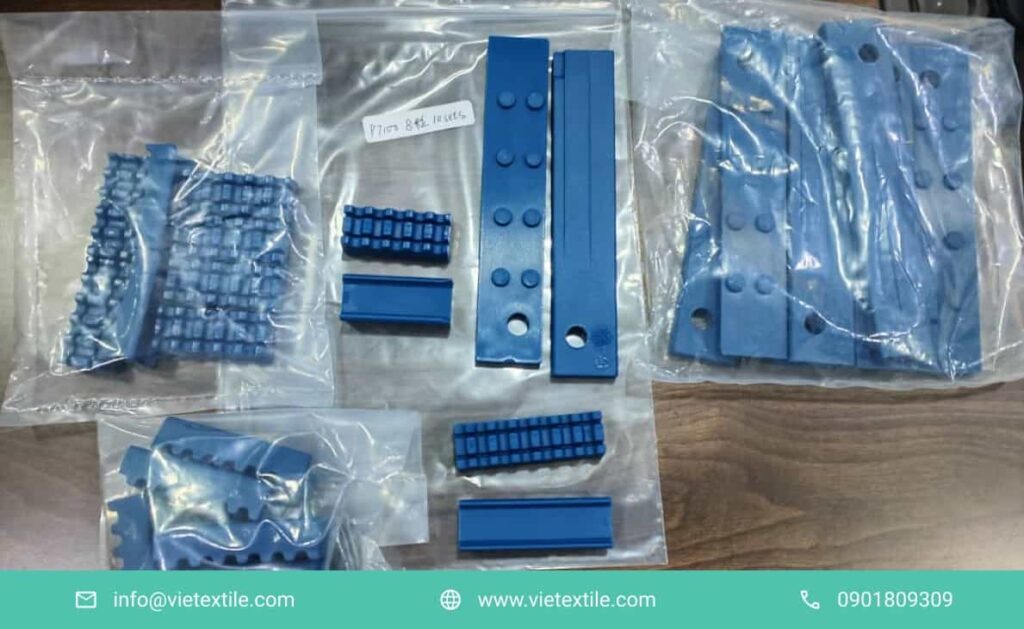
Linh kiện và phụ tùng máy dệt Picanol chính hãng
Structure and Decisive Role of Picanol Weaving Machine Spare Parts in High-Speed Operation 7

To achieve 1000}+PPM performance, Picanol must use materials and manufacturing processes that cannot be replicated by non-genuine spare parts manufacturers.

6.1. Wear Resistance Materials

  • Engineering Ceramics: Used for components in direct contact with the yarn (e.g., yarn guides, Rapier guides). Alumina (Al2O3) and Zirconia (ZrO2) ceramics have extremely high hardness, offering far greater wear resistance than steel, ensuring the yarn is not damaged.
  • PVD/CVD Coatings: Many genuine Picanol weaving machine spare parts (e.g., Nozzles, tucking needles) are coated with a layer of Titanium Nitride (TiN) or Carbon-based (DLC – Diamond-Like Carbon) through physical/chemical vapor deposition. This coating reduces friction, extending the lifespan to double that of conventional steel.

6.2. Lightweight Alloys

  • Carbon Fiber Composite: Used for Rapier Tapes and other fast-moving components. Carbon fiber reduces the mass by 30\%-50\% compared to metal materials, allowing Rapier looms to achieve higher speeds without increasing the load on the main drive mechanism.
  • Special Aluminum Alloys: Used for large moving parts, such as Connecting Rods, to reduce inertia.

7. Maintenance Procedures and Long-Term Benefits of Genuine Parts

The use of genuine Picanol weaving machine spare parts must be paired with strict maintenance procedures to maximize performance.

7.1. Scheduled Periodic Maintenance

Spare Parts GroupInspection FrequencyReplacement ActionRationale for Genuine Parts Use
Rapier Tapes6 months/10,000 hoursUpon signs of fraying or cracking.Ensures exact mass and stiffness for precise machine timing.
Airjet Valve/Relay Nozzle3 months/5,000 hoursWhen compressed air flow is unstable (checked by flow meter).Sealing and opening/closing time must meet Picanol standards to prevent air leakage.
Cutters/Tucking NeedlesMonthlyUpon detection of selvage defects or yarn fraying.High surface hardness and sharpness, reducing replacement frequency.
Weft Stop Motion Sensors3 monthsWhen the machine stop frequency due to weft fault increases.Absolutely fast response time (under 5 milliseconds) to minimize fabric defect length.

7.2. Optimizing Energy Efficiency

For Airjet looms, using genuine Picanol weaving machine spare parts plays a large role in controlling compressed air costs. Genuine Nozzles and Valves are designed to optimize aerodynamic efficiency, ensuring the most effective thrust with the minimum amount of compressed air consumed.

8. VieTextile: Your Partner for Genuine Picanol Spare Parts

VieTextile is committed to providing genuine Picanol weaving machine spare parts solutions, ensuring your looms always operate at peak performance. We deeply understand every technical detail, from the electronic control system (PCB boards) to the complex mechanical drive mechanisms (rapier tapes, Nozzles).

We offer a full range of spare parts categories:

  • Airjet Spare Parts: Solenoid Valves, Main Nozzles, Relay Nozzles, air control system parts.
  • Rapier Spare Parts: Carbon Rapier Tapes, Gripper Heads, Ceramic guides.
  • Electronic Spare Parts: Control boards (PCB), sensors, Encoders.
  • Precision Mechanical Parts: Gears, Couplings, Cutters, Tucking Needles.

Choosing VieTextile’s services means not only acquiring genuine Picanol weaving machine spare parts but also receiving in-depth technical support for calibration, installation, and maintenance of your Picanol looms.

9. Frequently Asked Questions (FAQ) About Picanol Spare Parts

1. Question: How can I distinguish genuine Picanol weaving machine spare parts from counterfeit/replacement parts? Answer: Genuine Picanol weaving machine spare parts always come with the precise Part Number, Picanol standard packaging, and often have a laser-etched logo or identification mark on the product. Most importantly, they have superior surface finish and material quality (e.g., the uniformity of carbon fiber) compared to non-genuine parts.

2. Question: How does the use of genuine Picanol weaving machine spare parts affect the weaving speed (RPM)? Answer: Significantly. Genuine spare parts ensure precise balance and tolerance, minimizing vibration and friction. This allows the loom to operate stably at maximum speed (e.g., 1000 – 1500 RPM for Rapier or 1800 – 2200 PPM for Airjet) without causing yarn breakage or mechanical failure.

3. Question: Which part of the Picanol Airjet loom most requires genuine Picanol weaving machine spare parts to save compressed air? Answer: The Solenoid Valves and Nozzles. Genuine valves ensure perfect sealing when closed, preventing air leakage. Genuine Nozzles have an optimal aerodynamic design, ensuring the most effective thrust with minimal compressed air consumption.

4. Question: Do genuine Picanol weaving machine spare parts come with a warranty? Answer: Yes. Genuine Picanol weaving machine spare parts typically come with a manufacturer’s warranty, protecting you against material or manufacturing defects. Non-genuine parts often come with no or only a short-term warranty, posing a high risk.

5. Question: Do Carbon Fiber Rapier Tapes absolutely require genuine parts? Answer: Absolutely. Rapier tapes are the components subjected to the largest dynamic load. Genuine Picanol weaving machine spare parts guarantee the quality of the Carbon fiber and Epoxy adhesive used, which determines tensile strength, toughness, and lifespan. Poor quality tapes can break suddenly, causing severe damage to the entire Rapier gearbox.

6. Question: Is calibrating the tuck-in device complicated and does it require genuine spare parts? Answer: Calibrating the tuck-in mechanism is a delicate process requiring specialized measuring tools. The needle and cutter must be genuine Picanol weaving machine spare parts to ensure the correct hardness and needle tip shape, helping to fold the yarn without damaging the warp.

7. Question: How does VieTextile guarantee the origin of genuine Picanol spare parts? Answer: VieTextile is committed to importing parts directly from Picanol authorized suppliers or from Picanol itself, providing full documentation of origin (CO), quality certification (CQ), and part numbers for customer verification.

For in-depth consultation on selecting and installing genuine Picanol weaving machine spare parts, ensuring your looms operate stably and at maximum productivity, please contact us.

Contact Information:

Hotline: 0901 809 309

Email: info@vietextile.com

Website: https://vietextile.com
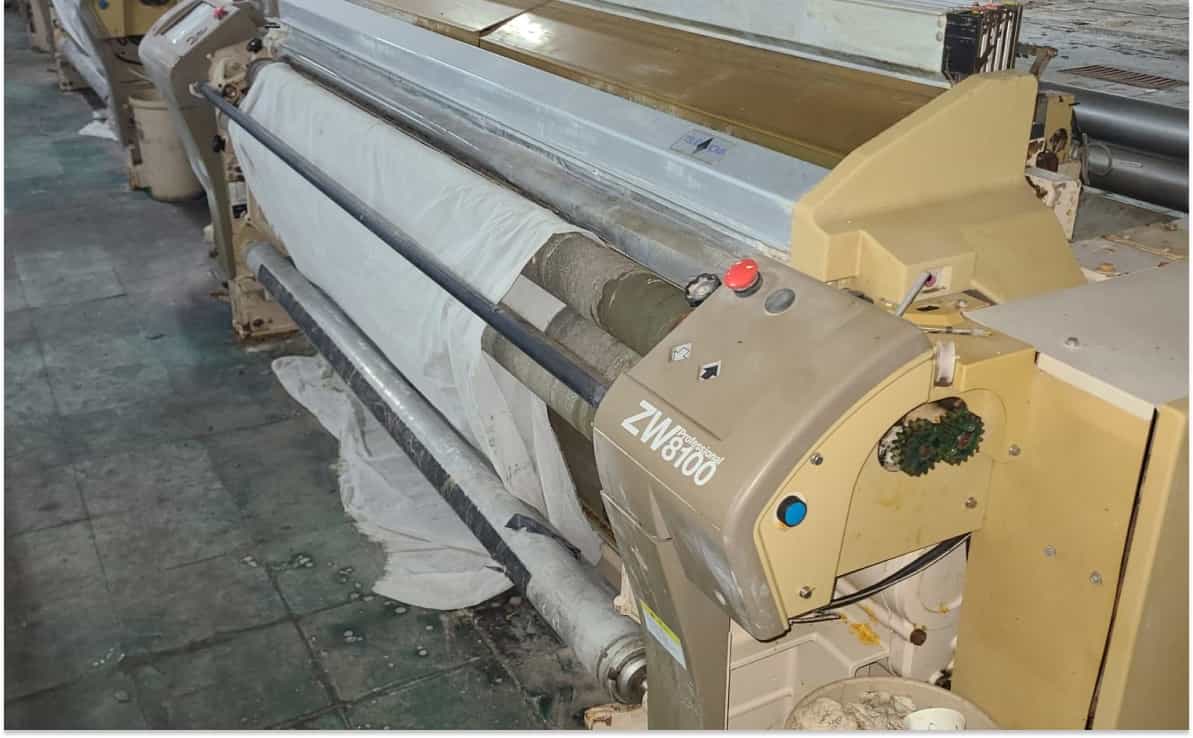
Maintenance Tip for Loom Machine Spare Parts: Extend Machine Lifespan 

The weaving loom is the heartbeat of any textile production facility, a complex marvel of synchronized mechanical, electrical, and pneumatic systems operating at high speed. The longevity and efficiency of this expensive capital equipment do not depend on the brand, but on the meticulous maintenance of its loom machine spare parts. 

Proper care, timely inspection, and strategic replacement of these components are the only way to ensure continuous, defect-free fabric production and significantly extend the machine’s lifespan far beyond the manufacturer’s nominal expectation. 

Ignoring a small wear indicator on a single loom machine spare parts can rapidly cascade into a costly chain reaction, resulting in extensive downtime and permanent damage to critical assemblies.

This comprehensive guide is designed for textile engineers and maintenance managers, detailing actionable tips, best practices, and advanced diagnostic techniques focused entirely on maximizing the utility and lifespan of every component. 

We will delve into specific maintenance schedules for high-wear loom machine spare parts (such as weft insertion components and beating-up mechanisms), lubrication science, and the critical importance of synchronization to reduce mechanical stress. By adopting these expert maintenance strategies, your facility can reduce the Total Cost of Ownership (TCO), minimize quality defects, and secure a competitive edge in the global textile market.

Supply loom machine spare parts
Maintenance Tip for Loom Machine Spare Parts: Extend Machine Lifespan  12

1. The Foundation of Loom Longevity: Understanding Wear and Stress

A modern loom subjects its loom machine spare parts to immense cyclic stress. Effective maintenance starts with identifying where and why components fail, allowing for targeted preventive action.

1.1. The Critical Role of Weft Insertion Components

Weft insertion is the fastest and most aggressive mechanical action on the loom. Components involved (rapiers, grippers, air jets, projectiles) experience extreme acceleration and deceleration.

  • Rapier Heads and Tapes: These loom machine spare parts are subjected to constant friction and high G-forces. Wear on the guide teeth or tape surface can lead to missed weft insertion, fabric defects, and, potentially, severe damage to the shedding mechanism if a tape breaks. Regular visual inspection for fraying, stress cracks, and wear marks is essential.
  • Air Jet Nozzles: For air jet looms, the main and relay nozzles are crucial loom machine spare parts. Erosion or blockage affects air consumption and insertion efficiency. Calibration must be maintained precisely to minimize the pressure required, thus saving energy (compressed air).

1.2. The Beating-Up Mechanism: Managing Inertia and Force

The reed and sley system, responsible for beating the weft into the fell of the fabric, handles massive inertial forces.

  • Sley Bearings and Bushings: These support the sley system. Wear in the bearings (critical loom machine spare parts) causes lateral play, leading to uneven beating, poor fabric density, and excessive vibration, which degrades all other adjacent components. Lubrication and periodic replacement based on vibration analysis are paramount.
  • Reed Blades: Damage to even a single reed blade can cause warp thread abrasion and fabric marks. Regular cleaning and careful handling during beam changes prevent damage to these highly sensitive loom machine spare parts.

1.3. Synchronization: The Key to Stress Reduction

Loom operation relies on microsecond-level synchronization between shedding, picking (insertion), and beating. Misalignment or timing errors (due to worn timing belts, gears, or electronic encoder loom machine spare parts) instantly translate into severe mechanical shock loads, dramatically accelerating wear across the entire machine. Maintaining perfect timing is the most effective way to reduce mechanical stress.

2. Advanced Lubrication Schedules: Oil Analysis and Science

Lubrication is the lifeblood of the loom. Simply adding oil is not enough; the science of lubrication must be managed strategically.

2.1. Oil Quality and Viscosity Control

The primary lubricant for the main gearboxes and crank mechanisms (central loom machine spare parts) must be monitored closely.

  • Viscosity Breakdown: Continuous high-speed operation causes oil shear and thermal breakdown, reducing its viscosity and protective film strength. Oil analysis should be performed at scheduled intervals to check for viscosity drop.
  • Contamination: Lubricating oil is prone to contamination from metallic wear particles, fabric dust, and moisture. Oil analysis detects these contaminants, providing an early warning that a specific loom machine spare parts (e.g., a bearing) is failing before a catastrophic event.

2.2. Automated Central Lubrication System Maintenance

Modern looms use centralized lubrication systems. Failure in this system starves critical loom machine spare parts, leading to immediate overheating and seizure.

  • Pumps and Injectors: The lubrication pump and the individual metering injectors (precise loom machine spare parts) must be checked for function and output volume. A blocked injector can starve a main bearing, causing rapid and terminal failure.
  • Filter Management: The oil filter is one of the cheapest loom machine spare parts, yet its failure to capture contaminants causes immediate circulation of damaging particles through the entire system. Timely replacement of the filter element is critical.

2.3. Specialized Lubricants for High-Friction Loom Machine Spare Parts

Certain areas, such as the friction brakes and clutches, require specific, non-staining, high-temperature greases. Using the wrong lubricant can lead to corrosion, residue buildup, and ultimately, component failure. Always use the manufacturer-specified grease for specialized loom machine spare parts like cam followers and shedding motion linkages.

3. Weft Insertion System: Precision Replacement and Calibration

The reliability of the weft insertion system directly impacts both production speed and fabric quality.

3.1. Rapier Head and Guide Hook Replacement Strategies

Rapier heads and tapes are designed to be replaceable wear parts.

  • Paired Replacement: Rapier heads and tapes (critical loom machine spare parts) should always be replaced as a matched set, as differential wear can cause severe timing and pick-up issues.
  • Tension and Alignment: After replacement, the rapier tape tension must be calibrated using specialized tools to ensure smooth travel and proper synchronization. Incorrect tension accelerates tape fraying and increases the load on the drive system, potentially damaging the loom machine spare parts in the gearbox.

3.2. Air Jet Loom Valve and Solenoid Maintenance

For air jet looms, the solenoid valves controlling the main and relay nozzles are critical pneumatic loom machine spare parts.

  • Response Time Check: Solenoid valve response time must be checked electronically. A slow valve wastes expensive compressed air and causes weft insertion faults.
  • Pneumatic Seal Integrity: Leaks in the air lines or internal valve seals waste compressed air energy. Replacing worn seals and hoses (cheap loom machine spare parts) ensures that the maximum air pressure is delivered efficiently to the nozzle at the precise moment required.

3.3. Projectile Grippers and Tensions (For Projectile Looms)

Projectile looms rely on the precise grip and release of the weft yarn. The gripper jaws and associated tension springs are vital loom machine spare parts. Failure to maintain correct tension causes slack wefts or broken yarns. These loom machine spare parts should be gauged regularly and replaced as soon as tension readings fall below the required specification to maintain weaving quality.

4. Fabric Formation and Take-Up Systems: Quality Control and Stress Reduction

High quality loom machine spare parts
Maintenance Tip for Loom Machine Spare Parts: Extend Machine Lifespan  13

The precise action of the shedding and take-up mechanisms directly determines fabric quality and density.

4.1. Heald Frames and Heddle Wire Inspection

The heald frames and heddle wires guide the warp yarns.

  • Heald Frame Condition: Bent or cracked heald frames (large, essential loom machine spare parts) cause uneven warp tension and abrasion. Inspect for stress cracks, particularly around the attachment points.
  • Heddle Wire Damage: Damaged heddle wires create rough spots that abrade and break warp yarns, leading to downtime. Regularly check for burrs and replace damaged loom machine spare parts immediately.

4.2. Warp Stop and Weft Stop Motion Sensors

The electronic sensors that detect thread breaks are critical safety and quality loom machine spare parts. Malfunctioning sensors fail to stop the loom quickly, allowing significant fabric defects (float, double picks) to form before the machine is stopped manually.

  • Cleaning and Calibration: Dust and fiber buildup often cause sensor failure. Regular cleaning and calibration (checking sensitivity settings) ensure instant detection, minimizing fabric waste and downtime associated with cleaning up large faults.

4.3. Take-Up Roller Gripping Surface

The take-up roller accurately winds the finished fabric. The surface, often covered in rubber or abrasive material, must maintain its gripping ability. A worn or contaminated surface can slip, resulting in inconsistent Pick Density (PPI), a major fabric defect. Replacing the roller surface material (a high-wear loom machine spare part) on schedule ensures uniform fabric quality.

5. Electrical and Electronic Spares: Preventing Catastrophic Failure

Electronic components are less prone to mechanical wear but are highly susceptible to heat, dust, and power fluctuations.

5.1. VFDs, Servo Drives, and Motor Controls

The motors and Variable Frequency Drives (VFDs) control the entire loom movement.

  • Thermal Management: VFDs and servo drives (complex electronic loom machine spare parts) generate significant heat. Failing cooling fans or clogged air filters cause overheating, which rapidly degrades the VFD’s internal capacitors and IGBTs, leading to catastrophic electrical failure. Proactive replacement of low-cost fans and filters is paramount.
  • Capacitor Lifespan: Electrolytic capacitors in VFDs have a finite lifespan (typically 5-7 years). Scheduling the replacement of VFD units or capacitor banks prevents unexpected electrical failure and ensures the continued smooth operation of the loom machine spare parts.

5.2. Encoder and Sensor Integrity

Encoders track the precise angular position of the main shaft, providing timing signals for all loom actions. A faulty encoder (a highly sensitive electronic loom machine spare part) causes immediate loss of synchronization.

  • Signal Noise: Check the encoder signal quality using an oscilloscope. Signal degradation (due to electromagnetic interference or cable damage) leads to intermittent errors that are difficult to diagnose. Use high-quality, shielded cables when replacing any electrical loom machine spare parts.

5.3. Power Supply and PCB Maintenance

The power supply units (PSUs) on the loom’s control PCBs regulate voltage. Failure in the PSU (a core electronic loom machine spare part) can damage the expensive main control board. Dust accumulation on PCB components (especially in dusty textile environments) can cause heat retention and short circuits. Regular vacuum cleaning of the control cabinet is a simple, cost-effective maintenance tip.

6. Advanced Diagnostics: Condition Monitoring and Predictive Maintenance

Moving beyond fixed maintenance intervals, predictive maintenance (PdM) uses real-time data to maximize the service life of every loom machine spare part.

6.1. Vibration Analysis on Main Bearings

Affixing vibration sensors to the main shaft bearings, gearboxes, and sley bearings provides continuous health monitoring. Changes in vibration amplitude or frequency spectrum (a PdM technique) indicate early bearing wear, misalignment, or gear tooth damage. This allows the maintenance team to schedule the replacement of the worn loom machine spare parts during a planned, non-production stop, avoiding emergency downtime entirely.

6.2. Thermal Imaging for Electrical and Friction Hotspots

Infrared thermal imaging cameras quickly identify abnormally hot loom machine spare parts.

  • Friction Points: Hot spots on Sley bearings or main drive friction clutches indicate lubrication failure or excessive mechanical stress.
  • Electrical Stress: Hot terminals or cooling fins on VFDs/Motors indicate electrical overload or inadequate cooling. Diagnosing a thermal issue with a loom machine spare part allows for immediate intervention (e.g., re-lubrication or cooling fan replacement).

6.3. Acoustic Emission Monitoring

This technique listens for high-frequency sounds (acoustic emissions) generated by micro-cracks forming in stressed metal components, such as shafts or frames. While specialized, this can provide the earliest possible warning of structural failure in critical, load-bearing loom machine spare parts.

7. Strategic Inventory and Procurement of Loom Machine Spare Parts

Having the right part, at the right time, is the final step in reducing downtime and TCO.

7.1. ABC Analysis for Inventory Stocking

Classify all loom machine spare parts based on criticality and cost:

  • A-Class (Critical): High cost, high failure impact (e.g., Main pump, VFD, Rapier Tapes). These must be kept in stock with 100% certainty.
  • B-Class (Standard): Medium cost, medium impact (e.g., Bearings, Seals, Solenoids). Stocked based on statistical consumption.
  • C-Class (Consumable): Low cost, high consumption (e.g., Filters, O-rings, Heddle Wires). Stocked in bulk.

7.2. Quality Verification: MTC and Dimensional Checks

Always insist on material certifications (MTCs) for metallic loom machine spare parts (e.g., gear teeth, shafts) to ensure they are high-strength alloy steel. Counterfeit spare parts often use inferior, uncertified steel, leading to premature failure under the loom’s high-stress environment. Perform dimensional checks on critical components (like the internal diameter of bushings) upon receipt.

7.3. Obsolescence Planning for Electronic Loom Machine Spare Parts

Electronic components (PCBs, older PLCs) become obsolete rapidly. Maintain a strategic stock of aging, discontinued electronic loom machine spare parts. Failure to plan for obsolescence can lead to extended, costly downtime when a critical control board fails and is no longer available from the OEM.

8. Specific Maintenance Tips by Loom Type

Replacement loom machine spare parts
Maintenance Tip for Loom Machine Spare Parts: Extend Machine Lifespan  14

While core principles apply, different loom types require specialized maintenance focus.

8.1. Rapier Looms: Focus on Tension and Wear

  • Tip: Regularly check the condition of the ribbon guides and the rapier tape loom machine spare parts tension. Low tension causes tape vibration and excessive wear; high tension overloads the drive motor. Use the OEM-specified tension gauge.
  • Tip: Inspect the cam followers for the shedding motion. Replace the cam follower bearings immediately if radial play is detected, as this directly affects the shedding timing and opening size.

8.2. Air Jet Looms: Focus on Pneumatics and Cleanliness

  • Tip: Regularly drain moisture from the compressed air system and replace the air filters. Water and oil vapor destroy the seals in pneumatic loom machine spare parts like solenoid valves and main nozzles, leading to leaks and insertion errors.
  • Tip: Calibrate the relay nozzle timing and pressure for every speed change. Inaccurate timing wastes massive amounts of air (energy). Nozzle parts should be cleaned with non-abrasive methods to prevent erosion.

8.3. Water Jet Looms: Focus on Corrosion and Filtration

  • Tip: Due to high humidity, focus on corrosion control for all metallic loom machine spare parts. Use corrosion-inhibiting lubricants and check the condition of the plating on metal guides.
  • Tip: Maintain the water filtration system rigorously. Clogged filters damage the high-pressure pump seals and affect the consistency of the jet stream, which is the primary loom machine spare part for weft insertion.

9. Training and Standardization: Human Factors in Loom Maintenance

Even the highest quality spare parts will fail if installed or maintained incorrectly.

9.1. Standardization of Installation Procedures

Develop and enforce Standard Operating Procedures (SOPs) for the installation of all critical loom machine spare parts (e.g., pump mechanical seals, bearings, VFDs). These SOPs must include torque specifications, specific tool usage, and post-installation run-in checks. Lack of standardization is a major cause of early component failure.

9.2. Continuous Training for Technicians

Invest in continuous training focused on new loom technologies (like electronic shedding systems) and advanced diagnostics (vibration analysis, thermography). A skilled technician can identify and preempt a failure in a specific loom machine spare part long before it becomes catastrophic, relying on subtle sensory cues and diagnostic data.

9.3. Documentation and Failure Analysis

Maintain detailed records of every replaced loom machine spare part, including operating hours, failure mode, and root cause analysis (RCA). This data is invaluable for refining the Preventive Maintenance (PM) schedule, transitioning from time-based maintenance to condition-based maintenance for high-impact items.

10. Frequently Asked Questions (FAQ) about Loom Machine Spare Parts

Q10.1. How often should rapier tapes be replaced, regardless of visible damage?

A: Rapier tapes (critical loom machine spare parts) should ideally be replaced based on operating hours or picks woven, as recommended by the OEM, usually between 8,000 and 12,000 hours. Replacing based purely on visual damage is reactive and carries a high risk of failure mid-run.

Q10.2. What is the most common cause of premature bearing failure in a loom?

A: The most common causes are improper lubrication (using the wrong type or insufficient quantity) and contamination (dirt, metallic filings, or moisture). Incorrect installation (hammering the bearing onto the shaft) is also a major factor that immediately compromises this essential loom machine spare parts.

Q10.3. Can I use generic VFD cooling fans, or should I stick to OEM?

A: While generic fans can be used, ensure they match the OEM specifications for airflow (CFM) and static pressure. A fan with inadequate CFM will cause the VFD (a vital electronic loom machine spare parts) to overheat rapidly, leading to major failure.

Q10.4. Why do my pneumatic loom machine spare parts (valves) fail quickly?

A: They often fail due to poor air quality. If the compressed air is dirty, moist, or contains oil residue, it degrades the internal rubber seals of the solenoid valves and air cylinders, causing leaks and sticking. Invest in a high-quality air dryer and filtration system.

Q10.5. How does a worn loom machine spare parts in the take-up system affect fabric quality?

A: A worn take-up roller surface or faulty take-up gears will result in inconsistent tension, leading to variations in the Picks Per Inch (PPI) across the fabric. This is a critical defect that affects the final fabric density and appearance.

Q10.6. What is the critical tolerance to check on a replacement rapier head?

A: The most critical tolerance is the alignment and height of the gripper jaw opening relative to the weft insertion line. Even a slight deviation in the rapier head loom machine spare parts will cause missed weft transfer, leading to defects.

Q10.7. Should I check the torque on my sley bolts?

A: Yes, regularly. Sley bolts and fasteners are highly stressed loom machine spare parts. If they loosen, it introduces vibration and misalignment into the beating-up motion, accelerating wear on all associated bearings and linkages. Always use a calibrated torque wrench.

Q10.8. What should I look for in the oil analysis report to indicate loom machine spare parts wear?

A: Look for elevated levels of metallic elements: Iron (Fe) indicates general wear on shafts and gears; Chromium (Cr) or Nickel (Ni) suggests wear on specific alloy components; Silicon (Si) indicates external dust contamination entering the system.

Q10.9. How can I visually inspect for a failing encoder (an electronic loom machine spare parts)?

A: Visually inspect the cable for damage, crushing, or bends. Check the mounting bolts for tightness, as even slight movement can disrupt the signal. However, definitive failure requires an oscilloscope check of the signal quality.

Q10.10. Which loom machine spare parts should be kept in climate-controlled storage?

A: Highly sensitive electronic loom machine spare parts (PCBs, VFD boards, control modules) and precision bearings should be kept in clean, dry, climate-controlled storage to prevent corrosion, degradation of packaging, and moisture damage to the electronic components.

11. Conclusion: A Commitment to Proactive Maintenance

The weaving loom is a long-term asset, and its profitable lifespan is determined by a commitment to proactive, informed maintenance of every single loom machine spare parts. By implementing advanced lubrication analysis, prioritizing synchronization, leveraging PdM techniques like vibration and thermal monitoring, and enforcing strict quality checks on all replacement components, your facility can drastically minimize unplanned downtime and extend the service life of your machinery. Strategic maintenance is not a cost center; it is the most significant investment you can make in the long-term efficiency, sustainability, and quality of your textile operations. Choosing certified, quality spare parts is the foundation of this strategy.

Partner with VieTextile for guaranteed quality, certified loom machine spare parts, and expert technical support to keep your looms running at peak performance.

Contact VieTextile Today for Expert Consultation!

Contact Information: 

Hotline: 0901 809 309 

Email: info@vietextile.com 

Website: https://vietextile.com
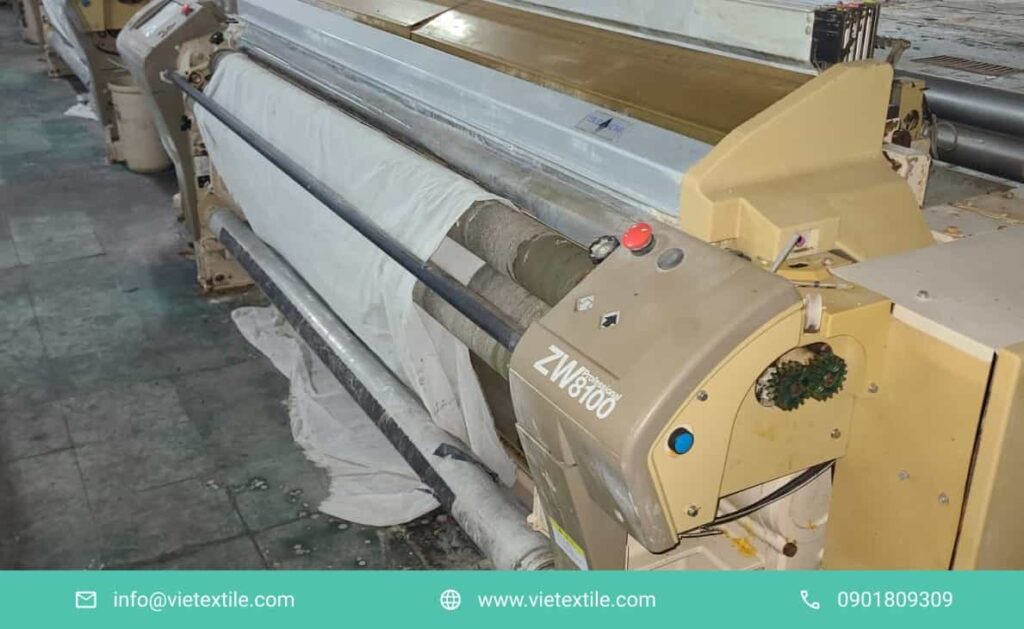
Working Principle of Reeling Machines and the Role of Each Spare Part Type

The Reeling Machine (or Hank Winder) is an indispensable piece of equipment in the yarn preparation and processing sequence, especially before hank dyeing or finishing. Its primary function is to convert yarn from a package (cone or bobbin) into a hank (skein) form or to transfer yarn from small packages to larger ones.

The core difference between the reeling machine and other winding machines lies in its absolute requirement for geometric accuracy and uniform tension across the entire yarn hank. The slightest deviation in yarn tension during winding onto the swift can lead to severe consequences in the dyeing process, specifically Shading (color variation) due to uneven dye penetration.

Any wear, damage, or technical misalignment in the reeling machine spare parts can disrupt this delicate balance. Common issues include inconsistent tension, deformed hanks, increased tangles, and elevated end breakages, significantly reducing Overall Equipment Effectiveness (OEE) and increasing operating costs.

This article aims to provide an in-depth analysis of the core operating principle of the reeling machine and clarify the pivotal role of each type of spare part, from friction-bearing mechanical components to precision electronic control parts, helping textile mills build the most effective predictive maintenance strategies.

Reeling Machine Spare Parts
Working Principle of Reeling Machines and the Role of Each Spare Part Type 19

1. Basic Operating Principle of the Reeling Machine

The reeling machine operates based on the coordination between controlling the yarn withdrawal tension and a precise traverse mechanism to shape the yarn hank.

1.1. Core Yarn Conversion Process

The operation process of the reeling machine occurs sequentially, with each step depending on the stable functioning of the reeling machine spare parts:

  1. Unwinding (Yarn Feeding): Yarn is drawn off the supply package. The withdrawal speed must be controlled by a Tensioner system to maintain stable tension. The ideal tension must be sufficient to control the yarn but not too high, which could degrade the yarn’s strength.
  2. Cleaning and Guiding: The yarn passes through a Yarn Cleaner to remove defects and through ceramic guides to minimize friction and guide the yarn’s path.
  3. Reeling onto the Swift: The yarn is wound onto the Reel/Swift with speed and Traverse Motion strictly controlled to create a uniform hank shape.
  4. Hank Finishing: After reaching the standard length (typically measured by an Encoder), the machine stops, the hank is secured with specified tyings, and removed from the reel.

1.2. Classification and Specific Characteristics

The most common type is the Reeling Machine (converting to hank), widely used for wool, high-quality cotton, and blended yarns requiring hank dyeing. Other machines like the Cone to Cone Winder also use many similar reeling machine spare parts, but focus on package density rather than hank shape.

2. Direct Friction-Bearing Spare Parts and Degradation Mechanisms

Components in direct contact with the yarn are subjected to continuous friction and wear. Understanding the degradation mechanisms of these reeling machine spare parts is key to predictive maintenance.

2.1. Ceramic Guides – Friction Load Points

Ceramic rings, hooks, and guides are the first physical barriers the yarn must overcome. Their smoothness and hardness directly determine the yarn tension and the extent of yarn surface damage.

2.1.1. Detailed Impact of Wear on Yarn and Material

Ceramic wear is caused not only by the yarn but also by dust, lubricants (wax), and chemical residues from yarn finishing.

  • Grooving: When the ceramic surface (typically Alumina Oxide (Al2O3) or Titania Oxide (TiO2) develops deep grooves, the yarn gets trapped. This localized friction increases exponentially, causing the yarn tension to rise sharply and fluctuate, leading to uneven slackness/tightness. The tensile strength of the yarn can decrease by sim 5-10% at this friction point, causing end breaks.
  • Hairiness: A rough ceramic surface due to wear acts like a blade, pulling out fibrils on the yarn’s surface, increasing Hairiness. This reduces weaving and dyeing quality.

Replacement Strategy: Ceramic reeling machine spare parts must be inspected with specialized tools (e.g., a roughness test pen or a 20x magnifier) weekly. Preventive replacement must occur when the Surface Roughness (Ra) exceeds the manufacturer’s standard limits.

2.2. Tensioner and Tension Adjustment Spare Parts

The Tensioner is the mechanical or electronic mechanism that controls precise yarn tension throughout the withdrawal process.

2.2.1. Tension Discs and Spring Aging

Tension discs (often made of stainless steel or ceramic) generate fixed frictional force. However, the core reeling machine spare parts of the tensioner are:

  • Disc Wear and Dust Buildup: Lint, wax, or oil buildup on the tension discs causes the frictional force to become unstable (stick-slip friction), leading to tension fluctuations. Cleaning with specialized solvents is required.
  • Spring Aging: The compression springs in the tension disc pressure adjustment assembly are reeling machine spare parts with limited lifespan. Aging reduces their elasticity and ability to maintain the set tension (left(T\right)). Calibrating the tension using a Tensiometer and periodic spring replacement are mandatory.

2.2.2. Yarn Cleaner

The yarn cleaner is crucial for removing defects.

  • Mechanical/Electronic Misalignment: If the machine uses a mechanical cutter, a worn blade will fail to cut out slubs. If electronic sensors are used (e.g., optical or capacitive sensors), misalignment in settings or component damage will prevent defect removal, or worse, cut good yarn, leading to waste. Inspection of these electronic reeling machine spare parts should be performed monthly.

3. Drive, Traverse Mechanism, and Hank Shaping

Phụ tùng máy đảo sợi chính hãng
Working Principle of Reeling Machines and the Role of Each Spare Part Type 20

The geometric quality of the hank is the most important output standard of the reeling machine, determining the effectiveness of the hank dyeing process.

3.1. Reel/Swift and Circumference Change Mechanism

The Reel must hold the yarn and rotate at a stable speed.

3.1.1. Mechanical Stability

  • Surface/Arm Wear: Damaged surfaces on the Reel’s arms can cause the hank to snag or fail to maintain a uniform tension shape, resulting in geometric deformation.
  • Circumference Adjustment Parts: In machines capable of changing hank size (circumference), the locking mechanisms, gears, or cam-style reeling machine spare parts controlling this change must be lubricated and checked for Backlash to ensure dimensional accuracy.

3.2. Traverse Mechanism

This system ensures the yarn is evenly distributed and creates the optimal Winding Angle.

3.2.1. Degradation of the Leadscrew and Traverse Blocks

The leadscrew or grooved shaft (Grooved Drum) is the main reeling machine spare part in the traverse mechanism.

  • Cause of Wear: Lint/fiber dust combined with dried lubricant forms a highly abrasive mixture. Lack of periodic lubrication or using the wrong lubricant causes the leadscrew to wear rapidly, especially at reversal points.
  • Consequence: A worn leadscrew or traverse block/finger causes non-uniform lateral movement, creating localized yarn concentration points on the hank. This is a direct cause of Package Defects and leads to dye patchiness (shading) during dyeing. Replacing the traverse block/roller and checking the leadscrew’s straightness are extremely important.

3.3. Belts, Bearings, and Vibration

Even at low speeds, vibration negatively impacts tension.

  • Faulty Bearings: Worn bearings in the reel shaft, winding drum, or motor assembly (due to lack of grease or overload) generate significant vibration. This vibration transmits directly to the yarn, causing tension oscillation and reducing package/hank quality. Bearing replacement is a critical part of the spare parts inventory for reeling machine spare parts.
  • Drive Belts: Stretched, cracked, or worn belts not only reduce the actual winding speed (affecting productivity) but also cause unwanted vibration and slippage.

4. Electronic, Automation, and Diagnostic Spare Parts

The precision and repeatability of the reeling machine depend entirely on the electronic reeling machine spare parts and control system.

4.1. Encoder and Length Accuracy

The Encoder measures the number of rotations of the reel shaft, converting it into the length of yarn wound.

  • Signal Error: A loose encoder, damaged signal cable, or faulty internal component will lead to inaccurate length measurement. Length discrepancy between hanks is a serious defect, causing material waste or production interruption due to yarn shortage.
  • Periodic Check: The Encoder’s pulse signal must be checked with an Oscilloscope to ensure absolute accuracy.

4.2. Speed Control PCB

The Speed Control PCB for the Servo or AC motor ensures the winding speed is maintained at the set value, regardless of changes in the supply package diameter.

  • Component Performance Degradation: Sensitive components (like capacitors, transistors) in the inverter/Servo driver can degrade due to high temperatures or lifespan, causing Speed Fluctuation. Speed fluctuation is a direct cause of yarn tension variation.

4.3. Diagnostic Tools and Calibration Spare Parts

To maintain performance, the use of specialized diagnostic tools is essential:

  • Tensiometer: This is an indispensable device. It helps measure the actual yarn tension (left(T\right)) at various points in the process. Factories need periodically calibrated Tensiometers to ensure that the tension settings via reeling machine spare parts (like springs, tension discs) are accurate and uniform across all winding positions.
  • Vibration Meter: Helps detect early signs of bearing failure or imbalance in the reel shaft, allowing for preventive reeling machine spare parts replacement before a major breakdown occurs.

5. Strategic Importance of Scheduled Reeling Machine Spare Parts Replacement

Phụ tùng bảo trì máy đảo sợi
Working Principle of Reeling Machines and the Role of Each Spare Part Type 21

The maintenance strategy for reeling machines is not just about repair after failure but optimizing costs by replacing reeling machine spare parts according to a predictive schedule.

5.1. Cost-Benefit Analysis

  • Cost of Defective Production: Shading due to uneven tension, or deformed hanks, can force the factory to rework the entire batch or scrap the product, resulting in losses many times greater than the cost of replacing minor reeling machine spare parts like Ceramic Guides. The formula:
    Loss = Material Cost + Rework Labor Cost+ Energy Cost
  • Reducing Downtime: Replacing worn bearings or aged tensioner springs takes only a few hours, while waiting for them to fail completely can damage the main shaft and cause machine downtime for days or weeks.

5.2. Ensuring Uniformity in the Supply Chain

  • Repeatability Quality: Using new and high-quality reeling machine spare parts ensures all hanks produced have the same physical characteristics (size, density, length), which is the basic requirement for maintaining quality reputation in the global textile supply chain.

6. VieTextile: Professional Reeling Machine Spare Parts Supplier Partner

VieTextile is committed to providing comprehensive solutions for reeling machine spare parts to textile mills, especially focusing on key components that determine yarn quality.

We specialize in supplying high-quality reeling machine spare parts, including:

  • Specialized Yarn Guides: Ceramic Guides (rings, hooks, bars) made from high-tech ceramic materials (Titanium Oxide) with ultra-smooth surfaces, minimizing friction and increasing wear resistance.
  • Precision Mechanical Parts: Tension discs, tension adjustment spring assemblies, traverse blocks, and leadscrews for the traverse system, manufactured with low tolerance to ensure smooth motion and stable tension.
  • High-Performance Electronic Components: Optical and magnetic Encoders, yarn break sensors, and replacement speed control boards, ensuring accurate length measurement and instant reaction.

VieTextile’s technical team not only provides reeling machine spare parts but also supports consultation and implementation of predictive maintenance programs:

  • Upgrade Consultation: Support for converting from mechanical tension systems to electronic/servo tension systems for higher tension accuracy.
  • Inventory Planning: Assisting factories in building an optimal inventory of reeling machine spare parts, ensuring critical components are never out of stock.

With VieTextile, the maintenance and upgrade of your reeling machine spare parts will be executed professionally and efficiently, ensuring uniform and stable output yarn quality.

7. Frequently Asked Questions (FAQ) About Reeling Machine Spare Parts

1. Question: What is the most critical role of reeling machine spare parts? Answer: The most critical role is ensuring uniform yarn tension throughout the winding process and accurately shaping the hank/package for subsequent stages, especially hank dyeing.

2. Question: Which component is the most common cause of hank shape defects on the reeling machine? Answer: It is often the wear of components in the Traverse Mechanism, such as the leadscrew or the traverse block/finger. This wear causes uneven yarn distribution, leading to hank deformation.

3. Question: How is accurate hank length controlled on the reeling machine? Answer: Hank length is controlled by the Encoder attached to the reel shaft. The Encoder measures the shaft’s rotations and converts it into a length signal. Checking and calibrating the Encoder are vital for electronic reeling machine spare parts.

4. Question: Why are Ceramic Guides important for finished yarn quality? Answer: Ceramic Guides provide an ultra-smooth, low-friction surface. If they are scratched, friction increases, causing localized yarn tension spikes and damaging the yarn surface, leading to end breaks and increased hairiness, reducing overall yarn quality.

5. Question: What types of reeling machine spare parts does VieTextile supply for maintenance purposes? Answer: VieTextile supplies crucial reeling machine spare parts such as Ceramic Guides, Tension Discs, Leadscrew/Grooved Drum components, Encoders, and electronic components for speed and tension control.

6. Question: How does uneven yarn tension in the reeling machine affect the hank dyeing process? Answer: Hunks with uneven tension will be compressed or slack at different levels. During hank dyeing, dye penetration will be inconsistent, leading to Shading (color variation) across the hank, causing severe product defects.

7. Question: Is it necessary to lubricate the traverse mechanism of the reeling machine? Answer: Yes. For leadscrew systems, periodic lubrication with specialized grease is essential to reduce friction, prevent leadscrew wear, and ensure the smooth movement of the traverse block, thereby maintaining the hank’s evenness.

8. Question: How often should ceramic reeling machine spare parts be inspected? Answer: They should be inspected visually and with a magnifier at least weekly. For high-friction or coarse yarns, the inspection cycle may need to be shortened, and replacement should occur immediately upon finding deep grooves or cracks.

9. Question: How is spring aging in the tensioner diagnosed? Answer: Spring aging is diagnosed by using a Tensiometer to measure the actual tension (left(T\right)) and comparing it with the set tension on the machine. If the measured tension is lower or fluctuates more than the set value, the spring assembly needs replacement.

To ensure your reeling machine always operates with the highest precision and perfect hank quality, contact VieTextile today for expert consultation on reeling machine spare parts.

Contact Information:

Hotline: 0901 809 309

Email: info@vietextile.com

Website: https://vietextile.com
The Impact of Assembly Winder Spare Parts on Yarn Quality and Evenness

The Assembly Winder (or Parallel Winder) is a pivotal piece of equipment in the yarn preparation process. It combines two or more single yarns in parallel into a single assembled yarn package, ready for the Two-for-One (TFO) twisting stage or weaving. Unlike the twisting machine, which focuses on the twist level, the assembly winder focuses on ensuring equal length and absolute uniform tension among the individual single yarns being plied.

During high-speed operation, Assembly Winder spare parts such as guides, tension sensors, and braking mechanisms are constantly subjected to friction and wear. The degradation of even a minor component can disrupt the tension balance between the single yarns, leading to severe quality defects like unevenness in the assembled yarn, end breakages, and package shaping errors.

This article provides an in-depth analysis of the importance of maintaining and replacing Assembly Winder spare parts, clarifying how mechanical and electronic components directly influence the key quality indicators of assembled yarn: Evenness, Tension, and Tenacity (tensile strength). The objective is to provide a scientific perspective for optimizing maintenance procedures, ensuring the highest quality assembled yarn before the next processing stage.

Assembly Winder Spare Parts
The Impact of Assembly Winder Spare Parts on Yarn Quality and Evenness 26

1. The Core Role of the Assembly Winder in Yarn Quality Control

The assembly winder has three main roles: combining a specified number of single yarns, clearing defects (such as knots, thick/thin places), and creating a perfectly shaped assembled yarn package.

1.1. Evenness Control Objective

Evenness is the determining factor. If the tension between yarn A and yarn B (in a two-ply assembly) differs, the resulting assembled yarn will be defective. Once assembled, the yarn may have uneven slackness, causing:

  • Breakages in Subsequent Stages: A single yarn subjected to excessive tension during assembly will have reduced strength, making it more prone to breakage in the TFO twisting machine.
  • Uneven Twisting: When the assembled yarn is fed into the twisting machine, the looser sections will receive more twist, leading to non-uniform Twist per Meter (TPM), severely impacting the fabric’s strength and aesthetics.

Maintaining Assembly Winder spare parts in perfect condition is a prerequisite for achieving absolute tension uniformity.

1.2. Common Assembly Winder Types

The most common winder in the textile industry is the Assembly Winder, which operates based on the principle of cross winding (Precision or Random Winding), featuring an independent tension control system for each single yarn. We will focus on the spare parts for this type of machine.

2. Impact of Direct Contact Parts on Friction and End Breakages

Phụ tùng thay thế máy chập sợi
The Impact of Assembly Winder Spare Parts on Yarn Quality and Evenness 27

The yarn guiding components are areas of continuous friction. Wear here causes a localized increase in tension, leading to higher end breakages and reduced yarn surface quality.

2.1. Ceramic Guides

The most critical Assembly Winder spare parts are the guiding points. The yarn passes through dozens of guides from the initial supply package to the finished package.

2.1.1. Impact of Worn Ceramic Surfaces

Hooks, rings, and traverse guides are typically made of engineered ceramic (Alumina, Zirconia) to minimize friction.

  • Tension Increase: When the ceramic surface is worn, scratched, or deeply grooved, the coefficient of friction increases significantly. This causes an uncontrolled increase in yarn tension, leading to differing tensions between the single yarns, directly compromising the evenness of the assembled yarn.
  • Yarn Surface Damage: High friction increases Hairiness and damages the yarn surface, especially for synthetic filament yarns (Polyester, Nylon).

Inspecting guide surfaces with a magnifying glass and immediately replacing scratched ceramic Assembly Winder spare parts are mandatory requirements for periodic maintenance.

2.2. Tensioners and Waxing Devices

The Tensioner is the heart of the assembly process, determining the final tension of each single yarn.

2.2.1. Tension Discs

Tension discs, often metal or ceramic plates, create frictional force to control tension.

  • Worn/Dirty Discs: Discs contaminated by dust or lint, or those with uneven wear, will create inconsistent drag. The yarn tension will fluctuate, resulting in unevenness in the assembled yarn package.
  • Springs and Adjustment Mechanisms: Springs within the tensioner that lose elasticity or degrade can no longer maintain the set tension. Calibration or replacement of the spring assembly is necessary.

2.2.2. Waxing Unit Spare Parts

Many yarn types (such as cotton, wool) are lubricated with wax/oil during assembly to reduce friction in subsequent processing stages.

  • Wax Roller: A worn, dirty, or unevenly rotating wax roller will distribute an inconsistent amount of wax onto the yarn. Yarn lacking wax will have higher friction and be more prone to breakage in the TFO twisting machine. This specific Assembly Winder spare part needs regular cleaning and replacement.

3. Sensor and Electronic Components: Ensuring Equal Length

A difference in length among the combined single yarns is the most severe defect. Electronic spare parts play a crucial role in preventing this.

3.1. Yarn Break Sensor/Stop Motion Sensor

The assembly winder must stop immediately when one of the single yarns breaks to ensure the finished assembled yarn package always contains the required number of single yarns (e.g., always two-ply).

  • Sensor Sensitivity: Optical or piezoelectric sensors that are dirty or faulty will have reduced sensitivity.
  • Slow Reaction: If the machine does not stop promptly, a section of the assembled package will only have one single yarn, creating a “Missing End Defect,” leading to a major fault and package rejection.
  • False Alarms: Overly sensitive or noisy sensors can cause false alarms, leading to unnecessary machine stops and reduced productivity.

Cleaning, calibration, and replacement of faulty sensor Assembly Winder spare parts are critically important.

3.2. Encoder and Control Display

The Encoder is attached to the take-up shaft to measure the exact length of the wound yarn.

  • Faulty Encoder: If the encoder is loose, has a signal error, or suffers mechanical wear, it will provide incorrect length data to the control system. This can result in finished packages that do not meet the required length or, worse, are not synchronized across winding positions.
  • Display Boards: Damaged display boards and Tension Control PCBs can provide misleading information to the operator or fail to maintain the set tension value. These electronic Assembly Winder spare parts need to be kept in stock as spares.

4. Drive and Package Shaping Spare Parts

The quality of the assembled yarn package determines its smooth runnability in the next twisting stage.

4.1. Traverse Guide

In cross-wound assembly winders, the traverse guide moves back and forth to arrange the yarn onto the finished package.

  • Grooved Drum Traverse Guide: This type uses a rotating drum with grooves to guide the yarn.
  • Worn Grooves: Worn or scratched grooves alter the yarn’s lateral movement trajectory, causing Package Defects such as loose winding, Ribboning, or uneven build-up.

Grooved Drum Assembly Winder spare parts must be replaced when clear signs of wear appear to ensure uniform package density and reduce the risk of package collapse during handling.

4.2. Pressure Control System

During winding, the finished package is pressed against the winding drum with a specific force. This pressure must decrease progressively as the package diameter increases.

  • Pneumatic Cylinders/Regulators: If the pneumatic system or pressure regulating valves leak or malfunction, the pressure exerted on the package will be uncontrolled.
  • High Pressure: Can damage the yarn structure or deform the yarn tube, especially for large packages.
  • Low Pressure: Causes a loose package, prone to collapse in subsequent stages.

Gaskets, valves, and pneumatic filters are Assembly Winder spare parts that require regular leak inspection.

4.3. Belts and Bearings

Although the assembly winder operates at lower speeds than the twisting machine, belts and bearings in the drive system still require maintenance:

  • Faulty Bearings: Worn bearings in the take-up shaft or drive shaft cause vibration, affecting the consistency of yarn tension and package quality.
  • Loose Belts: A stretched drive belt will reduce the winding speed, impacting productivity.

5. Optimizing Maintenance with High-Quality Assembly Winder Spare Parts

Linh kiện và phụ tùng máy chập sợi
The Impact of Assembly Winder Spare Parts on Yarn Quality and Evenness 28

The maintenance strategy for assembly winders should focus on the preventive replacement of parts that directly contact the yarn to mitigate quality risks.

5.1. Benefits of Periodic Replacement

  • Preventing Exaggerated Defects: Tension errors from the assembly winder are multiplied many times in the twisting and weaving/knitting machines. Replacing minor Assembly Winder spare parts (like Ceramic Guides) is the lowest-cost solution to prevent final product defects.
  • Ensuring Lot Uniformity: When all winding positions use new spare parts, the performance across all positions is uniform, ensuring consistency in the assembled yarn quality across the entire production lot.
  • Increased Operating Speed: A smoothly operating assembly winder with low friction allows the factory to increase operating speeds without a corresponding rise in the end breakage rate.

5.2. The Importance of Spare Part Quality

When selecting Assembly Winder spare parts, material quality is paramount:

  • Ceramic Material: Only choose engineered ceramics with high hardness and surface smoothness (typically Alumina or Titanium Oxide ceramics) to ensure the lowest possible friction.
  • Electronic Components: Sensors and control boards must be fully compatible with the machine’s PLC system to ensure optimal accuracy and sensitivity.

6. VieTextile: Comprehensive Solutions for Assembly Winder Spare Parts

VieTextile is a trusted partner, supplying a full range of high-quality Assembly Winder spare parts for leading brands such as Murata, Savio, and Schlafhorst. We understand that precision in yarn assembly is non-negotiable.

We specialize in providing the most crucial components affecting assembled yarn quality:

  • Engineered Ceramic Guides: Various Ceramic Guides (hooks, rings, discs) with perfect surface smoothness, minimizing friction and ensuring stable tension among single yarns.
  • Tensioner Spare Parts: Supplying tension discs, tension springs, and spare parts for the Waxing system to precisely control yarn tension.
  • Specialized Electronic Components: Sensitive Yarn Break Sensors, accurate Encoders, and tension control circuit boards, helping the winder react instantaneously to any changes.

VieTextile not only supplies Assembly Winder spare parts but also provides specialized technical consulting on:

  • Tension Calibration: Support for inspecting and calibrating tensioners to ensure all winding positions operate with the same set tension.
  • Wear Inspection: Offering services to check the wear level of ceramic parts and grooved drums for preventive replacement planning.
  • Package Optimization: Consulting on adjusting the pneumatic system and winding drum to achieve optimal package shape and density, minimizing defects in the next stage.

With VieTextile, maintenance of Assembly Winder spare parts becomes simple and effective, helping you maintain the highest level of yarn evenness and quality.

7. Frequently Asked Questions (FAQ) About Assembly Winder Spare Parts

1. Question: How does non-uniform tension in the assembly winder affect the finished assembled yarn? Answer: Uneven tension between single yarns (e.g., yarn A tight, yarn B slack) will lead to defects in the assembled yarn, resulting in non-uniform TPM when twisted and reducing the overall strength of the finished yarn.

2. Question: How often should Ceramic Guides on the assembly winder be inspected? Answer: Ceramic components should be visually inspected or checked with a magnifying glass at least weekly. If deep grooves, scratches, or fractures are found, that specific Assembly Winder spare part must be replaced immediately as it causes very high friction.

3. Question: How is it ensured that the finished assembled yarn packages have exactly equal lengths? Answer: Length is guaranteed by the accuracy of the Encoder attached to the winding shaft and the winder’s control system. The Encoder needs to be calibrated and checked periodically.

4. Question: Which spare part in the assembly winder is responsible for preventing the “Missing End Defect”? Answer: That would be the Yarn Break Sensor and the Stop Motion mechanism. When a single yarn breaks, the sensor must detect it and stop the winding position instantly to prevent the assembled package from continuing with only one yarn.

5. Question: Why must a worn Grooved Drum (traverse guide) be replaced? Answer: A worn grooved drum changes the yarn’s winding trajectory, causing Package Shaping Defects (such as ribboning, loose packages). An uneven package will cause significant issues in the TFO twisting machine or weaving machine.

6. Question: Does VieTextile offer tension calibration services for assembly winders? Answer: Yes. VieTextile not only supplies Assembly Winder spare parts but also provides technical support for inspecting, calibrating, and replacing components in the Tensioner system to ensure all winding positions operate with optimal and uniform tension.

7. Question: Does using low-quality Assembly Winder spare parts affect energy efficiency? Answer: Yes. Low-quality parts, especially bearings and high-friction components, increase mechanical drag. This forces the motor to work harder, reducing the machine’s overall energy efficiency.

To optimize yarn quality and extend the life of your assembly winder, contact VieTextile today for the most professional advice on Assembly Winder spare parts!

Contact Information:

Hotline: 0901 809 309

Email: info@vietextile.com

Website: https://vietextile.com
Essential Twisting Machine Spare Parts for Scheduled Replacement to Maintain Production Efficiency

The Twisting Machine, especially the Two-for-One (TFO) type, is central to the yarn processing stage, determining the strength, uniformity, and final quality of the textile yarn. The machine’s Spindles often operate at extremely high speeds, reaching $15,000$ to $20,000$ revolutions per minute ($\text{rpm}$), within a continuous 24/7 production environment. This demanding operational intensity leads to rapid wear of the machine’s mechanical and guiding components.

Ignoring or delaying the replacement of worn twisting machine spare parts not only reduces productivity but also causes severe issues such as yarn breakage, uneven twisting, unstable tension, and even damage to more expensive component assemblies.

This article provides an in-depth look at the categories of twisting machine spare parts that require periodic replacement under a rigorous maintenance schedule, covering the drive system, twisting mechanism, take-up components, and crucial electronic parts. The goal is to help textile factories optimize their maintenance plan, minimize unplanned downtime, and sustain production efficiency at the highest level.

Twisting Machine Spare Parts
Essential Twisting Machine Spare Parts for Scheduled Replacement to Maintain Production Efficiency 33

1. Spindle Drive System: The Source of Speed and Wear

The drive system is responsible for supplying rotational energy to hundreds of spindles on the machine. This area is subject to the highest load and friction.

1.1. Spindle Tape

The Spindle Tape is one of the most frequently replaced twisting machine spare parts, with a direct impact on the quality of the yarn twist.

1.1.1. Impact of Worn Spindle Tapes

The tape, made of synthetic material (often Polyurethane or rubber with a reinforced core), transmits rotational power from the main motor shaft to each individual spindle. After prolonged use, the tape stretches, hardens, or accumulates grease and oil.

  • Slippage: A stretched tape reduces friction, causing slippage on the spindle. This results in the actual spindle speed being lower than the rated speed, reducing the Twist per Meter (TPM), which directly affects the yarn’s strength and uniformity.
  • Speed Fluctuation: Uneven slippage across different spindles causes minor variations in TPM between packages, leading to potential color variations or uneven strength in subsequent textile processes.

1.1.2. Standard Replacement Cycle

The replacement cycle for Spindle Tapes depends on the intensity of use and the tape quality, but typically, they should be inspected and replaced periodically after approximately $8,000$ to $12,000$ operating hours. Using high-quality twisting machine spare parts that offer good thermal stability and elasticity is crucial for extending the maintenance cycle.

1.2. Spindle Bearings

Bearings are crucial components inside the spindle, enabling it to rotate at high speeds with low vibration and minimal friction.

1.2.1. Consequences of Bearing Failure

Worn spindle bearings generate loud noise, significantly increase Vibration, and cause localized heat generation.

  • Spindle Damage: High vibration reduces the lifespan of the entire spindle unit, including the magnetic clutch assembly.
  • Increased End Breakage: Vibrations transmit to the yarn, dramatically increasing local tension and causing a higher End Breakage Rate.

1.2.2. Bearing Maintenance Plan

In the maintenance of twisting machine spare parts, bearings are often inspected and replaced as part of a complete spindle assembly or during a full spindle overhaul. Modern factories use a Vibration Analyzer to monitor the health of each spindle, allowing for Condition-Based Maintenance (CBM) replacement of the bearings (or the entire spindle) rather than adherence to a fixed schedule.

2. Twisting and Guiding Mechanisms: Direct Contact with Yarn

Phụ tùng thay thế máy se sợi
Essential Twisting Machine Spare Parts for Scheduled Replacement to Maintain Production Efficiency 34

The components that come into direct contact with the yarn are subject to wear from continuous friction. Wear in these areas not only increases end breakages but also damages the yarn surface.

2.1. Spindle Insert/Pot Components

In the TFO machine, the core and outer surface of the spindle (where the input yarn tube is housed) are areas subject to high friction and centrifugal force.

2.1.1. Ceramic Insert Rings

Most yarn guiding points on the spindle use ceramic or engineered porcelain materials due to their excellent wear resistance. However, over time, the ceramic surface can be scratched or fractured due to impact or the action of coarse yarn.

  • Friction Increase: Even small scratches on the ceramic ring create significant friction against the yarn. This induces unwanted yarn tension, leading to end breakages and reducing the yarn’s Luster due to abrasion. Immediate inspection and replacement of damaged ceramic components are mandatory. These twisting machine spare parts must be readily available in stock.

2.1.2. Brake/Clutch System

Brake or Magnetic Clutch systems help the spindle stop and start smoothly. Worn brakes can prevent the spindle from stopping instantly, leading to yarn waste and operational issues during package changes.

2.2. Yarn Guide System

The yarn guide system is the series of points the yarn passes through before being wound onto the finished package.

2.2.1. Yarn Hooks/Guides

Yarn hooks are often made of Chrome-plated metal or ceramic. The yarn constantly rubs against these points.

  • Abrasion: When the Chrome or ceramic coating wears out, the rough metal surface underneath is exposed, significantly increasing friction. This causes frequent end breakages and increases the Hairiness of the yarn.
  • Batch Replacement: Guide hooks, which are low-cost but high-impact twisting machine spare parts, are often replaced in batches on a periodic schedule to maintain a flawless contact surface.

2.2.2. Yarn Break Sensor

Although not a mechanical part, the optical or capacitive sensor that monitors yarn breaks is a critical electronic component. A dirty or faulty sensor may fail to detect yarn breaks, wasting time and raw materials. Cleaning and calibration of sensors must be included in the periodic maintenance checklist.

3. Take-up System and Finished Package Shaping

The take-up system shapes the finished yarn package and determines its density. Components here must ensure the yarn is uniformly distributed and the package is neither too loose nor too tight.

3.1. Traverse Guide/Grooved Drum

In the twisting machine, the yarn is wound onto the finished package via a Traverse Motion mechanism or through a Grooved Drum.

3.1.1. Ceramic/Steel Traverse Guides

This is the final and most important contact point before the yarn is wound onto the package. In high-speed twisting machines, unevenly worn traverse guides will:

  • Uneven Yarn Distribution: Cause non-uniform yarn distribution on the package, affecting the Density and shape of the yarn package.
  • Package Defects: Create scratches on the yarn or uneven compression spots, leading to defects when the yarn is used in subsequent processes (like weaving or knitting).

Using twisting machine spare parts made from high-grade technical ceramic (such as Alumina) extends lifespan but still requires replacement based on operating hours to mitigate risk.

3.2. Take-up Roller and Gears

The Take-up Roller maintains the yarn draw-off speed, which determines the yarn’s TPM.

  • Roller Surface: The surface of the take-up roller (often coated with rubber or knurled metal) wears or hardens, reducing friction, causing yarn slippage, and altering the TPM.
  • Drive Gears: The gears in the mechanical gearbox that control the take-up speed and Traverse Speed must be lubricated and checked for wear periodically. Worn gears create noise and lead to speed synchronization loss, causing package shaping errors.

4. Electronic and Automation Spare Parts: Stability and Precision

In modern twisting machines, many spare parts are electronic or sensor-based, playing a vital role in maintaining the stability of the twisting process.

4.1. Inverter/VFD and Speed Controller

The Inverter (or VFD – Variable Frequency Drive) controls the speed of the main motor and sometimes the take-up system motor.

  • VFD Wear: Electronic components inside the VFD, especially Capacitors, have a limited lifespan. A VFD with degraded performance causes voltage fluctuations, destabilizing the spindle speed and affecting TPM accuracy.
  • Preventive Replacement: While not a monthly replacement part, planning for the replacement of capacitors or stocking spare main control boards for the inverter is critical to avoid extended downtime.

4.2. Tension Control Devices

Yarn tension must be tightly controlled throughout the twisting process. Important components include:

  • Tension Sensor: Electronic sensors measure yarn tension in real-time. Deviating sensors must be calibrated or replaced to ensure the control system reacts accurately, maintaining stable tension and preventing yarn breakage.
  • Magnetic/Mechanical Brakes: Worn brake discs or magnetic brushes reduce tension control capability, leading to non-uniform yarn tension across different spindles.

4.3. PCBs and Modules

Twisting machines are controlled by a PLC and various communication boards. Stocking twisting machine spare parts in the form of replacement circuit boards is essential:

  • Spindle Control Boards: Individual control boards for each spindle can fail due to electrical noise or overload.
  • Communication Modules: Modules like CAN bus or Ethernet facilitate communication between the PLC and hundreds of spindles. Stocking these modules minimizes troubleshooting time and accelerates operational recovery.

5. Overriding Benefits of Scheduled Spare Part Replacement

Phụ tùng bảo trì máy se sợi
Essential Twisting Machine Spare Parts for Scheduled Replacement to Maintain Production Efficiency 35

Investing in high-quality twisting machine spare parts and adhering to a strict replacement schedule yields significant economic and quality benefits.

5.1. Quality Improvement

  • TPM Uniformity: Scheduled replacement of tapes and spindles ensures spindle rotational speed remains within tolerance, leading to consistent twist (TPM) across all yarn packages.
  • Reduced Yarn Hairiness and Breakage: Replacing worn ceramic guides reduces friction, protecting the yarn surface, thereby significantly reducing yarn hairiness and the end breakage rate.

5.2. Cost Optimization

  • Reduced Energy Costs: Stretched Spindle Tapes or seized bearings increase friction and drag, forcing the main motor to consume more energy to maintain speed. Replacing these twisting machine spare parts leads to substantial power savings.
  • Extended Main Machine Lifespan: Replacing inexpensive twisting machine spare parts (like bearings, tapes) prevents damage to more costly and difficult-to-replace components (like the main motor shaft, complete spindle assemblies).

5.3. Increased Productivity and Reduced Downtime

  • Operational Stability: Periodic maintenance leads to more stable machine operation, reducing sudden yarn breakages (a major cause of wasted time) and eliminating unplanned downtime (Breakdown).
  • Higher Real Productivity: Effectively maintained machinery, with stable speeds and a low end breakage rate, ensures the Overall Equipment Effectiveness (OEE) remains high.

6. VieTextile: Your Strategic Partner for Twisting Machine Spare Parts

VieTextile is proud to be a comprehensive solution provider and supplier of high-quality twisting machine spare parts, serving leading TFO machine brands in the market (such as Saurer Volkmann, Murata, Savio). We understand that the quality of every single spare part directly influences the yarn’s twist quality.

We are committed to supplying twisting machine spare parts manufactured to OEM (Original Equipment Manufacturer) standards, ensuring dimensional accuracy and material quality:

  • Premium Spindle Tapes: Tapes with low elongation, excellent wear resistance, and high thermal stability, helping to maintain stable TPM.
  • High-Speed Bearings: Specialized bearings for spindles, produced with $\text{P5}$ or higher precision, minimizing vibration and extending spindle lifespan.
  • Engineered Ceramic Components: Guide hooks and ceramic insert rings made from ultra-hard Alumina/Zirconia material, ensuring a perfect contact surface and minimal friction.
  • Backup Electronic Systems: Providing replacement spindle control boards, tension sensors, and communication modules for quick substitution.

The technical team at VieTextile not only supplies twisting machine spare parts but also supports the development of Predictive Maintenance procedures based on vibration analysis and component lifespan. We help you plan optimal parts replacement, ensuring no component wears out excessively to affect yarn quality, while optimizing inventory and maintenance costs.

Contact VieTextile for specialized consultation on twisting machine spare parts and to develop a maintenance program that will help your machinery achieve superior performance.

7. Frequently Asked Questions (FAQ) About Twisting Machine Spare Parts

1. Question: Why must Spindle Tapes be replaced periodically even if they are not broken? Answer: Stretched or hardened Spindle Tapes cause slippage on the spindle, reducing the actual spindle speed. This directly reduces the yarn’s Twist per Meter (TPM), leading to quality and uniformity defects.

2. Question: What is the recommended replacement interval for spindle bearings? Answer: There is no fixed cycle for spindle bearings; replacement is typically condition-based. It is recommended to use a Vibration Analyzer for periodic checks. If vibration exceeds the safety threshold, the spindle assembly or bearing must be replaced immediately.

3. Question: How does the wear of Ceramic Guides affect the yarn? Answer: When the ceramic surface is scratched or worn, it creates intense friction. This friction causes sudden increases in yarn tension, leading to frequent end breakages, damaging the yarn surface, and increasing the Hairiness of the finished product.

4. Question: How can one distinguish high-quality from low-quality twisting machine spare parts? Answer: High-quality spare parts, especially bearings and ceramic components, are usually sourced from reputable suppliers (often OEMs or Tier 1 partners). Quality is reflected in manufacturing precision (tolerance), hardness, surface smoothness (for ceramics), and heat/high-speed resistant material.

5. Question: What is the risk of not replacing worn Gears in the take-up system? Answer: Worn gears cause noise and desynchronization between the take-up speed and the Traverse Speed. This results in Package Shaping errors such as loose packages, uneven winding, or the creation of Ribboning patterns on the package surface.

6. Question: Do TFO twisting machines require maintenance for the Damping System? Answer: Yes, it is necessary. The damping system helps absorb vibration and stabilizes the spindle’s operation at high speeds. Twisting machine spare parts related to damping (such as damping oil, washers) must be checked to ensure the spindle does not oscillate excessively.

7. Question: What types of twisting machine spare parts does VieTextile supply for popular TFO machine brands? Answer: VieTextile offers a wide range of twisting machine spare parts, from mechanical components (Spindle Tapes, Spindle Inserts, bearings, gears) to electronic components (spindle control boards, tension sensors) for leading TFO machine brands like Saurer Volkmann, Murata, and Savio.

Don’t let minor components shut down your twisting machine. Contact VieTextile today for detailed quotes and maintenance consultation!

Contact Information:

Hotline: 0901 809 309

Email: info@vietextile.com

Website: https://vietextile.com
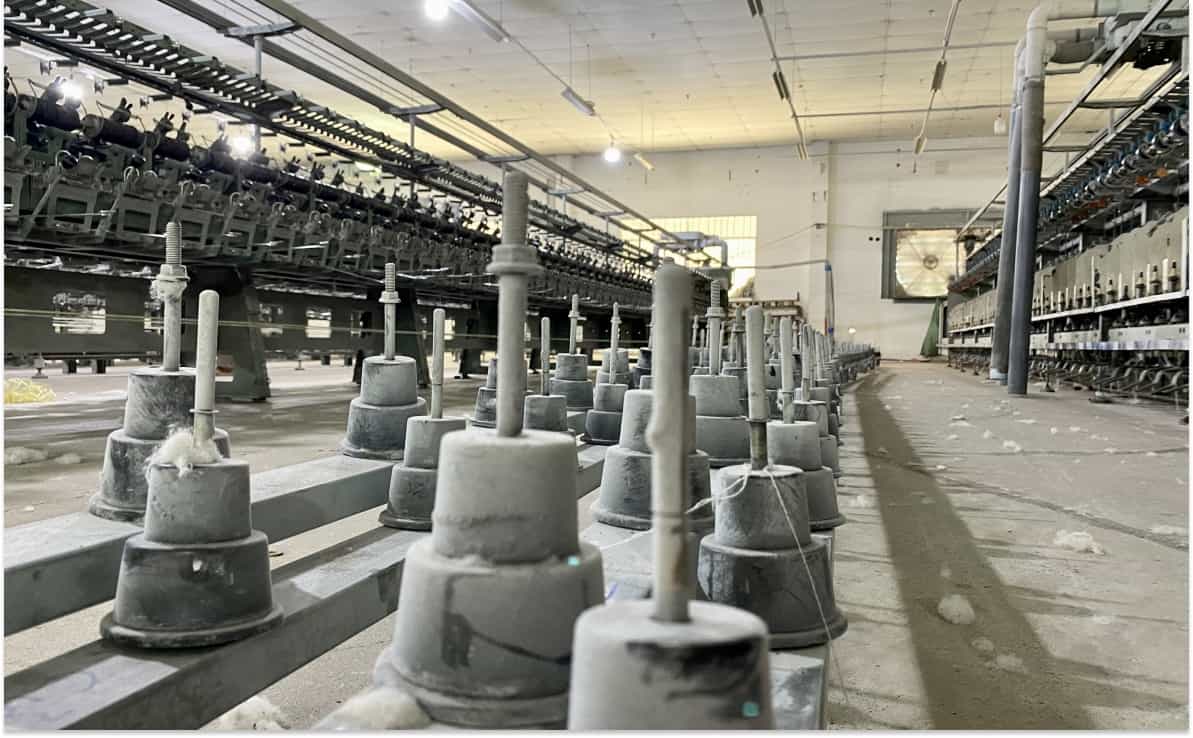
Automatic Yarn Dyeing Principles and Factory-Standard Color Control

The yarn dyeing process is one of the most critical and complex stages in the textile industry, directly determining the aesthetic value and quality of the final product. In the modern manufacturing environment, the use of advanced automatic equipment, especially the Automatic Yarn Dyeing Machine, is not only a trend but also a mandatory requirement to ensure color uniformity, increase productivity, and optimize costs.

This article will delve into the operating principle of the automatic yarn dyeing machine, clarifying how machinery replaces complex manual procedures. Simultaneously, we will detail the factory-standard Color Control mechanisms, from automatic chemical dosing and the application of the Spectrophotometer to color data management. The goal is to provide a comprehensive view of how factories can achieve perfect Color Repeatability across every batch, thanks to modern yarn dyeing machine technology.

yarn dyeing machine
Automatic Yarn Dyeing Principles and Factory-Standard Color Control 40

1. Overview of Automatic Yarn Dyeing Machines in Modern Production

The automatic yarn dyeing machine is specialized equipment designed to dye prepared yarn forms such as package/bobbin yarn, hanks, or warp beams . The most significant difference compared to manual dyeing methods is the ability to operate at high temperatures and pressures, coupled with a precise PLC control system.

1.1. The Importance of Automatic Dyeing Technology

Automation technology in yarn dyeing machines addresses the three biggest challenges in the dyeing industry:

  • Repeatability: Ensuring that the color of the subsequent batch is exactly the same as the previous one, which is unattainable with manual methods due to errors in temperature, time, and dosing.
  • Energy Efficiency: Modern yarn dyeing machines use technologies such as VFD (Variable Frequency Drive) Circulation Pump systems and Heat Recovery systems, helping to reduce water and energy consumption.
  • Yarn Quality: Automatic Tension Control in the yarn dyeing machine prevents structural damage to the yarn, maintaining the material’s strength and softness.

1.2. Classification of Common Yarn Dyeing Machines

In yarn dyeing, the most common type of machine is the High-Temperature, High-Pressure (HTHP) Package Dyeing Machine, as this is the most prevalent form of raw yarn used for weaving and knitting.

Yarn Dyeing Machine TypeMaterial Form HandledKey Technical Features
HTHP Package Dyeing MachineYarn packages (Bobbin/Package)High pressure (up to 5 bar), high temperature (up to 140 Celsius), liquid circulation
Hank Dyeing MachineHank yarnAtmospheric pressure dyeing, suitable for delicate fibers (wool, silk)
Beam Dyeing MachineWarp BeamLarge roll dyeing (used for woven warp yarns)

The majority of the analysis in this article will focus on the principles of the HTHP yarn dyeing machine due to its high popularity and advanced automation capabilities.

2. Structure and Circulation Principle of the HTHP Yarn Dyeing Machine

To understand the capability of precise color control, one must grasp the basic structure and operating principle of the high-temperature, high-pressure (HTHP) yarn dyeing machine.

2.1. Main Physical Structure

The HTHP yarn dyeing machine comprises the following core components:

  • Main Vessel: Usually made of stainless steel Inox 316L to withstand high chemicals, pressure, and temperature. This holds the dye liquor and the yarn to be dyed.
  • Spindles/Carriers: Holders where the yarn packages are stacked. The carrier design ensures that the dye liquor flow can pass through each yarn package uniformly.
  • Circulation Pump System: This is the most critical component. It generates pressure to force the dye liquor through the yarn packages.
  • Heat Exchanger: Used for rapid and precise heating (usually by steam) or cooling of the dye liquor according to the programmed recipe.
  • Dosing/Addition Tank: Used to prepare and meter chemicals and dyestuffs, which are then automatically pumped into the main vessel.

2.2. Dye Liquor Circulation Principle

The quality of dyeing depends on how uniformly the dye liquor penetrates the yarn. The HTHP yarn dyeing machine operates on the principle of Reversible Circulation:

  • Outside-In Circulation: The pump draws liquor from the center of the packages and pushes it outwards, then forces it from the vessel wall through the outer surface of the package, penetrating deep into the core.
  • Inside-Out Circulation: The pump reverses direction, drawing liquor from the outside of the packages and forcing it back inwards through the central spindle.

The alternation between these two modes, precisely controlled in terms of time and pressure by the PLC, ensures that every point on the package contacts the dyestuff equally, eliminating Shading (uneven dyeing) and forming the prerequisite for factory-standard color control.

3. Automation and Control Mechanisms of the Yarn Dyeing Machine

Máy nhuộm sợi công nghiệp
Automatic Yarn Dyeing Principles and Factory-Standard Color Control 41

Automation technology is the core factor that helps the yarn dyeing machine achieve high precision and color repeatability.

3.1. Programmable Logic Controller (PLC)

The central control system is the PLC (Programmable Logic Controller), often from brands like Siemens, Allen-Bradley, or Mitsubishi. The PLC contains the Dyeing Program/Recipe, which includes hundreds of steps:

  • Time and Temperature: The PLC controls the steam valves and heat exchanger to ensure the Ramp Rate and Holding Temperature are accurate.
  • Pump Control: Controls the speed and pressure of the circulation pump via the VFD. Pump speed is measured by flow sensors, helping to maintain the Liquor Ratio and ensure optimal flow through the yarn.
  • Dosing Control: The PLC automatically opens/closes solenoid valves and controls the dosing pump to add chemicals and dyestuffs to the main vessel at the exact programmed time and rate.

3.2. Automatic Chemical Dosing System

This is the most crucial mechanism for precise color control. Instead of the operator manually adding dyestuffs, the automatic system handles this:

  • Solution Preparation: Dyestuffs and chemicals are dissolved in the Dosing Tank.
  • Precise Metering: The Dosing Pump, typically a Peristaltic Pump or Piston Pump, is controlled by a Servo/Stepper Motor. Load Cells (electronic scales) monitor the liquid volume in the dosing tank, ensuring the dispensed amount is accurate down to the gram.
  • Controlled Pumping Speed: The rate at which the solution is pumped into the main vessel (Dosing Speed) is controlled to ensure the dyestuff is distributed evenly and slowly, preventing Dye Shock which can cause uneven dyeing.

The automatic dosing system eliminates human error, ensuring absolute color repeatability between batches.

3.3. HMI and Recipe Management

The Human Machine Interface (HMI) is a touchscreen where the operator inputs the Dyeing Recipes.

  • Recipe Storage: The HMI stores hundreds of different dyeing recipes, each containing all parameters: yarn type, temperature, time, chemical amounts, pump speed, and elongation rate (if applicable).
  • Production Reports: The automatic yarn dyeing machine records the entire dyeing process log (recipe name, execution time, actual temperature, chemicals used). This data is the basis for Traceability and Troubleshooting if color issues arise.

4. Factory-Standard Color Control Process with the Yarn Dyeing Machine

To meet the “factory-standard” color requirements (i.e., the color must meet the customer’s demands or internal standards), the process must be executed scientifically, combining the laboratory and the automatic yarn dyeing machine.

4.1. Step 1: Lab-Dip Recipe Preparation

The initial color formulation is always developed in the laboratory (Lab-Dip).

  • Recipe Calculation: The color engineer uses Color Management Software and a Spectrophotometer to calculate the required dyestuff ratio to achieve the target color.
  • Small-Scale Trial: A small sample (usually just a few grams of yarn) is dyed in a Lab Dyeing Machine (miniature machine).
  • Color Assessment: The Lab-Dip sample is compared to the customer’s standard under standard light sources (D65, TL84, A) and measured by the Spectrophotometer to confirm the color difference.

4.2. Step 2: Recipe Transfer to Production Yarn Dyeing Machine

This is the critical step, called Scale-Up. Success depends entirely on the accuracy of the yarn dyeing machine.

  • Liquor Ratio: The Lab-Dip formula is scaled up to the production formula based on the yarn weight and the Liquor Ratio (e.g., 1:5, meaning 1 kg of yarn requires 5 liters of dye liquor).
  • Automatic Data Entry: The dyestuff and chemical quantity data are transferred automatically from the color management software to the yarn dyeing machine’s dosing system (via network connection or USB), eliminating typing errors.
  • Ensuring Identical Conditions: The production yarn dyeing machine must be able to precisely reproduce the temperature and time conditions of the Lab Dyeing Machine—this is the core advantage of the automatic HTHP system.

4.3. Step 3: Color Control During the Dyeing Process

While the yarn dyeing machine is running, the color control process is maintained:

  • Monitoring Temperature/Time: The PLC continuously records the temperature/time profile. Any deviation from the recipe triggers an alarm.
  • Mid-Process Sampling: For difficult-to-dye yarns, the operator can take a yarn sample mid-process via a High-Pressure Sampling Device. This sample is quickly checked to determine if the color has reached the desired depth.
  • Addition/Correction: If the color is insufficient, the engineer can calculate the quantity of supplementary dyestuff or chemicals. This additional amount is controlled by the PLC and pumped in using a safe, slow procedure to avoid damaging the yarn and ensure color dispersion.

4.4. Application of the Spectrophotometer

The Spectrophotometer is the tool for digitizing color. It measures the intensity of light reflected from the yarn sample at all wavelengths and converts it into numerical values.

  • Delta E Assessment: After dyeing, the yarn is removed, dried, and measured with the Spectrophotometer. The color difference value Delta E between the production sample and the standard is the most precise measure of color quality.
  • Color Management Software: The Delta E data is used to fine-tune the recipe for subsequent batches. For example, if the production color is consistently slightly bluer than the standard, the software will automatically reduce the proportion of blue dyestuff in the recipe for the next production run on the yarn dyeing machine.

5. Operational Challenges and Optimization Solutions for Yarn Dyeing Machines

Máy nhuộm sợi chính hãng
Automatic Yarn Dyeing Principles and Factory-Standard Color Control 42

Although automatic yarn dyeing machines offer many benefits, operating and maintaining them still present several challenges that need to be addressed.

5.1. Energy Efficiency and Environmental Challenges

Yarn dyeing machines are large consumers of water, heat, and electricity. Operating costs can be very high if optimization is neglected.

  • Low Liquor Ratio (LLR) Solution: Modern yarn dyeing machines are designed to operate with a Low Liquor Ratio (e.g., 1:4 or 1:3.5). LLR reduces the amount of water and chemicals needed, and simultaneously decreases the heat required to warm the dye liquor.
  • Heat Recovery System: Installing heat exchangers to use the heat from hot dyeing wastewater to preheat clean incoming water significantly saves steam energy.

5.2. Issues with Package Density Uniformity

In package dyeing, if the yarn packages are wound too tightly or too loosely, the dye liquor flow cannot penetrate uniformly, leading to Uneven Dyeing.

  • Solution: Strict control of the Winding Machine prior to dyeing is required to ensure consistent Package Density. Additionally, the use of VFD Circulation Pumps in the yarn dyeing machine allows the adjustment of pumping pressure to suit the density of each yarn type.

5.3. Maintenance of the Circulation Pump System

The circulation pump is a mechanical component that operates continuously in a high-temperature environment. Any reduction in pump efficiency directly affects flow rate and pressure, thereby impacting color uniformity.

  • Solution: Regular maintenance of pump Seals and Bearings is essential. Using pressure and flow sensors to continuously monitor pump performance ensures the yarn dyeing machine always operates under optimal conditions.

6. VieTextile: Elevating Your Yarn Dyeing Machine Performance

VieTextile is a leading expert in providing spare parts and technical solutions for the dyeing and finishing industry, particularly for automatic HTHP yarn dyeing machine lines. We thoroughly understand the complex operating principles of each machine type and are committed to delivering solutions that optimize productivity and color quality.

We supply a complete range of high-quality components essential for the precise operation of the yarn dyeing machine, including:

  • Circulation Pump Components: Mechanical Seals, heat-resistant bearings, and Impellers ensure stable pump flow and pressure.
  • Control and Sensor Components: Providing PLC boards, VFDs, PT100temperature sensors, pressure sensors, and flow sensors, which help maintain high accuracy during the dyeing process.
  • Heat-Resistant Mechanical Parts: Various types of Automatic Valves, and high-temperature and high-pressure resistant gaskets (Viton, PTFE), ensuring no leaks or pressure loss in the dyeing vessel.

VieTextile offers more than just spare parts; we provide comprehensive upgrade services for your yarn dyeing machine:

  • Control System Upgrade: Replacing older generation PLC and HMI systems with new control systems that integrate network connectivity and specialized software for digital recipe management.
  • Energy Saving Optimization: Consulting and installing Heat Recovery Systems and upgrading circulation pumps to high-efficiency VFD technology, helping to reduce energy and water consumption.
  • Color Calibration: Technical support in calibrating temperature and flow sensors, ensuring the yarn dyeing machine operates in synchronization with the laboratory (Lab-to-Bulk Consistency), thereby achieving factory-standard color.

With VieTextile, you gain not only high-quality components but also a commitment to the long-term quality and operational performance of your yarn dyeing machine.

7. Frequently Asked Questions (FAQ) About Yarn Dyeing Machines

1. Question: What is the basic principle by which an automatic yarn dyeing machine ensures color uniformity? Answer: The basic principle is the combination of Reversible Circulation of the dye liquor to ensure every part of the yarn package is evenly exposed, and Precise Temperature/Time Control via the PLC.

2. Question: What is the Liquor Ratio and why is it important for modern yarn dyeing machines? Answer: The Liquor Ratio is the ratio between the weight of the dye liquor and the weight of the yarn (e.g., 5:1). The lower the ratio, the more water, chemicals, and energy are saved for heating. Modern yarn dyeing machines always aim for a Low Liquor Ratio (LLR).

3. Question: How can Shading (uneven dyeing) on package dyeing machines be eliminated? Answer: Shading is often caused by unevenly wound yarn packages (varying density) or unstable circulation pump operation. The solution is to control the package density before dyeing and ensure the yarn dyeing machine’s circulation pump operates at optimal pressure.

4. Question: How is the Spectrophotometer used in the factory-standard color control process? Answer: The Spectrophotometer measures the color of the dyed yarn sample and converts it into a numerical Delta E value. It quantifies the degree of color difference compared to the standard, serving as the basis for adjusting the dyeing recipe for subsequent production batches.

5. Question: How does the Automatic Dosing System on a yarn dyeing machine work to increase color accuracy? Answer: This system uses a precise pump (Servo/Stepper motor pump) and Load Cells to add dyestuffs and chemicals to the main vessel with absolute control over quantity and speed, eliminating manual error and preventing dye shock.

6. Question: Is upgrading the PLC and HMI truly necessary for older yarn dyeing machines? Answer: Yes, it is. Upgrading the PLC/HMI allows for the integration of more modern sensors, digital recipe management, and connectivity with production management systems, thereby improving the yarn dyeing machine’s color repeatability and troubleshooting capabilities.

7. Question: How long does a typical batch of yarn take on an HTHP yarn dyeing machine? Answer: The dyeing cycle for a batch of yarn typically ranges from 4 to 8 hours, depending on the yarn type (e.g., polyester is faster than cotton) and the dyestuff used. This cycle includes heating, holding, cooling, and draining steps.

To ensure your yarn dyeing machine always operates at peak efficiency and color standards, let VieTextile accompany you!

Contact Information:

Hotline: 0901 809 309

Email: info@vietextile.com

Website: https://vietextile.com
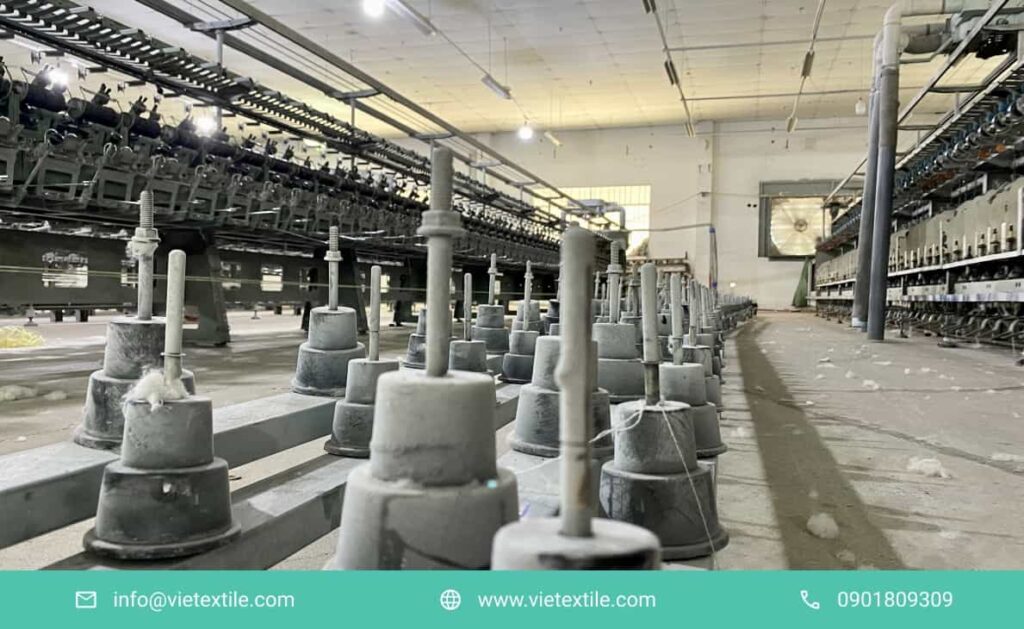
Common Failures in Dyeing Machine Butterfly Valves and How to Fix Them

The yarn dyeing machine is the heart of the textile product finishing process. Within it, the dyeing machine butterfly valve plays a vital role as a control valve, determining the flow, pressure, and temperature of dyeing chemicals and steam. Any minor fault in the butterfly valve can cause uneven dyeing, chemical waste, energy consumption, and prolonged machine downtime. Therefore, understanding common failures, their root causes, and troubleshooting procedures is a key maintenance strategy for modern textile factories.

This in-depth analysis will delve into the structure, operating principles, and analyze 7 of the most common failures in butterfly valves. It also provides a diagnosis, maintenance procedure, and a strategy for selecting high-quality dyeing machine butterfly valve to help factories maintain continuous operational efficiency.

Dyeing Machine Butterfly Valve
Common Failures in Dyeing Machine Butterfly Valves and How to Fix Them 47

1. Structure, Principle, and Role of the Dyeing Machine Butterfly Valve

The butterfly valve is widely chosen in the yarn dyeing industry due to its simple design, compact size, and rapid flow regulation capability.

1.1. Core Technical Structure

The dyeing machine butterfly valve consists of the following main components:

  • Valve Body: Often made of Stainless Steel (SS) 304 or 316L to resist corrosion from chemicals and high temperatures.
  • Disc: The main flow control component, attached to the stem. The disc rotates 90 degrees for full open or close.
  • Seat/Liner: Usually made of EPDM, Viton, or PTFE, creating a seal between the disc and the body to prevent leakage.
  • Stem: Transmits motion from the actuator to the disc.
  • Actuator: Can be manual (handwheel), pneumatic, or electric, responsible for controlling the opening angle of the valve, which determines the flow rate.

1.2. Operating Principle and Role in the Dyeing Cycle

The butterfly valve operates on the principle of flow regulation by rotating the disc. The disc rotates parallel to the flow when fully open (for maximum flow) and perpendicular when closed (completely shutting off flow).

  • Chemical Regulation: Precisely controls the amount of dye, auxiliaries, and cleaning agents entering the dyeing vat, ensuring accurate mixing ratios.
  • Temperature Control: Regulates the flow of hot steam into the heating system, maintaining the precise dyeing temperature curve required by the technology.
  • Effluent Management: Controls the discharge of spent dye water and chemicals to the treatment system. The seal integrity of the dyeing machine butterfly valve at this stage is crucial to prevent loss and pollution.

2. Analysis of 7 Common Technical Failures in Dyeing Machine Butterfly Valves

Failures in the dyeing machine butterfly valve not only cause waste but also directly affect the quality of the dye color (color fastness).

2.1. Seat Leakage

  • Symptom: Dye liquor or steam drips/leaks even when the valve is fully closed.
  • Root Causes:
    • Seat Wear: After prolonged exposure to high temperatures and pressure, the EPDM/PTFE seat hardens and loses elasticity.
    • Chemical Residue: Dye crystals or impurities accumulate on the seat surface, preventing the disc from creating a complete seal.
    • Installation Error: The seat is twisted or eccentrically installed, reducing compression force.
  • Fix: Check the seat’s elasticity. If the seat is worn or hardened, replace it with a new one made of a suitable material (e.g., PTFE is more chemical-resistant than EPDM). Thoroughly clean the disc and seat before assembly.

2.2. Stem Seizing/Stiffness

  • Symptom: The pneumatic or electric actuator cannot rotate the valve stem, or excessive force is required to operate it.
  • Root Causes:
    • Corrosion/Rust: Occurs on the stainless steel stem due to continuous exposure to a humid and chemical environment.
    • Tight Packing: The packing rings around the stem are over-tightened or hardened due to heat.
    • Loss of Lubrication: Lack of specialized lubrication grease for the stem, increasing friction between the stem and the valve housing.
  • Fix: Disassemble and clean the stem. Use mild cleaning agents for corrosion. Re-lubricate with heat and chemical-resistant grease (e.g., silicone grease). Readjust the tightness of the stem packing.

2.3. Disc Erosion/Chemical Corrosion

  • Symptom: The surface of the disc shows pits, small holes, or unusual thinning.
  • Root Causes:
    • Steam and Temperature Impact: Erosion due to high flow velocity when steam passes through a small gap.
    • Strong Acids/Alkalis: Strong bleaching solutions or alkalis (NaOH) used in pre-treatment degrade SS 304 structure (SS 316L should be used in severe environments).
    • Mechanical Impurities: Dirt particles or sediment in the dye liquor increase abrasive friction.
  • Fix: Replace the dyeing machine butterfly valve with SS 316L material for locations exposed to strong acids/alkalis. Ensure the water and chemical filtration system is well-maintained.

2.4. Pneumatic Actuator Failure

  • Symptom: The pneumatic actuator does not respond to the control signal or responds slowly, failing to reach the required opening angle.
  • Root Causes:
    • Low Air Pressure: The factory’s general compressed air system experiences a sudden pressure drop.
    • Dirty Air Filter: The air filter regulator is clogged, allowing dirty and humid air into the cylinder.
    • Piston Seal Damage: The rubber seals inside the cylinder are damaged, leaking compressed air and reducing force on the valve stem.
  • Fix: Check the minimum required compressed air pressure (typically 5–7 bar). Replace the air filter and check the piston seals.

2.5. Positioner Drift

  • Symptom: The butterfly valve does not stop precisely at the desired opening angle (e.g., set to 50% but stops at 55%), causing flow and temperature deviations.
  • Root Causes:
    • Faulty Positioner: Electronic components in the positioner (used for proportional control valves) are malfunctioning.
    • Inaccurate Position Feedback: The valve stem position sensor is loose or dirty.
  • Fix: Re-calibrate the positioner according to the manufacturer’s instructions. If the failure persists, the positioner or the entire dyeing machine butterfly valve needs replacement.

2.6. Abnormal Vibration and Noise

  • Symptom: Loud noise, whistling, or strong vibration occurs when the valve is throttling flow.
  • Root Causes:
    • Unsuitable Design: The valve is installed in a location with excessively high differential pressure, causing cavitation or flashing.
    • Loose Components: The valve stem or disc has become slightly loose due to prolonged vibration.
    • Pipe Installation Error: The piping is not securely anchored.
  • Fix: Check and tighten connection points. If the cause is system design, consider replacing it with a noise-reducing valve or adjusting pump speed/pressure.

2.7. Gasket Washout

  • Symptom: The seat gasket is partially washed out or disintegrated, particularly in areas exposed to high-pressure hot steam.
  • Root Causes:
    • Incorrect Material Selection: A low-temperature seal (e.g., NBR) is used in a steam environment.
    • Excessive High Pressure: The pressure on the dyeing machine butterfly valve exceeds the gasket’s design limit.
  • Fix: Always use PTFE or Viton seats for hot steam and chemical applications. Ensure the valve is rated for the appropriate pressure.

3. Serious Impact of Dyeing Machine Butterfly Valve Failure on Production

Thiết bị van bướm máy nhuộm sợi
Common Failures in Dyeing Machine Butterfly Valves and How to Fix Them 48

A minor fault in the butterfly valve can lead to losses much greater than the cost of replacing a new dyeing machine butterfly valve.

3.1. Product Quality Issues (Dyeing Inconsistencies)

Leakage or positioner drift is the leading cause of non-uniformity in the dyeing cycle:

  • Shade Error: A leaking steam control valve causes uncontrolled temperature increases, resulting in color shade variation.
  • Concentration Error: A chemical valve that does not seal tightly leads to incorrect dye concentration, requiring re-processing or scrapping the batch. Correcting these errors costs significantly more than purchasing a quality dyeing machine butterfly valve.

3.2. Increased Operational Costs (Operational Cost Hike)

  • Steam Waste: A leaking steam valve (seat leakage) is the largest source of energy waste in the factory. A 3% leak can increase energy costs substantially every month.
  • Chemical Consumption: Leaking chemical valves result in excessive consumption of dyes and auxiliaries.
  • Increased Downtime: Every sudden valve failure forces the dyeing machine to stop, wasting labor costs and reducing export capacity.

4. On-Site Dyeing Machine Butterfly Valve Failure Diagnosis Procedure

Early diagnosis helps minimize repair costs and ensures the reliability of the dyeing machine butterfly valve.

4.1. Leakage Test

  • Visual and Auditory Check: Listen for a whistling sound in the steam valve when it is closed. Visually check for condensed steam or water droplets leaking at the valve outlet.
  • Temperature Check: Use an infrared thermometer to measure the outlet temperature of the valve. If the outlet temperature is significantly higher than the ambient temperature when the valve is closed, it indicates a leak.

4.2. Actuator Testing

  • Air Pressure Check: Measure the compressed air pressure going into the actuator. If the pressure meets the requirement but the valve fails to open/close, the fault lies with the piston seal or the internal rotating mechanism.
  • Control Signal Check: For electric control valves, check the 4–20 mA or 0–10 V signal from the PLC controller.

4.3. Position Verification

  • Manual Position Check: Command the valve to open 25%, 50%, 75%. Visually observe if the disc stops at the correct angle. A deviation greater than 3% requires positioner recalibration. Ensure every dyeing machine butterfly valve operates precisely.

5. Effective Dyeing Machine Butterfly Valve Periodic Maintenance Strategy

Preventive maintenance is the optimal strategy to extend the lifespan of the dyeing machine butterfly valve.

5.1. Quarterly Maintenance Procedure

  • Stem Lubrication: Disassemble the packing gland and re-lubricate the valve stem with high-temperature grease.
  • Air Filter Cleaning: Remove and clean, or replace, the air filter element of the pneumatic actuator. Moisture and dirty oil are the enemies of pneumatic actuators.
  • Tightness Check: Inspect and tighten the bolts connecting the valve body and the actuator.

5.2. Annual Overhaul Procedure

  • Seat Replacement: Plan to replace all seat and stem packing seals, even if they have not yet failed. This is the most effective measure to prevent sudden leakage.
  • Disc Inspection: Disassemble the disc for visual inspection of erosion and corrosion, especially in steam and chemical valves.
  • Full Calibration: Recalibrate the positioners of all flow control dyeing machine butterfly valve.

6. Solution for Selecting Dyeing Machine Butterfly Valves and System Optimization

Phụ kiện van bướm máy nhuộm sợi
Common Failures in Dyeing Machine Butterfly Valves and How to Fix Them 49

The selection of a dyeing machine butterfly valve should not be based solely on price but on its lifespan and chemical resistance.

6.1. Corrosion-Resistant Material Standards

Application LocationMaterial RequirementNote
Hot Steam ValveSS 316L Body, PTFE (or PFA) SeatResists 150∘C temperature and high pressure.
Alkaline Chemical ValveSS 316L Body, Viton/PTFE SeatAbsolute corrosion resistance to NaOH and strong detergents.
Effluent Water ValveSS 304 or 316, EPDM SeatRequires resistance to sludge buildup and absolute seal integrity.

6.2. Actuator Upgrade

Replace old pneumatic actuators with models featuring dual-piston technology or smart positioners to improve response speed, minimize lag, and increase the accuracy of the dyeing process. VieTextile is a provider that can supply a dyeing machine butterfly valve integrated with this technology.

6.3. Spare Parts Inventory Management

Maintaining an inventory of easily worn parts (seal kits, packing, actuator diaphragm) is a more critical strategy than stocking complete new dyeing machine butterfly valve. This reduces warehousing costs and ensures quick fix for leakage issues.

7. Conclusion: Optimizing the Dyeing Cycle with Quality Dyeing Machine Butterfly Valves

The dyeing machine butterfly valve is a small component with strategic significance for production efficiency. Failures such as leakage, jamming, or positional errors not only cause energy waste but also directly threaten fabric color quality, leading to huge consequential costs.

To maintain stable production and effective cost control, textile factories must implement a comprehensive maintenance strategy: invest in high-quality dyeing machine butterfly valve from reputable suppliers, strictly adhere to periodic maintenance procedures, and promptly replace seals before widespread failure occurs. This will ensure the reliability of the valve in the harsh operating environment of the dyeing machine, optimize the dyeing cycle, and affirm a competitive position in the export market.

8. Frequently Asked Questions (FAQ) About Dyeing Machine Butterfly Valves

Q1: What is the average lifespan of a butterfly valve seat? A1: The lifespan of a dyeing machine butterfly valve seat depends on temperature and chemicals. Under 24/7 operation with hot steam and chemicals, the recommended lifespan is 1 to 2 years. Periodic annual replacement is necessary to avoid sudden leaks.

Q2: How to tell if a butterfly valve needs replacement or just repair? A2: If the fault is only in the seat, stem packing, or actuator, it can be repaired. However, if the valve body or disc suffers from chemical corrosion or physical erosion, the entire dyeing machine butterfly valve must be replaced to prevent more severe failure.

Q3: Should I use a ball valve instead of a butterfly valve? A3: Ball valves offer better seal integrity but are less flexible for flow regulation (throttling). The dyeing machine butterfly valve is superior in flow control and temperature regulation applications (control valve), while ball valves are better suited for full on/off applications and handling high pressure.

9. VieTextile – Strategic Partner for Genuine Dyeing Machine Butterfly Valve Supply

VieTextile is a leading supplier of dyeing machine butterfly valve, specializing in the textile industry, committed to providing optimal solutions for your equipment’s performance and lifespan:

  • High-Quality Products: We supply dyeing machine butterfly valve made of SS 316L with PTFE/Viton seats, ensuring absolute resistance in high-temperature and harsh chemical environments.
  • Spare Parts Inventory: Guaranteed quick response time, minimizing machine downtime.
  • Technical Consultation: Our expert engineering team supports fault diagnosis, material selection, installation, and on-site calibration of the dyeing machine butterfly valve at your factory.

Contact VieTextile for detailed consultation on dyeing machine butterfly valve solutions and other dyeing machine spare parts: 

Hotline: 0901 809 309 

Email: info@vietextile.com 

Website: https://vietextile.com

Drive Principles and Mechanisms in Industrial Stenter Machine Structure

In the modern dyeing and finishing industry, the Stenter Machine plays a decisive role in the final quality of the product. However, the efficiency and precision of the setting process depend not only on temperature or airflow but also on the synchronization and stability of the drive system. This article delves into the analysis of the complex drive principles and mechanisms, which form a core part of the industrial stenter machine structure.

Understanding the drive mechanism is key to optimizing production speed, minimizing fabric width deviation (Skewing), and ensuring equipment lifespan. We will explore everything from the main motor and power transmission system to modern automation control mechanisms, especially the Servo drive and digital control technologies that are revolutionizing the industrial stenter machine structure in recent years. The goal is to provide a comprehensive view of how these mechanical components operate in harmony to deliver peak performance.

Industrial Stenter Machine Structure
Drive Principles and Mechanisms in Industrial Stenter Machine Structure 54

1. The Core Role of the Drive System in the Stenter Machine

The drive system is not merely the component that moves the fabric through the drying chambers. It is the control center for speed and tension, directly influencing the thermal setting process.

1.1. Primary Goals of the Drive Mechanism

The paramount goal of the drive mechanism within the industrial stenter machine structure is to maintain the fabric’s line speed and tension with absolute stability and precision. Any speed fluctuation, no matter how small, can lead to differences in the thermal dwell time across the fabric width, resulting in inconsistent setting quality.

Furthermore, the drive system must ensure perfect synchronization between the fabric infeed speed, the Pin/Clip Chain speed, and the fabric exit speed. This synchronization, often controlled through the set Overfeed/Underfeed Ratio, determines the final shrinkage of the product.

1.2. Specific Technical Requirements

The drive system in the industrial stenter machine structure must meet stringent technical requirements due to the specialized operating environment:

1.2.1. High Heat and Humidity Resistance

Most of the drive mechanism, especially the pin chain and rail system, operates within or close to the setting chamber, where temperatures can reach up to 220 Celsius. Therefore, mechanical components such as bearings, gears, and lubricants must be of the high-temperature resistance type, ensuring smooth operation without deformation or reduced lifespan.

1.2.2. Speed Precision

Stenter machines often run at high speeds (up to $100-200$ meters/minute). The drive mechanism must be capable of controlling the speed with precision down to 0.1% or better. This accuracy is mandatory to maintain the set heat-setting Recipe and ensure quality repeatability across different batches.

1.2.3. Compatibility with Diverse Tension Requirements

The industrial stenter machine structure must be capable of handling various fabric types, from heavy woven fabrics (requiring high tension) to light knitted fabrics (requiring extremely low tension). The drive mechanism must be strong enough to generate high pulling force when needed, but also capable of fine torque adjustment to avoid tearing or distorting delicate fabrics.

2. Analysis of the Main Drive Mechanism: Motor and Power Transmission

The heart of the drive system is the Main Drive Motor, responsible for generating the mechanical force to move the entire pin/clip chain system.

2.1. The Choice Between Standard AC Motor and Servo Motor

In older generation industrial stenter machine structures, AC Induction Motors combined with a Variable Frequency Drive (VFD) were standard.

  • AC Motor/VFD: Advantages include lower cost and high durability. Disadvantages are slower Response Time and lower accuracy at low speeds, which can cause minor speed fluctuations.
  • Servo Motor: This is the current trend in modern industrial stenter machine structure design. Servo offers extremely high speed and position accuracy, with almost instantaneous response time. This allows the system to compensate for speed errors immediately, ensuring absolute synchronization between the two chain rails (left and right).

The use of Servo motors significantly improves shrinkage control capability and minimizes speed-related errors, despite a higher initial investment cost.

2.2. Mechanical Power Transmission System

Once the torque is generated by the motor, it must be transmitted to the pin/clip chain through the mechanical transmission system.

2.2.1. Gearbox

The Gearbox (or Reducer) is a crucial device that converts the high speed and low torque of the motor into the low speed and high torque required to pull the heavy chain. In the industrial stenter machine structure, the gearbox must be a heavy-duty, high-precision type with low noise. Common issues related to oil leaks or gear wear require periodic maintenance.

2.2.2. Couplings and Drive Shafts

Couplings are used to link the motor shaft to the gearbox and the gearbox shaft to the main drive shaft. They must be capable of absorbing vibration and tolerating minor Misalignment errors caused by thermal expansion. Selecting high-quality Elastic Couplings is critical to prevent premature bearing and shaft failure.

2.2.3. Chain Drive or Direct Drive

In older machines, a mechanical drive chain (distinct from the pin chain) was used to transmit power from the gearbox to the large sprocket that pulls the pin chain. However, the modern trend in the industrial stenter machine structure is to use Direct Drive (DD) technology, which completely eliminates the mechanical drive chain to increase efficiency, reduce friction, and eliminate unwanted noise and vibration sources.

3. Pin Chain Drive Mechanism and Fabric Width Adjustment

Cấu tạo chính của máy định hình vải công nghiệp
Drive Principles and Mechanisms in Industrial Stenter Machine Structure 55

The pin chain drive mechanism is the most complex component, responsible for the fabric’s linear movement in the setting chamber and controlling its width.

3.1. Pin/Clip Chain Drive Principle

The Pin Chain or Clip Chain is where the fabric is held securely. The pulling force is transmitted to the chain through the Sprocket located at the machine’s entry or exit end.

In the standard industrial stenter machine structure, the pin chain is driven by a single main shaft system, using Universal Joints to ensure the speed of the left and right sides is perfectly synchronized.

However, high-end and modern machines use an Independent Drive system for each chain side. This means each chain side has its own Servo Motor, allowing for Differential Speed Control. The purpose is to compensate for slight differences in friction or load between the two chains, or even to intentionally introduce a small speed difference to correct faults like fabric Bow/Skew.

3.2. Automatic Width Adjustment Mechanism

The width adjustment unit is a sophisticated drive mechanism that determines the precise width of the fabric.

3.2.1. Lead Screws and Servo Motor

The most common mechanism utilizes large Lead Screws, operating in parallel to simultaneously move the two Rail Guides in and out. Each lead screw is driven by a separate Servo Motor (or a main motor and a clutch).

The control system receives signals from optical or ultrasonic Width Measuring Sensors, compares them to the set value, and controls the Servo motor to move the rail. The width adjustment precision in modern industrial stenter machine, ensuring uniform fabric width at the exit.

3.2.2. Automatic Feedback and Optimization (Feedback Loop)

The width adjustment drive mechanism must operate in a Closed-loop Feedback system. This means the system not only executes the command but also continuously checks the measured result and readjusts. PID (Proportional–Integral–Derivative) Controllers are used to optimize the motor’s response speed, preventing Overshoot or Oscillation when changing the fabric width.

4. Auxiliary Drive Systems and Speed Synchronization

In addition to the main pin chain drive, the industrial stenter machine structure includes many other auxiliary drive systems, all of which must be perfectly synchronized with the main speed.

4.1. Infeed Drive System

The infeed system includes Tension Rolls and Nip Rolls to control the initial tension and guide the fabric selvedge into the pin/clip system.

This drive system typically uses an independent motor (or group of motors) controlled to run faster or slower than the pin chain speed by a fixed ratio (Overfeed percentage). Precise control of the Overfeed Ratio is extremely important as it directly affects the Warp Shrinkage (longitudinal shrinkage) of the fabric. The modern industrial stenter machine structure allows setting the Overfeed Ratio from -5% (stretching) to +50% (feeding slack).

4.2. Air Circulation and Exhaust Fan Drives

Each chamber in the industrial stenter machine structure has Air Circulation Fans to ensure a stable flow of hot air.

4.2.1. Circulation Fans Drive

These fans are typically driven by AC motors, controlled by VFDs to vary the fan speed. Adjusting the fan speed allows operators to change the heat transfer rate and the pressure of the airflow onto the fabric. An airflow that is too strong can cause fabric vibration, while an airflow that is too weak reduces drying efficiency.

4.2.2. Exhaust Fans Drive

The Exhaust System removes moisture and fumes from the chambers. The exhaust fans are also controlled by VFDs, and their speed is often automatically adjusted based on humidity or chamber pressure sensors. Precise control of the exhaust fan speed is necessary to balance drying efficiency and thermal energy saving.

4.3. Overall Speed Synchronization Principle

In advanced industrial stenter machine structures, all independent motors (main and auxiliary) are linked via a high-speed industrial communication network (such as Profinet, EtherCAT) to the Master PLC (Central Controller).

The synchronization principle is to establish a “Master Speed”—usually the pin chain speed—and control all other motors (infeed, outfeed, fans) to run at a preset Ratio relative to this Master Speed. This ensures that the entire process of fabric transportation and setting operates as a single, unified system, regardless of the overall operating speed.

5. Modernization Trends in Drive Mechanisms (2025+)

Cấu trúc và cơ chế máy định hình vải công nghiệp
Drive Principles and Mechanisms in Industrial Stenter Machine Structure 56

Technological advancements continue to enhance the industrial stenter machine structure, focusing on energy efficiency, control precision, and digital connectivity.

5.1. Direct Drive Technology

Direct Drive is the trend of replacing heavy and failure-prone mechanical gearboxes with High Torque Motors or Linear Motors mounted directly onto the drive shaft.

Advantages:

  • Maximum Reduction of Friction and Energy Loss: Eliminating intermediate mechanical parts saves electrical energy.
  • Higher Position Accuracy: Allows for absolute precision control of the pin chain position (e.g., when the machine stops), necessary for highly automated processes.
  • Reduced Maintenance Costs: No need for gearbox oil changes; no gear wear.

5.2. Sensor Integration and IoT in Drive Systems

In the future, the industrial stenter machine structure will treat drive systems as critical data sources. Vibration, temperature, and power consumption sensors are directly embedded into the motors and gearboxes.

This data is transmitted to the IoT/Cloud system for Predictive Maintenance (PdM) analysis. For example, if a sensor detects an abnormal increase in vibration from a circulation fan drive motor, the system can warn the technician that the fan bearing is about to fail before the actual breakdown occurs, preventing unplanned downtime.

5.3. Energy Recovery Systems

The stenter machine is a high energy consumer. The new trend is to use Regenerative Drives (motors and VFDs capable of energy regeneration). When the motor decelerates (brakes), instead of converting excess energy into heat (like traditional braking resistors), the VFD converts that energy into electricity and feeds it back into the power grid. This significantly reduces the overall power consumption of the industrial stenter machine structure.

6. VieTextile: Comprehensive Solutions for Stenter Machine Drive Mechanisms

VieTextile is a pioneer in providing optimization and upgrade solutions for the industrial stenter machine structure, especially concerning the drive and transmission systems. We are committed to delivering high-quality components and in-depth technical services.

We understand that the precision of the drive mechanism is the decisive factor in fabric quality. VieTextile specializes in providing genuine replacement parts for the drive system: from high-speed control Servo motors, industrial VFDs, to heat-resistant bearings, elastic couplings, and precision sprockets for the pin chain. Using high-quality spare parts from VieTextile helps extend the lifespan of your industrial stenter machine structure and ensures stable operation at high speeds.

VieTextile’s engineering team has extensive experience in evaluating and calibrating drive systems. We not only replace components but also perform the full system Tuning of Servo/VFD systems to achieve perfect speed synchronization between the drive shafts, optimizing the overfeed ratio and minimizing fabric width errors. We specialize in consulting on upgrading older industrial stenter machine structures by integrating new generation PLC and HMI control systems, allowing for more refined operational management and the integration of IoT/AI features.

VieTextile is committed to being a reliable partner, helping you upgrade your industrial stenter machine structure to the latest technical standards, ensuring your machinery remains at the forefront of productivity, precision, and energy efficiency.

7. Frequently Asked Questions (FAQ) About Stenter Machine Drive Principles

1. Question: What is the biggest difference between AC and Servo motors in the industrial stenter machine structure? Answer: Servo motors offer much higher speed and position accuracy, with instantaneous response time, which is ideal for controlling speed synchronization between the two pin chains and precise width adjustment.

2. Question: Which part of the drive system in the industrial stenter machine structure needs the most frequent lubrication? Answer: The Pin/Clip Chain system and the Rail Guides are the parts subjected to the highest friction and temperature, requiring frequent lubrication with specialized high-temperature oil/grease to prevent wear and chain jamming.

3. Question: What is the purpose of adjusting the hot air circulation fan speed in the industrial stenter machine structure? Answer: Adjusting the fan speed (usually via VFD) helps control the flow rate and pressure of hot air onto the fabric. This directly affects the heat transfer rate and can be used to optimize drying efficiency for different fabric types.

4. Question: How is the Warp Shrinkage (longitudinal shrinkage) of the fabric controlled during the setting process? Answer: Shrinkage is controlled by precisely adjusting the Overfeed Ratio at the infeed system. This ratio is the relationship between the fabric infeed speed and the pin chain speed and is managed by the independent drive mechanism of the infeed system.

5. Question: What is the advantage of the industrial stenter machine structure using an independent drive system for the two chains compared to a common drive? Answer: Independent drive (using two separate Servo motors) allows for Differential Speed Control between the two chains. This helps eliminate fabric Skew errors and allows for compensation of unequal friction or load between the two sides of the machine.

6. Question: When upgrading an old industrial stenter machine structure, is it feasible to replace a mechanical gearbox with Direct Drive? Answer: Upgrading to Direct Drive is feasible but requires significant intervention in the mechanical structure and the electrical control system. VieTextile can consult and execute these upgrade solutions to optimize energy efficiency and reduce maintenance.

7. Question: What is the function of the temperature and vibration sensors mounted on the motors in the new industrial stenter machine structure? Answer: They provide data for the Predictive Maintenance (PdM) system. By monitoring temperature or abnormal vibration levels, the system can provide early warnings of impending failures in bearings or mechanical components, preventing unexpected machine stops.

To upgrade, maintain, and optimize your industrial stenter machine structure, contact VieTextile today!

Contact Information:

Hotline: 0901 809 309

Email: info@vietextile.com

Website: https://vietextile.com
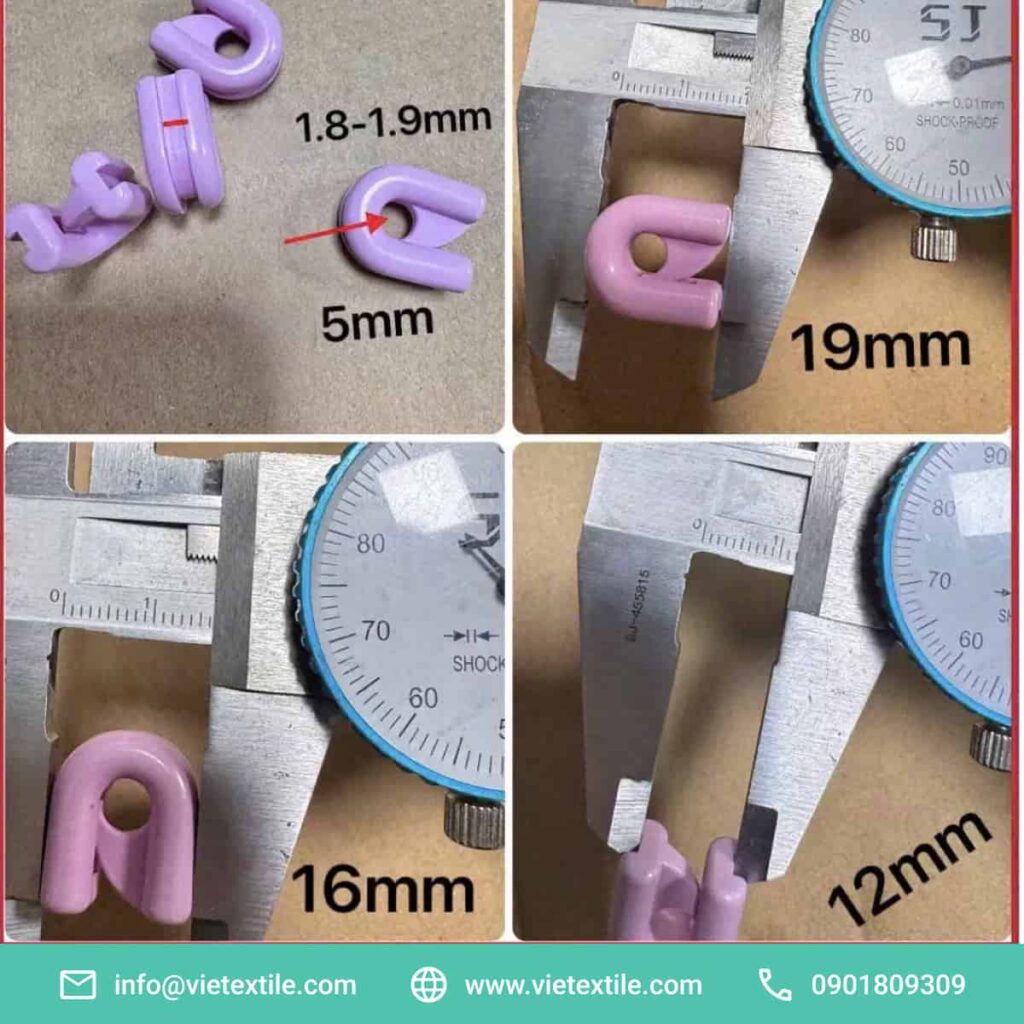
Stenter Machine Structure (8-Chamber – 10-Chamber): Pros and Cons

The Stenter Machine is an indispensable and pivotal piece of equipment in the finishing process of the dyeing and textile industry, playing a crucial role in determining the quality, dimensional stability, and hand-feel of the final product. Achieving optimal efficiency and uniform fabric quality requires a thorough understanding of the Stenter Machine structure. This article will deeply analyze the Stenter Machine structure, focusing on the two most common types: the 8-chamber and the 10-chamber models, while outlining the advantages and disadvantages of each.

The detailed content will help engineers and production managers understand the operating principles of each component, enabling them to make optimal investment, operation, and maintenance decisions. We will explore the core components of the Stenter Machine structure, from the fabric feeding system and the heat-setting chambers to the pin/clip chain mechanism and the complex electronic control system, highlighting the key differences between the 8-chamber and 10-chamber Stenter Machines.

Stenter Machine Structure
Stenter Machine Structure (8-Chamber – 10-Chamber): Pros and Cons 61

1. The Importance of the Stenter Machine in the Textile Industry

The Stenter Machine is the final and most important finishing step after dyeing and washing. Its main objective is to stabilize the fiber structure, eliminate wrinkles, and set precise technical specifications for the fabric, such as width, weight per unit area (GSM), and shrinkage.

1.1. General Operating Principle of the Stenter Machine

The Stenter Machine structure operates based on the principle of using heat and mechanical tension. The fabric is fed through the machine, stretched widthwise and lengthwise by a system of pins or clips. The fabric then enters the heat-setting chambers, where high temperatures and a stable hot air flow cause the polymers in the fabric fibers to realign, permanently fixing the fabric structure.

This process not only improves dimensions but also enhances other physical properties such as color fastness and wrinkle resistance. Ensuring this principle is accurately executed depends entirely on the synchronization and quality of every component within the Stenter Machine structure.

1.2. The Role of Temperature and Time in Heat Setting

Temperature and dwelling time in the drying chambers are the two critical factors determining the effectiveness of the heat setting. The temperature must be high enough to reach the glass transition temperature (Tg) of the fiber type (e.g., polyester requires a higher temperature than cotton). The setting time, also known as the thermal dwell time, must be long enough for the fiber structure rearrangement to complete.

The balance between these two factors is crucial and is controlled by the Stenter Machine structure. Machines with more drying chambers (such as 8 chambers, 10 chambers) allow for longer thermal dwell times at high production speeds, or enable more effective processing of thick, complex fabrics.

1.3. The Difference Between 8-Chamber and 10-Chamber Stenter Machines

The most fundamental structural difference in the Stenter Machine structure between the 8-chamber and 10-chamber types lies in the overall length of the drying chamber and the total heat capacity. Each drying chamber typically has a standard length (about 3 meters), so a 10-chamber machine is approximately 6 meters longer than an 8-chamber machine.

This increased length allows for a longer setting time, leading to higher productivity or the ability to process fabric at faster speeds. The 10-chamber machine offers superior flexibility and performance, especially vital for factories producing high volumes or processing fabrics that require a longer structural stabilization time. The decision to choose one type over the other will depend on the production volume and the types of fabric the factory is processing.

2. Detailed Stenter Machine Structure: Core Components

Chi tiết cấu tạo máy định hình vải
Stenter Machine Structure (8-Chamber – 10-Chamber): Pros and Cons 62

To better understand the stenter’s operation, we need to analyze each main component that constitutes the Stenter Machine structure. Each element plays a vital role in ensuring the heat-setting process is smooth and effective.

2.1. Fabric Feeding and Spreading System (Inlet and Selvedge Opener)

The fabric feeding system is where the process begins. It is responsible for guiding the fabric into the machine accurately and uniformly while controlling the initial tension of the fabric.

2.1.1. Expander Frame and Detwisting Device

Before the fabric is stretched, it must be ensured that it is not twisted or curled. The Automatic Detwisting Device is an integral part of the modern Stenter Machine structure, using optical or mechanical sensors to detect and adjust the twist in the fabric width.

After detwisting, the fabric passes through the Expander (or Expander Frame), which helps widen the fabric to the desired working width. This expander usually consists of curved or angle-adjustable rollers, playing a key role in preparing the fabric to enter the pin/clip chain system.

2.1.2. Photo-cell Selvedge Tracker for Fabric Width Adjustment

To ensure the fabric selvedge is accurately gripped by the pin/clip system, the Stenter Machine structure is equipped with Photo-cell Selvedge Trackers. These sensors continuously scan the fabric edge and send feedback signals to hydraulic cylinders or servo motors to adjust the selvedge position, keeping it precisely on the chain rail.

The accuracy of this system is paramount, as a wrongly gripped selvedge can lead to tearing or uneven setting, resulting in mass product damage.

2.2. Stentering Chamber (Stentering Chamber)

The drying chamber is the heart of the Stenter Machine structure, where the thermal fixing process takes place. The efficiency of the chamber directly affects the setting quality and energy costs.

2.2.1. Heating Element and Air Circulation Chamber Structure

Each drying chamber contains heating elements, often heat exchangers operating with thermal oil, steam, or gas burners. The structure of the Stenter Machine’s drying chamber is designed to create a strong and uniform Air Circulation flow.

Circulation fans draw hot air from the heating elements and blow it through Nozzles onto both sides of the fabric. The nozzle design must ensure that the airflow is evenly distributed, high-speed, and at the appropriate pressure to break the static air layer around the fabric, maximizing heat transfer efficiency.

2.2.2. Moisture Control and Exhaust System

Moisture control is an essential part of the Stenter Machine structure. In the initial stage, steam may be sprayed in to soften the fabric fibers, facilitating the stretching process. Subsequently, during drying, the Exhaust System removes moisture released from the fabric and volatile substances (Fumes/Smoke) from finishing chemicals.

The exhaust system must have an appropriate flow rate. Excessive exhaust wastes thermal energy; insufficient exhaust reduces drying efficiency and causes workplace pollution. Both 8-chamber and 10-chamber Stenter Machines are equipped with advanced exhaust flow control systems.

2.3. Pin Chain/Clip Chain Unit

The pin chain or clip chain system is responsible for securing the fabric selvedge and applying widthwise tension throughout the journey through the drying chambers.

2.3.1. Chain and Rail System Design

The Stenter Machine structure includes two parallel chain rails, whose distance (working width) can be adjusted via an automatic width adjustment system. The Pin Chain uses thousands of small pins to grip the fabric edge, suitable for woven fabrics. The Clip Chain uses spring clips to hold the fabric edge, often used for knit fabrics or more sensitive materials.

The rail system is designed to withstand high temperatures and continuous friction. Wear of the rails and chains is a common maintenance issue affecting the stability of the fabric width, so high-quality materials are essential for manufacturing.

2.3.2. Automatic Width Adjustment Mechanism

The automatic width adjustment mechanism is a complex electro-mechanical component within the Stenter Machine structure. It allows the fabric width to be changed according to production requirements while the machine is running. Servo motors or DC motors are used to adjust the position of the two chain rails precisely, often down to the millimeter.

Continuous Width Measuring Sensors send feedback signals to the control system to maintain a stable fabric width throughout the batch. The accuracy of this mechanism is a critical factor determining the final dimensional quality of the fabric.

2.4. Electronic Control and Automation System

The control system is the brain, managing all critical parameters such as machine speed, chamber temperature, air circulation rate, and working width.

2.4.1. Programmable Logic Controller (PLC)

Most modern Stenter Machine structures use a Programmable Logic Controller (PLC) from major brands like Siemens or Allen-Bradley to manage the logic sequence and control mechanical components. The PLC collects data from temperature, pressure, and position sensors, then executes pre-programmed control commands.

These electronic components determine the accuracy and repeatability of the setting process. Any fault in the PLC system or the electronic circuit board components can paralyze the entire machine operation.

2.4.2. Human Machine Interface (HMI) and Monitoring System

The Human Machine Interface (HMI) is a touch screen that allows operators to easily set Recipes and monitor the status of each chamber and component. Modern monitoring systems allow for production data storage, energy efficiency analysis, and early fault diagnostics, enhancing the operational efficiency of the Stenter Machine structure.

3. Analysis of the 8-Chamber Stenter Machine Structure (Pros and Cons)

The 8-chamber Stenter Machine is the most common choice for medium-sized factories or those specializing in thin, standard fabrics that do not require an excessively long thermal dwell time.

3.1. Advantages and Suitable Applications of the 8-Chamber Machine

The 8-chamber machine has the distinct advantage of a significantly lower initial investment cost compared to the 10-chamber model. The installation and maintenance of the 8-chamber Stenter Machine structure are also simpler and less expensive.

Operationally, the 8-chamber machine has a faster Startup Time due to its smaller total chamber volume, saving time waiting for temperature stabilization. This type of machine is highly suitable for knitting factories specializing in T-shirts, underwear, or thin fabrics made from cotton or polyester, where the setting speed can be adjusted moderately while still ensuring quality.

3.2. Disadvantages in Productivity and Energy

The main drawback of the 8-chamber Stenter Machine structure lies in its productivity limit. For the same type of fabric, to achieve the necessary minimum thermal dwell time, the 8-chamber machine is forced to run at a slower speed compared to the 10-chamber machine. This limits the factory’s overall throughput.

Furthermore, when processing thick fabrics such as jeans, technical textiles, or fabrics with high spandex content, the 8-chamber machine may struggle to provide sufficient thermal dwell time to fully fix the fiber structure. To compensate, operators sometimes have to increase the temperature beyond what is necessary, leading to the risk of fabric damage or reducing the lifespan of internal components within the Stenter Machine structure.

4. Evaluation of the 10-Chamber Stenter Machine Structure (Pros and Cons)

The 10-chamber Stenter Machine is the standard for large factories with high-volume production needs or those specializing in processing fabrics that require complex setting techniques.

4.1. Superior Productivity and Suitability for Complex Fabrics

The biggest advantage of the 10-chamber Stenter Machine structure is its superior Productivity. With two extra drying chambers, the machine can run at speeds $20-25\%$ higher than the 8-chamber machine while ensuring the fabric receives the necessary thermal contact time.

The 10-chamber machine is the optimal choice for setting complex fabrics that require a long thermal dwell time, such as industrial canvas, high-end synthetic fiber fabrics (Nylon, Aramid), or high-stretch fabrics (Lycra/Spandex). The Stenter Machine structure with 10 chambers provides higher thermal stability, helping to control the final product quality more precisely, especially when near-zero shrinkage is required.

4.2. Challenges in Investment Cost and Space Requirements

The obvious disadvantage of the 10-chamber Stenter Machine structure is the significantly higher Initial Investment Cost, not only because of the increased number of chambers but also because the drive and control systems must also be upgraded to manage the greater machine length.

In addition, the 10-chamber machine requires a larger Installation Space, which can be a barrier for factories with limited floor area. Operating costs, especially heat costs, are also higher due to the need to maintain the temperature for two extra chambers. However, if the factory operates at full capacity, this cost will be offset by the much higher production output.

5. Maintenance and Upgrade of the Stenter Machine Structure

Cấu tạo máy định hình vải công nghiệp
Stenter Machine Structure (8-Chamber – 10-Chamber): Pros and Cons 63

Periodic maintenance is a vital factor in ensuring the lifespan and efficiency of the Stenter Machine structure. Both mechanical and electronic components must be checked regularly, especially in harsh, continuous operating environments.

5.1. Common Failures of the Pin Chain/Clip Chain Unit

The Pin Chain/Clip Chain unit is one of the components subject to the most stress and friction in the Stenter Machine structure. Common failures include broken or deformed pins, or worn chains that fail to grip the fabric securely, leading to the fabric falling off or wrinkling.

The replacement of pin bars or chain components must be done with high-quality, genuine spare parts to ensure synchronization with the machine’s high speed and temperature. Any inaccuracy in these components directly affects the setting quality.

5.2. Optimizing Energy Saving Systems

Thermal energy is the largest cost in operating the Stenter Machine structure. Optimization includes upgrading the insulation materials of the drying chambers and installing Heat Recovery Systems.

The Heat Recovery System uses hot exhaust gases from the drying chambers to pre-heat incoming air or feedwater, significantly reducing the amount of energy required to maintain the chamber temperature. This is an upgrade solution for the Stenter Machine structure that provides long-term economic benefits.

5.3. Control Board Upgrade Solution

Older Stenter Machines often use outdated PLC and HMI control systems that lack networking or data analysis capabilities. Upgrading the Control Board is necessary to integrate smart features such as remote diagnostics, automatic recipe adjustment, and connection to the Manufacturing Execution System (MES).

Upgrading the electronic components within the Stenter Machine structure helps increase the accuracy of the setting process, minimizes human error, and optimizes downtime. This is a crucial investment to extend the equipment’s lifespan and modernize it.

6. VieTextile: Experts in Stenter Machine Parts and Structure

VieTextile is proud to be a trusted partner providing comprehensive solutions for Stenter Machines, from spare parts to complete upgrade services. We deeply understand every detail of the Stenter Machine structure and are committed to delivering the best quality to our customers.

We supply a full range of high-quality spare parts for the Stenter Machine structure, including pins, clips, chain plates, heat-resistant bearings, and electronic control components. All products are rigorously inspected to ensure perfect compatibility with both 8-chamber and 10-chamber machines, helping factories maintain stable productivity.

With a team of highly specialized engineers, VieTextile not only supplies components but also offers in-depth consultation on the Stenter Machine structure to help customers optimize processes. We support the evaluation of the current stenter machine performance and propose effective upgrade solutions, especially those related to energy saving and automation.

VieTextile particularly specializes in providing upgrade solutions for critical parts of the Stenter Machine structure, such as replacing old control systems with new generation PLC and HMI, or installing more precise optical selvedge control systems. This helps improve setting accuracy and reduce product defect rates.

We are committed to providing periodic maintenance services and emergency repairs, ensuring the Downtime of the Stenter Machine is minimized. Partnering with VieTextile ensures that your Stenter Machine structure always operates at its best, extending the equipment’s lifespan.

7. Frequently Asked Questions (FAQ) About Stenter Machine Structure

1. Question: What are the main parts of the Stenter Machine structure that require regular maintenance? Answer: The main parts in the Stenter Machine structure that require regular maintenance include the pin/clip chain system (prone to wear), the heat-resistant bearings of the circulation fans, and the heating elements in the drying chambers.

2. Question: What is the biggest difference in performance between the 8-chamber and 10-chamber Stenter Machine structure? Answer: The biggest difference is productivity and thermal dwell time. The 10-chamber Stenter Machine structure allows for a longer dwell time, suitable for higher production speeds or complex, hard-to-set fabrics.

3. Question: What is the maximum setting temperature of modern Stenter Machines? Answer: The maximum setting temperature typically ranges from $220^\circ C$ to $250^\circ C$, depending on the fiber type (e.g., aramid or glass fibers require higher temperatures). The Stenter Machine structure must be designed to withstand this temperature range.

4. Question: Which part of the Stenter Machine structure consumes the most energy? Answer: The part that consumes the most energy in the Stenter Machine structure is the heating chamber, specifically the heating elements and the hot air circulation fans. Optimizing insulation is crucial.

5. Question: How is the temperature uniformity controlled in the Stenter Machine drying chambers? Answer: Temperature uniformity is controlled by designing the chamber with strong air circulation flow, optimizing the hot air nozzle design, and using a system of evenly distributed temperature sensors within the Stenter Machine structure.

6. Question: If a pin on the Stenter Machine structure chain breaks, can I replace it individually? Answer: Yes, pins on the Stenter Machine structure can be replaced individually. However, the replacement must ensure the correct type and size to avoid affecting the fabric tension.

7. Question: Does VieTextile offer upgrade services for the Stenter Machine structure from 8 chambers to 10 chambers? Answer: VieTextile provides comprehensive upgrade solutions, including the expansion or customization of components in the Stenter Machine structure to improve performance, based on a detailed technical assessment at the factory.

8. Question: How does the quality of the automatic width adjustment system affect the Stenter Machine structure? Answer: The quality of this system determines the accuracy of the final fabric width. A low-quality system will cause fabric width fluctuations, reducing the overall quality of the setting process and wasting material.

To optimize performance and extend the lifespan of your professional Stenter Machine structure, contact VieTextile today!

  • Contact Information:

Hotline: 0901 809 309

Email: info@vietextile.com

Website: https://vietextile.com
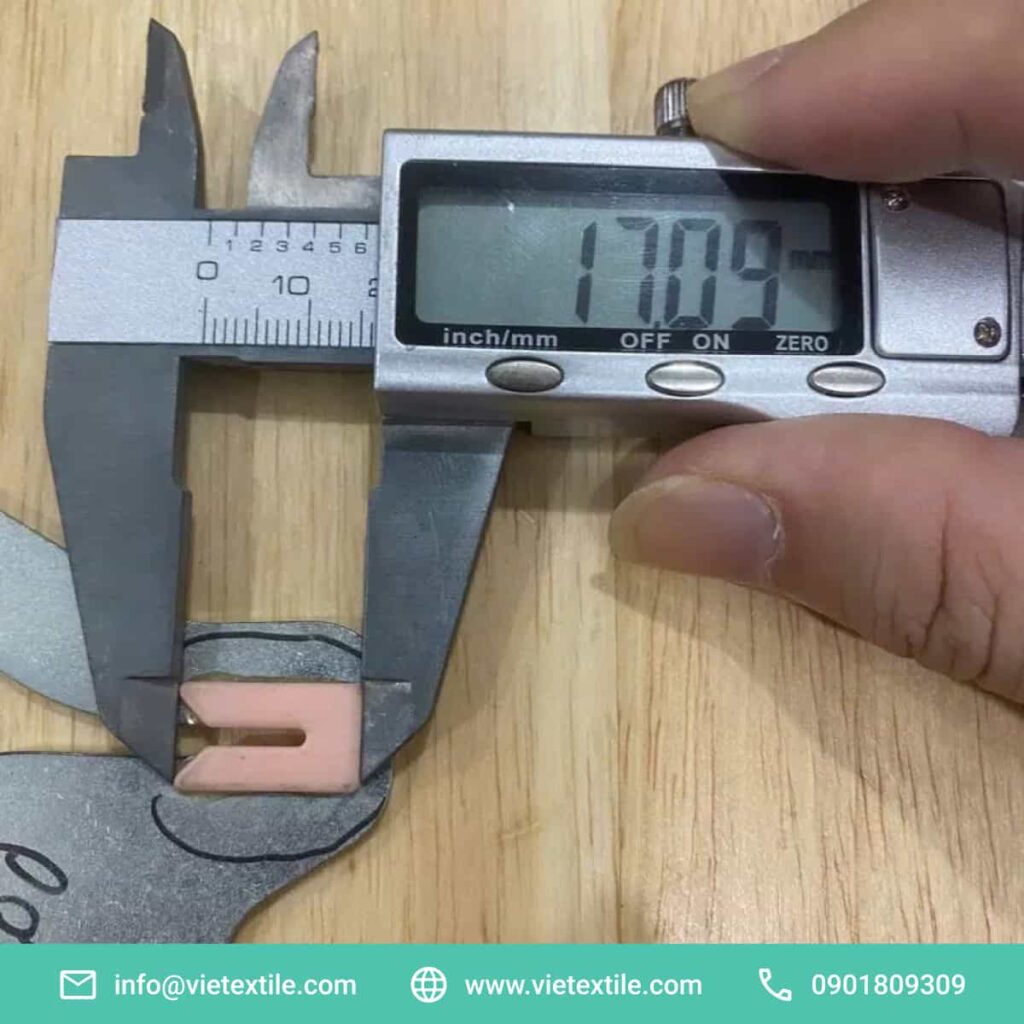
How to Identify Genuine Tonggeng Dyeing Machine Spare Parts 

Tonggeng dyeing machines are renowned for their robust engineering and reliable performance, but the quality of the final textile product hinges entirely on the authenticity of the replacement components used. The market for counterfeit or inferior aftermarket Tonggeng dyeing machine spare part is a significant risk, threatening machine lifespan, increasing downtime, and compromising expensive dyeing batches. A single non-genuine part can lead to catastrophic failure, invalidating warranties and severely damaging the machine’s complex internal systems.

This comprehensive guide serves as an essential forensic manual for factory managers, procurement specialists, and maintenance engineers. We will detail the exact procedures, visual identifiers, and documentation requirements necessary to definitively distinguish a genuine Tonggeng dyeing machine spare part from a counterfeit. By mastering these identification techniques, your factory can safeguard its investment, ensure consistent dyeing quality, and maintain optimal operational efficiency. The following sections will provide an exhaustive breakdown of the verification process, from packaging to material certification.

Supply TongGeng dyeing machine spare part
How to Identify Genuine Tonggeng Dyeing Machine Spare Parts  68

1. The Critical Risks of Non-Genuine Tonggeng Dyeing Machine Spare Part

The temptation to purchase cheaper, non-OEM spares often overlooks the compounding costs associated with their failure. Understanding these risks highlights why verification of every Tonggeng dyeing machine spare part is a critical operational priority.

1.1. Catastrophic Machine Failure and Downtime

An inferior Tonggeng dyeing machine spare part, such as a low-grade pump impeller or an improperly dimensioned bearing, can lead to immediate failure. For example, a non-genuine mechanical seal might fail prematurely under High-Temperature/High-Pressure (HTHP) conditions, causing internal liquor leaks that damage the motor windings or bearings. This leads to costly, unplanned downtime, loss of production, and expensive repairs far exceeding the price difference between the genuine and counterfeit part.

1.2. Compromised Dyeing Quality and Batch Rework

The precise tolerances of the Danitech system rely on authentic components. A non-genuine flow valve or a poorly calibrated sensor (a critical electronic Tonggeng dyeing machine spare part) can introduce inaccuracies in temperature or dosing. These errors result in uneven color absorption, shade variation, and batch rework, consuming excessive water, chemicals, and energy, and ultimately jeopardizing customer contracts.

1.3. Warranty Voidance and Insurance Issues

Using non-genuine components almost universally voids the manufacturer’s warranty on the Tonggeng machine itself. If a major machine failure occurs and is traced back to a counterfeit Tonggeng dyeing machine spare part, the factory bears the entire cost of repair. Furthermore, insurance claims related to property damage or personal injury can be contested if counterfeit parts are implicated in the failure.

1.4. Material Substitution and Safety Hazards

Counterfeits often substitute high-grade materials (like SS316L for SS304 in wetted parts, or Viton for standard rubber in seals). This substitution can lead to rapid corrosion, chemical contamination of the dye bath, and, in pressure systems, potentially rupture, creating severe safety risks for operating personnel. Identifying the authentic material of every Tonggeng dyeing machine spare part is therefore a safety requirement.

2. Forensic Inspection: External Packaging and Labeling 

The first line of defense against counterfeits is a meticulous inspection of the packaging before the component is even unwrapped. Genuine Tonggeng dyeing machine spare part are meticulously packaged to ensure integrity and protection.

2.1. Security Seals, Holograms, and Tamper-Proofing

Genuine Tonggeng parts packaging typically features proprietary security measures:

  • Holographic Stickers: Look for a high-quality, 3D holographic sticker with the Tonggeng logo that changes color and perspective when tilted. Counterfeit holograms are often flat, blurred, or easily peeled off.
  • Tamper-Evident Seals: Check that the box or plastic wrap has not been opened or resealed. Genuine seals should be unique and tear easily upon first opening.
  • Branded Tape: Authentic suppliers often use custom-printed, branded packing tape. Non-branded or generic clear tape is a major red flag for any Tonggeng dyeing machine spare part.

2.2. Label Quality and Font Consistency

Examine the product label on the box. Counterfeit labels often betray their origin through low-quality printing:

  • Print Resolution: Authentic labels use high-resolution, smudge-free printing. Fakes often have pixelated logos, uneven ink distribution, or blurry barcodes.
  • Font and Layout: Compare the font size, style, and layout to known genuine packaging. Inconsistencies in spacing, capitalization, or logo size are clear indicators of a non-genuine Tonggeng dyeing machine spare part.
  • Language Errors: Look for spelling or grammatical mistakes on the label. A global manufacturer like Tonggeng maintains professional, error-free labeling across multiple languages.

2.3. Serial Numbers and QR Code Verification

Every critical Tonggeng dyeing machine spare part should have a unique serial number or batch code printed on the label and potentially etched onto the part itself.

  • Verification System: Check if the manufacturer provides an online or mobile app verification system (often via a QR code). Scanning the code should immediately confirm the authenticity and manufacturing details. If the code fails to scan or returns a suspicious result, the Tonggeng dyeing machine spare part should be rejected.
  • Serial Number Duplication: If you receive multiple identical parts with the same serial number, they are definitively counterfeit.

3. Physical Verification: Visual and Dimensional Checks 

Original TongGeng dyeing machine spare part
How to Identify Genuine Tonggeng Dyeing Machine Spare Parts  69

Once the packaging is verified, the component itself must undergo a detailed physical and dimensional inspection.

3.1. Surface Finish and Machining Quality

High-pressure Tonggeng components are precision-machined. The surface finish is a key differentiator.

  • Stainless Steel Parts: Look for a consistent, smooth, electropolished finish on SS316L parts (like impellers or pump casings). Counterfeits often have a rough, dull, or uneven finish, sometimes with visible grinding marks or casting imperfections. These imperfections not only look bad but also increase fluid friction, reducing the efficiency of the Danitech dyeing machine spare part.
  • Welds: Inspect all welds. Genuine Tonggeng welding is clean, uniform, and performed by certified welders, often using TIG/GTAW processes. Poor, uneven, or spattered welds are a sign of low-quality manufacturing.

3.2. Dimensional Accuracy and Fit-Up

Counterfeits often miss subtle but crucial dimensional tolerances.

  • Precision Measurement: Use calibrated tools (micrometers and calipers) to check critical dimensions, such as shaft diameters, seal groove depths, and bearing bore tolerances. A non-genuine Tonggeng dyeing machine spare part might be off by as little as 0.1mm, which is enough to cause excessive vibration or failure in a high-speed pump assembly.
  • Weight: Compare the weight of the part to a known genuine sample. Material substitution (e.g., using less dense or hollowed-out metal) can cause a noticeable difference in weight.

3.3. Manufacturer Markings and Etchings

Genuine components typically feature clear, permanent markings.

  • Permanent Markings: Look for the Tonggeng logo, part number, or material grade (e.g., “316L”) etched directly into the metal using laser etching or stamping. These markings should be crisp and clean. Castings often have a raised, uniform Tonggeng logo.
  • Lack of Markings: A complete absence of permanent markings is a serious indication that the Tonggeng dyeing machine spare part is generic or counterfeit.

3.4. Inspection of Elastomers and Rubber Parts

Seals, gaskets, and O-rings (crucial Danitech dyeing machine spare part) can be checked based on texture and hardness.

  • Hardness Test: Genuine Viton seals (used in high-temperature applications) have a specific Shore Durometer hardness (often 75-85 Shore A). Counterfeit rubber often feels too soft, too brittle, or has poor elasticity.
  • Color and Smell: Specific elastomers have unique colors (e.g., Viton is often black, brown, or green). Be wary of unusual colors or a strong, chemical odor, which indicates low-quality curing or material.

4. Material Verification: Chemical and Certification Requirements 

The most definitive method for identifying a genuine Tonggeng dyeing machine spare part involves verifying its material composition, especially for wetted and pressure-retaining components.

4.1. The Importance of the Mill Test Certificate (MTC)

The MTC is the gold standard for metallic components.

  • MTC Requirement: Insist that your supplier provides a valid MTC for all SS316L components (pump casings, impellers, heat exchanger parts). The MTC is a lab report verifying the exact percentage of elements like Chromium, Nickel, and Molybdenum (the key to SS316L). A genuine Tonggeng dyeing machine spare part sourced through official channels will always have traceable documentation.
  • Verifying Molybdenum: Specifically check for Molybdenum content (typically 2.0% to 3.0%). If the Molybdenum content is zero or below 1.5%, the material is likely SS304 or lower, confirming it is non-genuine and unsuitable for dyeing chemicals.

4.2. Chemical Resistance Documentation for Elastomers

For mechanical seals and valve diaphragms (polymer Tonggeng dyeing machine spare part), request a Certificate of Conformance (CoC) stating the exact elastomer used (e.g., PTFE, EPDM, Viton). This document confirms the part is chemically compatible with the high pH, temperature, and chemicals used in Danitech dyeing cycles. Without this documentation, the part is an unacceptable risk.

4.3. Utilizing Portable XRF Analyzers

For factories with high-value spare parts inventory, a portable X-Ray Fluorescence (XRF) analyzer can be used to quickly verify the alloy composition of any metallic Tonggeng dyeing machine spare part on-site. This immediate, non-destructive test provides definitive proof that the material is indeed SS316L, mitigating all risk of material substitution.

4.4. Bolt and Fastener Grade Verification

Do not overlook fasteners. Tonggeng machines often use high-tensile, corrosion-resistant bolts (e.g., A4-70 or A4-80 stainless steel) in critical flanges. A counterfeit bolt made of low-carbon steel (A2) will rapidly corrode or fail under pressure/temperature cycling, leading to dangerous leaks. Check for the correct material grade stamp on the bolt head. These are often forgotten but critical Tonggeng dyeing machine spare part.

5. Procurement Protocols: Sourcing and Supplier Due Diligence 

The safest way to acquire a genuine Tonggeng dyeing machine spare part is through a controlled and verifiable supply chain.

5.1. Buying Direct or Through Certified Distributors

Whenever possible, procure parts directly from the Tonggeng manufacturer or through their formally authorized, local distributor. Authorized distributors have contracts and a traceable supply chain that guarantees the authenticity of every Tonggeng dyeing machine spare part they sell. Request to see their current certification documentation.

5.2. Red Flags in Supplier Vetting

Be highly skeptical of suppliers exhibiting the following red flags:

  • Unrealistically Low Prices: If the price for a critical Tonggeng dyeing machine spare part (like a pump) is 50% lower than the market rate, it is almost certainly counterfeit.
  • Inability to Provide Documentation: Any supplier refusing to provide an MTC, CoC, or traceability documentation must be immediately rejected.
  • Generic Packaging: Suppliers offering Tonggeng parts in generic white boxes without branded seals or markings should be avoided.
  • Cash-Only Transactions: Reputable distributors maintain professional invoicing and payment records.

5.3. Implementing a Dual-Signature Inspection Policy

For critical spare parts (A-class inventory), implement a two-person receiving inspection protocol. One technician checks the physical and dimensional accuracy, while the procurement specialist verifies the documentation (MTC, CoC, and serial numbers). This dual check minimizes the chance of accepting a non-genuine Tonggeng dyeing machine spare part into the warehouse.

6. Case Studies in Counterfeit Failure 

Linh kiện máy nhuộm TongGeng
How to Identify Genuine Tonggeng Dyeing Machine Spare Parts  70

Reviewing common failure modes due to non-genuine components reinforces the necessity of strict identification protocols.

6.1. The Impeller Imbalance Incident

A textile mill used a non-OEM impeller (a critical Tonggeng dyeing machine spare part) for their main circulation pump. While visually similar, the counterfeit part was poorly balanced. Within 500 operating hours, the imbalance destroyed the pump’s front and rear bearings, sheared the mechanical seal face, and bent the pump shaft. Total cost of repair, including a new shaft and labor, was 10 times the initial cost of the genuine impeller. The non-genuine part cost far more than the original.

6.2. The Corroded Sensor Housing

A factory purchased a non-genuine level sensor. The SS316L housing, a key part of the electronic Tonggeng dyeing machine spare part, was substituted with SS304. Exposed to the hot, acidic dye liquor, the SS304 housing corroded rapidly, leaking metal ions into the bath which ruined a sensitive batch of reactive dyes, requiring the batch to be stripped and re-dyed, doubling the energy and chemical cost.

6.3. The Leaking Steam Valve Diaphragm

A non-genuine EPDM diaphragm was installed in a steam control valve (a vital thermal Tonggeng dyeing machine spare part). The counterfeit material could not withstand the 130°C steam. It hardened and cracked within weeks, causing the valve to leak live steam continuously, wasting massive amounts of energy and forcing an emergency shutdown to prevent a safety incident.

7. VieTextile’s Commitment to Genuine Tonggeng Dyeing Machine Spare Part

VieTextile recognizes the severe consequences of using non-genuine components. We are committed to maintaining the highest standard of quality and traceability for every Tonggeng dyeing machine spare part we supply, acting as a trusted partner to protect your factory’s operation and investment.

  • Guaranteed Traceability: We provide complete traceability for all high-value components, including verifiable documentation linking the part to its material source and manufacturing batch. This allows you to confirm the authenticity of every Tonggeng dyeing machine spare part.
  • Certified Materials: We supply metallic components strictly manufactured from certified SS316L and provide the corresponding Mill Test Certificates (MTC) upon request, ensuring the integrity of the most critical Tonggeng dyeing machine spare part.
  • Quality Assurance and Dimensions: Our parts undergo strict quality control checks, including dimensional verification to match OEM specifications, ensuring perfect fit and preventing premature failure caused by misalignment. We ensure the precision of every Danitech dyeing machine spare part.
  • Expert Consultation: Our team can assist your maintenance staff in identifying common counterfeit indicators and establish secure procurement SOPs to prevent the introduction of non-genuine components into your inventory.

8. Advanced Verification Techniques and Digital Tools 

For factories implementing advanced maintenance strategies, leveraging digital tools can provide an extra layer of defense against counterfeits.

8.1. Digital Fingerprinting of Tonggeng Dyeing Machine Spare Part

Some advanced components, particularly circuit boards or sensor modules (electronic Tonggeng dyeing machine spare part), now come with embedded chips that can be read by specialized handheld devices. These chips contain digital certificates or unique ID keys that definitively prove the part is authentic. Training staff to use these readers is the fastest and most secure method of in-house verification.

8.2. Machine Learning for Visual Inspection

The future of spare part verification involves using machine learning (ML) models trained on thousands of images of both genuine and counterfeit parts. A smartphone app could analyze the packaging, label quality, and surface finish of a Tonggeng dyeing machine spare part and provide an instant probability score on its authenticity, standardizing the visual inspection process and reducing reliance on human error.

8.3. Blockchain Technology in Supply Chain

As a forward-thinking step, some manufacturers are beginning to use blockchain technology to record the entire lifecycle of a critical Tonggeng dyeing machine spare part, from casting to final sale. This immutable digital ledger provides indisputable proof of authenticity and origin, offering the ultimate guarantee against counterfeiting in the long term.

9. Frequently Asked Questions (FAQ) about Tonggeng Dyeing Machine Spare Part

Q9.1. What is the single biggest risk when using a non-genuine Tonggeng dyeing machine spare part?

A: The single biggest risk is unscheduled machine downtime due to premature failure. This includes the high cost of lost production, emergency labor, and the potential voiding of the entire machine’s warranty due to the use of the non-genuine Tonggeng dyeing machine spare part.

Q9.2. How do I check the authenticity of a gasket or seal (a polymer Tonggeng dyeing machine spare part)?

A: Request the Certificate of Conformance (CoC) that specifies the exact elastomer material (e.g., Viton, EPDM). Visually inspect for the correct color and perform a simple Shore hardness test to check for consistency with the specified material. Reject any non-certified Tonggeng dyeing machine spare part.

Q9.3. Why is the serial number etching on the part itself more reliable than the label?

A: Labels can be easily replicated or swapped. An etched or stamped serial number directly on the metallic Tonggeng dyeing machine spare part is harder for counterfeiters to duplicate and provides a permanent, physical link to the manufacturer’s quality control records.

Q9.4. Can a slightly under-spec Tonggeng dyeing machine spare part be used temporarily?

A: No. Using an under-spec part, even temporarily, subjects the entire machine system (pump, motor, seals) to undue stress, potentially accelerating the wear of expensive genuine components. The risk of major failure always outweighs the short-term benefit of using a compromised Tonggeng dyeing machine spare part.

Q9.5. How can VieTextile guarantee their Tonggeng dyeing machine spare part are genuine?

A: VieTextile guarantees authenticity through strict adherence to certified sourcing protocols, providing verifiable material certifications (MTCs), and implementing rigorous dimensional quality checks on all critical Tonggeng dyeing machine spare part before they reach the customer.

Q9.6. What is the first sign that a counterfeit Danitech dyeing machine spare part has failed?

A: The first sign is often excessive vibration, unusual noise from the pump or reel area, or a sudden, unexplained leak (steam or liquor), all indicating the failure of a key bearing or sealing Tonggeng dyeing machine spare part.

Q9.7. Should I check the quality of electrical cables and connectors (electronic Tonggeng dyeing machine spare part)?

A: Yes. Inferior cables and connectors can have poor insulation or incorrect wire gauge, leading to resistance, overheating, and fire risk. Always check for proper shielding and material specifications on all electronic Tonggeng dyeing machine spare part to ensure safety and signal integrity.

Q9.8. Why is Molybdenum important in the stainless steel of my Tonggeng dyeing machine spare part?

A: Molybdenum is the key alloying element that provides SS316L its superior resistance to pitting corrosion in chloride and acidic environments, which are common in dyeing processes. Its presence is vital for the long-term integrity of any wetted Danitech dyeing machine spare part.

Q9.9. Does using a counterfeit Tonggeng dyeing machine spare part affect my ISO certification?

A: Yes. Failure to adhere to quality and safety standards, particularly concerning equipment integrity and traceability, can lead to non-conformance findings during ISO 9001 or ISO 14001 audits, as using non-genuine components undermines documented quality control procedures.

Q9.10. What percentage of spare parts inventory should be physically inspected upon receipt?

A: All A-class (mission-critical, high-cost) Tonggeng dyeing machine spare part must be 100% physically and dimensionally inspected. B-class items should be inspected on a rotational sampling basis, and C-class items should be visually checked for quantity and gross damage.

10. Conclusion: Safeguarding Your Investment with Genuine Tonggeng Dyeing Machine Spare Part

The operational lifespan and quality output of your Tonggeng dyeing machine depend on a rigorous, zero-tolerance policy toward counterfeit spare parts. The small cost savings offered by non-genuine components pale in comparison to the monumental risk of downtime, voided warranties, and compromised product quality.

By implementing forensic inspection protocols—meticulously checking packaging seals, verifying material MTCs, and conducting precise dimensional checks—your factory erects an impenetrable defense against inferior goods.

A genuine Tonggeng dyeing machine spare part is not merely a replacement component; it is an assurance of continued performance, energy efficiency, and operational safety. Partner with certified suppliers like VieTextile to streamline your procurement, securing a fully traceable supply chain and guaranteeing the quality of every component installed in your valuable dyeing equipment.

To secure your supply chain and receive only certified, genuine Tonggeng dyeing machine spare part, contact VieTextile today!

Contact Information: 

Hotline: 0901 809 309 

Email: info@vietextile.com 
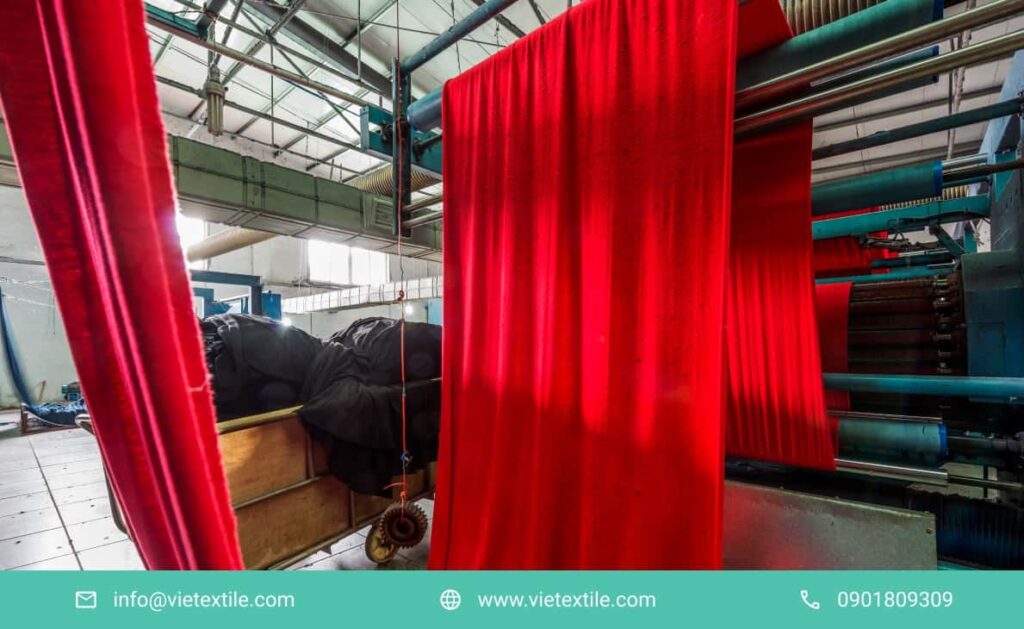
Website: https://vietextile.com