Factory Standard Direct-to-Nylon Printing Process – From Pre-treatment to Color Fixation

Digital printing onto Nylon (Polyamide) fabric demands absolute precision, setting it entirely apart from printing on Polyester or Cotton. This article provides a detailed, step-by-step breakdown of the process using Direct-to-Nylon Acid Ink, ensuring optimal quality and color fastness.

The standard factory process is the key to maximizing the potential of Direct-to-Nylon Ink. It helps manufacturers of high-end swimwear, lingerie, and performance sportswear achieve brilliant colors and superior wash durability. Adhering to every stage, from surface treatment to color fixation, is essential for maintaining product consistency.

This guide delves into each phase, from chemical preparation and print optimization to post-treatment and quality control. We will technically analyze the functional mechanism of Direct-to-Nylon Acid Ink in a real-world production environment.
Cung cấp mực in trực tiếp vải Nylon
Factory Standard Direct-to-Nylon Printing Process – From Pre-treatment to Color Fixation 5

1. Overview of the Acid Ink Digital Printing Process: The Foundation for Direct-to-Nylon Ink

The Acid Ink printing process for Nylon is divided into three main phases, each with distinct chemical and physical roles. This is the prerequisite for Direct-to-Nylon Ink to form a permanent bond with Polyamide fibers.

1.1. Three Main Stages in the Production Line

The first stage is Pre-treatment, aimed at activating the Nylon fiber surface. The second stage is Digital Printing, where the Direct-to-Nylon Ink is applied. Finally, the Post-treatment stage is where the color fixation reaction occurs, resulting in the product’s absolute fastness.

Strict control of temperature, humidity, and pH parameters across all three stages is mandatory. Any deviation can lead to weak colors, staining, or a significant reduction in fabric durability. Manufacturers must pay special attention to this when using premium Direct-to-Nylon Ink.

1.2. Why Acid Ink is the Only Choice for 100% Nylon

Nylon fibers have a polymer structure containing Amine groups (-NH2). When treated in an Acidic environment, these groups become positively charged sites (-NH3+). The Acid dye in the Direct-to-Nylon Ink carries a negative charge, creating a stable ionic bond.

This ionic bonding mechanism provides superior color fastness, especially resistance to Chlorine and hot washing, which other inks like Pigment or Reactive cannot match. Pigment inks create mechanical bonds, causing the fabric to stiffen. Direct-to-Nylon Acid Ink ensures the fabric retains its natural soft hand feel.

2. Chemical Pre-treatment Stage: Establishing the Base for Direct-to-Nylon Ink

Pre-treatment is the chemical primer that dictates the printing performance and color fastness of the Direct-to-Nylon Ink. Chemicals are applied to the fabric to create an ideal environment for dye diffusion and fixation.

2.1. Preparing the Pre-treatment Liquid

The pre-treatment solution is a complex mixture of chemicals, formulated with precise accuracy. The use of Demineralized Water is necessary to prevent heavy metal ions from affecting the purity of the Direct-to-Nylon Ink and the dyeing process.

Key components include: Acid Donor, Thickening Agent (or Thickener), and Humectants. Each plays a vital role in preparing the fabric surface. The mixing ratio must be checked and adjusted frequently to suit specific fabric batches.

2.1.1. The Role of Acid Donor and pH Control

The Acid Donor, typically Citric Acid or an Ammonium salt of an organic Acid, is the main activator. When the fabric is dried, the Acid Donor slowly releases H^+, which protonates the Nylon fiber. This creates a series of positively charged sites to attract the negative molecules of the Direct-to-Nylon Ink.

The target pH after drying must be between 4.0 and 5.0. A pH that is too high will result in insufficient protonation, reducing color uptake. Conversely, a pH that is too low can damage the Nylon fiber or cause H^+ to compete with the dye, reducing dyeing efficiency.

2.1.2. Function of the Thickening Agent

The Thickening Agent, usually a synthetic polymer, not only controls the solution’s viscosity but also manages the spread of the Direct-to-Nylon Ink droplet upon contact with the fabric. It prevents excessive “Dot Gain,” keeping fine lines and details sharp.

Furthermore, the thickener holds the dye close to the Nylon fiber surface. This maximizes the diffusion of the Direct-to-Nylon Ink into the fiber core during steaming, rather than allowing it to evaporate or wash away.

2.2. Fabric Padding Technique

Padding is the process of passing the fabric through a Padder machine to apply the pre-treatment solution. Controlling the chemical loading (Pick-up %) is a crucial step in this stage.

2.2.1. Optimizing Pick-up %

The ideal Pick-up loading typically ranges from 50\% – 70\%. Pick-up is adjusted by changing the pressure of the Nip Rolls. A Pick-up that is too low will not provide enough chemicals to activate the fiber and fix the Direct-to-Nylon Ink.

If the Pick-up is too high, the fabric will be excessively wet, leading to longer drying times, higher energy consumption, and potentially chemical residue that causes a stiff hand feel. Measuring devices or calculation formulas must be used for precise control.

2.2.2. Checking Uniformity

The uniformity of the chemicals across the entire fabric width is a prerequisite. Non-uniformity can lead to uneven shading after printing and steaming. Technicians must regularly check the Nip Roll pressure and the condition of the rubber rolls to ensure optimal chemical distribution for the Direct-to-Nylon Ink.

2.3. Drying the Pre-treatment Layer

The drying process removes the water solvent, concentrates the chemicals, and activates the Acid Donor. Drying must be performed gradually and uniformly.

2.3.1. Controlling Drying Temperature

The drying temperature is usually kept between 120*C and 150*C. The temperature must be sufficient for complete drying but not too high to avoid thermal degradation of the Nylon fiber. Thermal degradation causes fiber yellowing, negatively impacting the colors of the Direct-to-Nylon Ink, especially light colors and whites.

2.3.2. Ensuring Residual Moisture

Despite drying, a small amount of residual moisture needs to be retained in the fabric (typically 5\% – 8\%). This is thanks to the Humectants in the pre-treatment solution. This moisture aids in the easier diffusion of the Direct-to-Nylon Ink during the printing and steaming processes.

3. Digital Printer Operation: Optimizing Direct-to-Nylon Ink Jetting
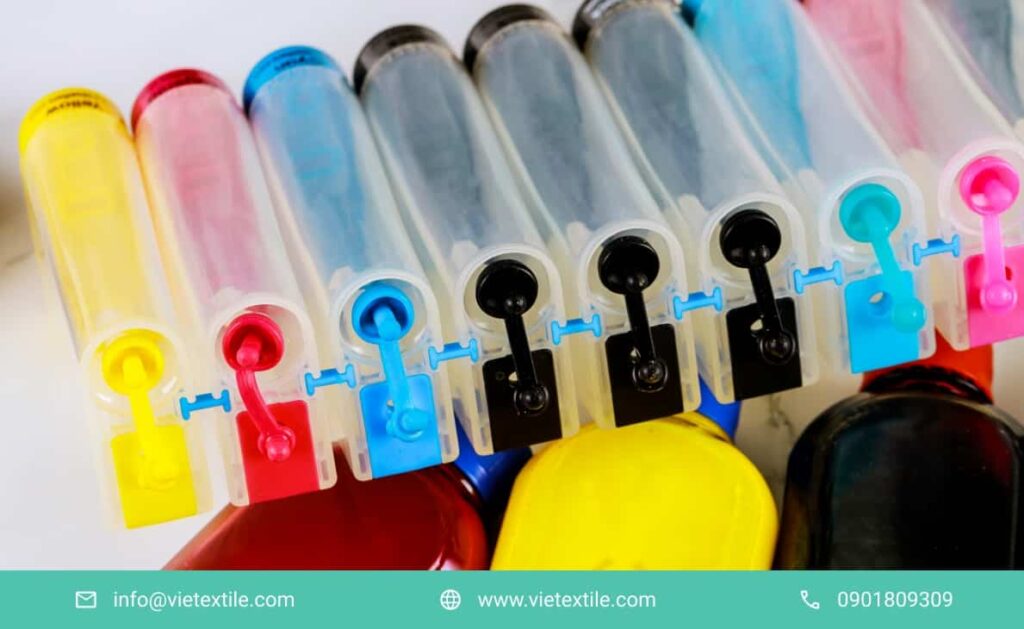
Mực in trực tiếp vải Nylon chính hãng
Factory Standard Direct-to-Nylon Printing Process – From Pre-treatment to Color Fixation 6

The printing stage requires a harmonious combination of Piezo electric printing technology and the physicochemical properties of the Direct-to-Nylon Acid Ink.

3.1. Equipment and Ink Preparation

Before printing, the printer system must be thoroughly checked to ensure optimal ink jetting capability. This is a critical step for maintaining sharp image quality.

3.1.1. Checking Ink Stability

Direct-to-Nylon Ink must have precisely controlled Viscosity and Surface Tension. Viscosity typically ranges from 3.0 – 5.0  mPa\cdots. A slight change in temperature can alter the viscosity, leading to non-uniform Drop Size.

The printer must have an accurate printhead temperature control system (Head Heater) to maintain stable ink temperature. This ensures the ink droplets are jetted at the precise speed and shape, optimizing contact with the pre-treatment layer.

3.1.2. Print Head Calibration (Head Voltage & Waveform)

Each type of Direct-to-Nylon Acid Ink has a different chemical formulation, requiring a specific jetting Voltage and Waveform. Technicians need to use the specifications provided by the ink and printer suppliers for calibration.

Correct calibration maximizes print head lifespan and prevents jetting errors like Partial Clogging or Misting that causes fine dots on the surface.

3.2. Color Optimization with ICC Profile

Color management is an indispensable step to ensure the printed color matches the design color on the screen (Soft Proofing).

3.2.1. Specific ICC Profile Creation Procedure

The ICC Profile is a color characteristic file created by measuring the color of the finished printed sample (after steaming and washing). Direct-to-Nylon Ink only achieves its final color Gamut after chemical and thermal fixation. Therefore, profiling from raw fabric or unsteamed samples is inaccurate.

The profile must account for the color shifts caused by the steaming temperature and the wash-off process. It is the bridge between the digital design and the physical product.

3.2.2. Controlling Ink Limit (Maximum Ink Saturation)

Ink Limit is the maximum amount of ink the printer can lay down at any given point on the fabric (usually calculated as the total % of C, M, Y, K inks). Ink Limit must be set carefully in the RIP software.

If the Ink Limit is too high, the excess Direct-to-Nylon Ink cannot be fully fixed, leading to severe Wash Out and reduced rub fastness. The ideal Ink Limit allows optimal absorption into the pre-treatment layer without overflow.

3.3. Controlling the Printing Room Environment

The ambient environment directly affects the stability of the Direct-to-Nylon Ink and the jetting process.

3.3.1. Temperature and Humidity

The printing room must maintain stable temperature (20*C – 25*C) and humidity (45% – 65%  RH). Humidity that is too low can cause the ink to dry quickly at the print head (nozzle clogging), leading to printing errors.

Humidity that is too high causes the fabric to become damp, affecting image sharpness. Maintaining ideal environmental conditions is a mandatory investment to ensure continuous quality Direct-to-Nylon Ink jetting.

4. Intensive Color Fixation: Saturated Steaming Technique for Direct-to-Nylon Ink

The Fixation stage is the moist heat process where the Acid dye diffuses into the Nylon fiber and forms a permanent ionic bond. This is the decisive factor for color fastness.

4.1. Technical Analysis of Saturated Steaming

The steaming process provides both heat (to swell the fiber structure) and moisture (to create a liquid environment for the dye to migrate).

4.1.1. Precise Steaming Parameters

The ideal condition is Saturated Steam at a temperature of 102*C – 105*C with humidity \ge 95\%. Saturated steam condenses into water on the fabric. This thin layer of water acts as a solvent environment, allowing the Direct-to-Nylon Ink molecules to move.

Steaming time typically ranges from 10 to 20 minutes, depending on the color depth and the specific Nylon fabric type. The duration must be determined through trials to ensure optimization.

4.1.2. The Importance of Steaming Time

Insufficient steaming time is the primary cause of Wash Out. If the Direct-to-Nylon Ink does not have time to fully diffuse and form ionic bonds, it will be removed during the subsequent wash-off process, resulting in weak colors and material waste.

Conversely, overly long steaming can reduce the strength of the Nylon fiber, especially Elastane (Spandex) blends, which are highly sensitive to high and prolonged temperatures.

4.2. Steamer Equipment Control

The Steamer must be regularly maintained to ensure optimal operational performance.

4.2.1. Ensuring Clean Steam

The steam used must be clean and free of oil or other impurities from the Boiler. Impurities can cause irreparable stains, completely ruining the printed fabric batch with Direct-to-Nylon Ink.

The steam supply system must ensure stable pressure to maintain saturated temperature, avoiding temperature fluctuations that affect the color fixation process.

4.2.2. Handling Elastane (Spandex) Blends

For Nylon/Elastane blends (swimwear, sportswear), the steaming temperature must be strictly controlled. Elastane begins to degrade at high temperatures. The factory must adjust the process to use Direct-to-Nylon Ink formulas that fix colors faster at lower temperatures, or minimize the steaming duration.

5. Post-treatment and Finishing: Achieving Absolute Color Fastness

Post-treatment is the process of washing, removing excess ink and chemicals, and ensuring the final color fastness of the product printed with Direct-to-Nylon Ink.

5.1. Multi-step Washing Off

The wash-off procedure must be a sequence of steps controlled by chemical and temperature parameters.

5.1.1. Removing Thickener and Excess Ink

The first step is a preliminary cold/warm wash to remove the bulk of the Thickening Agent and unfixed Direct-to-Nylon Ink on the surface. If the thickener is not removed, it will make the fabric stiff and impede subsequent chemical treatment steps.

The next step is a Hot Wash using a Dispersing Agent at 40*C – 60*C. The dispersing agent keeps the excess dye suspended in the water, preventing it from re-adhering to white areas (Back Staining).

5.1.2. Application of Fixing Agent

In products requiring extremely high Chlorine Fastness (e.g., swimwear, diving gear), the use of a Cationic Fixing Agent is necessary. This agent creates an additional cationic polymer layer, strengthening the ionic bond and locking the Direct-to-Nylon Ink molecules into the fiber, maximizing color wash-out resistance.

The fixing agent must be applied and tested for compatibility to ensure it does not compromise the fabric’s soft hand feel.

5.2. Neutralization and Finishing

The final step is Neutralization. The fabric, after being exposed to an Acidic environment and other chemicals, needs to be thoroughly rinsed to achieve a neutral pH (6.5 – 7.5).

5.2.1. Ensuring Dermatological Safety

Achieving neutral pH is a mandatory requirement for garments in direct contact with skin, ensuring compliance with OEKO-TEX standards and consumer safety.

The final finishing stage may include the use of Softener to restore and improve the natural soft hand feel of the Nylon fabric after chemical and heat treatment. High-quality Direct-to-Nylon Ink will not react with these softeners.

6. Quality Control (QC) and Process Troubleshooting
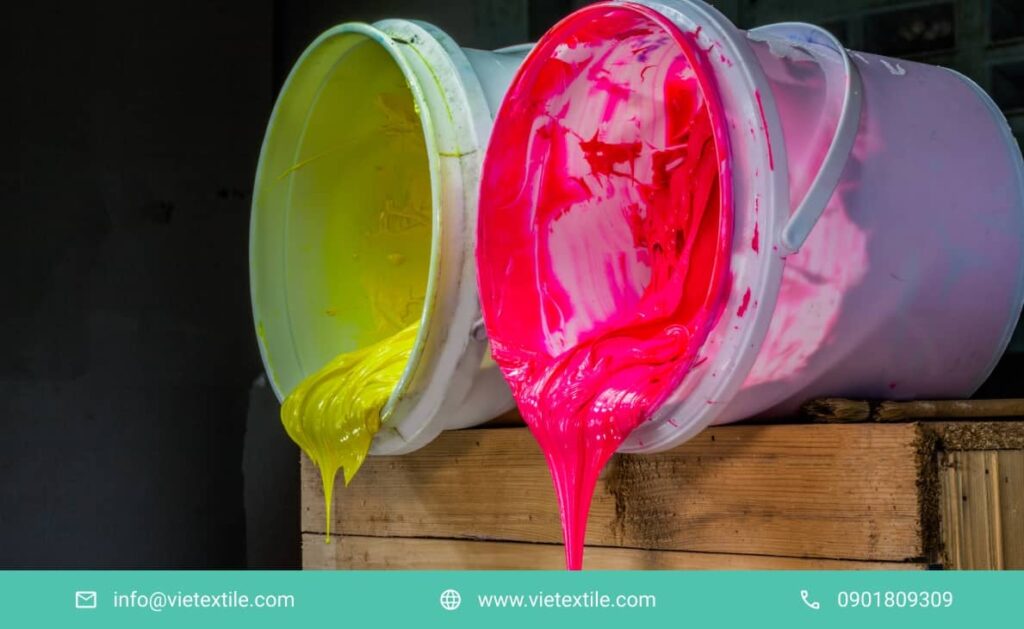
Sản phẩm mực in trực tiếp vải Nylon
Factory Standard Direct-to-Nylon Printing Process – From Pre-treatment to Color Fixation 7

Quality Control (QC) is the final step, confirming the product meets technical and fastness standards.

6.1. Fastness Testing

Color fastness tests are performed on the finished fabric sample. This demonstrates the fixation performance of the Direct-to-Nylon Ink.

6.1.1. Washing Fastness

Use the ISO 105-C06 standard. The minimum requirement is Grade 4 on the Grey Scale for both Colour Change and Staining onto the accompanying fabric. Poor wash fastness usually indicates an error in the Steaming Phase (Section 4).

6.1.2. Chlorine Fastness

Most critical for swimwear printed with Direct-to-Nylon Ink. AATCC 162 testing checks the resistance to NaOCl attack. Only the ionic bond of Acid Ink can effectively pass this test.

6.1.3. Rubbing Fastness

ISO 105-X12 standard. Poor wet rub fastness is a clear sign of insufficient Wash Off, meaning excess Direct-to-Nylon Ink has not been fully removed and remains on the fiber surface.

6.2. Color Analysis with Spectrophotometer

Use a Spectrophotometer to measure the color deviation (Delta E) against the standard sample. The ideal deviation is Delta E < 1.0.

6.3. Common Troubleshooting Scenarios

  • Problem: Color washes out/fades after washing (Wash Out).
    • Cause: Insufficient Steaming time or temperature, or the pre-treatment layer pH was not acidic enough to activate the Nylon fiber.
    • Solution: Increase Steaming time/temperature; check and adjust the pH of the Direct-to-Nylon Ink pre-treatment solution.
  • Problem: Stiff Hand Feel.
    • Cause: Excessive Thickening Agent in the pre-treatment, or insufficient Wash Off to remove it.
    • Solution: Reduce Pick-up \%; increase Wash Off efficiency, or consider using a Softener after neutralization.

7. VieTextile’s Role in Direct-to-Nylon Ink Technology

VieTextile is a strategic partner, providing comprehensive solutions to optimize the use of Direct-to-Nylon Acid Ink in your production process.

We supply Direct-to-Nylon Ink lines that meet the most stringent technical and environmental standards, including ZDHC MRSL Level 3 certification. This ensures your printing process is not only efficient but also sustainable and safe for consumers. VieTextile is committed to partnering with factories to achieve leading product quality.

VieTextile’s team of engineers provides specialized consulting services for ICC Profile calibration and printhead Waveform optimization. Precise adjustment of these parameters is key to ensuring the Direct-to-Nylon Ink is jetted with the perfect drop size, increasing sharpness and minimizing errors. This technical support helps reduce machine downtime.

We offer specialized pre-treatment and post-treatment chemicals, designed to work synergistically with Direct-to-Nylon Acid Ink. These chemicals include high-purity Acid Donor and high-performance Cationic Fixing Agents. Using a complete set of synchronized chemical solutions ensures a stable printing process and maximum color fastness.

VieTextile continuously researches and updates the latest Acid Ink technologies, including future Direct-to-Nylon Ink solutions for Dry Heat Fixation. Our goal is to help customers simplify the Steaming process and minimize energy costs. Partnering with VieTextile guarantees you stay ahead in Nylon printing technology.

8. Frequently Asked Questions (FAQ) About Direct-to-Nylon Ink

8.1. Can Direct-to-Nylon Ink be used for Polyester Fabric?

Answer: No. Direct-to-Nylon Ink (Acid Ink) is specifically designed to create an ionic bond with the Amine groups of Nylon and protein fibers. For Polyester, you must use Disperse Ink (Sublimation Ink) to create a dispersion link at high temperatures.

8.2. How to fix a stiff hand feel after printing with Direct-to-Nylon Ink?

Answer: A stiff hand feel is usually caused by residual Thickening Agent or Fixing Agent. You need to optimize the Pick-up % during pre-treatment and increase Wash Off efficiency by using an effective Dispersing Agent. Then, apply a high-quality Softener after neutralization.

8.3. What is the ideal Steaming temperature when using Direct-to-Nylon Ink?

Answer: The ideal temperature is 102*C – 105*C (Saturated Steam), maintained for 10 to 20 minutes. This condition is necessary for the dye in the Direct-to-Nylon Ink to fully diffuse and form a permanent ionic bond with the Polyamide fiber.

8.4. Does Acid Ink meet ZDHC standards when printed on Nylon?

Answer: Direct-to-Nylon Ink distributed by reputable suppliers like VieTextile must strictly comply with the ZDHC MRSL (Manufacturing Restricted Substances List). This ensures the ink is free of banned heavy metals or hazardous chemicals, making your production process safe and sustainable.

8.5. Does Direct-to-Nylon Ink have higher UV resistance than other inks?

Answer: Light fastness (UV) depends on the type of Acid dye used (Super-Milling Dyes). Premium Direct-to-Nylon Inks offer very high light fastness (typically Grade 5 or higher) due to their large molecular size and strong chemical bonding capability.

8.6. How to ensure pH stability throughout the Direct-to-Nylon Ink printing process?

Answer: To ensure pH stability, the factory must check and adjust the pH of the pre-treatment solution daily using an electronic pH meter. Furthermore, checking the pH of the fabric after drying (4.0 – 5.0) is mandatory to confirm the acidic environment has been correctly established for the Direct-to-Nylon Ink reaction.

9. Contact VieTextile to Optimize Your Factory Standard Direct-to-Nylon Ink Process

The Direct-to-Nylon Printing process is a complex chain of technological links. Controlling the Steaming temperature, the purity of the Direct-to-Nylon Ink, and the accuracy of the pre-treatment chemicals are the factors that determine success. Do not let small technical errors affect the quality of your high-end products.

To acquire the highest quality Direct-to-Nylon Acid Ink solution, supported by a factory standard operational process and a commitment to ZDHC compliance, contact our specialists. We provide comprehensive technical consultation, from printer setup to post-treatment chemical optimization, helping you achieve absolute color fastness on all Nylon products.

Contact Information:

Hotline: 0901 809 309

Email: info@vietextile.com

Website: https://vietextile.com
Is Polyester Textile Ink Washable? Analyzing Wash and Light Fastness in Digital Printing

Polyester (PES) is the most widely used synthetic fabric in the sportswear, fast fashion, and home goods industries, thanks to its high durability and wrinkle resistance. However, its unique fiber structure demands a stringent requirement for the type of printing ink used. The biggest question manufacturers often ask is: Is polyester textile ink washable? And how can the colors remain vibrant under harsh sunlight?

The answer lies in the specialized ink type: Disperse Ink. This is the only ink capable of deeply penetrating the polyester fiber through the process of sublimation or high-heat fixation. This article will delve into the chemical mechanism of polyester textile ink, analyze in detail the standards for Wash Fastness and Light Fastness, and propose technical solutions to optimize the longevity of the print on PES fabric.

Cung cấp mực in vải polyester
Is Polyester Textile Ink Washable? Analyzing Wash and Light Fastness in Digital Printing 12

1. Chemical Nature: Why Polyester Must Use Disperse Ink

The color fastness of polyester textile ink depends entirely on its ability to bond or deeply permeate the fiber structure. Polyester is a hydrophobic and oleophobic polymer, lacking the hydroxyl (OH) functional groups found in cotton, which prevents common Reactive or Pigment inks from adhering or reacting effectively.

1.1. Polyester Fiber Structure and the Sublimation Bonding Mechanism

Polyester fibers have a dense, nearly non-absorbent molecular structure at room temperature. For the dye to penetrate, high heat must be applied. Polyester textile ink (Disperse type) uses the following mechanism:

  1. Disperse Dye: These are non-ionized, low molecular weight dye molecules with poor water solubility.
  2. Sublimation: During the heat pressing process (transfer printing) or steaming (direct printing), the temperature is raised significantly (180*C – 210*C). At this temperature, the solid Disperse dye molecules on the paper (or on the fabric) transition from solid to gas without becoming liquid.
  3. Fiber Structure Opening: Simultaneously, the high temperature causes the dense polymer structure of the polyester fiber to swell, creating “free space” for the dye vapor to penetrate.
  4. Color Locking: Upon cooling, the polyester fiber structure contracts, “locking” the Disperse polyester textile ink molecules inside the fiber’s core.

This internal color-locking mechanism creates superior wash and rub fastness.

1.2. Direct Disperse Ink and Steaming Technology

In addition to thermal transfer (Sublimation), polyester textile ink is also used in Direct Disperse printing. Although the dye mechanism remains sublimation and fiber penetration, the process differs:

  • Direct Printing: Polyester textile ink is jetted directly onto pre-treated fabric.
  • Steaming/Fixation: Instead of heat pressing, the fabric is passed through a steamer or high-temperature dryer (160*C – 180*C) in a humid environment to activate the sublimation and color fixation process.

Direct Disperse polyester textile ink is often preferred for high-stretch fabrics, applications requiring absolute strike-through, or large-volume production, as it eliminates the transfer paper step.

1.3. Differentiating Disperse Ink Lines

Not all Disperse polyester textile inks are created equal. They are categorized based on their sublimation capability and durability:

  • Low Energy Disperse Dyes: Require lower temperatures for sublimation, but wash fastness may be inferior.
  • High Energy Disperse Dyes (High Fastness): Require higher temperatures (200*C – 210*C), but provide maximum wash and light fastness. High-quality inks often utilize this High Energy line.

2. Wash Fastness of Polyester Textile Ink

Wash fastness is the print’s ability to retain its original color without fading or staining other materials when washed. This is the most crucial criterion in answering the question, “Is polyester ink washable?”

2.1. International Testing Standards (ISO 105-C06 and AATCC 61)

Wash fastness is evaluated using the Grey Scale from 1 (very poor) to 5 (excellent). Common standards include:

  • ISO 105-C06: This is a global testing standard that simulates various washing conditions (A1S, A2S, C3S, etc.) with specific temperatures, detergents, and steel balls. For high-quality sportswear, polyester textile ink needs to achieve a level of 4 or higher.
  • AATCC 61: A US standard, often used for products exported to the North American market, simulating multiple washing cycles in a short time (e.g., 5 wash cycles).

To achieve a score of 4 or 5, the polyester textile ink must be fully fixed into the fiber, with no residual dye molecules left on the surface.

2.2. Key Technical Factors Affecting Wash Fastness

2.2.1. Temperature and Time of Color Fixation

If the heat press or steaming temperature is too low, or the duration is too short, the sublimation and fiber penetration process will be incomplete. This leaves a large amount of Disperse dye loosely adhering to the surface. This excess dye will be removed during the first wash or post-printing wash-off, leading to poor wash fastness. Uniform temperature control across the entire print surface is critically important.

2.2.2. Back Staining Phenomenon

Back Staining is the phenomenon where unfixed Disperse dye washes out of the fabric and re-dyes the white or light-colored parts of the product itself. This is particularly severe during the post-printing wash-off process (for Direct Disperse).

  • Remedy: Use a Dispersing Agent during the post-printing wash-off process to keep excess dye suspended in the wash water, preventing it from re-adhering to the fabric. A professional hot wash-off procedure (60*C – 80*C) is necessary to completely remove unfixed polyester textile ink molecules.

2.2.3. Dye Quality

High-grade polyester textile inks use refined, stable dye molecules with good dispersion, minimizing the formation of insoluble particle clusters. The quality of the dye determines the color depth and the resistance to hydrolysis in the washing environment.

3. Light Fastness and UV Resistance

Mực in vải polyester chính hãng
Is Polyester Textile Ink Washable? Analyzing Wash and Light Fastness in Digital Printing 13

Light fastness is the ability of polyester textile ink to maintain its color when exposed to sunlight or high-intensity artificial light. This is a critical criterion for swimwear, outdoor sportswear, and curtains.

3.1. Blue Wool Scale Standard ISO 105-B02

Light fastness is measured using the Blue Wool Scale from 1 (very poor) to 8 (excellent).

  • ISO 105-B02: This standard compares the color fading of the print sample with 8 standard blue wool patches that have been dyed.
  • Required Levels: For most common applications, polyester textile ink needs to achieve level 4-5. For products in direct sunlight (like curtains, outdoor wear), level 6-7 is mandatory.

3.2. Photofading Mechanism

Light (especially UV rays) carries energy that can break the chemical bonds within the dye molecule, causing it to lose its light absorption capacity and leading to fading (Photofading).

  • Main Factor: The impact of light on the Chromophore groups (color-bearing groups) in the Disperse dye molecule.
  • Remedy: High-quality polyester textile dyes are designed with a more stable molecular structure, capable of absorbing UV energy without being destroyed.

3.3. Influence of Fabric Fiber and UV Absorbers

Polyester fiber itself has better UV resistance than natural fibers. However, to enhance the light fastness of polyester textile ink, the following measures can be used:

  • UV Absorbers: These substances are added to the pre-treatment solution or the ink itself to absorb UV rays before they reach the dye molecule, providing better color protection.
  • Specific Colors: Dark colors (Black, Navy Blue) usually have higher light fastness than light colors (Yellow, Red, Fluorescent), due to higher dye concentration and better optical energy absorption capacity.

4. Optimizing the Digital Printing Process for Maximum Durability

The durability of polyester textile ink is not only due to ink quality but also the tight control of the printing and post-processing steps.

4.1. Controlling Humidity and Pressure During Heat Pressing/Steaming

Color Fixation is the most critical step:

  • Heat Pressing (Sublimation): Pressure must be uniform and sufficient to ensure the transfer paper fully contacts the fabric. Temperature and time must be carefully checked (typically 200*C for 30-45 seconds).
  • Steaming (Direct Disperse): Saturated steam (160*C – 180*C) is necessary. High humidity aids the sublimation process, softening the polyester fibers and increasing the penetration capacity of the polyester textile ink molecules.

4.2. The Role of Carriers

Some polyester textile ink systems (especially direct printing) may use a carrier chemical in the pre-treatment solution.

  • Mechanism: Carriers help increase the mobility of Disperse dye molecules at the fixation temperature, allowing them to penetrate deeper and faster into the polyester fiber.
  • Note: The use of carriers must be strictly controlled because residues can affect the fabric’s hand feel and pose potential environmental risks.

4.3. Print Head and Ink System Cleaning Procedure

Disperse polyester textile ink may contain non-dissolvable particles or crystallized substances after long storage. Clogged print heads not only reduce print quality but also affect the color fixation process (due to uneven ink jetting).

  • Ink Filtration: Polyester textile ink must be passed through ultra-fine filters (typically 1-5 microns) before entering the print head.
  • Periodic Cleaning: Use specialized cleaning solutions to remove dried Disperse ink sediment from the print head and circulation system. This maintains stable jetting performance, ensuring color uniformity in the printed product.

5. Comparing Color Fastness Between Transfer and Direct Printing

Both methods using Disperse polyester textile ink provide high color fastness, but there are some minor technical differences:

CriterionTransfer Printing (Sublimation)Direct Printing (Direct Disperse)
PenetrationMaximum penetration, often used for double-sided fabrics (flags, banners, sportswear).High penetration, but may be less than Sublimation on thin fabrics.
Wash FastnessVery high, typically level 4-5. Low risk of Back Staining as excess ink remains on the paper.Very high, typically level 4-5. Requires strict post-printing wash-off to remove excess ink.
Light FastnessVery high, depends on ink quality and fixation temperature.Very high, comparable to Sublimation.
Hand FeelExcellent, color is inside the fiber.Excellent, color is inside the fiber.

Overall, both methods using Disperse polyester textile ink are superior to other printing techniques on PES fabric in terms of color fastness.

6. Resolving Common Issues that Reduce Color Fastness

Sản phẩm mực in vải polyester
Is Polyester Textile Ink Washable? Analyzing Wash and Light Fastness in Digital Printing 14

When the wash or light fastness of polyester textile ink fails to meet requirements, the cause often stems from the process rather than the ink itself.

6.1. Migration Due to Excessive Heat

Polyester can be prone to migration or ‘sublimate out’ if heat pressed at overly high temperatures.

  • Phenomenon: The fixed polyester textile ink re-sublimates under the effect of heat (e.g., when ironing or re-pressing a decal) and stains surrounding materials.
  • Solution: Control ironing or pressing temperature below 130*C. Use Disperse inks with a high sublimation point (High Energy Disperse Dyes) to minimize this risk.

6.2. The Effect of External Chemicals

Certain chemicals can reduce the color fastness of polyester textile ink:

  • Strong Detergents: Detergents containing Chlorine or strong oxidizing agents can break down the dye structure, causing faster fading. Customers should be advised to use mild, bleach-free laundry detergent.
  • Acid/Alkaline Environments: Disperse dyes have good pH stability, but overly acidic (e.g., low pH sweat) or highly alkaline environments can alter the color. Use a final wash-off process that achieves a neutral pH (6.5 – 7.5).

6.3. Addressing Rubbing Fastness

Rubbing Fastness (resistance to abrasion) is the ability of the color not to rub off when the fabric is chafed, especially important in sportswear.

  • Cause of Reduced Durability: Often due to the polyester textile ink only adhering to the surface (because the fixation temperature was insufficient).
  • Solution: Ensure the sublimation process is complete, allowing the dye to fully penetrate the fiber. Direct printing often has better rubbing fastness if the fixation process is optimized.

7. VieTextile: Your Partner for Premium Polyester Textile Ink Solutions

VieTextile is committed to providing high-quality Disperse polyester textile ink solutions, helping customers achieve maximum color fastness according to the most demanding international standards (ISO, AATCC).

We offer High Energy Disperse ink lines, optimized to deliver a vibrant color gamut and superior wash fastness (above level 4) and light fastness (above level 5-6).

VieTextile’s support services include:

  • Ink Selection Consulting: Assistance in choosing the right polyester textile ink line for specific PES fabric types (knits, wovens, high-stretch).
  • Temperature Calibration: Consulting and calibrating temperature/pressure/time parameters for heat presses and steamers to ensure 100\% color fixation efficiency.
  • Additive Solutions: Providing carriers, dispersing agents, and UV absorbers to enhance color fastness for special applications.

With VieTextile, you are not just buying polyester textile ink; you are acquiring a complete technical process that ensures your products can withstand the toughest washing and weather tests.

8. Frequently Asked Questions (FAQ) About Polyester Textile Ink

Q: Can Disperse Polyester Textile Ink be printed on Cotton? A: No. Disperse polyester textile ink is designed to bond with the polymer of PES fiber. It lacks the chemical ability to bond with the cellulose fibers of cotton. If printed on cotton, the ink will only loosely adhere to the surface and be completely washed off in the first laundry cycle.

Q: Which method offers higher wash fastness: Transfer or Direct Printing? A: If executed correctly, both methods using Disperse polyester textile ink provide comparable wash fastness (typically level 4-5). The difference lies in controlling the color fixation process (heat pressing for transfer, steaming for direct).

Q: What is the optimal temperature for fixing Polyester Textile Ink? A: The ideal polyester textile ink fixation temperature for High Energy Disperse ink is approximately 200*C – 210*C for transfer printing, and 160*C – 180*C with humidity for direct printing. Lower temperatures will reduce color fastness.

Q: What does Light Fastness Level 5 on the Blue Wool Scale mean? A: Light fastness level 5 on the Blue Wool Scale (ISO 105-B02) means the print sample has 5 times the resistance to fading when exposed to sunlight compared to the Level 1 standard sample. This is considered a good level and suitable for most normal textile products.

Q: How can I prevent Back Staining when washing? A: This occurs when excess Disperse dye molecules re-adhere to the fabric. To prevent this, a Dispersing Agent must be used in the post-printing wash-off water. This agent helps the excess polyester textile ink molecules remain suspended in the water and be completely rinsed away.

Q: Is Polyester Textile Ink prone to clogging print heads? A: Disperse polyester textile ink, especially the High Energy type, can be more prone to clogging if not stored and filtered correctly. The dye molecules can crystallize or aggregate. An ink circulation system and thorough filtration process are mandatory solutions.

Q: Which ink should be used when printing on Poly-Cotton blends? A: For blended fabrics (e.g., 65% Polyester / 35% Cotton), the optimal solution is to use a Hybrid Ink: a combination of Disperse ink (for the PES portion) and Pigment/Reactive ink (for the Cotton portion), or a specialized Pigment ink for blends with a strong binder.

Q: Does the fabric’s Hand Feel change when using Polyester Textile Ink? A: With Disperse polyester textile ink (both transfer and direct), the color fully penetrates the fiber. Therefore, the hand feel of the fabric is preserved; the fabric remains soft and breathable, without the thick layer of ink film on the surface like screen printing or some Pigment inks.

To elevate your textile product quality and ensure absolute color fastness, contact VieTextile for in-depth consultation on polyester textile ink today!

Contact Information: 

Hotline: 0901 809 309 

Email: info@vietextile.com 

Website: https://vietextile.com
Proper Storage of Cotton Textile Ink to Prevent Sedimentation and Optimize Digital Printing Performance

In the digital textile printing industry, the quality of the print depends heavily on the condition of the ink. Cotton textile ink, in particular, is a sensitive material easily affected by the external environment. Sedimentation and precipitation are constant threats, leading to print head clogging, reduced color quality, and significant economic damage.

VieTextile understands that mastering ink storage techniques is not just about saving costs; it is about protecting your entire machinery system. This article delves into the scientific standards and practical tips for precisely storing cotton textile ink, ensuring the ink remains in a perfectly liquid state and ready for all production needs. We will explore everything from the chemical nature of the ink and optimal environmental parameters to daily operational procedures to combat sedimentation.

Cung cấp mực in vải cotton
Proper Storage of Cotton Textile Ink to Prevent Sedimentation and Optimize Digital Printing Performance 19

1. Understanding the Chemical Nature of Cotton Textile Ink

To effectively store cotton textile ink, one must first understand its composition and properties. Sedimentation occurs when solid particles or non-dissolved chemical components settle at the bottom of the container due to gravity.

Textile inks are typically complex suspension or solution systems. Pigment inks contain solid color particles; Reactive inks contain dissolved dyes and auxiliary components. Regardless of the type, keeping these components evenly dispersed in the vehicle (solvent) is a prerequisite for ensuring print quality. If sedimentation occurs, the color concentration will be uneven, and worse, large deposits will damage the circulation system and the print head.

1.1. Classification of Cotton Inks and Factors Causing Sedimentation

The cotton textile ink market primarily uses two main types of ink, each with different sedimentation risks:

1.1.1. Pigment Ink and Flocculation

Pigment ink contains solid color particles dispersed in a solvent. These particles are insoluble and are kept suspended by dispersants.

Risk of Sedimentation: Very high. If not regularly shaken or stirred, the pigment particles will quickly settle. This sediment is very difficult to fully re-disperse, leading to color differences and permanent blockage in the ink lines or nozzles. This phenomenon is also known as “flocculation,” where individually dispersed particles begin to clump together into larger masses.

1.1.2. Reactive Ink and Precipitation Risk

Reactive ink contains fully dissolved colorants (dyes). However, they also contain other components such as pH regulators, antifungal agents, and other chemical substances.

Risk of Sedimentation: Lower than Pigment, but still possible. Changes in temperature or pH can cause the precipitation of insoluble chemical components or reduce the solubility of the dye. Additionally, salt crystals (if present) can settle. Premature hydrolysis of the Reactive dye in a high-humidity environment can also create insoluble byproducts that lead to sedimentation.

1.2. Sedimentation Mechanism and Impact on Print Heads

Sedimentation is not just an aesthetic problem; it is the core cause of equipment failure. When cotton textile ink is subjected to sedimentation, the deposits, when pumped back into the circulation system, will cause:

Nozzle Clogging: Sediment particles larger than the nozzle orifice size (often just a few picoliters) will cause clogging. This reduces the number of working nozzles, leading to horizontal streaks, poor definition, or color loss in the print. Mechanical Damage: Hard sediment can cause abrasion to the ink pump, filters, and other sensitive parts in the ink delivery system. Reduced Color Quality: The pumped ink has a lower color concentration than the standard because the color particles have settled, resulting in dull prints and color deviation.

1.3. The Role of Stabilizers and Dispersants

The stability of cotton textile ink depends on critical additives:

1.3.1. Dispersants

In Pigment ink, dispersants surround each pigment particle, creating electrostatic or steric hindrance forces between the particles. This repulsion prevents the color particles from clumping together and keeps them suspended in the solvent. If the temperature is too high or the ink is contaminated, this protective layer can be broken, leading to rapid aggregation and sedimentation.

1.3.2. pH Stabilizers

pH plays a vital role in maintaining the ionization state of ink components. For Reactive ink, an optimal pH is necessary to prevent premature hydrolysis. For Pigment ink, stable pH helps maintain the efficiency of the dispersants. pH changes (often due to prolonged exposure to air or contamination) can cause components to precipitate and are a leading cause of sedimentation.

1.3.3. Humectants

Humectants (like Glycol) help keep the ink moist, preventing it from drying out quickly at the print head nozzles. They also help maintain the viscosity of cotton textile ink within a stable range, counteracting water evaporation, thereby reducing the risk of precipitation and sedimentation.

2. Environmental Control: Optimal Temperature and Humidity

The storage environment is a decisive factor in the stability of cotton textile ink. Inappropriate temperature and humidity can alter the viscosity and promote undesirable chemical reactions, leading to sedimentation.

2.1. Importance of Ideal Temperature and Viscosity Management

Temperature is the number one enemy of cotton textile ink if not controlled.

Temperature Too High: Accelerates the evaporation rate of solvents (water, glycol). As the solvent evaporates, the concentration of the remaining Pigment particles or Reactive components increases, leading to higher viscosity. This makes the ink difficult to flow through the print head and prone to precipitation, causing sedimentation.

High temperatures can also promote chemical decomposition of the ink. Temperature Too Low: Significantly increases the ink’s viscosity. The ink becomes “thicker,” harder to pump or stir, facilitating faster settling of particles. Ideal Temperature: The ideal temperature range for storing cotton textile ink is typically 20C to 25C (68F to 77F). This temperature helps maintain stable viscosity and slows the evaporation process. The storage area should be equipped with air conditioning and a data logger to monitor temperature fluctuations 24/7.

2.2. Humidity Control to Avoid Solvent Evaporation and Thermal Shock

The surrounding air humidity also indirectly affects the sedimentation process:

Low Humidity: Causes rapid water evaporation from the ink surface (if the bottle is not perfectly sealed), increasing the concentration of solid particles and leading to sedimentation and skinning on the surface. High Humidity: High humidity can cause water vapor condensation inside the ink bottle when the temperature changes, altering the chemical composition of the ink and promoting precipitation reactions. Optimal Humidity: Maintain relative humidity in the storage warehouse between 40\% and 60\%. The combination of stable temperature and humidity helps create a “temperate” environment for cotton textile ink.

2.3. Avoiding Thermal Shock and Sunlight

Thermal Shock: Sudden temperature changes (e.g., moving ink from a cold warehouse to a hot printing area) are called thermal shock. Thermal shock can disrupt the dispersion structure of Pigment ink or cause chemical crystallization in Reactive ink, leading to sedimentation. Ink should be acclimatized to the print room temperature for 12 to 24 hours before use. UV Light: Sunlight, especially ultraviolet (UV) rays, can damage the colorants in Reactive and Pigment cotton textile inks. Exposure to UV will degrade the ink’s chemical structure, leading to premature fading and precipitation. Always store ink in a dark area and in UV-resistant containers.

3. Direct Storage Methods in Bottles/Containers

How you handle the ink bottle or container directly impacts the potential for long-term sedimentation.

3.1. Principles of Airtight Sealing and Contamination Prevention

Absolute Sealing: After each dispensing or use, the cap of the cotton textile ink bottle must be completely sealed. This prevents air and dust from entering. Dust or organic contaminants (e.g., cotton fibers, dead skin) can act as nucleation sites, accelerating the sedimentation process. Using Vent Filters: For large ink supply systems (bulk systems), the air filter on the reservoir must be replaced periodically (typically 3-6 months).

This filter prevents bacteria and dust, which can compromise the biocide in the ink and cause precipitation. No Container Reuse: Absolutely do not dispense or store new cotton textile ink into bottles that have previously contained other types of ink or different solvents. Chemical residue (even clean water) can alter the pH, causing an immediate precipitation reaction.

3.2. Storage Location: Avoid Vibration, Metals, and Basements

Choosing the storage location is a crucial tip:

Avoid Vibration: Place ink on stable shelving, away from machinery that generates strong vibrations, such as air compressors or generators. Continuous vibration over long periods can cause Pigment particles to break down, altering particle size and dispersion properties, or worse, accelerating the sedimentation rate. Do Not Place Near Metal: Avoid direct contact between Reactive cotton textile ink and non-stainless steel metal surfaces. Metal ions can react with Reactive dyes, reducing color brightness and causing precipitation. Avoid Cold Floors/Basements: Concrete floors are often colder than room temperature, easily altering the local temperature of the ink, leading to increased viscosity and promoting sedimentation. Use wooden or plastic shelving to isolate the ink from the floor and ensure good ventilation.

3.3. Strict Expiration Date Management (FIFO)

Cotton textile ink always has a defined shelf life (typically 6-12 months).

Adhere to FIFO: Always use older ink batches first. The shelf life of ink is calculated based on the gradual degradation of dispersants and stabilizers over time. After expiration, the likelihood of sedimentation skyrockets. Data Logging: Record the date of receipt, opening date, and expiration date of each ink bottle on a large label. Use a color-coding system or date-based storage location for easy tracking. Large Batch Assessment: For large drums of cotton textile ink, periodic sampling and checking of viscosity and pH are necessary if they are stored near their expiration date.

4. Maintenance Techniques for the Ink Delivery System in the Printer

Mực in vải cotton chính hãng
Proper Storage of Cotton Textile Ink to Prevent Sedimentation and Optimize Digital Printing Performance 20

Sedimentation occurs not only in the bottle but also within the printer’s ink delivery system. Maintaining the ink delivery system is key to ensuring the cotton textile ink is always clean and ready.

4.1. Maintaining Sub-Tanks and Ink Lines

The sub-tank is where the cotton textile ink is stored just before entering the print head, often without a strong circulation system.

Regular Inspection: Check the bottom of the sub-tank daily for signs of sediment (especially Pigment ink). Sediment here will be drawn directly into the print head. Cleaning Dampers/Filters: The ink damper (filter) located immediately before the print head retains the last remnants of contaminants. However, if the cotton textile ink contains too much sediment, the damper will clog, causing ink starvation for the print head. Dampers should be replaced periodically according to the manufacturer’s recommendations (usually 3-6 months). Nighttime Ink Circulation: Set up an automatic circulation system (if available) to run during downtime (evenings, weekends) to keep the cotton textile ink constantly agitated.

4.2. The Role of the Ink Recirculation System

The ink recirculation system is a premium feature, mandatory for printers using Pigment ink (DTG and DTF) and recommended for Reactive ink.

Principle: This system continuously pumps the cotton textile ink from the main reservoir, through the ink lines, and potentially through the print head body, before returning to the reservoir. Benefit: Absolutely prevents sedimentation in the ink lines and within the print head. This ensures the ink is always “fresh” and homogeneous, significantly extending the print head’s lifespan. Recirculation System Maintenance: The recirculation system itself needs periodic inspection for leaks and cleaning. Pump and valve components can also clog if the cotton textile ink is not clean.

4.3. Proper Head Cleaning Procedure to Combat Sedimentation

Print head cleaning is the solution to remove dried ink and sediment clinging to the ink firing chamber.

Cleaning Solution: Only use the specialized cleaning solution recommended for the type of cotton textile ink being used. This solution is capable of dissolving dried ink residue without damaging the rubber/plastic components of the print head. Simple Cleaning (Wiping): Gently wipe the surface of the print head daily using a specialized foam swab moistened with cleaning solution. Absolutely do not use excessive force, as it can scratch the print head surface. Deep Cleaning (Flushing): Perform a complete flushing procedure of the entire ink system with cleaning solution when the machine is idle for an extended period (more than 1 week) or when switching types of cotton textile ink. This process removes all old ink and accumulated sediment.

5. Troubleshooting and Resolving Common Sedimentation Issues

When cotton textile ink begins to show unusual signs, correctly identifying the problem is the first step toward effective remediation.

5.1. Dealing with Sludge and Salt Crystallization

Sludge is hard sediment that cannot be re-dispersed by normal shaking.

Sludge in Pigment Ink: This is often the permanent aggregation of pigment particles due to degraded dispersant performance or thermal shock/contamination. This ink should be discarded. Do not attempt to pour sludge ink into the system as it will cause severe clogging. Salt Crystallization in Reactive Ink: Occurs when humidity evaporates quickly, leaving salt crystals (from auxiliary chemicals) around the nozzles or in the bottle. Increase the humidity in the print room and use cleaning solution to dissolve these crystals. Check the ink’s pH; if the pH is too low or too high, it can also cause salt crystallization.

5.2. Distinguishing Sedimented Ink from Expired Ink

Temporarily Sedimented Ink: Can be re-dispersed by gentle shaking. Color and viscosity remain unchanged. It is safe to use after agitation. Expired Ink: Color may change (often dulling), viscosity may increase significantly, and there may be a strange odor due to the decomposition of chemicals or microbial growth. Expired cotton textile ink often creates hard, non-redispersible sediment and must be completely discarded. Microbial Testing: In rare cases, mold and bacteria can grow in the ink (usually due to water and organic substances). This phenomenon creates a slimy film or sediment particles. Contaminated ink is a serious threat and must be discarded to avoid infecting the entire batch.

5.3. The Effect of Air and Air Bubbles on Ink

Air and air bubbles are a physical issue that can cause sedimentation:

Oxidation: Oxygen in the air can react with components of Reactive cotton textile ink, reducing color brightness and causing sedimentation. Always use sealed containers. Air Bubbles: When ink is shaken too vigorously or improperly pumped into the system, air bubbles will form. Bubbles in the print head cause missing jets. More seriously, air bubbles can cause degasification failure, leading to sedimentation. The ink delivery system must have an efficiently working degasser.

6. Impact of Storage on Specific Ink Colors

Each color of cotton textile ink has a different chemical composition and therefore presents unique storage challenges.

6.1. Storing Black Ink – The Carbon Sedimentation Challenge

Pigment black ink (used for DTG/DTF) typically uses Carbon Black as the colorant.

Property: Carbon Black particles have a very high density, making them settle much faster than other color pigments. Storage Tip: Requires more frequent stirring and shaking of the bottle. In the printing system, black ink needs to be circulated continuously or pumped at a higher frequency than other colors to prevent sedimentation.

6.2. Storing White Ink – The Titanium Dioxide Sedimentation Problem

White ink is widely used in DTG and DTF printing, containing Titanium Dioxide (TiO2).

Property: TiO2 is a pigment particle with the largest size and highest specific gravity of all colors. It is the most difficult ink to store and the most prone to sedimentation. Storage Tip: A dedicated recirculation system is mandatory. White ink should not be allowed to remain static in any part of the system for more than a few hours. White ink bottles must be shaken thoroughly and continuously more than black ink.

6.3. Stability Differences Between Reactive CMYK Inks

Reactive CMYK inks (Cyan, Magenta, Yellow, Black) have different chemical compositions, leading to varying stability.

Magenta and Yellow: These organic dyes are often more sensitive to high temperatures and UV light, prone to color degradation. Stricter temperature control is needed. Cyan and Black: Generally more chemically stable but still require pH control to prevent precipitation.

7. Occupational Safety and Legal Compliance in Ink Storage

Sản phẩm mực in vải cotton
Proper Storage of Cotton Textile Ink to Prevent Sedimentation and Optimize Digital Printing Performance 21

Storing cotton textile ink is not only a technical matter but also concerns occupational safety and legal compliance.

7.1. Storing Pre-Treatment Chemicals

Pre-treatment chemicals (often alkalis and polymers) also play a crucial role in the cotton printing process.

Principle: Store them separately, away from the cotton textile ink storage area. The pre-treatment solution is usually strongly alkaline; if leaked and mixed with Reactive ink, it can cause a violent chemical reaction and ink precipitation. Ventilation: The chemical storage area needs a good ventilation system to avoid the accumulation of chemical vapors.

7.2. Chemical Safety Standards (SDS) and GHS

Safety Data Sheet (SDS): Always request and thoroughly read the Safety Data Sheet (SDS) from the cotton textile ink supplier. This document provides information on composition, flash point, safe storage requirements, and spill handling procedures. Protective Measures: Ensure employees always wear gloves, safety glasses, and masks when dispensing or handling cotton textile ink to avoid contact with skin and eyes, as well as inhalation of ink vapors.

7.3. Disposal of Waste Ink and Empty Packaging

Improper disposal of consumables is an environmental and legal risk.

Classification: Waste cotton textile ink (expired ink, wash-up ink) and used cleaning solutions must be collected separately, not poured directly into drains. They are classified as industrial waste containing chemicals. Partner with Waste Management Companies: Contract with licensed companies to collect and treat waste ink and empty packaging (after thorough rinsing) in accordance with local hazardous waste regulations.

8. Benefits of Proper Cotton Textile Ink Storage

Strict adherence to cotton textile ink storage procedures yields dual benefits, not only technically but also in terms of business performance:

8.1. Enhanced Color Stability in Prints

When cotton textile ink is stored correctly, the color particles or dyes are always in a uniformly dispersed state. This ensures that every jetted ink droplet has the same color concentration. The result is consistently uniform color on the fabric across different print batches, meeting customers’ stringent color quality requirements. Color deviation due to ink sedimentation is completely eliminated. This stability is a decisive factor in achieving color certifications like OEKO-TEX or GOTS.

8.2. Extended Lifespan of Digital Print Heads

The print head is the most expensive component in a digital textile printer. Permanent clogging due to sediment from cotton textile ink can force you to replace the print head much sooner than expected (potentially causing tens of thousands of dollars in damage). By preventing sedimentation, you extend the operational lifespan of the print head, saving thousands of dollars in replacement and maintenance costs. A print head used with clean ink can operate effectively for 20\% – 30\% longer.

8.3. Reduced Consumable and Operational Costs

Severely sedimented ink that cannot be recovered must be discarded, leading to wasted material. Furthermore, having to reprint due to print head clogging errors also increases ink and fabric costs. Proper cotton textile ink storage ensures you utilize 100\% of the purchased ink, maximizing profit. Moreover, reducing the frequency of deep head cleaning also significantly saves on expensive cleaning solutions.

8.4. Increased Production Capacity and Reliability

Print head clogging not only causes print errors but also disrupts the entire production line. Each time the machine stops for head cleaning or repair, productivity decreases. Correctly stored cotton textile ink helps the printer operate continuously and stably, ensuring production and delivery schedules are met. When the ink system runs smoothly, operators can also focus more on optimizing printing speed and quality.

9. Frequently Asked Questions (FAQ) About Cotton Textile Ink

Q: How long can opened Cotton Textile Ink be stored? A: Opened cotton textile ink should ideally be used within 1-3 months. Once opened, the ink is exposed to air and moisture, increasing the risk of solvent evaporation and microbial growth. Always ensure the cap is sealed tightly and the ink is stored in stable temperature conditions (20C – 25C).

Q: Should I dilute the ink if I notice sedimentation? A: You should not arbitrarily dilute cotton textile ink with water or solvents. This will alter the ink’s viscosity and surface tension, negatively affecting the print head’s jetting performance and reducing color fastness. If sediment is present, attempt to filter it or replace it with new ink.

Q: Does Cotton Textile Ink Require a Circulation System? A: Yes, it is highly necessary, especially for Pigment cotton textile ink and white ink. A circulation system helps the ink flow continuously, preventing pigment particles from settling in the lines and sub-tanks. For large industrial printers, this is a mandatory feature.

Q: How should I handle opened ink that has been stored for a long time? A: Opened cotton textile ink should be prioritized for use. If storage is necessary, ensure the cap is sealed absolutely tight, and the ink is gently shaken once a week for re-dispersion. Before use, check the viscosity and run a test print to ensure quality. If the ink has an odd smell, changed viscosity, or color, it should be discarded.

Q: Does the print room temperature affect ink quality? A: The print room temperature has a major impact. If the room temperature is too high or fluctuates erratically, the viscosity of the cotton textile ink in the sub-tank will change. This alters the droplet size when jetted and affects the color and accuracy of the print. Maintaining stable temperature and humidity in the print room is a prerequisite.

Q: Does Reactive Ink sediment? A: Reactive ink is primarily a dissolved solution but can still precipitate/sediment. The cause is typically a change in pH or temperature that crystallizes auxiliary chemical components (e.g., salts or stabilizers).

Q: Why does ink precipitate when exposed to metal? A: Reactive cotton textile ink contains active dyes, which are sensitive to metal ions (such as Iron, Copper). When exposed to these metals (other than stainless steel), the metal ions can react with the dyes, changing their chemical structure and causing precipitation, creating insoluble sediment.

Q: Should I mix old and new ink of the same type together? A: Mixing old and new cotton textile ink of the same type should be avoided. The old ink may already have degraded dispersant quality, and mixing can reduce the stability of the entire new batch, leading to faster sedimentation. If mixing is unavoidable, ensure the old ink is within its shelf life and has been filtered.

Q: How can I check if the ink has sedimented? A: The simplest way is a visual inspection. Gently shake the cotton textile ink bottle and observe the bottom. If you see sediment that does not dissolve into the liquid after 1-2 minutes, or there is a thick layer stuck to the bottom, the ink has sedimented. Checking the viscosity by observing the ink’s flow rate is also a quick method.

To ensure a high-quality source of cotton textile ink and receive advice on standard international storage procedures, contact VieTextile today!

Contact Information: 

Hotline: 0901 809 309 

Email: info@vietextile.com 

Website: https://vietextile.com
Tips for Vibrant Color Printing on 100% Cotton Fabric Using Reactive Ink

Digital printing on 100% cotton fabric has always been a technical challenge, especially when the goal is to achieve brilliant colors and high durability. However, by using specialized Direct-to-Fabric Cotton Ink (Reactive type), manufacturers can easily overcome this barrier. This article by VieTextile will delve into the tips and technical processes to ensure your prints always stand out and achieve the best quality.

This extended introduction sets the context and objective of the article. Digital printing on textiles is transforming the global garment industry, and mastering Direct-to-Fabric Cotton Ink (Reactive) is key to creating products with high aesthetic value that meet the stringent requirements of the modern fashion market. We will explore the working mechanism of this ink, fabric preparation steps, optimization of the printing process, and post-treatment to maximize color saturation.

Cung cấp mực in trực tiếp vải cotton
Tips for Vibrant Color Printing on 100% Cotton Fabric Using Reactive Ink 26

1. What is Reactive Direct-to-Fabric Cotton Ink?

Reactive Direct-to-Fabric Cotton Ink (active ink) is a specialized ink designed to create a direct chemical bond with cellulose fibers, typically 100% cotton and other natural woven fabrics. This is why they are considered the optimal choice for printing on high-end textile products that require superior sharpness and color fastness. The use of this type of Direct-to-Fabric Cotton Ink provides outstanding printing efficiency in terms of both quality and aesthetics.

The following paragraphs will delve deeper into the working mechanism of this Direct-to-Fabric Cotton Ink, clarifying its difference from other common inks like Pigment or Acid inks. The chemical bonding mechanism is the crucial factor that allows the ink to penetrate deep and become part of the fiber. This process ensures that even after multiple washes, the product’s colors maintain their freshness and do not fade. This is the outstanding advantage of Reactive Direct-to-Fabric Cotton Ink.

1.1. Working Mechanism of Reactive Ink on Cotton

The working mechanism of Reactive Direct-to-Fabric Cotton Ink is based on a chemical reaction between the Chromophore group (color carrier) in the ink and the hydroxyl group (OH) in the cellulose fiber of cotton. This reaction is activated by steam (steaming) and an alkaline environment (pre-treatment chemicals). This process completely sets it apart from inks that merely adhere to the surface.

The reaction creates an extremely durable covalent bond. This bond is almost impossible to break by common physical or chemical actions such as washing with soap or sun exposure. Thanks to this mechanism, Reactive Direct-to-Fabric Cotton Ink provides the highest color fastness among all current digital printing techniques.

The basic components of Reactive Direct-to-Fabric Cotton Ink include colorant, carrier (water and glycol), viscosity modifier, and surface tension regulator. Controlling viscosity is crucial for the ink to be precisely jetted through the print head without clogging.

Reactive Direct-to-Fabric Cotton Ink is often divided into different chemical groups such as Vinyl Sulfone (VS) or Monochloro-triazinyl (MCT). Each group has different reaction speeds and bonding characteristics, requiring fine adjustment in the pre-treatment and steaming process.

The printing process using Reactive Direct-to-Fabric Cotton Ink requires high temperatures for hydrolysis to occur, followed by the bonding reaction. If the steaming temperature is insufficient, only a small portion of the ink reacts, leading to the need to wash off a large amount of excess ink.

The functional groups of the alkaline chemicals in the pre-treatment solution act as catalysts, creating the necessary high pH environment. Without alkali, the reaction between the Direct-to-Fabric Cotton Ink and the cotton fiber will not occur or will be very weak.

1.2. Comparison with Other Inks for Cotton Fabric

When comparing Reactive Direct-to-Fabric Cotton Ink with Pigment ink, the biggest difference lies in the hand feel and color vibrancy. Pigment ink adheres to the fabric surface using a binder, creating a thicker and stiffer feel, especially when printing large solid areas.

Conversely, Reactive Direct-to-Fabric Cotton Ink fully penetrates the fiber and does not require a binder. This preserves the natural softness, drape, and breathability of the cotton. This is a decisive factor when producing high-end garments that demand maximum comfort.

Acid and Disperse inks are other types of inks, but they are not used for cotton. Acid ink is for protein fabrics (wool, silk) and Disperse ink is for synthetic fabrics (Polyester). Therefore, Reactive Direct-to-Fabric Cotton Ink is the optimal solution for 100% cotton in terms of technology, achieving both color and durability.

The superior benefits of Reactive Direct-to-Fabric Cotton Ink explain why high-end fashion brands always prioritize its use for their collections, where quality and color fastness are the top criteria. The wash fastness of Reactive can reach level 4-5, significantly higher than Pigment ink.

Investing in the printing process with Reactive Direct-to-Fabric Cotton Ink has a higher initial cost. However, in the long run, the quality of the final product and customer satisfaction bring sustainable competitive advantages to the business.

2. Fabric Preparation: The Foundational Secret for Vibrant Direct-to-Fabric Cotton Ink

To ensure the colors from Reactive Direct-to-Fabric Cotton Ink achieve maximum vibrancy, fabric preparation is an indispensable step, accounting for up to 50% of the print’s success. 100% cotton fabric needs thorough pre-treatment to create the ideal chemical environment for the reaction.

Pre-treatment helps the fabric absorb ink more evenly, prevents bleeding, and enhances the ink’s adhesion to the fiber surface. A high-quality pre-treatment solution will contain the necessary auxiliary chemicals so that the Direct-to-Fabric Cotton Ink can react effectively. This process is the foundation for color vibrancy.

2.1. Standard Pre-treatment Process

100% cotton fabric needs to go through steps like cleaning, bleaching (if necessary), and most importantly, padding with the pre-treatment solution. This solution includes alkali agents like Sodium Bicarbonate, humectants like Urea, and thickeners like Sodium Alginate to create reaction conditions for the Direct-to-Fabric Cotton Ink.

The padding process must be performed using a Padder machine to ensure the amount of solution (Pick-up) absorbed by the fabric is uniform and accurate. The ideal pick-up ratio typically ranges from 60% to 80%, depending on the fabric type and thickness. This uniformity is key to preventing color differences on the same roll of fabric.

Sodium Bicarbonate or similar alkalis maintain a high pH environment (around 10.5 – 12.0) on the fabric. This alkaline environment directly catalyzes the covalent bonding reaction between the Direct-to-Fabric Cotton Ink and cellulose, determining the final color fastness.

Urea acts as a humectant, keeping the Direct-to-Fabric Cotton Ink in a liquid state during the initial drying and steaming process. This gives the ink enough time to diffuse into the fibers and react completely, maximizing color saturation.

Sodium Alginate is a natural thickener that helps control ink spread on the fabric and maintains sharp print lines, especially important when printing complex geometric patterns. Controlling the concentration of Alginate directly affects the quality of the Direct-to-Fabric Cotton Ink upon contact with the fabric.

The control of Padder machine parameters, including roller pressure and fabric running speed, must be closely recorded and monitored. Any change in pressure can alter the Pick-up ratio, leading to non-uniform vibrancy of the Direct-to-Fabric Cotton Ink after printing.

2.2. Role of Humidity and Temperature After Treatment

After padding with the pre-treatment solution, the fabric needs to be dried properly. However, it should not be dried completely. A residual moisture content of about 5% – 8% is necessary for the Reactive Direct-to-Fabric Cotton Ink to dissolve and react optimally in the subsequent steaming stage.

Ensure the drying temperature is appropriate (usually below 120°C) to avoid damaging the pre-treatment chemicals absorbed by the fabric. Too high a temperature can cause the alkalis and Urea to decompose or crystallize prematurely, significantly reducing the reaction efficiency of the Direct-to-Fabric Cotton Ink.

Moisture control is achieved using specialized moisture meters integrated into the dryer. This is a precise measuring tool to ensure the fabric reaches ideal conditions before being fed into the Direct-to-Fabric Cotton Ink inkjet printer.

Controlling humidity and temperature is a critical technique that determines the depth and vibrancy of colors when printing with Direct-to-Fabric Cotton Ink. Small deviations can lead to “ringing” or “halo” around the printed details.

For knitted cotton fabric, controlling shrinkage after drying is crucial to ensure accurate color registration during printing. The fabric must be processed, stretched, and dried stably for the Direct-to-Fabric Cotton Ink inkjet printer to operate effectively.

3. Optimizing the Digital Printing Process with Direct-to-Fabric Cotton Ink

Mực in trực tiếp vải cotton chính hãng
Tips for Vibrant Color Printing on 100% Cotton Fabric Using Reactive Ink 27

The digital printing process with Direct-to-Fabric Cotton Ink must be strictly controlled from design to machine printing. Optimizing printing parameters is the most important tip to ensure that the color transitions accurately and vibrantly from screen to fabric.

Using an accurate Color Profile (ICC Profile) is mandatory. This profile helps the printer understand how to convert RGB or CMYK color values from the design file into the actual amount of Direct-to-Fabric Cotton Ink jetted out by the print head.

3.1. Calibrating the ICC Profile for Vibrant Colors

The ICC Profile is the “color brain” of the printing process. For Reactive Direct-to-Fabric Cotton Ink, profile calibration needs to account for the absorption and reaction of 100% cotton in an alkaline environment. A properly created profile will maximize the color gamut.

The profiling process begins by printing a test chart using the Direct-to-Fabric Cotton Ink that has been steamed and washed. This chart is then measured with a Spectrophotometer to collect Lab* color data.

This Lab* data is used by the RIP (Raster Image Processor) software to create a color transformation matrix, ensuring that the red on the screen prints out an equivalent red on the fabric. This calibration is the key step to fully utilizing the color range of the Direct-to-Fabric Cotton Ink.

Use a spectrophotometer to measure and create custom profiles for each specific type of cotton fabric you use (e.g., Cotton Poplin, Cotton Jersey). This ensures that difficult colors like bright red, neon blue, or deep black still achieve the highest saturation when using Direct-to-Fabric Cotton Ink.

A good profile will also help control “D-Max” (Maximum Density) – the maximum depth of black color. Achieving a deep black (Neutral Black) is a challenge that requires a precise balance between the CMYK colors of the Direct-to-Fabric Cotton Ink.

Regular checking and calibration of the profile are necessary due to changes over time in the print head, new batches of Direct-to-Fabric Cotton Ink, or changes in printing environment conditions such as workshop temperature and humidity.

3.2. Accurate Ink Limits Adjustment

The amount of Direct-to-Fabric Cotton Ink jetted out (Ink Limits) must be carefully adjusted. If too little ink is used, the color will be pale and lack depth. If too much ink is used, the fabric can become saturated, leading to bleeding or loss of detail when printing small elements.

Experienced print engineers often determine the Maximum Ink Coverage by test-printing gradient samples and inspecting them under a magnifying glass. Fine-tuning the ink volume is a crucial tip that helps save costs while enhancing color vibrancy.

RIP software controls the amount of Direct-to-Fabric Cotton Ink by adjusting parameters such as Total Ink Limit (maximum total ink volume) and Black Ink Generation (how black is generated). This balance affects both printing speed and color quality.

Ink Limits adjustment must also consider the printing resolution (DPI). Printing at high resolution (e.g., 1200 x 1200 DPI) usually requires less ink than printing at low resolution to prevent the fabric from becoming overly saturated.

In addition, the performance of the print head is also a factor. Different types of print heads (Kyocera, Epson, Fuji) have different droplet sizes. The droplet size must be calculated to ensure the Direct-to-Fabric Cotton Ink is distributed optimally on the fabric surface.

Sometimes, adjusting the print head voltage is necessary to ensure the Direct-to-Fabric Cotton Ink is ejected at a uniform velocity, especially when the ink’s viscosity changes slightly due to ambient temperature variations.

4. Steaming and Washing Treatment: Finalizing Reactive Cotton Ink Quality

After printing with Reactive Cotton Ink, the final two steps—Steaming and Washing—are decisive for color fastness and brightness. If this process is skipped or performed incorrectly, the print will fade quickly.

Steaming is the process of providing high temperature and humidity (usually 102°C – 105°C) to activate the chemical reaction of the Reactive Cotton Ink with the cotton fiber. This process helps create a permanent durable bond between the ink and the fabric.

4.1. Optimizing Steaming Time and Temperature

The standard steaming time for Reactive Cotton Ink usually ranges from 7 to 10 minutes, depending on the type of steamer (mini steamer or continuous steamer) and the fabric thickness. Thicker fabrics require longer steaming time to ensure steam penetrates deep into the fiber core.

Ensure the steam in the chamber is saturated (100% humidity) and free of oxygen. Oxygen can oxidize the Reactive dyes before they have a chance to react with the fiber, leading to dull or faded colors.

Proper steaming will “lock in” the color, helping the Reactive Cotton Ink resist fading later. Temperatures below 102°C will slow the reaction rate, while too high a temperature can damage the fabric and the ink.

During operation, the steam pressure and circulation inside the chamber need to be monitored. Uneven steam distribution can lead to differences in color saturation between parts of the fabric roll printed with Reactive Cotton Ink.

The necessary amount of steam must also be adjusted so that the fabric maintains humidity throughout the steaming process, preventing it from drying out and interrupting the chemical reaction of the Reactive Cotton Ink with cellulose.

4.2. Post-Print Washing to Remove Excess Chemicals

The goal of post-print washing is to completely remove all unreacted Reactive Cotton Ink and pre-treatment chemicals. If not fully removed, these chemicals will continue to react slowly or cause fading and yellowing over time.

The washing process requires specialized Surfactants and warm water (usually 60°C – 80°C). Hot water helps dissolve and remove the unbonded Reactive Cotton Ink molecules.

The washing process includes several stages: cold water pre-wash, hot soap wash to remove Reactive Cotton Ink and chemicals, followed by rinsing to completely remove surfactants.

Using Sequestering Agents during washing is very important. Metal ions in the water can react with Reactive ink, reducing color brightness, so the quality of the incoming water must be controlled.

Thorough washing not only increases color fastness but also restores the original softness of the 100% cotton fabric. If the washing process is not effective enough, the fabric will retain a stiff and dry feel due to residual pre-treatment chemicals.

Controlling the pH of the final rinse water (usually neutral pH, 6.5 – 7.5) ensures that no residual alkali or acid remains that could harm the fabric or the end user’s skin on products printed with Reactive Cotton Ink.

4.3. Color Fastness Test Standards for Reactive Cotton Ink

To ensure printing quality with Reactive Cotton Ink meets export standards, color fastness testing is the final and mandatory step in the textile production process. These standards are regulated by international organizations such as ISO and AATCC.

Wash Fastness: Checks the print’s ability to retain color when washed at various temperatures and chemical conditions. Standards like ISO 105-C06 or AATCC 61 are commonly applied to products using Reactive Cotton Ink.

Rubbing Fastness: Checks resistance to color transfer when rubbed, both dry and wet. ISO 105-X12 standard is necessary to evaluate the printing quality and the adhesion ability of the Reactive Cotton Ink on the fiber surface.

Light Fastness: Assesses the resistance to fading upon exposure to sunlight or artificial light. Reactive ink generally has better light fastness than Acid ink, tested according to ISO 105-B02 standard.

These standards not only help ensure the quality of products printed with Reactive Cotton Ink but also serve as proof of compliance with environmental and chemical safety regulations. Achieving high scores in these tests is a major competitive advantage.

5. VieTextile: Your Partner for High-Quality Reactive Cotton Ink

Sản phẩm mực in trực tiếp vải cotton
Tips for Vibrant Color Printing on 100% Cotton Fabric Using Reactive Ink 28

VieTextile is proud to be a strategic partner in the digital textile printing industry, specializing in providing comprehensive solutions including premium Reactive Cotton Ink. We understand the challenges regarding color and durability faced by manufacturers.

Our Reactive Cotton Ink products are imported from world-leading manufacturers, ensuring high purity and compatibility with many popular digital print heads such as Kyocera, Konica Minolta, and Epson.

We commit that our ink is capable of reproducing vivid colors and superior wash fastness, helping VieTextile’s partners easily meet the most stringent quality testing standards of the EU and US markets. The quality of Reactive Cotton Ink is our top priority.

We not only sell Reactive Cotton Ink but also provide specialized technical consulting services on ICC Profiles and pre-treatment processes. VieTextile’s technical team has long experience in optimizing printing performance.

VieTextile’s technical team is ready to support customers in optimizing the printing process to achieve the highest performance and quality on all types of cotton fabric. We provide on-site calibration services for each specific printer and Reactive Cotton Ink type.

VieTextile’s technical support also includes diagnosing and troubleshooting print head issues (nozzle clogging) caused by Reactive Cotton Ink. We provide cleaning and maintenance solutions to extend equipment lifespan.

With VieTextile, you can be completely confident in the raw materials and the quality of the final print. Our goal is to help you master printing technology, turning Reactive Cotton Ink into a tool to create differentiation for your products, affirming your position in the competitive textile market.

6. Frequently Asked Questions (FAQ) About Reactive Cotton Ink

Q: Can Reactive Cotton Ink Be Used on Fabrics Other Than 100% Cotton? A: Reactive Cotton Ink is primarily designed for cellulose-based fabrics such as 100% cotton, linen, rayon (viscose), and silk. The chemical reaction mechanism of this ink works most effectively with the hydroxyl functional groups found in cellulose fibers.

Q: How Can I Fix the Problem of Colors Being Pale When Using Reactive Cotton Ink? A: Pale colors are often due to two main reasons: (1) The fabric pre-treatment process lacks sufficient alkali chemicals or necessary humidity, reducing the reactivity of the Reactive Cotton Ink. (2) Insufficient steaming time or temperature to lock the color. It is necessary to recheck the steaming parameters and the amount of pre-treatment solution.

Q: Is It Necessary to Use a Specialized Steamer When Printing with Reactive Cotton Ink? A: Yes, a specialized steamer is mandatory. Steaming provides high temperature and saturated humidity (102°C – 105°C) to activate the chemical bonding of Reactive Cotton Ink. Conventional drying or heat pressing methods cannot replace this steaming process to ensure color fastness.

Q: Is Reactive Cotton Ink Environmentally Friendly? A: Modern Reactive Cotton Ink is typically manufactured according to international standards like GOTS and OEKO-TEX, ensuring it is free of heavy metals and toxic chemicals. They are considered a sustainable printing option, especially when combined with standard washing and wastewater treatment processes.

Q: Which is Easier to Use: Pigment Ink or Reactive Cotton Ink? A: Pigment (pigment) ink is easier to use because it does not require a complex steaming and washing process. However, to achieve high-end color fastness and soft hand feel, Reactive Cotton Ink is the better choice, although it demands a stricter quality control process.

Q: How to Control Bleeding When Printing Small Details with Reactive Cotton Ink? A: Controlling bleeding depends on the concentration of the thickener (e.g., Sodium Alginate) in the pre-treatment solution. An appropriate thickener concentration will prevent the Reactive Cotton Ink from spreading outside the printed area, keeping small details sharp and clear.

Q: What is the Shelf Life of Reactive Cotton Ink? A: Typically, Reactive Cotton Ink has a shelf life of 6 to 12 months when stored under appropriate temperature and light conditions. Direct sunlight and high temperatures should be avoided to maintain stable viscosity and chemical properties of the ink.

Contact Information: 

To professionally print vibrant colors on cotton fabric, contact VieTextile today! 

Hotline: 0901 809 309 

Email: info@vietextile.com 

Website: https://vietextile.com

Sublimation Ink vs. Pigment Ink Comparison – Which to Choose for Poly?

Polyester fabric (Poly) is a synthetic polymer (polyethylene terephthalate – PET) that absolutely dominates digital textile applications, from fast fashion and high-performance sportswear to interior decor and outdoor advertising materials. The thermoplastic and hydrophobic nature of Polyester is the foundation for the development of Sublimation Ink heat transfer printing technology.

However, the surge in Direct-to-Fabric (DTF) Digital Printing technology and versatile printing machines has positioned Pigment Ink as a formidable competitor, challenging the monopoly of Sublimation Ink. Understanding the chemical, physical, and economic mechanisms of each ink type is the key for manufacturers to optimize their process, achieve the desired output quality, and ensure sustainability in the supply chain.

The goal of this document is to provide a comprehensive technical analysis, going beyond conventional surface comparisons, to clarify the true advantages and disadvantages of these two ink systems when applied to Polyester fabric.

Cung cấp mực in sublimation
Sublimation Ink vs. Pigment Ink Comparison – Which to Choose for Poly? 33

1. In-Depth Analysis of Sublimation Ink

Sublimation Ink is not just an ink type, but a specialized digital dyeing process that fully exploits the thermoplastic characteristics of Polyester fibers.

1.1. Chemical Structure of Disperse Dyes

Sublimation Ink uses nano-sized Disperse Dye particles. These are non-ionized, water-insoluble color molecules suspended in a water-based solvent (primarily glycols and surfactants).

Properties: These dye molecules have a low molecular weight (typically below 400 g/mol) and lack hydrophilic groups, allowing them to easily change state and diffuse into the hydrophobic polymer.

Bonding Mechanism: The Core is Sublimation:

  • Glass Transition Temperature (Tg): When the pressing temperature reaches 180°C – 210°C, the Polyester fiber surpasses its glass transition point (Tg is around 80°C), causing the polymer structure to expand and become more mobile (akin to “opening the door”).
  • Diffusion: The Sublimation dye turns into gas (sublimates) and is driven into the spaces between the polymer chains.
  • Lock-In: As the temperature drops, the polymer structure “closes,” trapping the color molecules permanently inside the fiber.
  • Advantage: This bond is inherent and internal, not a surface coating, ensuring absolute wash fastness and the natural softness of the fabric.

1.2. Back Sublimation Control and Heat Management

A major technical challenge with Sublimation Ink is controlling Back Sublimation, also known as Dye Migration.

Phenomenon: The disperse dyes already fixed inside the Polyester fiber can be reactivated (sublimate) when exposed to high heat a second time (e.g., during ironing, tumble drying, or even second-layer heat pressing). Practical Application: This is why dark-colored Polyester fabrics (e.g., black, navy) can “discharge” their own dye onto white details printed with Sublimation Ink, leading to staining or “ghosting.”

Solution:

  • Use High-Tack Transfer Paper to secure the fabric and prevent sublimation/paper slippage during the pressing process.
  • Optimize Pressing Time and Temperature: Use lower temperatures and longer pressing times (Low Temperature, Long Time) to achieve optimal sublimation without overheating the polymer.

1.3. Color Performance and Standard Durability

The performance of Sublimation Ink is evaluated based on international standards:

Technical StandardTest MethodSublimation on Poly (Rating)Notes
Wash Fastness (AATCC 61 – 2A)Multiple washes at 49°C4.5 – 5.0 (Highest)Measures color loss and staining onto adjacent fabric.
Dry Crocking Fastness (AATCC 8)Rubbing dry white fabric onto the sample4.0 – 5.0Critical for sportswear and footwear.
Light Fastness (AATCC 16)Exposure under Xenon lamp4.0 – 6.0Good, but lower than Pigment Ink/UV if fluorescent colors are used.
Color Depth (K/S Value)Measured color density via spectrophotometerVery HighColor is viewed through the fiber, giving an impressive 3D effect and color depth.

2. In-Depth Analysis of Pigment Ink

Pigment Ink is the most versatile coating technology in digital textile printing, creating a color film on the fabric surface via mechanical and secondary chemical bonding mechanisms.

2.1. Film Layer Structure: Pigment Particles and Binder Polymer

Pigment Ink is a complex mixture of:

  • Pigment Particle: Inorganic or organic color particles, nano-sized (typically 100 – 300 nm), highly stable under light (excellent for outdoor applications).
  • Dispersant: Surfactants to keep the pigment particles from clumping (agglomeration) and maintain colloidal stability in the solvent.
  • Binder Polymer: The most crucial component, often Acrylic, Polyurethane, or hybrid mixtures. This polymer’s job is to create a cross-linking film layer that encapsulates the color particles and tightly adheres them to the fabric fibers.

2.2. The Critical Role of Pre-treatment Chemical

For Pigment Ink to work effectively on Polyester (and especially Cotton or blends), a Pre-treatment Chemical layer is required:

Purpose:

  • Improve Adhesion: Enhance the interaction between the Pigment Ink‘s Binder Polymer and the hydrophobic surface of the Polyester fiber, ensuring high wash fastness.
  • Control Spreading (Wicking/Bleeding): Prevent the liquid ink from spreading uncontrollably on the fabric surface, thereby increasing image sharpness (Resolution).
  • Color Enhancement (Gamut): Provide a uniform reflective surface and reduce unwanted light absorption by the fabric.

Basic Composition: Often a mixture of specialized polymers, surfactants, and inorganic salts (such as calcium or magnesium salts) to react with the Binder, promoting cross-linking.

2.3. Curing Process and Cross-Linking

After printing, Polyester fabric printed with Pigment Ink must undergo a mandatory thermal curing process to activate the Binder:

  • Mechanism: Heat (160°C – 170°C) evaporates the water-based solvent and triggers the cross-linking reaction of the polymer. The polymer transforms into a durable matrix, fixing the color particles.
  • Consequence for Hand-Feel: This polymer film layer is the main cause of the reduced softness (Hand-feel reduction) and change in breathability of Polyester fabric printed with Pigment Ink, especially when printing large solid color areas.
  • Failure Analysis: If Curing is insufficient in terms of temperature or time, the cross-linking will not complete, leading to Crocking (color loss due to friction) and Wash-out (color loss during washing) errors.

3. Analysis of Equipment and Operational Procedures

Mực in sublimation chính hãng
Sublimation Ink vs. Pigment Ink Comparison – Which to Choose for Poly? 34

The two ink technologies require completely different equipment setups and procedures.

3.1. Comparison of Printing Equipment and Printheads

EquipmentSublimation InkPigment Ink
PrintheadRequires Piezo-electric printheads (Epson PrecisionCore, Kyocera, StarFire).Similar, mainly Piezo, but must be capable of handling ink with higher viscosity and solid content.
Ink SystemRequires a simple anti-clogging system, low circulation requirement.Mandatory White Ink Circulation System to prevent Titanium Dioxide (TiO2) settling.
Pressing/DryingFlatbed Heat Press or Large Rotary Calender for heat transfer.Curing Oven or Flatbed/Rotary Heat Press for Curing; requires humidity control.
ConsumablesTransfer Paper is mandatory.Pre-treatment Chemical is mandatory for high quality.

3.2. Operational and Line Efficiency Aspects

Sublimation Ink (2-step Process):

  • Advantages: Easy to check printing errors (inspecting the paper before pressing), less fabric waste, printing and pressing processes can run in parallel (Paralleled Production).
  • Disadvantages: Overall speed is limited by the speed of the heat press (often slower than the printing speed), requires large storage space for printed paper and waste paper.

Pigment Ink (1-step Process – DTF):

  • Advantages: Faster speed (direct-to-fabric printing), reduced paper consumable costs, easily integrated into the fabric Finishing Line.
  • Disadvantages: Errors must be handled directly on the fabric (leading to fabric waste), requires a curing system with absolute synchronization and precision in terms of temperature and time.

4. Error Analysis and Troubleshooting

Understanding common errors helps manufacturers optimize TCO (Total Cost of Ownership).

4.1. Common Sublimation Ink Errors

Technical ErrorRoot CauseRemedial Action
GhostingTransfer paper slightly slipping against the fabric during heat pressing or when lifting the press.Use Tacky Paper (with slight adhesion) or a press with a vacuum system.
Striking (Detail Loss)Temperature or pressure is too low, insufficient for the dye molecules to fully sublimate and diffuse.Slightly increase pressing temperature/time, ensure uniform pressure across the entire surface.
Moiré (Striping)Occurs when the transfer paper’s halftone frequency interferes with the fabric’s weave density (especially mesh fabrics).Change the dot pattern angle in the RIP software.
Fading/Washing OutPolyester blend has low Poly content; ink only bonds with the Poly part, while the Cotton part washes out.Only use Sublimation Ink on Poly > 60% or use hybrid technology.

4.2. Common Pigment Ink Errors

Technical ErrorRoot CauseRemedial Action
CrockingInsufficient Curing (Binder not fully cross-linked) or inadequate Pre-treatment Chemical layer.Increase Curing temperature and/or time; Increase Pre-treatment Chemical content.
Harsh Hand-FeelToo much Binder Polymer (film coating is too thick) or low-quality Binder Polymer used.Reduce the Ink Limit in the RIP software; Switch to a more flexible Binder (e.g., Polyurethane).
Nozzle CloggingHigh solid content, pigment particles settling, or fast-drying ink.Mandatory use of a circulation system, frequent printhead cleaning, control of printing room humidity.
Dry/Wet RubbingUneven Pre-treatment Chemical layer, leading to weak Binder adhesion in those areas.Ensure the Pre-treatment Chemical layer is sprayed uniformly and completely dry before printing.

5. Nano Analysis and Advanced Techniques

Both ink types rely on nanotechnology to ensure inkjet performance.

5.1. Particle Size Management

  • Sublimation Ink: Particle size must be small enough (below 100 nm) to ensure: a) Easy sublimation: Smaller dye molecules diffuse faster. b) High stability: Reduced settling and increased ink shelf life.
  • Pigment Ink: Particle size is larger (typically 100 – 300 nm). The stability of Pigment Ink is more complex than Sublimation Ink because color particles tend to aggregate.
  • Microencapsulation Technology: Some high-end Pigment Ink uses microencapsulation technology, where the pigment particle is wrapped in a thin polymer layer before dispersion. This helps improve wash and rub fastness while reducing unwanted chemical interactions.

5.2. Hybrid Inks and DTF (Direct-to-Film) Solutions

The emergence of DTF and hybrid ink solutions has blurred the lines:

  • DTF: Printing Pigment Ink (with a layer of hot-melt adhesive powder) onto a specialized PET film, then heat-pressing onto the fabric. DTF can print on all materials (including Polyester) and offers high rub fastness, but the Hand-feel of the film layer is inferior to Sublimation Ink.
  • Hybrid Pigment Ink: Ink manufacturers are developing Pigment Ink Binders capable of Curing at lower temperatures and creating a thinner film layer, improving Hand-feel to compete with Sublimation Ink on Polyester.

6. Economic and Sustainability Analysis

Sản phẩm mực in sublimation
Sublimation Ink vs. Pigment Ink Comparison – Which to Choose for Poly? 35

The choice of printing technology significantly impacts the operating costs and environmental footprint of the business.

6.1. Total Cost of Ownership (TCO) Analysis

Cost FactorSublimation InkPigment Ink (DTG/DTF)
Ink CostLower per liter.Higher (especially expensive TiO2 white ink).
Ancillary Consumable CostHigh: Transfer Paper is mandatory.High: Pre-treatment Chemical or DTF Film and Adhesive Powder.
Energy CostHigh: Requires very high temperatures (180°C – 210°C) for an extended period for sublimation.Lower: Curing at lower temperatures (160°C – 170°C).
Labor CostHigher due to the 2-step process (Printing and Pressing).Lower due to the 1-step process (Direct printing).
Ink Stability (Storage)Very stable, long shelf life.Less stable, prone to settling, requires ink circulation.

TCO Conclusion: Sublimation Ink has higher ancillary material costs (paper), but Pigment Ink has higher equipment investment costs (circulation system, Pre-treatment Chemical machine) and more expensive ink costs. For high-volume production, Sublimation Ink often has a cost advantage on 100% Poly.

6.2. Environmental and Sustainability Assessment

Sublimation Ink is considered one of the most eco-friendly printing technologies available today, especially on Polyester.

Sublimation Ink (Water-Free):

  • Advantage: The entire process is a Dry Process. It uses no water and discharges no industrial wastewater containing chemicals/dyes, eliminating the need for post-printing washing.
  • Disadvantage: Large volume of Waste Paper after heat transfer.

Pigment Ink (Challenging Curing):

  • Advantage: Water-based ink, contains no harmful solvents (Azo dyes, Phthalates).
  • Disadvantage: The Pre-treatment Chemical may contain chemicals that need careful management. The Curing process requires strict energy control.

Sustainability Optimization: Sublimation Ink manufacturers are switching to paper made from recycled materials and inks with eco-certifications (Eco-Passport). Pigment Ink is optimizing its Binder to minimize the need for Pre-treatment Chemical.

7. Strategic Conclusion and Recommendations

The choice between Sublimation Ink and Pigment Ink on Polyester fabric must be based on a deep understanding of the product quality goals and business model.

7.1. Optimal Selection Recommendation

Product ApplicationPolyester Fabric MaterialOptimal RecommendationTechnical Reason
High-End Sportswear (Activewear)100% Polyester Spandex, MicrofiberSublimation InkRequires extremely soft Hand-feel, breathability, and maximum wash fastness.
Protective Clothing, UniformsPolyester-Cotton BlendsPigment Ink (DTF/DTG)Needs to be printed on blends for comfort; requires a simple process, no dyeing needed.
Banners, Flags, Interior Decor100% Polyester not requiring soft Hand-feelSublimation InkEnsures vibrant colors, better light fastness on 100% Poly.
Fast FashionVarious fabric blendsPigment Ink (DTG/DTF)Absolute versatility, ability to print on all fabric types, fast production process, no machine changes needed.

7.2. Summary

  • Sublimation Ink: Is an inherent dyeing technology, providing unbeatable color quality, wash fastness, and Hand-feel on pure Polyester.
  • Pigment Ink: Is a coating technology, providing absolute versatility and flexibility, especially effective when printing on blended fabrics and when a single-step direct printing process is required (DTF/DTG).

If the goal is absolute quality and optimal tactile feel on Poly, choose Sublimation Ink. If the goal is material flexibility, process simplification, and printing various material types, choose Pigment Ink.

To receive in-depth consultation on Sublimation Ink and Pigment Ink formulations and printing process optimization, contact VieTextile today!

Contact Information: 

Hotline: 0901 809 309 

Email: info@vietextile.com 

Website: https://vietextile.com
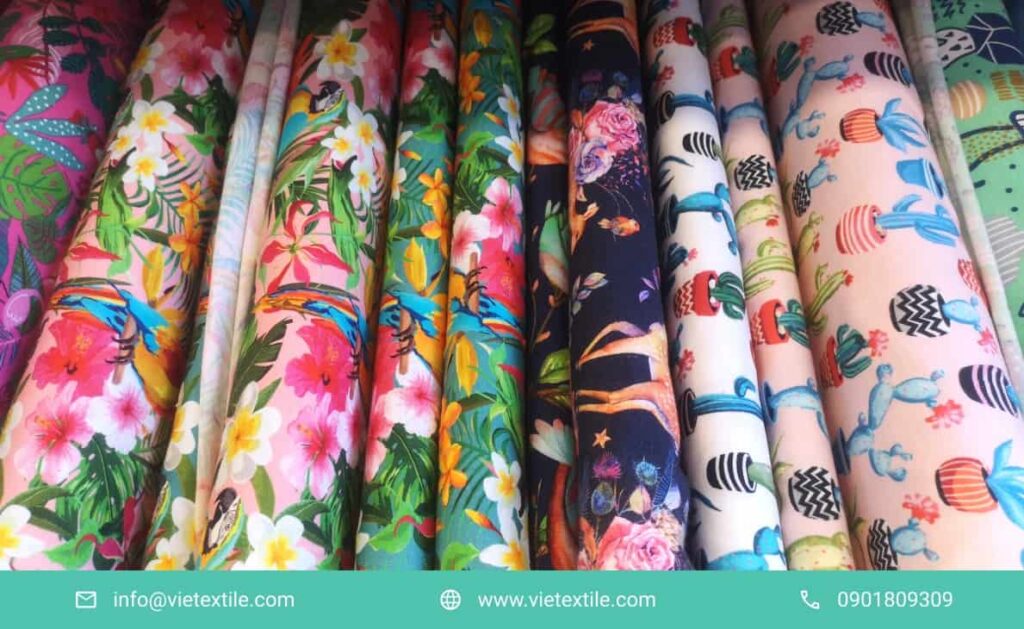
Industrial Standard Pigment Printing Ink Formulation – Deep Color, Perfect Bleeding Resistance

Pigment Printing Ink, also known as pigment ink, is the foundation of Digital Textile Printing (DTP). It is highly favored for its superior color fastness and versatility across various textile materials (Cotton, Polyester, Blends, Silk). However, the secret to maximizing the potential of this Pigment Printing Ink type—achieving deep, saturated colors (High Color Density) and absolute Bleeding Resistance—lies in mastering and standardizing the Pigment Printing Ink formulation according to the strictest industrial standards.

An inaccurate formula not only reduces color depth but also causes serious issues that threaten production efficiency and equipment lifespan: nozzle clogging, wicking/bleeding, poor washfastness, and rubbing off.

The following content delves into the complex chemical structure, the technical role of each component, and a detailed seven-step guide to mixing the Pigment Printing Ink according to industrial standards. We will provide in-depth analysis of physicochemical factors such as Viscosity, pH value, nano-particle size, and essential functional additives needed to ensure the Pigment Printing Ink consistently achieves stable quality, accurate color reproduction, and perfect bleeding resistance on all fabric materials.

Cung cấp mực in bích măng
Industrial Standard Pigment Printing Ink Formulation – Deep Color, Perfect Bleeding Resistance 40

1. In-depth Analysis of Pigment Printing Ink Chemical Structure

1.1. Key Components and Interaction Mechanisms

1.1.1. Pigment Particles

Role: Provides color. Technical Requirements: The pigment particles must be processed to achieve a nano-particle size, ideally ranging from 50nm to 200nm. This size is controlled by D50 (50% of particles below this size) and D90 (90% of particles below this size) indices. Mechanism for Deep Color: The smaller the particle size and the more uniform the dispersion, the larger the surface area for light absorption and scattering, helping the printed color achieve maximum Color Saturation and Gamut.

1.1.2. Polymer Binder

Role: “Locks” the pigment particles onto the fabric fibers after the curing process. Chemical Composition: Often Acrylic-based polymers, Polyurethane (PU), or their Hybrid Polymers. These binders must have a suitable glass transition temperature (Tg) to activate adhesion upon thermal curing without stiffening the fabric (Hand-feel). Importance: The ratio and quality of the Binder determine 90% of the printed product’s washfastness and rub fastness.

1.1.3. Dispersant and Stabilizer

Role: Maintains a uniform dispersion state, preventing pigment particles from aggregating due to Van der Waals forces or electrostatic attraction. Mechanism: The Dispersant (usually a polymer or high molecular weight surfactant) encapsulates each pigment particle, creating a Steric Hindrance or Electrostatic Repulsion barrier to push the particles away from each other. Common Error: Missing or incorrect Dispersant type will lead to particle aggregation, sudden viscosity increase of the Pigment Printing Ink, and permanent nozzle clogging.

1.1.4. Vehicle/Solvent

Role: The transport medium for other components. Composition: Primarily Deionized Water (DI Water) with extremely high purity (very low conductivity, typically < 1 µS/cm) to eliminate metal impurities that could destabilize the chemical system.

1.1.5. Humectants

Role: Controls the evaporation rate and prevents printhead drying (decap time). Composition: High-boiling organic Polyols such as Glycerol, Glycol Ether, or Propylene Glycol. Impact: The Humectants ratio determines the time the Pigment Printing Ink can remain on the printhead without drying, a critical factor for high-speed industrial printers.

1.1.6. Other Functional Additives

Includes: Surfactants: Adjust the Surface Tension of the Pigment Printing Ink solution to optimize printhead Drop Formation and the Wetting ability on the fabric surface. pH Buffers: Maintains a stable pH (usually 7.5 – 9.0) to protect the printhead and ensure the stability of the dispersion system. Defoamers and Biocides: Prevents microbial growth and eliminates air bubbles generated during the formulation and printing process.

2. Detailed Standardized Pigment Printing Ink Ratio Formula

2.1. Optimizing the Binder / Pigment Ratio (B/P Ratio)

This is the key technical parameter for this Pigment Printing Ink type. Golden Range: The optimal B/P ratio is typically maintained between 1.8:1 and 2.5:1 for DTF (Direct-to-Film) and DTG (Direct-to-Garment) textile printing. This ratio ensures that the pigment particles are fully encapsulated by the polymer, creating a durable protective film after drying. Consequences of B/P Imbalance:

  • B/P Too Low (e.g., 1:1): Pigment particles lack sufficient binder, leading to poor washfastness, easy fading, or rubbing off when Wet Rubbing Fastness is tested.
  • B/P Too High (e.g., 4:1): Excess polymer creates a thick film, significantly increasing the stiffness of the fabric (Handle/Hand-feel) and potentially causing printhead clogging due to increased overall viscosity of the Pigment Printing Ink.

2.2. Controlling Dispersion and Chemical Stability

The combination of dispersant and stabilizer must account for a sufficiently large proportion to cope with the high concentration of pigment particles. Dispersant Ratio: Approximately 1.5% – 3.0% of the total weight. Surfactant Influence: The Surfactant must be chosen with a suitable HLB (Hydrophilic-Lipophilic Balance) value to reduce the surface tension of the Pigment Printing Ink solution to below 35 mN/m, but not too low (below 30 mN/m) to prevent wicking on the fabric surface.

2.3. Detailed Pigment Printing Ink Formulation Component Ratio Table

ComponentOptimal Ratio (%)Content (g/1000g Pigment Printing Ink)Characteristic Function
Deionized Water (DI Water)60 – 75%600 – 750 gMain solvent, controls viscosity and pH.
Polymer Binder10 – 15%100 – 150 gFixes color particles, creates wash/rub fastness.
Pigment Particles3 – 7%30 – 70 gCreates color, determines coverage and Gamut.
Humectants/Polyol5 – 12%50 – 120 gAnti-drying, extends Decap Time, lubricates printhead.
Dispersant/Stabilizer1.5 – 3.0%15 – 30 gPrevents nano-particle aggregation, maintains suspension.
Surfactants0.5 – 1.0%5 – 10 gAdjusts surface tension, optimizes Pigment Printing Ink drop.
pH Adjusters/Other Additives0.5 – 2.0%5 – 20 gPhysicochemical stability and equipment protection.
Total100%1000 g

3. 7-Step Industrial Standard Pigment Printing Ink Mixing Process

Mực in bích măng chính hãng
Industrial Standard Pigment Printing Ink Formulation – Deep Color, Perfect Bleeding Resistance 41

3.1. Step 1: Prepare Raw Materials, Environment, and Equipment

Raw Materials: Precisely weigh all raw components (pigment, polymer, chemicals) using an analytical balance with high accuracy (0.01g). Materials must be temperature pre-treated to reach room temperature (25°C). Environment: Conduct in a closed room, controlling temperature (20°C ± 2°C) and humidity (< 60%). Equipment: High-Shear Mixer, Horizontal Bead Mill, Jacketed Tank (for temperature control), Viscosity and pH measurement devices.

3.2. Step 2: Preliminary Pigment Dispersion (Pre-Dispersion)

Coarse pigment particles (Agglomerates) are initially mixed with the dispersant and a small amount of solvent. The goal is to completely wet the surface of the pigment particles before milling. Technique: Use a high-speed mixer (e.g., 1000 – 3000 RPM) to break down large particle clumps, forming a slurry.

3.3. Step 3: Nano Milling – Creating the Base Concentrate

This step determines the quality of the Pigment Printing Ink solution. The slurry is introduced into a bead mill using ultra-fine grinding media (usually Zirconia, 0.1-0.3 mm size). Goal: Reduce particle size from microns to nanometers (D90 < 200nm). Control: The milling process must be tightly temperature-controlled (jacket cooling) to prevent damage to the dispersant and polymer from frictional heat. The resulting product after milling is the Base Concentrate.

3.4. Step 4: Binder Integration

The dispersed Base Concentrate is transferred to the main mixing tank. The Polymer Binder is slowly added while stirring at a medium speed (around 500 RPM). Note: The stirring speed must be sufficient for the polymer to uniformly encapsulate the pigment particles, but not too fast to avoid air entrapment. This process forms the complete Pigment Printing Ink system.

3.5. Step 5: Adjust Additives and Solvent

Add Humectants and Surfactants: These substances are mixed in last to avoid sudden changes in surface tension during the initial steps. Add DI Water: The main solvent is added to achieve the desired rough viscosity and the total formula mass.

3.6. Step 6: Final Physicochemical QC Check

Before filtration, the mixed Pigment Printing Ink must undergo strict quality control checks.

3.6.1. Viscosity Check

Equipment: Viscometer (e.g., Brookfield Cone and Plate Viscometer). Target Value: Typically 3.0 – 5.0 cP (centipoise) at 25°C. Adjustment: If the viscosity is outside the range, use solvent (DI Water) to reduce it or add a rheology modifier to increase it.

3.6.2. pH Check

Equipment: Precise pH Meter. Target Value: 7.5 – 9.0. Adjustment: Use a pH adjuster (Ammonia or Amine) to raise the pH.

3.6.3. Particle Size Check

Equipment: DLS (Dynamic Light Scattering) analysis to ensure D90 < 200nm.

3.7. Step 7: Final Filtration and Packaging

Filtration: The Pigment Printing Ink solution is filtered through multiple stages of membrane filters, with the final filtration stage being 0.2 micron or 0.45 micron. This is a critical step to remove any remaining large particles to protect the printhead from clogging. Packaging: The finished Pigment Printing Ink is packaged in air-tight, UV-resistant bottles/containers to prevent chemical degradation and microbial contamination.

4. Techniques for Optimizing Deep Color, Durability, and Perfect Bleeding Resistance

4.1. The Absolute Role of Pre-treatment Chemicals

Pre-treatment is a chemical Pigment Printing Ink solution applied to the fabric before printing, especially crucial for Cotton fabric, to achieve the “Deep Color, No Bleeding” effect.

4.1.1. Anti-Bleeding/Wicking Mechanism

Creating an Ionic Barrier: Pre-treatment chemicals often contain salts (like calcium salts) or charged polymers. When the Pigment Printing Ink (which is also charged) is jetted, the electrostatic interaction between the Pre-treatment and the Pigment Printing Ink causes the pigment particles to coagulate instantly, forming a physical barrier at the point of contact. Preventing Capillary Action: This coagulation prevents the color particles from following the capillary action of the fabric fibers, eliminating wicking outside the design outline.

4.1.2. Deep Color (Color Density) Enhancement Mechanism

The instantaneous coagulation of color particles on the fabric surface ensures the Pigment Printing Ink remains on the top layer of the fibers instead of penetrating deeply. This increases the visible Optical Density, making the printed color appear deeper and more vibrant. Quantification: The amount of Pre-treatment used (g/m²) must be strictly controlled; too much will stiffen the fabric, and too little will be ineffective.

4.2. Thermal Curing – Activating the Binder

Curing is the final step, using heat to activate (cross-link) the polymer binder within the Pigment Printing Ink, creating permanent durability.

4.2.1. Optimizing the Thermal Profile

Goal: Reach the polymer’s glass transition temperature (Tg) and Cross-linking Temperature. Standard Temperatures:

  • Cotton Fabric: Typically cured at 160°C – 170°C for 120 – 180 seconds.
  • Polyester Fabric: Typically cured at a lower temperature (around 130°C – 150°C) to prevent color Sublimation of the fibers, for 180 – 240 seconds. Consequences of Incorrect Curing:
  • Insufficient Heat/Time: Polymer does not cross-link enough, leading to poor washfastness.
  • Excessive Heat/Time: Damages the fabric fibers, causes yellowing, or wastes energy.

4.3. Selecting Surfactants for Anti-Bleeding

The surface tension of the Pigment Printing Ink solution needs to be adjusted so that it “cooperates” with the Pre-treatment layer. High Surface Tension: Helps the Pigment Printing Ink drop maintain its shape and not spread when contacting the fabric (anti-bleeding). Low Surface Tension: Easily wets the printhead and fabric surface, but prone to bleeding on highly capillary fabrics. Solution: A standard Pigment Printing Ink solution formula must balance the Surfactant to achieve an optimal surface tension (30 – 35 mN/m)—sufficient for good jetting but high enough for anti-bleeding.

5. Quality Control (QC) and Factors Affecting the Prepared Pigment Printing Ink

5.1. Quality Control Methods

5.1.1. Shelf Stability Test

The Pigment Printing Ink is checked periodically for viscosity and pH (e.g., weekly) under Accelerated Aging conditions to simulate aging over 6-12 months. A change in viscosity or pH exceeding 10% of the initial value indicates aggregation or decomposition.

5.1.2. Jetting Test

Test printing on an industrial printer to check for phenomena such as nozzle clogging, drop defects (missing or deflected drops), and continuous printing performance (Decap Time). Viscosity and surface tension are two physicochemical factors that directly influence this result.

5.2. Environmental Factors

5.2.1. Storage Temperature and Humidity

The Pigment Printing Ink solution is sensitive to temperature. High temperatures (above 30°C) can increase the kinetic energy of the pigment particles, promoting collision and aggregation. Low temperatures can increase viscosity, causing printhead difficulties. Standard Storage: 18°C – 25°C, avoiding direct sunlight.

5.2.2. Compatibility with Filter Materials

The material of the membrane in the final filter must be compatible with the polymer components in the Pigment Printing Ink. Incompatible materials can release impurities, causing pigment particle aggregation.

5.2.3. Hygroscopicity

Some Humectants have high hygroscopicity. If the ambient humidity is too high (above 70%), the Pigment Printing Ink can absorb water, reducing color concentration and altering viscosity.

6. Economic Benefits of Using Standardized Pigment Printing Ink

Sản phẩm mực in bích măng
Industrial Standard Pigment Printing Ink Formulation – Deep Color, Perfect Bleeding Resistance 42

6.1. Minimizing Nozzle Clogging and Operating Costs

Pigment Printing Ink formulated with uniform nano-particle size and optimal viscosity significantly minimizes printhead clogging incidents, which are the cause of expensive downtime and replacement costs for printheads (a component valued at tens of thousands of dollars).

6.2. Optimizing Fabric Durability and Reducing Defect Rates

The binder and additives in the standard Pigment Printing Ink help it adhere firmly, meeting international standards for washfastness (ISO 105) and lightfastness, reducing the need for reprinting or discarding defective products due to bleeding or fading.

6.3. Increasing Production Speed

The stable physicochemical properties of the Pigment Printing Ink allow the printer to operate at maximum speed (High Speed Mode) without jetting failure, thereby increasing the overall throughput of the factory.

7. Frequently Asked Questions About Pigment Printing Ink (FAQ)

Q: How can the size of pigment particles in the Pigment Printing Ink be controlled after milling? A: Particle size is controlled using a Dynamic Light Scattering (DLS) analyzer. Manufacturers of industrial standard Pigment Printing Ink solutions must ensure the D90 index (90% of particles below this threshold) is always less than 200nm to ensure printhead safety.

Q: What are the main causes of printhead clogging due to this Pigment Printing Ink? A: There are three main causes: (1) Particle Aggregation: Pigment particles clump due to unstable pH or Dispersant; (2) Pigment Printing Ink Drying: The printing environment is too dry, causing Humectants to evaporate quickly, drying the Pigment Printing Ink on the printhead; (3) Large Particle Size: Insufficient filtration (above 0.45 micron) or coarse pigment raw material.

Q: How long can Pigment Printing Ink be stored after formulation? A: Standard industrial formula Pigment Printing Ink typically has a shelf life of 6 to 12 months. This requires storage under stable temperature conditions (15°C – 25°C), away from direct sunlight, and minimizing contact with air.

Q: Why is Pre-treatment necessary when printing this Pigment Printing Ink onto Cotton fabric? A: Cotton fabric has high capillarity, making the Pigment Printing Ink prone to bleeding. Pre-treatment creates a layer of charged chemicals on the fabric surface, causing the pigment particles to instantly coagulate upon contact, preventing wicking/bleeding and simultaneously enhancing color depth by keeping the pigment on the surface.

Q: How can the hand-feel of fabric be improved when printing with the Pigment Printing Ink solution? A: To improve softness, minimize the Pigment Printing Ink load printed on the fabric, and optimize the Binder/Pigment (B/P) ratio to the lowest possible level while still ensuring washfastness. Additionally, using silicone softeners after printing or during the finishing process is an effective solution.

Q: What are the ideal pH and Viscosity indices for Kyocera printheads? A: Kyocera printheads (common in the industry) require very tight viscosity control, usually in the range of 3.0 – 4.5 cP. The ideal pH value is between 7.8 – 8.5 to protect the ceramic structure of the printhead.

8. Conclusion: The Importance of Standardized Formulation

The formulation of Pigment Printing Ink according to industrial standards is not merely mixing chemicals; it is a scientific process that demands absolute precision in controlling physicochemical parameters: nano-particle size (D90 < 200nm), viscosity (3.0 – 5.0 cP), and Binder/Pigment ratio (1.8:1 – 2.5:1).

This strict control is what creates superior stability, ensuring the Pigment Printing Ink is perfectly compatible with high-speed Piezo printhead technology and allows for clear economic benefits: minimizing the risk of printhead clogging, saving expensive equipment maintenance costs, and optimizing production efficiency. Adhering to the standardized formula and process is the strongest commitment to deep color quality, perfect anti-bleeding capability, and superior product durability in the digital textile printing market.

To receive in-depth consultation on Pigment Printing Ink formulas and printing process optimization, contact VieTextile today!

Contact Information: 

Hotline: 0901 809 309 

Email: info@vietextile.com

Website: https://vietextile.com
Advantages and Limitations of Pigment Ink in Fashion Textile Printing

Pigment Ink is one of the most popular types of digital printing ink today, especially in the fabric printing industry. This type of ink plays a crucial role in shaping the quality and durability of fashion products. This article will deeply analyze the superior characteristics as well as the limitations of this ink when applied to fabric printing, providing manufacturers and fashion brands with the most comprehensive overview.

The modern fashion industry is strongly shifting towards sustainable and highly durable printing solutions. In this context, Pigment Ink has emerged as an optimal choice due to its excellent color fastness and environmental friendliness. To help you better understand this technology, we will present details ranging from the composition, mechanism of action, to the specific applications of the pigment solution in printing on various fabric materials, including challenges related to cost and technical processes.

Pigment Ink
Advantages and Limitations of Pigment Ink in Fashion Textile Printing 47

1. What is Pigment Ink? Composition and Mechanism of Action

Pigment Ink, also known as pigment color ink, has a composition entirely different from Dye Ink. The core difference lies in the color particle.

1.1. Basic Concept of Pigment Ink

This ink consists of solid, insoluble color particles suspended in a liquid solvent. During printing, these color particles adhere to the surface of the material rather than penetrating and dyeing the fabric fibers like Dye Ink. This is the main reason why this ink offers superior color fastness and resistance to water and UV rays. The use of pigment particles helps the color maintain long-term stability.

1.2. Detailed Composition of Pigment Color Particles

The color particle (pigment) is the main component that creates the characteristics of this type of ink. The size of these color particles is extremely small, usually only about 0.1 to 0.2 micrometers. To ensure these particles do not settle or clump, they are encapsulated by a special polymer or resin layer. This coating has two main functions: protecting the color particles from chemical agents and helping them disperse evenly in the solvent. Thanks to its special structure, this ink maintains stable print quality over time.

1.3. Adhesion Mechanism When Printing on Fabric

The printing process using pigment technology on fabric is not based on chemical reactions or dyeing. Instead, after being sprayed onto the fabric surface, the solvent evaporates, leaving behind the pigment particles and the protective polymer layer. This polymer layer acts as a binder, fixing the color particles onto the fabric surface through a heat curing or hot pressing process. This creates a physical color film on the surface, providing high mechanical durability.

1.3.1. The Role of Heat in the Process

Temperature plays a decisive role in locking the color of the ink solution. The curing or heat pressing process helps the polymer layer melt and tightly bond with the fabric fibers. Without this step, the ink can easily peel off during washing or rubbing. Controlling the temperature and curing time is a key factor in ensuring the final quality of products printed with this method.

2. Superior Advantages of Pigment Ink in Fashion Fabric Printing

Pigment Ink is the preferred choice in fashion fabric printing due to a range of outstanding advantages, solving many challenges faced by traditional printing inks.

2.1. Absolute Color Fastness

This is the biggest advantage of pigment-based printing. Because the color particles adhere to the surface and are protected by the polymer layer, the printed product has the ability to resist fading caused by external factors.

  • UV Resistance (Sunlight Resistance): Colors are less likely to change when exposed directly to sunlight.
  • Water/Wash Resistance: Fashion products printed with this ink type can be washed many times in a washing machine while maintaining color vibrancy.
  • Rubbing Resistance: Minimizes color fading caused by friction during use.

2.2. Ability to Print on Diverse Fabric Materials

The ink can be printed directly onto almost all natural and synthetic fabrics without the need for complex pre-treatment or specialized post-treatment. This significantly reduces production costs and time.

  • Natural Fabrics: Cotton, linen, silk.
  • Synthetic Fabrics: Polyester, nylon, blends.
  • Benefit: This flexibility helps fashion brands easily expand their product range without heavily investing in specialized inks for each material. This is an excellent strength of this printing type.

2.3. Environmentally and Health Friendly

Many types of Pigment Ink today have achieved international safety certifications such as Oeko-Tex Standard 100.

  • Non-Toxic: Contains fewer volatile organic compounds (VOCs) and heavy metals.
  • Clean Process: Minimizes water and energy consumption in the printing process compared to traditional dyeing. This ink type contributes to the sustainable fashion trend.

3. Analysis of Limitations and Challenges of Pigment Ink

Mực in pigment chính hãng
Advantages and Limitations of Pigment Ink in Fashion Textile Printing 48

Besides its outstanding advantages, Pigment Ink also has certain limitations that users need to consider carefully.

3.1. Fabric Surface Softness (Hand-Feel)

Because the adhesion mechanism of the ink is to create a color film on the surface, this can reduce the natural softness (hand-feel) of the fabric, especially when printing a large color block or on thin fabrics like silk.

  • Solution: Ink manufacturers are constantly improving polymer formulas to minimize the “stiffness” of the ink layer. It is necessary to adjust the ink quantity and curing process to optimize the fabric’s hand-feel.

3.2. Less Vibrant Color Compared to Dye Ink

Pigment color particles tend to reflect and absorb light differently than Dye Ink, which completely dissolves into the fabric fibers. Therefore, pigment prints often have slightly less depth and vibrancy, especially bright and neon colors.

  • Black Color: Sometimes the black color printed with this solution does not achieve the absolute deep black like dye printing.
  • Application: The pigment solution is more suitable for designs with muted, earth tones, or designs that require high color accuracy rather than absolute vibrancy.

3.3. Printhead Maintenance Requirements

Due to its nature as solid particles, this medium is more likely to clog the printheads than Dye Ink. Printhead maintenance and cleaning must be performed frequently and strictly.

  • Operating Cost: This requirement increases operating costs and the risk of printing equipment damage if maintenance procedures are not followed.

4. Detailed Applications of Pigment Ink in Fashion Segments

Pigment Ink is widely applied in many different segments of the fashion industry thanks to its flexibility and high durability.

4.1. Activewear and Outdoor Fashion

Although Sublimation Ink is popular for polyester, Pigment Ink still plays an important role when printing on blended cotton fabrics or fabrics that require higher breathability without changing the fiber structure too much. Excellent wash durability is the key factor.

4.2. Children’s and Baby Clothing

Health safety is the top priority. With safety certification and non-toxic formula, Pigment Ink is the ideal choice for children’s clothing.

4.3. Sustainable Fashion

Brands focused on sustainability often prioritize this technology because of its dry printing process, low water consumption, and less liquid waste compared to dyeing.

4.4. Small-Volume Design Printing (DTG – Direct-to-Garment)

DTG is one of the main applications of this ink type. It allows direct printing onto T-shirts (usually cotton) at a low cost for small, personalized orders.

4.4.1. Uniform and Event T-shirt Printing

Manufacturers of event and small group uniforms highly favor DTG using pigment inks for its speed and ability to accurately reproduce logo colors on cotton fabric.

5. Comparison of Pigment Ink with Other Ink Types

Sản phẩm mực in pigment
Advantages and Limitations of Pigment Ink in Fashion Textile Printing 49

For an objective view, Pigment Ink needs to be compared with its two main competitors in fabric printing: Dye Ink and Reactive Ink.

5.1. Pigment Ink vs. Dye Ink

CharacteristicPigment InkDye Ink
CompositionSolid color particles suspendedCompletely dissolved dye
Color FastnessVery high (water, UV resistance)Low (fades easily with water, sunlight)
Color VibrancyGood, but less vibrant than DyeVibrant, deeper colors
Machine MaintenanceMore difficult (prone to printhead clogging)Easier
Hand-feelSlightly stiff if printing large blocksVery soft
Suitable forFabric printing, images requiring long-term durabilityPhoto printing, internal documents

5.2. Pigment Ink vs. Reactive Ink

Reactive Ink is typically used for cotton/silk fabrics, requiring complex steaming/washing processes after printing.

CharacteristicPigment InkReactive Ink
ProcessSimple (heat curing only)Complex (steaming, washing, drying)
Water ConsumptionVery little (almost a dry process)Very high (due to washing process)
Color FastnessVery goodVery good (due to chemical bond)
Hand-feelSlightly stiffVery soft
MaterialsVersatile (Cotton, Poly, Blends)Mainly Cellulose fibers (Cotton, Rayon)

Clearly, this ink solution offers an ideal balance between durable print quality and simplicity, as well as cost savings in the production process.

6. Technical Factors When Using Pigment Ink

To achieve the best quality with Pigment Ink, some important technical factors in the printer operation and fabric handling process must be noted.

6.1. Optimizing the Curing Process

Temperature and curing time are the two parameters that determine the adhesion of the pigment solution.

  • Temperature: Must be high enough to activate the polymer layer (usually from 150°C – 180°C).
  • Time: Must be long enough for the polymer to bond tightly with the fabric fibers (usually 30 seconds – 3 minutes, depending on the machine type). Incorrect adjustment can reduce wash durability.

6.2. Controlling the Printing Environment Humidity

A printing environment with too high or too low humidity affects the quality of the ink.

  • Low Humidity: Easily causes the ink to dry quickly on the printhead, leading to clogging.
  • High Humidity: Affects the solvent evaporation rate and the ink drying time on the fabric, reducing sharpness.

6.3. Fabric Pre-treatment

Although the ink can print on many types of fabrics without pre-treatment, applying a Pre-treatment layer (especially for DTG printing on dark cotton) is necessary to:

  • Enhance Sharpness: Helps the color particles lie neatly without bleeding.
  • Increase Adhesion: Improves wash durability to the maximum level.

7. VieTextile – Leading Pigment Ink Solution Provider Partner

VieTextile is proud to be a pioneer in providing professional digital printing solutions for the textile and garment industry. We are committed to delivering high-quality Pigment Ink lines that meet the most stringent standards of the international fashion market.

Our ink products at VieTextile are researched and developed to optimize printing performance on various fabric types. We understand that the quality of this printing medium directly determines your brand’s reputation; therefore, every batch is rigorously tested for viscosity, particle size, and fade resistance. We not only sell pigment solutions but also provide comprehensive technical solutions and support for printing machine operation.

7.1. Supply Capacity and Quality Commitment

  • Safety Standard Products: All ink products from VieTextile comes with safety certifications, is user- and environment-friendly, and does not contain prohibited toxic substances.
  • In-depth Consultation: Our experienced technical team will advise on the most suitable Pigment Ink formula and color profile (ICC Profile) for your fabric type and printing machine model.
  • Superior Durability: Commitment to the highest level of wash durability and lightfastness of our inks, helping fashion products maintain their aesthetic appeal for a long time.

7.2. Cost-Effective Printing Solutions

We offer pigment inks at competitive prices, combined with high printing performance to minimize consumable costs. Using our ink quality from VieTextile helps reduce printhead clogging, extend equipment lifespan, and optimize production time. This is a smart investment for any fabric printing business seeking an efficient Pigment Ink solution.

8. Frequently Asked Questions about Pigment Ink (FAQ)

Q: Can Pigment Ink print directly onto 100% Polyester fabric? A: Yes. The ink can print directly onto 100% Polyester without the complex Sublimation process. However, a light Pre-treatment layer is recommended to optimize wash and rub fastness.

Q: Is the color fastness of Pigment Ink truly better than Dye Ink? A: Fundamentally, the color fastness of this ink (especially UV and water resistance) is much better than Dye Ink due to the structure of solid color particles protected by a polymer layer, which are not dissolved.

Q: Is the initial investment cost for Pigment Ink technology high? A: The initial investment cost for DTG or roll-to-roll printers using Pigment Ink may be higher, but the overall operating cost (no steaming, no washing required) is lower compared to Reactive Ink.

Q: Does printing with Pigment Ink cause printhead clogging? A: Although the ink is particulate and more prone to clogging than Dye Ink, using pigment inks quality, adhering to maintenance procedures, and controlling humidity will minimize the risk of clogging.

Q: Is Pre-treatment necessary when printing Pigment Ink on white cotton fabric? A: For white cotton, Pre-treatment is optional but recommended to maximize the color vibrancy and wash durability of the final print. For dark-colored cotton, Pre-treatment is mandatory.

Q: Is Pigment Ink suitable for designs requiring subtle color gradients? A: Yes. Modern printing systems using Pigment Ink have significantly improved their ability to reproduce color gradients and image details, meeting the requirements of complex designs well.

9. Conclusion

In summary, this ink technology is a groundbreaking printing technology that offers many strategic benefits to the fashion industry. Although it has some minor limitations regarding color vibrancy and hand-feel compared to Dye or Reactive inks, its advantages in absolute color fastness, versatility on multiple materials, and environmental friendliness have made Pigment Ink the leading choice for modern digital fabric printing.

Investing in high-quality Pigment Ink and adhering to technical procedures will be the key for textile and garment businesses to optimize production, meet sustainable fashion trends, and the market’s increasing demand for personalization. VieTextile is committed to accompanying you, providing the most optimal ink solution to elevate the quality of your products.

To optimize Pigment Ink and elevate the quality of your fashion fabric prints, contact VieTextile today!

Contact Information:

Hotline: 0901 809 309

Email: info@vietextile.com

Website: https://vietextile.com
Standard Indanthrene Dyes Preparation Guide – Ensuring Deep, Even, and Non-Staining Color

Indanthrene Dyes (or Vat Dyes) represent the pinnacle of color technology in the textile industry, providing near-absolute color fastness, particularly the highest level of light fastness and wash fastness available in textile dyeing and printing. Due to these properties, Indanthrene Dyes are the mandatory choice for products requiring non-fading color quality, such as military uniforms, outdoor upholstery fabrics, or protective workwear.

However, the use of Indanthrene Dyes demands precise chemical knowledge and technical execution. Unlike water-soluble Reactive Dyes, Indanthrene Dyes are insoluble in water in their original form. For use, they must undergo a Reduction (Vatting) process, transforming into a water-soluble salt called Leuko Salt, only then can they be printed onto the fabric and fixed.

The complexity of controlling the reduction environment (temperature, alkali, reducing agent) is the main cause of printing faults such as pale colors, uneven fixation, or staining the ground fabric.

This article provides detailed, industry-standard instructions on How to Prepare Indanthrene Dyes Correctly to ensure maximum print paste stability, resulting in deep, even, and non-staining colors.

Indanthrene Dyes
Standard Indanthrene Dyes Preparation Guide – Ensuring Deep, Even, and Non-Staining Color 54

1. Chemical Mechanism of Indanthrene Dyes

To formulate a Vat Dye print paste, a clear understanding of their three fundamental chemical stages is essential.

1.1. Original State (Vat Pigment)

In their initial powder form, Indanthrene Dyes are water-insoluble color particles (Pigments). They have complex chemical structures, often compounds containing Carbonyl groups (C=O) such as Indanthrone or Anthraquinone.

1.2. The Reduction Process

This is the most critical step. Indanthrene Dyes are converted into their soluble form (Leuko Salt) so they can permeate the Cotton fiber.

The general formula for the reduction process is: Vat Dye (insoluble form) + Reducing Agent (Sodium Hydrosulfite – Na2S2O4) + Alkali (NaOH) Leuko Salt (soluble form, different color) under the influence of High Temperature.

The Leuko Salt form is an Anion (negative charge) and possesses strong diffusion and Adsorption capability onto the Cellulose fiber in an alkaline medium.

1.3. The Oxidation Process

After printing and fixation, the Leuko Salt is converted back into its original insoluble Pigment form, locking it tightly within the fiber structure.

The formula is: Leuko Salt (soluble) + Oxygen (from air or oxidizing agent) Vat Dye (insoluble Pigment form, permanent color) after Water Rinsing.

This oxidation process is what gives Indanthrene Dyes their “permanent” color fastness.

2. Common Types of Indanthrene Dyes

Indanthrene Dyes are classified into groups based on their reduction conditions:

  • Cold Dyeing Indanthrene Dyes (IK): Require low reduction temperature (20-30C). Suitable for light blues and greens.
  • Warm Dyeing Indanthrene Dyes (IN): Require medium temperature (40-50C). The most common group.
  • Hot Dyeing Indanthrene Dyes (IW): Require high temperature (50-60C). Typically used for black, brown, and orange colors, which demand high color depth.

Selection: The preparation of the Vat Dye paste must be based on the dye group (IK, IN, IW) to accurately determine the required temperature and chemical concentration.

3. Standard Industrial Vat Dye Paste Preparation Process

The Vat Dye preparation process is executed in 3 main phases: Printing Paste Preparation, Leuko Salt Formation, and Finishing.

3.1. Phase 1: Printing Paste Preparation (Thickening Paste)

Objective: To create a viscous medium to hold the dye on the fabric surface and prevent bleeding before fixation.

No.Raw MaterialRatio (Customizable)Function
1Sodium Alginate6-8%Thickener (Prevents ink flow)
2Soft WaterRemainderSolvent
3Vat Dye Pigment5-20% (by color requirement)Colorant

Note: The thickener must be Sodium Alginate (Alkali-Stable) because Indanthrene Dyes operate in a strong alkaline environment.

3.2. Phase 2: Reduction Process (Leuko Salt Formation)

This step determines printing efficiency and color uniformity.

3.2.1. Prepare Reduction Chemicals

  • Alkali Agent: Sodium Hydroxide (NaOH, also known as Caustic Soda) at 38Be concentration. NaOH creates the necessary high pH environment (approx. 13) for the dye to convert into Leuko Salt.
  • Reducing Agent: Sodium Hydrosulfite (Na2S2O4). A fresh, stable solution must be prepared to ensure maximum activity.

3.2.2. Steps to Form Leuko Salt

  1. Dissolve the Dye: Dissolve the Vat Dye powder in a small amount of warm water and NaOH (38Be) to form a slurry.
  2. Add Reducing Agent: Add Sodium Hydrosulfite (the reducing agent) to the mixture. The reduction process starts immediately.
  3. Temperature Control: Maintain the temperature according to the dye group (e.g., 40-50C for the IN group) for about 10-15 minutes. During this stage, the solution’s color will noticeably change (e.g., from blue to yellow for Indanthrene Blue), indicating Leuko Salt formation.
  4. Mix with Paste: After stable reduction, mix the prepared Leuko Salt solution with the printing paste from Phase 3.1 and stir thoroughly.

3.3. Phase 3: Finishing the Printing Paste

  • Protective Colloid: Add a small amount of a protective agent like Glycine or similar. This agent helps stabilize the Leuko Salt, preventing premature oxidation (before printing) and extending the paste’s shelf life.
  • Viscosity Adjustment: If necessary, adjust the viscosity using Sodium Alginate or water to suit the printing speed and fabric fineness.

4. Advanced Vat Dye Printing and Fixation Techniques

Mực in hoàn nguyên chính hãng
Standard Indanthrene Dyes Preparation Guide – Ensuring Deep, Even, and Non-Staining Color 55

Even when the Vat Dye paste is prepared correctly, the printing and fixation process remains the critical factor determining color uniformity and depth.

4.1. Printing

Use Rotary Screen Printing machines or Digital Printing systems with specialized Vat Dye ink systems.

4.2. Drying Process

The fabric is gently dried at a low temperature (60-80C) immediately after printing. Avoid overheating, as this can reduce the activity of the Leuko Salt and cause premature, uneven color fixation.

4.3. Color Fixation (Steaming)

The color fixation process requires a hot steam environment with minimal air.

  • Standard Conditions: Hot steam in a Steamer at 102-105C for 8-12 minutes.
  • Mechanism: High temperature in saturated steam maintains the solubility of the Leuko Salt and promotes its thorough diffusion deep into the Cellulose structure of the fiber, ensuring deep color penetration.

4.4. Oxidation and Washing Off

This is the final step to achieve maximum color fastness.

  • Oxidation: After Steaming, the fabric is treated with a mild oxidizing solution (typically Sodium Perborate – NaBO3) or Sodium Dichromate (Na2Cr2O7) to convert the Leuko Salt back into its original insoluble Pigment form. This can be done by dipping or simply by air exposure.
  • Hot Washing Off (Soaping): The fabric is then washed with hot water (90-95C) and a strong Soaping Agent. The purpose is to completely remove excess chemicals and unfixed Pigment particles, ensuring high rub fastness and clean color.

5. Common Technical Faults in Vat Dye Preparation

Technical faults in the Vat Dye preparation process are often related to chemical stability.

Technical FaultPrimary CauseControl Solution
Pale/Insufficient Color DepthInsufficient Hydrosulfite or inadequate reduction time. Or Leuko Salt oxidized prematurely during printing.Control Hydrosulfite concentration by measuring Redox Potential. Add Protective Colloid to the printing paste.
Uneven FixationUneven Steaming temperature or uneven distribution of alkali (NaOH) in the printing paste.Ensure stable Steamer temperature and thoroughly stir the printing paste before use.
Staining the Ground FabricIncomplete Washing Off (Poor Washing Off). Hydrolyzed dye is not removed and adheres to the fabric background.Increase Soaping temperature and time (Up to 95C). Use specialized Soaping Agents with the ability to sequester unfixed dye.
Unstable Print PasteNaOH absorbed CO2 from the air, reducing pH. Or Hydrosulfite decomposed due to heat.Prepare fresh NaOH and Hydrosulfite solutions. Store the printing paste in sealed containers, away from light and air.

6. Quality Control: Redox Potential

In professional factories, the efficiency of the Vat Dye preparation process is strictly controlled by measuring the Redox Potential.

What is Redox Potential? It is an index measuring the Reducing Power of the Leuko Salt solution, measured in Millivolts (mV) against a reference electrode.

Control Standard: Each Vat Dye color (Indanthrene) has a standard Redox Potential. For example:

  • Yellow might require a potential of -700 mV.
  • Deep Blue might require -950 mV. If the mV does not meet the standard, the reduction process is incomplete, leading to pale or less durable colors.

Benefits: Measuring Redox Potential helps engineers to:

  • Accurately determine the required amount of Hydrosulfite.
  • Check the stability of the printing paste and Leuko Salt before use.
  • Ensure color depth and formula repeatability.

7. Other Technical Factors Affecting Indanthrene Dyes

Sản phẩm mực in hoàn nguyên
Standard Indanthrene Dyes Preparation Guide – Ensuring Deep, Even, and Non-Staining Color 56

7.1. Fiber Structure (Cotton vs. Viscose)

Although Indanthrene Dyes are used for Cellulose fibers, Viscose fibers have higher porosity and absorbency than Cotton, leading to a faster diffusion rate of Leuko Salt. This requires adjusting the viscosity of the printing paste to prevent uneven spreading (bleeding) on Viscose.

7.2. Digital Vat Printing

Digital printing technology for Indanthrene Dyes is a major step forward, but it requires the Indanthrene Dyes to be in a super-fine Pigment form (Micro-fine Pigment) to avoid clogging the print heads.

Challenge: The reduction process must take place after printing (Post-reduction). This necessitates a Pre-treatment process containing a stable reducing agent and alkali activated by Steaming, increasing process complexity.

8. Frequently Asked Questions (FAQ) About Indanthrene Dyes

1. Question: What type of fabric are Indanthrene Dyes primarily used on? Answer: Indanthrene Dyes are primarily used on Cellulose fibers, especially Cotton, Linen, and Viscose (rayon). They are not used for printing on Polyester or Nylon.

2. Question: What is the role of Sodium Hydrosulfite (Na2S2O4) in Indanthrene Dyes? Answer: Sodium Hydrosulfite is the main Reducing Agent. Its role is to carry out the Reduction process, converting the Vat Dye from its water-insoluble Pigment form into the soluble Leuko Salt form, allowing the color to penetrate the fabric fibers.

3. Question: Why must the Vat Dye print paste use Sodium Alginate as a thickener? Answer: Indanthrene Dyes operate in a strong alkaline environment (pH around 13) due to the presence of Sodium Hydroxide (NaOH). Sodium Alginate is one of the few natural thickeners that are Alkali-stable and do not decompose or lose viscosity in this strong alkaline environment, ensuring print quality is not compromised by bleeding.

4. Question: Is the Oxidation process necessary? What happens if it’s omitted? Answer: The Oxidation process is mandatory. Without oxidation, the Leuko Salt (soluble form) cannot convert back into its original insoluble Pigment form. The result is that the color will be pale (because the Leuko Salt form is unstable) and easily washed out completely during rinsing, thus losing the color fastness characteristic of Indanthrene Dyes.

5. Question: How to control the stability of the Vat Dye printing paste? Answer: Stability is controlled by measuring the Redox Potential using an mV meter. Additionally, storing the print paste in sealed, dark containers and adding a Protective Colloid like Glycine helps prevent premature oxidation and Hydrosulfite decomposition.

6. Question: How do IN (Warm Dyeing) and IW (Hot Dyeing) Vat Dye groups differ? Answer: They differ in the required reduction temperature and chemical concentration:

  • IN (Warm): Reduction at 40-50C, using standard amounts of NaOH and Hydrosulfite.
  • IW (Hot): Reduction at 50-60C, requiring higher amounts of NaOH and Hydrosulfite to complete the reaction. These are often deep, difficult-to-reduce colors.

7. Question: What is the common cause of the “Pale Color” fault in Vat Dye printing? Answer: The pale color fault is primarily caused by Under-Reduction. That is, the dye has not completely converted to the Leuko Salt form, reducing the amount of color that can permeate the fiber. Causes include poor quality Hydrosulfite, excessively low reduction temperature, or too short a reduction time.

8. Question: What is the biggest difference in color fastness between Indanthrene Dyes and Reactive Dyes? Answer: Indanthrene Dyes have significantly higher Light Fastness and Weather Fastness than Reactive Dyes. While Reactive Dyes form a covalent bond, the molecular structure of Indanthrene Dyes (Anthraquinone) provides superior photo-chemical and chemical stability.

9. Question: When should Sodium Perborate (NaBO3) be used for oxidation? Answer: Sodium Perborate (NaBO3) is a mild oxidizing agent, often used in the final washing off process to ensure the complete conversion of Leuko Salt into Pigment after Steaming. It is less harmful to the Cellulose fiber compared to other strong oxidizing agents.

10. Question: How can Indanthrene Dyes achieve the best Leveling (color uniformity)? Answer: Good leveling is achieved through: 1) Stabilizing the Leuko Salt with a protective agent in the print paste to prevent premature oxidation. 2) Controlling the Steaming temperature to ensure uniform diffusion of Leuko Salt into the fibers. 3) Adjusting the Sodium Alginate concentration for appropriate viscosity to prevent ink migration (bleeding).

9. FINAL CONCLUSION AND TECHNICAL SIGNIFICANCE

Indanthrene Dyes remain the top choice when color fastness is the absolute priority. However, their performance depends entirely on accurate chemical control during the preparation process.

Core Technical Summary:

  • Accurate Reduction: The temperature and concentration of Hydrosulfite/NaOH must be strictly controlled according to the color group (IK, IN, IW). The use of a Redox Potential meter is a mandatory recommendation for quality assurance.
  • Print Paste Stability: Use Sodium Alginate (alkali-resistant thickener) and protective agents to keep the Leuko Salt stable, preventing premature oxidation before fixation.
  • Thorough Finishing: Always perform Oxidation and Hot Washing Off (90-95C) to permanently lock the color and remove impurities, preventing staining and achieving maximum rub fastness.

Mastering the Standard Indanthrene Dyes Preparation Guide not only helps you maximize color depth but also ensures product quality meets the most stringent color fastness standards of the global textile industry.

VieTextile provides digital printing machine solutions, pre-treatment chemical systems, and high-quality, eco-friendly Indanthrene Dyes, meeting the world’s leading sustainable production standards.

Contact Information:

Hotline: 0901 809 309

Email: info@vietextile.com

Website: https://vietextile.com
Fabric Printing Ink Prices Today: Influencing Factors and How to Optimize Costs

Muc In Tren Vai H2
Fabric Printing Ink Prices Today: Influencing Factors and How to Optimize Costs 61

1. Fabric Printing Ink – Small Cost, Big Impact

In the printing industry’s production chain, fabric printing ink—a key term in the textile printing industry—may seem like a minor detail, but it is a silent factor that determines operating costs, colorfastness, and the quality of the final product. Especially for small and medium-sized workshops, choosing the right ink and effectively managing ink costs can help save tens of millions of dong each month.

So, what are the current prices of fabric printing inks? What types of inks are on the market? And how can you optimize printing costs without affecting print quality? This article will help you clarify each factor influencing the price, and also suggest how to choose and use ink wisely.

2. What is Fabric Printing Ink? How Many Types Are There?

Muc In Tren Vai H1
Fabric Printing Ink Prices Today: Influencing Factors and How to Optimize Costs 62

Fabric printing ink is a specialized ink used in the printing industry to create images or patterns on the surface of fabric. Depending on the technology and fabric material, there will be different ink lines suitable for each.

  • Disperse Ink – Specialized for Sublimation Printing: This ink is designed specifically for polyester fabrics and works through an indirect printing mechanism. Specifically, the image is printed onto transfer paper, then heat-pressed to sublimate the ink and adhere it to the fabric fibers.
    • Pros: Vibrant colors, sharp images, high adhesion, and no bleeding. Suitable for printing sportswear, flags, and banners.
    • Cons: Cannot be used with cotton or other natural fabrics.
  • Pigment Ink – For Direct-to-Garment (DTG) Printing on Cotton: This is a water-based ink, specialized for direct printing on cotton and cellulose-based fabrics. It does not require high-temperature or chemical post-treatment.
    • Pros: Simple printing process, reasonable cost, suitable for small workshops and quick orders like T-shirts, tote bags, and fabric accessories.
    • Cons: Printed colors are not as vibrant as sublimation inks, and colorfastness is lower with frequent washing.
  • Reactive Ink – For High-end Natural Fabric Printing: This is a specialized ink for natural fabrics such as cotton, linen, and viscose. It requires a more complex pre- and post-printing process to activate the chemical reaction that creates the color.
    • Pros: The ink penetrates deep into the fabric fibers, with excellent colorfastness after many washes. Very suitable for high-end fashion printing or tablecloths and decorative fabrics.
    • Cons: The technical process is demanding, requiring a specialized steaming, washing, and drying system.
  • Acid Ink – For Nylon and Silk: This ink is often used in the silk screen printing industry, swimwear, or products using nylon and polyamide.
    • Pros: The printed colors are sharp, vibrant, and can penetrate deep into the fabric fibers. Provides a soft feel without a thick ink layer.
    • Cons: Requires strict control of temperature and pH, and needs thorough post-printing treatment to ensure colorfastness.

3. Current Fabric Printing Ink Prices (Updated 2025)

You can read more about the article Ink on cotton fabric: Choosing the best ink and printing process to better understand the characteristics and usage process of each type of ink.

  • Disperse Ink: 350,000 – 500,000 VND/liter
  • Pigment Ink: 450,000 – 700,000 VND/liter
  • Reactive Ink: 500,000 – 750,000 VND/liter
  • Acid Ink: 600,000 – 800,000 VND/liter

The price of ink depends on its origin (Korean, Italian, Chinese, Vietnamese), brand, concentration, bottle quality, and distribution method. Some imported inks can be 2-3 times more expensive than domestic ones, but in return, they offer high stability and are more cost-effective for large-volume printing.

4. Factors Affecting Fabric Printing Ink Prices

If you are confused between sublimation printing and direct printing technology, please refer to the article The most popular digital printing technologies on fabric in 2024.

4.1. Printing Technology Used

Each printing technology requires a specific type of ink to ensure color adhesion, sharpness, and durability of the printed product. For example:

  • Sublimation printing requires Disperse Ink to be printed on transfer paper and then heat-pressed.
  • DTG printing on cotton uses Pigment or Reactive Ink.
  • DTF (Direct to Film) technology uses a special ink that can print on many surfaces.
  • DTG (Direct to Garment) is suitable for printing individual cotton T-shirts.

4.2. Fabric Material

Not every fabric printing ink is suitable for all types of fabric. Each fabric material requires a specialized ink to ensure good color adhesion and prevent fading. For example:

  • Polyester needs Disperse Ink.
  • Cotton needs Pigment or Reactive Ink.
  • Nylon and silk require Acid Ink. Using the wrong ink can result in inaccurate or blurry colors, leading to mass damage.

4.3. Ink Brand and Origin

The origin and brand are also important factors. Inks imported from Italy, Japan, and Korea are often more expensive but guarantee stable quality and accurate colors. In contrast, Chinese or domestically mixed inks are cheaper but are prone to fading, printhead clogging, or inconsistent print quality.

4.4. Ink Concentration

Fabric printing ink with high concentration will produce clearer colors with a small amount, helping to save printing costs. Conversely, diluted ink requires more to achieve the desired color saturation, leading to unnecessary waste.

4.5. Usage Frequency and Workshop Scale

For large-scale or continuous printing workshops, it is better to buy ink in large batches or 20L canisters to get a better price, avoiding the higher cost of buying individual liters. Buying in bulk also helps reduce shipping costs and often comes with technical support from the supplier.

5. How to Calculate Ink Cost per Meter of Fabric

Cheaper fabric printing ink is not always more cost-effective. In fact, optimizing ink costs depends heavily on ink coverage and color saturation per meter of fabric. An ink that is more expensive but prints more, or requires less ink to achieve the same saturation, will be more cost-effective in the long run.

  • For Disperse Ink, 1 liter can print from 250 to 350m², depending on the detail and coverage of the design image.
  • Pigment Ink, due to different concentrations and its adherence to cotton fabric, typically prints about 180 to 250m²/liter.

This difference directly affects the production cost per meter of fabric and needs to be calculated specifically for each order.

6. How to Optimize Fabric Printing Ink Costs?

Muc In Tren Vai H3
Fabric Printing Ink Prices Today: Influencing Factors and How to Optimize Costs 63

To effectively control printing costs, it is essential to understand how to use and optimize fabric printing ink. Here are some ways to maximize your ink savings while still ensuring sharp, colorfast print quality.

  • Choose the right ink for your machine and material: Choosing the right ink for your printing technology and fabric type not only ensures print quality but also protects your equipment. Using the wrong ink can easily damage the printhead, and result in faded, blurry, or unevenly applied prints.
  • Ensure the printer is accurately calibrated: A correctly calibrated printer will help the printhead work efficiently, using just the right amount of ink, and reducing waste. It also ensures the image is sharp and saves on long-term operating costs.
  • Optimize the color profile – print correctly from the first try: Setting up a color profile suitable for each fabric type and ink will help the print achieve accuracy on the first attempt. This minimizes the need for multiple test prints, which waste ink and materials.
  • Buy ink in bulk from a reputable supplier: Buying ink in large canisters or batches will be much more cost-effective than buying individual liters. Furthermore, reputable suppliers often provide technical support, warranties, or include test samples.
  • Store ink correctly: After opening, ink should be stored in a dry place, away from direct sunlight and high temperatures. Always keep the ink canister tightly sealed to prevent evaporation or contamination, ensuring color stability and ink shelf life.

7. Important Notes When Buying Fabric Printing Ink

To ensure you choose a quality fabric printing ink that suits your needs, you should pay attention to these important factors:

  • Choose ink compatible with the printhead and printer: Each printer model is designed to be used with a specific type of ink. Using the wrong ink will not only reduce the print quality but can also easily cause clogs and damage the printhead—which is the most important and expensive part of the machine.
  • Avoid unbranded, poorly labeled inks: Inks from unreliable sources are often not quality-tested and may contain impurities that affect ink flow and color adhesion. In the long run, this can cause products to fade, colors to shift, and result in significant losses for the printing workshop.
  • Test samples before buying in large quantities: Always request a test print on the exact fabric you use before placing a large order. This helps you evaluate ink smoothness, color adhesion, and compatibility with your machine, preventing situations where you buy ink that cannot be used.
  • Request quality certificates and technical consultation: Especially for professional printing businesses or those printing high-end products, it is crucial to prioritize suppliers who can provide full Certificates of Origin (CO) or non-toxic certifications, along with a technical team to assist with color parameters, troubleshooting, and machine maintenance.

8. Frequently Asked Questions (FAQs)

Here are common questions about fabric printing ink that many beginners or workshop operators often encounter:

  1. Can Pigment Ink be printed on polyester? No. Pigment Ink typically adheres well only to cotton. Polyester requires Disperse Ink or sublimation printing.
  2. Is it a good idea to use Chinese fabric printing ink? It can be used if you choose a reputable brand. However, you should test it first to check color quality and durability.
  3. Which ink has the highest wash fastness? Reactive Ink has the highest colorfastness, especially when printed on cotton or natural fabrics.
  4. Should I mix my own fabric printing ink to save money? You should not, unless you have a standard color management system. Incorrect mixing ratios can damage the printhead or cause color shifts.

9. Conclusion: Good Ink – Correct Printing – Long-term Profit

The cost of fabric printing ink is one of the biggest factors affecting production efficiency. But by choosing the right ink, printing correctly, and storing it properly, you can completely optimize costs and improve print quality.

Don’t just look at the price of the ink; look at the value you create on every meter of fabric.

See more: Global Digital Fabric Printing Market Overview Report 2024

10. Contact for Fabric Printing Ink Consultation

VieTextile provides a range of genuine fabric printing inks suitable for various technologies such as sublimation printing, direct printing with pigment, reactive, and acid inks.

  • Consultation on choosing the right ink for your machine, material, and budget.
  • Available demos and test prints—on-site technical support.
  • Commitment to genuine ink—nationwide delivery.

Contact VieTextile for a consultation today: 

  • Email: info@vietextile.com 
  • Hotline: 0901 809 309 

Website: https://vietextile.com
7 Criteria for Choosing Inks for Right Direct-to-Garment Printers (2025 Standard)

Overview

Choosing inks for a direct-to-garment (DTG) printer is not just about selecting colors; it’s a critical factor that determines print quality, printhead lifespan, and production efficiency. This article will guide you on how to choose the most suitable and precise ink.

1. Why is it Necessary to Choose the Right Ink for DTG Printers?

choosing inks
7 Criteria for Choosing Inks for Right Direct-to-Garment Printers (2025 Standard) 67

Incompatible ink increases the rate of printing errors, shortens the printhead’s lifespan, and clogs the system. According to a FESPA 2024 survey, 68% of fabric printer errors are due to using the wrong type of ink. Therefore, choosing the right ink for a DTG printer is a matter of survival.

2. Common Ink Types for DTG Printers

Cach chon muc in cho may in truc tiep len vai H1
7 Criteria for Choosing Inks for Right Direct-to-Garment Printers (2025 Standard) 68
  • Reactive Ink:
    • Suitable for cellulose-based fabrics like cotton, viscose, and linen.
    • Pros: Vibrant colors, high wash fastness, and excellent fade resistance.
  • Disperse Ink:
    • Used for polyester, lycra, and heat-resistant synthetic fabrics.
    • Pros: Deep penetration, vivid colors, and lightfastness.
  • Pigment Ink:
    • Can be used on both cotton and polyester, suitable for versatile fabric printing.
    • Pros: No pre/post-treatment required, saves water, and is environmentally friendly.
  • Acid Ink:
    • Specialized for silk, wool, nylon, and natural leather.
    • Pros: Extremely bright and soft colors, ideal for high-end fashion.
  • UV-curable Ink:
    • Applied for printing on synthetic fabrics and interior decoration materials.
    • Pros: Cures instantly with UV light, high surface durability, and scratch resistance.

3. 7 Criteria for Choosing Inks for DTG Printers

3.1. Choose Ink Based on Fabric Type

Determine whether the fabric is cotton, polyester, viscose, or silk to choose the corresponding ink. For example, to print on cotton, you must choose Reactive or Pigment ink; you cannot use Disperse ink.

3.2. Choosing Inks Based on Colorfastness Requirements

If the product needs high wash and lightfastness, prioritize Reactive or Disperse ink. For products requiring a durable, abrasion-resistant printed surface, consider UV-curable ink.

3.3. Consider Environmental Requirements and Green Standards

Prioritize inks with ECO PASSPORT by OEKO-TEX®, GOTS, and ZDHC certifications to meet the trend of sustainable production. Pigment ink and Bio-Ink are increasingly being used by major brands like H&M and Patagonia.

3.4. Ensure Ink is Compatible with the Printhead and Machine System

Machines using Kyocera, Epson, or Fuji Dimatix printheads have different requirements for ink viscosity, pressure, and temperature. Using the wrong ink can reduce the printhead’s lifespan by up to 50%, causing serious damage.

3.5. Prioritize Genuine Ink from a Reputable Supplier

According to an ITMA 2023 report, using genuine ink reduces maintenance costs by 32% and increases color stability by 27%. VieTextile recommends that customers only use genuine ink to ensure optimal printing performance.

3.6. Check Post-Printing Treatment Features

Some inks require heat setting, steaming, or chemical treatment. If you want a simple and cost-effective production process, you should choose Pigment ink because it does not require complex processing.

3.7. Calculate the Total Cost When Choosing Ink

Cheap ink with a high error rate and material loss will increase the total cost many times over. You should choose an ink with a reasonable price and high performance that suits your business’s long-term needs.

4. Comparison of Pros and Cons of DTG Inks

A comparison of ink types helps businesses choose the most suitable one for their actual production needs.

  • Reactive Ink:
    • Pros: Excellent color adhesion to cotton and viscose fibers. Highest wash and lightfastness among all ink types.
    • Cons: Requires chemical pre-treatment and steaming after printing, incurring additional operating costs. Not suitable for polyester or nylon fabrics.
  • Disperse Ink:
    • Pros: Prints beautifully on polyester, yielding vivid colors and good lightfastness. Production costs are lower than Reactive Ink for large-scale production.
    • Cons: Cannot be used for cotton, silk, or other natural fibers. Requires high temperatures to fix the color.
  • Pigment Ink:
    • Pros: Can be printed on a wide range of fabrics, requires no heat or chemical treatment. Environmentally friendly, saves water and energy.
    • Cons: Lower wash fastness than Reactive Ink if not properly heat-pressed. Colors are not as vibrant as dye inks.
  • Acid Ink:
    • Pros: Most vibrant colors on silk and natural wool. Provides high softness, suitable for high-end fashion products.
    • Cons: High cost, complex process, requires steaming and thorough washing after printing. Difficult to manage for large production volumes.
  • UV-curable Ink:
    • Pros: Cures instantly, has extremely high surface durability, is scratch and water-resistant. Suitable for printing on interior decoration materials and outdoor advertising items.
    • Cons: Does not penetrate fabric as deeply as dye inks. The printed surface may feel slightly stiff, making it unsuitable for direct-wear clothing.

5. How to Choose the Right Ink for VieTextile DTG Printer Models

To achieve the best printing performance and protect the printhead’s lifespan, it is mandatory to choose the correct ink type that is compatible with each machine model.

  • H1 – H2 DTG Printers:
    • Recommended Ink: Genuine Reactive Ink and Pigment Ink.
    • Reason: H1 and H2 models specialize in printing on cotton, viscose, and cotton-polyester blends, requiring inks with high adhesion and good wash resistance.
    • Recommendation:
      • Use Reactive Ink for products requiring high colorfastness, and Pigment Ink if you are producing with an environmentally friendly approach.
  • H3 and TS1600 Large-format Industrial Fabric Printers:
    • Recommended Ink: Disperse Dye and Pigment Ink.
    • Reason: H3 and TS1600 models specialize in printing on large-format polyester fabrics, which require vibrant colors and good lightfastness.
    • Recommendation:
      • Use Disperse Ink to achieve the widest color gamut for mass production of items like curtains, banners, and sportswear; or choose Pigment Ink if a simplified, water-saving printing process is needed.
  • UV600 Printer:
    • Recommended Ink: Genuine UV-curable Ink.
    • Reason: The UV600 uses UV-curing technology, requiring a special type of ink to adhere firmly to fabrics and synthetic materials.
    • Recommendation:
      • Choose genuine UV ink to ensure high colorfastness, scratch resistance, and a certain degree of softness for interior decoration products.
  • Q1 and G1 Multi-purpose Fabric Printers:
    • Recommended Ink: Pigment Ink or a combination of Reactive/Disperse depending on needs.
    • Reason: Q1 and G1 are designed for customers producing a diverse range of products from T-shirts and tablecloths to furniture.
    • Recommendation:
      • If you prioritize colorfastness and low cost, choose Pigment Ink. If you have high requirements for vivid colors, consider Reactive or Disperse based on the fabric material.

In summary, each VieTextile printer model has been optimized for a specific type of genuine ink. Using the recommended ink not only helps the machine operate stably but also maintains sharp print quality throughout the product’s lifespan.

6. Tips to Optimize Costs When Choosing and Using Ink

  • Buy ink in bulk to get a better price, but ensure you have a standard storage process.
  • Carefully check the ink’s expiration date; never use expired ink as it can easily clog the printhead.
  • Periodically recalibrate colors using RIP software to save ink consumption.
  • In addition, to ensure the printer operates stably for the long term, you should also refer to 9 Ways to Maintain a DTG Printer.

7. Frequently Asked Questions (FAQs)

  1. Which ink is better for printing on cotton T-shirts, Reactive or Pigment? If you need the highest wash fastness, choose Reactive Ink. If you prioritize environmental friendliness, choose Pigment Ink.
  2. Can I mix inks from different brands? No, because each brand optimizes its own formula for viscosity and temperature to suit its machines.
  3. Does VieTextile supply genuine ink? Yes. We provide a full range of Reactive, Disperse, Pigment, and UV inks.
  4. Are environmentally friendly inks more expensive than regular inks? They are about 10%-20% more expensive, but they save on wastewater treatment costs and are preferred by international markets.

Conclusion

Choosing inks for a DTG printer is a vital factor for a business to ensure product quality, optimize costs, and achieve sustainable development. You need to clearly define the fabric type, quality requirements, production process, and choose a reputable supplier to invest correctly from the start.Are you looking for high-quality ink that is perfectly compatible with your DTG printer? Contact VieTextile for a free consultation and a preferential quote!