
Methods for Cleaning Direct-to-Fabric Print Heads: Automatic (Auto-Clean) and Manual (Manual Clean)

In the digital fabric printing industry, especially with direct-to-fabric (DTF) printers, the print head is likened to the heart of the entire system. This is an extremely delicate and sensitive component, responsible for spraying millions of tiny ink droplets onto the fabric surface with high precision. However, due to the nature of printing inks and the production environment, print heads are very susceptible to clogging or damage. That’s why regular and proper cleaning direct-to-fabric print heads is a key factor to maintain print quality, extend print head lifespan, and optimize production efficiency.

This article will delve into two main methods for cleaning direct-to-fabric print heads: automatic (auto-clean) and manual (manual clean). We will analyze the operating principles, advantages, disadvantages of each method, and the appropriate time to apply them, helping you gain a comprehensive understanding to maintain your printing system most effectively.

1. What is Cleaning Direct-to-Fabric Print Heads?

fabric-printhead-flush-cycle
Methods for Cleaning Direct-to-Fabric Print Heads: Automatic (Auto-Clean) and Manual (Manual Clean) 7

Cleaning direct-to-fabric print heads is the process of removing dried ink residue, dust, fabric fibers, or other impurities accumulated on the surface and inside the nozzles of the print head. These nozzles are extremely tiny, only a fraction of a human hair’s thickness, making them very prone to clogging by fast-drying water-based inks and microscopic dust particles in the air.

The main purposes of cleaning direct-to-fabric print heads are:

  • Preventing clogging: Removing residue before it completely clogs the nozzles.
  • Maintaining print quality: Ensuring ink is ejected evenly and precisely, avoiding errors like banding, missing colors, or uneven colors.
  • Extending print head lifespan: Protecting print heads from permanent damage due to severe clogging or overheating, saving replacement costs.
  • Optimizing efficiency: Reducing machine downtime due to print head-related issues, ensuring continuous production.

2. Importance of Cleaning Direct-to-Fabric Print Heads

Neglecting or improperly performing cleaning direct-to-fabric print heads can lead to serious consequences, directly impacting product quality and business profitability.

fabric-printhead-flush-cycle
Methods for Cleaning Direct-to-Fabric Print Heads: Automatic (Auto-Clean) and Manual (Manual Clean) 8

2.1 Reduced Print Quality

When print heads are clogged, even if only a few nozzles, it will lead to missing pixels in the print. This manifests as white streaks (banding), color shifts, or blurred details. Reduced print quality directly affects the aesthetic appeal of the product and can lead to customer dissatisfaction or product rejection.

2.2 Permanent Print Head Damage

Minor clogs, if not addressed promptly, will become more severe, forming hard, dried ink clumps that cannot be removed. This situation can put pressure on the print head, leading to circuit damage or overheating, causing the print head to burn out or be permanently damaged. The cost of replacing print heads is very high, potentially accounting for a significant portion of the total operating costs of a fabric printer.

2.3 Increased Maintenance Costs and Downtime

When a print head malfunctions, the printer will have to stop operation for repair or replacement. Machine downtime means reduced production capacity, delayed orders, and lost business opportunities. Frequently resolving print head-related issues also increases maintenance costs and labor.

2.4 Impact on Brand Reputation

Fabric products with printing errors due to dirty or clogged print heads will directly affect the image and reputation of local brands or businesses. Delayed deliveries or substandard products can erode customer trust, making it difficult to secure new contracts. Therefore, cleaning direct-to-fabric print heads is not just a technical task but also a strategic factor.

3. Methods for Cleaning Direct-to-Fabric Print Heads

There are two main methods for cleaning direct-to-fabric print heads, each with its own advantages and disadvantages, suitable for different print head conditions.

3.1 Automatic Cleaning (Auto-Clean)

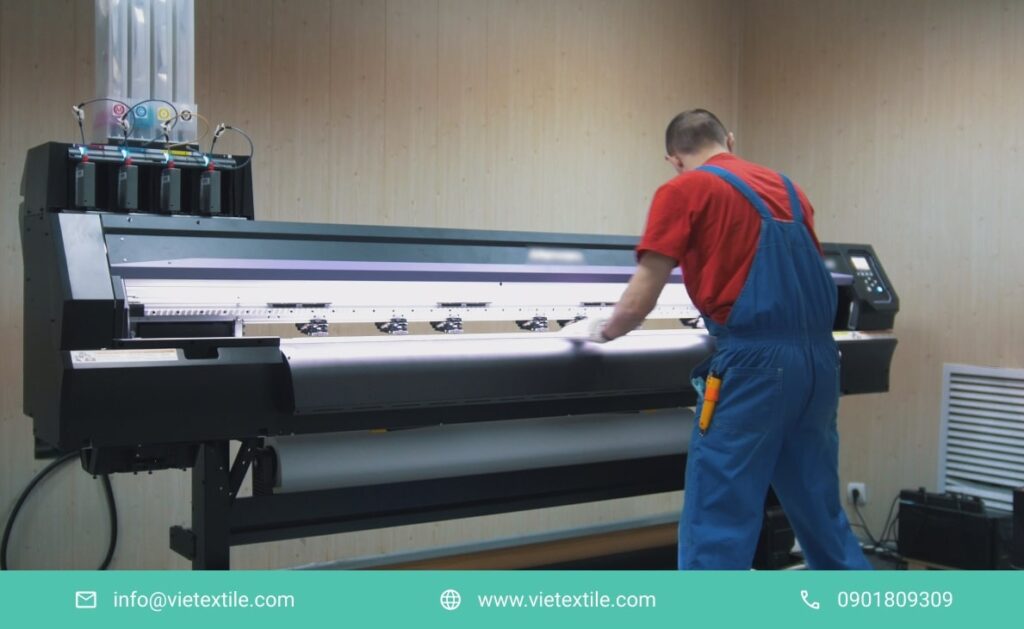
Automatic cleaning is a print head cleaning process performed by the printer itself, through control software or according to a preset schedule.
printhead-maintenance-cart
Methods for Cleaning Direct-to-Fabric Print Heads: Automatic (Auto-Clean) and Manual (Manual Clean) 9
  • Operating principle:
    • Purging: The machine ejects a small amount of ink through the nozzles to clear minor clogs or air bubbles.
    • Wiping: A rubber wiper blade or similar material moves across the print head surface to wipe away excess ink and dust.
    • Capping: The print head is sealed by a rubber cap at the capping station to prevent air exposure to the ink, avoiding ink drying and clogging.
  • Advantages:
    • Convenient and effortless: The operator does not need to intervene directly; the process is automatic.
    • Reduced risk of human error: No risk of damaging the print head due to incorrect operation.
    • Regular and automatic: Helps maintain good print head condition daily, preventing clogs early on.
    • Effective for preventing minor clogs: Very good for maintaining clear nozzles under normal operating conditions, an important part of routine cleaning direct-to-fabric print heads.
  • Disadvantages:
    • Ink Waste: Each automatic cleaning cycle consumes a certain amount of ink, which can increase operating costs if performed too frequently or unnecessarily.
    • Ineffective for severe clogs: For heavy clogs, hard dried ink clumps, or completely missing nozzles, automatic cleaning is usually not powerful enough to resolve.
    • Can cause component wear: The rubber wiper blade can wear out over time and needs regular replacement.

3.2 Manual Cleaning (Manual Clean)

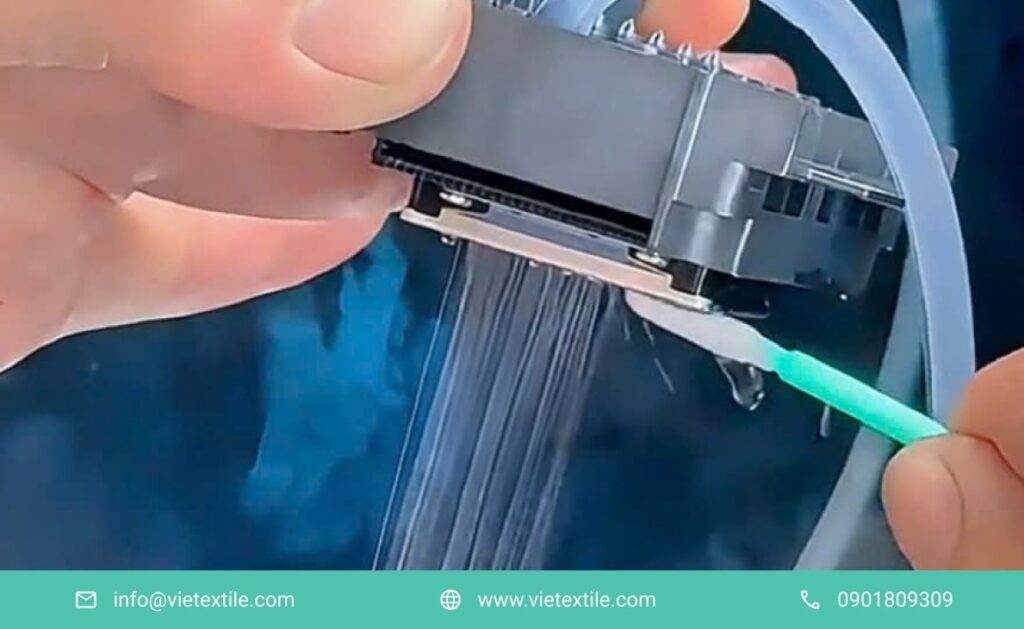
Manual cleaning requires direct intervention by the operator to clean the print head and related components.
printhead-soak-textile-printer
Methods for Cleaning Direct-to-Fabric Print Heads: Automatic (Auto-Clean) and Manual (Manual Clean) 10
  • Operating principle:
    • Visual inspection: The operator visually checks the condition of the print head, nozzles, and maintenance station.
    • Surface wiping: Uses specialized cleaning solution and lint-free wipes/swabs to wipe clean the print head surface, removing excess ink and dust.
    • Nozzle cleaning: Uses specialized tools to suction or push cleaning solution through each nozzle, dissolving and removing clogs.
    • Maintenance station cleaning: Thoroughly cleans the capping station and wiper blade to ensure they function effectively.
  • Advantages:
    • Highly effective for severe and stubborn clogs: It is the last resort when automatic cleaning cannot solve the problem.
    • Helps visually inspect print head condition: Allows the operator to accurately assess the degree of clogging and potential damage.
    • More ink-efficient for localized clogs: Focuses only on the affected area, not wasting ink on the entire print head.
    • Resolves issues auto-clean cannot: Such as stubborn residue or deep clogs. This is an in-depth method of cleaning direct-to-fabric print heads.
  • Disadvantages:
    • Time and effort consuming: The process requires meticulousness and care, taking more time than automatic cleaning.
    • Requires skill and experience: The operator needs to be well-trained and knowledgeable about print head structure and correct use of cleaning chemicals.
    • Risk of print head damage if done incorrectly: Strong force, using sharp objects, or using inappropriate cleaning solutions can cause permanent damage to the print head, increasing repair costs.
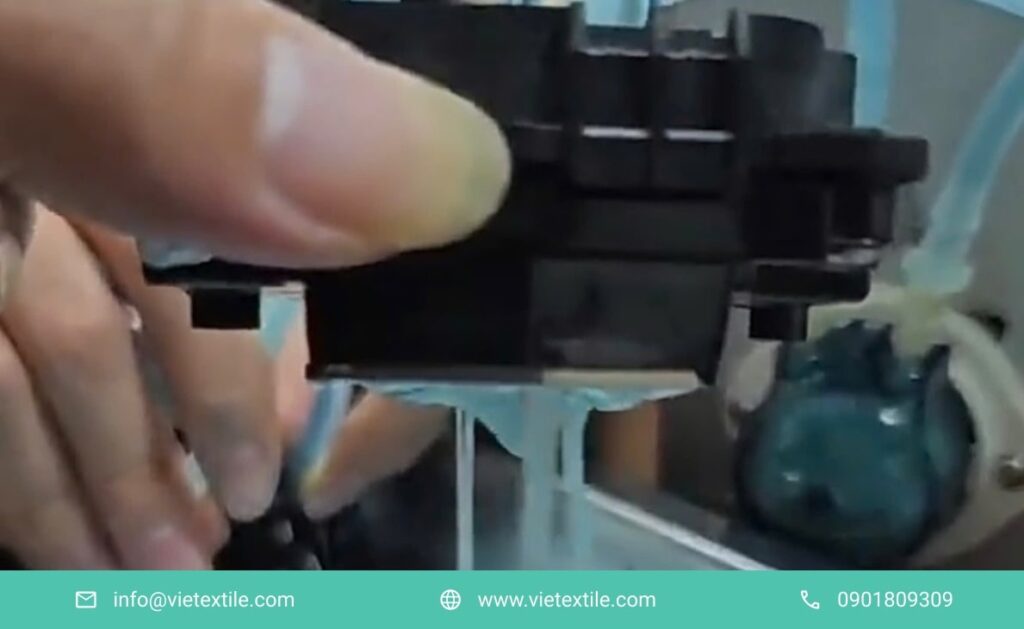
    • Can cause mess: If not careful, dirty ink can spill onto other parts of the machine.

4. When to Use Each Method and Best Practices for Cleaning Direct-to-Fabric Print Heads

To optimize performance and print head lifespan, both cleaning methods should be combined appropriately.
printhead-soak-textile-printer
Methods for Cleaning Direct-to-Fabric Print Heads: Automatic (Auto-Clean) and Manual (Manual Clean) 11

4.1 When to Use Automatic Cleaning (Auto-Clean)

  • Daily: Perform automatic cleaning at the beginning and end of each shift to remove dried ink residue overnight or after continuous machine operation.
  • After a period of no printing: If the printer is paused for a few hours, an auto-clean cycle should be run before resuming printing.
  • When minor print quality issues are first noticed: If prints start showing slight banding or missing pixels, auto-clean can quickly resolve them.

4.2 When to Use Manual Cleaning (Manual Clean)

  • When auto-clean cannot resolve clogs: If print quality does not improve after multiple auto-clean cycles, manual intervention is needed.
  • When there are severe clogs or completely missing nozzles: Heavy clogs usually require focused and intensive manual cleaning.
  • According to a regular maintenance schedule: In addition to cleaning when issues arise, manual cleaning should be performed on a schedule (e.g., weekly or monthly) to ensure the print head is always clean and to remove accumulated old residue.
  • When changing ink types: Some ink types have different compositions, and switching may require thorough cleaning to avoid reactions between inks.
  • After a long period of machine inactivity: If the printer has been idle for several days or weeks, ink may dry inside the nozzles, requiring manual cleaning.

4.3 Best Practices for Cleaning Direct-to-Fabric Print Heads

  • Use specialized solutions and materials: Always use cleaning solutions, wipes, and lint-free swabs recommended by the printer manufacturer. Avoid using unknown chemicals or sharp objects that could damage the print head.
  • Ensure a clean printing environment: Keep the area around the printer clean, dust-free, and control humidity to minimize the risk of clogs due to dust and dry ink.
  • Train professional technicians: Only well-trained and experienced personnel should perform manual cleaning to avoid damaging the print head.
  • Keep a history log: Record detailed cleaning instances (automatic and manual) and print head performance to monitor its condition and plan preventive maintenance.

5. VieTextile: Expert in Cleaning Direct-to-Fabric Print Heads and Fabric Printer Maintenance

VieTextile proudly stands as a leading partner in digital fabric printing, not only providing high-quality printing services but also focusing on professional cleaning direct-to-fabric print heads and fabric printer maintenance. We understand that investing in proper maintenance is a key factor to ensure product quality and extend equipment lifespan.

With a team of experienced technicians, well-trained in various DTF fabric printer types and print head cleaning procedures, VieTextile commits to:

  • Applying standard cleaning procedures: Performing both routine automatic cleaning and in-depth manual cleaning when needed, according to manufacturer recommendations.
  • Using high-quality cleaning supplies: Only using specialized cleaning solutions and materials that are safe for the print head.
  • Ensuring optimal print quality: Maintaining print heads in the best condition, delivering sharp prints with accurate colors for all products.
  • Consultation and maintenance support: Ready to advise customers on how to maintain fabric printers and effectively perform cleaning direct-to-fabric print heads.

Let VieTextile help you optimize the performance and enhance the quality of your fabric print products.

6. Frequently Asked Questions (FAQs)

To help our valued customers better understand cleaning direct-to-fabric print heads, here are some frequently asked questions:

Q: How often should direct-to-fabric print heads be cleaned? A: Automatic cleaning should be performed daily (before and after shifts). In-depth manual cleaning should be performed periodically (e.g., weekly or monthly), depending on machine usage and ink type.

Q: Can alcohol or distilled water be used to clean print heads? A: Absolutely not. Only use specialized cleaning solutions recommended by the printer or ink manufacturer. Alcohol, distilled water, or inappropriate chemicals can dry out, permanently clog, or corrode sensitive components inside the print head.

Q: Does cleaning direct-to-fabric print heads help save ink? A: Proper cleaning helps the print head operate efficiently, minimizing clogs and print errors, thereby reducing the number of faulty prints that need to be discarded. Although automatic cleaning consumes a small amount of ink, overall it significantly saves ink by reducing waste and optimizing quality.

Q: What are the consequences of not regularly cleaning direct-to-fabric print heads? A: Irregular cleaning will lead to print head clogging, reduced print quality (banding, missing colors), increased risk of permanent print head damage (leading to higher replacement costs), and machine downtime, severely impacting production efficiency and profitability.

7. References & Contact

To ensure your fabric printing system always operates efficiently and extends print head lifespan with professional direct-to-fabric print head cleaning services, contact VieTextile today!

Contact Information:

What is Biomass? Applications and Development Prospects in Production

Biomass is a potential source of green energy, an alternative to fossil fuels. Biomass has been and is opening a new future for the manufacturing industry. So, what is biomass and how is it applied in practice? Let’s find out in the following article.

1. What is Biomass? The Role of Biomass in the Ecosystem

What is biomass? Biomass is a scientific term for the total mass or quantity of all living organisms in a specific area. Biomass is also understood as organic materials originating from living organisms and used to produce energy. For example, wood, straw, bagasse, etc., are burned to create heat or converted into other forms of energy.

Biomass plays a particularly important role in maintaining ecological balance and the material cycle. Quantifying biomass helps assess the “health” and productivity of the ecosystem. In addition, this also provides a scientific basis for the sustainable management and exploitation of biological resources.

Furthermore, biomass is also a promising source of renewable energy. Electricity, heat, biofuels, or gaseous fuels can be produced using biomass fuel. By utilizing excess wood, agricultural waste, and many other biomass sources, this process not only reduces dependence on fossil fuels but also protects the environment and promotes green, sustainable economic development.

2. Classification of Biomass Fuels

Biomass is increasingly being exploited for various purposes, especially in energy production. Below are some common types of biomass fuels:

  • Agricultural Biomass: These are by-products from agricultural activities, such as straw, bagasse, corn stalks, cotton stalks, peanut shells, and animal manure. This is a common and easily accessible source of biomass.
  • Forestry Biomass: These are organic materials from forests, such as branches, bark, and waste wood. These materials all produce high energy and are widely used in heat and electricity production.
  • Urban and Industrial Waste: This includes organic waste from residential areas and industrial activities, such as leftover food, paper, and textile scraps. This is a source of biomass with great potential but needs to be handled properly to avoid environmental pollution.
  • Animal Waste and Manure: Manure and waste from animals are also sources that can be used to produce biogas.
  • Energy Crops: These are special plants grown for biomass production. They have high productivity and are adaptable to various climate conditions. Examples include switchgrass and miscanthus.
  • Aquatic Biomass: Organic materials from aquatic environments such as algae and seaweed. This is a source of biomass currently being researched and developed because it offers great potential, especially in the production of biofuels and chemicals.
What is Biomass
What is Biomass? Applications and Development Prospects in Production 15

3. Practical Applications of Biomass

Thanks to its renewable and environmentally friendly nature, biomass is widely used in many fields, bringing significant economic and social benefits.

3.1. Production of Clean Energy

Through processes such as direct combustion, gasification, or anaerobic digestion, biomass is converted into thermal and electrical energy. This helps reduce CO2 emissions. In addition, it also maximizes the use of resources from agricultural and forest waste.

3.2. Boiler Fuel in Industry

Biomass is used as boiler fuel to replace fossil fuels like coal and oil. This reduces greenhouse gas emissions and saves energy costs. Biomass fuels such as firewood, straw, and bagasse are not only low-cost but their ash can also be recycled for fertilizer and building materials.

3.3. Biofuels

Biomass can be converted into biofuels such as bioethanol, biodiesel, and biogas. Bioethanol is produced after fermenting crops containing sugar. Biodiesel is often sourced from vegetable oils like palm oil and soybean oil. Biogas is generated from the biological decomposition process and is widely used for cooking, heating, and electricity generation.

3.4. Fertilizer and Animal Feed

Biomass is used to process animal feed and as bedding for biological pens. This improves the efficiency of waste utilization and enhances the health of livestock. In addition, biomass is also used as organic fertilizer, providing nutrients to the soil and improving its structure.

3.5. Chemical Production

Biomass can be converted into important compounds such as methacrylate, acetic acid, and glycerol. These compounds are widely used in the chemical, pharmaceutical, and material production industries.

3.6. Domestic Applications

Biomass can generate heat for heating and cooking. Modern biomass burners help save energy and protect the environment. Biogas stoves, which use methane gas from biological decomposition, are an effective energy solution for many households in rural areas.

4. Benefits and Challenges of Using Biomass Fuel

In addition to understanding what biomass is, a deeper look at the benefits and challenges will give you a comprehensive view of biomass.

Here are some typical benefits:

  • Sustainability: Biomass can be produced continuously, which reduces dependence on non-renewable fossil fuel sources.
  • Environmental Friendliness: The combustion of biomass produces significantly lower CO2 emissions than fossil fuels, thereby reducing the greenhouse effect. On the other hand, the utilization and treatment of organic waste also contribute to environmental protection.
  • Energy Source Diversification: Countless types of biomass fuels are being researched and applied, which reduces the risk of relying on a single energy source.
  • Job Creation: The development of the biomass industry creates many jobs, especially in rural areas.

Challenges of using biomass:

  • Efficiency: The efficiency of converting energy from biomass to electricity or heat is often lower than that of fossil fuels.
  • Cost: The initial investment cost to build biomass power plants or biomass utilization systems is quite high.
  • Technology: The technology for converting biomass into energy is still limited and needs further development to increase efficiency and reduce costs.
  • Seasonality: Biomass output can change seasonally, which affects the stability of the supply.

5. Biomass – A Clean Fuel, Green Energy

Completely different from fossil fuels, biomass releases energy with significantly lower carbon dioxide emissions. This contributes to mitigating the greenhouse effect and makes biomass a sustainable, environmentally friendly choice that meets humanity’s growing energy needs.

nha may san xuat sinh khoi
What is Biomass? Applications and Development Prospects in Production 16

The potential for biomass applications is incredibly diverse. Not only is it used to produce electricity, but biomass is also a key raw material for creating various biofuels such as ethanol, biodiesel, and biogas. In addition, biomass is applied in agriculture, industry, and even in daily life, opening up a promising future for this green energy source.

This article has described what biomass is, its role, classification, and practical applications. With the continuous development of science and technology, biomass will open up a new horizon, creating a breakthrough in renewable energy production and contributing to building a green, clean, and sustainable world.

Please contact VieTextile using the following methods:

  • Phone: +84 (0) 901809309
  • Email: info@vietextile.com
  • Office: 82C Quach Dinh Bao, Phu Thanh Ward, Tan Phu District, Ho Chi Minh City

What is Biomass Energy? A Sustainable Energy for the Future

One of the top concerns for manufacturing plants is waste discharge. As environmental pollution becomes more severe, the need to find alternative energy sources is more urgent than ever. So, what is biomass energy? Is it truly a potential solution? Follow the article below to learn more about this type of energy.

1. What is Biomass Energy? Common Forms of Biomass Energy

What is biomass energy? Biomass energy is a renewable energy source produced from organic materials (biomass), such as crops, agricultural waste, organic waste, and other biological resources. It involves leveraging organic matter to produce energy like electricity, heat, or fuel.

Biomass energy is classified as follows:

1.1. Solid Biomass Fuels

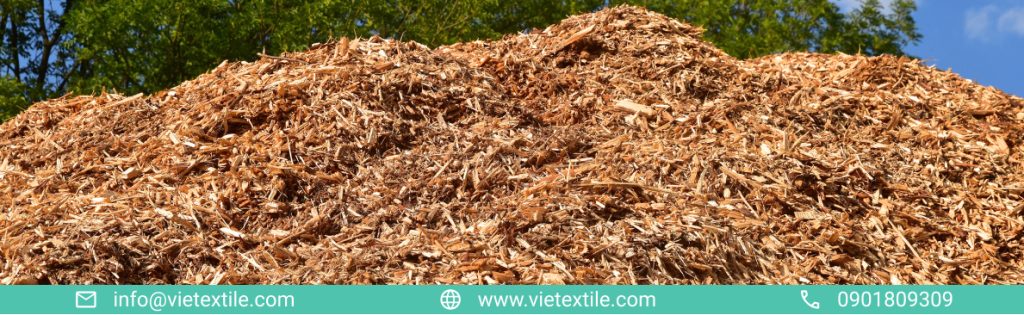
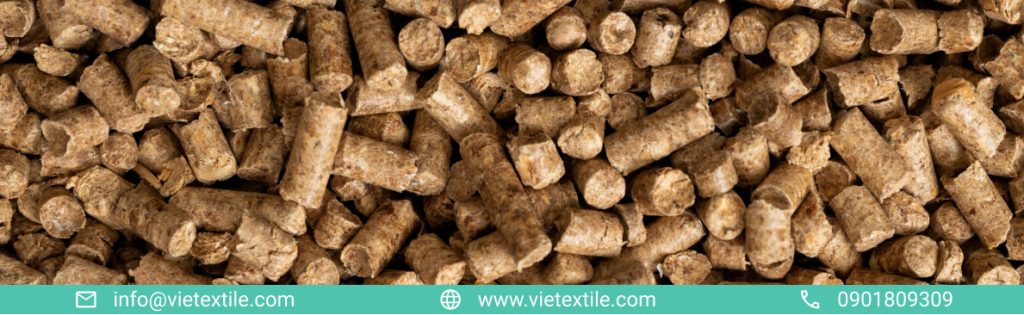
Solid biomass fuels, such as wood, sawdust, rice husks, straw, bagasse, and animal manure, are often used for direct combustion to generate heat. Additionally, solid fuels can be converted into other energy forms through gasification and pyrolysis.

Biomass dang ran
What is Biomass Energy? A Sustainable Energy for the Future 21

The advantage of solid biomass fuels is that they are easy to find, store, and use with simple technology. However, their energy conversion efficiency is often low and can cause environmental pollution if emissions are not handled properly.

1.2. Biogas

Biogas is a product of the anaerobic decomposition of organic matter, such as animal manure, organic waste, and sewage sludge. The main component of biogas is methane (), a flammable gas. Biogas can be used for direct combustion, electricity generation, and as an alternative to natural gas.

The advantages of biogas are that it minimizes environmental pollution and utilizes organic waste. However, the biogas production process is relatively slow and requires specialized equipment.

1.3. Liquid Biofuels

Liquid biofuels originate from oil-rich or starchy crops like corn and sugarcane. Common types of liquid biofuels are ethanol and biodiesel. Ethanol is often blended with gasoline to form biofuels like E5 and E10. Biodiesel can be used directly or blended with diesel fuel.

The advantages of liquid biofuels are that they reduce dependence on fossil fuels and decrease harmful emissions. However, the production of liquid biofuels can compete with food production for land and can be quite costly.

2. The Importance of Biomass Energy in Practice

What is biomass energy? It is not merely an alternative energy source. Biomass energy also provides comprehensive solutions to many pressing issues today. Specifically:

  • Reduces Dependence on Fossil Fuels: Over-exploitation of traditional energy sources like coal and oil causes serious environmental consequences. Therefore, renewable biomass energy ensures a stable energy supply for the future.
  • Protects the Environment: The combustion of biomass releases an amount of CO2​ equivalent to the CO2​ absorbed by plants during growth, creating a nearly closed carbon cycle. This helps to reduce the greenhouse effect and slow down climate change. Additionally, biomass produces fewer toxic emissions than fossil fuels, protecting the environment and human health.
  • Creates Economic Opportunities, Especially in Rural Areas: The production and use of biomass energy create more jobs, promoting local economic development and reducing poverty.

3. What Are the Sources of Biomass Energy?

The sources of biomass energy are incredibly diverse and abundant. They can be found everywhere, including:

  • Agricultural Waste: Straw, bagasse, rice husks, animal manure, etc., are abundant and accessible sources of biomass, especially in agricultural regions.
  • Domestic Organic Waste: Food waste, paper scraps, coffee grounds, etc., can be collected from households and urban areas.
  • Energy Crops: Some special crops, such as switchgrass, casuarina trees, and reeds, grow quickly and have high yields, making them suitable for mass cultivation for energy production.
  • Plantation Forests: Wood from forests is a common source of biomass, especially wood scraps and sawdust from wood processing plants.
  • Algae: Algae are a potential source of biomass that can be used to produce biofuels and other chemical products.
Rung cung cap nguon sinh khoi lon
What is Biomass Energy? A Sustainable Energy for the Future 22

4. Technology for Converting Biomass to Energy

The technology for converting biomass to energy is the process of transforming organic materials (biomass) into useful energy forms such as heat, electricity, or fuel. Here are some methods and technologies for converting biomass into energy that are currently being researched and applied.

  • Direct Combustion: This is the simplest method. Biomass is burned directly to generate heat. This heat can be used for heating, cooking, or to produce steam to power turbines for electricity generation.
  • Gasification: In this process, biomass is heated in a low-oxygen environment to produce synthetic gas (syngas). Syngas can be used for direct combustion or to produce electricity. Furthermore, syngas can be converted into liquid fuels like synthetic gasoline.
  • Pyrolysis: Biomass is decomposed at high temperatures in the absence of oxygen to produce biochar, biogas, and bio-oil. Biochar can be used as fuel, biogas for electricity generation, and bio-oil as a raw material for eco-friendly plastic products.
  • Fermentation: Biomass is fermented by microorganisms to produce ethanol, methane, or organic acids. Ethanol is used for biofuel, methane is a component of biogas, and organic acids are used to produce chemicals.

5. What Are the Benefits, Challenges, and Limitations of Biomass Energy?

Biomass energy is a potential renewable energy source. It brings many benefits but also poses some challenges. In terms of benefits, biomass energy helps reduce greenhouse gas emissions and protect the environment. By utilizing available organic resources, the exploitation of fossil fuels will be limited. At the same time, the waste problem is also gradually being addressed.

Diversifying energy sources ensures energy security and reduces risks from fluctuating fuel prices. In addition, the biomass energy industry also creates many job opportunities and promotes the local economy.

Cong nghiep nang luong sinh khoi biomass
What is Biomass Energy? A Sustainable Energy for the Future 23

However, the process of converting and exploiting biomass energy also comes with limitations. Burning biomass still generates a certain amount of emissions and dust, affecting air quality and human health. Additionally, cultivating crops for biomass production can compete for land with other activities like food production, putting pressure on water resources and reducing biodiversity.

6. VieTextile – A Reputable Provider of Biomass Energy

VieTextile is a leading company in providing comprehensive biomass energy solutions in Vietnam. VieTextile not only produces high-quality biomass fuels like Bio Neutrality, Bio Wood, and Bio Chip but also provides modern machinery and equipment such as automatic feeders and drying systems (Torrefaction). VieTextile’s biomass fuels provide optimal combustion efficiency, minimize ash, and extend equipment lifespan.

Specifically, VieTextile is committed to providing customers with a professional after-sales policy and regular maintenance and inspection services for boilers, pipelines, and machinery without interrupting production. With modern technology, high-quality biomass fuels, and dedicated customer care, VieTextile is a reliable partner in providing clean and effective energy solutions for businesses.

What is biomass energy? Biomass energy is a potential green energy solution that helps protect the environment and ensures energy security. However, to effectively exploit this energy source, we need to carefully consider the benefits and limitations, and at the same time, find suitable technological solutions to minimize negative impacts on the environment.

If you are interested in a safe and effective biomass energy solution, please contact VieTextile using the following methods:

  • Phone: +84 (0) 901809309
  • Email: info@vietextile.com
  • Office: 82C Quach Dinh Bao, Phu Thanh Ward, Tan Phu District, Ho Chi Minh City