
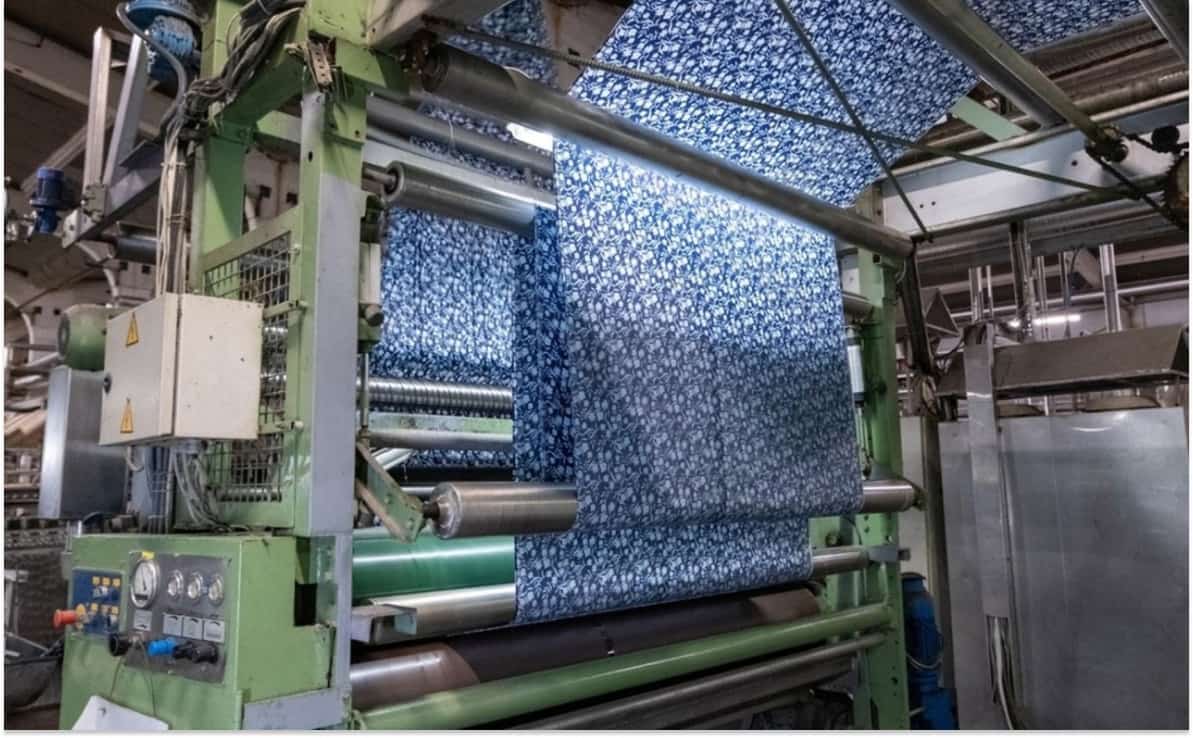
A cotton stenter machine is an essential piece of equipment in the dyeing and finishing stage to stabilize fiber structures. Using this technology helps eliminate spirality and product shrinkage.
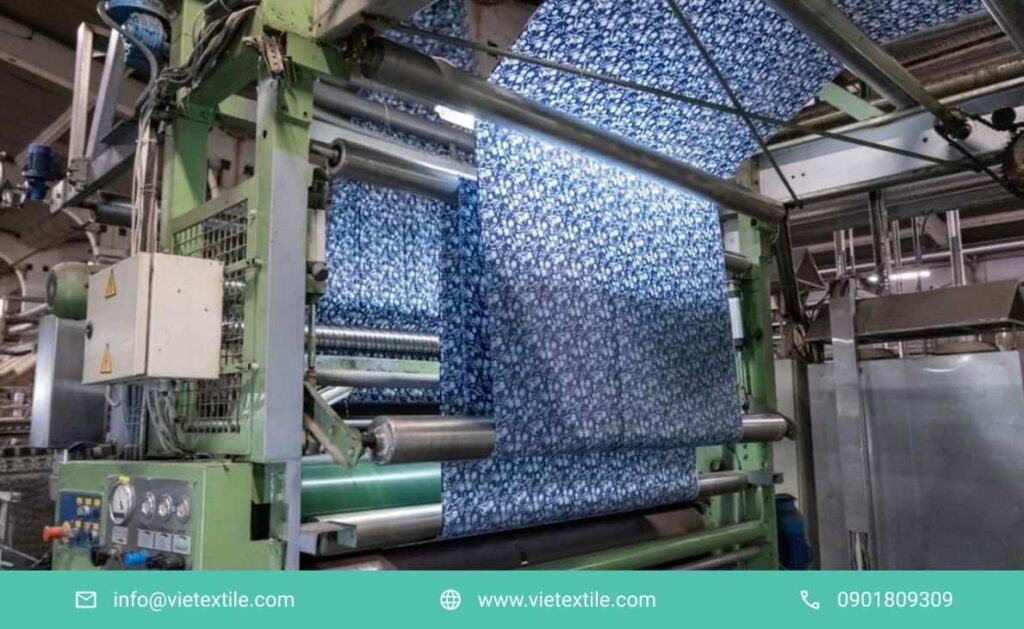
1. How a cotton stenter machine works
To control shrinkage, we need to understand how the equipment affects fiber structure. The system operates on a principle combining mechanical tension and thermal energy to reset the bonds within cotton fibers.
1.1. Pin chain system and horizontal stretching
The most distinctive feature of a cotton stenter machine is the two parallel pin chains running along the body of the machine. Cotton fabric is firmly pinned at both edges. As the machine operates, the distance between these chains can be adjusted to stretch the material horizontally.
This process helps the equipment bring the fabric to the desired width according to technical requirements. Mechanical stretching is extremely important for knitted fabrics, which are prone to edge curling and horizontal shrinkage if not shaped correctly.
1.2. Impact of high-temperature chambers
After being stretched, the fabric enters a series of heating chambers. Here, the cotton stenter machine uses circulating hot air to evaporate water and fix the fiber structure. Temperatures in these chambers usually range from 150-180 degrees Celsius depending on the fabric weight.
Under the influence of high heat, hydrogen bonds in the cellulose of cotton fibers are temporarily broken and rearranged into a flatter structure. When the fabric leaves the drying chambers and is suddenly cooled, these bonds close, locking the shape of the fabric in its set state.
1.3. Vertical tension control (overfeed)
The system also has the ability to control vertical shrinkage through an “overfeed” mode. This means the speed of feeding fabric into the machine is faster than the speed of the pin chains, creating microscopic ripples that prevent the fabric from being overstretched vertically.
This technique helps compensate for the amount of shrinkage that will occur during future washing. If the fabric is shaped in a sufficiently relaxed vertical state, the finished garment will maintain its standard form, without shortening or distorting after use.
2. Benefits of using a cotton stenter machine
Investing in professional stenter technology is an investment in the quality reputation of the fabric. The benefits provided by this equipment cannot be replaced by conventional manual drying methods.
2.1. Eliminating spirality
Spirality is a common defect in tubular knitted cotton fabrics, causing side seams to shift after washing. A cotton stenter machine equipped with an automatic weft straightener will align tilted knitted loops, ensuring the grain remains perpendicular.
Handling spirality makes the cutting and sewing process easier and more accurate. Garment panels will not twist, helping the final product look more professional and premium to consumers.
2.2. Uniform fabric width throughout the roll
In industrial production, consistency is a vital factor. The cotton stenter machine ensures that the fabric width from the beginning to the end of the roll (often hundreds of meters long) stays within allowed tolerances. This is crucial for automated cutting markers.
Without this stabilization, the fabric width would fluctuate irregularly, causing waste in fabric yields and disrupting the sewing line. The stability provided by the machine helps garment factories optimize production processes and save material costs.
2.3. Improving surface aesthetics and gloss
Under the influence of heat and light pressure from rollers inside the cotton stenter machine, the fabric surface becomes smooth and slightly glossy. Excess fibers are pressed down, reducing surface pilling.
The machine also supports the application of finishing chemicals (such as softeners or antibacterial agents) more evenly. Fabric coming out of the machine not only looks better but also has a soft, sleek hand-feel, enhancing the commercial value of fashion products.
3. Standard cotton fabric finishing process
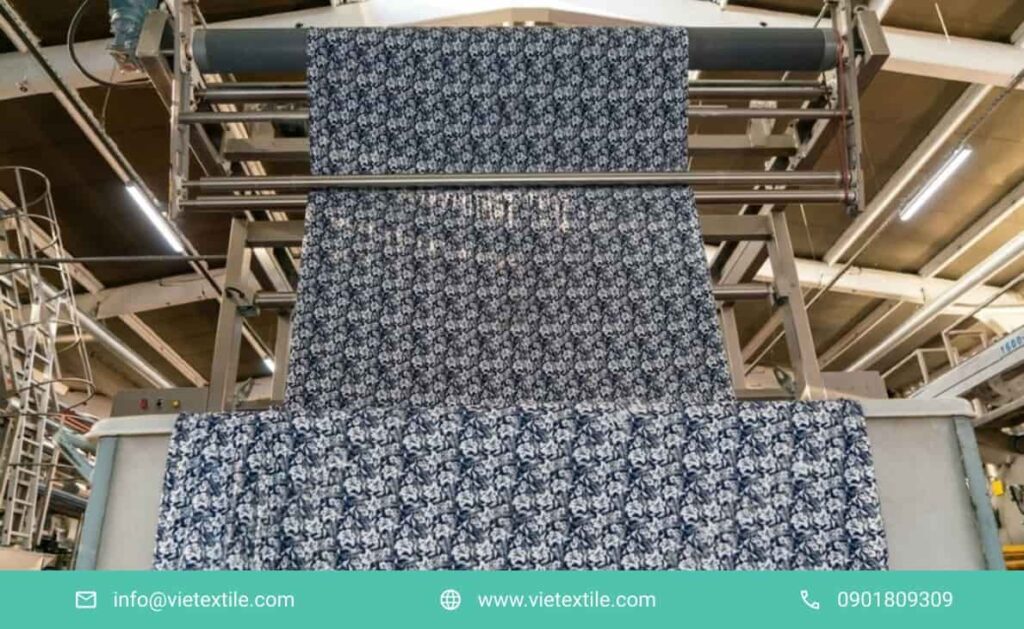
To achieve optimal efficiency, operating a cotton stenter machine must follow a strict process with parameters set specifically for each type of fabric.
3.1. Preparation and padding stage
After dyeing and washing, cotton fabric is passed through a chemical padding trough before entering the stenter. Here, it is saturated with finishing agents that make the fibers more flexible and colorfast under high temperatures.
The padder system at the front of the cotton stenter machine controls the residual moisture (pick-up). If the fabric is too wet, the machine must run slower to dry it in time, wasting energy. If it is too dry, the heat-setting efficiency will be significantly reduced.
3.2. Setting temperature and speed parameters
Depending on the fabric thickness (gsm), technicians will set the drying chamber temperature. Generally, thin cotton fabrics require lower temperatures and faster machine speeds to avoid burning the fibers.
Modern equipment usually has 8 to 10 independent heat chambers. Setting the temperature to increase gradually from the first chambers and decrease slightly in the last chamber prevents thermal shock, protecting the chemical structure of prints or dyes.
3.3. Post-setting shrinkage control
Upon completing the run on the cotton stenter machine, the fabric must be sampled for immediate shrinkage testing. Technical staff will cut a square piece, mark the dimensions, and wash/dry it according to testing standards to see if it meets the desired shrinkage (usually under 3-5%).
If results are not met, parameters for temperature or overfeed on the cotton stenter machine will be adjusted immediately for the next batch. This continuous monitoring ensures the most stable output quality.
4. Key technical factors in operation
Operating such advanced equipment is an art of balancing forces. Small errors in settings can lead to the destruction of many meters of expensive fabric.
4.1. Pin grip and chain condition
The pins on the chain must always be sharp and clean to grip the fabric edges firmly. If pins are dull or broken, the edge will slip out while the cotton stenter machine is stretching, creating “pin-out” defects that cause local distortion.
Regular maintenance of the pin chain system is mandatory. Debris or chemicals accumulating on the chains can stain the fabric edges or cause jams, affecting factory productivity.
4.2. Automatic weft straightener
This is a critical component located at the entry of the cotton stenter machine. It uses optical sensors to identify the direction of weft yarns or knitted courses. If it detects skewing or bowing, the system automatically adjusts rollers to bring the fabric back to a square state.
This is the only way to completely handle spirality in cotton jersey fabrics. It optimizes the fabric spreading and cutting stages, minimizing technical errors for garments with striped or checkered patterns.
4.3. Heat circulation fans
The drying and setting efficiency of the cotton stenter machine depends on the speed and uniformity of the hot air flow. Circulation fans must ensure even air blowing from both the top and bottom of the fabric to avoid uneven drying or warping.
Adjusting air pressure also requires finesse. Air that is too strong can blow the fabric off the pins, while air that is too weak will not provide enough heat to fix the fiber bonds. A skilled technician knows how to balance these parameters based on the specific fabric type.
5. Common errors and solutions
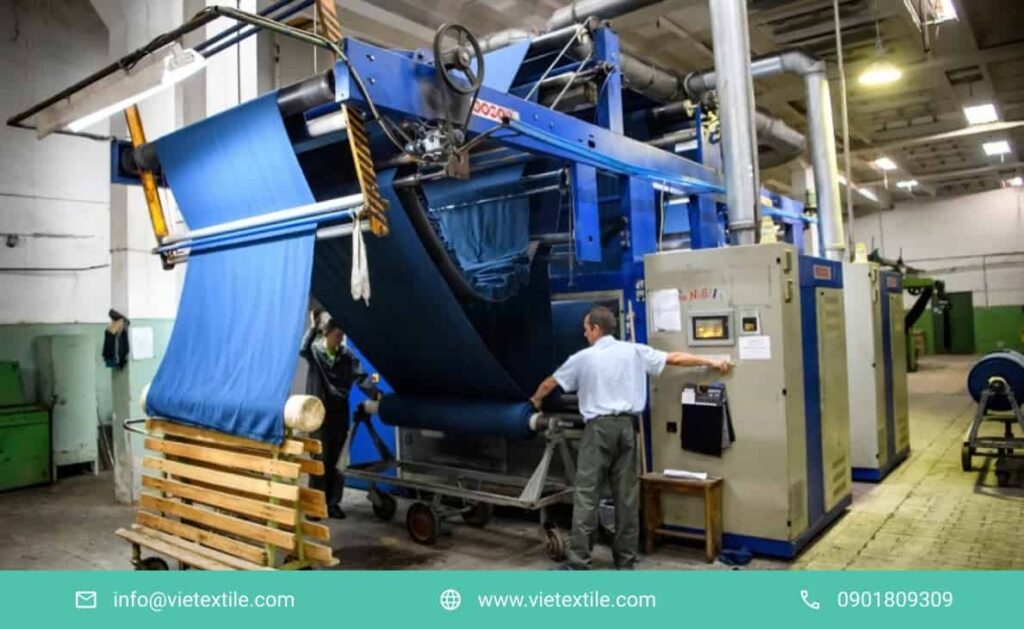
Despite being modern equipment, technical errors can still occur if not well controlled. Understanding these faults helps manufacturers proactively protect product quality.
5.1. Pin marks at the edges
Sometimes the cotton stenter machine leaves pinholes that are too large or torn at the edges. This is often due to excessive horizontal tension beyond the fabric’s limits or pins that are too thick for the fiber density.
To fix this, the stretching width must be adjusted, and the edge brushing wheels should be checked. Using ultra-fine pins for thin cotton fabrics is an optimal solution to minimize these marks on the finished product.
5.2. Thermal color change (yellowing)
Cotton fibers and certain dyes are very sensitive to heat. If the temperature is too high or the fabric stops too long in the chamber, white fabric will turn yellow and colored fabric will shift shades.
Smart control systems will automatically lower the temperature when the machine speed decreases. Using anti-yellowing agents in the padding stage before the cotton stenter machine is also an effective technical measure.
5.3. Substandard shrinkage levels
If the fabric still shrinks excessively after treatment, the cause is usually insufficient overfeed settings or temperatures that did not reach the level required to fix the structure.
Small sample trials should be conducted to find the “golden” parameters for each fabric code. Recording these operating parameters into a database will make re-production of subsequent orders more accurate and faster.
6. Why choose finishing services at VieTextile?
VieTextile is proud to possess the most modern cotton stenter machine systems, committed to bringing stable quality to all types of cotton fabrics.
6.1. Advanced stenter technology
We invest in European-imported machinery with fully digital control systems. This allows VieTextile to control width tolerances and shrinkage at extremely low levels, meeting the strictest standards of international brands.
6.2. Professional operation team
Our technicians have over 10 years of experience handling cotton stenter machine operations. We thoroughly understand the characteristics of various cotton fibers and always provide accurate technical advice to optimize fabric quality.
6.3. Strict quality control
At VieTextile, every roll of fabric passing through the system is checked 100% for width, weight, and shrinkage. We do not just provide a service; we provide absolute peace of mind regarding the technical quality of textile products.
7. Frequently asked questions (FAQ)
7.1. Does the machine make the fabric thinner?
When stretching width horizontally, the fiber density decreases slightly, leading to a minor drop in gsm. However, this is calculated in the technical plan so that the fabric reaches the correct width while still meeting thickness standards.
7.2. Why is it mandatory for 100% cotton to go through a stenter?
Because cotton is a natural fiber with poor elasticity and high shrinkage. Without a cotton stenter machine, garments will distort after the first wash, losing their shape and causing customers to abandon your brand.
7.3. Does the process cause color fading?
If set at the appropriate temperature for the dye type, it will not cause fading. On the contrary, correct heat helps fix colors more sustainably. VieTextile monitors chamber temperatures very closely to protect original shades.
To perfectly control shrinkage and elevate your products with professional cotton stenter machine services, contact VieTextile today!
Contact Information:
Hotline: 0901 809 309
Email: info@vietextile.com
Website: https://vietextile.com