

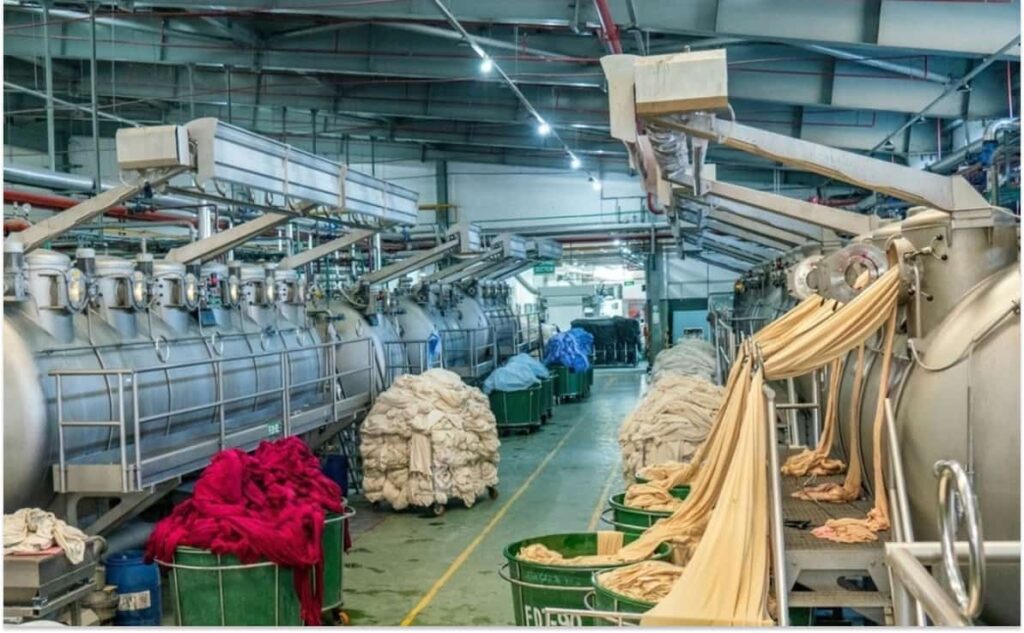
Small batch fabric dyeing for color testing before mass production is the optimal solution for fashion brands that want to control the quality and color of 300m small batch dyeing in the most precise way. This article will dive deep into analyzing why small batch fabric dyeing for color testing before mass production has become an inevitable trend.
1. The Importance of Color Testing in Textiles
Color testing is a vital stage to ensure the consistency of fashion products. Utilizing 300m small batch dyeing services helps businesses eliminate unnecessary errors in technical specifications.
1.1. Limiting the Risk of Color Deviation
When working with complex color systems, the color on a computer screen and the actual fabric often have a large gap. Small batch fabric dyeing for color testing before mass production provides the most realistic view of how color pigments interact with the fiber structure. Without performing 300m small batch dyeing for verification, businesses may face thousands of meters of off-tone fabric, causing a terrible waste of resources.
1.2. Checking Fabric Shrinkage and Deformation
The dyeing process is not just about applying pigments to fabric but also involves temperature and chemicals. 300m small batch dyeing allows technicians to observe the shrinkage level of specific fabrics such as cotton, polyester, or silk. Through small batch fabric dyeing for color testing before mass production, the post-dyeing grammage (GSM) parameters will be clearly determined, helping the cutting and sewing department calculate precise consumption rates.
2. Advantages of Choosing 300m Small Batch Dyeing
The 300m level is considered the “golden” number in sample production and mini-orders. This is a sufficient threshold to operate specialized dyeing machines while maintaining reasonable costs.
2.1. Suitable for Limited Collections
Local brands often launch capsule collections in small quantities. 300m small batch dyeing helps these brands maintain uniqueness without having to stock too much white or finished fabric. Small batch fabric dyeing for color testing before mass production creates conditions for creativity to flourish, helping designers confidently experiment with hot-trend colors without worrying about inventory.
2.2. Saving Initial Investment Costs
Instead of having to order a minimum of 1000m – 2000m according to the standards of large factories, choosing 300m small batch dyeing significantly reduces financial pressure for small and medium enterprises. Small batch fabric dyeing for color testing before mass production services help optimize cash flow, allowing businesses to allocate budgets to marketing and sales activities more effectively.
3. International Standard 300m Small Batch Dyeing Technical Process
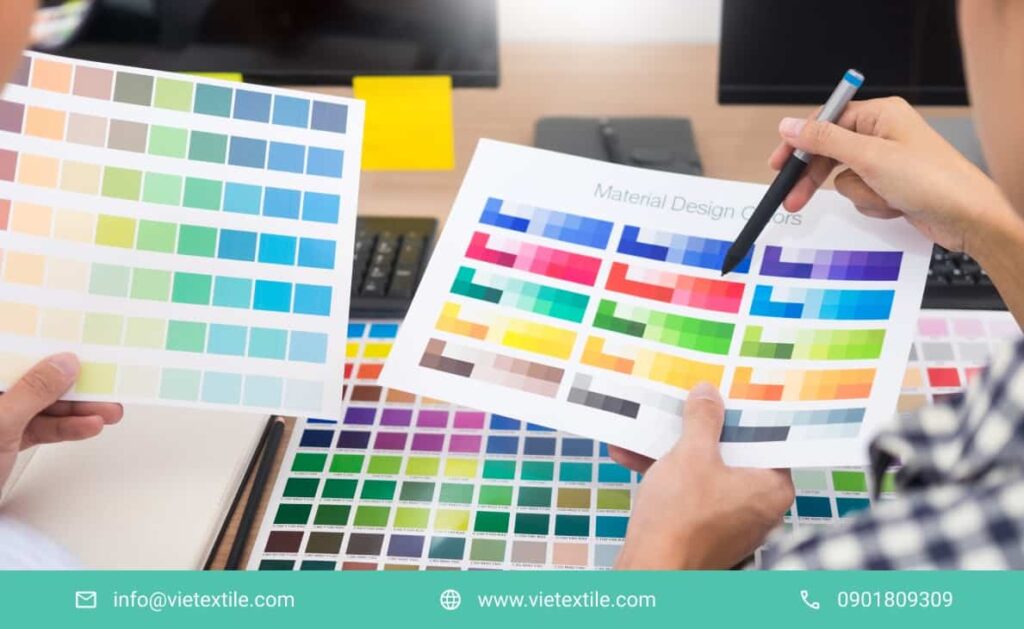
For a 300m small batch dyeing lot to achieve export-level quality, the implementation process must strictly comply with steps from laboratory to reality.
3.1. Color Formulation (Lab-dip)
Formulating the color is the most important starting step in the 300m small batch dyeing process. Experts will conduct tests on small fabric scraps to find the most optimal chemical ratio. Small batch fabric dyeing for color testing before mass production requires meticulousness in recording environmental parameters such as temperature and water source. Every small variable directly affects the final 300m batch dyeing result.
3.1.1. Spectral Analysis Using Spectrophotometer
Using a modern spectrophotometer helps evaluate the hue of the 300m small batch dyeing lot most objectively. This device will compare the newly dyed fabric sample with the original sample to calculate the Delta E index. In the small batch fabric dyeing for color testing before mass production process, if the Delta E index exceeds the allowable threshold, the color formula will be adjusted immediately. This ensures that the 300m batch dyeing lot achieves near-absolute accuracy.
3.1.2. Color Fastness Testing on Small Samples
Before deploying the official 300m small batch dyeing lot, small fabric samples will be tested for color fastness under physical impacts. Tests include fastness to washing, dry rubbing, and wet rubbing. Small batch fabric dyeing for color testing before mass production helps businesses know whether the color will fade or bleed onto other surfaces. This is the quality commitment of the 300m batch dyeing lot before it hits the market.
3.2. Operating Low-Pressure Dyeing Machines
Specialized dyeing machine systems for 300m small batch dyeing lots often have a compact design but integrate full modern features. The machine ensures the fabric is continuously circulated in the dyeing solution to avoid patchy phenomena. When performing small batch fabric dyeing for color testing before mass production, controlling pressure and flow rate helps color pigments penetrate deep into the core of the fabric fibers. This technique is particularly important for small batch dyeing lots with strict requirements for color evenness.
3.2.1. Automatic Temperature Control
Temperature plays a decisive role in the color adhesion ability of the fibers during 300m small batch dyeing. The automatic control system will increase the heat according to a pre-set route to avoid thermal shock to the fabric fibers. The small batch fabric dyeing for color testing before mass production process requires the temperature to be maintained stable at the desired level throughout the sample soaking time. If the temperature fluctuates, the small batch dyeing lot may encounter non-absorption or dull colors.
3.2.2. Post-Dyeing Treatment and Rinsing Residual Chemicals
After completing the 300m small batch dyeing stage, the fabric needs to be washed to remove excess dye clinging to the surface. This step helps the fabric lot achieve softness and safety for the user’s skin. Small batch fabric dyeing for color testing before mass production cannot skip the color-fixing stage to enhance the chemical bond between the fiber and the color. The small batch dyeing lot after treatment will have bright and durable colors over time.
4. Fabric Types Commonly Applied for 300m Small Batch Dyeing
Each woven fiber structure has different physicochemical characteristics; therefore, the 300m small batch dyeing technique must flexibly change to suit each fabric surface. Small batch fabric dyeing for color testing before mass production is an opportunity for production units to fine-tune the process for each fiber type. Understanding fabric characteristics helps the small batch dyeing lot achieve the highest aesthetic efficiency.
4.1. Dyeing Cotton and Natural Fibers
Cotton is a fiber with high moisture absorption but is also very sensitive to strong chemicals. When performing 300m small batch dyeing on cotton fabric, reactive dyes are usually prioritized. The small batch fabric dyeing for color testing before mass production process on natural fabrics helps maintain the inherent breathability and softness. A 300m small batch dyeing lot of cotton fabric will be the perfect foundation for daily outfits.
4.1.1. Pre-treatment to Remove Impurities
Natural grey fabric often contains a lot of wax and impurities clinging to the fibers. Before 300m small batch dyeing, the fabric must be bleached and thoroughly scoured so that color pigments can easily penetrate. Small batch fabric dyeing for color testing before mass production will fail if the pre-treatment stage is not performed carefully. Cleaning the fabric helps the 300m small batch dyeing lot avoid spotty coloring or incorrect tones.
4.1.2. Reactive Dyeing Technique for Brightness
Using reactive dyes helps the 300m small batch dyeing lot have extremely vibrant and eye-catching colors. The covalent bonds formed during the dyeing process help the color stick firmly to the cotton fibers. Small batch fabric dyeing for color testing before mass production with reactive dyes ensures the fabric does not bleed when washed with other clothes. This is the biggest advantage of the high-standard 300m small batch dyeing process.
4.2. Dyeing Synthetic Fabrics (Polyester, Nylon)
Synthetic fibers like polyester have a very dense structure and no chemical functional groups for color pigments to attach easily. Therefore, 300m small batch dyeing for poly fabric needs to use disperse dyes and high pressure. Small batch fabric dyeing for color testing before mass production on synthetic fabrics helps accurately determine the time and temperature needed for color pigments to “diffuse” inside the fibers. This 300m small batch dyeing lot often serves sportswear or jacket lines.
4.2.1. High-Temperature Dyeing (Disperse Dyeing)
The 300m small batch dyeing process for polyester fabric usually takes place at temperatures above 130 degrees Celsius. Under these conditions, the gaps in the poly fiber structure expand for dye particles to enter. Performing small batch fabric dyeing for color testing before mass production in a high-temperature environment requires machinery to withstand high pressure. The 300m small batch dyeing lot after completion will have a beautiful gloss and extremely sustainable colors.
4.2.2. Post-Dyeing Anti-Static Treatment
Synthetic fabrics after a 300m small batch dyeing lot are often prone to static electricity, causing discomfort for the wearer. A soft and anti-static coating will be added in the finishing stage. Small batch fabric dyeing for color testing before mass production helps evaluate the effectiveness of these dyeing auxiliaries. A successful 300m small batch dyeing lot is not only beautiful in color but also comfortable in feel.
5. Challenges and Solutions in 300m Small Batch Dyeing
Despite many benefits, implementing a 300m small batch dyeing lot also faces many technical barriers that dyeing houses need to overcome with experience and technology. Small batch fabric dyeing for color testing before mass production requires high concentration because any small error has no chance to be corrected. Therefore, the 300m small batch dyeing lot is always supervised by leading technical experts.
5.1. Chemical Dosage Equation
The chemical ratio in a 300m small batch dyeing lot is extremely small, sometimes calculated in grams. This makes manual preparation difficult without a precise weighing system. The solution for small batch fabric dyeing for color testing before mass production is to use a computerized automatic color mixing system. This helps completely eliminate human error factors in the 300m small batch dyeing lot.
5.1.1. Using Electronic Scales with 0.01g Accuracy
In a 300m small batch dyeing lot, a deviation of 0.1g of dye can mess up the color of the entire fabric lot. Therefore, measuring devices must be calibrated periodically. Small batch fabric dyeing for color testing before mass production prioritizes accuracy over speed. Each preparation for a 300m small batch dyeing lot must be cross-checked at least twice to ensure safety.
5.1.2. Recipe Management with Specialized Software
All data about the 300m small batch dyeing lot is stored on a cloud computing system. This allows businesses to accurately recreate old colors for later supplementary orders. Small batch fabric dyeing for color testing before mass production provides a rich color database. Customers can easily look up the parameters of a previously performed 300m small batch dyeing lot with just a few operations.
5.2. Ensuring Consistency Between Dyeing Batches
The problem of “lot difference” is a nightmare in the dyeing industry. With a 300m small batch dyeing lot, this challenge is even greater when the scale of machinery changes between production stages. For small batch fabric dyeing for color testing before mass production to be effective, technicians must calculate the corresponding conversion factor between small and large machines. The 300m small batch dyeing lot is the only scientific basis for doing this.
5.2.1. Quality Control of Dyeing Water Source
pH level and mineral content in water directly affect the 300m small batch dyeing results. Water must be filtered and softened before being introduced into the dyeing vat. The small batch fabric dyeing for color testing before mass production process uses the same standard water source as large-scale production. This eliminates one of the most common causes of color deviation for the 300m small batch dyeing lot.
5.2.2. Periodic Calibration of Dyeing Machines
The mechanical parts and temperature sensors of the 300m small batch dyeing machine must function perfectly. A temperature deviation of just 1 degree Celsius also changes the color absorption rate of the fabric fibers. Small batch fabric dyeing for color testing before mass production requires a stricter machine maintenance regime than usual. A good 300m small batch dyeing machine is the key to a flawless test sample.
6. Bio-Fabric Dyeing Trends in 300m Scale
The rise of sustainable fashion has driven the application of eco-friendly dyeing methods in 300m small batch dyeing orders. Small batch fabric dyeing for color testing before mass production according to biological methods is receiving great interest from international brands. This 300m small batch dyeing lot uses renewable raw materials from nature.
6.1. Using Natural Extract Dyes
Turmeric, indigo leaves, or pomegranate peels are excellent materials to create colors for a 300m small batch dyeing lot. Natural colors bring a rustic beauty and absolute safety. Performing small batch fabric dyeing for color testing before mass production with natural dyes helps businesses test color stability over time. This 300m small batch dyeing lot often has very high economic value.
6.1.1. Color Extraction Process from Herbs
Natural ingredients will be cooked at moderate temperatures to get the color juice before being put into 300m small batch dyeing. This process completely avoids using toxic chemicals. Small batch fabric dyeing for color testing before mass production is an important step to standardize this extraction process. Each plant-based 300m small batch dyeing lot carries a unique shade that cannot be copied.
6.1.2. Using Organic Dyeing Auxiliaries
To make natural colors stick firmly to fibers in a 300m small batch dyeing lot, dyeing auxiliaries like natural mineral salts will be used instead of heavy metals. Small batch fabric dyeing for color testing before mass production in this direction helps protect the ecological environment. A sustainable 300m small batch dyeing lot is the future of the modern textile industry.
6.2. Saving Water and Energy
Modern dyeing technologies applied to the 300m small batch dyeing lot focus on reducing water consumption. This helps significantly reduce wastewater treatment costs. Small batch fabric dyeing for color testing before mass production with a low liquor ratio (1:5) helps optimize the amount of heat needed for heating. An efficient 300m small batch dyeing lot is a combination of economy and environment.
6.2.1. Waterless Dyeing Technology
Some 300m small batch dyeing methods use liquefied CO2 gas technology to bring color into the fibers without water. This is a globally breakthrough technology. Small batch fabric dyeing for color testing before mass production is an ideal environment to test these new technologies. A waterless 300m small batch dyeing lot helps maximize the saving of precious natural resources.
6.2.2. Utilizing Excess Heat in the Process
The heat exchange system helps recover heat from the wastewater of a 300m small batch dyeing lot to heat the feed water for the next lot. This reduces the amount of emissions into the environment. Small batch fabric dyeing for color testing before mass production is not just a story about color but also a story about social responsibility. The 300m small batch dyeing lot at VieTextile always aims for sustainable green values.
7. VieTextile – A Prestigious Small Batch Dyeing Partner
VieTextile is proud to be a pioneer in providing 300m small batch dyeing solutions in the Vietnamese market. We understand that every meter of fabric contains the designer’s passion, so the small batch fabric dyeing for color testing before mass production process at VieTextile is always strictly controlled by a team of experienced experts. At VieTextile, the 300m small batch dyeing service is not simply coating color on fabric but a process of thorough research into fiber structure and customer desires. We are equipped with a modern sample dyeing machine system, allowing the performance of small batch fabric dyeing for color testing before mass production with an accuracy of up to 98% compared to the original sample. This helps partners be completely assured when deploying important fashion projects. VieTextile’s commitment when performing 300m small batch dyeing is to bring absolute satisfaction in fabric surface quality and color fastness. We provide dedicated advice on choosing the right dye for the small batch fabric dyeing for color testing before mass production service, ensuring the final product meets international safety standards. Coming to VieTextile, the 300m small batch dyeing problem will be solved in the fastest, most effective, and most professional way.
8. Frequently Asked Questions about Small Batch Dyeing (FAQ)
8.1. Is the Cost of 300m Small Batch Dyeing High?
Typically, the unit price when performing 300m small batch dyeing will be slightly higher than mass dyeing due to machine operation and formula setup costs. However, small batch fabric dyeing for color testing before mass production helps you avoid the risk of damaging thousands of meters of fabric, so overall, this is an extremely economical and safe option.
8.2. How Long Does It Take to Complete a 300m Small Batch Dyeing Lot?
At VieTextile, the 300m small batch dyeing process usually takes 5 to 7 working days, including the time for lab-dip color approval. We always try to optimize the small batch fabric dyeing for color testing before mass production process so that customers can keep up with the schedule for launching new collections.
8.3. Does 300m Small Batch Dyeing Guarantee Color Fastness?
Absolutely guaranteed. Whether it is 300m small batch dyeing or a large order, VieTextile still uses the same high-quality dye and standard heat treatment process. Small batch fabric dyeing for color testing before mass production helps us thoroughly verify color fastness before handing over to customers.
8.4. Can I Order 300m Small Batch Dyeing on Fabric Provided by the Customer?
Yes, VieTextile accepts 300m small batch dyeing on both our grey fabric and fabric brought by customers. However, before proceeding with small batch fabric dyeing for color testing before mass production, we will check the fiber composition of the customer’s fabric to advise on the most suitable dye type.
8.5. What is the Color Deviation when Performing 300m Small Batch Dyeing?
We control the color deviation during 300m small batch dyeing within the threshold of Delta E < 1.0 (hard to distinguish with the naked eye). The goal of small batch fabric dyeing for color testing before mass production is to create absolute consistency, helping customers confidently deploy mass production.
For professional 300m small batch dyeing, contact VieTextile today!
Contact Information:
Hotline: 0901 809 309
Email: info@vietextile.com
Website: https://vietextile.com