

Industrial knitting needles and the often-overlooked technical standards are key factors determining the stable operation of a factory, especially when searching for a reliable industrial knitting needle supply provider. This article explores the world of industrial knitting needles and the technical standards that many people tend to overlook, from surface roughness to needle latch structure.
1. The Role of Knitting Needles in Knitting Machine Performance
Knitting needles are directly responsible for creating yarn loops and forming the fabric structure. When an industrial knitting needle supply unit brings poor quality products, the frequency of stopping the machine to change needles will skyrocket, disrupting the production plan. Industrial knitting needles and technical standards that few people notice help minimize friction between the needle and the knitting machine cam. Choosing a genuine industrial knitting needle supply service helps the machine operate more smoothly at high speeds.
1.1. Influence on Fabric Surface Quality
A knitting needle with a non-smooth surface will scratch the yarn during the looping process. If the industrial knitting needle supply unit does not guarantee the gloss, the finished fabric will appear with vertical lines or blotchy streaks. Understanding industrial knitting needles and technical standards that few people notice helps technicians control the uniformity of the knitted loops. This is the foundation for having a beautiful piece of fabric before moving to the dyeing and finishing stage.
1.2. Knitting Machine Lifespan and Maintenance Costs
Poor quality knitting needles often have inconsistent hardness, leading to sudden needle breakage when the machine runs at high speeds. Unreputable industrial knitting needle supply workshops often skip the step of checking the thermal stress of the needles. Industrial knitting needles and technical standards that few people notice help protect the cam parts from excessive wear. Investing in a quality industrial knitting needle supply source is a way to protect long-term machinery assets for the business.
2. Classification of Popular Industrial Knitting Needles Today
Each type of knitting machine requires a needle with a specialized shape and function. When contacting an industrial knitting needle supply provider, businesses need to clearly identify the type of machine being operated to avoid parameter confusion. Learning about industrial knitting needles and technical standards that few people notice for each machine type helps optimize the knitting ability of the yarn. Each professional industrial knitting needle supply unit will have a diverse product catalog from latch needles to slider needles.
2.1. Latch Needles for Circular Knitting Machines
The latch needle is the most common type, using a self-opening and closing latch mechanism by the movement force of the yarn. The demand for latch industrial knitting needle supply always accounts for the largest proportion in the textile industry. Industrial knitting needles and technical standards that few people notice for latch needles lie in the latch pivot. If the industrial knitting needle supply partner does not handle this part well, the needle latch will easily get stuck, causing continuous yarn breakage errors.
2.2. Flat Knitting and Crochet Machine Needles
Flat knitting requires needles with higher bending strength due to the nature of flat knitting styles. Industrial knitting needle supply units for this segment often have to source special steel from Switzerland or Germany. Industrial knitting needles and technical standards that few people notice here are the accuracy of the needle butt. When you find an industrial knitting needle supply source, pay attention to the uniformity of the butt size so that the machine cam can catch the needle most accurately.
3. Technical Standards for Steel Material
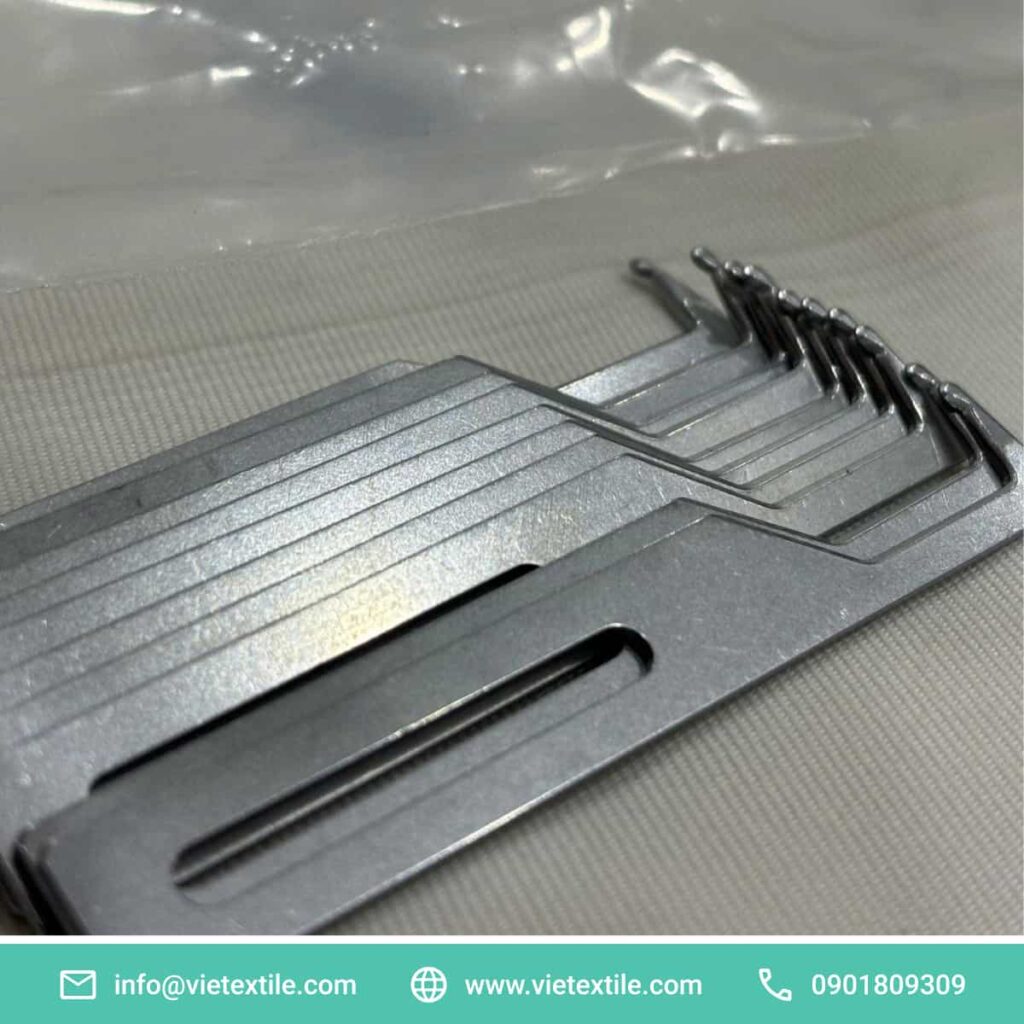
The material used to manufacture needles is the core factor determining durability and elasticity. When industrial knitting needle supply units introduce products, they often emphasize the alloy composition of the steel. Industrial knitting needles and technical standards that few people notice start from the metallurgy stage. A good industrial knitting needle supply source must ensure high-purity steel to avoid brittle fracture under the impact of heat.
3.1. Hardness and Elasticity of Steel
Needle steel must achieve a perfect balance between hardness to resist wear and elasticity to withstand vibrations. Reputable industrial knitting needle supply providers often use alloy steel containing chrome and vanadium. Industrial knitting needles and technical standards that few people notice lie in the Rockwell hardness index. If the industrial knitting needle supply place provides products that are too hard, the needles will break like glass; if too soft, the needles will deform after a few hours of running the machine.
3.1.1. Heat Treatment Technology
The process of hardening and tempering steel determines the microstructure of the knitting needles. Quality industrial knitting needle supply requires a heat treatment process in a vacuum environment to avoid surface oxidation. Industrial knitting needles and technical standards that few people notice are the stability of the steel structure after hardening. Industrial knitting needle supply products from major brands always have superior fatigue strength compared to cheap goods.
3.1.2. Chemical Corrosion Resistance
During the knitting process, needles are in constant contact with machine oil and chemicals adhering to the yarn. When looking for an industrial knitting needle supply unit, you need to ask about the rust resistance of the surface plating layer. Industrial knitting needles and technical standards that few people notice help the needles avoid surface pitting after long-term use. An industrial knitting needle supply source with a matte nickel or chrome coating will significantly extend the needle’s lifespan.
3.2. Surface Roughness and Polishing Technology
The gloss of the needle directly affects the yarn tension and heat generation. When industrial knitting needle supply workshops do not focus on polishing, the fabric fibers will be frayed and reduced in strength. Industrial knitting needles and technical standards that few people notice are the Ra index (average roughness). Providing an industrial knitting needle supply with extremely low roughness helps the yarn glide over the needle body without meeting any resistance.
3.2.1. Chemical Mechanical Polishing Method
Chemical mechanical polishing helps the needle surface achieve mirror brightness. High-end industrial knitting needle supply partners often apply this technology to handle hidden corners inside the needle eye. Industrial knitting needles and technical standards that few people notice is the complete removal of sharp burrs. Providing an industrial knitting needle supply without burrs helps eliminate the risk of fabric snagging from the very first production stage.
3.2.2. Friction-Reducing Coatings
Some types of needles are coated with additional layers such as PTFE or ceramics to reduce thermal friction. When providing an industrial knitting needle supply for ultra-high-speed knitting machines, this coating is mandatory to avoid melting synthetic fibers. Industrial knitting needles and technical standards that few people notice help reduce the working temperature of the needles by 10-15 degrees Celsius. Choosing an industrial knitting needle supply unit with advanced coating technology helps you save machine operation electricity.
4. Geometric Design and Dimensional Tolerance
The uniformity in the size of thousands of needles on a knitting cylinder is a prerequisite for the fabric not to have stripes. Industrial knitting needle supply units must ensure tolerances at the micron level. Industrial knitting needles and technical standards that few people notice are often located in the needle head and needle butt. An industrial knitting needle supply provider with a modern CNC line can maintain this stability.
4.1. Needle Latch Structure and Rivet Axis
The needle latch is the most moving part, therefore the rivet axis must be extremely sturdy. When providing an industrial knitting needle supply, the quality of the needle rivet is often the most overlooked by many people. Industrial knitting needles and technical standards that few people notice are the distance between the latch and the needle body when closed. The industrial knitting needle supply unit needs to ensure the needle latch does not have play (looseness) after millions of cycles.
4.1.1. Hook Design
The shape of the needle hook determines the ability to hold yarn and release loops. Providing an industrial knitting needle supply with an aerodynamic hook design helps minimize the force impact on the textile yarn. Industrial knitting needles and technical standards that few people notice lie in the taper of the hook. A knowledgeable industrial knitting needle supply provider will advise you on the right type of needle hook for the yarn count you are using.
4.1.2. Butt Accuracy
The needle butt is the place of direct contact with the machine cam. When providing an industrial knitting needle supply with a butt error that is too large, the machine will vibrate strongly and emit unpleasant noise. Industrial knitting needles and technical standards that few people notice is the perpendicularity of the needle butt relative to the needle body. Finding an industrial knitting needle supply partner with a laser inspection process for needle butts will help your knitting machine run more stably at high speeds.
4.2. Oil Grooves and Self-Cleaning Mechanism
Modern knitting needles often have oil groove designs to dissipate heat and push lint out. Industrial knitting needle supply units often call this “low profile” or “high speed” design. Industrial knitting needles and technical standards that few people notice is the shape of the oil groove. Providing an industrial knitting needle supply with self-cleaning capability helps extend the time between machine maintenance cycles.
4.2.1. Minimizing Lint Accumulation
Lint accumulation in the needle groove is the cause of needle jamming and cam burning. Providing an industrial knitting needle supply with wide grooves helps lint be easily pushed out following the machine oil flow. Industrial knitting needles and technical standards that few people notice is the smoothness inside the oil groove. A quality industrial knitting needle supply provider will focus on polishing even these smallest details to ensure the best oil circulation.
4.2.2. Optimizing Oil Flow
Machine oil needs to be guided evenly to the needle butt and latch rivet. When providing an industrial knitting needle supply with a smart oil-guiding design, the monthly oil consumption of the factory can be reduced by 15-20%. Industrial knitting needles and technical standards that few people notice bring direct economic benefits through saving consumables. Discuss carefully with the industrial knitting needle supply side about the oil-saving features of the product.
5. Challenges in Selecting an Industrial Knitting Needle Supply Source
The current market has many industrial knitting needle supply units with large price differences. Distinguishing between genuine needles and fake needles is a challenge for procurement departments. Industrial knitting needles and technical standards that few people notice are the identification marks on the needle body. A transparent industrial knitting needle supply partner is always ready to provide accompanying quality inspection certificates.
5.1. Distinguishing Genuine and Cheap Needles
Cheap needles are often produced with recycled steel and skip complex heat treatment steps. When an industrial knitting needle supply unit quotes too low a price, businesses need to question the actual durability of the product. Industrial knitting needles and technical standards that few people notice help you look under a microscope to see the difference in surface gloss. Providing cheap industrial knitting needle supply might save you money on buying needles but lose you much more money on machine repairs.
5.1.1. Checking Laser Markings on the Needle Body
Major industrial knitting needle supply providers often laser-etch extremely sharp codes and logos on the needle body. Fake needles often have blurred etchings or no clear markings. Industrial knitting needles and technical standards that few people notice is the consistency of the codes across the entire batch. Providing an industrial knitting needle supply with clear traceability is the commitment of reputable brands.
5.1.2. Evaluating Packaging and Standards
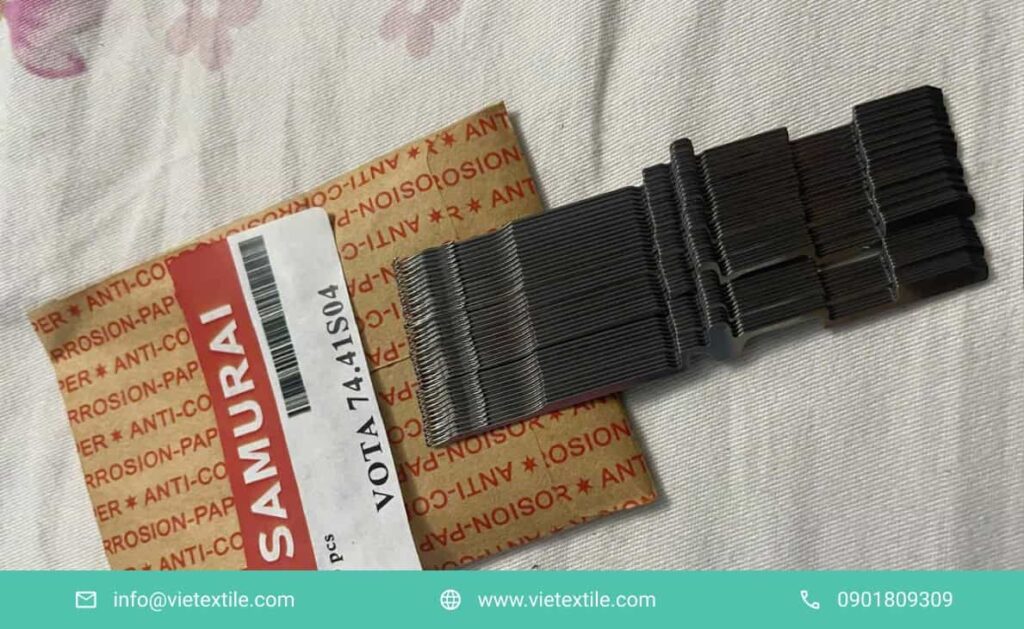
Knitting needles need to be stored in specialized moisture-proof and rust-proof packaging. When providing an industrial knitting needle supply, non-standard packaging can cause needles to rust even before being taken out of the box. Industrial knitting needles and technical standards that few people notice lie in the protective oil layer inside the packaging. A professional industrial knitting needle supply provider will use VCI (Vapor Corrosion Inhibitor) oil to best protect the product.
5.2. The Importance of Technical Support Services
Buying knitting needles is not just buying a product but also buying a solution for the knitting machine. A good industrial knitting needle supply unit must be able to advise on the compatibility between the needle, yarn, and machine cam. Industrial knitting needles and technical standards that few people notice require deep understanding of knitting machine mechanics. An industrial knitting needle supply partner with an on-site technical support team will help the knitting workshop quickly handle arising incidents.
5.2.1. Analyzing the Cause of Needle Breakage
When the machine frequently breaks needles, the industrial knitting needle supply unit must be able to analyze the broken needle samples to find errors due to the needle or the machine. This helps businesses avoid emotionally blaming the needle quality. Industrial knitting needles and technical standards that few people notice are the scratches on the broken needle body that will reveal the condition of the machine cam. An industrial knitting needle supply service accompanied by technical advice is an extremely important value-add.
5.2.2. Sample Testing Before Large Orders
Knitting workshops should request the industrial knitting needle supply side to send samples to trial run on a few knitting machines for 1-2 weeks. This is the most practical way to verify industrial knitting needles and technical standards that few people notice. Providing sample industrial knitting needle supply helps businesses evaluate the stability of the fabric and actual machine temperature. An industrial knitting needle supply provider confident in quality will not hesitate to perform this test step.
6. Future Knitting Needle Technology Trends
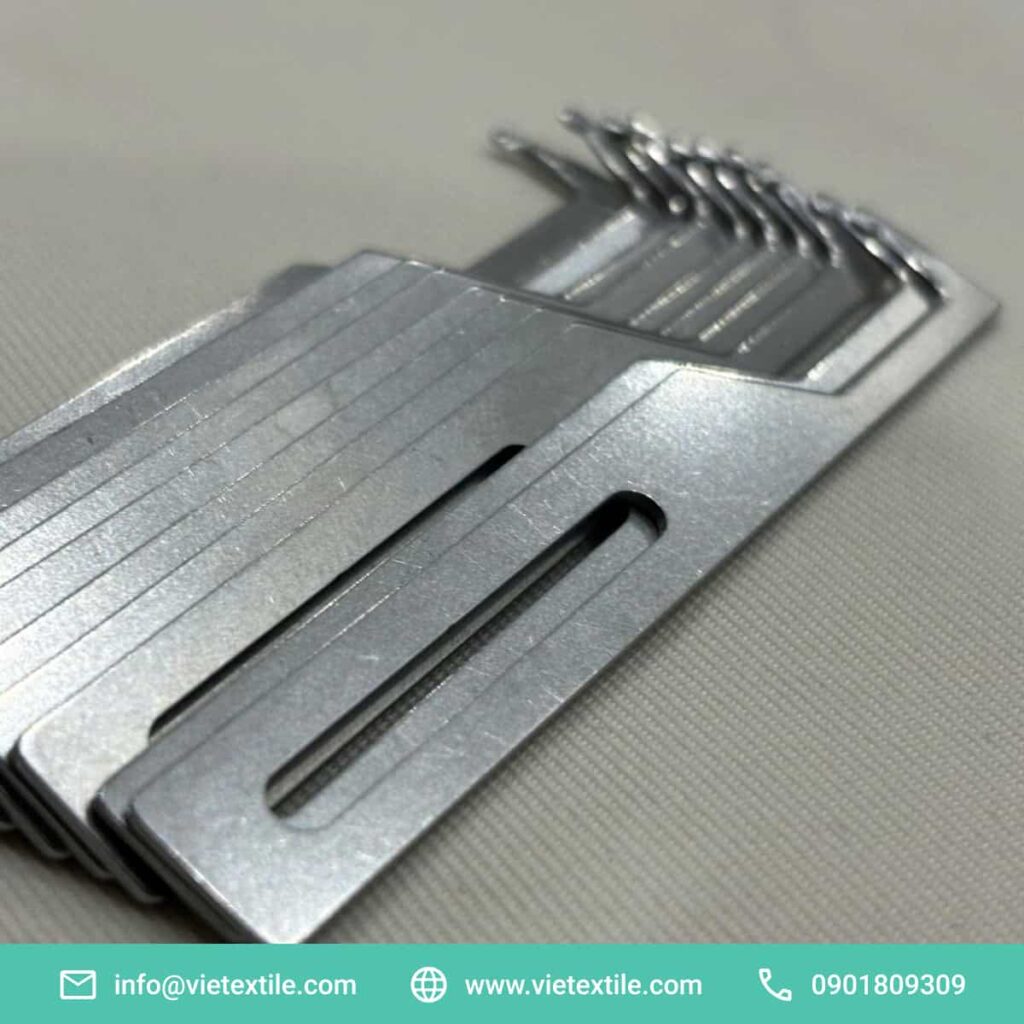
The textile industry is moving towards smart and sustainable production. Industrial knitting needle supply is also not outside this trend with smart needles and high-quality recycled needles. Industrial knitting needles and technical standards that few people notice are gradually shifting towards integrating sensors or ultra-durable nano-coatings. Looking for an industrial knitting needle supply unit that always updates technology will help your business lead the market.
6.1. Applying Nano Technology and Diamond Coatings
DLC (Diamond-Like Carbon) coatings help knitting needles have a surface hardness equivalent to diamond. When an industrial knitting needle supply provider brings this technology, the needle’s lifespan can increase by 3-4 times compared to conventional needles. Industrial knitting needles and technical standards that few people notice help knitting machines run dry (reduced oil) without burning needles. Providing nano-technology industrial knitting needle supply is a green solution for sustainable knitting factories.
6.2. Digitalizing Knitting Needle Management in the Factory
AI monitoring systems can predict when needles are about to break. Combining with an industrial knitting needle supply unit that has a QR code system helps manage the needle lifecycle accurately on software. Industrial knitting needles and technical standards that few people notice when digitalized will help reduce excess inventory. Providing industrial knitting needle supply at the right time and in the right quantity helps businesses optimize knitting workshop operating costs.
7. VieTextile – A Reliable Industrial Knitting Needle Supply Partner
VieTextile is proud to be a leading reputable unit specializing in industrial knitting needle supply for knitting factories nationwide. We clearly understand that industrial knitting needles and technical standards that few people notice are the factors that create the difference for the fabric quality of customers. With a rich product catalog from world-leading brands, VieTextile is committed to bringing the most optimal industrial knitting needle supply solutions in terms of both quality and cost.
At VieTextile, each needle before being delivered to the customer undergoes a strict inspection process. We don’t just provide industrial knitting needle supply; we also accompany your technicians to decode problems regarding industrial knitting needles and technical standards that few people notice. VieTextile’s team of experts is always ready to advise on how to choose the right needles for each type of machine and yarn count, ensuring your knitting machine operates at the highest efficiency.
VieTextile’s commitment is transparency in origin and quality. When choosing our industrial knitting needle supply service, you will receive absolute peace of mind about durability and stability. Let VieTextile help you optimize your production line through deep understanding of industrial knitting needles and technical standards that few people notice. Customer success is the motivation for us to constantly improve the quality of our industrial knitting needle supply service every day.
8. Frequently Asked Questions (FAQ)
8.1. How to Know When to Replace Knitting Needles?
Typically, the replacement cycle depends on the yarn type and machine speed. However, the clearest sign is when the fabric starts to appear with stripes or needle hole errors. Understanding industrial knitting needles and technical standards that few people notice helps you determine the optimal replacement time to avoid waste. Contact the industrial knitting needle supply side to be guided on how to set up a periodic maintenance schedule.
8.2. Why Are Newly Purchased Knitting Needles Already Rusted?
The cause is often due to the storage process at the industrial knitting needle supply provider’s warehouse not being standard or the packaging being torn. Industrial knitting needles and technical standards that few people notice require a dry storage environment and the use of specialized protective oil. When encountering this situation, you should request the industrial knitting needle supply unit for an immediate exchange.
8.3. Can Needles from Different Brands Be Mixed?
If they have the same code and geometric parameters, needles can be mixed. However, industrial knitting needles and technical standards that few people notice point out that the hardness and gloss of different brands are different. Mixing needles from many industrial knitting needle supply sources on the same cylinder can lead to unevenness of the fabric surface.
8.4. Does Knitting Machine Oil Affect Needle Lifespan?
Definitely yes. Machine oil not only lubricates but also helps dissipate heat for the needles. Using poor quality oil will increase friction and cause needle butt burning. A professional industrial knitting needle supply partner will usually advise you on the appropriate accompanying oil type.
8.5. What Percentage of Production Costs Does Buying Needles Account For?
Although the value of each needle is not large, the total annual industrial knitting needle supply cost can account for 3-5% of the knitting workshop’s operating cost. However, if using poor quality needles, losses due to defective fabric and machine downtime can be up to 15-20%. Therefore, investing in industrial knitting needles and technical standards that few people notice is a smart investment.
For professional industrial knitting needle supply, contact VieTextile today!
Contact Information:
Hotline: 0901 809 309
Email: info@vietextile.com
Website: https://vietextile.com