

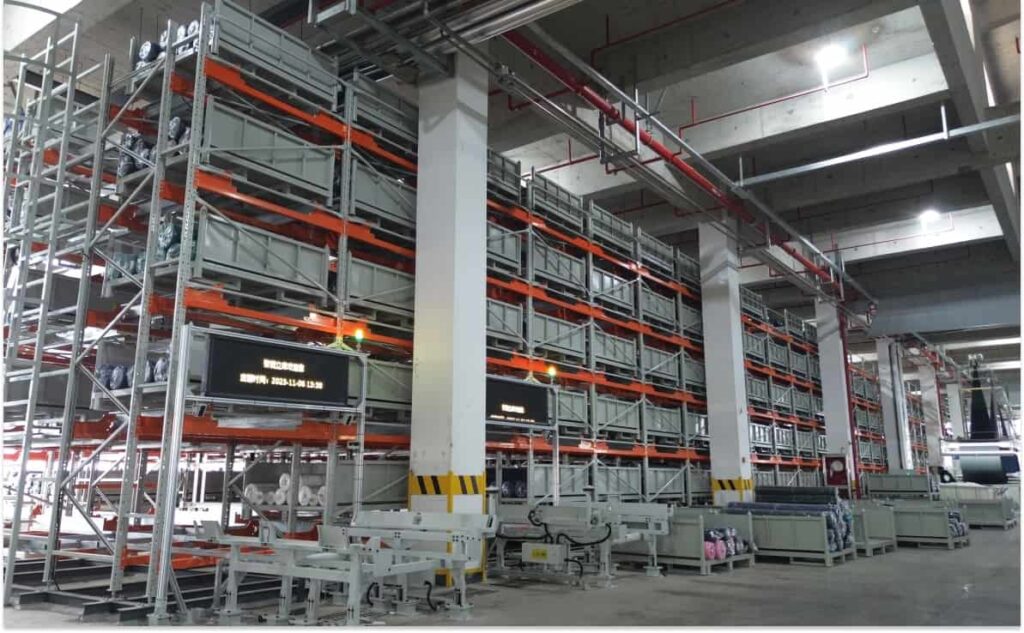
Automated storage system is gradually becoming the new standard in the modern textile industry. Not only does it help optimize space, but this system also completely changes the way factories manage goods. In this article, we will take a clear look at the nature of the automated storage system, the changes it brings to textile mills, the role of Martan, and how businesses can leverage this solution to enhance operational performance.
1. What is an Automated Storage System?
Before diving into how it operates, it is necessary to understand the nature of the automated storage system. This section clarifies the concept, system structure, and the role of the automated storage system in the context of the textile industry.
1.1. Concept of automated storage system
An automated storage system is a system that uses technology to automate the entire process of storing, retrieving, and transporting goods. Instead of relying on humans, the system operates based on data and algorithms, ensuring accuracy and processing speed.
The core of the automated storage system lies in the fact that all activities are controlled in real-time. This helps businesses not only know where the goods are but also clearly understand how goods are moving throughout the entire system.
1.2. Main components of the system
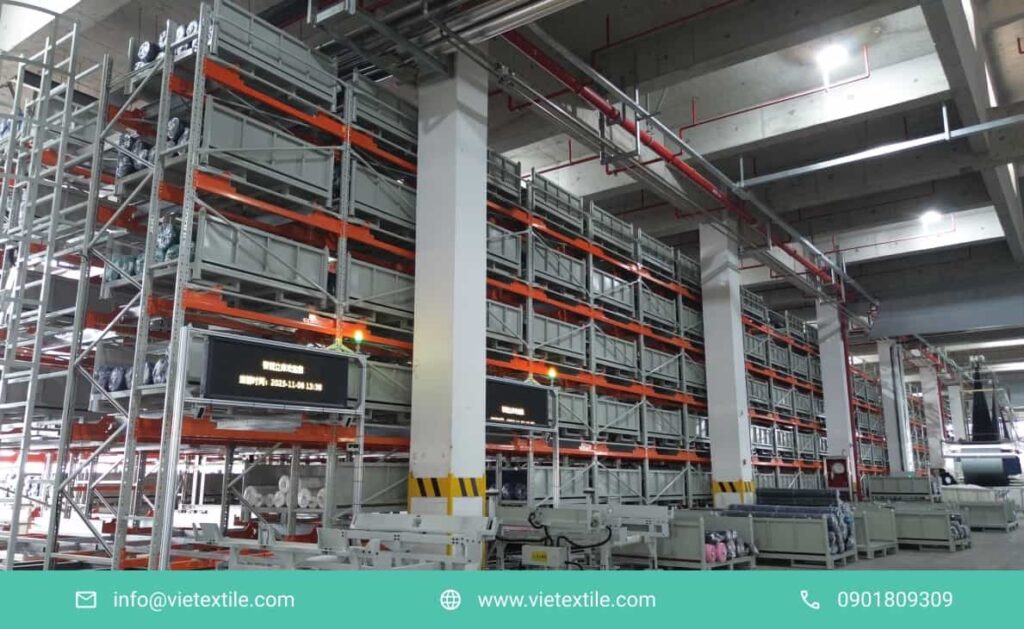
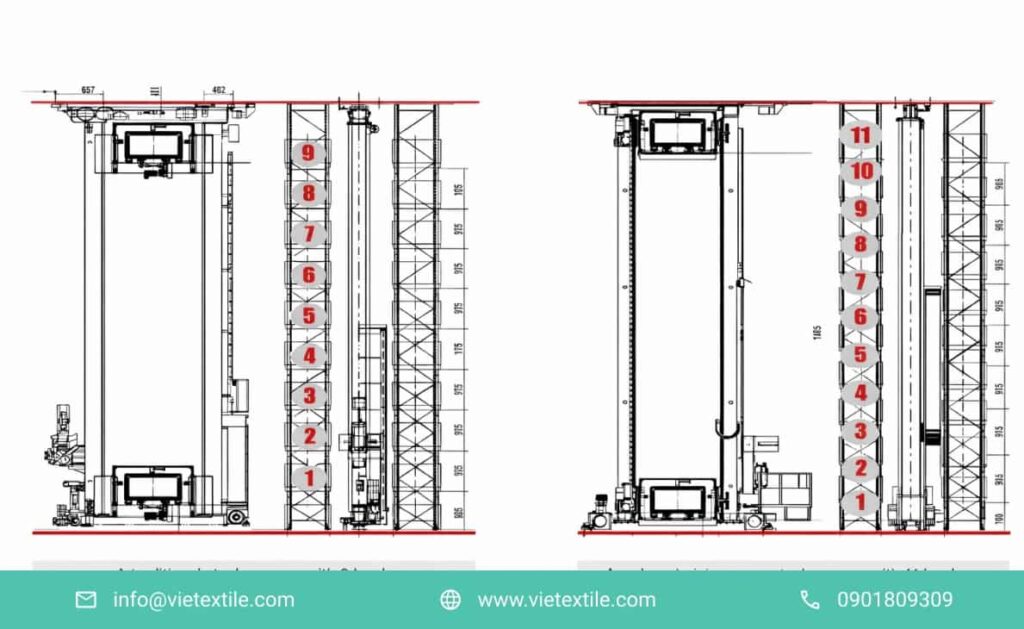
A complete automated storage system includes many components working together. High-rise racking systems help utilize vertical space, increasing storage density. Robots or shuttles perform picking and placing goods accurately. Conveyors play the role of continuous transportation between areas.
The most important part is the Warehouse Management System (WMS), which coordinates all activities. This is the “brain” of the automated storage system, helping to connect data and make operational decisions.
1.3. Role in the textile industry
In the textile industry, an automated storage system plays a particularly important role. Goods such as fabric rolls, yarn, or finished products are bulky and require fast handling.
The automated storage system helps businesses accurately control each package, reduce search time, and ensure a stable flow of goods. This is especially important in large-scale factories.
2. Why do Textile Factories Need an Automated Storage System?
It is no coincidence that many textile factories are switching to an automated storage system. This section analyzes actual operational pressures and the reasons why the traditional warehouse model is no longer suitable.
2.1. Pressure from high-speed production
Modern textile lines can operate continuously for many hours, even 24/7. As production speed increases, the warehouse becomes the point under the greatest pressure, as it is the place for receiving and distributing all raw materials and finished products.
In reality, if just one step of material supply is delayed by a few minutes, the entire upstream line may have to stop or reduce capacity. Conversely, when finished products are not shipped in time, the production area will quickly become congested. An automated storage system helps balance these two sides by processing quickly, synchronously, and continuously.
Thanks to robot systems and coordination software, the automated storage system ensures the flow of goods keeps up with production speed, minimizing bottlenecks in operations.
2.2. Errors in inventory counting
In the traditional warehouse model, errors are inevitable, especially when the volume of goods is large and diverse. Entering the wrong location, shipping the wrong item code, or inventory discrepancies occur frequently and accumulate over time.
These discrepancies not only cause losses but also directly affect production plans. For example, the system reports items in stock, but they are actually out, causing the line to be interrupted.
The automated storage system solves this problem by digitizing all data. Each package has an identifier, a storage location, and a clear status. All changes are updated in real-time, helping businesses control accurately and reduce risks.
2.3. Optimizing factory area
Space is always a big problem in textile factories, especially for long-standing businesses. Expanding warehouse area often comes with high costs and affects the overall layout of the factory.
An automated storage system utilizes height instead of just using floor space. High-rise racking systems combined with robots help increase storage density many times compared to traditional warehouses.
As a result, businesses can expand storage scale without investing in more premises while effectively optimizing existing space.
3. 5 Major Changes When Applying an Automated Storage System
When implementing an automated storage system, the change lies not only in the equipment but also in the way of operation. This section points out clear shifts in management, speed, and efficiency.
3.1. From manual management to data management
In the traditional warehouse model, most activities depend on the experience and memory of the staff. When the scale is small, this operation can still be controlled. However, as the number of item codes increases to thousands, remembering locations and statuses becomes complex and prone to errors.
The automated storage system completely changes this approach. All information is digitized, from the storage location to the movement history of each package. The warehouse management system (WMS) continuously updates data in real-time, helping businesses control accurately and transparently.
As a result, searching, inventorying, or retrieving goods no longer depends on humans but on the system. This not only reduces errors but also creates a foundation for long-term operational analysis and optimization.
3.2. Increasing inbound and outbound speed
In a textile production environment, goods processing speed has a direct impact on the performance of the entire line. Delays in inbound or outbound processes can lead to materials not being supplied on time or finished products piling up.
The automated storage system helps significantly shorten processing time by using robots and automated transport systems. Instead of spending a lot of time searching and moving, goods are pre-positioned and retrieved according to system commands.
This helps businesses maintain a continuous flow between stages, reduce waiting time, and increase overall performance. In many cases, processing speed can improve several times compared to traditional warehouses.
3.3. Reducing labor costs
One of the most clear changes when applying an automated storage system is the reduced dependence on manual labor. Tasks such as searching, transporting, or inventorying are automatically handled by the system.
However, the important thing is not only reducing the number of personnel but also changing the role of humans. Warehouse staff shift from performing operations to supervising, analyzing, and optimizing the system.
As a result, businesses not only save costs but also improve resource quality, moving toward a more efficient and sustainable operational model.
3.4. Increasing inventory accuracy
Inventory discrepancy is one of the common problems in traditional warehouse management. When data is not synchronized with reality, businesses easily make wrong decisions, affecting production and orders.
The automated storage system solves this problem by updating data in real-time. Each time goods are entered, shipped, or moved, they are accurately recorded in the system.
As a result, businesses always know the actual inventory quantity, minimizing discrepancies and reducing risks in operations.
3.5. Connecting with the entire production line
An automated storage system no longer operates as an independent department. Instead, it becomes a link in the production ecosystem, directly connecting with systems like ERP and production lines.
This connection helps data be synchronized throughout, from input materials to output finished products. As a result, businesses can coordinate all activities flexibly and accurately.
The warehouse is no longer just a place for storage but becomes a coordination center, contributing to enhancing the efficiency of the entire operational chain.
4. The Role of Martan in the Automated Storage System
For an automated storage system to operate effectively, a total solution is needed. This section clarifies the role of Martan in designing, integrating, and implementing the system.
4.1. What is Martan?
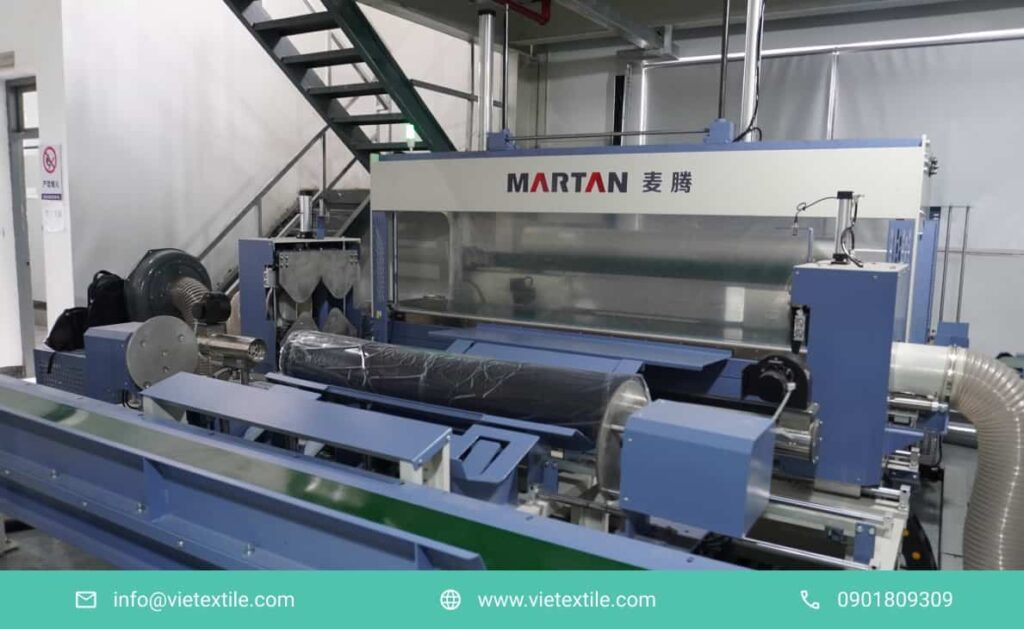
Martan is a solution that provides a comprehensive smart warehouse system, integrated from consulting, design, equipment production to implementation and operation. Instead of providing separate components, Martan builds a synchronous system where hardware and software are designed to work together from the start.
Martan’s difference lies in the “project life cycle” approach. Businesses not only receive an automated storage system but are also supported from the needs analysis stage, warehouse layout optimization, management system integration to operation and post-deployment maintenance. This ensures the system not only runs well initially but also maintains long-term efficiency.
In the context of the textile industry with many variables in products and processes, a total solution like Martan helps businesses avoid “technology patching” while ensuring stability and future scalability.
4.2. Advantages of Martan in the textile industry
Martan allows customizing solutions for each business instead of applying a fixed model. This is particularly important in the textile industry, where each factory has its own characteristics regarding types of goods, production processes, and warehouse organization.
The system can be designed based on many factors such as fabric roll size, yarn storage characteristics, inbound-outbound frequency, or goods classification requirements. As a result, the automated storage system not only operates effectively but also fits closely with operational reality.
In addition, Martan also has the ability to integrate with existing management systems such as ERP or MES. This helps data be synchronized throughout, from production to logistics, creating a seamless operational ecosystem.
4.3. Practical applications
In practice, Martan can be flexibly deployed in many different areas within a textile factory. In the yarn warehouse, the system helps manage a large number of materials with many different types, ensuring fast and accurate retrieval.
In the fabric warehouse, Martan supports storing fabric rolls of large size and weight while optimizing supply for subsequent stages. For finished product warehouses, the system helps control inventory, reduce errors in shipping, and ensure delivery schedules.
Thanks to integration and automation capabilities, Martan not only optimizes each individual area but also helps synchronize the entire operational process, from input to output of the factory.
5. Benefits of Applying an Automated Storage System in Textile Factories
After understanding the operating mechanism, the important question is what businesses receive. This section summarizes the practical benefits when applying an automated storage system.
5.1. Increasing operational performance
The automated storage system helps significantly reduce waiting time between stages thanks to continuous and synchronous processing. Instead of having to search and transport manually, the system automatically locates and retrieves goods on command, shortening material supply and finished product shipping time.
In reality, this helps the textile line maintain a stable operating rhythm, limiting “disruptions” due to lack of materials or finished product backlogs. When the flow of goods is optimized, the overall performance of the factory is also clearly improved.
5.2. Reducing long-term costs
Although the initial investment cost of an automated storage system is relatively high, in the long term, this system helps businesses significantly save operational costs. Reducing dependence on manual labor helps cut personnel costs and limits costs arising from errors.
In addition, the ability to optimize storage space helps businesses reduce factory expansion costs. When combined with reducing loss and inventory discrepancy, total operational costs will be optimized sustainably.
5.3. Enhancing management capabilities
An automated storage system brings an important benefit: data-driven management capability. All inbound, outbound, and movement activities of goods are recorded and updated in real-time.
As a result, businesses can accurately track inventory status, turnover speed, and operational performance. Decisions are no longer based on estimates but on specific data, improving accuracy and the ability to react quickly to changes in production.
6. Future Trends of Automated Storage System in the Textile Industry
The automated storage system does not stop at the present. This section looks at development trends and how technology will continue to change warehouse operations in the future.
6.1. Integrating AI and IoT
The automated storage system of the future will not only stop at automation but also move toward “self-optimization.” Thanks to AI integration, the system can analyze historical data to predict inbound-outbound demand, thereby arranging storage locations more logically.
IoT plays a role in connecting devices in the warehouse, from robots and conveyors to sensor systems. All operational data is transmitted to the central system in real-time, helping to detect issues early and optimize performance.
When combining AI and IoT, an automated storage system does not just react to commands but also proactively proposes better operational plans, helping businesses improve long-term efficiency.
6.2. Personalization for each factory
Each textile factory has its own characteristics in products, processes, and scale. Therefore, the trend in the future is not a general system for everyone but a solution designed specifically for each business.
Platforms like Martan allow customization from warehouse layout, storage methods to operational logic. This helps the automated storage system not only operate effectively but also fit closely with production reality.
Thanks to personalization capability, businesses can implement the system in stages, ensuring investment efficiency and flexibly expanding when necessary.
6.3. Supply chain connection
The automated storage system of the future will play a central role in the supply chain, not only connecting internally but also linking with external partners.
Data from the warehouse can be synchronized with the systems of suppliers, transport units, and customers. This helps businesses track the entire journey of goods, from input materials to delivered finished products.
When the warehouse becomes a data connection point, businesses not only optimize internal operations but also enhance coordination throughout the entire supply chain, creating a sustainable competitive advantage.
7. VieTextile and Automated Storage System Solutions
Besides technology, practical implementation needs a unit that understands the specific characteristics of the textile industry. This section clarifies how VieTextile approaches the automated storage system problem, from surveying needs to deploying solutions suitable for each factory model.
VieTextile provides specialized automated storage system solutions for the textile industry, with a focus on not just selling equipment but also accompanying the entire process of operational optimization. We start by analyzing the flow of goods, current warehouse structure, inbound-outbound frequency, and bottlenecks affecting the business’s performance.
From that actual data, VieTextile proposes an automated storage system plan suitable for each factory scale. Solutions can be designed for yarn warehouses, fabric warehouses, finished product warehouses, or implemented in stages to help businesses easily control investment costs. The important thing is that the system is built based on real operational needs, instead of applying a general model for every business.
During implementation, VieTextile not only focuses on technical factors but also emphasizes long-term operational capability. The automated storage system needs to be easy to control, easy to integrate with existing management platforms, and flexible enough to expand in the future. This is the factor that helps businesses not only solve the immediate storage problem but also build a foundation for a deeper digital transformation process.
Therefore, an automated storage system is not just a place to store goods more efficiently. When implemented correctly, it becomes the foundation helping textile businesses enhance performance, control data better, and gradually transform the way of operation toward a modern, synchronous, and sustainable direction.
8. Frequently Asked Questions (FAQ) about Automated Storage System
The following section summarizes common questions related to an automated storage system, helping businesses have a clearer view before implementation.
8.1. Is an automated storage system suitable for textile factories?
An automated storage system is very suitable for the textile industry, especially in the context of large-scale production and continuous operational requirements. Textile factories often have to handle large volumes of materials such as yarn, fabric rolls, and finished products, requiring high speed and accuracy.
An automated storage system helps control the entire flow of goods in real-time, from inbound, storage to outbound. As a result, businesses minimize errors, increase processing speed, and ensure production lines always operate stably.
8.2. Is the investment cost for an automated storage system high?
The initial investment cost of an automated storage system is usually higher than that of a traditional warehouse because it includes equipment systems, software, and implementation costs. However, this is a long-term investment.
During operation, businesses will significantly save on labor costs, reduce goods loss, and optimize storage space. When calculating total operational costs over many years, an automated storage system often brings better economic efficiency.
8.3. Is the Martan solution flexible?
The Martan solution is highly flexible and can be customized according to each textile factory’s scale and characteristics. The system does not apply a fixed model but is designed based on the actual needs of the business.
Depending on the type of goods, production process, and factory area, Martan can implement parts or the entire system. This helps businesses easily access automated storage system technology without having to change the entire operational structure immediately.
To implement an automated storage system effectively for your textile factory, contact VieTextile today!
Contact Information:
Hotline: 0901 809 309
Email: info@vietextile.com
Website: https://vietextile.com