

In the ever-evolving world of fashion, expressing personality and uniqueness through clothing is increasingly valued. Among countless fabric surface treatment techniques, Tie-dye wash has affirmed its position as a truly popular wash type, delivering free-flowing, spontaneous, and artistic mottled patterns. This technique not only creates product differentiation but also reflects a spirit of freedom and liberation, which has been widely favored for decades.
This article will delve into explaining what Tie-dye wash is, why it has become such a popular wash type, the basic steps to create its distinctive effects, and the importance of performing Tie-dye professionally to ensure quality and colorfastness.
I. What is Tie-dye Wash – A Popular Wash Type?
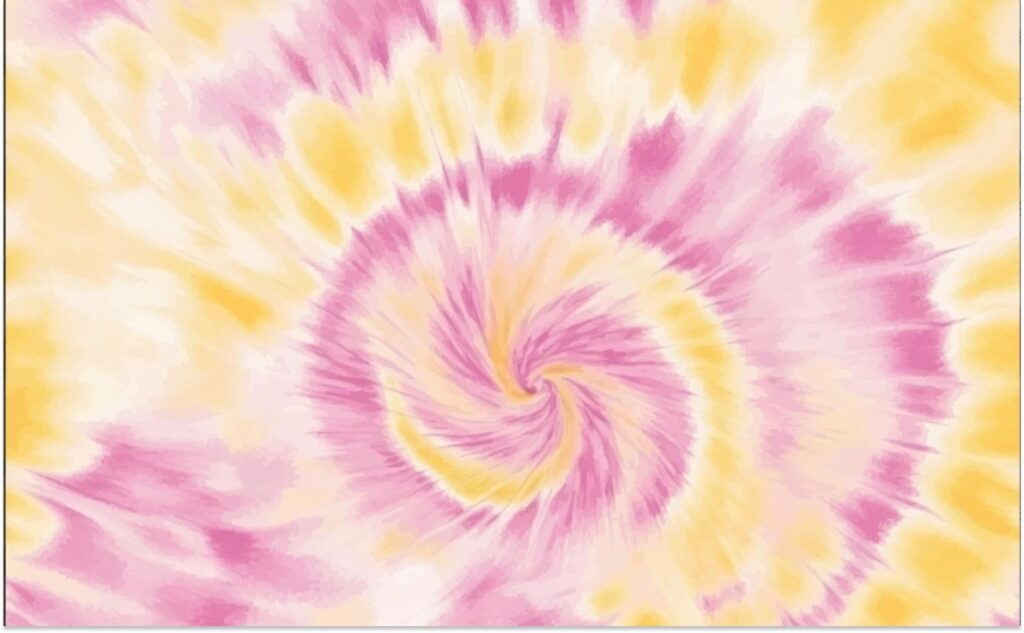
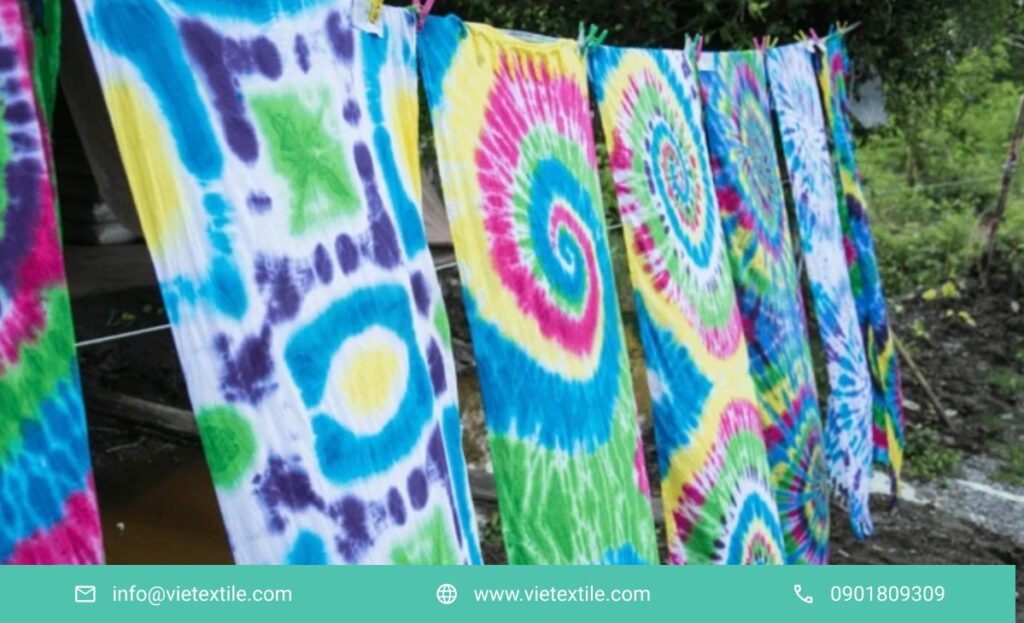
Tie-dye wash is a manual or semi-manual fabric dyeing technique where parts of the fabric are tied, twisted, folded, or compressed tightly before being immersed in a dye solution. When the fabric is untied, the tied/compressed sections either do not come into contact with the dye or have less contact, creating unique alternating light and dark areas, patterns, or mottled designs. This effect is highly spontaneous; virtually no two Tie-dye products are exactly alike, creating a unique piece for every item.
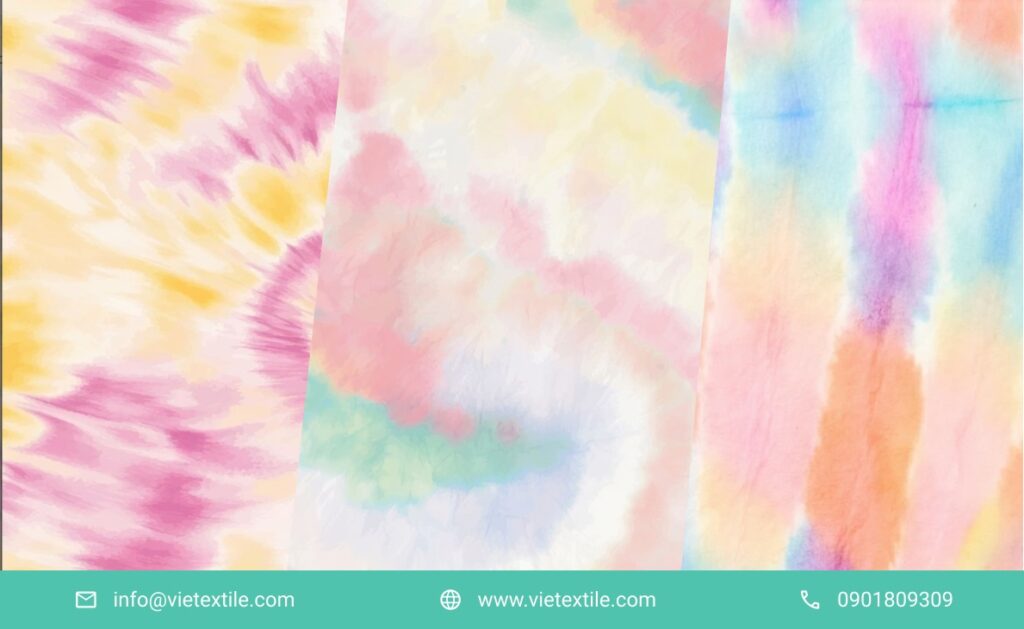
As a popular wash type, Tie-dye can be applied to many fabric materials, especially natural fibers like cotton, silk, and viscose. Depending on the tying method and the type of dye used, the Tie-dye effect can range from strong contrasting colors to subtle, soft color transitions. This is a creative method that transforms monochromatic fabrics into colorful and personalized works of art.
II. Why is Tie-dye a Popular Wash Type?
Tie-dye is not just a dyeing technique but an iconic fashion trend. There are many reasons why it has become a popular wash type and is widely loved:
1. High Uniqueness and Personalization
Every Tie-dye product is unique. Due to its handmade nature and the spontaneity in the fabric tying/twisting process, it’s almost impossible to create two products with identical mottled patterns. This offers high unique value, allowing the wearer to express their distinct personality and own an exclusive item. This is a significant reason why Tie-dye is a popular wash type in personalized fashion.
2. Free-Spirited, Liberal Style
Tie-dye is closely associated with the spirit of freedom, the hippie movement, and the artistic culture of the 1960s-1970s. It brings a relaxed, unconventional look, embodying rebelliousness and non-adherence to traditional rules. The strong comeback of Tie-dye in recent years demonstrates the timeless appeal of this popular wash type in streetwear and bohemian fashion styles.
3. Diverse Applications and Combinations
Tie-dye can be applied to various garments such as T-shirts, hoodies, shorts, dresses, scarves, and even accessories. The mottled patterns are also easy to combine with many fashion styles, from energetic casual to bold sporty, or even as accents in high-fashion outfits. This flexibility ensures that Tie-dye remains a popular wash type and never goes out of style.
4. Unlimited Creative Potential
From simple knotting techniques to complex folding and clamping methods, Tie-dye allows for infinite creativity with shapes, patterns, and color blends. The ability to combine multiple colors on the same product creates impressive visual effects, stimulating the creativity of both designers and consumers. This is a key factor that helps Tie-dye maintain its position as a popular wash type.
5. Environmentally Friendly (When Done Properly)
Compared to some industrial printing/dyeing methods that require more resources, Tie-dye, especially when done on a small scale or using environmentally friendly dyes, can be a more sustainable option. Many brands have utilized Tie-dye to recycle or refresh old products, reducing textile waste and contributing to Tie-dye becoming a popular wash type following sustainable trends.
III. Process to Create Tie-dye Wash – A Popular Wash Type
The basic Tie-dye wash process involves key steps, requiring meticulousness and an understanding of how dyes interact with fabric.
1. Fabric Preparation
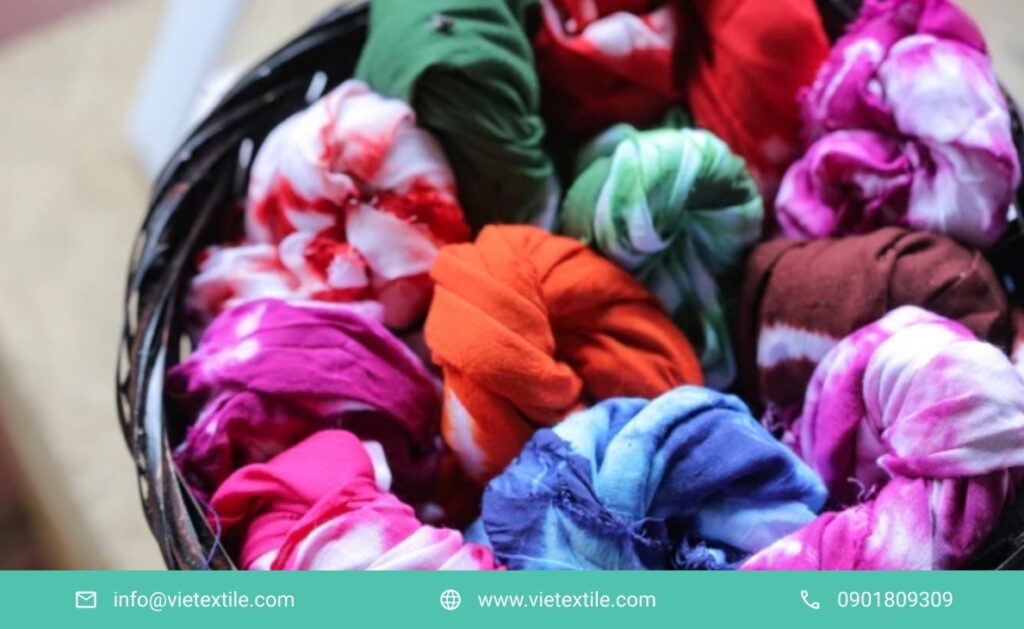
The first and most important step is fabric preparation. The fabric needs to be thoroughly washed to remove sizing, oils, and impurities. This helps the dye penetrate evenly and adhere firmly to the fibers. For cotton and linen fabrics, soaking them in soda ash (sodium carbonate) solution before dyeing is necessary to open the chemical bonds of the fibers, helping the dye react and fix the color better, ensuring quality for this popular wash type.
2. Tying, Twisting, or Folding Fabric
This is the shaping stage for the Tie-dye pattern. There are countless techniques for tying fabric, each creating a different mottled effect:
- Knotting: Creates spontaneous round spots.
- Spiral/Swirl: Creates spiral or sun-like shapes.
- Accordion Fold: Creates stripes or vertical patterns.
- Folding (Square/Triangle): Creates repeating geometric patterns.
- Using Rubber Bands, Clamps, Stones: These items are used to compress parts of the fabric, preventing the dye from penetrating or only partially penetrating, creating lighter or colorless areas. Creativity in this step is important for defining the style of this popular wash type.
3. Dye Preparation
Dyes are prepared according to precise formulas and ratios with water and auxiliaries (if any). The most common dye type for Tie-dye is reactive dyes, as they produce bright colors and have high colorfastness on cellulose fibers. Controlling dye concentration will determine the intensity of colors on the product.
4. Dye Application
Once the fabric has been tied/folded, the dye is applied to the fabric sections. The entire product can be immersed in the dye solution, or dye can be sprayed/painted onto specific areas to create multi-color effects or complex color transitions. This process requires carefulness to prevent dye from bleeding into unwanted areas, ensuring the effectiveness of this popular wash type.
5. Curing
After dye application, the product is cured for a specific period (usually a few hours to 24 hours) for the dye to fully react with the fabric fibers and fix the color. Temperature and humidity during curing can also affect the final result.
6. Rinsing and Washing
After curing, the product is thoroughly rinsed with clean water to remove excess unfixed dye. Then, it is washed with soap or a mild detergent to completely remove any unfixed dye. This step is crucial to ensure the colors do not bleed during use and to enhance the colorfastness of Tie-dye wash.
7. Drying and Finishing
Finally, the product is completely dried. Depending on the fabric type and requirements, additional fabric softening or ironing steps may be applied to finish the product. This helps the Tie-dye product achieve the desired look and readiness for use.
IV. VieTextile: Expert for the Popular Wash Type – Tie-dye Wash
VieTextile proudly stands as a leading partner providing professional wash services in Vietnam. We not only deeply understand traditional techniques but also continuously research to develop new methods, creating unique and durable mottled effects.
Let VieTextile help you realize every mottled design idea, from minimalist to rebellious styles, bringing unique value and personality to your products.
V. Frequently Asked Questions (FAQs)
To help our valued customers better understand Tie-dye wash – a popular wash type – here are some frequently asked questions:
Q: What fabric types can Tie-dye wash be applied to? A: Tie-dye wash is most effective on natural fiber fabrics such as cotton (T-shirts, hoodies), silk, viscose/rayon, and linen. Blended fabrics with synthetic fibers may yield different effects depending on the blend ratio.
Q: What is the colorfastness of Tie-dye wash like? A: When performed by professionals using high-quality reactive dyes and a standard color-fixing process, Tie-dye wash has very good colorfastness, withstanding many washes without significant fading. VieTextile always ensures durable quality for this popular wash type.
Q: Is the Tie-dye wash effect uniform across all products? A: Due to its handmade and spontaneous nature, each Tie-dye wash product will have a unique mottled pattern. However, VieTextile strictly controls tying techniques and the dyeing process to ensure overall color tone consistency and wash style uniformity among products within the same batch.
Q: Is Tie-dye wash safe for skin and the environment? A: When using safe dyes (e.g., certified reactive dyes) and a thorough rinsing process to remove residues, Tie-dye wash is completely safe for wearers. VieTextile always prioritizes environmentally friendly solutions when performing this popular wash type.
VI. References & Contact
- Comparing Enzyme Wash, Acid Wash, Stone Wash: Techniques, Effects, and Practical Applications 2025
- Top 7 Common Mistakes When Washing Jeans Fabric and How to Fix Them
- Tie-dye and the Return of Free-flowing Colors
- Tie-dye Fashion Trend: The Spectacular Comeback After More Than a Decade in Hiding
To create personalized and unique mottled products with professional Tie-dye wash services, contact VieTextile today!
Contact Information:
- Hotline: 0901 809 309
- Email: info@vietextile.com
- Website: https://vietextile.com