

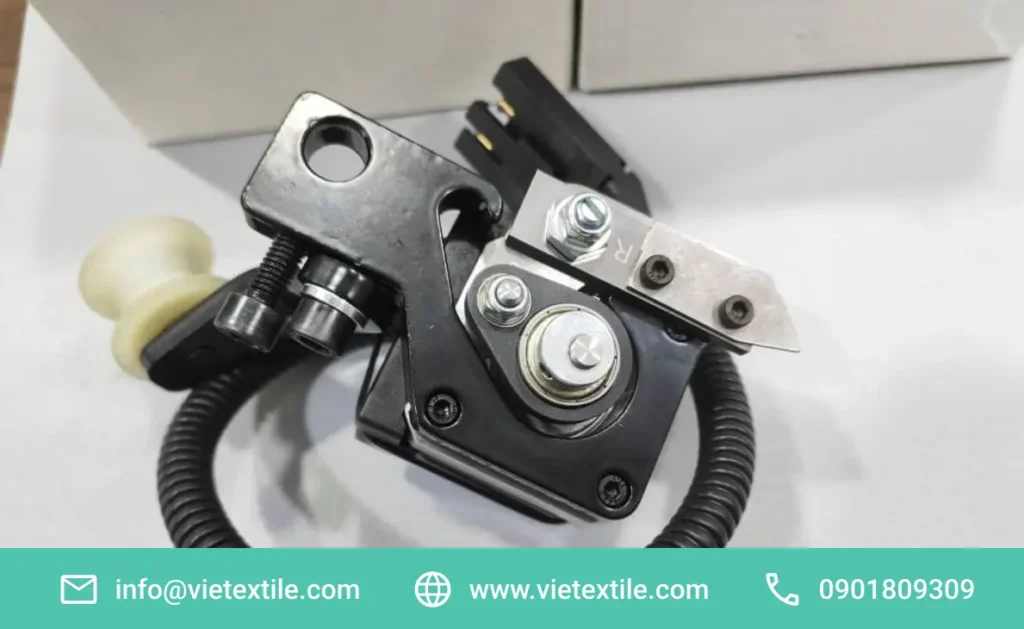
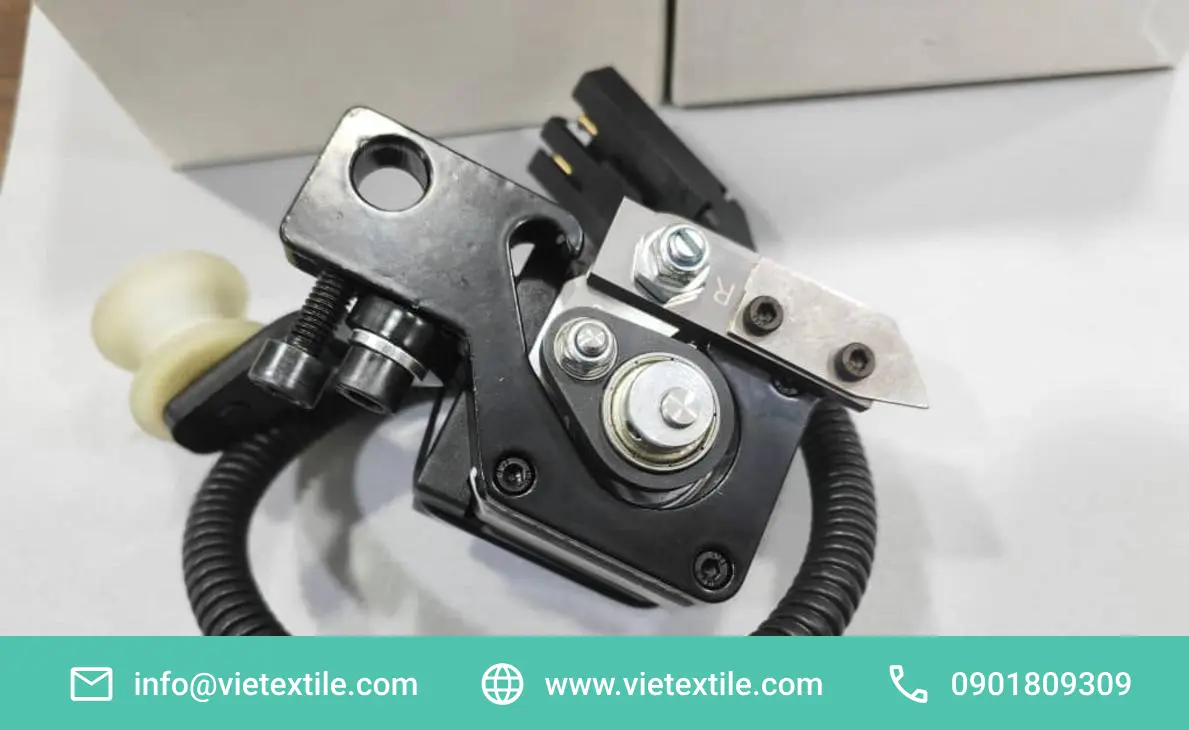
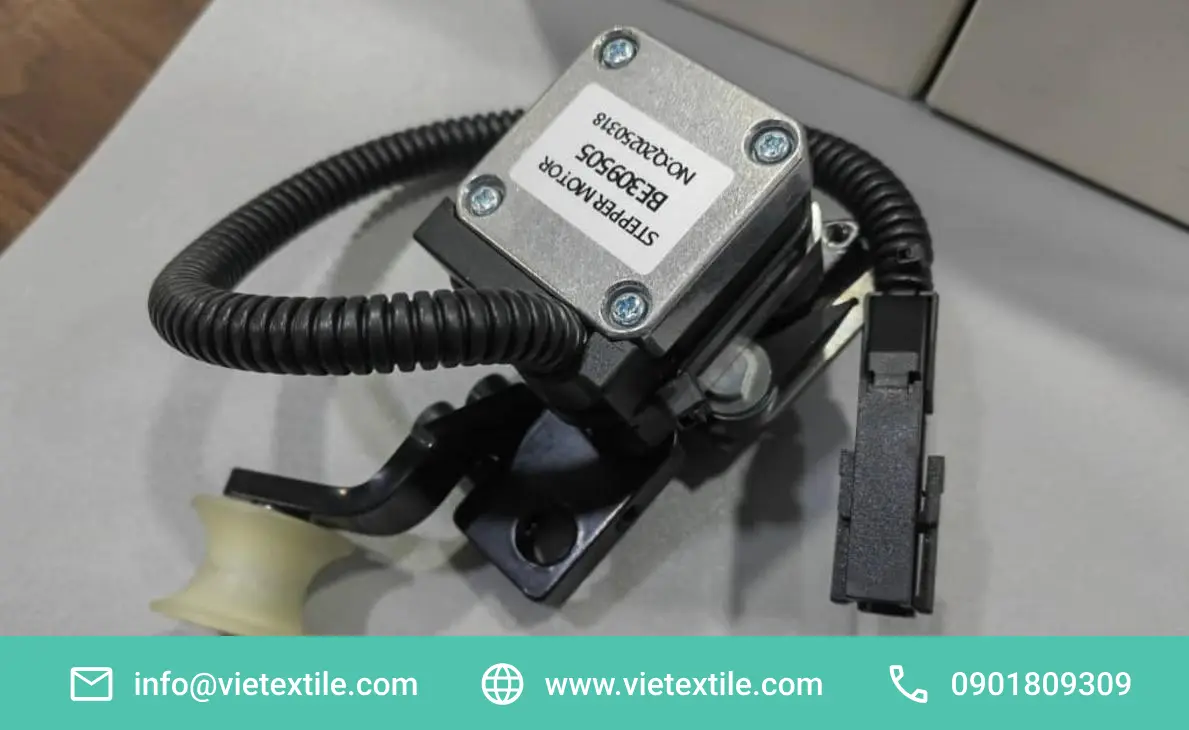
To control BE309505 stepper motor risks, factories need to focus on 7 main risk categories, such as coil overheating, bearing failure, and step loss. Collecting accurate operational data and mapping risks helps in making timely repair or replacement decisions, minimizing downtime.
The BE309505 stepper motor is a critical component in industrial automation systems, especially in the textile industry, where high precision and continuous operation are essential. However, operating this motor always carries inherent technical and operational risks that can severely impact productivity and manufacturing costs.
To maintain optimal performance and control motor costs, identifying, assessing, and managing these risks is crucial. This article will delve into 7 key risks, providing methods for evidence collection, self-assessment, and effective intervention decisions, helping maintenance managers proactively manage operations.
- Collecting evidence of BE309505 stepper motor operational risks includes data on failure frequency, temperature, current, and maintenance records.
- Assess the energy risk of the BE309505 stepper motor using a 1-5 scale, focusing on consumption and heat loss.
- Decide whether to repair or replace the BE309505 stepper motor based on the rule: replace if repair costs exceed X% of the new motor’s value or downtime exceeds Y hours.
- Map risks for the BE309505 stepper motor using a risk matrix, classifying them by likelihood and consequence.
- Early detection of failure modes such as coil overheating or bearing failure through vibration checks and regular oil analysis.
- 1. How to Collect Evidence of BE309505 Stepper Motor Risks?
- 2. How to Self-Assess BE309505 Stepper Motor Risks and Prioritize Corrective Actions?
- 3. When to Repair, Replace, or Upgrade a BE309505 Stepper Motor for Cost Optimization?
- 4. Scope and Limits of BE309505 Stepper Motor Risk Assessment
- 5. How to Map BE309505 Stepper Motor Risks and Control Measures?
- 6. What are the Common BE309505 Stepper Motor Risks and How to Detect Them Early?
- 7. How to Ensure Safe Operation of the BE309505 Stepper Motor and When to Halt Work
- 8. Frequently asked questions
1. How to Collect Evidence of BE309505 Stepper Motor Risks?
A BE309505 stepper motor is an electric motor that converts electrical pulses into discrete angular movements. It is widely used in applications requiring high precision, such as CNC machines, robotics, medical equipment, and industrial automation systems. Collecting evidence is fundamental for assessing the operational risks of this critical component in high-precision textile automation systems. This process provides maintenance and production management teams with an objective view of equipment status, identifies potential weaknesses, and supplies the necessary data to build optimal motor maintenance strategies, ensuring continuous productivity and effective cost control.
Risks to control, such as step loss, overheating, or mechanical failure, can directly impact product accuracy, leading to quality defects and material waste. Therefore, identifying and collecting evidence of potential issues enables the maintenance department to proactively prevent problems, thereby optimizing stepper motor maintenance and reducing incidental costs, which is especially crucial in the competitive textile manufacturing environment.
1.1 Essential Evidence Types for BE309505 Stepper Motor Performance Risk Assessment
To comprehensively assess the performance risks of the BE309505 stepper motor, the maintenance department should focus on three primary types of evidence: operational data, maintenance records, and technical specifications. Each type offers a unique perspective on the equipment’s condition and potential risks, aiding in informed maintenance decisions.
Operational data includes continuous records from sensors or SCADA systems regarding error frequency, operating temperature, current consumption, and vibration indicators. For example, coil temperatures exceeding permissible limits can signal overload or heat dissipation issues, directly affecting the motor’s lifespan and operational risks. Analyzing this data helps identify abnormal trends.
Maintenance records provide a historical overview of repairs, component replacements, and past incidents. Analyzing previous incident reports, routine maintenance logs, and calibration records helps identify recurring failure patterns or components with short lifespans. If a stepper motor has undergone multiple bearing replacements in a short period, this is clear evidence of a potential risk that needs to be addressed to optimize motor maintenance.
Technical specifications from the manufacturer are also a crucial source of evidence, including torque-speed curves, rated voltage, phase current, and operating limits. Comparing actual operational data with these specifications helps determine if the BE309505 stepper motor is operating outside its design limits, thereby predicting potential premature failure. These parameters provide a basis for evaluating whether the motor is suitable for the current load and operating environment, contributing to cost control.
1.2 Process for Collecting and Validating Operational Risk Evidence
The evidence collection process begins by establishing the data points to monitor, based on “what-if” scenarios regarding the BE309505 stepper motor’s performance. For instance, if system performance suddenly declines, the maintenance department will check data on the motor’s positional accuracy and step loss frequency. If the data indicates frequent step loss, this evidence will lead to an inspection of the controller or mechanical load, helping to identify the root cause of the motor’s operational risks.
A decision-tree diagram can illustrate this process for guiding evidence collection based on ‘what-if’ scenarios about productivity:
- If system performance declines and the BE309505 stepper motor is the suspected cause, then collect data on positional accuracy and step loss frequency.
- If positional accuracy data is out of tolerance or step loss frequency is high, then check maintenance records for similar past failures.
- If there is a history of similar failures, then review applied solutions and their effectiveness.
- If there is no failure history or solutions are ineffective, then collect temperature and current data to detect overload or coil damage.
Validating evidence requires a combination of automated data and manual inspection. Data from monitoring systems should be cross-referenced with actual observations by maintenance technicians. For example, if a temperature sensor reports a high value, technicians should use an infrared thermometer to confirm and check environmental factors like ventilation. This process ensures the accuracy and reliability of collected evidence, preventing incorrect conclusions and supporting improved motor performance.
1.3 Tools and Technologies Supporting Evidence Collection
To effectively collect evidence, the maintenance department can leverage various modern tools and technologies. Condition Monitoring Systems (CMS) are a prime example, allowing continuous data collection on vibration, temperature, current, and voltage. Smart IoT-integrated sensors can transmit data to a central platform, enabling real-time monitoring of the BE309505 stepper motor’s performance.
Additionally, using handheld measuring devices such as vibration analyzers, infrared thermometers, and clamp meters is crucial for verifying data from CMS or performing routine checks. Computerized Maintenance Management Software (CMMS) helps store and analyze maintenance records, facilitating the retrieval of repair history and incidents. The combination of these tools not only enhances evidence collection capabilities but also improves the accuracy of industrial motor risk assessment, thereby optimizing maintenance operations and minimizing downtime.
2. How to Self-Assess BE309505 Stepper Motor Risks and Prioritize Corrective Actions?
To self-assess the operational and energy risks of the BE309505 stepper motor, the maintenance department can implement a comprehensive scorecard, focusing on quantitative and qualitative criteria. This tool helps convert real-world observations into specific indicators, thereby prioritizing corrective actions based on risk levels and potential performance improvements. This contributes to optimized maintenance and controlled operational costs.
This assessment extends beyond energy efficiency to include other operational factors such as stability, component lifespan, and potential for production disruption. By doing so, the maintenance department can make data-driven decisions, balancing energy saving benefits with overall operational risks.
3. When to Repair, Replace, or Upgrade a BE309505 Stepper Motor for Cost Optimization?
To optimize operational and maintenance costs, decisions regarding the repair, replacement, or upgrade of a BE309505 stepper motor require a comprehensive assessment. Factors such as estimated repair costs, the remaining value of the electric motor, and especially the impact of downtime on production output, are crucial. A well-informed decision helps control motor costs and ensures stable operations.
3.1 Decision-Making Rules Based on Repair Costs and Residual Value
Intervention decisions for the BE309505 stepper motor demand clear rules to ensure economic efficiency. A common principle suggests that if the estimated repair cost exceeds 60% of the value of a comparable new electric motor, replacement is often the optimal choice. This rule helps prevent over-investment in aging equipment and mitigates operational motor risks from potential underlying faults.
The residual value of the BE309505 stepper motor is also a critical factor. If the electric motor has operated near its design life (e.g., after 8-10 years of continuous operation) and begins to experience frequent issues, major repairs may no longer be economically viable. In such cases, replacing it with a new, higher-efficiency electric motor will optimize motor maintenance and control motor costs in the long run.
3.2 Operational Scenarios Affecting the BE309505 Stepper Motor’s Lifecycle Costs
Various operational scenarios for the BE309505 stepper motor directly influence its total lifecycle costs. When the electric motor experiences sudden and severe failure, the primary goal is to minimize downtime, even if initial repair costs are high. For example, if a fault causes a production line to stop completely for over 8 hours, immediate replacement is often the optimal decision to avoid significant losses in productivity and revenue.
If the electric motor’s performance gradually declines or minor faults recur, the maintenance department can plan proactive intervention. This presents an opportunity to consider upgrading the motor to a version with better technology, improved energy efficiency, or enhanced durability. This decision helps optimize long-term operational and maintenance costs, while also boosting motor productivity and improving product quality if the electric motor’s performance directly affects process accuracy.
Below is a table of conditional decision-making rules for cost-risk situations involving the BE309505 stepper motor:
| Trigger Condition (Electric Motor Issue) | Recommended Action | Reason & Cost Benefit |
|---|---|---|
| Estimated repair cost > 60% of new electric motor value | Replace BE309505 stepper motor | Reduces recurrence risk, provides access to new technology, offers longer warranty, optimizes lifecycle costs, and controls motor costs. |
| Expected downtime > 8 hours due to repair | Prioritize replacement or rapid repair (if available) | Minimizes productivity losses, prevents missed orders, maintains production reputation, and enhances motor productivity. |
| Gradual performance degradation (e.g., 15% torque loss) | Plan for upgrade or scheduled replacement | Improves energy efficiency, increases product accuracy, and reduces unscheduled motor maintenance costs. |
| Electric motor exceeds 85% of design life with major fault | Replace BE309505 stepper motor | Prevents unexpected failures, reduces escalating maintenance costs, ensures system stability, and mitigates operational motor risks. |
| Fault directly affects product quality (e.g., 10% increase in positional error) | Repair or replace immediately | Protects brand reputation, avoids defective products, reduces rework or scrap costs, and enhances motor productivity. |
3.3 Walkthrough: From Fault Detection to Intervention Decision
For a maintenance manager or operations engineer, the intervention decision process for a BE309505 stepper motor begins with detecting a fault or signs of performance degradation. For instance, a technician reports that the BE309505 stepper motor on a weaving machine is making unusual noises and experiencing abnormal temperature increases, along with slight processing deviations affecting product quality.
Step 1: Initial assessment and data collection. The maintenance department conducts a preliminary inspection, measures temperature and current, and records the extent of product deviation. The estimated repair cost is approximately 7 million VND (bearing and coil replacement), while a comparable new electric motor costs 12 million VND.
Step 2: Apply decision-making rules. With a repair cost of 7 million VND, it represents about 58% of the new electric motor’s value. According to the established rule (replace if over 60%), this cost is close to the threshold but not fully exceeded. Further factors need consideration to optimize motor costs.
Step 3: Evaluate downtime impact and quality. The technician estimates that repair will take approximately 10 hours, while replacing the new electric motor takes 4 hours. In the 6-hour difference, the production line could produce an additional 600 products (assuming 100 products/hour). The potential loss due to extended downtime is 60 million VND. The operational motor risks from prolonged downtime are significant.
Step 4: Final decision. Although the repair cost has not exceeded 60% of the new electric motor’s value, the impact of downtime and the risk to product quality are substantial. Therefore, management decides to immediately replace the BE309505 stepper motor to minimize production losses, enhance motor productivity, and ensure quality. This is a prime example of comprehensively weighing cost and operational factors to optimize motor maintenance.
4. Scope and Limits of BE309505 Stepper Motor Risk Assessment
When conducting a risk assessment for the BE309505 stepper motor to optimize performance and control motor costs, the scope must focus on technical and operational factors directly affecting the electric motor’s reliability and productivity. This includes torque performance, positional accuracy, and load capacity. The assessment’s stopping point is when risks fall outside technical control, such as market or supply chain risks, which are not relevant to the motor’s operational productivity.
4.1 Factors Within the Scope of BE309505 Stepper Motor Productivity Risk Assessment
To enhance BE309505 stepper motor productivity, the risk assessment must encompass core technical factors. First is torque performance, ensuring the electric motor provides sufficient force for the application without overloading. Next is positional accuracy, a critical factor for stepper motors, directly impacting product quality in high-precision applications like industrial embroidery machines or automated fabric cutters.
Additionally, the electric motor’s response speed and load capacity are indispensable factors. The motor needs to respond quickly to control signals to maintain process speed and accuracy, reducing operational motor risks. Load capacity must match equipment requirements, preventing overload that leads to reduced lifespan or failure. Finally, compatibility with existing control systems is crucial, ensuring the electric motor operates synchronously and efficiently.
4.2 Applicability Conditions and Limitations of Risk Analysis
Productivity risk analysis for the BE309505 stepper motor is only valuable when performed under specific operating conditions. The operating environment plays a vital role; for example, an electric motor operating in high temperatures (above 40°C), high humidity, or dusty environments will have a higher risk of failure. The operating cycle, including the number of starts/stops and continuous running time, also affects lifespan and performance, requiring optimized motor maintenance.
Actual working load and power supply stability are also factors to consider. An electric motor operating continuously near or above its rated load will degrade quickly. Voltage fluctuations or unstable frequency from the power supply can also cause performance and durability issues, increasing operational motor risks. Clearly defining these conditions helps shape the scope of the risk assessment and limits the factors to be analyzed, avoiding wasted resources on unrealistic scenarios.
| Factor | Within Assessment Scope? | Reason |
|---|---|---|
| Torque performance | Yes | Directly affects the BE309505 stepper motor’s operation and work capacity, related to enhancing motor productivity. |
| Positional accuracy | Yes | Crucial for product quality and productivity in applications, reducing operational motor risks. |
| Response speed | Yes | Determines the control system’s responsiveness, affecting production efficiency. |
| Expected lifespan | Yes | Relates to replacement costs and long-term optimized motor maintenance planning. |
| Load capacity | Yes | Ensures the BE309505 stepper motor operates stably under work pressure, controlling motor costs. |
| Control system compatibility | Yes | Ensures the electric motor operates synchronously and optimally with equipment, enhancing motor productivity. |
| Market price fluctuations of electric motors | No | Falls under business risk, does not directly affect the technical operation of the BE309505 stepper motor. |
| Component supply chain risks | No | Related to logistics and supplier management, not performance or operational motor risks. |
| Changes in tax policy | No | Falls under macroeconomic risk, unrelated to productivity risks or optimized motor maintenance. |
4.3 Risks Outside the Scope of This Article and Why
To maintain a focused and effective risk assessment, it is essential to clearly define the limits of the analysis. Risks not directly related to the technical and operational aspects of the BE309505 stepper motor will not be covered. For example, market risks such as price volatility for electric motors or components, or supply chain risks related to component shortages, are not the focus of this analysis. These factors are typically managed at a business strategy or financial level, not as operational motor risks.
Similarly, risks related to the company’s overall business strategy, such as changes in market demand for the final product or major investment decisions, are also outside the scope. The objective of this assessment is to optimize BE309505 stepper motor productivity and operational reliability, not macroeconomic factors. Excluding these risks helps the maintenance department or engineers’ decision checklist focus on issues they can directly control or influence, thereby achieving more effective optimized motor maintenance.
5. How to Map BE309505 Stepper Motor Risks and Control Measures?
To optimize performance and control costs for the BE309505 stepper motor, risk mapping is an essential tool. This method helps maintenance and production departments visualize potential threats, especially those affecting energy consumption and motor performance. By clearly identifying these risks, businesses can proactively allocate resources and develop effective prevention strategies, contributing to the overall productivity of the system.
5.1 Classifying BE309505 Stepper Motor Risks by Likelihood and Consequence
Energy risks associated with the BE309505 stepper motor should be classified using a risk matrix, assessing the likelihood of occurrence (low, medium, high) and the severity of consequences (minor, moderate, severe). For instance, coil overheating due to continuous overload has a medium likelihood but severe consequences, leading to reduced motor lifespan and increased energy costs. Conversely, minor voltage fluctuations may occur frequently but typically have minor consequences, causing negligible energy waste.
This classification helps prioritize which BE309505 stepper motor risks to address first, focusing on incidents with high likelihood and significant energy loss or production disruption. A risk assessed as “high” in both likelihood and consequence demands immediate and robust control measures. Meanwhile, “low” risks can be monitored periodically or managed with simple preventive actions, enabling the maintenance department to allocate resources more efficiently for optimizing stepper motor performance.
| BE309505 Stepper Motor Energy Risk | Likelihood | Severity of Consequence (Energy & Operation) | Recommended Control Measures per Industry Standard |
|---|---|---|---|
| Coil overheating due to overload | Medium | Severe (reduced efficiency, increased energy consumption, motor failure) | Continuous temperature monitoring (e.g., PT100 sensors), periodic load checks, electronic overload protection per IEC 60947-4-1. |
| Phase loss or phase imbalance | Low | Severe (vibration, overheating, coil damage, machine shutdown) | Phase loss protection relay, periodic phase balance checks, current monitoring per NEMA MG 1. |
| Voltage fluctuation | Medium | Moderate (energy waste, reduced lifespan, unstable operation) | Use voltage stabilizer, check power quality, install noise filters per IEEE 519. |
| Low power factor | High | Minor (increased current, energy loss, utility penalties) | Install reactive power compensation capacitors, analyze power quality. |
| Bearing failure (increased friction) | Medium | Moderate (increased energy consumption, vibration, noise, motor failure) | Regular maintenance, proper lubrication, vibration checks per ISO 10816. |
| Insulation material aging | High (over time) | Severe (short circuit, motor failure, safety hazard) | Periodic insulation resistance testing (at least every 1-3 years per NEMA MG 1), replace according to recommended lifespan. |
5.2 Control and Mitigation Measures for BE309505 Stepper Motor Risks According to Industry Standards
To effectively control industrial motor risk assessment, applying industry standards is crucial. For example, installing thermal relays and overload protection relays according to IEC 60947-4-1 helps protect the BE309505 stepper motor from damage due to excessive current. Integrated temperature monitoring devices with PT100 sensors or thermistors can provide early warnings when coil or bearing temperatures exceed safe limits, typically 155°C for Class F insulation, preventing failures and extending motor lifespan.
Additionally, periodic insulation resistance testing as recommended by NEMA MG 1 is a vital preventive measure, helping to detect early degradation of insulation that could lead to short circuits and severe failures. Predictive maintenance programs, including vibration analysis and phase balance checks, also play a key role in maintaining energy efficiency and minimizing downtime. Strict adherence to these standards not only ensures safe operation but also optimizes motor BE309505 maintenance and controls long-term motor costs.
5.3 Field Incident Analysis: Lessons from Energy-Related Failures
A typical field incident involving a BE309505 stepper motor occurred at a textile factory: the motor abruptly stopped operating during a night production shift. Root cause analysis revealed that the direct cause was coil overheating, triggered by continuous overloading over several weeks that went undetected. The machine’s load had increased due to material changes and a lack of recalibration of the motor’s operating parameters.
The consequence of this incident was an 8-hour machine downtime for motor replacement, resulting in an estimated thousands of USD in productivity loss and repair costs. The lesson learned highlights the importance of continuous load and temperature monitoring, along with periodic calibration checks of the motor control system. If an integrated energy monitoring system were in place, a sudden spike in current or temperature could have been detected early, allowing the maintenance department to intervene before a serious failure occurred, thereby optimizing stepper motor performance and reducing incident-related costs.
6. What are the Common BE309505 Stepper Motor Risks and How to Detect Them Early?
The BE309505 stepper motor commonly experiences failures such as coil overheating, bearing damage, step loss, and controller malfunction. These issues arise from overloading, harsh environments, or insufficient maintenance, leading to significant costs and impacting productivity. For early detection, maintenance departments must perform regular vibration checks, temperature measurements, current analysis, and insulation resistance tests.
Understanding the common BE309505 stepper motor risks is fundamental for maintenance departments to develop effective preventive plans, thereby significantly reducing repair costs and downtime. Each failure mode has distinct causes and symptoms, requiring appropriate detection and resolution methods. Grasping this information empowers engineers and quality managers to proactively maintain stable equipment operation, particularly in the textile industry where production continuity is vital for enhancing motor productivity.
6.1 Failure Mode Description: Causes, Trigger Conditions, and Cost Implications
One of the most common BE309505 stepper motor risks is coil overheating. The primary causes are often continuous motor overloading, unstable supply voltage, or a clogged cooling system. Trigger conditions include mechanical loads exceeding the motor’s rated torque or ambient temperatures exceeding 40°C. Cost implications involve reduced energy efficiency, insulation degradation leading to short circuits, complete motor failure, and replacement costs, along with productivity losses due to sudden downtime.
Bearing failure is another frequent issue, mainly caused by improper lubrication, misalignment during installation, or excessive vibration. Trigger conditions can include dusty environments, high humidity, or continuous operation at high speeds. Cost implications include increased friction, higher energy consumption, significant noise and vibration, ultimately leading to shaft seizure and motor failure, requiring repair or replacement of bearings and potentially the motor shaft, impacting industrial motor risk assessment.
Step loss is a characteristic stepper motor failure, occurring when the motor cannot maintain the desired position due to excessive load, insufficient control pulses, or controller errors. Trigger conditions are loads exceeding the motor’s holding torque or excessively rapid acceleration/deceleration. Consequences include positional inaccuracies, severely affecting product quality (e.g., cutting errors, printing errors in textile machines), material waste, and the need for complete system recalibration, leading to production interruption and scrap costs, reducing motor productivity.
Controller (driver) failure is another failure mode, often caused by overcurrent, overvoltage, or internal electronic component faults. Trigger conditions can be short circuits at the motor output, strong electromagnetic interference, or component aging. Consequences include motor non-operation, loss of control, or unstable operation. Associated costs include controller replacement, downtime for diagnosis and repair, and potentially the cost of re-testing the entire system to ensure no cascading failures, increasing motor BE309505 maintenance costs.
6.2 Inspection Plan for Early Detection of BE309505 Stepper Motor Risks
To detect BE309505 stepper motor risks early, a periodic inspection plan is essential, helping to optimize motor BE309505 maintenance and minimize costs. Vibration analysis using accelerometers can detect early bearing damage or rotor imbalance. Abnormal vibration values (e.g., exceeding ISO 10816) are warning signs requiring deeper investigation, helping to prevent industrial motor risk assessment.
Temperature measurement using thermal cameras or contact sensors on the motor casing and coils helps detect overheating. Abnormally high temperatures can indicate overload, cooling system failure, or insulation issues. Current analysis using clamp meters or power quality analyzers can detect phase loss, phase imbalance, or load problems, with currents exceeding 10% of the rated value providing early warnings of energy-related issues.
Periodic insulation resistance testing with a megohmmeter (megger) helps assess the condition of coil insulation, detecting degradation that could lead to short circuits. Resistance values below 1 MΩ are generally considered unsafe. Finally, controller function testing and pulse signal checks with an oscilloscope ensure the motor receives accurate commands and avoids step loss, which is particularly important for enhancing motor productivity in precise positioning applications.
| Common Failure Mode | Primary Cause | Trigger Conditions | Cost Implications | Early Detection Method |
|---|---|---|---|---|
| Coil overheating | Continuous overload, unstable voltage, poor cooling | Load > rated torque, ambient temperature > 40°C | Reduced efficiency, insulation damage, machine shutdown, motor replacement cost | Surface/coil temperature measurement, current analysis, load inspection |
| Bearing failure | Poor lubrication, misalignment, vibration | Dusty environment, high humidity, high-speed operation | Increased friction, energy consumption, vibration, noise, shaft seizure, repair cost | Vibration analysis, noise inspection, bearing temperature measurement |
| Step loss | Excessive load, insufficient control pulses, controller error | Load > holding torque, excessively rapid acceleration/deceleration | Positional inaccuracy, product damage, material waste, calibration cost | Position monitoring, control signal inspection, encoder feedback check |
| Controller (driver) failure | Overcurrent, overvoltage, component fault, electromagnetic interference | Output short circuit, strong EMI, overheating | Motor non-operation, loss of control, controller replacement cost, downtime | Control signal inspection, output voltage/current measurement, driver error check |
| Insulation aging | Material lifespan, high temperature, humidity | Long-term operation, harsh environment | Short circuit, motor failure, safety hazard, replacement cost | Periodic Insulation Resistance (IR) Test |
6.3 Decision Dialogue: Repair or Replace Based on Failure Mode and Cost
In a real-world scenario, a quality manager discovered that a BE309505 stepper motor on an embroidery machine frequently experienced step loss, causing product defects. After inspection, the maintenance technician determined the cause was severe bearing wear, leading to shaft misalignment and the motor’s inability to maintain torque. The estimated cost to replace the bearings and realign the shaft was approximately $200, requiring 4 hours of machine downtime. This represents an industrial motor risk assessment that needs careful evaluation.
Quality Manager: “This step loss severely impacts embroidery quality and productivity. Given the $200 cost and 4 hours of downtime, is replacing the bearings the optimal solution?” Technician: “This motor has been operating for 7 years, nearing its average design life of 8-10 years. Although the repair cost is low, the risk of other failures recurring in the near future, such as coil overheating due to insulation aging, is quite high. Replacing the motor with a new one, costing about $800, could mitigate this risk and ensure stable operation for the next 5-7 years.”
Quality Manager: “So, considering potential downtime costs and quality risks, investing in a new motor seems more reasonable for long-term motor BE309505 maintenance.” Technician: “Exactly. While the initial cost is higher, a new motor comes with a warranty and more efficient technology, helping to reduce energy consumption and enhance reliability, avoiding unexpected future costs. This also contributes to optimizing stepper motor performance overall.”
7. How to Ensure Safe Operation of the BE309505 Stepper Motor and When to Halt Work
To ensure the safe operation of the BE309505 stepper motor, it is crucial to implement technical safeguards and adhere to regular inspection procedures. Halting work immediately is essential upon detecting anomalies such as burning smells, strong vibrations, or overheating. This proactive approach prevents serious incidents and protects production efficiency.
7.1 Analyzing Safety Risks Associated with the BE309505 Stepper Motor
The BE309505 stepper motor, while a vital component in automation systems, still poses several safety risks to control if not managed properly. Key risks include electric shock due to insulation failure or open circuits, burns from excessive motor surface temperatures, and mechanical entrapment from unguarded moving parts. Additionally, arc flash incidents can occur during severe short circuits, endangering operators.
Excessive noise from the stepper motor is also a potential hazard, capable of affecting the hearing of nearby personnel. These safety incidents not only threaten human health but also lead to unexpected downtime, reducing production output and incurring unforeseen repair costs. A single incident can halt a production line for hours, resulting in significant losses for the business, highlighting the importance of industrial motor risk assessment.
7.2 Safety Protection Layers and Pre/Post-Operation Inspection Procedures
Implementing safety protection layers is paramount to mitigating these risks. Before these layers are in place, the BE309505 stepper motor operates in a high-risk environment, prone to electric shocks or damage from overload. After implementation, safeguards such as effective grounding systems divert leakage currents away from the equipment, while fuses or circuit breakers automatically disconnect power during overloads or short circuits, minimizing fire and electrical damage risks.
Specialized motor enclosures prevent direct contact with electrical and moving mechanical components, protecting operators from mechanical entrapment and burns. Easily accessible emergency stop buttons allow for immediate power cutoff in critical situations. Furthermore, integrated temperature sensors continuously monitor the motor’s condition, providing warnings when temperatures exceed safe limits, enabling timely intervention before severe overheating occurs. This contributes to maintaining equipment longevity and continuous productivity, optimizing stepper motor performance.
Pre- and post-operation inspection procedures also play a crucial role. Before startup, operators must visually inspect the motor casing, cables, and electrical connections for any signs of damage. After the shift, it is necessary to recheck the motor temperature, note any unusual noises or vibrations, and ensure the area around the motor is clean and clear of obstructions. Strict adherence to these steps can reduce the risk of incidents by approximately 70%, according to industrial safety standards.
7.3 Emergency Shutdown Conditions for Productivity and Safety
Operators must be equipped with clear knowledge and procedures to make emergency shutdown decisions. This process, designed as an operator-walkthrough, helps them react quickly when detecting abnormal signs from the BE309505 stepper motor.
Emergency Shutdown Decision Process for BE309505 Stepper Motor:
- If a burning smell or smoke is detected:
- → Immediately halt work using the emergency stop button.
- → Disconnect the main power supply to the motor.
- → Report to the maintenance department for insulation fault or overheating inspection.
- If unusual noises are heard (squealing, banging, rubbing):
- → Immediately halt work.
- → Visually inspect mechanical components (bearings, couplings) for looseness or damage.
- → Report to maintenance for diagnosis and repair.
- If strong, unusual vibrations are felt:
- → Immediately halt work.
- → Check the motor’s balance and related components.
- → Report to maintenance for bearing inspection, alignment, or installation issues.
- If the temperature sensor reports overheating or the motor feels excessively hot to the touch:
- → Immediately halt work.
- → Disconnect power and wait for the motor to cool.
- → Report to maintenance for load, cooling system, or winding fault inspection.
- If the BE309505 stepper motor’s performance suddenly degrades (loses steps, fails to reach required speed):
- → Halt work and inspect the control system and power supply.
- → If the issue cannot be resolved quickly, report to maintenance.
- → While not directly dangerous, continued operation can lead to severe damage and safety risks.
Strict adherence to these shutdown conditions not only protects operators from potential hazards but also safeguards equipment, extends the lifespan of the BE309505 stepper motor, and, most importantly, maintains production efficiency by preventing larger incidents. This is key for motor BE309505 maintenance and stepper motor troubleshooting.
8. Frequently asked questions
What are the common technical BE309505 stepper motor risks?
The BE309505 stepper motor commonly faces technical risks such as coil overheating due to overload or poor cooling, bearing failure causing noise and vibration, step loss due to inaccurate control pulses, and controller malfunction. These issues can lead to reduced performance and downtime.
How can the energy efficiency of a BE309505 stepper motor be assessed?
To assess the energy efficiency of a BE309505 stepper motor, it is necessary to monitor actual power consumption, measure operating temperature, and analyze heat loss. Using a scoring system from 1 to 5 for criteria such as conversion efficiency and voltage stability helps determine the level of energy risk.
When should a BE309505 stepper motor be repaired instead of replaced to save costs?
The decision to repair or replace a BE309505 stepper motor should be based on the estimated repair cost versus the new motor price and anticipated downtime. If repair costs exceed 40-50% of the new motor’s value or if prolonged downtime causes significant losses, replacement is often more economical.
What are the steps to create a risk map for the BE309505 stepper motor?
Creating a risk map for the BE309505 stepper motor involves identifying potential risks (e.g., overheating, phase loss), assessing the likelihood and severity of each risk. Then, use a risk matrix to classify and prioritize control measures based on industry standards such as IEC.
How can early detection of BE309505 stepper motor failures be achieved?
Early detection of BE309505 stepper motor failures can be achieved through regular vibration checks, lubrication oil analysis for bearings, coil temperature measurement, and current checks. These methods help identify anomalies before they escalate into major incidents.
Are you looking for solutions to optimize performance and minimize BE309505 stepper motor risks? Contact us to discuss your specific needs.