Advanced Applications of Disperse Dyes for Polyester in Sportswear, Swimwear, Backpacks, and Furnishings

Polyester fiber (PET) is a synthetic, hydrophobic polymer widely used across various industries, from fast fashion to high-tech applications like interior and outdoor materials. The primary characteristic of Polyester is its compact structure, lacking ionic dyeing sites, which makes traditional dyes (like Reactive or Acid Dyes) impractical.

To color Polyester, the textile industry must use Disperse Dyes for Polyester. These are non-ionic, small-molecular-sized dyes that are insoluble in water and operate based on the principle of physical diffusion.

This article delves into the mechanism of Disperse Dyes for Polyester, their classification based on thermal properties, and a detailed analysis of the specific color fastness requirements for high-end applications: sportswear, swimwear, backpacks, and furnishing materials.
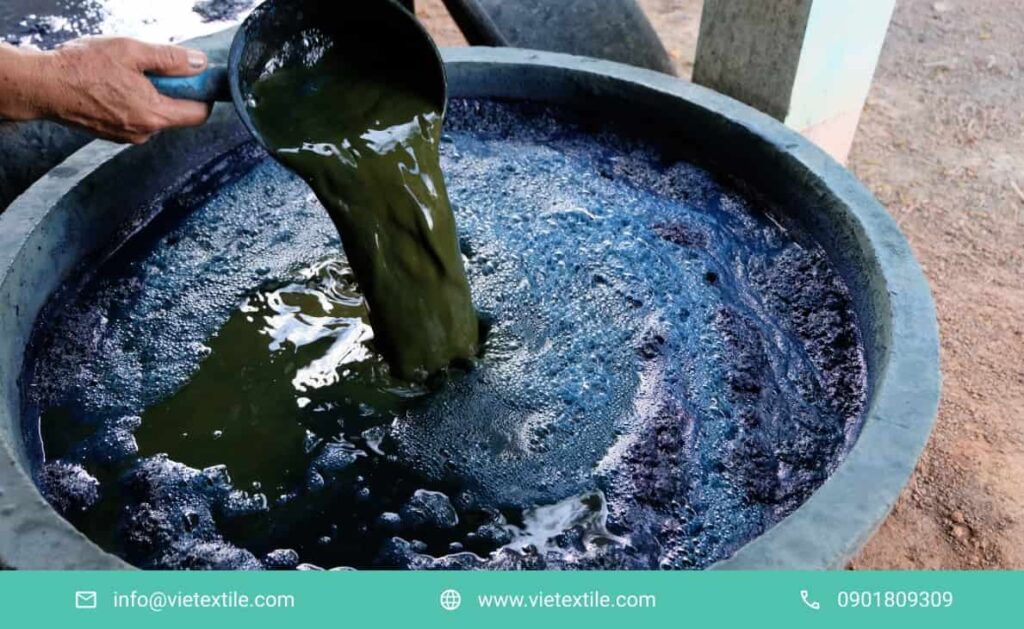
Disperse Dyes for Polyester
Advanced Applications of Disperse Dyes for Polyester in Sportswear, Swimwear, Backpacks, and Furnishings 5

1. Chemical Mechanism of Disperse Dyes for Polyester for Polyester

Understanding the dyeing mechanism is essential for controlling color quality on Polyester fabric.

1.1. Composition and Properties of Disperse Dyes for Polyester

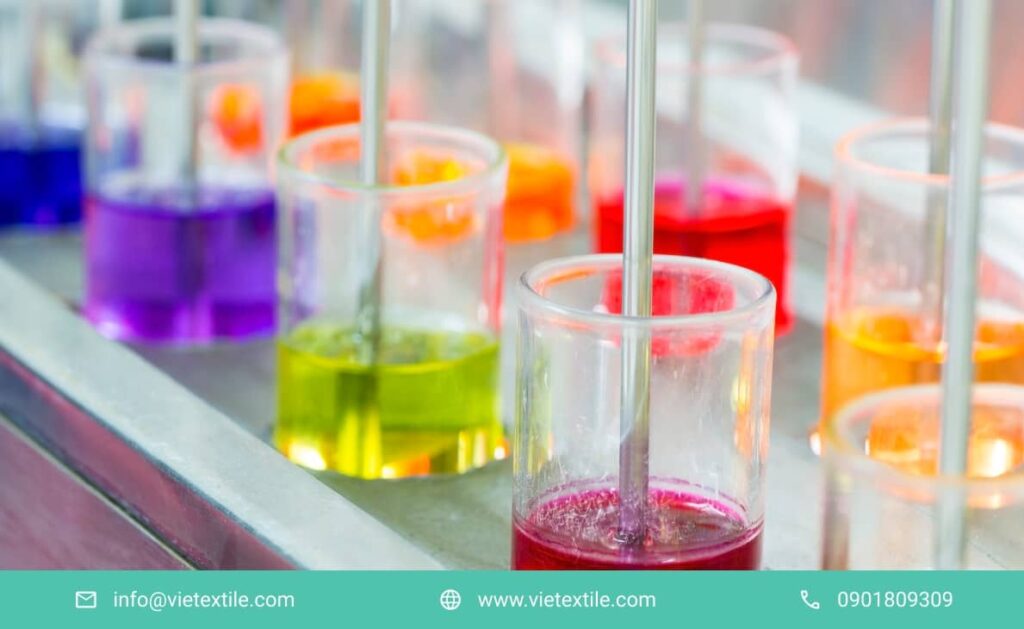
Disperse Dyes for Polyester are highly hydrophobic compounds, typically derivatives of Azo, Anthraquinone, or Quinoline. Being insoluble in water, they are milled into super-fine particles (size around 0.1-1  micron) and uniformly dispersed in water using a Dispersing Agent to form a stable suspension.

1.2. High Temperature, High Pressure (HTHP) Dyeing

Polyester is a highly crystalline polymer with a Glass Transition Temperature (Tg) of approximately 80-85C. At normal temperatures, the fiber structure is too tight, preventing Disperse Dyes for Polyester from penetrating.

  • Normal Temperature (<100C): The dyeing rate is very slow, suitable only for very pale shades.
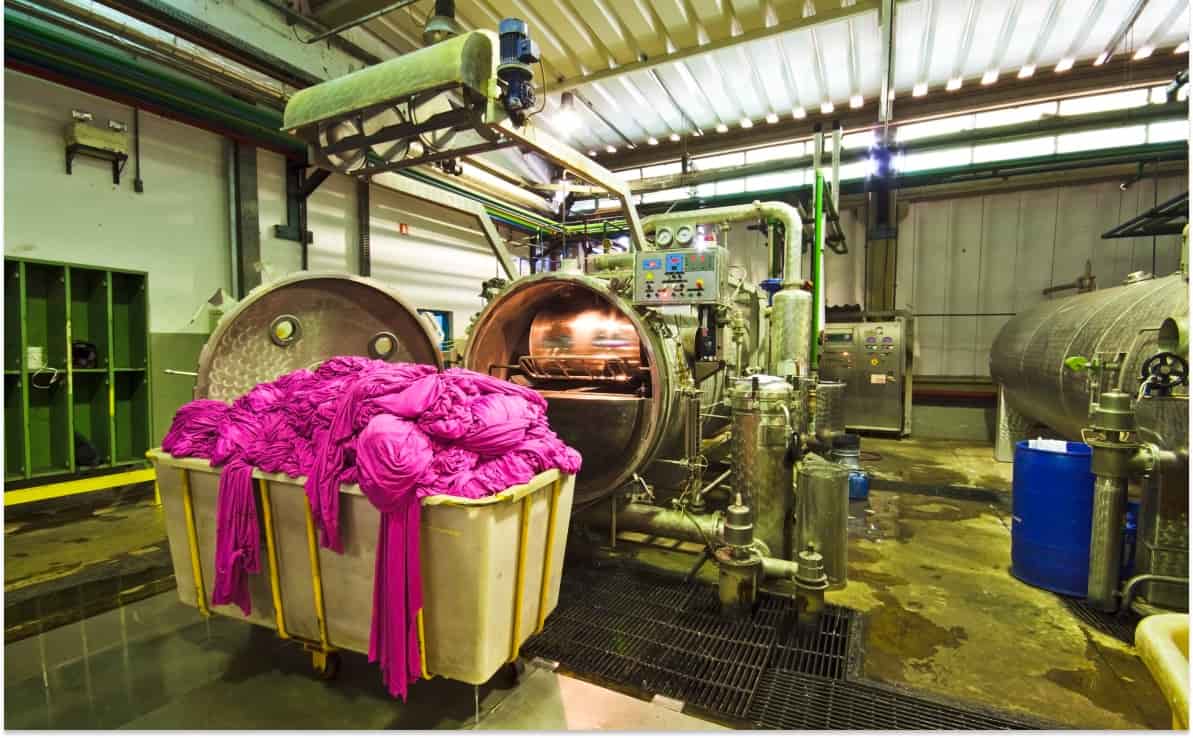
  • High Temperature (120-135C): High Temperature, High Pressure (HTHP) dyeing is the standard process. At this temperature, the Polyester polymer chains begin to vibrate, causing the fiber to “swell” and allowing the Disperse Dye molecules to dissolve and diffuse deep inside.
  • Diffusion Mechanism: The dye leaves the suspension medium (water), enters the Vapour Phase, and then dissolves and fixes into the solid phase (Polyester fiber).

1.3. Role of Dispersing Agents

Dispersing Agents (typically derivatives of Lignosulfonate or Naphthalene Sulfonate Formaldehyde Condensate) have two main roles:

  • Suspension Maintenance: Keeping the Disperse Dye particles suspended, preventing Aggregation or Settling throughout the dyeing process.
  • Thermal Stability: Minimizing dye clumping at high temperatures (130C), which is the primary cause of Spotting defects and reduced Rubbing Fastness.

2. Classification of Disperse Dyes for Polyester by Thermal Properties (Energy)

The choice of Disperse Dye depends on the fabric’s final heat treatment temperature and the required sublimation fastness. Disperse Dyes for Polyester are classified into three groups based on energy (or molecular mass):

Energy GroupC.I. ClassificationKey CharacteristicsSuitable Applications
Low EnergyType ASmall molecule, sublimates easily below 170C.Pale shades, Acetate fibers, basic transfer printing.
Medium EnergyType BMedium molecule, sublimates at 180-210C.Medium shades, Knitwear, Sportswear.
High EnergyType C/DLarge molecule, sublimates at 210-230C.Deep/Black shades, Furnishings, Outdoor applications, high fastness requirements.

2.1. Sublimation Fastness – The Deciding Factor

Sublimation Fastness is the ability of the Disperse Dye to remain fixed within the fiber without vaporizing or migrating to the surface when exposed to high temperatures (e.g., Heat Setting or ironing).

  • Importance: High Energy Dyes (Type C/D) have the best Sublimation Fastness; therefore, they are prioritized for products requiring heat setting at 200C without staining the lining fabric or changing color.

3. Advanced Applications: Specific Technical Requirements

Each application of Polyester fabric demands a unique set of color fastness standards, directly influencing the appropriate Disperse Dye selection.

3.1. Applications in Sportswear (Activewear)

Sportswear often uses Polyester or Polyester/Elastane (Spandex) blends, requiring high color fastness to withstand sweat, frequent washing, and rubbing.

  • Fastness Requirements:
    • Washing Fastness: Requires Grade 4.0 or higher, especially when washed at 60C.
    • Perspiration Fastness: Requires Grade 4.0 or higher. Acidic or alkaline pH from sweat can cause dye molecules to migrate.
    • Rubbing Fastness: Requires Grade 4.0 (Dry) and Grade 3.5 (Wet) to prevent color rub-off onto skin or other fabrics.
  • Dye Selection: Prioritize Medium Energy (Type B) or High Energy (Type C) Disperse Dyes for Polyester. Emphasis must be placed on using high-performance Dispersing Agents and Anti-Redeposition Agents to prevent unfixed dye from re-adhering to Elastane or Polyester fibers.

3.2. Applications in Swimwear

Swimwear faces extremely harsh chemical agents: Chlorine and saltwater. This is one of the most demanding applications for Disperse Dyes for Polyester.

  • Highest Fastness Requirements:
    • Chlorine Fastness: This is vital. The dye must withstand chlorine solution (often 50-100  ppm Active Chlorine, AATCC 162). Many Disperse Dyes for Polyester are destroyed by chlorine, leading to fading or color shifts (e.g., turning red/green tones).
    • Sea Water Fastness: Resistance to the corrosive effects of salt (NaCl) and minerals.
    • Light Fastness: Requires Grade 5.0 or higher, due to direct and continuous exposure to high-intensity UV rays.
  • Dye Selection: Mandatory use of Metal-Free Disperse Dyes for Polyester, specifically designed to resist chlorine attack. Only a few specialized Anthraquinone and Azo Dyes meet this standard.

3.3. Applications in Backpacks and Outdoor Gear

Outdoor products like backpacks, bags, tents, and awnings require the highest color fastness to endure harsh weather conditions.

  • Absolute Fastness Requirements:
    • Light Fastness: Requires the highest grade (Grade 7-8 on the Blue Wool Scale). The fabric must withstand hundreds of hours of intense sunlight without significant fading.
    • Weather Fastness: The ability to resist the combined effects of light, acid rain, and high/low temperatures.
  • Dye Selection: Mandatory use of High Energy Disperse Dyes for Polyester (Type C/D) to ensure the large dye molecules are difficult to diffuse out of the fiber and are stable against UV radiation.

3.4. Applications in Furnishings (Upholstery and Drapery)

Furnishing fabrics (curtains, sofa covers) are not washed frequently but are heavily impacted by sunlight through windows and rubbing during use.

  • Fastness Requirements:
    • Light Fastness: Grade 6.0 or higher is the minimum standard.
    • Dry Rubbing Fastness: Requires Grade 4.0 or higher.
  • Dye Selection: Similar to outdoor applications, prioritize High Energy Disperse Dyes for Polyester (Type C/D) to ensure long color lifespan.

4. Advanced Dyeing Technologies for Disperse Dyes for Polyester
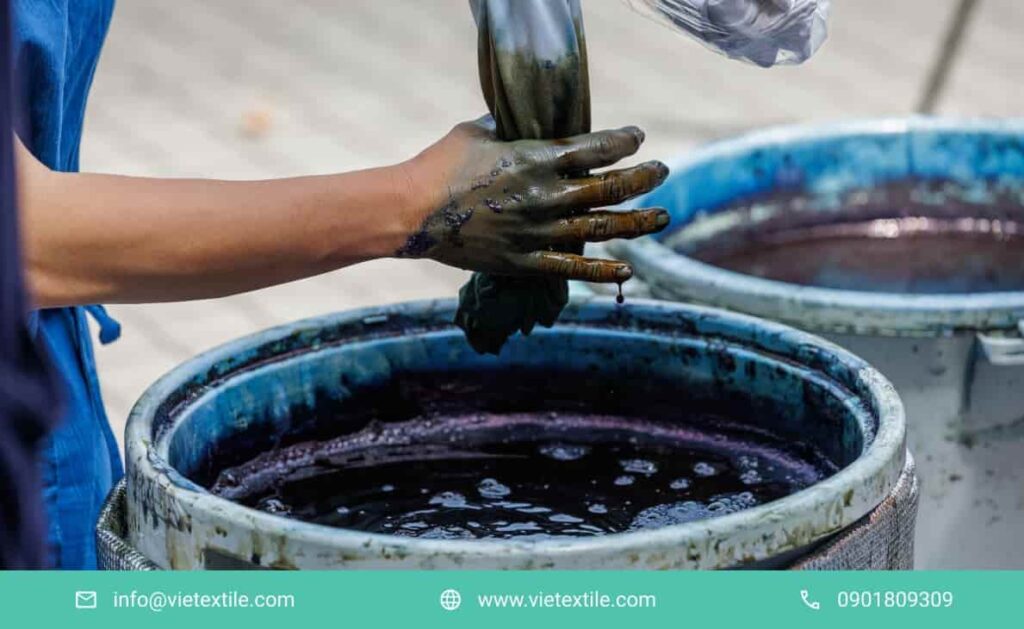
Sản phẩm thuốc nhuộm vải polyester
Advanced Applications of Disperse Dyes for Polyester in Sportswear, Swimwear, Backpacks, and Furnishings 6

To meet the high color fastness standards for the above applications, advanced dyeing technologies must be employed.

4.1. HTHP Batch Dyeing (High Temperature, High Pressure)

This is the standard method for knit fabrics and small quantities.

  • Procedure: Yarn or fabric is dyed in a closed machine (Jet Dyeing Machine) at 130C and 2-3  bar pressure.
  • Control: Strict control is needed over the Ramping Rate and the use of Carrier Agents (if any) to ensure uniform Disperse Dye diffusion into the fiber, avoiding splotching defects.

4.2. Thermosol Continuous Dyeing

This process is suitable for large-volume production of woven fabrics, especially for furnishing and outdoor applications.

  • Padding: The fabric is padded with a solution of Disperse Dye and a Thickener at room temperature.
  • Drying: The fabric is dried to remove water.
  • Thermosol: The fabric is treated in a dry heat chamber at a very high temperature (190-220C) for 30-90  seconds. This heat causes the Disperse Dye to sublimate (transition directly from solid to gas) and fix into the Polyester fiber.
  • Washing Off: Washing to remove unfixed dye and the thickener.

4.3. Sublimation Printing (Transfer Printing)

Sublimation printing is a digital process using low/medium energy Disperse Dyes for Polyester (Type A/B).

  • Mechanism: The dye is printed onto transfer paper, then transferred to the Polyester fabric using heat and pressure (180-200C). Under heat, the dye sublimates (changes directly from solid to gas) and diffuses into the fiber.
  • Applications: Suitable for small quantities, printing complex patterns on sportswear and promotional products.

5. Technical Challenges When Using Disperse Dyes for Polyester

The Polyester dyeing process has several technical hurdles that must be overcome.

5.1. Oligomer Problem

Polyester is a polymer, and during synthesis and high-temperature dyeing, shorter polymer molecules (Oligomers) can migrate out of the fiber, forming a white or grayish chalky layer on the fabric surface and adhering to the dyeing machine walls.

  • Troubleshooting: Use Oligomer Scavengers and regularly clean the dyeing machine.

5.2. Sublimation Failure

If Low Energy Disperse Dyes for Polyester are used for fabrics requiring a high heat setting temperature (200C), the dye will sublimate and stain other layers of fabric during stacking (Migration).

  • Troubleshooting: Must correctly match the dye’s energy group with the product’s maximum heat treatment temperature.

5.3. Dyeing Blended Fabrics (Polyester Blends)

When dyeing blended fabrics (e.g., Polyester/Cotton), Disperse Dyes for Polyester only color the Polyester portion, leaving the Cotton white.

  • Complex Procedure: Requires a two-step process (Two-Bath/One-Bath Two-Stage):
    1. Dye the Polyester with Disperse Dyes for Polyester (HTHP, 130C).
    2. Dye the Cotton with Reactive Dyes under different conditions.
  • Common Defect: Staining – unfixed Disperse Dye can adhere to the Cotton surface. High-performance Dispersing Agents are needed to prevent this.

6. Sustainability and Disperse Dyes for Polyester

Although the HTHP process is energy-intensive, Disperse Dye innovations are moving toward sustainability.

6.1. Eco-Friendly Disperse Dyes for Polyester

The market is shifting towards using Metal-Free Disperse Dyes for Polyester and complying with stringent standards like OEKO-TEX Standard 100 and Bluesign. This eliminates toxic Aromatic Amines (Azo Dyes containing restricted amines).

6.2. Water and Chemical Reduction

  • Supercritical CO2 Process (ScCO2): Dyeing technology using supercritical CO2. CO2 in a supercritical state acts as a solvent, dissolving the Disperse Dye and carrying it into the fiber without requiring water or dispersing agents. This is a Zero-Water Dyeing technology.
  • Low-Water Ratio Dyeing: Using dyeing machines with a very low liquor-to-goods ratio (L/R) (e.g., 1:3 or 1:4) to reduce the amount of water and the energy needed for heating.

7. Quality Control (QC) and Testing Standards
thuoc nhuom vai polyester H3
Advanced Applications of Disperse Dyes for Polyester in Sportswear, Swimwear, Backpacks, and Furnishings 7

To ensure quality, high-application Polyester products must be tested according to international standards.

7.1. Color Fastness Testing

ApplicationKey Fastness Test StandardTesting Method (AATCC/ISO)Target Fastness Grade
SwimwearChlorine FastnessAATCC 162 (Resistance to Chlorine)Grade 4.0 or higher
Backpacks/OutdoorLight FastnessISO 105 B02 (Xenon Arc Lamp)Grade 7.0 or 8.0
SportswearPerspiration FastnessISO 105 E04 (Artificial Perspiration)Grade 4.0 or higher
FurnishingsRubbing FastnessISO 105 X12 (Rubbing Fastness)Grade 4.0 (Dry)

7.2. Surface Inspection

  • Spotting Test: Checking for color spots (due to dye aggregation) by observing under daylight and simulated light (D65/TL84).
  • Rubbing Test (Wet/Dry): Testing wet and dry rubbing to ensure the Disperse Dye is fully fixed and does not migrate to the surface.

8. Frequently Asked Questions (FAQ) About Disperse Dyes for Polyester

1. Question: Are Disperse Dyes for Polyester the same as polyester dyes? Answer: Yes, chemically, Disperse Dyes for Polyester are the polyester dyes. They are non-ionic, water-insoluble compounds dispersed into super-fine particles in an aqueous medium to dye synthetic fibers like Polyester, Acetate, and Polyamide (Nylon).

2. Question: Why must Polyester be dyed at high temperatures (130C)? Answer: Polyester has a tight polymer structure. The temperature of 130C (under pressure) is necessary to exceed the fiber’s Glass Transition Temperature (Tg). This temporarily causes the fiber structure to “open up,” allowing the Disperse Dye molecules to diffuse deep inside the fiber for permanent color fixation.

3. Question: What is Sublimation Fastness and why is it important for Disperse Dyes for Polyester? Answer: Sublimation Fastness is the Disperse Dye’s ability to remain fixed within the fiber without vaporizing (sublimating) or migrating out when exposed to high temperatures (like during ironing or heat setting at 200C). It is important because sublimation can cause color fading, staining of other materials, or contamination of machinery.

4. Question: How to choose the right Disperse Dye for swimwear? Answer: You must select High Energy Disperse Dyes for Polyester (Type C/D) with strong resistance to oxidizing agents. Strict testing against the Chlorine Fastness standard (AATCC 162) is mandatory, as this is the most stringent technical requirement for swimwear.

5. Question: How does Thermosol continuous dyeing differ from HTHP batch dyeing? Answer:

  • HTHP Batch: Dyes the entire batch of fabric in a closed machine (Jet) at 130C for a long duration (30-60 minutes). Suitable for knit fabrics and smaller quantities.
  • Thermosol Continuous: Fabric is padded with dye, then the color is fixed using very high dry heat (190-220C) for an extremely short time (30-90 seconds). Suitable for woven fabrics and mass production.

6. Question: What are Oligomers and how do they affect Disperse Dyes for Polyester? Answer: Oligomers are shorter polymer molecules released from the fiber during high-temperature dyeing. They can adhere to the dyeing machine walls, recrystallize on the fabric surface, causing splotching, white/gray spots, or reducing rubbing fastness.

7. Question: Can Polyester fabric be dyed at normal temperature (Atmospheric)? Answer: Theoretically, yes, but only Low Energy Disperse Dyes for Polyester (Type A) can be used, and only Pastel Shades can be achieved. To achieve medium or deep shades, high temperature (130C) or a Carrier Agent is mandatory.

8. Question: How does a Carrier Agent work in the Disperse Dyeing process? Answer: Carrier Agents (usually organic compounds) are used to lower the Glass Transition Temperature (Tg) of Polyester. This helps the fiber “open up” at a lower temperature (100C), allowing dyeing under atmospheric pressure. However, they are less commonly used today due to toxicity and environmental concerns.

9. Question: Can Disperse Dyes for Polyester color Cotton fabric? Answer: Disperse Dyes for Polyester cannot color Cotton. They are hydrophobic and do not form chemical or ionic bonds with Cotton (a Cellulose fiber). When dyeing Polyester/Cotton blends, Disperse Dyes for Polyester only color the Polyester portion; Reactive Dyes must be used to dye the Cotton portion.

10. Question: What is the most important factor to prevent splotching defects when dyeing Disperse Dyes for Polyester? Answer: Controlling the Ramping Rate (temperature increase rate) between 80-130C is the most crucial factor. Increasing the temperature too quickly will cause the dye to Strike quickly and unevenly, leading to splotching. Simultaneously, the Dispersing Agent must stabilize the suspension throughout the dyeing process.

9. CONCLUSION AND DEVELOPMENT OUTLOOK

Disperse Dyes for Polyester are the irreplaceable foundation for the synthetic fiber industry, opening the door to products requiring absolute color fastness under all usage conditions, from sportswear, swimwear, to furnishings.

The selection of the Disperse Dye type must be based on a thorough analysis of the final color fastness requirements:

  • Swimwear: Prioritize Chlorine and Light Fastness.
  • Outdoor/Furnishings: Prioritize Light and Sublimation Fastness (High Energy Dyes).
  • Sportswear: Prioritize Perspiration and Washing Fastness.

The current development in Polyester dyeing technology is moving toward energy-optimized processes (Low L/R, Thermosol) and environmentally friendly Disperse Dyes for Polyester, particularly the Supercritical CO2 Dyeing Technology, which promises a future of water-free and dispersant-free Polyester dyeing.

VieTextile offers HTHP dyeing machine solutions, automatic chemical dosing systems, and in-depth technical consulting on high-quality Disperse Dyes for Polyester, helping factories achieve the most demanding color fastness standards.

Contact Information:

Hotline: 0901 809 309

Email: info@vietextile.com

Website: https://vietextile.com
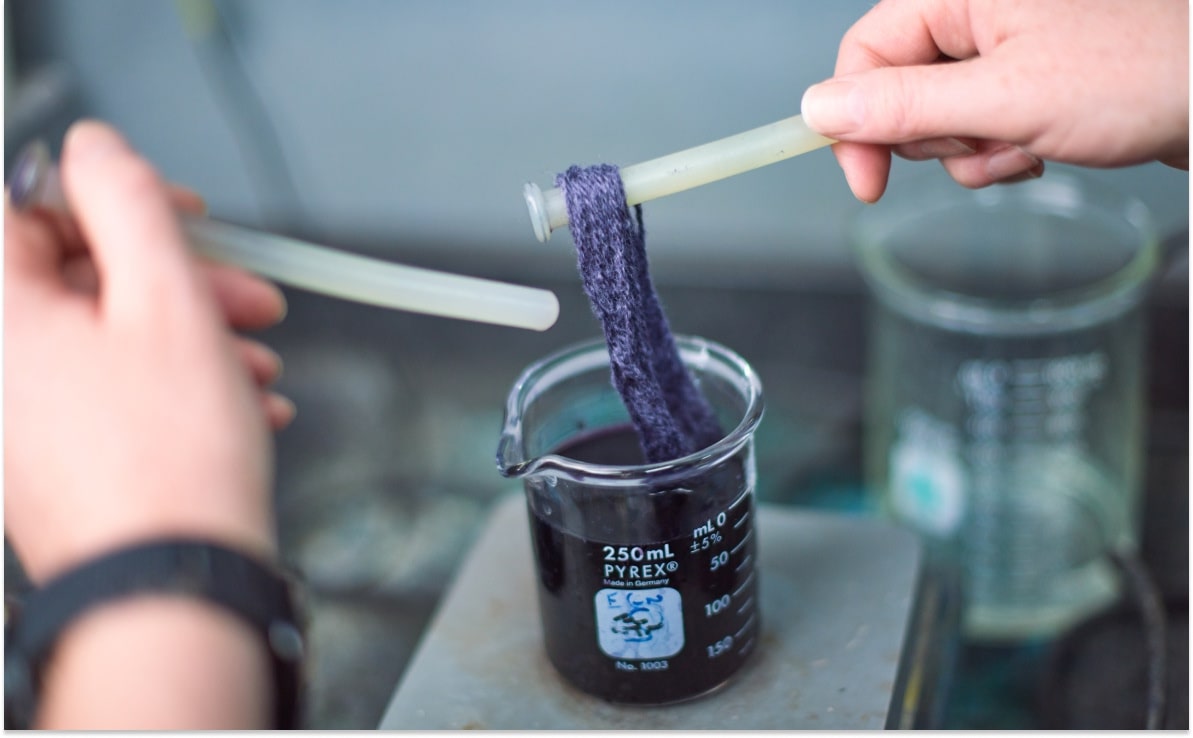
How to Prepare and Use Acid Dyes to Prevent Leveling and Spotting Defects: An In-Depth Technical Guide

Acid Dyes are a group of water-soluble anionic dyes widely used for dyeing fibers that contain positively charged Amine groups (NH3+) in an acidic environment. The main fibers include Wool, Silk, and Nylon (Polyamide). Thanks to their ability to produce bright, brilliant shades and good light fastness, Acid Dyes are a premier choice for high-end garments.

However, the characteristic chemical nature of Acid Dyes makes them extremely sensitive to fluctuations in the dyeing environment, particularly pH, temperature, and auxiliary chemicals. Uneven Dyeing, also known as Splotching or Poor Leveling, is the biggest challenge faced by dyeing engineers.

This article provides an in-depth, detailed guide—from chemical mechanism to preparation techniques and process control—to help you use Acid Dyes most effectively, ensuring uniform color and achieving high reproducibility.

Acid Dyes
How to Prepare and Use Acid Dyes to Prevent Leveling and Spotting Defects: An In-Depth Technical Guide 12

1. Basic Mechanism of Acid Dyes

To control the dyeing process, one must first understand the mechanism of interaction between the dye and the fiber.

1.1. Acid Dye Composition

Acid Dye molecules contain negatively charged (anionic) groups, most commonly the Sulfonate group (SO3-).

1.2. Ionic Bonding Mechanism

  • Fiber Activation: In an acidic environment (low pH), the Amine groups (NH2) on Protein fibers (Wool, Silk) or Polyamide (Nylon) are protonated, converting them into positively charged groups (NH3+).
  • Bonding: The Sulfonate group (SO3-) of the Acid Dye forms an electrostatic bond (ionic bond) with the positively charged Amine group on the fiber.
  • Dye Absorption: In addition to ionic bonds, weaker forces like Hydrogen bonds and Van der Waals forces also participate, which are particularly important for larger Acid Dye molecules.

1.3. Acid Dye Classification

Acid Dyes are divided into three main groups based on molecular size and pH conditions:

GroupMolecular Size/Binding ForcepH RequirementKey Acid UsedLeveling/Fastness
Leveling Acid DyesSmall molecule, weak affinityVery low (pH 2-3)Sulfuric Acid (H2SO4)High Leveling, Lower Fastness
Milling Acid DyesMedium/Large molecule, medium affinityMedium (pH 4-6)Acetic Acid (CH3COOH)Medium Leveling/Fastness
Metal-Complex Dyes (1:2)Very large molecule, strong affinityNear neutral (pH 6-7)Acetic Acid (CH3COOH)Highest Fastness

2. Industrial Standard Preparation Technique for Acid Dyes

The dye solution preparation is the first and most critical step to prevent spotting and leveling defects.

2.1. Water Requirements

  • Softness: The water must be Soft Water with very low hardness. Divalent metal ions (Ca}{2+, Mg}{2+) can react with the Sulfonate groups of the Acid Dye, forming insoluble Precipitation which causes Specks or visible patches on the fiber.
  • Sequestering Agent: It is mandatory to add an ion-sequestering agent (EDTA or similar polymers) to the preparation water to chelate and neutralize any remaining metal ions.

2.2. Step-by-Step Preparation Procedure

  1. Accurate Weighing: Weigh the powder Acid Dye with high precision (usually a 4-decimal electronic scale).
  2. Preliminary Dissolution: Add the Acid Dye to a small amount of warm water (40-50C). Do not use boiling water as it can damage or alter the dispersion properties of the dye.
  3. Thorough Stirring: Stir gently until the Acid Dye is completely dissolved. For Acid Dyes with low solubility, a small amount of a special Wetting Agent or Dispersing Agent may be needed for assistance.
  4. Solution Filtering (Mandatory): The prepared dye solution must be filtered through a fine mesh (usually knitted fabric) before adding it to the dye bath. This removes undissolved particles, Agglomerates, or contaminants, which are the direct cause of Spotting defects on the fiber.
  5. Stock Solution: Prepare a stock solution at a specific concentration (usually 10 g/L or 1\%). Store this stock solution at room temperature, away from direct sunlight.

3. Controlling Process Variables to Prevent Leveling Defects

Thuốc nhuộm acid công nghiệp
How to Prepare and Use Acid Dyes to Prevent Leveling and Spotting Defects: An In-Depth Technical Guide 13

Uneven dyeing (splotching) and poor leveling occur when the Rate of Dyeing is too fast or uncontrolled. The objective is to slow down and regulate the dyeing kinetics.

3.1. pH Control (The Decisive Factor)

pH is the factor that governs the attractive force between the Acid Dye and the fiber.

  • Impact: The lower the pH (more acidic), the higher the concentration of NH3+, the stronger the ionic attraction, the faster the dyeing rate, and the greater the risk of leveling defects.
  • Control Strategy:
    • High Starting pH: Start the dyeing process at a higher pH (near neutral, pH 6-7) to allow the Acid Dye to absorb slowly and uniformly (Leveling).
    • Gradual pH Drop: After the Acid Dye has uniformly penetrated the fiber, slowly lower the pH using Acetic Acid (CH3COOH) or Sulfuric Acid (H2SO4). This slow pH reduction is the key to gradual dye fixation.
    • Buffer: Use Sodium Acetate (CH3COONa) along with Acetic Acid to create a buffer solution, helping to maintain stable pH throughout the process.

3.2. Temperature Control (Diffusion Kinetics)

Temperature affects the kinetic energy of the Acid Dye and the swelling of the fiber.

  • Impact: Dyeing starts at a low temperature (40-50C). As the temperature increases, the dyeing rate increases sharply.
  • Control Strategy:
    • Ramping Rate: After adding the Acid Dye and running preliminarily, the temperature Ramping Rate must be extremely slow. For Leveling Acid Dyes, the rate should only be 1-1.5C per minute in the critical dyeing temperature range (80-100C).
    • Maximum Absorption Temperature: Maintain the maximum dyeing temperature (usually 98-100C) for a sufficient period (45-60 minutes) to allow the Acid Dye time to diffuse and distribute evenly (Leveling Time).

3.3. The Role of Leveling Agents

Leveling Agents are the “savior” against splotching.

  • Mechanism: Leveling agents act as a Retardant or a competing absorption agent.
    • Anionic Retardants: Compete with the Acid Dye at the positive bonding sites (NH3+), reducing the number of available bonding sites.
    • Cationic Retardants: Form a complex with the Acid Dye in the solution, reducing the concentration of free dye.
  • Application: Add the Leveling Agent to the dye bath at the beginning, before adding the Acid Dye, to ensure the dyeing process proceeds slowly and uniformly.

4. Dyeing Techniques for Wool, Silk, and Nylon

Each fiber type has a different structure, requiring corresponding adjustments to the Acid Dyeing process.

4.1. Wool

Wool is a protein fiber with a complex structure, easily damaged by extreme temperature and pH.

  • Challenge: Wool is susceptible to Yellowing when dyed at overly low pH or high temperature (>100C).
  • Dye Choice: Typically uses Milling Acid Dyes or Metal-Complex (1:2) at pH 4.5-6.5 (using Acetic Acid).
  • Technique: The dyeing process must start very cold (30C), and the temperature must be increased extremely slowly so that the Wool does not suffer thermal shock and the color penetrates evenly.

4.2. Nylon (Polyamide)

Nylon is a synthetic fiber with higher crystallinity than Wool, making it harder to penetrate the color.

  • Challenge: Nylon has a high dye affinity for Acid Dyes, leading to a very fast initial dyeing rate (Rapid Strike) causing severe splotching if not controlled.
  • Dye Choice: Often uses Leveling Acid Dyes (low pH) to achieve good wet fastness.
  • Technique: Mandatory use of Cationic Retardants (Blocking Agents) to partially neutralize the dyeing sites on the Nylon fiber, reducing dye affinity and extending the diffusion time, ensuring uniform Acid Dyeing.

4.3. Silk

Silk is the most delicate protein fiber, easily losing Luster and softness if dyed under harsh conditions.

  • Challenge: Preserving softness and luster.
  • Dye Choice: Prioritize Acid Dyes with neutral pH (Milling Acid Dyes) to avoid damaging the Silk structure.
  • Technique: Dye at temperatures below 90C (Atmospheric) and use Acetic Acid to maintain the pH at 4.5-5.5.

5. Common Technical Defects and Troubleshooting

Unevenness when dyeing Acid Dyes often stems from the excessively fast interaction between the dye and the fiber.

5.1. Splotching due to “Rapid Strike”

  • Cause: The initial Acid Dye absorption rate is too fast, causing the Acid Dye to “cling” to the most easily dyeable areas of the fiber, resulting in clear dark/light patches. Usually due to insufficient leveling agent or overly low starting pH.
  • Troubleshooting: Reduce the starting temperature (40C), increase the amount of leveling agent, and start at a higher pH.

5.2. Staining Defect (Color Bleeding)

  • Cause: Occurs when dyeing blended fabrics (e.g., Nylon/Spandex) or when post-dyeing washing is insufficient. Unfixed Acid Dye sticks to other parts of the fabric.
  • Troubleshooting: Use Acid Dyes with high wash fastness (Metal-Complex), and most importantly, perform a final washing off procedure with special cleaning agents to remove 100\% of the unfixed Acid Dye.

5.3. “Barre” Defect (Horizontal Streaks) on Nylon

  • Cause: Due to differences in Acid Dye absorption along the length of the Nylon fiber, often related to the initial spinning process.
  • Troubleshooting: Requires the use of dyes with good coverage for fiber defects (Barre Coverage Dyes) combined with specialized leveling agents.

6. In-Depth Analysis of Auxiliary Chemicals in the Acid Dyeing Process

Auxiliaries play a crucial role in regulating the dyeing process.

6.1. Softening Agents

Used for Wool and Silk after dyeing to restore softness lost due to the acidic environment and high temperature. Typically cationic or non-ionic softeners.

6.2. Fiber Protective Agents (Anti-Yellowing/Protective Agents)

Especially important when dyeing Wool. Fiber protective agents (often protein derivatives) protect the disulfide bonds of Wool from damage by heat and acid, preventing the fiber from yellowing or becoming brittle.

6.3. Special Washing Off Agents

After Acid Dyeing is complete, washing off agents are required. They form complexes with the unfixed Acid Dye particles, helping them separate from the fiber and be rinsed away, improving Rubbing Fastness and preventing color bleeding.

7. Technical Factors of Dyeing Equipment

Sản phẩm thuốc nhuộm acid
How to Prepare and Use Acid Dyes to Prevent Leveling and Spotting Defects: An In-Depth Technical Guide 14

The Dyeing Machine also affects the uniformity of Acid Dyes.

7.1. Optimizing Liquor Ratio (L/R)

  • L/R Ratio: The ratio between the mass of the dye liquor (L) and the mass of the substrate (R).
  • Impact: A low L/R ratio (e.g., 1:5) saves energy, but liquor circulation becomes more difficult, easily causing leveling defects if a strong circulation pump is not used.

7.2. Circulation Speed

  • Role: In yarn dyeing or jet dyeing machines, the pump circulation speed must be optimally controlled. Fast circulation helps the Acid Dye distribute evenly quickly, but too fast can damage the fiber (especially Wool).

7.3. Automatic Acid Dosing System (pH Dosing System)

To implement the Gradual pH Drop strategy, modern dyeing machines require an automatic acid pumping system controlled by a PLC, ensuring acid is added to the dye liquor at a predefined rate, rather than manually adding it all at once.

8. Frequently Asked Questions (FAQ) About Acid Dyes

1. Question: Why is an acidic environment necessary for Acid Dyes? Answer: The acidic environment (low pH) helps the Amine groups (NH2) on Protein fibers (Wool, Silk) and Polyamide (Nylon) to be protonated, forming positively charged groups (NH3+). This positive charge is essential for creating the electrostatic bond (ionic) with the negatively charged Sulfonate group of the Acid Dye.

2. Question: How to differentiate between Staining and Unevenness when using Acid Dyes? Answer:

  • Unevenness: Uneven color on the same type of fiber (e.g., one dark area, one light area on the same Nylon fabric). Usually due to the dyeing rate being too fast.
  • Staining: Unwanted color transfer onto a different fiber type in a blended fabric (e.g., Acid Dye intended for Nylon adhering to undyed Cotton fibers).

3. Question: Why is it necessary to use a Leveling Agent when dyeing Acid Dyes? Answer: The Leveling Agent helps slow down the initial dyeing rate (Retardation), preventing the “Rapid Strike” phenomenon (too fast absorption). This allows the Acid Dye sufficient time to diffuse and distribute uniformly across the entire fiber before chemical fixation, eliminating the risk of splotching.

4. Question: How do Metal-Complex Acid Dyes differ from Leveling Acid Dyes? Answer:

  • Metal-Complex: Large molecule, contains metal ions (Cr/Co), forms a strong bond, dyes at near-neutral pH (pH 6-7), providing the highest fastness (especially light fastness).
  • Leveling: Small molecule, weak affinity, dyes at very low pH (pH 2-3), easiest to dye uniformly, but lower fastness.

5. Question: Which acids are typically used to adjust the pH for Acid Dyes? Answer:

  • Acetic Acid (CH3COOH): Weak acid, used for Milling Acid Dyes or Metal-Complex dyes (pH 4-6.5). Easy to control, less damaging to the fiber.
  • Sulfuric Acid (H2SO4): Strong acid, used for Leveling Acid Dyes at pH 2-3. Provides the strong acidic environment required for fixation.

6. Question: What is the difference in the dyeing procedure between Wool and Nylon when using Acid Dyes? Answer:

  • Wool: Requires protection from extreme temperature and pH. Dyes at a maximum temperature of 98C and requires a slow temperature ramping rate to avoid damaging the protein structure.
  • Nylon: Requires specialized Cationic Retardants because Nylon has an excessively high dye affinity. Can be dyed at 100-105C (HTHP) if it is Microfiber.

7. Question: Why is filtering the Acid Dye solution necessary after preparation? Answer: Filtering helps remove undissolved Acid Dye particles or small precipitates caused by hard water. These particles are the main cause of Specks defects on the fiber after dyeing.

9. FINAL CONCLUSION AND TECHNICAL ADVICE

The preparation and use of Acid Dyes require strict and consistent control over three primary factors: pH, temperature, and leveling auxiliaries.

To ensure uniform color, free from spotting or unevenness, factories need to focus on the following strategies:

  • Dynamic pH Control: Start at a high pH (low affinity) and gradually lower the pH according to a predetermined schedule (Gradual pH Drop) using an automatic dosing system, instead of adding acid all at once.
  • Optimal Temperature Control: Maintain a slow Ramping Rate in the critical dyeing zone (80-100C) and ensure sufficient holding time for the Acid Dye to diffuse.
  • Specialized Auxiliary Usage: It is mandatory to use a Leveling Agent to prolong the dyeing time, especially when dyeing Acid Dyes with a fast absorption rate or when dyeing Nylon.
  • Water Quality: Strictly use soft water and a Sequestering Agent in every step of preparation and dyeing to prevent precipitation.

By adhering to these chemical and kinetic control principles, you can optimize your Acid Dyeing process, ensuring high-quality products, excellent fastness, and minimizing the rate of re-dyeing defects.

VieTextile provides technology solutions and spare parts for Wool, Silk, and Nylon dyeing machines, including precise acid and auxiliary chemical dosing systems, helping factories achieve the highest color reproducibility.

Contact Information:

Hotline: 0901 809 309

Email: info@vietextile.com

Website: https://vietextile.com
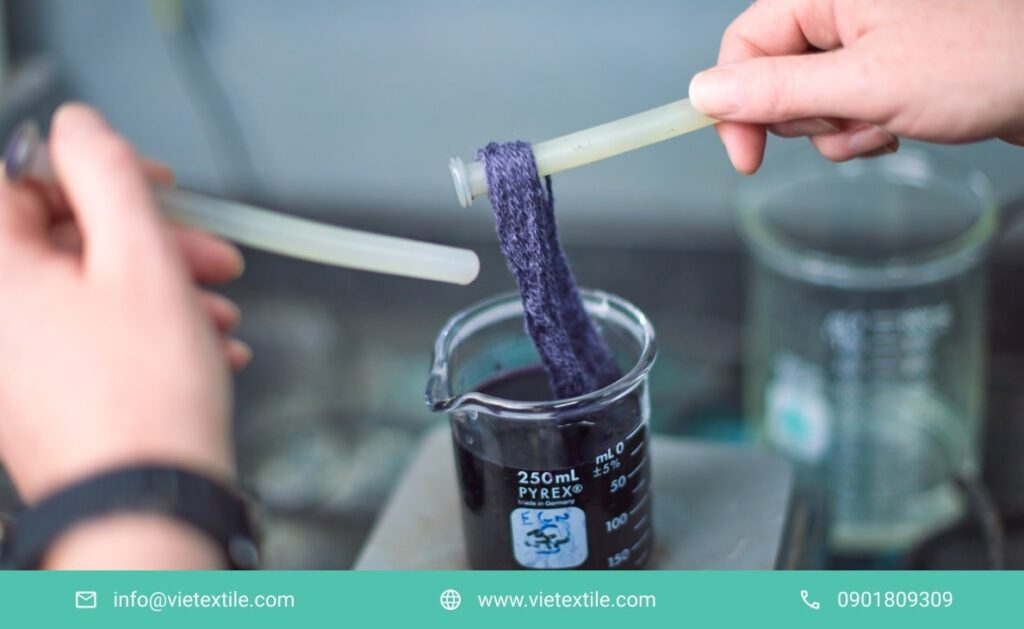
Comparison of Vat, Reactive, and Direct Dyes – A Strategic Decision for Quality and Production Cost

In the textile dyeing industry, especially concerning Cellulose fibers (such as Cotton, Linen, Viscose), the choice of dye group is a strategic decision that directly impacts the final product quality, production cost, and environmental footprint. The three most common dye groups are Vat Dyes, Reactive Dyes, and Direct Dyes.

Each group has a unique fixation mechanism, offering different advantages and disadvantages regarding color fastness, reproducibility, and process complexity. This VieTextile article will delve into the analysis of these three groups, with a special focus on Vat Dyes—the pinnacle of color fastness—along with in-depth analyses of technological processes and sustainability factors.

Vat Dyes
Comparison of Vat, Reactive, and Direct Dyes – A Strategic Decision for Quality and Production Cost 19

1. Operating Mechanism and Dye Identification

The color fixation mechanism is the most fundamental factor distinguishing these three types of dyes.

1.1. Vat Dyes – Reduction and Oxidation Mechanism

Identification: Vat Dyes are water-insoluble compounds, typically Anthraquinone or Indigoid derivatives. They must undergo a three-step chemical process for color fixation. Mechanism:

  • Reduction: The insoluble dye is treated with a strong reducing agent (usually Sodium Hydrosulfite – Na2S2O4) and an alkaline medium (NaOH) to convert it into the soluble Leucobase form, which can penetrate the fiber.
  • Absorption: This soluble Leucobase form diffuses into the Cellulose fiber.
  • Oxidation: After absorption, the fabric is treated with an oxidizing agent (air or chemical oxidizers like H2O2) to convert the Leucobase back into its original insoluble dye form, which is permanently trapped inside the polymer structure of the fiber. This soluble/insoluble state conversion is the key to the absolute fastness of Vat Dyes.

1.2. Reactive Dyes – Covalent Bond Mechanism

Identification: Reactive Dyes are water-soluble dyes containing a Reactive Group capable of forming a covalent bond with the Hydroxyl (-OH) group of the Cellulose fiber. Mechanism:

  • Absorption and Fixation: The Reactive Dye molecule diffuses into the fiber. In an alkaline medium (usually Sodium Carbonate – Na2CO3, or Soda Ash), the dye’s reactive group undergoes a covalent reaction with the fiber, forming an extremely durable chemical bond.
  • Hydrolysis: A portion of the reactive dye hydrolyzes (reacts with water instead of the fiber) and loses its ability to fix the color. This hydrolyzed dye must be thoroughly washed off to ensure adequate Washing Fastness.

1.3. Direct Dyes – Physical Binding Mechanism

Identification: Direct Dyes are water-soluble dyes, typically possessing a long, flat, and symmetrical structure. Mechanism:

  • Absorption: Direct Dye molecules are absorbed directly onto the surface of the Cellulose fiber in a boiling water bath (Atmospheric Dyeing).
  • Fixation: They are held in the fiber primarily by weak forces (Hydrogen bonds and Van der Waals forces). The long, flat structure maximizes the contact area, optimizing the binding forces.
  • Enhancement: Salt (NaCl or Na2SO4) is added to reduce the dye’s solubility in the solution, “pushing” it more strongly into the fiber.

2. Comparison of Color Fastness – The Decisive Quality Factor

Color fastness is the most crucial criterion, where these three dye groups exhibit clear differences.

Fastness CriterionVat DyesReactive DyesDirect Dyes
Washing FastnessExcellent (Grade 5/5)Very Good (Grade 4-5/5)Poor (Grade 2-3/5)
Rubbing FastnessVery Good (Grade 4-5/5)Good (Grade 3-4/5)Average (Grade 3/5)
Light FastnessSuperior (Grade 7-8/8)Good (Grade 4-6/8)Poor (Grade 3-4/8)
Binding MechanismPhysical trapping, chemical conversionCovalent bondWeak Van der Waals forces

2.1. The Class of Vat Dyes

Vat Dyes deliver the highest level of fastness (Superior Fastness) because the insoluble dye is “caged” inside the fiber structure (Pigment-like Fastness). Notably, they are the unique choice for products requiring:

  • Chlorine Fastness: They withstand strong oxidizing agents like Chlorine (used in medical or industrial laundering) that other types cannot.
  • High Light Fastness: Often reaching grades 7-8, essential for curtains, upholstery, or outdoor uniforms.

2.2. The Position of Reactive Dyes

Reactive Dyes offer a good balance between high color fastness and medium cost, thanks to the covalent bond. The biggest challenge is ensuring 100\% removal of the hydrolyzed dye, which, if not thoroughly washed, severely compromises washing fastness.

2.3. Limitations of Direct Dyes

The poor color fastness of Direct Dyes is the main limitation. Although it can be improved by post-dyeing fixing treatments (After-treatment), they cannot reach the fastness level of Reactive Dyes or Vat Dyes.

3. Comparison of Cost and Process Complexity

Cost and production efficiency are key economic factors in the selection.

Economic & Process CriterionVat DyesReactive DyesDirect Dyes
Dye Price (Active Ingredient)HighestMediumLowest
Auxiliary Chemical CostVery High (Reducing agent Na2S2O4, Alkali NaOH)High (Large amounts of Salt NaCl, Alkali Na2CO3)Low (Mainly Salt)
Process Time (Batch)Long (4 – 6 hours)Medium (2 – 4 hours)Short (2 – 3 hours)
Risk of Dyeing DefectsHigh (Insufficient reduction/oxidation)Medium (Incomplete washing off)Low (Percolation errors)

4. In-Depth Analysis of Vat Dyes Applications

Thuốc nhuộm hoàn nguyên chính hãng
Comparison of Vat, Reactive, and Direct Dyes – A Strategic Decision for Quality and Production Cost 20

Vat Dyes are the dye group with the highest technical requirements. Controlling chemical variables is the crucial factor.

4.1. Mandatory Applications (Military & Workwear)

Military uniforms and protective workwear demand absolutely stable colors. The fastness of Vat Dyes ensures that the color will not change under the impact of strong industrial chemicals or aggressive washing.

4.2. Deep Shades Dyeing Capability and Bronzing Challenge

Vat Dyes provide excellent coverage and color depth. However, when dyeing deep shades (Black, Navy), if excess dye is not washed off, it can crystallize on the fiber surface, causing a “Bronzing” phenomenon (the surface has a metallic or bronze sheen), which ruins the color texture. A compulsory acid rinse and soaping procedure after dyeing are required for correction.

4.3. Control of Redox Potential

In the Vat Dye bath, the Redox Potential (oxidation-reduction potential) must be strictly controlled.

  • Too Low: (Too much reducing agent) causes the color to be over-reduced, wasting chemicals and potentially damaging the fiber.
  • Too High: (Insufficient reducing agent) leads to incomplete reduction; the insoluble dye precipitates, resulting in uneven color defects and sludge.

4.4. Continuous Pad-Steam Technology for Vat Dyes

For mass production, Vat Dyes are used in the continuous Pad-Steam dyeing process.

  • Pad: The fabric is padded with the pre-reduced dye solution (Leucobase).
  • Steam: The fabric is steamed in a Steam Chamber at 102-105C for 30-60 seconds to ensure deep dye penetration and fixation.
  • Oxidation and Soaping: The fabric passes through oxidation baths, followed by soaping baths to remove excess dye and improve color fastness.

5. In-Depth Analysis of Reactive Dyes

Reactive Dyes are the most popular choice for Cotton today due to their good balance between fastness and cost.

5.1. Classification by Reactive Group

Reactive Dyes are classified by the structure of their Reactive Group:

  • Monochlorotriazine (MCT): Requires higher temperature and alkali (usually 80C).
  • Vinyl Sulfone (VS): Requires lower temperature (usually 60C).
  • Bifunctional (MCT/VS): Most commonly used because it operates over a wide temperature range, offering higher fixation efficiency and reducing hydrolysis.

5.2. The O-E (Exhaustion) and F-F (Fixation) Issue

The efficiency of Reactive Dyes is measured by two parameters:

  • O-E (Exhaustion): The percentage of dye absorbed into the fiber (exhausted from the solution) relative to the initial amount.
  • F-F (Fixation): The percentage of dye chemically fixed (covalent reaction) relative to the amount absorbed.

The goal is to optimize both O-E and F-F to minimize the amount of hydrolyzed (unfixed dye) that must be discharged, saving cost and protecting the environment.

5.3. Continuous Cold Pad-Batch (CPB) Dyeing Technology

This is the most common continuous dyeing process for Reactive Dyes.

  • Pad: The fabric is padded with the solution of Reactive Dye and alkali (NaOH or Na2CO3).
  • Batch: The fabric is rolled into a large batch and wrapped tightly with PE film.
  • Storage: The batch is stored at room temperature (25-35C) for 4-24 hours to allow the dye to react slowly and chemically fix. CPB significantly saves energy compared to high-temperature Batch Dyeing.

6. In-Depth Analysis of Direct Dyes

Direct Dyes are used when cost is the primary priority and low fastness requirements are acceptable.

6.1. Mechanism by Van der Waals Forces

The length and flatness of the Direct Dye molecule help them optimize Van der Waals bonding with the Cellulose fiber. However, the weak nature of this bond makes the color easily washable.

6.2. Salt and Temperature Requirements

  • Salt: Salt (NaCl) increases the ionic strength, pushing the Direct Dye from the solution onto the fiber.
  • Temperature: Dyeing at boiling temperature (95-100C) accelerates the dye’s penetration.

6.3. Post-Dyeing Fixing Treatment (After-Treatment)

To improve the washing fastness of Direct Dyes to an acceptable level for basic garments, post-dyeing treatment is mandatory.

  • Cationic Chemicals: Cationic Fixing Agents are used. These agents create a film or cross-links with the dye on the fiber surface, increasing the binding force between the dye and the fiber, reducing washout.

7. Comprehensive Assessment of Cost and Reproducibility

7.1. Total Cost of Ownership (TCO)

Although the raw material cost of Vat Dyes is the highest, its TCO can be acceptable when considering the Re-dyeing Cost.

  • Defect Repair Cost: Direct and Reactive Dyes, if errors occur, are expensive to fix (time, chemicals, energy). Vat Dyes, with their inherent fastness, have the lowest re-dyeing error rate.

7.2. Washing Off Optimization – A Technical Highlight

This is the most critical step for both Vat Dyes and Reactive Dyes.

  • Vat Dyes: Washing off must completely remove excess alkali (NaOH) and reducing agent (Na2S2O4) so the color is not altered later.
  • Reactive Dyes: Washing off must completely remove the hydrolyzed dye. Poor washing off is the leading cause of Staining (uneven patches) and poor Rubbing Fastness.

8. Environmental Impact and Sustainability Solutions

Environmental impact is an indispensable factor in the dye selection decision.

8.1. Vat Dyes: The Burden of Reducing Agents

The use of Sodium Hydrosulfite (Na2S2O4) generates a large amount of Sulfate and Sulfite in the wastewater, increasing COD.

  • Solution: Research into using Electrochemical Reduction systems or Organic Reducing Agents to replace Hydrosulfite.

8.2. Reactive Dyes: The Salt and Efficiency Problem

Large amounts of salt (NaCl) increase salinity (TDS), affecting freshwater ecosystems.

  • Sustainable Solution: Development and use of Low-Salt/Zero-Salt Reactive Dyes or Reactive Dyes with very high fixation efficiency (F-F) to reduce the amount of hydrolyzed dye and the necessary salt volume.

8.3. Direct Dyes: Color Washout

Due to weak bonds, Direct Dyes discharge dark color into the wastewater. Although their chemical structure is often less toxic than Reactive Dyes, the high color concentration causes visual pollution and obstructs light for microorganisms.

9. Quality Control (QC) and Testing Standards

Thuốc nhuộm hoàn nguyên công nghiệp
Comparison of Vat, Reactive, and Direct Dyes – A Strategic Decision for Quality and Production Cost 21

QC control is necessary to verify the dye choice.

9.1. Color Fastness Standards (ISO & AATCC)

CriterionCommon Testing MethodMinimum Requirement (High-End Product)Best Performing Dye Type
Washing FastnessISO 105 C06 or AATCC 61Grade 4.0 or higherVat Dyes, Reactive Dyes
Light FastnessISO 105 B02 or AATCC 16Grade 4.0 (Fashion), Grade 7.0 (Outdoor)Vat Dyes
Rubbing Fastness (Dry/Wet)ISO 105 X12 or AATCC 8Grade 4.0 (Dry), Grade 3.0 (Wet)Vat Dyes
Hydrolysis/WashoutWashing-off Test (Reactive Only)Hydrolysis amount < 5\%Bifunctional Reactive Dyes

9.2. Dusting Control

Especially for powder Vat Dyes, the Dusting Index must be controlled. Dye dust is not only a health hazard but also affects the accuracy of chemical weighing.

10. Advanced Dyeing Technology and Color Creation

10.1. Denim Dyeing (Indigo – The Typical Vat Dye)

Indigo is the most widely used Vat Dye in the world.

  • Technique: Indigo is dyed via the continuous Dye Range process with multiple successive reduction baths (Multiple Dip-Multiple Nip) to achieve the desired depth of color without losing rubbing fastness.
  • Characteristic: Indigo only fixes on the fiber surface, creating the characteristic fading effect of Denim when washed.

10.2. Direct Dye Alternative: Sulphur Dyes

When deep black/brown is needed with a lower cost than Vat Dyes but higher fastness than Direct Dyes, Sulphur Dyes are an alternative solution.

  • Mechanism: Sulphur Dyes are also insoluble dyes that require reduction (Sodium Sulfide) to become soluble, followed by re-oxidation, similar to Vat Dyes, but with a lower cost and limited color range.

11. Frequently Asked Questions (FAQ) About Dyes

1. Question: Which colors absolutely require Vat Dyes to achieve fastness? Answer: Deep Navy, Industrial Black, Military Green (Olive Green), and colors requiring the highest light fastness (scale 7-8). These colors often demand high chlorine and temperature fastness that other dyes cannot meet.

2. Question: Why must Vat Dyes undergo an oxidation process after dyeing? Answer: During the dyeing process, Vat Dyes are in the Leucobase form (water-soluble) to penetrate the fiber. The oxidation process (by air or chemical) converts the Leucobase back to the original, insoluble dye form, permanently trapping it in the fiber.

3. Question: What impact does the large amount of salt used by Reactive Dyes have on wastewater? Answer: The large amount of salt (mainly NaCl or Na2SO4) significantly increases the salinity (TDS) in the wastewater. This changes the Osmotic Pressure of the environment, negatively affecting river and lake ecosystems.

4. Question: How can Direct Dyes improve washing fastness? Answer: Direct Dyes usually improve fastness through an After-treatment fixing process after dyeing. Fixing agents (often cationic derivatives) create a film or cross-links with the dye, increasing the binding force between the dye and the fiber, reducing washout.

5. Question: Do Vat Dyes have a brilliant color range? Answer: Vat Dyes generally have a deep, muted, and dark color range, which is very durable. They do not yield bright, brilliant colors like Reactive or Acid Dyes. The reds and yellows of Vat Dyes tend towards earth tones or darker shades.

6. Question: What is the difference in operating cost between Vat Dyes and Reactive Dyes? Answer: The operating cost for Vat Dyes is higher because, besides the expensive dye price, it requires strong (expensive) reducing chemicals and a longer, more complex dyeing process with a higher risk of technical errors. Reactive Dyes, although using more salt, have a simpler and faster process.

7. Question: Can Vat Dyes be used for Polyester fiber? Answer: Technically, yes, but it is often less efficient than Disperse Dyes. However, in cases of Polyester/Cotton blends, Vat Dyes are often chosen to dye the Cotton component, followed by Disperse Dyes for the Polyester component, to ensure the highest, uniform fastness for both components.

8. Question: Why is controlling the Redox Potential important for Vat Dyes? Answer: Controlling the Redox Potential ensures that the Vat Dye is completely and optimally converted into the soluble Leucobase form in the alkaline environment. Incorrect Redox Potential can lead to insufficient reduction (causing color precipitation) or excessive reduction (wasting chemicals and degrading the color).

12. FINAL CONCLUSION AND FUTURE OUTLOOK

The choice between Vat Dyes, Reactive Dyes, and Direct Dyes is a multidimensional optimization problem, extending beyond raw material cost to include Total Cost of Ownership (TCO), absolute quality requirements, and environmental responsibility.

  • Vat Dyes: Always maintains its position as the ultimate in color fastness, a mandatory choice for safety, military, and outdoor/heavy-duty applications where light fastness and chlorine resistance are vital. The high process cost is balanced by a low error rate, offsetting the overall cost.
  • Reactive Dyes: The most balanced choice for the fashion industry and mass garments, due to its wide color range, good fastness (covalent bond), and highly optimizable dyeing processes through technologies like Cold Pad-Batch. The biggest current challenge is finding solutions for the salt and wastewater issues.
  • Direct Dyes: Remains the most economical solution for products with low color fastness requirements, mainly leveraging the advantages of raw material cost and a simple process.

Future Outlook: The sustainability trend is driving the development of Zero-Salt Reactive Dyes and environmentally friendly reduction technologies for Vat Dyes. Competition is no longer solely about the dye cost but about the ability to deliver a dyeing process with low TDS (Total Dissolved Solids), low COD, and the highest reproducibility. A deep understanding of the mechanism and process of each dye type will be the decisive competitive advantage for modern textile manufacturers.

VieTextile provides dyeing technology solutions for Cellulose fibers, including HTHP dyeing machine equipment and automatic chemical dosing systems to optimize Reactive and Vat Dye processes.

Contact Information:

Hotline: 0901 809 309

Email: info@vietextile.com

Website: https://vietextile.com
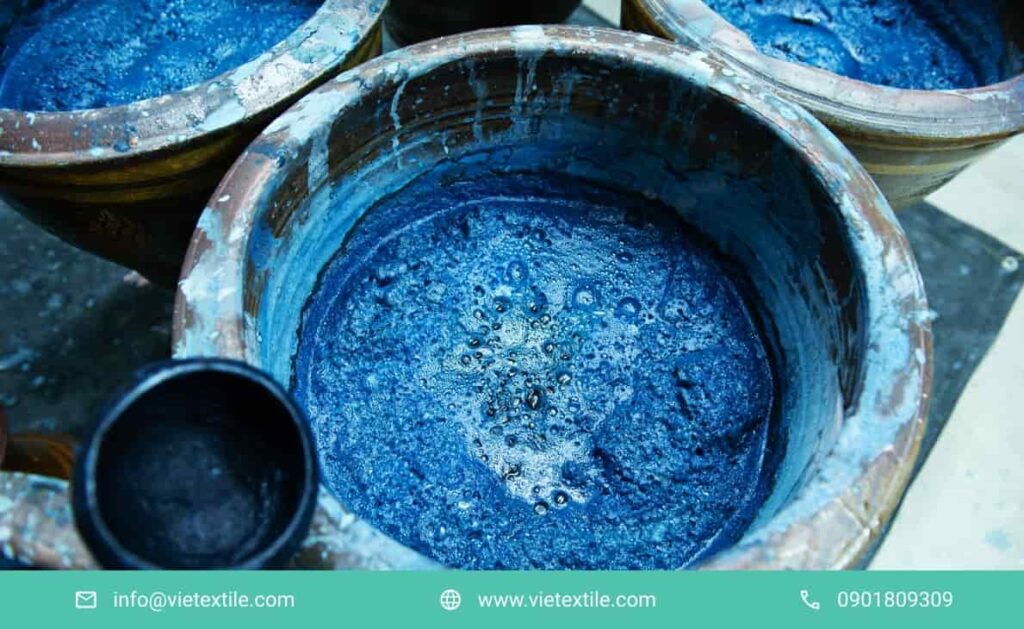
Powder and Liquid Disperse Dyes: Differences in Composition, Application, and Industrial Standard Preparation Secrets

Disperse Dyes are a group of non-ionic dyes specifically designed for hydrophobic synthetic fibers, with Polyester (PES) being the primary application. Due to their water-insoluble nature, the dye molecules must be finely ground into ultrafine particles (< 1 micron) and maintained in a stable suspension in an aqueous solution.

In modern industrial textile dyeing, factories have two main options when using Disperse Dyes: Powder Dyes and Liquid Dispersion Dyes. The difference between these two forms is not only physical but also profoundly affects the preparation process, system stability, risk of dyeing defects, and overall operational costs.

This article will deeply analyze the composition, advantages, disadvantages, and optimal applications of both forms, helping engineers and production managers make strategic decisions when working with Disperse Dyes.

Disperse Dyes
Powder and Liquid Disperse Dyes: Differences in Composition, Application, and Industrial Standard Preparation Secrets 26

1. Operating Mechanism of Disperse Dyes

Before comparing the two forms, it is essential to understand the basic mechanism of Disperse Dyes:

1.1. Chemical Composition

Disperse Dye molecules are small, water-insoluble azo, anthraquinone, or nitroarylamine compounds that do not contain ion-solubilizing groups (such as SO3Na).

1.2. Dyeing Mechanism

  • Dissolution: At high dyeing temperatures (120-130C for Polyester), the ultrafine Disperse Dye particles in the solution begin to dissolve, forming single molecules.
  • Diffusion: These single molecules diffuse from the solution through the liquid boundary layer near the fiber surface.
  • Dissolution in Fiber: Finally, the Disperse Dye molecules penetrate and dissolve into the internal polymer structure of the hydrophobic fiber, creating color.

1.3. Role of the Dispersing Agent

Since Disperse Dyes are insoluble, they always require a dispersing agent (often lignin sulfonates or naphthalene sulfonates derivatives) to keep the particles in suspension. The dispersing agent’s roles are:

  • Prevent Flocculation: To create a negatively charged coating (Steric Hindrance) around each particle, preventing them from colliding and sticking together, thus avoiding the formation of large color patches (Tarring) that cause color defects.
  • Maintain Particle Size: To ensure the particle size remains at the nanometer/sub-micron level throughout the dyeing process.

2. In-Depth Analysis of Powder Disperse Dyes (Powder Dyes)

Powder Dyes are the traditional and most common form, where dye particles are milled and dried together with the dispersing agent.

2.1. Composition and Preparation Process

  • Composition: 30%-50% is pure colorant (Active Ingredient), while the remainder consists of dispersing agents, buffer agents, and wetting agents.
  • Preparation: The powder must be dissolved in a small amount of water (usually at 40-60C) and stirred for a certain period (pre-dispersion) before being added to the dye bath.

2.2. Key Advantages of Powder Form

  • High Active Ingredient Concentration: The powder form has a higher concentration of colorant compared to the liquid form (as it contains no water solvent), which helps reduce storage volume and transportation costs.
  • Stable for Long-Term Storage: The powder form is not at risk of sedimentation, phase separation, or microbial attack over time, provided it is stored in a cool, dry place.
  • Lower Unit Cost: In terms of active colorant mass, the powder form is generally more competitively priced than the liquid form due to lower packaging, transport, and stabilizer costs.

2.3. Disadvantages and Operational Challenges

  • Dust Hazard: The process of weighing, dosing, and preparing powder Disperse Dyes generates fine dust, posing a hazard to worker health (respiratory) and the working environment.
  • Lower Reproducibility: Depends on the operator’s skill during the dissolution process. If the stirring is insufficient or the preparation time is too short, the dye particles may not be fully dispersed, leading to uneven dyeing defects (spotting).
  • Not Optimal for Automatic Dosing: The powder form is difficult to integrate into an Automatic Dosing System due to issues with clogging, caking, and moisture sensitivity.

3. In-Depth Analysis of Liquid Disperse Dyes (Liquid Dispersion Dyes)

Thuốc nhuộm phân tán chính hãng
Powder and Liquid Disperse Dyes: Differences in Composition, Application, and Industrial Standard Preparation Secrets 27

Liquid Dispersion Dyes are the product of advanced wet milling technology. The dye is directly ground in an aqueous medium together with dispersing agents and stabilizers.

3.1. Composition and Preparation Process

  • Composition: Typically contains only 10%-30% pure dye, with the remainder being water, dispersing agents, thickeners, and biocides to ensure storage stability.
  • Preparation: The liquid form is poured directly into the mixing tank, requiring only gentle stirring or can be pumped straight into the Dyeing Bath via an automatic dosing system. No complex pre-dispersion process is needed.

3.2. Superior Advantages of Liquid Form

  • Optimal Dispersion: The dye particles have been finely milled and stabilized at the optimal level directly at the manufacturing plant. This completely eliminates the risk of dispersion failure due to manual preparation errors.
  • Operational Safety: The liquid form does not generate fine dust, significantly improving working conditions, and reducing the risk of explosion and respiratory illnesses.
  • Automation Readiness: This is the biggest advantage. Liquid Disperse Dyes are fully compatible with Automatic Dosing/Weighing Systems, helping achieve the highest Color Reproducibility between dye batches.
  • Viscosity Control: Viscosity can be adjusted to ensure stable pumping and feeding, avoiding pipe clogging.

3.3. Disadvantages and Storage Challenges

  • Higher Unit Cost: The price per unit mass of active dye is often higher due to the cost of wet milling, stabilizers, and transporting a large volume of water.
  • Storage Stability Risk: The liquid form is prone to Settlement if stored too long without periodic stirring. Furthermore, temperature must be controlled to prevent freezing or microbial attack, which can destroy the suspension.
  • Requires Specialized Containers: Requires large containers equipped with periodic stirring or circulation systems to maintain the suspension state.

4. Detailed Comparison Table: Powder vs. Liquid Disperse Dyes

CharacteristicPowder Disperse DyesLiquid Dispersion Dyes
Color Content (Active Ingredient)High (30% – 50% Dyes)Low (10% – 30% Dyes)
Preparation ProcessComplex, requires pre-dispersion at 40-60CSimple, light stirring or direct pumping
Dust RiskVery high, health hazardVirtually non-existent
Automation CapabilityLow, prone to clogging, poor reproducibilityHigh, ideal for Dosing Pump systems
Suspension StabilityDepends on manual preparation techniqueVery high (pre-stabilized)
Raw Material CostLower per unit of active ingredientHigher per unit of active ingredient
StorageDry, stable long-termRequires periodic stirring, sensitive to temperature

5. Optimal Application of Each Disperse Dye Form

The choice of Disperse Dye form depends on the scale of production and the factory’s machinery technology.

5.1. Optimal Applications for Powder Form

  • Small-Scale Production/Laboratory: Easy to weigh small quantities and store less frequently used specialized colors.
  • Low Operating Cost Priority: Suitable for factories prioritizing the reduction of raw material costs, accepting higher risks and labor costs for the preparation stage.
  • Pad-Batch Dyeing: Some traditional Pad-Batch applications still prefer the powder form due to its high concentration.

5.2. Optimal Applications for Liquid Form

  • Large-Scale and Continuous Production: Mandatory use of the liquid form to ensure productivity, accuracy, and reduced machine downtime.
  • Fully Automated Dyeing Technology: The liquid form is the only choice for automatic Dosing Pump systems.
  • Disperse Printing: The liquid form integrates more easily into the Printing Paste, ensuring homogeneity and preventing printing head clogging.
  • Critical Shades Dyeing: When dyeing colors that demand high reproducibility and are intolerant of small defects (e.g., light fashion colors), the liquid form offers the highest safety assurance.

6. Technical Factors When Using Disperse Dyes

Regardless of whether powder or liquid form is used, controlling the following technical factors is mandatory for Disperse Dyes to achieve maximum performance:

6.1. Control of High-Temperature High-Pressure (HTHP) Dyeing Temperature

Dyeing Polyester with Disperse Dyes must occur at temperatures of 120-130C (HTHP).

  • Effect: This temperature helps the Polyester structure “open up” (T_g approx 80C), facilitating the Diffusion of the Disperse Dye into the fiber.
  • Control: The dyeing machine must have a precisely controlled heat exchange system and steam valves, ensuring a slow Ramping Rate so that the Disperse Dyes diffuse evenly, avoiding uneven color defects.

6.2. Control of Carrier Agent

Carrier agents are used to lower the dyeing temperature to 95-100C (Atmospheric Dyeing) for sensitive fibers like Polyester/Spandex or Triacetate.

  • Role: The Carrier agent increases the plasticizing effect on Polyester, helping the Disperse Dyes diffuse at a lower temperature.

6.3. Control of pH (pH Control)

Disperse Dyes are sensitive to alkaline environments (high pH).

  • Cause: High pH (>7) can cause hydrolysis of some color groups (especially Ester groups), leading to color change (Hue Change) or fading.
  • Control: Dyeing is usually performed at a neutral or slightly acidic pH (pH  4.5-5.5) using Acetic Acid and buffer agents.

7. Analysis of Color Reproducibility

Thuốc nhuộm phân tán công nghiệp
Powder and Liquid Disperse Dyes: Differences in Composition, Application, and Industrial Standard Preparation Secrets 28

Reproducibility is the ability to achieve the same color in different dye batches. This is a vital factor in mass production.

7.1. Reproducibility of Powder Form

  • Challenge: The reproducibility of powder Disperse Dyes depends on 3 manual steps: Weighing rightarrow Preparation rightarrow Dosing. Errors at any step (e.g., weighing errors due to moisture, dispersion errors due to insufficient stirring) will cause color differences between batches.

7.2. Reproducibility of Liquid Form

  • Advantage: The liquid form is automatically dosed by a Dosing Pump. This system completely eliminates the human factor. The pump’s accuracy (which can reach pm 0.1  ml) ensures the Disperse Dye concentration is always precise according to the formula.

8. Environmental Impact and Wastewater Treatment Costs

Disperse Dyes, whether in powder or liquid form, pose environmental challenges.

8.1. Excess Dispersing Agent

The dispersing agent (Lignin Sulfonates) is a colorless organic substance, but it increases the COD (Chemical Oxygen Demand) content in the wastewater. Both powder and liquid forms contain dispersing agents, but the liquid form often has a more complex concentration of stabilizers.

8.2. Hydrolyzed/Excess Dye

The amount of Disperse Dye that hydrolyzes (does not fix to the fiber) will be discharged. The liquid form, with its superior suspension stability, minimizes the risk of dye particles flocculating into large clumps (Tarring) that can cause clogging and are more difficult to treat.

8.3. Long-term Cost of Ownership (LCO)

Although the powder form is cheaper, the liquid form reduces the Long-term Cost of Ownership (LCO) due to:

  • Reduced Defects: The Re-dyeing rate is significantly reduced thanks to high reproducibility.
  • Reduced Labor Costs: Automation optimization reduces preparation labor and setup time.
  • Safety: Reduced personal protective equipment costs and health-related litigation risks.

9. Frequently Asked Questions (FAQ) About Disperse Dyes

1. Question: Why are Disperse Dyes insoluble in water but still used for dyeing in an aqueous environment? Answer: Disperse Dyes are insoluble but exist as a Suspension of ultrafine particles (< 1 micron) thanks to the Dispersing Agent. During the hot dyeing process, these particles dissolve into single molecules and diffuse into the fiber.

2. Question: What is the role of the 130C temperature in dyeing Polyester with Disperse Dyes? Answer: The 130C temperature (HTHP) is necessary to soften (plasticize) the polymer structure of Polyester, increasing the free space between the polymer chains. This allows the Disperse Dye molecules to diffuse deep into the fiber, where they dissolve and create fast colors.

3. Question: What is the biggest difference between powder and liquid Disperse Dyes regarding automation? Answer: The biggest difference is compatibility with the Dosing Pump System. The liquid form is preferred because it is fully stabilized, easy to pump and dose with high accuracy, eliminating human error. The powder form is prone to clogging and difficult to control moisture.

4. Question: Are there any occupational safety risks associated with powder Disperse Dyes? Answer: Yes. During the weighing and preparation process, powder Disperse Dyes generate fine dust that easily floats in the air. Inhaling this dust can cause respiratory irritation and other health issues, requiring strict dust extraction systems and protective equipment.

5. Question: How can I maintain the stability of liquid Disperse Dyes during storage? Answer: They should be stored in specialized containers, avoiding direct sunlight and excessively high or low temperatures. Most importantly, gentle periodic stirring or circulation is needed to prevent the Settlement of dye particles at the bottom of the container.

6. Question: Why is it necessary to control the pH to slightly acidic (pH  4.5-5.5) when dyeing with Disperse Dyes? Answer: Dyeing at a slightly acidic pH is to prevent the Hydrolysis of Disperse Dye molecules. In an alkaline environment (high pH), some color groups will decompose, leading to a change in color (color deviation) or fading.

7. Question: Is the dispersing agent still necessary for liquid Disperse Dyes? Answer: Yes. Whether in liquid or powder form, Disperse Dyes require a dispersing agent. In the liquid form, the dispersing agent is pre-added and stabilized during the wet milling process to ensure the dye particles do not flocculate even while they are in the storage container.

VieTextile provides dyeing technology solutions for Polyester, including automatic dosing equipment for liquid Disperse Dyes and spare parts for HTHP dyeing machines.

Contact Information:

Hotline: 0901 809 309

Email: info@vietextile.com

Website: https://vietextile.com
The Decisive Influence of pH, Temperature, and Salt on Reactive Dyes

Reactive Dyes are the most widely used class of colorants for cellulosic fibers, including Cotton, Viscose, Modal, and Lyocell. The superior feature of reactive dyes is their ability to form a strong Covalent Bond with the fiber, providing outstanding wash, rubbing, and light fastness compared to Direct or Vat Dyes.

However, this very complex chemical reaction mechanism demands the stringent control of three key physical and chemical factors within the dye bath: Temperature, Salt, and pH/Alkali.

Even minor deviations in controlling these three factors can lead to severe defects such as unlevelness, poor fastness (due to hydrolysis), or wastage of dyes and chemicals. This in-depth article will analyze the detailed mechanism of how pH, Temperature, and Salt influence the reactive dyes process, while also providing technological solutions and machinery spare parts to ensure optimal color fixation efficiency.

Reactive Dyes
The Decisive Influence of pH, Temperature, and Salt on Reactive Dyes 33

1. The Reactive Dyeing Mechanism: The Core Chemical Foundation

To understand the roles of Salt, Temperature, and pH, we must grasp the two main phases of the reactive dyeing process: Exhaustion and Fixation.

1.1. Phase 1: Exhaustion – The Role of Salt

Exhaustion is the process where the dye leaves the solution and moves to adhere to the fiber surface. This is a physical process, occurring before the chemical reaction.

  • Cellulose Fiber in Water: In an aqueous medium, both the Cellulose fiber (Cell-OH) and the Reactive Dyes molecule (anionic, carrying a negative charge) are negatively charged (Zeta Potential), creating an electrostatic repulsion force. This hinders the movement of the dye into the fiber.
  • The Role of Salt: Salt (NaCl or Na2SO4) provides positive ions (Na+) that help neutralize the negative charges on the fiber surface and around the dye molecule. This neutralization reduces the electrostatic repulsion, allowing the reactive dyes to approach and adhere to the fiber surface more easily.

1.2. Phase 2: Fixation – The Role of Alkali/pH

Fixation is the chemical reaction that forms a stable Covalent Bond between the dye and the fiber.

  • Alkali-Dependent Reaction: Reactive dyes only react and fix color when the Hydroxyl group (-OH) on the Cellulose fiber is “activated” in an alkaline environment (pH high). Alkali (e.g., Na2CO3 – Soda Ash) removes the H+ ion from the OH group, generating a highly nucleophilic, negatively charged Cellulosate group (Cell-O-).
  • Covalent Bond Formation: This Cellulosate group then attacks the Reactive Group (Dye-X) on the dye molecule, forming the stable Covalent Bond.
    Cell-OH + OH- \xrightarrow{Alkali Cell-O- + H2OCell-O- + Dye-X \longrightarrow Cell-O-Dye + X-

1.3. The Role of Temperature (Diffusion)

Temperature provides the necessary energy for both stages:

  • Diffusion: High temperature increases the kinetic energy of the reactive dyes molecules, helping them diffuse rapidly from the surface into the amorphous regions of the fiber.
  • Reaction Rate: Increasing temperature increases the rate of the chemical reaction (fixation), but also increases the rate of hydrolysis (reaction with water), a competing reaction that causes dye loss.

2. In-Depth Analysis of the Salt Factor: The Driving Force for Absorption

Salt is the physical factor that most significantly affects the initial exhaustion efficiency of reactive dyes.

2.1. Mechanism of Zeta Potential Control

The depth of shade is directly proportional to the amount of salt added.

  • Ionic Strength: Adding salt increases the ionic strength of the solution. Na+ ions concentrate at the boundary between the solution and the fiber, compressing the fiber’s Electrical Double Layer.
  • Repulsion Cancellation: When the double layer is compressed, the electrostatic repulsion (Zeta Potential) between the dye (negative) and the fiber (negative) sharply decreases, allowing the reactive dyes to be driven onto the fiber surface. This is a prerequisite for dye absorption.

2.2. Optimal Salt Quantity for Different Shade Depths

The required amount of salt for reactive dyes depends on the desired Shade Depth:

  • Light Shades: Require less salt (e.g., 30 – 40 g/L NaCl). The reason is that strong absorption can lead to uneven dyeing because the reactive dye concentration in the bath is low.
  • Deep/Dark Shades: Require very high salt quantities (e.g., 80 – 120 g/L NaCl or Na2SO4). The goal is to achieve the highest possible exhaustion rate before the alkali is added.

2.3. Challenges and Solutions for Salt Control

  • Common Error: If salt is added too quickly, the reactive dye will be “shocked” and absorb locally on the fiber surface, causing patchiness or unlevelness.
  • Technological Solution:
    • Dyeing Machine Spare Parts: Use a Dosing Pump system or automated chemical feed system. Salt addition must be programmed (Ramping) to occur gradually over 15 – 30 minutes.
    • Effluent Control: Excess salt is the primary cause of high TDS (Total Dissolved Solids) content in wastewater, a major environmental challenge.

3. In-Depth Analysis of the Temperature Factor: Balancing Diffusion and Reaction

Temperature is the kinetic factor, determining the speed of molecular movement and the condition under which the reactive groups on the dye react.

3.1. Temperature’s Effect on Diffusion

  • Fiber Structure Disruption: High temperature causes the Cellulose polymer chains to vibrate strongly, increasing the distance between chains and “opening” the fiber structure, allowing large reactive dyes molecules to diffuse deep into the amorphous regions.
  • Increased Kinetic Energy: The kinetic energy of the dye molecules increases, helping them move faster, shortening the dyeing time.

3.2. Temperature’s Effect on Reaction Rate (Kinetics)

Each type of reactive dyes has a different Optimal Dyeing Temperature (T{opt) due to varying reactive group structures:

Reactive GroupCommon NameOptimal Temp (T{opt)Dyeing Characteristic
Dichlorotriazine (DCT)Cold Brand30-60CFast reaction, prone to hydrolysis if temperature is exceeded.
Monochlorotriazine (MCT)Medium Brand60-80CBalanced, medium reaction rate.
Vinyl Sulfone (VS)Hot Brand80-95CRequires high temperature for activation, highest fastness.

3.3. Controlling the Rate of Rise

Controlling the Rate of Rise of temperature is the key to achieving high levelness:

  • Critical Zone (60-85C): This is the zone where reactive dyes begin to absorb strongly. If the temperature rises too fast (> 2C/min), the dye will absorb locally, causing unlevelness.
  • Technical Solution: Modern dyeing machines (HTHP Jet, Jigger) must have precisely operating steam valves and heat exchangers. Dyeing machine spare parts must ensure the Pneumatic Control Valve can adjust the heating rate very subtly according to the PLC program.

4. In-Depth Analysis of the pH/Alkali Factor: Deciding Fixation Efficiency

Thuốc nhuộm hoạt tính chính hãng
The Decisive Influence of pH, Temperature, and Salt on Reactive Dyes 34

pH is the most critical chemical factor, acting as the “switch” that activates the color fixation reaction of reactive dyes.

4.1. The Role of Activation

Alkali has two tasks:

  • Fiber Activation: Converts Cell-OH to Cell-O-, the attacking agent (Nucleophile).
  • Acid Neutralization: If the reactive dyes is prepared in an acidic environment (e.g., water contaminated with CO2), alkali neutralizes the environment, ensuring the dyeing pH meets requirements.

4.2. Competing Reaction: Fixation vs. Hydrolysis

This is the biggest challenge when using reactive dyes. The color fixation reaction and the Hydrolysis reaction (reaction with water H2O) occur simultaneously:

  • Fixation: Dye-X + Cell-O- \longrightarrow Dye-Cell (Covalent Bond)
  • Hydrolysis: Dye-X + OH- \longrightarrow Dye-OH (Dye is deactivated)

pH and Hydrolysis:

  • pH Too High: Increases the rate of the fixation reaction, but also increases the rate of hydrolysis. Leads to dye waste and generates a large amount of useless dye discharged into the environment.
  • pH Too Low: The fixation rate is too slow, failing to achieve the necessary color fastness.

4.3. Controlling Alkali Type and Precise Dosing

Alkali control must consider the type of reactive dyes:

Alkali TypeFormulaPrimary ApplicationNotes
Sodium Carbonate (Soda Ash)Na2CO3Most common, for most MCT and VS types. Medium pH (10.5-11.5).Easy to control, creates a stable pH buffer.
Sodium Bicarbonate (Baking Soda)NaHCO3Used for Cold Brand Dyes (DCT). Lower pH (8.0-9.0).More subtle control at low temperatures.
Sodium Hydroxide (Caustic Soda)NaOHOften used for Pad-Batch dyeing. Very high pH (>12).Increases fixation rate, easily damages fiber if temperature is uncontrolled.

Spare Parts Requirement: The alkali Dosing System must be extremely precise. It must be programmed so that the alkali is added after the Salt has completed exhaustion and the Temperature has reached T{opt.

5. The Complex Interaction of the Three Factors

The reactive dyeing process is not an independent function of the three factors but a chain reaction interaction:

5.1. Salt – Temperature – Initial Fixation

If too much salt is added at a low temperature, the reactive dyes will absorb quickly and sit on the fiber surface. When alkali is added, the fixation reaction occurs immediately on the surface, causing Surface Fixation (unlevel fixation). To remedy this, the temperature needs to be increased slowly after salt addition to help the dye diffuse deep into the fiber before the alkali is added.

5.2. Temperature – pH – Hydrolysis

High temperature promotes the fixation reaction rate, but also promotes the hydrolysis rate.

  • Example: If Hot Brand Dyes (VS) are used at 90C but an overly strong or excessive amount of alkali is used, the hydrolysis rate will spike, reducing color fixation efficiency and increasing cost.

Rule: Temperature and pH must be balanced. The type of reactive dyes (Hot/Cold) determines the optimal Temperature/pH pair.

6. Common Dyeing Defects Due to Poor Control of the 3 Factors

Loose control of the three factors—Salt, Temperature, and pH/Alkali—is the leading cause of mass production dyeing defects.

6.1. Shade Variation and Unlevelness (Levelness \& Tailing)

Cause: Excessively fast exhaustion rate.

Errors:

  • Salt: Adding too much salt, or adding salt too quickly (no Ramping).
  • Temperature: Increasing the temperature too quickly in the Critical Reaction Zone (CRZ): 60-85C).
  • Alkali/pH: Adding alkali too early or using alkali with an initial pH that is too high.

Consequence: The reactive dyes fixes on-spot, without time to move and diffuse uniformly.

6.2. Poor Wash Fastness

Cause: The dye does not form a covalent bond (only absorbed) or hydrolyzed dye is trapped within the fiber.

Errors:

  • Alkali/pH: Insufficient alkali addition or incorrect timing, leading to incomplete fixation reaction.
  • Temperature: Temperature does not reach T{opt, and the fixation reaction is incomplete.

Consequence: Residual dye on the fiber washes off during laundering, reducing fastness and staining the wash water.

6.3. Batch-to-Batch Variation

Cause: Lack of Reproducibility in controlling the 3 factors.

Errors:

  • Dyeing Machine Spare Parts: pH sensor is uncalibrated, temperature control steam valve is faulty.
  • Salt/Alkali: Manual dosing, leading to concentration differences between batches.

Consequence: Significant shade variation, requiring redyeing, increasing cost and reducing fiber quality.

7. Machinery Spare Parts Requirements for Precise Control of the 3 Factors

Precision in reactive dyeing requires machinery and spare parts to function perfectly.

7.1. Absolute pH/Alkali Control

  • pH Electrode (pH Sensor): Must be able to withstand high temperatures and chemicals. The sensor needs daily calibration with buffer solutions. pH sensor error is the number one cause of failure in Reactive Dyes.
  • Dosing Pump and Control Valve: The system must ensure alkali is added to the dye bath at a precise, milliliter-accurate speed and concentration, following the slow Ramping program.

7.2. Temperature and Heating Rate Control

  • Pneumatic Control Valve (Steam Valve): The valve must be sensitive and respond quickly to the PLC controller signal. The steam valve is responsible for regulating the amount of hot steam entering the heat exchanger, thereby controlling the temperature rise rate.
  • Heat Exchanger: Needs to ensure stable heat transfer efficiency. Clogging or reduced efficiency will increase heating time, affecting the precision of T{opt.
  • Temperature Sensor: Must be positioned accurately in the dye bath and checked for precision regularly.

7.3. Dye Liquor Circulation Control (Salt & Dye)

  • Circulation Pump: The circulation pump must provide a stable flow rate (e.g., Liquor-to-Goods ratio L/S) throughout the dyeing process. A fault in the Impeller or motor will reduce the circulation speed, leading to concentration differences in Salt and reactive dyes, causing unlevelness defects.

8. Optimizing Cost and Minimizing Reactive Dye Hydrolysis

Thuốc nhuộm hoạt tính công nghiệp
The Decisive Influence of pH, Temperature, and Salt on Reactive Dyes 35

Optimizing the control of the 3 factors not only improves quality but also significantly reduces production costs and environmental impact.

8.1. Isothermal Dyeing Technique

This is a modern technique aimed at optimizing the use of reactive dyes:

  • Exhaustion: Dyeing begins at a low temperature (60C), Salt is added and held at this temperature for the reactive dyes to exhaust slowly and evenly onto the fiber.
  • Rapid Heating: After complete exhaustion, the temperature is quickly raised to T{opt (e.g., 90C for VS).
  • Fixation: Alkali is added and held at T{opt.

This technique clearly separates the exhaustion phase (Salt/Low Temperature) and the fixation phase (Alkali/High Temperature), allowing maximum control over all three factors.

8.2. Reducing Salt Concentration with New Auxiliaries

Advanced dyeing auxiliaries (Salt Reduction Agents) can partially replace Salt, helping to maintain the necessary driving force for absorption without excessively increasing the TDS content in the effluent. This is not only environmentally friendly but also reduces wastewater treatment costs.

9. VieTextile: Spare Parts Control Solutions for Reactive Dyeing

VieTextile specializes in supplying precise dyeing machine spare parts, helping textile mills perfectly control the three factors—Salt, Temperature, and pH/Alkali—during the use of reactive dyes.

We understand that technical precision is the key to achieving high fastness and color fixation efficiency above 85\%.

  • Control Valve Systems: Providing various steam, water, and high-speed drain valves, ensuring the temperature Ramping rate and effluent discharge are accurate according to the PLC program.
  • Sensors and Measurement Equipment: Calibrated pH sensors, electrodes, and heat-resistant temperature controllers, helping to monitor and adjust Alkali/pH in real-time.
  • Circulation Pump Spare Parts: Providing impellers, seals, and motors for circulation pumps, ensuring stable dye liquor flow, preventing Salt concentration differences.

VieTextile’s technical team is ready to consult and provide high-quality spare parts, helping you optimize the control of Temperature, Salt, and pH for all types of reactive dyes.

10. Frequently Asked Questions (FAQ) About Reactive Dyeing

1. Question: What is the core role of Salt in the reactive dyeing process? Answer: Salt (NaCl or Na2SO4) provides positive ions (Na+) to neutralize the negative charges on the Cellulose fiber surface and the dye molecule. This reduces the electrostatic repulsion (Zeta Potential), allowing the reactive dye to absorb onto the fiber easily.

2. Question: Why must Alkali (Na2CO3) be added after Salt addition and the required Temperature is reached? Answer: Alkali is the “switch” that activates the chemical reaction (fixation). It is added last to ensure the reactive dyes has absorbed evenly and diffused deep into the fiber. If alkali is added too early, the dye will fix on the surface, causing unlevelness.

3. Question: What is Hydrolysis and how can it be minimized? Answer: Hydrolysis is a competing reaction where the reactive dyes reacts with water (H2O) instead of the fiber. This reaction creates useless dye, reducing fixation efficiency and causing pollution. Minimize it by strictly controlling the pH and Temperature according to the T{opt of each reactive dyes type.

4. Question: How is Temperature related to dyeing speed and levelness? Answer: Increasing temperature increases the diffusion rate (aiding levelness) but also increases the reaction rate (easily causing unlevelness if too fast). A slow heating rate (Ramping) is needed in the critical exhaustion temperature zone (CRZ) to balance these two factors.

5. Question: What is the difference between Hot Brand Dyes (VS) and Cold Brand Dyes (DCT) in terms of temperature requirements? Answer: Hot Brand Dyes (VS) require high dyeing temperatures (80-95C) and usually use stronger Alkali. Cold Brand Dyes (DCT) react well at low temperatures (30-60C) and usually use weaker Alkali (e.g., NaHCO3).

6. Question: Which dyeing machine spare part is responsible for the most precise control of Salt and Alkali? Answer: The Dosing Pump and Water/Chemical Control Valves in the feed system. They ensure that the amount of Salt and Alkali is added to the dye bath at the pre-programmed speed and concentration.

7. Question: Does the required amount of Salt change depending on the shade depth? Answer: Yes. Light shades require less Salt to avoid excessive absorption and unlevelness. Dark shades require very high amounts of Salt (potentially 80 – 120 g/L) to maximize reactive dyes exhaustion before fixation.

To achieve perfect control over the three factors that determine dyeing quality, contact VieTextile for consultation and supply of high-quality dyeing machine spare parts.

Contact Information:

Hotline: 0901 809 309

Email: info@vietextile.com

Website: https://vietextile.com
Comparing Reactive and Direct Dyes for Modal Fabric: Secrets to Optimizing Cost and Color Fastness

Modal fabric, a new generation of regenerated cellulose fiber derived from beech wood, is renowned for its exceptional softness, superior drape, and moisture absorption capacity 50% higher than cotton. These properties make Modal a premium material, but they also impose strict requirements on dyeing technology. Like other cellulose fibers, the choice of Modal fabric dyes typically falls between two main groups: Reactive Dyes and Direct Dyes.

The selection between Reactive and Direct is not just a technical matter but a strategic economic decision. Reactive Dyes offer excellent color fastness, but require a complex and costly process. Conversely, Direct Dyes are simple and inexpensive, but their color fastness may not meet strict standards.

This in-depth article will analyze the chemical mechanism of each dye type, detail the pros and cons, and provide clear comparison criteria so textile manufacturers can make the most optimal choice when using Modal fabric dyes, ensuring a balance between finished product quality, color fastness, and production cost.

Modal Fabric Dyes
Comparing Reactive and Direct Dyes for Modal Fabric: Secrets to Optimizing Cost and Color Fastness 40

1. Dye Absorption Mechanism of Modal Fabric

Modal is a pure Cellulose fiber, composed of glucose units. This structure has numerous Hydroxyl (-OH) groups, creating the potential for reaction and bonding with dyes.

1.1. Superior Properties of Modal Compared to Cotton

  • High Cellulose Purity: Modal’s structure is almost pure Cellulose, with fewer impurities than Cotton, helping dye absorption be more uniform.
  • Lower Crystallinity: The Amorphous Region in Modal is larger than in Cotton. This allows the dye to diffuse easier and deeper into the fiber.
  • High Moisture Absorption: Superior moisture uptake allows the dye liquor and chemicals to penetrate deeply, which is especially beneficial for using Reactive Modal fabric dyes.

1.2. Objectives for Dyeing Modal

When dyeing Modal, the main objectives are to achieve:

  • Depth of Shade: Saturated, rich colors.
  • Levelness: Uniform color across the entire fabric surface.
  • Fastness: Especially Wash Fastness, rubbing fastness (dry/wet), and light fastness.

2. Analysis of Reactive Dyes for Modal Dyeing

Reactive Dyes are the most technically optimal type of Modal fabric dyes, particularly used for products requiring high quality such as premium fashion and sportswear.

2.1. Chemical Reaction Mechanism (Covalent Bond)

Reactive Dyes are the only type of dye capable of forming a Covalent Bond between the dye molecule and the Modal fiber.

Reaction Process:

  1. Absorption: The dye diffuses into the fiber and temporarily bonds via Van der Waals forces or Hydrogen bonds.
  2. Fixation: In a strong alkaline environment (usually Sodium Carbonate (Na2CO3) or Sodium Hydroxide (NaOH)), the dye’s reactive group reacts with the Hydroxyl (-OH) group on the Cellulose fiber, forming a strong Covalent Bond.

2.2. Absolute Advantages of Reactive Dyes

CharacteristicIn-Depth Analysis
Wash FastnessExcellent (Grade 4-5). The covalent bond is the strongest chemical bond, ensuring the dye does not bleed even when washed at high temperatures or with strong detergents.
Bright ShadesDelivers bright, vivid color palettes and higher color saturation than Direct Dyes.
Application RangeSuitable for all product types, especially exports, swimwear, underwear, and children’s clothing requiring international fastness standards.

2.3. Disadvantages and Challenges

  • High Chemical Requirement: Requires a large amount of salt (NaCl or Na2SO4) to aid absorption and alkali (Na2CO3) to activate the color fixation reaction.
  • Dye Loss Rate (Hydrolysis): A significant portion (typically 10\% – 30\%) of Reactive Dyes reacts with water (hydrolysis) instead of the fiber, creating useless dye. This increases dye costs and contributes to environmental pollution.
  • Complex Process: After fixation, a thorough Soaping/Washing Off process is mandatory to remove unbonded, hydrolyzed dye. If cleaning is inadequate, rubbing fastness will be affected.

3. Analysis of Direct Dyes for Modal Dyeing

Direct Dyes are the traditional Modal fabric dyes, favored for their simplicity and low cost.

3.1. Physical Absorption Mechanism (Van der Waals/Hydro Bond)

Direct Dyes do not form covalent bonds but only establish a physical bond with the Modal fiber.

  • Mechanism: Direct Dye molecules have a flat, elongated structure, allowing them to align parallel to the Cellulose polymer chain. The primary forces of attraction are Van der Waals forces and Hydrogen bonds.
  • Salt Assistance: Adding salt (e.g., NaCl) in the dye bath reduces the dye’s solubility, causing the dye to aggregate closer to the fiber and driving absorption into the Modal fiber.

3.2. Advantages in Cost and Process

CharacteristicIn-Depth Analysis
Low CostThe most economical choice. The cost of Direct Dyes and supplementary chemicals is significantly lower than Reactive Dyes.
Simple ProcessNo strong alkali needed for fixation. Only requires heat, salt, and time. This reduces energy costs and processing time.
High LevelnessThe uptake rate is relatively slow, making it easier to control than Reactive Dyes, with fewer Levelness Issues.

3.3. The Biggest Disadvantage (Color Fastness)

  • Low Wash Fastness (Poor to Fair): Since the bonding is only physical, the dye is easily broken and washed away during laundering. Wash fastness typically achieves only Grade 2-3.
  • Fixing Agent Required: It is mandatory to use a Cationic Fixing Agent after dyeing to improve color fastness, especially wet fastness. This adds an extra step and cost to the process.
  • Shades: The color palette tends to be duller and less vibrant compared to Reactive Dyes.

4. Detailed Comparison Table: Modal Fabric Dyes

Thuốc nhuộm vải Modal chính hãng
Comparing Reactive and Direct Dyes for Modal Fabric: Secrets to Optimizing Cost and Color Fastness 41
Comparison CriteriaReactive DyesDirect Dyes
Bonding MechanismCovalent Bond (Very Strong)Physical Bond (Van der Waals, Hydro Bond) (Weak)
Wash FastnessExcellent (Grade 4-5)Poor to Fair (Grade 2-3)
Light FastnessGood (Dependent on structure)Average
Color DepthVery good, vibrant colorsGood, duller colors
Chemical RequirementSalt (NaCl), Strong Alkali (Na2CO3)Salt (NaCl)
ProcessingComplex, requires alkali fixation and thorough washing offSimple, one-step dyeing
Dye Loss RateHigh (due to hydrolysis)Low
Overall CostHigh (due to dye and chemical costs)Low
Suitable ApplicationPremium products, exports, sportswear, children’s clothing.Common products, low price requirements, pale shades.

5. Advanced Techniques for Optimizing Modal Dyeing Quality

Regardless of the type of Modal fabric dyes chosen, the following techniques will help optimize the results.

5.1. Cold Pad-Batch Technique for Reactive Dyes

For Reactive Dyes, the Cold Pad-Batch technique is an efficient method to save energy and increase efficiency.

  • Mechanism: Modal fabric is padded in a solution of dye and alkali (usually NaOH and Silicate) at room temperature. The fabric is then rolled up and batch-cured for 4-24 hours.
  • Advantage: The fixation reaction occurs slowly and uniformly, increasing levelness and significantly reducing thermal energy costs. The reaction rate of the Modal fabric dyes with the fiber is higher than the hydrolysis rate.

5.2. Enhancing Fastness for Direct Dyes with Post-Dyeing Process

If using Direct Dyes is mandatory to reduce costs, improving color fastness is the top priority.

  • Using Cationic Fixing Agents: After dyeing and light washing off, the fabric is treated with a cationic fixing agent solution. These agents form an ionic bond with the anionic Direct Dye molecules within the fiber, creating a non-water-soluble complex that locks the color in.
  • Copper Treatment: Some Direct Dyes are capable of forming complexes with Copper ions (Cu^2+). Post-treatment with a Copper Sulphate solution can significantly improve light fastness and wet fastness.

6. Classification and Selection of Optimal Reactive Dyes for Modal

Reactive Dyes are classified based on their reactive group and optimal reaction temperature, directly affecting their ability to fix color on Modal fiber.

6.1. Classification Based on Reaction Temperature (Temperature Zone)

Dye GroupCommon Reactive GroupOptimal Dyeing TempKey Characteristic When Dyeing Modal
Cold BrandDichlorotriazine (DCT)20-40CSuitable for Cold Pad-Batch technique. Good fixation rate but requires very strict pH control.
Medium BrandMonochlorotriazine (MCT)60-80CBalance between reaction speed and levelness. Commonly used in Jet dyeing.
Hot BrandVinyl Sulfone (VS)80-95CHigh fixation rate, best wash fastness. However, prone to unlevelness (Tailing) if temperature and time control are inaccurate.
Bi-FunctionalContains both MCT and VS60-95CProvides higher fixation efficiency and better fastness due to two reactive groups responding under different conditions. Minimizes hydrolysis risk.

6.2. Optimal Selection of Reactive Dyes for Modal

Modal, with its low crystallinity structure, can use most Reactive Dyes. However, the VS (Vinyl Sulfone) or Bi-Functional groups are often preferred because:

  • High Fixation Efficiency: Achieves 80\% to 90\%, minimizing the amount of hydrolyzed dye and reducing the burden on the washing off stage.
  • Optimal Fastness: Ensures Modal products meet the strictest EU/US market standards, especially for wash fastness and perspiration fastness.

7. Environmental Impact and Effluent Treatment Solutions

The process using Reactive Modal fabric dyes, while optimal for quality, poses significant environmental challenges.

7.1. Pollution from Reactive Dyes

  • High Salt Content: The Reactive dyeing process requires 50 to 100 grams of salt (NaCl or Na2SO4) per liter of effluent. This high Total Dissolved Solids (TDS) content is difficult to treat and harmful to aquatic ecosystems.
  • Colored Effluent: Hydrolyzed Reactive Dye (10\%-30\% of the dye does not bond to the fabric) is discharged, creating dark-colored effluent. Removing this color requires complex tertiary treatment processes (e.g., adsorption with activated carbon or chemical coagulation).
  • High pH: The use of strong alkali (Na2CO3) for fixation results in high pH effluent, which requires neutralization with acid before environmental discharge.

7.2. Green Solutions for Modal Dyeing

  • High Exhaustion Reactive Dyes: Use new-generation Reactive Dyes with a fixation rate over 90\%. This directly reduces the amount of hydrolyzed dye discharged and lowers washing off costs.
  • Alternative Salts: Investigate the use of advanced auxiliaries to partially replace salt, reducing TDS content in the effluent.
  • Ozone/Fenton Effluent Treatment: Apply advanced oxidation technologies such as Ozonation (O3) or the Fenton process to break down the color structure of Reactive Modal fabric dyes in the effluent before biological treatment.

8. Total Cost of Ownership (TCO) Analysis in Modal Dyeing Technology

Sản phẩm thuốc nhuộm vải Modal
Comparing Reactive and Direct Dyes for Modal Fabric: Secrets to Optimizing Cost and Color Fastness 42

Evaluating cost based only on the raw dye purchase price (Dye Cost) is misleading. Total Cost of Ownership (TCO) must include all costs from raw materials to energy, water, and fault/reject handling.

Cost FactorReactive Dyes (Premium)Direct Dyes (Economical)TCO Analysis
Dye CostHigh (Due to complex structure)LowInitial advantage for Direct Dyes.
Chemical CostVery High (Salt, Alkali, Auxiliaries)Low (Mainly Salt)Reactive requires significantly more alkali and salt.
Water & Energy CostHigh (Multiple hot washing steps)Low (Simpler process)Reactive’s biggest TCO weakness.
Washing Off CostMandatory and ExpensiveSimple, Lower CostStrong washing is necessary to remove unbonded hydrolyzed dye.
Fault/Redyeing CostLow (High fastness)High (Prone to fastness issues)Direct Dyes have a higher risk of customer claims due to poor wash fastness.
Effluent Treatment CostHigh (TDS, Colored Water)MediumRequires more complex treatment technology for Reactive.

TCO Conclusion: Although the initial cost (dyes and chemicals) of Direct Dyes is lower, Reactive Dyes offer a better long-term TCO for high-requirement products, due to minimizing defect handling, redyeing costs, and quality issues (Quality Claims).

9. Role of Machinery and Spare Parts When Using Modal Fabric Dyes

The success of dyeing technology depends on the precision of the machinery, especially when handling sensitive chemicals like the strong alkali used in Reactive Dyes.

9.1. Suitable Dyeing Machines (Jet/Jigger)

  • Jet Dyeing Machine: Ideal for dyeing Modal/Tricot with Reactive Dyes as it minimizes fabric creasing through continuous circulation. Dyeing machine spare parts like the Impeller and flow sensors must operate precisely.
  • Jigger Dyeing Machine: Often used for Direct Dyes and woven Modal fabrics, due to the simpler process and lower temperature requirements.

9.2. Chemical and pH Control

  • Dosing System: The accuracy of adding alkali (Na2CO3) is vital when dyeing with Reactive Dyes. A high-quality and well-maintained Dosing Pump system is mandatory. Dyeing machine spare parts must ensure no leaks from valves and pumps.
  • pH Sensor: pH sensors (and associated controllers) need frequent calibration. A 0.5 unit pH deviation can completely change the reaction rate, affecting both the dyeing efficiency of Reactive Modal fabric dyes and cost.

10. VieTextile: Partner for Optimal Modal Dyeing Solutions

VieTextile is committed to supporting textile mills in optimizing their Modal fabric dyes processes. We provide essential dyeing machine spare parts and quality control equipment to achieve the highest chemical and mechanical precision.

VieTextile’s featured products and services include:

  • Dyeing Machine Spare Parts: Various pneumatic valves, circulation pumps, high-precision temperature, and pressure sensors, helping control the heating rate and dye liquor circulation.
  • Chemical Dosing Equipment: Spare parts for Dosing Pump systems, ensuring alkali and auxiliaries are added to the dye bath with milliliter accuracy, a key factor for successful Reactive Dye fixation.
  • Technology Consultation: Our expert team advises on the compatibility between Modal fabric dyes (Reactive or Direct) and existing machine spare parts, helping to maximize efficiency and minimize dyeing errors.

Contact VieTextile today to receive in-depth technical support for Modal dyeing technology.

11. Frequently Asked Questions (FAQ) About Modal Fabric Dyes

1. Question: Is Modal easier to dye than Cotton? Answer: Modal is generally considered easier to dye than Cotton in terms of Levelness. Because Modal has a larger amorphous region and higher Cellulose purity, Modal fabric dyes can diffuse into the fiber more easily and uniformly.

2. Question: Why are Reactive Dyes more expensive than Direct Dyes when dyeing Modal? Answer: Reactive Dyes are more expensive because: 1) The dye molecule itself has a more complex structure (containing a reactive group), and 2) Approximately 10%-30% of the dye reacts with water (hydrolyzes), becoming useless, thus increasing the actual dye cost per kg of fabric.

3. Question: Is a Fixing Agent needed when dyeing with Direct Dyes? Answer: It is mandatory. Since Direct Modal fabric dyes only bond physically (Hydrogen, Van der Waals bonds) with the fiber, their wash fastness is very poor. A Cationic Fixing Agent must be used after dyeing to create a non-water-soluble complex, which locks the color in and improves wet fastness.

4. Question: What level of wash fastness can Modal fabric dyed with Reactive Dyes achieve? Answer: If the dyeing process is well-controlled (especially the alkalization and washing off stages), the Wash Fastness of Reactive Modal fabric dyes can reach Grade 4-5, the highest level, meeting the standards for premium export markets.

5. Question: What is the advantage of the Cold Pad-Batch technique when using Reactive Dyes for Modal? Answer: The main advantages are energy savings (no high temperature needed) and increased efficiency of the Modal fabric dyes reaction. The fixation reaction occurs slowly at room temperature, minimizing hydrolysis and allowing the dye more time to diffuse evenly, thereby improving levelness.

6. Question: Which spare part in the dyeing machine has the largest impact on chemical costs when using Reactive Dyes? Answer: The Alkali Dosing System and related spare parts like the pH Sensor. If the dosing system is inaccurate, alkali will be over-added, increasing the rate of dye hydrolysis, leading to dye waste.

7. Question: How does VieTextile support optimizing the use of Modal fabric dyes? Answer: VieTextile provides precise dyeing machine spare parts such as Circulation Pumps, Control Valves, and pH Sensors to ensure the chemical environment in the dye bath is absolutely controlled, supporting the success of both Reactive and Direct Dye processes.

To make the optimal choice between Reactive and Direct Dyes for Modal fabric, let VieTextile provide specialized consultation on equipment and dyeing machine spare parts.

Contact Information:

Hotline: 0901 809 309

Email: info@vietextile.com

Website: https://vietextile.com
Does Nylon Fabric Dye Offer Good Color Fastness? Secrets to Achieving Deep, Level Color for Industrial Production

Nylon (Polyamide) stands as one of the most crucial synthetic fibers in the textile industry, valued for its high durability, superior elasticity, and excellent abrasion resistance. However, dyeing Nylon fabric presents unique technical challenges compared to cotton or polyester. The biggest question manufacturers often face is: “Does Nylon fabric dye offer good color fastness?” and how to achieve deep, uniform, and stable colors that meet strict industrial standards.

The answer is: Nylon fabric dyes can offer very good, even superior, fastness, but it relies entirely on selecting the right dye type and precisely controlling the chemical process within the dye bath.

This in-depth article will delve into the chemical mechanism of Nylon, analyze optimal Nylon fabric dyes (primarily Acid and Metal-Complex Dyes), and reveal the key technological secrets—from managing pH and temperature to using special dyeing auxiliaries—to ensure the color is not only deep but also absolutely level across every meter of fabric. This is an essential guide for any textile dyeing factory looking to optimize the quality of its Nylon products.

Nylon fabric dyes
Does Nylon Fabric Dye Offer Good Color Fastness? Secrets to Achieving Deep, Level Color for Industrial Production 47

1. Overview of Nylon Fabric and Dyeing Challenges

To understand the dyeing mechanism, we must first grasp the chemical structure of the Nylon fiber.

1.1. Chemical Properties of Nylon (Polyamide)

Nylon is a synthetic polymer composed of repeating amide linkages (-CO-NH-). What makes Nylon distinct and easier to dye than Polyester is the presence of two key functional end groups:

  • Terminal Amino Groups (-NH2): These are the primary reaction sites, capable of becoming positively charged in an acidic environment.
  • Terminal Carboxyl Groups (-COOH): These groups create a potential for negative charge, but the Amino group usually predominates under typical dyeing conditions.

The presence of the Amino group is the chemical basis for Acid Dyes to form a strong bond with the fiber.

1.2. Relationship Between Nylon Structure and Dye Absorption

  • Hydrophobic Nature: Nylon is a synthetic fiber, possessing high hydrophobicity. This necessitates high temperatures or special auxiliaries during the dyeing process to help the dye diffuse into the fiber structure.
  • Limited Dye Sites: Unlike cotton, which has numerous hydroxyl sites, Nylon has a more limited number of dye sites (Amino groups). This requires Nylon fabric dyes to be carefully selected to achieve the desired color depth without causing uneven surface saturation.

2. Assessing the Color Fastness of Nylon Fabric Dyes

The Color Fastness of Nylon depends on the type of dye used, with Acid Dyes being the standard choice.

2.1. The Most Suitable Dye Type: Acid Dyes

Acid Dyes are the most common and effective type of Nylon fabric dye. Acid dye molecules are negatively charged (anionic, D}^-) and bond with the positively charged Amino groups on the Nylon fiber.

2.1.1. Acid Dyeing Mechanism: Strong Ionic Bonding

In a weak or neutral acidic environment (pH 3.0 to 7.0), the terminal Amino groups (-NH2) on the Nylon fiber are protonated (-NH3^+), creating positively charged sites. The negatively charged Acid Dye (D}^-) is attracted and forms a strong Ionic Bond with this positively charged site:

Nylon-NH^+ + D- / NylonNH+ D-

This ionic bond is the main reason why Nylon fabric dyes using Acid Dyes exhibit good Wash Fastness and dry fastness.

2.1.2. Classification of Acid Dyes Used for Nylon

Depending on their structure and molecular weight, Acid Dyes are divided into three main groups, which determine the trade-off between color fastness and levelness:

  • Neutral Dyeing Acid Dyes:
    • Small molecular weight, fast diffusion rate.
    • Advantage: High Levelness, easy to dye.
    • Disadvantage: Lower wash fastness because the ionic bond is easily broken. Suitable for pale shades.
  • Weakly Acid Dyeing Acid Dyes:
    • Medium molecular weight, requiring lower pH (4.0 to 6.0).
    • Advantage: Better wash fastness.
  • Strong Acid Dyeing Acid Dyes:
    • Large molecular weight, often containing additional sulfonated groups. Requires very low pH (below 4.0).
    • Advantage: Very high wash fastness and light fastness. Suitable for deep, dark shades.
    • Disadvantage: Very difficult to achieve levelness due to excessively fast uptake rate.

2.2. Metal-Complex Dyes

To achieve superior Light Fastness, especially for dark and deep shades, Nylon fabric dyes containing metal complexes (often Chromium or Copper) are used.

  • Characteristics: These dye molecules are larger and form complex bonds with Nylon.
  • Advantage: Excellent light fastness (often rated grade 6-7/8) and very high wash fastness.

In summary: Nylon fabric dyes can achieve very good color fastness, especially when using high molecular weight Acid Dyes or Metal-Complex Dyes, but the secret lies in controlling the process to achieve absolute levelness.

3. Technological Secrets to Achieve Deep and Level Color

Thuốc nhuộm vải Nylon chính hãng
Does Nylon Fabric Dye Offer Good Color Fastness? Secrets to Achieving Deep, Level Color for Industrial Production 48

Color depth and levelness are two conflicting factors in Nylon dyeing. Increasing the dyeing rate to achieve deep color will reduce levelness. Textile mills must balance these two factors by controlling four key parameters.

3.1. Strict pH Control – The Decisive Factor

The pH of the dye bath is the most critical factor determining the uptake rate of Nylon fabric dyes.

3.1.1. The Effect of pH on the Fiber

  • Low pH (3.0 – 4.0): When the pH is low (strong acid environment), the protonation of the Amino groups (-NH2 \rightarrow \text-NH3^+) occurs strongly, creating many positively charged dye sites. The anionic Acid Dye is rapidly attracted to the Nylon fiber, leading to a high uptake rate and deep color, but easily causing uneven dyeing as the dye does not have time to diffuse evenly.
  • High pH (5.0 – 7.0): The uptake rate slows down, giving the dye more time to diffuse evenly, achieving high Levelness, but making it difficult to achieve absolute deep shades.

3.1.2. pH Adjustment Technique According to the Dyeing Program

To optimize, the Nylon fabric dye process must adjust pH according to each stage:

  • Start: Begin at a neutral pH (pH 6.5-7.0) using Acetic Acid or Ammonium Sulphate. This allows the dye to slowly diffuse into the bath.
  • Main Uptake: As the temperature rises, gradually decrease the pH to the acidic range (pH 4.0-5.0) by adding Acetic Acid or Formic Acid. This slow pH reduction helps control the uptake rate, achieving the desired depth while maintaining levelness.
  • Completion: Lower the temperature, then stabilize the pH at a stronger acid level (pH 3.0-4.0) to ensure all dye sites are saturated.

3.2. Optimal Temperature and Pressure Management

Temperature is the energy that drives the diffusion of Nylon fabric dyes into the fiber structure.

3.2.1. Boiling Point Dyeing Technique

  • Hot Stage (90°C – 98°C): This is the standard temperature for Nylon dyeing. At this temperature, the Nylon polymer structure swells sufficiently for the Acid Dye molecules to diffuse deeply into the fiber.
  • Heating Rate Control: The rate of temperature increase must be slow (e.g., 1-2°C/minute) within the temperature range of 60°C to 95°C, as this is the critical zone where dye uptake occurs the fastest and most unevenly.

3.2.2. Application of High-Pressure Dyeing

For high-density Nylon fabrics, thick yarns (e.g., carpets, seat belts), or when a very deep color is required, high-pressure dyeing technology (above 100°C) is necessary.

  • Advantage: Dyeing at 105°C to 110°C enhances diffusion, ensuring Nylon fabric dyes penetrate hard-to-reach areas, helping the color achieve maximum depth and uniformity.

4. Enhancing Levelness and Addressing Barré Defects

Levelness is the measure of color uniformity across the entire fabric surface, which is particularly crucial for Nylon fabric due to its sensitivity to structural fiber variations (barré effects).

4.1. The Role of Leveling Agents

Leveling Agents are the secret to overcoming the problem of unlevel dyeing when using fast-absorbing Nylon fabric dyes.

4.1.1. Mechanism of Leveling Agents

Leveling Agents work primarily through two mechanisms:

  • Retardation: Leveling agents compete for the dye sites (-NH3^+) with the dye. The leveling agent is absorbed onto the fiber first, reducing the number of available dye sites, thereby slowing down the uptake rate of the Nylon fabric dye. As the temperature increases, the leveling agent gradually desorbs, allowing the dye to absorb slowly.
  • Migration: Leveling agents help the dye absorbed in overly dark areas to migrate back into the solution and diffuse to lighter areas. This is the process of self-color balancing.

4.1.2. Classification of Leveling Agents

  • Blocking Agents (Competing Dyes): Molecules with a structure similar to the dye but colorless, occupying the dye sites and releasing slowly.
  • Surfactants (Surface Active Agents): Help improve the solubility of the dye and reduce surface tension, aiding diffusion.

4.2. Correcting Color Streaks (Barré Effects) on Nylon Fabric

Barré is the phenomenon of horizontal stripes or uneven color bands, usually caused by differences in the orientation or crystallinity of the Nylon fibers.

Technological Solutions:

  • Dyeing at Near-Neutral pH: Using Nylon fabric dyes from the Neutral Dyeing Acid Dyes group at pH 6.0-7.0 minimizes the fiber’s sensitivity to structural variations.
  • Increased Leveling Agents: Intensified use of leveling agents ensures a slow uptake rate and strong migration ability of the dye.

5. Finishing and Color Fixation Process

Sản phẩm thuốc nhuộm vải Nylon
Does Nylon Fabric Dye Offer Good Color Fastness? Secrets to Achieving Deep, Level Color for Industrial Production 49

After achieving the desired color, the finishing stage is the final step to fix and maximize the color fastness of the Nylon fabric dyes.

5.1. Washing Off (Removal of Excess Dye)

  • Goal: To remove dye that is not ionically bonded or small molecular weight Acid Dyes that are only loosely attached to the fiber surface.
  • Process: Typically uses an anionic detergent at a high temperature (around 60°C to 80°C) to remove loose dye molecules, significantly improving wash fastness and rubbing fastness.

5.2. Color Fixation with Fixing Agents

For applications requiring high wash and water fastness, the color fixation step is mandatory.

5.2.1. Mechanism of Fixing Agents

Fixing agents are typically cationic polymer substances (positively charged).

  • Cationic Polymer Layer: These agents create a positively charged polymer layer surrounding the fiber. This layer bonds with the remaining or weakly bonded anionic Nylon fabric dyes, creating a physical barrier that prevents the dye from being washed out.

6. Influence of Machinery and Spare Parts on Nylon Dyeing Quality

The Nylon fabric dye process cannot succeed without the support of accurate equipment and machine spare parts.

6.1. High-Pressure Yarn/Fabric Dyeing Machines

To dye Nylon at 98°C or more (high pressure), a yarn or fabric dyeing machine with precise pressure and temperature control capabilities is required (e.g., HTHP high-pressure dyeing machine).

  • Heating and Cooling System: Valves, heat exchangers, and controllers (PLC) must operate precisely to ensure the rate of temperature increase/decrease is absolutely controlled, preventing thermal shock that can damage the Nylon fabric or cause the Nylon fabric dye to absorb too quickly.
  • Circulation Pump: The efficiency of the circulation pump is extremely important to ensure the dye liquor is evenly distributed in the bath, preventing color difference between the inner and outer layers of the yarn hank or fabric roll. Dyeing machine spare parts like a worn Impeller need periodic replacement.

6.2. Measurement and Control Spare Parts

The accuracy of electronic machine spare parts determines the stability of the process:

  • pH and Conductivity Sensors: The pH sensor must be calibrated daily. A small error in the pH sensor will lead to excessive Acid addition, increasing the dyeing rate, breaking color levelness, and wasting Nylon fabric dye.
  • Encoder and Tensioner: In post-dyeing fabric setting machines, components like the Tensioner and Encoder need to ensure the fabric is processed with uniform tension, avoiding dimensional deformation and changes in color absorption capacity.

7. VieTextile: Comprehensive Solutions for Nylon Dyeing Technology

VieTextile is a partner specializing in providing high-quality technology solutions and spare parts, helping textile mills optimize their Nylon fabric dye process to achieve maximum color fastness and levelness.

We supply critical textile machine, dyeing machine, and finishing machine spare parts:

  • Dyeing Machine Spare Parts: Various pneumatic/steam control valves, high-efficiency heat exchangers, and precise temperature and pressure sensors, ensuring the dye bath achieves ideal conditions according to the dyeing recipe.
  • Measurement and Control Systems: Providing high-quality pH sensors and electrodes, helping to precisely control Acid concentration, a key factor in achieving deep and level color.
  • Fabric Setting Machine Spare Parts: Various clips, chains, and low-friction ceramic/carbon guides, ensuring post-dyed Nylon fabric is dried and set with absolute dimensional stability, without affecting the color surface.

VieTextile’s team of experts is ready to consult on the selection and calibration of machine spare parts to fully support the use of Nylon fabric dyes, helping you perfectly control every technical parameter.

8. Frequently Asked Questions (FAQ) About Nylon Fabric Dyes

1. Question: What is the most common Nylon fabric dye and why? Answer: The most common is Acid Dyes. The reason is that Nylon (Polyamide) fibers have terminal Amino groups (-NH2) that become positively charged in an acidic environment. The anionic Acid Dye forms a strong ionic bond with the fiber.

2. Question: Is the wash fastness of Nylon dyed with Acid Dyes good? Answer: The wash fastness of Nylon fabric dyes using Acid Dyes is good to very good, especially when using high molecular weight (Strong Acid Dyes) or Metal-Complex Dyes. This fastness can be further enhanced by post-treatment with a Cationic Fixing Agent.

3. Question: Why must pH be controlled when using Nylon fabric dyes? Answer: pH controls the positive charge on the Nylon fiber, which in turn determines the uptake rate of the anionic Acid Dye. The lower the pH (more acidic), the faster the dyeing rate, making it easier to achieve deep color but increasing the risk of unlevelness. Controlling pH balances color depth and levelness.

4. Question: How do Leveling Agents work to improve color levelness? Answer: Leveling agents work by competing for dye sites with the dye on the Nylon fiber (slowing the uptake rate) and increasing the Migration ability of the dye from dark to light areas in the dye bath, helping the color self-balance.

5. Question: Is high-pressure dyeing (above 100°C) necessary for Nylon? Answer: High-pressure dyeing is necessary for high-density Nylon fabrics, thick yarns (e.g., microfibers), or when an extremely deep and dark shade is required. Temperatures above 100°C help the Nylon fabric dye molecules diffuse deeper and more uniformly into the polymer structure.

6. Question: Which dyeing machine spare parts directly affect the levelness of Nylon fabric? Answer: The spare parts that directly affect levelness are the Circulation Pump (ensuring even dye liquor distribution) and the pH/Temperature Sensors (ensuring the chemical process executes precisely according to the recipe).

7. Question: How can color streaks (Barré Effects) on Nylon fabric be fixed? Answer: Fixing Barré starts with the yarn source (checking yarn uniformity). In dyeing, the solution is to use Neutral Dyeing Acid Dyes and increase leveling agents to minimize the fiber’s sensitivity to structural variations.

To ensure your Nylon fabric dye process achieves the highest performance and quality, from the dye bath to the finishing line, contact VieTextile today.

Contact Information:

Hotline: 0901 809 309

Email: info@vietextile.com

Website: https://vietextile.com
Fabric Printing Ink Prices Today: Influencing Factors and How to Optimize Costs

Muc In Tren Vai H2
Fabric Printing Ink Prices Today: Influencing Factors and How to Optimize Costs 54

1. Fabric Printing Ink – Small Cost, Big Impact

In the printing industry’s production chain, fabric printing ink—a key term in the textile printing industry—may seem like a minor detail, but it is a silent factor that determines operating costs, colorfastness, and the quality of the final product. Especially for small and medium-sized workshops, choosing the right ink and effectively managing ink costs can help save tens of millions of dong each month.

So, what are the current prices of fabric printing inks? What types of inks are on the market? And how can you optimize printing costs without affecting print quality? This article will help you clarify each factor influencing the price, and also suggest how to choose and use ink wisely.

2. What is Fabric Printing Ink? How Many Types Are There?

Muc In Tren Vai H1
Fabric Printing Ink Prices Today: Influencing Factors and How to Optimize Costs 55

Fabric printing ink is a specialized ink used in the printing industry to create images or patterns on the surface of fabric. Depending on the technology and fabric material, there will be different ink lines suitable for each.

  • Disperse Ink – Specialized for Sublimation Printing: This ink is designed specifically for polyester fabrics and works through an indirect printing mechanism. Specifically, the image is printed onto transfer paper, then heat-pressed to sublimate the ink and adhere it to the fabric fibers.
    • Pros: Vibrant colors, sharp images, high adhesion, and no bleeding. Suitable for printing sportswear, flags, and banners.
    • Cons: Cannot be used with cotton or other natural fabrics.
  • Pigment Ink – For Direct-to-Garment (DTG) Printing on Cotton: This is a water-based ink, specialized for direct printing on cotton and cellulose-based fabrics. It does not require high-temperature or chemical post-treatment.
    • Pros: Simple printing process, reasonable cost, suitable for small workshops and quick orders like T-shirts, tote bags, and fabric accessories.
    • Cons: Printed colors are not as vibrant as sublimation inks, and colorfastness is lower with frequent washing.
  • Reactive Ink – For High-end Natural Fabric Printing: This is a specialized ink for natural fabrics such as cotton, linen, and viscose. It requires a more complex pre- and post-printing process to activate the chemical reaction that creates the color.
    • Pros: The ink penetrates deep into the fabric fibers, with excellent colorfastness after many washes. Very suitable for high-end fashion printing or tablecloths and decorative fabrics.
    • Cons: The technical process is demanding, requiring a specialized steaming, washing, and drying system.
  • Acid Ink – For Nylon and Silk: This ink is often used in the silk screen printing industry, swimwear, or products using nylon and polyamide.
    • Pros: The printed colors are sharp, vibrant, and can penetrate deep into the fabric fibers. Provides a soft feel without a thick ink layer.
    • Cons: Requires strict control of temperature and pH, and needs thorough post-printing treatment to ensure colorfastness.

3. Current Fabric Printing Ink Prices (Updated 2025)

You can read more about the article Ink on cotton fabric: Choosing the best ink and printing process to better understand the characteristics and usage process of each type of ink.

  • Disperse Ink: 350,000 – 500,000 VND/liter
  • Pigment Ink: 450,000 – 700,000 VND/liter
  • Reactive Ink: 500,000 – 750,000 VND/liter
  • Acid Ink: 600,000 – 800,000 VND/liter

The price of ink depends on its origin (Korean, Italian, Chinese, Vietnamese), brand, concentration, bottle quality, and distribution method. Some imported inks can be 2-3 times more expensive than domestic ones, but in return, they offer high stability and are more cost-effective for large-volume printing.

4. Factors Affecting Fabric Printing Ink Prices

If you are confused between sublimation printing and direct printing technology, please refer to the article The most popular digital printing technologies on fabric in 2024.

4.1. Printing Technology Used

Each printing technology requires a specific type of ink to ensure color adhesion, sharpness, and durability of the printed product. For example:

  • Sublimation printing requires Disperse Ink to be printed on transfer paper and then heat-pressed.
  • DTG printing on cotton uses Pigment or Reactive Ink.
  • DTF (Direct to Film) technology uses a special ink that can print on many surfaces.
  • DTG (Direct to Garment) is suitable for printing individual cotton T-shirts.

4.2. Fabric Material

Not every fabric printing ink is suitable for all types of fabric. Each fabric material requires a specialized ink to ensure good color adhesion and prevent fading. For example:

  • Polyester needs Disperse Ink.
  • Cotton needs Pigment or Reactive Ink.
  • Nylon and silk require Acid Ink. Using the wrong ink can result in inaccurate or blurry colors, leading to mass damage.

4.3. Ink Brand and Origin

The origin and brand are also important factors. Inks imported from Italy, Japan, and Korea are often more expensive but guarantee stable quality and accurate colors. In contrast, Chinese or domestically mixed inks are cheaper but are prone to fading, printhead clogging, or inconsistent print quality.

4.4. Ink Concentration

Fabric printing ink with high concentration will produce clearer colors with a small amount, helping to save printing costs. Conversely, diluted ink requires more to achieve the desired color saturation, leading to unnecessary waste.

4.5. Usage Frequency and Workshop Scale

For large-scale or continuous printing workshops, it is better to buy ink in large batches or 20L canisters to get a better price, avoiding the higher cost of buying individual liters. Buying in bulk also helps reduce shipping costs and often comes with technical support from the supplier.

5. How to Calculate Ink Cost per Meter of Fabric

Cheaper fabric printing ink is not always more cost-effective. In fact, optimizing ink costs depends heavily on ink coverage and color saturation per meter of fabric. An ink that is more expensive but prints more, or requires less ink to achieve the same saturation, will be more cost-effective in the long run.

  • For Disperse Ink, 1 liter can print from 250 to 350m², depending on the detail and coverage of the design image.
  • Pigment Ink, due to different concentrations and its adherence to cotton fabric, typically prints about 180 to 250m²/liter.

This difference directly affects the production cost per meter of fabric and needs to be calculated specifically for each order.

6. How to Optimize Fabric Printing Ink Costs?

Muc In Tren Vai H3
Fabric Printing Ink Prices Today: Influencing Factors and How to Optimize Costs 56

To effectively control printing costs, it is essential to understand how to use and optimize fabric printing ink. Here are some ways to maximize your ink savings while still ensuring sharp, colorfast print quality.

  • Choose the right ink for your machine and material: Choosing the right ink for your printing technology and fabric type not only ensures print quality but also protects your equipment. Using the wrong ink can easily damage the printhead, and result in faded, blurry, or unevenly applied prints.
  • Ensure the printer is accurately calibrated: A correctly calibrated printer will help the printhead work efficiently, using just the right amount of ink, and reducing waste. It also ensures the image is sharp and saves on long-term operating costs.
  • Optimize the color profile – print correctly from the first try: Setting up a color profile suitable for each fabric type and ink will help the print achieve accuracy on the first attempt. This minimizes the need for multiple test prints, which waste ink and materials.
  • Buy ink in bulk from a reputable supplier: Buying ink in large canisters or batches will be much more cost-effective than buying individual liters. Furthermore, reputable suppliers often provide technical support, warranties, or include test samples.
  • Store ink correctly: After opening, ink should be stored in a dry place, away from direct sunlight and high temperatures. Always keep the ink canister tightly sealed to prevent evaporation or contamination, ensuring color stability and ink shelf life.

7. Important Notes When Buying Fabric Printing Ink

To ensure you choose a quality fabric printing ink that suits your needs, you should pay attention to these important factors:

  • Choose ink compatible with the printhead and printer: Each printer model is designed to be used with a specific type of ink. Using the wrong ink will not only reduce the print quality but can also easily cause clogs and damage the printhead—which is the most important and expensive part of the machine.
  • Avoid unbranded, poorly labeled inks: Inks from unreliable sources are often not quality-tested and may contain impurities that affect ink flow and color adhesion. In the long run, this can cause products to fade, colors to shift, and result in significant losses for the printing workshop.
  • Test samples before buying in large quantities: Always request a test print on the exact fabric you use before placing a large order. This helps you evaluate ink smoothness, color adhesion, and compatibility with your machine, preventing situations where you buy ink that cannot be used.
  • Request quality certificates and technical consultation: Especially for professional printing businesses or those printing high-end products, it is crucial to prioritize suppliers who can provide full Certificates of Origin (CO) or non-toxic certifications, along with a technical team to assist with color parameters, troubleshooting, and machine maintenance.

8. Frequently Asked Questions (FAQs)

Here are common questions about fabric printing ink that many beginners or workshop operators often encounter:

  1. Can Pigment Ink be printed on polyester? No. Pigment Ink typically adheres well only to cotton. Polyester requires Disperse Ink or sublimation printing.
  2. Is it a good idea to use Chinese fabric printing ink? It can be used if you choose a reputable brand. However, you should test it first to check color quality and durability.
  3. Which ink has the highest wash fastness? Reactive Ink has the highest colorfastness, especially when printed on cotton or natural fabrics.
  4. Should I mix my own fabric printing ink to save money? You should not, unless you have a standard color management system. Incorrect mixing ratios can damage the printhead or cause color shifts.

9. Conclusion: Good Ink – Correct Printing – Long-term Profit

The cost of fabric printing ink is one of the biggest factors affecting production efficiency. But by choosing the right ink, printing correctly, and storing it properly, you can completely optimize costs and improve print quality.

Don’t just look at the price of the ink; look at the value you create on every meter of fabric.

See more: Global Digital Fabric Printing Market Overview Report 2024

10. Contact for Fabric Printing Ink Consultation

VieTextile provides a range of genuine fabric printing inks suitable for various technologies such as sublimation printing, direct printing with pigment, reactive, and acid inks.

  • Consultation on choosing the right ink for your machine, material, and budget.
  • Available demos and test prints—on-site technical support.
  • Commitment to genuine ink—nationwide delivery.

Contact VieTextile for a consultation today: 

  • Email: info@vietextile.com 
  • Hotline: 0901 809 309 

Website: https://vietextile.com
7 Criteria for Choosing Inks for Right Direct-to-Garment Printers (2025 Standard)

Overview

Choosing inks for a direct-to-garment (DTG) printer is not just about selecting colors; it’s a critical factor that determines print quality, printhead lifespan, and production efficiency. This article will guide you on how to choose the most suitable and precise ink.

1. Why is it Necessary to Choose the Right Ink for DTG Printers?

choosing inks
7 Criteria for Choosing Inks for Right Direct-to-Garment Printers (2025 Standard) 60

Incompatible ink increases the rate of printing errors, shortens the printhead’s lifespan, and clogs the system. According to a FESPA 2024 survey, 68% of fabric printer errors are due to using the wrong type of ink. Therefore, choosing the right ink for a DTG printer is a matter of survival.

2. Common Ink Types for DTG Printers

Cach chon muc in cho may in truc tiep len vai H1
7 Criteria for Choosing Inks for Right Direct-to-Garment Printers (2025 Standard) 61
  • Reactive Ink:
    • Suitable for cellulose-based fabrics like cotton, viscose, and linen.
    • Pros: Vibrant colors, high wash fastness, and excellent fade resistance.
  • Disperse Ink:
    • Used for polyester, lycra, and heat-resistant synthetic fabrics.
    • Pros: Deep penetration, vivid colors, and lightfastness.
  • Pigment Ink:
    • Can be used on both cotton and polyester, suitable for versatile fabric printing.
    • Pros: No pre/post-treatment required, saves water, and is environmentally friendly.
  • Acid Ink:
    • Specialized for silk, wool, nylon, and natural leather.
    • Pros: Extremely bright and soft colors, ideal for high-end fashion.
  • UV-curable Ink:
    • Applied for printing on synthetic fabrics and interior decoration materials.
    • Pros: Cures instantly with UV light, high surface durability, and scratch resistance.

3. 7 Criteria for Choosing Inks for DTG Printers

3.1. Choose Ink Based on Fabric Type

Determine whether the fabric is cotton, polyester, viscose, or silk to choose the corresponding ink. For example, to print on cotton, you must choose Reactive or Pigment ink; you cannot use Disperse ink.

3.2. Choosing Inks Based on Colorfastness Requirements

If the product needs high wash and lightfastness, prioritize Reactive or Disperse ink. For products requiring a durable, abrasion-resistant printed surface, consider UV-curable ink.

3.3. Consider Environmental Requirements and Green Standards

Prioritize inks with ECO PASSPORT by OEKO-TEX®, GOTS, and ZDHC certifications to meet the trend of sustainable production. Pigment ink and Bio-Ink are increasingly being used by major brands like H&M and Patagonia.

3.4. Ensure Ink is Compatible with the Printhead and Machine System

Machines using Kyocera, Epson, or Fuji Dimatix printheads have different requirements for ink viscosity, pressure, and temperature. Using the wrong ink can reduce the printhead’s lifespan by up to 50%, causing serious damage.

3.5. Prioritize Genuine Ink from a Reputable Supplier

According to an ITMA 2023 report, using genuine ink reduces maintenance costs by 32% and increases color stability by 27%. VieTextile recommends that customers only use genuine ink to ensure optimal printing performance.

3.6. Check Post-Printing Treatment Features

Some inks require heat setting, steaming, or chemical treatment. If you want a simple and cost-effective production process, you should choose Pigment ink because it does not require complex processing.

3.7. Calculate the Total Cost When Choosing Ink

Cheap ink with a high error rate and material loss will increase the total cost many times over. You should choose an ink with a reasonable price and high performance that suits your business’s long-term needs.

4. Comparison of Pros and Cons of DTG Inks

A comparison of ink types helps businesses choose the most suitable one for their actual production needs.

  • Reactive Ink:
    • Pros: Excellent color adhesion to cotton and viscose fibers. Highest wash and lightfastness among all ink types.
    • Cons: Requires chemical pre-treatment and steaming after printing, incurring additional operating costs. Not suitable for polyester or nylon fabrics.
  • Disperse Ink:
    • Pros: Prints beautifully on polyester, yielding vivid colors and good lightfastness. Production costs are lower than Reactive Ink for large-scale production.
    • Cons: Cannot be used for cotton, silk, or other natural fibers. Requires high temperatures to fix the color.
  • Pigment Ink:
    • Pros: Can be printed on a wide range of fabrics, requires no heat or chemical treatment. Environmentally friendly, saves water and energy.
    • Cons: Lower wash fastness than Reactive Ink if not properly heat-pressed. Colors are not as vibrant as dye inks.
  • Acid Ink:
    • Pros: Most vibrant colors on silk and natural wool. Provides high softness, suitable for high-end fashion products.
    • Cons: High cost, complex process, requires steaming and thorough washing after printing. Difficult to manage for large production volumes.
  • UV-curable Ink:
    • Pros: Cures instantly, has extremely high surface durability, is scratch and water-resistant. Suitable for printing on interior decoration materials and outdoor advertising items.
    • Cons: Does not penetrate fabric as deeply as dye inks. The printed surface may feel slightly stiff, making it unsuitable for direct-wear clothing.

5. How to Choose the Right Ink for VieTextile DTG Printer Models

To achieve the best printing performance and protect the printhead’s lifespan, it is mandatory to choose the correct ink type that is compatible with each machine model.

  • H1 – H2 DTG Printers:
    • Recommended Ink: Genuine Reactive Ink and Pigment Ink.
    • Reason: H1 and H2 models specialize in printing on cotton, viscose, and cotton-polyester blends, requiring inks with high adhesion and good wash resistance.
    • Recommendation:
      • Use Reactive Ink for products requiring high colorfastness, and Pigment Ink if you are producing with an environmentally friendly approach.
  • H3 and TS1600 Large-format Industrial Fabric Printers:
    • Recommended Ink: Disperse Dye and Pigment Ink.
    • Reason: H3 and TS1600 models specialize in printing on large-format polyester fabrics, which require vibrant colors and good lightfastness.
    • Recommendation:
      • Use Disperse Ink to achieve the widest color gamut for mass production of items like curtains, banners, and sportswear; or choose Pigment Ink if a simplified, water-saving printing process is needed.
  • UV600 Printer:
    • Recommended Ink: Genuine UV-curable Ink.
    • Reason: The UV600 uses UV-curing technology, requiring a special type of ink to adhere firmly to fabrics and synthetic materials.
    • Recommendation:
      • Choose genuine UV ink to ensure high colorfastness, scratch resistance, and a certain degree of softness for interior decoration products.
  • Q1 and G1 Multi-purpose Fabric Printers:
    • Recommended Ink: Pigment Ink or a combination of Reactive/Disperse depending on needs.
    • Reason: Q1 and G1 are designed for customers producing a diverse range of products from T-shirts and tablecloths to furniture.
    • Recommendation:
      • If you prioritize colorfastness and low cost, choose Pigment Ink. If you have high requirements for vivid colors, consider Reactive or Disperse based on the fabric material.

In summary, each VieTextile printer model has been optimized for a specific type of genuine ink. Using the recommended ink not only helps the machine operate stably but also maintains sharp print quality throughout the product’s lifespan.

6. Tips to Optimize Costs When Choosing and Using Ink

  • Buy ink in bulk to get a better price, but ensure you have a standard storage process.
  • Carefully check the ink’s expiration date; never use expired ink as it can easily clog the printhead.
  • Periodically recalibrate colors using RIP software to save ink consumption.
  • In addition, to ensure the printer operates stably for the long term, you should also refer to 9 Ways to Maintain a DTG Printer.

7. Frequently Asked Questions (FAQs)

  1. Which ink is better for printing on cotton T-shirts, Reactive or Pigment? If you need the highest wash fastness, choose Reactive Ink. If you prioritize environmental friendliness, choose Pigment Ink.
  2. Can I mix inks from different brands? No, because each brand optimizes its own formula for viscosity and temperature to suit its machines.
  3. Does VieTextile supply genuine ink? Yes. We provide a full range of Reactive, Disperse, Pigment, and UV inks.
  4. Are environmentally friendly inks more expensive than regular inks? They are about 10%-20% more expensive, but they save on wastewater treatment costs and are preferred by international markets.

Conclusion

Choosing inks for a DTG printer is a vital factor for a business to ensure product quality, optimize costs, and achieve sustainable development. You need to clearly define the fabric type, quality requirements, production process, and choose a reputable supplier to invest correctly from the start.Are you looking for high-quality ink that is perfectly compatible with your DTG printer? Contact VieTextile for a free consultation and a preferential quote!

7 Precise Ways to Choose Dyes for Cotton Fabric in 2025

Are you looking for the best dye for your cotton fabric to optimize product quality and production costs? This article will guide you on how to choose the right dye for cotton fabric through 7 easy-to-understand and immediately applicable steps.

1. Why Choose Dyes for Cotton Fabric Is Important?

Chon Thuoc Nhuom Cho Vai Cotton H1
7 Precise Ways to Choose Dyes for Cotton Fabric in 2025 66

Cotton is a natural fiber known for its softness, absorbency, and high compatibility with dyes. However, choosing the wrong dye can not only lead to quick fading but also reduce the fiber’s durability, causing significant economic loss.

According to a report by Textile World (2024), factories that used the correct dye type reduced their product defect rate by 32% and saved an average of 18% on post-dyeing treatment costs. Choosing the right dye not only directly affects the quality of the final product but also determines your brand’s reputation.

2. Overview of Dye Groups for Cotton Fabric

Chon Thuoc Nhuom Cho Vai Cotton H2
7 Precise Ways to Choose Dyes for Cotton Fabric in 2025 67

Understanding each dye type will help you make a more informed decision:

  • Reactive Dyes: Create a strong bond with the fibers, with extremely high colorfastness.
  • Direct Dyes: Fast to dye, low cost, and medium colorfastness.
  • Vat Dyes: Super colorfast but the dyeing process is complex.
  • Sulfur Dyes: Low cost, medium colorfastness, and easy to use.
  • Natural Dyes: Ecologically safe but have low colorfastness and require a precise dyeing technique.

Each dye type has its own advantages and disadvantages, and the choice depends on the production purpose.

3. 7 Criteria ways to Choose Dyes for Cotton Fabric

Chon Thuoc Nhuom Cho Vai Cotton H4
7 Precise Ways to Choose Dyes for Cotton Fabric in 2025 68

3.1. Based on the End Product’s Use

If you are producing high-end export goods, such as premium shirts or high-quality jeans, you need to prioritize reactive or vat dyes to ensure colorfastness according to international standards (ISO 105). For domestic goods, uniforms, or low-cost products, direct dyes can be a cost-effective and standard-compliant choice.

3.2. Consider the Required Colorfastness

Colorfastness includes many aspects such as lightfastness, wash fastness, and rub fastness. If high wash fastness is required, prioritize Reactive Dyes. If high rub fastness is needed for jeans, choose Vat Dyes. Dr. Mark Bismarck from Cotton Incorporated says, “Reactive dye is the most optimal technology for cotton in terms of durability and energy savings.”

3.3. Ability to Apply on a Large Scale

In industrial production, speed and stability are crucial. Reactive and direct dyes have a faster dyeing process and require less complex techniques than vat dyes. This is especially suitable if you operate Jet or Overflow dyeing machines with a capacity of 500kg of fabric per batch or more.

3.4. Cost and Total Expenses

You should not only look at the purchase price of the dye. You need to consider the cost of energy, water, processing chemicals, and the loss rate. 

  • Reactive Dyes have a higher price but reduce the cost of washing and the defect rate.
  • Direct Dyes are cheap but require more washes to fix the color, increasing indirect costs. 

A survey by World Textile Information Network (WTiN) in 2024 shows that the average operating cost with Reactive Dyes is 12% lower than with Direct Dyes when considering the entire process.

3.5. Specific Cotton Fiber Characteristics

Not all cotton is the same. Combed cotton absorbs dye differently than regular cotton.

  • For thick and coarse cotton, use sulfur dyes to optimize costs.
  • For high-end cotton, use reactive dyes to achieve vibrant and deep colors.

3.6. Color and Hue Requirements

Not every dye can achieve all the desired colors. For example:

  • Reactive dyes show navy blue and bright red colors very well.
  • Sulfur dyes are suitable for dark colors like black and brown. 

If your brand aims for prominent colors, you should choose a dye with a rich color palette and one that is easy to match to international color standards (Pantone Matching System).

3.7. Environmental Factors and Green Certifications

If you are targeting markets that require green certifications like GOTS or OEKO-TEX, you need to use dyes with low toxicity. Currently, major brands like Archroma and DyStar have developed environmentally friendly reactive dye lines, reducing wastewater by up to 50%. Choosing green dyes not only protects the environment but also increases brand value, making it easier to access demanding markets like Europe and Japan.

4. Real-World Examples from Successful Factories

Some Vietnamese textile companies have switched from using Direct Dyes to Reactive Dyes since early 2024. Results after 6 months:

  • The defect rate decreased from 5% to 1.8%.
  • Wastewater treatment costs decreased by 22%.
  • Export contracts to Japan increased by 30%. This change not only helped the company improve efficiency but also enhanced its “sustainable” brand image.

5. Common Mistakes When Choosing Dyes for Cotton Fabric

  • Choosing a cheap dye without calculating the total cost.
  • Not checking the compatibility between the dyeing machine and the dye type.
  • Lacking a post-dyeing colorfastness testing process.
  • Ignoring environmental factors in product certification. Avoiding these mistakes will help you save costs and enhance your competitiveness.

6. New Trend: Environmentally Friendly Cotton Dyeing Technology

In 2025 and beyond, cotton dyeing trends will focus on:

  • Low salt reactive dyes: Reduces salt usage by up to 60%.
  • Enzyme-assisted dyeing: Uses natural enzymes instead of chemicals.
  • Waterless dyeing: Dyes with supercritical CO₂, using almost no water. 

According to Sourcing Journal (2024), 68% of major global brands have included sustainable dyeing criteria in their supplier selection standards.

7. Choose Dyes for Cotton Fabric as an Investment Strategy

Choosing a dye for cotton is not an expense; it is a long-term investment strategy. You need to consider a balance between quality, cost, production scale, and market requirements. If you are still unsure, VieTextile is always ready to provide detailed consultations and reasonable quotes for your cotton fabric dyeing needs.

Contact VieTextile today to get the most optimal dyeing solution!

FAQ – Frequently Asked Questions

  1. Which dye for cotton is the most colorfast?Reactive Dyes or Vat Dyes are currently the best choices.
  2. Do I need to check the pH when dyeing cotton? → Yes. The ideal pH for dyeing cotton with Reactive Dyes is 10–11.
  3. Are direct dyes suitable for high-end products? → No. They should only be used for low-cost products or those with medium colorfastness requirements.
  4. Are there any environmentally friendly cotton dyes? → Yes. “Low salt” reactive dyes and enzyme dyeing are becoming a green trend.
  5. Can I dye cotton with disperse dyes? → No. Disperse dyes are only used for polyester and synthetic fibers. 

(See more on “Notes on dyeing cotton and polyester fabrics“)