

Stone Enzyme Bleach Acid Wash Processing is a combination of complex surface treatment techniques aimed at creating a rugged and characteristic appearance for denim garments. This is the gold standard in the fashion industry to transform stiff raw fabrics into products with high aesthetic value.
1. What Is Stone Enzyme Bleach Acid Wash Processing?
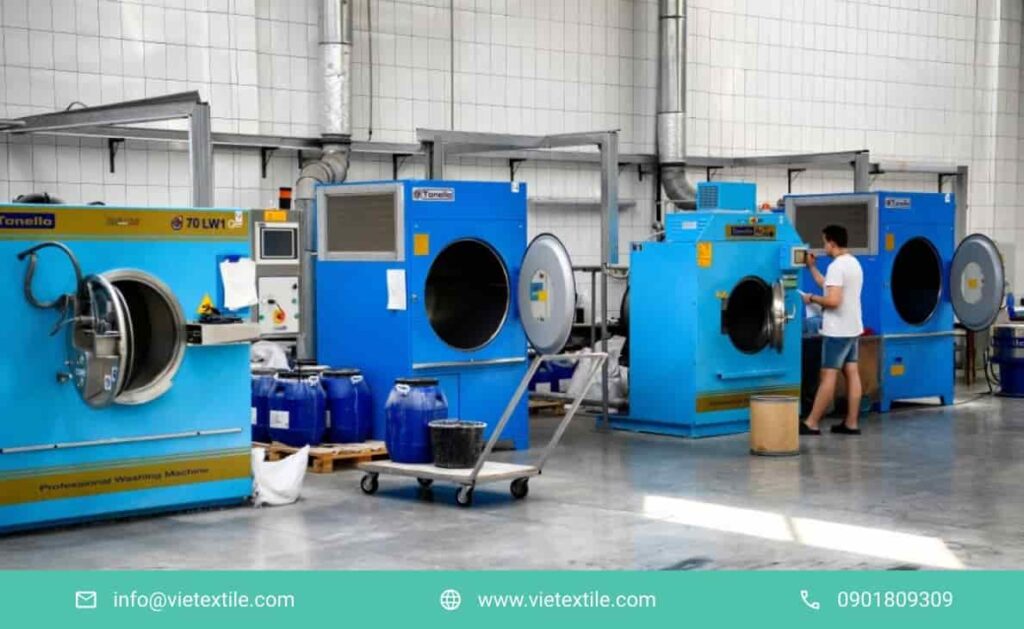
Stone Enzyme Bleach Acid Wash Processing is a multi-stage industrial washing process, combining the physical impact of Pumice stones, the biological action of Enzymes, the oxidation of Bleach, and the characteristic color fading of Acid wash.
The goal of this process is to change the original color of the Indigo dye, creating light and dark areas, high contrast, and especially softening the naturally stiff structure of denim. Each component in this combination plays a distinct role: stones create abrasions, enzymes clean the surface, bleach adjusts the color tone, and acid creates the “snow wash” effect.
1.1. The Role Of Pumice Stones In Stone Enzyme Bleach Acid Wash Processing
Pumice stone is an indispensable component for creating physical scratches and abrasions. These stones have a rough surface and light weight; when rotated in the drum, they constantly collide with the folds of the denim fabric. This friction peels off the Indigo color layer at prominent positions such as seams, hems, and pocket flaps, creating a characteristic rugged look.
1.2. How Cellulase Enzyme Works
Enzymes act as biological catalysts in Stone Enzyme Bleach Acid Wash Processing. They directly attack the excess fibers and cellulose structure on the fabric surface. This process helps the denim surface become cleaner, eliminating fuzziness, while increasing the drape of the garment, making the wearer feel more comfortable than with raw denim.
1.3. The Combination Of Artistic Bleach And Acid Wash
If Stone and Enzyme create the surface structure, then Bleach and Acid decide the soul of the color. Bleach helps lower the Indigo color tone to levels such as mid-blue or light blue. Meanwhile, Acid wash (usually using potassium permanganate attached to stones) creates spontaneous mottled patches, bringing a unique beauty to each Stone Enzyme Bleach Acid Wash Processing product.
2. And Development Of Denim Washing Technology
To understand why Stone Enzyme Bleach Acid Wash Processing is popular, we need to look back at the journey of denim. Initially, denim was just labor protection fabric for miners and cowboys thanks to its extreme durability. However, the appearance of wash-and-wear techniques transformed it into a global symbol of freedom and personality.
2.1. The Early Stages Of Stone Washing Techniques
In the 1970s, manufacturers began experimenting with adding pumice stones to washing machines to soften the fabric. Before that, users had to wear raw jeans and wash them repeatedly for years to get the desired softness. The birth of Stone Wash shortened this process to just a few dozen minutes, opening a new era for denim fashion.
2.2. The Enzyme Revolution In Stone Enzyme Bleach Acid Wash Processing
By the 80s and 90s, realizing that using too many pumice stones damaged the drums and excessively wore down the fabric, scientists introduced Enzymes into the process. This was a major turning point in Stone Enzyme Bleach Acid Wash Processing, helping the abrasion become more delicate and uniform while reducing the amount of stone sludge discharged into the environment.
2.3. The Rise Of Modern Acid Wash And Bleach Effects
The Acid wash effect exploded strongly among young people who loved rock and rebellious styles. The combination of the powerful whitening ability of Bleach and the mottled patches of Acid created classic “snow wash” jeans. Today, Stone Enzyme Bleach Acid Wash Processing has inherited all this essence to serve the returning Retro demand.
3. Why Does Denim Need This Complex Processing?
The primary reason why Stone Enzyme Bleach Acid Wash Processing is widely used is the nature of Indigo dye. Indigo does not completely penetrate the core of the cotton fiber but only adheres to the outer shell (ring dyeing). This allows external impacts to artistically “peel away” each color layer without completely destroying the fiber structure.
3.1. Solving The Stiffness Problem Of Raw Denim
Raw denim fabric after weaving is often very stiff and feels coarse against the skin. Stone Enzyme Bleach Acid Wash Processing is the optimal solution to “break” this stiffness. The washing process helps the cotton fibers expand, the sizing layer is removed, providing flexibility to the garment and helping the wearer move easily.
3.2. Creating Unique Aesthetic Value For Fashion
Consumers today don’t just buy a pair of pants; they buy a style. Stone Enzyme Bleach Acid Wash Processing allows for differentiation among millions of products. Natural abrasions and color patches where no two pieces are identical are the core values that help denim maintain its position as the “king of fabrics.”
3.3. Responding Quickly To Market Trends
The fashion market changes every week. Thanks to Stone Enzyme Bleach Acid Wash Processing, manufacturers can quickly transform a batch of dark Indigo fabric into many different product lines: from an elegant style with Blue Wash to a street style with mottled Acid Wash, helping businesses catch trends without changing the yarn supply.
4. Details Of Each Stage In Stone Enzyme Bleach Acid Wash Processing
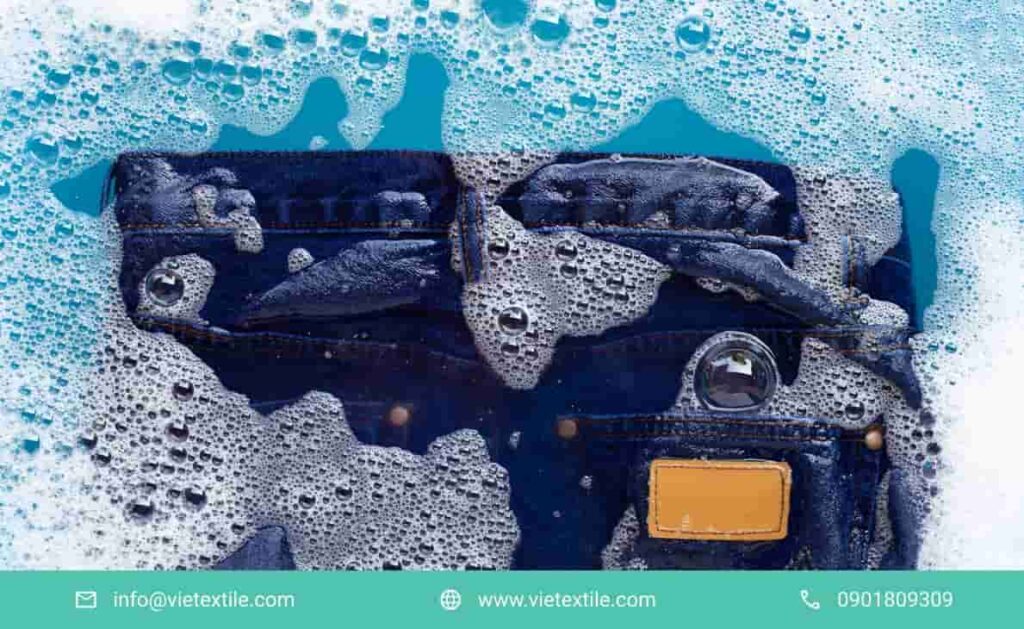
A complete Stone Enzyme Bleach Acid Wash Processing cycle is usually divided into several different layers of treatment, each requiring strict control of temperature, concentration, and time.
4.1. Stone Wash Stage
Pumice stones are added to the washing machine with the denim. During rotation, the stones hit the fabric, peeling off the Indigo color layer at frequent contact points like seams and hems. This is the foundational step in Stone Enzyme Bleach Acid Wash Processing to create natural coarseness.
4.2. Enzyme Wash Stage
Cellulase Enzyme is used to “eat” the excess fibers on the fabric surface. This not only makes the fabric smoother but also helps the color become clean and sharp. In Stone Enzyme Bleach Acid Wash Processing, enzymes help reduce the amount of pumice stones needed, protecting the environment and fabric durability.
4.3. Bleach Wash Stage
Strong oxidizing agents such as Sodium Hypochlorite are used to brighten the fabric color. This stage in Stone Enzyme Bleach Acid Wash Processing determines the final color tone (Light Blue, Mid Blue, or Dark Blue). Controlling the amount of bleach is extremely important so as not to weaken the fabric fibers.
4.4. Acid Wash Stage
This is essentially the process of using pumice stones soaked in Potassium Permanganate solution for dry washing with denim. The result creates a very characteristic mottled effect like clouds or snow. Stone Enzyme Bleach Acid Wash Processing cannot lack this step if it wants to create denim lines with Vintage or Grunge styles.
5. Economic And Aesthetic Benefits Of Stone Enzyme Bleach Acid Wash Processing
Applying Stone Enzyme Bleach Acid Wash Processing brings enormous added value to denim products. A pair of raw denim pants has a much lower cost than a pair that has gone through artistic wash treatment.
Economically, Stone Enzyme Bleach Acid Wash Processing helps businesses diversify product lines from a single fabric code. By simply changing the washing time or enzyme concentration, manufacturers can create dozens of different designs, meeting all customer segments from mass market to luxury.
Aesthetically, Stone Enzyme Bleach Acid Wash Processing brings depth to the garment. Scuffs, abrasions, and smooth color transitions create a strong visual effect, helping the wearer confidently express their personality. This is why major brands always prioritize Stone Enzyme Bleach Acid Wash Processing for their flagship collections.
6. Challenges In The Stone Enzyme Bleach Acid Wash Processing Procedure
Although it brings great results, Stone Enzyme Bleach Acid Wash Processing also faces many risks if technicians do not have high professional qualifications. Understanding the limitations helps businesses have contingency plans and more effective risk control in mass production.
6.1. Risks To The Physical Durability Of The Fabric
Continuous chemical and physical abrasion can weaken the cotton fiber structure if not strictly controlled. Overusing abrasive agents will significantly reduce the lifespan of denim products, causing a loss of reputation for the brand.
6.1.1. Fabric Rotting Due To Over-Bleaching
Using too much bleach in Stone Enzyme Bleach Acid Wash Processing without proper neutralization will cause the cellulose bonds to break completely. When the molecular structure of the cotton fiber is destroyed, the fabric will become crumbly and easy to tear even with slight external force.
To avoid this situation, the neutralization process after bleaching must be performed extremely strictly using specialized chemicals. Technicians need to regularly take samples to check the pH and durability of the fabric after each wash batch to ensure the product meets factory standards.
6.1.2. Damage To Seams And Accessories
Pumice stones during the collision process can break sewing threads or scratch metal buttons and zippers if not carefully protected. The strong collision between pumice stones and hard details on jeans often creates physical damage that is difficult to fix by manual repair.
In professional Stone Enzyme Bleach Acid Wash Processing, sensitive accessories are often wrapped or shielded with specialized protective equipment. Additionally, choosing a pumice stone size suitable for the thread density is also a key factor in protecting the integrity of the product.
6.2. Challenges Regarding The Environment And Wastewater Treatment
The textile processing industry in general, and the washing industry in particular, always faces great pressure to protect the environment due to the use of large amounts of chemicals and water. This is not only a matter of social responsibility but also a mandatory legal requirement for all modern textile production facilities.
6.2.1. Stone Sludge And Lint Volume
Worn-out pumice stones create a huge amount of sludge, which easily clogs drainage systems if not pre-treated at the source. Treating this sludge in Stone Enzyme Bleach Acid Wash Processing requires modern filtration systems and a formal industrial waste collection process.
Besides stone sludge, lint discharged from the enzyme wash process is also a potential pollutant. Without an effective sedimentation system, these micro-particles will be suspended in the wastewater, directly affecting the aquatic ecosystem in the area surrounding the factory.
6.2.2. Toxic Chemicals In Wastewater
Potassium permanganate and Chlorine in the Stone Enzyme Bleach Acid Wash Processing procedure, if not treated before discharge, will cause serious water pollution. Heavy metals and toxic organic compounds can accumulate long-term in soil and water, endangering community health.
Investing in a standard wastewater treatment system is an indispensable step to maintain sustainable development in the textile industry. Leading Stone Enzyme Bleach Acid Wash Processing factories today often apply water reuse processes to minimize negative impacts on the natural environment.
7. Solutions To Optimize The Stone Enzyme Bleach Acid Wash Processing Procedure
To overcome the above challenges, modern factories are applying new technologies to help Stone Enzyme Bleach Acid Wash Processing become “cleaner” and safer. These improvements not only enhance product quality but also optimize operating costs for businesses.
7.1. Application Of Nano And Laser Technology
Laser and nano technologies are opening a new chapter for the Denim industry by replacing traditional manual methods. These devices allow for complex effects with absolute precision without using too much human labor.
7.1.1. Using Laser Machines To Create Abrasion Effects
Lasers help create whiskers or thigh abrasions without the use of stones or chemicals, significantly reducing risks in Stone Enzyme Bleach Acid Wash Processing. Programming on computers helps abrasion patterns become uniform across thousands of products, something that traditional stone washing can hardly achieve.
Using lasers also helps protect worker health by completely eliminating contact with stone dust and strong bleaching agents in the initial abrasion stage. This is a high-tech solution that shortens production time and increases competitiveness for high-end denim lines.
7.1.2. Ozone Air Washing Technology
Ozone replaces traditional bleaching chemicals, saving water and energy while still achieving the desired whiteness in Stone Enzyme Bleach Acid Wash Processing. Ozone gas has strong oxidizing ability and automatically decomposes into oxygen after the reaction process, so it leaves no toxic chemical residue on the fabric.
Applying Ozone helps reduce the number of water rinses in the Stone Enzyme Bleach Acid Wash Processing procedure, thereby better protecting the fabric fiber structure. This is considered a leading green technology helping textile businesses achieve international certificates for environmental protection.
7.2. Improving Bio-Chemical Formulas
Using new generations of enzymes capable of operating at low temperatures and neutral pH is a sustainable direction for the washing industry. Bio-chemicals are not only environmentally friendly but also help maintain the physical and chemical durability of cotton fibers at the highest level.
7.2.1. Multi-Functional Enzymes
Using multi-functional enzymes helps reduce the number of washing steps in Stone Enzyme Bleach Acid Wash Processing, thereby better protecting fabric fibers and saving water resources. These enzymes can both remove the sizing layer and perform surface abrasion simultaneously in a single wash cycle.
This streamlining helps reduce power consumption for high-capacity industrial washing systems. At the same time, it also helps the denim surface after Stone Enzyme Bleach Acid Wash Processing have a more natural smoothness and shine than using synthetic chemicals.
7.2.2. Reusable Synthetic Stones
Instead of using fragile natural pumice stones, using synthetic stones in Stone Enzyme Bleach Acid Wash Processing helps better control abrasion and leaves no sludge. Synthetic stones are designed with stable roughness, helping to extend usage time through hundreds of wash batches without deformation.
This solution completely eliminates the phenomenon of sand and dust sticking in pockets or getting stuck in washing machine drums. Synthetic stones also help the Stone Enzyme Bleach Acid Wash Processing process become more professional thanks to the ability to customize stone shapes to create specific abrasion effects according to design requirements.
8. Influence Of Stone Enzyme Bleach Acid Wash Processing On Denim Durability

Consumers often wonder if Stone Enzyme Bleach Acid Wash Processing makes pants wear out quickly. In fact, if performed correctly according to standards, the fabric’s durability is still completely guaranteed for daily use.
Stone Enzyme Bleach Acid Wash Processing helps remove the weak elements of the fabric fibers right from the factory. This means that processed products are usually more stable in size and do not shrink after home washing. The balance between “artistic abrasion” and “structural durability” is the problem that Stone Enzyme Bleach Acid Wash Processing experts must always solve.
At reputable facilities, each Stone Enzyme Bleach Acid Wash Processing batch is sampled to check tensile strength before leaving the factory. This ensures that even though the pants look very rugged, they are still extremely sturdy.
9. Role Of VieTextile In The Denim Processing Industry In Vietnam
VieTextile is proud to be a pioneer in providing professional Stone Enzyme Bleach Acid Wash Processing solutions. We not only provide services but also bring comprehensive technological solutions to enhance the value of Vietnamese denim products.
We understand that Stone Enzyme Bleach Acid Wash Processing is an art that requires meticulousness. VieTextile’s technical team always researches and updates the latest wash formulas from Europe to apply in the Vietnamese market. Understanding the characteristics of each fabric type helps us advise customers on the most optimal Stone Enzyme Bleach Acid Wash Processing procedure, avoiding waste and defective goods.
VieTextile is committed to using environmentally friendly chemicals and enzymes, meeting strict export standards such as OEKO-TEX or GOTS. When mentioning Stone Enzyme Bleach Acid Wash Processing, VieTextile is the name that guarantees quality, durability, and outstanding aesthetics.
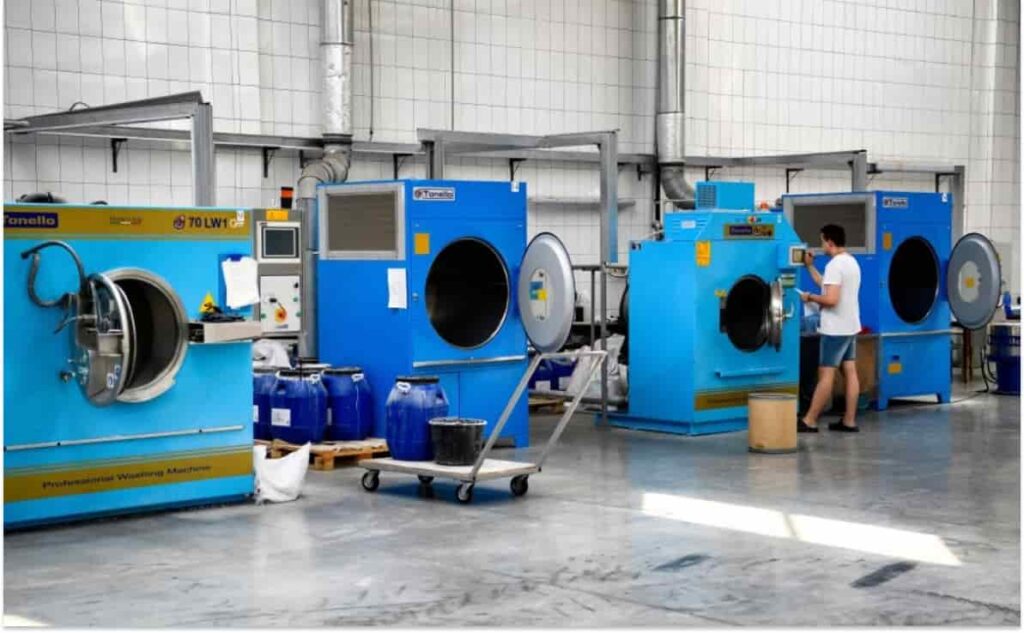
We invest heavily in modern machinery systems, from high-capacity industrial washing machines to infrared dryers, ensuring that each Stone Enzyme Bleach Acid Wash Processing product has the highest uniformity. The satisfaction of partners is the motivation for VieTextile to constantly improve the Stone Enzyme Bleach Acid Wash Processing procedure every day.
Partnering with VieTextile, customers will experience a professional working process, from sampling to mass production. We are always ready to solve the most complex requirements in Stone Enzyme Bleach Acid Wash Processing to create unique denim products that lead fashion trends.
10. Frequently Asked Questions (FAQ)
10.1. Does Stone Enzyme Bleach Acid Wash Processing thin the fabric much?
Stone Enzyme Bleach Acid Wash Processing does wear down the fabric surface but at a controlled level. Technicians will adjust the stone wash time and enzyme concentration to achieve the aesthetic effect while still maintaining the necessary thickness for the denim fabric.
10.2. Why is the price of Stone Enzyme Bleach Acid Wash Processing higher than normal washing?
Because Stone Enzyme Bleach Acid Wash Processing requires many stages, uses many types of high-end chemicals and specialized pumice stones. Additionally, this process is time-consuming and requires specialized machinery, so the cost is always higher than other simple washing methods.
10.3. Can Stone Enzyme Bleach Acid Wash Processing be performed for T-shirt fabric?
Absolutely. However, the Stone Enzyme Bleach Acid Wash Processing procedure for T-shirt fabric needs to be much gentler than for denim to avoid breaking spandex fibers (if any). The result will create very beautiful Vintage color effects on T-shirts.
10.4. Does VieTextile accept Stone Enzyme Bleach Acid Wash Processing in small quantities?
VieTextile is always flexible with orders. We support customers from sampling to medium and large quantity orders. Please contact us for advice on the Stone Enzyme Bleach Acid Wash Processing package that suits your needs.
10.5. Is the acid wash effect in Stone Enzyme Bleach Acid Wash Processing colorfast?
Yes. The acid wash effect is created by removing the original color, so it will be sustainable over time. Even after many home washes, the mottled color patches in Stone Enzyme Bleach Acid Wash Processing become more natural and beautiful.
To own denim products meeting high-quality Stone Enzyme Bleach Acid Wash Processing standards, contact VieTextile today!
Contact information:
Hotline: 0901 809 309
Email: info@vietextile.com
Website: https://vietextile.com