

Although both Viscose Rayon and Cotton are derived from Cellulose, their microstructures and physicochemical properties create completely different challenges in the dyeing process. Understanding these differences is the key to achieving vibrant colors and optimal color fastness.
This article dives deep into technical analysis to answer the question: How does viscose rayon dyeing processing actually differ from cotton and how can this process be optimized?
1. Differences From Fiber Structure To Dye Adsorption Capacity
Cotton is a natural fiber with a high proportion of crystalline regions, providing strength but limiting the penetration rate of dyes. Conversely, Viscose Rayon is a man-made fiber regenerated from wood pulp; the dissolving and spinning process makes the fiber structure looser, creating many “voids” for color molecules to seep into.
Due to this amorphous structure, under the same conditions, viscose rayon dyeing processing typically achieves a color yield 10% to 20% higher than cotton. However, this also means that colors are prone to blotchiness if the dye intake rate is not strictly controlled using specialized dispersing agents.
1.1. Fiber Swelling In Water Environment
When exposed to water, viscose fibers swell much more significantly than cotton. The diameter of viscose fibers can increase by up to 45-50%, while cotton only stops at 15-20%. This excessive swelling changes the fabric density in the dyeing drum, making it difficult for the dye liquor to circulate through thick fabric layers.
1.1.1. Impact on dye liquor circulation
In the viscose rayon dyeing processing workflow, excessive fiber swelling can clog the spaces between warp and weft yarns. If the dye liquor cannot penetrate evenly, “center-to-selvedge variation” will occur, causing the center of the fabric roll to have a different color than the edges.
To fix this, technicians need to adjust the liquor ratio higher than when dyeing cotton. Increasing the water volume reduces fabric density in the drum, creating space for viscose fibers to swell while ensuring the dye liquor flows through smoothly, thereby distributing color uniformly across the entire fabric surface.
1.1.2. Changes in wet mechanical strength
A critical difference is that viscose fibers lose up to 50% of their strength when wet, whereas cotton actually becomes stronger when wet. This makes viscose rayon dyeing processing sensitive to mechanical impacts such as the tension of rollers or the pressure of nozzles in high-pressure dyeing machines.
If the tension is too high, viscose fabric is prone to permanent elongation or tearing. Therefore, dyeing machines for viscose are usually designed with tension-less control systems and soft rubber-coated rollers to protect the fragile fiber structure during dyeing cycles lasting several hours.
1.2. Affinity For Reactive, Direct, And Vat Dyes
Both fibers use the same types of dyes, such as Reactive, Direct, or Vat. However, the affinity of the dye for viscose is much stronger, leading to an extremely fast “strike rate” as soon as contact is made.
1.2.1. Controlling the dyeing rate
In viscose rayon dyeing processing, if retarding agents are not used, the dye will concentrate entirely on the fabric surface within the first few minutes. This creates unevenness and poor penetration, leaving the fiber core white while the outside is darkly colored.
Technicians often must divide the amount of salt and alkali into multiple small additions rather than one single dose as with cotton. Controlling the temperature increase degree by degree (e.g., 1°C/minute) is mandatory to suppress the strong affinity of viscose, allowing color molecules enough time to migrate deep into the fiber structure.
1.2.2. Dye efficiency and color brilliance
Thanks to a smoother fiber surface and a more transparent structure than cotton, viscose fabric after dyeing usually has a natural luster and the color appears deeper (deep shade effect). Viscose rayon dyeing processing allows for the creation of vibrant neon tones or extremely pure pastels that cotton can hardly achieve.
However, this luster is easily lost if the pretreatment process is too harsh. Using high concentrations of caustic soda (NaOH), which is standard for cotton, will “burn” the viscose surface, making the fabric opaque and losing its characteristic luxury. Therefore, pretreatment for viscose must always occur under mild alkaline conditions and lower temperatures.
2. Pretreatment Process: Cotton Scouring vs. Viscose Cleaning
Cotton fabric contains many natural impurities like wax, pectin, and seed husks, so it requires a very strong scouring and bleaching process at boiling temperature (100°C) with high caustic soda. Conversely, viscose is a regenerated fiber already cleaned during production, so impurities are mainly machine oil and weaving sizes clinging to the surface.
Viscose rayon dyeing processing begins with a “light wash” rather than heavy scouring. Overusing bleaching chemicals in this stage is not only unnecessary but also significantly reduces fabric weight and severely damages the durability of the finished product.
2.1. Influence Of Alkaline Environment
Cotton is very durable in alkaline environments; even “mercerization” helps cotton become glossier and stronger. However, for viscose, a strong alkaline environment is a factor that damages the surface and loses the characteristic drape of the fabric.
2.1.1. Yellowing phenomenon from excessive alkali
In the viscose rayon dyeing processing sequence, if residual alkali is not thoroughly neutralized, the fabric will quickly turn yellow during drying or storage. This is particularly dangerous for light tones or optic whites, causing major damage to the shipment if pH is not accurately controlled.
Using buffering agents is the optimal solution to maintain a stable dyeing environment for viscose. Instead of caustic soda, Soda Ash (Na2CO3) or weak alkaline systems are often preferred to activate reactive dyes, helping to maximize the protection of the softness and luster of viscose fibers.
2.1.2. Controlling shrinkage during the cleaning stage
Viscose fabric has massive potential shrinkage right from the first cleaning step. If the water temperature changes abruptly from hot to cold, the yarn loops will be “shocked” and shrink uncontrollably, creating permanent creases on the fabric surface.
Standard viscose rayon dyeing processing requires a gradual cool-down step. Overflow rinsing (discharging hot water and supplying cold water simultaneously) helps stabilize the fabric structure, minimizing pressure on the fibers and keeping the fabric surface flat before entering the official dyeing stage.
3. Tension And Deformation Control During Dyeing
As mentioned, viscose is extremely sensitive to tension when wet. A regular Jet dyeing machine used for cotton might be too “brutal” for viscose fabric, leading to abnormal vertical elongation and horizontal narrowing.
Viscose rayon dyeing processing requires equipment with gentler flows. Adjusting the nozzle pressure to the lowest possible level and increasing the winch speed are mandatory techniques to keep the fabric in a suspended state, minimizing tension on the fibers.
3.1. Spirality And How To Overcome It
Due to its long and smooth man-made fiber characteristics, viscose fabric easily slides and twists into a rope form (rope marks) in the dyeing machine. If these twists persist too long under dyeing temperatures, they will create dark color streaks along the folds, completely ruining the fabric’s aesthetics.
3.1.1. Using anti-crease and anti-friction agents
In the viscose rayon dyeing processing workflow, adding internal lubricants to the dye liquor is crucial. These agents create an ultra-thin protective film between fabric folds, helping the fabric slide easily and preventing knots in the drum.
The presence of lubricants also reduces friction between the fabric and the metal machine walls, preventing “scuff marks”—an error easily noticeable on dark-colored viscose when surface fibers are abraded and reflect light differently.
3.1.2. Optimizing cycle time
The turnover time (the time fabric takes to complete one loop in the machine) should be kept short (about 2-3 minutes). Continuous folding/unfolding ensures folds are not fixed in one position for too long, helping color penetrate evenly into every crevice and supporting viscose rayon dyeing processing in achieving absolute levelness.
Technicians need to monitor the balance between fabric speed and liquor flow. If the fabric moves too slowly while the dye liquor sprays too strongly, the impact force will kick up surface fuzz, creating a “fish scale” effect or pilling after dyeing.
4. Technical Comparison Table: Viscose Rayon vs. Cotton Dyeing
For a quick and comprehensive overview, here is a comparison of key technical parameters between these two fabrics during the dyeing process.
| Comparison Criteria | Viscose Rayon Dyeing Processing | Cotton Dyeing Processing |
| Swelling in water | Very strong (45% – 50%) | Medium (15% – 20%) |
| Wet strength | Sharp decrease (~50%) | Slight increase compared to dry |
| Dye affinity | Very high, extremely fast strike | Medium, requires heat and salt |
| Color Yield | High (more dye-efficient) | Lower than Viscose |
| Pretreatment | Light wash, weak alkali, low temp | Heavy scouring, high NaOH, 100°C |
| Tension control | Extremely strict (Tension-less) | Can withstand medium tension |
| Optimal dyeing temp | 60°C – 80°C | 80°C – 100°C |
| Surface luster | Natural silk-like luster | Matte, requires Mercerization |
4.1. Analysis of the technical comparison table
Based on the comparison table, it is clear that viscose rayon dyeing processing aims for sophistication and fiber preservation. Lower dyeing temperatures not only protect the durability of viscose but also offer an advantage in terms of energy saving for the mill.
However, the challenges of swelling and wet strength require manufacturers to invest in modern machinery and a skilled technical team. This difference is why high-end Viscose fabric always has slightly higher processing costs compared to popular cotton lines.
5. Color Fastness And Post-Dyeing Treatment
The color fastness of viscose is usually slightly lower than cotton if not chemically treated correctly. Due to the loose structure, dye molecules are not “locked” as tightly as in cotton, leading to color bleeding during washing or staining other fabrics when wet.
Viscose rayon dyeing processing always ends with an intensive fixing step. Choosing a fixing agent that does not affect the drape and hand-feel of the fabric is an art in finishing for this premium Rayon line.
5.1. Improving Washing Fastness
Using high concentrations of cationic fixing agents is a common method to lock the dye into viscose fibers. However, if overdosed, the fabric will become stiff and lose its natural luster.
5.1.1. Post-dyeing enzyme rinsing technique
An advancement in viscose rayon dyeing processing is using extremely low-concentration cellulase enzymes to remove surface fuzz after dyeing. This not only makes the fabric surface cleaner and glossier but also removes loosely attached dye particles on these micro-fibrils, significantly increasing color fastness.
The enzyme treatment process must be strictly controlled for pH and temperature so as not to weaken the fabric. The result is viscose fabric with a silk-smooth surface that does not pill after many home washes, enhancing the value of fashion products.
5.1.2. Preventing color bleeding
For white-dark contrast designs, viscose rayon dyeing processing requires fixing agents with sustainable cross-linking capabilities. Testing color fastness to perspiration and seawater is also crucial for Rayon lines used in beachwear.
VieTextile always recommends customers use high light-fastness reactive dyes for viscose fabric. Because viscose fibers are more transparent, sunlight easily penetrates and destroys color bonds faster than on dense cotton backgrounds, so choosing the right color system is the decisive factor.
6. VieTextile And Professional Viscose Rayon Dyeing Solutions
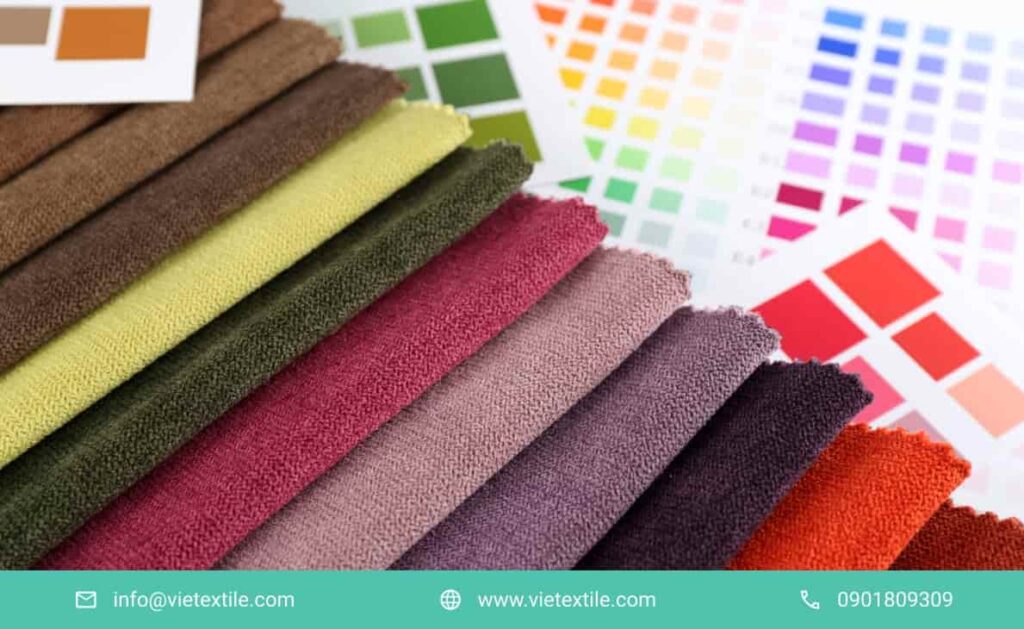
At VieTextile, we possess an international standard viscose rayon dyeing processing workflow, meeting the strictest requirements for color levelness and mechanical durability. We understand that viscose is not just a fabric, but a work of art requiring care in every processing step.
6.1. Low-Tension Dyeing Machine System
We invest in the latest generation of Overflow dyeing machines, specifically designed for sensitive man-made fibers. This system ensures that viscose fabric does not elongate, preserving its natural stretch and soft drape.
VieTextile’s technical team has experience processing thousands of viscose batches with tones ranging from elegant pastels to deep blacks. We commit to delivering streak-free, crease-free fabric surfaces and consistent color from the beginning to the end of the roll.
6.2. Eco-Friendly Dyeing Formulas
Viscose rayon dyeing processing at VieTextile uses 100% chemicals that meet ZDHC and OEKO-TEX standards. We prioritize weak alkalis and high-exhaustion dyes, minimizing chemical residues in wastewater and protecting consumer health.
We provide lab-dip services according to customer-requested color palettes with high accuracy. Our deep understanding of the differences between viscose and cotton helps us advise customers on the most effective processing options, ensuring economic efficiency and superior quality.
7. Frequently Asked Questions (FAQ)
7.1. Why does the same color formula look darker on viscose than on cotton?
Because the viscose fiber structure has many amorphous regions and a stronger swelling capacity, the dye penetrates deeply. The strong affinity allows viscose to absorb more color, resulting in shades that are always darker and deeper than on a cotton background.
7.2. Does dyeing viscose rayon require high temperatures like cotton?
In fact, viscose rayon dyeing processing usually takes place at lower temperatures (about 60-80°C for reactive dyes). Excessive temperatures (above 90°C) for a long time can degrade viscose fibers and cause the fabric to lose its luster.
7.3. How to avoid moiré effects on viscose fabric after dyeing?
Streaks or moiré effects are usually caused by excessive pressure in the dyeing drum. The best way is to use anti-crease agents, increase the liquor ratio, and reduce the batch weight so the fabric has enough space to circulate freely, achieving absolute levelness.
7.4. Is viscose fabric prone to yellowing after dyeing?
Viscose fabric is very sensitive to residual alkali and drying temperatures. To avoid yellowing, the viscose rayon dyeing processing must include a neutralization step with mild organic acids and control the Stenter drying temperature not to exceed 140°C.
To receive a quote and technical consultation for your viscose rayon dyeing project, contact VieTextile today!
Contact information:
Hotline: 0901 809 309
Email: info@vietextile.com
Website: https://vietextile.com