


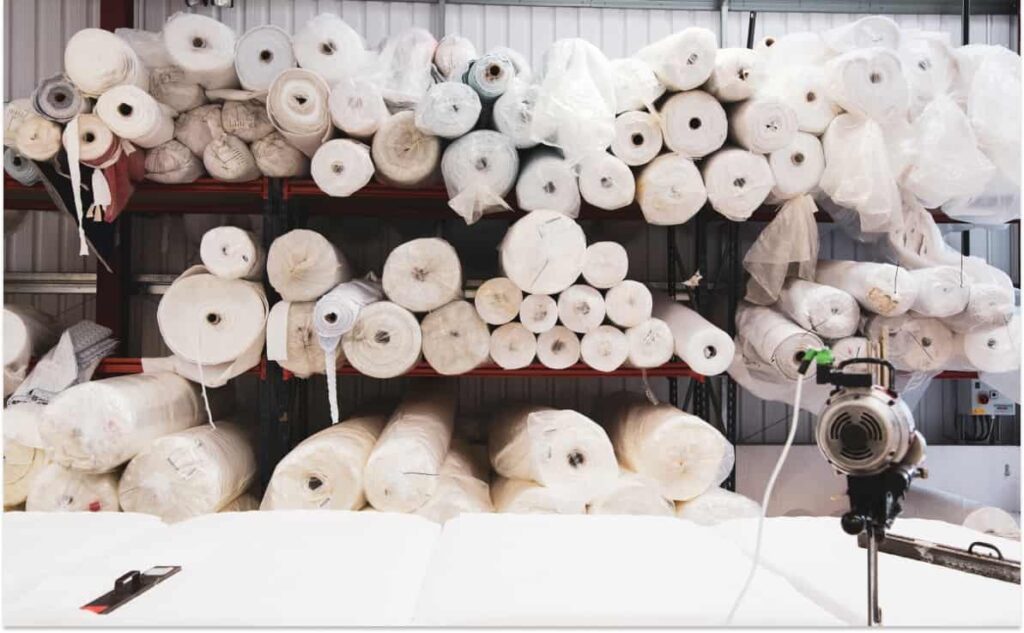
Anti Shrink Fabric Finishing is the final crucial step in the textile production chain, determining the dimensional stability of garments after they reach the consumer. A precise finishing process helps eliminate concerns about clothing shortening or deforming after washing.
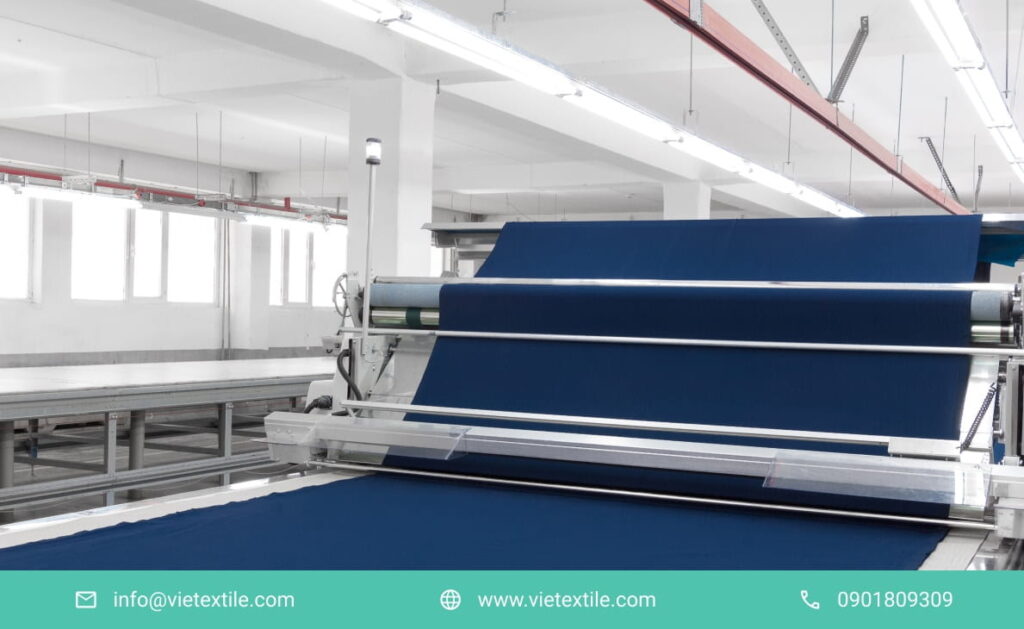
1. Mechanical Method: Sanforizing Technique (Compacted Shrinkage)
Sanforizing is considered the “gold standard” in Anti Shrink Fabric Finishing for woven cotton fabrics. This is a mechanical compressive shrinkage process using steam and pressure to force fabric fibers into their most relaxed state before cutting and sewing.
The principle of Sanforizing is to shrink the fabric longitudinally by pressing it against a stretched elastic rubber belt, then allowing the belt to relax and contract. This process forces the warp yarns to “wave” around the weft yarns, helping the fabric achieve excellent dimensional stability without the use of harmful chemicals.
1.1. Operation Mechanism Of The Sanfor Machine
Fabric is passed through a system of rollers where it is sprayed with steam to soften fibers and reduce friction between cellulose molecules. In this Anti Shrink Fabric Finishing process, temperature and moisture play a decisive role in making the fibers more pliable before entering the compression stage.
1.1.1. The Role of the Rubber Belt
The thick rubber belt is the soul of the Sanfor machine. When passing through the bending roller, the outer surface of the rubber belt is stretched, and when it returns to a flat state, this surface contracts, pulling along the fabric layer tightly attached to it. This is the most effective Anti Shrink Fabric Finishing method to “repay” the tension the fabric endured during weaving and dyeing.
Furthermore, the thickness and elasticity of the rubber belt are carefully calculated to suit each fabric weight. Maintaining a smooth rubber surface is the key factor in ensuring even tension distribution, avoiding uneven shrinkage or mechanical marks on the finished product surface.
1.1.2. Controlling Pressure and Operating Speed
The pressure between the pressure roller and the rubber belt needs to be accurately adjusted based on the fabric thickness. An operating speed that is too fast will not give the fabric enough time to set, while excessive pressure can crush the fiber structure. This balance is the secret to Sanforized fabric having a flat surface and excellent shape retention.
Experienced technicians must continuously monitor temperature and pressure charts throughout the batch. Adjusting the machine speed relative to the residual moisture in the fabric optimizes the shrinkage process, ensuring the fabric does not suffer from “thermal shock” and maintains its natural tensile strength.
1.2. Advantages Of The Sanforizing Method
Products after undergoing Anti Shrink Fabric Finishing with the Sanforizing technique usually have a shrinkage rate below 1%, an ideal figure for high-end export orders. This method also helps the fabric surface become firmer, improving the hand-feel and mechanical durability of the product.
1.2.1. No Irritating Chemicals Used
Since this is entirely physical, Sanforized fabric is absolutely safe for the skin, especially children’s skin. This helps businesses easily achieve international environmental certifications and build a sustainable, consumer-friendly brand image.
Additionally, removing chemicals significantly reduces wastewater treatment costs for the textile mill. This “clean” process not only protects the health of operators but also meets the strictest standards of demanding markets like Europe and Japan regarding impurity residues on fabric.
1.2.2. Permanent Stability
Unlike regular washing, the shrinkage achieved through Sanforizing is permanent. Even after many home washes, the garment size remains stable, helping customers always feel fit and satisfied with your product.
This stability also gives industrial garment makers more confidence in pattern grading. When the fabric no longer fluctuates in size, specifications for necklines, armholes, or leg lengths will always match the standard size chart, minimizing post-sale quality complaints.
2. Chemical Method: Resin Finishing
For fabrics that are difficult to control mechanically, such as knit fabrics or blended fabrics, Anti Shrink Fabric Finishing using Resin is an effective solution. Resin compounds (usually urea-formaldehyde derivatives) penetrate inside the fabric fibers and create cross-linking between cellulose molecules.
These cross-links act like microscopic “pins,” locking the fiber molecules in place, preventing them from shifting or shortening when exposed to water. This is a technique that provides both wrinkle resistance and anti-shrink capabilities for the product.
2.1. Pad-Dry-Cure Process In Resin Finishing
Fabric is dipped through a tank containing resin solution (Padding), then dried, and finally baked at high temperatures (Curing). The curing temperature usually ranges from 150-170 degrees Celsius to activate the chemical reaction that creates cross-links inside the fiber core.
2.1.1. Controlling Appropriate Resin Concentration
Anti Shrink Fabric Finishing with resin requires subtlety in dosage. If too little is used, the anti-shrink effect will not be achieved; but if too much is used, the fabric will become stiff, brittle, and prone to reduced tensile strength.
Specifically, the resin concentration must be calibrated according to the fabric’s pickup percentage. A standard formulation must include auxiliary softeners to compensate for the stiffness caused by the resin, helping the final product achieve both dimensional stability and softness when in contact with the skin.
2.1.2. The Importance of Catalysts
Catalysts help the cross-linking reaction occur faster and at lower temperatures. Choosing the right catalyst helps protect the fabric color from changing under the influence of high heat in the setting oven, ensuring the aesthetics of the finished product.
Using magnesium salts or zinc chloride as catalysts requires strict control of the pH of the finishing solution. If the pH is unstable, the cross-linking reaction will occur incompletely, leading to localized shrinkage after consumer use or the appearance of unwanted odors.
2.2. Anti-Shrink Finishing For Viscose And Rayon Fabrics
Viscose fabric is notorious for being extremely difficult to manage because its shrinkage can reach 15-20%. Chemical Anti Shrink Fabric Finishing is the only solution to transform this soft, draping fabric into a stable one that can be widely used in industrial apparel.
2.2.1. Improving Wet Strength
Viscose fibers often weaken significantly when wet. The Resin process helps strengthen the molecular structure, making the fibers tougher when in contact with water and preventing sagging deformation—an inherent disadvantage of this fabric line if not properly finished.
Thanks to sustainable cross-links, polymer chains in viscose fibers do not slide over each other when absorbing water. This helps the product maintain its original weight and drape, avoiding garments getting longer or deformed after drying, significantly increasing the service life.
2.2.2. Creating an “Easy Care” Effect
In addition to anti-shrinkage, chemical Anti Shrink Fabric Finishing also helps the fabric wrinkle less after washing. This saves consumers time on ironing, increasing the value for office wear or fashion dresses.
The “Wash and Wear” feature is formed from a thin resin coating, making unwanted folds harder to form. This is a huge competitive advantage for menswear brands, where the crispness and flatness of a shirt is always a top priority.
3. Heat Setting Method For Synthetic Fabrics
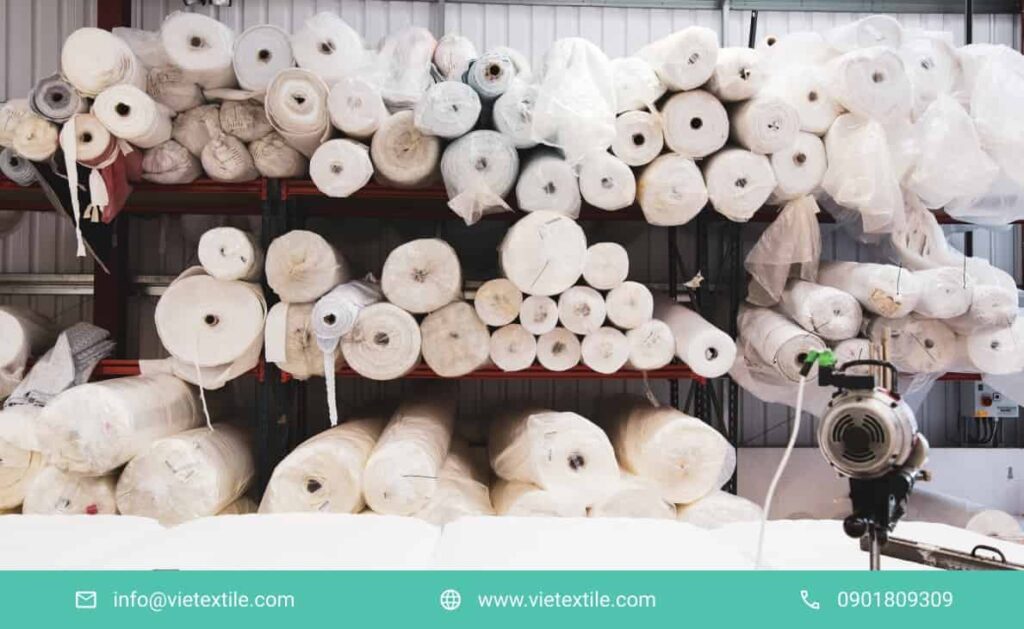
For fabrics containing synthetic fibers like Polyester, Nylon, or Spandex, the most effective Anti Shrink Fabric Finishing method is heat setting on a Stenter machine. Synthetic fibers are thermoplastic, capable of “remembering” their shape when heated to a certain temperature (usually 180-200 degrees Celsius).
In a Stenter machine, the fabric is stretched both vertically and horizontally by a chain clip system, then passed through high-temperature drying chambers. This process rearranges the polymer chains inside the fiber, helping the fabric maintain its original dimensions even when encountering high temperatures in later laundering processes.
3.1. Operation Process On The Stenter Machine
The Stenter machine is the most versatile equipment in Anti Shrink Fabric Finishing. Technicians can adjust the fabric width and overfeed ratio to compensate for desired shrinkage. Controlling the dwell time in the heat chamber is vital to ensure the fabric is completely set.
3.1.1. Overfeed Technique for Warp Anti-Shrinkage
By feeding fabric into the Stenter machine at a speed faster than the chain clips, we create tiny ripples in the fabric. When encountering high heat, these ripples contract and stabilize, helping the longitudinal Anti Shrink Fabric Finishing achieve optimal efficiency.
The overfeed ratio usually ranges from 2% to 10% depending on the stretch of each fabric type. Calculating this ratio accurately requires smooth coordination between weaving and finishing techniques to neutralize accumulated tension, helping the final product not shorten after passing through the dryer.
3.1.2. Controlling Hot Air Flow in the Drying Chamber
Hot air must be blown evenly from both above and below the fabric surface to ensure thermal uniformity. If the temperature is uneven, the fabric will experience wavy selvedge or inconsistent shrinkage between the center and the edges.
Additionally, the hot air circulation system needs to be filtered regularly to prevent dust or machine oil from sticking to the fabric and causing color stains. Maintaining a stable temperature environment throughout the length of the drying chamber is a prerequisite for uniform elasticity across the entire surface.
3.2. Heat Setting For Stretch Denim Knit Fabrics
Denim Knit fabric often contains a high percentage of Spandex for comfort. Anti Shrink Fabric Finishing for this product line requires lower setting temperatures (about 170 degrees Celsius) so as not to “kill” the elastic fibers, while still ensuring the fabric does not experience spirality after washing.
3.2.1. Stabilizing the Knit Loop Structure
Temperature helps the knit loops “stand their ground” and not shift. This is an important stepping stone for subsequent enzyme washing or stone washing processes to take place without ruining the garment shape, keeping the product true to size.
In knitted fabric, yarn loops always tend to self-balance. Heat setting at the Anti Shrink Fabric Finishing stage helps lock these loops in their ideal state, limiting the fabric from sagging after vigorous movement, maintaining a dynamic look for sportswear and fashion knitwear.
3.2.2. Preventing Spirality
Stretching and heat setting help neutralize residual twisting forces in knitted yarns. This is how Anti Shrink Fabric Finishing helps side seams remain perfectly straight, a mandatory standard for high-quality export apparel.
Spirality often occurs due to the yarn twist direction (S-twist or Z-twist). By applying opposing tension and heat on the Stenter machine, we can adjust the fabric skew angle to 0 degrees, ensuring symmetrical pattern details that do not shift after mass laundering.
4. New Generation Anti Shrink Fabric Finishing Solutions
With technological advancements, modern Anti Shrink Fabric Finishing methods are moving towards sustainability and energy efficiency. Technologies such as Plasma treatment, Ozone, or new-generation enzymes are gradually replacing traditional chemicals.
At VieTextile, we always update the latest trends to advise partners on solutions that are not only effective but also eco-friendly, helping to optimize long-term production costs.
4.1. Cold Plasma Treatment Technology
Cold plasma acts on the fiber surface at the atomic level, changing the surface structure to increase adhesion and reduce fiber shifting. Anti Shrink Fabric Finishing with Plasma helps stabilize fabric without needing the massive amounts of water and temperature required by old methods.
4.1.1. Increasing Finishing Chemical Absorption
The fabric surface after Plasma treatment becomes more “hydrophilic,” allowing anti-shrink agents to penetrate deeper and more evenly into the fiber core. This enhances the efficiency of subsequent Anti Shrink Fabric Finishing steps, reducing the amount of chemicals needed.
When absorption increases, chemical impregnation time shortens, thereby significantly increasing line productivity. At the same time, even chemical distribution eliminates common white spot or color staining errors found in combined dyeing and finishing processes.
4.1.2. Solution for Non-Shrink Wool Fabrics
Wool fibers often shrink due to the “felting” phenomenon during washing. Plasma treatment slightly erodes these scale layers, allowing wool to be machine-washed without matting or shrinking, opening up the easy-care high-end wool segment (washable wool).
This technology completely replaces traditional chlorine treatments, which are very toxic. The result is soft sweaters that maintain natural warmth but are extremely durable in the washing machine, meeting the convenience needs of modern life.
4.2. Biological Enzyme Anti-Shrink Finishing
Using specific Cellulase enzymes for surface treatment and fiber stabilization is becoming a trend. Enzymes help remove excess fuzz and allow the fabric to “relax” naturally at room temperature.
4.2.1. Simultaneous Softening and Anti-Shrink Effects
Anti Shrink Fabric Finishing with enzymes provides an extremely soft hand-feel, very suitable for fleece-lined knit or flannel fabrics. After treatment, the fabric has a beautiful drape and no longer has mechanical stress inside the fibers.
This biological process occurs selectively, only attacking weak bonds at the fiber surface to release stress. This helps the fabric achieve dimensional stability in the gentlest way, keeping the knitted structure breathable and moisture-wicking.
4.2.2. Saving Water and Protecting the Ecosystem
The enzyme process consumes 50% less water than conventional chemical finishing. This is an ideal Anti Shrink Fabric Finishing solution for businesses pursuing green and sustainable production standards (Sustainable Fashion).
Reducing harmful chemicals in wastewater helps businesses save on environmental treatment costs. This is not just a processing technique but a testament to social responsibility, enhancing brand value in the eyes of globally conscious consumers.
5. The Role Of VieTextile In Finishing Consultation
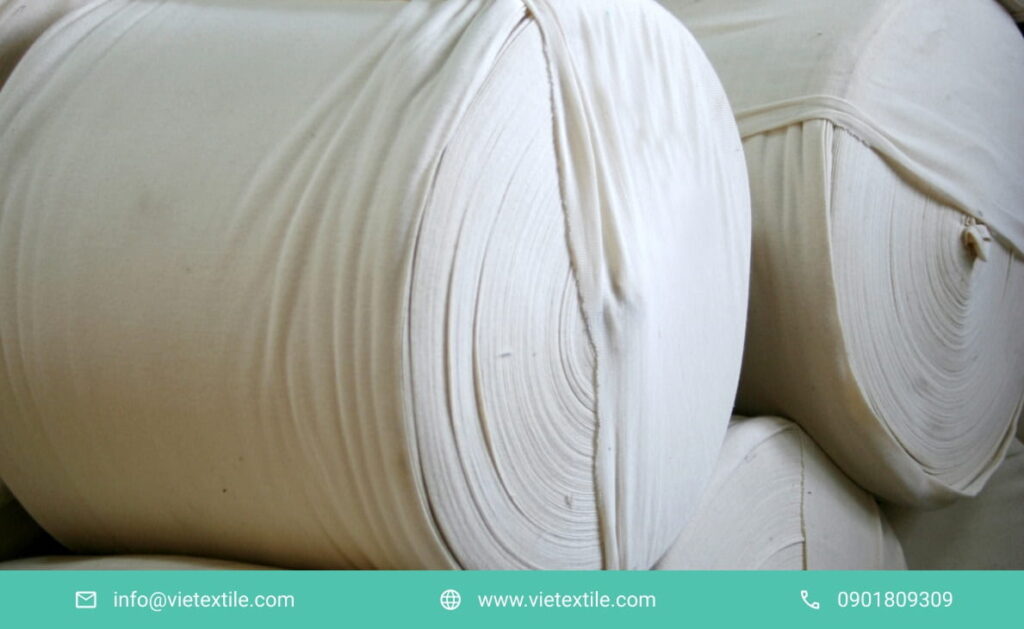
VieTextile does not just provide high-quality fabric; we are a leading technical consultation center for Anti Shrink Fabric Finishing. We understand that every fabric batch is a unique entity requiring different processing “remedies.”
5.1. Shrinkage Analysis And Testing To International Standards
At VieTextile, every product is tested for shrinkage according to standards like AATCC or ISO before leaving the factory. We perform rigorous wash and dry tests to ensure the Anti Shrink Fabric Finishing process has reached absolute stability.
We provide detailed reports on warp and weft shrinkage rates to customers, helping the partner’s technical department calculate precise allowance. Parameter transparency is VieTextile’s top commitment to every customer.
Simultaneously, we advise on the most suitable storage and washing conditions so that the fabric’s anti-shrink durability is maximized. Any deviation during testing is analyzed for root causes to adjust the finishing process in time before mass delivery.
5.2. Customized Finishing Process Design
Based on pattern samples and customer hand-feel requirements, VieTextile will design a unique Anti Shrink Fabric Finishing process. We coordinate between Sanfor, Stenter, and Enzyme to create a unique fabric surface: both excellent anti-shrinkage and a unique surface effect according to the designer’s intent.
Our deep understanding of machinery equipment helps us optimize every parameter: from roller pressure to drying chamber temperature. Choosing VieTextile is choosing peace of mind regarding size specifications and sophistication in every meter of finished fabric.
Each type of fiber (cotton, viscose, or blend) has different thermal and physicochemical characteristics. Therefore, our customized process design service ensures the fabric not only does not shrink but also achieves ideal color brightness, softness, and luster according to high-end fashion requirements.
6. Frequently Asked Questions (FAQ)
6.1. Why does 100% cotton fabric still shrink after being Sanforized?
Sanforized helps reduce shrinkage to an extremely low level (below 1%) but cannot completely eliminate it if the user washes at too high a temperature (above 60 degrees Celsius) or over-dries at home. Anti Shrink Fabric Finishing only protects the fabric under normal use conditions as recommended on the label.
Direct exposure to harsh sunlight can also make cotton fibers “brittle” and shrink slightly. Therefore, in addition to technical processing, educating consumers on how to care for the product also plays an important role in maintaining long-term garment shape.
6.2. Is Resin chemical finishing safe for sensitive skin?
Nowadays, new-generation anti-shrink resin lines (Formaldehyde-free) have completely solved the skin irritation issue. VieTextile always prioritizes using chemicals that meet OEKO-TEX standards to ensure the Anti Shrink Fabric Finishing process is absolutely safe for health.
Finished products are strictly monitored for chemical residue, ensuring no unpleasant odors or allergic radicals remain. You can be completely confident when using our Resin-treated fabric for high-end clothing and children’s wear.
6.3. How to know if the fabric has undergone anti-shrink processing?
You can check the fabric edge (selvedge)—fabric passed through a Stenter usually has pin marks at the edge. Additionally, the most accurate way is to perform a 3-wash sample test; fabric with standard Anti Shrink Fabric Finishing will not change in size by more than 2-3% after these washes.
Another small tip is to place a drop of water on the fabric surface; fabric treated with good anti-shrinkage usually has even absorption and spreading, without surface distortion at the wet point. The natural flatness of the fabric surface is also an identifying sign of a standard Sanforized process.
6.4. What anti-shrink method should be used for denim knit fabric?
The best method is heat setting on a Stenter machine combined with biological enzyme treatment. This Anti Shrink Fabric Finishing method maintains the Spandex stretch while ensuring the fabric does not suffer from spirality when customers wear and wash it at home.
This combination makes the fabric as soft as sleepwear but with the rugged look of jeans. This is the optimal solution for the highly popular “Athleisure” clothing line, helping wearers feel confident in every posture without worrying about garments sagging after a few uses.
For in-depth advice on Anti Shrink Fabric Finishing methods for your project, contact VieTextile today!
Contact information:
Hotline: 0901 809 309
Email: info@vietextile.com
Website: https://vietextile.com