

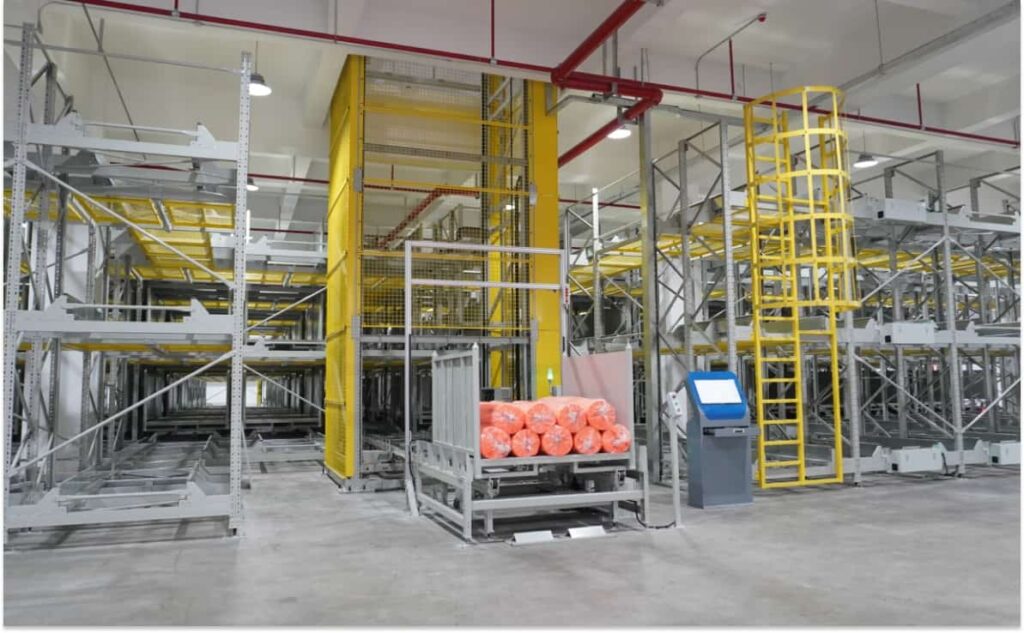
Automated warehouse management is becoming a mandatory standard for textile factories aiming for a smart manufacturing model. Integrating robotic devices and software from leading providers like Martan helps businesses break through in operational performance.
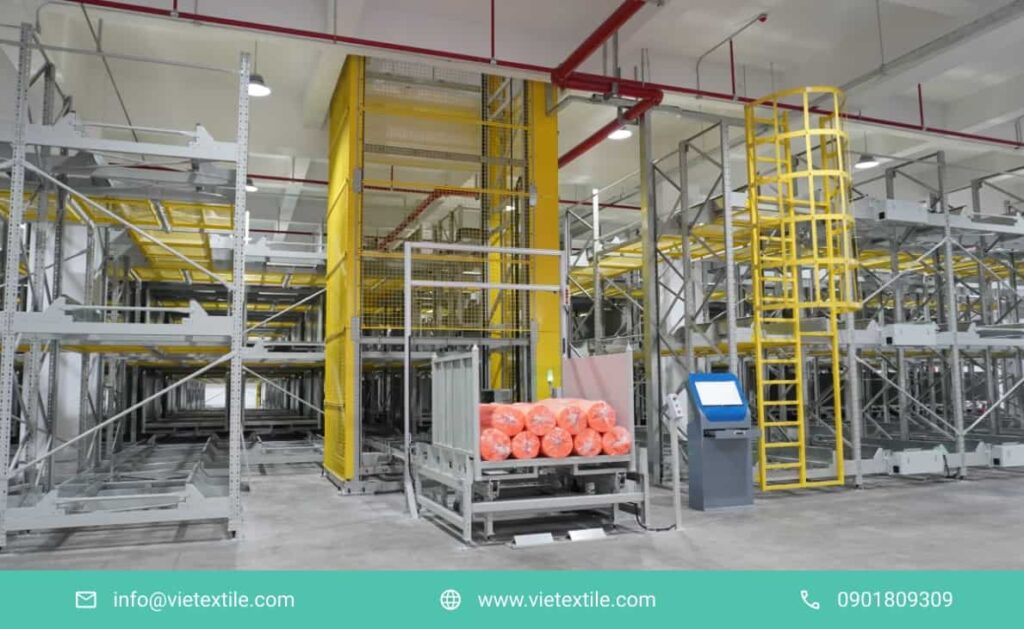
1. Automated Warehouse Management – The Foundation of Smart Factories
Automated warehouse management is not just a support system, but the very foundation that helps textile factories operate smoothly and maintain long-term scalability. This section clarifies the core role of the system in connecting data, equipment, and operational processes.
1.1. Martan’s Role in Smart Warehouse Solutions
In the context of Industry 4.0, automated warehouse management acts as the logistical nervous system of the factory, connecting storage, internal transport, and operational data into a unified flow. Martan Intelligent Technology provides turnkey solutions, from core equipment to master planning, bringing textile enterprises closer to the smart factory model.
Beyond providing equipment, Martan deeply participates in operational optimization problems, from warehouse layouts to storage strategies. This ensures that the automated warehouse management system is not fragmented but becomes an integral part of the factory’s overall structure.
1.1.1. Total Factory Integration
Martan approaches automated warehouse management through comprehensive integration, ensuring the system does not operate independently but links closely with production and internal logistics.
This integration ensures data is synchronized throughout, reducing information discrepancies and increasing real-time control capabilities across the entire operational chain.
1.1.2. Optimization for Textile Industry Specifics
Unlike other industries, textiles have unique characteristics such as fabric rolls, fabric frames, and high inbound/outbound frequencies. Martan designs automated warehouse management solutions based on these specific traits.
As a result, the system not only operates efficiently but also fits the reality of production, helping businesses avoid additional costs due to incompatible designs.
1.2. The Combination of Hardware and Software
A modern automated warehouse management system does not just consist of robots or smart racking; it is operated by the MTmart digital platform. This ecosystem integrates WMS, WCS, RCS, and CPS to control storage locations, coordinate robots, monitor goods flow, and synchronize data with the factory’s management system.
This combination transforms the warehouse from a passive storage space into an active operational system where all data is updated and responded to in real-time.
1.2.1. The Role of WMS, WCS, RCS, CPS
Systems like WMS, WCS, RCS, and CPS act as the “brain” of automated warehouse management, responsible for coordination and operational decision-making.
They help optimize robot paths, allocate reasonable storage positions, and minimize waiting time during the inbound and outbound processes.
1.2.2. Data Synchronization with ERP and MES
A major advantage of automated warehouse management is its ability to connect with existing ERP and MES systems in the factory.
This synchronization gives businesses a comprehensive view from production to inventory, enabling faster and more accurate operational decisions.
2. Breakthrough Technologies in Martan Automated Warehouse Management
To solve problems of area, speed, and accuracy, Martan develops many specialized technologies for the textile industry. Below are typical solutions widely applied in practice.
2.1. Four-Way Shuttle AS/RS System
The four-way shuttle system is suitable for factories with low ceilings or those needing to renovate old warehouses. This solution allows for a 1.3 to 4-fold increase in storage density compared to traditional models, while offering greater operational flexibility due to its multi-directional movement in three-dimensional space.
Beyond space optimization, this system significantly shortens picking time thanks to smart flow mechanisms. Shuttle robots can operate in parallel on multiple rack levels, reducing congestion during peak hours.
2.1.1. Multi-directional Movement Mechanism
The shuttle robot can move in all four directions on the same plane and combine with a lifter to change levels.
This mechanism optimizes paths, reduces travel distance, and increases order processing speed within the automated warehouse management system.
2.1.2. Suitable for Renovated Warehouses
The shuttle solution is particularly suitable for existing warehouses that need upgrading without major structural changes.
Since it does not require excessive height, businesses can leverage existing infrastructure to implement automated warehouse management at a reasonable cost.
2.2. High-Rise Stacker Crane System
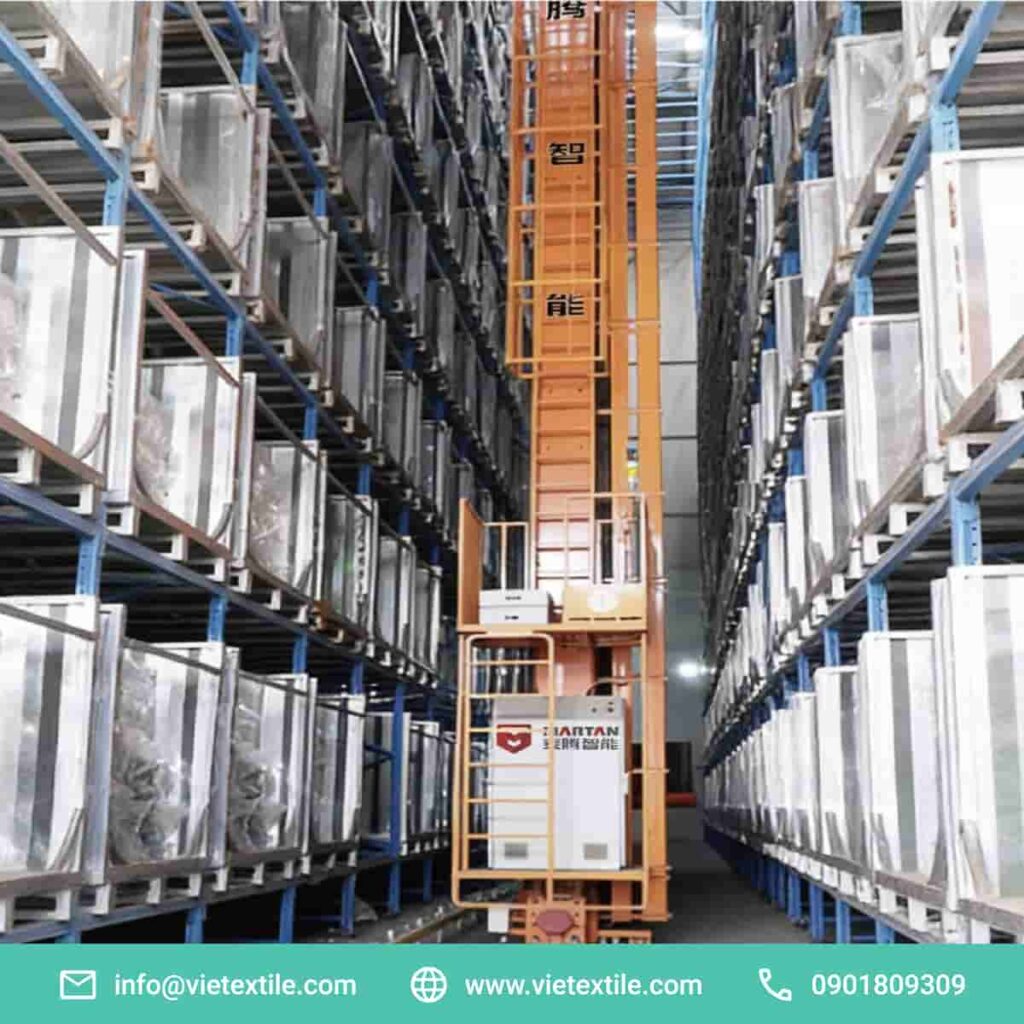
For new factories, the stacker crane is a prominent choice as it can exploit warehouse heights from 13m to 14m. This solution fully automates the inbound and outbound stages, increasing processing speed and maximizing warehouse volume.
This system is especially suitable for large storage centers where high and stable goods handling volume is required. By operating on fixed routes, stacker cranes ensure near-absolute accuracy in positioning and picking goods.
2.2.1. Optimizing Warehouse Height
Stacker cranes allow for maximum exploitation of vertical space, significantly increasing storage capacity.
This is especially important for textile factories with limited land but high storage needs.
2.2.2. High Accuracy and Stability
Operating on fixed rails helps reduce errors during the inbound and outbound processes.
Consequently, automated warehouse management using stacker cranes ensures high stability in long-term operations.
2.3. AGVs and Autonomous Forklifts
Martan’s AGV robots and autonomous forklifts support unmanned goods transportation, thereby reducing dependence on manual labor and enhancing factory safety. These devices also integrate 3D recognition to accurately locate pallets, fabric rolls, or fabric frames in complex operating environments.
Applying AGVs creates a seamless connection between the warehouse and the production area, forming a closed internal transport ecosystem. This reduces waiting time and increases the efficiency of the entire line.
2.3.1. Intelligent Navigation
AGVs use sensors and digital maps to automatically determine the optimal path in the factory.
The system can flexibly change routes when obstacles are present, ensuring continuous and safe operation.
2.3.2. 3D Recognition and Positioning
Autonomous forklifts are equipped with 3D recognition technology to precisely identify the position of pallets and goods.
Thanks to this, automated warehouse management achieves high accuracy even in dynamic environments like textile warehouses.
3. Optimizing Performance and Safety through Automated Warehouse Management
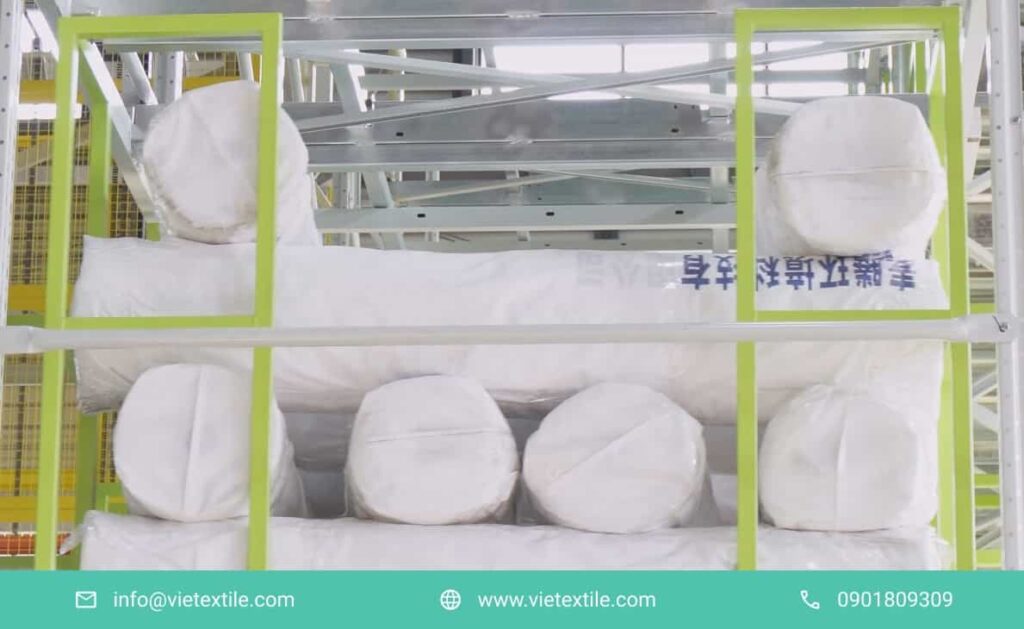
Not stopping at automation, automated warehouse management also helps businesses optimize costs and control risks. This section delves into the practical benefits the system brings to factory operations.
3.1. Enhancing Storage Density and ROI
One of the clearest values of automated warehouse management is the ability to increase capacity and reduce operational costs. Martan’s solutions can help businesses save from 50% to 300% of required warehouse area while cutting 40% to 90% of operational costs, opening up opportunities for ROI in about one year.
Besides the savings, automated warehouse management helps standardize inbound-outbound-storage processes, reducing loss and inventory errors. When inventory data is updated in real-time, businesses can optimize production plans and allocate materials more effectively.
3.2. Smart Fire Control System
In addition to operational efficiency, automated warehouse management must be designed with a high safety layer. Martan integrates a comprehensive fire control system with sensors and automatic control stations to early detect heat or smoke risks, thereby activating ventilation fans, fire valves, and appropriate emergency response mechanisms.
Automating incident response helps shorten processing time and limits damage to goods and equipment. Especially for the textile industry—where materials are highly flammable—a smart fire control system is an indispensable element in automated warehouse management.
3.3. Energy Saving and Environmental Control
Martan’s energy-saving ventilation system is designed to monitor humidity, fine dust, and critical environmental conditions in the warehouse. By adjusting airflow in real-time, businesses can save from 8% to 18% in annual energy costs and better protect the quality of textile materials.
Besides cost savings, environmental control helps maintain fabric quality, limiting mold and material deformation during storage. This is particularly important for textile factories with high output quality standards.
4. Typical Successful Automated Warehouse Management Projects
The numbers and practical efficiency from implemented projects are the clearest evidence for the value of automated warehouse management. Below are some typical case studies in the textile industry.
4.1. Efficiency at Wujiang and Keiqiao Projects
Practical projects show that the efficiency of automated warehouse management is not just theoretical. In Wujiang, the four-way shuttle system helped increase warehouse capacity by 50% and inbound/outbound performance by 30%. In Keiqiao, digitizing warehouse management eliminated manual fabric searching and increased operational efficiency by another 50%.
Beyond growth metrics, these projects helped businesses completely change their warehouse operations. Reducing dependence on manual operations limits errors while enhancing real-time inventory control capabilities.
4.2. Success at Changshu and Huzhou
In Changshu, the high-rise stacker crane system helped increase storage capacity by up to 80%. Meanwhile, the project in Huzhou showed that automated warehouse management can control all data for each fabric batch from the moment it enters the warehouse until it leaves the factory, contributing to transparency and traceability in production.
In addition to capacity and data efficiency, these projects demonstrated the flexible scalability of the automated warehouse management system. Businesses can easily upgrade or expand scale without disrupting current production activities.
5. VieTextile – Strategic Partner for Implementing Automated Warehouse Management
Implementing automated warehouse management is not just a technology choice, but a matter of operational mindset and long-term strategy. VieTextile acts as a bridge helping businesses access and effectively apply these solutions.
VieTextile is committed to bringing advanced automated warehouse management solutions from Martan to textile enterprises, while supporting implementation according to the actual conditions of each factory. We understand that logistics efficiency depends not only on equipment but also on how the system is planned and integrated into the entire operational chain.
The VieTextile team will provide detailed advice on how to apply automated warehouse management according to factory area, types of goods, inbound/outbound frequency, and future expansion goals. From surveying, design, and installation to maintenance, VieTextile accompanies businesses throughout the project life cycle to ensure the system operates stably and has flexible upgrade capabilities.
With experience in connecting advanced technology for the textile industry, VieTextile aims to help customers master automated warehouse management in a practical, effective, and sustainable way. We always prioritize solutions that bring immediate operational value while creating a foundation for smart factories in the long term.
6. Frequently Asked Questions about Automated Warehouse Management
Before implementing automated warehouse management, businesses often have many concerns related to costs, integration capabilities, and practical efficiency. The section below answers the most common questions.
6.1. Can Martan Automated Warehouse Management be Integrated with Existing ERP?
Yes. Martan’s automated warehouse management solution supports flexible connection with ERP, MES, and many of the business’s existing management platforms.
This is especially important for textile factories operating multiple systems in parallel, as warehouse, production, and order data need to be continuously synchronized. When implemented correctly, automated warehouse management does not disrupt old systems but helps businesses improve control and faster decision-making.
6.2. Can a Four-Way Shuttle Robot be Used in Limited Warehouse Areas?
Absolutely. The four-way shuttle robot is an automated warehouse management solution suitable for warehouses with small areas or low ceilings.
This is an effective choice for businesses wanting to renovate existing warehouses without changing too much of the structure. Thanks to its flexible movement and good utilization of both depth and width, automated warehouse management using four-way shuttles still achieves high efficiency in restricted spaces.
6.3. How to Ensure Fire Safety in Automated Warehouse Management?
The automated warehouse management system can integrate smart sensors and automatic fire control stations to respond quickly when an incident occurs.
Besides early detection of abnormal temperatures or smoke, the system can also activate ventilation fans, fire valves, and emergency response mechanisms according to pre-set scenarios. As a result, automated warehouse management not only improves performance but also helps businesses be more proactive in protecting goods, equipment, and operational safety.
6.4. How Long is the Payback Period for Investing in Automated Warehouse Management?
Depending on the scale and operational intensity, many automated warehouse management projects can reach payback in about one year.
In practice, the payback period also depends on space savings, labor cost reductions, goods processing speed, and the ability to reduce operational errors. For factories with high inbound/outbound frequencies, automated warehouse management usually brings clear financial benefits faster than traditional storage models.
To build a professional automated warehouse management system for your textile factory, contact VieTextile today!
Contact Information:
Hotline: 0901 809 309
Email: info@vietextile.com
Website: https://vietextile.com