


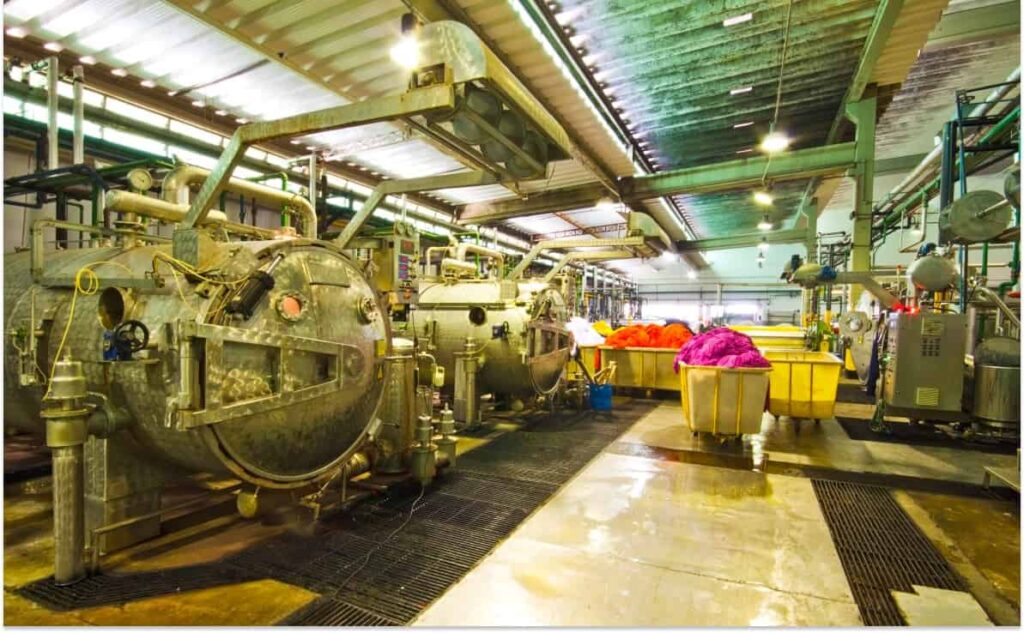
Learn about the professional cotton fabric dyeing processing for knitted, woven, and roll fabrics. The article provides in-depth knowledge of dyeing techniques, physicochemical treatments, and current quality standards in the textile dyeing industry.
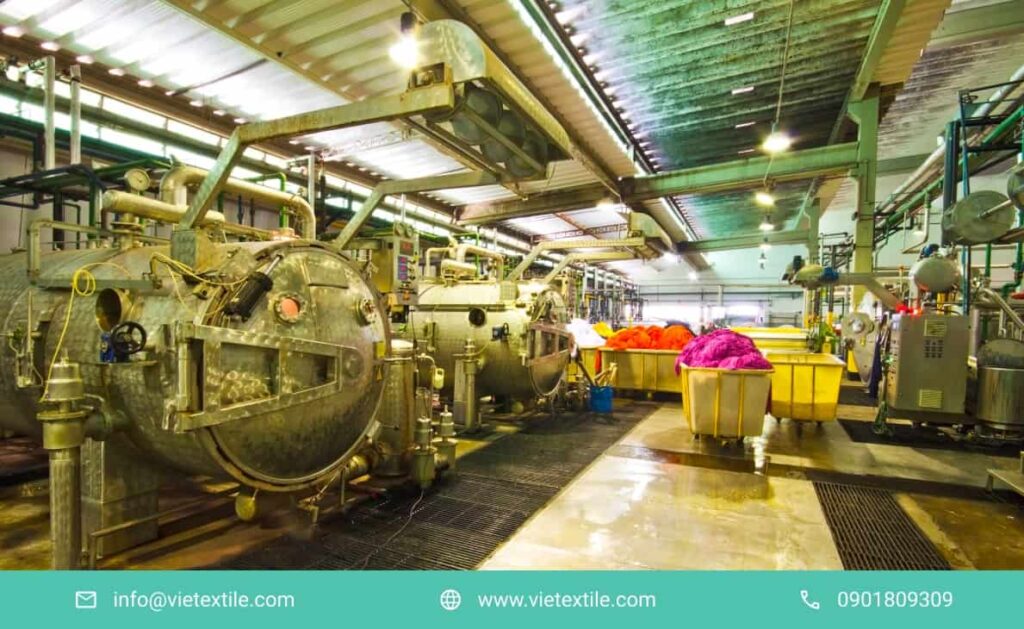
1. Overview Of The Current Cotton Fabric Dyeing Processing Industry
The textile dyeing industry is transforming strongly towards automation and environmental protection. Cotton fabric dyeing processing is not merely about applying color but is also a process of transforming the physicochemical properties of the fabric.
1.1. Characteristics Of Cotton Fibers In The Dyeing Environment
Cotton fiber is a natural fiber with a hollow internal structure and extremely good moisture absorption capability. This helps the cotton fabric dyeing processing proceed more smoothly as the fibers easily expand to receive dye molecules.
1.1.1. Chemical Structure Of Cellulose
Cotton fiber is mainly composed of cellulose polymer chains with hydroxyl groups (-OH). In cotton fabric dyeing processing, these groups are the main attack sites for reactive dyes, creating stable covalent bonds that help the color adhere firmly to the fibers.
1.1.2. Fiber Swelling Phenomenon
When exposed to an alkaline dyeing solution, cotton fibers swell strongly, increasing the distance between cellulose molecules. Cotton fabric dyeing processing takes advantage of this characteristic so that large-sized dye molecules can penetrate deep into the fiber core.
1.2. Cotton Fabric Dyeing Trends According To Green Standards
Today, international customers prioritize cotton fabric dyeing processing workshops that use dyes meeting OEKO-TEX standards or other sustainability certifications.
1.2.1. Using Azo-Free Dyes
In modern cotton fabric dyeing processing, the elimination of dyes that release toxic aromatic amines (Azo) is mandatory. This protects consumer health and meets the strict technical barriers of the US and European markets.
1.2.2. Low Liquor Ratio Dyeing Technology
Using air dyeing or spray dyeing equipment helps reduce the solution ratio to a minimum. The green cotton fabric dyeing processing helps reduce the burden on wastewater treatment systems and saves energy costs for heating the solution.
1.3. Classification Of Cotton Fabric Formats Requiring Processing
Depending on the intended use, cotton fabric is divided into many different forms for dyeing.
1.3.1. Distinguishing Greige Fabric And Pre-Processed Fabric
Greige fabric contains many impurities and knitting machine oil. Cotton fabric dyeing processing starts with carefully classifying greige fabric by each yarn lot to avoid color streaking after dyeing.
1.3.2. Specifics Of Circular Knitted And Wide-Width Woven Fabrics
Circular knitted fabrics usually have a tubular structure, while woven fabrics have a stable wide width. Each format requires a different type of cotton fabric dyeing processing machine to ensure the fabric surface is flat and not twisted.
2. Pre-treatment Process In Cotton Fabric Dyeing Processing
Before color is introduced, cotton fabric must undergo a series of surface cleaning steps.
2.1. Singeing Stage Of Fabric Surface
Cotton fabric after weaving often has many fiber fragments on the surface.
2.1.1. Gas Singeing Technology
Using a gas flame in quick contact with the high-speed moving fabric surface. Cotton fabric dyeing processing using this method helps clean short fibers without damaging the main structure of the yarn.
2.1.2. Controlling Temperature And Fabric Speed
If it goes too slow, the fabric will burn; if too fast, the fuzz will remain. Experts in cotton fabric dyeing processing must adjust gas pressure and roller speed according to the thickness (GSM) of each specific fabric type.
2.2. Desizing Process For Woven Fabrics
For woven fabrics, the warp yarns are often coated with a layer of size to increase durability.
2.2.1. Desizing By Biological Enzymes
Using amylase enzymes to decompose starch size into water-soluble sugar. This is the most friendly cotton fabric dyeing processing way, helping to protect fiber strength and not causing heavy chemical pollution.
2.2.2. Desizing By Oxidation Method
Using strong oxidizing agents like Sodium Persulfate in an alkaline environment. This cotton fabric dyeing processing method is often applied to synthetic size lines that are difficult to decompose, ensuring the fabric is completely clean before dyeing.
2.3. Scouring And Bleaching
This step helps remove natural impurities such as wax, oil, and dirt adhering to the cotton fibers.
2.3.1. Removing Pectin And Wax Impurities
Natural cotton fiber has a protective wax layer that makes the fabric non-absorbent. Cotton fabric dyeing processing uses high-concentration caustic soda (NaOH) solution at boiling temperature to emulsify this wax layer, helping the fabric become extremely absorbent.
2.3.2. Bleaching With Hydrogen Peroxide (H2O2)
Hydrogen peroxide helps destroy the natural pigments of cotton fibers without reducing fiber strength as much as chlorine bleach. Cotton fabric dyeing processing for white needs to control pH and oxygen stabilizers to achieve even whiteness from the edges to the middle.
3. Cotton Fabric Dyeing Processing Techniques For Knitted Fabrics
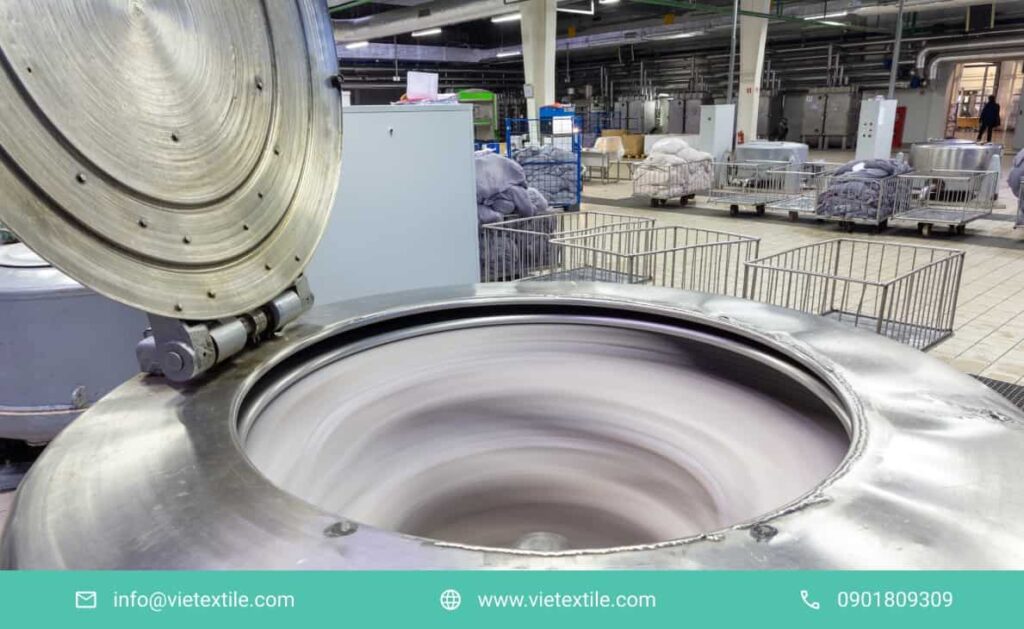
Knitted fabrics have high elasticity, therefore the dyeing technique must be extremely skillful.
3.1. Using Overflow Dyeing Machines
This is the most popular equipment in knitted cotton fabric dyeing processing.
3.1.1. Closed-Loop Operating Mechanism
Fabric and dyeing solution move together in the conduit, helping to reduce friction between the fabric and the machine wall. Cotton fabric dyeing processing using overflow machines helps protect the surface of interlock or pique fabric from scratches.
3.1.2. Adjusting Pump Speed And Fabric Roll Rotation
Synchronizing the flow speed and fabric speed helps avoid fabric knotting in the machine. Technicians in cotton fabric dyeing processing must monitor closely to prevent fabric from bunching up, causing local color spots.
3.2. Controlling Liquor Ratio
The ratio between the amount of water and the weight of the fabric affects the dye concentration.
3.2.1. Impact Of Low Ratio On Color Intensity
A low water ratio helps the dye collide with the fibers more. Cotton fabric dyeing processing with modern machines allows running at a 1:6 ratio, significantly saving auxiliary salt and alkali chemicals.
3.2.2. Saving Thermal Energy
Less water means consuming less heat to raise the dyeing bath temperature. This is a major economic advantage for industrial-scale cotton fabric dyeing processing workshops in the context of rising energy prices.
3.3. Anti-Twist And Anti-Crease Treatment In The Dyeing Bath
Because knitted fabrics are prone to spirality, the dyeing process must add auxiliary substances.
3.3.1. Application Of Anti-Creasing Agents
These substances create a film around the fiber, helping the knitted loops slide over each other easily. High-end cotton fabric dyeing processing always uses anti-crease agents so that the fabric surface after drying still remains flat, without “crow’s feet” marks.
3.3.2. Controlling Cooling Rate
Cooling too fast after boiling dyeing will make the fabric suffer “thermal shock” and sudden shrinkage, causing permanent wrinkles. Standard cotton fabric dyeing processing requires gradual cooling (about 1-2 degrees Celsius/minute) to stabilize the fiber structure.
4. Specifics Of Cotton Fabric Dyeing Processing For Woven Fabrics
Woven fabrics have a tightly intertwined structure, requiring stronger osmotic pressure.
4.1. Pad-Dyeing Method
This is the main technique in cotton fabric dyeing processing for woven fabrics in large quantities.
4.1.1. Padding Manglers Structure
The pressing force between the two rollers must be extremely even along the horizontal width of the fabric. Cotton fabric dyeing processing using pad-dyeing helps the amount of dye be “pushed” deep into the structure of thick khaki or kate fabrics.
4.1.2. Controlling Pick-up Percentage
The percentage of solution remaining on the fabric after pressing determines the color intensity. Experts in cotton fabric dyeing processing must calibrate the roller pressure so that the solution amount reaches 65-80% of the greige fabric weight.
4.2. Pad-Batch Dyeing
For premium woven cotton fabric lines, the Pad-batch method is often prioritized.
4.2.1. Reaction Process At Room Temperature
After padding the dye, the fabric is tightly wrapped with plastic film to avoid local drying. Cotton fabric dyeing processing in this way helps save energy because the chemical reaction takes place naturally during 8-24 hours of batching.
4.2.2. Advantages Of Color Uniformity
Since there is no water evaporation during batching, the fabric color is extremely stable from the beginning to the end of the roll. This is the ideal cotton fabric dyeing processing method for difficult colors like grey, moss green, or beige.
4.3. Tension Control On Dyeing Machinery
Woven fabrics need a certain tension for a flat surface.
4.3.1. Using Automatic Tension Adjustment Rollers
Sensors will measure the fabric tension and adjust the motor speed of the winding shaft. Woven cotton fabric dyeing processing requires enough tension so the fabric doesn’t overstretch, avoiding narrow width after finishing.
4.1.2. Preventing Edge Twisting Errors
Woven fabric edges are often thicker than the body, easily causing uneven dyeing at the edges. Modern cotton fabric dyeing processing techniques use edge guides and expander rollers to keep the fabric flat and fully open when passing through the dye bath.
5. Cotton Fabric Dyeing Processing Techniques For Roll Fabrics
Roll dyeing usually serves the need for fast supply to garment workshops.
5.1. Jigger Dyeing Process
The Jig dyeing machine is a traditional but extremely effective device.
5.1.1. Reciprocal Movement Mechanism
The fabric runs back and forth between two main shafts, each trip through the dye bath is called a “pass”. Cotton fabric dyeing processing on a Jig machine helps control the contact time of the fabric with chemicals most accurately.
5.1.2. Suitable For Thick Fabrics And Dark Colors
The tension pressure of the Jig machine helps the dye penetrate through thick fabric layers like denim. This is the most dye-saving cotton fabric dyeing processing machine line for black, navy blue, or dark red tones.
5.2. Beam Dyeing
Fabric is wound around a perforated beam and the dyeing solution is pumped through.
5.2.1. Inside-Out Solution Pumping Method
The color solution is pushed through the holes on the beam through hundreds of fabric layers. Cotton fabric dyeing processing using a Beam machine requires the fabric winding technique to be extremely standard; if wound too tightly, the color won’t enter the core, if wound too loosely, it will cause wrinkles.
5.2.2. Protecting Sensitive Fabric Surfaces
Since the fabric is completely stationary during the dyeing process, the fabric surface is not fuzzy or deformed. Cotton fabric dyeing processing for thin or high-gloss fabrics often prioritizes this Beam Dyeing method.
5.3. Advantages Of Dyeing By Finished Rolls
Processing cotton fabric by the roll allows manufacturers to control product weight well.
5.3.1. Color Lot Management
Each fabric roll is assigned a separate ID number to track color stability. Lot-based cotton fabric dyeing processing helps garment factories classify fabric easily, avoiding the situation of mixing different colored shirt bodies in the same product.
5.3.2. Saving Cutting And Sewing Costs
Fabric dyed in roll form helps the fabric surface be flat, ready to be put on automatic spreading machines. Professional cotton fabric dyeing processing helps minimize fabric waste at both ends of the roll, optimizing material efficiency for customers.
6. Choosing Dyes In The Cotton Fabric Dyeing Processing
The type of dye used directly determines the brightness and color fastness.
6.1. Vat Dyes – Absolute Durability
This is the most high-end dye line for cotton, colorfast to light and chemicals.
6.1.1. Color Reduction And Oxidation Process
Vat dyes are insoluble in water, they must be “reduced” to a soluble form before dyeing and then “oxidized” back to an insoluble form inside the fibers. Cotton fabric dyeing processing with vat dyes creates colors that last for decades.
6.1.2. Application For Protective Clothing And Military Supplies
Due to the ability to withstand strong chlorine bleach, vat-dyed cotton fabric dyeing processing fabric is the number one choice for hospital bed sheets or military uniforms needing extremely high color fastness in harsh conditions.
6.2. Direct Dyes – Economical Solution
Using direct dyes helps the dyeing process become simple.
6.2.1. Affinity Of Dyes
Dyes adhere to cotton fibers through Van der Waals forces. Cotton fabric dyeing processing using direct colors is very cheap, with a rich color palette, but color fastness to water is usually poor, easily smudging when washed.
6.2.2. Post-Dyeing Fixing Treatment
To increase durability, fabric after dyeing is often soaked in cationic fixing agents. This cotton fabric dyeing processing way is often used for furniture lining fabrics or low-priced fashion items that do not require strict color fastness.
6.3. Reactive Dyes – Most Popular
Reactive dyes create stable covalent chemical bonds with cotton fibers.
6.3.1. Vinyl Sulfone And Triazine Reactive Groups
These are chemical groups that help the dye “lock” tightly into the cellulose. Cotton fabric dyeing processing using reactive colors helps the fabric have bright, brilliant colors and extremely good color fastness when machine washed at 40-60 degrees Celsius.
6.3.2. Low Temperature Dyeing Process (Cibacron)
Some new generation reactive color lines can be dyed at 40 degrees Celsius, helping to protect the strength of cotton fibers. Modern cotton fabric dyeing processing prioritizes these dye lines to save energy and reduce shrinkage of the finished fabric.
7. Quality Inspection Criteria After Cotton Fabric Dyeing Processing
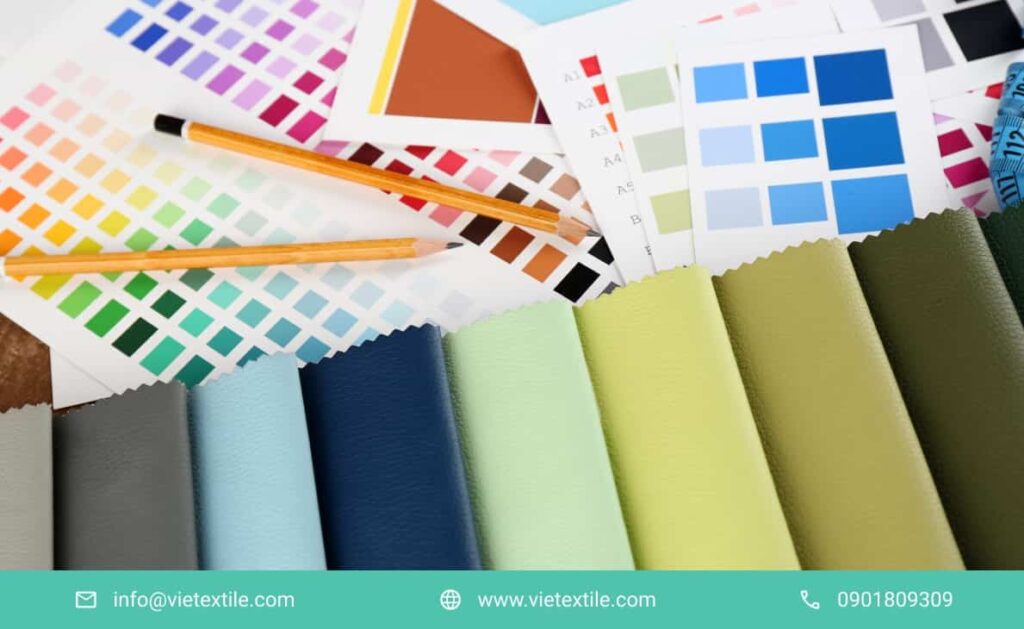
After leaving the dye bath, the fabric must undergo a strict QC process.
7.1. Color Difference Inspection (Delta E)
Using a spectrophotometer to compare fabric colors.
7.1.1. CIELAB Color Space System
The meter will analyze the L (lightness), a (red-green), and b (yellow-blue) indexes. Cotton fabric dyeing processing requires Delta E < 1.0, ensuring absolute color consistency for customers.
7.1.2. Color Inspection Under Different Light Sources (Metamerism)
Fabrics may look identical under sunlight (D65) but different under fluorescent lights (TL84). A standard cotton fabric dyeing processing must check fabric in specialized color matching cabinets to avoid this color-jumping phenomenon.
7.2. Color Fastness Inspection
Fabric must be tested for color fastness to water, friction, and light.
7.2.1. Dry And Wet Crocking Test
Using a crockmeter to rub white fabric onto the colored fabric surface. Export-standard cotton fabric dyeing processing must reach grade 3-4 or higher for wet friction, ensuring clothes do not transfer color to bags or seats.
7.2.2. Perspiration Test
Human sweat, which is slightly acidic or alkaline, can fade fabric color. High-quality cotton fabric dyeing processing uses dyes with good perspiration fastness, protecting the aesthetics of the outfit during exercise.
7.3. Shrinkage And GSM Inspection
The dyeing process can change the fabric size and density.
7.3.1. Stentering Machine
The fabric is stretched to the standard width and dried to lock the dimensions. Cotton fabric dyeing processing using stenter machines helps the fabric be flat, eliminating edge curling and stabilizing the fabric weight per square meter.
7.3.2. Washing Shrinkage Test
Fabric is test washed according to ISO standards to measure vertical and horizontal shrinkage. Professional cotton fabric dyeing processing commits to shrinkage < 3-5% depending on the fabric type, helping garment factories avoid size shortages after producing finished samples.
8. Common Errors And Fixes In Cotton Fabric Dyeing Processing
Understanding errors helps manufacturers be proactive in prevention.
8.1. Color Spots And Color Bleeding
This error is usually due to incompletely dissolved dye or pre-treatment not being clean of fiber wax.
8.1.1. Controlling Heating Gradient
If the temperature rises too fast, the dye will adhere locally to the fabric surface. Cotton fabric dyeing processing requires the thermal chart to increase steadily (about 1.5 – 2 degrees Celsius/minute) so that color molecules have time to penetrate evenly.
8.1.2. Using Dispersing Agents
These substances help dye particles be suspended evenly in the solution, without settling or precipitating. In cotton fabric dyeing processing, filtering the dye before adding it to the machine is a mandatory step to prevent color spots.
8.2. Vertical And Horizontal Streaks
The cause may be from the knitting machine or due to uneven tension in the dyeing machine.
8.2.1. Checking Greige Yarn Uniformity
Yarn woven from two different lots will have different color uptake capabilities, creating horizontal streaks on the fabric. Cotton fabric dyeing processing requires close coordination with the weaving stage to ensure greige fabric has the same raw material source.
8.2.2. Adjusting Nozzle Pressure
Nozzle pressure that is too strong or uneven will create vertical streaks along the knitted fabric body. Cotton fabric dyeing processing technicians must regularly clean and calibrate the nozzles to keep the flow smooth.
8.3. Fabric Stiffness After Dyeing
Cotton fibers after strong chemical treatment are often dry and rough.
8.3.1. Softening Treatment With Silicone Emulsion
Silicone creates a thin film around the fibers, reducing friction between fibers and creating a smooth hand feel. Cotton fabric dyeing processing ends with a softening step that helps the fabric become premium and comfortable to wear.
8.3.2. Application Of Fatty Acid Softeners
These are organic softeners that help the fabric have better fluffiness and water absorption than silicone. Cotton fabric dyeing processing for underwear or baby clothes often uses this type to maximize protection for sensitive skin.
9. Role Of Dyeing Auxiliaries In Cotton Fabric Dyeing Processing
Dyeing auxiliaries play the role of “conductors” and “stabilizers.”
9.1. Leveling Agents To Ensure Even Color
In cotton fabric dyeing processing, leveling agents help adjust the dye absorption rate.
9.1.1. Retarding Effect Mechanism
The leveling agent competes for binding sites on the fiber with the dye, slowing down the color adhesion process, thereby helping the color spread evenly across the fabric surface. This is the secret of cotton fabric dyeing processing to have extremely smooth light colors.
9.1.2. Dye Migration Capability
Auxiliaries help already adhered dye molecules to move from dark areas to light areas in the boiling dye bath. Cotton fabric dyeing processing takes advantage of this characteristic to fix minor uneven color errors right in the dyeing bath.
9.2. Electrolytes (Salt And Alkali) In Reactive Dyeing
Salt and alkali are mandatory agents for reactive colors to be effective.
9.2.1. Effect Of Table Salt (NaCl)
Salt helps neutralize the negative charge of the cotton fiber surface, creating conditions for the dye to get closer to the fibers. Cotton fabric dyeing processing requires the amount of salt to be calculated accurately according to the dyeing color concentration.
9.2.2. Role Of Soda Ash (Na2CO3) In Color Fixing
Alkali helps create a pH environment of 10.5-11, activating the chemical reaction between dye and cellulose. Cotton fabric dyeing processing controls the addition of alkali in batches so that the color is not “jolted,” causing color bleeding.
9.3. Post-Dyeing Scouring And Color Fixing
After dyeing, the fabric still contains a certain amount of unbonded excess dye.
9.3.1. Reductive Washing With Specialized Soaping Agents
Washing at 90-95 degrees Celsius with scouring agents helps completely remove excess color adhering to the fiber surface. Cotton fabric dyeing processing cannot skip this step if you want the fabric to achieve washing color fastness grade 4/5.
9.3.2. Locking Color With Cationic Fixing Agents
Fixing agents form an insoluble protective film around the color molecules. Cotton fabric dyeing processing using fixing agents helps the fabric be more durable and beautiful, preventing color from smudging to other clothes when washed together at home.
10. VieTextile – Leading Cotton Fabric Dyeing Processing Partner
VieTextile is proud to bring professional fabric dyeing services, meeting all strict requirements.
10.1. Modern And Advanced Dyeing Technology
We invest synchronously in a new generation of high-pressure dyeing machines and continuous dyeing machines.
10.1.1. Auto-pipetting System
Mixing dye by machine helps accuracy reach milligrams, eliminating human errors. Cotton fabric dyeing processing at VieTextile ensures absolute color consistency between the lab-dip sample and mass production.
10.1.2. Thorson Air Technology Dyeing Machine
The dyeing machine uses airflow to push the fabric, helping to reduce water consumption by up to 60%. This is VieTextile’s pride in applying green technology to the sustainable cotton fabric dyeing processing.
10.2. Experienced Team Of Dyeing Chemists
With a team of highly skilled dyeing engineers, VieTextile has the ability to color-match accurately for all fabric types.
10.2.1. Ability To Match Difficult And Fashion Colors
We have a huge color library and the ability to keep up with the latest Pantone color trends. Cotton fabric dyeing processing at VieTextile helps turn your design ideas into fabrics with vivid and trendy colors.
10.2.2. Advising On The Optimal Process For Each Fabric Type
Depending on the yarn type (Combed, Carded, or Organic), our technical team will set up separate pre-treatment and dyeing processes. This in-depth understanding helps cotton fabric dyeing processing achieve the highest quality at the most economical cost.
10.3. International Standard Quality Control System
VieTextile applies a quality control process from yarn import to finished product.
10.3.1. In-situ Quality Inspection Lab
We possess full equipment for measuring friction color fastness, washing color fastness, and light fastness according to ISO and AATCC standards. Every cotton fabric dyeing processing batch is checked for standards before leaving the factory.
10.3.2. Traceability
Each cotton fabric dyeing processing order has samples and technical records kept for 2 years. This helps customers easily reorder old orders with color matching accuracy up to 99%.
10.4. Commitment To Sustainable Environmental Protection
We understand that sustainable development is the responsibility of textile dyeing enterprises.
10.4.1. Type A Wastewater Treatment System
Wastewater after the cotton fabric dyeing processing is treated through a modern biological and physicochemical filtration system, reaching standards for direct discharge into the environment. VieTextile is proud to be a model textile dyeing enterprise for environmental protection.
10.4.2. Utilizing Excess Heat To Save Energy
We installed a heat exchange system to recover energy from hot wastewater, used to heat clean water for new dyeing baths. The cotton fabric dyeing processing here always aims for maximum savings and efficiency.
10.5. Dedicated Consulting And Customer Support Service
VieTextile doesn’t just provide dyeing services; we are your companion.
10.5.1. Free Lab-dip Color Testing Support
Customers only need to send a fabric sample or color code, and we will perform test dyeing on real fabric for you to approve before production. Cotton fabric dyeing processing at VieTextile helps you eliminate all product color risks.
10.5.2. Flexible And Fast Delivery Policy
With a convenient factory location and a dedicated transport fleet, we commit to delivering cotton fabric dyeing processing fabric to the customer’s garment factory according to the agreed schedule, helping you never be late for fashion orders.
11. Frequently Asked Questions About Cotton Fabric Dyeing Processing (FAQ)
Summary of common concerns from partners and customers of VieTextile.
11.1. Why Does Cotton Fabric Often Fade After Dyeing?
Cotton fabric fades usually due to incompletely reacted dye or a post-dyeing washing step that is not thorough. At VieTextile, the cotton fabric dyeing processing includes a high-concentration soaping step at 95 degrees Celsius and in-depth color fixing with imported chemicals to ensure absolute color fastness.
11.2. What Is The Average Time For Cotton Fabric Dyeing Processing?
Usually, a cotton fabric dyeing processing batch takes from 3 to 7 days. This time includes sample testing (lab-dip), greige weaving (if needed), pre-treatment, dyeing, stentering, and quality inspection before packaging.
11.3. Is It Possible To Dye White On Greige Cotton Fabric?
Actually, “dyeing white” is the process of bleaching fibers and using optical brightening agents (OBA). This is a very important stage in cotton fabric dyeing processing to create a pure white fabric base, serving for shirts, white T-shirts, or high-end underwear.
11.4. What Factors Do Cotton Fabric Dyeing Processing Costs Depend On?
The cost depends on: fabric weight (thick fabric consumes more chemicals), color intensity (black, red, purple consume more dye than light colors), and color fastness requirements (vat dyeing is more expensive than reactive dyeing). VieTextile always provides transparent and most competitive cotton fabric dyeing processing quotes.
11.5. Does VieTextile Accept Dyeing Color Samples According To Request?
Certainly. We own a modern Lab with a sample dyeing machine system and standard color matching cabinets. Customers are supported with free actual color sample testing on fabric before proceeding with large-scale cotton fabric dyeing processing to ensure absolute satisfaction.
For professional cotton fabric dyeing processing, contact VieTextile today!
Contact information:
Hotline: 0901 809 309
Email: info@vietextile.com
Website: https://vietextile.com