


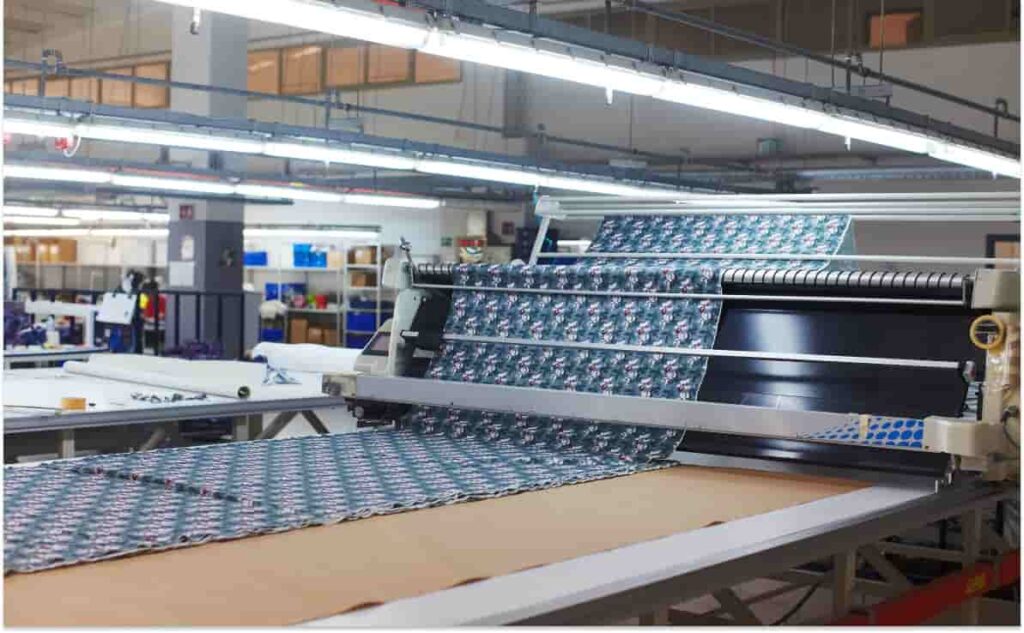
Direct-to-Garment (DTG) printing on cotton is the preferred trend due to its ability to produce sharp images and high durability. However, determining the exact cost of this service remains a major challenge for many businesses.
In the modern textile industry, optimizing production costs while ensuring product quality is a matter of survival. The Direct to Garment Printing Process for Cotton, commonly known as DTG, has ushered in a new era for small-batch and complex printing. To make informed business decisions, manufacturers need to understand the hidden cost structure behind the Direct to Garment Printing Process for Cotton.
This article provides an in-depth analysis of the 03 core factors determining the price: calculation by square meter, by color complexity, and by ink type. We will also detail the steps in the Direct to Garment Printing Process for Cotton to clarify each cost item, giving you the most comprehensive overview. Understanding this cost calculation not only helps you negotiate better prices but also optimizes your entire textile printing supply chain.

1. Overview of the Direct-to-Garment (DTG) Printing Process for Cotton
Understanding the nature of the technology is the foundation for cost analysis. DTG printing on cotton is a digital printing method where an inkjet printer jets ink directly onto the surface of pre-treated cotton fabric. This technology is fundamentally different from traditional methods like screen printing and is particularly suited for designs with complex color transitions or small order quantities. The DTG technology platform allows businesses to easily adapt to rapidly changing market demands.
1.1. What is DTG Technology and Its Key Advantages
DTG printing uses specialized printers and specific water-based inks (pigment ink) to create high-quality images. The most significant advantage of this technology is its ability to reproduce images with infinite detail and color gamut, not limited by the number of colors like screen printing. Additionally, the color fastness and soft hand feel on cotton after printing are major pluses. This technology foundation optimizes the DTG process for personalized fashion products, from T-shirts to other garments.
The water-based ink used in DTG printing is typically pigment ink, which is more environmentally friendly than many other printing chemicals. This not only meets international green standards but also helps businesses reduce environmental compliance costs. The Print-on-Demand (POD) capability is another major advantage, eliminating the need for inventory storage, thereby saving operational costs for the Direct to Garment Printing Process for Cotton.
Another advantage of DTG is the extremely fast turnaround between designs. Without the need for complex screen changes or cleaning processes like screen printing, a DTG printer can switch from printing one design to another in seconds. This significantly reduces machine downtime and maximizes productivity, positively impacting the total cost of the Direct to Garment Printing Process for Cotton.
1.2. Most Suitable Cotton Fabric Types for the DTG Process
DTG technology works best on fabrics with a high cotton content (usually 100% cotton or a cotton-poly blend with cotton being the dominant fiber). The reason is that water-based DTG ink adheres and penetrates cotton fibers better than synthetic fibers. The choice of cotton fabric type also influences the Pre-treatment step, which directly affects the cost of the Direct to Garment Printing Process for Cotton.
The fiber structure of cotton fabric is also important. Ring-spun cotton with long fibers and a smooth surface yields better print quality than open-end cotton. Although ring-spun cotton is more expensive, it minimizes the amount of ink required and the risk of printing errors, making the Direct to Garment Printing Process for Cotton more cost-effective and quality-efficient.
For cotton-poly blends, the cotton ratio should be above 50% for optimal DTG ink adhesion. However, printing on blends still requires more specialized Pre-treatment techniques. Choosing the wrong fabric can lead to faded colors or poor wash durability, increasing warranty costs in the business’s Direct to Garment Printing Process for Cotton.
1.3. Overview of the Main Steps in the Direct to Garment Printing Process for Cotton
The basic steps include: Fabric Preparation (Pre-treatment), Print File Upload, Ink Printing (white layer, color layer), and Finishing (Heat Pressing/Drying). Each step plays a crucial role and is where costs are incurred, closely linked to the price calculation by meter, color, and ink. These are indispensable aspects of the entire professional Direct to Garment Printing Process for Cotton.
This process demands high precision at every stage. The Pre-treatment stage involves investment in time and chemical costs but determines 90% of the color durability. Skipping or performing this step poorly will lead to major consequences in the finished product stage. Therefore, adherence to the steps in the Direct to Garment Printing Process for Cotton is mandatory.
Finally, the high-temperature Finishing step is not just for drying but for the chemical reaction to permanently fix the ink into the fabric fibers. Controlling the temperature and pressure of the heat press is critical. Any mistake in this step can damage the fabric or result in poor print durability, leading to waste in the Direct to Garment Printing Process for Cotton.
2. Analyzing DTG Printing Cost by Square Meter Factor
The area factor (square meter) is the first basic unit for cost determination. When pricing by the meter, suppliers aggregate all fixed and variable costs per specific area unit. This helps transparency in costs, especially in industrial DTG processes and roll-to-roll fabric orders.
2.1. Raw Material Costs (Greige Fabric)
This is the most obvious cost, including the price of the raw cotton fabric, cutting costs, and waste costs during the printing process. High-quality cotton fabric with good smoothness and fiber density will cost more but helps the DTG printing process achieve better finished product quality, minimizing printing errors.
Purchasing raw cotton fabric in large volumes (large rolls) will significantly reduce raw material costs. However, inventory storage and management costs must be considered. Furthermore, fabric shrinkage after washing or heat drying must be factored into the cutting allowance, affecting the effective cost per finished meter of the Direct to Garment Printing Process for Cotton.
Fabric defect management is also a hidden cost. If the raw fabric has defects, printing must stop, and the defective portion must be cut out, leading to wasted ink and time. Professional suppliers usually have strict incoming fabric quality control procedures to optimize this cost in the Direct to Garment Printing Process for Cotton.
2.2. Ink Consumption Rate Per Square Meter
Printing ink is the largest cost item. The ink usage rate, measured in milliliters per square meter (ml/m²), depends on the design complexity and the fabric color. Full-bleed, full-color designs will consume significantly more ink, increasing the variable costs in the Direct to Garment Printing Process for Cotton.
Determining the ink consumption rate must rely on the color management software (RIP software). This software allows operators to precisely control the amount of ink sprayed, avoiding waste. Test printing and color profile (ICC profile) calibration are necessary steps to optimize the ink consumption rate in the Direct to Garment Printing Process for Cotton before mass production.
Ink costs are also affected by the coverage area of the print. A print with 50% coverage is less costly than a 100% coverage print (full-bleed). Therefore, when calculating the price per meter, the coverage percentage of the design must be considered. This helps customers better understand how pricing is based on the material consumption costs of the Direct to Garment Printing Process for Cotton.
2.3. Pre-treatment Chemical Costs Before Printing
Pre-treatment chemical application is mandatory for dark-colored cotton fabric and recommended for light-colored fabric to ensure good ink adhesion. This cost is calculated by the treated area (square meter), including both chemical costs and the operating cost of the Pre-treatment spraying/drying machine. This cost is an inseparable part of the Direct to Garment Printing Process for Cotton.
Pre-treatment costs include the chemical purchase price, deionized water costs (if necessary), and electricity costs for the drying/spraying machine. Applying too much chemical is not only wasteful but can also make the fabric stiff or leave streaks, causing product defects. Conversely, applying too little will result in poor ink adhesion, leading to reprinting costs, affecting the total cost of the Direct to Garment Printing Process for Cotton.
The type of Pre-treatment chemical also varies depending on the cotton fabric type (100% or blend) and color (light or dark). Specialized and eco-friendly chemicals often come at a higher price. However, they help increase the durability and softness of the print, justifying the higher cost in the Direct to Garment Printing Process for Cotton.
2.4. Calculating Labor Costs Per Area Unit
Labor costs include preparing, operating the DTG printer, and post-printing processing (drying, inspection). This cost is allocated based on printing time, and printing time is proportional to the printing area (square meter). Optimizing the execution time of the Direct to Garment Printing Process for Cotton will reduce labor costs per finished meter.
In large printing factories, labor costs are calculated by machine operation hour. Automating the Pre-treatment and pallet loading processes reduces manual handling time, thereby lowering labor costs per square meter. Investing in automation systems is a crucial strategy for optimizing the Direct to Garment Printing Process for Cotton in terms of personnel.
Staff training costs for operating the DTG printer also need to be included in indirect labor costs. Highly skilled staff minimize printing errors and machine downtime. This ensures machines operate at peak efficiency, thereby effectively reducing labor costs per finished meter in the Direct to Garment Printing Process for Cotton.
3. Analyzing DTG Printing Cost by Color Complexity Factor

The number of colors is not the price-determining factor it is in screen printing, but color complexity significantly affects ink volume and printing time. Distinguishing between printing on light and dark fabrics is core to the DTG printing process.
3.1. How Light and Dark Garments Affect Ink Costs
When printing on light-colored fabric, colored ink can be printed directly, requiring little or no white underbase. Conversely, printing on dark-colored fabric (black, navy blue) requires a thick white ink layer as a base for accurate color display. This white ink layer is the most expensive type of ink, significantly increasing the overall cost of the Direct to Garment Printing Process for Cotton.
The reason white ink is more expensive is the Titanium Dioxide (TiO2) component in the ink, which provides the necessary opacity (coverage). The amount of white ink needed also depends on the contrast between the fabric color and the design color. The darker the fabric, the thicker the white underbase must be, pushing up the material costs of the Direct to Garment Printing Process for Cotton.
Furthermore, white ink needs to be continuously agitated and recirculated in the printing system to prevent sedimentation, which requires maintenance and power costs for the ink recirculation system. This is also a minor but unavoidable factor when calculating the operational costs of the Direct to Garment Printing Process for Cotton.
3.2. The Role of White Ink for Underbasing
White ink is used for “underbasing” designs on dark fabric. The amount of white ink used determines the vibrancy and durability of the print. Precisely controlling the white ink volume is key to balancing quality and cost in the Direct to Garment Printing Process for Cotton.
If the white ink layer is too thin, the design colors will mix with the fabric color, leading to dull colors and substandard prints. If too thick, the print will be stiff and raised, causing discomfort when worn. Optimizing the thickness of the white ink layer is a technical art, directly affecting the cost efficiency of the Direct to Garment Printing Process for Cotton.
White ink control is usually done via RIP software, where algorithms calculate the minimum amount of ink needed to achieve the desired coverage. Investing in advanced RIP software is a worthwhile expenditure that helps reduce material waste in the Direct to Garment Printing Process for Cotton.
3.3. Impact of Color Complexity on Printing Time (Machine Operating Costs)
Designs with a wide color gamut, fine details, and smooth color transitions (gradients) require the printer to spray ink with higher precision, sometimes necessitating multiple passes. This directly prolongs machine operating time, increasing depreciation and electricity consumption costs for the entire Direct to Garment Printing Process for Cotton.
Extended printing time also increases indirect labor costs (staff waiting time). To mitigate this, printing factories often categorize orders based on color complexity and prioritize simpler designs on high-speed machines. This is an effective production management method in the Direct to Garment Printing Process for Cotton.
Color complexity also requires more frequent color calibration. If the printed colors do not match the screen colors (color matching), reprinting is inevitable, leading to significant waste of fabric and ink. Therefore, investing in color calibration equipment is a fixed but necessary cost for a quality Direct to Garment Printing Process for Cotton.
4. Analyzing DTG Printing Cost by Ink Type Factor
Ink quality and brand not only affect direct costs but also impact machine maintenance costs and product lifespan. Ink selection is a strategic decision in the Direct to Garment Printing Process for Cotton.
4.1. Comparing Popular DTG Ink Types (Water-Based Pigment Ink)
Water-based (Pigment) ink is the standard for DTG. However, the market offers various brands with different formulations, from standard ink to premium, ecologically certified ink (e.g., Oeko-Tex). Premium ink is usually more expensive but provides higher wash durability and brighter colors for the Direct to Garment Printing Process for Cotton.
Inexpensive ink often fails to meet viscosity and pH standards, which can damage the printer’s print head – the most expensive component of a DTG machine. Initial ink savings can lead to repair or replacement costs for print heads up to thousands of dollars, increasing the total operating cost of the Direct to Garment Printing Process for Cotton.
Ecologically certified (Eco-friendly) inks are increasingly popular, despite their higher price. Using these inks helps businesses access demanding markets and meet the needs of sustainable fashion brands. This is a cost investment in brand image and regulatory compliance in the Direct to Garment Printing Process for Cotton.
4.2. Durability and Ink Impact on Final Price
Poor-quality ink can lead to fading or peeling after a few washes. This increases warranty or re-production costs, ultimately raising the actual price of the product. Therefore, investing in good ink is a long-term cost-saving measure in the Direct to Garment Printing Process for Cotton.
Customers are increasingly concerned about the wash and rub durability of the print. High-quality DTG ink will retain vibrant colors through many washes and be less prone to cracking. The cost for a durable print will be higher initially, but it creates long-term value for the brand and minimizes complaint risks in the Direct to Garment Printing Process for Cotton.
Ink durability is also related to the heat setting (curing) process. High-quality ink often sets better at standard temperatures, helping reduce drying time and save energy. This creates a competitive advantage in operating costs for the Direct to Garment Printing Process for Cotton.
4.3. Machine Maintenance Factors Related to Ink Quality
DTG ink requires frequent maintenance of the printing system. Poor or incompatible ink quality can cause print head clogging, damaging critical components. Repair and replacement costs for parts caused by ink are a significant expense that needs to be factored into the price of the Direct to Garment Printing Process for Cotton.
Using non-standard ink can void the printer’s warranty from the manufacturer. Preventive maintenance costs usually include cleaning print heads, replacing ink filters, and ink tubes. These costs are necessary to ensure smooth machine operation and prolong the lifespan of the Direct to Garment Printing Process for Cotton.
Constantly replacing parts due to ink clogs is not only monetarily costly but also causes machine downtime. Lost productivity during machine downtime is a significant opportunity cost. Therefore, choosing stable ink is a long-term cost optimization strategy in the Direct to Garment Printing Process for Cotton.
5. Detail of Each Step in the Direct to Garment Printing Process for Cotton
To manage costs most effectively, each execution stage needs to be clearly analyzed. The DTG printing process comprises four main stages, where each stage can be optimized.
5.1. Fabric Preparation (Cutting, Cleaning, Pre-treatment Application)
This is the preliminary step, ensuring the fabric surface is completely ready to receive the ink. Chemical application must be uniform and at the correct dosage. If the preparation is not thorough, print quality will decrease, leading to reprinting and wasting materials and time for the entire Direct to Garment Printing Process for Cotton.
This stage includes removing excess fibers (fibrillation) from the cotton fabric surface. An unclean fabric surface will cause uneven ink adhesion, resulting in printing defects. Using fabric cleaning devices before Pre-treatment spraying can increase fixed costs but reduces variable costs due to reprinting in the Direct to Garment Printing Process for Cotton.
For roll-to-roll printing, the fabric needs to be tensioned and positioned accurately before entering the printer. Any slight misalignment can lead to distorted or skewed prints, forcing the rejection of entire meters of fabric. Precise fabric tensioning and positioning techniques are key to effective cost management in the Direct to Garment Printing Process for Cotton.
5.2. Design File Preparation (Color Separation, Resolution Formatting)
The design file must be optimized for resolution (DPI), color mode (usually CMYK or RGB depending on the machine), and transparency. A non-standard design file will lead to the printer consuming unnecessary ink or printing incorrect colors, slowing down progress and increasing the indirect cost of the Direct to Garment Printing Process for Cotton.
File optimization includes checking and handling out-of-gamut colors or pixel errors. Advanced RIP software can automatically optimize ink usage, minimizing the amount of ink sprayed while maintaining image quality. Investing in this software is a smart way to manage costs for the Direct to Garment Printing Process for Cotton.
For complex designs, manually creating the white underbase layer must be precise to avoid white edges showing after color printing. Underbase creation errors are a common cause of ink and time waste. Experienced design teams are the key factor in ensuring the lowest cost in the Direct to Garment Printing Process for Cotton.
5.3. DTG Printer Operation (White Underbase and Color Layer Printing)
This is the most expensive stage in terms of ink costs. The printer first prints the white underbase layer, after which the color layer is printed on top. The speed and printing mode (high-quality or standard) will affect the time and ink volume. Continuous monitoring and adjustment during this stage help ensure quality for the Direct to Garment Printing Process for Cotton.
Controlling the surrounding environment (temperature and humidity) is very important during machine operation. Water-based DTG ink is highly sensitive to humidity changes, which can cause print head clogging. Electricity costs for maintaining an ideal environment are a necessary fixed cost to ensure the stability of the Direct to Garment Printing Process for Cotton.
During printing, an on-the-fly quality check is necessary to detect errors early and stop printing. This prevents wasting ink and fabric on subsequent meters. Strict quality control procedures are crucial for optimizing costs in the Direct to Garment Printing Process for Cotton.
5.4. Finishing (Heat Setting/Heat Pressing and Quality Inspection)
After printing, the ink needs to be set using high heat (usually heat pressing or tunnel drying). Temperature and time must be strictly controlled for the ink to dry completely without damaging the fabric. Final quality inspection is a mandatory step to ensure the product meets standards before delivery, completing the Direct to Garment Printing Process for Cotton.
Heat pressing is a common method for finished garments, but labor costs and individual handling time are quite high. Tunnel drying is a more cost-effective and productive solution for roll-to-roll or large-volume printing. Choosing the appropriate drying equipment will affect the final cost of the Direct to Garment Printing Process for Cotton.
Quality inspection includes checking adhesion, color fastness (after trial washing), and the softness of the print. Any defective products must be recorded and the cause analyzed to improve the process. Quality management is a preventive investment cost, reducing warranty costs in the Direct to Garment Printing Process for Cotton.
6. Other Factors Affecting the Final Quote

In addition to the core factors of meter, color, and ink, there are other auxiliary factors that customers need to consider when receiving a quote for DTG service.
6.1. Order Quantity (Economy of Scale)
Like most other manufacturing services, the larger the quantity, the lower the unit price per product. This is because the initial setup costs are spread over more products. Ordering in large quantities is the best way to reduce the investment cost for your Direct to Garment Printing Process for Cotton.
Setup costs include: file upload, machine alignment, and test printing (sampling). These costs are fixed whether printing 1 piece or 1000 pieces. As the quantity increases, these fixed costs are divided, lowering the unit price per printed meter of fabric. This is the basic rule for optimizing the Direct to Garment Printing Process for Cotton when mass-producing.
Many DTG suppliers have tiered pricing, where the discount increases significantly at specific quantity thresholds (e.g., 100m, 500m, 1000m). Customers should consider combining orders or placing advance orders to leverage the economy of scale, optimizing costs in the Direct to Garment Printing Process for Cotton.
6.2. Custom Graphic Design Requirements
If the customer requires design services, file editing, or specialized color optimization, graphic service fees will be added. This is an additional cost incurred if the original file is not ready for the industrial Direct to Garment Printing Process for Cotton.
Graphic services include creating the white underbase layer for dark fabrics, adjusting resolution, and color separation to ensure accurate prints. Although an added cost, investing in high-quality design files helps avoid printing errors and material waste, ultimately saving costs for the Direct to Garment Printing Process for Cotton.
Frequent design changes (revision) can also increase graphic costs. Customers should finalize the file before moving to the printing stage to avoid unnecessary additional costs. Thorough preparation is the determining factor in the economic efficiency of the Direct to Garment Printing Process for Cotton.
6.3. Rush Delivery Time
Orders requiring a rush turnaround time will incur surcharges because the supplier must adjust the production schedule, operate the machine outside regular hours, or increase manpower. This increases the total labor costs in the Direct to Garment Printing Process for Cotton.
Overtime pay for staff and the cost of operating machinery at non-optimal times (e.g., night time) will be added to the unit price. This surcharge compensates for disrupting the normal production schedule. Therefore, time planning is crucial to avoid increasing the cost of the Direct to Garment Printing Process for Cotton.
If the rush order requires express shipping, logistics costs will also increase significantly. Customers should carefully weigh the need for speed against the resulting additional costs. Flexible time planning will help optimize the total cost of the Direct to Garment Printing Process for Cotton.
7. Comparing DTG Printing Cost with Other Technologies (DTG vs. Screen Printing)
To better understand the economics of DTG, it needs to be compared against traditional printing methods, especially Screen Printing. This helps businesses determine when to choose the DTG printing process to maximize profit.
7.1. Initial Setup Cost
Screen printing requires making printing screens (one for each color) and screen preparation costs, which prolongs time and involves significant initial fixed costs. Conversely, the DTG printing process does not require printing screens, eliminating almost all of this setup cost. The only setup cost is file and printer preparation.
Because there are no screen costs, DTG becomes the cost-optimal choice for small orders, test prints, or designs with low print volumes. The ability to test print at a low cost is a major advantage of the Direct to Garment Printing Process for Cotton compared to traditional screen printing.
The initial investment cost for a DTG printer can be higher than for manual screen printing equipment, but the variable operating cost per design is much more flexible. Analyzing machinery depreciation costs against operating benefits is necessary for a comprehensive evaluation of the Direct to Garment Printing Process for Cotton.
7.2. Variable Cost by Quantity (Variable Cost per Unit)
The variable cost of screen printing decreases very rapidly as quantity increases because the ink cost per product is low. However, the variable cost of the DTG printing process remains largely unchanged, as it primarily depends on the amount of ink consumed per meter of fabric/product.
Screen printing is limited by the number of colors (usually 8-10 colors), while DTG can print millions of colors. For multi-color designs, screen printing involves very costly screen-making and alignment time. DTG handles these complex designs easily without increasing costs, making the Direct to Garment Printing Process for Cotton superior.
Therefore, for orders over 500-1000 products with simple designs (fewer than 4 colors), screen printing is usually cheaper. But for orders under 100 products or complex designs (photos, gradients), the Direct to Garment Printing Process for Cotton is the more economical and effective solution.
7.3. Break-Even Point Analysis
The Break-Even Point is the quantity of products at which the total cost of screen printing equals the total cost of DTG. This analysis is a crucial tool for consulting customers. The break-even point is typically between 50 and 300 products, depending on the complexity of the design and the number of colors.
If the required print quantity is lower than the break-even point, the Direct to Garment Printing Process for Cotton will be the more economical choice. If the quantity exceeds the break-even point, screen printing may begin to gain a price advantage. Precisely determining the break-even point helps optimize profits in textile printing production.
Customers need to provide full design information (number of colors, size) so that the DTG supplier can accurately calculate the break-even point. This ensures they choose the correct printing technology, maximizing the cost efficiency of the Direct to Garment Printing Process for Cotton.
8. Strategies for Cost Optimization in the Direct to Garment Printing Process for Cotton
To remain competitive, businesses implementing the Direct to Garment Printing Process for Cotton need strict cost management strategies, focusing on reducing material waste and maximizing machine efficiency.
8.1. Managing Ink and Pre-treatment Consumption Rates
Monitoring and recording the ink usage rate (ml/m²) for each design type and fabric is mandatory. Using ink and Pre-treatment inventory management software helps accurately forecast material needs and avoid over-ordering or shortages. Effective inventory management reduces the working capital cost of the Direct to Garment Printing Process for Cotton.
Regularly calibrate the Pre-treatment spraying machine to ensure chemicals are applied uniformly and at the minimum required amount. The Pre-treatment chemical amount is measured in grams per square meter. Strict control of this parameter is crucial for reducing waste in the Direct to Garment Printing Process for Cotton.
Ensure that printing ink is stored under ideal environmental conditions (temperature and light) to prevent reduced ink quality and increased risk of print head clogging. Proper storage is a simple yet effective strategy to reduce maintenance costs in the Direct to Garment Printing Process for Cotton.
8.2. Optimizing Design Process and Print Files
Train the design team to understand the limitations and requirements of DTG. For example, encourage the use of high resolution (300 DPI) and minimize unnecessary complex gradient areas so the printer doesn’t have to run multiple passes. Optimizing the file from the start helps minimize printing errors and machine downtime in the Direct to Garment Printing Process for Cotton.
Use file compression tools and optimize the white underbase layer to reduce the amount of white ink used. Many advanced RIP software features automatically eliminate unnecessary white ink areas (example: where color ink overlaps white ink), significantly saving on white ink costs – the most expensive component in the Direct to Garment Printing Process for Cotton.
Color standardization for repeated orders is crucial. Storing verified color profiles (ICC profiles) for each fabric type helps ensure color consistency and eliminates the need for re-trial printing, reducing the cost and time of the Direct to Garment Printing Process for Cotton.
8.3. Regular Machine Maintenance to Reduce Repair Costs
Implementing strict preventive maintenance according to the manufacturer’s schedule is vital. This includes daily print head cleaning, periodic replacement of filters and ink tubes. Regular maintenance costs are a small investment compared to the cost of replacing print heads or repairing complex systems.
Monitor machine performance indicators (OEE – Overall Equipment Effectiveness) to identify bottlenecks and unexpected downtime. Maximizing the operational time of the DTG printer helps increase productivity and reduce depreciation costs per printed meter of fabric in the DTG printing process.
Provide specialized training for technicians on how to handle minor ink clogging issues quickly and safely. The ability to handle issues in-house minimizes the waiting time for service from the supplier and reduces the total operating cost of the Direct to Garment Printing Process for Cotton.
9. VieTextile – Your Provider for High-Quality DTG Printing on Cotton
VieTextile is proud to be a reliable partner in the textile printing industry, committed to delivering superior DTG print quality. We apply the most advanced printing technology with eco-friendly inks, ensuring sharp images, high color fastness, and a soft print feel on all cotton fabric types. Professionalism and dedication at every stage of the Direct to Garment Printing Process for Cotton are our commitment, providing absolute peace of mind to customers.
We understand that cost transparency is the key to building trust. At VieTextile, we provide detailed quotes, clearly analyzing each cost item calculated by meter of fabric, color complexity, and ink type used. Optimizing materials and machine operation allows us to offer the most competitive pricing, ensuring customers receive the best value from the Direct to Garment Printing Process for Cotton we provide. We guarantee no hidden costs.
VieTextile’s team of technical experts is always ready to provide in-depth consultation on printing solutions tailored to each customer’s specific needs, from fabric selection, optimizing design files, to quality control.
10. Frequently Asked Questions (FAQ) About the DTG Printing Process for Cotton
10.1. Is the DTG printing process more expensive than screen printing?
The initial cost for DTG printing is typically higher than screen printing for large quantities (over 500-1000 products) but is cheaper for small quantities (under 100 products) and complex, multi-color designs (photos, gradients). Screen printing involves significant fixed screen setup costs, while DTG has no screen costs.
10.2. How is the ink cost in the DTG process calculated accurately?
Ink cost is calculated based on the standardized ink consumption rate per area unit (ml/m²) and the price of each ink type (CMYK and white ink). Specialized RIP software helps accurately calculate the necessary ink volume for each print file in the DTG process, ensuring material cost transparency for customers.
10.3. What is the turnaround time for a DTG printing order?
The completion time depends on the quantity and complexity of the design. However, due to its digital nature, the DTG printing process is significantly faster than screen printing, especially by eliminating the extended time required for screen creation and prolonged drying, thus shortening the production cycle.
10.4. Can the DTG printing process be applied to cotton blends?
Cotton blend fabrics can still be printed using DTG if the cotton content is dominant (usually over 50%). However, to ensure the best adhesion and color durability, specialized Pre-treatment chemicals for blends should be used, and the drying temperature in the Direct to Garment Printing Process for Cotton may need adjustment.
10.5. How is DTG printer depreciation factored into the final cost?
DTG printer depreciation is a fixed cost, typically allocated based on the machine’s expected lifespan and total print output (square meters or number of products). This cost is included in the unit price per printed meter to ensure accurate cost calculation for the Direct to Garment Printing Process for Cotton.
10.6. Does white ink in DTG affect the hand-feel of the print?
Yes. The thick white ink layer used as an underbase on dark fabrics makes the print stiffer and gives it a raised texture (hand-feel). Optimizing the white ink volume (using the minimum required amount) and employing high-quality ink can help minimize this feeling, improving the overall quality of the Direct to Garment Printing Process for Cotton.
To optimize costs and own high-quality printed products from a professional Direct to Garment Printing Process for Cotton, contact VieTextile today!
Contact Information:
Hotline: 0901 809 309
Email: info@vietextile.com
Website: https://vietextile.com