


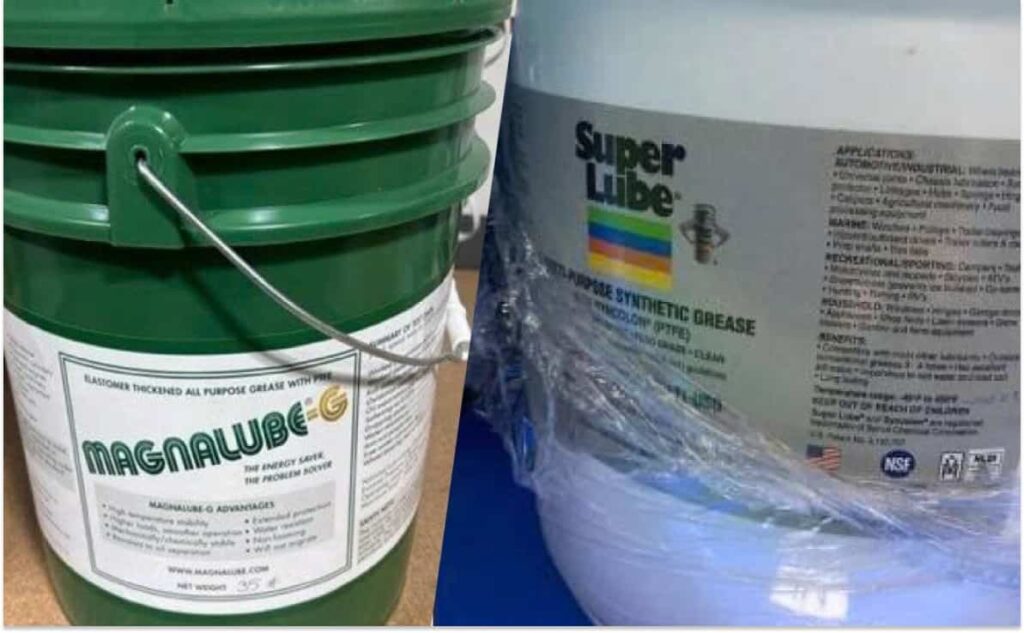
In the modern industrial environment, especially in heavy manufacturing, steel, cement, and textile sectors, it is inevitable that machinery components endure high temperatures, extreme pressures, and continuous operating speeds. To maintain stable performance and extend equipment lifespan, lubrication using High-Temperature Grease Supply is the premier solution. A high-quality high-temperature grease not only reduces friction and prevents wear but must also maintain its structural stability at temperatures exceeding 150°C, and even 200°C.
However, reality shows that maintenance failures are not always due to grease quality, but mostly stem from mistakes during usage. From selecting the wrong type of grease to inaccurate re-greasing procedures, these minor errors can accumulate and cause major failures, interrupting production and incurring expensive repair costs.
This article is developed based on in-depth experience in the field of High-Temperature Grease Supply and industrial maintenance, aiming to highlight the 7 most serious mistakes. We will delve into each error, analyze the root causes, and provide detailed corrective actions, thereby helping businesses optimize usage efficiency and find the best High-Temperature Grease Supply solution for their systems.
1. What is High-Temperature Grease and its Crucial Role?
High-temperature grease, also known as high-temperature lubricating grease, is a semi-solid lubricant specially designed to operate effectively in environments with temperatures exceeding those suitable for conventional greases (typically 120°C and above). The basic composition of grease includes base oil (70-95%), thickener (5-20%), and additives (0-10%). The biggest difference between high-temperature grease and multi-purpose grease lies in the thickener and additives.
1.1. Composition and Distinctive Ingredients of High-Temperature Grease
The thickener determines the thermal resistance and mechanical stability of the grease. While conventional greases often use a Lithium base, premium high-temperature greases utilize complex bases such as Lithium Complex, Aluminum Complex, Polyurea, or even inorganic clay (Bentonite) to prevent melting, decomposition, or oil separation when temperatures rise. These thickeners help the grease maintain its structure, keeping the base oil at the lubrication point. Understanding this component is the foundation for avoiding later mistakes. An unsuitable high-temperature grease will quickly lose its lubricating structure as the temperature increases, leading to grease drying out and direct metal-to-metal wear.
1.2. Essential Characteristics of Quality High-Temperature Grease
A reputable High-Temperature Grease Supply provider will always emphasize the following characteristics:
- High Dropping Point: This is the temperature at which the grease transitions from a semi-solid to a liquid state. High-temperature grease must have a Dropping Point above 250°C, ensuring structural stability.
- Superior Oxidation Stability: At high temperatures, the base oil oxidizes rapidly, forming hard carbon deposits that cause seizing and destroy the bearings. Good high-temperature grease requires strong anti-oxidation additives.
- Extreme Pressure / Anti-Wear (EP/AW) Capability: Reduces friction and protects heavily loaded machine parts.
- Mechanical Stability: The grease must not soften or be sheared down under continuous cutting forces and vibration, which is especially important when sourcing High-Temperature Grease Supply for high-speed bearings.
2. Mistake 1: Using Multi-Purpose Grease Instead of High-Temperature Grease
This is the most common mistake, often occurring due to a desire to cut costs or a lack of technical knowledge. Many technicians believe all greases are the same and can be used interchangeably.
2.1. Consequences of Substituting High-Temperature Grease with Multi-Purpose Grease
Multi-purpose grease (typically regular Lithium base) has a Dropping Point ranging from 180°C to 200°C. When used in an environment with operating temperatures of 150°C or higher, multi-purpose grease quickly encounters the following problems:
- Melting and Oil Separation: At high temperatures, the thickener is insufficient to retain the base oil. The grease turns liquid, leaks out of the lubrication point, leaving the contact surfaces unprotected.
- Rapid Carbonization: The base oil, not designed for high temperatures, will oxidize and degrade, forming hard carbon deposits. These deposits act as abrasive particles, causing severe wear on the bearings and bushings.
- Lubrication Structure Failure: Lacking protection, bearing lifespan drastically decreases, potentially failing after only a few hundred hours of operation instead of the thousands of hours anticipated.
2.2. Appropriate Temperature Classification Standards for High-Temperature Grease Supply
When selecting and utilizing High-Temperature Grease Supply, it is crucial to accurately determine the equipment’s actual operating temperature. International standards typically classify grease by:
- Continuous Operating Temperature: The temperature at which the grease can maintain its lubricating properties for extended periods. For high-temperature grease, this level must be above 140°C.
- Peak Temperature: The maximum temperature the grease can withstand for a short duration without complete structural breakdown.
Using Synthetic Base Oil Grease: If temperatures exceed 180°C, greases with synthetic base oils (PAO, Ester) are mandatory because they possess significantly higher thermal and oxidation stability than mineral base oils. Professional High-Temperature Grease Supply companies always advise on synthetic base oils for extremely hot applications.
2.3. Solution to Correcting the Wrong Grease Substitution Mistake
The only solution is strict adherence to the recommendations of the equipment manufacturer (OEM) and the High-Temperature Grease Supply specialist.
- Temperature Assessment: Use an IR thermometer gun or thermal sensors to determine the actual surface temperature of the bearing, not just the ambient temperature.
- Use Special Base Greases: Substitute with Lithium Complex, Polyurea grease (common for electric motor bearings), or Teflon/PTFE grease (for extremely high temperatures, above 250°C).
- Develop a Lubrication Manual: Create a detailed list of the grease type and lubrication cycle for each piece of equipment to prevent accidental mixing. Train maintenance personnel to correctly identify high-temperature and multi-purpose greases.
3. Mistake 2: Over-Greasing or Under-Greasing During Maintenance
Both over-greasing and under-greasing are extremely detrimental mistakes, causing over 80% of premature bearing failures.
3.1. Risk Analysis of Over-Greasing with High-Temperature Grease
This mistake often arises from the thought that “more is better.” However, pumping too much High-Temperature Grease Supply into a high-speed, high-temperature bearing will lead to:
- Sudden Temperature Increase: As the bearing rotates, the excess grease is continuously churned by the rollers/balls. This churning generates internal friction, significantly raising the bearing temperature, sometimes exceeding the grease’s own thermal limit. This creates a destructive loop: grease heats up -> loses structure -> grease turns liquid -> friction increases further.
- Increased Internal Pressure: The excessive amount of grease with no place to escape creates high pressure inside the seal. This pressure can force the seal open, causing seal damage, allowing the High-Temperature Grease Supply to leak out, and, more importantly, permitting dirt and water to infiltrate the bearing cavity.
- Increased Power Consumption: The increased internal friction not only causes heating but also raises the load on the motor, leading to higher-than-normal power consumption.
3.2. Serious Consequences of Under-Greasing with High-Temperature Grease
Conversely, under-greasing is also a common problem due to maintenance neglect or fear of over-greasing.
- Direct Wear: Insufficient grease fails to form a perfect protective film between metal surfaces. Components come into direct contact, causing rapid wear, especially in high-temperature environments where residual grease has oxidized and dried out.
- Increased Vibration and Noise: Lack of lubrication increases equipment vibration. This is the clearest sign of an impending failure. At this point, seeking a High-Temperature Grease Supply solution is too late to save the bearing.
- Increased Downtime: A failed bearing necessitates an emergency machine stop, causing significantly more damage than the cost of the grease.
3.3. Accurate Greasing Method (Re-Greasing Standard)
To correct this, apply a precise time and volume-based lubrication method:
- Calculate Time Interval: The lubrication cycle is calculated based on bearing type, speed (RPM), diameter, and operating temperature (K factor).
- Calculate Volume: The required amount of grease is usually calculated using the formula: G = 0.005 x D x B (where G is the grease volume in grams, D is the bearing’s outer diameter, and B is the bearing’s width, in mm).
- Use Support Tools: Use a grease gun with a meter or automatic lubrication devices to accurately control the amount of grease added, avoiding errors in the High-Temperature Grease Supply process for the machinery.
4. Mistake 3: Infrequent Compatibility Check of Greases
Mixing two incompatible high-temperature greases is one of the leading causes of grease structure breakdown and equipment failure.
4.1. Incompatibility Phenomenon and the Mechanism of Failure
High-temperature grease is composed of base oil, thickener, and additives. Incompatibility primarily occurs when two different thickeners are mixed.
- Thickener Breakdown: When Lithium Complex grease is mixed with Polyurea-based grease (two common types), the fiber structure of the thickener can fracture, leading to sudden grease softening. The grease rapidly loses its consistency (NLGI Grade), becomes much thinner, and leaks out.
- Additive Reaction: The additive packages (such as EP, AW, rust inhibitors) in the two greases can chemically react with each other, reducing protective effectiveness, or even creating corrosive byproducts.
- Reduced Dropping Point: The Dropping Point of the grease mixture can significantly decrease, sometimes falling below the equipment’s actual operating temperature, causing the grease to immediately turn liquid. This is a critical error when utilizing High-Temperature Grease Supply for hot applications.
4.2. Compatibility Classification Chart for Common High-Temperature Greases
To ensure safety, the Grease Compatibility Chart must be consulted. Greases are considered compatible if, when mixed, they maintain their consistency, Dropping Point, and mechanical stability.
- Generally Compatible: Lithium with Lithium, Lithium Complex with Lithium Complex.
- Borderline (Use Caution): Lithium Complex with Calcium Complex.
- Incompatible (Causes Failure): Lithium with Polyurea, Sodium with Lithium Complex, Barium with Polyurea.
Note: Even if two greases have the same base (e.g., Lithium Complex) but come from two different High-Temperature Grease Supply providers, they should be checked carefully due to differences in additives.
4.3. Safe High-Temperature Grease Conversion Procedure
If switching from one type of grease to another is mandatory, the procedure must be thorough:
- Purging/Flushing: Completely remove the old grease from the lubrication point. In sensitive applications, manual disassembly and cleaning are necessary. In other cases, pump a large amount of the new grease to push the old grease out (flushing), then re-grease with the exact standard volume.
- Stability Monitoring: After conversion, monitor temperature, vibration, and noise for the first few days. If the temperature rises abnormally, the machine must be stopped and compatibility checked again. High-Temperature Grease Supply must come with a commitment to safe conversion capabilities.
5. Mistake 4: Neglecting the Importance of Seals
High-temperature grease can only work effectively when kept in place and away from contaminants. Seals act as a protective barrier. Ignoring the condition of the seals is a fatal mistake.
5.1. High-Temperature Grease Contamination from the Environment
The operating environment of equipment using high-temperature grease is often harsh, with dirt, moisture, chemicals, or metallic dust.
- Solid Contaminant Ingress: Damaged or hardened seals allow solid particles (dust, debris) to enter the lubrication cavity. These particles quickly turn the high-temperature grease into an abrasive substance, similar to sandpaper, damaging the surfaces of the rollers and the bearing raceway.
- Effect of Water/Moisture: Water is the greatest enemy of grease. It reduces lubrication capability, causes bearing rust, and changes the grease’s consistency. Lithium Complex grease has better water resistance, but if the seal is damaged, no grease can withstand large water ingress.
5.2. Consequences of Choosing Seals Incompatible with High-Temperature Grease
A less-noticed technical error is the incompatibility between the grease and the seal material.
- Chemical Impact on Seals: Some base oils or additives in high-temperature grease can cause the seal material (often NBR, FKM/Viton, Silicone) to shrink, swell, or harden. A deformed seal loses its sealing ability, leading to grease leakage and contaminant ingress.
- Example: Greases with synthetic Ester base oils are often incompatible with standard NBR (Nitrile Butadiene Rubber) seals, causing the seal to swell. Specialized High-Temperature Grease Supply providers must have this data to advise customers.
5.3. Seal Inspection and Replacement Strategy
- Routine Visual Inspection: During each maintenance cycle, the seals should be checked for cracks, deformation, or signs of grease leakage. If the seal is hard or has an abnormal color (due to excessive temperature), it must be replaced immediately.
- Seal Material Consultation: When purchasing and receiving High-Temperature Grease Supply, ask the supplier for recommendations on the appropriate seal material for that grease type. For example, for synthetic greases, FKM (Viton) seals are often a safer choice than NBR.
6. Mistake 5: Skipping Used Grease Analysis
Used Grease Analysis is a powerful predictive maintenance diagnostic tool, similar to oil analysis. Ignoring this tool means missing the opportunity to detect early potential equipment problems.
6.1. Core Value of High-Temperature Used Grease Analysis
Used grease analysis provides deep insight into both the condition of the grease and the condition of the equipment. It helps answer three key questions:
- Is the Grease Still Good? Check consistency (NLGI), Dropping Point, and remaining oxidation stability to determine if the high-temperature grease has been thermally degraded.
- Are There Contaminants? Detect the level of solid particles, water, dirt, or chemicals. High levels of contamination signal a failed seal or poor cleanliness procedures.
- Is the Equipment Failing? Analyze the content of Wear Metals. The presence of high concentrations of Iron (Fe), Copper (Cu), and Chromium (Cr) is direct evidence that the bearing, shaft, or housing is undergoing wear and is nearing failure.
6.2. Cost and Benefits of Conducting Analysis
While sending a grease sample for analysis incurs a cost, the benefits it provides far outweigh it:
- Extend Lubrication Cycles: If the analysis results show the high-temperature grease is still good after the expected period, the company can safely extend the lubrication cycle, saving costs on purchasing and sourcing new High-Temperature Grease Supply.
- Prevent Catastrophe: Early detection of high wear metal content helps schedule downtime for repair before catastrophic failure occurs, minimizing material damage and downtime.
- Product Quality Check: Sometimes, the detection of poor-quality or thermally unstable grease is thanks to analysis. This gives the company a basis to re-evaluate their current High-Temperature Grease Supply provider.
6.3. Accurate Grease Sampling Procedure
Sampling must ensure representativeness:
- Sample from the Operating Area: The grease sample must be taken directly from the load zone of the bearing, where the grease experiences the highest load and heat.
- Use Clean Tools: Sampling tools must be completely clean to avoid cross-contamination from other grease or debris. The sample must be taken after the machine has run stably at its normal operating temperature.
7. Mistake 6: Ignoring Grease Consistency (NLGI Grade)
Consistency (NLGI Grade) is an extremely important technical parameter, determining lubrication ability and grease retention. Ignoring this factor, especially in specialized applications, is a common error.
7.1. The Significance of the NLGI Index in High-Temperature Grease Supply
NLGI (National Lubricating Grease Institute) Grade classifies grease consistency from 000 (thinnest) to 6 (thickest).
- NLGI 2 Grease (Common): This is the standard consistency, similar to peanut butter, widely used for most general bearing applications.
- NLGI 1 Grease (Thinner): Often used for centralized lubrication systems or bearings operating at extremely low temperatures, where a softer grease is needed to be easily pumped.
- NLGI 3 Grease (Thicker): Suitable for high-speed bearings, those with high vibration, or vertically oriented shafts, where a thicker grease is needed to resist flowing and leakage.
7.2. Consequences of Choosing the Wrong Consistency in High-Temperature Applications
In a high-temperature environment, selecting the wrong NLGI can cause problems:
- Choosing Grease That is Too Thin (NLGI 1 or lower): Although high-temperature grease is formulated not to melt, if the grease is too thin from the start, as the temperature rises, it will quickly flow out of the bearing, leaving an insufficiently thick layer for lubrication.
- Choosing Grease That is Too Thick (NLGI 3 or higher): Grease that is too thick will be difficult to pump through the small lines of a centralized lubrication system, especially in cold environments (even high-temperature grease can still thicken at ambient temperatures). Grease not reaching the lubrication point will cause under-lubrication, similar to Mistake 2. Furthermore, excessively thick grease can cause higher internal friction, leading to a temperature increase.
7.3. How to Choose the Optimal Consistency
The consistency choice must be based on three main factors:
- Equipment Speed: Higher speeds require thicker grease (NLGI 3). Low speeds (heavy loads) require slightly softer grease (NLGI 2 or 1) to ensure good lubrication.
- Distribution System: Centralized lubrication systems require grease with NLGI 1 or 2 consistency for easy pumping.
- Grease Retention Capability (Sealing Capability): If seals are slightly worn or the shaft is vertical, a thicker grease (NLGI 3) should be chosen to aid in grease retention. A professional High-Temperature Grease Supply provider must be familiar with these standards.
8. Mistake 7: Using the Same Grease Gun for Multiple Grease Types
Similar to the incompatibility mistake (Mistake 3), this error relates to cross-contamination, but the cause is the maintenance tools.
8.1. Cross-Contamination Risk from Tools
In large factories, the maintenance department often only has a few grease guns and only cleans them superficially between uses. This leads to:
- Transfer of Incompatible Thickeners: The residual old grease, often a few grams, left in the gun and hose can contain an incompatible thickener. When the new High-Temperature Grease Supply is pumped, this old grease mixes, causing a reaction that breaks down the grease structure right at the lubrication point.
- Transfer of Contaminants: The grease gun may contain dirt, sand, or carbon deposits from failed grease. These substances are pumped directly into the bearing along with the new high-temperature grease, causing immediate wear. This is the fastest way to reduce bearing lifespan.
8.2. “One Gun, One Grease” Standard in Maintenance
To completely eliminate this risk, modern maintenance standards always adhere to the “One Gun, One Grease” principle:
- Clear Identification: Every grease gun, every pneumatic pump, and every grease container must be color-coded or numbered to designate a single type of grease exclusively. Example: A red gun is only used for High-Temperature Lithium Complex Grease, a blue gun is only used for Heavy-Duty Calcium Sulfonate Grease.
- Use Specialized Couplers: Customize different types of grease fittings for each grease type to prevent personnel from accidentally using the wrong gun. Organizing the High-Temperature Grease Supply process must be accompanied by organizing storage and tools.
8.3. Grease Gun Cleaning Procedure (If Shared Use is Mandatory)
If, due to economic or other limitations, guns must be shared, the cleaning procedure must be rigorous:
- Purge: Pump a large amount of the new grease (the type to be used next) through the gun until there are no signs of the old grease. This action consumes grease but is necessary to clean the hose.
- Store Guns: Always store grease guns with a small amount of the new, designated grease in the hose to prevent dust and moisture from entering the gun.
9. Mistake 8: Ignoring Temperature Monitoring with Modern Methods
Relying on intuition to assess temperature is a major mistake. Equipment fails quickly when the temperature exceeds the grease’s allowable threshold.
9.1. The Destructive Effect of High Temperature on High-Temperature Grease
Temperature has a cumulative effect. Each time the temperature exceeds the continuous operating limit (e.g., 150°C), the lifespan of the high-temperature grease can be halved.
- Accelerated Oxidation: Increased temperature accelerates the oxidation reaction of the base oil. The grease quickly hardens, losing its lubricating ability.
- Oil Bleed: High temperature causes the thickener to lose its ability to retain the base oil. The oil separates faster, leading to premature grease drying.
- Sudden Failure: If the temperature approaches the Dropping Point, the grease can suddenly turn liquid, leading to immediate catastrophic failure.
9.2. The Importance of Non-Contact Temperature Measurement Methods
Temperature checks must be conducted regularly and systematically:
- Infrared Thermometer Gun (IR Thermometer Gun): This is the most basic tool, allowing quick and safe measurement of the bearing housing surface temperature.
- Thermal Imaging Camera: Provides a visual image of heat distribution, helping to detect abnormal Hot Spots caused by excessive friction or poor lubrication.
- Vibration Monitoring System: When grease fails, increased friction will increase vibration. Monitoring vibration is an indirect but effective way to detect lubrication and temperature issues.
9.3. Establishing Safe Warning Thresholds
Businesses need to establish temperature warning thresholds:
- Normal Operating Threshold: Stable operating temperature, no action required.
- Alert Threshold: Temperature increases by 5^\circ C – 10^\circ C compared to the baseline temperature. Lubrication should be checked, considering whether to pump a small amount of additional High-Temperature Grease Supply.
- Alarm Threshold: Temperature increases by 15^\circ C – 20^\circ C compared to the baseline. The machine must be stopped for immediate inspection because the bearing may be undergoing destruction.
10. Mistake 9: Using Outdated Lubrication Methods
Maintaining old maintenance habits, lacking updates on lubrication technology, is also a mistake that causes equipment to fail quickly.
10.1. Limitations of Fixed Time-Based Lubrication Schedules
Many factories still use rigid lubrication schedules: “Grease every 3 months.”
- Lack of Flexibility: A fixed cycle does not reflect actual operating conditions (load, speed, temperature, humidity). Under harsh conditions, 3 months can be too long, leading to failure.
- Risk of Over-Greasing: Under lighter operating conditions, a 3-month cycle can lead to over-greasing with High-Temperature Grease Supply, causing Mistake 2.
10.2. Trend Towards Condition-Based Lubrication (CML)
Advanced maintenance systems are moving towards CML:
- Vibration/Temperature-Based Lubrication: Only pump grease when vibration or temperature sensors indicate an increase in friction, signaling that the lubricating film is breaking down.
- Ultrasonic Greasing: This is the optimal method. Technicians use ultrasonic equipment to “listen” to the friction noise of the bearing. When the noise increases (due to lack of grease), they slowly pump High-Temperature Grease Supply until the friction noise reduces back to normal. This ensures the grease volume is always at the optimal level, avoiding both over- and under-greasing.
10.3. Updating Modern High-Temperature Grease Supply Solutions
To correct outdated mistakes, businesses need to invest in:
- Automatic Lubricators: Install compact, automatic lubricators programmed to pump a small amount of High-Temperature Grease Supply at short, regular intervals (e.g., 0.1 gram daily). This helps maintain a stable grease film, especially important for hard-to-reach locations.
- In-Depth Training: Train the maintenance team on modern diagnostic techniques such as vibration analysis and ultrasonic greasing, enhancing their capability to use specialized High-Temperature Grease Supply products.
11. VieTextile: Quality High-Temperature Grease Supply Solution for All Industries
VieTextile is proud to be a strategic partner in the field of High-Temperature Grease Supply and leading industrial lubrication solutions in Vietnam. We understand that product quality is only one part of the value chain; more important is providing knowledge and specialized consulting services to help customers avoid the 7 common mistakes that lead to premature equipment failure. Our commitment extends beyond just the High-Temperature Grease Supply to ensuring maximum operating efficiency for your machinery systems.
VieTextile’s technical team has extensive experience in evaluating harsh operating environments, from kilns, high-temperature drying lines to high-speed motors. We offer premium High-Temperature Grease Supply lines, diverse in thickener base (Lithium Complex, Polyurea, Calcium Sulfonate) and base oil (Mineral, PAO, Ester), proven to maintain structural stability at temperatures up to 280°C. The diversity of our products allows us to provide High-Temperature Grease Supply custom-designed to perfectly match each type of seal material and maintenance cycle you are applying.
We prioritize technical consultation before, during, and after the High-Temperature Grease Supply. This includes supporting customers in building grease compatibility charts, setting up lubrication thresholds based on actual machine conditions (Condition-Based Lubrication), and training maintenance personnel on accurate re-greasing techniques. With VieTextile, you don’t just purchase a lubricant; you purchase a comprehensive solution that helps extend equipment lifespan, minimize downtime, and optimize operating costs. We are always ready to support all your High-Temperature Grease Supply requirements.
12. Frequently Asked Questions (FAQ) About High-Temperature Grease
12.1. Q: How do I know if the high-temperature grease I am using has failed due to temperature?
A: The clearest signs are abnormally high bearing temperature (Mistake 8), the grease hardening, forming carbon deposits (also known as coking), or the grease turning liquid and leaking out. The Dropping Point and consistency need to be checked. VieTextile provides High-Temperature Grease Supply with clear technical specifications to facilitate comparison.
12.2. Q: Can I mix two high-temperature greases with the same Lithium Complex base but from two different manufacturers?
A: Theoretically, yes (Compatible), but it should be avoided. Additives and base oils can differ, causing a reaction that reduces the grease’s performance or stability. Always seek a stable High-Temperature Grease Supply source to avoid mixing greases.
12.3. Q: Which NLGI index is best for high-temperature grease?
A: There is no “best” index. The most common NLGI Grade is 2. However, if the equipment has extremely high rotational speeds or vertical shafts, NLGI 3 will be better to resist leakage. If it is a centralized lubrication system, NLGI 1 or 0 may be necessary. VieTextile provides diverse NLGI High-Temperature Grease Supply to suit specific applications.
12.4. Q: Is the mistake of over-greasing with high-temperature grease more serious than under-greasing?
A: Both are serious, but over-greasing (Mistake 2) often causes a rapid increase in temperature and pressure, leading to seal damage and structural breakdown of the grease. Under-greasing causes gradual wear. Both significantly shorten equipment lifespan.
12.5. Q: Which industries does VieTextile supply high-temperature grease to?
A: VieTextile provides High-Temperature Grease Supply to many industries such as textiles (drying, boilers), steel (furnace bearings), cement (rotary kilns, grinding), electricity (electric motor bearings), and manufacturing plants facing high temperature and load conditions.
To professionally and effectively correct the 7 mistakes in using high-temperature grease that lead to premature equipment failure, contact VieTextile today!
Contact Information:
Hotline: 0901 809 309
Email: info@vietextile.com
Website: https://vietextile.com