


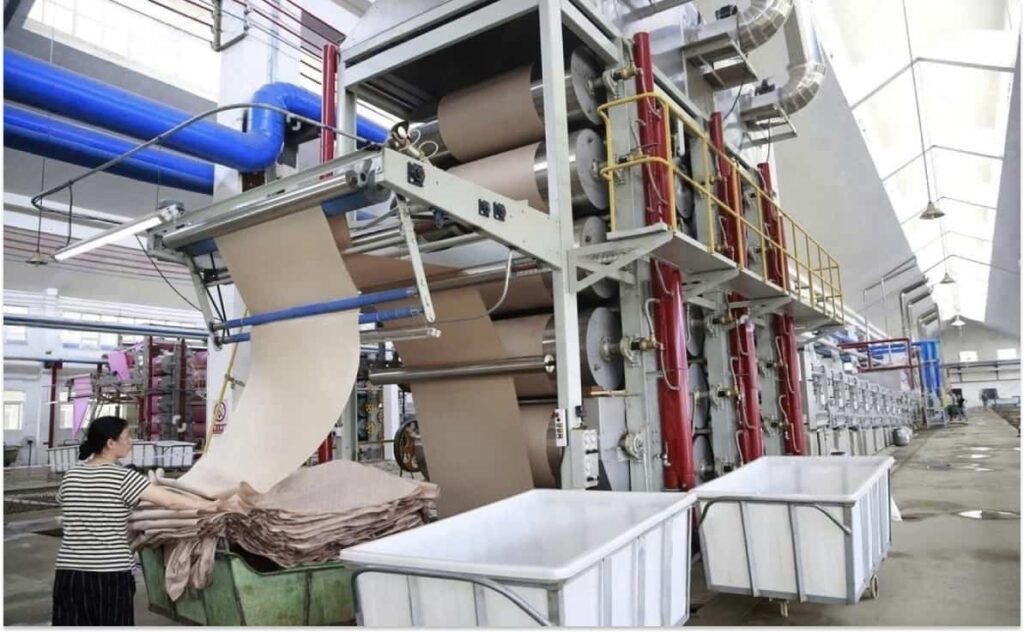
Cotton is the most popular natural material in the garment industry, but for prints on cotton to achieve perfection, the Post Print Cotton Fabric Treatment Stage is a step that cannot be underestimated. If this process is performed incorrectly or with poor quality, it will lead to serious consequences regarding the color fastness and hand feel of the product. The following article will specifically analyze the risks when the post-print treatment process fails to meet standards and how to optimize each technical step.

1. Fading and Poor Wash Fastness Due to Post-Print Cotton Fabric Treatment Errors
The most common and noticeable issue when the process is performed incorrectly is the fabric’s ability to retain color. Cotton has a porous structure and high absorbency; if the color is not “locked” properly, it will easily wash away.
1.1. Color Dullness
Colors after printing need to undergo thermal or chemical fixation to reach maximum brilliance. If the Post Print Cotton Fabric Treatment Stage does not ensure sufficient temperature or the necessary time, the color molecules will not penetrate deep into the fiber core.
1.1.1. Deficiencies During Steaming
For reactive printing inks, steaming is a mandatory step to open the cotton fiber pores and allow the color to form covalent bonds. A lack of steam or pressure during this step causes the color to only stick to the surface, resulting in prints that look dull and lifeless as soon as they leave the line.
1.1.2. Inconsistent Coloration
Poor treatment also leads to patchy colors. Failing to control the pH of the post-print wash liquor causes some areas to lose more color than others, creating inconsistency across the entire fabric roll. This is a direct consequence of lax management during the Post Print Cotton Fabric Treatment Stage.
1.2. Low Wash Fastness
Customers judge the quality of cotton fabric based on whether it retains its color after multiple washes. If the Post Print Cotton Fabric Treatment Stage is rushed or neglected, excess dye will remain on the fibers.
1.2.1. Color Bleeding
When dyes are not fully bonded, they dissolve into the wash water and stain white fabric sections or other garments washed together. This is a serious flaw in the textile industry. A standard Post Print Cotton Fabric Treatment Stage must include multiple washing steps from cold to hot water to thoroughly remove these free color molecules.
1.2.2. Shade Degradation After Each Wash
Not only does bleeding occur, but the print will also fade rapidly. After just 2-3 washes, a high-end shirt can look like an old rag if the color fixative in the Post Print Cotton Fabric Treatment Stage fails or is skipped to save on chemical costs.
2. Negative Impacts on Fabric Hand Feel and Softness
Cotton fabric is loved for its softness and breathability. However, printing auxiliaries such as thickeners can make the fabric stiff if not handled correctly.
2.1. Harsh Hand Feel
Thickeners prevent the printing ink from spreading, but they create a hard film on the cotton fibers. The Post Print Cotton Fabric Treatment Stage plays the role of removing this film.
2.1.1. Consequences of Incomplete Washing
If the Post Print Cotton Fabric Treatment Stage does not use sufficient enzymes or washing agents to break down the thickener structure, the fabric will become as coarse as sandpaper. This is strictly taboo for garments in direct contact with the skin, such as underwear or children’s clothing.
2.1.2. Loss of Natural Elasticity
Excessive chemical treatment or too high a temperature during post-print drying can embrittle cotton fibers, causing the fabric to lose its natural drape and elasticity. The Post Print Cotton Fabric Treatment Stage requires a delicate balance between temperature and humidity to protect the cellulose polymer structure.
2.2. Pilling and Surface Fuzz
A poor post-print treatment process can damage the cotton fibers on the fabric surface.
2.2.1. Excessive Mechanical Friction
In some cases, attempting to wash away excess ink with overly aggressive mechanical action during the Post Print Cotton Fabric Treatment Stage will cause the cotton fiber ends to fray. After a short period of use, these fibers will clump into small pills on the fabric surface, reducing the product’s aesthetic appeal.
2.2.2. Lack of Enzyme Treatment
Many textile companies skip the biopolishing step (using cellulase enzymes) during the Post Print Cotton Fabric Treatment Stage. This step helps “clean up” excess fuzz on the fabric surface, making the fabric shinier and more durable. Without this step, printed cotton fabric will easily attract dirt and pill.
3. Reduced Mechanical Strength and Fiber Lifespan
Cotton is a natural fiber, vulnerable to strong acid or alkali agents if not neutralized promptly during processing.
3.1. Decrease in Tensile Strength
Many printing processes require a strong alkaline environment. If the Post Print Cotton Fabric Treatment Stage does not thoroughly neutralize the pH, residual alkali will continue to corrode the cotton fibers over time.
3.1.1. Fabric Rotting
Cotton fabric may look fine immediately after processing, but after several months in storage, it may rot and tear easily with just a light pull. This is a silent but devastating consequence of an incorrectly performed Post Print Cotton Fabric Treatment Stage.
3.1.2. Impact of Excessive Drying Temperatures
To speed up progress, many factories increase the drying temperature beyond allowed limits. High heat loses the bound moisture within the cotton fibers, making the fibers dry and brittle under the mechanical stress of laundering.
3.2. Shrinkage Issues
Cotton tends to shrink when encountering water and heat. A standard Post Print Cotton Fabric Treatment Stage must include shrinkage control steps (such as the sanforizing process).
3.2.1. Product Deformation After Washing
If not properly shaped after printing, a cotton T-shirt may shorten or twist after the first wash. This often occurs when the Post Print Cotton Fabric Treatment Stage skips the tension control phase on the dryer.
3.2.2. Loss of Design Form
Uneven shrinkage between printed and unprinted fabric areas is also an issue. If the Post Print Cotton Fabric Treatment Stage does not release internal stresses in the fabric, the print may wrinkle or crack due to the non-synchronized expansion and contraction of the textile material.
4. Health Safety Risks and Export Standards

In the context of increasingly strict environmental and health standards, poor post-print treatment is not just a quality issue but also a legal one.
4.1. Residual Toxic Chemicals
If the washing step in the Post Print Cotton Fabric Treatment Stage is not thorough enough, toxic chemicals such as formaldehyde (often found in cheap color fixatives) or heavy metals may remain.
4.1.1. Skin Irritation for Users
Consumers, especially children, may suffer from allergies or rashes when wearing clothes with residual chemicals from a substandard Post Print Cotton Fabric Treatment Stage. This is why standards like OEKO-TEX strictly control chemical concentrations after finishing.
4.1.2. Violation of Import Regulations
Export orders to Europe or the US often require chemical residue testing. A small error in the Post Print Cotton Fabric Treatment Stage can lead to the destruction of an entire shipment, causing billions of VND in losses for the business.
4.2. Environmental Pollution
The use of environmentally unfriendly post-print treatment chemicals in the Post Print Cotton Fabric Treatment Stage is also a major negative for a company’s reputation.
4.2.1. Post-Treatment Wastewater
If the treatment process is not optimized, wastewater filled with pigments and chemicals from the Post Print Cotton Fabric Treatment Stage will burden the industrial park’s centralized wastewater treatment system and may even cause local water pollution.
4.2.2. Green Production Trends
Today, customers prioritize businesses whose Post Print Cotton Fabric Treatment Stage uses biological chemicals and saves water. Sticking to outdated, wasteful, and polluting processes will cause businesses to gradually lose their competitive edge in the global market.
5. In-depth Analysis of Standard Post-Print Cotton Fabric Treatment Procedures
To avoid the errors mentioned above, factories need to implement a closed process with strictly controlled technical parameters.
5.1. Steaming and Color Fixation Phase
This is the “life or death” phase for color fastness.
5.1.1. The Importance of Saturated Steam
In the Post Print Cotton Fabric Treatment Stage, saturated steam provides the necessary heat and humidity to swell the cotton fibers, creating conditions for reactive dyes to penetrate deep into the amorphous regions of cellulose. If the steam is too dry (superheated), the colors will be dull; if it is too wet, the print edges will blur.
5.1.2. Controlling Steaming Time
The time usually ranges from 8-12 minutes depending on fabric thickness and ink concentration. Shortening the time to increase productivity is a direct cause of dyes not reacting completely, leading to the low color fastness errors commonly seen when the Post Print Cotton Fabric Treatment Stage is rushed.
5.2. Multi-stage Washing Phase
Washing is not just dipping fabric in water; it is a complex physico-chemical process.
5.2.1. Initial Cold Rinse
The first step in the Post Print Cotton Fabric Treatment Stage is a cold water rinse to remove most of the thickeners and surface printing auxiliaries. This step prevents excess ink from bleeding into white areas as the water temperature increases in subsequent steps.
5.2.2. Hot Washing and Soaping
Use specialized detergents at temperatures of 90-95°C. At this temperature, dye molecules that are not covalently bonded will be pushed out. A standard Post Print Cotton Fabric Treatment Stage requires strong agitation and precise detergent concentrations to prevent re-deposition.
5.2.3. Neutralization and Final Softening
After hot washing, the fabric needs to pass through a cold water bath mixed with acetic acid to bring the pH to an ideal level (5.5 – 6.5). Here, silicone or cationic softeners are also added to complete the Post Print Cotton Fabric Treatment Stage, creating a smooth feel for the product.
6. Common Errors and How to Fix Them in Cotton Post-Print Treatment
To ensure quality, technicians need to identify errors in the Post Print Cotton Fabric Treatment Stage early to take timely corrective measures.
6.1. Water Spots
During drying after washing, if water is not squeezed out evenly or the dryer has condensation issues, yellow stains or water marks will appear on the fabric after drying.
6.1.1. Causes
This error is usually due to uneven tension and speed control of the squeezing rollers in the Post Print Cotton Fabric Treatment Stage, leading to chemicals and water accumulating in certain areas.
6.1.2. Solutions
Periodically check the roller system and ensure the airflow in the dryer is evenly distributed. Using wetting agents in the Post Print Cotton Fabric Treatment Stage also helps water escape faster and more evenly.
6.2. Shade Variation
This is a condition where the actual color differs from the design sample or varies between different batches.
6.2.1. Effects of pH and Temperature
Slight fluctuations in pH in the wash bath of the Post Print Cotton Fabric Treatment Stage can completely change the color of some sensitive reactive dyes (such as blue or purple).
6.2.2. Maintaining Process Stability
Establish automatic pH monitoring stations and accurate temperature gauges for each washing machine in the Post Print Cotton Fabric Treatment Stage. Keeping detailed operation logs helps find the cause and quickly resolve shade issues.
7. Case Study: Losses Due to Errors in Post-Print Cotton Fabric Treatment

Reality has recorded many cases of businesses suffering heavy losses due to ignoring small technical details.
7.1. Export Order Case for Europe
A textile factory in Vietnam printed 50,000 cotton T-shirts using reactive dyes. Due to progress pressure, workers shortened the steaming time from 10 minutes to 6 minutes and skipped the final hot wash.
7.1.1. Economic Consequences
When the goods arrived at the partner’s warehouse in Germany, random testing showed that wash fastness only reached level 2 (while level 4 was required). The entire shipment was returned, and the business had to compensate for shipping costs and lost all material costs, totaling over 5 billion VND.
7.1.2. Lessons Learned
The control of the Post Print Cotton Fabric Treatment Stage must not be compromised for speed. Establishing an internal quality control (QC) system at each processing step is extremely important for detecting errors before packaging.
7.2. Skin Irritation Incident in the Domestic Market
A children’s fashion brand was complained about by consumers because children developed rashes after wearing printed cotton clothes. The cause was identified as a poorly performed pH neutralization step in the Post Print Cotton Fabric Treatment Stage, leaving the fabric highly alkaline (pH > 9).
7.2.1. Brand Damage
Although the number of defective products was not large, information spreading on social media caused the brand’s revenue to drop by 30% that quarter. Parental trust is very difficult to regain after health safety incidents.
7.2.2. Corrective Solutions
Change the pH testing procedure at the end of the line and use neutralizing acids with better buffering capacity. Investing in the Post Print Cotton Fabric Treatment Stage is not just a cost, but insurance for the brand.
8. Future of Post-Print Treatment: Water-Saving and Green Chemical Technology
Sustainability trends are driving changes in traditional Post-Print Cotton Fabric Treatment.
8.1. Low Liquor Ratio Washing Technology
New washing machines allow the Post Print Cotton Fabric Treatment Stage to be performed with only 1/3 of the water used previously. This not only saves resources but also reduces the chemicals needed to maintain bath concentrations.
8.2. Use of Enzymes and Biodegradable Chemicals
Replacing petroleum-based surfactants with plant-derived products in the Post Print Cotton Fabric Treatment Stage is becoming the new standard. These enzymes help remove thickeners more effectively at lower temperatures, saving significant energy for the factory.
9. VieTextile – Ensuring the Quality of Post-Print Cotton Fabric Treatment
VieTextile understands that a successful printing process must end with a flawless finishing treatment. We not only provide printing solutions but also offer in-depth consultation on the Post Print Cotton Fabric Treatment Stage to help customers avoid defects that reduce product quality.
With a portfolio of international standard textile treatment chemicals, VieTextile helps manufacturers optimally control wash fastness and rub fastness while maintaining the characteristic softness of cotton fibers. We provide effective pH neutralizing aids, new-generation non-yellowing silicone softeners, and surface treatment enzymes that help cotton fabric achieve maximum smoothness.
Every solution in VieTextile’s Post Print Cotton Fabric Treatment Stage is oriented toward user safety and environmental protection, helping your products easily pass the most rigorous quality tests for international markets. Partner with VieTextile to ensure that every meter of printed cotton fabric is a testament to professionalism and top-tier quality.
10. Frequently Asked Questions (FAQ) About Post-Print Cotton Fabric Treatment
10.1. Why Does Cotton Fabric Often Become Stiff After Printing?
Answer: This phenomenon is mainly due to thickeners used in the printing paste not being completely removed in the Post Print Cotton Fabric Treatment Stage. Washing without sufficient temperature or specialized detergents will leave a chemical film on the surface, making the fabric harsh.
10.2. How to Prevent Color Bleeding When Washing Printed Cotton?
Answer: To prevent bleeding, the Post Print Cotton Fabric Treatment Stage must perform a hot soaping step (usually at 90-95°C) to completely remove unfixed dyes, followed by using a high-quality color fixative to lock the remaining color molecules.
10.3. What is the Ideal Steaming Temperature for Cotton Fabric Printed with Reactive Dyes?
Answer: Typically, the steaming temperature in the Post Print Cotton Fabric Treatment Stage using reactive dyes ranges from 102°C to 105°C with saturated steam for 8-12 minutes. Maintaining a stable temperature is the key to bright and durable colors.
10.4. Can Poor Post-Print Treatment Make Cotton Fabric Easy to Tear?
Answer: Yes. If the Post Print Cotton Fabric Treatment Stage does not fully neutralize residual alkalinity or uses excessively high drying temperatures for long periods, the cellulose structure of the cotton fibers will be destroyed, reducing breaking strength and making the fabric prone to rotting and tearing.
10.5. Is it Necessary to Use Enzymes in Cotton Post-Print Treatment?
Answer: It is very necessary if you want the product to have a smooth surface without pilling. Using cellulase enzymes in the Post Print Cotton Fabric Treatment Stage helps remove excess fibers, enhancing the luster and premium feel of the cotton fabric product.
To optimize your Post Print Cotton Fabric Treatment Stage and enhance the quality of your textile products, contact VieTextile today!
Contact Information:
Hotline: 0901 809 309
Email: info@vietextile.com
Website: https://vietextile.com