


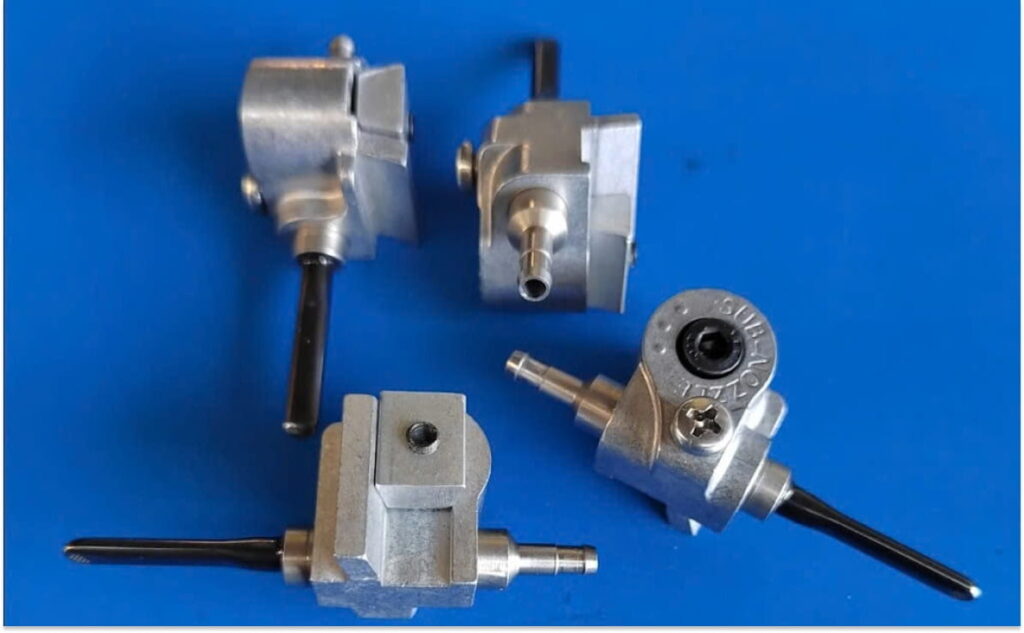
In the context of fierce competition in the textile industry, upgrading the relay nozzle is considered a key solution for factories to optimize operating processes and cut production costs on modern air jet loom systems.
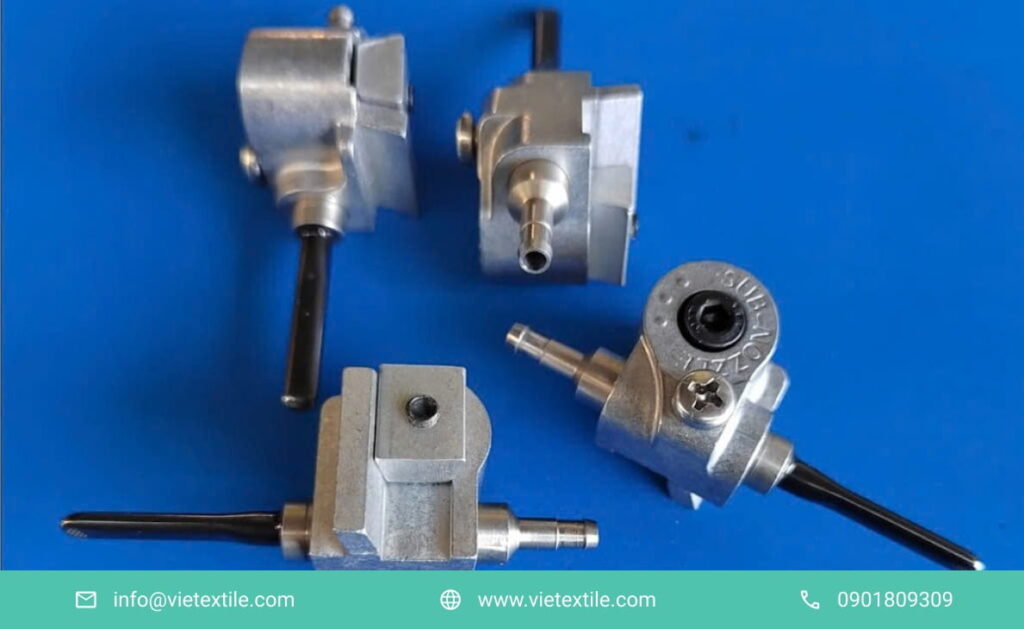
1. Understanding Relay Nozzle In Air Jet Weaving Technology
First, let’s explore the most overview and scientific definition, physical structure, as well as the basic operating principles of the relay nozzle in today’s industrial air jet loom systems.
1.1. Definition And Role Of Relay Nozzle
In an air jet loom system, these components, also known as sub-nozzles, are installed along the flight path of the weft yarn. Their main task is to maintain a stable speed and flight direction for the yarn by providing auxiliary compressed air flows at specific stages.
Unlike the main nozzle which creates the initial thrust, the sub-nozzle system ensures that the air pressure is always strong enough to carry the yarn across the entire width of the loom without sagging or deviating. This is particularly important when producing wide-width fabrics or using fine-count yarns.
1.2. Detailed Construction Of A Standard Relay Nozzle
A typical unit includes the nozzle body, air jet hole, and pipe connection system. The body is usually made from high-strength alloys or stainless steel to resist wear from cotton dust and continuous air pressure.
The holes on the relay nozzle are designed with extremely high precision in terms of angle and diameter. A small deviation in the jet hole design can lead to massive compressed air waste or cause air turbulence, directly affecting the fabric surface quality.
1.2.1. Analysis Of Stainless Steel Material In Manufacturing
Material is the prerequisite factor determining the lifespan of these parts. High-grade stainless steels are often heat-treated to increase surface hardness, helping to resist the erosion of impurities present in industrial compressed air.
1.2.2. Laser Beam Jet Hole Processing Technology
To achieve micrometer precision, manufacturers often use laser beams to process the jet holes on the relay nozzle. This technology ensures smooth hole walls, minimizing the frictional force of the airflow and preventing the accumulation of fibers during the weaving process.
1.3. Synchronized Operation Mechanism Of The Nozzle System
The sub-nozzle system operates based on the control of solenoid valves. When the weft yarn starts flying into the controlled area, groups of auxiliary jets will open in an extremely precise timing sequence.
This synchronization helps the relay nozzle create a virtual “air pipe,” guiding the yarn along the correct trajectory. If the upgrade is not performed correctly, this lack of synchronization will lead to weaving defects and unnecessary energy consumption.
1.3.1. Role Of The Weft Sensor
The weft sensor works closely with the system to determine the exact position of the yarn head. When the sensor detects that the yarn has passed, the system will immediately cut off the air at that specific spray unit to save energy without affecting the flight journey.
1.3.2. Sub-Nozzle Timing Control Algorithms
Modern looms use intelligent algorithms to automatically adjust the valve opening time. Upgrading the control software along with new components helps optimize the airflow according to each specific type of textile item.
2. Why Need To Upgrade Relay Nozzle Immediately?
Below are the urgent economic and technical reasons explaining why businesses need to prioritize the budget for upgrading the relay nozzle to maintain a competitive advantage in the textile supply chain.
2.1. Minimizing Compressed Air Consumption
Energy costs to produce compressed air account for more than 70% of the operating costs of an air jet loom. Older designs often have suboptimal jet hole configurations, causing air leakage into the surrounding environment instead of focusing on the yarn.
Upgrading to new generation models helps focus the airflow more accurately. This allows the factory to reduce the set pressure at the air compressor station while still ensuring weaving speed, thereby saving billions of dong in electricity costs every year.
2.1.1. Comparing Compressed Air Efficiency Between Nozzle Generations
Old generation relay nozzle lines typically consume about 15-20% more compressed air than new lines. This difference comes from the design of the internal air compression chamber, where air eddies are eliminated more effectively in modern designs.
2.1.2. Impact Of Pressure Reduction On Air Compressors
When the relay nozzle operates more efficiently, the required pressure at the compressor can be reduced by 0.5 – 1.0 bar. This pressure reduction not only saves electricity directly but also reduces the operating temperature of the compressor, extending the maintenance period for the air station.
2.2. Increasing Loom Speed (RPM)
When the sub-nozzle system works efficiently, the thrust acting on the yarn is more stable, allowing the machine to run at a higher rotation speed (RPM). Modern units are designed to reduce air resistance, helping the yarn fly faster and smoother.
Speed is a vital factor in industrial production. Just by increasing 5-10% speed thanks to improving the relay nozzle, the monthly output of the factory will change significantly, helping to quickly recover the investment capital.
2.2.1. Optimizing Yarn Tension At High Speed
At speeds above 800 RPM, the stability of the weft yarn depends entirely on the precision of the auxiliary jets. The upgraded components help eliminate the yarn tail-wagging phenomenon, keeping the yarn consistently tense throughout the flight.
2.2.2. Reducing Vibration Of The Machine Frame
The new relay nozzle system operates more quietly, reducing compressed air impulses acting on the reed. This helps the machine frame stay more stable when operating at extremely high speeds, minimizing wear and tear on related mechanical parts.
2.3. Improving Finished Fabric Quality
Instability in the airflow of an old relay nozzle often causes “weft kinky” (twisted weft yarn) or “loose pick” errors. These errors reduce the commercial value of the fabric and waste raw materials.
Using a relay nozzle with an advanced aerodynamic design helps control yarn tension better. The fabric surface after weaving will be even, smooth, and free from defects caused by uneven air pressure.
2.3.1. Controlling Weft Yarn Uniformity On Wide-Width Fabrics
For fabrics over 3.4m wide, the relay nozzle plays a decisive role in keeping the yarn from sagging. Upgrading the nozzle helps ensure that the thrust at the end of the width is as strong as at the beginning, eliminating fabric edge misalignment.
2.3.2. Minimizing Shedding Phenomenon
The concentrated airflow from a modern relay nozzle helps the yarn go exactly into the center of the fabric shed, avoiding collision with warp yarns. This significantly reduces shedding and fiber loss, improving the tensile strength of the finished fabric.
3. Popular Types Of Relay Nozzle On The Market Today
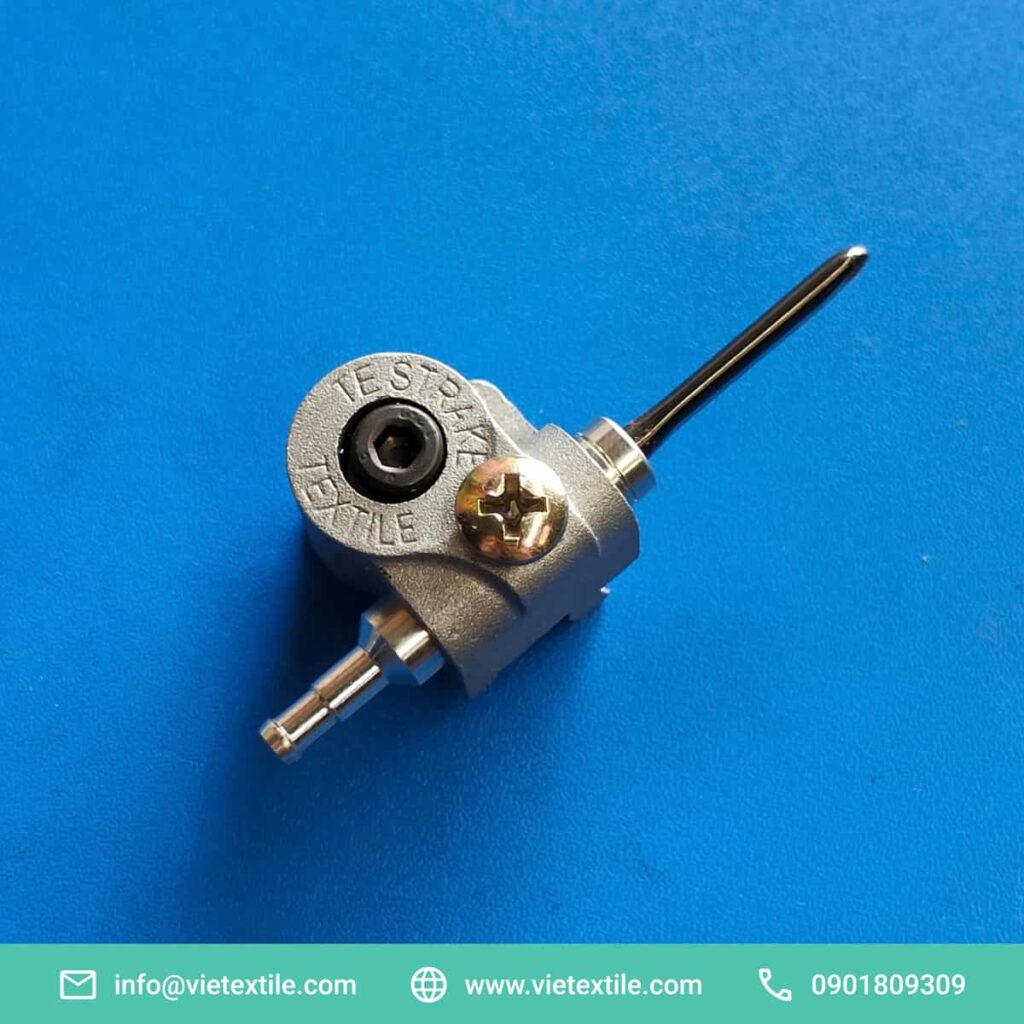
The current components market provides a variety of sub-nozzle lines depending on the textile product segment; understanding each type will help you make the most accurate investment decision for the factory.
3.1. Single-Hole Nozzles vs. Multi-Hole Nozzles
Traditional single-hole types have the advantage of being easy to manufacture but the biggest disadvantage is that the airflow is easily dispersed. Meanwhile, the new generation multi-hole relay nozzle lines create a better convergent airflow, helping to keep the yarn in the center of the flight path.
Many factories today are shifting towards upgrading to multi-hole versions to optimize yarn transmission. Although the initial investment cost is higher, the efficiency in terms of energy and quality is undeniable.
3.1.1. Advantages Of Focus Nozzle Design
The convergent design in multi-hole models helps create a high-pressure zone concentrated right at the core of the airflow. The weaving yarn will be “sucked” into the center of this airflow, helping the flight journey stay absolutely stable.
3.1.2. Applications In Weaving Special Yarns
For high-twist yarns or filament yarns, the multi-hole relay nozzle is the optimal choice to prevent back-twisting. The surrounding airflow helps protect the yarn structure throughout the long flight distance.
3.2. Special Design Relay Nozzle For Fine Yarns
For high-end fabrics using fine yarns, using a standard relay nozzle can damage the yarn structure. Specialized nozzles with lighter pressure but more stable airflow are a mandatory choice.
Upgrading these components requires a deep understanding of the physical properties of the yarn. Each different type of yarn will require a different configuration to achieve the most optimal efficiency.
3.2.1. Adjusting Flow Rate For High-Count Cotton Yarns
Fine cotton yarn is very susceptible to damage by excessive air pressure. The relay nozzle for this type of yarn often has smaller jet holes and a super-smooth polished surface to avoid scratching the yarn during slight collisions.
3.2.2. Solutions For Synthetic And Blended Yarns
Polyester or blended yarns often have different flight characteristics compared to natural yarns. The relay nozzle for this type is calculated to create stable thrust despite the variation in the specific gravity of the yarn.
3.3. Energy Saving (Eco-Friendly) Nozzle Lines
The sustainability trend in the textile industry has driven the birth of energy-saving types. These components are calculated using Computational Fluid Dynamics (CFD) to minimize the amount of excess air.
Using environment-friendly relay nozzle not only helps businesses reduce costs but also achieves green certificates in production, creating an advantage when exporting to demanding markets.
3.3.1. Low Noise Design Technology
A secondary benefit of energy-saving models is the ability to reduce noise in the weaving shed. Less turbulent airflow means that the noise level (decibels) is reduced, improving the working environment.
3.3.2. Compatibility With Compressed Air Reuse Systems
Many new loom systems are designed to reuse part of the air pressure. Modern relay nozzle is fully compatible with air recovery valves, helping the energy usage lifecycle be more closed.
4. Technical Standard Relay Nozzle Upgrade Process
To achieve the highest efficiency in upgrading, the technical team needs to follow a strict installation and calibration process, from initial evaluation to actual trial operation.
4.1. Evaluating The Loom System Status
Before starting the upgrade process, technicians need to accurately measure the actual air consumption and identify weaknesses in the current sub-nozzle system. This includes checking the wear of the jet holes and control valves.
The collected data will be the basis for choosing the most suitable relay nozzle type. Not always is the most expensive unit the best, but the importance lies in the compatibility with the existing loom configuration.
4.1.1. Using Portable Air Flow Meters
For accurate evaluation, technicians will use a flow meter at each sub-nozzle position. Those with a flow deviation exceeding 5% of the standard will be marked for priority replacement.
4.1.2. Checking For Leakage At Hose Couplings
Upgrading the relay nozzle will not be effective if the piping system leaks. Checking rubber gaskets and auxiliary air hoses is a mandatory preliminary step to ensure the airflow always reaches maximum pressure.
4.2. Selecting Appropriate Technical Specifications
Each loom line (such as Tsudakoma, Picanol, or Toyota) will have its own requirements for the size and spray angle of the relay nozzle. Choosing the wrong parameters can lead to machine damage or seriously reduce weaving efficiency.
When choosing a relay nozzle, attention should be paid to the hole diameter, body length, and surface material. Reputable component manufacturers often provide detailed specification tables to support smooth replacement.
4.2.1. Determining Optimal Spray Angle For Each Reed Type
The spray angle of the relay nozzle must be fully compatible with the profile reed groove. If the angle is deviated, the airflow will hit the reed wall, causing energy loss and creating streaks on the fabric.
4.2.2. Selecting Nozzle Body Length According To Loom Width
The length of the unit must ensure it does not obstruct the reed’s journey but is still close enough to lead the yarn effectively. Upgrading to nozzle lines with a thin design helps increase the operating space.
4.3. Synchronized Installation And Calibration
The relay nozzle installation process requires meticulousness. The nozzles must be placed at the correct angle so that the airflow blows accurately into the reed groove. A deviation of only 1 degree can lose the effectiveness of the upgrade.
After installation, resetting the timing on the loom control panel is extremely important. The new system may have different air response characteristics than the old one, therefore needing to be fine-tuned to achieve perfect synchronization.
4.3.1. Laser Alignment Equipment Usage Techniques
To achieve absolute precision, VieTextile encourages the use of laser positioning devices to install the relay nozzle. This method helps all units on the same machine frame lie on a perfect straight line.
4.3.2. Fine-Tuning The Air Pressure Diagram
After replacing the relay nozzle, engineers need to redraw the air pressure diagram in real-time. This helps determine whether the nozzles open/close at the right time, thereby adjusting software parameters.
5. Challenges When Operating Relay Nozzle And Remedies
Even after being upgraded, the relay nozzle system can still encounter operational risks due to the harsh production environment; this section will guide you on how to recognize and thoroughly handle those incidents.
5.1. Clogging Due To Dust And Dirt
In a textile factory environment, cotton dust and machine oil are very easy to stick to the small holes of the relay nozzle. This changes the shape of the airflow and reduces the thrust, leading to frequent weaving errors.
To fix this, it is necessary to have a periodic cleaning regime using high-pressure compressed air or specialized solutions. Maintaining a clean compressed air filtration system also plays a decisive role in preventing clogging.
5.1.1. Impact Of Central Air Filtration Systems
Substandard compressed air filtration systems will bring oil mist and water into the relay nozzle. Upgrading the air filter is an indispensable supporting solution to maintain the openness of the tiny jet holes.
5.1.2. Ultrasonic Wave Cleaning Method
For heavily clogged relay nozzle, the ultrasonic cleaning method is the most effective. Sound waves will penetrate every corner inside the chamber, breaking up oil deposits without scratching the material.
5.2. Physical Wear After Long-Term Use
Despite being made of hard material, the jet hole of the relay nozzle still wears out gradually over time. When the hole becomes wider, the air consumption will soar and the pressure will drop.
Engineers need to periodically check with specialized gauges to early detect units that have exceeded the wear limit. Timely replacement is the best way to maintain stable performance for the entire production line.
5.2.1. Analyzing The “Bombardment” Phenomenon Of The Jet Hole Surface
High-speed airflow carrying moisture can cause surface cavitation inside the relay nozzle. Using ceramic materials or artificial diamond coating at critical positions is a high-end upgrade direction today.
5.2.2. Recognizing Wear Signs Through Sound
An experienced technician can recognize a worn relay nozzle through the unusual “howl” of the compressed air. This sound is emitted because the airflow is turbulent when passing through a deformed hole.
5.3. Errors Due To Improper Air Pressure Settings
Many factories have a habit of increasing compressed air pressure to compensate for the inefficiency of an old relay nozzle. However, this causes reverse effects such as breaking the yarn or increasing machine vibration.
Once upgraded to a modern relay nozzle, the most important step is to find the minimum pressure level at which the machine still operates well. Step-by-step testing will help find the “sweet spot” for the system.
5.3.1. Setting Up Low-Pressure Test Procedures
This procedure involves gradually reducing the relay nozzle pressure after each weaving cycle until errors start to appear. The pressure point just before the error occurs is the most optimal operating level.
5.3.2. Training Workers On Air Valve Adjustment
Operating workers need to be instructed not to arbitrarily increase the relay nozzle pressure when the machine reports a weaving error. Instead, they need to check if the nozzle is dirty or misaligned.
6. Economic Efficiency Analysis When Investing In New Generation Relay Nozzle
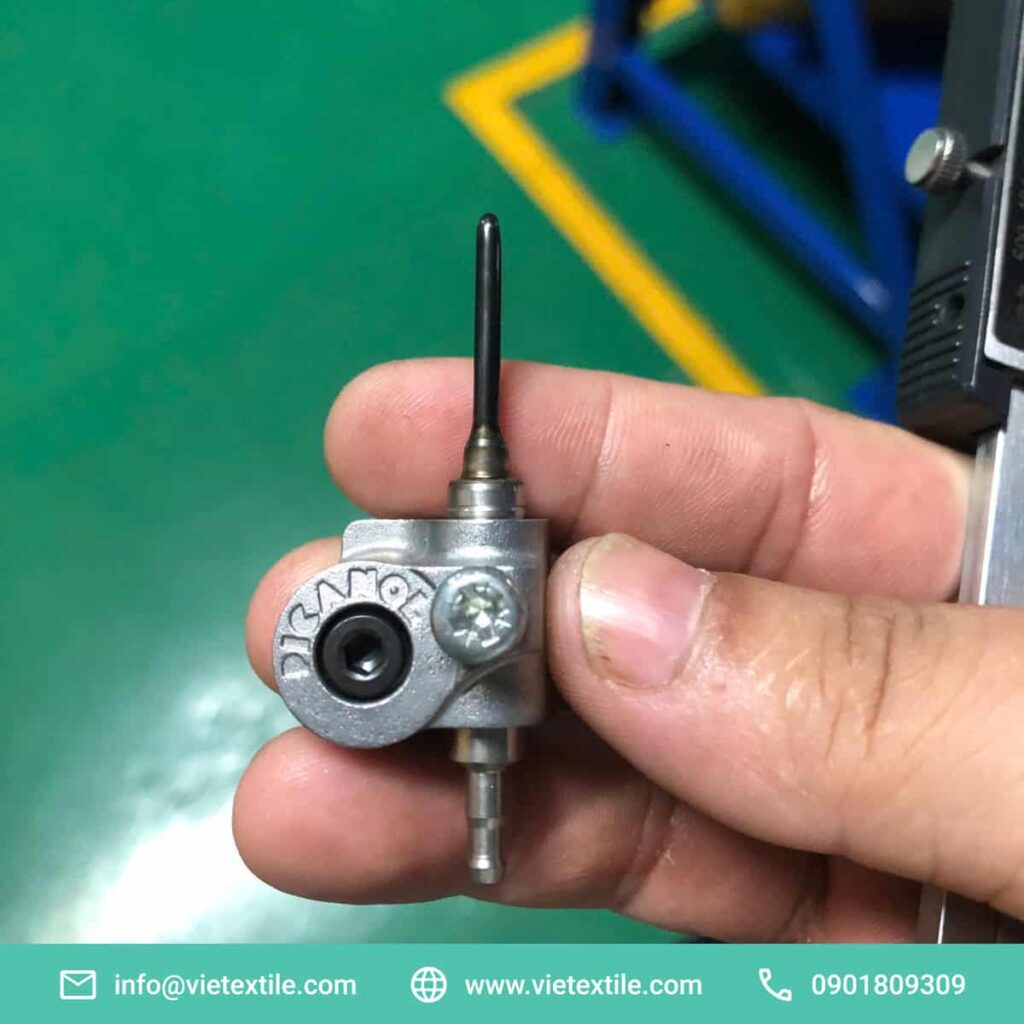
Investing in relay nozzle is not just a component cost but a profitable investment; we will analyze the financial indicators and long-term value that this upgrade brings to your business.
6.1. Calculating Return On Investment (ROI)
Investing in relay nozzle usually has a very fast payback period, often only 6 to 12 months. The amount saved from the monthly electricity bill is often enough to cover the cost of buying new components.
In addition, reducing the rate of defective goods thanks to stable relay nozzle operation also contributes a significant part to profit. When the rate of grade 1 fabric increases, revenue will be directly improved.
6.1.1. Annual Compressed Air Saving Formula
Savings = (Old flow rate – New flow rate) x Machine running time x Compressed air unit price. Many business owners will be surprised at the amount of money wasted by using old relay nozzle.
6.1.2. Added Value From Reducing Reject Rate
Grade B defective fabric is often discounted by 30-50%. A standard relay nozzle system helps reduce the defect rate to below 1%, helping to maximize revenue on every meter of fabric.
6.2. Reducing Overall Maintenance Costs
A good relay nozzle system helps the loom operate smoother, reducing vibration and load on the air compressor. This indirectly extends the lifespan of other components, reducing the Total Cost of Ownership (TCO).
Using high-quality relay nozzle also helps reduce the frequency of having to stop the machine for unexpected repairs. Each hour the loom is stopped causes a huge opportunity loss.
6.2.1. Reducing Load For The Solenoid Valve System
Efficient relay nozzle allows solenoid valves to operate in a more stable pressure range, reducing thermal and mechanical shocks. This helps extend the life of the solenoid valve assembly.
6.2.2. Limiting Wear On The Reed
When the airflow from the relay nozzle is focused right at the center of the reed groove, the collision of the yarn with the reed wall will decrease. This helps the reed plating last longer, reducing maintenance costs.
6.3. Increasing Market Competitiveness
With lower production costs thanks to optimizing the relay nozzle, businesses can offer more competitive prices. In the textile industry, good control of input costs is a huge advantage.
International customers are increasingly interested in factories using modern technology. Upgrading the relay nozzle is proof that the business is investing in sustainable and high-efficiency production.
6.3.1. Meeting Green Production Standards
Reducing power consumption through upgrading the relay nozzle helps businesses easily achieve international environmental certificates. This is an important passport for global fashion supply chains.
6.3.2. Flexibility In Switching Items
The versatile relay nozzle system allows the factory to easily switch from weaving thick fabric to thin fabric. This flexibility helps businesses quickly respond to short-term orders from the market.
7. Specialized Relay Nozzle Solutions From VieTextile
With many years of practical experience, VieTextile is confident to bring you high-end relay nozzle product lines along with the most optimal equipment upgrade roadmap.
7.1. VieTextile And Textile Component Supply Capacity
VieTextile is proud to be a leading unit specializing in providing loom performance optimization solutions, in which the relay nozzle product is a core strength. We don’t just sell parts but bring overall technical solutions.
With a team of experienced experts, we understand each characteristic of air jet looms and always have the highest quality relay nozzle available to meet the upgrade needs of factories in Vietnam.
7.1.1. Component Warehousing System Available In Vietnam
We understand that machine stoppage is a loss. Therefore, VieTextile always maintains a large inventory of relay nozzle codes, ensuring fast delivery within 24 hours so that production is not interrupted.
7.1.2. Strategic Partner Of Global Manufacturers
VieTextile connects directly with the world’s leading textile component workshops. This helps us update the latest relay nozzle technologies and bring them back to Vietnam at preferential prices.
7.2. Commitment To Relay Nozzle Quality At VieTextile
At VieTextile, the quality of each relay nozzle is always put first. We partner with the most reputable component manufacturers in the world to ensure outstanding durability and absolutely accurate specifications.
The application of new technologies helps our relay nozzle have a wear resistance many times higher than common types. This gives customers peace of mind to operate machines at high intensity.
7.2.1. 100% Product Inspection Process Before Warehousing
Every relay nozzle at VieTextile must go through an actual air flow test. Only products with errors within the allowable threshold are labeled with quality inspection stamps and shipped.
7.2.2. Flexible Warranty And Return Policy
We are committed to warranty for manufacturer defects. If the relay nozzle does not achieve the air-saving efficiency as initially committed, VieTextile’s technical team will work with the customer to review.
7.3. Technical Support And Upgrade Consulting Services From VieTextile
We don’t just provide the relay nozzle but also accompany customers throughout the system upgrade process. Our technicians are ready to go to the factory to survey, measure, and advise on the most optimal type.
In addition, VieTextile cũng tổ chức các buổi đào tạo kỹ thuật về cách bảo trì và căn chỉnh cho đội ngũ của khách hàng. Chúng tôi tin rằng sự hiểu biết về thiết bị sẽ giúp khách hàng tối đa hóa giá trị.
7.3.1. Support For Compressed Air Optimization Software Installation
Accompanying the relay nozzle upgrade, we support customers in updating control settings. The combination of good hardware and standard software configurations will create a breakthrough.
7.3.2. Free Periodic Inspection Program For Loyal Customers
Đối với các đối tác sử dụng giải pháp lâu dài, VieTextile cung cấp dịch vụ kiểm tra định kỳ 6 tháng một lần. Điều này giúp sớm phát hiện các vấn đề tiềm ẩn và duy trì đội ngũ máy móc.
8. Frequently Asked Questions About Relay Nozzle (FAQ)
8.1. How Often Should The Relay Nozzle Be Replaced?
Replacement time depends on the working environment and yarn type. Normally, after 1-2 years of continuous operation, you should check the relay nozzle for wear. If air consumption increases unusually, it’s time to replace the system.
8.2. Is Upgrading The Relay Nozzle Complex?
The process is not too complex with expert support. Physical replacement happens quickly, but the important part is calibrating the relay nozzle angle and timing. VieTextile can support you in performing this process professionally.
8.3. Does The Relay Nozzle Affect The Durability Of The Weft Yarn?
Yes, the relay nozzle greatly affects yarn durability. If the airflow is too strong or not focused, it can fibrillate the surface or cause breakage. Using modern lines helps create a smoother airflow, protecting the yarn structure.
8.4. Why Should I Choose VieTextile’s Relay Nozzle Instead Of Cheap Types?
Cheap relay nozzle often have poor jet hole precision and wear out quickly. Saving on initial costs can lead to wasting billions in electricity and reducing fabric quality. Our products ensure a perfect balance for long-term efficiency.
8.5. Can I Calibrate The Relay Nozzle Myself?
You can calibrate the relay nozzle yourself if you have full angle measuring tools and understand the loom’s control panel. However, to maximize compressed air optimization, we recommend seeking support from a specialized technical team like VieTextile.
To upgrade your relay nozzle system professionally and receive advice on optimization, contact VieTextile today!
Contact Information:
Hotline: 0901 809 309
Email: info@vietextile.com
Website: https://vietextile.com