


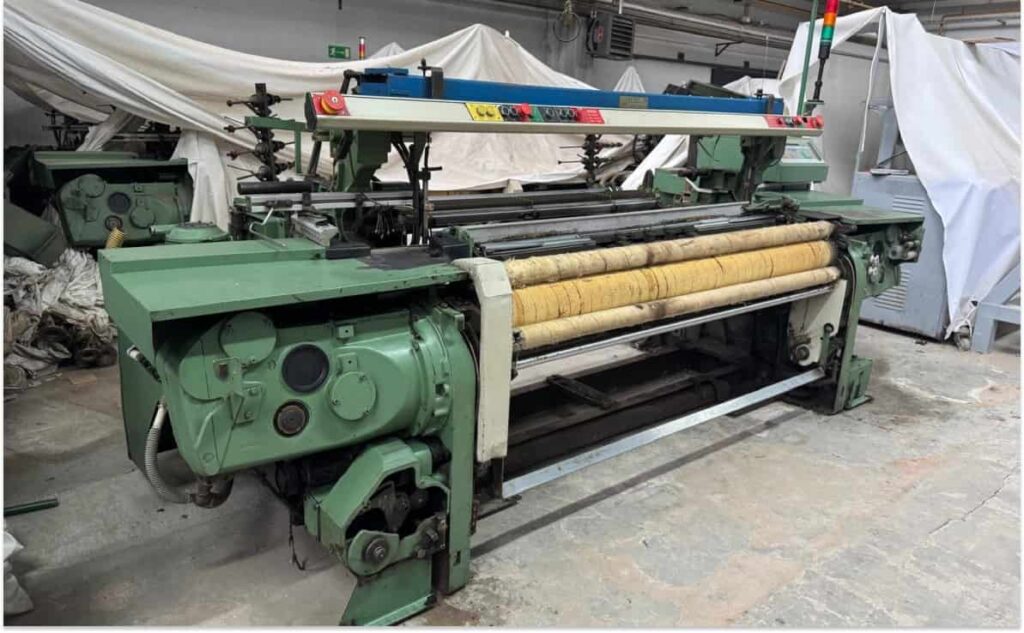
Early identification of Wear prone loom parts and understanding the causes of degradation is the key for factories to minimize unscheduled downtime and protect operating budgets.
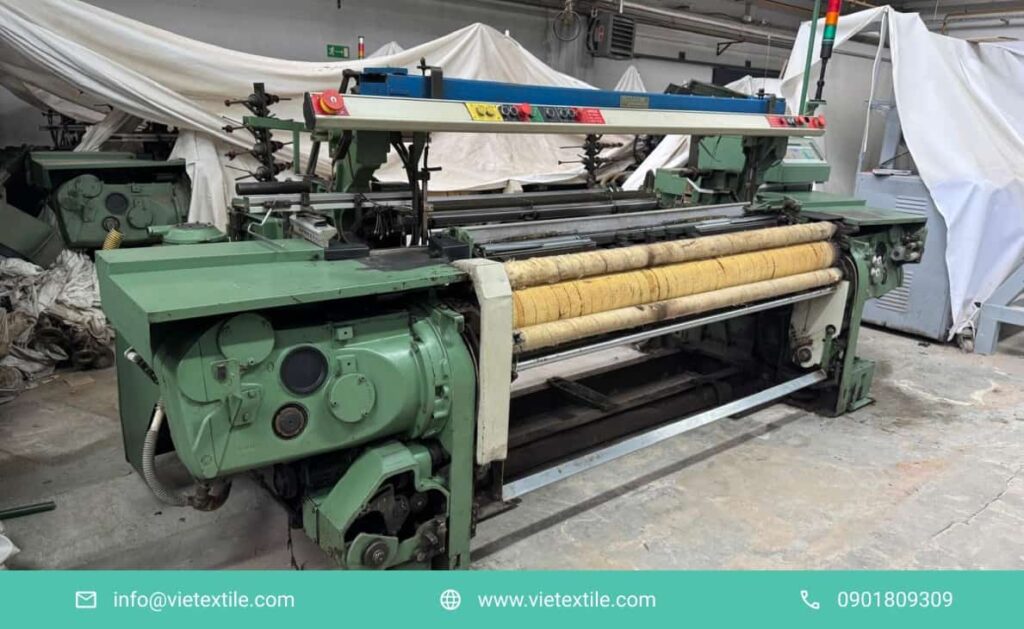
1. Impact Of Production Environment On Loom Components
The weaving shed environment in tropical countries like Vietnam is often much harsher than standard laboratories, making it a leading factor that causes Wear prone loom parts to oxidize and wear out faster. Fluctuations in temperature and humidity not only affect the yarn but also create invisible physical and chemical pressures on every millimeter of mechanical component surfaces.
1.1. High Humidity And Metal Oxidation
High air humidity is the number one enemy of precision mechanical parts. When humidity exceeds 70%, metal surfaces without protective coatings begin to oxidize, creating tiny rust spots that increase friction. In the textile environment, humidity is often kept high to prevent yarn brittleness, but this inadvertently creates conditions for electrochemical corrosion to occur more intensely on metal contact surfaces.
For Wear prone loom parts like knitting needles or drive shafts, even a thin layer of rust is enough to alter tolerances, leading to rapid heating during operation and early failure. This process happens silently: starting with light brown stains, followed by pitting, which destroys the original smooth finish and leads to fabric scratching.
1.2. Cotton Dust And Impurity Accumulation
Cotton dust in the weaving shed combined with machine oil creates an extremely dangerous adhesive mixture. This mixture creeps into joints, bearings, and crevices of Wear prone loom parts, clogging lubrication systems. This is not just a cleaning issue but a mechanical disaster because it completely changes the characteristics of the lubricant, turning oil into a highly abrasive “sludge.”
When cotton dust builds up too thick, it also acts as an abrasive material, scratching the surface of yarn-guiding components, causing fabric pilling and damaging parts after only a short period of use. This wear does not occur uniformly, creating localized depressions that cause the yarn to snag or break when the machine runs at high speeds.
1.2.1. Impact On Natural Cooling Systems
When components are covered in cotton dust, the cooling capacity of the loom is severely reduced. High heat buildup at friction points causes material denaturation, making Wear prone loom parts lose their necessary hardness. Industrial plastic or rubber details covering metal parts will become brittle and crack after just a few weeks of exposure to continuous high temperatures caused by the “insulating” cotton dust layer.
1.2.2. Formation Of Mechanical “Hot Spots”
Component assemblies located deep within the machine are often missed during cleaning. Cotton dust accumulating here forms hot spots, causing localized thermal expansion and deforming precision-fitted parts. Thermal distortion is a major cause of serious machine jams, where Wear prone loom parts become “fused” together because heat is not released in time.
2. Most Vulnerable Wear prone Loom Parts During Operation
Among the thousands of parts in a loom, certain groups of components are always on the “priority replacement” list due to heavy-duty work and extremely high friction frequency. Understanding this category helps factories be proactive in inventory backup and flexible financial planning.
2.1. Group Of Components In Direct Contact With Yarn
Yarn guides, grippers, and heald eyes are the most common Wear prone loom parts because textile fibers (especially those with polyester components or blended yarns) are highly abrasive, acting like small steel wires. The abrasive impact of yarn on component surfaces is likened to a water-jet cutting process containing sand, occurring continuously 24/7.
Yarn running through components at speeds of thousands of meters per minute creates deep wear grooves. Once these grooves appear, the component can no longer guide the yarn accurately and must be replaced immediately. If used persistently, these wear grooves will cut the yarn or create “fish scale” defects on the finished fabric surface.
2.1.1. Wear Of Grippers
Grippers must perform open-close movements millions of times. Impact force and friction cause the gripper blades to wear out or lose elasticity, dropping the yarn when the machine is running at high speed. This is a typical type of Wear prone loom parts that need daily inspection. Additionally, gripper surface grip is reduced due to the accumulation of yarn wax and sizing chemicals, increasing weft defect rates.
2.1.2. Healds And Heald Eyes
Heald wires endure continuous tension and friction from the warp yarn. If the heald eye surface is no longer smooth, it will break the yarn or damage itself due to excessive resistance. The degradation of heald wires often occurs at the end loops and the yarn-guiding eye, where mechanical pressure is greatest when the heald frame moves up and down to create the shed.
2.2. Transmission And Lubrication Group
Bearings, belts, and oil seals are Wear prone loom parts if the lubrication process is not performed accurately. Lack of oil or using the wrong type of oil will cause these parts to “die” after only a few months of operation. This is especially true for central drive systems, which bear the load of the entire loom.
In particular, drive belts, if contaminated with oil or operating in overheated environments, will become brittle, crack, and break suddenly, causing heavy damage to adjacent component assemblies. A broken belt while the machine is running at high speed can create a terrible flinging force, destroying surrounding sensors and protective covers.
2.2.1. High-speed Bearings
In modern looms, bearings must rotate at extremely high velocities. Even a small dust particle getting inside can destroy the bearing in an instant. This is a type of Wear prone loom parts that requires strict protection from impurities. When bearings start to wear, they emit a howl or vibrate the entire frame, indirectly affecting fabric surface uniformity.
2.2.2. Rubber Seals And O-rings
Under the impact of temperature and chemicals in machine oil, rubber components age easily, leading to oil leaks. Oil leaks not only cause waste but also contaminate the finished fabric. Oil stains on woven fabric are irreparable defects in the dyeing stage, leading to significant economic losses for the factory.
3. Maintenance Process Errors: Causes Of Early Part Failure
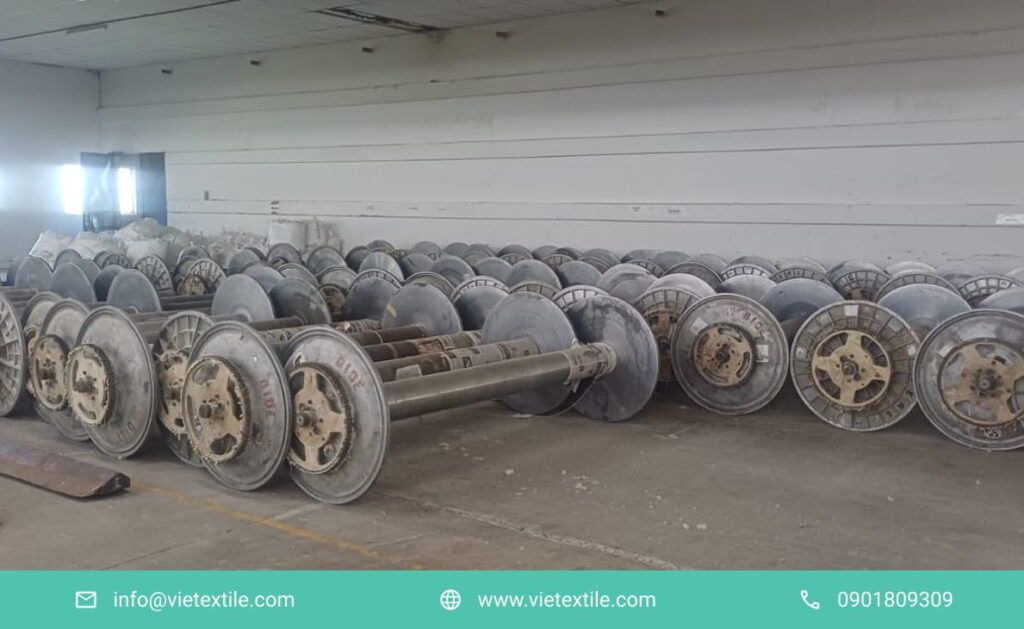
Many factories perform maintenance out of habit rather than technical standards, inadvertently turning maintenance into a process of “destroying” Wear prone loom parts. The lack of accurate measuring equipment and the habit of working based on subjective experience often lead to disastrous deviations.
3.1. Using Inappropriate Lubricants
Many businesses, to save costs, use cheap industrial oils and greases that lack specialized anti-wear and heat-resistant additives for looms. Cheap oil quickly deteriorates under high temperatures, creating sludge that wears out components. Consequently, Wear prone loom parts must work under ineffective lubrication conditions, causing dry friction.
Furthermore, over-lubricating is also harmful, causing cotton dust to stick more to Wear prone loom parts, creating a faster failure cycle. Excess oil splashing out also increases fire risks because flammable cotton dust combines with hot machine oil.
3.1.1. Machine Oil Emulsification
In humid environments, poor-quality machine oil easily emulsifies (absorbs water), losing its lubricating ability and causing rust right inside the lubricated parts. Emulsified oil usually has a milky white color and changed viscosity, no longer able to create a protective film for Wear prone loom parts surfaces against mechanical impact.
3.1.2. Lubrication Timing Deviations
Missing a lubrication cycle even for just a few hours of machine run-time can cause irreversible damage to Wear prone loom parts operating at high intensity. Metal surfaces in direct contact without an oil film will be deeply scratched immediately, and even if oil is added later, the component cannot restore its original smoothness.
3.2. Installation Errors And Asynchronous Alignment
Even if components are new and genuine, they will quickly fail if installed by low-skilled technicians. Errors such as over-tightening bolts, eccentric installation, or dynamic imbalance will cause abnormal vibrations. This vibration not only destroys the newly installed Wear prone loom parts but also loosens other components in the system.
Vibration is a silent enemy that destroys Wear prone loom parts. It causes material fatigue and localized wear in unnecessary positions. Connecting bolts, if not tightened with enough force or in the correct sequence, will lead to natural loosening, causing serious machine breakage.
3.2.1. Imbalance Of Rotating Shafts
Even a very small weight deviation on rotating shafts creates enormous centrifugal force at high speeds, crushing bearings and damaging related Wear prone loom parts in a short time. Manual dynamic balancing is often inadequate, requiring specialized electronic balancing equipment for wide-width weaving shafts.
3.2.2. Nozzle Alignment Errors
In air jet looms, if a nozzle is installed at the wrong angle, the airflow will hit the wall of another component instead of the yarn, causing surface wear and wasting compressed air energy. The plating of the reed or the wall of the relay nozzle will be quickly worn away due to misdirected compressed air pressure, turning this component into one of the Wear prone loom parts even though it is inherently durable.
4. Solutions To Extend The Lifespan Of Wear prone Loom Parts
To solve the problem of rapid component degradation, factories need a comprehensive approach strategy, combining good components with scientific operation processes. This starts with changing the mindset from “fixing failures” to “component lifecycle management.”
4.1. Selecting Components With Advanced Protective Coatings
Upgrading to Wear prone loom parts with ceramic, Diamond-Like Carbon (DLC), or hard chrome plating is a smart investment. These coatings have hardness many times greater than common steel, helping resist yarn and chemical wear. For example, a DLC-coated gripper can run continuously for 12 months without realignment, while common ones only last 3 months.
Although the initial cost of these high-end Wear prone loom parts is higher, their lifespan is 3-4 times longer, helping to reduce the factory’s total operating costs. The economic equation here is not just the money for parts, but the number of machine stops and the meters of faulty fabric significantly reduced.
4.1.1. Advantages Of Ceramic Coated Components
Ceramic coatings are extremely smooth and heat-resistant, helping the yarn glide through without generating heat, thereby protecting both the Wear prone loom parts and the yarn quality. Industrial ceramics are also chemically inert, unaffected by additives in yarn sizing, keeping component surfaces clean.
4.1.2. Nitriding Surface Treatment Technology
This method creates a hard outer shell for the component while maintaining toughness inside the core, helping Wear prone loom parts withstand both wear and impact. This is an ideal solution for details like gears, camshafts, and power transmission parts of rapier looms.
4.2. HVAC Systems (Air And Humidity Control)
Investing in air treatment systems in the weaving shed helps maintain stable temperature and humidity. This is not only good for the yarn but also protects Wear prone loom parts from oxidation and dirt. A stable environment also helps minimize thermal expansion of machine parts, keeping mechanical clearances within safe thresholds.
A clean and dry weaving shed increases average component lifespan by at least 20-30% compared to a typical shed. Furthermore, good working conditions also help operators stay alert, minimizing errors due to wrong handling that causes machine damage.
4.2.1. Applying High-Power Vacuum At Source
Vacuuming cotton dust right at the generation point (such as the shedding unit) will prevent dust from sticking to Wear prone loom parts deep inside the machine. Modern vacuum systems are integrated directly on the loom frame, helping to filter the air before it can dirty delicate transmission details.
4.2.2. Automatic Humidity Control Misting Systems
Maintaining humidity at the optimal level (about 65%) helps reduce static electricity, so cotton dust is less likely to stick to Wear prone loom parts, keeping the machine clean. Low static also helps the yarn be less fuzzy, thereby reducing abrasive pressure on heald eyes and reeds.
5. Part Supply Strategy From VieTextile
VieTextile provides more than just components; we bring a “prevention is better than cure” solution for your loom fleet through the highest quality Wear prone loom parts catalog. We are committed to bringing surplus value through in-depth technical advice and reliable sourcing.
5.1. Providing Specialized Wear-Resistant Components
We clearly understand the specific textile characteristics in Vietnam, so VieTextile prioritizes distributing surface-reinforced Wear prone loom parts. Our products are selected from manufacturers with the world’s most advanced material technologies. Each part undergoes strict hardness and tolerance testing before entering the warehouse.
Using parts from VieTextile gives you peace of mind about durability and compatibility, minimizing the risk of early failure due to poor material quality. We offer options from original (OEM) parts to lines specifically optimized for difficult-to-weave yarns.
5.1.1. Commitment To Standard European Material Origin
Our Wear prone loom parts are made from standard alloy steel, ensuring they do not deform or crack under extreme operating pressure. A closed heat treatment process helps components have a uniform molecular structure, eliminating weaknesses that could cause sudden breakage.
5.1.2. Customized Component Solutions By Yarn Type
If the factory weaves yarns with extremely high abrasiveness such as denim, linen, or metallic yarns, VieTextile will advise on specialized Wear prone loom parts designed to deal with those yarns. We help you personalize replacement parts to achieve a balance between cost and component lifespan.
5.2. In-depth Training And Maintenance Guidance Services
VieTextile supports customers in building Standard Operating Procedures (SOPs). We instruct your technicians on how to recognize early signs of Wear prone loom parts about to fail so they can be replaced in time before an incident occurs. Our training programs focus on practice, helping staff understand the nature of each component assembly.
Knowledge of proper maintenance is the most effective “shield” protecting components that VieTextile wants to deliver to our valued customers. A good technical team will help the factory save billions of dong in component costs annually through accurate operation and maintenance.
5.2.1. Technical Guidance On Economical And Effective Lubrication
We advise on the most suitable type of grease for each position of Wear prone loom parts, helping you both save on chemicals and maximize component protection. VieTextile provides visual lubrication charts, making it easy for workers to perform correctly and fully without waste.
5.2.2. Machine Alignment Support With Modern Equipment
The VieTextile team is ready to support customers in aligning machines with precision measuring tools such as dial indicators, laser balancers… Ensuring Wear prone loom parts are installed in the most perfect mechanical condition, eliminating harmful vibrations right from the assembly stage.
6. Economic Analysis: Cost Of Failure vs. Cost Of Maintenance
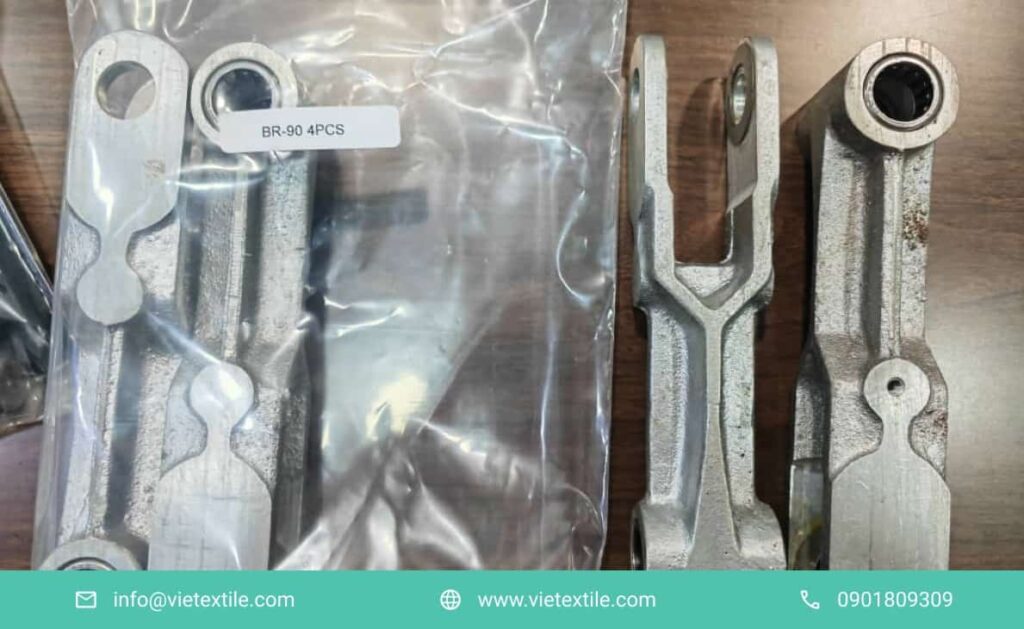
When Wear prone loom parts degrade faster than expected, it causes financial losses that managers sometimes do not fully account for. Understanding cash flow and hidden costs will help businesses have a better perspective on investing in quality parts.
6.1. Losses Due To Unscheduled Downtime
When one of the Wear prone loom parts breaks in the middle of a production shift, the entire line must stop. The cost for one hour of machine downtime including labor wages, machine depreciation, and late delivery penalties is often many times the value of the component itself. Furthermore, sudden machine stops also damage the fabric being woven on the machine at that time, creating unremovable weft defects.
Investing in quality components and proper maintenance is the cheapest way to avoid these huge fees. A good preventive maintenance strategy can help reduce unscheduled stops by up to 70%, directly improving Overall Equipment Effectiveness (OEE).
6.2. Impact On Fabric Quality And Business Reputation
Degrading components often cause minor fabric defects before failing completely. These faulty meters of fabric, if they slip through the quality control stage, will be returned by customers or downgraded, causing direct profit damage. More importantly, customer trust in your product quality will be eroded, leading to the loss of high-value orders in the future.
Using standard Wear prone loom parts helps maintain stable fabric quality from the first meter to the last, thereby protecting the brand reputation of the textile enterprise in the strict international market. In the context of global competition, stable quality is the passport for your products to go further.
7. Frequently Asked Questions (FAQ)
7.1. Why Can Genuine Loom Spare Parts Still Fail Early?
Even genuine parts will fail early if installed incorrectly, poorly lubricated, or operated beyond the machine’s design capacity. Additionally, if the type of yarn you are weaving has higher abrasive characteristics than standard Wear prone loom parts can withstand, rapid degradation is inevitable. Therefore, choosing the right part for the right yarn is a crucial factor.
7.2. Is There A Way To Identify Parts About To Fail Without Disassembling The Machine?
You can identify through sound (screeching, unusual rattling), temperature (the component’s position heating up suddenly), or through fabric quality (appearance of streaks or more frequent yarn breaks). Experienced engineers often use infrared thermal guns or handheld vibration meters to check Wear prone loom parts periodically without stopping the machine.
7.3. Which Wear prone Loom Parts Should I Stock In The Warehouse?
You should prioritize stocking Wear prone loom parts in the yarn contact group (needles, grippers, heald eyes), consumable components (cutters, belts), and pneumatic parts (valves, gaskets). VieTextile can help you establish an optimal backup list based on your machine fleet size and the types of fabric you produce.
7.4. Does Cleaning The Machine With Compressed Air Harm Components?
Yes, if high-pressure compressed air is used to blow directly into bearings or Wear prone loom parts assemblies with gaps, cotton dust will be pushed deeper inside instead of being blown out. The best way is to combine vacuuming and manual wiping in sensitive positions. Ensure compressed air has been water and oil separated before use.
7.5. Does VieTextile Support On-Site Component Condition Inspection?
Yes, we provide survey and assessment services for the condition of Wear prone loom parts directly at the customer’s factory. After the survey, VieTextile will provide a detailed report and recommend suitable upgrade solutions to extend machine life. This service helps business owners have an objective view of their machine fleet condition to plan reasonable part investments.
To overcome rapid loom component degradation and own a high-quality Wear prone loom parts catalog, contact VieTextile today!
Contact Information:
Hotline: 0901 809 309
Email: info@vietextile.com
Website: https://vietextile.com