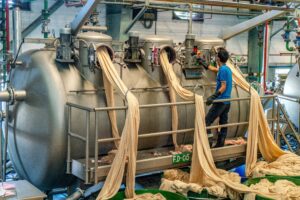
In the textile dyeing industry, the dyeing machine is the heart of the production process. Machine performance depends not only on the initial technology but is also heavily influenced by the quality and investment strategy for replacement yarn dyeing machine spare parts. Choosing spare parts unsuitable for the operational capacity and scale of the workshop can lead to waste, production interruptions, and a decline in final product quality.
This in-depth analysis will provide a comprehensive view of the secrets to selecting industrial yarn dyeing machine spare parts, helping managers and maintenance engineers accurately determine needs, optimize the Total Cost of Ownership (TCO), and ensure continuous operation for all factory sizes, from Small-Scale to Export-Oriented.
Secrets to Selecting Yarn Dyeing Machine Spare Parts Based on Factory Capacity 12
1. Classifying Factory Capacity and Corresponding Spare Part Needs
The demand for yarn dyeing machine spare parts is not uniform across different production scales. Classification helps determine the priority level and contingency budget.
Characteristics: Typically use small-capacity dyeing machines, operate intermittently (Single-Shift), or use second-hand machines. Focus is on flexible production to meet small, irregular orders.
Spare Part Strategy: Prioritize the most critical and easily damaged yarn dyeing machine spare parts to maintain minimum operation.
Priority Group 1 (Critical): Mechanical Seals of the main pump, Control Valves, and PT100 sensors (Temperature).
Objective: Minimize short-term downtime. Maintain minimal inventory, heavily relying on the speed of supply from the local yarn dyeing machine spare parts supplier.
Cost: Spare parts budget of approximately 1% – 2% of the total machine value, emphasizing fast delivery service and technical consultation.
Characteristics: Operate 2-3 shifts (Multi-Shift), diversify machine types (Atmospheric and High-Temperature). Require higher stability and planned downtime.
Spare Part Strategy: Need to balance cost and availability. Apply ABC inventory management and invest in contingency for semi-critical components.
Group A (High Value, Critical): Main Electronic Boards (PLC Modules), Inverters, Actuators of the steam valve for the dyeing machine. Requires 100% spare part backup for these Modules.
Group B/C: Mechanical wear parts (Bearing, Gasket, O-ring). Buy in larger quantities for better Cost-efficiency and reduced transportation costs.
Cost: Annual maintenance budget of approximately 3% – 5% of the total machine value, focusing on periodic Preventive Maintenance (PM) contracts.
Characteristics: Operate continuously 24/7 (Continuous Operation), demanding absolute quality stability, near-zero downtime, and adherence to international Audit standards.
Spare Part Strategy: Mandatory use of genuine (OEM) or highest quality OEM-equivalent yarn dyeing machine spare parts. Quality must be the number one priority.
Risk Management: Maintain Strategic Stock for every Critical Part. Yarn dyeing machine spare parts are considered an investment in Quality Assurance and Business Continuity.
Performance Maintenance: Prioritize spare parts that optimize the dyeing cycle (e.g., high-pressure pumps, Control Valves with high precision and Repeatability).
Cost: Maintenance budget may reach 5% – 7% of the total machine value, but this is offset by stable productivity and quality.
2. Technical Analysis of Key Yarn Dyeing Machine Spare Part Groups
A detailed analysis of the function of each group of yarn dyeing machine spare parts helps managers make informed purchasing decisions, avoiding overstocking or missing essential components.
2.1. Hydraulic and Circulation System Spare Parts
The circulation system determines the dye color Levelness. The yarn dyeing machine spare parts selected here must withstand high temperature, chemicals, and pressure.
Main Pump Mechanical Seals: This is the most critical wear yarn dyeing machine spare part, responsible for preventing leakage and maintaining pump pressure.
Criteria: Must choose Seal Face materials compatible with maximum temperature (e.g., SiC/SiC for high temperatures) and chemical corrosion resistance.
Large-Scale Factories: Requires genuine Seals to ensure 24/7 leak-free operation, especially those with Double Seal designs for higher safety.
Carrier Spindles/Dyeing Carriers:
Criteria: Must ensure no deformation under fiber compaction pressure, SS316 (Stainless Steel 316) material for rust and chemical corrosion resistance. Large-scale factories need periodic checks of the Carrier clamping pressure to avoid Channeling (Uneven Flow).
2.2. Heating and Steam System Spare Parts
This system requires high-precision steam valves for yarn dyeing machines to control the Rate of Rise (RoR).
Control Valve and Pressure Reducing Valve (PRV):
Factory Capacity: Directly proportional to the valve size (DN) and PN rating. Large factories require PN25 valves or higher, with Actuators and Positioners offering 0.5% accuracy to control the Heating Curve precisely.
Common Fault: Incorrect Cv selection leading to Valve Seat Wire Drawing (Erosion) and leakage. Requires selecting yarn dyeing machine spare parts with Trim Sets made of Stellite for harsh hot steam environments.
Steam Traps:
Criteria: Must choose a steam trap appropriate for the condensate discharge capacity. Thermostatic steam traps are often preferred over Mechanical types due to their better Air Venting capability, improving heat transfer efficiency.
2.3. Electronic Control System Spare Parts
This system determines the reliability and automation of the machine, ensuring the Repeatability of dyeing batches.
Temperature Sensors (PT100) and Level Sensors:
Criteria: Accuracy and Sensitivity must be high. For large factories, this yarn dyeing machine spare part needs to be in stock for immediate replacement upon failure, preventing color deviations.
PLC/HMI Modules:
Strategy: Only purchase spare PLC Modules for machine models that have been discontinued. For new machines, prioritize spare Drivers/Inverters as they are more prone to failure than the PLC Main Processor. Ensure the Firmware Version of the spare yarn dyeing machine spare part Module is compatible with the current system.
3. Secrets to Selecting Yarn Dyeing Machine Spare Part Suppliers Based on Scale
The yarn dyeing machine spare part supplier acts as an Insurance policy for the factory’s operation. The partnership strategy must align with the needs for speed and quality.
3.1. For Small-Scale Factories: Prioritize Speed and Flexibility
Criteria: Choose a yarn dyeing machine spare part supplier with nearby inventory or the ability to deliver quickly (under 24h). Require Hotline Support and Remote Diagnosis services.
Quality: Accept OEM-equivalent yarn dyeing machine spare parts (verified) to save costs, especially for non-critical parts (e.g., Gaskets, Fuses).
Limitation: Avoid purchasing cheap, unverified yarn dyeing machine spare parts for high-pressure mechanical components.
3.2. For Export Factories: Standardization and Source Transparency
Criteria: Require the yarn dyeing machine spare part supplier to commit to CO/CQ (Certificate of Origin and Quality) for every Critical Part order. Needs the capability for Traceability for each batch of spare parts.
Strategic Partner: Sign long-term supply contracts, requiring fixed Lead Time and 24/7 Technical Support capability.
Benefit: Ensures genuine yarn dyeing machine spare parts do not void the machine’s Warranty and meet stringent international Audit standards (e.g., ISO, Bluesign).
4. Yarn Dyeing Machine Spare Part Inventory Management by Capacity (ABC Analysis)
Secrets to Selecting Yarn Dyeing Machine Spare Parts Based on Factory Capacity 13
Implementing the ABC method is key for dyeing factories to control working capital tied up in yarn dyeing machine spare part inventory.
4.1. Group A (High Value, Critical)
Analysis: 20% of spare part quantity accounts for 80% of inventory value (e.g., PLC, Control Valve, Main Pump). Low failure frequency but high Business Impact.
Inventory Strategy: Must stock 100% backup for parts with Lead Time over 1 week. These yarn dyeing machine spare parts must be stored in a controlled environment.
Management: Weekly inventory monitoring, verifying Code status and Serial Number.
4.2. Group B (Medium Value, Semi-Critical)
Analysis: 30% of spare part quantity accounts for 15% of inventory value (e.g., Sensor, Inverter, Pressure Gauge). Medium failure frequency.
Inventory Strategy: Reorder when reaching Min/Max levels based on Lead Time and average usage frequency (MOQ). Use MRP (Material Requirement Planning) for optimization.
4.3. Group C (Low Value, Fast Consumables)
Analysis: 50% of spare part quantity accounts for 5% of inventory value (e.g., Gasket, O-ring, Fuse, Contactors). High failure frequency.
Inventory Strategy: Bulk Purchase to optimize costs and always keep available in local factory stock. Use the 2-Bin System for simple management.
5. Impact of Yarn Dyeing Machine Spare Parts on Energy Consumption
Choosing quality yarn dyeing machine spare parts not only improves lifespan but is also a sustainable energy-saving strategy (Energy Efficiency).
5.1. Main Pump and Efficiency
Problem: Old circulation pumps or those using non-OEM yarn dyeing machine spare parts (e.g., worn Impeller) reduce efficiency, leading to energy waste.
Solution: Invest in genuine pumps with high Efficiency Ratings (IE3/IE4) and replace the Impeller periodically when wear exceeds 10% helps reduce electricity consumption for the circulation system. Perform VFD (Variable Frequency Drive) Tuning to optimize RPM.
5.2. Steam Valve and Heat Leakage
Problem: Steam valves for yarn dyeing machines leak (Seat Leakage) due to poor Trim material selection or insufficient Actuator closing force.
Consequence: Steam waste into the dyeing vessel when the valve is closed → uncontrolled standby temperature and increased Gas/Oil costs.
6. Influence of Environmental Factors on Spare Part Lifespan
Secrets to Selecting Yarn Dyeing Machine Spare Parts Based on Factory Capacity 14
The harsh operating environment of the dyeing factory (high temperature, humidity, chemicals) significantly shortens the lifespan of yarn dyeing machine spare parts.
6.1. Chemical Corrosion of Metal Components
Problem: Acid vapor (Acetic Acid) and alkali (Soda Ash) in the air and condensate cause rapid corrosion of non-SS316 metal parts. Especially pump Housings and valves.
Solution: Large-scale factories must require yarn dyeing machine spare parts made from SS316L (Low Carbon) or duplex/super duplex materials for specialized environments.
6.2. Humidity and Fiber Dust Causing Electronic Failures
Problem: High humidity (often above 80%) and fiber dust accumulation cause short circuits and Oxidation on PCB circuits and Terminals of electronic yarn dyeing machine spare parts (Sensor, Relay, Contactor).
Solution: Install Dehumidifiers in the Control Room. Use yarn dyeing machine spare parts with high IP (Ingress Protection) ratings (at least IP65) for outdoor Actuators and Sensors.
7. Evaluating Key Performance Indicators (KPIs) of Spare Part Suppliers
Choosing the right yarn dyeing machine spare part supplier requires evaluation based on objective KPIs, not just price.
7.1. On-Time Delivery (OTD) Ratio
Goal: The supplier must achieve OTD above 95% for Group A and B parts.
Significance: Ensures the supply chain is not disrupted, reducing excessive Holding Cost at the factory.
7.2. Failure Rate
Goal: The Failure Rate of yarn dyeing machine spare parts must be below 1% during the Warranty Period.
Significance: Reflects the actual quality of the product. A reputable supplier will be willing to provide their Failure Rate reports.
7.3. Technical Consulting Capability
Goal: The yarn dyeing machine spare part supplier needs an engineering team with actual experience on dyeing machines → providing correct Part Number and accurate Substitutions without system conflicts.
8. Conclusion: Investing in Yarn Dyeing Machine Spare Parts is a Strategic Investment
Selecting yarn dyeing machine spare parts appropriate for the factory’s capacity is not just a simple technical decision but a critical economic strategy. From small factories prioritizing reaction speed (Lead Time) to large factories prioritizing OEM quality and Risk Management, the difference lies in resource allocation and TCO control.
Investing in high-quality yarn dyeing machine spare parts is an investment in stability, energy saving, and the reputation for final product quality.
VieTextile is proud to be a strategic partner, specializing in genuine and OEM-equivalent yarn dyeing machine spare parts with in-depth consulting, helping your business achieve the most optimal and sustainable performance.
9. Frequently Asked Questions (FAQ) About Yarn Dyeing Machine Spare Parts
Q1: How do OEM and OEM-equivalent spare parts differ? A1: OEM (Original Equipment Manufacturer) spare parts are supplied by the machine manufacturer itself (e.g., Fong’s, Thies). OEM-equivalent spare parts are manufactured by a third party with the same material, dimensions, and technical standards but without the original brand label. Small factories often choose OEM-equivalent for non-critical parts to reduce costs, while export factories prioritize OEM for the most important parts.
Q2: How to determine the appropriate spare parts for factory capacity? A2: Appropriate spare parts are determined through Criticality Analysis:
Small Capacity: Choose parts with high availability and low Lead Time.
Large Capacity: Choose parts with high mechanical durability (e.g., steam valve Trim material is Stellite instead of standard SS316) to maximize uptime cycle.
Q3: Which spare part in the dyeing machine affects Energy Consumption the most? A3: The most influential spare parts are the Circulation Pump Mechanical Seal and the Steam Control Valve.
Seal: If damaged, water/chemical leakage reduces pump pressure, forcing the pump to work harder → higher electricity consumption.
VieTextile is proud to be a strategic partner, specializing in genuine yarn dyeing machine spare parts and expert technical consulting services:
Capacity Consultation: Support in Criticality analysis and building Safety Stock levels suitable for your scale and 24/7 operational capacity.
Diverse Supply Source: Supply yarn dyeing machine spare parts from leading OEM manufacturers and verified OEM-equivalent sources, ensuring quality and stable Supply Chain capability.
Energy Saving Solutions: Focus on yarn dyeing machine spare parts that help improve the Efficiency of pumps, steam valves, and chemical dosing systems.
For detailed consultation on yarn dyeing machine spare part solutions and performance optimization, please contact us immediately:
Trong ngành công nghiệp dệt nhuộm, máy nhuộm sợi là trái tim của quy trình sản xuất. Hiệu suất của máy không chỉ phụ thuộc vào công nghệ ban đầu mà còn bị chi phối lớn bởi chất lượng và chiến lược đầu tư vào phụ tùng máy nhuộm sợi thay thế. Việc lựa chọn phụ tùng không phù hợp với công suất và quy mô vận hành của xưởng có thể dẫn đến lãng phí, gián đoạn sản xuất và suy giảm chất lượng thành phẩm.
Bài phân tích chuyên sâu này sẽ cung cấp cái nhìn toàn diện về các bí quyết lựa chọn phụ tùng máy nhuộm sợi công nghiệp, giúp các nhà quản lý và kỹ sư bảo trì xác định đúng nhu cầu, tối ưu hóa Total Cost of Ownership (TCO) và đảm bảo hoạt động liên tục cho mọi quy mô xưởng, từ Small-Scale đến Export-Oriented.
Bí Quyết Chọn Mua Phụ Tùng Máy Nhuộm Sợi Phù Hợp Với Công Suất Xưởng 19
1. Phân Loại Công Suất Xưởng Và Nhu Cầu Phụ Tùng Tương Ứng
Nhu cầu phụ tùng máy nhuộm sợi không đồng nhất giữa các quy mô sản xuất. Việc phân loại giúp xác định mức độ ưu tiên và ngân sách dự phòng.
1.1. Xưởng Nhuộm Công Suất Nhỏ (Dưới 10 Tấn/Ngày)
Đặc Điểm: Thường sử dụng máy nhuộm dung tích nhỏ, vận hành không liên tục (Single-Shift) hoặc máy đã qua sử dụng. Tập trung vào sản xuất linh hoạt, đáp ứng các đơn hàng nhỏ, lẻ.
Chiến Lược Phụ Tùng: Ưu tiên tập trung vào các phụ tùng máy nhuộm sợi quan trọng nhất và dễ hỏng hóc để duy trì hoạt động tối thiểu.
Nhóm Ưu Tiên 1 (Critical): Phớt cơ khí (Mechanical Seals) của bơm chính, các van điều khiển (Control Valves) và cảm biến PT100 (Nhiệt độ).
Mục Tiêu: Giảm thiểu downtime ngắn hạn. Tồn kho tối thiểu, phụ thuộc nhiều vào tốc độ cung cấp phụ tùng máy nhuộm sợi của nhà cung cấp địa phương.
Chi Phí: Ngân sách cho phụ tùng khoảng 1% – 2% tổng giá trị máy, chú trọng vào dịch vụ giao hàng nhanh và tư vấn kỹ thuật.
1.2. Xưởng Nhuộm Công Suất Vừa (10 – 30 Tấn/Ngày)
Đặc Điểm: Vận hành 2-3 ca (Multi-Shift), đa dạng hóa chủng loại máy (Atmospheric vaˋ High-Temperature). Yêu cầu độ ổn định cao hơn và downtime có kế hoạch.
Chiến Lược Phụ Tùng: Cần cân đối giữa chi phí và tính sẵn có. Áp dụng quản lý tồn kho ABC và đầu tư dự phòng cho các linh kiện semi-critical.
Nhóm A (Giá Trị Cao, Critical): Bo mạch điện tử chính (PLC Modules), Biến tần (Inverters), Actuator của van hơi máy nhuộm sợi. Cần phụ tùng máy nhuộm sợi dự phòng 100% cho các Module này.
Nhóm B/C: Các chi tiết hao mòn cơ khí (Bearing, Gasket, O-ring). Mua số lượng lớn hơn để có giá tốt (Cost-efficiency) và giảm chi phí vận chuyển.
Chi Phí: Ngân sách bảo trì hàng năm khoảng 3% – 5% tổng giá trị máy, tập trung vào các hợp đồng bảo trì định kỳ (Preventive Maintenance – PM).
1.3. Nhà Máy Xuất Khẩu Công Suất Lớn (Trên 30 Tấn/Ngày)
Đặc Điểm: Vận hành liên tục 24/7 (Continuous Operation), đòi hỏi chất lượng ổn định tuyệt đối, downtime gần bằng không, và tuân thủ các tiêu chuẩn Audit quốc tế.
Chiến Lược Phụ Tùng: Bắt buộc sử dụng phụ tùng máy nhuộm sợi chính hãng (OEM) hoặc OEM-equivalent chất lượng cao nhất. Chất lượng phải là ưu tiên số một.
Quản Lý Rủi Ro: Duy trì Strategic Stock cho mọi Critical Part. Phụ tùng máy nhuộm sợi được coi là một khoản đầu tư vào Chất Lượng (Quality Assurance) và Business Continuity.
Duy Trì Hiệu Suất: Ưu tiên các phụ tùng giúp tối ưu hóa chu trình nhuộm (vıˊ dụ: bơm áp suất cao, Control Valve có độ chính xác và độ lặp lại Repeatability cao).
Chi Phí: Ngân sách bảo trì có thể lên đến 5% – 7% tổng giá trị máy, nhưng bù lại bằng năng suất và chất lượng ổn định.
2. Phân Tích Kỹ Thuật Các Nhóm Phụ Tùng Máy Nhuộm Sợi Chủ Lực
Việc phân tích chi tiết chức năng của từng nhóm phụ tùng máy nhuộm sợi giúp nhà quản lý đưa ra quyết định mua sắm sáng suốt, tránh tình trạng mua dư thừa hoặc thiếu sót.
2.1. Phụ Tùng Hệ Thống Thủy Lực Và Tuần Hoàn (Circulation System)
Hệ thống tuần hoàn quyết định độ đồng đều màu nhuộm (Levelness). Phụ tuˋng maˊy nhuộm sợi cần lựa chọn ở đây phải chịu được nhiệt độ, hóa chất và áp suất cao.
Phớt Cơ Khí Bơm Chính (Mechanical Seals): Đây là phụ tùng máy nhuộm sợi hao mòn quan trọng nhất, chịu trách nhiệm ngăn rò rỉ và duy trì áp suất bơm.
Tiêu Chí: Phải chọn vật liệu Seal Face tương thích với nhiệt độ tối đa (vıˊ dụ: SiC/SiC cho nhiệt độ cao) và chống ăn mòn hóa chất.
Công Suất Xưởng Lớn: Bắt buộc Seal chính hãng để đảm bảo hoạt động 24/7 không rò rỉ, đặc biệt là các phớt có thiết kế Double Seal cho độ an toàn cao hơn.
Đầu Nén/Đầu Nối (Carrier Spindles/Dyeing Carriers):
Tiêu Chí: Phải đảm bảo không biến dạng dưới áp lực nén sợi, vật liệu SS316 (Stainless Steel 316) chống gỉ sét và ăn mòn hóa chất. Xưởng công suất lớn cần kiểm tra định kỳ áp lực kẹp của Carrier để tránh Channeling (Dòng Chảy Không Đều).
2.2. Phụ Tùng Hệ Thống Gia Nhiệt Và Hơi Nước (Steam System)
Hệ thống này cần van hơi máy nhuộm sợi có độ chính xác cao để kiểm soát tốc độ gia nhiệt (Rate of Rise – RoR).
Van Điều Khiển (Control Valve) và Van Giảm Áp (PRV):
Công Suất Xưởng: Tỷ lệ thuận với size (DN) và PN của van. Xưởng lớn cần van PN25 trở lên, với Actuator và Positioner có độ chính xác 0.5% để kiểm soát Heating Curve chính xác.
Lỗi Thường Gặp: Chọn Cv sai dẫn đến van bị Wire Drawing (Xói Mòn Ghế Van) và rò rỉ. Cần chọn phụ tùng máy nhuộm sợi có Trim Set bằng vật liệu Stellite cho môi trường hơi nóng khắc nghiệt.
Bẫy Hơi (Steam Traps):
Tiêu Chí: Phải chọn bẫy hơi phù hợp với công suất xả nước ngưng. Bẫy hơi máy nhuộm sợi dạng nhiệt tı˜nh (Thermostatic) thường được ưu tiên hơn dạng cơ học (Mechanical) do khả năng xả khí (Air Venting) tốt hơn, cải thiện hiệu suất truyền nhiệt.
2.3. Phụ Tùng Hệ Thống Điều Khiển Điện Tử (Control System)
Hệ thống này quyết định độ tin cậy và tự động hóa của máy, đảm bảo Repeatability (Độ lặp lại) của các lô nhuộm.
Cảm Biến Nhiệt Độ (PT100) và Cảm Biến Mức (Level Sensors):
Tiêu Chí: Độ chính xác (Accuracy) và độ nhạy (Sensitivity) phải cao. Đối với xưởng lớn, cần có phụ tùng máy nhuộm sợi này trong kho để thay thế ngay khi có lỗi, tránh sai lệch màu.
Module PLC/HMI:
Chiến Lược: Chỉ mua dự phòng PLC Module cho các dòng máy đã ngừng sản xuất. Đối với máy mới, ưu tiên mua Driver/Inverter dự phòng vì chúng dễ hỏng hóc hơn PLC Main Processor. Đảm bảo Firmware Version của Module phụ tùng máy nhuộm sợi dự phòng tương thích với hệ thống hiện tại.
3. Bí Quyết Lựa Chọn Nhà Cung cấp phụ tùng máy Nhuộm Sợi Theo Quy Mô
Nhà cung cấp phụ tùng máy nhuộm sợi đóng vai trò là Bảo Hiểm cho hoạt động của xưởng. Chiến lược đối tác phải phù hợp với nhu cầu tốc độ và chất lượng.
3.1. Đối Với Xưởng Công Suất Nhỏ: Ưu Tiên Tốc Độ Và Tính Linh Hoạt
Tiêu Chí: Chọn nhà cung cấp phụ tùng máy nhuộm sợi có kho hàng ở gần hoặc có khả năng Delivery nhanh chóng (dưới 24h). Yêu cầu dịch vụ Hotline Support và Remote Diagnosis.
Chất Lượng: Chấp nhận các phụ tùng máy nhuộm sợi OEM-equivalent (Đa˜ được kiểm chứng) để tiết kiệm chi phí, đặc biệt cho các part không critical (vıˊ dụ: Gioăng, Fuse).
Hạn Chế: Tránh mua phụ tùng máy nhuộm sợi giaˊ rẻ không rõ nguồn gốc cho các bộ phận cơ khí chịu áp lực cao.
3.2. Đối Với Nhà Máy Xuất Khẩu: Tiêu Chuẩn Hóa Và Minh Bạch Nguồn Gốc
Tiêu Chí: Yêu cầu nhà cung cấp phụ tùng máy nhuộm sợi cam kết CO/CQ (Chứng nhận xuất xứ và chất lượng) cho mọi đơn hàng Critical Part. Cần có khả năng Traceability (Truy xuaˆˊt nguoˆˋn goˆˊc) cho từng lô hàng phụ tùng.
Đối Tác Chiến Lược: Ký hợp đồng cung ứng dài hạn, yêu cầu Lead Time cố định và có khả năng Technical Support 24/7.
Lợi Ích: Đảm bảo phụ tùng máy nhuộm sợi chính hãng không ảnh hưởng đến Warranty của máy và đáp ứng tiêu chuẩn Audit quốc tế khắt khe (vıˊ dụ: ISO, Bluesign).
4. Quản Lý Tồn Kho Phụ Tùng Máy Nhuộm Sợi Theo Công Suất (ABC Analysis)
Bí Quyết Chọn Mua Phụ Tùng Máy Nhuộm Sợi Phù Hợp Với Công Suất Xưởng 20
Áp dụng phương pháp ABC là chìa khóa để xưởng nhuộm kiểm soát vốn lưu động bị mắc kẹt trong tồn kho phụ tùng máy nhuộm sợi.
4.1. Nhóm A (Giá Trị Cao, Critical)
Phân Tích: 20% số lượng phụ tùng chiếm 80% giá trị tồn kho (vıˊ dụ: PLC, Control Valve, Bơm chıˊnh). Tần suất hỏng hóc thấp nhưng tác động Business Impact cao.
Chiến Lược Tồn Kho: Caˆˋn dự trữ 100% cho các part có Lead Time treˆn 1 tuaˆˋn. Phụ tùng máy nhuộm sợi này cần được bảo quản trong môi trường kiểm soát.
Quản Lý: Giám sát tồn kho hàng tuần, xác minh tình trạng Code và Serial Number.
4.2. Nhóm B (Giá Trị Trung Bình, Semi-Critical)
Phân Tích: 30% số lượng phụ tùng chiếm 15% giá trị tồn kho (vıˊ dụ: Sensor, Inverter, Pressure Gauge). Tần suất hỏng hóc trung bình.
Chiến Lược Tồn Kho: Đặt hàng lại khi đạt mức Min/Max dựa trên Lead Time và tần suất sử dụng trung bình (MOQ). Sử dụng MRP (Material Requirement Planning) để tối ưu hóa.
4.3. Nhóm C (Giá Trị Thấp, Tiêu Hao Nhanh)
Phân Tích: 50% số lượng phụ tùng chiếm 5% giá trị tồn kho (vıˊ dụ: Gasket, O-ring, Fuse, Contactors). Tần suất hỏng hóc cao.
Chiến Lược Tồn Kho: Mua số lượng lớn (Bulk Purchase) để tối ưu chi phí và luôn sẵn sàng trong kho tại xưởng (Local Stock). Áp dụng 2-Bin System (Hệ thoˆˊng hai thuˋng) để quản lý đơn giản.
5. Tác Động Của Phụ Tùng Máy Nhuộm Sợi Lên Tiêu Thụ Năng Lượng
Lựa chọn phụ tùng máy nhuộm sợi chất lượng không chỉ cải thiện tuổi thọ mà còn là một chiến lược tiết kiệm năng lượng bền vững (Energy Efficiency).
5.1. Bơm Chính Và Hiệu Suất (Efficiency)
Vấn Đề: Bơm tuần hoàn cũ hoặc dùng phụ tùng máy nhuộm sợi non-OEM (Vıˊ dụ: cánh quạt Impeller bị mòn) làm giảm hiệu suất gaˆy la˜ng phıˊ năng lượng.
Giải Pháp: Đầu tư bơm chính hãng có Efficiency Rating cao (IE3/IE4) và thay thế Impeller định kỳ khi độ mòn vượt quá 10% → giúp giảm tiêu thụ điện năng cho hệ thống tuần hoàn. Thực hiện VFD (Variable Frequency Drive) Tuning để tối ưu hóa RPM (Soˆˊ voˋng/phuˊt).
5.2. Van Hơi Và Rò Rỉ Nhiệt
Vấn Đề: Van hơi maˊy nhuộm sợi bị rò rỉ (Seat Leakage) do chọn vật liệu Trim kém hoặc Actuator không đủ lực đóng.
Hậu Quả: Hơi nước la˜ng phıˊ vào bồn nhuộm khi van đóng → nhiệt độ standby không kiểm soát được và tăng chi phí Gas/Daˆˋu.
6. Ảnh Hưởng Của Yếu Tố Môi Trường Lên Tuổi Thọ Phụ Tùng
Bí Quyết Chọn Mua Phụ Tùng Máy Nhuộm Sợi Phù Hợp Với Công Suất Xưởng 21
Môi trường vận hành khắc nghiệt của xưởng nhuộm (nhiệt độ cao, độ ẩm, hoá chất) rút ngắn đáng kể tuổi thọ của phụ tùng máy nhuộm sợi.
6.1. Ăn Mòn Hóa Học Đối Với Linh Kiện Kim Loại
Vấn Đề: Hơi axit (Axit Acetic) và kiềm (Soda Ash) trong không khí và nước ngưng gây ăn mòn nhanh chóng các bộ phận kim loại khoˆng phải SS316. Đặc biệt là các Housing của bơm và van.
Giải Pháp: Nhà máy công suất lớn phải yêu cầu phụ tùng máy nhuộm sợi được chế tạo từ SS316L (Low Carbon) hoặc các vật liệu duplex/super duplex cho các môi trường đặc biệt.
6.2. Độ Ẩm Và Bụi Vải Gây Hỏng Hóc Điện Tử
Vấn Đề: Độ ẩm cao (Thường trên 80%) và bụi vải tích tụ gây chập mạch và Oxidation (Oxy hoá) trên các mạch PCB và Terminal của phụ tùng máy nhuộm sợi điện tử (Sensor, Relay, Contactor).
Giải Pháp: Lắp đặt Dehumidifier (Máy hút ẩm) trong phòng Control Room. Sử dụng phụ tùng máy nhuộm sợi có cấp bảo vệ IP (Ingress Protection) cao (ít nhất là IP65) cho các Actuator và Sensor ngoài trời.
7. Đánh Giá Key Performance Indicators (KPIs) Của Nhà Cung Cấp Phụ Tùng
Chọn đúng nhà cung cấp phụ tùng máy nhuộm sợi đòi hỏi phải đánh giá dựa trên các KPI khách quan, không chỉ dựa vào giá cả.
7.1. Tỉ Lệ On-Time Delivery (OTD)
Mục Tiêu: Nhà cung cấp phải đạt OTD trên 95% cho các part Nhóm A và B.
Ý Nghĩa: Đảm bảo chuỗi cung ứng không bị gián đoạn, giảm chi phí lưu kho (Holding Cost) quá mức tại xưởng.
7.2. Tỉ Lệ Failure Rate (Tỉ Lệ Hỏng Hoˊc)
Mục Tiêu: Tỉ lệ Failure của phụ tùng máy nhuộm sợi phải dưới 1% trong Warranty Period.
Ý Nghĩa: Phản ánh chất lượng thực tế của sản phẩm. Một nhà cung cấp uy tín sẽ sẵn sàng cung cấp baˊo caˊo Failure Rate của họ.
7.3. Năng Lực Tư Vấn Kỹ Thuật
Mục Tiêu: Nhà cung cấp phụ tùng máy nhuộm sợi cần có đội ngũ kỹ sư có kinh nghiệm thực tế về máy nhuộm → tư vấn đúng Part Number và Substitutions chính xác maˋ khoˆng gây xung đột hệ thống.
8. Kết Luận: Đầu Tư Phụ Tùng Máy Nhuộm Sợi Là Đầu Tư Chiến Lược
Việc chọn mua phụ tùng máy nhuộm sợi phù hợp với công suất xưởng không chỉ là một quyết định kỹ thuật đơn thuần mà còn là một chiến lược kinh tế then chốt. Từ xưởng nhỏ ưu tiên tốc độ phản ứng (Lead Time) đến nhà máy lớn ưu tiên chất lượng OEM và quản lý rủi ro (Risk Management), sự khác biệt nằm ở việc phân bổ nguồn lực và kiểm soát TCO.
Đầu tư vào phụ tùng máy nhuộm sợi chất lượng cao chính là đầu tư vào tính ổn định, tiết kiệm năng lượng và danh tiếng về chất lượng sản phẩm cuối cùng.
VieTextile tự hào là đối tác chiến lược, chuyên cung cấp phụ tùng máy nhuộm sợi chính hãng và OEM-equivalent với sự tư vấn chuyên sâu, giúp doanh nghiệp bạn đạt được hiệu suất tối ưu và bền vững nhất.
9. Câu Hỏi Thường Gặp (FAQ) Về Phụ Tùng Máy Nhuộm Sợi
Q1: Phụ tùng OEM và OEM-equivalent khác nhau như thế nào?A1: Phụ tùng OEM (Original Equipment Manufacturer) là phụ tùng do chính hãng sản xuất máy (ví dụ: Fong’s, Thies) cung cấp. OEM-equivalent là phụ tùng được sản xuất bởi bên thứ ba với cùng vật liệu, kích thước, và tiêu chuẩn kỹ thuật nhưng không mang nhãn hiệu gốc. Xưởng nhỏ thường chọn OEM-equivalent cho part không critical để giảm chi phí, trong khi nhà máy xuất khẩu ưu tiên OEM cho các part quan trọng nhất.
Q2: Làm thế nào để xác định phụ tùng phù hợp với công suất xưởng?A2: Phụ tùng phù hợp được xác định thông qua Phân Tích Độ Critical (Criticality Analysis):
Công suất nhỏ: Chọn part có tính sẵn có cao và Lead Time thấp.
Công suất lớn: Chọn part có độ bền cơ học cao (ví dụ: vật liệu Trim van hơi là Stellite thay vì SS316 thường) để tối đa hóa chu kỳ uptime.
Q3: Phụ tùng nào trong máy nhuộm sợi ảnh hưởng nhiều nhất đến Energy Consumption?A3: Phụ tùng ảnh hưởng nhất là Phớt Cơ Khí Bơm Tuần Hoàn (Mechanical Seal) và Van Hơi Điều Khiển (Control Valve).
Phớt: Nếu hỏng, rò rỉ nước/hóa chất làm giảm áp suất bơm, buộc bơm phải làm việc nhiều hơn → tiêu thụ điện năng lớn hơn.
Van Hơi: Rò rỉ Seat → lãng phí hơi nước → tăng chi phí Gas/Dầu
10. VieTextile – Đối Tác Cung cấp phụ tùng máy Nhuộm Sợi Chiến Lược
VieTextile tự hào là đối tác chiến lược, chuyên cung cấp phụ tùng máy nhuộm sợi chính hãng và dịch vụ tư vấn kỹ thuật chuyên sâu:
Tư Vấn Công Suất: Hỗ trợ phân tích Criticality và xây dựng mức tồn kho an toàn (Safety Stock) phù hợp với quy mô và công suất vận hành 24/7 của bạn.
Đa Dạng Nguồn Cung: Cung cấp phụ tùng máy nhuộm sợi từ các nhà sản xuất OEM hàng đầu và OEM-equivalent đã qua kiểm chứng, đảm bảo chất lượng và khả năng Supply Chain ổn định.
Giải Pháp Tiết Kiệm Năng Lượng: Tập trung vào các phụ tùng máy nhuộm sợi giúp cải thiện Efficiency của bơm, van hơi và hệ thống cấp hóa chất.
Để nhận tư vấn chi tiết về giải pháp phụ tùng máy nhuộm sợi và tối ưu hóa hiệu suất, hãy liên hệ ngay với chúng tôi:
In the yarn dyeing process, steam is the dominant energy source, determining the heating rate, temperature stability, and consequently, the uniformity of the dye color. The steam valve for the yarn dyeing machine plays a crucial role in controlling the flow and pressure of the steam. However, selecting a valve that deviates from the required pressure rating (Pressure Nominal – PN) and working temperature not only leads to a decline in heating efficiency but also poses a serious risk of operational safety hazards.
This in-depth analysis will focus on the most important technical criteria: Working Pressure and Design Pressure. We will delve into various types of steam valves for yarn dyeing machines, provide guidance on calculation methods, and material selection, helping engineers and operation managers make accurate and sustainable investment decisions.
How to Select the Right Steam Valve for Yarn Dyeing Machines Based on Working Pressure 36
1. The Importance of Pressure in Steam Valve Selection
Working Pressure is the fundamental factor that determines the mechanical strength and lifespan of the steam valve for the yarn dyeing machine. Errors in determining the PN rating can lead to leakage, material deformation, or even catastrophic valve failure.
1.1. Concepts of Design Pressure (PN/Class)
Pressure Nominal (PN): This is the European standard pressure designation (EN/ISO). Examples: PN16, PN25, PN40 correspond to a maximum pressure of 16 Bar, 25 Bar, and 40 Bar that the valve can withstand at ambient temperature.
ASME Class (Class): This is the US standard pressure designation (ANSI/ASME). Examples: Class 150, Class 300. The relationship between Class and Bar is more complex than PN because it depends on temperature (Pressure-Temperature Rating).
The selection of the steam valves for the yarn dyeing machine should be based on the Design Pressure of the entire steam system (typically 1.5 to 2 times higher than the Working Pressure to ensure safety).
1.2. The Effect of Temperature on Pressure Rating
Most metallic materials (Cast Iron, Carbon Steel, Stainless Steel) experience a reduction in their pressure-bearing capacity as temperature increases.
P-T Curve: Manufacturers of steam valves for yarn dyeing machine always provide a Pressure-Temperature Rating (P-T Curve) chart. For example, a PN25 valve may withstand 25 Bar at but only 18 Bar at 220∘C (typical saturated steam temperature).
Golden Rule: Always choose a steam valves for the yarn dyeing machine with a PN/Class greater than the actual Working Pressure at the maximum operating temperature.
2. Common Steam Valves for Yarn Dyeing Machine by Function
How to Select the Right Steam Valve for Yarn Dyeing Machines Based on Working Pressure 37
Yarn dyeing machines primarily use two types of steam valves: Isolation (shut-off) and Control.
2.1. Isolation Valves
These are used to isolate a part of the system for maintenance or shutdown. These valves typically operate in a fully open or fully closed state.
Gate Valve:
Characteristics: Straight flow path, very low Pressure Drop when fully open.
Application: Often used for Main Steam Lines requiring high PN. Gate valves have high durability but are not suitable for Throttling (flow regulation).
Globe Valve:
Characteristics: Design includes a baffle, forcing the flow to change direction, resulting in a higher Pressure Drop than Gate Valves.
Application: Globe valves offer better flow regulation capabilities than Gate Valves and are often used before Control Valves as shut-off valves.
2.2. Control Valves
These are used to regulate steam flow, thereby controlling the temperature and pressure inside the dyeing vessel.
Pneumatic Control Valve:
Characteristics: Globe valve or Globe valve with specialized port, controlled by a Pneumatic Actuator based on a PID signal from the controller.
Importance: This is the most crucial steam valves for the yarn dyeing machine, and it must be selected with the precise PN rating to prevent leakage during Throttling.
Pressure Reducing Valve (PRV):
Characteristics: Automatically maintains stable outlet pressure, regardless of changes in inlet pressure.
Application: Essential for steam branches requiring lower pressure (e.g., PRV reducing 10 Bar to 4 Bar for auxiliary heating areas).
3. Material Selection Based on Pressure and Corrosion
The material used to manufacture the steam valve for the yarn dyeing machine must withstand pressure, temperature, and potential corrosive agents.
3.1. Valve Body Material
Ductile Iron (GGG40): Commonly used for PN16 or PN25 valves with standard saturated steam temperatures. Low cost, relatively good mechanical strength.
Carbon Steel (A216 WCB): A popular choice for PN40 (Class 300) systems and higher temperatures. Offers superior heat and pressure resistance compared to Cast Iron.
Stainless Steel (SS304/316): Used for highly corrosive steam environments (e.g., steam contaminated with chemicals from the dyeing process or impure feedwater). SS316 is preferred for its absolute corrosion resistance.
3.2. Trim & Sealing Material
Trim (Valve Disc, Stem): Often made of SS316 or Hard Facing (such as Stellite) to resist Erosion from high-velocity steam and friction during opening and closing.
Sealing (Packing/Gaskets): Must withstand high temperature and pressure. Common materials are PTFE for temperatures below 200∘C and Graphite for temperatures above 250∘C. Graphite packing is considered the standard for high-pressure steam valves for yarn dyeing machine.
4. Technical Analysis for Control Valve Selection
How to Select the Right Steam Valve for Yarn Dyeing Machines Based on Working Pressure 38
Selecting a control steam valves for the yarn dyeing machine is more complex than selecting an isolation valve, requiring the calculation of the Flow Coefficient (Cv) and Rangeability.
4.1. Calculating the Flow Coefficient (Cv)
Cv is the standard flow rate parameter (Gallons/Minute) that the valve can pass at a 1 PSI pressure drop. The Cv calculation must be based on:
Maximum Steam Flow Rate (Mass Flow Rate): Determined by the dyeing vessel’s heating requirement (BTU/hr).
Inlet Pressure (P1) and Outlet Pressure (P2): Steam pressure before and after the valve.
Pressure Drop (ΔP=P1−P2): Must be within the valve’s recommended range.
Incorrect Cv Selection:
Cv Too Large (Oversized): The steam valves for the yarn dyeing machine must operate in a nearly closed position (Under-sized Opening) for regulation, leading to inaccurate Throttling and rapid erosion (Wire Drawing).
Cv Too Small (Undersized): The valve always operates in a Fully Open state, failing to meet the required flow rate, leading to slow heating times.
4.2. Actuator Size and Air Supply
Actuator (Pneumatic Actuator): Must provide sufficient force (Thrust) to close the steam valves for the yarn dyeing machine at maximum differential pressure (ΔPmax). This force needs to be carefully calculated, especially when the valve needs to close against the steam pressure (Fail-to-Close/Open).
Air Supply: Pneumatic Control Valves require a dry and clean air source. A high-quality Air Filter Regulator (AFR) is an essential spare part for the dyeing machine to protect the Actuator and Positioner.
5. Common Faults Due to Incorrect Steam Valve Pressure Selection
Choosing the wrong steam valves for the yarn dyeing machine is the root cause of many operational issues and increased maintenance costs.
5.1. Leakage Through Valve Body
Cause: Working pressure exceeds the design PN of the valve body. This is common in Ductile Iron valves operated beyond the PN16 limit. Consequence: Steam escaping, wasting energy, creating a humid environment, and posing an accident risk to workers.
5.2. Seat/Disc Failure
Cause: Erosion due to an oversized Cv of the steam valves for the yarn dyeing machine → the valve operates near the closed position → high-velocity steam (Flashing) cuts into the metal surface (Wire Drawing). Consequence: The valve cannot close completely (Leakage Through Seat), causing steam leakage into the dyeing vessel when the valve is supposed to be closed, leading to uncontrolled standby temperatures.
5.3. Gasket Failure
Cause: Temperature and working pressure exceed the limits of the Gasket material (typically PTFE used above 200∘C). Consequence: Steam leakage through the Flange or between the Body and the Bonnet.
6. Long-Term Investment Strategy for Steam Valves for Yarn Dyeing Machine
How to Select the Right Steam Valve for Yarn Dyeing Machines Based on Working Pressure 39
The investment strategy for steam valves for yarn dyeing machine needs to focus on the Total Cost of Ownership (TCO) rather than just the initial purchase price.
6.1. Standardization by Application
Classify steam valves for yarn dyeing machine into two main groups:
High-Pressure/High-Temperature Group: PN40 (Class 300) or higher, Carbon Steel or SS316 material. Used for the main steam line.
Low-Pressure/Control Group: PN25 (Class 150), Ductile Iron or Carbon Steel material. Used for steam branches feeding the dyeing vessel.
Standardization helps minimize the number of spare part Part Numbers in inventory.
6.2. Preventive Maintenance
Quarterly Leak Check: Use an Ultrasonic Leak Detector to find internal steam valves for yarn dyeing machine leaks (Seat Leakage) that are not visible to the naked eye.
Scheduled Replacement: Replace Gaskets and Packing of the steam valves for the yarn dyeing machine according to the maintenance schedule, without waiting for leakage to occur.
6.3. Selecting Professional Suppliers
Reputable suppliers of steam valves for yarn dyeing machine do not just sell products; they also provide accurate sizing services (Cv calculation and Actuator sizing), ensuring the valve operates optimally under the mill’s actual pressure and temperature conditions.
7. Conclusion: Safety and Efficiency Through Correct Selection
Selecting the appropriate steam valves for the yarn dyeing machine based on working pressure is a critical technical decision, directly affecting operational safety, equipment lifespan, and energy efficiency. Understanding the PN/Class ratings, P-T Rating compatible materials, and accurately calculating Cv are the foundations for building a stable steam system, ensuring the yarn dyeing process achieves the highest quality.
VieTextile is a unit specializing in providing genuine steam valve solutions for yarn dyeing machines, from isolation valves to specialized Control Valves for the textile industry. We are committed to providing the most in-depth technical consulting to help your business select the appropriate valve, optimize operating costs, and enhance safety standards.
8. Frequently Asked Questions (FAQ) about Steam Valves for Yarn Dyeing Machine
Q1: Should I choose a Ball Valve or a Gate Valve as the main steam shut-off valve? A1: In high-pressure steam systems, a Globe Valve is often preferred over a Ball Valve for Isolation or a Gate Valve for absolute shut-off. Ball Valves are not recommended because the PTFE seals are easily damaged by Superheated Steam and generate high Torque when opening/closing at high pressures.
Q2: What is the Test Pressure of a steam valves for a yarn dyeing machine? A2: The Test Pressure is the hydraulic pressure used by the manufacturer to check the body’s strength and the Seat/Seal’s tightness. This pressure is always higher than the design PN (e.g., 1.5 times PN) and should not be confused with the maximum Working Pressure (PN).
Q3: Does the Cv of the steam valves for a yarn dyeing machine change when the steam temperature changes? A3: Cv (Flow Coefficient) is a mechanical constant of the valve (based on shape and Port size). However, because steam is a compressible fluid, the actual Mass Flow through the valve will change with temperature and pressure. Therefore, engineers must use a more complex Cv formula (for gas/steam) to calculate the required flow rate.
VieTextile is proud to be a strategic partner, specializing in genuine steam valve solutions for yarn dyeing machines and expert technical consulting services:
In-Depth Consulting: Support in calculating Cv and Actuator sizing to ensure the valve operates accurately under all pressure/temperature conditions.
Quality Assurance: Supply valves with clear PN/Class ratings, Trim/Body materials compatible with high-pressure steam.
Maintenance Solutions: Provide replacement Gaskets, Packing, and Reconditioning services for control steam valves for yarn dyeing machines.
For detailed consultation on steam valve solutions for yarn dyeing machines and steam system optimization, please contact us immediately:
Trong quy trình nhuộm sợi , hơi nước là nguồn năng lượng chủ đạo, quyết định tốc độ gia nhiệt, độ ổn định nhiệt độ và, do đó, chất lượng đồng đều của màu nhuộm. Van hơi máy nhuộm sợi đóng vai trò then chốt trong việc kiểm soát dòng chảy và áp suất của hơi nước. Tuy nhiên, việc lựa chọn van sai lệch so với điều kiện áp suất (Pressure Nominal – PN) và nhiệt độ làm việc không chỉ dẫn đến suy giảm hiệu suất gia nhiệt mà còn tiềm ẩn nguy cơ mất an toàn vận hành nghiêm trọng.
Bài phân tích chuyên sâu này sẽ tập trung vào tiêu chí kỹ thuật quan trọng nhất: Áp Suất Làm Việc (Working Pressure) và Áp Suất Thiết Kế (Design Pressure). Chúng ta sẽ đi sâu vào các loại van hơi máy nhuộm sợi khác nhau, hướng dẫn phương pháp tính toán và lựa chọn vật liệu, giúp các kỹ sư và nhà quản lý vận hành đưa ra quyết định đầu tư chính xác và bền vững.
Cách Chọn Van Hơi Máy Nhuộm Sợi Phù Hợp Theo Áp Suất Làm Việc 45
1. Tầm Quan Trọng Của Áp Suất Trong Việc Lựa Chọn Van Hơi
Áp suất làm việc (Working Pressure) là yếu tố cơ bản xác định độ bền cơ học và tuổi thọ của van hơi máy nhuộm sợi. Sai sót trong việc xác định PN có thể dẫn đến rò rỉ, biến dạng vật liệu hoặc thậm chí là nổ van.
1.1. Khái Niệm Về Áp Suất Thiết Kế (PN/Class)
Pressure Nominal (PN): Là định danh áp suất tiêu chuẩn châu Âu (EN/ISO). Ví dụ: PN16, PN25, PN40 tương đương với áp suất tối đa 16 Bar, 25 Bar, 40 Bar mà van có thể chịu đựng ở nhiệt độ phòng.
ASME Class (Class): Là định danh áp suất tiêu chuẩn Mỹ (ANSI/ASME). Ví dụ: Class 150, Class 300. Mối quan hệ giữa Class và Bar phức tạp hơn PN vì nó phụ thuộc vào nhiệt độ (Pressure-Temperature Rating).
Việc lựa chọn van hơi máy nhuộm sợi cần dựa trên Design Pressure của toàn bộ hệ thống hơi nước (thường cao hơn Working Pressure từ 1.5 đến 2 lần để đảm bảo an toàn).
1.2. Ảnh Hưởng Của Nhiệt Độ Lên Áp Suất
Hầu hết các vật liệu kim loại (Cast Iron, Carbon Steel, Stainless Steel) đều bị giảm khả năng chịu áp lực khi nhiệt độ tăng.
Đường Cong P-T: Các nhà sản xuất van hơi máy nhuộm sợi luôn cung cấp biểu đồ Pressure-Temperature Rating (P-T Curve). Ví dụ: một van PN25 có thể chịu được 25 Bar ở 20∘C nhưng chỉ chịu được 18 Bar ở 220∘C (Nhiệt độ hơi ba˜o hoˋa ba˜o hoˋa điển hıˋnh).
Quy Tắc Vàng: Luôn luôn chọn van hơi máy nhuộm sợi có PN/Class lớn hơn áp suất làm việc (Working Pressure) thực tế tại nhiệt độ vận hành tối đa.
2. Các Loại Van Hơi Máy Nhuộm Sợi Phổ Biến Theo Chức Năng
Cách Chọn Van Hơi Máy Nhuộm Sợi Phù Hợp Theo Áp Suất Làm Việc 46
Máy nhuộm sợi sử dụng 2 loại van hơi máy nhuộm sợi chính: Isolation (đóng ngắt) và Control (điều khiển).
2.1. Van Đóng Ngắt (Isolation Valves)
Dùng để cô lập một phần hệ thống phục vụ bảo trì hoặc dừng máy. Các van này thường hoạt động ở trạng thái mở hoàn toàn (Fully Open) hoặc đóng hoàn toàn (Fully Closed).
Van Cổng (Gate Valve):
Đặc điểm: Dòng chảy thẳng, tổn thất áp suất (Pressure Drop) rất thấp khi mở hoàn toàn.
Ứng dụng: Thường dùng cho đường ống cấp hơi chính (Main Steam Line) cần PN cao. Van cổng có độ bền cao nhưng không thích hợp để điều tiết (Throttling).
Van Cầu (Globe Valve):
Đặc điểm: Thiết kế có vách ngăn, buộc dòng chảy thay đổi hướng, tạo ra Pressure Drop cao hơn Gate Valve.
Ứng dụng: Van cầu có khả năng điều tiết lưu lượng hơi tốt hơn Gate Valve và thường được dùng trước Control Valve để làm van ngắt.
2.2. Van Điều Khiển (Control Valves)
Dùng để điều tiết lưu lượng hơi, từ đó kiểm soát nhiệt độ và áp suất bên trong bồn nhuộm.
Van Điều Khiển Tuyến Tính (Pneumatic Control Valve):
Đặc điểm: Van cầu (Globe) hoặc Globe với Port đặc biệt, được điều khiển bởi bộ truyền động khí nén (Pneumatic Actuator) dựa trên tín hiệu PID từ bộ điều khiển.
Tầm quan trọng: Đây là van hơi máy nhuộm sợi quan trọng nhất, phải được chọn với PN chính xác để đảm bảo không bị rò rỉ khi điều tiết (Throttling).
Van Giảm Áp Tự Động (Pressure Reducing Valve – PRV):
Đặc điểm: Tự động duy trì áp suất đầu ra ổn định, bất kể áp suất đầu vào thay đổi.
Ứng dụng: Cần thiết cho các nhánh hơi yêu cầu áp suất thấp hơn (Vıˊ dụ: PRV giảm 10 Bar xuống 4 Bar cho khu vực gia nhiệt phụ).
3. Lựa Chọn Vật Liệu Dựa Trên Áp Suất Và Ăn Mòn
Vật liệu chế tạo van hơi máy nhuộm sợi phải chịu được áp suất, nhiệt độ và các yếu tố ăn mòn tiềm tàng.
3.1. Vật Liệu Thân Van (Body Material)
Gang Dẻo (Ductile Iron – GGG40): Thường dùng cho van PN16 hoặc PN25 với nhiệt độ hơi bão hòa tiêu chuẩn. Chi phí thấp, độ bền cơ học khá tốt.
Thép Carbon (Carbon Steel – A216 WCB): Lựa chọn phổ biến cho các hệ thống PN40 trở lên (Class 300) và nhiệt độ cao. Có khả năng chịu nhiệt và áp lực vượt trội so với Gang.
Thép Không Gỉ (Stainless Steel – SS304/316): Sử dụng cho môi trường hơi nước có tính ăn mòn cao (vıˊ dụ: hơi bị nhiễm hóa chất từ quy trình nhuộm hoặc nước cấp không tinh khiết). SS316 được ưu tiên cho độ bền ăn mòn tuyệt đối.
3.2. Vật Liệu Đĩa Và Đệm Kín (Trim & Sealing Material)
Trim (Đĩa van, trục van): Thường làm từ SS316 hoặc Hard Facing (như Stellite) để chịu sự xói mòn (Erosion) của hơi nước tốc độ cao và ma sát khi đóng mở.
Đệm Kín (Packing/Gaskets): Phải chịu được nhiệt độ và áp suất cao. Vật liệu phổ biến là PTFE cho nhiệt độ dưới 200∘C và Graphite cho nhiệt độ trên 250∘C. Đệm Graphite được xem là tiêu chuẩn cho van hơi máy nhuộm sợi áp suất cao.
4. Phân Tích Kỹ Thuật Lựa Chọn Van Điều Khiển (Control Valve)
Cách Chọn Van Hơi Máy Nhuộm Sợi Phù Hợp Theo Áp Suất Làm Việc 47
Lựa chọn van hơi máy nhuộm sợi điều khiển phức tạp hơn van đóng ngắt, đòi hỏi phải tính toán Flow Coefficient (Cv) và Rangeability.
4.1. Tính Toán Chỉ Số Cv (Flow Coefficient)
Cv là thông số lưu lượng chuẩn (Gallons/Minute) mà van có thể cho qua ở độ sụt áp 1 PSI. Việc tính Cv phải dựa trên:
Lưu lượng hơi tối đa (Mass Flow Rate): Được xác định từ yêu cầu gia nhiệt của bồn nhuộm (BTU/hr).
Áp suất đầu vào (P1) và Áp suất đầu ra (P2): Áp suất hơi trước và sau van.
Độ sụt áp (\DeltaP = P1 – P2): Phải nằm trong phạm vi khuyến nghị của van.
Lựa chọn sai Cv:
Cv quá lớn: Van hơi máy nhuộm sợi phải hoạt động gần như đóng (Under-sized Opening) để điều tiết, dẫn đến Throttling không chính xác và xói mòn nhanh chóng (Wire Drawing).
Cv quá nhỏ: Van luôn hoạt động ở trạng thái mở hoàn toàn (Fully Open), không đáp ứng đủ lưu lượng, dẫn đến thời gian gia nhiệt chậm.
4.2. Độ Lớn Của Actuator Và Air Supply
Actuator (Bộ Truyền Động): Phải cung cấp đủ lực (Thrust) để đóng van hơi máy nhuộm sợi ở áp suất chênh lệch tối đa (\DeltaPmax). Lực này cần được tính toán cẩn thận, đặc biệt khi van cần đóng lại ngược chiều với áp suất hơi (Fail-to-Close/Open).
Air Supply: Van Control khí nén yêu cầu nguồn khí khô và sạch. Air Filter Regulator (AFR) chất lượng cao là phụ tùng máy nhuộm sợi không thể thiếu để bảo vệ Actuator và Positioner.
5. Các Lỗi Thường Gặp Do Lựa Chọn Van Hơi Sai Áp Suất
Việc chọn sai van hơi máy nhuộm sợi là nguyên nhân gốc rễ dẫn đến nhiều vấn đề vận hành và chi phí bảo trì tăng cao.
5.1. Rò Rỉ Tại Thân Van (Leakage Through Valve Body)
Nguyên nhân: Áp suất làm việc vượt quá PN thiết kế của thân van. Phổ biến ở van gang dẻo (Ductile Iron) bị vận hành quá ngưỡng PN16.
Hậu quả: Hơi nước thoát ra ngoài, lãng phí năng lượng, tạo môi trường ẩm ướt, và có nguy cơ gây tai nạn cho công nhân.
5.2. Hỏng Đĩa Van Và Ghế Van (Seat/Disc Failure)
Nguyên nhân: Xói mòn (Erosion) do Cv của van hơi máy nhuộm sợi quá lớn → van hoạt động ở vị trí gần đóng → hơi nước tốc độ cao (Flashing) cắt vào bề mặt kim loại (Wire Drawing).
Hậu quả: Van không thể đóng kín hoàn toàn (Leakage Through Seat), gây rò rỉ hơi vào bồn nhuộm khi van đã đóng, dẫn đến nhiệt độ standby không kiểm soát được.
5.3. Hỏng Gioăng Đệm Thân Van (Gasket Failure)
Nguyên nhân: Nhiệt độ và áp suất làm việc vượt quá giới hạn của vật liệu Gasket (thường là PTFE bị sử dụng quá 200∘C).
Hậu quả: Rò rỉ hơi nước qua mặt bích (Flange) hoặc giữa thân và nắp van (Bonnet).
6. Chiến Lược Đầu Tư Van Hơi Máy Nhuộm Sợi Dài Hạn
Cách Chọn Van Hơi Máy Nhuộm Sợi Phù Hợp Theo Áp Suất Làm Việc 48
Chiến lược đầu tư van hơi máy nhuộm sợi cần tập trung vào Total Cost of Ownership (TCO) thay vì chỉ nhìn vào giá mua ban đầu.
6.1. Tiêu Chuẩn Hóa Theo Ứng Dụng (Standardization)
Phân loại van hơi máy nhuộm sợi theo 2 nhóm chính:
Nhóm Áp Suất Cao/Nhiệt Độ Cao: PN40 (Class 300) trở lên, vật liệu Carbon Steel hoặc SS316. Dùng cho đường hơi chính.
Nhóm Áp Suất Thấp/Điều Khiển: PN25 (Class 150), vật liệu Ductile Iron hoặc Carbon Steel. Dùng cho nhánh hơi cấp vào bồn nhuộm.
Việc tiêu chuẩn hóa giúp giảm thiểu số lượng Part Number phụ tùng tồn kho.
6.2. Bảo Trì Dự Phòng (Preventive Maintenance)
Kiểm Tra Rò Rỉ Hàng Quý: Sử dụng thiết bị siêu âm (Ultrasonic Leak Detector) để phát hiện rò rỉ van hơi máy nhuộm sợi nội bộ (Seat Leakage) mà mắt thường không thấy được.
Thay Thế Định Kỳ: Thay thế Gasket và Packing của van hơi máy nhuộm sợi theo chu kỳ bảo trì, không đợi đến khi rò rỉ xảy ra.
6.3. Lựa Chọn Nhà Cung Cấp Chuyên Nghiệp
Nhà cung cấp van hơi máy nhuộm sợi uy tín không chỉ bán sản phẩm mà còn cung cấp dịch vụ sizing (tính Cv và kích thước Actuator) chính xác, đảm bảo van hoạt động tối ưu trong điều kiện áp suất và nhiệt độ thực tế của nhà máy.
7. Kết Luận: An Toàn Và Hiệu Suất Từ Lựa Chọn Đúng
Lựa chọn van hơi máy nhuộm sợi phù hợp theo áp suất làm việc là một quyết định kỹ thuật quan trọng, ảnh hưởng trực tiếp đến an toàn vận hành, tuổi thọ thiết bị và hiệu quả sử dụng năng lượng. Việc hiểu rõ các định mức PN/Class, vật liệu tương thích P-T Rating và tính toán chính xác Cv là nền tảng để xây dựng hệ thống hơi nước ổn định, đảm bảo quy trình nhuộm sợi đạt chất lượng cao nhất.
VieTextile là đơn vị chuyên cung cấp các giải pháp van hơi máy nhuộm sợi chính hãng, từ van đóng ngắt đến van điều khiển Control Valve chuyên dụng cho ngành dệt may. Chúng tôi cam kết mang đến sự tư vấn kỹ thuật chuyên sâu nhất để giúp doanh nghiệp bạn chọn lựa van phù hợp, tối ưu hóa chi phí vận hành và nâng cao tiêu chuẩn an toàn.
8. Câu Hỏi Thường Gặp (FAQ) Về Van Hơi Máy Nhuộm Sợi
Q1: Nên chọn van bi (Ball Valve) hay van cổng (Gate Valve) làm van đóng ngắt hơi chính?A1: Trong hệ thống hơi nước áp suất cao, van cầu (Globe Valve) thường được ưu tiên hơn van bi (Ball Valve) để điều tiết (Isolation) hoặc van cổng (Gate Valve) cho mục đích đóng ngắt tuyệt đối. Van bi không được khuyến nghị vì phớt PTFE dễ bị hỏng do hơi nước quá nhiệt (Superheated Steam) và tạo ra lực mô-men xoắn (Torque) lớn khi đóng mở ở áp suất cao.
Q2: Áp suất thử nghiệm (Test Pressure) của van hơi máy nhuộm sợi là gì?A2: Áp suất thử nghiệm (Test Pressure) là áp suất thủy lực mà nhà sản xuất sử dụng để kiểm tra độ bền của thân van và khả năng đóng kín của Seat/Seal. Áp suất này luôn cao hơn PN thiết kế (vıˊ dụ: 1.5 lần PN) và không được nhầm lẫn với áp suất làm việc tối đa (PN).
Q3: Cv của van hơi máy nhuộm sợi có thay đổi khi nhiệt độ hơi nước thay đổi không?A3: Cv (Flow Coefficient) là một hằng số cơ học của van (dựa trên hình dạng và kích thước Port). Tuy nhiên, vì hơi nước là chất lỏng nén được, lưu lượng khối lượng (Mass Flow) thực tế qua van se˜ thay đổi theo nhiệt độ và áp suất. Do đó, kỹ sư phải sử dụng công thức Cv phức tạp hơn (daˋnh cho khıˊ/hơi) để tính toán lưu lượng yêu cầu.
9. VieTextile – Đối Tác Cung Cấp Van Hơi Máy Nhuộm Sợi Chính Hãng
VieTextile tự hào là đối tác chiến lược, chuyên cung cấp các giải pháp van hơi máy nhuộm sợi chính hãng và dịch vụ tư vấn kỹ thuật chuyên sâu:
Tư Vấn Chuyên Sâu: Hỗ trợ tính toán Cv và Actuator sizing để đảm bảo van hoạt động chính xác trong mọi điều kiện áp suất/nhiệt độ.
Đảm Bảo Chất Lượng: Cung cấp van có định mức PN/Class rõ ràng, vật liệu Trim/Body tương thích với hơi nước áp suất cao.
Giải Pháp Bảo Trì: Cung cấp phụ tùng thay thế Gasket, Packing và dịch vụ Reconditioning cho van hơi máy nhuộm sợi điều khiển.
Để nhận tư vấn chi tiết về giải pháp van hơi máy nhuộm sợi và tối ưu hóa hệ thống hơi nước, hãy liên hệ ngay với chúng tôi:
Tsudakoma looms, whether Air Jet or Rapier models, are renowned for their high speed, stability, and superior durability. However, continuous high-intensity operation and harsh working environments (temperature, humidity, fiber dust) place immense stress on the loom’s wear parts. Understanding the common faults of Tsudakoma loom spare parts is not only crucial for quick technical diagnosis but is also key to implementing an effective preventive maintenance strategy.
This in-depth analysis will explore the most common fault groups in Tsudakoma loom spare parts, ranging from the weft insertion mechanism and electronic control systems to heavily loaded mechanical components. The goal is to provide a detailed guide on troubleshooting, minimizing Downtime, and optimizing product quality.
Common Faults in Tsudakoma Loom Spare Parts and How to Fix Them 63
1. Faults Related to Weft Insertion System Spare Parts
This is the most frequent fault group, which directly and severely impacts the loom‘s Efficiency and energy consumption.
1.1. Worn or Clogged Main/Sub Nozzles
Cause: The Nozzle is a Tsudakoma loom spare part subjected to continuous friction and air pressure. Faults primarily arise from the wear of the bore, which reduces aerodynamic efficiency, or from accumulated dust, oil, and grease causing localized clogging.
Symptoms:
A sudden increase in the required air pressure to maintain speed.
High frequency of weft stops, especially at high RPM.
Slack picks or miss picks (weft yarn failing to reach the far side).
Solution:
Diagnosis: Measure the Nozzle bore diameter using specialized gauges to determine the wear level.
Fix: Use a specialized Nozzle cleaning kit and non-corrosive detergent solution for periodic cleaning. If the wear exceeds the tolerance limit, the Tsudakoma loom spare part Nozzle must be replaced with a genuine new one.
1.2. Solenoid Valve Failure
Cause: Solenoid valves are high-speed Tsudakoma loom spare parts prone to internal mechanical wear or electromagnetic coil failure due to heat and overload.
Symptoms:
Slow Response Time: Leads to inaccurate air timing, causing weft break faults.
Stuck Open/Close: The valve fails to open/close, resulting in compressed air leakage (energy waste) or failure to inject air.
Solution:
Diagnosis: Use the Solenoid Test function on the loom’s HMI to measure the actual response time of the valve.
Fix: If the fault is due to sticking, try cleaning the air filter. If the response time is slow, the entire Tsudakoma loom spare part Solenoid Valve must be replaced with a genuine component to ensure precise timing.
2. Faults Related to the Cutting Mechanism Spare Parts
Faults in the cutting mechanism directly affect Selvage Quality and are a common cause of loom stops.
2.1. Dull or Broken Weft Cutter Blade
Cause: High friction and a high cutting frequency (millions of times per day) cause the blade to wear down or chip.
Symptoms:
Fraying or untidy fabric selvage.
Increased weft break faults at the cutting position or selvage defects.
Unusual loud noise when the cutting mechanism operates.
Solution:
Inspection: Visually check the sharpness of the blade.
Fix: Replace the Tsudakoma loom spare part Cutter Blade periodically based on the manufacturer’s recommendation (usually based on the number of Picks woven). Always adjust the clearance (gap) and cutting timing after replacing the new blade.
3. Faults Related to Electronic and Control Spare Parts
Electronic faults are often difficult to diagnose and require high specialized skills, but they can cause complete machine shutdown or continuous fabric defects.
3.1. Main PCB/Micro-Processor Board Failure
Cause: Voltage spikes, high temperature, high humidity, or the aging of semiconductor components.
Symptoms: The machine fails to start, errors are displayed on the HMI, or intermittent stops occur.
Solution:
Diagnosis: Check the power supply and cable connections. If basic checks reveal no fault, the PCB needs to be isolated and checked with specialized equipment.
Fix: In most cases, the PCB needs to be repaired by a professional service or replaced with a genuine Tsudakoma loom spare part PCB to ensure compatibility and performance.
3.2. Weft/Warp Sensor Failure
Cause: Accumulation of fiber dust on the optical sensor surface, or an internal electrical circuit fault within the sensor.
Symptoms: False stops (sensor reports a yarn break when the yarn is intact), or the machine fails to stop when the yarn breaks (long smash).
Solution:
Cleaning: Clean the sensor surface with compressed air or specialized cleaning solution.
Adjustment: Recheck the sensitivity of the sensor via the HMI. If the fault persists after cleaning, the Tsudakoma loom spare part sensor must be replaced.
4. Faults in Heavily Loaded Mechanical and Drive System Spare Parts
Common Faults in Tsudakoma Loom Spare Parts and How to Fix Them 64
These faults often cause loud noise, high vibration, and can lead to more severe damage to the entire loom if not addressed promptly.
4.1. Worn Bearings and Bushings
Cause: High friction, heavy load, and inadequate lubrication or the use of poor-quality oil/grease.
Symptoms:
Unusual mechanical noise (latching or screeching).
Localized temperature increase at bearing positions.
High Vibration, which shortens the lifespan of other Tsudakoma loom spare parts.
Solution:
Diagnosis: Use a Vibration Analyzer to accurately identify the damaged bearing.
Fix: Replace the bearing precisely according to the manufacturer’s Part Number. Ensure the use of specialized tools to avoid damaging the shaft during removal/installation.
4.2. Auto-Lubrication System Failure
Cause: Failed Oil Pump, clogged Metering Valves, or an excessively dirty Oil Filter.
Symptoms: Low Oil Pressure warning on the HMI, or technicians observe movement joints lacking oil.
Solution:
Inspection: Check the oil level in the reservoir and the cleanliness of the oil filter.
Repair/Replace: If the oil pump fails, the Tsudakoma loom spare part oil pump needs replacement. If the metering valve is clogged, it must be dismantled for cleaning or replacement. Ensure the correct type of lubrication oil is used as per Tsudakoma’s technical requirements.
5. Faults Related to Warp Tension and Fabric Take-up System
The stability of the Warp Tension and the Weft Density (Picks Per Inch – PPI) depends on these spare parts.
5.1. Load Cell and Warp Tension Sensor Failure
Cause: The Load Cell or Tension Sensor is an electronic force sensor, easily affected by overload or voltage surges.
Symptoms:
Warp Tension displayed on the HMI is unstable or inaccurate.
Fabric defects like Thick and Thin Place (uneven density) due to the Let-off system failing to adjust promptly.
Solution:
Calibration: Re-calibrate the Load Cell according to Tsudakoma’s standard procedure.
Replacement: If calibration fails, the Tsudakoma loom spare part Sensor must be replaced to ensure optimal warp tension control.
5.2. Take-up System Gearbox and Motor Fault
The Take-up system is responsible for winding the finished fabric at a precise weft density (PPI).
Cause: Gear wear in the Gearbox due to lack of oil or overload. Servo/Stepper motor failure controlling the fabric winding.
Symptoms:
Weft Density PPI is inaccurate compared to the setting, often leading to Barre defects across the fabric width.
Loud noise from the Take-up Gearbox.
Solution:
Maintenance: Check and replace Gearbox oil periodically.
Repair/Replace: Replace worn Gears or Bearings within the Gearbox. If the Stepper motor exhibits Missed Step errors, the Tsudakoma loom spare part motor needs replacement.
6. Environmental Factors Impacting Spare Part Lifespan
Common Faults in Tsudakoma Loom Spare Parts and How to Fix Them 65
The textile mill environment plays a critical role in determining the lifespan and reliability of Tsudakoma loom spare parts.
6.1. Impact of Fiber Dust and Humidity on PCBs and Optical Sensors
Fiber Dust: Fine fiber dust adheres and accumulates easily. When it adheres to the PCB surface (especially in high-voltage areas), it forms conductive bridges, causing short circuits or leakage currents, damaging control chips. When adhering to Photo Sensors, it reduces signal intensity, leading to false machine stops.
High Humidity: High humidity (often maintained for yarn processing) is an enemy of electronic and mechanical components. Humidity causes Corrosion on PCB contact points and Solenoid valves. For mechanical Tsudakoma loom spare parts, humidity can rust poorly lubricated components.
Preventive Measures:
High-Pressure Cleaning: Use industrial vacuums and dry compressed air to clean PCBs and sensors regularly.
Protective Coating: Prioritize PCBs coated with Conformal Coating to resist moisture and dust.
6.2. Impact of Temperature on Lubrication and Mechanics
Excessive Heat: Looms running at high RPM generate significant heat. High temperatures reduce the Viscosity of the lubricating oil, causing the oil to lose its protective capability on metal surfaces. This accelerates the wear of mechanical Tsudakoma loom spare parts like Cams, Bearings, and Gears.
Corrective Measures:
Specialized Oil: Only use lubrication oils with a high Viscosity Index and good thermal stability.
Cooling System Control: Ensure the oil cooler or cooling fans operate effectively.
7. Comprehensive Strategy to Minimize Tsudakoma Loom Spare Part Faults
To optimize the performance and lifespan of Tsudakoma loom spare parts, mills must transition from Reactive to Preventive and Predictive Maintenance.
7.1. Establish Preventive Maintenance (PM) Cycles
Scheduled Intervals: Establish PM schedules based on Picks woven (e.g., 200 million Picks for Nozzles and 1 billion Picks for Cams/Bearings).
Periodic Checks:
Weekly: Check air pressure, lubricating oil temperature, and overall vibration.
Monthly: Detailed cleaning of Solenoid components, sensors, and Cutter.
Quarterly: Check main shaft play, re-adjust Weft Insertion timing.
7.2. Material Source Quality Management
Absolute OEM/Genuine Priority: For critical Tsudakoma loom spare parts (PCB, Nozzle, Cam, Bearing), prioritize genuine or OEM components from reputable suppliers. Low-quality components not only fail quickly but also cause damage to other related parts.
Technical Training: Regularly train technicians on the replacement and adjustment procedures for Tsudakoma loom spare parts to avoid installation errors that can lead to premature failure.
8. Conclusion: Cost Optimization Through Predictive Maintenance
Common Faults in Tsudakoma Loom Spare Parts and How to Fix Them 66
Understanding common faults and implementing a predictive maintenance strategy are key factors in enabling mills to fully leverage the technological advantages of Tsudakoma looms. Investing in high-quality Tsudakoma loom spare parts is not an expense, but an investment in the stability of productivity and fabric quality.
VieTextile is a strategic partner specializing in genuine Tsudakoma loom spare parts solutions and expert predictive maintenance services. We are committed to helping you minimize downtime and optimize the operating efficiency of your production line.
9. Frequently Asked Questions (FAQ) about Tsudakoma Loom Spare Parts
Q1: Can Tsudakoma loom spare parts be repaired, or must they always be replaced? A1: It depends on the spare part type. Simple mechanical parts (Levers, Bushings) can often be repaired/restored. However, electronic Tsudakoma loom spare parts (PCB), pneumatic components (Nozzle, Solenoid Valve), or high-load mechanical parts (Cam, Bearing) should be replaced with new ones or repaired by specialists to ensure technical precision.
Q2: What is the main cause of recurring faults across multiple Tsudakoma looms? A2: The main cause is usually a system issue, rather than a single Tsudakoma loom spare part failure. For example:
Pneumatic System: Poor air quality (containing water/oil) damages Solenoid valves across the fleet.
Environment: Excessively high temperature/humidity damages PCBs and sensors.
Power Supply: Voltage fluctuations damage electronic control units.
Q3: Can ERP software be used to manage the inventory of Tsudakoma loom spare parts? A3: Yes, integrating ERP or CMMS (Computerized Maintenance Management System) software helps manage Tsudakoma loom spare part inventory based on the number of Picks woven and the historical MTBF (Mean Time Between Failures), enabling more effective Predictive Maintenance.
10. VieTextile – Genuine Tsudakoma Loom Spare Parts Supplier Partner
VieTextile is proud to be a strategic partner, specializing in genuine Tsudakoma loom spare parts solutions and specialized technical maintenance services, helping mills to:
Ensure OEM Quality: Supply Tsudakoma loom spare parts with clear origin, meeting strict technical standards to maximize operational lifespan.
Optimize Productivity: Provide technical support for early fault diagnosis and loom calibration, helping to achieve maximum speed and maintain the highest machine efficiency.
Reduce Costs: Consult on preventive maintenance and inventory strategies, helping to lower energy costs and the risk of sudden downtime.
For detailed consultation on Tsudakoma loom spare parts solutions and weaving performance optimization, please contact us immediately:
Máy dệt Tsudakoma, dù là dòng máy dệt khí hay máy dệt kiếm (Rapier), đều nổi tiếng với tốc độ cao, độ ổn định và độ bền vượt trội. Tuy nhiên, cường độ vận hành liên tục và môi trường làm việc khắc nghiệt (nhiệt độ, độ ẩm, bụi xơ) khiến các bộ phận hao mòn của máy dệt phải chịu áp lực rất lớn. Việc nắm rõ các lỗi thường gặp của phụ tùng máy dệt Tsudakoma không chỉ giúp kỹ thuật viên chẩn đoán nhanh chóng mà còn là chìa khóa để triển khai chiến lược bảo trì phòng ngừa hiệu quả.
Bài phân tích chuyên sâu này sẽ đi sâu vào các nhóm lỗi phổ biến nhất ở phụ tùng máy dệt Tsudakoma, từ cơ cấu dẫn sợi ngang, hệ thống điều khiển điện tử cho đến các bộ phận cơ khí chịu tải. Mục tiêu là cung cấp một cẩm nang chi tiết về cách khắc phục sự cố, giảm thiểu thời gian dừng máy (Downtime) và tối ưu hóa chất lượng sản phẩm.
Các Lỗi Thường Gặp Ở Phụ Tùng Máy Dệt Tsudakoma Và Cách Khắc Phục 72
1. Lỗi Liên Quan Đến Phụ Tùng Hệ Thống Dẫn Sợi Ngang (Weft Insertion System)
Đây là nhóm lỗi thường gặp nhất, ảnh hưởng trực tiếp và nghiêm trọng đến hiệu suất (Efficiency) và tiêu thụ năng lượng của máy dệt.
1.1. Lỗi Nozzle Chính/Phụ (Main/Sub Nozzles) Bị Mòn Hoặc Tắc Nghẽn
Nguyên Nhân Lỗi: Nozzle là phụ tùng máy dệt Tsudakoma chịu ma sát và áp lực khí nén liên tục. Lỗi chủ yếu do mài mòn lỗ phun làm giảm hiệu suất khí động học, hoặc do bụi bẩn, dầu mỡ tích tụ làm tắc nghẽn cục bộ.
Triệu Chứng:
Tăng đột ngột áp suất khí nén cần thiết để duy trì tốc độ.
Tần suất đứt sợi ngang (Weft Stop) tăng cao, đặc biệt ở RPM cao.
Sợi ngang bị chùng (slack pick) hoặc không đạt đến cửa sổ dệt (miss pick).
Cách Khắc Phục:
Chẩn Đoán: Đo đường kính lỗ phun Nozzle bằng thước đo chuyên dụng để xác định mức độ mòn.
Khắc Phục: Sử dụng bộ vệ sinh Nozzle chuyên dụng và dung dịch tẩy rửa không ăn mòn để làm sạch định kỳ. Nếu độ mòn vượt quá giới hạn (tolerance), cần thay thế phụ tùng máy dệt Tsudakoma Nozzle mới chính hãng.
1.2. Lỗi Van Solenoid Điều Khiển Khí Nén (Solenoid Valve)
Nguyên Nhân Lỗi: Van Solenoid là phụ tùng máy dệt Tsudakoma đóng mở cực nhanh, dễ bị mòn cơ học bên trong, hoặc cuộn dây điện từ bị hỏng do nhiệt độ và quá tải.
Triệu Chứng:
Thời Gian Phản Hồi Chậm (Slow Response Time): Dẫn đến sai lệch thời điểm phun khí, gây lỗi đứt sợi ngang.
Van Bị Kẹt (Stuck Open/Close): Van không đóng/mở được, khiến khí nén bị rò rỉ (lãng phí năng lượng) hoặc không phun khí.
Cách Khắc Phục:
Chẩn Đoán: Sử dụng chức năng kiểm tra van (Solenoid Test) trên HMI của máy dệt để đo thời gian phản hồi thực tế của van.
Khắc Phục: Nếu lỗi do kẹt, thử vệ sinh bộ lọc khí. Nếu thời gian phản hồi chậm, cần thay thế toàn bộ phụ tùng máy dệt Tsudakoma Solenoid Valve bằng linh kiện chính hãng để đảm bảo độ chính xác timing.
2. Lỗi Liên Quan Đến Phụ Tùng Cơ Cấu Cắt Sợi (Cutting Mechanism)
Lỗi ở cơ cấu cắt ảnh hưởng trực tiếp đến chất lượng biên vải (Selvage Quality) và là nguyên nhân phổ biến gây dừng máy.
2.1. Lưỡi Cắt Sợi Ngang (Cutter Blade) Bị Cùn Hoặc Gãy
Nguyên Nhân Lỗi: Ma sát cao và tần suất cắt lớn (hàng triệu lần/ngày) khiến lưỡi cắt bị mòn hoặc sứt mẻ.
Triệu Chứng:
Biên vải bị xù xì, không gọn gàng (fraying selvage).
Tăng lỗi đứt sợi ngang tại vị trí cắt hoặc lỗi biên.
Tiếng ồn lớn bất thường khi cơ cấu cắt hoạt động.
Cách Khắc Phục:
Kiểm Tra: Kiểm tra trực quan độ sắc bén của lưỡi cắt.
Khắc Phục: Thay thế phụ tùng máy dệt Tsudakoma Cutter Blade định kỳ theo khuyến nghị của nhà sản xuất (thường dựa trên số Picks dệt). Luôn điều chỉnh khoảng cách (gap) và thời điểm cắt (timing) sau khi thay lưỡi cắt mới.
Nguyên Nhân Lỗi: Các chi tiết cơ khí nhỏ trong cụm kẹp biên bị mài mòn, hoặc lò xo bị yếu.
Triệu Chứng: Biên vải bị lỏng lẻo, dễ bung, không giữ được cấu trúc.
Cách Khắc Phục:
Điều Chỉnh: Kiểm tra và điều chỉnh lại độ căng của sợi kẹp biên.
Thay Thế: Nếu lỗi do mòn cơ học, cần thay thế phụ tùng máy dệt Tsudakoma cụm kẹp biên hoặc các chi tiết pin/lever bị mòn trong cụm này.
3. Lỗi Liên Quan Đến Phụ Tùng Điện Tử Và Điều Khiển (Electronic & Control Parts)
Các lỗi điện tử thường khó chẩn đoán và đòi hỏi kỹ năng chuyên môn cao, nhưng chúng có thể gây ra dừng máy hoàn toàn hoặc lỗi vải liên tục.
3.1. Lỗi Bo Mạch Điều Khiển Chính (Main PCB/Micro-Processor Board)
Nguyên Nhân Lỗi: Sốc điện áp, nhiệt độ cao, độ ẩm hoặc sự lão hóa linh kiện bán dẫn.
Triệu Chứng: Máy không khởi động, lỗi hiển thị trên HMI, hoặc hoạt động không ổn định (intermittent stop).
Cách Khắc Phục:
Chẩn Đoán: Kiểm tra nguồn cấp điện, các kết nối cáp. Nếu các kiểm tra cơ bản không phát hiện lỗi, cần cách ly và kiểm tra PCB bằng thiết bị chuyên dụng.
Khắc Phục: Trong hầu hết các trường hợp, PCB cần được sửa chữa bởi đơn vị chuyên nghiệp hoặc thay thế bằng phụ tùng máy dệt Tsudakoma PCB chính hãng để đảm bảo độ tương thích và hiệu năng.
Nguyên Nhân Lỗi: Bụi xơ tích tụ trên bề mặt cảm biến quang, hoặc lỗi mạch điện bên trong cảm biến.
Triệu Chứng: Máy dừng đột ngột (false stop) không rõ nguyên nhân (cảm biến báo đứt sợi dù sợi vẫn còn), hoặc máy không dừng khi sợi đã đứt (long smash).
Cách Khắc Phục:
Vệ Sinh: Lau chùi bề mặt cảm biến bằng khí nén hoặc dung dịch làm sạch chuyên dụng.
Điều Chỉnh: Kiểm tra lại độ nhạy (sensitivity) của cảm biến qua HMI. Nếu sau khi vệ sinh mà lỗi vẫn tiếp diễn, cần thay thế phụ tùng máy dệt Tsudakoma cảm biến mới.
4. Lỗi Phụ Tùng Cơ Khí Chịu Tải Và Hệ Thống Truyền Động
Các Lỗi Thường Gặp Ở Phụ Tùng Máy Dệt Tsudakoma Và Cách Khắc Phục 73
Các lỗi này thường là nguyên nhân gây ra tiếng ồn lớn, độ rung cao và hỏng hóc nghiêm trọng hơn cho toàn bộ máy dệt nếu không được xử lý kịp thời.
4.1. Vòng Bi (Bearings) Và Bạc Đạn Bị Mòn
Nguyên Nhân Lỗi: Ma sát cao, tải trọng lớn và bôi trơn không đầy đủ hoặc sử dụng dầu mỡ kém chất lượng.
Triệu Chứng:
Tiếng ồn cơ khí bất thường (latching noise) hoặc tiếng rít.
Tăng nhiệt độ cục bộ tại các vị trí bearing.
Độ rung (Vibration) tăng cao, làm giảm tuổi thọ của các phụ tùng máy dệt Tsudakoma khác.
Cách Khắc Phục:
Chẩn Đoán: Sử dụng thiết bị đo độ rung (Vibration Analyzer) để xác định chính xác vòng bi bị hỏng.
Khắc Phục: Thay thế vòng bi chính xác theo Part Number của nhà sản xuất. Đảm bảo sử dụng dụng cụ tháo lắp chuyên dụng để tránh làm hỏng trục.
4.2. Lỗi Hệ Thống Bôi Trơn Tự Động (Auto-Lubrication System)
Nguyên Nhân Lỗi: Bơm dầu (Oil Pump) hỏng, van tiết lưu (Metering Valve) bị tắc, hoặc lọc dầu (Oil Filter) quá bẩn.
Triệu Chứng: Cảnh báo áp suất dầu thấp (Low Oil Pressure) trên HMI, hoặc kỹ thuật viên nhận thấy các khớp chuyển động thiếu dầu.
Cách Khắc Phục:
Kiểm Tra: Kiểm tra mức dầu trong bình chứa, độ sạch của lọc dầu.
Sửa Chữa/Thay Thế: Nếu bơm dầu hỏng, cần thay thế phụ tùng máy dệt Tsudakoma bơm dầu mới. Nếu van tiết lưu tắc, cần tháo ra vệ sinh hoặc thay thế. Đảm bảo sử dụng đúng loại dầu bôi trơn theo yêu cầu kỹ thuật của Tsudakoma.
4.3. Lỗi Của Cơ Cấu Đóng Khổ Dệt (Shedding Mechanism)
Cơ cấu Dobby hoặc Jacquard chịu trách nhiệm tạo khẩu độ dệt (Shed). Lỗi ở đây ảnh hưởng trực tiếp đến chất lượng và độ bền của vải.
4.3.1. Sự Mài Mòn Của Heald Frame Và Heald Frame Guide
Nguyên Nhân Lỗi: Khung Heald Frame di chuyển liên tục ở tốc độ cao. Các Heald Frame Guide (bộ phận dẫn hướng) bị mòn do ma sát, hoặc Heald Frame bị cong, vênh.
Triệu Chứng:
Vải bị lỗi sợi dọc (Broken End) do ma sát quá mức.
Tiếng ồn lớn ở khu vực Shedding.
Khẩu độ dệt không đồng đều, dẫn đến lỗi Barre hoặc Stripe trên vải.
Cách Khắc Phục:
Kiểm Tra: Đo độ thẳng và độ song song của Heald Frame. Kiểm tra trực quan các miếng đệm (Guide Plate) của Heald Frame Guide.
Khắc Phục: Thay thế các bộ phận Guide bị mòn. Nếu Heald Frame bị cong, cần điều chỉnh hoặc thay thế phụ tùng máy dệt Tsudakoma khung dệt mới để đảm bảo độ chính xác của khẩu độ.
4.3.2. Hư Hỏng Cam/Tappet Của Dobby/Jacquard
Nguyên Nhân Lỗi: Cam và Tappet (hoặc Hook vaˋ Knife trong Jacquard) là các phụ tùng máy dệt Tsudakoma chịu tải động rất lớn. Lỗi thường do mòn bề mặt hoặc hỏng vòng bi (Follower Bearing) đi kèm.
Triệu Chứng:
Lỗi Pick Finding (tıˋm sợi ngang) không chính xác.
Lỗi dệt hoa văn (Pattern Fault) lặp lại.
Khẩu độ dệt không đúng timing so với Main Shaft.
Cách Khắc Phục:
Chẩn Đoán: Kiểm tra timing của Shedding qua HMI và so sánh với giá trị tiêu chuẩn.
Khắc Phục: Thay thế các bộ phận Cam hoặc Tappet đã bị mòn. Đây là các phụ tùng máy dệt Tsudakoma đòi hỏi độ chính xác cao nên luôn cần sử dụng hàng chính hãng.
5. Lỗi Liên Quan Đến Hệ Thống Căng Sợi Dọc Và Cuộn Vải (Warp Tension And Fabric Take-up)
Độ ổn định của sợi dọc (Warp Tension) và mật độ sợi ngang (Picks Per Inch – PPI) phụ thuộc vào các phụ tùng này.
5.1. Lỗi Load Cell Và Warp Tension Sensor
Nguyên Nhân Lỗi: Load Cell hoặc Tension Sensor là cảm biến lực điện tử, dễ bị ảnh hưởng bởi quá tải hoặc sự cố điện áp.
Triệu Chứng:
Độ căng sợi dọc (Tension) trên HMI hiển thị không ổn định hoặc không chính xác.
Vải bị lỗi Thick and Thin Place (chỗ dày, chỗ mỏng) do hệ thống Let-off (xả sợi dọc) không điều chỉnh kịp.
Cách Khắc Phục:
Hiệu Chuẩn: Tiến hành hiệu chuẩn lại Load Cell theo quy trình chuẩn của Tsudakoma.
Thay Thế: Nếu không thể hiệu chuẩn, cần thay thế phụ tùng máy dệt Tsudakoma Sensor mới để đảm bảo kiểm soát lực căng sợi dọc tối ưu.
5.2. Lỗi Hộp Số (Gearbox) Và Động Cơ Hệ Thống Take-up
Hệ thống Take-up chịu trách nhiệm cuộn vải thành phẩm với mật độ sợi ngang chính xác (PPI).
Nguyên Nhân Lỗi: Mài mòn bánh răng trong Gearbox do thiếu dầu hoặc quá tải. Lỗi động cơ Servo/Stepper điều khiển cuộn vải.
Triệu Chứng:
Mật độ sợi ngang PPI không chính xác so với cài đặt, thường dẫn đến lỗi Barre xuyên suốt khổ vải.
Tiếng ồn lớn từ Gearbox của Take-up.
Cách Khắc Phục:
Bảo Trì: Kiểm tra và thay dầu Gearbox định kỳ.
Sửa Chữa/Thay Thế: Thay thế các bánh răng (Gear) hoặc vòng bi bị mòn trong Gearbox. Đối với động cơ Stepper, nếu xảy ra lỗi Missed Step, cần thay thế phụ tùng máy dệt Tsudakoma động cơ mới.
6. Ảnh Hưởng Của Yếu Tố Môi Trường Đến Tuổi Thọ Phụ Tùng
Các Lỗi Thường Gặp Ở Phụ Tùng Máy Dệt Tsudakoma Và Cách Khắc Phục 74
Môi trường nhà máy dệt may đóng vai trò quan trọng trong việc quyết định tuổi thọ và độ tin cậy của phụ tùng máy dệt Tsudakoma.
6.1. Tác Động Của Bụi Xơ Và Độ Ẩm Lên PCB Và Cảm Biến Quang
Bụi Xơ Dệt: Bụi xơ rất mịn có khả năng bám dính và tích tụ. Khi chúng bám vào bề mặt PCB (đặc biệt là các khu vực có điện áp cao), chúng tạo thành cầu dẫn điện, gây ra hiện tượng đoản mạch (short circuit) hoặc rò rỉ điện (leakage current), làm hỏng các chip điều khiển. Khi bám vào cảm biến quang (Photo Sensor), chúng làm giảm cường độ tín hiệu, gây ra lỗi dừng máy giả (False Stop).
Độ Ẩm Cao: Độ ẩm cao (thường được duy trì để xử lý sợi) là kẻ thù của linh kiện điện tử và cơ khí. Độ ẩm gây ăn mòn (Corrosion) trên các điểm tiếp xúc của PCB và các van Solenoid. Đối với phụ tùng máy dệt Tsudakoma cơ khí, độ ẩm có thể làm rỉ sét các chi tiết không được bôi trơn tốt.
Biện Pháp Phòng Ngừa:
Vệ Sinh Áp Lực Cao: Sử dụng máy hút bụi công nghiệp và khí nén khô để vệ sinh PCB và cảm biến định kỳ.
Sử Dụng PCB Phủ Lớp Bảo Vệ: Ưu tiên PCB được tráng lớp Conformal Coating để chống ẩm và bụi.
6.2. Ảnh Hưởng Của Nhiệt Độ Đến Dầu Bôi Trơn Và Cơ Khí
Nhiệt Độ Quá Cao: Máy dệt chạy ở tốc độ RPM cao sinh ra lượng nhiệt lớn. Nhiệt độ cao làm giảm độ nhớt (Viscosity) của dầu bôi trơn, khiến dầu mất khả năng bảo vệ bề mặt kim loại. Điều này đẩy nhanh quá trình mài mòn của các phụ tùng máy dệt Tsudakoma cơ khí như Cam, Bearing và Gear.
Biện Pháp Khắc Phục:
Sử Dụng Dầu Chuyên Dụng: Chỉ sử dụng dầu bôi trơn có chỉ số độ nhớt cao (High Viscosity Index) và ổn định nhiệt tốt.
Kiểm Soát Hệ Thống Làm Mát: Đảm bảo hệ thống làm mát dầu (Oil Cooler) hoặc quạt làm mát hoạt động hiệu quả.
7. Chiến Lược Toàn Diện Giảm Thiểu Lỗi Phụ Tùng Máy Dệt Tsudakoma
Để tối ưu hóa hiệu suất và tuổi thọ của phụ tùng máy dệt Tsudakoma, nhà máy cần chuyển đổi từ bảo trì khắc phục (Reactive) sang bảo trì phòng ngừa (Preventive) và bảo trì dự báo (Predictive).
7.1. Thiết Lập Chu Kỳ Bảo Trì Phòng Ngừa (Preventive Maintenance – PM)
Lịch Trình Định Kỳ: Xây dựng lịch trình PM dựa trên Picks dệt được (vıˊ dụ: 200 triệu Picks cho Nozzle và 1 tỷ Picks cho Cam/Bearing).
Kiểm Tra Định Kỳ:
Hàng Tuần: Kiểm tra áp suất khí nén, nhiệt độ dầu bôi trơn, độ rung tổng thể.
Hàng Tháng: Vệ sinh chi tiết các bộ phận Solenoid, cảm biến, Cutter.
Hàng Quý: Kiểm tra độ rơ của trục chính, điều chỉnh lại timing của Weft Insertion.
7.2. Quản Lý Chất Lượng Nguồn Vật Tư
Tuyệt Đối Ưu Tiên OEM/Chính Hãng: Đối với các phụ tùng máy dệt Tsudakoma quan trọng (PCB, Nozzle, Cam, Bearing), tuyệt đối ưu tiên linh kiện chính hãng hoặc OEM từ nhà cung cấp uy tín. Linh kiện kém chất lượng không chỉ hỏng nhanh mà còn gây hỏng các bộ phận liên quan khác.
Đào Tạo Kỹ Thuật: Thường xuyên đào tạo kỹ thuật viên về quy trình thay thế và điều chỉnh phụ tùng máy dệt Tsudakoma để tránh các lỗi lắp đặt (installation errors) có thể dẫn đến hỏng hóc sớm.
8. Kết Luận: Tối Ưu Hóa Chi Phí Nhờ Bảo Trì Dự Báo
Các Lỗi Thường Gặp Ở Phụ Tùng Máy Dệt Tsudakoma Và Cách Khắc Phục 75
Việc hiểu rõ các lỗi thường gặp và áp dụng chiến lược bảo trì dự báo là yếu tố then chốt giúp các nhà máy tận dụng tối đa lợi thế công nghệ của máy dệt Tsudakoma. Đầu tư vào phụ tùng máy dệt Tsudakoma chất lượng cao không phải là chi phí, mà là đầu tư vào sự ổn định của năng suất và chất lượng vải.
VieTextile là đối tác chiến lược, chuyên cung cấp các giải pháp phụ tùng máy dệt Tsudakoma chính hãng và dịch vụ kỹ thuật bảo trì dự báo chuyên sâu. Chúng tôi cam kết giúp bạn giảm thiểu tối đa downtime và tối ưu hóa hiệu suất vận hành của dây chuyền sản xuất.
9. Câu Hỏi Thường Gặp (FAQ) Về Phụ Tùng Máy Dệt Tsudakoma
Q1: Phụ tùng máy dệt Tsudakoma có thể được sửa chữa hay phải luôn thay thế mới?A1: Tùy thuộc vào loại phụ tùng. Các bộ phận cơ khí đơn giản (Lever, Bushing) có thể được sửa chữa/phục hồi. Tuy nhiên, các phụ tùng máy dệt Tsudakoma điện tử (PCB), các chi tiết khí nén (Nozzle, Solenoid Valve) hoặc các bộ phận cơ khí chịu tải cao (Cam, Bearing) nên được thay thế mới hoặc sửa chữa bởi chuyên gia để đảm bảo độ chính xác kỹ thuật.
Q2: Nguyên nhân chính gây ra lỗi lặp lại ở nhiều máy dệt Tsudakoma là gì?A2: Nguyên nhân chính thường là do sự cố hệ thống, chứ không phải do lỗi phụ tùng máy dệt Tsudakoma đơn lẻ. Ví dụ:
Hệ Thống Khí Nén: Chất lượng khí nén kém (dıˊnh nước/daˆˋu) làm hỏng van Solenoid hàng loạt.
Môi Trường: Nhiệt độ/độ ẩm quá cao làm hỏng PCB và cảm biến.
Nguồn Điện: Biến động điện áp làm hỏng các bộ phận điều khiển điện tử.
Q3: Có thể sử dụng phần mềm ERP để quản lý kho phụ tùng máy dệt Tsudakoma không?A3: Có, việc tích hợp phần mềm ERP hoặc CMMS (Computerized Maintenance Management System) giúp quản lý tồn kho phụ tùng máy dệt Tsudakoma dựa trên số Picks dệt được và lịch sử MTBF (Mean Time Between Failures), cho phép bảo trì dự báo (Predictive Maintenance) hiệu quả hơn.
10. VieTextile – Đối Tác Cung Cấp Phụ Tùng Máy Dệt Tsudakoma Chính Hãng
VieTextile tự hào là đối tác chiến lược, chuyên cung cấp các giải pháp phụ tùng máy dệt Tsudakoma chính hãng và dịch vụ kỹ thuật bảo trì chuyên sâu, giúp các nhà máy:
Đảm Bảo Chất Lượng OEM: Cung cấp phụ tùng máy dệt Tsudakoma có nguồn gốc rõ ràng, đạt tiêu chuẩn kỹ thuật nghiêm ngặt, tối đa hóa tuổi thọ vận hành.
Tối Ưu Hóa Năng Suất: Hỗ trợ kỹ thuật chẩn đoán lỗi sớm và hiệu chỉnh máy dệt, giúp đạt tốc độ tối đa và duy trì hiệu suất máy cao nhất.
Giảm Thiểu Chi Phí: Tư vấn chiến lược tồn kho và bảo trì phòng ngừa, giúp giảm chi phí năng lượng và rủi ro dừng máy đột ngột.
Để nhận tư vấn chi tiết về giải pháp phụ tùng máy dệt Tsudakoma và tối ưu hóa hiệu suất dệt, hãy liên hệ ngay với chúng tôi: