

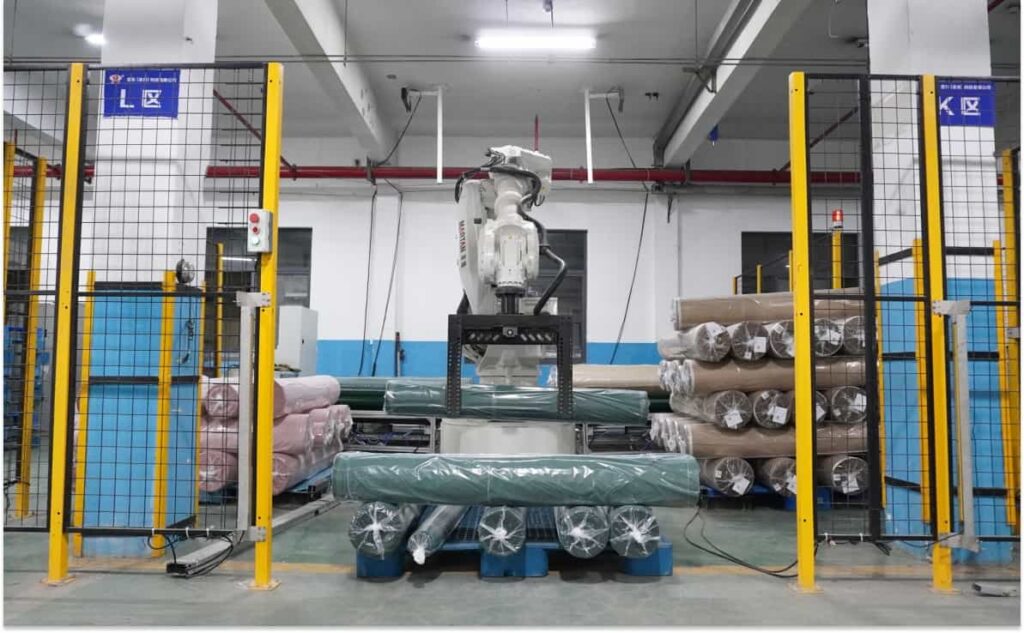
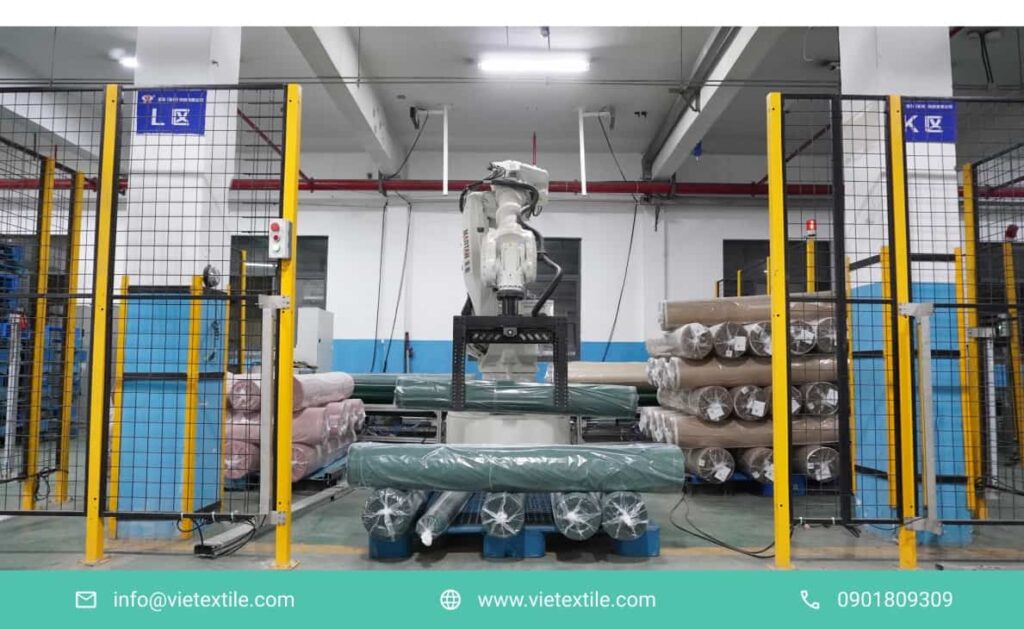
Autonomous mobile robots are becoming the key to helping textile enterprises modernize their internal transport processes. The integration of this technology brings superior efficiency in optimizing goods flow and minimizing operational costs. This article provides a detailed analysis of how Martan’s AGV series and smart robots are transforming the landscape of textile factories.
1. What is Autonomous Mobile Robot in Internal Logistics?
Autonomous mobile robots are technological solutions that automate all internal logistics activities. When a business deploys autonomous robots, the entire transport process becomes more synchronized, accurate, and efficient.
Autonomous mobile robots are smart mobile devices designed to transport goods without direct human control. In the textile industry, this system typically includes autonomous forklifts and flexible AGV (Automated Guided Vehicle) series.
1.1. Modern Navigation and Recognition Technology
Martan’s autonomous mobile robots are equipped with 3D vision recognition systems combined with lidar and AI algorithms for precise positioning in complex factory environments. Instead of relying on magnetic strips or fixed guide rails, the robots use “natural feature navigation” to identify walls, columns, racks, and surrounding objects, thereby building a digital map and updating it continuously in real-time.
Thanks to multi-sensor positioning, the robots can accurately determine the location of pallets, storage cages, or fabric rolls with very low error margins, even when the environment changes (lighting, obstacles, or floor layout changes). This reduces positional offsets during picking/placing and limits errors throughout the operational chain.
1.1.1. Real-time Localization
The system utilizes SLAM (Simultaneous Localization and Mapping) to map and localize simultaneously, allowing robots to update their positions in milliseconds. Data from lidar, cameras, and IMUs are combined (sensor fusion) to increase accuracy and stability even if a single sensor signal is noisy.
In actual operation, the robot continuously matches the current map with new observation data to correct “drift.” When changes occur, such as new obstacles or relocated racks, the robot automatically adjusts its trajectory and updates the local map without manual intervention, ensuring uninterrupted activity.
The system also supports geofencing and virtual landmarks to increase reliability at critical areas such as charging/dispatch stations. Consequently, the error in pallet picking/placing is reduced to a minimum, improving the end-to-end accuracy of the entire logistics chain.
1.1.2. Object Recognition and Collision Avoidance
3D cameras and lidar help identify obstacles at various distances, combined with trajectory prediction algorithms to avoid collisions. The system categorizes objects by context (people, forklifts, pallets, static objects) and applies different response strategies.
During movement, the robot continuously calculates a “safety envelope” in front. If a hazard is detected, the robot will decelerate in stages, perform an emergency stop, or change direction to an alternative route. Stop distances and acceleration/deceleration parameters are calibrated based on current load and speed to ensure safety while optimizing performance.
Additionally, the system records near-miss collision events and analyzes data to refine algorithms over time. This gradually reduces the frequency of intervention and enhances the smoothness of the logistics flow in high-activity environments.
1.2. Flexibility in Production Environments
Unlike fixed conveyors, autonomous robots can change routes via coordination software without infrastructure renovation. When production processes or floor layouts change, the system only needs to update the route map on MTmart/RCS for the entire robot fleet to operate according to the new logic.
The ability to adapt to various pallet types such as wood, plastic, or steel frames makes autonomous robots a versatile solution for weaving, dyeing, and finishing lines. From transporting heavy fabric rolls to transferring semi-finished products, these robots perform consistently.
1.2.1. Rapid Route Reconfiguration
Adding/removing stops, changing the sequence of stages, or expanding the operating area is done entirely via software configuration on MTmart/RCS. Instead of changing physical infrastructure like conveyors or guide rails, the system simply updates the route map and coordination logic to have robots operate according to the new configuration.
In practice, when an enterprise expands lines or changes factory layouts, the system can quickly create new “operating zones” and reassign tasks to robots. This process happens almost instantaneously, shortening deployment time from days to minutes without disrupting production.
Furthermore, the system supports route simulation before actual application. This helps pre-check the risk of congestion and route conflicts, optimizing the movement flow before official operation.
1.2.2. Multi-scenario Operational Adaptation
Robots can switch flexibly between multiple operational scenarios such as “point-to-point,” “batch towing,” or “priority-based service” depending on the factory’s needs. The coordination system analyzes real-time data to select the most suitable scenario for each task.
For example, during peak hours, the system can switch to order priority mode to ensure delivery schedules. Conversely, when traffic is low, the system will group orders into batches to optimize the number of trips and save energy.
Task assignment is not only based on load and distance but also considers battery status, current position, and the readiness of each robot. Consequently, the entire fleet always operates in balance, avoiding local overload and maintaining stable performance in all conditions.
2. Structure and Advantages of Martan Autonomous Robots
Martan’s autonomous robot systems are designed to meet the rigorous requirements of the textile industry. They are not just transport devices but part of an intelligent coordination system.
Martan Intelligent Technology has developed a powerful matrix of autonomous robot products to serve heavy industries such as textiles and automotive. Each device is optimized in both hardware and control software.
2.1. Autonomous Forklift Series
The forklift series includes pallet jacks, stackers, and counterbalance forklifts, designed to handle heavy loads like fabric rolls, bales, and raw material pallets. Each line is optimized for specific scenarios: pallet jacks for fast low-level movement, stackers for multi-level storage, and counterbalance forklifts for heavy loads at medium distances.
Operationally, autonomous forklifts integrate positioning sensors, real-time load control, and fork alignment mechanisms to ensure precise pallet handling, reducing misalignment and goods damage. The system also supports pallet identification (barcode/RFID) to match orders, ensuring “right goods – right place – right time.” In dusty textile environments, noise-filtering algorithms maintain sensor stability.
In the logistics chain, autonomous forklifts usually handle “first-last mile” segments such as feeding materials from production to transit areas or moving goods in/out of AS/RS stations. Replacing manual forklifts reduces labor dependence, limits accidents, and maintains a stable operational rhythm even during peak hours.
2.2. Latent AGVs (Hidden Robots)
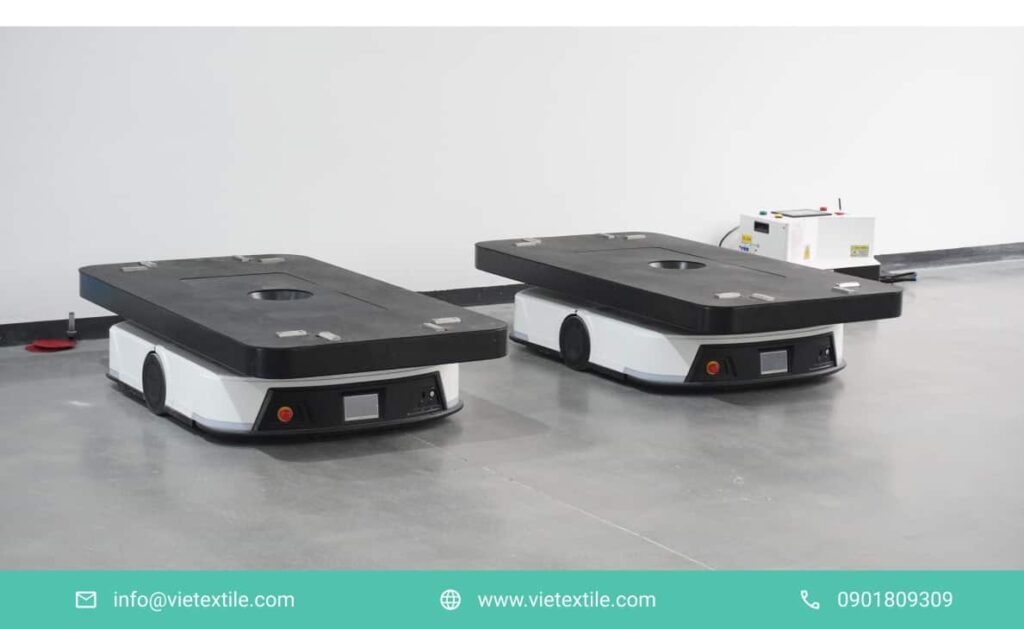
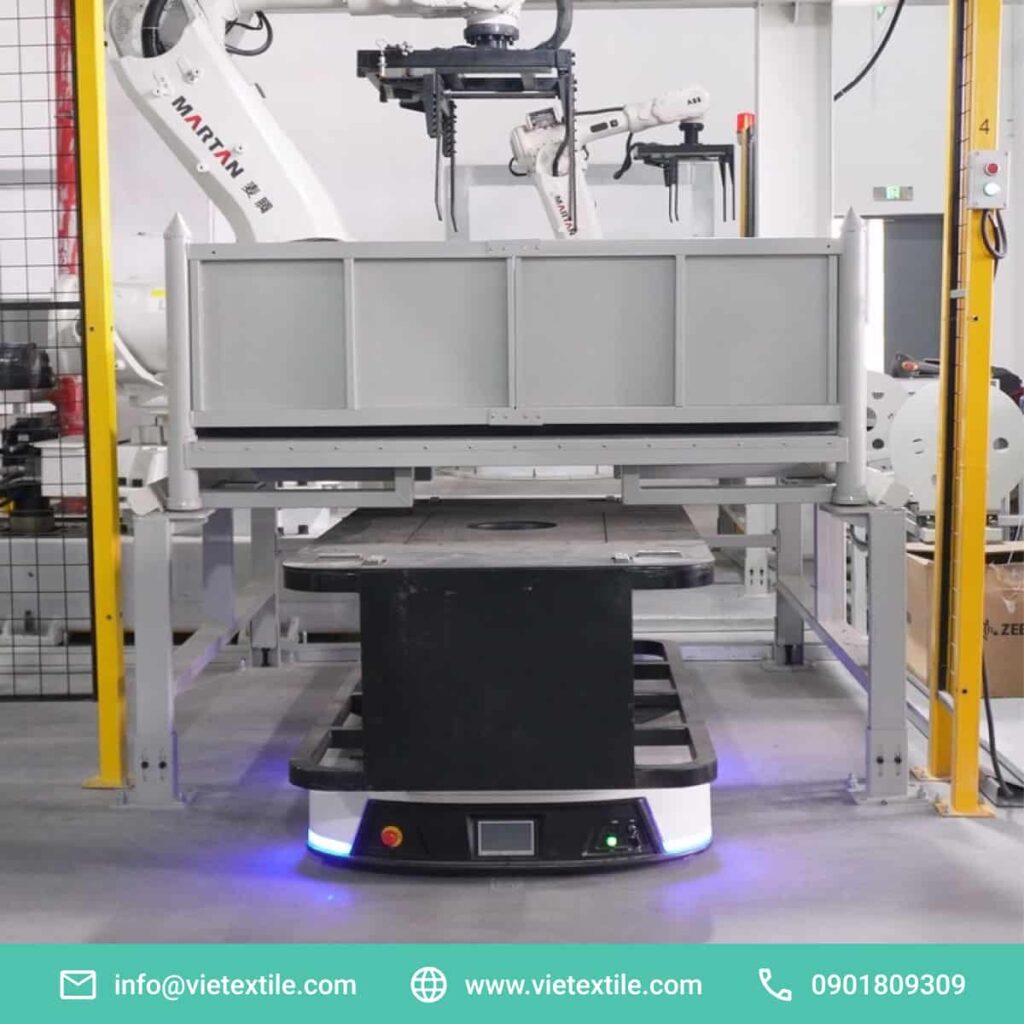
Latent AGVs are compact autonomous robots that move underneath pallets or racks to lift and tow loads. With a capacity of up to 600kg, speeds of 2.0m/s, and a zero-degree turning radius (360°), these devices are exceptionally effective in narrow aisles or high-density rack areas.
Regarding coordination, latent robots operate on a flexible “pick-and-drop” model: receiving commands, sliding under pallets, lifting slightly, and moving to the destination. This mechanism reduces space requirements compared to traditional forklifts. Combined with RCS, multiple robots can work in parallel, utilizing zoning to avoid conflicts and increase throughput.
In practice, latent robots usually handle high-frequency internal transfers: batching goods, feeding packaging stations, or distributing to production lines. Thanks to their small size and flexible rotation, they shorten travel distances and reduce bottlenecks at intersections.
2.3. 24/7 Durable Operation
Martan robots use high-cycle industrial batteries (up to ~2000 cycles) and support “opportunity charging” at short stops. The system automatically coordinates charging times based on battery levels, task schedules, and task density so as not to interrupt logistics flow.
Beyond hardware, 24/7 durability comes from software: a health monitoring mechanism tracks temperature, current, and vibration for early anomaly detection; predictive maintenance alerts help reduce unplanned downtime. When a robot needs maintenance, the system automatically redistributes tasks to other robots to maintain throughput.
Through the combination of durable batteries, smart charging, and centralized coordination, the system maintains continuous operation over multiple quốc shifts, reducing staffing pressure and ensuring long-term stable performance.
3. Optimizing Internal Logistics Processes
Autonomous robots help businesses restructure their entire logistics process. When applying autonomous robots, transport steps are closely linked, minimizing errors and increasing efficiency.
The application of autonomous robots allows enterprises to build a comprehensive internal logistics model from warehouse receiving to dispatch. Every movement is digitized and strictly controlled.
3.1. Seamless Production Line Connection
Autonomous robots act as the “blood vessels” connecting weaving, dyeing, and finishing workshops, ensuring that the semi-finished product flow is not interrupted. Instead of relying on manual pushing and experience-based coordination, the system receives commands directly from MTmart/RCS based on production plans and the actual status of each stage.
In operation, each fabric roll is tagged (barcode/RFID) and mapped to a production order. Upon completion of a stage, the system automatically generates a transport order, assigning the nearest robot with the appropriate capacity. The robot arrives at the pick-point, aligns its position, lifts the load, and moves along the optimal route to the next stage. The entire process is recorded in real-time, allowing precise tracking of every movement.
In addition to linear connection, the system handles emerging situations such as local congestion, urgent order prioritization, or production sequence changes. RCS will redistribute tasks, adjust routes, and balance loads among robots to maintain stable throughput. As a result, wait times between stages are significantly reduced, decreasing WIP (Work in Process) inventory and increasing overall line efficiency.
3.2. Automated AS/RS Integration
When combined with High-Bay Warehouses (AS/RS), autonomous robots handle the “first-last mile” transport between production/transit areas and the loading stations of stacker cranes or four-way shuttle robots. Each fabric pallet delivered to the station is confirmed by WCS, queued by priority, and moved into the rack system according to optimized storage strategies.
The inbound process follows a sequence: pallet identification → WMS order verification → robot delivers pallet to station → WCS controls lifting equipment to place goods in the optimal position (ABC/slotting). Conversely, for outbound, WMS issues an order, AS/RS equipment retrieves the goods to the station, and the robot receives the pallet for transport to packaging or dispatch. All steps are synchronized in real-time, ensuring “right goods – right place – right time.”
To avoid bottlenecks at loading/unloading stations, the system applies a dynamic queue mechanism and zoning. RCS coordinates robots based on station doors, distance, and order priority; WCS regulates equipment rhythm to synchronize with robot traffic. This reduces station wait times, increases the stability of the inbound-outbound chain, and maximizes storage space exploitation.
Besides efficiency, the system increases accuracy through multi-layer cross-checking (code scanning, position confirmation, load control). Discrepancies are detected early and handled immediately at the station, preventing errors from spreading to subsequent stages. The result is faster, less error-prone, and more transparent warehouse operations.
4. The Role of MTmart Platform in Coordination
Autonomous robots only reach maximum efficiency when coordinated by a smart system. The MTmart platform helps robots operate synchronously, optimally, and accurately.
The MTmart intelligent platform is the core governing the entire autonomous robot system. This platform integrates management modules that optimize equipment performance.
4.1. RCS (Robot Control System)
The RCS acts as the “coordinating brain” for the entire fleet, responsible for path planning, task assignment, and real-time collision avoidance. Beyond just choosing the shortest route, RCS calculates factors such as internal traffic density, equipment status, order priority, and distance to make optimal decisions.
In actual operation, RCS continuously monitors each robot’s position in milliseconds and updates routes if congestion or conflict risks are detected. When multiple robots move in the same area, the system applies “traffic coordination” mechanisms such as lane distribution, yielding, or changing priority sequences to ensure no collisions occur.
Furthermore, RCS supports system-wide efficiency through load balancing. If a robot is overloaded or low on battery, the system automatically transfers tasks to a more suitable unit. This maintains stable throughput and prevents logistics chain disruptions.
Operational data is also continuously recorded for analysis and long-term optimization. Through indicators like wait times, travel distances, and task frequency, RCS can propose adjustments to coordination strategies to enhance overall performance.
4.2. Data Integration with WMS and ERP
Every robot task is recorded and synchronized with WMS and ERP, creating a seamless data ecosystem from production to storage. When a transport order is created, data is instantly synchronized to ensure all systems “understand” the same status.
In practice, when the ERP generates an order or production plan, the WMS checks inventory and locations, then sends commands to the RCS for robot coordination. Conversely, when a robot completes a task, the status is updated back to WMS and ERP, allowing managers to grasp accurate progress in real-time.
This two-way synchronization completely eliminates “phantom inventory,” data discrepancies, or delayed updates. Simultaneously, the entire movement history of goods is stored, supporting traceability and quality control in the supply chain.
Moreover, integration helps enterprises build in-depth analytical reports such as transport efficiency, order processing time, and equipment utilization. This data is a crucial foundation for the long-term optimization of the autonomous robot system.
5. Safety and Economic Efficiency
Investing in autonomous robots brings long-term benefits. They not only ensure safety but also help enterprises optimize operational costs.
Investing in autonomous robots brings dual benefits in terms of both labor safety and financial calculations for textile factories. This technology minimizes risks and enhances competitiveness.
5.1. Absolute Safety for Human Workers
Martan’s autonomous robots are equipped with laser sensors, lidar, and 3D cameras, forming a multi-layer safety system. Safety zones in front and on the sides are calculated dynamically based on speed and load, helping robots self-adjust acceleration/deceleration when approaching areas with people or other vehicles.
In operation, the robot continuously scans the environment in real-time and applies graded responses: light/sound warnings for distant objects, deceleration in warning zones, and emergency stops for immediate hazards. Stop parameters are calibrated to industrial safety standards, ensuring adequate braking distance while optimizing productivity.
Beyond hardware, the system supports geofencing to limit speed in sensitive areas (gates, crowded areas). Event data (near-misses, emergency stops) are recorded for analysis and algorithm fine-tuning, gradually reducing intervention and enhancing safety over time.
5.2. Cost Reduction and ROI
Using autonomous robots can help factories reduce operational costs by 40% to 90% by replacing repetitive tasks, reducing labor dependence, and limiting errors. Besides labor costs, businesses save on hidden costs such as damaged goods, workplace accidents, and wait times between stages.
Regarding performance, the system increases throughput through smart coordination (RCS) and route optimization, thereby shortening order processing times and increasing warehouse turnover. 24/7 operation and smart charging help maintain a stable production rhythm without overtime expenses.
ROI is typically achieved within 12 months depending on the scale and level of automation. Key contributors include: increased storage density, reduced WIP inventory, improved accuracy (less rework), and optimized equipment usage. Furthermore, transparent operational data enables faster decision-making for long-term cost optimization.
5.3. Integrated Fire and Energy Monitoring
The control system allows for the integration of temperature sensors, smoke detectors, and fire alert modules into the infrastructure. When an anomaly is detected, the system can activate response scenarios such as alerts, area isolation, and rerouting robots to avoid risk zones, ensuring safety for people and goods.
In terms of energy, autonomous robots contribute to optimized consumption through on-demand coordination. The system limits empty runs, groups orders in batches, and allocates tasks reasonably to reduce total travel distance. Additionally, synchronization with ventilation/drying systems allows power adjustment based on actual load, avoiding over-operation.
Energy indicators (kWh/order, wait time, distance) are continuously monitored for optimization. The result is reduced electricity and gas consumption, extended equipment lifespan, and a stable working environment, especially in high heat/humidity areas of textile factories.
6. Real-World Implementation Projects
Many enterprises have implemented autonomous robots and achieved superior results. They demonstrate clear effectiveness in practical operations.
The success of autonomous robots has been proven through many large-scale textile and dyeing projects in industrial centers. Measured results show significant growth in productivity.
6.1. Efficiency in Suzhou Dyeing and Textile Factories
In the Wujiang area, autonomous robots were deployed synchronously with shuttle systems and a central coordination platform, creating a closed-loop operation from storage to transfer. When an order arises, the system automatically coordinates robots to take the task, delivering pallets to the correct shuttle position and synchronizing with WCS for further processing.
This combination increased inbound/outbound efficiency by about 30%, not only due to travel speed but also due to a significant reduction in wait times between stages. Previous bottlenecks such as waiting for forklifts, location discrepancies, or manual handling were almost entirely eliminated.
Furthermore, autonomous robots helped standardize the entire fabric roll sorting and transport process. Each roll is clearly identified, and every movement is recorded and matched with the system, eliminating errors and increasing accuracy to near-absolute levels.
Beyond performance, the system helped optimize staffing and reduced operational pressure during peak hours. This is particularly important for factories with high output and continuous processing requirements.
6.2. Logistics Breakthroughs in Changshu and Huzhou
The project in Changshu uses autonomous robots to supply materials to high-rise stacker crane systems, creating a complete vertical logistics chain. Robots handle the transfer from production to loading stations, after which the system automatically stores goods based on optimized strategies.
Thanks to this model, warehouse capacity increased by about 80% without expanding the floor area. Simultaneously, automation shortened inbound times, reduced errors, and enhanced the stability of the entire system.
In Huzhou, autonomous robots are heavily applied in managing “leftover fabric”—a complex problem in the textile industry. The system digitizes all data related to the position, quantity, and status of each fabric roll, allowing for precise control and rapid retrieval.
As a result, the business not only reduced loss but also increased material reuse, optimizing production costs. Data transparency also improved decision-making and internal supply chain management efficiency.
Overall, these projects show that autonomous robots do not just improve a part of the process but create a comprehensive change in how logistics are operated in modern textile factories.
7. VieTextile – Strategic Partner for Autonomous Robot Implementation
VieTextile is a pioneer in deploying autonomous robots in Vietnam. Our autonomous robot solutions help businesses optimize comprehensively.
VieTextile is committed to providing the most optimal autonomous robot solutions, helping textile enterprises break through in the digital age. We don’t just provide equipment; we consult on the planning of the entire autonomous robot system for your factory.
VieTextile’s team of experts will conduct thorough surveys to design autonomous robot routes suitable for the specific characteristics of textile products. We understand that every square meter of factory space is precious, so autonomous robots will be configured to maximize available space. VieTextile’s partnership ensures our clients’ autonomous robot systems always operate stably and with absolute safety. We continuously update the latest autonomous robot technologies from Martan to serve the Vietnamese market. VieTextile is confident in being the bridge that helps businesses master autonomous robot technology to enhance their international standing.
Your satisfaction in seeing autonomous robots running smoothly in your factory is our pride. Let VieTextile help you build a smart textile future with professional autonomous mobile robots.
8. Frequently Asked Questions (FAQ)
8.1. Can autonomous robots move on old factory floors?
Yes, Martan’s autonomous robots integrate 3D sensors and AI algorithms to navigate flexibly on various floor surfaces without requiring extensive structural changes to the factory.
8.2. How do I monitor multiple autonomous robots simultaneously?
Through the MTmart platform and RCS coordination system, managers can monitor the status and position of the entire fleet on a touchscreen or mobile device.
8.3. Do autonomous robots support transporting flammable fabrics?
Yes, Martan’s autonomous robot system can be integrated with smart fire control modules to detect abnormal temperatures and ensure maximum safety for textile goods.
8.4. How long does it take to add a new autonomous robot to the system?
Thanks to modularity, adding a new autonomous robot to the management network only takes about 10 minutes to reconfigure the operational map.
To optimize internal logistics with professional autonomous mobile robots, contact VieTextile today!
Contact Information:
Hotline: 0901 809 309
Email: info@vietextile.com
Website: https://vietextile.com