

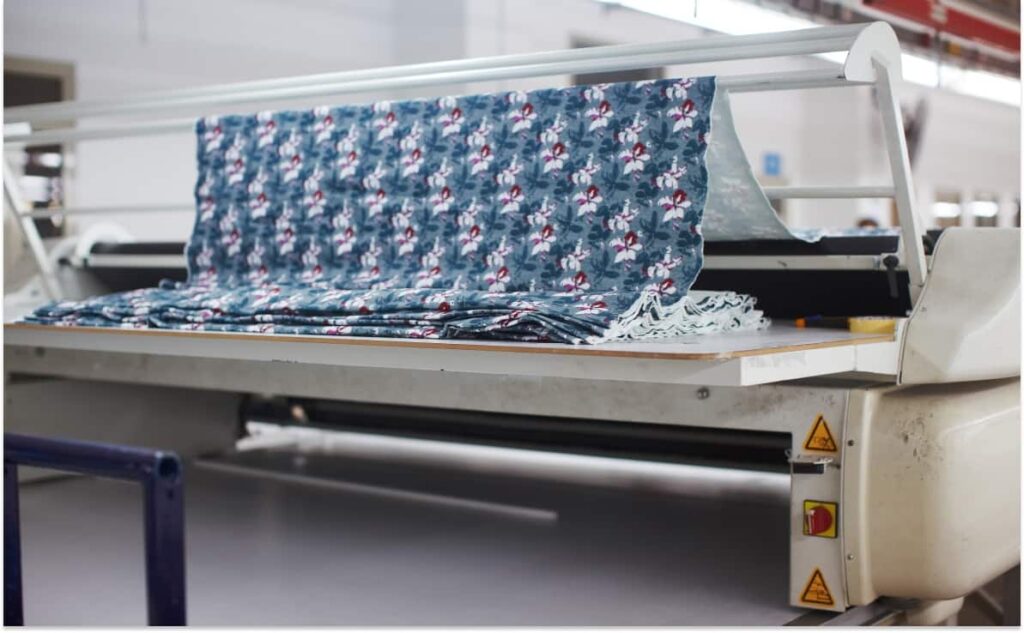
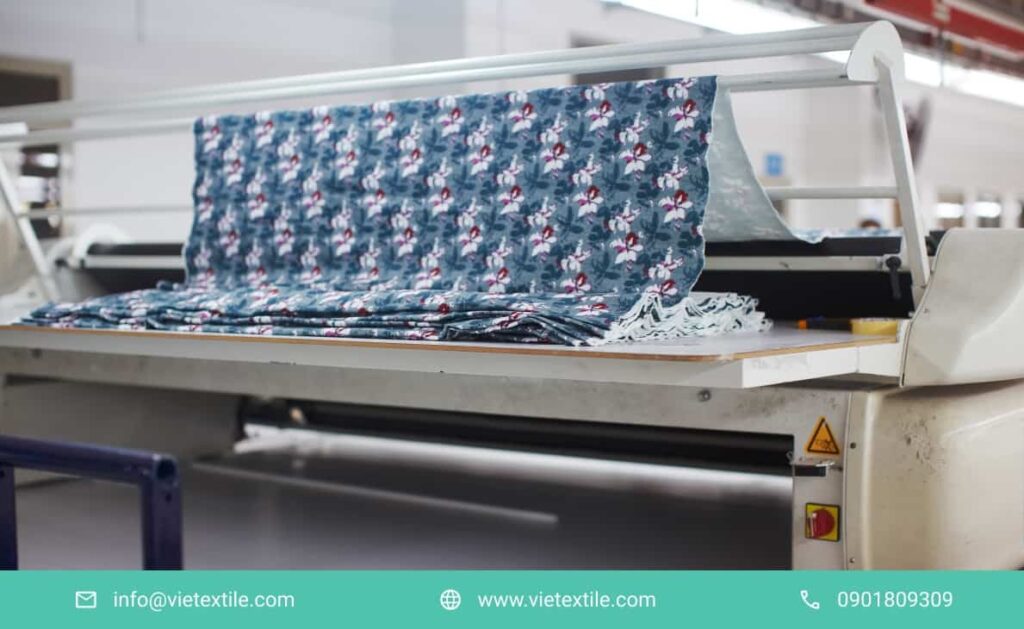
Direct-to-Fabric (DTF) digital printing technology has become the gold standard in the modern textile industry, allowing manufacturers to create complex designs with high speed and optimal cost efficiency. However, the application of the direct fabric printing process is not uniform across all material types.
Each fiber type—from natural Cotton, synthetic Polyester, protein-based Silk, to durable Nylon—requires a specific treatment cycle and corresponding ink type to ensure colors adhere securely, are durable, and maintain the fabric’s intended hand feel. This differentiation is the key to distinguishing between a high-quality printed product and one prone to fading or cracking.
This article provides an in-depth analysis of the optimized direct fabric printing process for the most common fabric types, offering expert insights into the necessary chemicals, temperatures, and technical steps required to achieve a flawless finished product.
1. Overview of the Direct Fabric Printing Process
The direct fabric printing process is a high-tech sequence of steps, completely different from traditional screen printing or heat transfer printing (Sublimation). This method requires synchronization between the printing equipment, specialized inks, and the heat or steam curing stage.
1.1. Definition and Scope of Direct-to-Fabric (DTF)
Direct-to-Fabric (DTF) is a method where digital print heads deposit ink directly onto the fabric surface, followed by chemical or physical reactions to fix the color. Unlike Sublimation, which only works on Polyester, DTF is more versatile, allowing printing on most fiber types, including Cotton, Viscose, Silk, and Nylon, depending on the ink used.
This technology offers advantages in printing fine details, smooth gradients, and supporting Print-on-Demand (POD) for small quantities. To maximize these benefits, adhering to the specialized direct fabric printing process for each fiber type is a prerequisite.
1.2. Key Ink Types in the Direct Fabric Printing Process
The choice of printing ink is the crucial factor that determines the entire direct fabric printing process and the compatible fabric type.
- Reactive Inks: Used for Cellulose fibers (Cotton, Linen, Viscose). Reactive inks create a permanent covalent chemical bond with the fabric fiber. This ink provides the highest color fastness and softest hand feel on Cotton.
- Acid Inks: Used for Protein fibers (Silk, Wool) and Polyamide (Nylon). Acid inks create an ionic bond with the Amine groups in Protein/Polyamide fibers. This ink yields vibrant colors and high sheen, ideal for silk.
- Disperse Inks: Used for synthetic fibers (Polyester). Disperse dye molecules deeply penetrate the Polymer structure of Polyester under high temperature, resulting in absolute color permanence (non-fading when washed).
- Pigment Inks: Used for most fiber types (Universal). Pigment inks do not form a chemical bond but adhere to the fabric surface using a binder (adhesive agent). This is the most flexible choice, but color fastness and hand feel can be inferior to other specialized inks.
1.3. Three Core Stages of the Direct Fabric Printing Process
Every direct fabric printing process must pass through three main stages, although the specific treatment details for each stage will vary depending on the ink and fabric type.
- Pre-Treatment: Preparing the fabric surface to optimize the ink’s absorption and chemical reaction potential.
- Digital Printing: Precisely jetting ink onto the fabric using the print heads.
- Post-Treatment: Fixing the ink using high heat (Curing), steam (Steaming), or chemicals, followed by washing to remove excess chemicals and unfixed ink.
2. Direct Fabric Printing Process on Cotton – Optimizing the Reactive Reaction
Cotton is the most popular fabric, but the direct fabric printing process for Cotton demands the strictest control over pre-treatment chemicals and steaming to activate the chemical reaction of Reactive inks.
2.1. Fabric and Ink Preparation
Cotton fabric must be fully bleached and impurities removed before printing. Most professional manufacturers use Reactive Ink to print Cotton, as it creates a permanent bond, yielding the softest hand feel and highest color fastness.
2.2. Stage 1: Chemical Pre-Treatment (Padding/Foularding)
This is the most critical step in the direct fabric printing process for Cotton. The goal is to introduce the necessary chemicals into the fibers for the Reactive ink to react.
- Chemical Components: The pre-treatment solution typically includes Urea (which aids ink solubility and cleans print heads), Alkali (Sodium Carbonate or Bicarbonate) to create the high pH environment required for the reaction, and a thickener to prevent ink bleeding.
- Mechanism: The fabric is run through a Padder (or Foulard) machine, where it is immersed and pressed to ensure the solution saturates the fibers evenly. The Alkali concentration must be strictly controlled; too low a concentration weakens the color reaction, while too high can damage the fabric fibers. The fabric is then pre-dried.
2.3. Stage 2: Digital Printing – Ink Volume Control
The digital printer jets Reactive ink onto the pre-treated surface. Do to the thickener in the fabric, the ink is held on the surface without penetrating too deeply and bleeding.
- Resolution: Typically ranges from 600×600 dpi to 1200×1200 dpi for detail reproduction.
- Drop Volume Control: Must be adjusted to ensure just enough ink reacts with the pre-treatment chemicals without over-wetting, which would cause dimensional instability of the fabric.
2.4. Stage 3: Post-Treatment – Steaming and Washing-Off
Reactive ink requires saturated steam at high temperatures to complete the chemical reaction.
- Steaming: The fabric is passed into a specialized steam chamber (Steamer) at temperatures from 102°C to 105°C for approximately 8-15 minutes. Hơi nước cung cấp năng lượng nhiệt và độ ẩm cần thiết để kiềm kích hoạt phản ứng, tạo liên kết bền vững giữa mực và Cellulose. The steam provides the thermal energy and humidity needed for the alkali to activate the reaction, forming a durable covalent bond between the ink and the Cellulose.
- Washing/Soaping: After steaming, the fabric is washed with hot water and soap (soaping) to completely remove excess Reactive ink (unfixed dye) and pre-treatment chemicals. If not washed thoroughly, the fabric will feel stiff, colors may bleed easily upon the first wash, and color fastness will be severely reduced. This is the crucial step determining the final quality of the Cotton direct fabric printing process.
3. Direct Fabric Printing Process on Polyester – High-Temperature Curing with Disperse Ink
Polyester (Poly) is a non-absorbent synthetic fiber; thus, the direct fabric printing process for Poly is completely different, relying on the Sublimation principle of Disperse ink.
3.1. Disperse Ink and Polyester Compatibility
Disperse ink is the sole choice for Polyester. When heated, the Disperse ink molecules transition from solid to gas (sublime) and penetrate the Poly fibers.
3.2. Stage 1: Pre-Treatment (Optional)
For direct Disperse printing, an alkali chemical pre-treatment like Cotton’s is not mandatory. However, some manufacturers may use a thin Polymer Coating to improve image sharpness and prevent ink blurring before curing.
3.3. Stage 2: Digital Printing
Due to the nature of Polyester, the ink adheres quite well to the surface, facilitating high-speed printing.
3.4. Stage 3: Post-Treatment – Heat Curing and Color Fixing
This is the decisive stage of the Polyester direct fabric printing process.
- Dry Curing/Baking: The fabric is fed into a curing oven or flat heat press at extremely high temperatures, typically from 180°C to 210°C, for about 45 seconds to 5 minutes.
- Mechanism: Under this temperature, the Polyester molecules open up (expand), allowing the gaseous Disperse ink molecules to penetrate into the fiber’s polymer structure. When the fabric cools, the Polyester fiber closes, permanently trapping the ink inside.
- Benefit: This method creates absolute color fastness, resistant to washing and chemical exposure.
- Crucial Note: Curing temperature must be carefully controlled, especially for Poly fabric containing Spandex (Elastane), as excessive heat can damage the elasticity of the Spandex fiber.
4. In-Depth Technical Analysis of Chemical Pre-Treatment
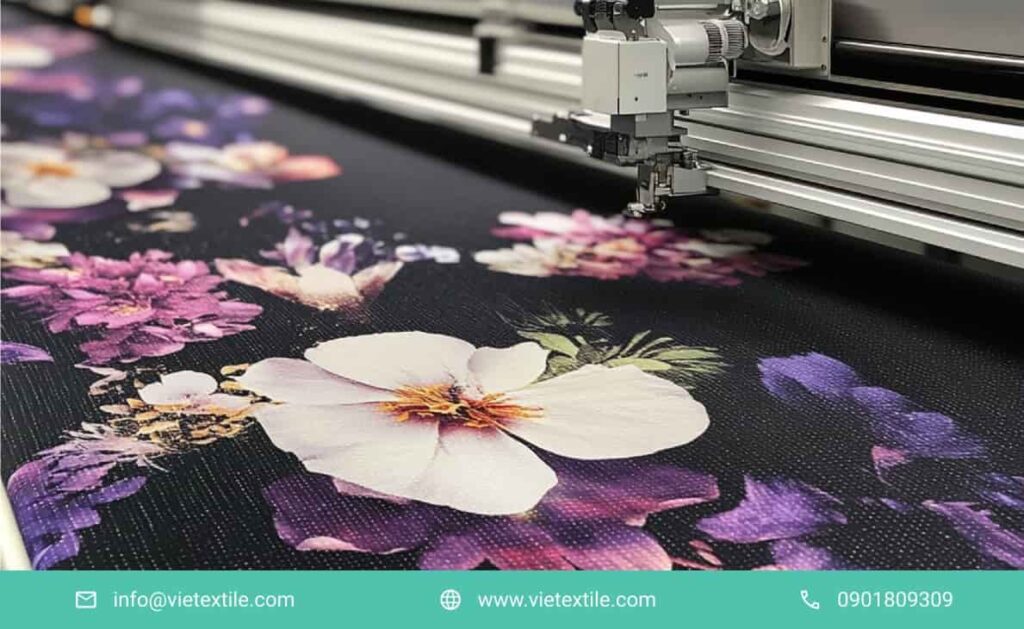
Pre-treatment is the most scientific phase in the direct fabric printing process, determining 70% of the print quality and color fastness. The difference in chemical formulas is the technological secret of each manufacturer.
4.1. The Role of UREA, Alkali, and the Activation Mechanism (Reactive Dyes)
For Reactive Inks on Cellulose fibers (Cotton), three main components in the pre-treatment solution are mandatory:
- UREA: Not only aids dye solubility, but UREA is also a critical humectant. It retains moisture in the fabric after pre-drying, ensuring the ink does not dry out too quickly before steaming. This allows the ink to spread evenly and optimizes the dyeing reaction.
- Alkali: Usually Sodium Carbonate (Soda ash) or Sodium Bicarbonate. Alkali removes the Hydroxyl groups (OH-) from the Cellulose fiber, creating a negatively charged Cellulosate group (Cell-O$^{-}$). This group then reacts with the Active group of the Reactive dye (positively charged), forming the stable covalent bond.
- Dye-fixing Agent: Salts like Sodium Sulphate help control the reaction rate and prevent excessive ink migration.
4.2. Thickeners and Ink Bleeding Control
Thickeners (often Sodium Alginate extracted from seaweed, or synthetic Polymers) have two main functions:
- Stabilize Ink Droplet Position: When the ink droplet is jetted, the thickener prevents it from immediately penetrating the fabric structure, maintaining vibrant color and high sharpness on the surface.
- Prevent Wicking/Bleeding: Controls the lateral diffusion of the ink, avoiding blurred edges or blending in transition areas.
The selection of the thickener’s viscosity must be appropriate for the fabric’s fineness and thickness. The thinner the fabric (e.g., chiffon), the higher the thickener’s viscosity needed to prevent strike-through.
4.3. Polymer Binders and Coatings for Pigment Inks
When using Pigment Inks, the direct fabric printing process eliminates the steaming and chemical washing stages. Instead, it relies entirely on the Binder:
- Binder: A liquid Polymer (often Acrylic Polymer) that forms a transparent, pliable film around the pigment particle and glues it to the fiber surface.
- Cross-Linker: This component determines wash and rub fastness. It creates cross-links between the Polymer chains of the Binder under curing temperature (typically 150°C – 170°C), hardening and fixing the color film.
- White Pre-Treatment Coating: For Pigment printing on dark fabrics, this coating is a special Polymer solution containing White Pigment (Titanium Dioxide), acting as a white “screen” for the CMYK colors printed on top to display vibrantly.
5. Quality Control (QC) and Troubleshooting Common Defects
To ensure quality output, manufacturers must actively control technical defects in the direct fabric printing process.
5.1. Bleeding/Wicking Defects and Solutions
- Phenomenon: Ink spreads excessively, blurring outlines and fine details, or colors blend in transition areas.
- Cause: Too much ink jetted (high ink coverage), or insufficient viscosity of the thickener in the pre-treatment solution, or the fabric was not dried correctly after pre-treatment.
- Solution: Reduce the Ink Limit in the RIP software, increase the thickener concentration, or adjust the speed/temperature of the pre-drying to ensure appropriate moisture level.
5.2. Ensuring Wash/Rubbing Fastness
Color fastness is the most important measure of the direct fabric printing process.
- Wash Fastness: This defect often occurs when the Post-Treatment stage is inadequate:
- Reactive Dyes: Insufficient steaming time or temperature to complete the alkali reaction.
- Pigment Dyes: Insufficient curing temperature to activate the Cross-Linker and form cross-links for the Binder.
- Rubbing Fastness: (Especially critical for Pigment Inks). This defect occurs when the Polymer film is too thick or the adhesion of the Binder to the fiber is poor. The solution is to optimize the Binder/Cross-Linker formula and ensure ink is not overly deposited on the fiber surface.
5.3. Optimizing Hand Feel
- “Stiff Feel” Issue: Most common with Pigment Ink due to the Polymer Binder layer on the surface.
- Solution: Switch to Reactive Ink for Cotton (if possible). If Pigment must be used, reduce the amount of Binder/Cross-Linker in the pre-treatment solution and use newer, more flexible Binders, or apply a softener in the final Finishing stage.
6. New Technology and Equipment in Modern DTF
The development of the direct fabric printing process constantly evolves with machine technology and control software.
6.1. Print Heads and Speed (Single-Pass)
- Print Head Technology: Industrial Piezoelectric print heads (like Kyocera, Konica Minolta) with ultra-high drop jetting frequency have replaced thermal print heads. This allows for extremely accurate and uniform control over ink droplet size (Drop Volume).
- Single-Pass System: Instead of the fabric moving multiple times under the print heads (Multi-Pass), Single-Pass technology uses a long, fixed array of print heads spanning the entire fabric width. This allows printing at extremely high speeds (up to 60-80 meters/minute) while maintaining resolution, significantly reducing time in large-scale direct fabric printing process production.
6.2. Advanced Steaming Systems (Steamer Technology)
Modern steam chambers (Steamer) are equipped with absolute saturated steam control systems, ensuring uniform temperature and humidity across the entire fabric width. This is crucial for Reactive and Acid Inks, helping the chemical reaction proceed 100%, minimizing excess ink, and reducing the burden on the washing stage. New systems also include steam recovery units, helping to save energy.
6.3. Sustainable Digital Printing Solutions (Eco-friendly)
Sustainability has become a major trend in the direct fabric printing process:
- Water Reduction: Modern Pigment Inks completely eliminate the washing and steaming steps, saving millions of liters of water.
- Zero Discharge Standard: Advanced printing factories implement closed-loop wastewater treatment systems, recycling wash water after removing chemicals and unfixed ink, achieving the Zero Discharge of Hazardous Chemicals (ZDHC) standard.
- Eco-Certifications: Using inks and pre-treatment chemicals with ecological certifications like GOTS (Global Organic Textile Standard) and Oeko-Tex Standard 100, ensuring products are safe for users and environmentally friendly.
7. Direct Fabric Printing Process on Silk – The Delicacy of Acid Ink
Silk is a natural Protein fiber, requiring a direct fabric printing process using Acid Ink and extremely gentle handling to preserve its luster and soft feel.
7.1. Acid Ink and Ionic Bonding
Acid Inks are used because they contain Acid groups capable of reacting with the Amine groups in Protein fibers. This ionic bonding creates vibrant colors and high sheen, suitable for the luxurious nature of silk.
7.2. Stage 1: Acidic Pre-Treatment
Silk fabric is pre-treated with a mildly Acidic solution, typically containing Citric Acid and thickeners, to prepare for ionic bonding.
7.3. Stage 2: Digital Printing
The printing process on silk requires a slower speed and lower fabric tension to avoid damaging the delicate fiber structure and prevent fabric shifting during printing.
7.4. Stage 3: Post-Treatment – Gentle Steaming
Similar to Cotton, silk also requires steaming to fix the color, but the temperature and time are often lower (e.g., 100°C for 5-10 minutes) to protect the Protein structure of the fiber.
- Washing-Off: The post-steaming washing step must be performed using neutral or mildly Acidic detergents, avoiding strong alkalis, as they can dissolve the Protein fibers, causing irreversible fabric damage. The delicacy in the post-treatment stage is the key point of the direct fabric printing process for silk.
8. Direct Fabric Printing Process on Nylon – Challenges and Solutions
Nylon (Polyamide) is the second most common synthetic fiber for DTF printing. It can be printed using both Acid Ink (due to its Polyamide structure) or Disperse Ink, depending on the application and color fastness requirements.
8.1. Ink Selection for Nylon
- Acid Ink: Often preferred for Nylon as it offers higher wash and rub fastness, ideal for activewear or swimwear.
- Disperse Ink: Can also be used, but color depth may not be equal to Acid Ink.
8.2. Pre-Treatment and Printing Stages
Pre-treatment usually involves pH adjusters and thickeners to stabilize the surface. The biggest challenge in the direct fabric printing process for Nylon is its lower temperature sensitivity compared to Polyester. Nylon is prone to shrinkage or deformation if the post-treatment temperature is too high.
8.3. Post-Treatment Stage – Precise Temperature Control
- Steaming or Curing: When using Acid Ink, Nylon needs to be steamed. When using Disperse Ink, Nylon needs to be cured, but the temperature must be adjusted lower than Polyester (e.g., 170°C – 185°C) to prevent damage to the Polymer structure.
- Finish Treatment: After color fixing, Nylon is often coated with finishing chemicals such as UV protectants or water repellents, depending on the end use (e.g., tents, swimwear, outerwear).
9. VieTextile’s Role in High-Quality Direct Fabric Printing Process
VieTextile is your professional partner, providing comprehensive direct fabric printing processes optimized to international standards. We not only possess the most advanced digital printing systems but also heavily invest in the research and development of specialized pre-treatment and post-treatment chemical formulas.
We understand that every batch of Cotton, every piece of Silk, or every roll of Polyester has slightly different characteristics. Therefore, VieTextile’s technical team always performs the following steps:
- Fiber Analysis: Checking the fiber content and pH of the greige fabric before printing to adjust the optimal pre-treatment formula.
- Color Profiling: Building specialized color profiles for the combination of ink type (Reactive, Acid, Disperse) and specific fabric type, ensuring the printed colors are absolutely true and consistent with the original design (digital proof).
- Temperature and Humidity Control: Using Steamer and curing ovens equipped with precise sensors, controlling temperatures within the +/- 1°C margin, ensuring ink is fixed perfectly without damaging the fabric fibers (especially Silk and Nylon).
- Wash Fastness Testing: Every batch is tested for color fastness according to AATCC or ISO standards after completing the direct fabric printing process and industrial washing.
If you are looking for a partner who can ensure technical accuracy in every step of the direct fabric printing process, from natural to synthetic materials, VieTextile is committed to delivering superior quality and durability.
10. Frequently Asked Questions About the Direct Fabric Printing Process (FAQ)
Q: What is the biggest difference between the direct fabric printing process for Cotton and Polyester? A: The biggest difference lies in the Post-Treatment stage: Cotton uses Steaming to activate the chemical reaction (Reactive Ink), while Polyester uses Dry Curing at high temperatures for the Disperse Ink to sublime and penetrate the fiber.
Q: If I print Reactive Ink on Polyester fabric, what will happen? A: Reactive ink will not adhere securely to the Polyester fiber because no chemical bond is formed. The ink will be completely washed off during the final washing stage, resulting in a failure of the direct fabric printing process.
Q: Does pre-treatment change the hand feel of the fabric? A: Yes. If the pre-treatment solution and thickeners are not controlled or not completely washed off in the final stage, the fabric can feel stiffer. VieTextile optimizes the direct fabric printing process to minimize residual chemicals and ensure the fabric retains its softness.
Q: Why is direct printing on Silk more expensive than Cotton? A: Printing on Silk is more expensive due to the use of specialized Acid Ink (which costs more than Reactive Ink) and the direct fabric printing process requires delicate, slower, and more complex temperature control and post-treatment handling (steaming, washing-off) to avoid damaging the Protein structure of the fiber.
Q: Can the direct fabric printing process handle Blended Fabrics like Poly/Cotton? A: Yes, but it requires the use of Pigment Ink with a binder, or Hybrid Ink to adhere to both fiber types. Color quality and softness may not be equal to printing on 100% Cotton or 100% Poly with specialized inks, but it is the optimal solution for blends.
Q: Does the fabric’s pH affect the direct fabric printing process? A: Rất quan trọng. Vải Cotton cần pH cao (Kiềm) cho Mực Reactive, trong đó Lụa và Nylon cần pH Acid cho Mực Acid. The greige fabric must be processed to achieve the precise pH level before the formal Pre-Treatment step.
Q: How is the white underbase ink layer processed in the direct fabric printing process for dark Cotton? A: For dark Cotton fabric, a special White Pigment ink layer is printed first. This layer acts as the white base layer. After colors are printed on top, the entire print is cured with heat to fix the Pigment layer, completing the direct fabric printing process on a dark background.
To ensure the direct fabric printing process is executed with the highest precision and quality for all materials, contact VieTextile for expert consultation.
Contact Information:
Hotline: 0901 809 309
Email: info@vietextile.com
Website: https://vietextile.com