


In the textile industry, Cotton is likened to a “gentle friend” due to its natural, hollow, and extremely hydrophilic fiber structure, allowing reactive dyes to penetrate easily at medium temperatures. Conversely, poly spandex dyeing processing is a real battle with synthetic fibers that are hydrophobic and extremely heat-sensitive. This complexity comes not only from choosing the right dyes but also from the extremely strict control of tension, pressure, and post-dyeing procedures.
To understand why poly spandex dyeing processing orders usually have higher costs and stricter technical requirements, this article delves into 5 core reasons that determine the success or failure of a batch.
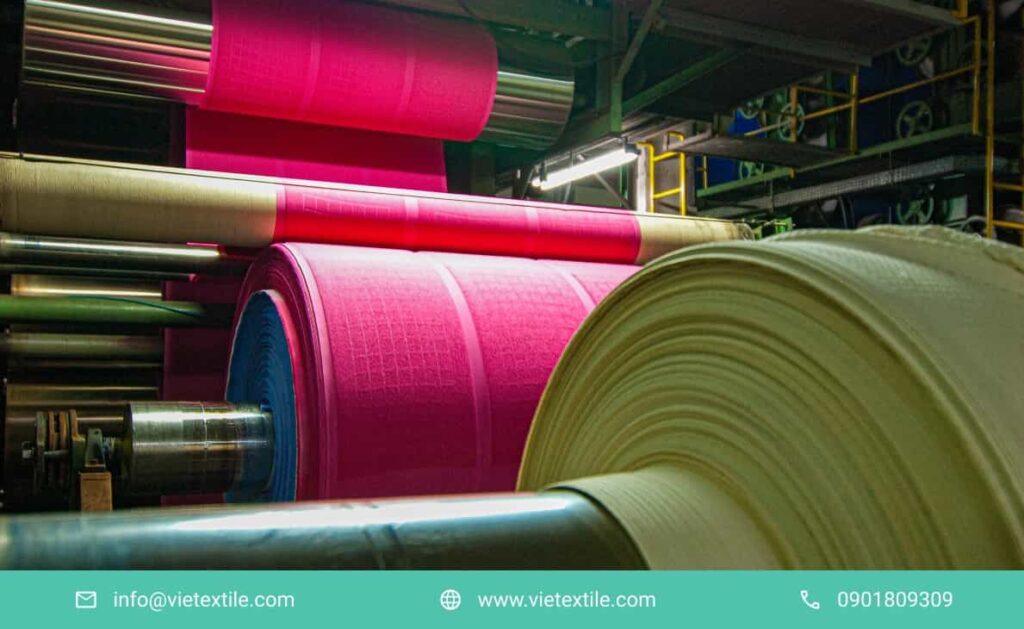
1. Reason One: Hydrophobic Fiber Structure And Dye Penetration Barriers
The first and most important reason lies in the physical nature of Polyester fibers. Cotton has strongly polar hydroxyl (-OH) groups, creating conditions for water and dyes to form hydrogen bonds. Meanwhile, Polyester in the Poly Spandex blend is a non-polar, completely hydrophobic polymer.
This means that in the poly spandex dyeing processing workflow, water cannot naturally soak into the fiber core. Disperse dyes must “swim” in the water environment and find a way to cling to the fiber surface. Without extremely high pressure and temperature, the dye will only sit on the outside, leading to fading immediately after the first wash.
1.1. High Crystallinity Of Polymer Chains
Polyester fiber structures are arranged in a very tight crystalline form. Molecular chains lie parallel and close to each other to the point where there are no gaps large enough for dye molecules to penetrate under normal atmospheric pressure conditions.
1.1.1. The “fiber opening” phenomenon via high temperature (130°C)
In poly spandex dyeing processing, we must use temperatures up to 130°C (in a high-pressure environment) to make the polymer chains vibrate strongly, creating “temporary gaps.” Only then can disperse dye molecules weave inside. This is a process that consumes many times more energy than dyeing cotton at 60-80°C.
Maintaining this temperature is mandatory to achieve optimal color penetration. If the temperature does not reach this threshold, color molecules only cling loosely to the fiber surface, resulting in extremely poor rubbing fastness. Conversely, if the temperature exceeds the allowed limit, the polymer structure may denature, causing the fabric to lose its luster and mechanical durability.
1.1.2. Pressure on High Temperature (HT) dyeing systems
Because it must work at 130°C, poly spandex dyeing processing must use completely closed high-pressure dyeing machines. This system requires extremely strict maintenance to ensure occupational safety and temperature sensor accuracy. A deviation of just 1-2°C can completely change the color shade between different dye batches.
Every Poly Spandex dye batch is like a giant “pressure cooking” process where all parameters must be pre-programmed. Any deviation in nozzle pressure or liquor flow can cause the fabric to twist, tear, or create uneven color streaks due to dye local deposition at tightly squeezed points.
1.2. Complex Color Adhesion Mechanism
Disperse dyes do not create chemical bonds with the fabric fibers like reactive dyes on cotton; instead, they “dissolve” into the fiber. This requires absolute uniformity of dye concentration in the dye liquor throughout the process.
1.2.1. Controlling dye molecular size
In poly spandex dyeing processing, choosing the right dye molecular size is extremely important. Molecules that are too large will have difficulty entering the fiber core when the polymer chains “open,” leading to pale or uneven colors. Conversely, molecules that are too small easily “escape” after dyeing, causing serious color migration.
The balance between molecular size and dye affinity determines the Color Yield. Technicians usually have to coordinate multiple types of dyes to achieve the desired tone while ensuring chemical stability in the high-pressure dye vat.
1.2.2. The role of Dispersing Agents
Dispersing agents help the dyes (which are naturally insoluble in water) remain in an ultra-fine suspended state in the HT dye vat. Without these agents, color particles will aggregate under the influence of heat and pressure, forming dye spots that stick firmly to the fabric surface.
Dispersing agents also act as a leveling agent, helping to regulate the strike rate of Polyester fibers. In poly spandex dyeing processing, controlling this speed is crucial to ensure color penetrates evenly into every thread, even in the most hidden positions in the machine drum.
2. Reason Two: Heat Sensitivity And The Risk Of Spandex “Death”
If Polyester needs high heat to take color, Spandex is a “heat-fearing” fiber. This is the biggest conflict in poly spandex dyeing processing. Spandex (Elastane) fiber provides excellent stretch, but its chemical bonds will break if exposed to high temperatures for too long.
When Spandex fibers “die,” the fabric completely loses its elasticity, becoming baggy and rough. Cotton does not face this problem as it is much more heat-resistant and has no sensitive elastic structure inside.
2.1. Tolerance Limits Of Spandex Fibers
Typically, Spandex fibers can only withstand a maximum temperature of about 120-125°C for a short period. However, Polyester needs 130°C for optimal color. This difference is the thin line between a successful batch and a rejected batch with lost elasticity.
2.1.1. Techniques using elastic fiber protectors
To resolve this conflict, poly spandex dyeing processing must use specialized Elastane Protectors. These chemicals act as a buffer coating around the elastic fibers, helping Spandex withstand the high-temperature environment without polymer chain degradation.
The dosage of this auxiliary must be extremely precise based on the percentage of Spandex in the fabric. If too little is used, the elastic will become brittle and “pop”; if too much is used, this film becomes a barrier preventing dye from entering the Polyester fibers, making the color look dull and lifeless.
2.1.2. Strict heating and cooling rates
The poly spandex dyeing processing workflow requires an extremely slow heating rate, usually only about 0.5 – 1°C per minute so the fabric gradually adapts. Sudden heating not only causes color blotchiness but also causes Spandex fibers to suffer “thermal shock,” leading to the loss of elastic recovery.
Similarly, the cool-down step after dyeing must occur gradually until it reaches 80°C before discharging the dye liquor. Draining hot water and supplying cold water abruptly will cause the elastic fibers to shrink excessively, creating permanent creases that cannot be fixed by ironing or heat setting later.
2.2. Spandex Durability In Chemical Environments
Spandex is not only heat-sensitive but also extremely poor in durability against strong chemicals, especially oxidizing agents and residual alkali.
2.2.1. Controlling alkali and acid concentrations
The ideal environment for poly spandex dyeing processing is a slightly acidic pH (4.5 – 5.5). If the pH shifts to alkaline, Spandex fibers will hydrolyze and quickly age, leading to fabric degradation or elastic “bursting” when the user stretches it.
Technicians must use stable acid buffer systems to maintain this pH for 3-4 hours in the high-pressure dye vat. Controlling the pH also helps protect disperse dye molecules from color changes under the influence of complex chemical environments.
2.2.2. Impact of Bleaching agents
If it is necessary to bleach poly spandex fabric before dyeing light colors, dye houses must absolutely avoid Chlorine-based agents. Chlorine will directly attack the molecular structure of Spandex, causing it to break immediately and making the fabric permanently yellow.
Instead, light-colored poly spandex dyeing processing usually uses Hydrogen Peroxide (H2O2) at low temperatures and concentrations combined with special stabilizers. This bleaching process takes longer but ensures the durability and pure white color of the fabric.
3. Reason Three: Challenges In Tension Control And Setting
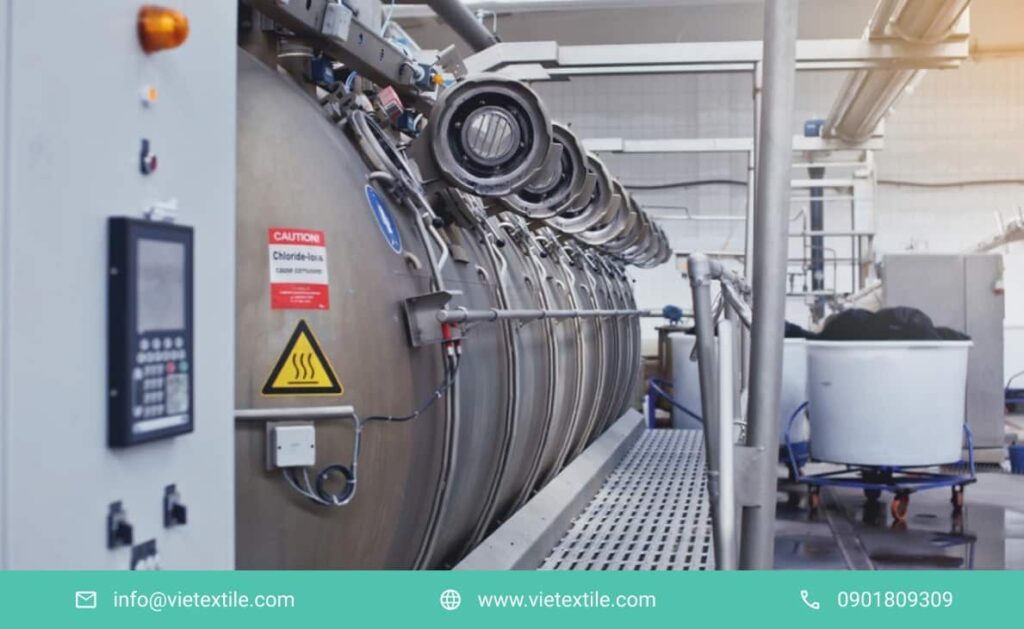
Spandex fibers always tend to shrink, while Polyester tends to stretch when encountering heat. This combination makes Poly Spandex fabric extremely unstable dimensionally compared to cotton. Therefore, poly spandex dyeing processing must include a strict heat-setting procedure.
3.1. Pre-setting – The Decisive Turning Point
Before entering the dyeing machine, Poly Spandex fabric must be run through a Stenter machine at high temperatures (180-195°C). This step helps “lock” the fabric dimensions and stabilizes the Spandex fiber structure, preventing uncontrolled shrinkage in the high-pressure dye vat later.
3.1.1. Controlling precise setting temperatures
In poly spandex dyeing processing, the pretreatment setting temperature is a vital parameter. If the temperature is too low, the fabric will still shrink strongly when encountering 130°C hot water in the dyeing machine, creating permanent folds. Conversely, temperatures that are too high will “burn” the elastic fibers right from the start.
The dwell time of the fabric in the Stenter heat chamber must also be calculated down to the second. Synchronizing conveyor speed, surface tension, and hot air flow is the key to creating a flat grey fabric, ready for the next color dyeing stage.
3.1.2. Impact on color Levelness
Pre-set fabric will have a uniformly expanded fiber structure, helping the dye penetrate more evenly. If this step is not done well, the fabric will be tight in some places and slack in others, leading to dye concentrating in slack areas, creating blotchy color streaks along the fabric body.
Particularly for high-stretch Poly Spandex fabrics (like swimwear or leggings), deviations in setting will lead to a “moiré” or “cloudy” surface after dyeing. This not only ruins the aesthetics but also skews the fabric width and final product weight.
3.2. Post-setting (Final Finishing)
After completing the dyeing and washing steps, the fabric needs a final setting step to adjust the width and weight (GSM) according to the customer’s requirements.
3.2.1. Restoring stretch and hand-feel
The post-dyeing setting step helps release residual stresses accumulated while the fabric was tossed in the HT dyeing machine. This is also when softening chemicals are pressed deep into the fibers, helping the fabric regain flexibility and a silk-soft hand-feel.
The temperature at this step is usually lower than the pre-setting step to avoid changing the dyed color. However, it must still be enough to “fix” the fabric width, ensuring the fabric does not shrink or stretch when the customer proceeds to spread and cut at the garment factory.
3.2.2. Surface stabilization and skewness prevention
Final setting helps the fabric surface become smooth and flat, removing small wrinkles from the spin-drying process. It also helps realign the warp and weft rows, preventing spirality (skewness)—an extremely common error that makes pattern layout difficult in industrial garment making.
Controlling both vertical and horizontal tension at the Stenter machine is crucial. Just a slight error in roller alignment can deform the fabric, causing a major loss in fabric consumption for garment partners.
4. Reason Four: Color Migration And Reduction Clearing Difficulties
Disperse dyes used for Poly Spandex cling to fibers through physical mechanisms rather than sustainable chemical bonds. This leads to color migration—color molecules freely moving from the core to the fiber sheath when encountering high temperatures or chemicals.
4.1. Rigorous Reduction Clearing Process
After dyeing is complete, a large amount of loosely attached dye will remain on the fabric surface and Spandex fibers. Poly Spandex dyeing processing must include a special reduction clearing step to remove this residue, ensuring color fastness for the product.
4.1.1. Using Hydrosulfite and Caustic Soda in an alkaline environment
The reduction clearing process typically uses a mixture of Hydrosulfite and Caustic Soda at 80°C. This strong chemical reaction destroys and completely strips away the “stubborn” color particles clinging to the Polyester and Spandex sheaths without affecting the stable color inside.
For dark colors like Black, Maroon, or Navy, this reduction clearing step sometimes needs to be repeated multiple times with higher chemical concentrations. This requires technicians to be extremely careful not to weaken the fabric or change the target color shade due to the impact of strong alkali.
4.1.2. Challenges with rubbing fastness (Crocking)
Since Poly Spandex is often used for tight-fitting sportswear, wet rubbing fastness requirements are extremely strict. Poly spandex dyeing processing is harder than cotton because if reduction clearing is not clean, the color will easily stain the wearer’s skin or other light-colored fabric areas when there is sweat.
At VieTextile, we test rubbing fastness for every batch before delivery. Achieving Grade 4-5 standards for dark colors on Poly Spandex fabric is evidence of a perfect reduction clearing process and strict quality management.
4.2. Overcoming Dye Spitting
Dye spitting is a technical error that creates tiny dark spots like ink spatters on the fabric, a common nightmare in poly spandex dyeing processing.
4.2.1. Dye liquor filtration and dispersion management
The main cause is dye aggregating into large particles. We solve this by filtering the dye liquor through an ultra-fine mesh system and using high concentrations of anti-aggregation auxiliaries. Keeping the dye liquor uniform is the key factor in avoiding dye spitting.
Additionally, periodic cleaning of dyeing machines with specialized chemicals is mandatory. Dye buildup from previous batches, if not cleaned, will flake off and stick to the fabric of the next batch, causing unwanted color contamination and spotting.
4.2.2. Controlling circulation speed and pressure
The dye liquor circulation speed in the machine must be calculated to be strong enough so the dye does not settle, but not so strong that it causes air bubbles. Air bubbles in HT dye vats are the leading cause of uneven dyeing and spotting due to preventing contact between the dye and the fiber.
Adjusting nozzle pressure to suit different fabric weights (GSM) is also an important skill. A stable and gentle flow helps the fabric “drift” evenly in the vat, ensuring every position on the fabric receives the same amount of dye.
5. Reason Five: Complex Chemical Interactions With Finishing Agents
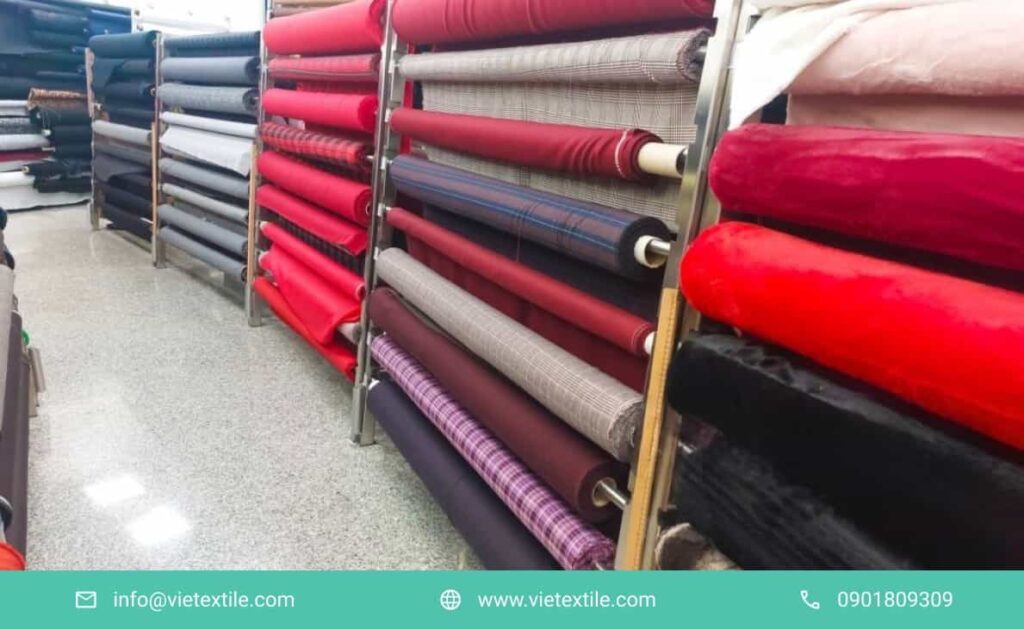
Poly Spandex fabric often becomes stiff after dyeing due to the 130°C high temperature. To achieve a soft, smooth feel, the fabric must be finished with Silicone. However, this is a factor that causes many other technical troubles.
5.1. Choosing The Right Softener
Silicone acts as a solvent for disperse dyes; it makes the color “drift” back from the inside of the fiber to the outside, causing a sudden drop in color fastness.
5.1.1. Balancing softness and washing fastness
High-quality poly spandex dyeing processing requires the use of specialized Non-migrating Silicones. This type of Silicone creates an outer protective film but does not dissolve the dye, helping the fabric stay soft while maintaining sustainable color after many home washes.
Controlling Silicone dosage is a mental puzzle. Too much Silicone makes the fabric unnaturally glossy and prone to oil spots; too little and the fabric remains rough, failing to meet the hand-feel requirements of premium fashion brands.
5.1.2. Sweat absorption and breathability issues
Since both Polyester and Silicone are strongly hydrophobic, Poly Spandex fabric after softening treatment often feels stuffy and does not absorb sweat. In poly spandex dyeing processing for sportswear, we must mix in hydrophilic auxiliaries to improve the moisture-wicking ability of the fabric surface.
The interaction between the softener and the hydrophilic agent sometimes causes precipitation in the Stenter padding trough. Technicians must always monitor the stability of the finishing solution to avoid creating blotches on the fabric after drying.
5.2. Special Fixing Agents
To maximize color fastness, especially for poorly dyed Spandex fibers, dye houses must use additional fixing agents at the final stage.
5.2.1. Fixing agents for Poly/Spandex fibers
Fixing agents create an extremely thin cross-linking layer wrapping around the fibers, preventing the migration of free color molecules. For Poly Spandex blends, the fixing agent needs to be amphoteric to adhere well to both types of fibers, which have different natures.
Using fixing agents correctly helps the fabric pass rigorous tests for color fastness to seawater, chlorinated pool water, and artificial perspiration. This is a mandatory requirement for professional bikini and gym wear lines.
5.2.2. Anti-phenolic and anti-yellowing agents
A common problem with light-colored Poly Spandex fabric is yellowing due to NOx gases in the environment or high temperatures. Poly spandex dyeing processing at VieTextile always adds anti-phenolic yellowing agents to the finishing process.
This agent protects the elastic fibers from chemical impacts from plastic packaging or warehouse environments. As a result, white or pastel products always maintain their purity and freshness until they reach the final consumer.
6. Summary Comparison: Why Is Poly Spandex Harder Than Cotton?
| Technical Feature | Poly Spandex Dyeing Processing | Cotton Dyeing Processing |
| Fiber nature | Synthetic, hydrophobic, high crystallinity | Natural, hydrophilic, hollow |
| Dyeing temperature | 130°C (Closed HT mandatory) | 60°C – 80°C (Atmospheric pressure) |
| Thermal stability | Spandex dies easily at high heat | Very heat-resistant |
| Fabric setting | Must be heat-set (190°C) before dyeing | Usually no pre-setting needed |
| Adhesion mechanism | Physical dissolution (Prone to migration) | Covalent bonding (Very sustainable) |
| Post-dyeing wash | Reduction clearing with strong chemicals | Gentle soaping |
| Soft finishing | Difficult (Prone to oil spots, migration) | Easy (Compatible with most Silicones) |
7. VieTextile – Specialized Poly Spandex Dyeing Processing Solutions
Customer satisfaction is VieTextile’s measure of success.
7.1. Preserving Elasticity And Recovery
We commit that Poly Spandex fabric after dyeing still maintains over 95% elasticity compared to the grey fabric. Spandex fibers are always in their best state, ensuring perfect 4-way stretch features for professional sportswear.
7.2. International Standard Color Fastness
Every poly spandex dyeing processing batch reaches Grade 4-5 standards for rubbing and washing tests. We confidently meet the strictest standards from major fashion brands, helping partners feel secure in exporting goods globally.
8. Frequently Asked Questions (FAQ)
8.1. Why does poly spandex fabric have “cloud-like” color blotches after dyeing?
This error is usually due to disperse dye aggregating locally due to unstable dye vat pH or poor-quality dispersing agents. In poly spandex dyeing processing, controlling the slightly acidic pH environment is a prerequisite for keeping the dye in a stable state.
8.2. Is there a way to dye poly spandex at low temperatures to protect the elastic?
Specialized disperse dyes can be used in coordination with Carriers. This method allows dyeing at 110-120°C while still achieving color depth, helping to protect the elastic fibers better, but requires significantly higher chemical costs.
8.3. What causes poly spandex fabric to have “popped elastic”?
The main cause is excessive tension in the dyeing machine or a pretreatment setting temperature that is too high, making the elastic fibers brittle. Correct poly spandex dyeing processing must always prioritize the “loose” state of the fabric and avoid sudden strong forces.
8.4. Does the reduction clearing process make the fabric lose color?
If performed correctly, reduction clearing only removes excess dye molecules clinging to the fiber sheath (which cause poor wash fastness). In fact, this step helps the color look cleaner, fresher, and achieves ideal rubbing fastness.
Are you looking for a reputable and professional poly spandex dyeing processing partner? Let VieTextile accompany you in creating superior-quality textile products.
Contact information:
Hotline: 0901 809 309
Email: info@vietextile.com
Website: https://vietextile.com