


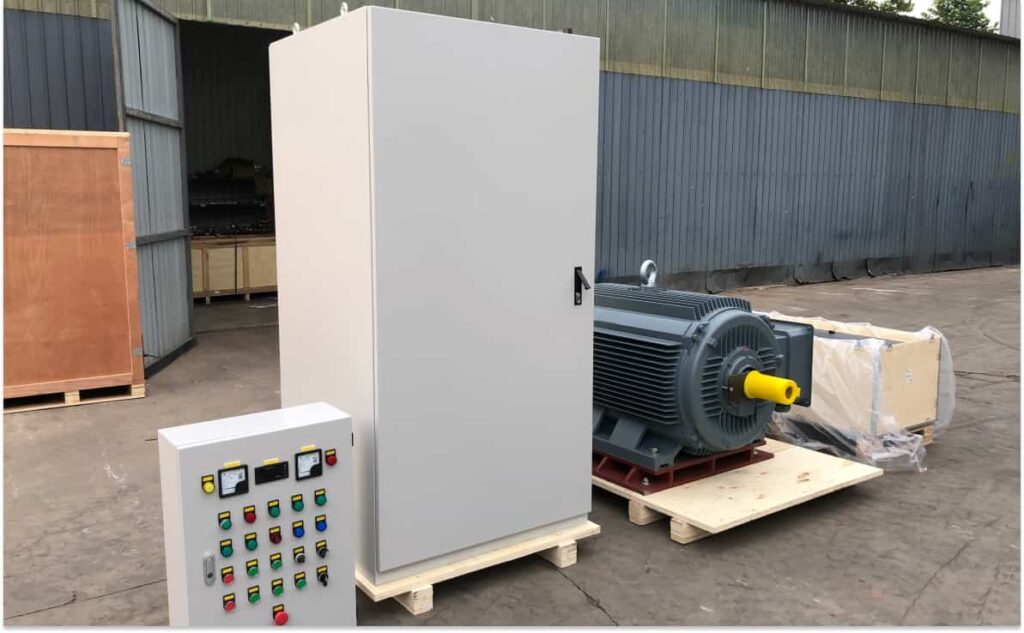
Siemens motor starter and hidden operational risks in weaving lines is a critical topic that helps maintenance engineers prevent unintended downtime and optimize drive performance. This article will provide an in-depth analysis of the Siemens motor starter and hidden operational risks in weaving lines.
1. The Role of Siemens Motor Starter in Textile Systems
A standard starter helps the motor avoid electrical shocks when beginning a duty cycle. The Siemens motor starter provides integrated overload and short-circuit protection, maintaining steady production rates during long shifts.
This equipment and hidden operational risks in weaving lines often stem from underestimating the importance of initial technical parameter settings. A small error in setting the rated current can lead to motor burnout even while the Siemens motor starter is still functioning.
1.1. Smooth Start and Stop Operations
Weaving machines require smooth movement to prevent yarn breakage or “barre” defects on the fabric surface. The Siemens motor starter helps control the starting current scientifically, avoiding local voltage drops that affect neighboring machinery.
This product and hidden operational risks in weaving lines are related to Direct-On-Line (DOL) starting too many times per hour. Using a suitable Siemens motor starter minimizes mechanical wear on belts, bearings, and gears of knitting or weaving machines.
1.1.1. Minimizing Instantaneous Voltage Drops
When multiple weaving machines start simultaneously, the current surge can cause a sag in the internal power grid. The Sirius line of Siemens motor starter helps limit this current through soft-start or star-delta mechanisms, protecting the integrity of the factory’s electrical system.
The application of this technology and hidden operational risks in weaving lines show that without a standard starter, sensitive electronics like PLCs or inverters may reset abruptly due to electromagnetic interference generated at startup.
1.1.2. Precise Real-Time Overload Protection
The thermal relay integrated into the Siemens motor starter reacts sensitively to changes in the current flowing through the coils. This device prevents coil burnout caused by mechanical jams, dry grease, or sudden phase loss.
Siemens motor starter and hidden operational risks in weaving lines warn that setting current values that do not match reality (often set too high to avoid tripping) completely negates the starter’s protective capabilities.
1.2. Integration into Digitalization Systems
Modern Siemens motor starter models, such as the ET 200SP series, can connect directly to PROFINET networks. This allows for monitoring operation status, temperature, and current for each textile motor directly from a central HMI screen.
The solution and hidden operational risks in weaving lines lie in the loss of control signals between the Siemens motor starter and the central cabinet due to heavy magnetic interference in a factory environment with hundreds of motors running at once.
1.2.1. Monitoring Power Consumption Parameters
Premium versions of the Siemens motor starter allow for tracking power consumption (kWh) for each individual weaving stage. Data from the device helps manage production costs per meter of fabric and early detection of aging or inefficient motors.
Siemens motor starter and hidden operational risks in weaving lines show that a lack of power data monitoring makes it difficult for businesses to optimize operating expenses (OPEX).
1.2.2. Remote Diagnostics Capabilities
When an incident occurs, the Siemens motor starter sends detailed error codes to the SCADA system. Technicians do not need to go to the electrical cabinet to check; they can immediately identify the cause of the stop via the Siemens motor starter.
Siemens equipment and hidden operational risks in weaving lines can be minimized if factories leverage these IoT features to build a Predictive Maintenance roadmap.
2. In-depth Analysis of Popular Siemens Motor Starter Lines
To fully understand the Siemens motor starter and hidden operational risks in weaving lines, we need to examine Siemens’ flagship product lines. Each line is designed for specific purposes in the textile industry.
2.1. Sirius Innovations 3RM1 – Optimization for Tight Spaces
The 3RM1 series is a breakthrough in Siemens motor starter design with a width of only 22.5mm but integrating both reversing start and overload protection. In flat knitting machines with high motor density, this is an ideal choice.
The equipment and hidden operational risks in weaving lines indicate that Hybrid technology helps the unit operate extremely smoothly, reducing electromagnetic interference (EMI) on sensitive yarn sensors.
2.1.2. Rapid Parameter Setup Capability
Setting up the 3RM1 is simple via front-mounted rotary knobs. The device provides a wide current adjustment range, allowing one model to be used for various motors in the textile workshop.
Siemens motor starter and hidden operational risks in weaving lines remind technicians to lock the cover after setup to prevent unintended interference from unqualified personnel.
2.2. ET 200SP Motor Starter – Distributed Solution
This is a Siemens motor starter line installed on a distributed IO system, allowing direct control over communication networks. The ET 200SP significantly reduces the number of wires from the electrical cabinet to the motors.
The hidden operational risks in weaving lines for this machine line lie in network security. If the factory’s PROFINET system fails or is attacked, a series of starters may lose control simultaneously.
2.2.1. Hot-Swapping Design
A great advantage of the ET 200SP is the ability to replace faulty modules without stopping the entire system. This is extremely important for continuous weaving lines that cannot afford to stop.
Operational risks in weaving lines show that this feature helps reduce downtime to a minimum, protecting the workshop’s productivity.
2.2.2. Integrated Safety Functions (Failsafe)
The Failsafe version of the Siemens motor starter allows for safe emergency stops meeting SIL 3 standards. The module ensures that in the event of a human incident, the motor will be reliably disconnected from power immediately.
Siemens equipment and hidden operational risks in weaving lines often overlook the aspect of labor safety, and the starter is the key to protecting weaving machine operators.
3. Hidden Operational Risks Behind the Siemens Motor Starter
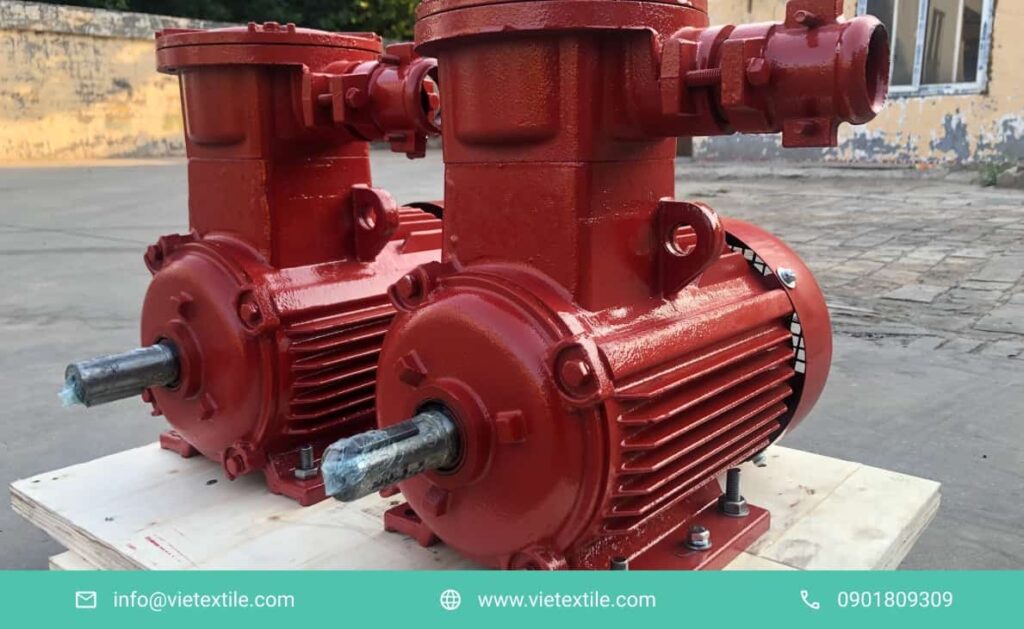
Many people mistakenly believe that installation is the final step, but in reality, the hardware faces many negative impacts from the specific textile environment. Cotton dust and humidity are “silent enemies” that destroy internal electronic components.
Operational risks in weaving lines include the oxidation of contact surfaces due to harsh chemical environments in dye houses, which increases contact resistance and causes explosions.
3.1. Impact of Cotton Dust on Electrical Contacts
Cotton dust in knitting is usually very fine and can hold a static charge. It creeps inside the Siemens motor starter housing through ventilation slots. When enough accumulates, cotton dust becomes an insulating layer or causes arc flashes.
Siemens motors and hidden operational risks in weaving lines often start with small burn marks on the contacts, leading to “contact sticking,” where the motor cannot stop even when the command is cut.
3.1.1. Fire Risk Due to Heat Accumulation
Cotton dust is highly flammable. If the unit generates a spark due to poor contact, this dust layer will ignite immediately. The Siemens motor starter in a textile environment needs strictly controlled fire risk management.
Siemens products and hidden operational risks in weaving lines require periodic cleaning with specialized vacuum cleaners instead of compressed air, as compressed air can push cotton dust deeper into the device.
3.1.2. Intermittent Control Signal Phenomena
The dust layer on the input signal terminals significantly increases contact resistance. This causes start commands from the PLC to the Siemens motor starter to be delayed or rejected due to weak signals.
Operational risks in weaving lines indicate that 30% of “anonymous” stops in the textile industry are related to dust interfering with signals at the starter.
3.2. Risks from Selecting Incorrect Technical Specifications
Selecting a Siemens motor starter based on old experience without calculating the actual starting current is a common mistake. The unit needs to be selected based on the load type (Class 10, 20, or 30) depending on the weaving machine’s load at startup.
Protection devices and hidden operational risks in weaving lines often occur when factories reuse old hardware for new IE3/IE4 motors that have very high inrush currents.
3.2.1. Loss of Overload Protection Capability
If a Siemens motor starter with a protection range that is too large is chosen, the thermal relay will never activate during a minor mechanical jam. The device then only acts as a switch, leaving the motor to be “cooked” by heat.
Operational risks in weaving lines emphasize that using a starter with an inappropriate setting range is the leading cause of mass motor burnout.
3.2.2. Nuisance Tripping
In the textile industry, loads often fluctuate with the weaving cycle. If the Siemens motor starter is set too strictly, it will nuisance trip when the machine encounters thick fabric or heavy yarn. Constant tripping will ruin meters of fabric in progress.
Solutions from Siemens and hidden operational risks in weaving lines require engineers to use simulation software or current clamps to accurately determine the protection threshold for the starter.
4. Optimizing Siemens Motor Starter Operations in Textile Factories
To fully overcome hidden risks, applying smart starting lines combined with strict maintenance procedures is mandatory. The Siemens motor starter is not just an electrical device but a part of the productivity management system.
Hidden operational risks in weaving lines can be eliminated if businesses apply “Digital Twin” technology to simulate motor loads before configuration.
4.1. Utilizing Specialized Enclosures
Installing the Siemens motor starter in IP65-rated cabinets helps completely block cotton dust and chemical moisture. A unit protected in a clean environment has a failure rate 85% lower than those installed externally.
Starter equipment and hidden operational risks in weaving lines will be reduced when the hardware is placed in air-conditioned cabinets, keeping internal semiconductor components cool.
4.1.1. Dust Filtration and Positive Pressure Systems
Maintaining positive pressure inside the cabinet prevents cotton dust from entering through gaps. The Siemens motor starter will operate in a miniature “clean room,” ensuring absolute reliability.
Operational risks in weaving lines require technicians to check cabinet gaskets periodically to avoid dust leakage into the unit.
4.1.2. Maintaining Operating Temperature via Exhaust Fans
Heat accumulation in the cabinet is the enemy of the Siemens motor starter. Installing exhaust fans with dust filters helps the device dissipate heat better, avoiding trips due to high ambient temperatures.
Siemens products and hidden operational risks in weaving lines often become severe during peak noon hours when workshop temperatures soar, making the system susceptible to false thermal impacts.
4.2. Five-Step Inspection Procedure for Siemens Motor Starter
Periodic measurement and inspection of contacts are mandatory for 24/7 production. The Siemens motor starter needs insulation resistance testing every 6 months.
Operational risks in weaving lines recommend that users record monthly current profiles of the starter to detect abnormalities early.
4.2.1. Using Infrared Imaging (Thermal Cameras)
Taking thermal images of terminals while under load helps detect “hot spots” caused by loose screws. A Siemens motor starter with terminal temperatures above 70°C is a danger sign requiring an immediate stop to retighten wires.
Hidden operational risks in weaving lines will be well-controlled if maintenance teams have the skills to use thermal cameras to check the system weekly.
4.2.2. Testing Protection Functions with Simulators
Use a relay tester to inject simulated current into the Siemens motor starter to check the Trip time. The unit must trip according to the published technical characteristic curve to ensure motor safety.
The protection system and hidden operational risks in weaving lines become useless if the starter has a “paralyzed” trip function due to age or internal mechanical jamming.
5. Economic Analysis of Investing in Genuine Siemens Motor Starter
Investing in a Siemens motor starter is not an expense but a profitable investment through risk mitigation. A genuine unit helps businesses save billions in repair costs and losses due to annual downtime.
Siemens motor starter and hidden operational risks in weaving lines show that the price difference between a genuine product and generic goods will be recovered after just one major incident is successfully prevented.
5.1. Reducing Opportunity Costs from Downtime
In the textile industry, every hour of downtime can lose thousands of meters of high-quality fabric. A Siemens motor starter with superior reliability keeps weaving machines running continuously, ensuring delivery schedules for international partners.
Siemens starters and hidden operational risks in weaving lines confirm that stable operation is key to maintaining the brand reputation of export weaving factories.
1.2. Increasing Overall Lifespan of Textile Motors
The Siemens motor starter protects the motor from electrical and thermal shocks, extending motor life by 30-50%. Not having to rewind motors frequently saves maintenance costs and keeps weaving machines in their original state.
The analysis of operational risks in weaving lines proves that choosing a high-quality Siemens motor starter is the smartest way to protect business assets.
6. VieTextile – Strategic Partner for Siemens Motor Starter
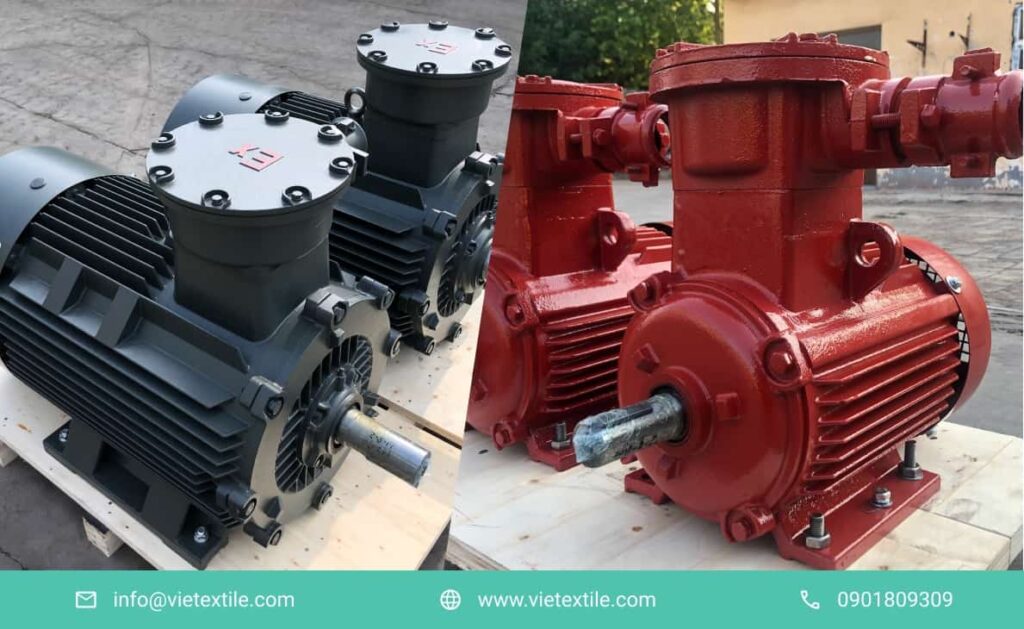
VieTextile is committed to bringing the most in-depth Siemens motor starter and hidden operational risks in weaving lines solutions to the Vietnamese market. We provide consulting, installation, and periodic maintenance packages for large-scale weaving factories. With a team of engineers trained directly by Siemens, VieTextile is confident in solving all difficult drive and motor protection problems.
We understand that the Siemens motor starter is the heart of the weaving machine’s control system. Therefore, VieTextile always maintains a diverse inventory of models to be ready for emergency rescues. Let VieTextile help you eliminate Siemens motor starter and hidden operational risks in weaving lines, bringing sustainable stability to your production line.
7. Frequently Asked Questions (FAQ)
7.1. How to Distinguish Genuine Siemens Motor Starter from Counterfeits? Genuine products always have a QR code for traceability and a Siemens Vietnam anti-counterfeit stamp. Additionally, real starters are heavier, with sophisticated plastic housings and high-quality internal contacts. Siemens motor starter and hidden operational risks in weaving lines remind you never to use generic goods due to the cực kỳ cao risk of fire.
7.2. At What Temperature Range Can a Siemens Motor Starter Operate? Most models are designed to work stably at ambient temperatures up to 60°C (with derating). The analysis of operational risks in weaving lines notes that if the temperature inside the cabinet exceeds this, the starter’s lifespan will be halved for every 10°C increase.
7.3. When Should a Siemens Motor Starter Be Replaced? You should replace the Siemens motor starter when the number of switching cycles exceeds its mechanical life (usually 1-10 million times depending on the model) or when un-cleanable burn marks are detected on the contacts. Experts advise replacement after 7-10 years of 24/7 operation to ensure absolute safety.
7.4. Why is the Sirius Series Siemens Motor Starter Preferred Over Other Brands? Because the Sirius series is highly modular, allowing for the assembly of accessories like auxiliary contacts and mechanical interlocks without wiring. Siemens motor starter and hidden operational risks in weaving lines show that the neatness and stability of the Sirius line reduce electrical cabinet installation time by 50%.
7.5. Does VieTextile Provide Rental Services for Siemens Motor Starter? We provide flexible backup solutions. If your Siemens motor starter fails, VieTextile will lend an equivalent device to keep the machine running immediately while waiting for a new order. Our solutions always prioritize the factory’s interests.
To operate your weaving line safely and efficiently, invest in a Siemens Motor Starter from VieTextile!
Contact Information:
Hotline: 0901 809 309
Email: info@vietextile.com
Website: https://vietextile.com